
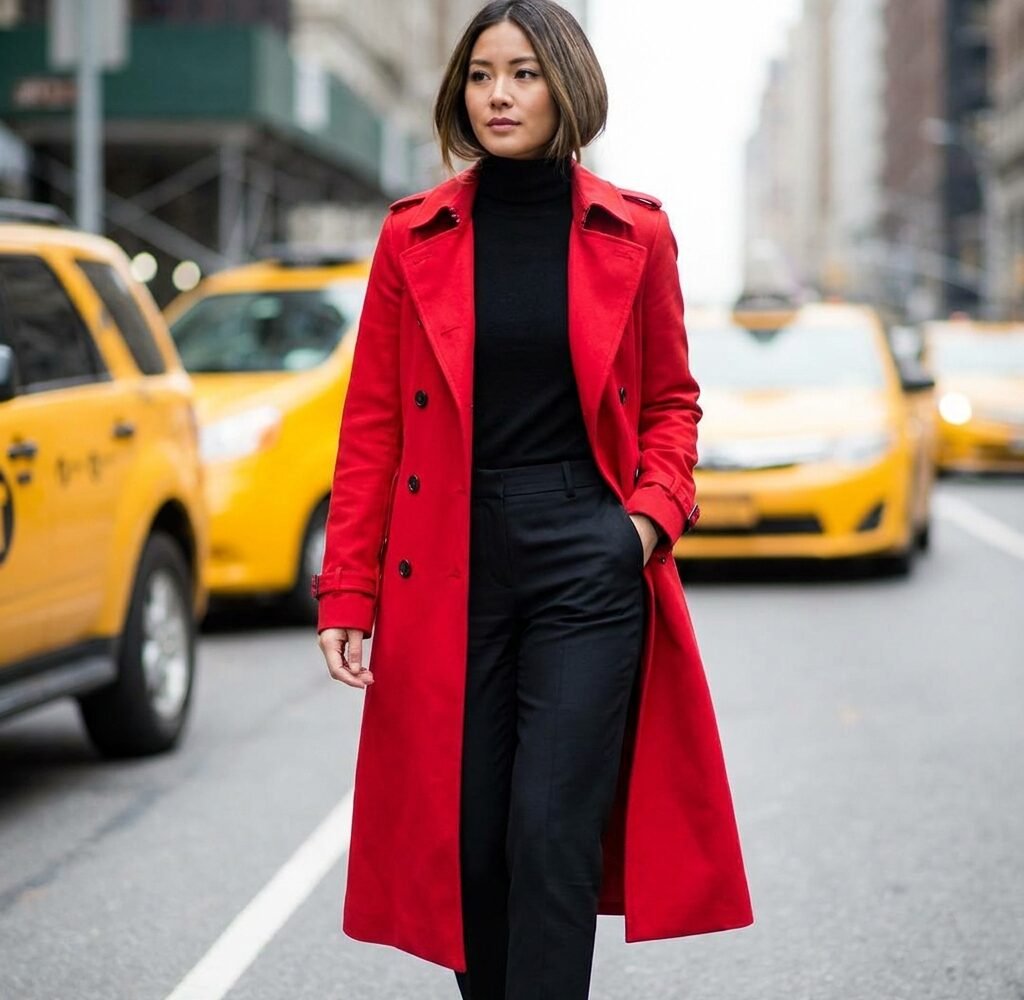
Picture the standard trench coat outfit: a sand-colored coat, a white shirt, blue jeans. It works, and it has worked for decades. It also describes a single recipe, and a trench coat can handle far more than that recipe asks of it.
The shape is simple and forgiving. A trench has a defined collar, a belt, a long straight line, and enough structure to look finished over almost anything. Once the color, fabric, and styling change, the same silhouette can feel sporty, romantic, sharp, or relaxed. The ideas below cover colors other than khaki, fabric swaps, outfit formulas by mood, and small belt and collar adjustments that change the whole look.
What Makes a Trench a Trench
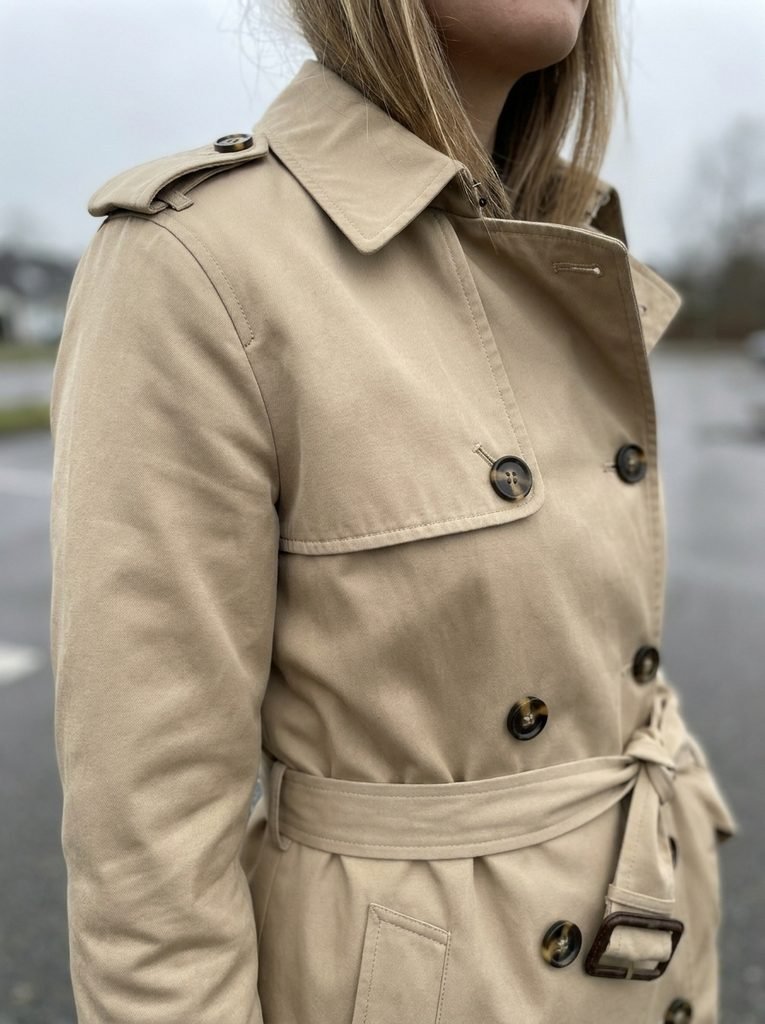
Knowing the parts of a trench makes it easier to style. The classic version has a double-breasted front, a belt at the waist, shoulder straps, a storm flap across the chest, and a collar that stands up when buttoned. Each part began as a practical feature. Epaulettes held items in place, the belt cinched the coat against wind, and the flap added a layer over the chest.
The name comes from the First World War. As Hello! magazine’s history of the trench coat notes, the coat was worn by officers who could afford to buy one, and its roots trace back to waterproof fabrics developed in the nineteenth century. That practical past explains why the shape suits rain and wind so well, and why it looks tidy without trying.
For styling, three details matter most. The collar frames the face and can be worn up or down. The belt controls the waistline. The hem length decides which shoes and trousers look balanced. Everything else in this guide plays with those three.
Colors That Move Past Khaki
Khaki is the default because it is easy, not because it is the only good option. Other shades change the mood of the same coat.
Navy and Ink Blue
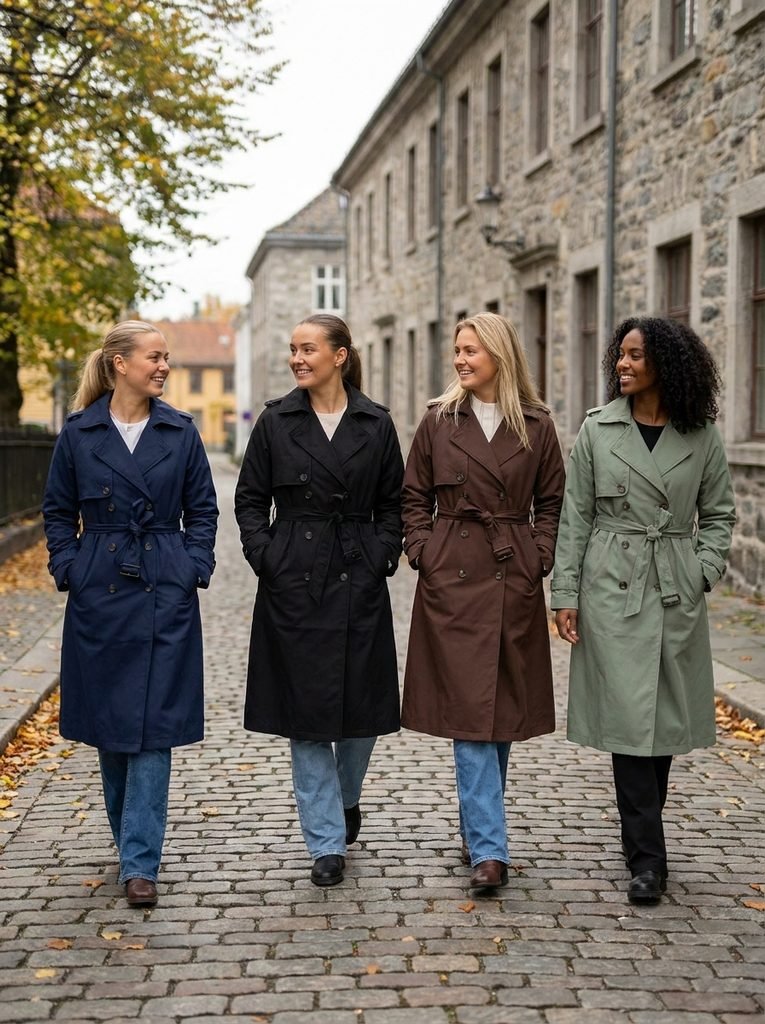
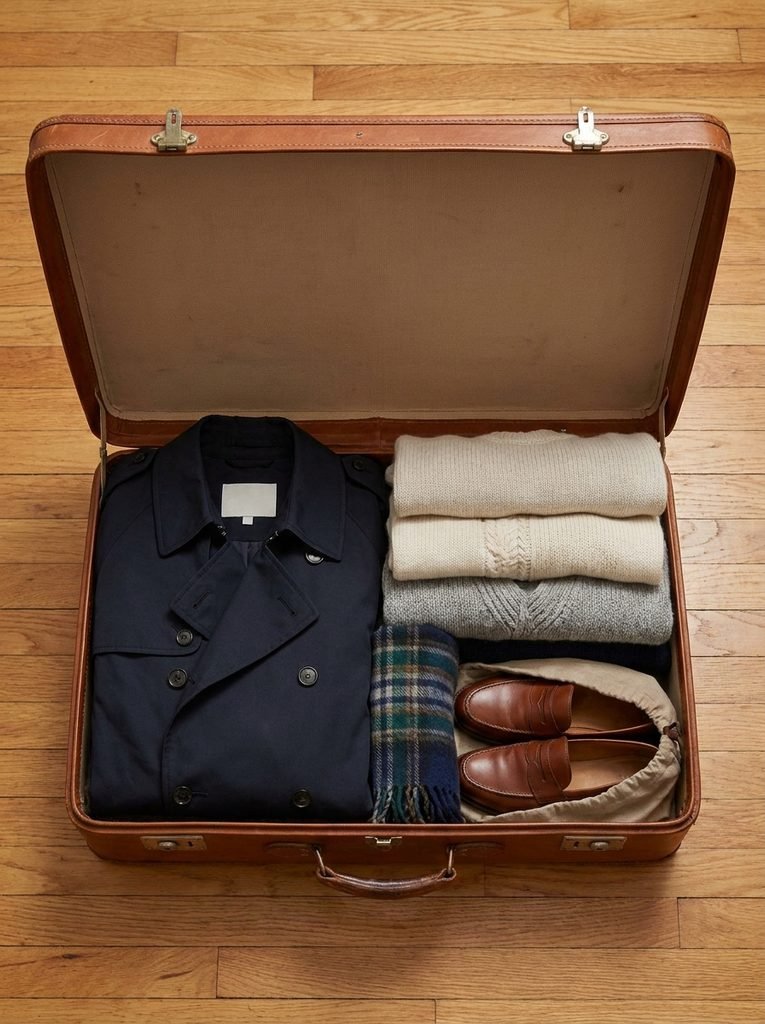
Navy reads as polished and slightly more serious than beige. It sits well next to grey, white, cream, and tan, and it avoids the harshness of black. A navy trench with grey trousers, a white knit, and brown loafers looks tidy and quiet. It also hides daily wear better than light shades.
Black
A black trench feels sleek and a little dramatic. It suits monochrome outfits, such as black jeans, a black turtleneck, and ankle boots, as well as outfits with one strong accent like a red bag or a cream scarf. Black shows lint and dust easily, so a quick brush helps it look sharp.
Stone, Ivory, and Cream
Pale trenches look fresh and are lighter in feeling than khaki. They pair beautifully with tonal outfits in white, oatmeal, and grey. A cream trench over a grey sweater and light denim creates a soft, airy palette. Keep dark accessories to a minimum so the coat’s lightness carries through.
Chocolate, Olive, and Burgundy
Deeper shades give a trench an autumn mood without feeling heavy. Chocolate brown works with cream, camel, and denim. Olive looks good with white, black, and rust. Burgundy is bolder and suits neutral layers like grey, black, and navy. These tones make a strong second trench for anyone who already owns a beige one.
Soft Color
Powder blue, sage, and blush trenches look especially good in spring light. They pair with white, cream, and light grey, and they tend to look best with simple outfits. Avoid mixing two pastel pieces unless they sit in the same color family.
Fabric Changes the Mood
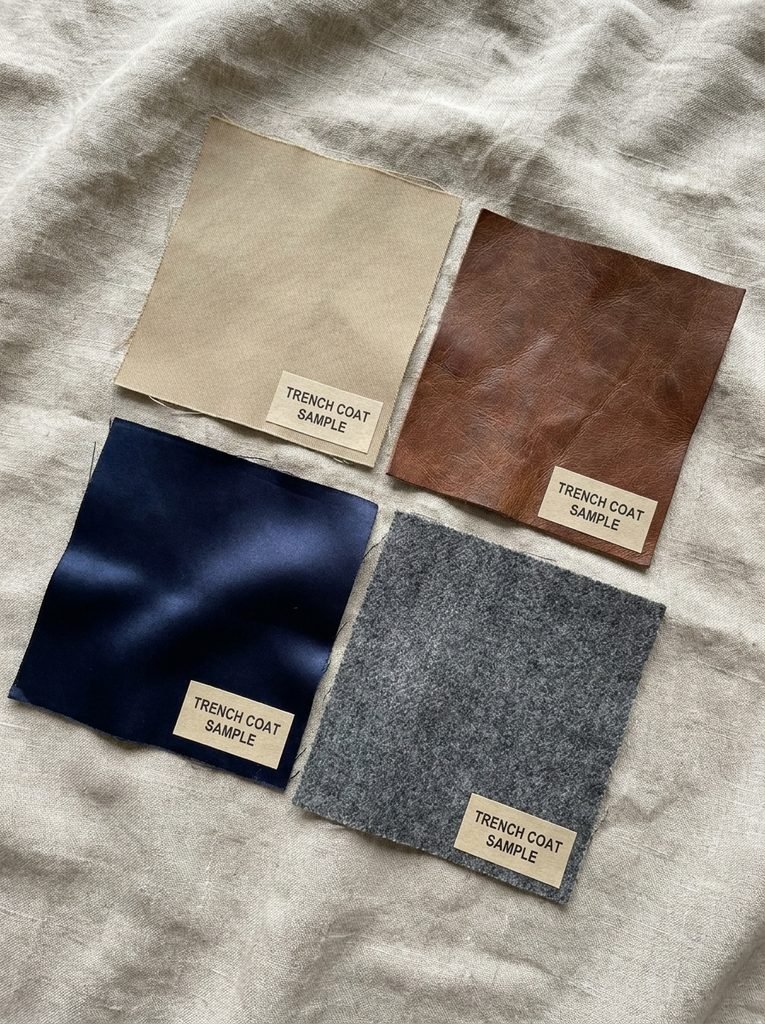
Cotton gabardine is the traditional trench material, and it gives a clean, slightly crisp look. Other fabrics shift the personality quickly.
Leather and faux leather trenches look edgier and more modern. They suit slim trousers, simple tees, and boots, and they can feel warmer on windy days. Because the surface has a sheen, the outfit underneath benefits from matte textures like cotton and wool.
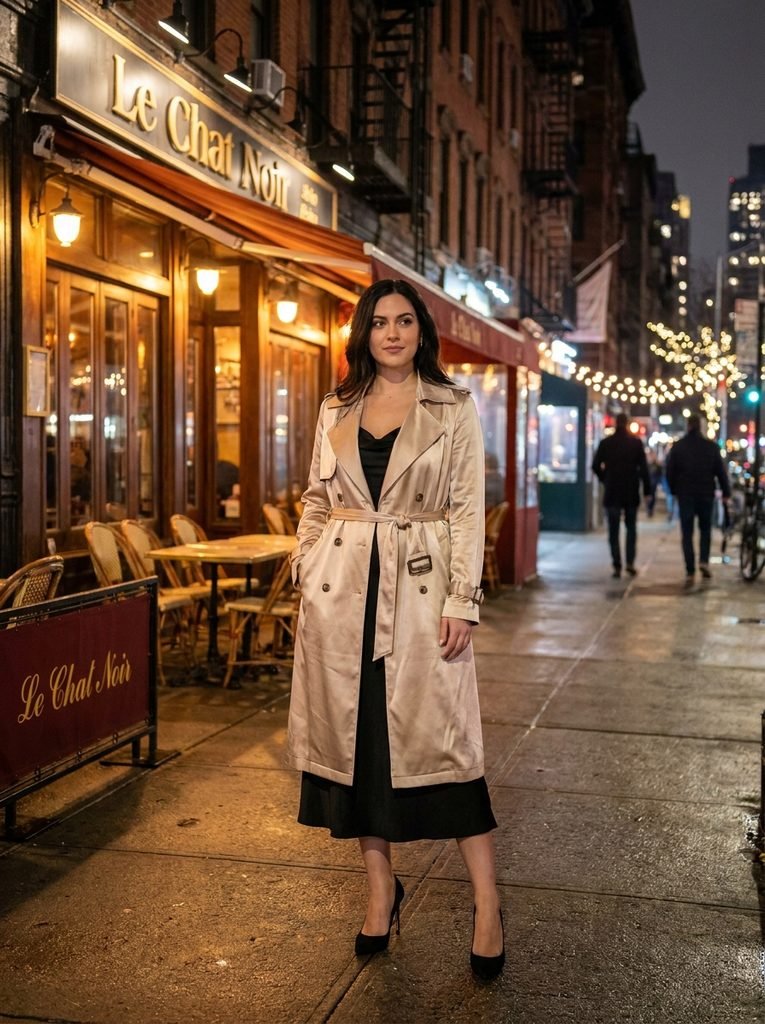
Satin or silky trenches feel fluid and a little glamorous. They drape differently from cotton, so they suit slip dresses, wide trousers, and heels. Wrinkles show more on this fabric, so steaming before wearing helps.
Wool blend trenches lean toward cold weather. They are heavier, hold their shape, and work over knitwear. Quilted linings, removable or sewn in, add another way to extend the season.
Lightweight cotton or linen blends appeal in warmer places. They offer a thin layer for breezy evenings or air-conditioned rooms without much bulk.
Trench Over Denim
Denim is the easiest partner for a trench, and small changes in the denim alter the effect.
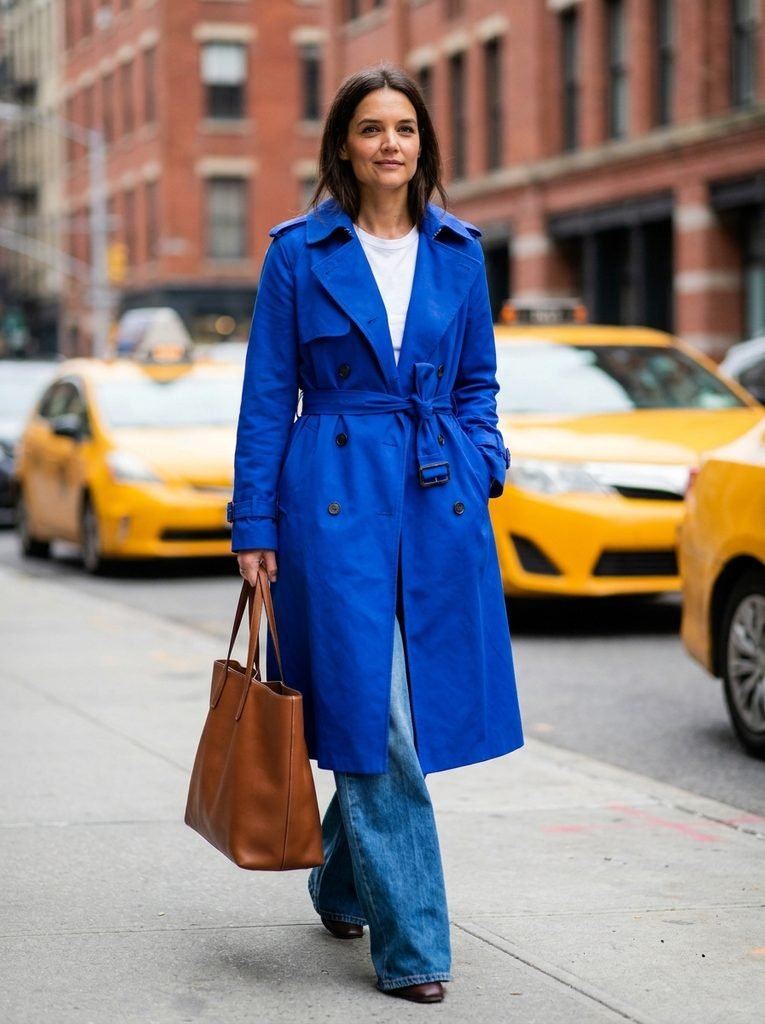
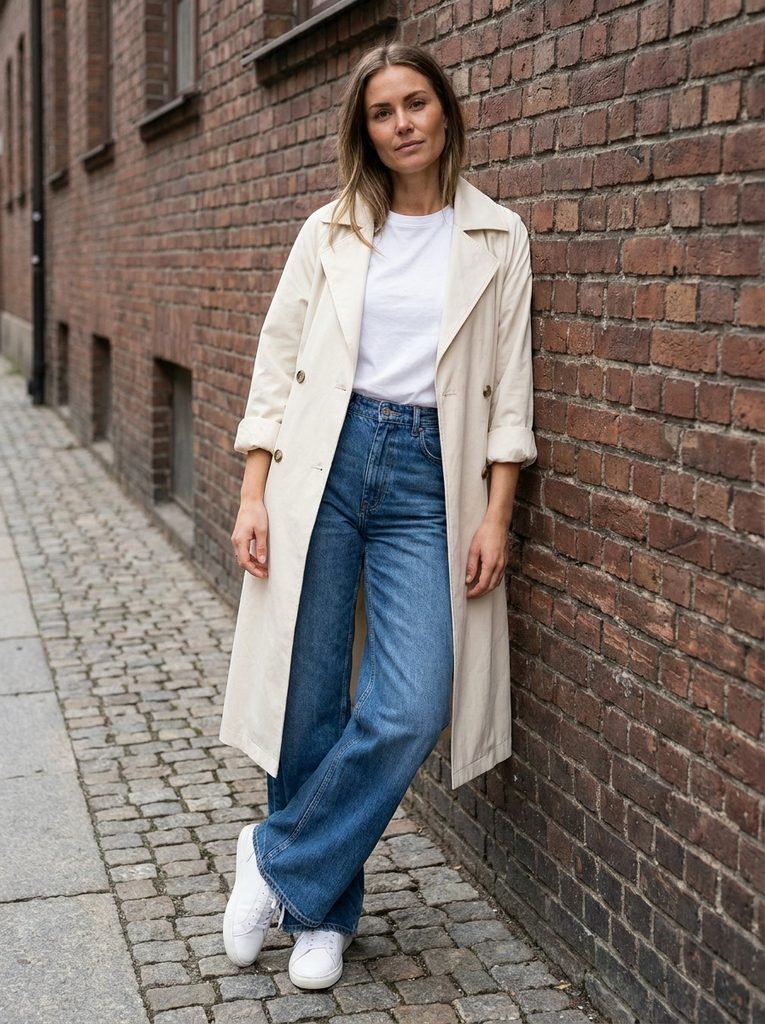
Straight blue jeans with a white tee and white sneakers give the classic, relaxed version. For a more current look, try wide-leg jeans in a mid or dark wash with a fitted top and low boots. The volume at the hem balances the length of the coat.
Black denim gives a sharper line, especially with a navy or black trench. Grey denim leans softer and works well with ivory and stone coats. For a head-to-toe denim look, a trench in a contrasting neutral, such as cream over blue, keeps the outfit from looking flat.
A few simple choices help here. Roll or cuff the sleeves of the trench once to show a bit of the shirt underneath. Keep the bag in leather rather than canvas for polish. Choose shoes that suit the mood: loafers for neat, sneakers for easy, boots for cooler weather.
Trench Over Dresses and Skirts
Dresses show how romantic a trench can be. The coat adds structure to something soft, and the contrast is the appeal.
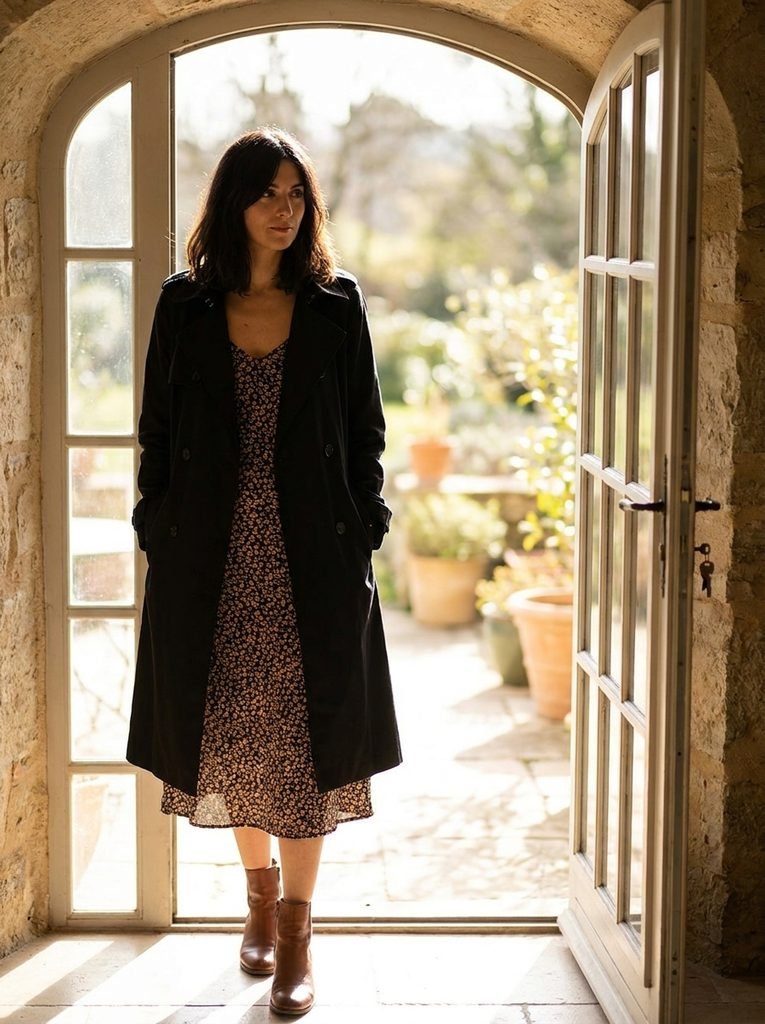
A midi slip dress under a trench, finished with block heels or ankle boots, suits an evening out. A floral or printed dress works too, as long as the trench color picks up a shade from the print. Knit dresses pair well with belted trenches in autumn, since the belt reinforces the waistline.
Skirts follow the same logic. A pleated midi skirt with a trench keeps a clean vertical line, while a short denim skirt with tights and a long trench has a playful, youthful feel. When a hemline peeks out from under the coat, aim for a visible band of fabric of at least a few inches so the proportions look intentional rather than accidental.
Shoes carry a lot of the mood. Ballet flats suit softness, kitten heels suit polish, and tall boots suit a modern edge.
Tailored Looks Under a Trench
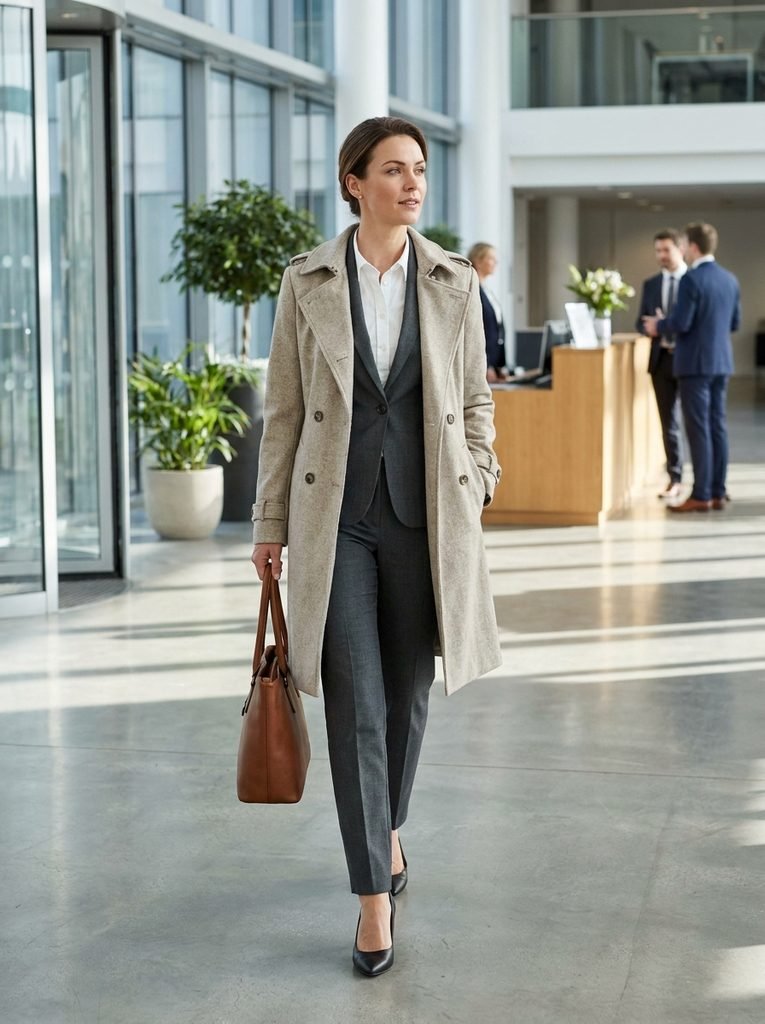
A trench is a natural partner for tailoring because it was designed to sit over structured clothing. Wide-leg trousers, a crisp shirt, and a knit vest beneath a navy or black trench make a sharp work outfit.
For matching sets, the trench works as a unifying layer. A grey suit under a stone trench looks smooth, and a black suit under a black trench reads strong and monochrome. Trousers with a gentle taper or a straight cut tend to look better than very skinny ones under the generous trench shape.
For interviews or presentations, the coat can arrive with you and be removed at the door. The advice in this guide to job interview outfits explains how to keep the look confident without feeling stiff, and a simple navy or black trench fits that approach.
Leather loafers, pointed flats, and low block heels all sit comfortably in this category. Keep the bag structured and small to medium in size.
Sporty and Off-Duty Combinations
Mixing a trench with athletic pieces sounds like a contradiction, yet it creates one of the most popular casual looks. The key is balancing formal and relaxed pieces.
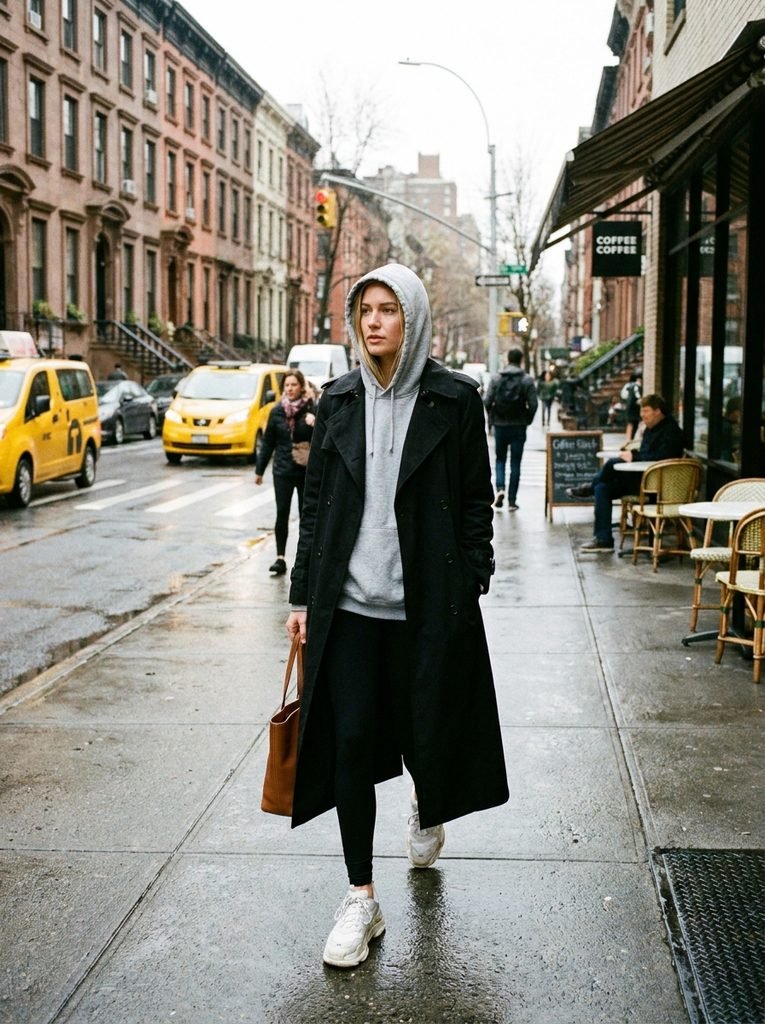
A trench over a grey hoodie, black leggings, and clean sneakers feels easy and slightly polished. Joggers with a tapered ankle and a plain tee also work, particularly with a darker trench. A baseball cap, a crossbody bag, or a backpack in a neutral color adds to the off-duty mood.
The trick is to keep the colors tidy. A simple palette of black, grey, white, and one coat color looks intentional. Too many logos or bright details can make the trench look out of place, so letting the coat provide the polish while everything else stays quiet gives the best balance.
Evening Trench Outfits
A trench often arrives at an evening event as the outer layer, so it should relate to what is underneath. Dark, sleek coats such as black, ink navy, or deep burgundy suit evening best.
A black trench over a satin cami, tailored trousers, and heels looks refined. A silky trench in champagne or ivory over a black dress creates a high-contrast look. Metallic or beaded accessories add sparkle without competing.
If the trench stays on all night, wearing it open and loosely belted at the back looks more relaxed than fully closed. Hair tucked behind the collar or worn loose over it also changes the shape, so it is worth thinking about which suits the outfit.
Belt, Collar, and Sleeve Tricks
Small adjustments make a trench look different without buying anything new.
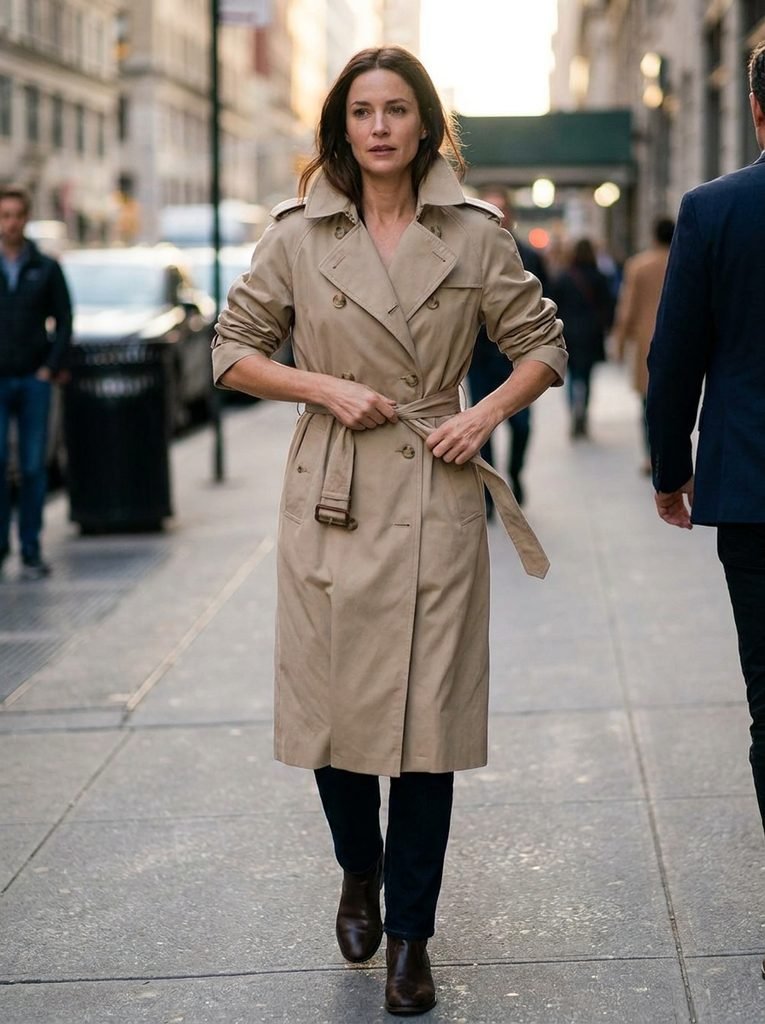
Tie the belt in front. A loose knot looks softer and more casual than a tight bow. Tucking the ends under the belt keeps them from dangling.
Tie the belt behind. Knotting it at the back gives a relaxed, slightly draped effect that works especially well with open fronts.
Skip the belt. Pulling the belt out of the loops and wearing the coat open creates a straight, long line. It suits oversized shapes and layered outfits.
Swap the belt. A thin leather belt worn over the trench adds a different texture and can replace a worn original.
Turn up the collar. Standing the collar up frames the face and feels more dramatic, which suits windy days and evening looks.
Push the sleeves. Scrunching the sleeves to three-quarter length shows off a watch or bracelet and makes the coat feel less rigid.
Choosing Length and Fit for Your Proportions
Trench coats come in several lengths, and each one changes the outfit.
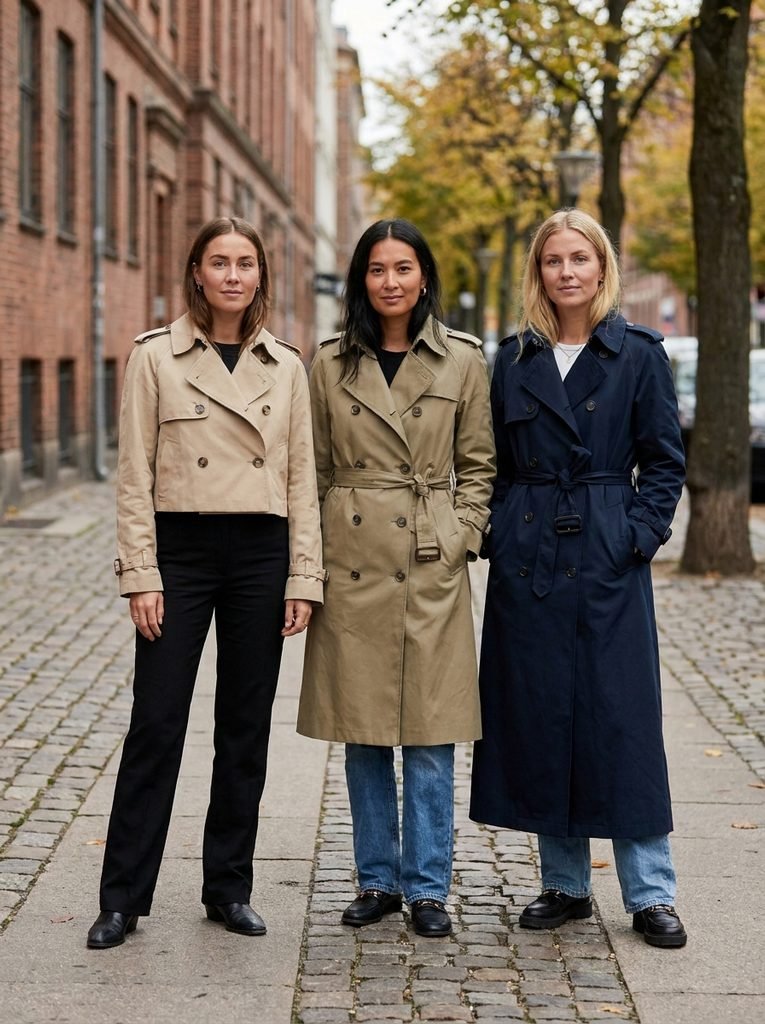
Cropped trenches that end at the hip look modern and pair well with high-waisted trousers or skirts. Knee-length versions are the classic cut and suit most outfits. Midi and maxi trenches create a bold, elongated line, particularly with slim legs and boots.
Fit also matters. A trench with a defined shoulder looks smart, while a dropped shoulder reads casual. Oversized shapes need slimmer pieces underneath for balance. Anyone petite can find extra advice on hem length and line in this petite styling guide, and the overview of outfits for every body type helps with matching proportions to different frames. Both approaches rely on the same idea: choose a length that suits the outfit rather than forcing the outfit to suit the coat.
Packing and Rotating a Trench
A trench rewards repeat wear because it adapts to many outfits. On trips, it works as a lightweight outer layer that packs flat, and it can stand in for a heavier jacket in mild weather. The travel outfit ideas on this site show how layers like this keep a suitcase lean.
For a small wardrobe, a trench fits neatly into a capsule wardrobe, since one coat can serve work, weekends, and evenings. A single neutral trench in a non-khaki shade, such as navy or stone, adds variety to a collection already filled with beige.
Common Questions About Trench Coat Outfits
What can you wear instead of a khaki trench?
Navy, black, stone, chocolate, olive, and burgundy trenches all work well, as do leather and satin versions.
Can a trench coat be worn in winter?
Wool blend or lined trenches can handle cool weather, especially over knitwear. For very cold days, a heavier coat is usually more comfortable.
Should a trench coat be belted?
Either way works. Belting defines the waist, while leaving it open gives a longer, more relaxed line.
What shoes go with a trench coat?
Loafers, ankle boots, sneakers, ballet flats, and heels all work. Choose based on the mood of the outfit.
Can a trench coat be worn with a dress?
Yes. A trench over a midi dress is a popular pairing, especially when the dress hem is visible below the coat.
One Coat, Many Moods
A trench coat does not need to stay in its familiar sand-colored lane. A different shade, a new fabric, or a changed belt can make the same silhouette feel fresh, and the shape handles denim, dresses, tailoring, and sportswear with equal ease. Start with a color that suits the existing wardrobe, then test it with a few of the combinations above.

[…] in stone, olive, or navy, makes a jacketless look feel complete from the front door. The ideas in how to wear a trench coat beyond classic khaki show how far that single piece can […]
[…] who prefers a smoother outer layer can compare the waxed jacket with a trench coat styled beyond classic khaki, which gives a similar weather-ready shape with a more polished finish. People leaning toward […]
[…] blazer, a knit blazer, or a trench coat gives shoulders a clear line without feeling stiff. The trench coat styling guide shows how a single structured coat can carry many outfits. Other good options include a collarless […]
[…] and smooth leather give an all-earth outfit some depth. For outerwear in this family, the guide to wearing a trench coat beyond khaki is a useful […]