
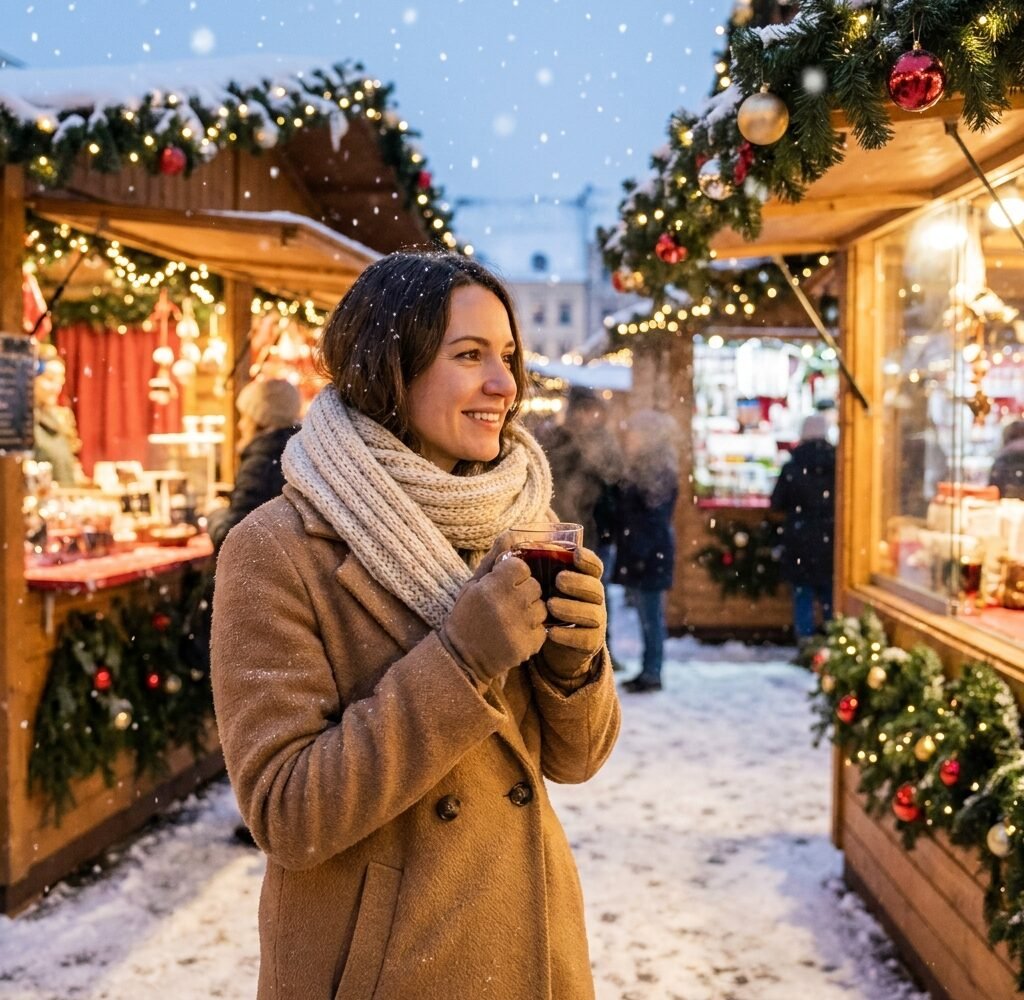
Picture a stall lit by strings of warm bulbs, a paper cup of mulled wine warming your hands, and a queue for roasted chestnuts that is moving about as quickly as the clock hands. Somewhere around the twenty-minute mark, the cold stops feeling charming and starts feeling personal.
A Christmas market asks something unusual of an outfit. You walk a little, stand a lot, eat with gloves half off, duck in and out of heated tents, and still want to look good in photos with the lights behind you. Dressing for it is less about a single great coat and more about a system that works from the boots up.
Below you will find a way to build that system, plus five complete outfits and a few small mistakes worth skipping.

Why a Christmas Market Feels Colder Than a Normal Winter Walk
A brisk walk generates its own heat. A market does the opposite. Most of the time is spent standing in line, browsing slowly, or stopping for photos, so your body is producing far less warmth than it would on a commute with the same temperature.
The ground adds to it. Cobblestones, paving, and packed snow draw warmth through the soles of boots, and the wind tends to funnel between rows of wooden stalls. Add the sudden jump into a crowded heated tent or an indoor food hall, where a thick coat becomes uncomfortable within minutes.
So the real challenge is variety rather than pure cold. An outfit that feels perfect on a quiet pavement may be too hot in a packed hall, and one that is comfortable indoors may fail by the second hour outside. Planning for both is the difference between an enjoyable evening and one spent hunting for a heater.
The sections below follow the body from the ground up, since that is where most of the discomfort begins.
Start at the Ground: Boots, Socks, and Cobblestones
Feet are usually the first part to give up. Thin soles, tight boots, and cotton socks make a tough combination, and a market means a lot of time standing on cold, uneven surfaces.
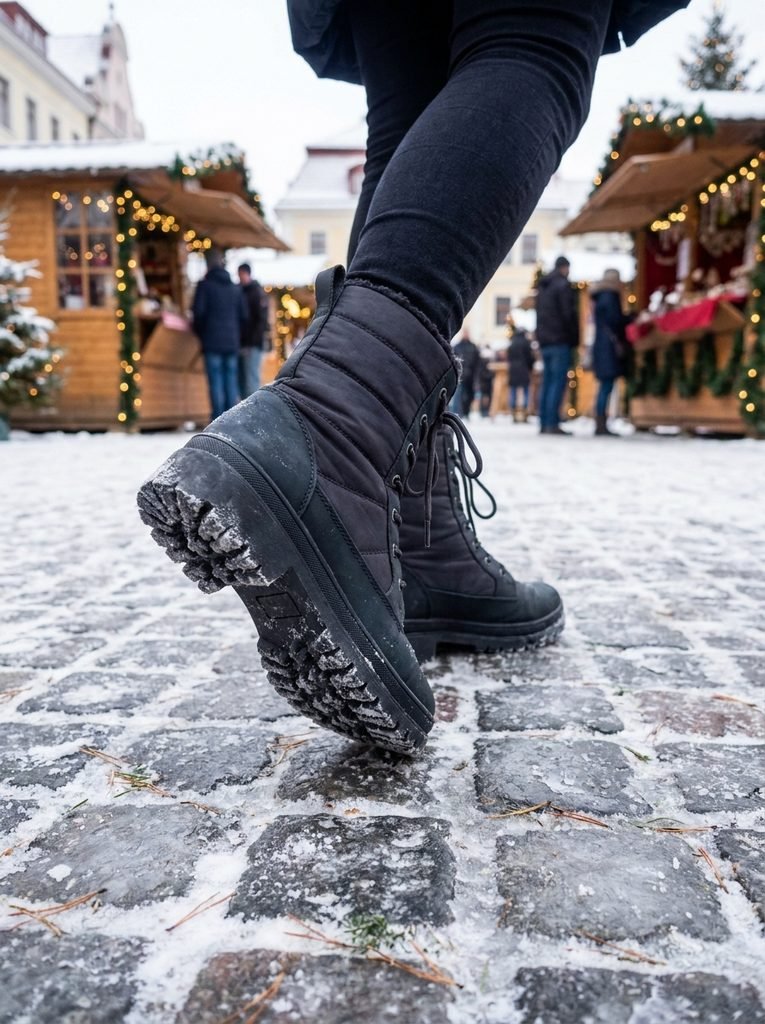
Choose boots with a thick sole and real grip. Lugged or rubberized soles handle wet cobbles and patches of ice far better than smooth leather ones. A lined or insulated boot, such as shearling-lined, felt-lined, or fleece-lined, adds warmth without needing a bulky sock.
Size matters more than people expect. A boot that fits snugly with a thin sock may become tight once you add a thicker pair, and a tight boot restricts circulation and feels colder. Trying boots on with the socks you plan to wear is a simple way to avoid it.
For socks, wool or wool-blend pairs tend to hold warmth well and dry more quickly than cotton, which holds moisture. If your boots are slim, a fine merino sock often gives more warmth than a chunky one that crowds the toes.
Heels are worth leaving at home for this one. A chunky-soled ankle boot or a lined lace-up still looks polished with a dress or tailored trousers, and it will not slide on frosty cobbles. The same thinking behind these concert outfit ideas for standing four hours applies here, since stable footing and comfortable soles matter long before the outfit does.
Legs and Layers: What Goes Under the Coat
Once your feet are sorted, the next step is the layer system under your coat. It should be warm enough for the standing hours and flexible enough to adjust indoors.
The base layer
A snug, thin base layer sits against the skin and does the quiet work. Wool, silk, and many synthetics tend to dry quicker than cotton, which is why outdoor guides often steer away from cotton in the cold. One outdoor gear explainer on layering describes a fitted base layer as the part that wicks moisture away from the skin, with wool and polyester both being reasonable choices depending on skin sensitivity.
For the legs, thin thermal tights or leggings under trousers add warmth without adding bulk. Under a skirt or dress, fleece-lined tights in black or deep brown look like normal tights and perform much better.
The middle layer
A knit does the insulating. Think cable-knit sweaters, a fine merino turtleneck with a cardigan, or a soft wool vest. Mid-weight knits are easier to manage than one huge sweater, because they can be removed when you step into a tent.
Dressing for the in-and-out problem
If the market has heated areas, plan for the layers you can strip without making a mess. A cardigan or zip-up knit under a coat comes off in seconds. A bulky turtleneck with no layer beneath is harder to deal with once you are warm.
For anyone who wants a deeper look at layering logic for freezing conditions, this piece on ski trip outfits that still look good après shows how the same principles can look stylish rather than purely technical.
Choosing the Coat: Length, Fill, and Pockets
A market coat does three jobs: block wind, hold warmth, and look good under string lights. The details that matter most are length, insulation, and what happens at the pockets.
Length
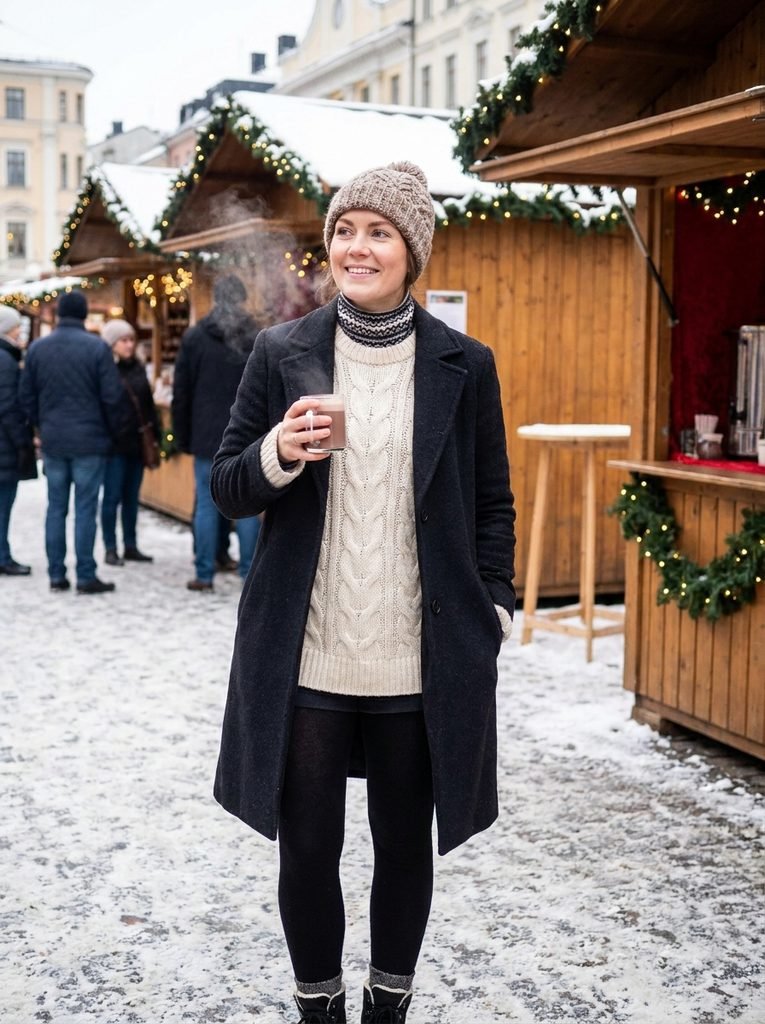
A coat that reaches mid-thigh or longer protects the upper legs, which tend to feel the cold during long stops. A longer wool coat or a knee-length puffer both do this well. A short cropped jacket looks sharp but leaves more of your body exposed.
Puffer or wool?
Puffers hold warmth well and tend to handle damp conditions with less fuss. Wool coats look more polished, particularly over a dress or tailored trousers, and layer nicely over a thick knit. A good compromise is a belted puffer or a wool coat with a thermal lining, which keeps the silhouette tidy without sacrificing comfort.
Pockets and hoods
Deep pockets are more useful than they sound, since a market involves a lot of switching between holding a mug and warming your hands. An inner zip pocket can keep a phone or wallet safe in a crowd. A hood, even a detachable one, helps in wind and light snow, and a faux fur trim around it frames the face nicely in photos.
Colors that suit the lights
Warm, deep, or creamy shades look best against the glow of bulbs and wooden stalls. Camel, cream, forest green, burgundy, and chocolate brown all read well, and black stays reliable. A single bright coat in cherry red or deep teal can also look striking in photos without feeling like a costume.
Hands, Neck, and Head: The Small Pieces That Do the Heavy Lifting
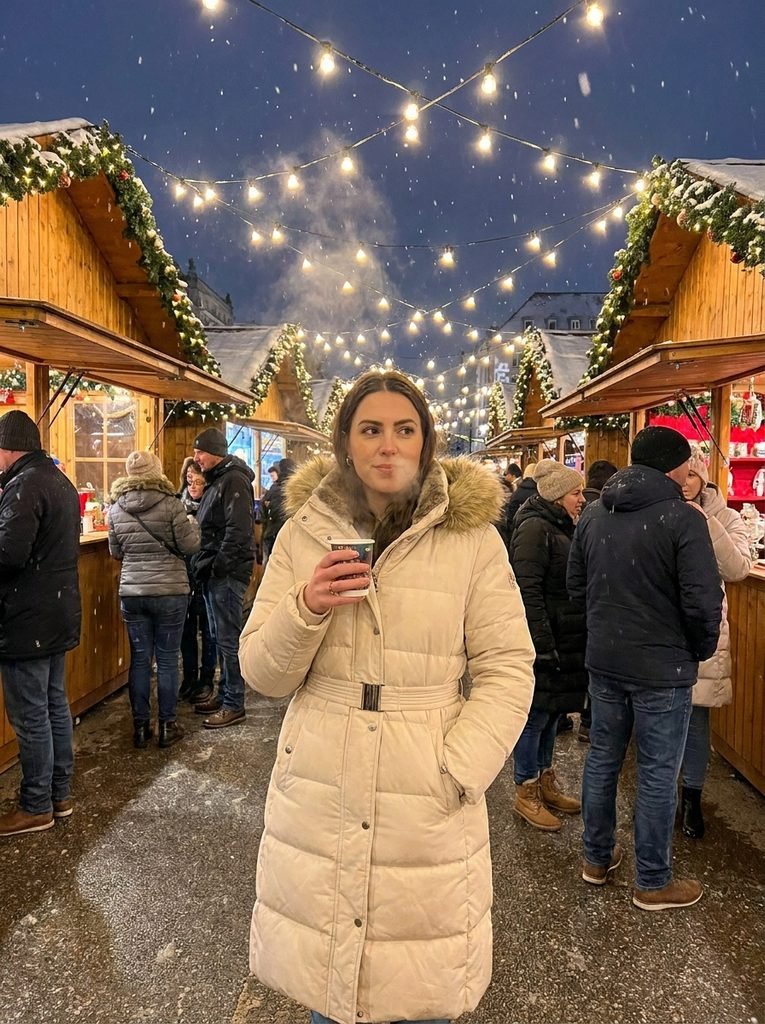
Accessories matter more at a market than almost anywhere else, because standing still lets the cold find every gap.
Mittens tend to keep hands warmer than gloves because fingers share warmth. If you want to use your phone often, thin liner gloves with touchscreen fingertips under a pair of mittens give you both options. Gloves that are too tight limit circulation, so a little room helps.
A long scarf or a wide wool wrap covers the neck and can be pulled up over the chin in wind. Looped snoods are easier to manage in a crowd than long scarves that dip into drinks or snag on a stall. Cashmere blends, thick knits, and brushed wool all sit nicely under a coat collar.
For the head, a beanie, a knit headband that covers the ears, or a faux fur hat all do the job. Hair choices matter here, since a hat will flatten some styles. Loose braids, a low ponytail, or hair tucked into a soft bun adapt well to being under a hat and then released.
A few finishing touches are worth thinking about:
- Thin earrings that will not get caught on a hat or scarf
- A small crossbody bag so hands stay free for mugs and gloves
- A pair of hand warmers in a pocket for the last hour
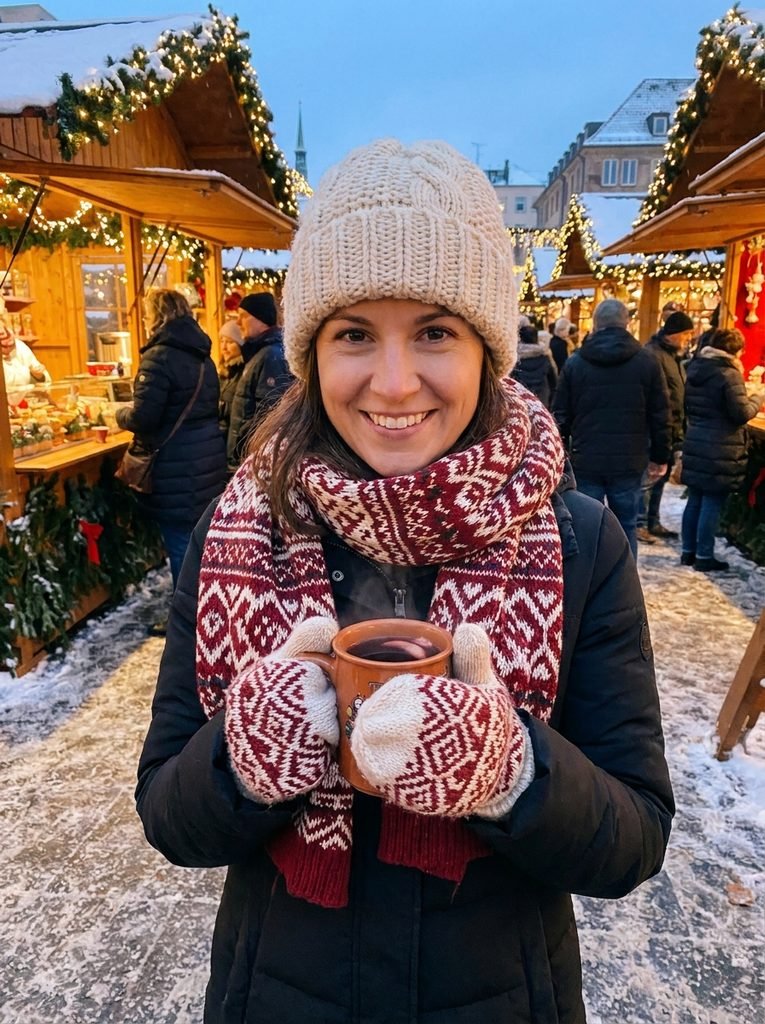
Five Complete Outfits for a Freezing Market
These combinations pull the pieces together. Each one assumes thermal layers underneath and boots with decent grip.
The Classic Wool Coat Wander
A long camel wool coat over a cream cable-knit sweater, dark straight-leg trousers lined with thin thermal leggings, and brown lace-up boots with a lug sole. Add a chunky plaid scarf and a charcoal beanie. This is the reliable, photogenic option that looks elegant under market lights.
The Puffer That Still Looks Styled
A knee-length black puffer coat belted at the waist, a ribbed turtleneck in forest green, black jeans, and shearling-lined boots. Finish with a cream wool scarf and mittens. The belt gives shape to the puffer and keeps it from looking shapeless.
The Dress-and-Boots Version
A midi knit dress in burgundy over fleece-lined black tights, a long wool coat, and knee-high boots with a block heel low enough to walk comfortably on cobbles. Add a snood and leather gloves with warm lining. This suits anyone who wants a dressier look without giving up warmth.
The After-Work Evening Market
Tailored wool trousers, a fine merino sweater, and a structured coat in navy or charcoal. Swap office shoes for insulated ankle boots in your bag or wear them from the start. Add a bright scarf in deep red to introduce a festive touch that suits the lights.
The Family Day Out
Dark jeans, a chunky oatmeal fisherman sweater, a hooded padded jacket, and waterproof boots. Add a warm hat and a crossbody bag for hands-free browsing. Practical and comfortable for long afternoons with children, queues, and the occasional detour to the carousel.
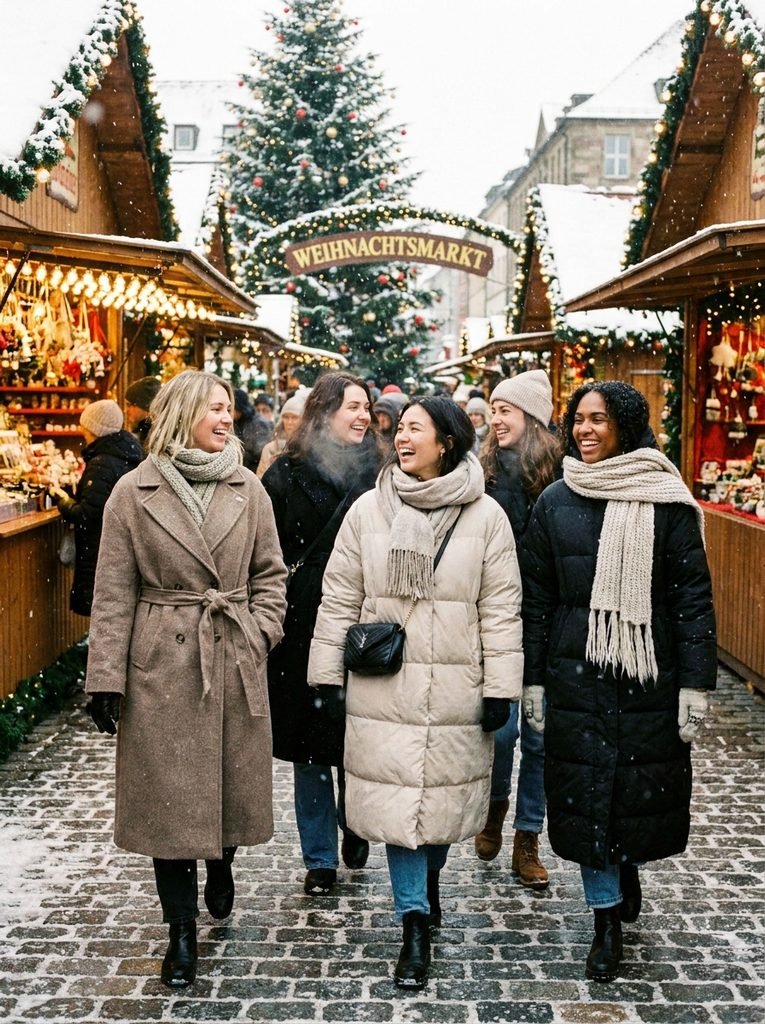
Food, Drinks, and Crowds: Small Practical Details
A market is full of tiny hazards. Stalls sell hot drinks that can spill, sugary snacks that can smear, and sauces that can drip. A few small choices help the outfit survive the evening.
Sleeves that fit closely at the wrist keep cuffs out of food and mugs. Very long, loose knit sleeves may look cozy, but they tend to dip into whatever you are holding. Darker or textured knits hide small marks better than pale cream, though a light coat can still work if you carry napkins.
A crossbody bag, ideally with a zip, keeps valuables secure in a crowd and leaves both hands free. Ordering anything hot is far easier when you are not balancing a handbag. If the bag sits under your coat, it also stays out of the way of passing elbows.
Scarf ends are worth tucking in near stalls with open flames or hot grills. A snood or a scarf tied close to the neck avoids the problem entirely.
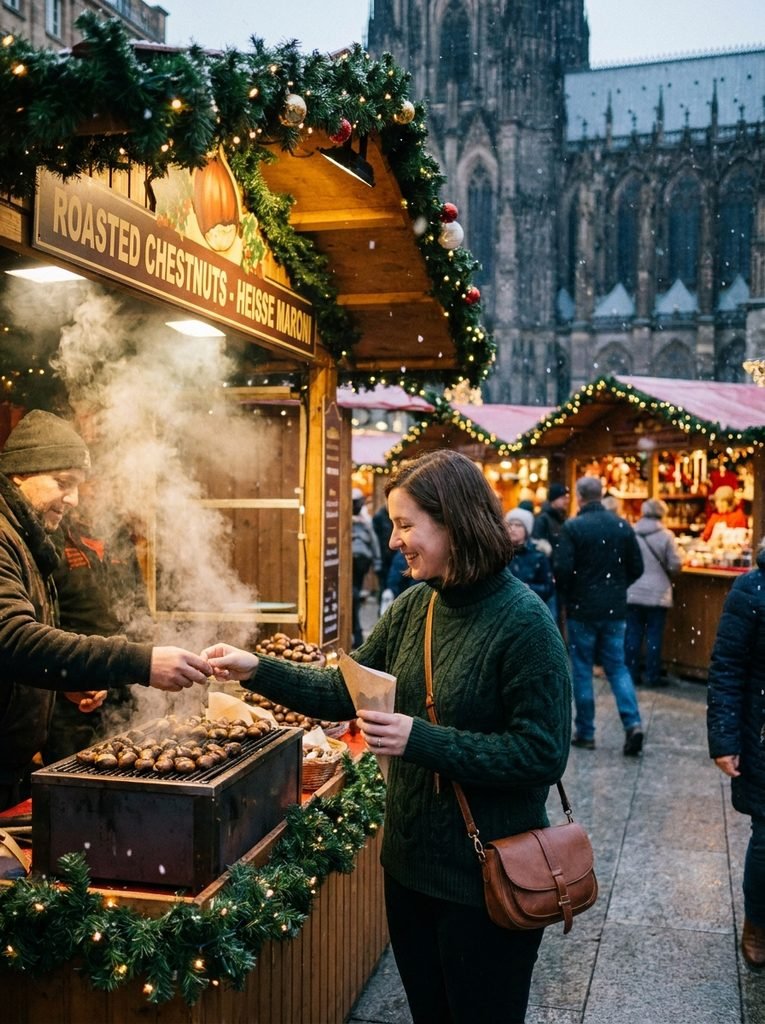
Colors and Textures That Suit the Lights
Christmas markets are usually lit in warm tones, and certain colors and textures glow in that light. Textured fabrics like bouclé, cable knit, brushed wool, and shearling-style trims catch the light softly, while flat synthetic fabrics can look dull.
Deep green, burgundy, camel, cream, and rust all suit golden light, and a splash of red in a scarf or hat adds a seasonal note without needing a themed sweater. If you would prefer to skip novelty prints altogether, this guide to cozy Christmas outfits that avoid the costume look explains how to keep a festive feel subtle.
It also helps to avoid too much contrast between pieces. A coat, scarf, and hat in related shades often look cleaner in photos than a mix of competing patterns. One standout texture, such as a faux fur collar or a chunky knit hat, is usually enough.
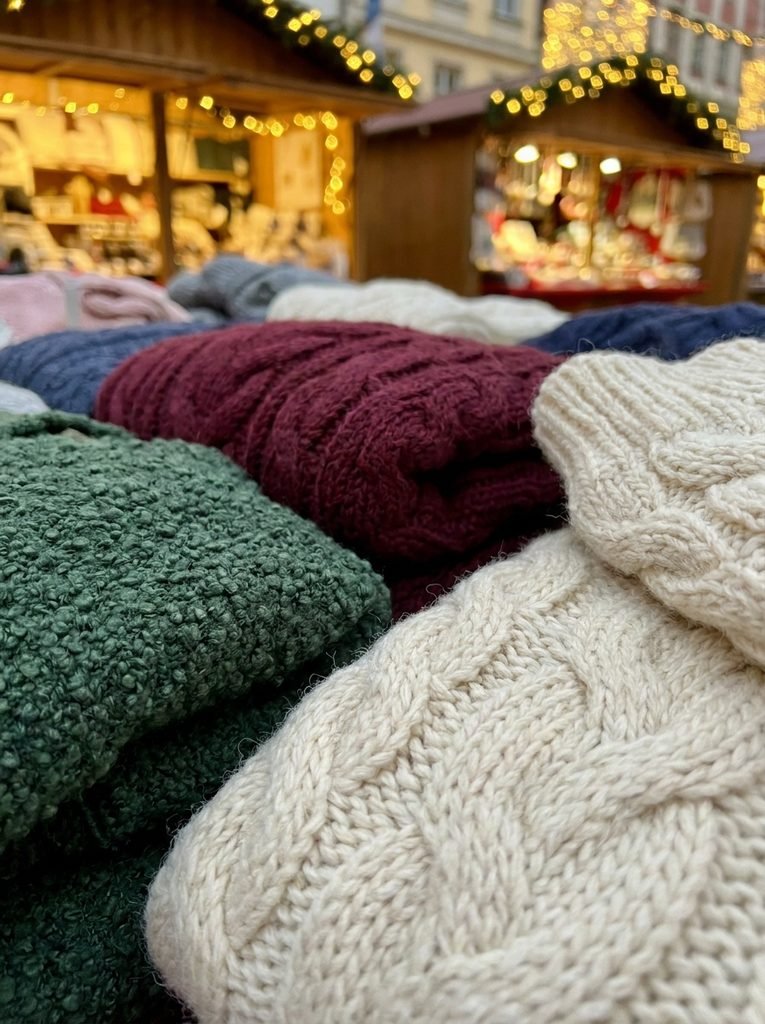
Common Mistakes That Make a Market Trip Miserable
A few errors show up again and again when the temperature drops.
- Choosing boots for looks alone. Smooth soles and thin leather are a poor match for icy paving and long stops.
- Wearing one very thick layer instead of several thinner ones. It leaves no room to adjust when you step into a tent.
- Relying on cotton. Cotton tends to hold moisture, so it can feel cold once damp.
- Forgetting hands and ears. A great coat cannot make up for bare fingers after an hour of standing.
- Carrying a large shoulder bag. It slips, bumps strangers, and ties up a hand you need for mugs.
- Leaving no space in the boots. A tight fit makes toes feel colder, not warmer.
One Small Bag Worth Packing
If the market is a long visit, it helps to carry a tiny extra kit: a spare pair of socks, hand warmers, a pack of tissues, and a small foldable tote for any purchases. None of it takes up much room, and each item solves a problem that tends to appear around hour two.
With warm feet, flexible layers, and a coat that suits the lights, the cold becomes a background detail. That leaves your attention free for the part everyone actually came for, which is the lights, the smell of spiced wine, and the slow wander between stalls.

Leave a Reply