
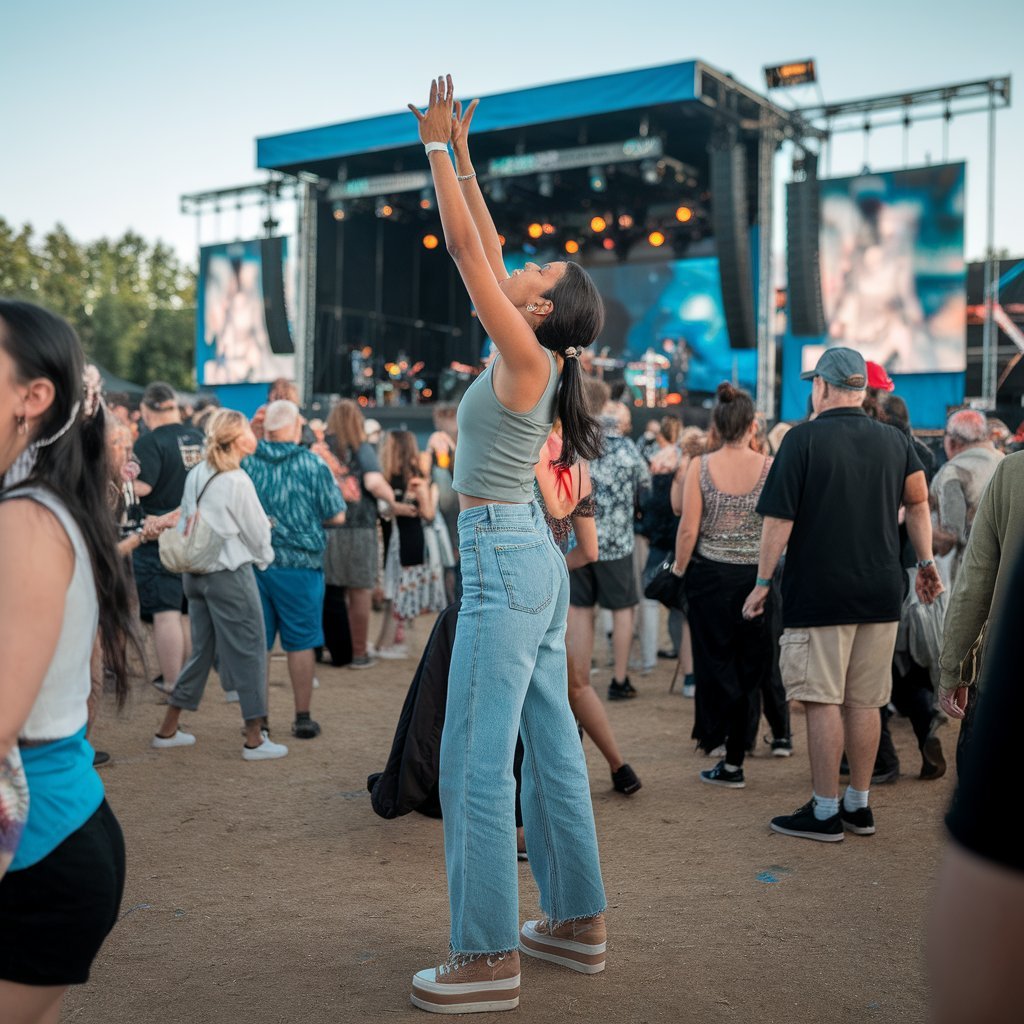
There’s a specific kind of outfit regret that only shows up around hour two of a concert. The shoes that looked perfect in the mirror start to feel like a mistake. The waistband that seemed fine at home is now the only thing you’re thinking about. The bag strap has left a mark on your shoulder, and there’s still an opening act, an intermission, and a two-hour headliner set left to go.
Concert outfits get planned around a single photo moment more often than they get planned around the actual night, and that’s usually where things go wrong. A show that runs four hours, most of it standing, involves a completely different set of demands than a dinner out or a night at a bar. Sweat, swelling feet, shifting crowds, and long stretches without a seat all factor into whether an outfit actually works, not just whether it photographs well before doors open.
This is built around the second part: what holds up once the lights go down and stays down for the next several hours.
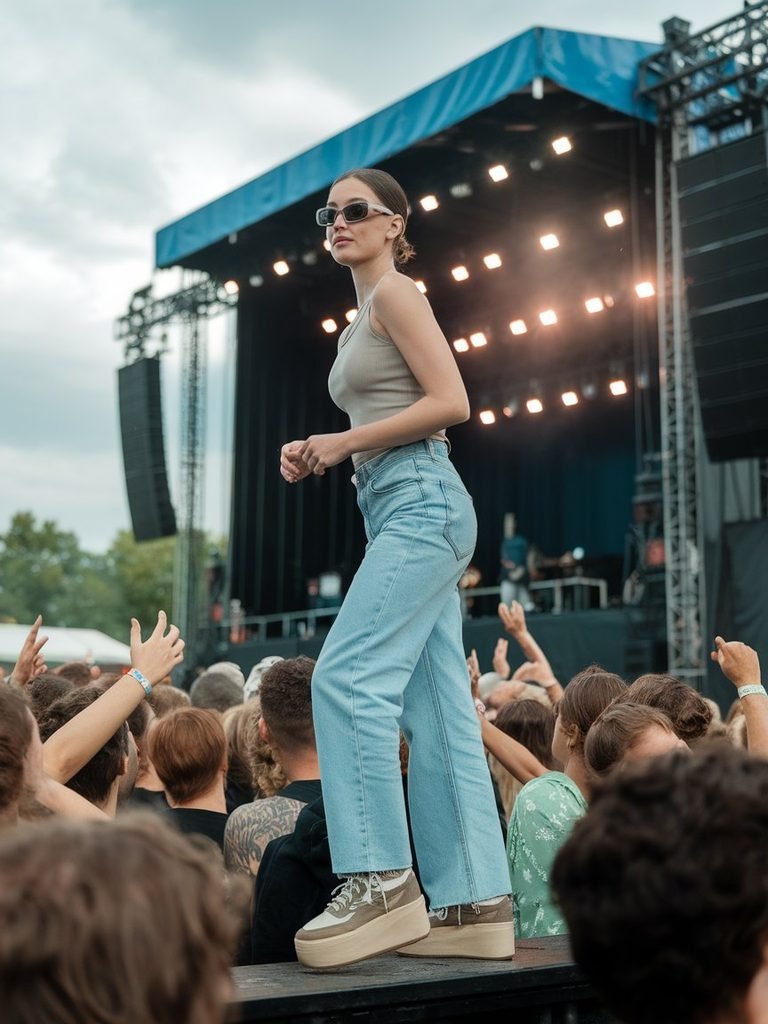
What Four Hours on Your Feet Actually Does to an Outfit
Before getting into specific pieces, it helps to understand what’s actually working against an outfit over the course of a long show.
- Feet swell. A shoe that fits perfectly at 6 p.m. can feel a full size smaller by 10 p.m., especially in warm venues or outdoor heat.
- Fabric gets tested by movement and sweat, not just standing still. Dancing, cheering, and shifting your weight for hours puts real wear on clothing that a dinner outfit never experiences.
- Bags and straps create fatigue points. A shoulder bag that felt weightless walking in becomes a genuine ache by the encore.
- Waistbands and structured pieces dig in over time, particularly anything without stretch, once you’ve been standing rather than sitting for hours.
- Temperature swings hard, especially outdoors, between a sunny afternoon gate opening and a cool night by the final song.
Every recommendation below is built around solving one of these five problems, rather than just picking pieces that look good standing still in a mirror.
Shoes First, Outfit Second
This is the one category worth deciding before anything else, since a bad shoe choice can undo an otherwise perfect outfit by hour two.
Sneakers remain the most reliable option for almost any concert setting. Look for ones already broken in, with real cushioning rather than a flat, minimal sole. This isn’t the night to debut a stiff new pair.
Platform sneakers or boots solve a specific problem: they add height and visual interest without sacrificing the flat, stable base that hours of standing demand. This works well for anyone who wants a bit more presence in an outfit without going anywhere near a heel.
Combat boots or ankle boots hold up well for outdoor or general admission shows specifically, since they protect feet from being stepped on in a crowd better than an open shoe does.
What to avoid almost entirely: anything with a thin heel, unbroken-in shoes of any kind, and open-toe sandals for a standing, crowd-heavy show. All three turn into real problems well before the night ends.
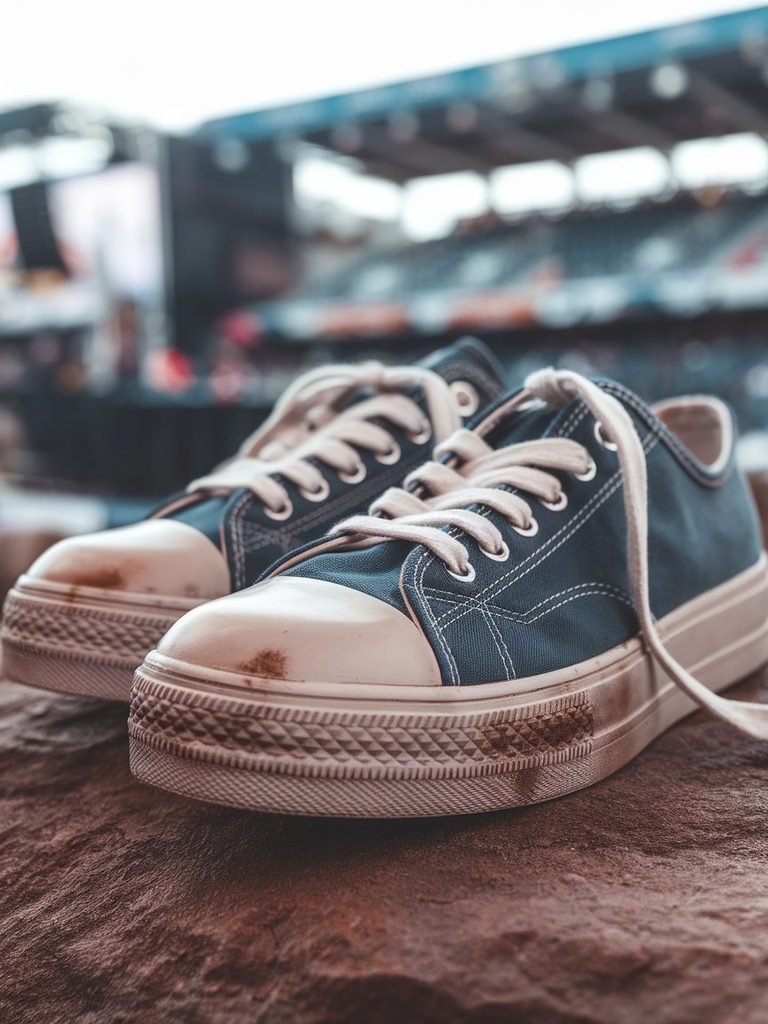
Fabrics That Move With You
Fabric choice matters more at a concert than it does at almost any other event on this kind of list, since the outfit needs to survive actual physical activity, not just a few hours of sitting.
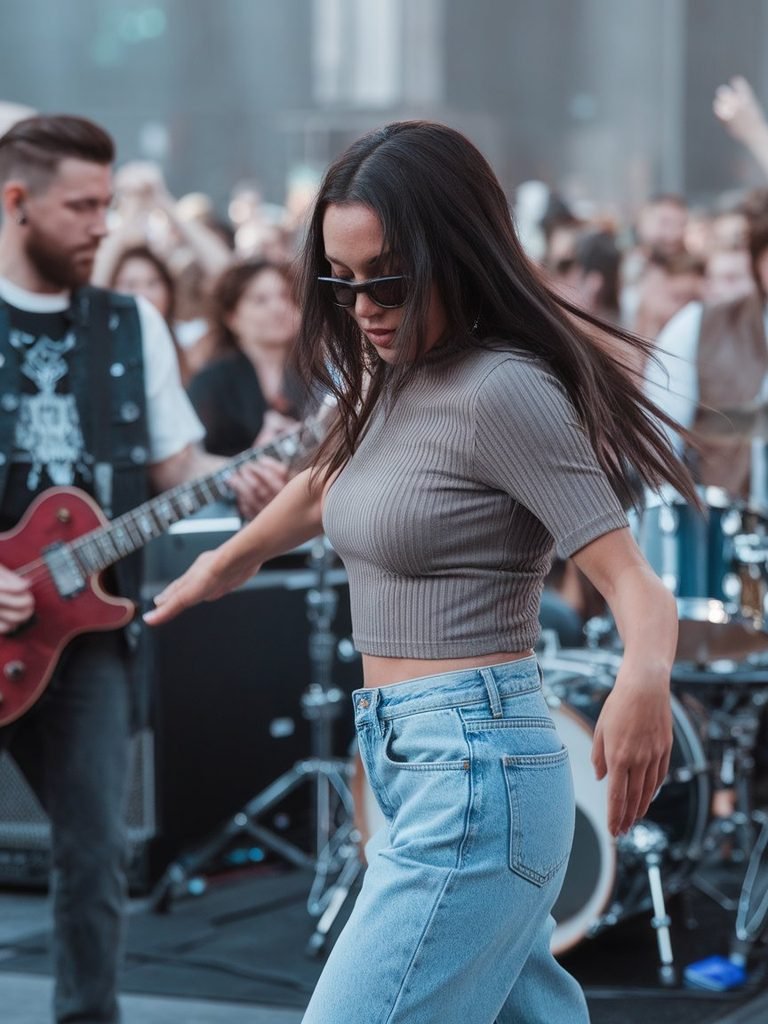
Reliable choices: cotton blends with a bit of stretch, ribbed knits, denim with stretch woven in, and technical or athletic-adjacent fabrics that wick moisture rather than holding onto it.
Fabrics to think twice about: stiff, non-stretch denim, silk or satin without a lining, and anything that visibly shows sweat, particularly in light colors under stage lighting or summer heat.
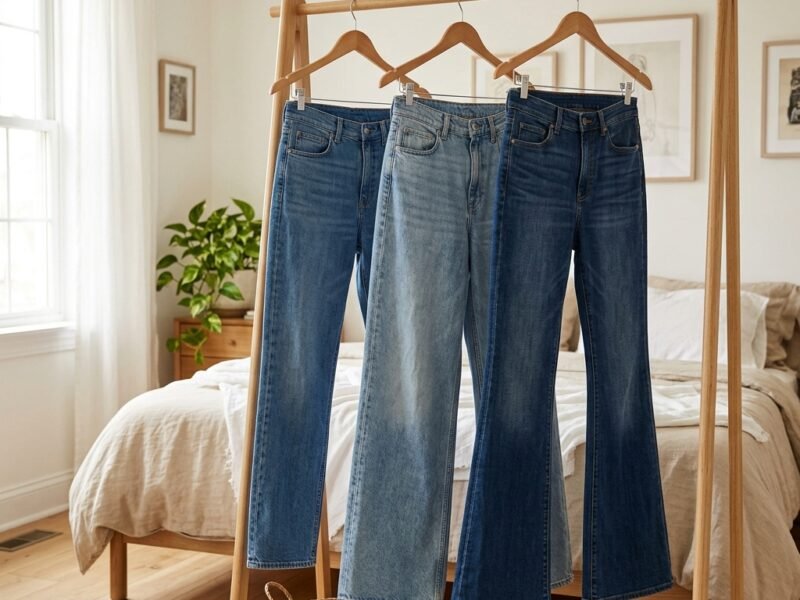
A stretch waistband, whether on jeans, shorts, or a skirt, solves more mid-show discomfort than almost any other single detail. Four hours of standing and dancing is a very different physical demand than a seated dinner, and the waistband should reflect that difference.
The Bag Problem
Bags cause more concert outfit regret than almost anything except shoes, mostly because most venues now have bag policies that limit size and style, and most people plan the bag last.
Check the venue’s bag policy before planning the outfit. Many arenas and festivals now require clear bags or small crossbody bags under a specific size. This isn’t optional information; it changes what’s actually possible to bring.
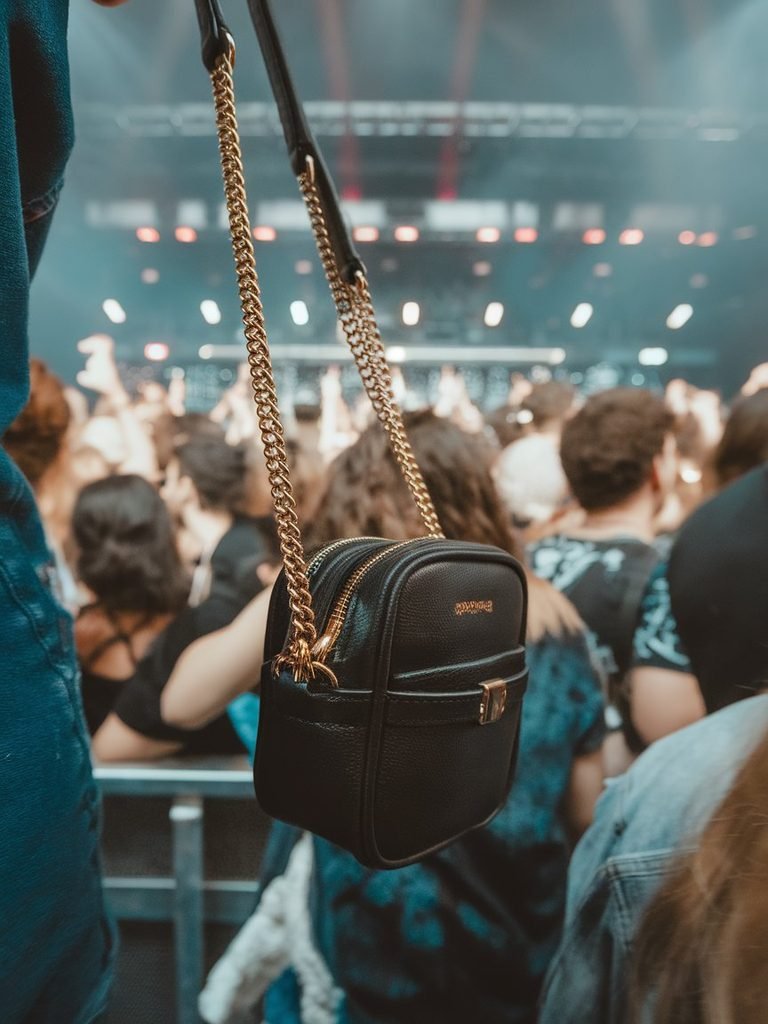
A crossbody bag beats a shoulder bag for anything longer than an hour of standing. Weight distributed across the body, rather than pulling on one shoulder, makes a real difference by the end of a long set.
Fanny packs and belt bags have earned their reputation as the most practical concert accessory, since they keep hands free for cheering, filming, or simply not thinking about where a bag is at every moment.
Pack light on purpose. Phone, card, ID, and a small amount of cash cover almost every situation a concert actually presents. Anything heavier becomes a genuine physical burden by the third hour.
Building the Outfit by Venue Type
Indoor arena shows. Climate control usually keeps temperatures fairly stable, which opens up more fabric choices. A fitted top with jeans or a skirt, paired with sneakers or boots, covers most indoor arena settings without needing heavy layering.
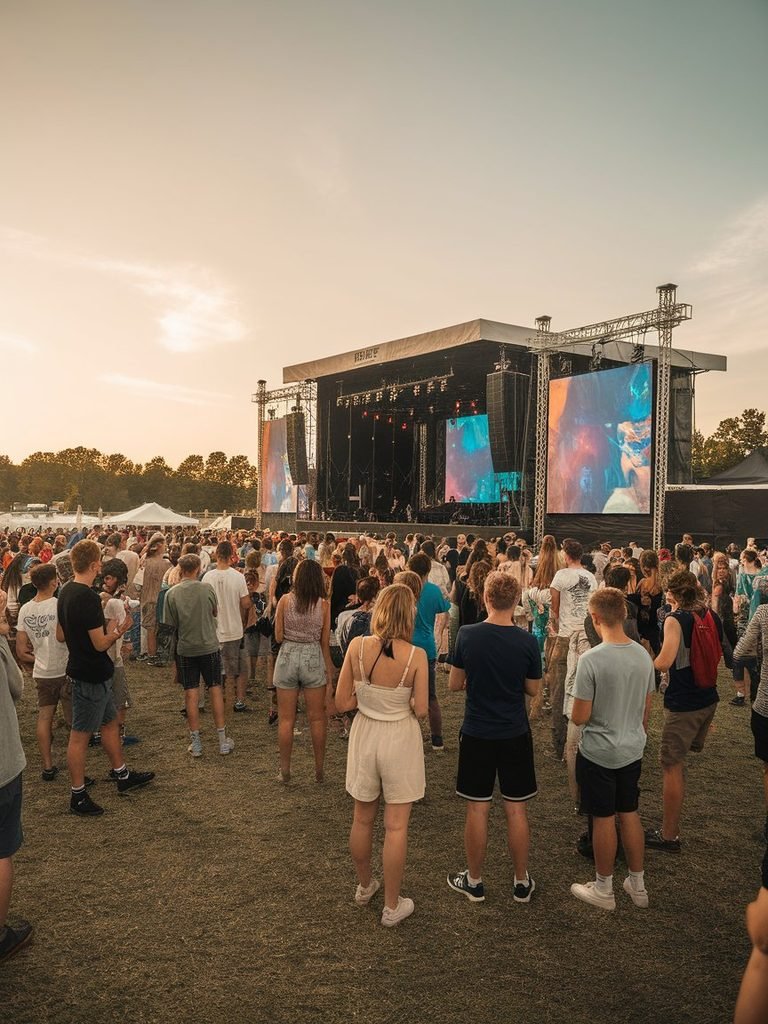
Outdoor stadium shows. Sun exposure during the day and cooling temperatures at night both matter here. Breathable fabrics for the daytime portion, plus one packable layer for later, handle the full swing without requiring a full outfit change.
Festival or general admission floor shows. Standing for the entire show, often in a packed crowd, calls for the most protective footwear on this list and the least amount of loose or dangling accessory pieces that could get caught or lost. A crossbody bag isn’t optional here; it’s closer to a requirement.
Seated theater or smaller venue shows. The most flexibility on this entire list, since seated shows allow for slightly more structured or delicate pieces that wouldn’t hold up standing in a crowd for hours. Even here, though, breaks for standing ovations and encores are common enough to keep footwear reasonable.
All-day festival passes. Sunscreen, a hat, and genuinely broken-in shoes matter more here than at a single evening show, since the standing time often starts hours before the show most people came to see.
Layering for Temperature Swings
Temperature is one of the most underplanned parts of concert dressing, particularly for outdoor or multi-set shows that start in daylight and end well after dark.
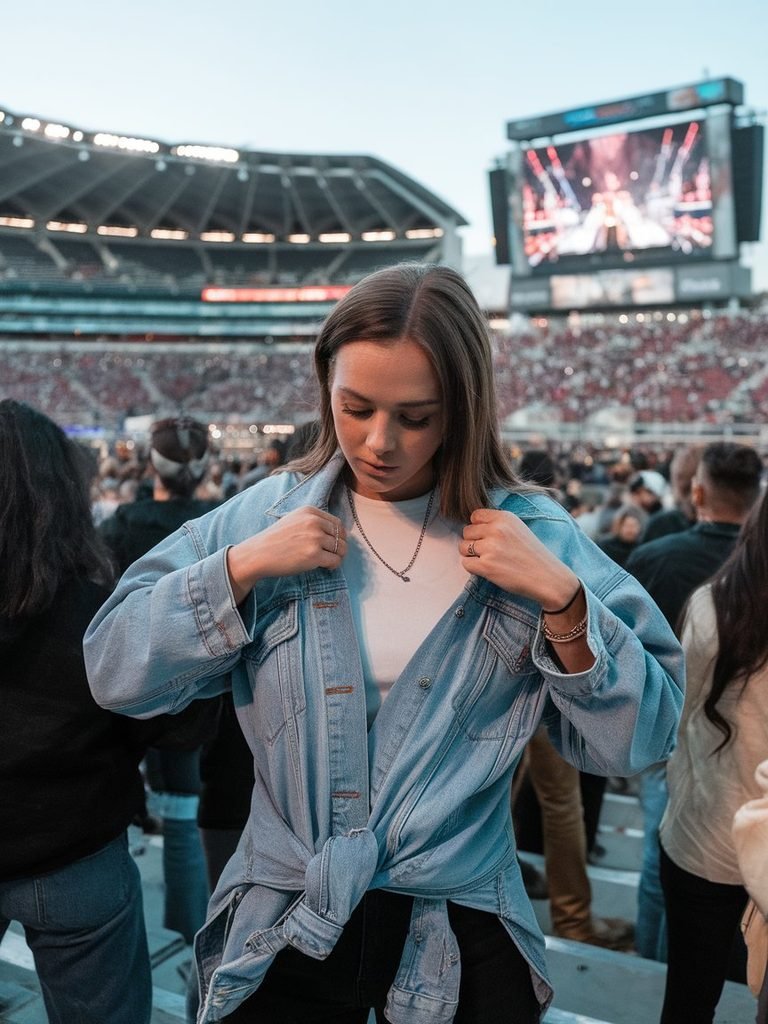
A packable layer, like a lightweight jacket, denim jacket, or oversized flannel, solves most of this problem without adding real bulk. It can tie around the waist during the warm part of the day and go back on as temperatures drop.
Indoor arenas run their own version of this problem, since air conditioning can make a summer outfit feel genuinely cold by the second hour. A thin extra layer, even something as simple as a light cardigan, is worth having even for an indoor summer show.
The same layering logic that works for a full day of travel with unpredictable temperature swings applies directly here, since both situations involve long stretches of time with limited control over the actual climate.
Hair and Accessories That Won’t Become a Problem Later
Hair and jewelry choices matter more at a concert than people initially plan for, mostly because sweat, movement, and crowd proximity all test them in ways a quiet evening out doesn’t.
A style that holds up without touch-ups works better than anything requiring maintenance throughout the night. Loose waves, a low ponytail, or a claw clip updo all survive hours of movement better than an intricate style that needs to stay perfectly in place. A simple approach to loose, natural waves travels well into concert territory for exactly this reason, since it’s designed to look intentional even after hours of movement and humidity.
Jewelry should avoid anything that could snag on another person in a crowd, catch on clothing during dancing, or fall off unnoticed in the dark. Stud earrings, a simple necklace, and rings all work fine. Long dangling earrings and loose bracelets are more likely to become a minor injury or a lost item by the end of the night.

What to Skip Entirely
Anything you have to hold the entire night. If it’s not on your body or in a hands-free bag, it becomes a genuine burden the moment your hands are needed for cheering or filming.
New shoes of any kind. This bears repeating because it’s the single most common source of concert outfit regret. Break shoes in before the actual night, not during it.
Full-length, unstructured maxi dresses in a packed standing crowd. Beautiful in photos, genuinely risky underfoot once a crowd starts moving.
Heavy statement jewelry for a floor or pit show. It’s more likely to become uncomfortable, tangled, or lost than to actually be seen by anyone in a packed, moving crowd.
An outfit you haven’t tested by walking and moving in it first. A quick test at home, moving the way you would while dancing or cheering, catches problems before the actual show does.
Dressing for the Artist Without Sacrificing Comfort
A lot of concert outfit planning starts with a specific artist, era, or aesthetic in mind, and there’s nothing wrong with that. The trick is translating the look into pieces that still meet the comfort requirements above, rather than abandoning them entirely for one specific reference.
A themed color palette, a specific accessory nod, or one standout piece, like a jacket or a graphic top, usually carries the reference well enough on its own. It rarely requires sacrificing the shoe or fabric choices that actually determine how the night feels. Ideas for adding shine and personality to an outfit without adding real bulk apply just as well to a concert look that wants a bit more sparkle, since the same packing-light, move-easily logic carries over from one high-energy night to another.
Frequently Asked Questions
What’s the single most important thing to get right for a long concert? Footwear. A broken-in, supportive shoe solves more of the discomfort that shows up during a long standing show than any other single outfit decision.
Are heels ever a good idea for a standing concert? Generally not for anything longer than a couple of hours or any general admission floor situation. A platform sneaker or boot gives similar visual height without the same risk.
What should I do about the bag policy at arenas? Check the specific venue’s policy before planning the outfit, since many now require clear bags or small crossbody bags under a set size, which affects what can realistically be carried.
How do I dress for a show that starts in daylight and ends at night? Plan for both temperatures with one packable layer, rather than choosing an outfit built around only one part of the day.
Is it okay to wear a themed outfit tied to a specific artist? Yes, and it works best when the reference comes through in one or two elements, like color or a single accessory, while the shoes and fabric still follow the comfort guidelines for a long standing show.
What fabric should I avoid most for a concert? Stiff, non-stretch fabric and anything that visibly shows sweat, particularly for an outdoor or high-energy show where movement and heat both come into play.
The Real Test
A concert outfit only really gets evaluated once, and it’s not in the mirror before you leave. It’s somewhere around the third song of the encore, when the shoes either still feel fine or don’t, and the bag either still feels weightless or doesn’t.
Planning around that moment, rather than the walk-in photo, is what actually separates an outfit that looks good from one that holds up. With the right shoes, the right fabric, and a bag that doesn’t fight you all night, there’s nothing stopping the rest of the outfit from doing exactly what you wanted it to do in the first place.


[…] a dress or tailored trousers, and it will not slide on frosty cobbles. The same thinking behind these concert outfit ideas for standing four hours applies here, since stable footing and comfortable soles matter long before the outfit […]
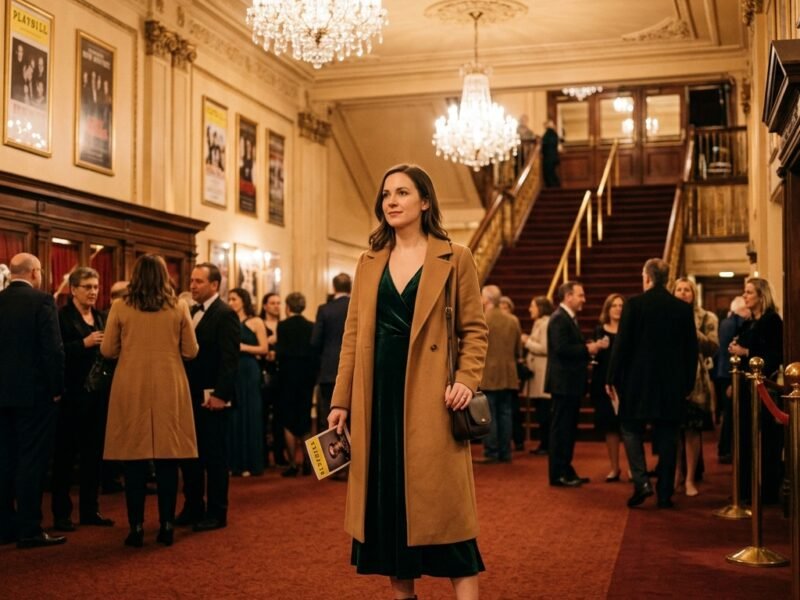
[…] This is the opposite of a concert, where the challenge is standing for hours, as covered in the concert outfit guide. The theatre is about sitting comfortably and still looking […]