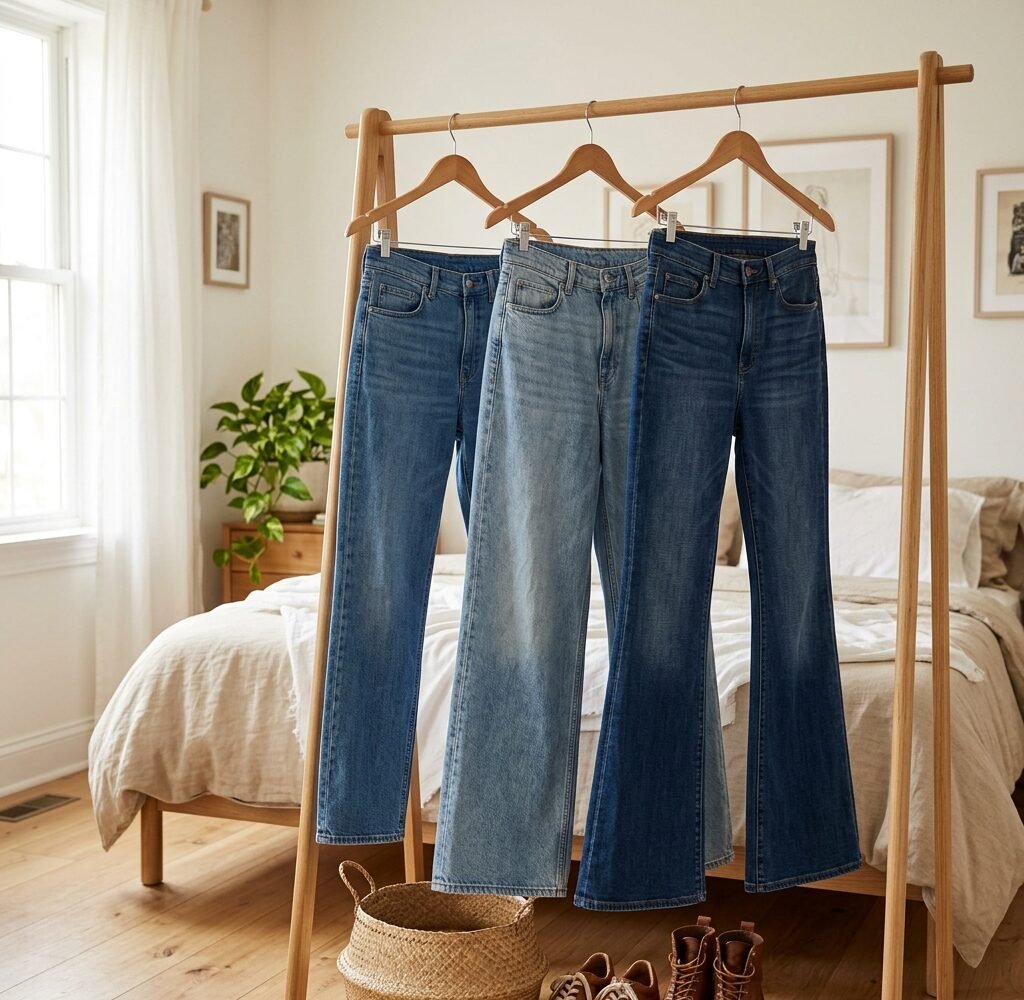
Two pairs of jeans in the same size can sit in completely different places on the body. One cuts across the hip bones, another reaches the ribs, and a third pinches at the thigh while gaping at the back of the waist. The number on the tag was never telling the whole story.
Rise and leg shape do most of the work. Rise decides where the waistband lands and how the seat, pockets, and zipper behave. Leg shape decides the outline from hip to hem. Once both are clear, size becomes a final adjustment rather than the entire decision.
This guide starts with rise and how to measure it, then looks at proportion and sitting comfort. From there it covers the main leg shapes, how rise and cut combine, why inseam matters, and what to check in a fitting room before buying.
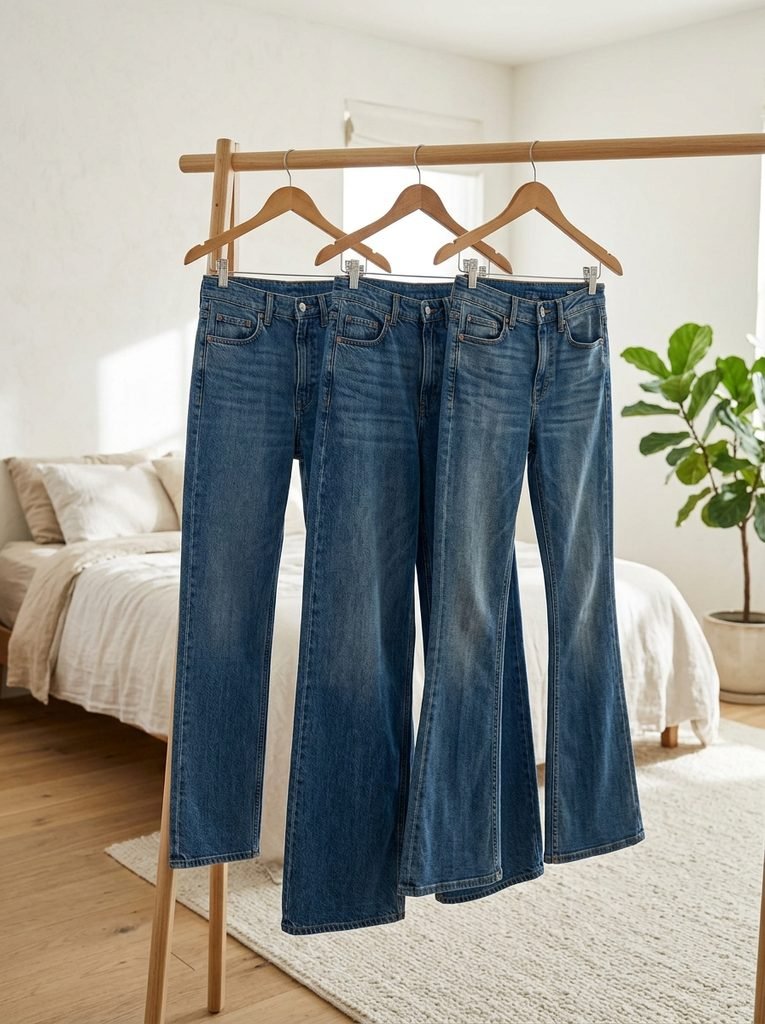
Why a Size Tag Is Only a Starting Point
Denim sizing is not standardized. A 28 in one brand can feel like a 30 in another, and brands usually build each style around its own pattern. A “straight” cut from one label may be roomy through the thigh, while another label’s straight cut is closer to a slim taper.
Two other details change the fit just as much. The first is rise, which moves the waistband up or down and shifts the entire pattern with it. The second is fabric, since a rigid cotton denim and a high-stretch blend can both be labeled the same size and still feel nothing alike.
So the tag works best as a rough guide. The useful question is not “what size am I?” but “which rise and which leg shape suit how I like to dress and move?”
Rise, Measured in Plain Terms
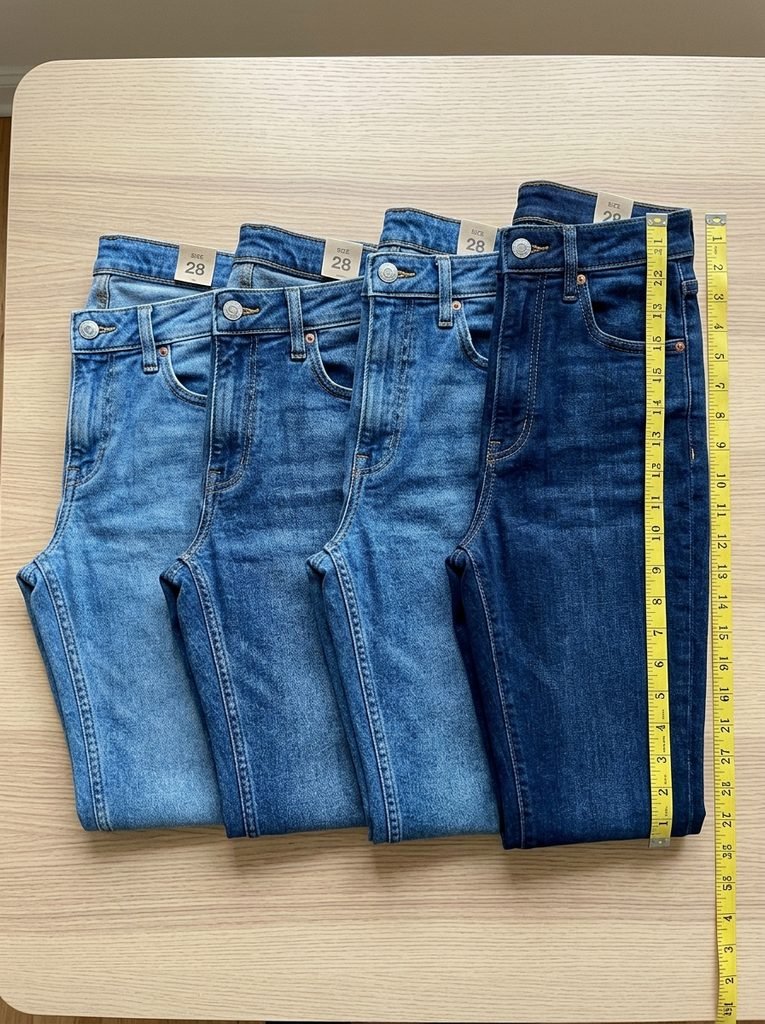
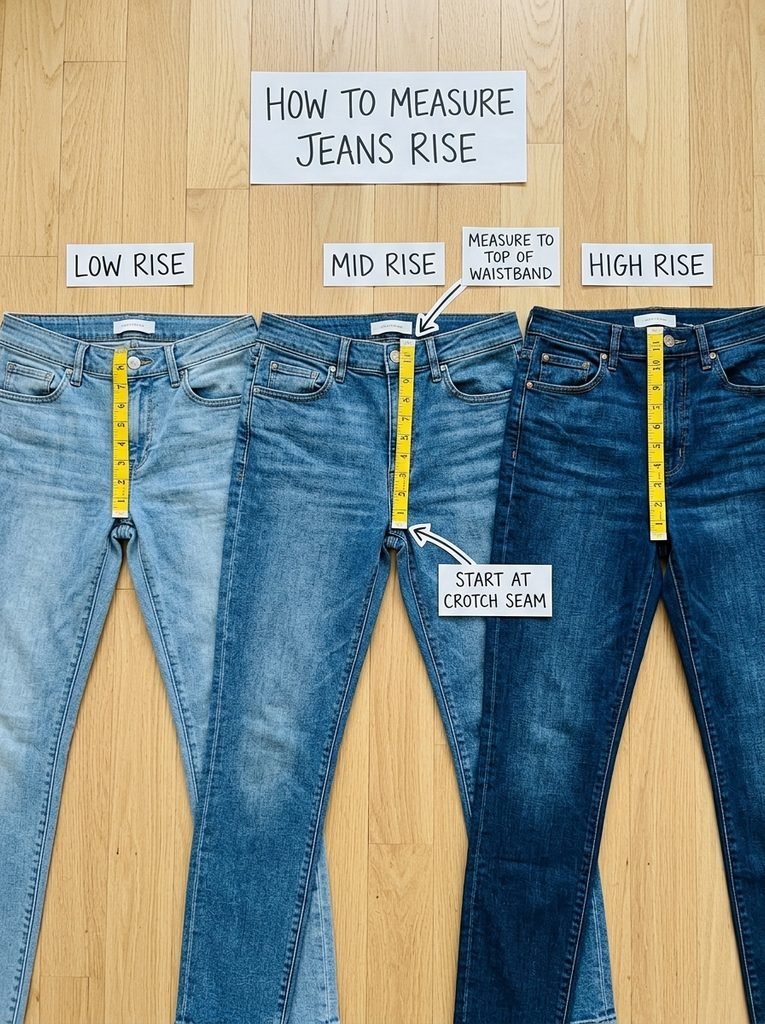
Rise is the distance from the crotch seam up to the top of the waistband, measured on the front. Brands draw their own lines between categories, so the numbers below are approximate. Treat them as a general map rather than a rule.
| Rise | Approximate measurement | Where the waistband sits | What it tends to look like |
|---|---|---|---|
| Low | About 8 inches or less | Below the navel, near the hip bones | Relaxed and casual, with more visible top or belt |
| Mid | About 9 to 10 inches | Around or just below the navel | Balanced and easy, a flexible everyday option |
| High | About 10 to 12 inches | At or just above the natural waist | Longer leg line, easy to tuck a top into |
| Extra high | About 12 inches and up | Between the navel and the ribs | Strong vintage feel, very defined waist |
How to Find Your Own Number
The simplest method uses a pair that already fits well. Lay the jeans flat, smooth the front, and measure from the seam where the legs meet straight up to the top of the waistband. Write the number in your phone, along with the inseam, which runs from the same crotch seam down to the hem.
Many online shops list rise and inseam on the product page. Comparing those numbers with your favorite pair gets closer than any size chart. If a listing only says “high rise,” look for the actual measurement, since one brand’s high rise can match another brand’s mid.
Torso, Hips, and the Waistband Question
Where a waistband feels comfortable depends on proportion, and proportion varies a lot from person to person. A few general observations help narrow things down.
Shorter torso. A very high waistband can feel like it presses into the rib area, especially when sitting. Many people with a shorter torso find a mid or standard high rise more comfortable, with the waistband resting at the navel or just above it.
Longer torso. A high rise rarely feels too high, and it often feels more secure. A low rise may feel short in the back, with a top that keeps riding up to expose the waistband.
A bigger difference between waist and hip. A gap at the back of the waistband is a common complaint. A curved or contoured waistband, a bit of stretch at the back, or a slightly higher rise can help. Many people also choose the size that fits the hips and have the waist taken in by a tailor, which is usually a simple alteration.
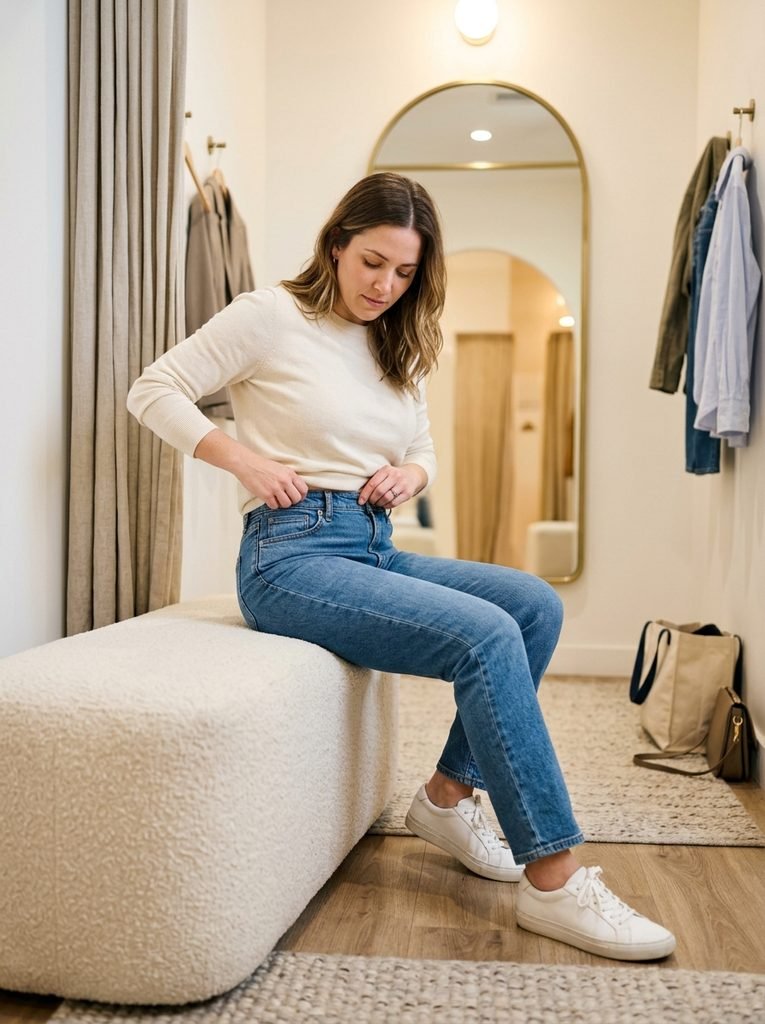
Sitting versus standing. Jeans that feel fine in front of a mirror may behave differently in a chair. Low rises can dip at the back when seated, while very high rises can fold at the stomach if the rise is longer than the torso allows. Sit down in the fitting room before deciding.
For a wider look at proportion-based dressing, this guide to outfits for every body type covers more ground than jeans alone.
Leg Shape Is a Line Drawing
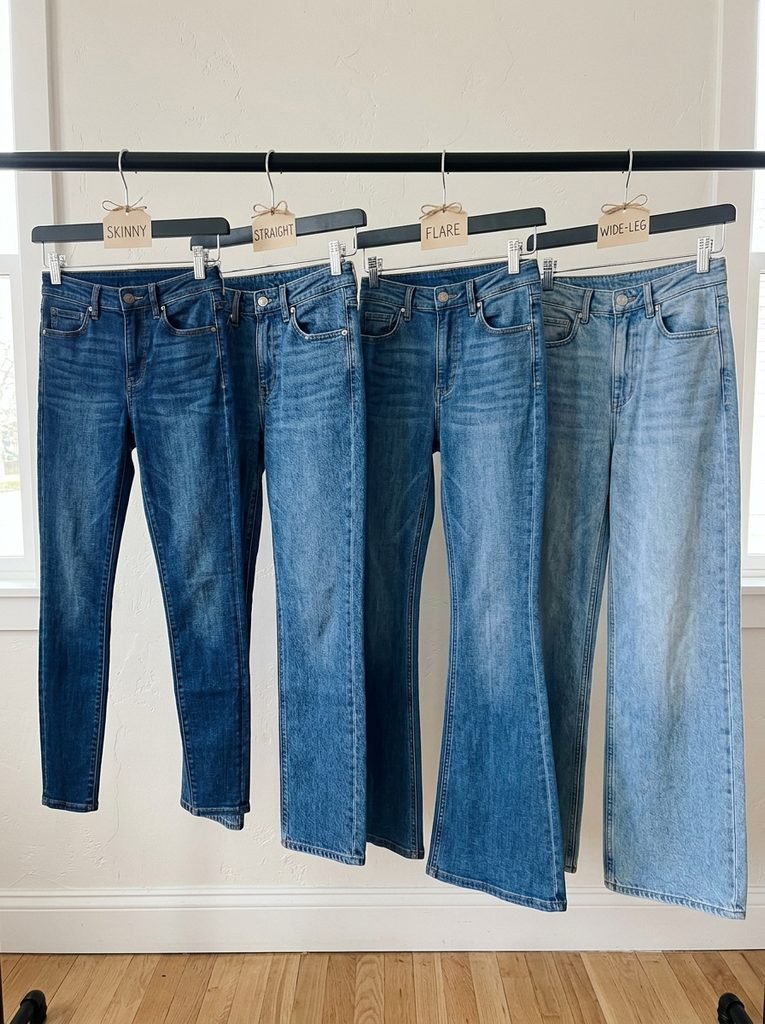
Leg shape sets the outline from the hip to the hem. Names differ between brands, but most cuts fall into four families, and it helps to think of each as a different line drawn down the leg.
Narrow Cuts: Skinny and Tapered
Skinny jeans follow the leg closely from thigh to ankle. They create a slim, continuous column and tuck neatly into boots. Slim and tapered cuts leave a little more room at the thigh and narrow gradually toward the ankle, which feels easier for sitting and walking than a true skinny.
These shapes pair well with longer or looser tops, because the narrow leg balances extra volume above it. A chunky knit or oversized shirt is a natural match.
Straight Cuts: Slim Straight to Relaxed Straight
Straight jeans fall in a nearly even line from knee to hem. A slim straight sits closer to the leg, a classic straight has a little more space, and a relaxed straight is looser through the thigh. This family is often the easiest starting point because the leg opening is wide enough for most shoes and the shape suits so many tops.
Straight leg jeans are also a quiet workhorse for layered outfits, as shown in this fall outfit guide, where they sit under shackets, vests, and blazers.
Flared Cuts: Bootcut, Flare, and Kick Flare
Bootcut jeans stay fitted through the thigh and widen slightly below the knee, leaving enough room for a boot. A full flare opens up more dramatically from the knee, creating a bell shape. A kick flare is subtle, with only a small widening at the hem.
Flares draw the eye downward and tend to look best when the hem skims the floor or the top of the shoe. Because they widen at the bottom, they pair naturally with fitted tops, shorter jackets, and shoes with a little height.
Wide and Relaxed Cuts: Wide-Leg, Barrel, and Baggy
Wide-leg jeans fall from the hip in a loose column. Barrel or horseshoe jeans curve out at the thigh and knee, then narrow again toward the hem. Mom and baggy shapes add room through the hip and thigh, usually with a high or mid rise.
These cuts are about volume, so balance matters. A fitted top, a tucked shirt, or a cropped jacket keeps the outfit from looking shapeless, while the jeans do the visual work.
Putting Rise and Leg Shape Together
Rise and leg shape work as a pair. The same straight leg can look entirely different at a low rise and a high rise. A few combinations are worth knowing.
| Combination | What it looks like | Tops that tend to work |
|---|---|---|
| High rise with straight leg | A long, clean line from waist to hem | Tucked tees, bodysuits, half-tucked shirts |
| Mid rise with bootcut or flare | Balanced upper half, with the leg widening below the knee | Fitted knits, cropped jackets |
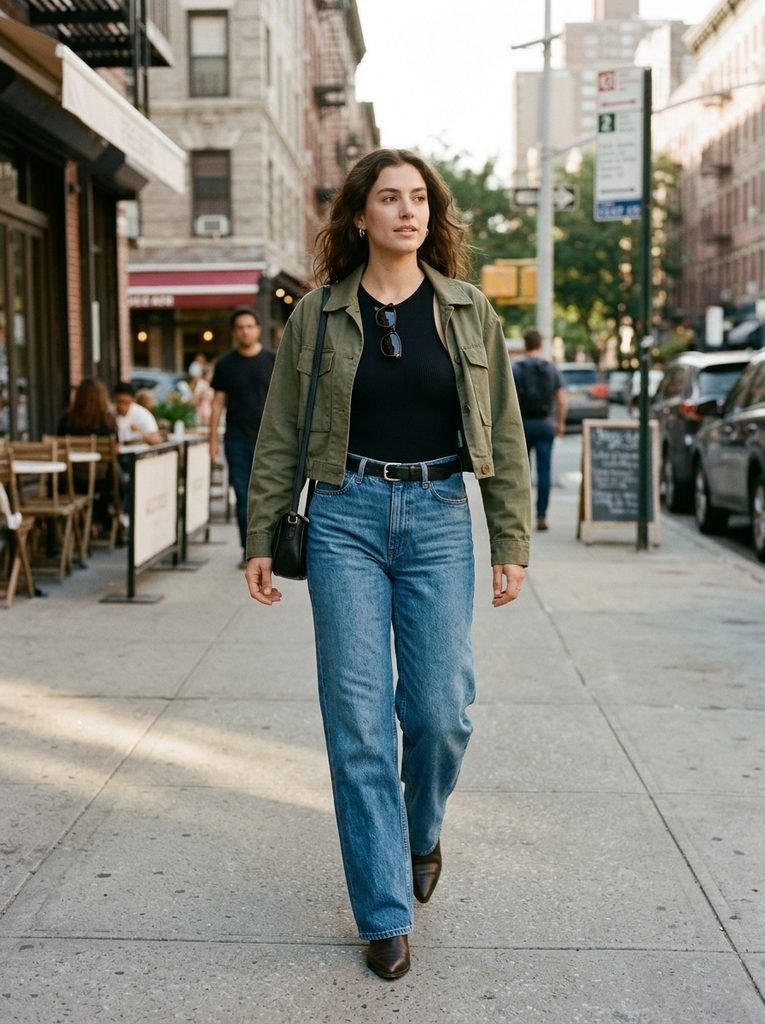
| High rise with wide leg | A tall, column-like silhouette | Bodysuits, cropped sweaters, fitted shirts tucked in |
| Mid rise with skinny or tapered | A casual, easy-to-wear everyday shape | Longer sweaters, oversized shirts |
| Low rise with relaxed or baggy | A laid-back, slouchy look | Shorter tees, cropped tops, long cardigans |
| High rise with barrel | A rounded leg shape against a defined waist | Slim tops and structured jackets |
The aim is to keep one part of the outfit relaxed and another part fitted, so the silhouette stays readable. Wide jeans with a boxy top can lose shape, while the same jeans with a snug knit or a tucked shirt look intentional.
Inseam, Hem, and the Shoes You Actually Wear
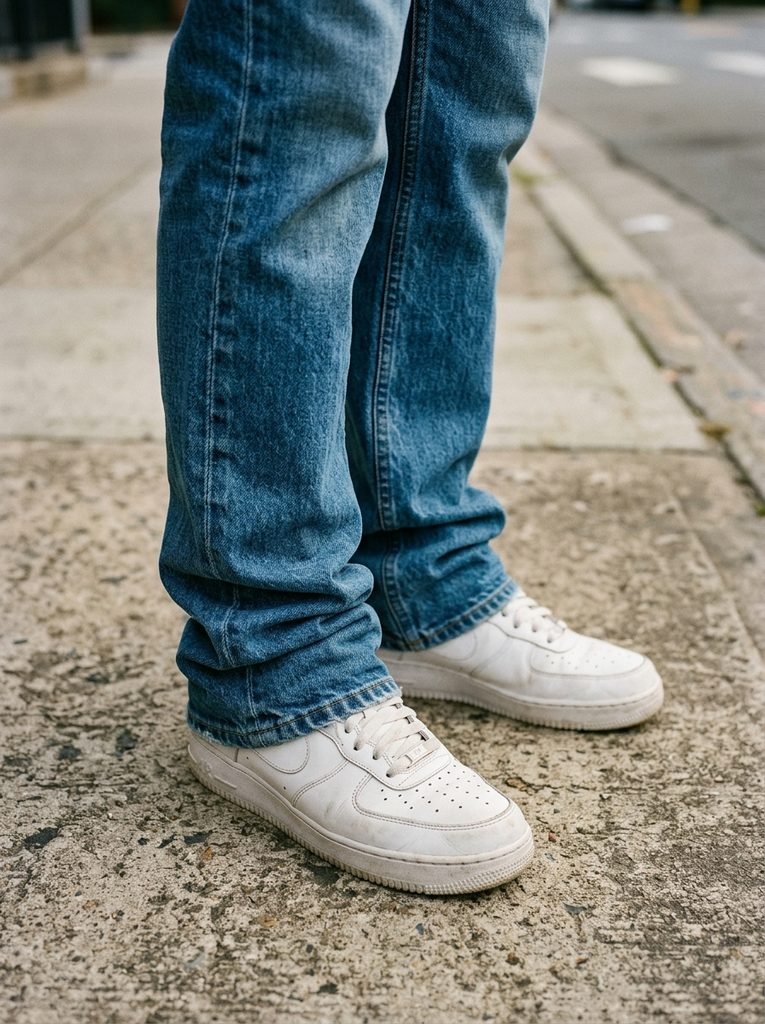
Inseam length changes how a pair of jeans sits on the shoe. A hem that looks perfect with flats can look short with boots or drag on the ground with sneakers, so it helps to shop and hem with your most-worn shoes in mind.
Cropped and ankle-length hems show the shoe and work well with loafers, sneakers, and low boots. Full-length hems that rest on the top of the shoe suit boots and sneakers. Stacked hems, with a little fabric bunching at the ankle, suit skinny and straight cuts and give a relaxed, casual finish.
Flares and wide legs usually look best long. Many people choose a longer inseam and wear them with heels or platforms, or hem them to the exact shoe they wear most often. For anyone shorter than average, the petite outfit ideas guide goes deeper on proportions and hem lengths.
Hemming is one of the simplest alterations. A tailor can usually shorten jeans while keeping the original hem, which preserves the worn, finished edge.
Fabric Changes the Fit
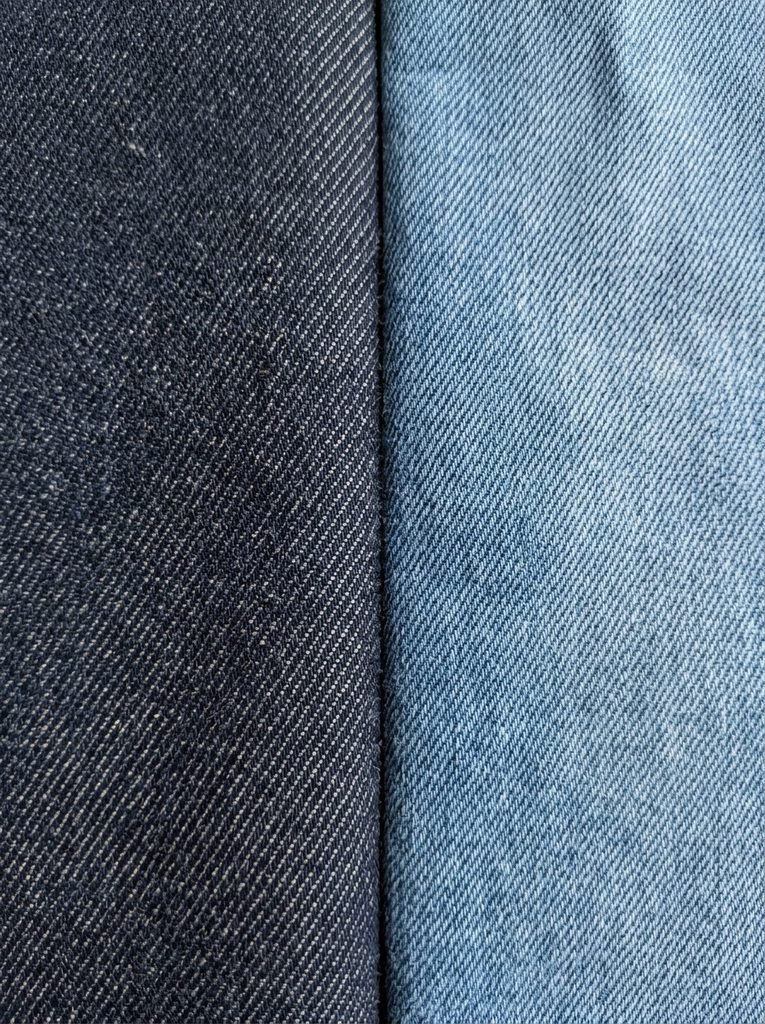
Fabric affects how a size behaves over a day. Rigid denim, made mostly or entirely of cotton, holds its structure and usually softens and loosens with wear. Stretch denim moves more easily and feels comfortable right away, but it can relax during the day and may feel looser by evening.
If a pair of jeans fits snugly but comfortably, a rigid pair may give a little with wear, while a stretch pair may give more. Because of this, many people try rigid denim a touch snug and stretch denim a touch closer to true fit. Always check the care label, since washing and drying can change both the fit and the length.
Color and weight also matter. Heavier denim holds structure in wide and straight cuts, while lighter weights drape better in flares and relaxed shapes. A darker wash tends to look more polished, and lighter washes feel more casual.
A Fitting Room Routine That Takes Three Minutes
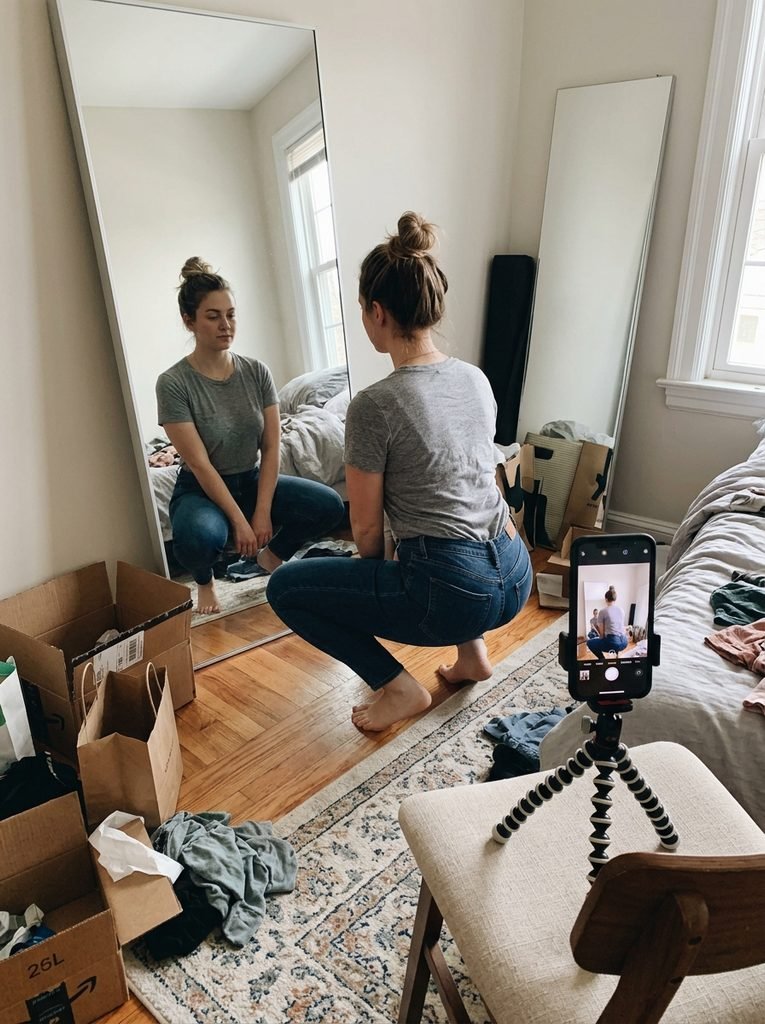
Rather than trying to judge a pair by looking in a mirror, run through a short checklist.
- Sit down. Check that the waistband does not dig in or fold, and that the back stays covered.
- Squat and bend. The jeans should move with you without sliding down or pulling tight.
- Test the waistband. You should be able to slip a flat hand in at the back without a big gap, or a fingertip’s width of space at the front.
- Check the pockets. Pockets that lie flat and stay closed suggest a fit that suits the hips. Gaping or bulging often signals a mismatch.
- Look at the thigh and knee. Wrinkles that pull sideways from the crotch point to tight thighs. Wrinkles that fall straight down suggest extra room.
- Try shoes or imagine them. If the hem will look wrong with your usual shoes, factor in alteration costs.
A quick photo of the back view helps too, since it shows seat shape and waistband gap better than a mirror.
Quick Answers on Choosing Jeans
Does high rise make legs look longer?
Often, yes. The waistband sits higher, so the leg appears to start higher on the body, particularly with cropped or ankle-length hems.
What if I am between sizes?
Consider the stretch in the fabric. For rigid denim, many people size to the hips and alter the waist. For stretch denim, the smaller size often works once it relaxes.
Why is there a gap at the back of my waistband?
This usually means the waist and hip proportions differ from the pattern. A contoured waistband, a slightly higher rise, or a tailor’s adjustment can solve it.
Which rise is best for everyday wear?
Mid rise is the most flexible for many people, but the best rise is the one that feels comfortable sitting, standing, and bending, and that works with the tops you wear most.
Do I need several pairs?
Not necessarily. One well-fitting straight leg in a dark wash is a strong foundation for a capsule wardrobe, with other cuts added only when they fit specific outfits.
Start With a Fit Note
Before the next purchase, write down the rise and inseam of the best pair you own, plus the leg shape and fabric. That small note turns shopping from guesswork into a comparison, and it makes online orders far more reliable.
From there, the process becomes simple: choose a rise that feels good seated, pick the leg shape that suits your favorite outfits, and treat the size as the last adjustment. A tailor can handle small fixes, but the right rise and cut are much harder to change after the fact.



Leave a Reply