
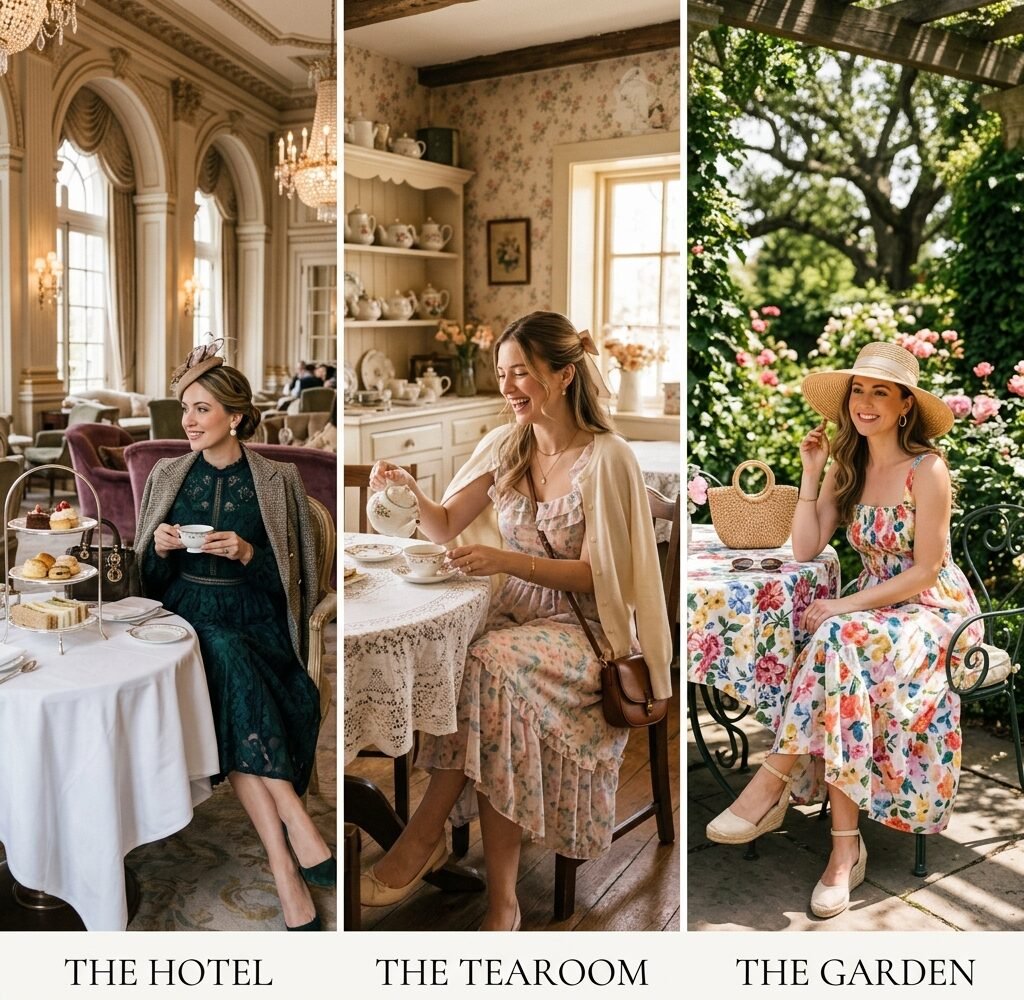
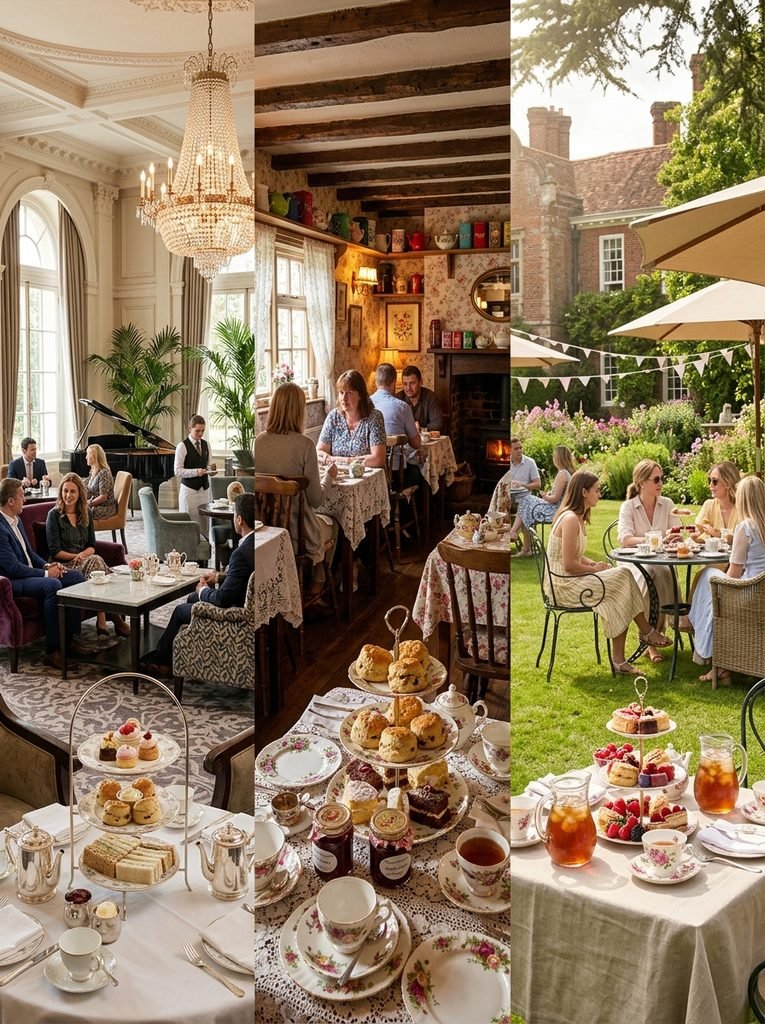
Afternoon tea is one of the few meals where the room, not the menu, decides the outfit. The same tiered stand of sandwiches, scones, and cakes can arrive under a gilded ceiling, in a low-beamed tearoom with mismatched china, or on a lawn with a breeze and a view of the flower beds. A dress that feels perfect in one of those settings can feel wrong in another.
That is why a single “afternoon tea dress code” rarely helps. The better approach is to read the setting first, then choose silhouettes, fabrics, and shoes that suit it. Below you will find the three main settings, outfit formulas for each, advice on colors and prints, seasonal notes, and a short list of what to leave at home.
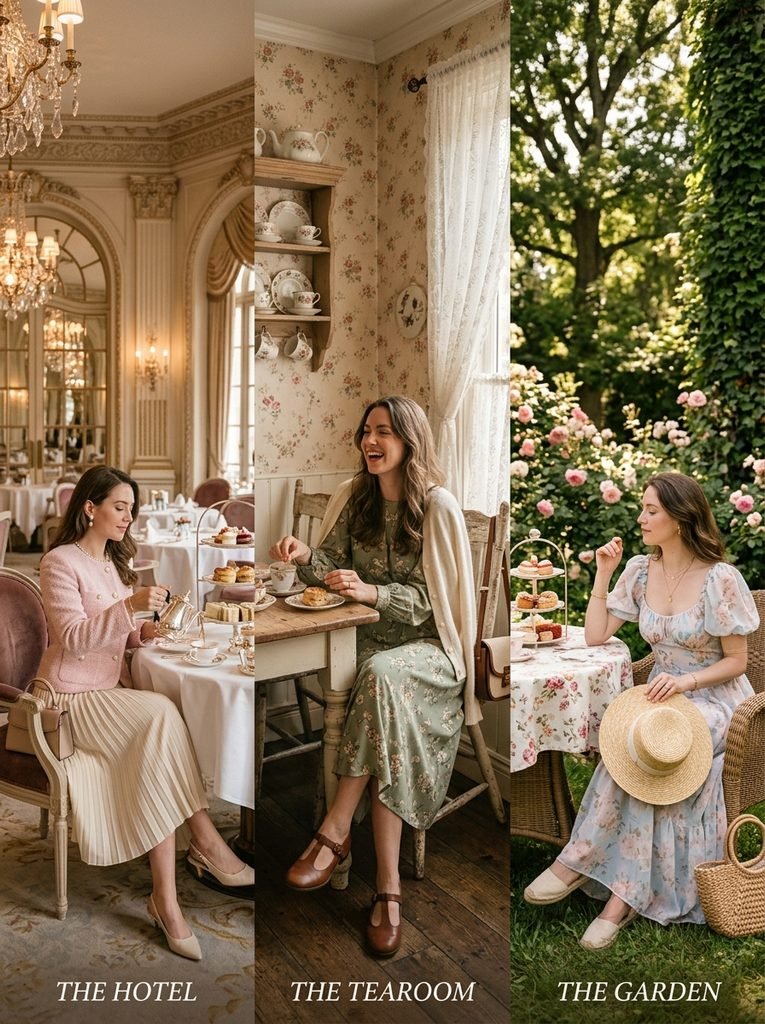
Three Settings, Three Moods
Before picking an outfit, work out which of these three settings is closest to the booking. Many invitations arrive without a dress code, so the venue itself tells you most of what you need.
| Setting | Mood | Outfit direction |
|---|---|---|
| Grand hotel | Formal, polished, often with a dress policy | Tea dress, midi skirt with a fine blouse, or tailored separates with refined shoes |
| Tearoom or café | Cosy, charming, relaxed | Knit and skirt, floral dress with a cardigan, or smart jeans with a pretty top |
| Garden or outdoor tea | Breezy, sunny, informal | Light fabrics, block heels or flat sandals, a layer for shade and wind |
Whichever setting you are heading to, it is worth checking the venue website once. Some hotels spell out their policy clearly, and a quick look prevents any awkward surprise at the door.
Grand Hotels: What the Room Expects
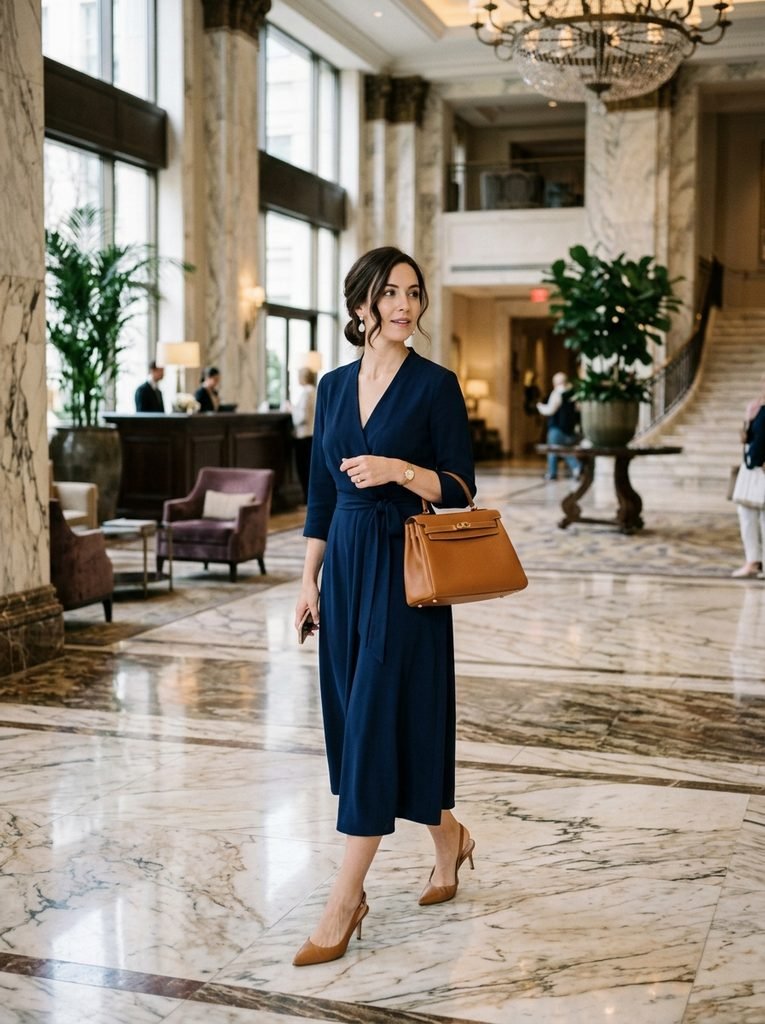
Grand hotel tearooms tend to be the most formal. Marble floors, tall mirrors, and white tablecloths set a tone that suits something put together. Some venues publish rules. At The Ritz London, for example, gentlemen are required to wear a jacket and tie for afternoon tea in the Palm Court, and jeans and sportswear are not permitted for guests of either gender, according to the hotel’s own etiquette guide. Other hotels use a looser smart casual approach, so the details vary.
The safe route is to dress as if the room is slightly more formal than you expect. That does not mean a ball gown. It means polished, neat, and comfortable for a two-hour sit.
Dress and Skirt Formulas
A midi tea dress is the classic choice. Look for a softly structured bodice, a skirt that falls below the knee, and sleeves of at least a short length. Fabrics such as crepe, satin-backed jersey, and fine chiffon look at home in hotel light.
A fine blouse tucked into a pleated or A-line midi skirt is another dependable option. Pair a silk-feel blouse in cream or soft blue with a navy or dusty-rose skirt, and add a slim belt for definition. The outfit feels dressed up without needing a special-occasion purchase.
Tailored separates work as well. Wide-leg trousers in a lightweight wool or crepe, a fitted knit, and a structured blazer look composed in a formal dining room. The key is a smooth finish, so avoid creased linen or anything with visible wear.
Shoes, Bags, and Jewelry
Closed-toe shoes in leather or suede, such as pointed flats, kitten heels, or low block heels, look right in hotel settings. They also handle the walk across long carpets and marble lobbies. Smart ankle boots suit cooler months.
A small structured bag, a top-handle style, or an elegant clutch keeps the table tidy. Large totes tend to look out of place beside china and silver. For jewelry, pearl or gold studs, a thin chain, and a slim watch are enough. Anything that clinks against a plate or teacup is best saved for another day.
Tearooms and Cafés: Pretty but Relaxed
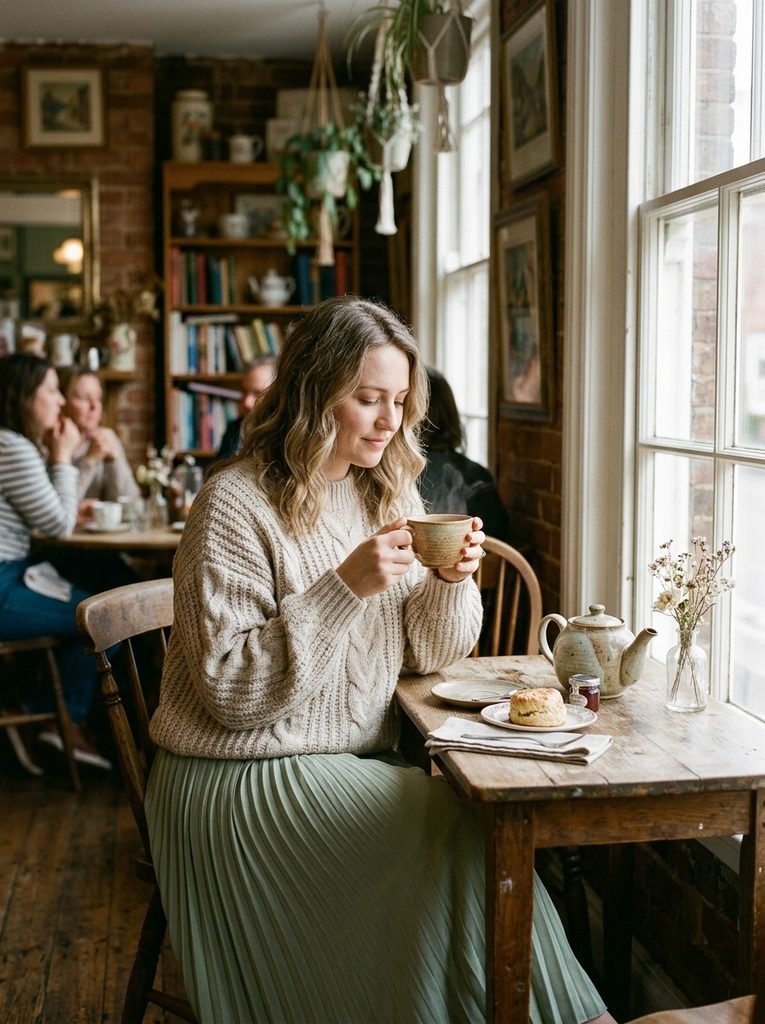
Tearooms are smaller and often more charming than grand. Tables may be tight, seats low, and the decor floral, vintage, or cosy. The dress code is usually informal, so this is where personality can come through without strict rules.
A floral tea dress with a cardigan is the instinctive pick, and it works because the pattern echoes the surroundings. For something less sweet, choose a plain midi dress in sage, cream, or dusty blue and add a pattern through a scarf or a headband.
A fine knit paired with a midi skirt is warm, comfortable, and photogenic. A cable or ribbed knit in oatmeal or soft pink looks inviting against vintage crockery. Smart dark jeans with a pretty blouse and loafers suit those who prefer a more casual feel, as long as the jeans are clean and unripped. The smart casual dress code guide offers more help calibrating this middle ground.
Small tables and low sofas change the practical side. Skirts that sit at or below the knee are easier to manage when sitting low, and sleeves that are not too wide avoid brushing teapots and cake stands.
Garden Teas: Lawns, Breezes, and Sunshine
Garden afternoon teas, whether at a country house, a botanical garden, or a friend’s lawn, bring different challenges. The ground may be uneven or soft, the weather can change quickly, and shade moves around the table.
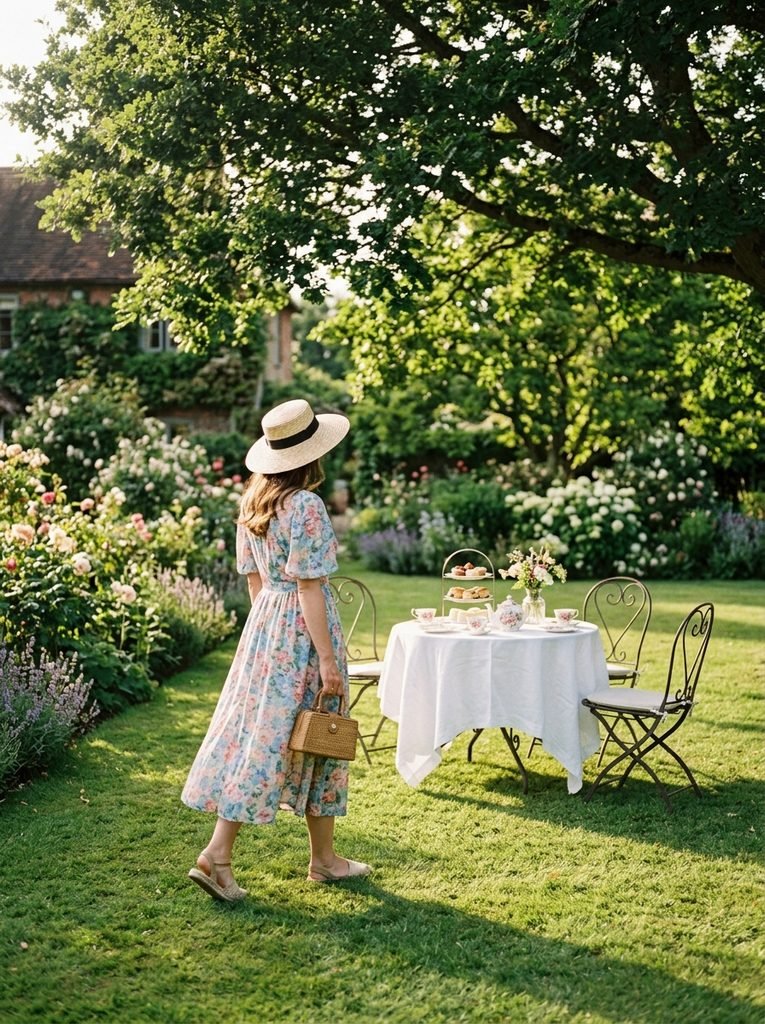
Shoes are the first decision. Stiletto heels sink into grass and catch in gravel, so block heels, wedges, or flat sandals are better. Espadrilles and low leather sandals suit warm days, while ankle boots work for cooler weather. For wet grounds, shoes that can be wiped clean are a sensible choice.
Fabrics should be light and breathable. Cotton voile, linen blends, and soft viscose look natural outdoors, but they crumple, so a pattern or texture disguises creases better than a plain pale color. A midi dress with a bit of fullness moves well in a breeze, and a wrap style stays secure when the wind picks up.
A hat is both stylish and practical. A wide-brimmed straw hat shades the face and looks right in a garden setting. Add sunglasses and a light scarf or shawl for when the sun drops behind a tree. For rural settings with more mud, the countryside style guide covers waxed jackets and wellies for rougher conditions.
Colors and Prints That Suit the Table
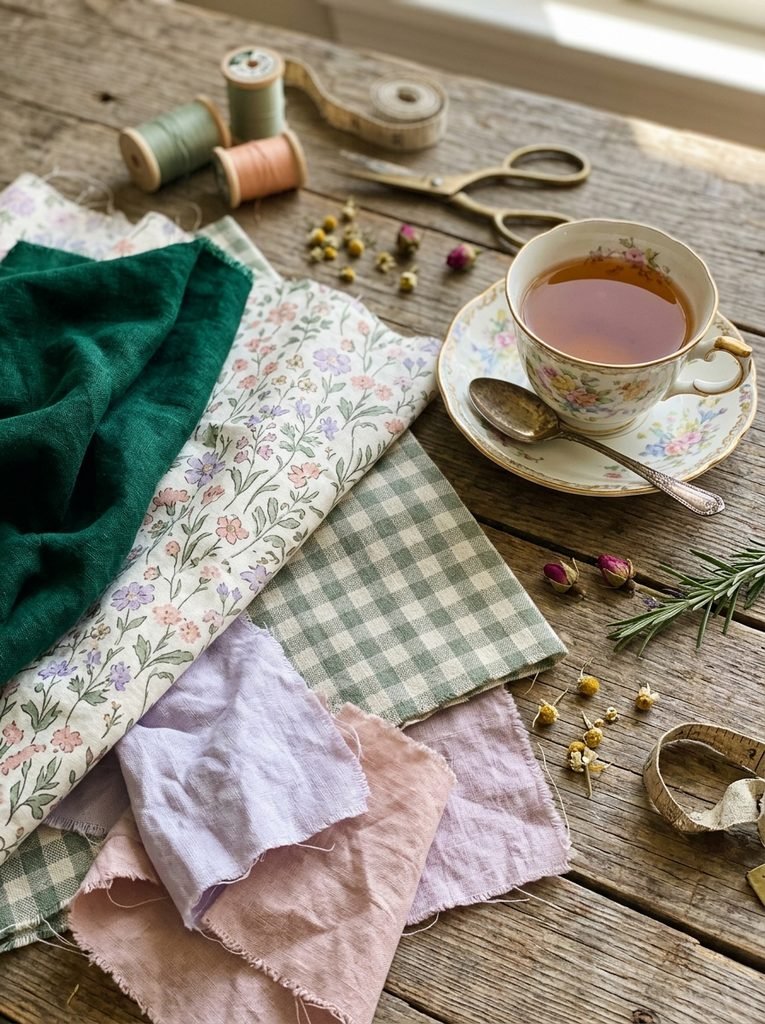
Afternoon tea has a visual style of its own, with delicate china, pastel cakes, and soft linen. Outfits that harmonize with that palette tend to look at ease.
Soft pastels. Pale pink, mint, lemon, lilac, and baby blue are natural fits, especially in spring and summer. They look best in matte fabrics such as crepe and cotton, which keep the shade from looking too sweet.
Florals. Small to medium florals are the classic tea pattern. Soft backgrounds like cream or pale blue create a gentle look, while darker backgrounds make a floral feel more evening-ready.
Stripes and checks. Fine stripes and gingham give a fresh, slightly nostalgic mood. They suit tearooms and garden settings well.
Jewel tones. Emerald, sapphire, and plum look rich in hotel dining rooms and in colder months. They pair nicely with gold accessories.
Neutrals. Cream, camel, and soft grey are elegant and reliable, particularly when texture or a single accent adds interest.
It is also worth thinking about spills. Jam, cream, and tea can drip, so very pale fabrics in plain silk are riskier than printed ones. A pattern conceals small marks, while a dark color hides tea splashes.
Dressing Around the Food
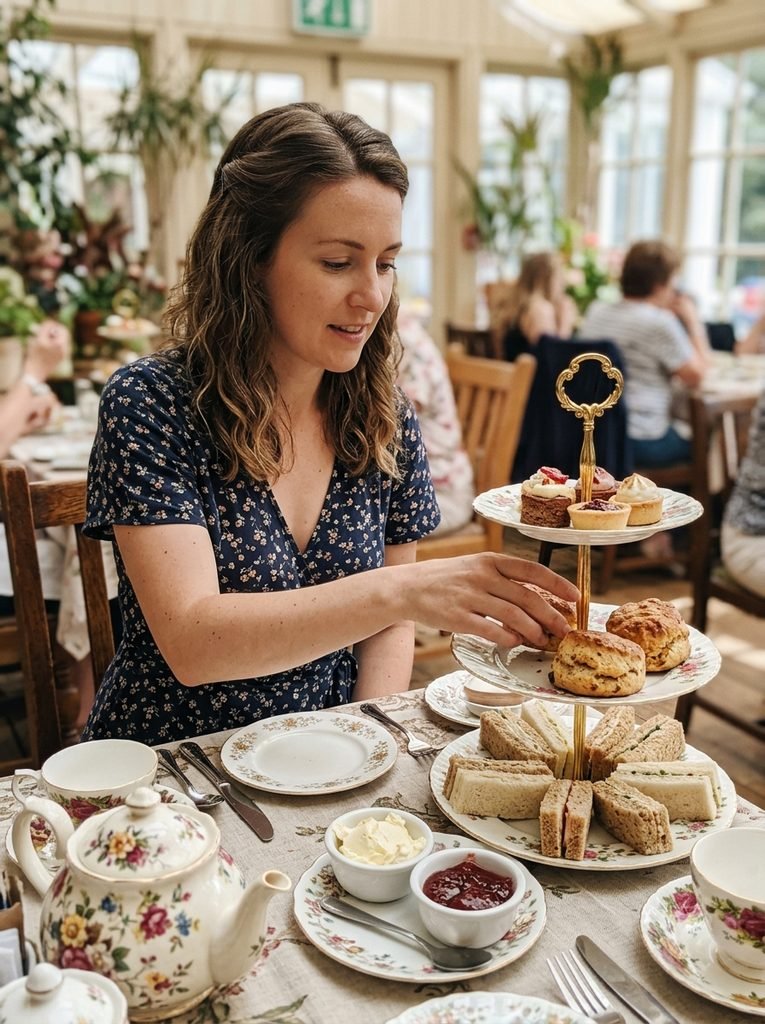
An afternoon tea usually lasts one and a half to two hours, and it involves a lot of eating. The outfit should feel just as comfortable at the last scone as at the first sandwich.
Avoid anything tight at the waist, because a tiered stand can be a generous amount of food. A slightly relaxed waistline, an empire cut, or a wrap dress gives room without looking shapeless. Flowing sleeves can drag in cream, so a fitted or short sleeve tends to be easier.
Long hair near tea and jam is more manageable when pinned back or loosely tied, which also leaves the neckline visible. A soft headband or a barrette keeps strands out of the way and adds a pretty detail.
Fabric choice matters too. Crepe, jersey, and ponte keep their shape when seated, whereas stiff cotton and linen wrinkle fast. A little stretch in the fabric makes a long seated meal feel easier.
Dressing for the Season
Afternoon tea happens year-round, and the season changes both comfort and style.
Spring and Summer
Light dresses, skirts with blouses, and short-sleeve knits suit warm weather. Choose breathable fabrics and keep a light cardigan or wrap nearby, as air-conditioned hotels and shaded gardens can feel cool. The summer outfit guide looks at how different fabrics handle heat, which is useful for planning a garden tea on a hot day.
Autumn and Winter
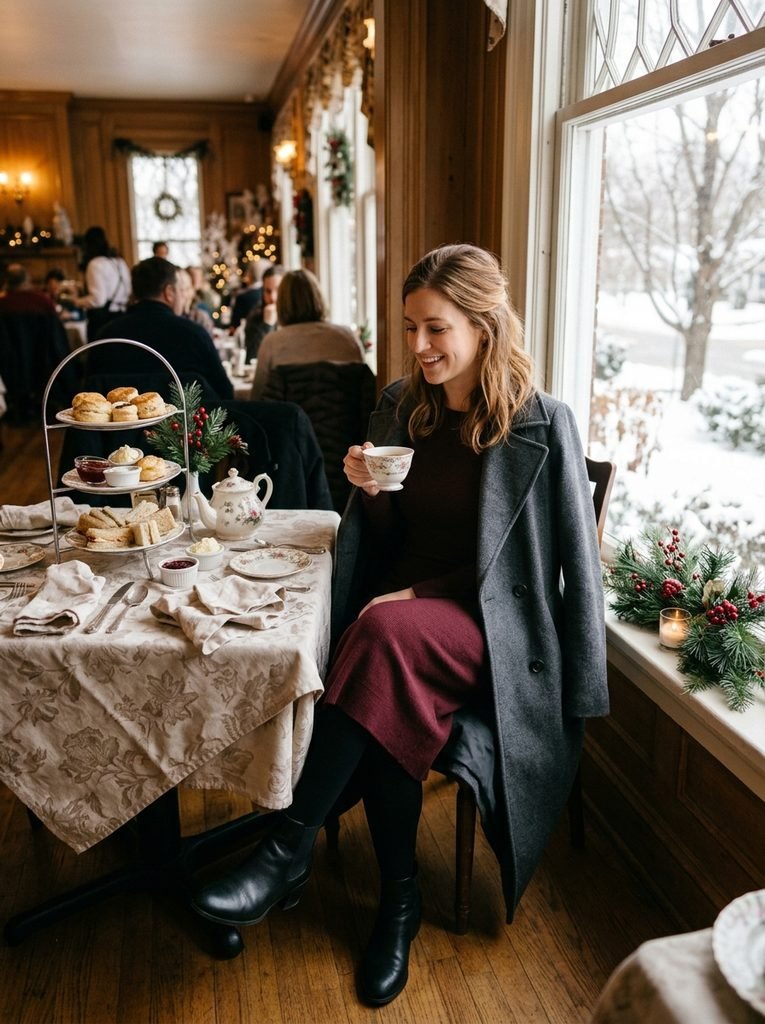
Cold-weather teas are the most atmospheric, with candles, warm tea, and fireplaces. Midi dresses with tights and boots, wool skirts with fine knits, and tailored trousers with silk blouses all look right. A coat that can be left at the cloakroom is practical. For cold-weather outerwear ideas, the winter coat outfits guide covers options in camel, check, and oversized styles.
Deeper colors such as burgundy, forest green, and chocolate brown suit the season and the candlelit setting. Velvet accessories, like a headband or a bag, add a festive touch in December.
Tea Parties for Special Occasions
Afternoon tea is often chosen to mark something: a birthday, a baby shower, a mother-and-daughter outing, or a bridal celebration. These occasions raise the dress level slightly.
For bridal showers held as afternoon teas, guests tend to lean toward pretty dresses in soft colors, and the guest of honor often wears white or a pale shade. The bridal shower outfit guide offers more detail for both the bride-to-be and guests.
For a birthday tea, a slightly more dressed-up outfit, such as a satin midi skirt with a fitted top or a jewel-toned dress, feels celebratory. For a mother-daughter or friend-group tea, coordinating loosely in color family, rather than matching exactly, looks charming in photographs.
Small Accessories That Finish the Look
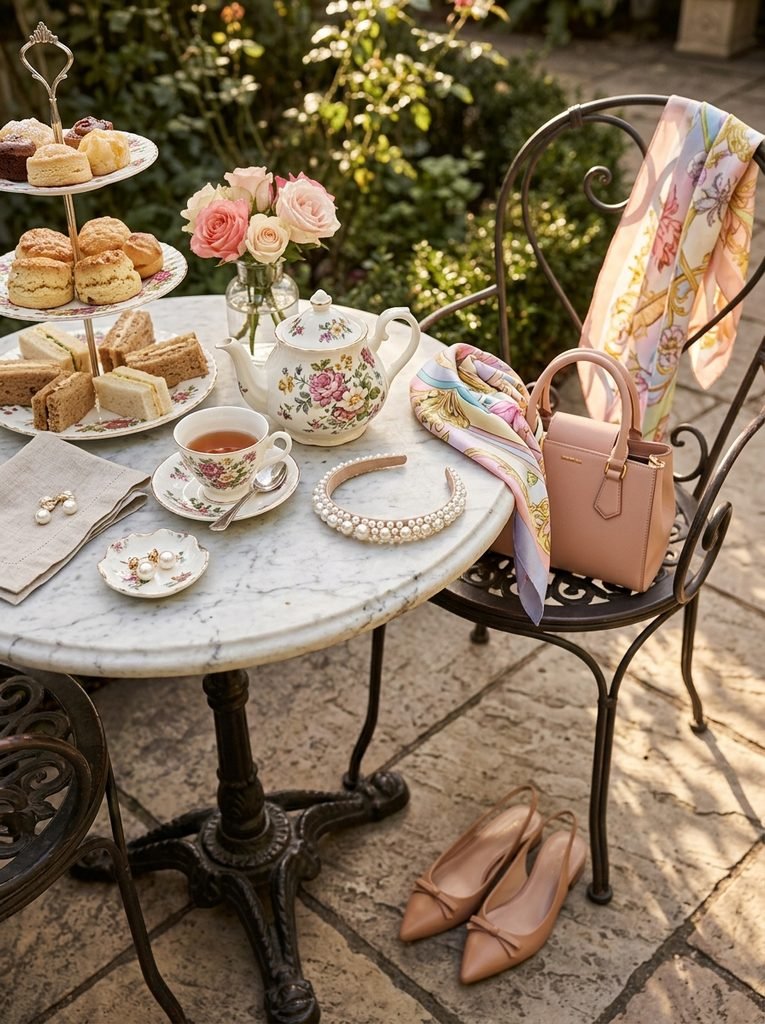
A few small details make an afternoon tea outfit feel complete. A thin headband or a pearl-trimmed clip adds a polished touch without being fussy. A silk scarf tied at the neck or on a bag handle adds color and a hint of vintage charm.
For gloves and hats, formal teas sometimes invite them for fun, especially at special events. In everyday settings, a simple hat in a garden is more than enough. A fascinator belongs to occasions with a clear hat tradition and may look too formal otherwise.
Tights deserve a mention in cooler months. Sheer black or nude tights work with almost every dress, while opaque tights in navy or chocolate look warm and deliberate with boots.
What to Leave at Home
A few choices tend to clash with the occasion. Sportswear, gym trainers, and athletic leggings are not welcome at many hotel tearooms, and The Ritz explicitly rules out sportswear and jeans in its tea room. Flip-flops and very casual beachwear feel out of place in almost any tearoom. Heavily distressed denim and logo-heavy tees belong to a more casual outing.
On the other side, very formal evening gowns and sequined party dresses can feel over the top in the afternoon light. Aim for polished and pretty rather than glittery.
Finally, shoes that you cannot walk in for an hour are best avoided, since tearoom floors can be marble, stairs may be steep, and garden paths can be uneven.
Quick Answers on Afternoon Tea Outfits
Do I have to wear a dress?
No. A midi skirt with a blouse, tailored trousers with a knit, or smart dark jeans with a pretty top all work in most venues. Check the dress policy for grand hotels.
Can I wear jeans to afternoon tea?
In relaxed tearooms and casual venues, clean dark jeans are fine. Some luxury hotels do not permit jeans, so check ahead.
What shoes are best?
Closed-toe flats, kitten heels, block heels, and neat boots suit most settings. Choose wedges or flat sandals for gardens.
Should I wear a hat?
Only if it suits the setting. A sun hat is ideal for gardens, while a fascinator belongs to special events with a hat tradition.
What colors are best?
Soft pastels, florals, and jewel tones all work. Choose prints or darker shades if you are worried about spills.
One Outfit, Three Rooms
If you want a single outfit that works almost everywhere, build around a midi dress or skirt in a mid-tone color, add a thin cardigan or a blazer, and wear closed-toe shoes with a low heel. That combination holds up in a grand hotel, looks charming in a tearoom, and copes with a garden when swapped for block heels.
From there, adjust for the room: add polish for a hotel, a pretty print for a tearoom, and a hat and flatter shoes for a garden. Afternoon tea is a small occasion, but the outfit should be as comfortable as the cake is good.

Leave a Reply