From December through February, a coat is the first thing people see. It covers almost everything else, so it sets the color, the shape, and the mood of the whole look before anyone notices the sweater or the shoes. Most winter outfit advice treats the coat as the last decision. This guide reverses that order and builds each outfit outward from the coat.
The sections below follow coat types: camel wool, black puffer, shearling, bold color, belted, patterned, and oversized. Each one comes with a clear idea of what to wear underneath it and why. A final stretch covers the practical side, including how to judge warmth and what to wear when the coat comes off indoors.
Why the Coat Sets the Whole Outfit
In cold weather the coat covers roughly two thirds of the visible outfit. Its collar frames the face, its hem decides where the eye stops, and its fabric reads as either smooth, soft, or structured from a distance. Everything under it works as a supporting detail.
That shifts how the underlying pieces should be chosen. A statement coat needs calm company. A neutral coat can handle more color and texture underneath. The simplest way to plan is to pick the coat first, name its single strongest quality (color, volume, texture, or pattern), and keep the rest of the outfit from competing with that quality.
A coat also gets repeated more than any other item. Over a winter it may appear in dozens of photos and dozens of commutes. Choosing outfits around it means the same coat can look different on Monday and Saturday simply because the quiet layers change.
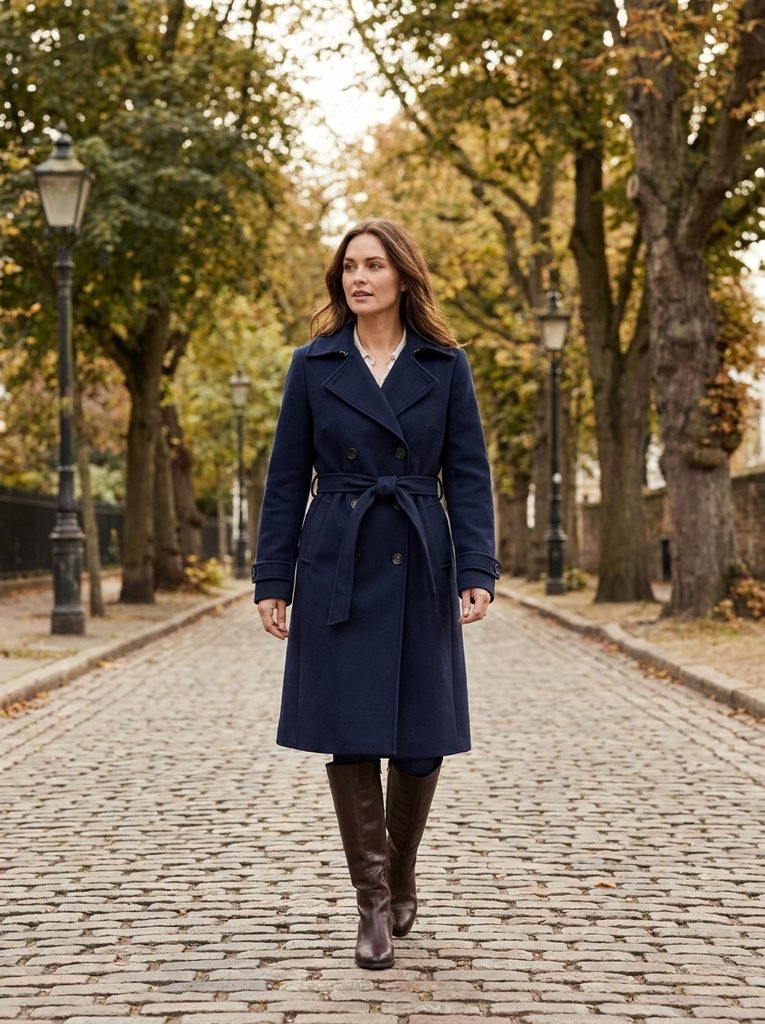
Visual weight matters here. A thick coat with a heavy scarf and chunky boots can look top-heavy, so one of those three usually needs to stay slim. Seeing the coat as the loudest voice in the room makes every other choice easier.
Camel Wool Coat Outfits
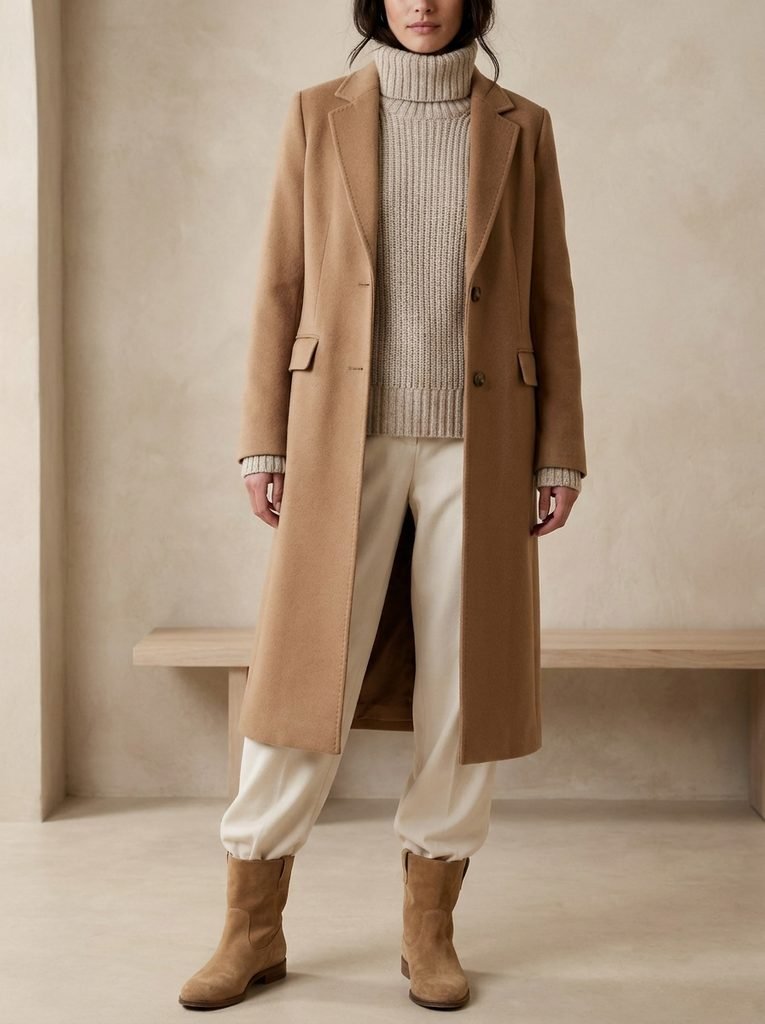
A camel coat is the classic example of outerwear that carries an outfit without effort. The warm, mid-tone shade reads as polished on its own, and it sits comfortably next to nearly every neutral.
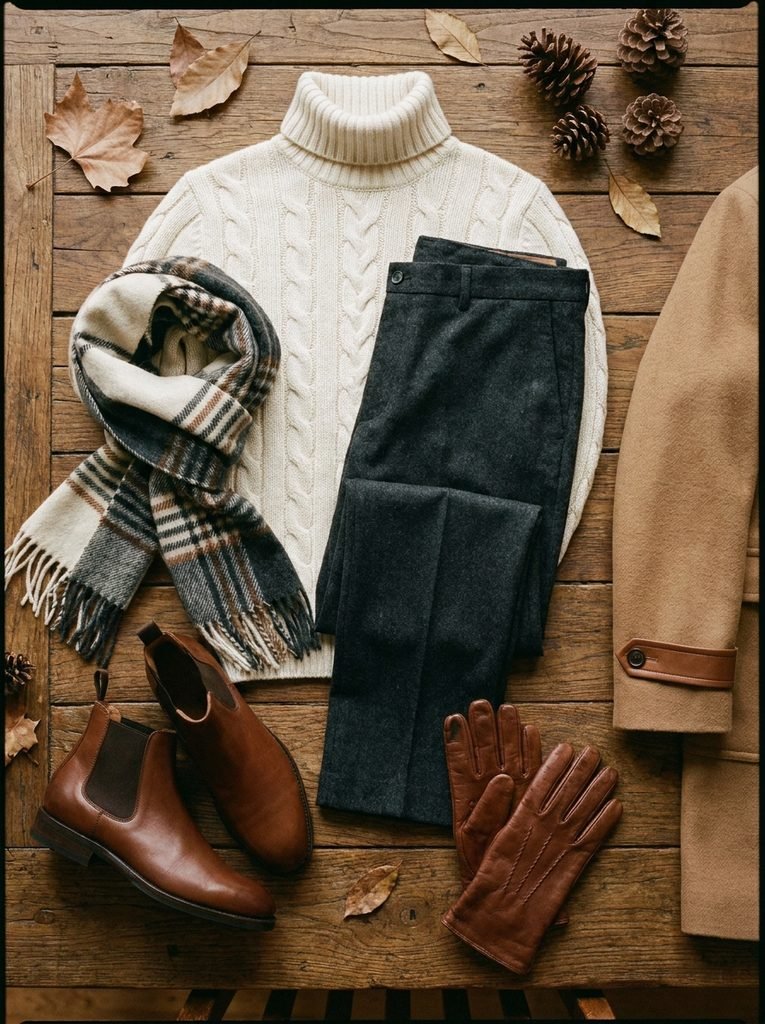
Tonal dressing works especially well here. Cream knitwear, oatmeal trousers, and tan suede boots under a camel coat create a soft, layered column of color that photographs beautifully in flat winter light. The shades do not need to match exactly. Slight differences between cream, sand, and caramel add depth without adding noise.
For contrast, pair the same coat with charcoal or black. Dark straight-leg trousers, a black turtleneck, and black leather boots turn the camel into the single warm note in a cool outfit. This version feels sharper and suits office days or dinners.
Denim also works if the wash is dark or mid-blue. Straight jeans, a white or ivory knit, and loafers with thick socks give a relaxed weekend look. Avoid very faded or distressed denim here, because it competes with the clean lines of the coat.
A camel coat rewards simple accessories. A leather tote in chocolate or black and a slim wool scarf in grey or cream are enough. Bright scarves tend to fight the coat’s natural warmth.
Long Black Puffer Outfits
A long black puffer has a different job. It trades formality for practicality, and the best outfits built around it lean into that honesty instead of trying to dress it up as something else.
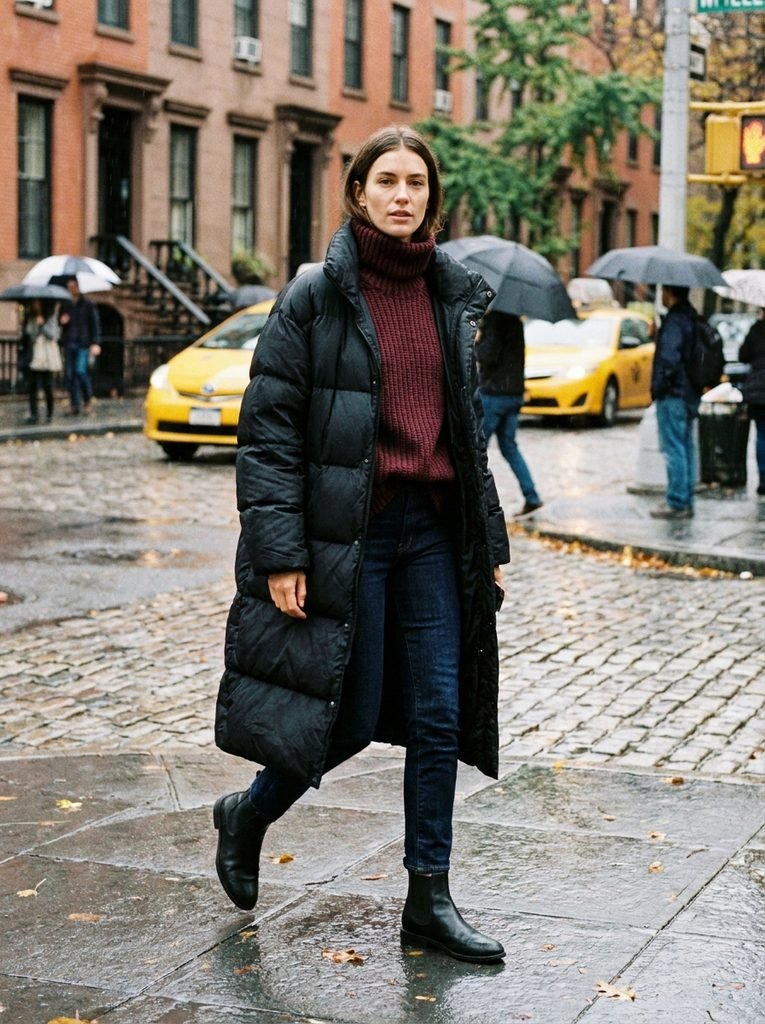
Because a puffer is soft and rounded, the pieces underneath benefit from structure. Tailored trousers, straight-leg jeans with a clean hem, or a midi skirt in a firm fabric give the outline some definition. A sleek leather boot or a sharp low-profile sneaker balances the volume above it.
The collar deserves attention too. Puffers often have tall, padded collars, so a bulky scarf can look crowded. A thin knit scarf tucked inside, or no scarf at all and a high-neck sweater instead, keeps the neckline clean.
Color is where a black puffer gets interesting. Because the coat is dark and quiet, a single bright or rich layer underneath, such as a burgundy knit or a cobalt sweater visible at the hem and neckline, adds life without overwhelming anything. Another option is all black with different textures: a ribbed knit, leather boots, and a matte bag. That monochrome version feels deliberate and photographs cleanly.
Length changes the proportions. A puffer that reaches mid-calf pairs well with slimmer lower halves, while a hip-length version can handle wider trousers. Matching the volume on top with a slimmer shape below, or the other way around, stops the outfit from looking like one big block.
Teddy and Shearling Coats
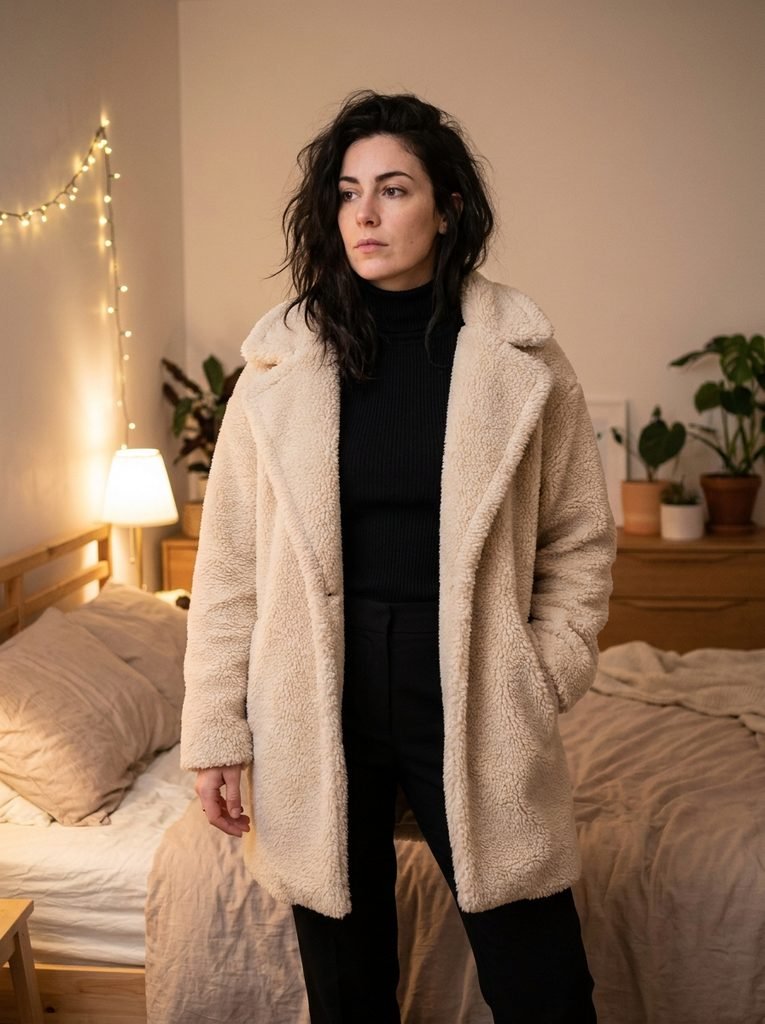
Few coats announce themselves as quickly as a teddy or shearling style. The texture is the entire message, so the outfit underneath works best when it stays smooth and restrained.
Cream and ivory teddy coats look soft against dark, sleek pieces. Black skinny or straight trousers, a fine-gauge turtleneck, and polished boots let the fluffy surface stand out instead of blending into a pile of other textures. Pairing a teddy coat with a chunky knit usually produces a muddled, shapeless look, since neither piece has clear edges.
Brown shearling or faux shearling in the aviator style reads more rugged. Straight blue jeans, a plain white tee or thin ribbed knit, and brown leather boots suit it. The collar often carries wool fleece, so a scarf is rarely needed.
A few practical points help. Fluffy coats can look bulky in photographs, so belting one at the waist, when the style allows, defines the shape. Light colors show dirt faster, so choosing a mid-tone like oatmeal or caramel can be more forgiving for daily wear. Finally, keep accessories modest: a small structured bag and simple jewelry let the texture lead.
Bold Color Coats
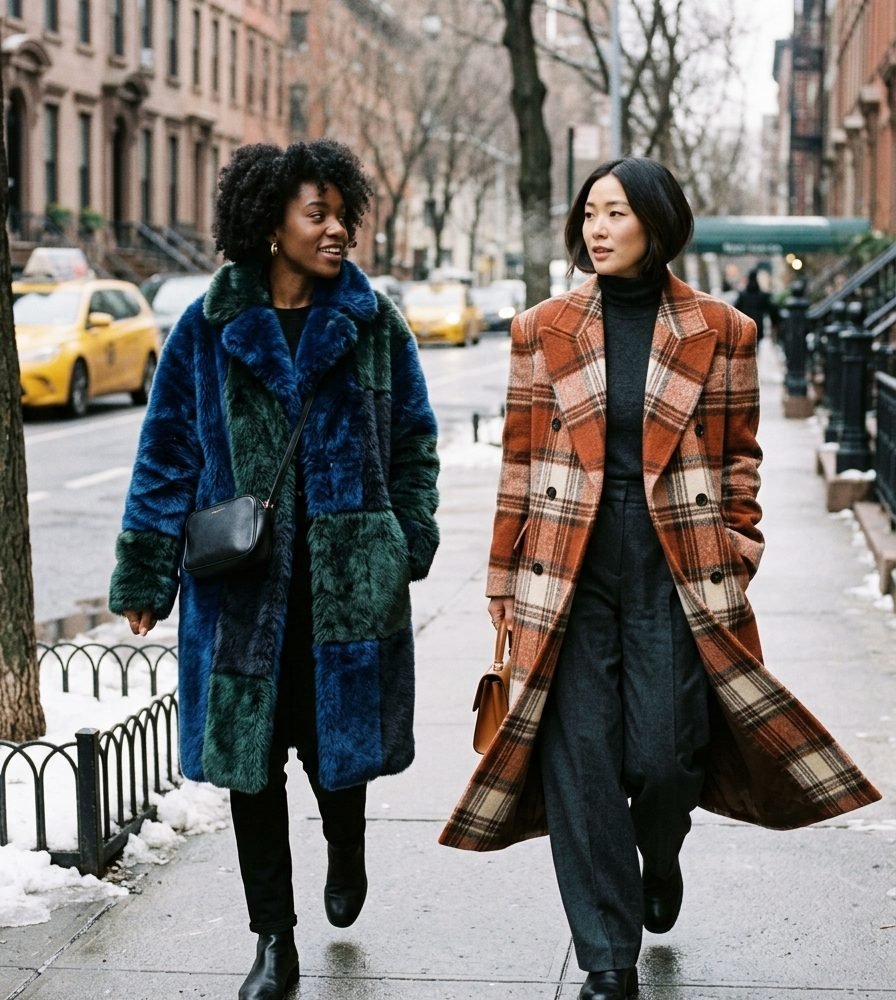
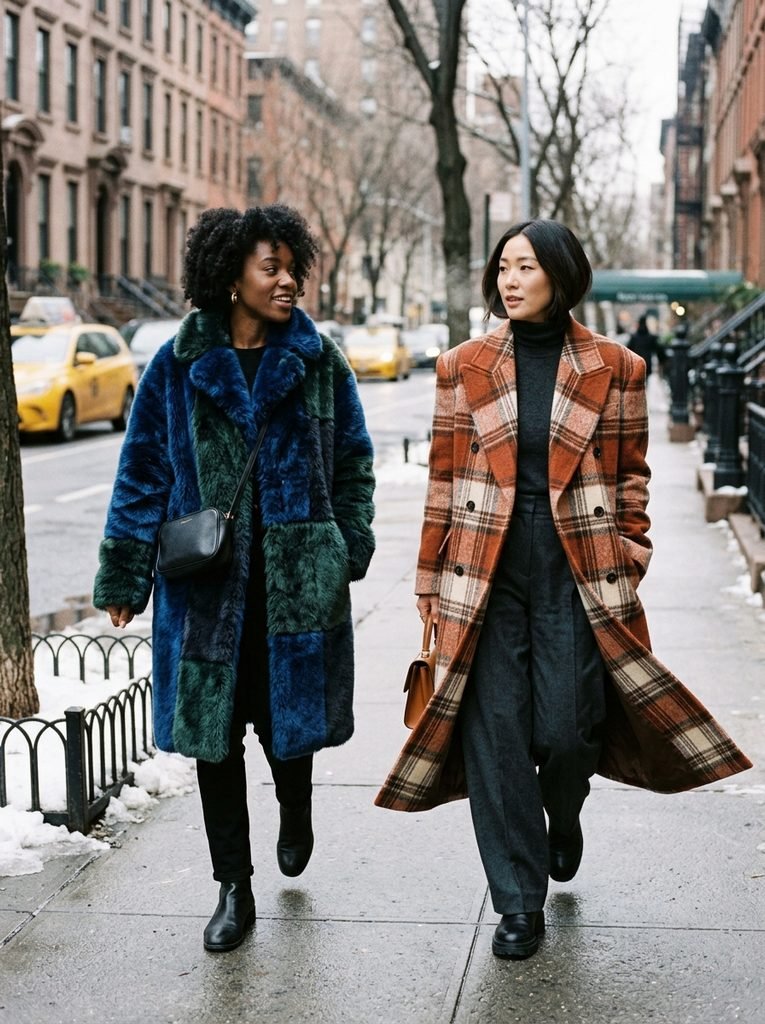
A coat in red, cobalt, emerald, or pink can make a winter streetscape of grey and black look flat by comparison. The trick with a color coat is giving it enough empty space to be noticed.
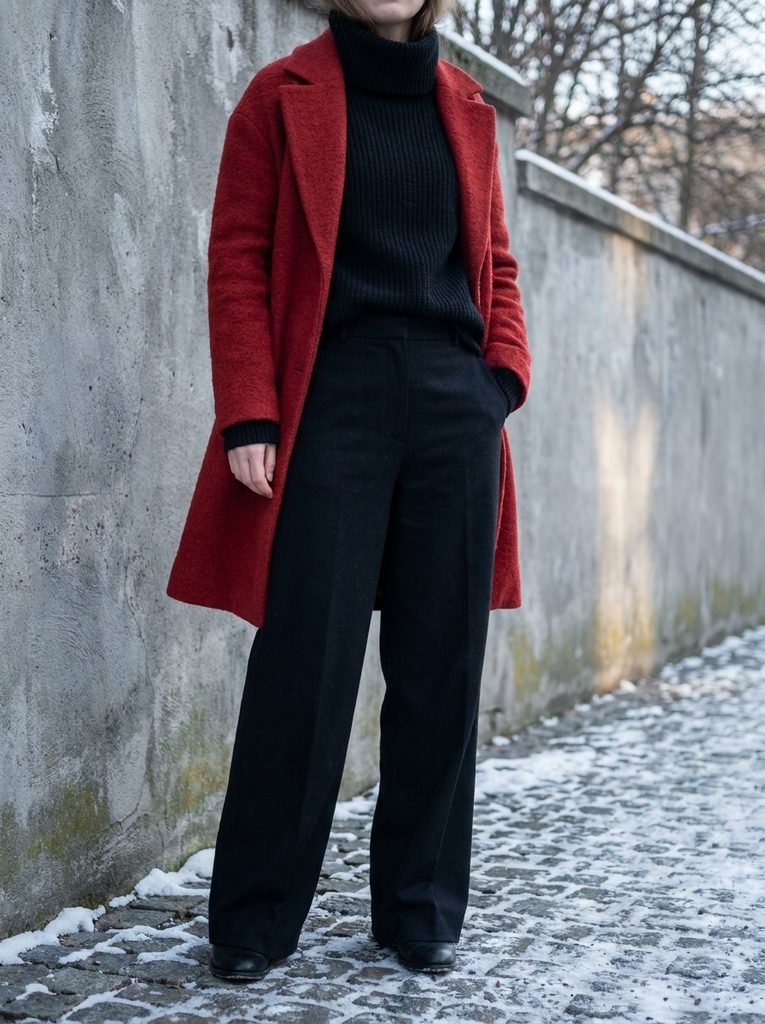
For a red coat, neutral dark layers work best. Black, navy, or charcoal trousers with a black or cream knit leave the red as the only strong note. Black boots and a black bag finish a version that looks confident and simple. Some people like to add red lipstick or a red scarf, but one echo is usually plenty.
Cobalt and electric blue are striking over tonal blues, from navy trousers to pale blue shirts, and also over grey. A grey sweater and grey wool trousers under a cobalt coat make the color look richer by contrast.
Forest green and deep olive behave more like neutrals. They sit nicely next to camel, cream, and chocolate brown, so they suit anyone who wants color without the intensity of a primary shade. A cream knit, brown boots, and tan accessories form a warm, earthy palette around a green coat.
Pastel coats in lilac, baby blue, or soft pink look best with white, grey, and silver-toned jewelry. They feel lighter and a bit more playful, so dark heavy boots can anchor them without clashing.
A useful rule for any bright coat is to repeat its color in one small spot elsewhere, such as a hair clip, socks, or a bag charm. That single echo makes the outfit look planned.
Belted and Wrap Coats
Belts add shape to an otherwise straight silhouette, which makes belted and wrap coats a useful category for anyone who wants definition. The tied waist creates an hourglass line, even over layers.
A belted wool coat in navy, grey, or camel works with slim or straight trousers and a simple knit. The coat already supplies structure, so pairing it with another heavily shaped piece, like a ruffled blouse, can feel overworked.
Wrap coats close with ties rather than buttons and tend to drape more softly. They suit fluid trousers, midi skirts, and boots that reach below the knee. Because the fabric moves, they look especially good in photographs taken while walking.
Both styles benefit from a good fit at the shoulder. If the shoulder seam sits too far down the arm, the waist tie cannot rescue the shape. When tying the belt, a loose knot looks more relaxed than a tight bow, and tucking the loose end under the belt prevents it from dangling.
Anyone who owns a straight coat can borrow the effect by adding a separate leather belt over the top. A thin or medium belt sits better than a very wide one, which can look stiff over thick wool.
Checked, Herringbone, and Textured Coats
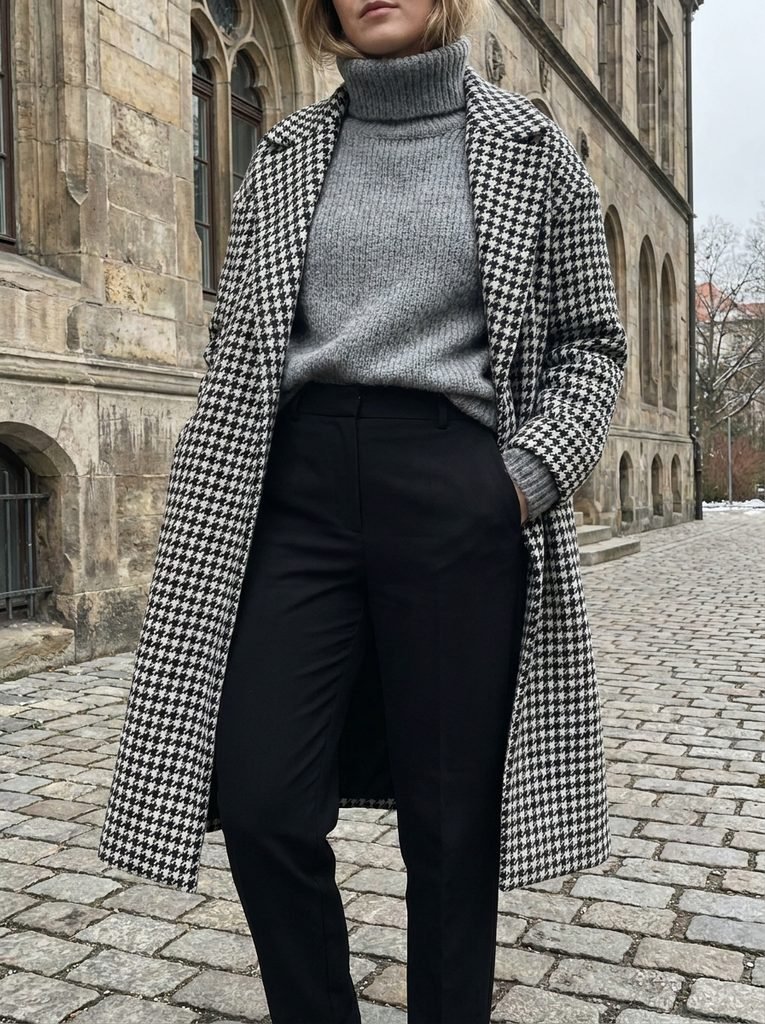
Patterned coats get less attention than plain ones, but they offer an easy way to look dressed without adding extra pieces. A houndstooth, plaid, or herringbone coat has built-in visual interest, so the outfit underneath can be as plain as a sweater and trousers.
The core principle is to pull one color from the pattern and use it elsewhere. A grey and black houndstooth coat pairs with black trousers and a grey knit. A brown and cream check coat looks right with chocolate boots and a cream turtleneck. Choosing from the coat’s own palette keeps the outfit calm.
Scale also matters. Large plaids read bold and relaxed, while small herringbone weaves look quiet from a distance and reveal their texture up close. A large pattern generally needs plainer pieces under it, while a subtle weave can handle a little more variety.
Mixing patterns is possible, though easier with a rule. Keep the second pattern in a different scale, such as a thin pinstripe scarf with a broad check coat, and keep both within the same color family. When in doubt, solid layers are the safer path.
Bouclé and tweed coats fall into this group as well. They carry a classic, slightly vintage feel and look their best with simple dark trousers, a white shirt, and polished leather shoes.
Oversized Coats and Proportion
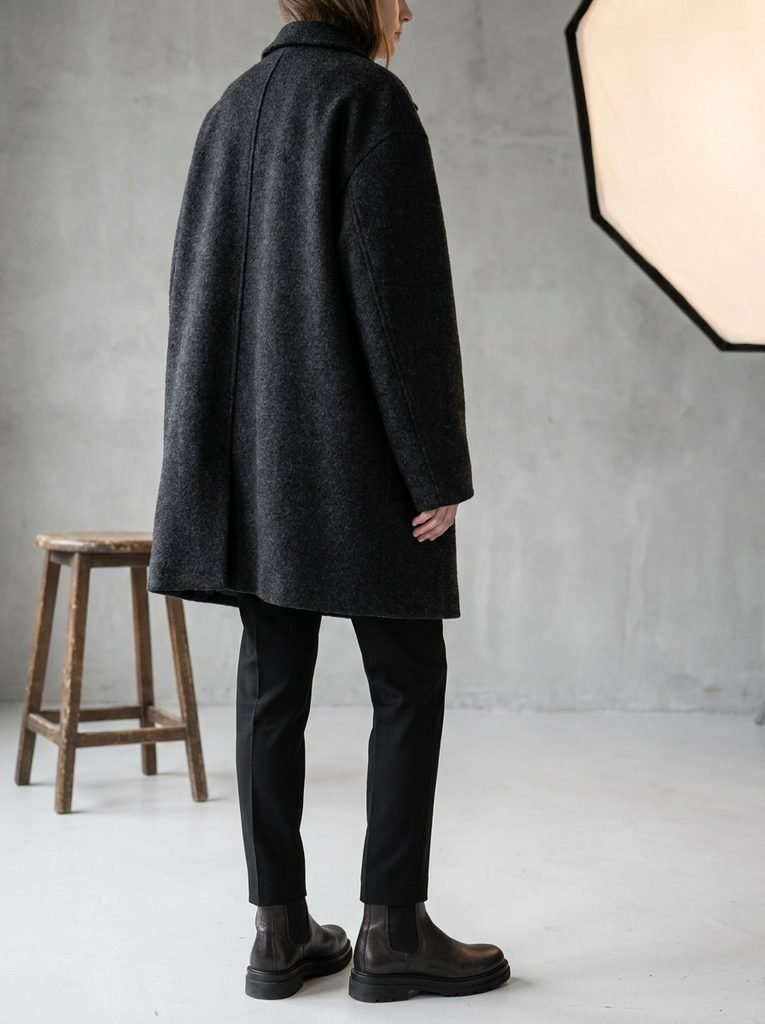
An oversized coat looks relaxed and current, but it changes how proportions work. When the top half grows, the bottom half usually needs to get leaner or be carefully chosen so the outfit does not look like a rectangle.
Slim trousers, straight jeans with a clean break at the ankle, and knee-high boots are dependable partners. Leggings or fitted knits underneath also help. The contrast between loose and fitted gives the eye a point of reference.
Length plays a part. A coat that falls to the knee or below works well on taller frames and with trousers, while shorter wearers can find a hem near mid-thigh easier to balance. The petite styling tips in this guide to outfits that add height go deeper on how hem length and monochrome lines change proportion.
Shape is also personal. Someone with a fuller bust or hips may prefer an oversized coat with a belt, or one that is open and left to fall straight. Another person may like the full slouch. The approach in outfits for every body type is a useful reference for matching silhouettes to proportions without treating any shape as a problem.
Sleeves deserve a quick check. Oversized coats often have long sleeves that cover the hands. Cuffing them once or twice, or choosing a pair of slim gloves that sit under the cuff, keeps the look intentional.
Quiet Layers That Let the Coat Lead
Whatever coat is chosen, the layers underneath do their best work when they stay simple. A few categories handle this well.
Knitwear in Solid Tones
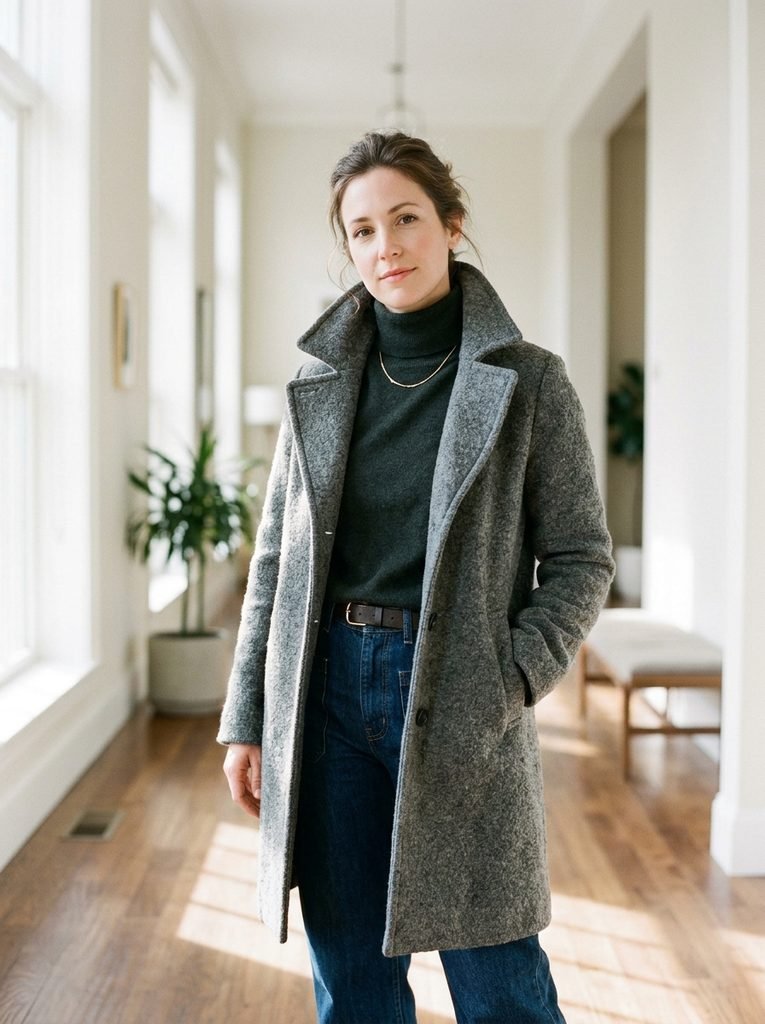
Fine-gauge turtlenecks, crew necks, and mock necks in cream, grey, black, or navy slide easily under coat collars without creating bulk. They also bring warmth without altering the outline. Chunky cable knits are lovely, but they usually belong with slimmer coats, since two heavy textures stack up quickly.
Trousers With Clean Lines
Wool trousers, straight denim, and tailored pants in dark tones give a stable base. Their job is to continue the line the coat starts. Very wide trousers can work with a fitted coat, though they tend to overwhelm a voluminous one.
Boots and Shoes
Boots handle winter practicality, and a few shapes suit coats particularly well. Knee-high leather boots echo the length of a long coat. Ankle boots with a block heel work with cropped or hip-length styles. Lug-sole boots and chunky loafers give a relaxed counterweight to tailored coats. Whatever the style, matching leather finish and tone to the bag keeps things coherent.
Scarves, Hats, and Gloves
Accessories are the easiest place to add a second color. A scarf that sits one shade lighter or darker than the coat looks refined. Gloves in leather or cashmere add polish. A hat should relate to the coat’s mood, so a beanie suits a puffer and a wool beret suits a tailored overcoat.
Choosing a Coat With Warmth in Mind
Looks matter, but a coat that leaves its wearer cold ends up unworn. A few simple checks help before buying.
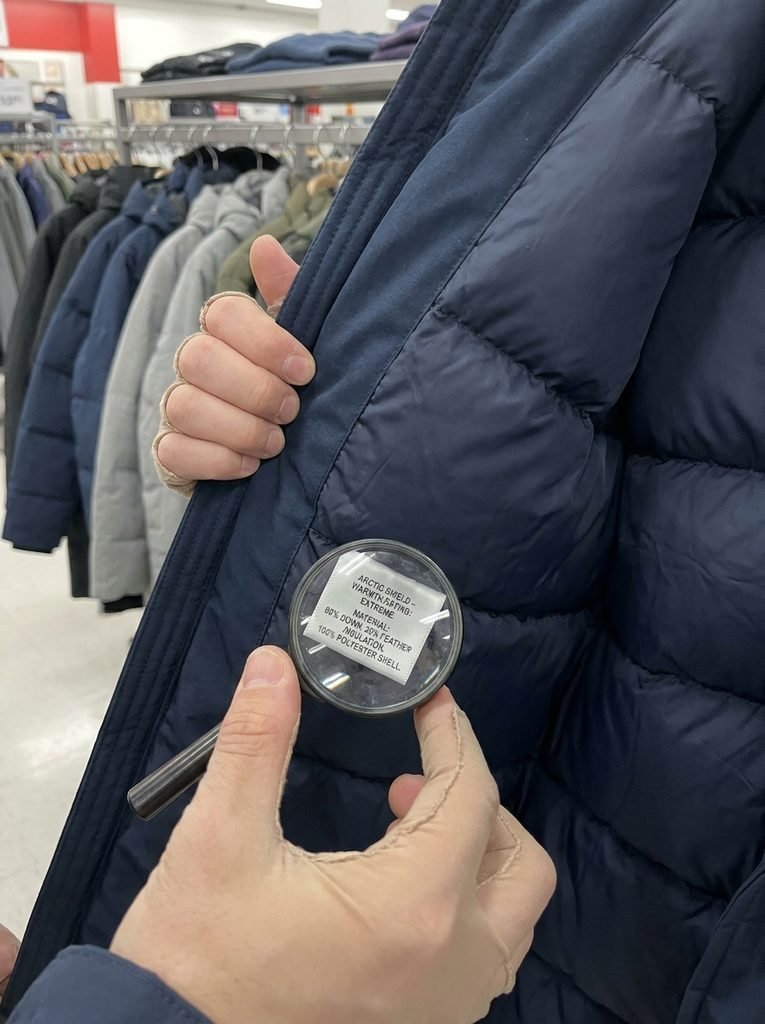
Wool coats vary a great deal in weight. Thicker, denser fabric usually feels warmer, and a lining adds more insulation. Looking at the composition label helps, since a higher wool percentage tends to hold shape and warmth better than a thin blend, though a general styling observation like this is no substitute for trying the coat on.
For puffers, two numbers matter. Fill power describes the quality of the down, while fill weight describes how much of it is in the coat. As Consumer Reports explains in its puffer coat buying guide, a coat with a lower fill power but more down can end up warmer than one with a higher fill power and less fill, so the two figures work best when read together. Many retailers list only the first, which makes the second worth looking for.
Layer room is the other consideration. A coat that fits snugly over a thin shirt may feel restrictive once a sweater goes underneath. Trying a coat on while wearing the thickest knit it will realistically cover shows whether the arms and shoulders still move freely.
Finally, check that the coat’s length suits the climate. Longer styles cover more of the legs, which many people find more comfortable in strong wind, while shorter styles are easier for walking and driving.
What to Wear When the Coat Comes Off
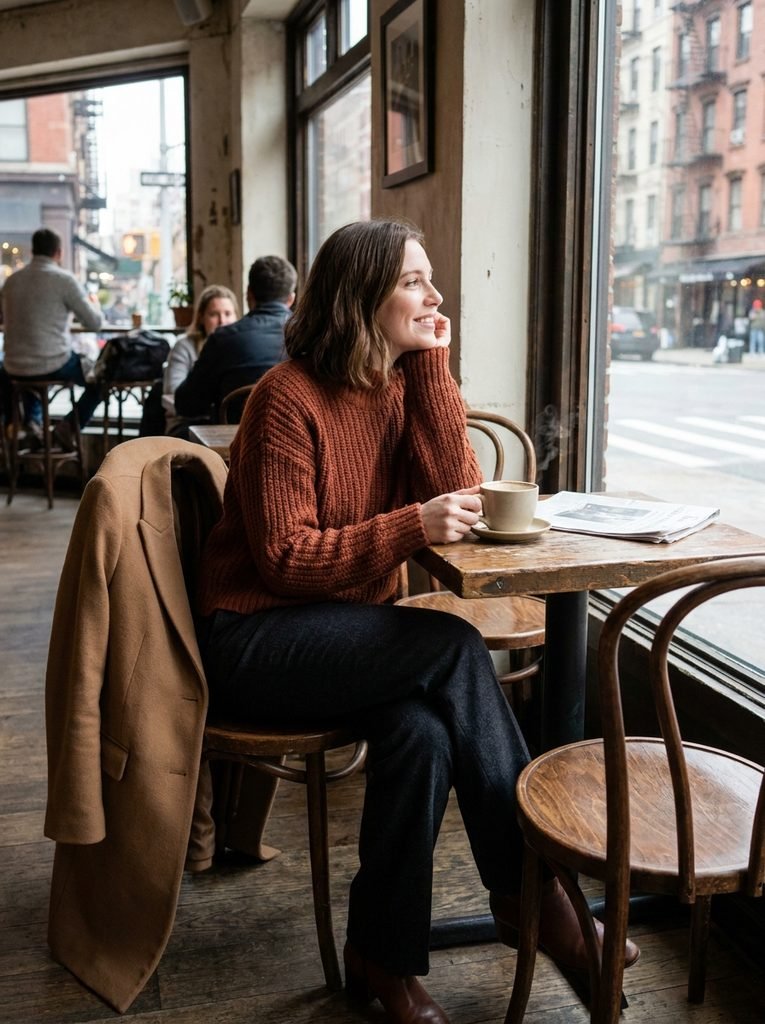
Many winter days involve a coat on in the morning and off for hours indoors. If the outfit only works with the coat, the indoor version can feel unfinished. Planning for both avoids that problem.
The base outfit should look complete without the coat. A good knit, nicely fitting trousers, and attractive shoes make that happen. A bold necklace, a belt, or a structured top gives the outfit more shape once the outer layer is gone.
Texture also helps. A coat that is smooth and dark pairs well with a textured sweater, because the interior look then carries visual interest. A coat that is fluffy or patterned pairs with smooth layers so the outfit stays balanced when the coat is hung up.
Temperature is part of this as well. Heated offices and shops can feel warm, so thinner layers that breathe tend to be more comfortable than a thick wool jumper. Those who commute in lighter autumn coats can borrow ideas from this fall layering guide, while anyone heading to the mountains may prefer the gear-focused advice in these ski trip outfit ideas.
Common Questions About Winter Coat Outfits
What colors go with a camel coat?
Cream, white, black, navy, grey, olive, chocolate brown, and mid-blue denim all sit well with camel. Tonal combinations of cream, sand, and tan are especially popular.
How can a puffer coat look more stylish?
Choose a sleek, longer cut and balance the volume with structured trousers or straight jeans. Smooth boots and a clean neckline also help.
Can you wear a patterned coat with patterned accessories?
It works when the scales differ and the colors stay in one family, such as a large check coat with a thin stripe scarf. Plain accessories are the safest choice.
What goes under a long winter coat?
Fine knitwear, slim or straight trousers, and boots that either reach the knee or end at the ankle usually look good. The outfit mostly needs to stay quiet so the coat remains the focus.
How many winter coats are enough?
That depends on weather and lifestyle. Many people find that one warm everyday coat and one dressier option cover most situations, and a third can be added for a specific need such as heavy snow.
Start With the Coat
A winter outfit that begins with the coat usually comes together faster. The coat suggests the palette, the shape tells you which proportions to choose, and the remaining pieces follow in a supporting role. A camel wool coat wants softness and tone. A black puffer wants structure and one good detail. A color or patterned coat wants calm surroundings.
The same coat can look new again by changing only the knit, the scarf, or the boots. That repetition is a strength, not a limit. One well-chosen piece, styled with a bit of care, can carry an entire season of outfits.


[…] set presentable in seconds. For a quick errand, structure helps, and the layering ideas in these winter coat outfits show how a good coat can carry a very relaxed outfit underneath. Sets that stay neat in a bag also […]
[…] full outfits built around each coat shape, the winter coat outfits guide walks through camel, puffer and teddy styles in more […]
[…] more than expected. For a wider look at how each coat shape works with what sits beneath it, the winter coat outfits guide walks through camel, puffer and shearling […]