
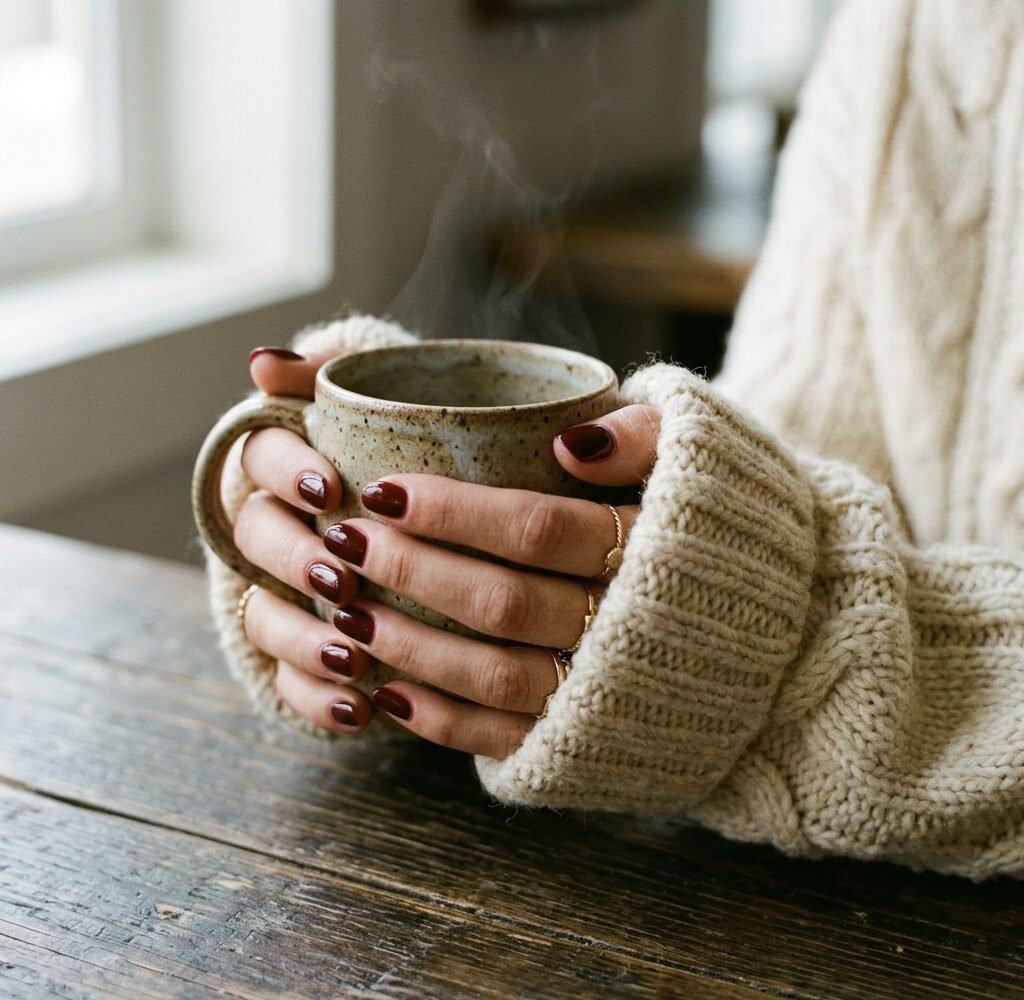
Winter covers almost everything. Arms disappear into thick sleeves, necks into scarves, legs into wool and boots. What stays in view is a narrow band of wrist, the backs of the hands, and ten small, glossy patches of color. That band is where a manicure meets the knitwear. It explains why a polish can look sharp beside one sweater and strangely flat beside another.
Chunky knits and wool coats are matte, fibrous and a little fuzzy. Nail polish is smooth and reflective. That contrast is why color choice matters more in cold months. A shade that read as neutral in July can look chalky beside a cream cable knit. A deep one can melt into a charcoal cuff until the nails look like shadows.
The ideas below start from the fabric and work outward. Each section matches winter nail colors to a specific knit or coat shade. Later parts cover finish, nail length, a quick reference table and a few care notes for dry, glove-heavy weather. Every pairing is a styling suggestion, so treat the combinations as starting points to test against your own wardrobe.
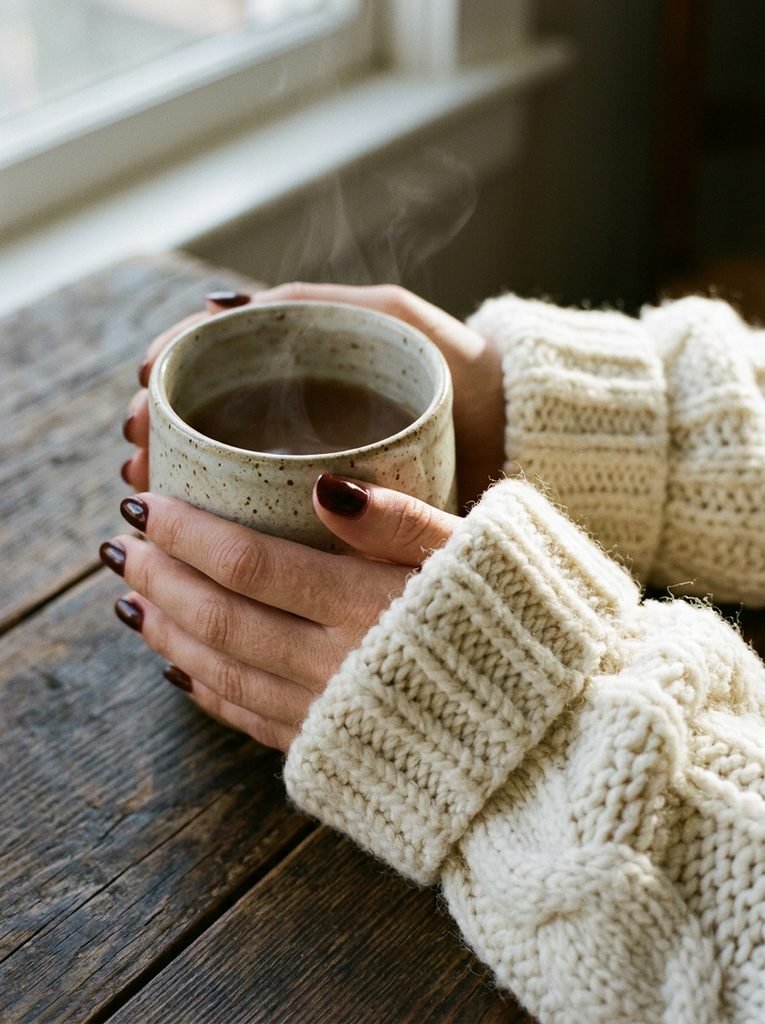
Where Your Nails and the Wool Actually Meet
Winter hands appear in a handful of predictable places. One wraps around a takeaway cup with a heavy cuff pushed back. Another holds a coat collar closed against the wind. A glove comes off at a shop counter and the hand lands next to a scarf. In every case the nails sit within a few centimeters of fabric, so the fabric becomes the backdrop whether anyone planned it or not.
Two approaches cover most pairings. The first is an echo, where the polish borrows the family or undertone of the knit so the hand looks like part of the outfit. A cocoa sweater with a soft mocha manicure is an echo. The second is counterpoint, where the shade sits on the opposite side of light and dark, so the nails read as a deliberate accent. Oxblood against oatmeal is counterpoint. Echoes feel calm and cohesive, while counterpoints look crisper and more graphic.
Light plays a part too. Winter daylight is thin and gray, and indoor bulbs lean warm, so a polish judged under shop lighting can behave differently at a window in February. Holding the bottle against the actual sleeve near a window is the simplest test before committing.
Nail Colors for Cream, Oatmeal and Ivory Knits
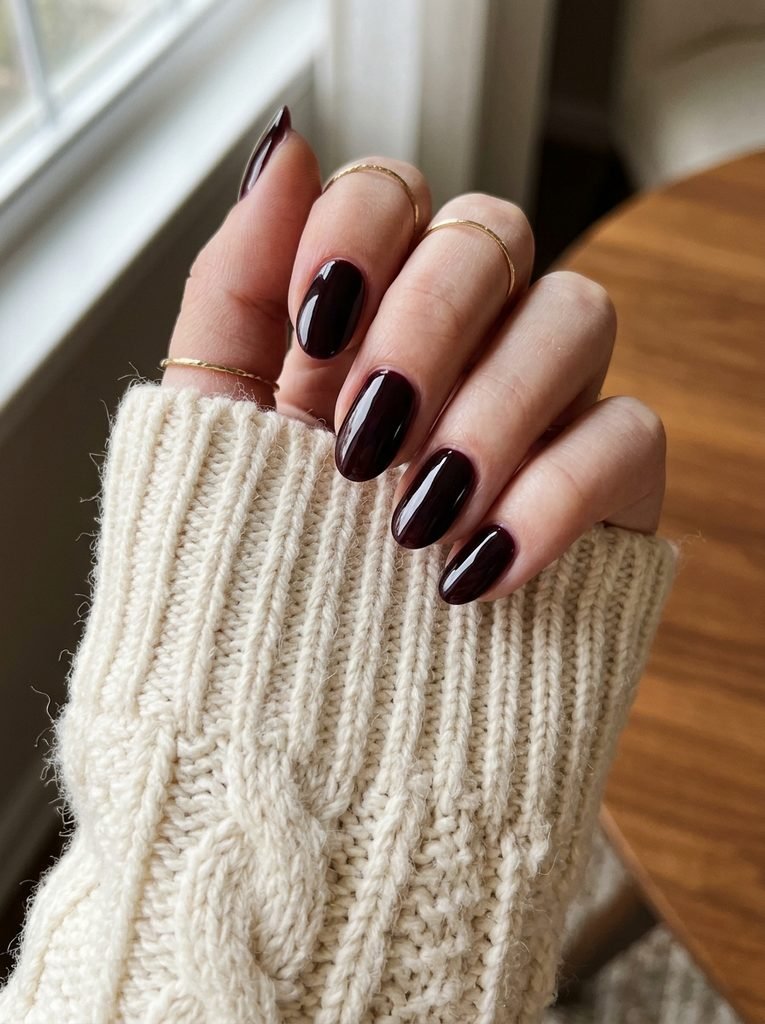
Light knits are the most forgiving backdrop in a winter wardrobe, and they make deep colors look richer by contrast. A cream cable knit with an oxblood or black cherry manicure gives a clean, high-contrast edge where the nail meets the wool. Deep chocolate brown does something similar with a softer feel, closer to coffee against milk than red against white.
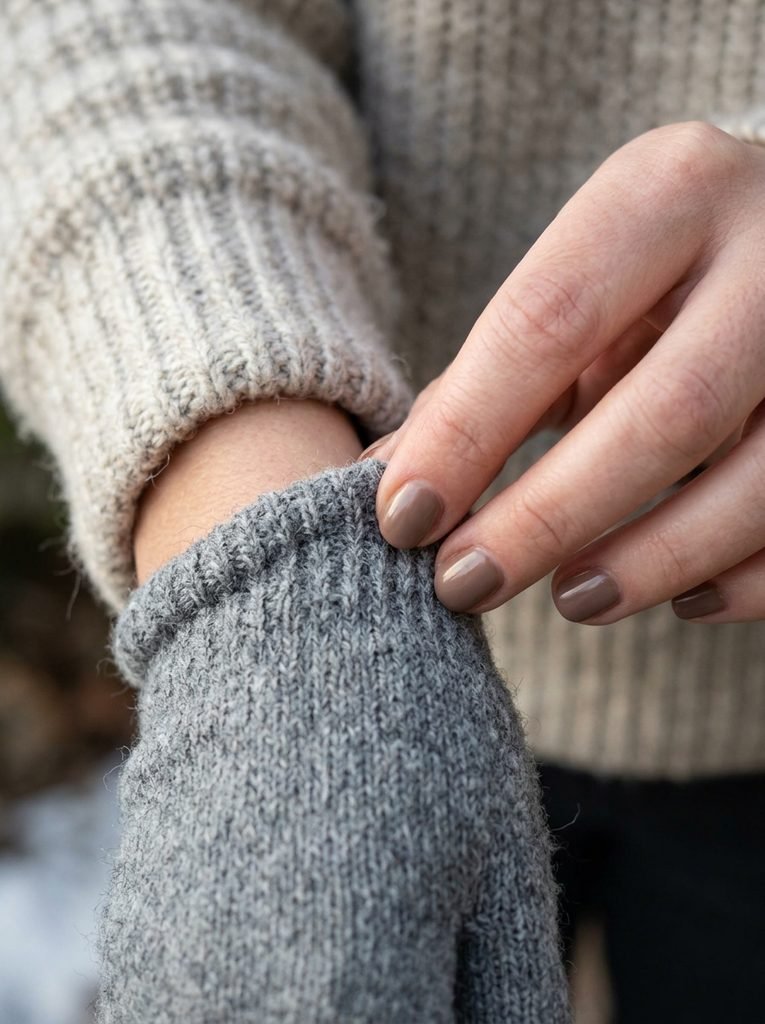
For an echo, look to milky taupe, mocha or a sheer beige-pink that sits a shade or two deeper than the sweater. These tonal pairings suit chunky oatmeal knits especially well, since the nails pick up the heathered flecks in the yarn instead of competing with them. Dusty rose lands in the same gentle territory without feeling sugary.
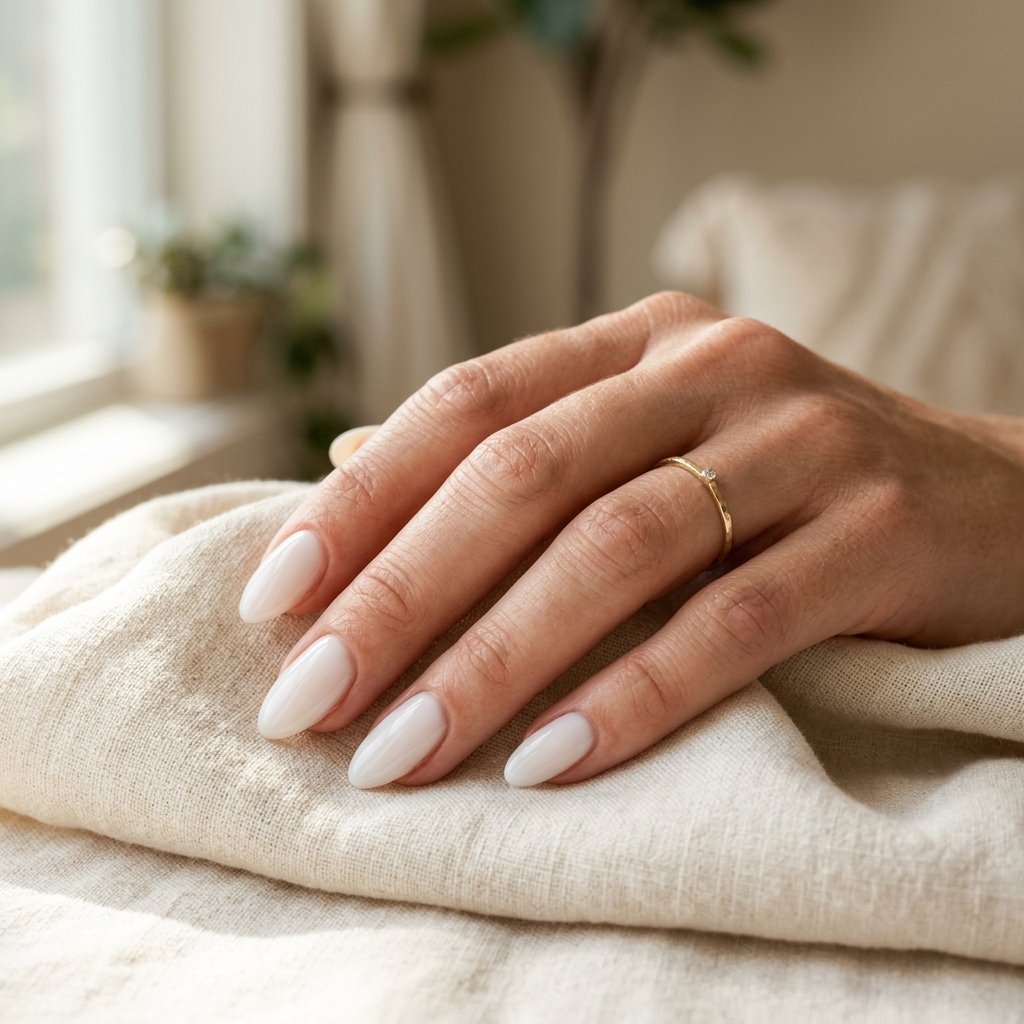
One shade to approach carefully is stark white. Beside warm ivory wool it can make the sweater look slightly yellow, and the nails may look chalky rather than crisp. If white nails are the goal, a milky white with a hint of warmth tends to sit more comfortably next to cream fabric.
Nail Colors for Grey and Charcoal Knits
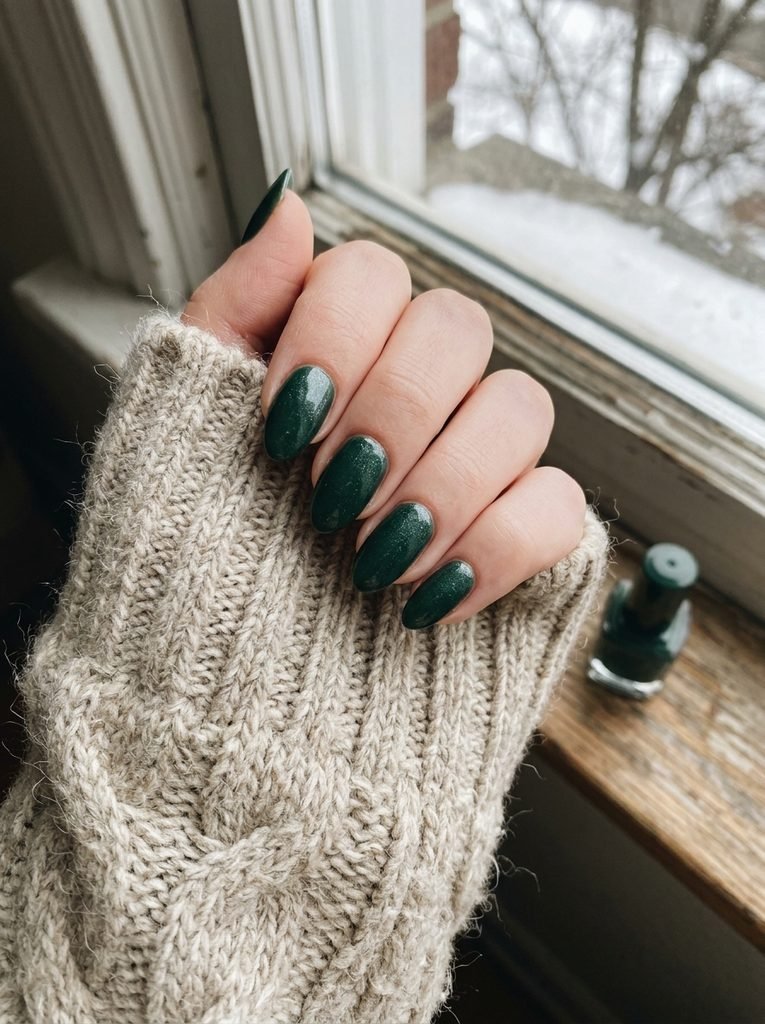
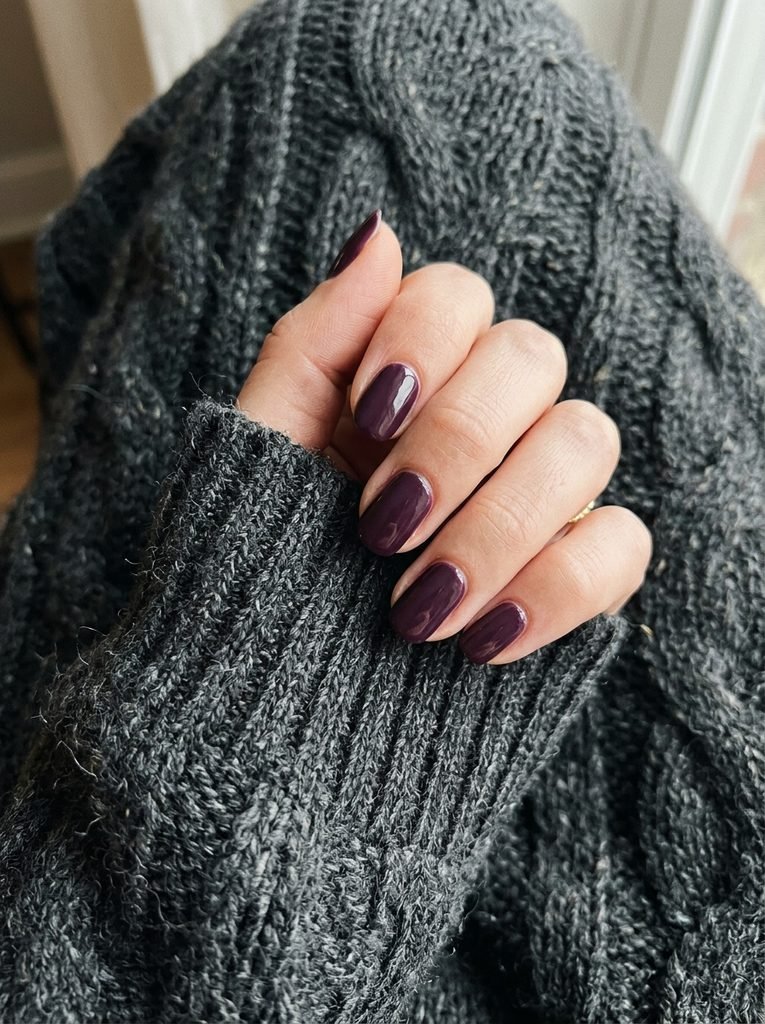
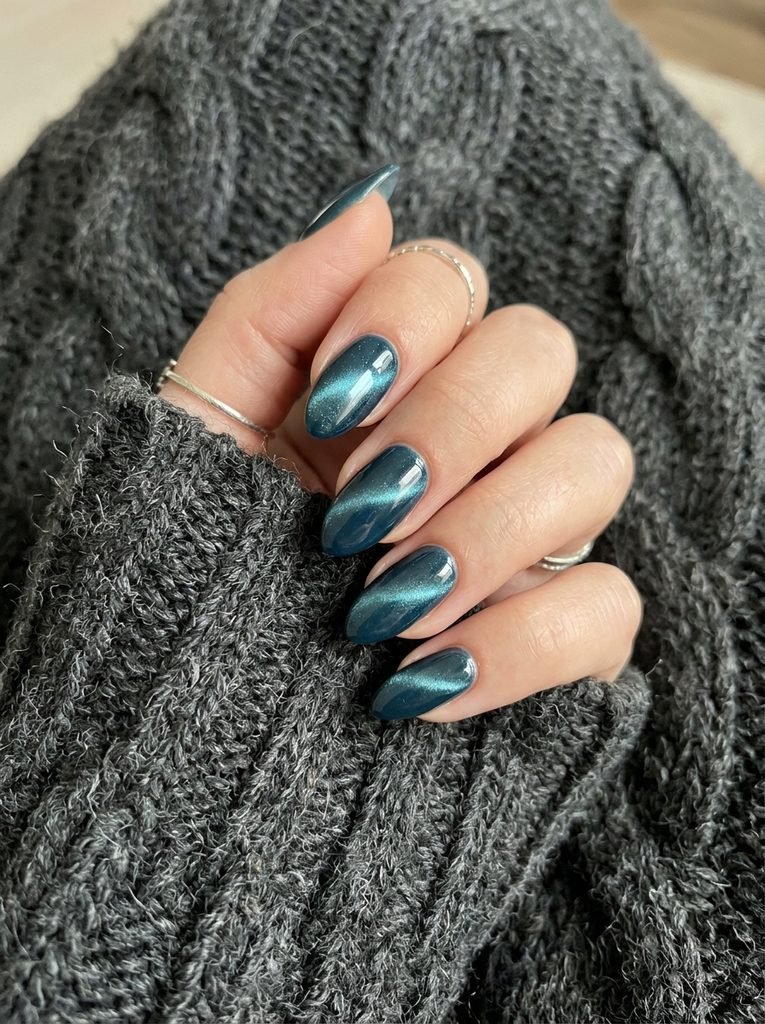
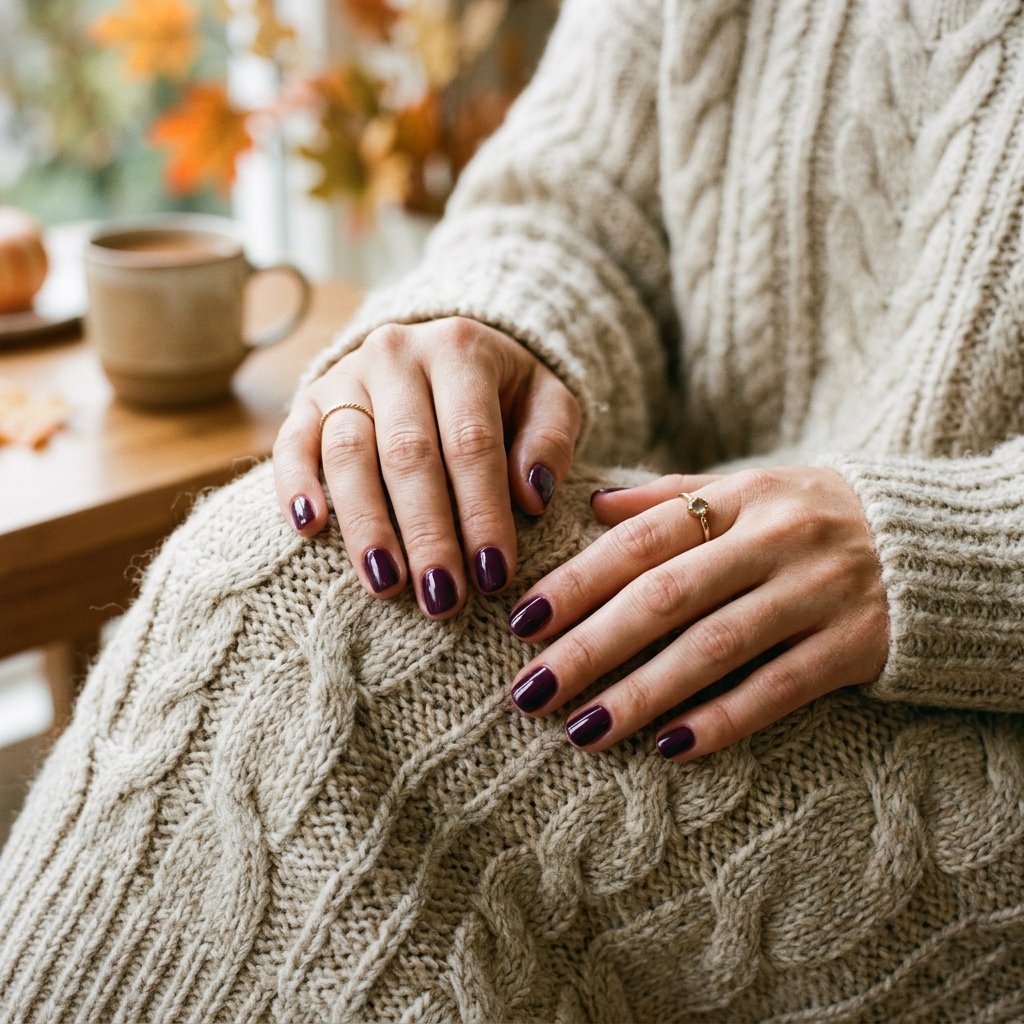
Grey is a quiet backdrop, which leaves the nails free to carry the color. Deep berry, plum and black cherry all look rich against heathered grey. Each adds a cool, jewel-like note to a very muted sweater. Dark teal works the same way for anyone who wants a less expected option. The Zoe Report’s winter 2026 nail trend roundup mentions deep teal and dark green among the shades appearing this season, so these jewel tones sit well within current taste.
For an echo, gunmetal chrome or a soft pewter shimmer repeats the metallic cast found in many grey yarns. One caution applies here. A flat mid-grey polish against a mid-grey sweater can vanish entirely and leave the hands looking unfinished. Going a few steps darker or lighter than the knit solves that quickly.
Charcoal sweaters also pair nicely with a clean cherry red. The color looks graphic against dark grey wool and holds its own in dim winter light.
Nail Colors for Navy, Forest Green and Deep Blue Knits
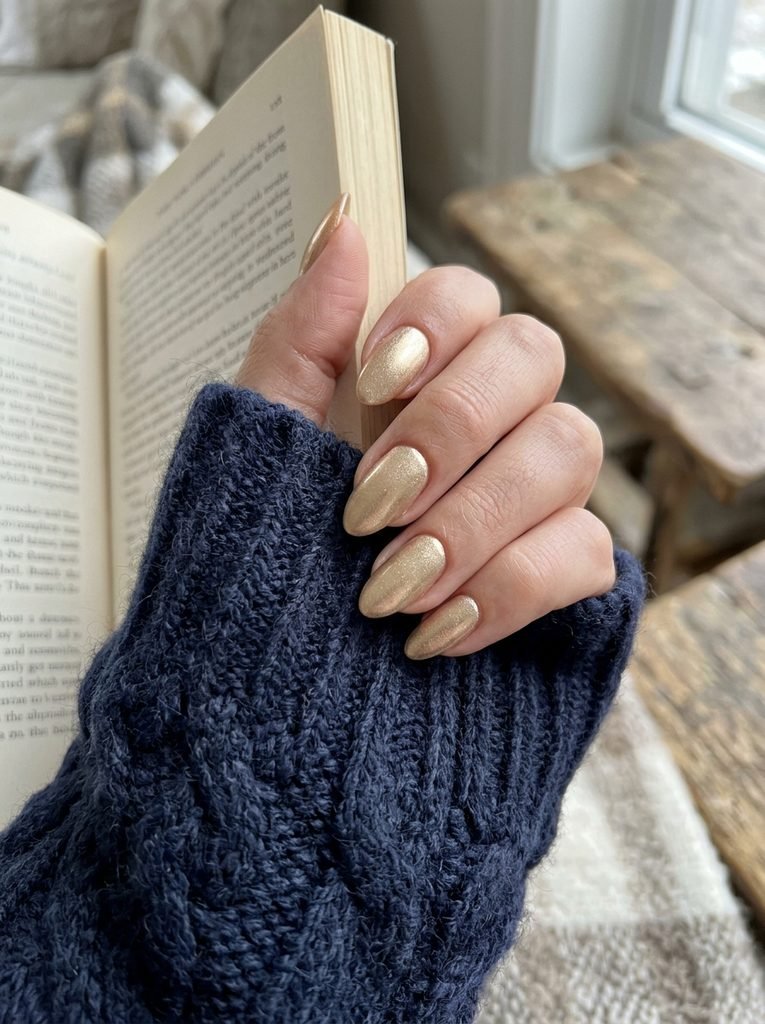
Dark, cool knits tend to look good with warmth on the nails. Against navy, a soft champagne or pale gold metallic adds a glint that reads like jewelry. A warm cream or milky vanilla looks clean without turning stark. Burgundy and wine work as well, since the red-brown note sits comfortably opposite the blue.
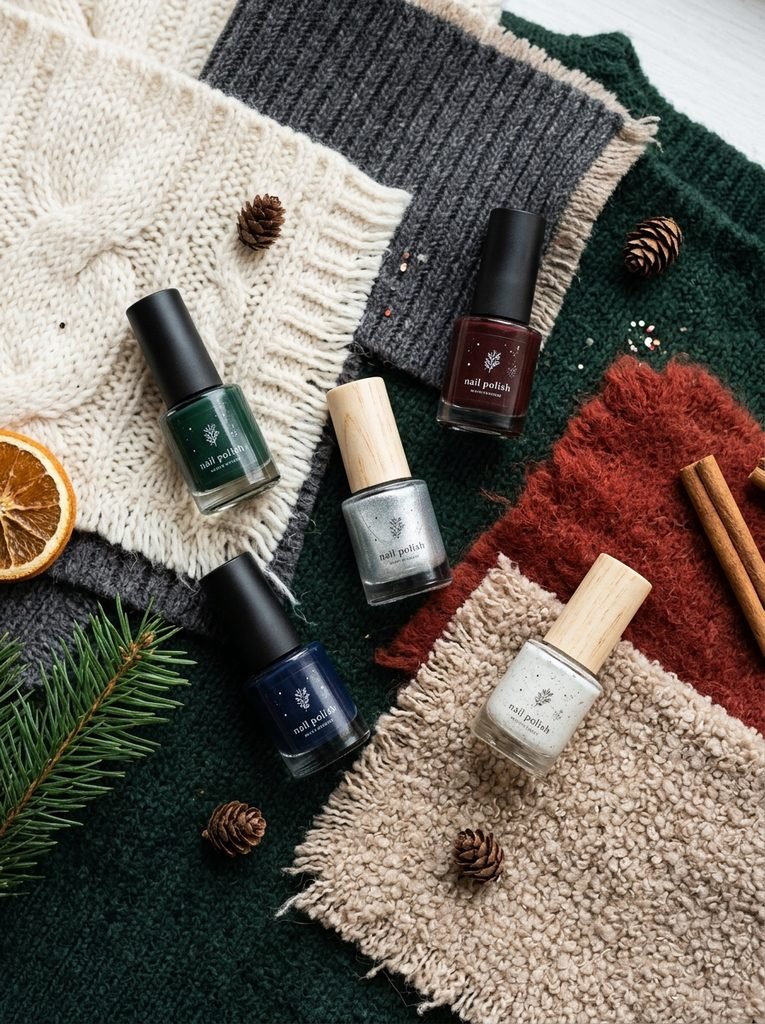
Forest green knits need a lighter hand with color. Red polish beside deep green can drift toward holiday costume territory, so brown, rust or warm taupe usually looks more relaxed while still giving contrast. Tonal green makes a good echo. A mossy olive polish against a bottle-green sweater looks layered rather than matched.
Cobalt, teal and other bright blue knits are the exception to the dark-and-warm idea. Plain neutrals such as greige, soft nude or pale grey keep attention on the sweater. For something a little more, a sheer, jelly-style blue-grey stays in the same family without matching exactly.
Nail Colors for Rust, Mustard, Camel and Brown Knits
Earth-toned knits turn up everywhere in cold weather, and they respond to a wide range of nail colors. A rust or terracotta sweater looks warm and settled beside cream or ivory nails. It picks up unexpected depth next to deep forest green or dark olive. A tonal copper or terracotta polish gives the echo version, which suits anyone who likes a single-color effect from sleeve to fingertip.
Mustard and ochre sweaters are the loudest in this group. Plum, deep teal and aubergine all sit across the color wheel from yellow and make the sweater look richer, while a sheer neutral keeps things low-key. Chocolate brown also looks handsome here, though a very yellow mustard beside a very orange brown can feel heavy.
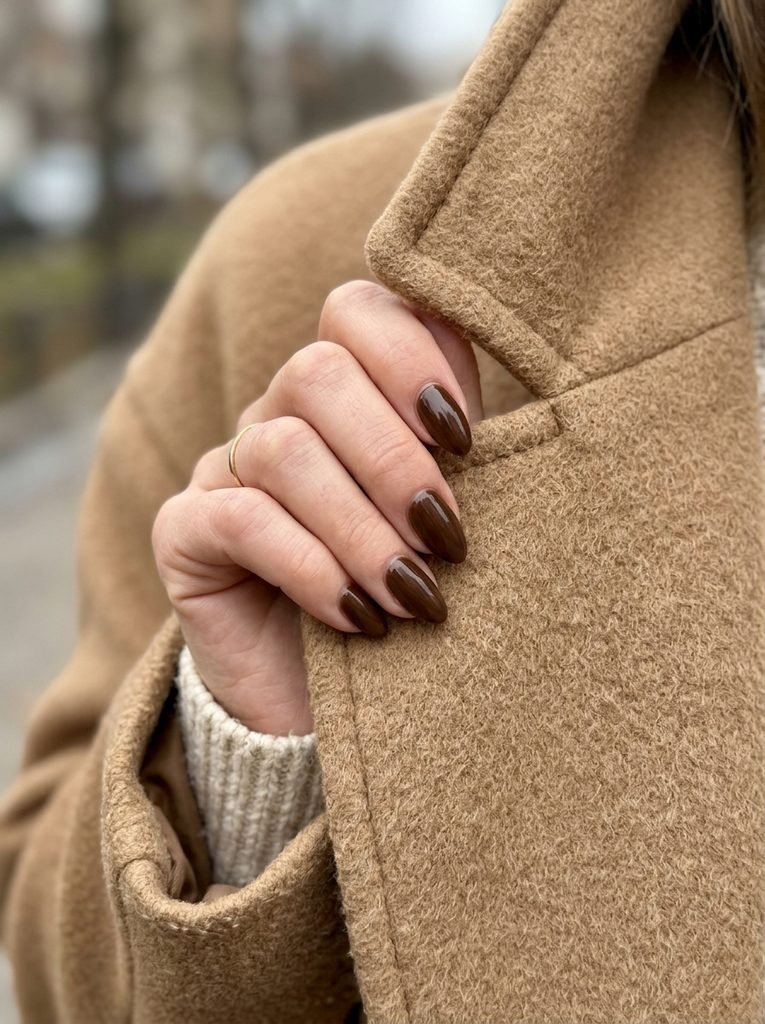
Camel and caramel knits pair well with cooler, smoky shades. Smoke blue, soft charcoal and mauve each break up the warmth, and espresso brown gives a quiet tonal option. Chunky camel wool in particular suits a glossy deep brown, which looks almost like polished wood against the fuzzy yarn.

Matching Nails to the Coat
Coats show hands in a different way from sweaters. Fingers usually meet them at the cuff, on the collar or around a bag strap, so the nails get a short, framed view against fabric that is often darker and denser than knitwear.
Camel and Other Warm Neutral Coats
A camel coat flatters most shades, but a few stand out. Chocolate and espresso nails look tonal and rich, while burgundy adds a sharper accent. Soft rose and milky beige keep the look light, and a deep olive brings in a green note that sits well with tan wool. Bright, cool pinks tend to fight the coat’s warmth.
Black and Charcoal Coats
A dark coat gives nails a dramatic backdrop, so lighter and brighter colors show up more. A pale pink nude or milky white looks crisp against black wool, and cherry red turns the cuff into a focal point. Emerald and sapphire read clearly too. Near-black and deep navy polish can disappear against a black cuff, which is worth knowing before choosing them.
Navy and Grey Coats
Navy coats suit warm contrast, and soft gold, tan and rich berry shades all look natural. Grey coats behave like grey knits. Deep plum, wine or a clean cherry adds color without clashing, and a pale blush softens the whole look.
For full outfits built around each coat shape, the winter coat outfits guide walks through camel, puffer and teddy styles in more detail.
When the Coat Is Doing the Talking
Patterned, fluffy and brightly colored coats need nails that know when to step back.
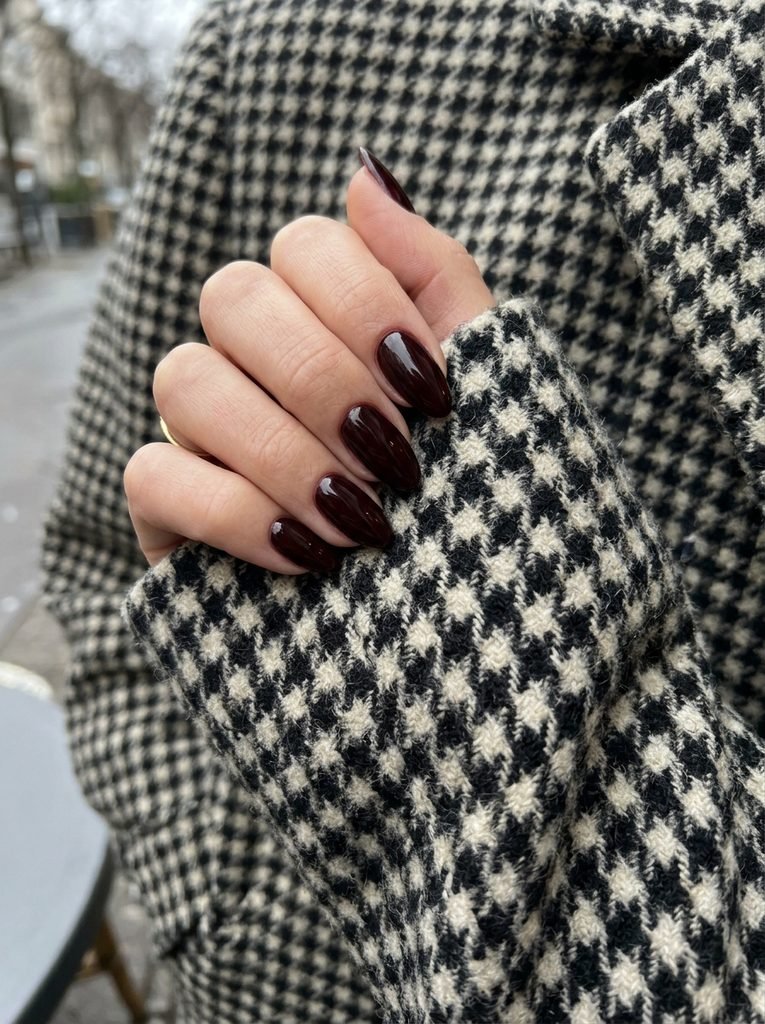
Checked and herringbone coats have colors woven into them, and the nails can borrow one. A brown and cream check looks tidy with deep chocolate polish. A grey and black houndstooth pairs well with black cherry or charcoal. Pulling a single color from the weave makes the manicure look planned without adding another pattern to the outfit.
Teddy and shearling coats are all texture, so smooth, glossy nails balance them. Deep oxblood, espresso or a clear milky nude keeps the hand crisp against the fuzz. Glitter-heavy or heavily textured nail art can compete with the fluff.
Bold coats in red, cobalt, emerald or pink call for quiet nails or a precise echo. A red coat looks polished with a sheer berry or a neutral nude, and a cobalt coat sits well with soft grey or greige. Pastel coats in lilac or baby blue look sweet beside milky white or pale pink. When everything is bright at once, the eye has nowhere to rest.
Choosing a Finish That Suits Wool
Wool is matte and tactile, so finish does as much work as color. A glossy cream polish gives the cleanest edge against knitwear and catches light in low winter sun. A jelly finish is translucent and softer, which suits dark shades such as plum or teal that can look heavy when fully opaque.
Cat eye polish, which uses a magnet to create a shifting line of light, is a strong match for dark knits and coats. It adds movement to a deep green or burgundy without changing the color itself, and The Zoe Report lists it among the finishes continuing this winter. Chrome and metallic finishes are bolder. A soft pewter or champagne chrome works best against matte, dark wool, where the shine has something to play against.
Matte topcoats echo the look of the wool, but they come with a drawback. Fibers tend to cling to a matte or slightly tacky surface, and a sweater cuff can leave visible fuzz. A fully dried glossy topcoat usually sheds lint more easily, which makes it the more practical choice for daily mohair, bouclé or brushed wool.
Length and Shape Around Bulky Sleeves
Chunky knits and heavy coats put hands through more friction than other seasons do. Ribbed cuffs get dragged over knuckles, gloves go on and off, and loose, looped yarns can catch on a sharp edge. Short to medium nails with a softly rounded or squoval shape tend to snag less than long, pointed ones, and they look balanced against thick sleeves.
Length also changes how a shade reads. Deep colors on short nails look neat and compact. The same shade on a longer almond can feel dramatic and a little heavy under a bulky cuff. The nail shapes comparison on this site shows how each shape sits on different finger types, which helps when choosing between a rounded and a tapered look.
Skin undertone still counts, even in a season of covered hands. If a color from this guide looks slightly off, the skin tone nail color guide explains how to move toward a warmer or cooler version of the same shade.
A Quick Reference for Winter Knit and Coat Colors
When a decision needs to happen fast, this table condenses the pairings above into echo and counterpoint options.
| Knit or coat | Echo (tonal) | Counterpoint (contrast) |
|---|---|---|
| Cream or oatmeal knit | Milky taupe, mocha | Oxblood, black cherry |
| Grey or charcoal knit | Gunmetal, pewter | Plum, dark teal, cherry red |
| Navy knit | Blue-grey jelly | Champagne gold, burgundy |
| Forest green knit | Mossy olive | Chocolate, warm taupe |
| Rust or terracotta knit | Copper, terracotta | Cream, deep forest green |
| Mustard knit | Sheer honey beige | Plum, deep teal |
| Camel coat | Espresso, caramel brown | Burgundy, smoky blue |
| Black coat | Soft charcoal | Pale pink nude, cherry red |
| Check or houndstooth coat | A shade from the weave | Black cherry, deep green |
| Teddy or shearling coat | Oatmeal nude | Oxblood, espresso |
Most of these shades overlap, so a single oxblood, mocha or smoky teal can cover several sweaters in one week.
Keeping a Winter Manicure Looking Good Through Gloves and Dry Air
Cold weather is rough on hands. Gloves rub polish at the edges, heated rooms dry out cuticles, and frequent washing leaves skin tight. A few habits help a manicure stay tidy for longer.
Moisturizer helps most. Mayo Clinic’s nail care guidance suggests rubbing hand lotion into the nails and cuticles as well as the skin, and a nightly cuticle oil follows the same idea. The same page notes that repeated contact with water can split nails and recommends cotton-lined rubber gloves for dishes and cleaning.
Removal matters too. Mayo Clinic advises limiting polish remover, choosing an acetone-free formula, and leaving cuticles intact instead of having them cut. Soaking or using remover is a gentler habit than picking at lifting polish.
Deep red and forest green overlap with December plans, so anyone wearing them through party season may like the Christmas nail ideas guide for subtle festive details.
Short Answers on Winter Nails and Knitwear
What nail color goes with a cream sweater?
Deep shades such as oxblood, black cherry and chocolate give crisp contrast. Mocha and milky taupe give a softer tonal look.
Can black nails work with a black coat?
They can, though near-black polish may blend into a black cuff. A glossy finish, a cat eye effect or a slightly softer charcoal keeps the nails visible.
Do chunky knits suit short nails better?
Short to medium lengths tend to snag less on looped yarn and look balanced against thick sleeves, though length remains a personal choice.
Is matte polish a good match for wool?
It echoes the soft look of wool, but it can attract lint. A glossy topcoat is usually easier to keep clean.
What if a shade looks wrong on my hands?
Try a warmer or cooler version of the same color, or switch to a sheer jelly finish, which lets some natural nail show through.
Start at the Sleeve
Winter nails look best when they are chosen with the closet in mind. Pick the knit or coat that will be worn most this season, hold a few bottles against its sleeve, and decide whether the goal is an echo or a counterpoint. That small test settles most color questions faster than any trend list.
Once the base color feels right, a glossy topcoat and some steady cuticle care do the rest. The wool brings the texture, and the polish only needs to sit comfortably beside it.


Leave a Reply