
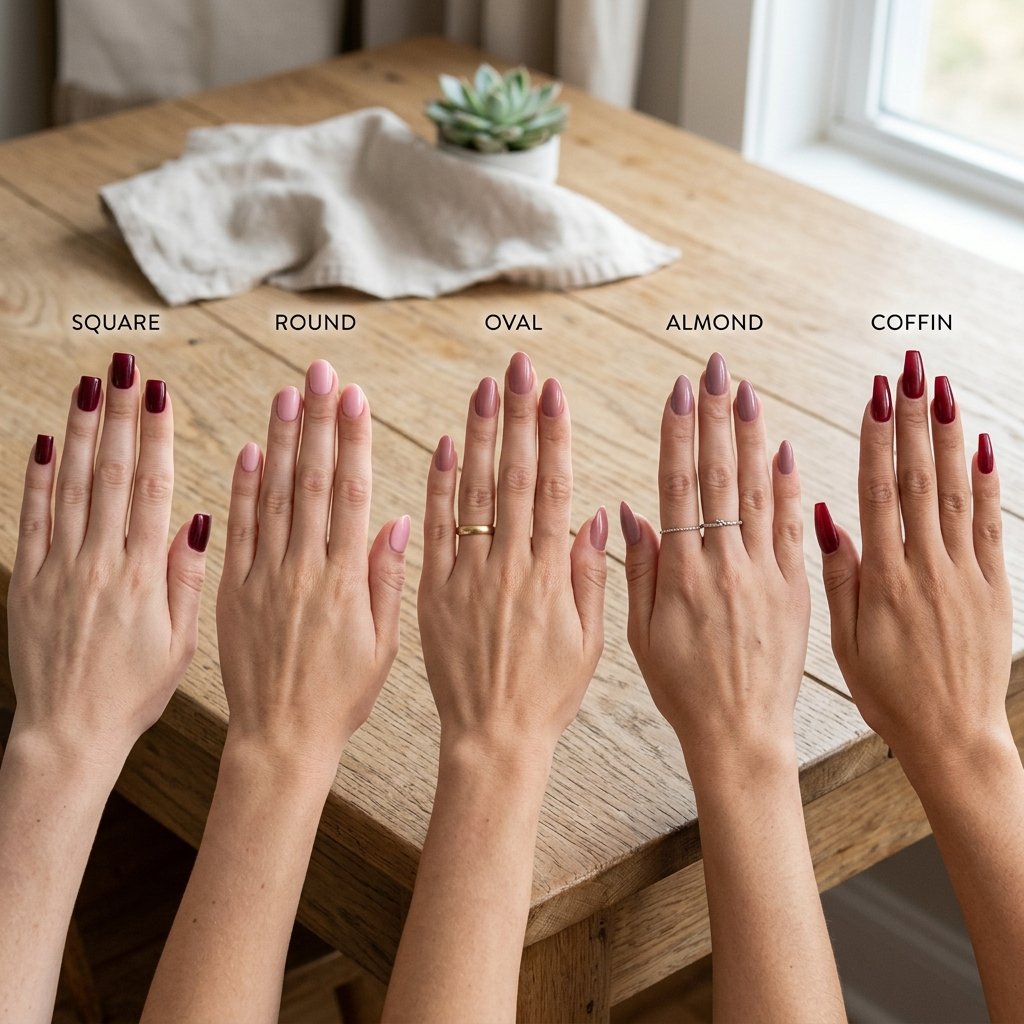
Most nail shape guides work the same way. They list ten shapes, describe each one in a sentence, and leave you to guess which applies to you. The shape itself isn’t really the issue though. The same square tip can look sharp on one hand and blunt on another, depending on how wide the nail bed is or how long the fingers are.
This piece flips the usual order. Instead of starting with the shapes, it starts with common hand and finger traits, then works out which shapes tend to fit each one. That way the comparison actually connects to something real instead of a list you have to mentally sort through on your own.
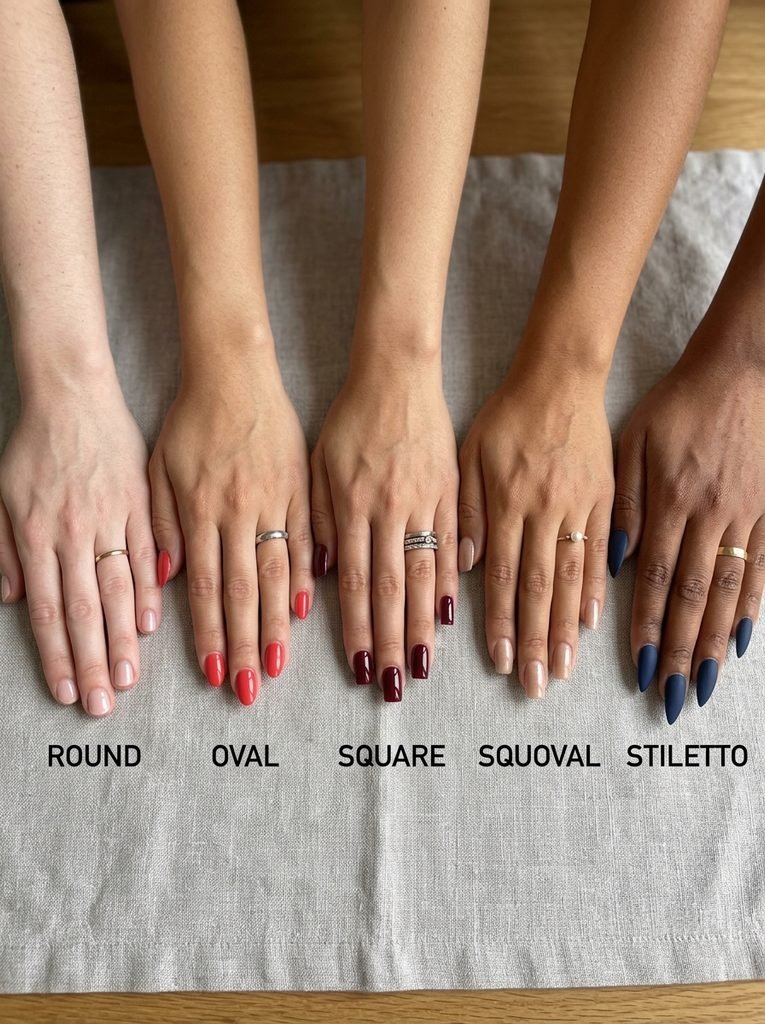
Why Nail Shape Depends More on Your Fingers Than on Trends
A nail shape sits on top of a nail bed that already has its own width, length, and curve. Filing changes the outline of the nail, not the finger underneath it. That’s why a shape that looks striking on a magazine cover can look completely different once it’s on your own hand.
Three things matter more than the trend cycle:
- Nail bed width – wider beds tend to suit shapes that narrow toward the tip.
- Finger length – shorter fingers often benefit from shapes that avoid hard horizontal lines.
- Cuticle shape – a rounded cuticle usually pairs more naturally with soft, curved shapes than sharp ones.
None of this is a hard rule. It’s more of a starting point, since personal preference and how much upkeep you’re willing to do both play a role too.
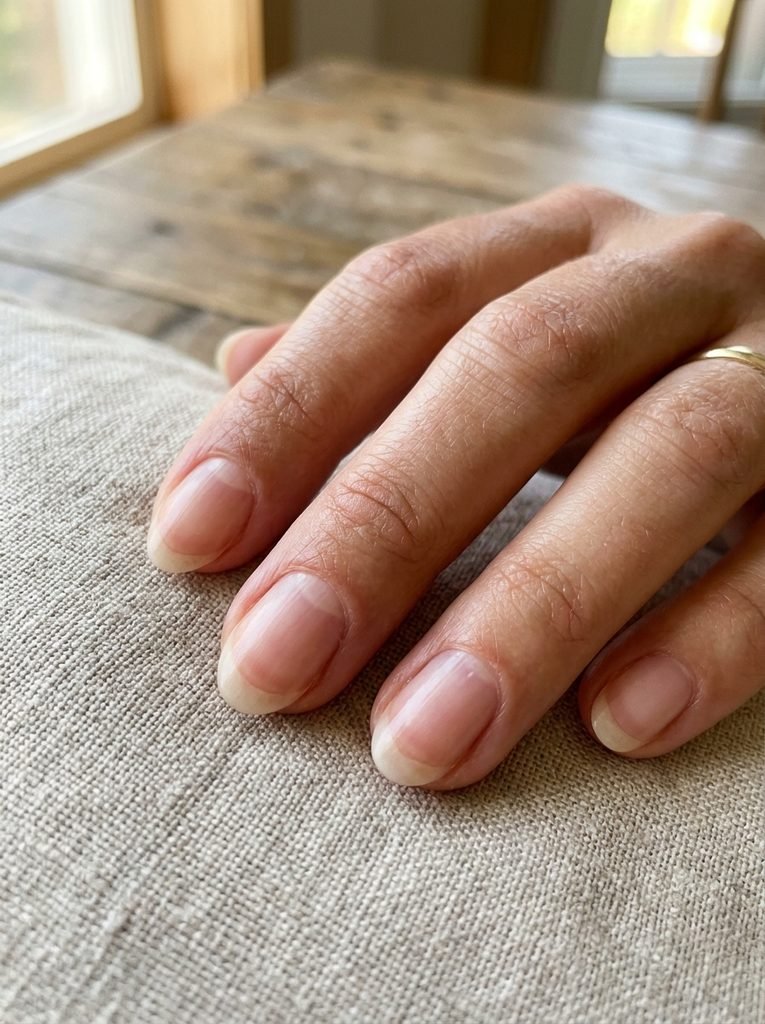
If Your Fingers Are Short or Your Nail Beds Are Wide
Shapes with a flat, straight edge can make short fingers look even shorter, because the eye reads the horizontal line as a stopping point. Shapes that taper or curve tend to work with this finger type rather than against it.
Oval Comes Out Ahead Here
An oval shape rounds off gradually toward the tip instead of stopping abruptly. That gradual curve draws the eye upward along the nail, which softens the look of a wider nail bed and adds a bit of visual length without needing extra nail growth.
Round Nails Work Too, With a Catch
Round nails follow the natural curve of the fingertip closely, which makes them low maintenance and less likely to snag or chip. The catch is that a very short round nail can sometimes look stubby. Keeping a little length, even just past the fingertip, usually balances that out.
If Your Fingers Are Long and Slender
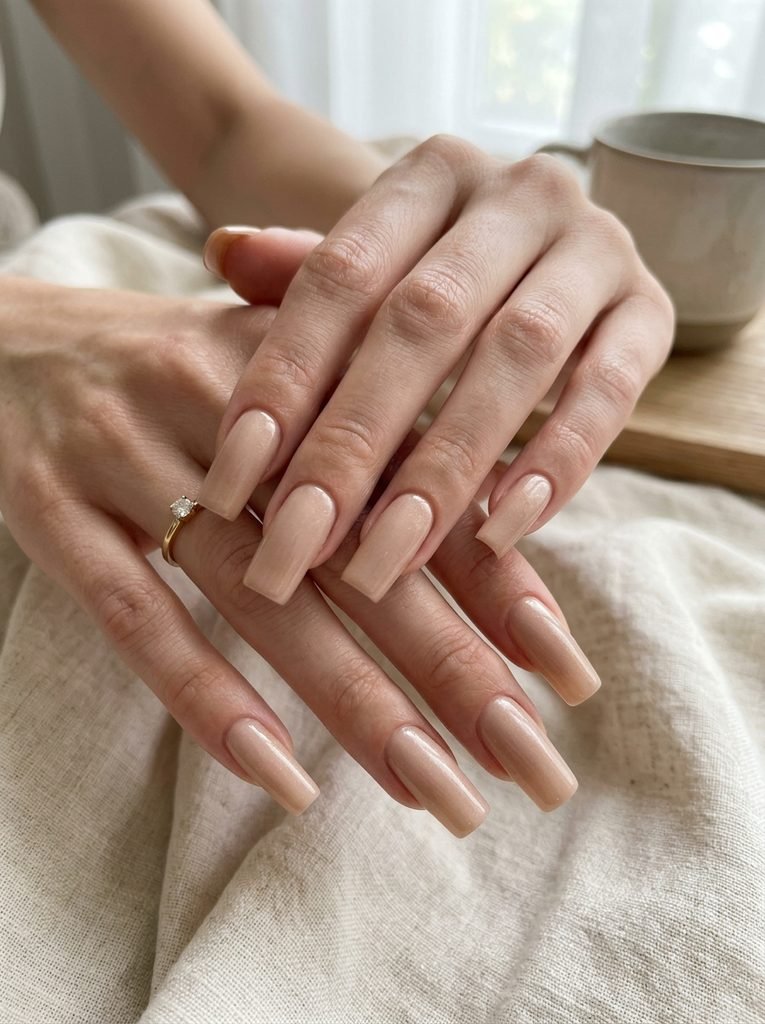
Long fingers have more room to carry a stronger, more geometric shape without looking overdone. This is where straight edges and tapered points both become realistic options, depending on how much definition you want.
Square Nails Add Definition
A straight tip with sharp corners reads as clean and structured. On longer fingers, it doesn’t shorten the look the way it can on shorter ones. One practical note: square corners can catch on fabric or hair more easily than rounded shapes, so they tend to need more frequent filing to stay smooth.
Coffin Nails for a Bit More Drama
Coffin nails taper in along the sides and then flatten off at the tip, similar to a squared oval with a longer point. They need more length to look right and usually rely on a gel or acrylic base to hold the shape without breaking, since the tapered sides leave less natural nail to support the tip.
If Your Nail Beds Are Naturally Narrow
Narrow nail beds have less width to work with, so shapes that emphasize length rather than curve usually suit them well.
Almond Shape Plays to That Strength
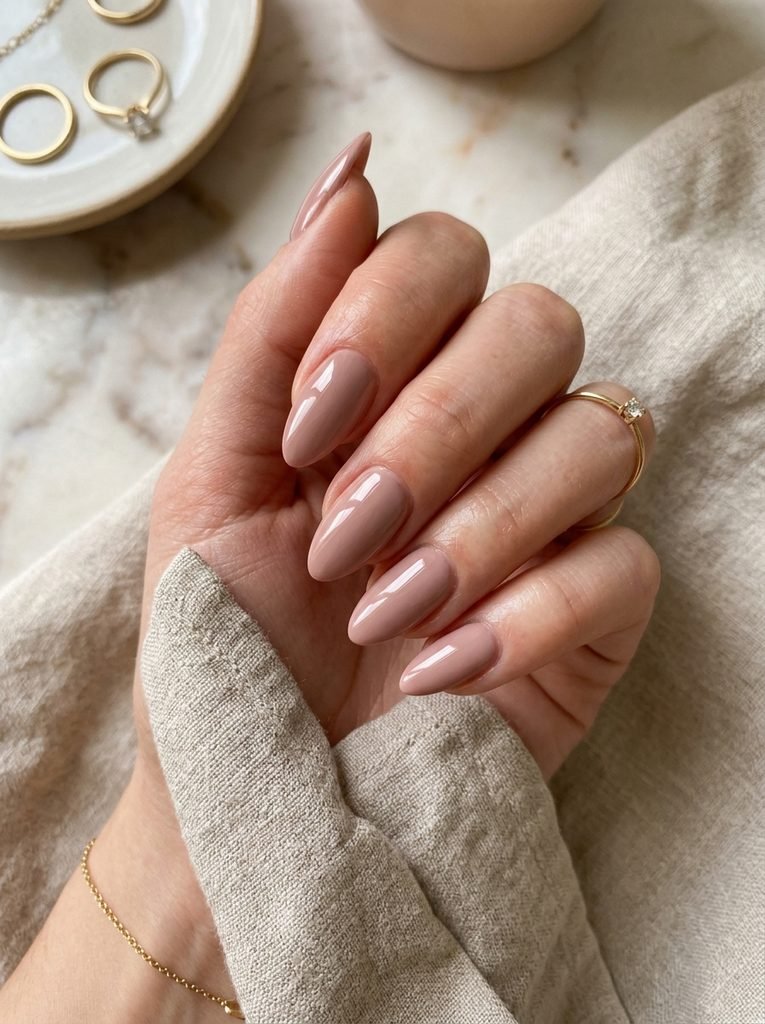
Almond nails narrow gradually to a rounded point, which fits naturally with a narrower nail bed instead of fighting it. It’s one of the more forgiving shapes for medium to long lengths and tends to photograph well because the taper is gentle rather than sharp.
Stiletto Only If You Want the Extra Point
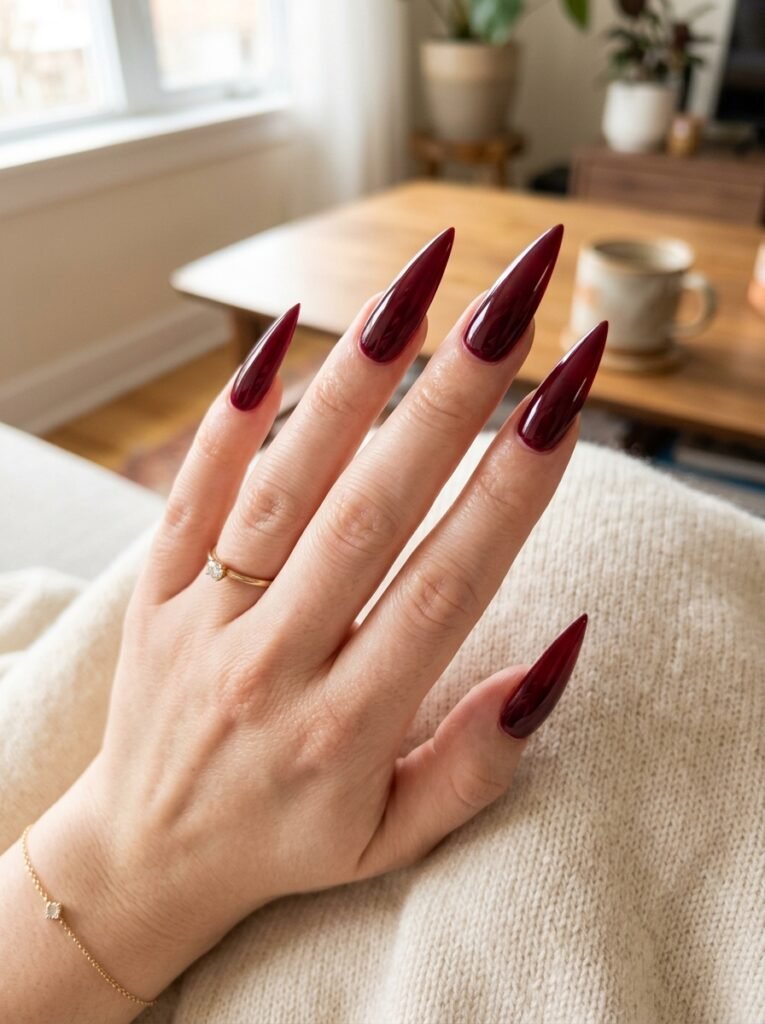
Stiletto nails take the same tapering idea as almond nails but end in a sharp point instead of a rounded one. They can suit narrow nail beds visually, but the pointed tip is thinner and more prone to snapping, so this shape usually asks for more careful daily handling than the others on this list.
If You Want Something Low Maintenance for Active Hands
Some shapes are simply easier to live with day to day, especially for hands that type a lot, cook, or handle tools regularly.
Squoval Is the Practical Middle Ground
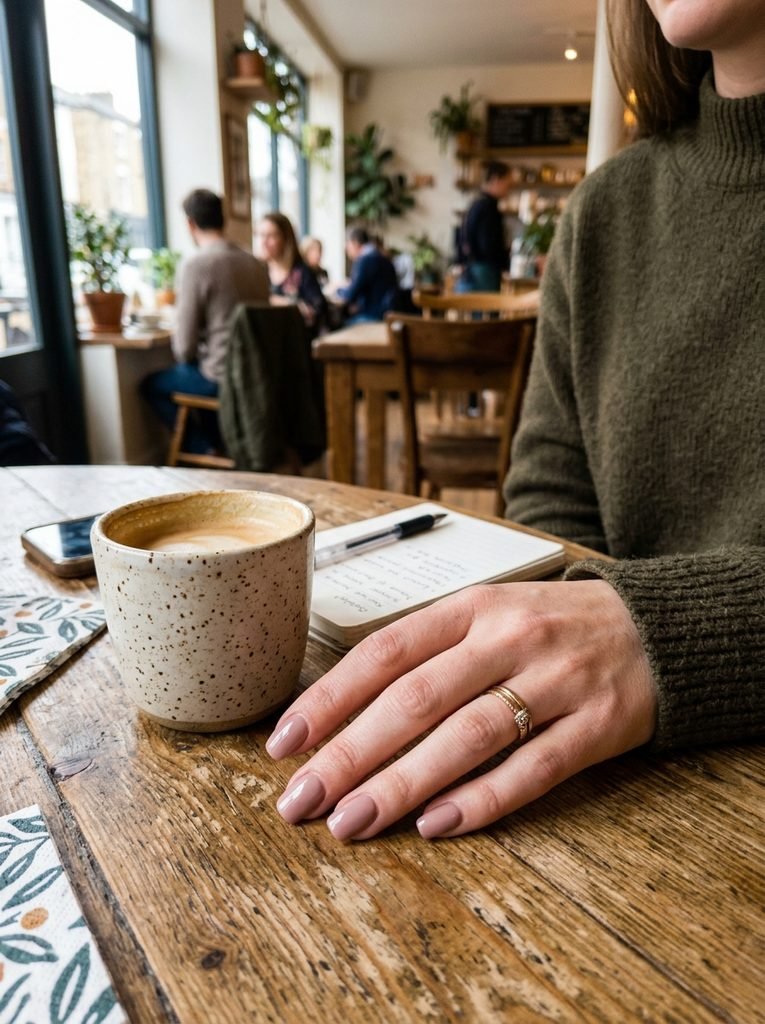
Squoval combines a mostly straight edge with softened corners. It keeps some of the clean look of a square shape while removing the sharp corners that tend to catch or chip. It’s a common choice for people who want their nails to look intentional without constant upkeep.
Round Nails for Everyday Durability
Because round nails follow the fingertip’s natural curve, there’s less nail edge sticking out to catch on things. This makes them one of the more durable shapes for daily wear, particularly at a shorter length.
If You Want a Bold, Statement Look
Some shapes are chosen less for how they suit the hand and more for how much attention they draw. That’s a valid reason to pick a shape, as long as the trade-offs are expected rather than a surprise later.
Stiletto and coffin shapes both fall into this group, along with a few less common ones worth knowing:
- Lipstick shape – angled like a tube of lipstick, with one side longer than the other. It stands out mainly with nail art or color blocking.
- Edge nails – a square base filed with sharp, angular sides instead of a plain straight edge.
- Flare (or duck feet) – wider at the tip than at the base, which is dramatic but needs a fairly wide nail bed to avoid looking uneven.
These shapes generally need longer nails, more filing upkeep, and in most cases a hard gel or acrylic overlay, since the natural nail alone often can’t support the extra length without bending or breaking.
A Quick Way to Test Before You Commit
Committing to a new shape can feel like a gamble, especially with longer or more dramatic options. A few low-cost ways to preview a shape before making it permanent:
- Try a set of press-on nails in the shape you’re considering for a few days.
- Cut a paper template of the outline and hold it against your nail bed under normal light.
- File just one nail into the new shape first and live with it for a couple of days before doing the rest.
None of these take much effort, and they can save a lot of frustration compared to filing all ten nails and immediately wanting to start over. If you want a visual side-by-side of the classic shapes before testing anything, guides like Makeup.com’s nail shape breakdown lay them out clearly.
Common Mistakes People Make When Choosing a Nail Shape
A few patterns come up again and again when people pick a shape that doesn’t end up working for them:
- Choosing a shape purely from an inspiration photo without checking how wide or narrow their own nail bed is.
- Ignoring lifestyle. A shape that looks great in photos but constantly catches on clothing or keyboards gets filed down within a week anyway.
- Switching shapes too often, which weakens the free edge of the nail over time and makes any shape harder to maintain.
- Assuming a shape that works for a friend or a celebrity will automatically translate to a different hand shape.
Comparing a shape guide like this one from Live That Glow against your own hand, rather than against someone else’s, tends to give a more useful starting point.
How Nail Length Changes the Equation
Shape and length aren’t separate decisions. The same shape can look completely different depending on how long the nail is.
- A square shape at a short length looks neat and practical. The same square shape at a long length looks bold and more attention-grabbing.
- Oval and almond shapes need a bit of length to show their taper clearly. Very short oval nails can end up looking almost round instead.
- Coffin and stiletto shapes rely on length to create their signature look. Cut too short, they lose the shape they’re known for entirely.
Because of this, it’s worth deciding on a general length range before locking in a shape, rather than treating the two choices separately.
Keeping Whatever Shape You Choose in Good Condition
Whatever shape ends up suiting your hands, basic upkeep habits matter more than the shape itself for how healthy the nail looks over time. Filing in one direction rather than sawing back and forth helps prevent splitting, and keeping cuticles moisturized reduces the chance of snags along the edges. The American Academy of Dermatology’s general nail care guidance covers these basics if you want a straightforward reference that isn’t tied to any particular shape or trend.
Finding the Shape That Actually Works for You
There isn’t a single “correct” nail shape, and most of the shapes covered here can be adjusted slightly to fit different hands better. What tends to make the biggest difference isn’t which shape is currently popular, but whether the shape works with the width, length, and curve of the nail bed it’s sitting on.
Starting from your own hand rather than from a photo is a small shift, but it usually leads to a shape that holds up better, both in how it looks and in how long it lasts before you’re back at the file trying something else.

Leave a Reply