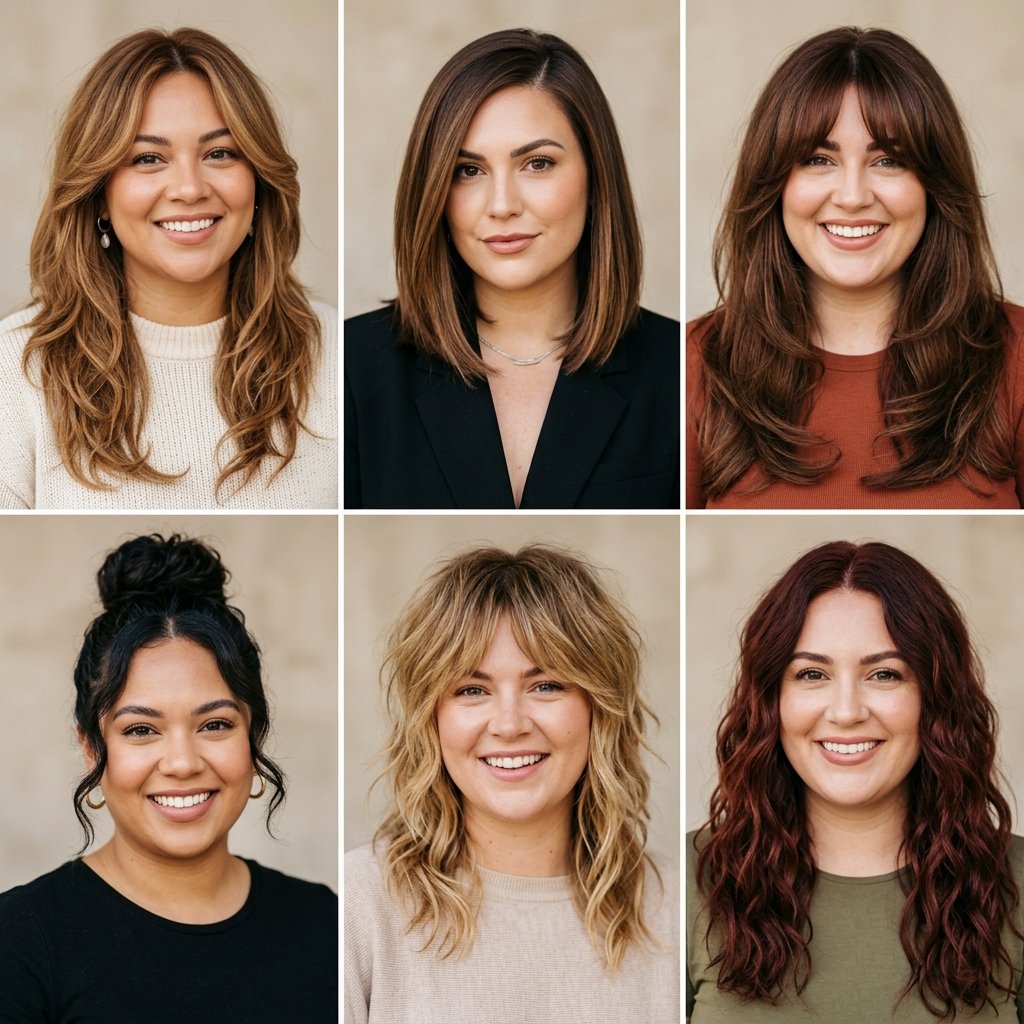
Round faces rank among the most common face shapes, yet hairstyle advice for them stays oddly generic. Most guides repeat the same short list of dos and don’ts without ever explaining why a particular cut works. Readers end up following rules they don’t understand, which makes the advice easy to misapply.
The logic behind round-face styling is simple once it’s spelled out. A stylist isn’t trying to disguise a round face or make it look like something else. The goal is proportion: hair that creates length and definition through placement, volume, and line. Photographers and stylists have leaned on these same visual principles for decades, and they translate directly into everyday hairstyling choices.
Once that goal is clear, each hairstyle below stops feeling like an arbitrary rule and starts making sense on its own terms. A single styling habit undoes most of this logic, and it gets its own section near the end because it deserves the space.
The following styles are grouped by the same underlying principle: height where the face needs length, and restraint where it already has width.
Understanding the Round Face Before You Style It
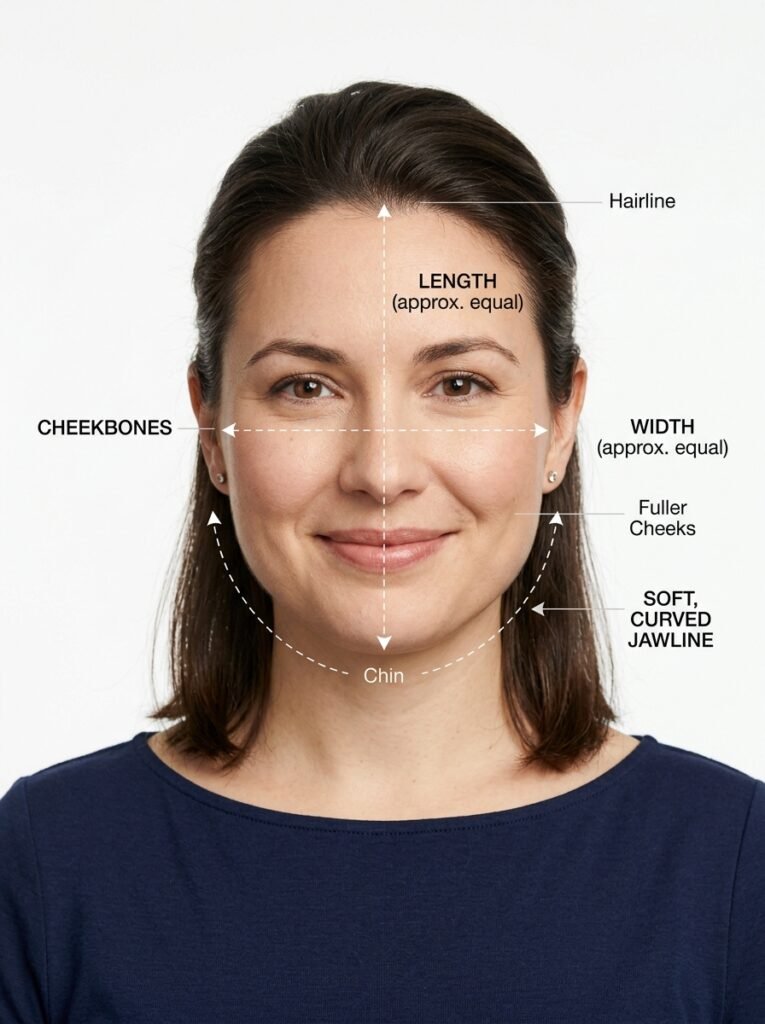
A round face has roughly equal width and length. The jawline curves rather than angles, and the cheeks carry natural fullness. Forehead, cheekbone, and jaw widths tend to sit close together, which reads as circular rather than oval when viewed straight on.
Most styling guides quietly aim toward one target: the visual impression of an oval. Stylists treat the oval as the most balanced proportion, so round-face advice usually tries to add apparent length while trimming apparent width, especially at the cheekbones and jaw where roundness shows most.
Researchers studying facial attractiveness have found that faces judged as balanced and proportional consistently score higher in perception studies, which supports why hairstylists chase proportion so deliberately. A facial-proportion study published in Image and Vision Computing found that attractiveness ratings tracked closely with specific proportional ratios across hundreds of generated face images, reinforcing why small shifts in visual balance matter so much in styling.
The mechanics behind round-face styling are straightforward. Height at the crown lengthens the face. Volume at the jaw shortens it by widening the point that’s already widest. Straight or diagonal lines elongate more effectively than horizontal or curved ones. Hair that falls vertically beside the face slims it; hair that curves outward around the cheeks adds width.
Every style below applies one or more of these principles directly.
Long Layers With Face-Framing Pieces
Long hair with layers that fall vertically beside the cheeks is one of the most dependable choices for a round face. Because the layers drop downward rather than curling outward, they create a visual line that elongates the face without requiring stick-straight styling.
The face-framing pieces matter because they pull attention toward the center of the face instead of the outer cheek. Hair that falls alongside the cheekbone, rather than around it, visually softens roundness rather than emphasizing it.
This cut suits most textures and doesn’t demand frequent precision trims. A cut every eight to twelve weeks keeps the shape intact and the layers doing their job.

The Lob: Long Bob at Collarbone Length
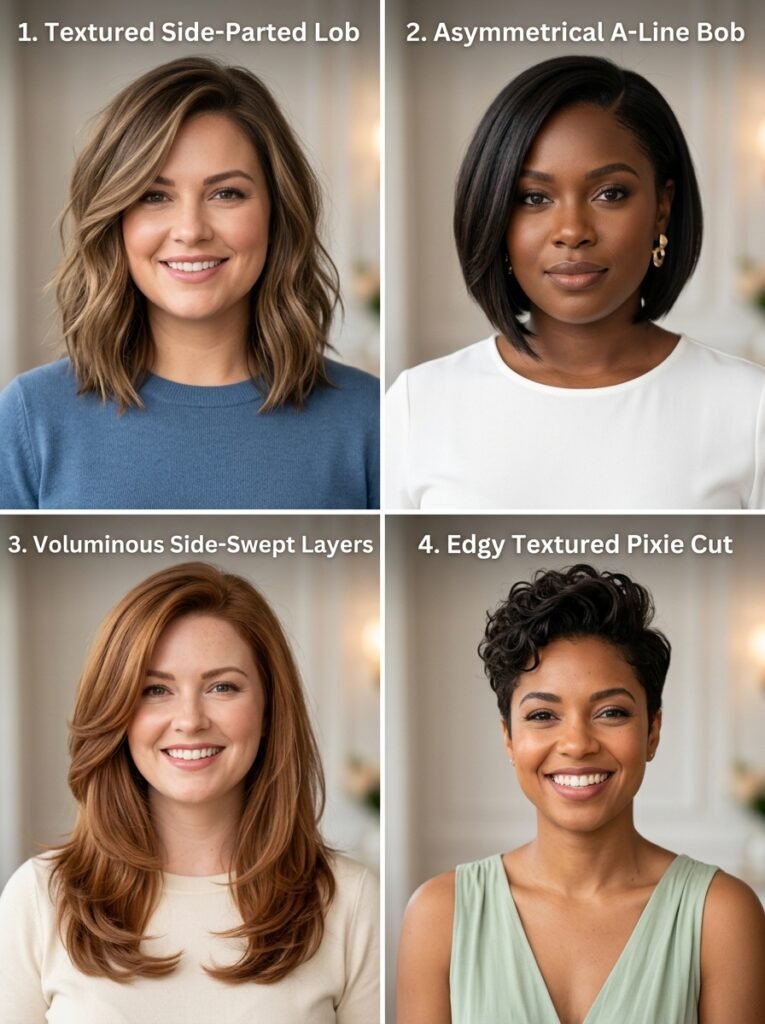
The lob, cut to collarbone length, sits in the sweet spot for round faces among shorter styles. It stays long enough to create vertical lines beside the face while feeling deliberately styled rather than like a safe default length.
For a round face, the cut should land at or below the collarbone. A bob that stops at the chin or jaw adds horizontal width exactly where roundness already concentrates. Collarbone length falls below the jawline and lets the ends taper or angle forward, which lengthens rather than widens.
Worn sleek or with a soft vertical wave, the lob remains one of the most versatile lengths available to a round face shape.
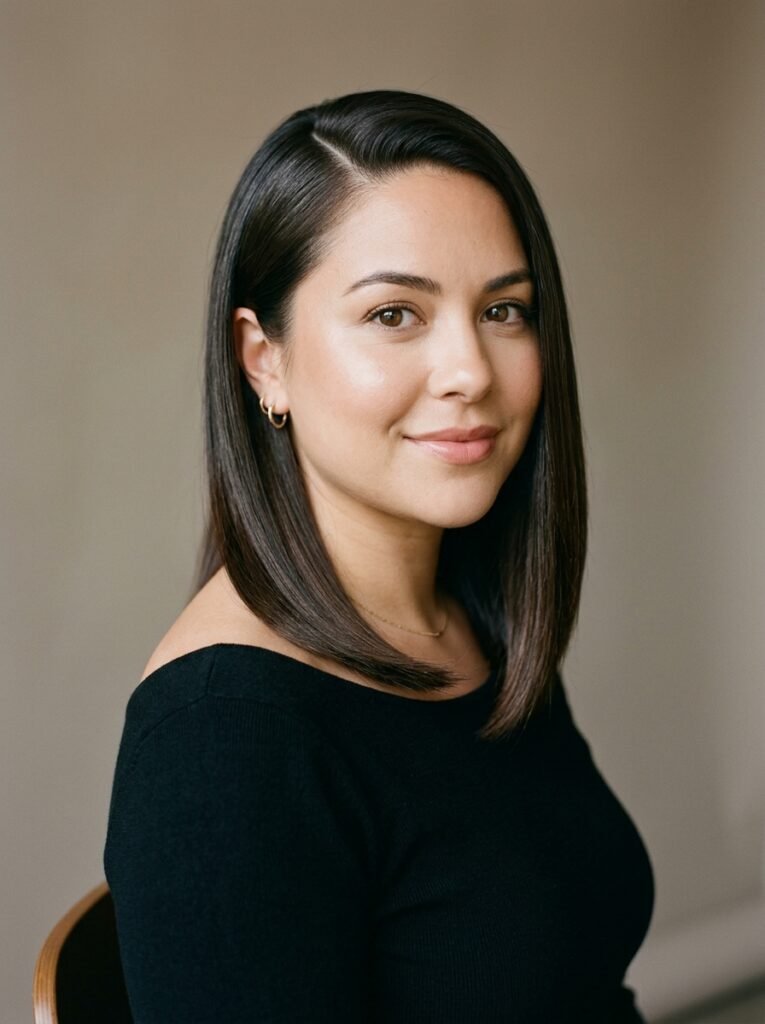
A Deep Side Part
Moving a part to the side costs nothing and changes the shape of the face almost instantly. It’s one of the highest-impact, lowest-effort adjustments available to anyone with a round face.
A center part splits the face symmetrically, which highlights the equal width on both sides and reads as rounder. A deep side part introduces a diagonal line across the forehead that elongates the face and breaks that symmetry, creating a more oval impression.
This adjustment works with any length, texture, or styling routine, which makes it the fastest change with the biggest visible payoff.
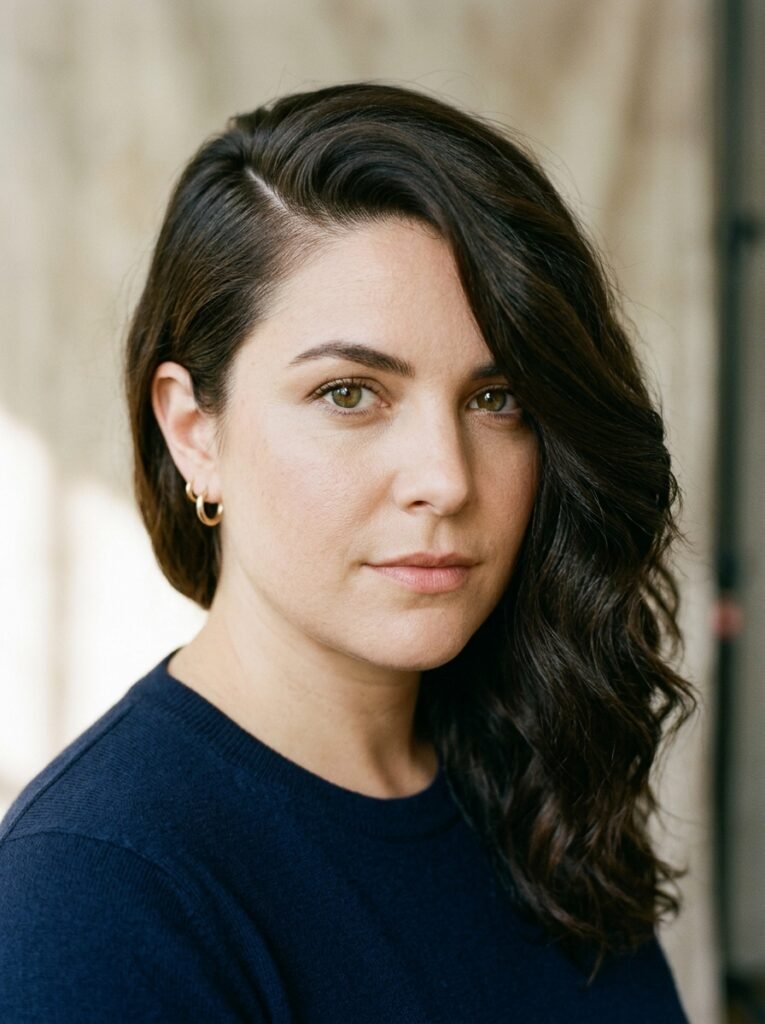
Curtain Bangs
Curtain bangs part in the center and fall open on either side of the face instead of sitting flat across the forehead. They’ve become one of the most popular fringe styles, and round faces benefit from them for a specific reason.
A blunt, straight-across fringe creates a horizontal line that shortens the visible face and adds apparent width, which works against a round face. Curtain bangs avoid this by parting centrally and angling outward, forming a soft V that adds a downward, lengthening line instead.
They also require less daily upkeep than a traditional fringe. Because they’re built to part and fall naturally, they still look intentional without constant restyling.

Straight, Sleek Hair With a Side Blow-Out
A sleek, straight blow-out paired with a deep or off-center part is one of the more elongating looks a round face can wear. The flat, controlled surface beside the cheeks creates a clean downward line without adding side volume.
Side volume is exactly what makes a round face read as wider, and this style removes it deliberately. The result is a controlled frame that narrows and lengthens the face more than any style that adds width at the cheekbone or jaw.
This style suits medium to fine hair that responds well to a round brush or flat iron. Coarser or textured hair benefits from a smoothing product before blow-drying, followed by a flat iron for a controlled finish.
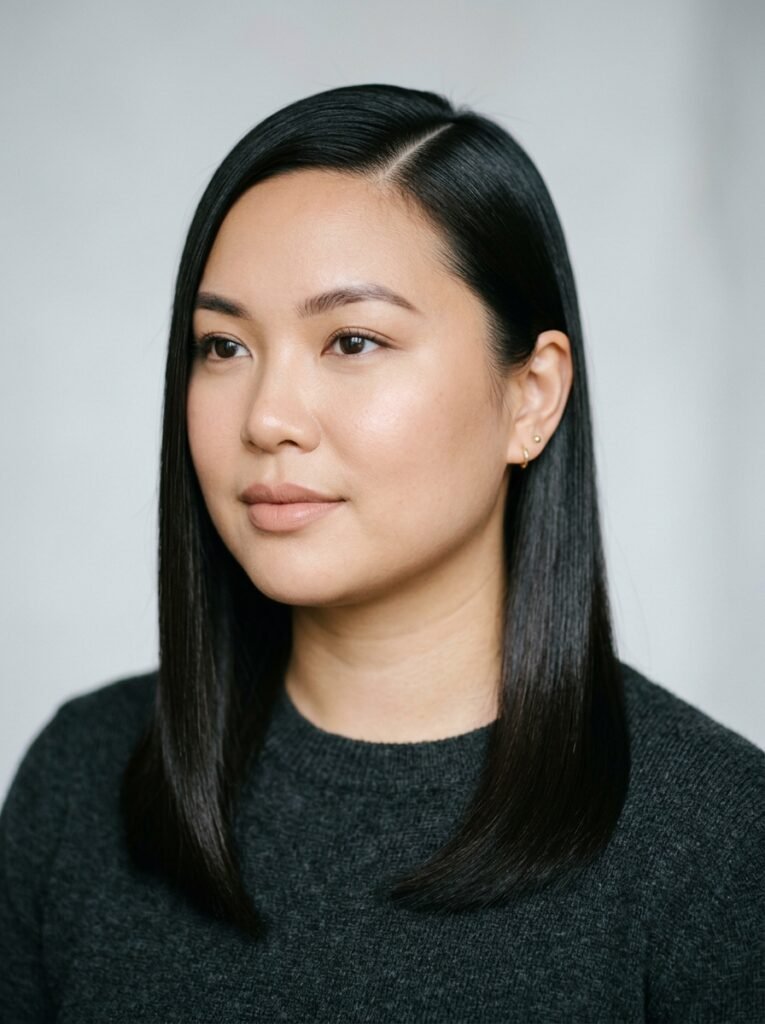
Beachy Waves With Vertical Movement
The difference between beachy waves that flatter a round face and waves that fight it comes down to direction. Waves that move vertically in loose S-curves elongate the face, while waves that spread outward and add volume at the cheekbones widen it.
To create vertical waves, start the curl higher on the strand and let it fall straight before curling, rather than wrapping hair outward from root to tip. A large-barrel iron wrapped downward, with waves gently pulled toward the floor before setting, produces the right movement.
Beachy waves at the right angle remain one of the most wearable everyday options for a round face, which makes the small technique adjustment worth the extra minute.
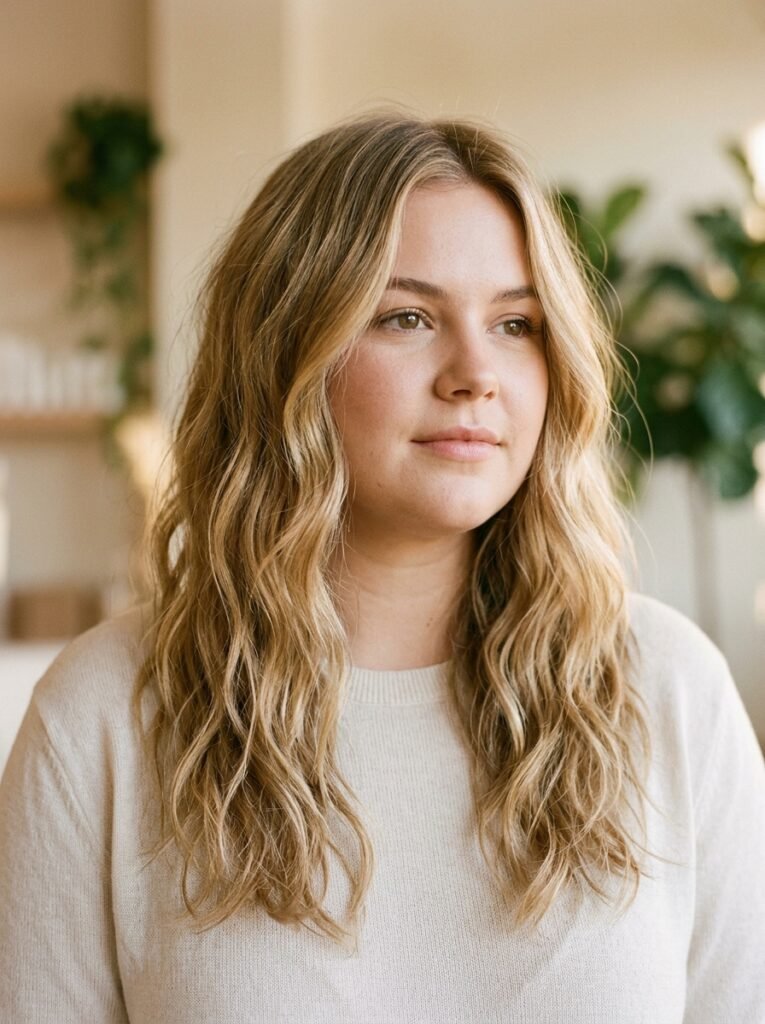
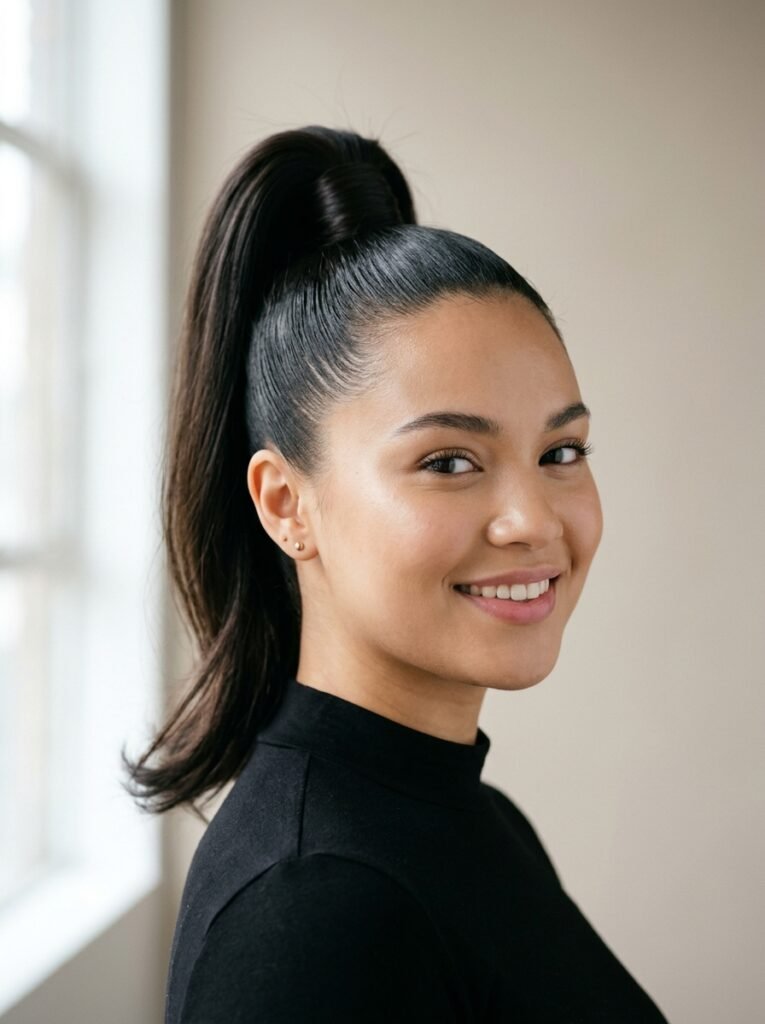
A High Ponytail or Topknot
Any style that lifts hair off the face and builds height at the crown works in a round face’s favor. A high ponytail or bun adds vertical length above the head while clearing volume away from the sides entirely.
That combination of added height and cleared sides produces one of the strongest elongating effects available through hairstyling alone. It also exposes the neck and jaw fully, which adds perceived length to the lower face.
The ponytail needs to sit at or above the crown to work. A low ponytail at the nape loses the crown-height benefit and can emphasize width instead, since it leaves the focus at the sides with no vertical counterbalance.
A Shaggy Layered Cut With Texture
The shag, a heavily layered cut with texture, movement, and often a curtain fringe, suits round faces because its texture builds vertical movement instead of a smooth, wide silhouette.
Shag layers usually run shorter through the crown and gradually lengthen toward the ends, which naturally lifts the crown while removing the weight that would otherwise push hair outward. Razor-cut or point-cut layers create this texture more effectively than blunt layers do.
The shag has seen a genuine resurgence, and it suits most textures on a round face, including naturally wavy or curly hair, where the cut’s texture and the hair’s natural texture reinforce each other.

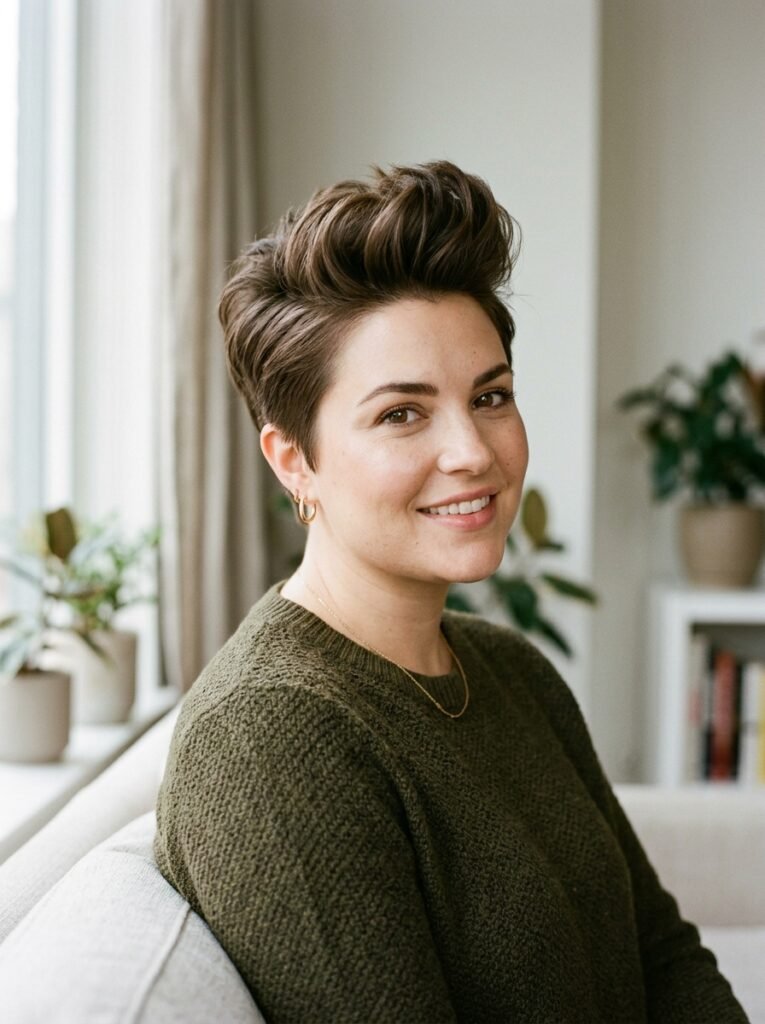
A Pixie Cut With Volume at the Crown
Pixie cuts draw mixed opinions for round faces, and the honest answer depends entirely on how the cut is shaped and styled. A pixie with built-in crown volume, achieved through graduation and texture, adds elongating height. A flat pixie with width at the sides does the opposite.
A pixie built for a round face keeps extra length at the top for upward styling, trims the sides to remove width near the cheekbones, and adds texture through the crown for vertical movement. The result frames the face with vertical rather than horizontal lines.
A stylist who understands facial proportion can cut a pixie that reads beautifully on a round face. It’s worth having that specific conversation before the first snip.
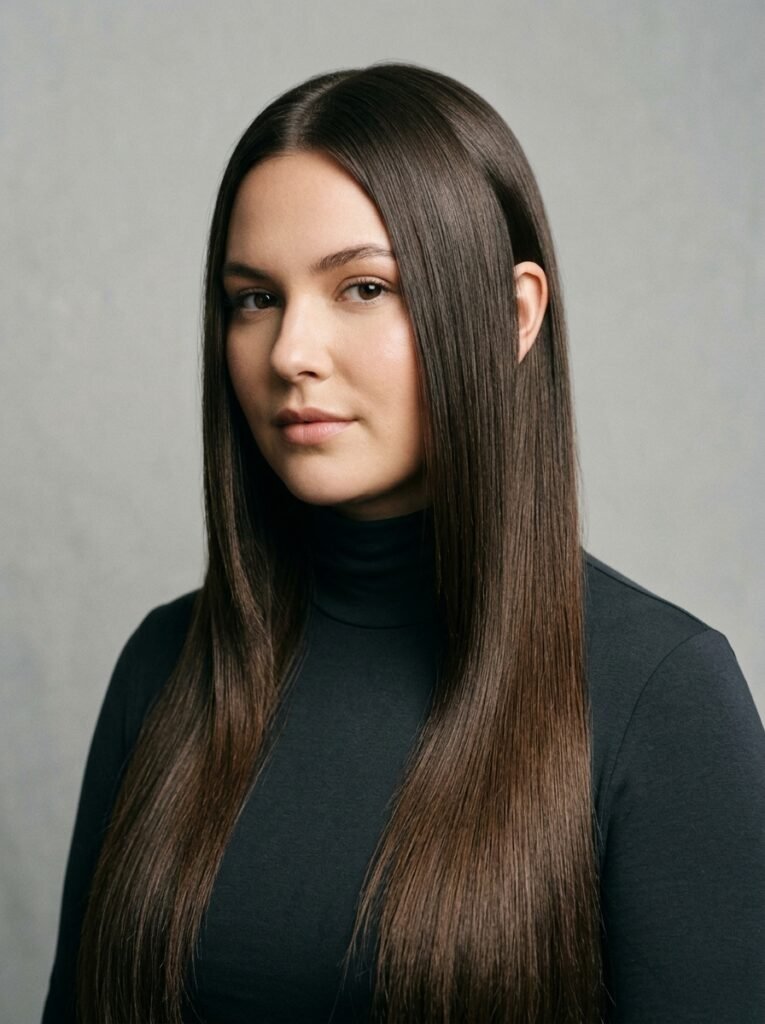
Long Straight Hair With Minimal Volume at the Sides
Long, straight hair with little side volume produces one of the most reliably elongating looks a round face can wear. It falls in near-vertical lines that narrow the face from the front while the length itself balances the roundness.
Naturally straight hair, or hair that straightens easily, suits this look best. Wavy or textured hair can achieve a similar effect through a smoothing routine that controls width without stripping out all natural texture.
The key is managing volume specifically at the sides and cheek area. Crown volume stays neutral or helpful; side volume is what actually needs attention.
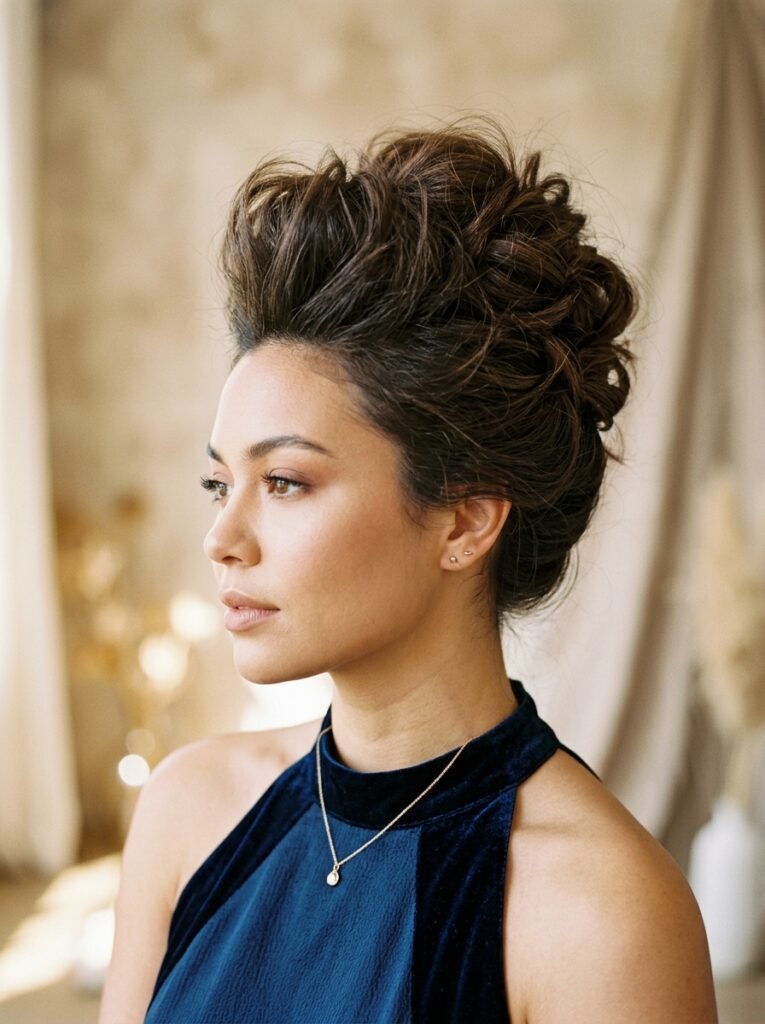
An Updo With Height and Texture at the Crown
A textured updo built with intentional crown height, whether a lifted chignon, a high braided updo, or a knotted style with fullness on top, ranks among the more elegant and elongating options for a round face. It carries the same height benefit as a high ponytail with added formality.
Texture at the crown matters because it directs visual movement upward instead of outward. A flat updo without crown height provides less elongating benefit than a textured one, since it doesn’t pull the eye upward the same way.
This style works especially well for weddings, formal events, or any occasion calling for both elegance and maximum elongation. For more updo inspiration built around this same height-first approach, this roundup of party bun hairstyles covers several variations worth studying.
A Bob With an Angled Front
A bob with longer front pieces that angle forward toward the face flatters a round face far more than a bob cut evenly all the way around.
The longer front sections fall beside the face and create a downward, elongating line. The forward angle also introduces asymmetry that counters the face’s natural symmetry. An even-length bob at the chin or jaw, by contrast, adds a horizontal line right at the widest, roundest part of the face.
Stylists frequently recommend the angled bob for round faces specifically because of this forward-angle principle.

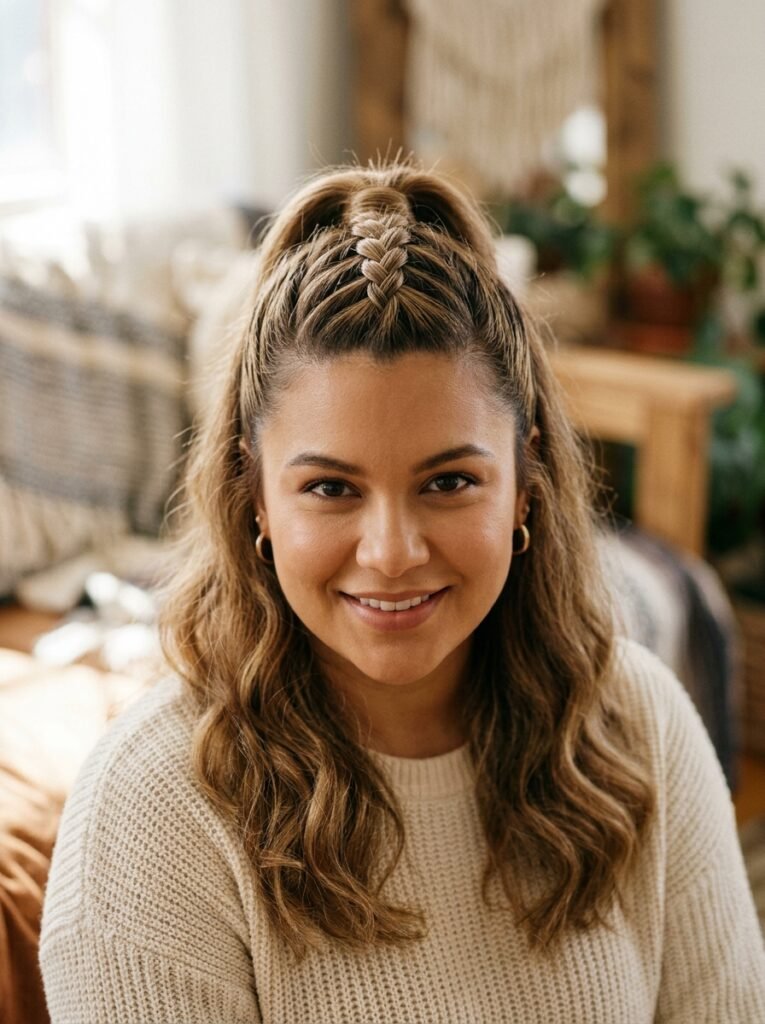
A Braided Style That Draws the Eye Upward
A French braid, Dutch braid, or any plait that starts at the forehead and moves toward the crown pulls the eye upward along a central vertical line. That upward movement adds visual length and interrupts the horizontal width a round face naturally presents.
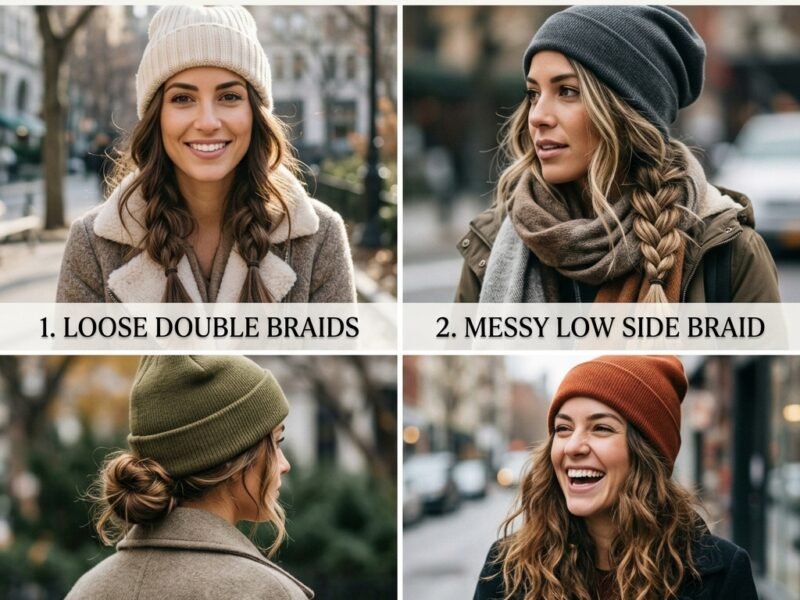
Braids pinned high at the back add crown height. A single plait worn over one shoulder creates a diagonal line that adds both asymmetry and length. Even a simple half-up braid pinned at the crown, with the rest of the hair left down, creates upward movement that benefits a round face. Readers looking for quick, everyday braid options can find more variations in this collection of fast braided styles.
Braids also offer practical value on busy days when hair needs to be managed quickly, which makes the face-shape benefit a bonus on top of everyday convenience.
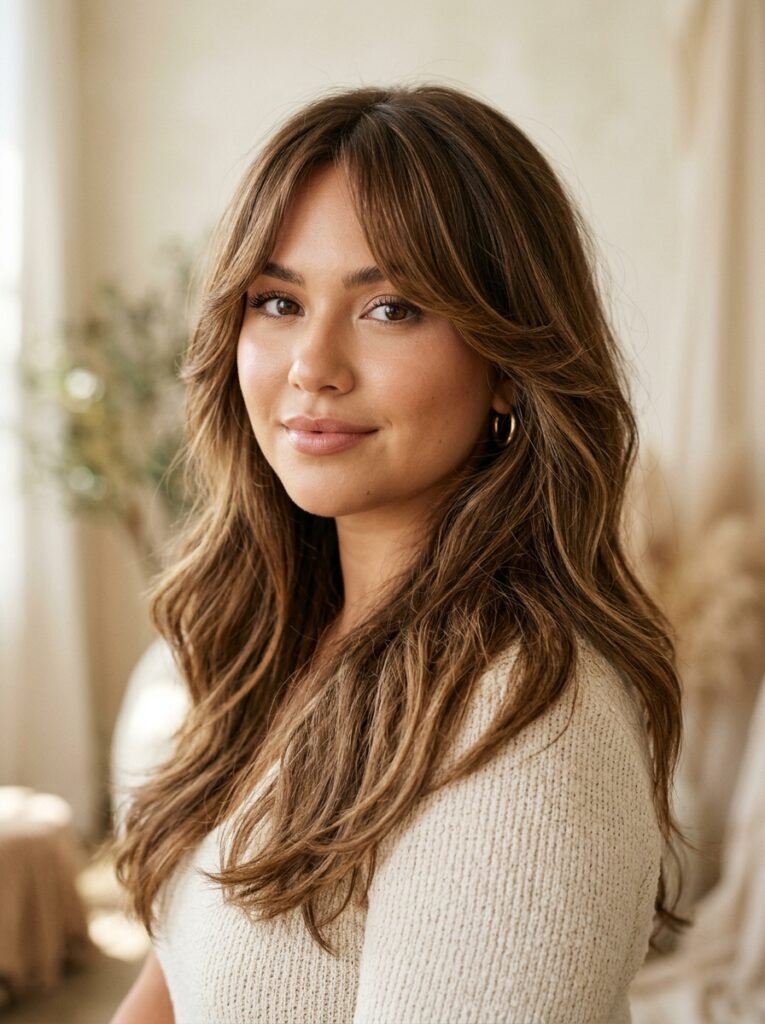
Curtain Bangs With Long Layers
Combining curtain bangs with long layers addresses multiple proportional goals in a single hairstyle. The curtain bang builds a soft V at the forehead that adds vertical length above, while the long layers add vertical fall beside the cheeks below. Together they frame the whole face into a more oval read.
This pairing works especially well because the fringe blends seamlessly into the layers with no abrupt shift in length or direction. The result reads as one cohesive cut rather than a fringe added onto a separate style.
It also adapts to multiple finishes. Waves make it romantic and effortless. Sleek and straight makes it polished and elongating. Added texture makes it modern and directional.
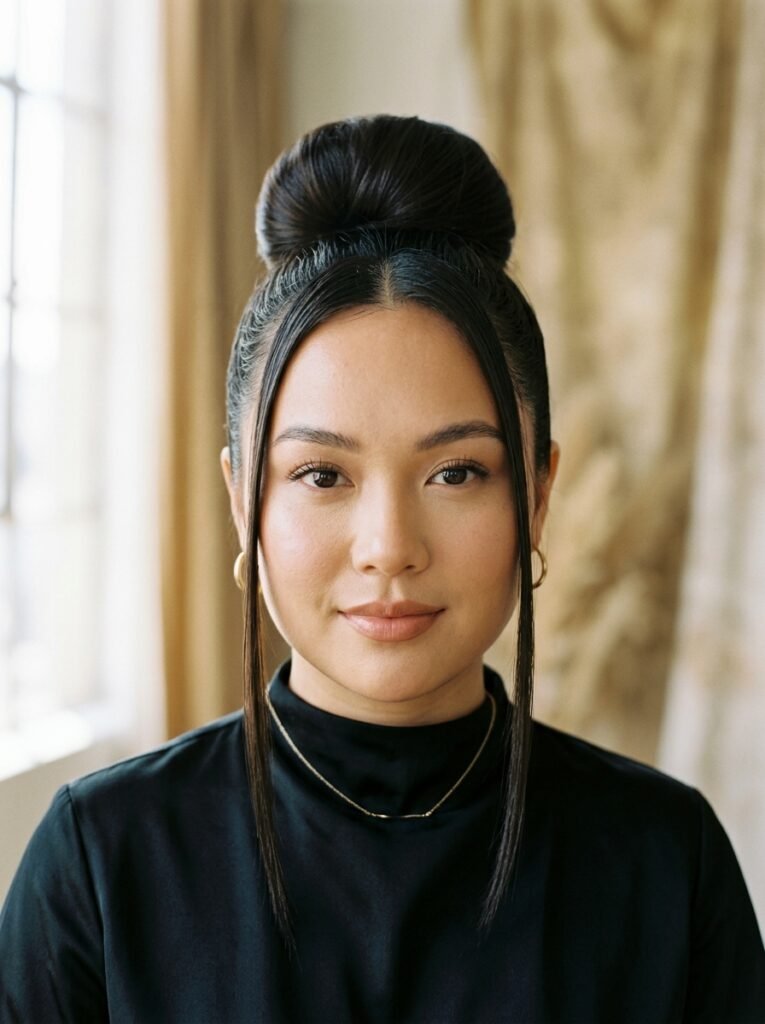
A High Bun With Face-Framing Tendrils
A high bun keeps the crown height and cleared sides of a high ponytail while adding softer, face-framing tendrils pulled loose near the cheeks. Kept narrow and directed downward, those tendrils reduce apparent cheek width while the bun’s height adds length above.
The tendrils need to stay close to the face and fall downward to work. Tendrils that curl outward, or that carry too much volume, add width instead of removing it. Thin, straight, or gently curled pieces beside the cheekbone and jaw get this right.
This style suits nearly any formality level, and the combination of height with downward tendrils makes it one of the most complete solutions on this list.
The One Mistake Everyone Makes
After covering that many specific hairstyles, one habit deserves its own section. It isn’t a single bad haircut. It’s a thinking mistake that quietly undoes nearly every good hairstyle decision for a round face.
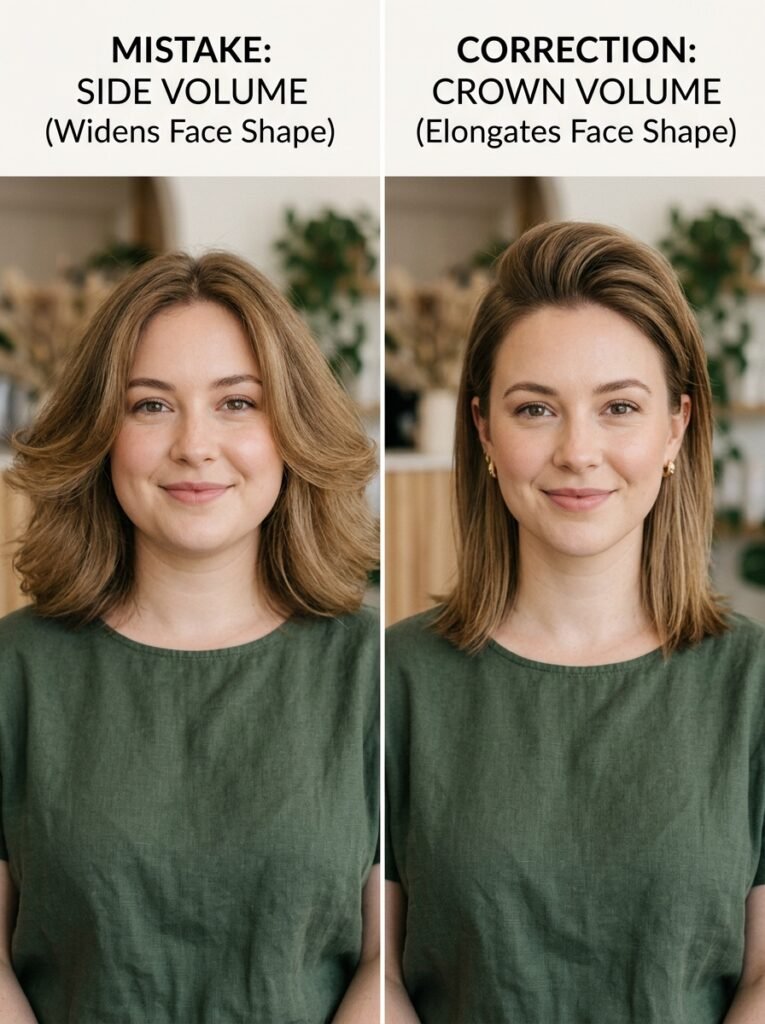
The mistake is adding volume at the sides to compensate for something else.
Here’s how it usually happens. Someone with a round face wants fuller-looking hair, since volume reads as healthy. Or they want to soften their cheeks. Or they’re simply chasing a trend built around big, voluminous hair. So volume gets added at the sides through a round-brush blow-dry that pushes hair outward, through a cut that keeps weight at the cheekbones, or through curls that spiral outward instead of falling downward.
Every time that happens, the round face reads as rounder. Side volume communicates width more directly than almost any other styling choice, and width is exactly what a round face already carries in abundance.
The instinct usually comes from good intentions. More hair can feel like it balances things out. A cushion of volume near the cheeks can seem like it might soften a jawline. In practice it does neither. It adds width to the widest point of the face and strengthens the circular impression instead of softening it.
The fix is redirecting volume upward. Whatever would normally push outward at the cheeks should build height at the crown instead. Height on top, restraint at the sides: that formula runs through every hairstyle in this guide, and skipping the side-volume habit is what actually makes each of them work.
Frequently Asked Questions
What hairstyle makes a round face look slimmer? Styles that build height at the crown while keeping side volume controlled make a round face read as slimmer and more elongated. Long layers with a deep side part, a high ponytail or bun, curtain bangs paired with long layers, and a sleek blow-out without side volume all deliver this effect reliably. The underlying principle stays the same: vertical lines and crown height elongate, while side volume widens.
Should someone with a round face avoid short hair? Not at all. Short hair can look excellent on a round face when the cut accounts for face shape. A pixie with crown volume and trimmed sides, an angled bob with a longer front section, or a textured shag with curtain bangs all work well at shorter lengths. The key is choosing a cut that adds height on top rather than volume at the sides, which calls for a stylist familiar with facial proportion.
Are blunt bangs bad for a round face? Blunt, straight-across bangs create a horizontal line that shortens the visible face and reinforces an impression of equal width and height, which tends to emphasize roundness. Curtain bangs or side-swept bangs, which build diagonal or V-shaped lines instead, are generally considered more flattering for round faces. That said, plenty of people with round faces wear blunt bangs well. Face-shape guidelines are a starting point, not a rulebook.
Does a center part or side part look better on a round face? A deep side part usually flatters a round face more than a center part, since it creates an asymmetrical diagonal line across the forehead that adds visual length. A center part divides the face symmetrically, which can emphasize equal width on both sides and read as slightly rounder. The deeper the side part, the more visible the elongating effect becomes.
What hair length works best for a round face? Medium to long lengths, from collarbone to below the shoulder, tend to flatter round faces most reliably, since they allow the vertical lines beside the face that create an elongating effect. Within that range, the cut and styling matter more than exact length. Very short cuts can work with the right approach, and very long, heavy hair without layers can flatten the crown and add side weight, though long layers correct that easily.
The Hairstyle That Works Is the One You Actually Love
Face-shape advice works best as a framework, not a verdict. Every hairstyle in this guide flatters a round face because of real, explainable proportional principles. Even so, the best hairstyle remains the one that makes you feel genuinely confident, regardless of face shape.
Use these principles to understand your options more clearly, troubleshoot a style that isn’t quite working, or have a sharper, more specific conversation with your stylist. Let the understanding guide your choices without boxing them in. For a different face shape’s version of this same framework, this guide to oval face hairstyles walks through why that shape behaves so differently from a round one.
The one mistake covered above is worth avoiding because it produces a result many people notice without being able to name. Once it’s named, it’s easy to sidestep. With that single adjustment, nearly every hairstyle on this list becomes far more achievable than it first appears.


[…] apply to other face shapes, it’s worth checking out how they play out in this breakdown of the best hairstyles for round faces, since the logic of adding or softening width shifts quite a bit depending on the starting […]
[…] why it suits so many face shapes — for a deeper breakdown of which cuts flatter which features, this guide to face-flattering hairstyles covers the basics. Glossy blowouts bring out the layered structure and give the cut a finished, […]
[…] instance, typically call for cuts that add height at the crown and reduce width at the cheeks. This guide to flattering hairstyles for round faces breaks down that corrective approach in more detail. Oval faces rarely need that kind of […]