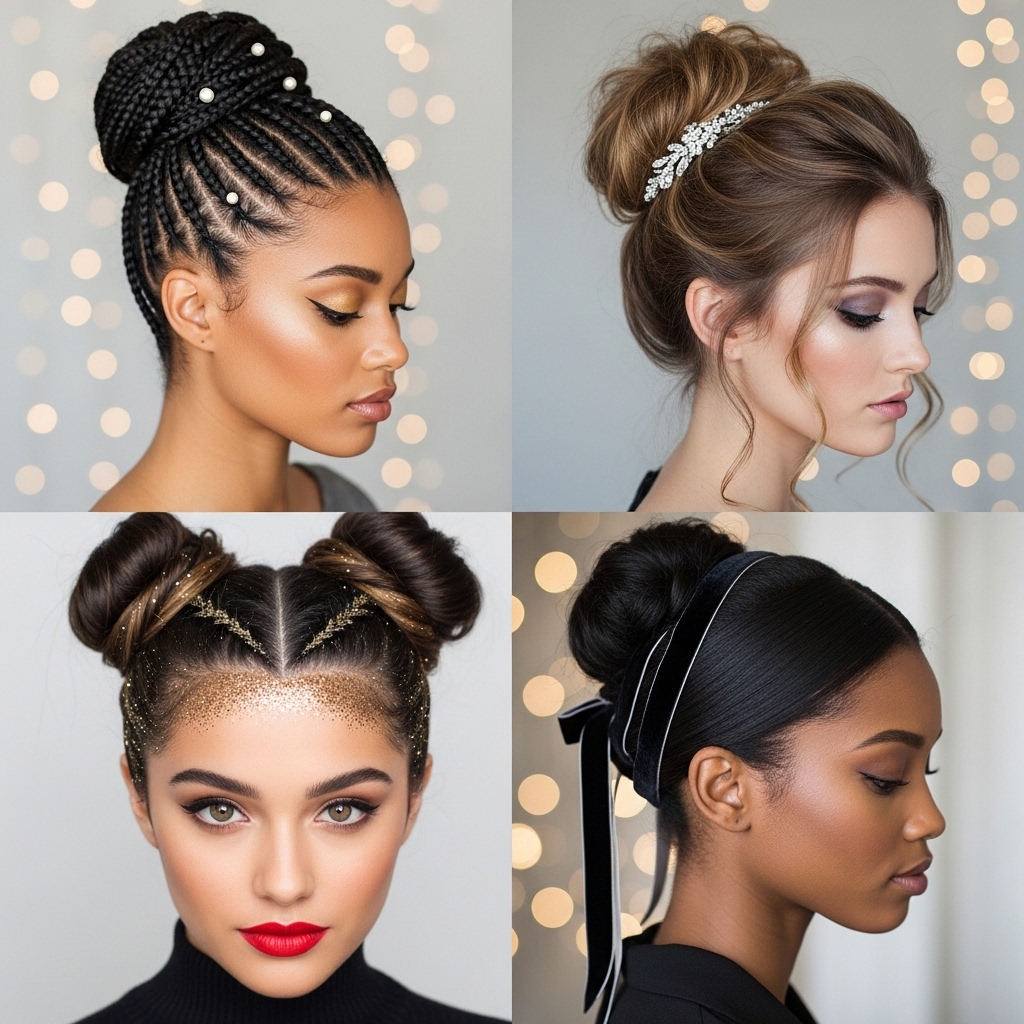
Bun hairstyles hold their ground at nearly every formal event, from red-carpet-inspired sleek shapes to romantic, undone updos. Long, medium, or short hair all take well to some version of a bun. That versatility is part of why the shape keeps reappearing across wedding season, holiday parties, and evening events year after year.
This roundup collects twenty-four bun variations built for exactly that kind of occasion. Each one is structured enough to photograph well and adaptable enough to fit most hair lengths and textures. Guests attending a wedding rather than standing in it may prefer something simpler. A separate guide to doable-at-home wedding guest hairstyles covers that ground directly. Brides planning their own day, meanwhile, have an even deeper set of options in this dedicated bridal bun collection.
What follows sticks to the general case. It’s for anyone dressing up for a party, a reception, or a night out. The goal is a bun with more presence than usual.
Sleek Low Bun for Timeless Party Elegance
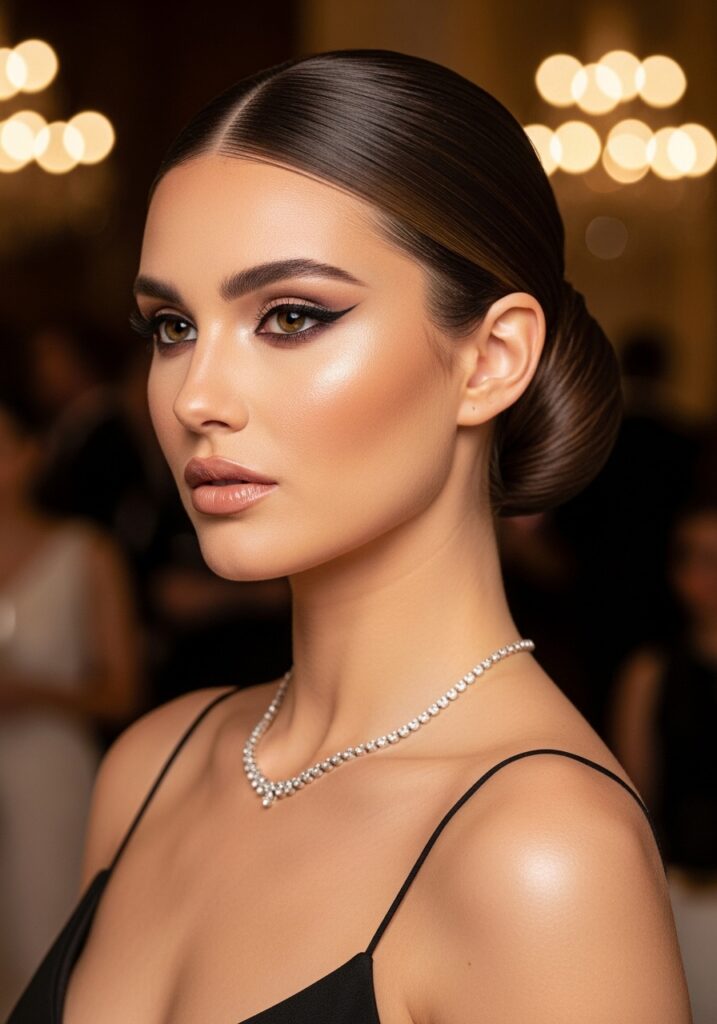
Hair smooths tightly toward the nape, with every flyaway pressed down before the bun forms. The compact shape that results reads as deliberate rather than rushed. The tight surface catches light evenly too. That’s part of why this version photographs cleanly under both flash and low venue lighting. A fine-tooth comb and a touch of gel handle the smoothing. Pins close to the hair’s natural color keep the finish from looking hardware-heavy. Even one stray pin in a mismatched shade tends to draw the eye.
Messy High Bun for Effortless Glam Look
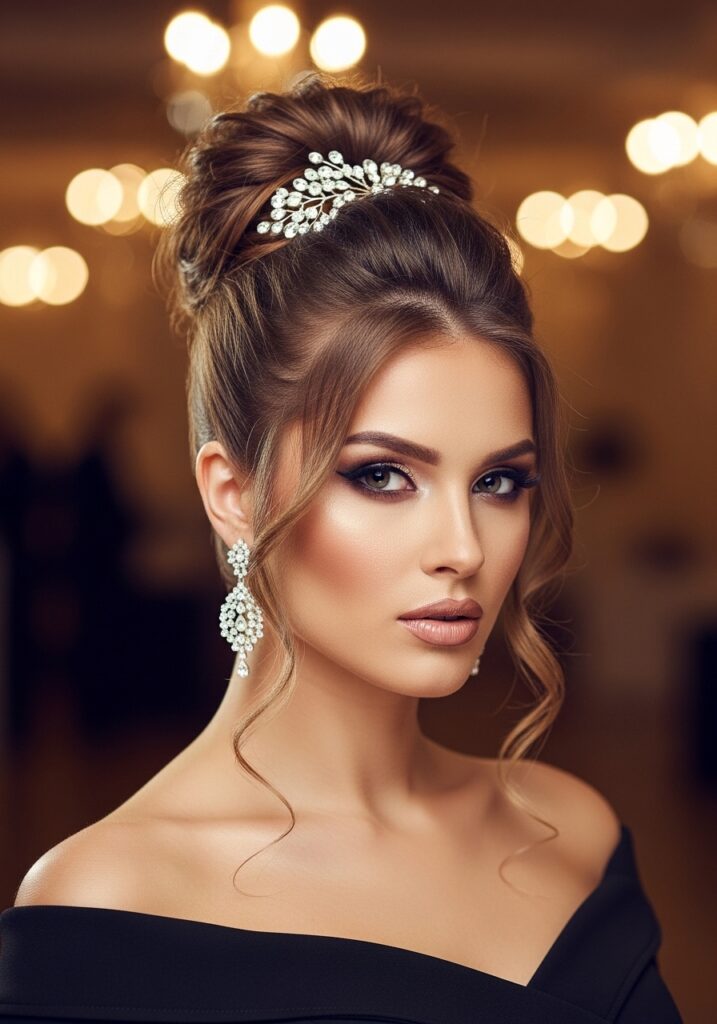
The opposite approach: hair lifts high, and several pieces stay deliberately unpinned around the crown and temples. Texturizing spray worked through before gathering gives those loose pieces enough grip to hold their shape. Without it, they tend to fall flat within the hour. Curled or waved hair beforehand reads as more intentional here than straight hair does. The waves echo the looseness of the bun itself. Straight hair left loose can end up looking simply undone rather than styled.
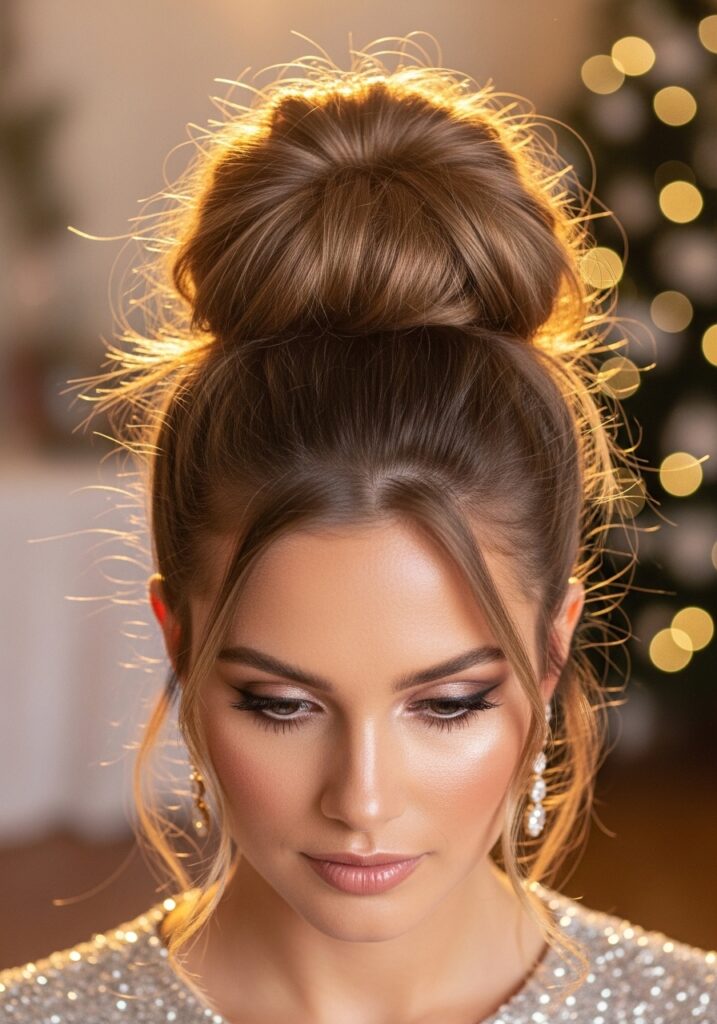
Braided Bun for Wedding Royal Look
A full braid, worked in fishtail, Dutch, or classic three-strand pattern, comes first. Only once it’s finished does it coil into the bun shape. That sequence matters, since braiding after coiling flattens the texture a braid is meant to show off. Thick hair holds the ridged pattern especially well once coiled. A few gold or floral pins tucked along the coil add detail without covering the braid itself. Fine hair benefits from a slightly looser braid before coiling. It reads as fuller once wrapped.
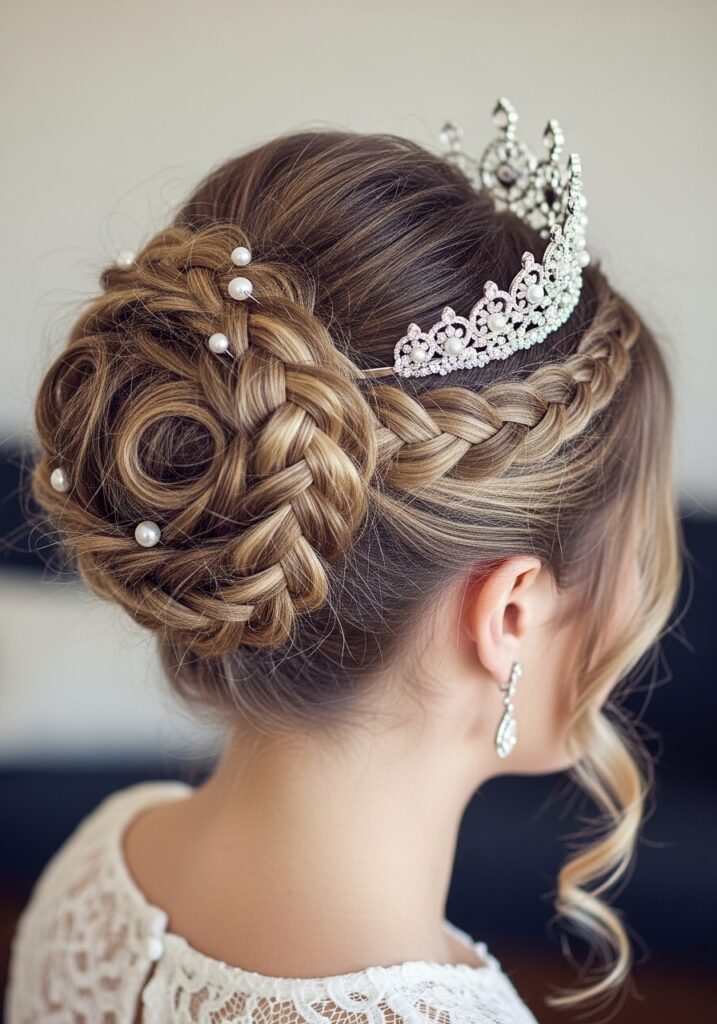
Half-Up Bun with Loose Waves Romance Style
Only the crown section gathers into a small bun; everything below stays down, ideally curled or waved beforehand for movement. This splits the difference between a full updo and hair left entirely loose. It suits anyone who wants length visible in photos without committing to a full updo. The small bun should stay loose rather than pulled tight. A tight base looks mismatched against the soft waves underneath it. A single bobby pin crossed underneath, rather than several visible ones, keeps the base clean.
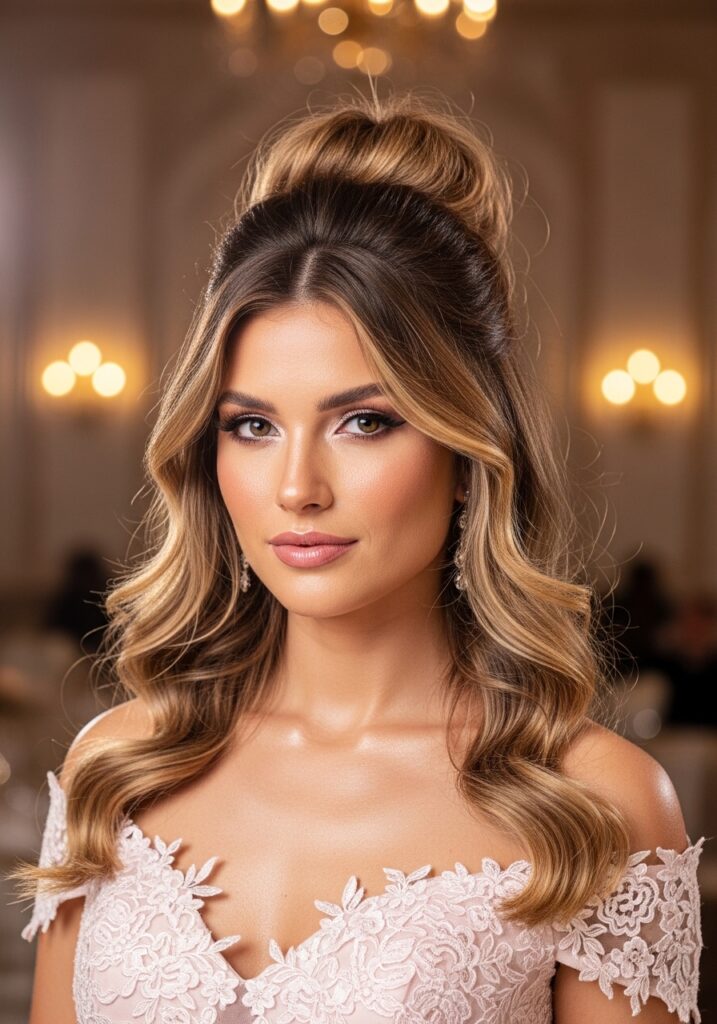
Low Twisted Bun for Bridesmaid Elegance
Sections twist rather than simply gather before wrapping into a low bun. That adds visible structure without the extra time a full braid takes. The twist works on both straight and wavy textures. It also holds its shape through hours of movement better than a plain gathered bun does. That durability makes it a practical pick for anything involving dancing. Shine serum on the twisted sections, applied before wrapping, keeps the detail from looking dry under photography lighting.
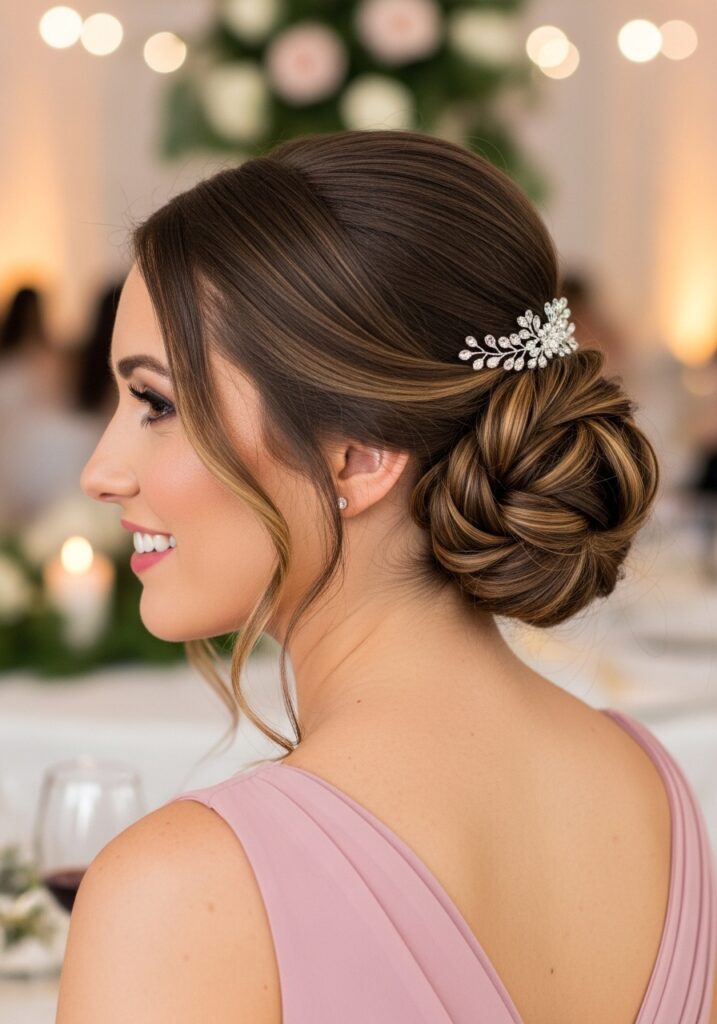
Voluminous Donut Bun for Perfect Shape
A foam ring hides inside the ponytail before hair wraps around it. It gives the bun a rounder, fuller outline than hand-shaping alone produces. The tool matters most on thin or medium hair, where it adds visible fullness without extensions or heavy backcombing. Choosing a ring close to the hair’s own color keeps any small gaps in coverage from showing through. A mismatched ring, by contrast, tends to peek out no matter how carefully the hair gets wrapped.
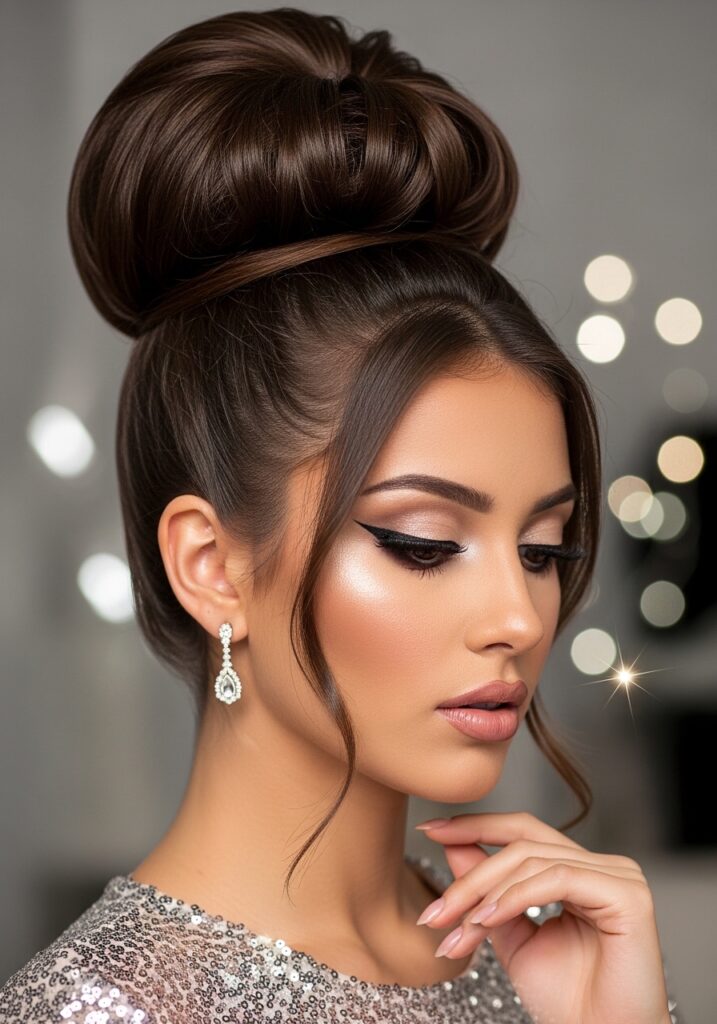
Side Messy Bun for Romantic Look
Shifting the bun off-center, rather than centering it at the nape, gives the whole style an asymmetrical line. That line reads as softer than a centered version. Loose curls left around the face reinforce that softness. The placement works especially well with an off-the-shoulder neckline. The bun and the exposed shoulder sit on the same side and balance each other visually.
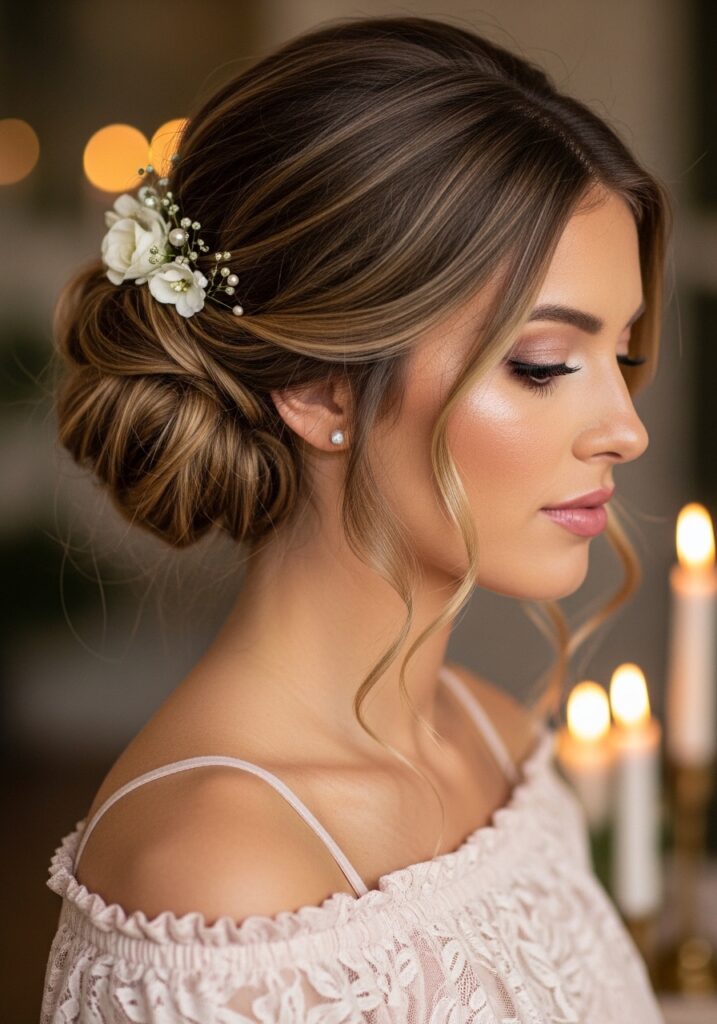
Floral Bun for Wedding Dream Look
Small blooms, fresh or artificial, tuck directly into the bun’s structure rather than sitting on top of it. That keeps them secure through dancing and photos. Baby’s breath and small roses hold up well since their stems are thin enough to pin invisibly. Fresh flowers need to go in last, close to the event itself. Most varieties wilt visibly within a few hours once cut. Artificial versions solve that timing problem entirely, at some cost to scent and texture.
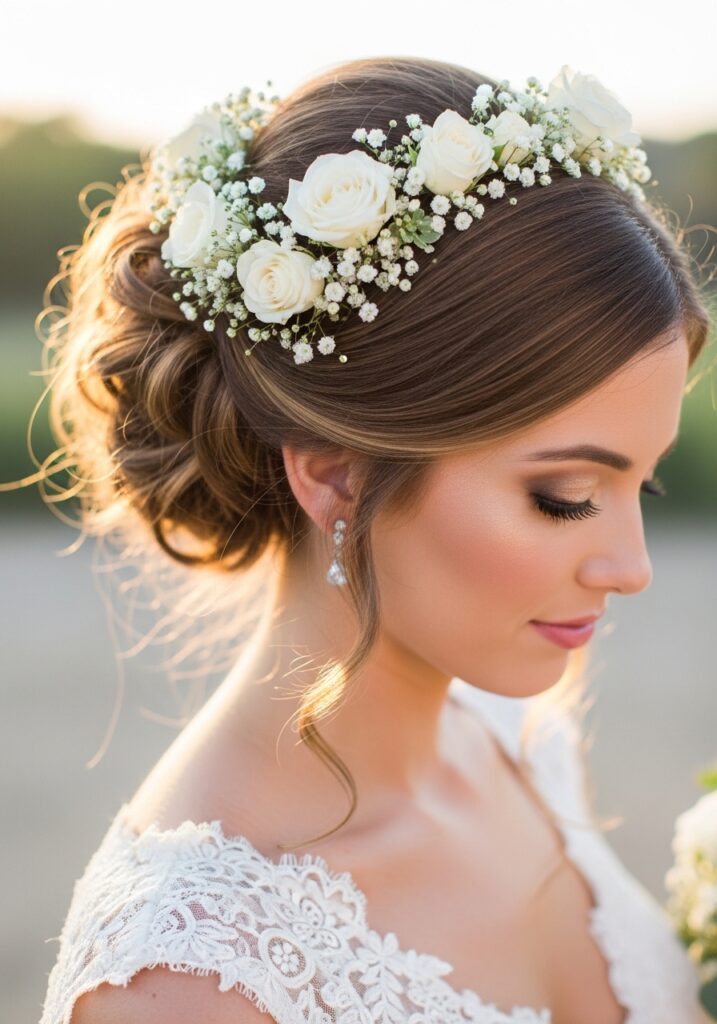
Sleek Top Knot Bun for Modern Glam
Set high on the crown rather than lower down, this bun pulls hair back tightly. The result is a smooth, sculpted line from every angle. That height and tension are what give it a lifted, alert look compared to a low bun’s quieter finish. Strong-hold gel applied before gathering keeps the base smooth. Any looseness at the crown undercuts the whole point of the style.
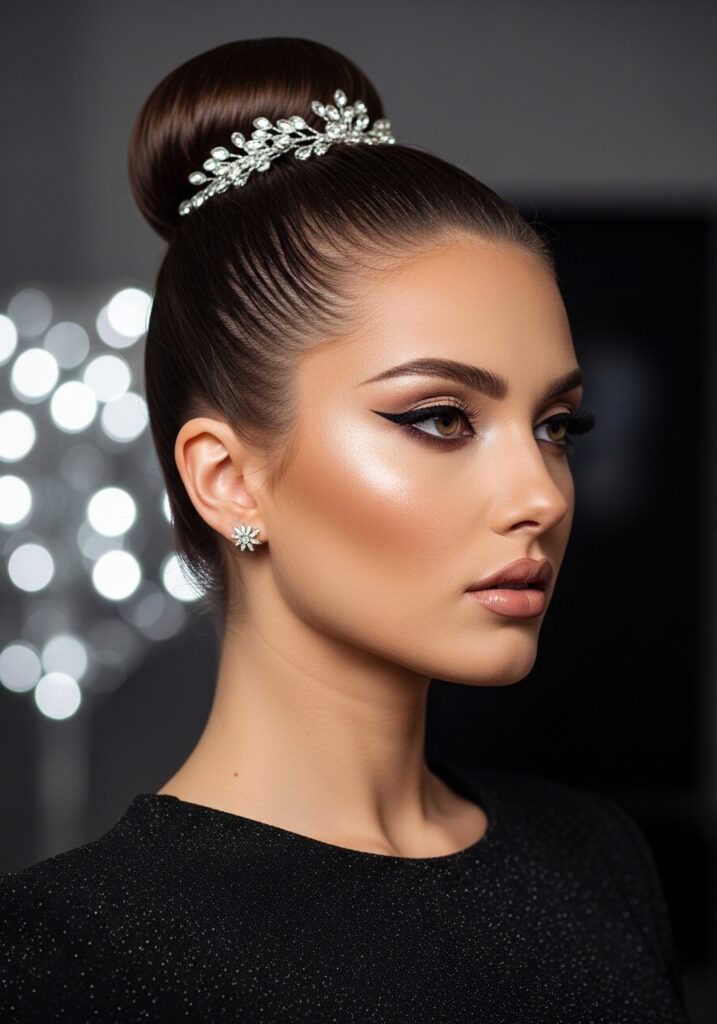
Boho Braided Bun for Festival Vibe
Loose braids, worked with deliberately uneven tension, wrap into a softly textured bun rather than a neat one. Waving the hair before braiding gives the finished shape a fuller, less flat base than braiding stick-straight hair produces. This version suits outdoor settings especially well. The undone texture already looks the way most hair ends up looking after an hour outside anyway. Wind and humidity do less visible damage to it as a result.
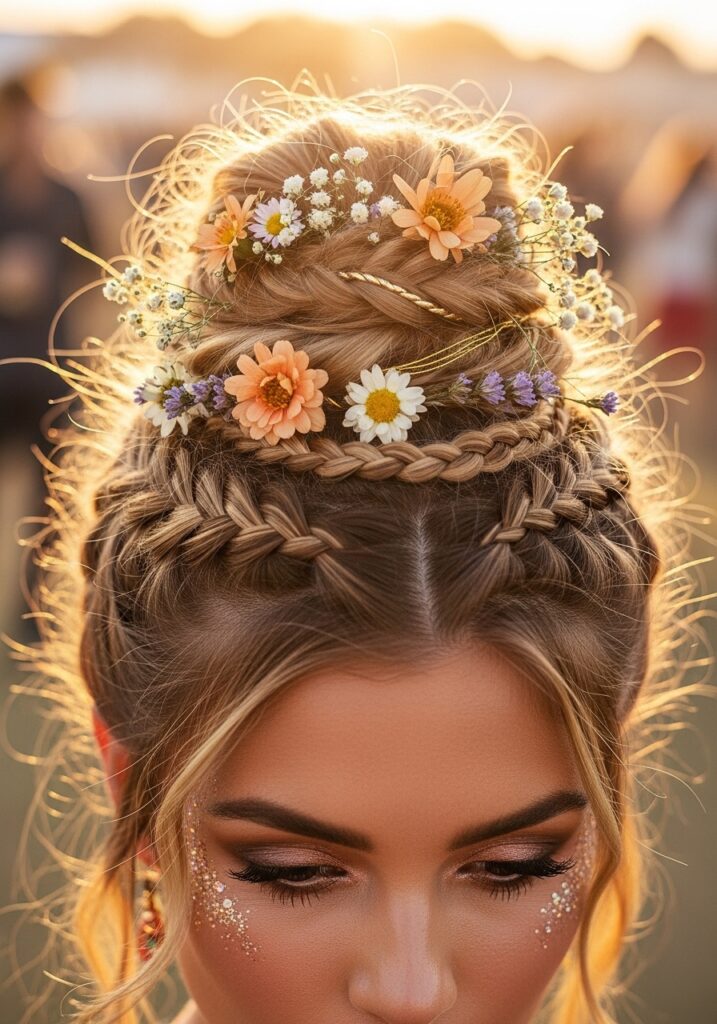
Elegant Chignon Bun for Classic Brides
The chignon predates its French reputation by a wide margin. Modern Salon traces the earliest version of the style to Athens. There, it was secured with gold or ivory pins. The modern version keeps that same low, tucked shape at the nape, smoothed rather than textured. That restraint is why it pairs well with a veil or fine jewelry without competing for attention. A smoothing serum controls flyaways without adding shine that fights a matte veil.
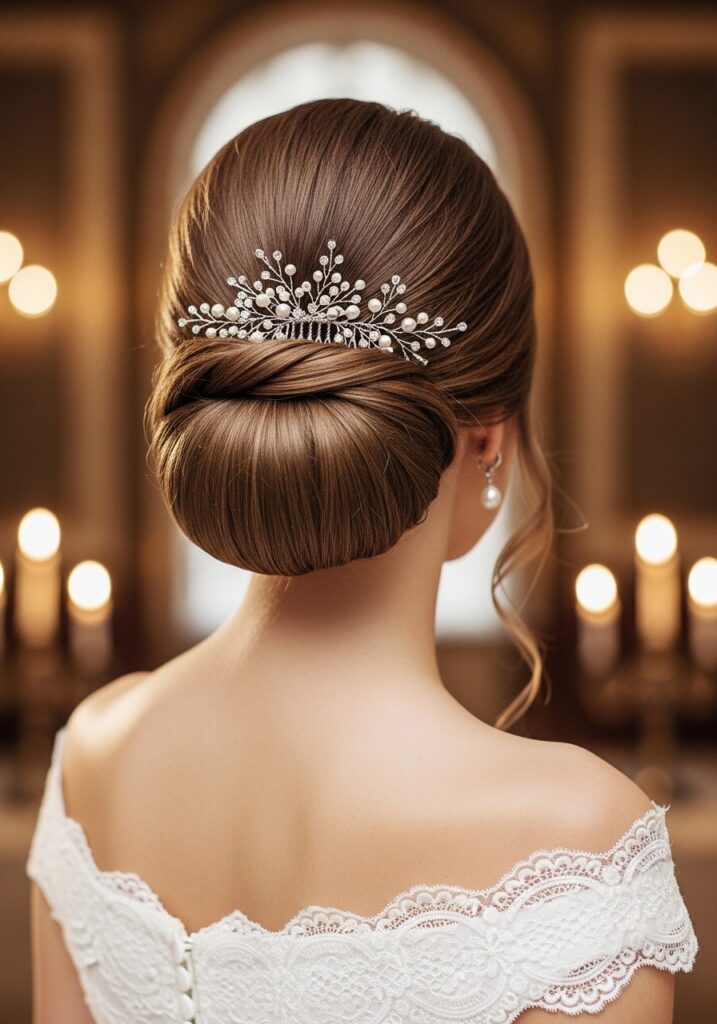
Curly Bun for Natural Volume Look
Rather than smoothing curls flat before gathering them, this version leaves the curl pattern intact inside the bun. That keeps the bounce and shape a straightened bun would lose. Defining cream or gel applied before pinning holds individual curl clumps together instead of letting them separate into frizz. Pinning loosely, rather than compressing the curls at the base, preserves more of that texture through the night. A tightly pinned base can flatten curls near the crown even when the rest stays bouncy.
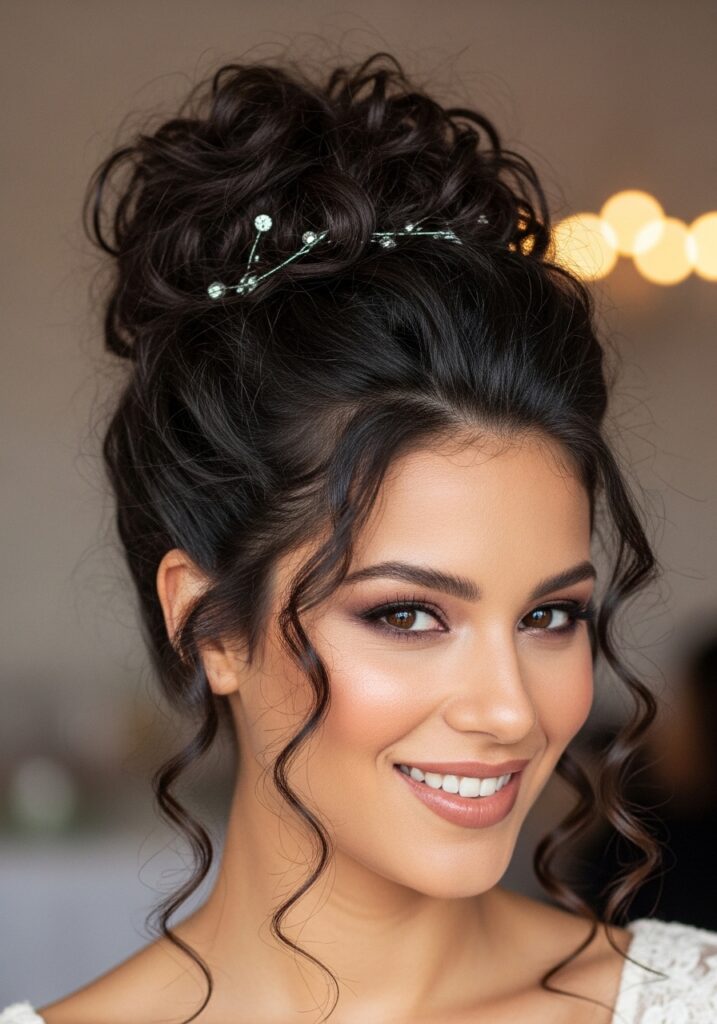
Wrapped Bun with Accessories Glam Style
A section of hair wraps around the base of the bun before pins go in. This hides the elastic and gives the whole shape a smoother, more sculpted outline. Clips, gold accents, or pearl pins layer on top of that wrapped base once it’s secure. Adding accessories before the wrap is finished tends to trap them under hair rather than showcase them. Waiting until the base is fully secure keeps every accessory visible instead of half-hidden.
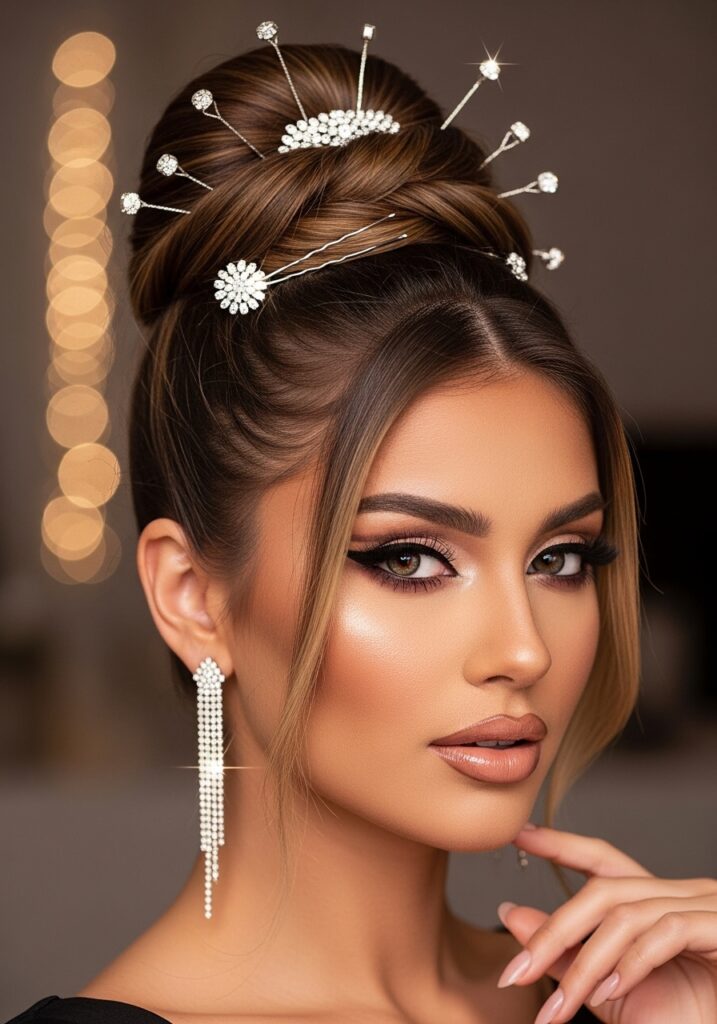
Double Bun Trendy Look
Two buns, placed symmetrically at any matching height from crown to nape, read as more playful than a single bun. That holds true whether each one is neat or slightly messy. Matching the tension and size on both sides matters more here than in most single-bun styles. Any mismatch is immediately obvious with two shapes side by side. Small braids leading into each bun add detail without disrupting the symmetry. Skipping the braids entirely also works, and tends to look cleaner on very fine hair.
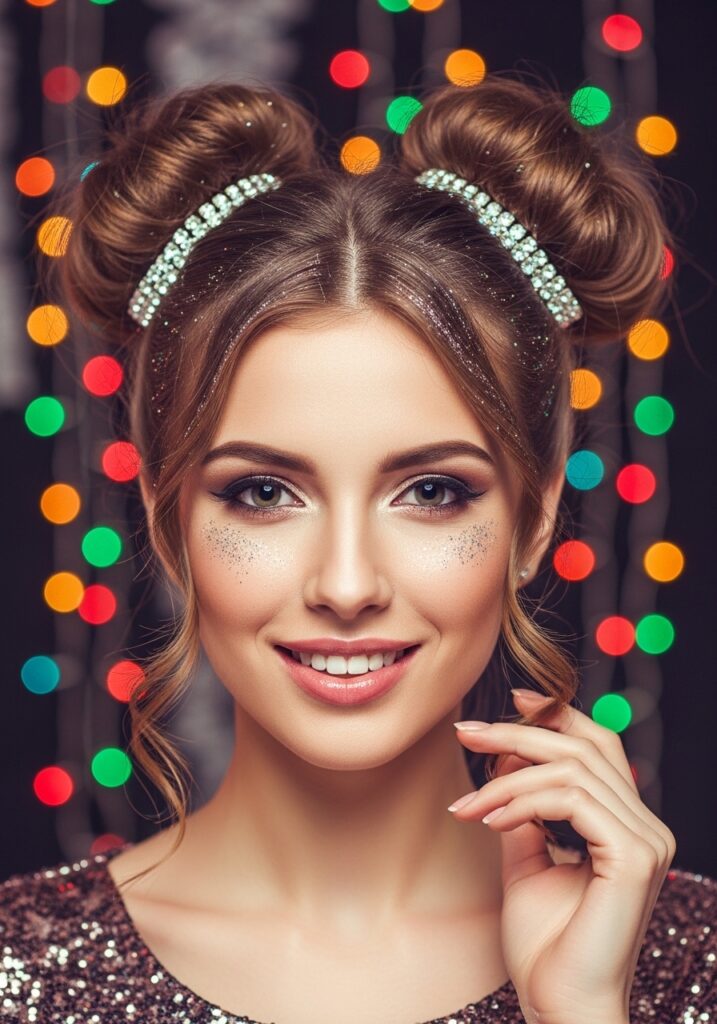
Knotted Bun Modern Style
Sections tie or loop into knots before the whole arrangement secures into a bun shape. The result looks more sculptural and deliberate than a simple twist or gather. The technique reads best on medium to long hair, since shorter sections don’t hold a knot’s shape once tied. Smoothing serum run through beforehand keeps the knots crisp rather than fuzzy at the edges. Dry hair with no product tends to fray at each knot within an hour.
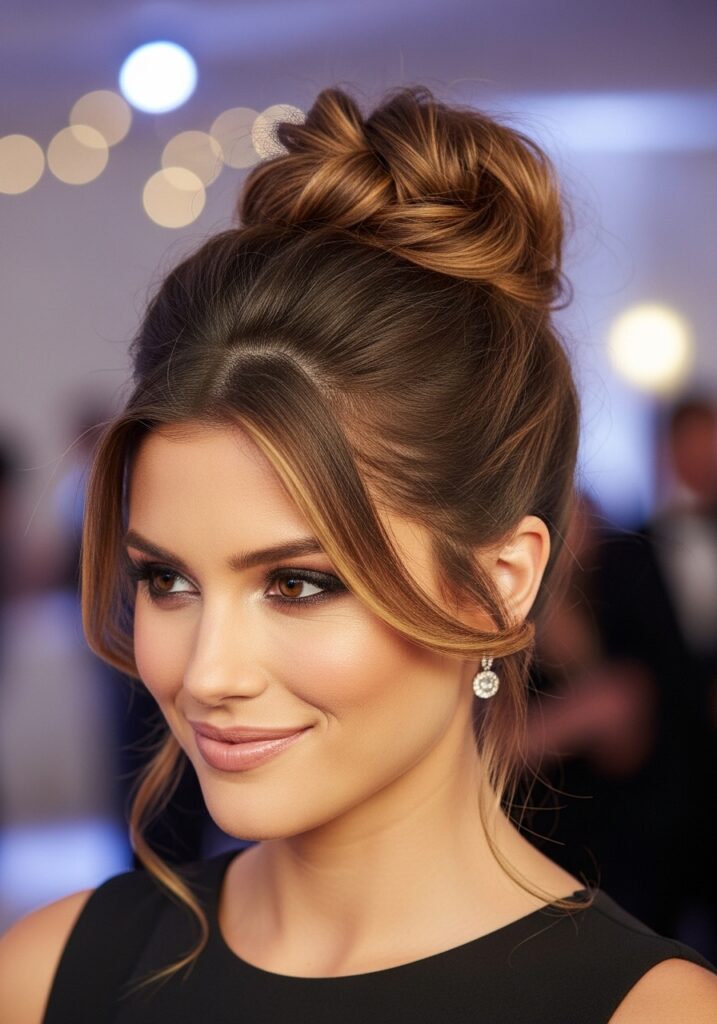
Low Messy Bridal Bun Soft Style
Positioned low, at or just below the nape, this bun stays deliberately undone: gentle teasing at the crown adds lift. Loose strands frame the face rather than pulling back completely. That softness suits lace or minimalist dress styles better than a sharper, tighter bun would. Neither element competes for attention. Light-hold products keep the shape flexible enough to loosen further as the evening goes on. A stronger hold spray fights that intended softness instead of supporting it.
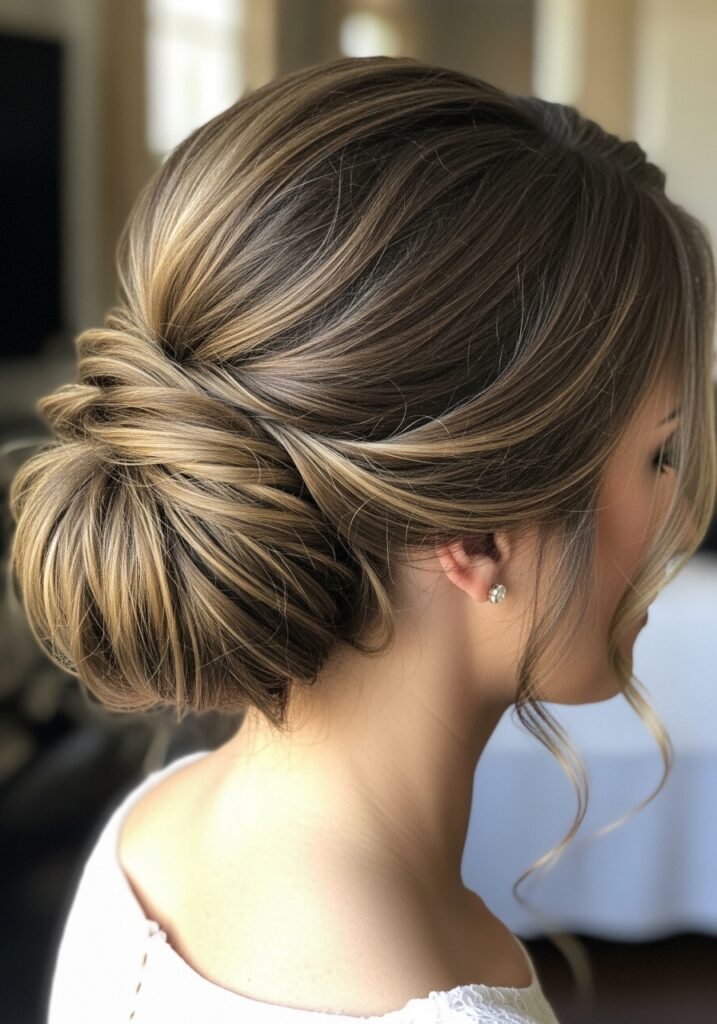
Veil Bun Wedding Style
The bun itself, sleek or softly textured, sits at the nape or mid-head. Its job is to give a veil a stable anchor point. Comb-style veils typically slide in just above the bun. A single hidden pin can lock a lighter veil directly underneath it. Testing the veil’s placement before the final pins go in is worth the extra minute. It avoids redoing the whole shape if the drape looks off.
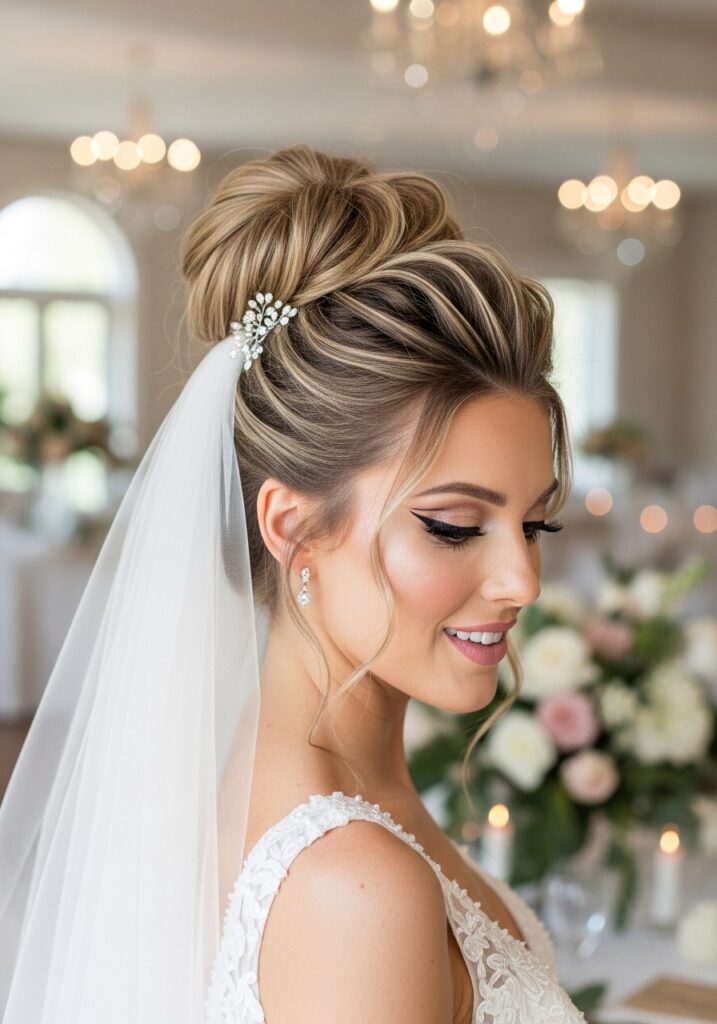
Pearl Bun Luxury Look
Small pearl pins scatter across a smooth or lightly textured bun, spaced rather than clustered. Spacing them out lets each one catch light individually instead of blurring together. Low, high, and textured bases all take pearl detailing well. The pins sit on top of the shape rather than changing it. Keeping the total count modest, a handful rather than a dozen, tends to read as more deliberate. Covering the entire bun in pins looks busy instead.
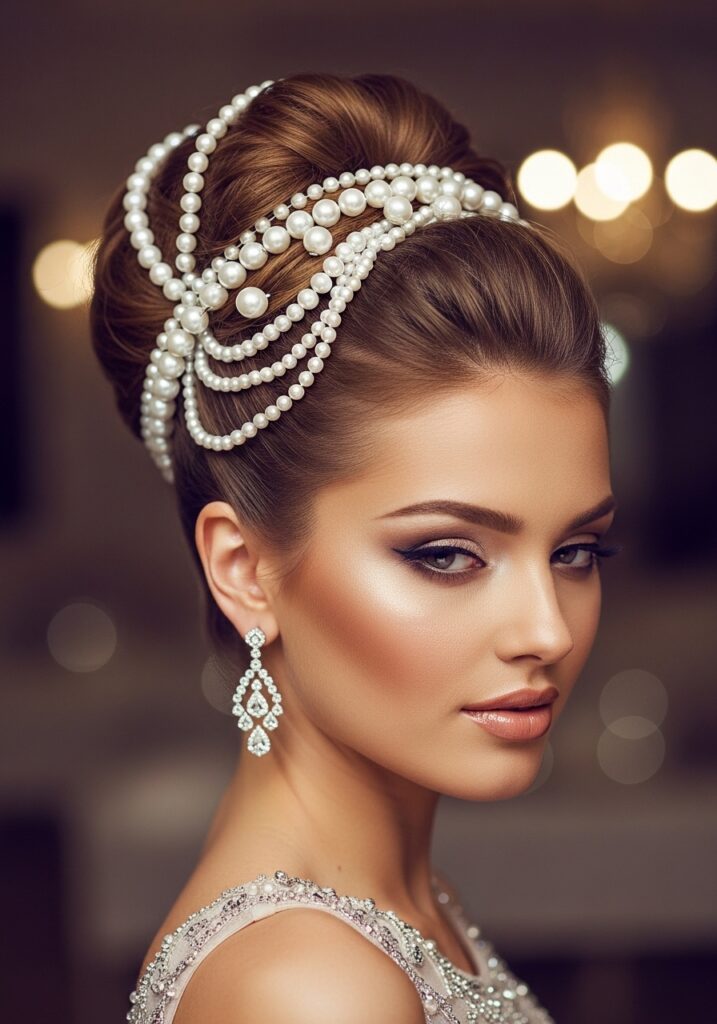
French Twist Bun Elegant Style
Hair sweeps upward and twists inward along the back of the head, rather than coiling into a round shape. The result is a flatter, more vertical silhouette than a standard bun. That structure works especially well with medium to long hair. There’s enough length to tuck the twist’s end in cleanly. Hidden pins run along the twist’s seam, not across its face, to keep the line uninterrupted.
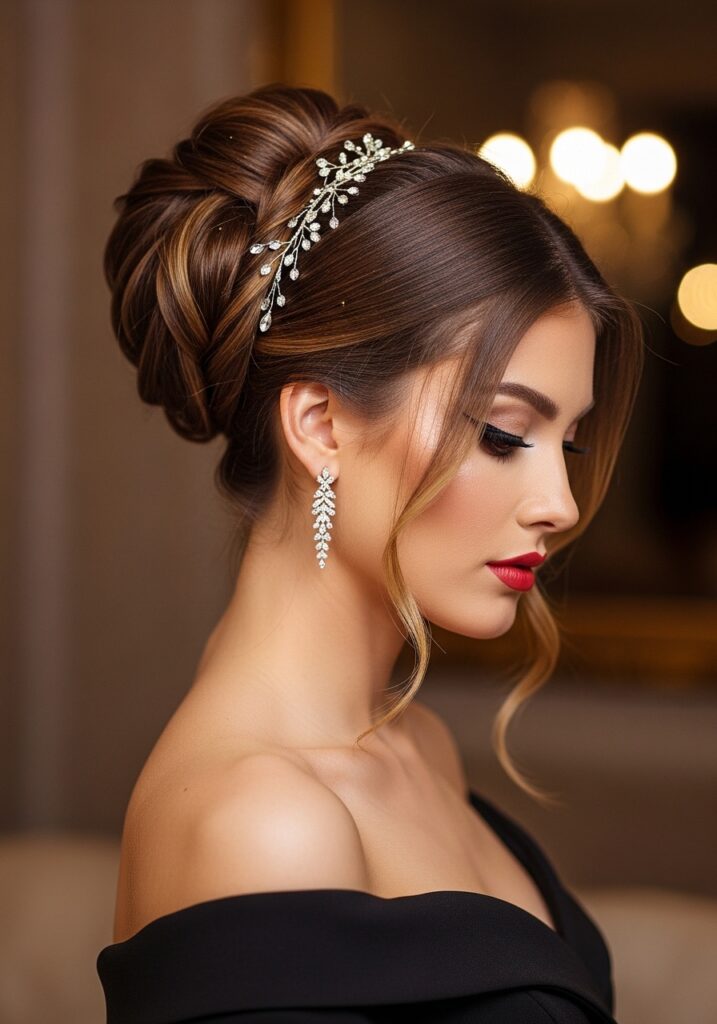
Rope Twist Bun Creative Look
Two sections twist around each other, rope-style, before the combined twist wraps into a bun. The result is a more dimensional surface than a single twisted section gives. Even tension across both strands during twisting keeps the rope pattern consistent all the way around once it’s coiled. The technique adapts to a sleek or slightly loosened finish depending on how tightly the initial twist gets pulled. A looser twist reads as casual; a tight one reads as formal.
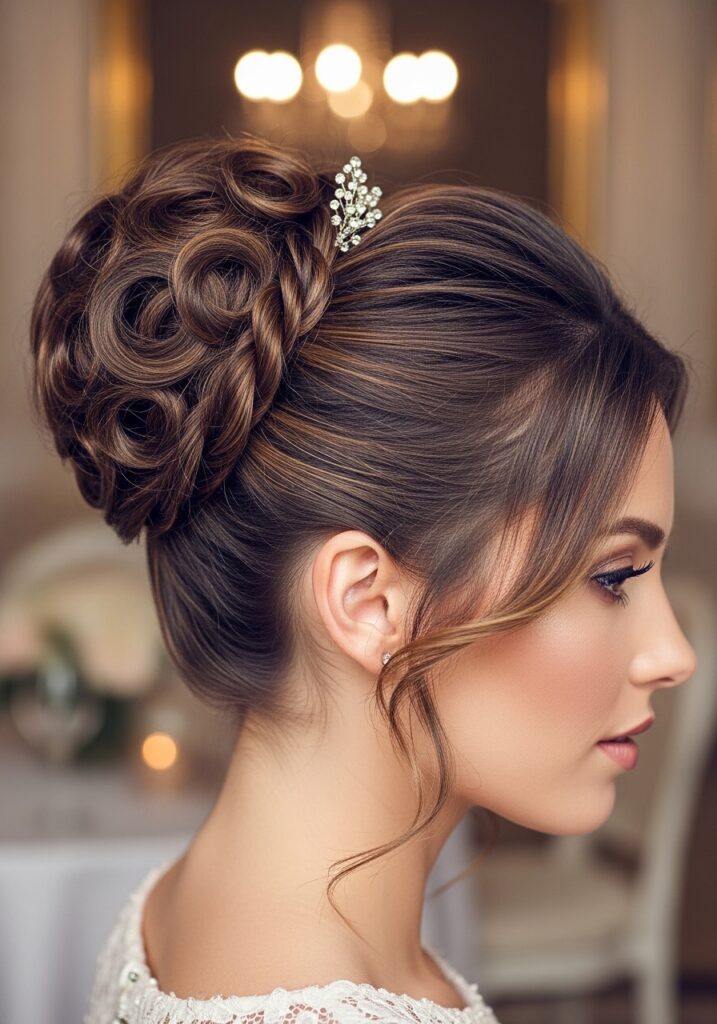
Curtain Bang Bun Modern Style
A high bun pairs with center-parted curtain bangs left loose around the face. The structured shape sits against soft, flowing pieces. That contrast is the whole point: without the bangs, the bun reads as severe. Without the bun, the bangs read as unstyled. Light waves through the bangs beforehand keep them from looking flat against the more polished bun above. Stick-straight bangs next to a smooth bun can end up looking like two disconnected pieces.
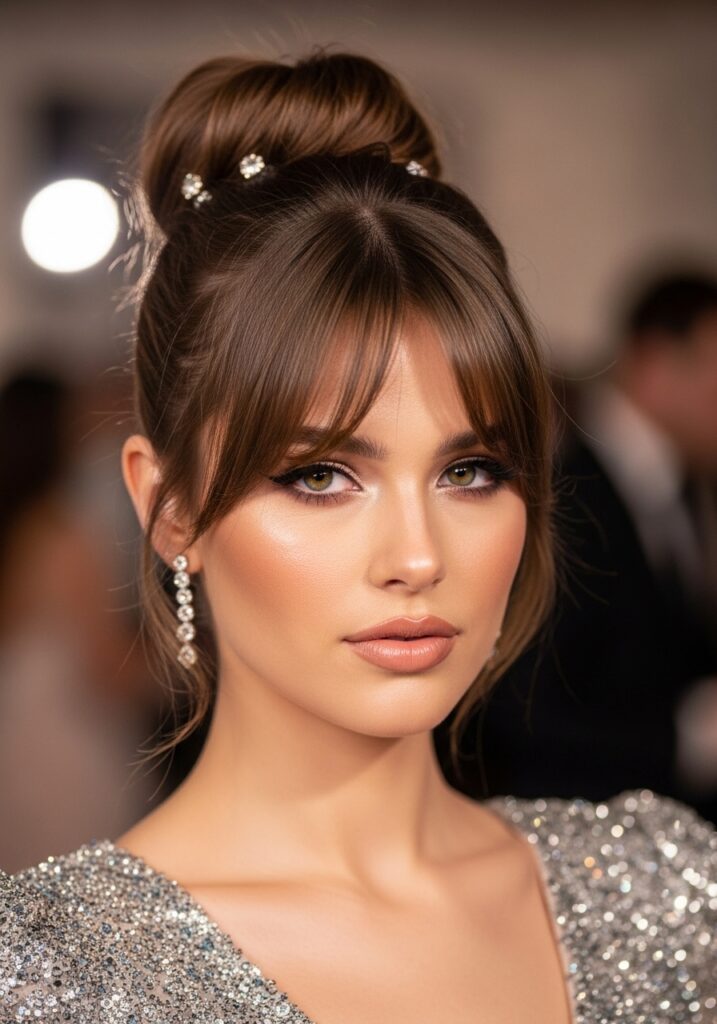
Loose Romantic Bun Wedding Style
Hair gathers gently rather than pulled taut, leaving soft strands around the face and an airy, slightly imperfect texture throughout. Pearl pins, floral clips, or a sheer veil layer easily on top of this base. The loose structure has room to tuck accessories in without disturbing the shape. Light-hold products keep it from collapsing entirely while still allowing that deliberate softness to hold. Skipping product altogether usually means redoing loose pieces partway through the event.
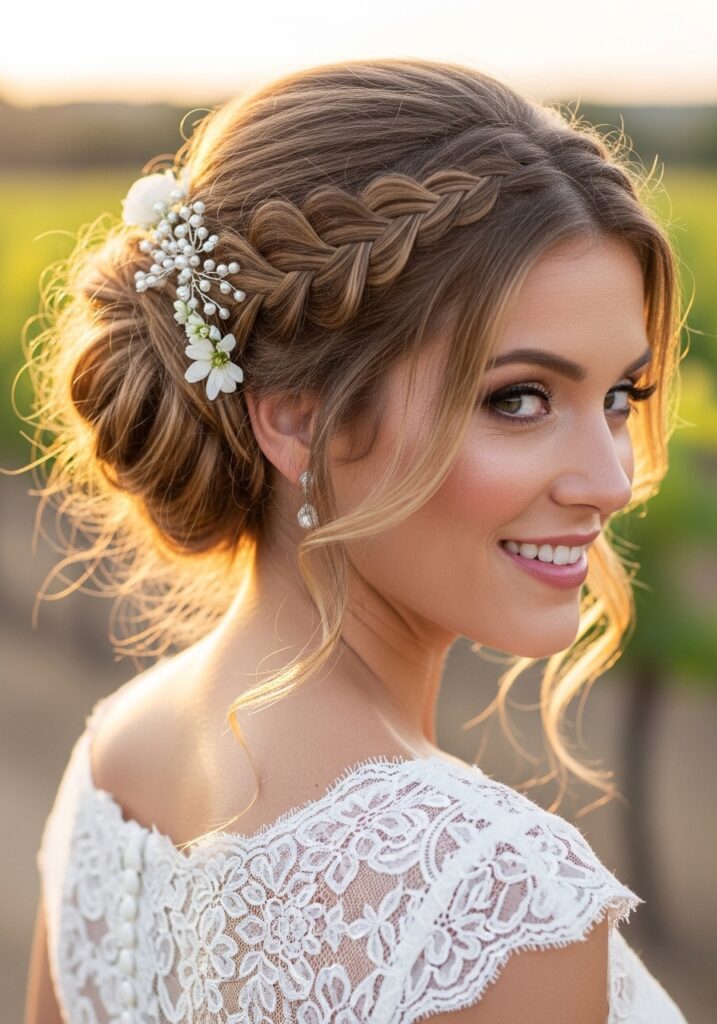
Glam Volumized Crown Bun for Red-Carpet Party Look
Backcombing at the crown happens before gathering the rest of the hair. It builds height at the top of the head that a plain gather can’t replicate. That lifted base then feeds into a full, voluminous bun rather than a compact one. Volumizing spray at the roots comes before teasing. Strong-hold spray, applied once the shape is pinned, keeps the height from settling flat within the first hour.
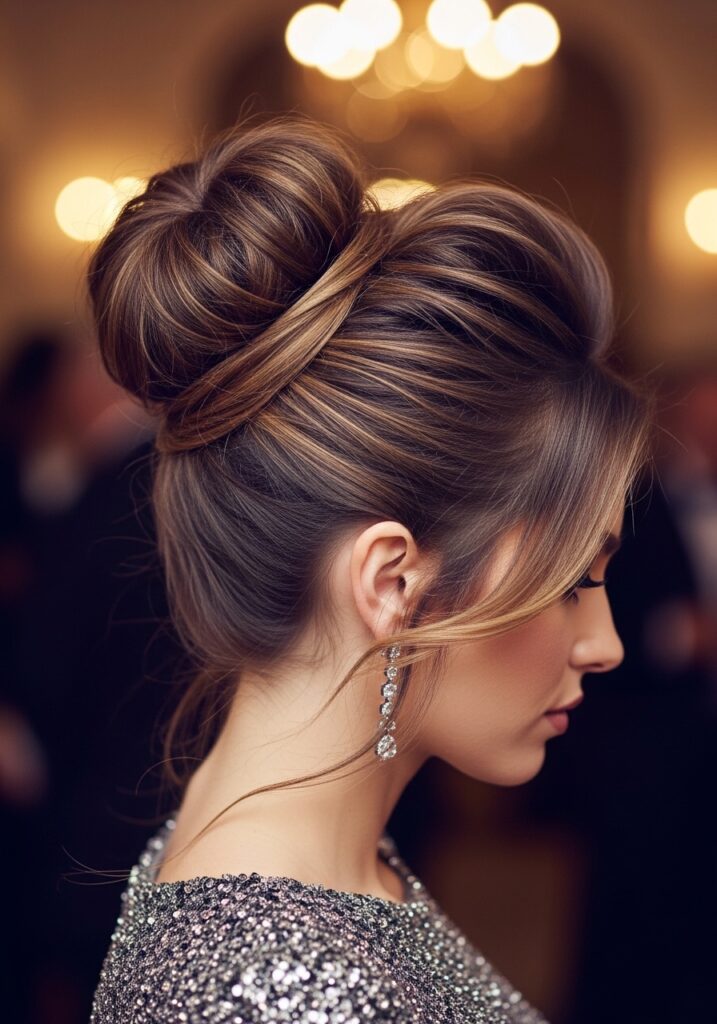
Soft Textured Low Bun with Face-Framing Strands
This one sits low and keeps soft texture through the length rather than smoothing it out. A few curled pieces fall around the cheeks. Grown-out bobs handle this surprisingly well, since even short layers can frame the face convincingly once curled. A light curling iron on those face-framing pieces helps. So does a loosely pinned base rather than a tight one, which keeps the whole look from reading as overworked.
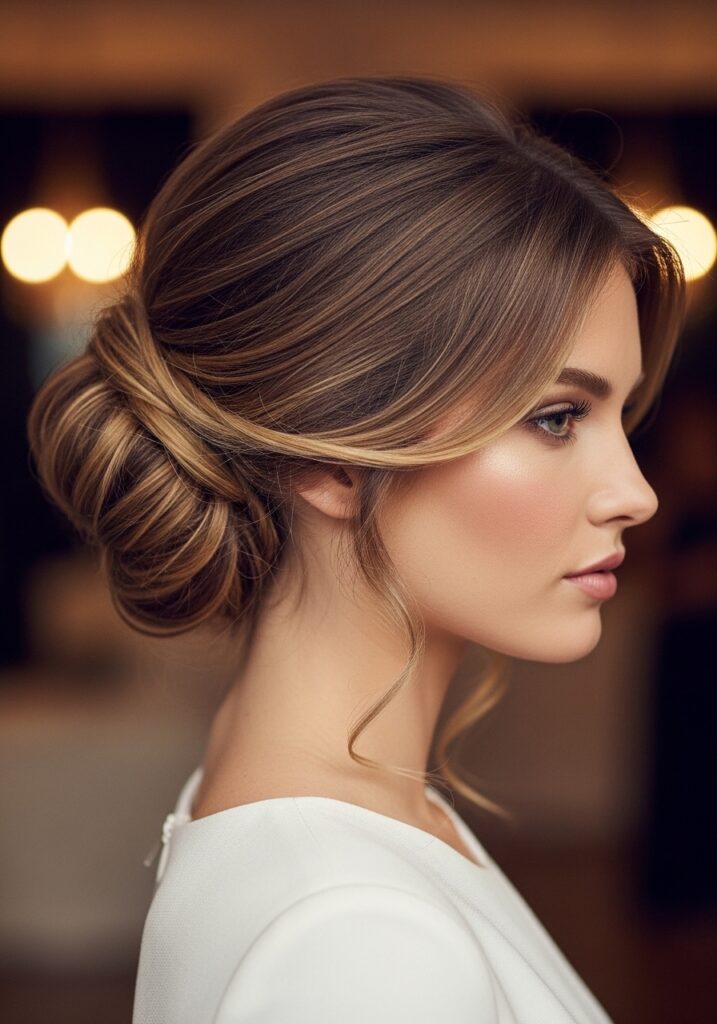
Conclusion
Twenty-four buns come from a fairly short list of underlying moves. A twist, a braid, a wrap, a knot, height at the crown, texture left deliberately loose. Most of the variety above comes from combining two or three of those moves. Very little of it is genuinely new each time.
Face shape, hair length, and how formal the event is narrow the list quickly. From there, the finishing details do most of the remaining work. A pearl pin, a flower, a wrapped section: small choices make one bun feel distinct from the next.

[…] Hairstyle Ideas […]