

Around month four, a pixie cut tends to reach a point of no return. The sides have crept over the ears, the nape has developed a slight flick, and the top feels neither short nor long. You look in the mirror and the shape you paid for is gone, but the shape you are waiting for has not arrived yet.
Most people who go through this remember it as the moment they nearly booked an appointment to cut everything off again. It does not have to feel that way. Some pixie cuts are built in a way that lets them loosen up slowly, and others can be managed with a handful of small choices along the way.
This guide looks at both sides of the question. You will find which pixie styles leave the most room for growth, what each stage tends to look like, how to style the in-between lengths, and how to keep the shape moving toward a bob or longer without a shaggy detour.

Why Some Pixies Age Better Than Others
Not every pixie cut is designed with the same margin for growth. A cut with clipper-short sides and a tight nape is precise on day one, but it loses that precision quickly because every millimeter of growth shows against the skin. A cut with softer, scissor-blended sides tends to forgive more, since the transition between lengths is already gradual.
Length on top makes a big difference. A pixie with a longer crown and fringe has hair to work with as soon as the sides grow, because the top can be swept, tucked, or layered into the new outline. A very short, even crop has nowhere to go except up and out, which is why it often feels like the awkward phase begins earlier.
Texture and softness matter as well. Feathered or lightly layered edges blur as they grow, while a razor-sharp perimeter tends to look untidy the moment it moves. None of this means a sharp pixie is a bad choice. It simply means that if you already know you might grow it out, choosing a softer version at the start makes the road easier.
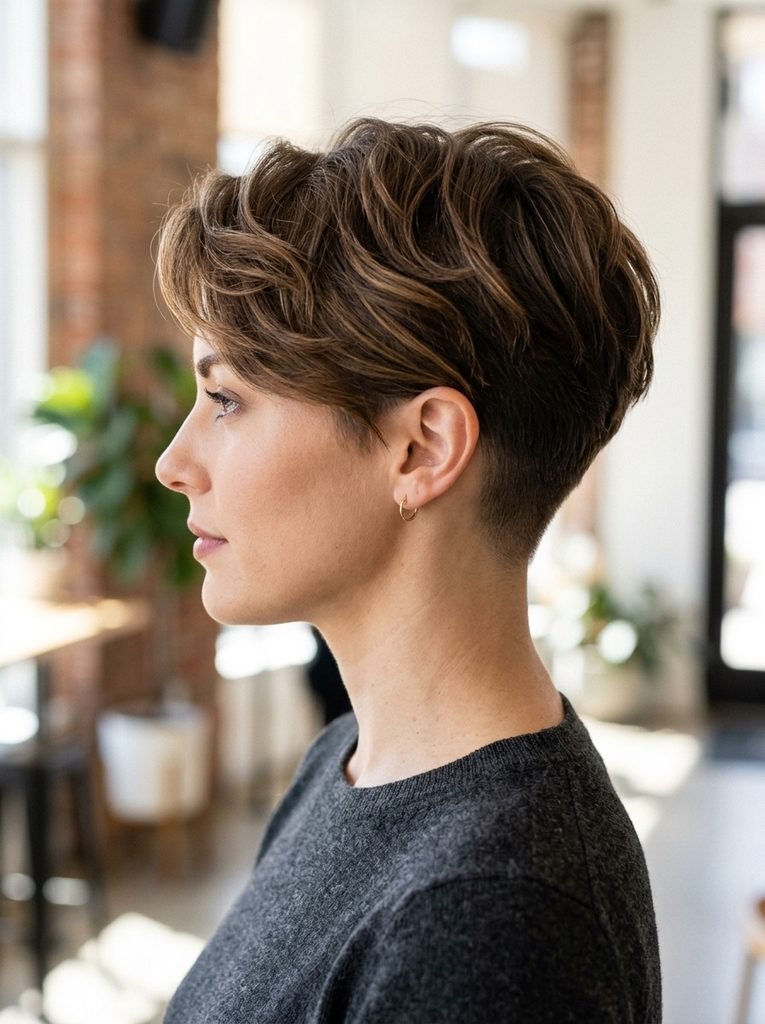
The pixie cut is generally described as short at the back and sides and a little longer on top, with a short fringe. That basic recipe leaves a lot of room for variation, and the variations are where a graceful grow-out is won or lost.
What Growing Out Really Looks Like, Month by Month
Hair grows at roughly half an inch a month on average, although individual rates vary quite a bit with genetics, age, and other factors. That means the calendar is only a rough guide. Still, it helps to know what shapes tend to appear as the months pass, so each change feels like progress and not a mistake.
The table below shows a general pattern. Think of it as a loose map, not a schedule, since your starting length and growth rate will shift the timing in either direction.
| Stage | Roughly When | What It Looks Like |
|---|---|---|
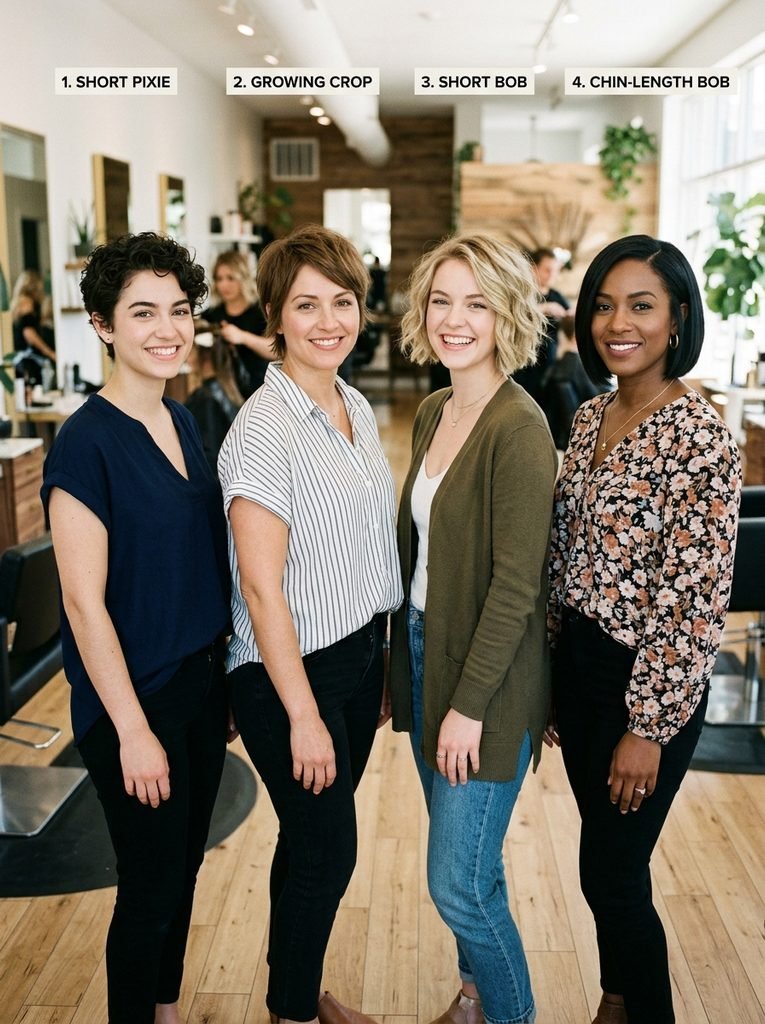
| Softened crop | Months 1 to 3 | Shape loosens, ears still visible, still reads as a deliberate short cut |
| Shaggy middle | Months 3 to 6 | Nape and sides grow faster, ears start to be covered, outline feels uneven |
| Ear-length shag | Months 6 to 9 | Top catches up, texture and layers become easier to style |
| Short bob | Months 9 to 12 or later | Length reaches the jaw area, a real bob shape begins to form |
One detail that surprises many people is that the nape and sides usually seem to grow out of shape faster than the crown. That uneven look is the main reason the middle phase feels awkward, and it is the reason so many guides suggest small, targeted trims instead of leaving everything alone.
It is worth adding that curly and coiled textures often look shorter than they are because of shrinkage, so a curly pixie can appear to move slowly even when it is growing at a normal rate. Patience is easier when you expect that difference in advance.
Pixie Cut Styles That Have Built-In Grow-Out Room
If you are still choosing your cut, or if you are planning to grow out a pixie you already have, these shapes tend to change gracefully. Each one leaves either length on top, softness at the edges, or both.
The Long-Top Pixie With Soft Tapers
This version keeps noticeable length across the crown and fringe while the sides taper gently instead of being cut close. As the sides grow, the top already has enough length to blend forward, and the whole shape starts to resemble a short shag.
It works best when the taper is scissor-blended, since that avoids a hard line between the sides and top. The main styling appeal here is versatility: the top can be swept to the side, pushed back, or left loosely textured, which gives you options at nearly every stage.
The Textured Crop With a Feathered Nape
A textured crop uses light layering all over instead of a clean, uniform surface. The nape is feathered rather than squared off, which means new growth simply adds to the existing softness instead of creating a visible edge.
Because the layers are already uneven, small differences in growth are hard to spot. This cut tends to look like it is meant to be tousled, so the loosening that happens in the middle months feels less like a loss of shape.
The Bixie
A bixie sits between a bob and a pixie, with short layers and a little more length than a traditional pixie. It is often mentioned as a natural bridge cut for people in the middle of a grow-out, because it keeps volume on top while the back and sides catch up.
Since the length is already somewhere in the middle, it is less dramatic to grow than a very short crop. It also gives you a chance to move toward a bob without an obvious in-between stage. Our roundup of butterfly haircut ideas shows how soft, face-framing layers can carry a shape through its shorter and longer phases.
The Side-Swept Pixie With a Longer Fringe
A pixie with an extended side fringe gives you something to style from the beginning. As the sides grow, the fringe blends toward the cheekbone and eventually becomes part of the face-framing layers of a bob.
This approach also gives the cut a focal point that can distract from the uneven areas around the ears and nape. If the fringe is long enough to tuck behind the ear, it also provides a simple way to keep hair off the face in the middle months. For more on how different fringe lengths behave, bangs come in many forms, and the longer, sweeping type tends to grow out most smoothly.
The Curly Pixie With Shape Instead of Extreme Shortness
Curly pixie cuts often look best with enough length to let each curl form fully, and that same length makes them easier to grow. When the curls have room to bounce, the grow-out simply looks like a fuller, rounder shape that gradually lengthens.
Keeping some weight at the crown and avoiding very tight sides helps the outline stay balanced. As with any texture, working with the natural pattern is usually more forgiving than trying to keep it flat or uniform.

The Awkward Middle: Ideas for Getting Through Months Three to Six
Almost every grow-out has a stretch where the shape feels unsettled. The good news is that a few simple styling moves can make that phase look like a choice. The trick is to give the hair a job instead of trying to hide it.
Start by directing the fringe. When the front hair grows past the eyebrows, sweep it to one side and let it fall across the forehead. A deep side part gives the shape a clear structure, and a slightly longer front section instantly reads as a style instead of a leftover.
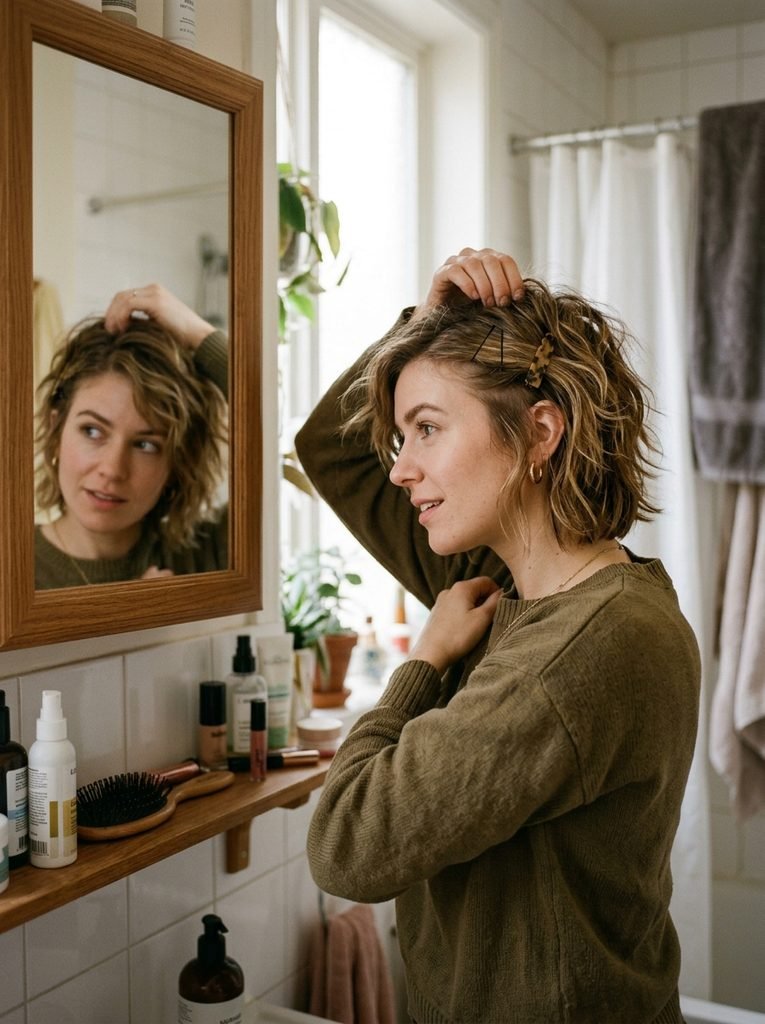
Tucking is another easy option. Once the sides reach the ear, they can be tucked behind it with a light hand. This creates a clean line around the ear and shows off the jaw, which balances the extra volume that grows in around the back. A single pin placed just above the ear can hold the tuck without any product.
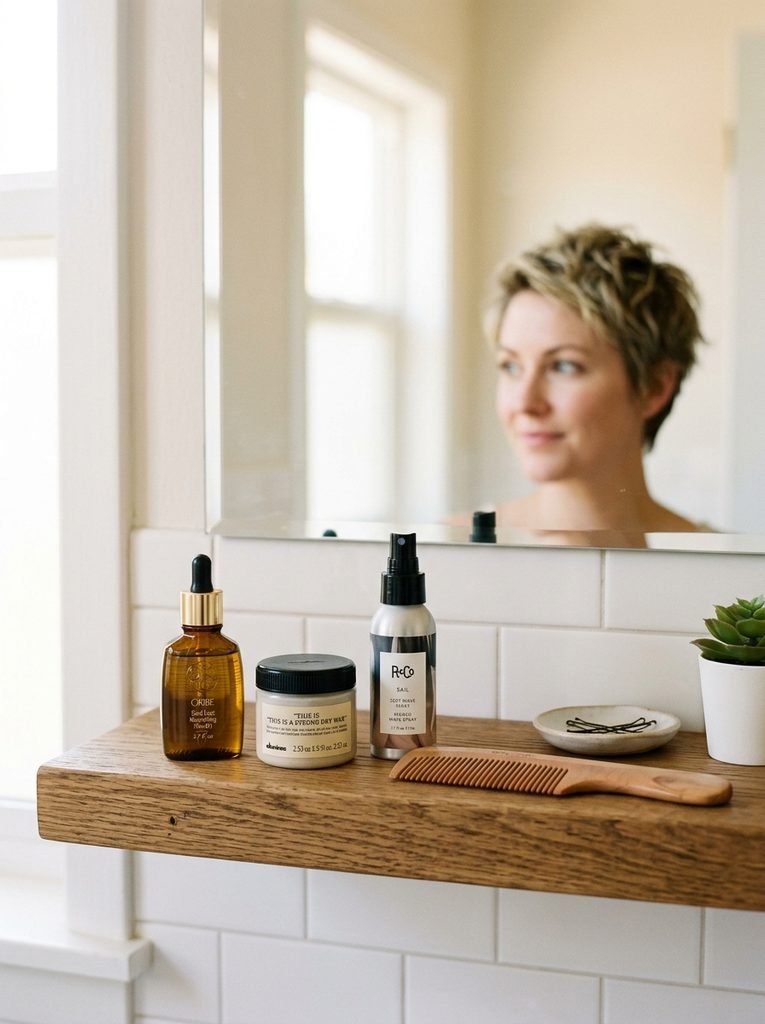
Texture helps too, especially in the middle months. A small amount of lightweight cream or a dry texture product can turn uneven growth into deliberate tousling. The key is to use a small amount and work it through with fingers instead of aiming for a perfect finish, since a loose shape hides variation better than a polished one.
Finally, accessories can carry a lot of weight. A thin headband, a soft fabric band, or a few simple pins can hold the front back and pull the whole look together. Our list of easy hairstyle ideas you can do in minutes is aimed at longer hair, but several of the quick techniques, like small twists and clip placement, can be adapted for these in-between lengths.
Trims That Keep the Shape Moving Forward
It seems counterintuitive, but growing out a pixie usually involves keeping the scissors nearby. The goal is not to remove length. It is to keep the outline tidy while the overall length increases.
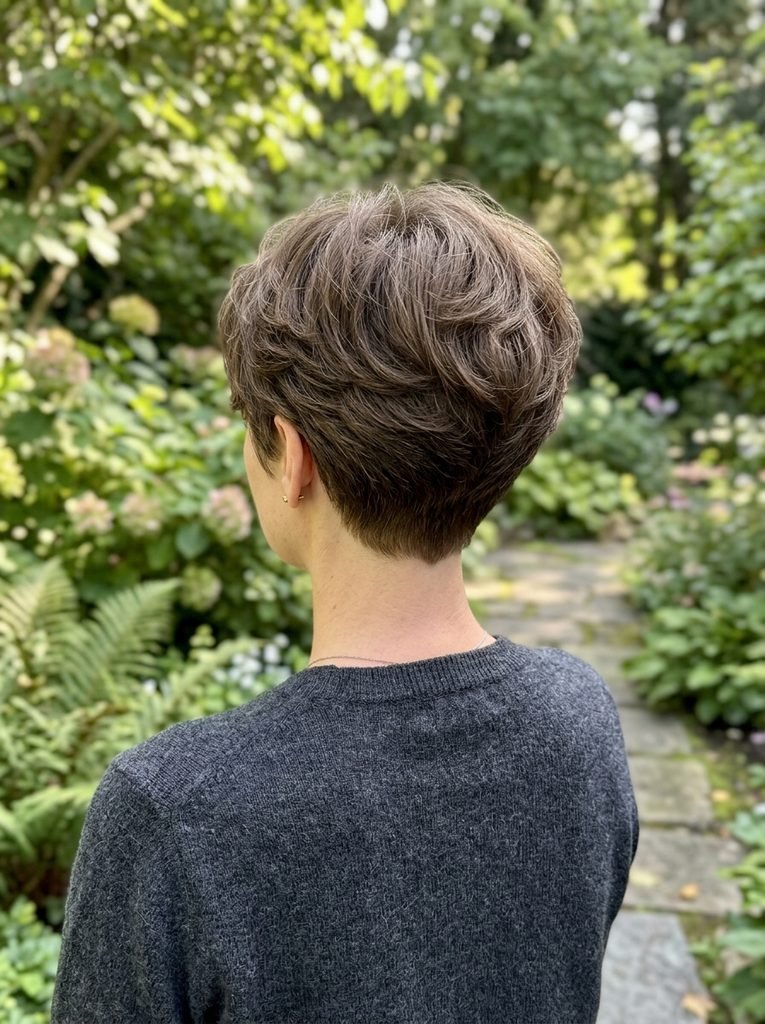
Many grow-out guides suggest small clean-ups around the nape and sides every four to eight weeks, while leaving the top mostly alone. The reasoning is straightforward: since the back and sides grow into an uneven shape first, a light trim there prevents the heavy, mullet-like look without setting back the length on top. How often you need this depends on your hairline, density, and growth direction, so it is best treated as a starting point for a conversation with whoever cuts your hair.
When you book, it helps to be specific about your goal. Saying that you are growing out a pixie and want to keep the top, while shaping the back and sides, gives a clearer direction than asking for a generic trim. Bringing a photo of the shape you are heading toward, like a short bob or a layered shag, can help too, since ideas of what counts as “short” vary from person to person.
Fine hair sometimes needs a different approach. Because it can look thin at the ends as it lengthens, some people find that fewer trims and a blunter finish create a fuller look. Others prefer soft layers to add movement. This is a good question to raise with your stylist, since the best answer depends on your hair.
It is also worth knowing when not to trim. If you are in a phase where the shape feels messy but the hair is otherwise healthy, styling with pins, clips, and a small amount of texture product is often enough to carry you through, and the extra length gained is not lost.
Styling Without Fighting the Length
Growing hair is a good time to loosen your styling habits. Heavy heat and stiff products tend to work against the soft, blended look that makes in-between lengths appealing.
For heat tools, the American Academy of Dermatology suggests using flat irons on dry hair at a low or medium setting and no more than every other day, with curling irons held in place only briefly. During a grow-out, that advice pairs well with the aesthetic goal, since it encourages natural movement instead of forcing a sleek finish on hair that is not ready for it.
The same organization’s general advice for healthy hair care includes using a heat protectant, limiting blow-drying, and being gentle when drying and detangling. These habits do not promise faster growth, but they can help hair look smoother and hold its shape while it lengthens.
In practical terms, air-drying with a light cream, then shaping the front with your fingers, is often enough. If you do use a dryer, a quick pass to lift the crown and direct the fringe usually looks more natural than a full blowout. The aim is a finish that moves, since movement makes uneven growth much less noticeable.
Shine is another easy win. A small amount of smoothing serum on the ends, applied lightly, can make hair look healthier and more intentional, especially when the outline is slightly rough. Just keep the amount small, because short and mid-length hair can quickly look weighed down.
The Bob on the Other Side
The end of a pixie grow-out is often a bob, and the good news is that many bob shapes are forgiving. A bob cut typically ends around the jaw, and it can be shaped in many ways: blunt, layered, angled, or textured. That range means the hair you have grown can be adapted to a bob almost regardless of how even it looks.
A textured, slightly layered bob is usually the most natural landing spot after a pixie. It uses the uneven lengths as part of its design, which keeps things looking intentional. An angled bob, slightly longer in front, can also work well if the fringe has grown longer than the back.
If you want to keep going beyond the bob, softly layered lob shapes give the hair room to keep lengthening while retaining structure. Trends like the wolf cut and long layers appear in our 2026 hairstyle roundup, and these shapes tend to suit hair that is somewhere in the middle of a grow-out because they embrace layered, slightly undone texture.
It can also help to decide in advance how far you want to go. Some people reach the bob stage, love it, and stay there for years. Others continue toward the shoulders. Having a target makes the trims more purposeful, since each appointment can shape the hair toward a specific outline instead of simply tidying it.

A Grow-Out Is Just a Long Haircut in Motion
It helps to reframe the whole process. A grow-out is not a failed pixie or a waiting room before the next style. It is a series of shapes, each with its own character, and many of them look good if you style them for what they are.
The shaggy stage suits tousled texture. The ear-covering stage suits tucks and pins. The bixie stage suits volume on top, and the early bob stage suits a soft side part. When each phase is styled for its own length, the whole process starts to feel like a gradual change of look, not a stretch to endure.
If you notice a week where nothing seems to work, the simplest fixes are usually a small trim at the nape, a slightly deeper part, or a headband. These are quick, low-commitment adjustments that keep the shape moving without setting you back.
Give it a season or two, and the hair that once felt awkward will simply be a bob, or a long layered cut, or whatever you were heading toward. The middle part is where the growing actually happens, so it is worth making it look as good as you can.

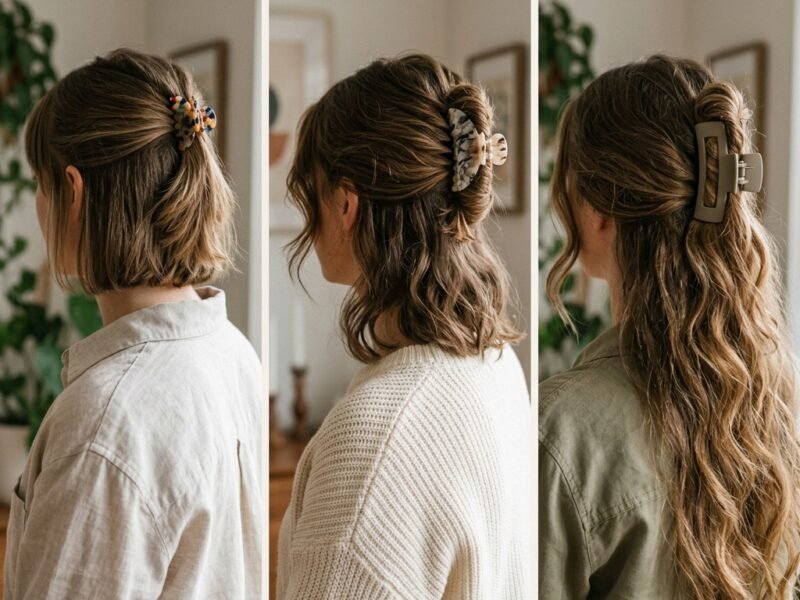


[…] A tiny clip can hold side sections back, and some clips can gather the top into a small tuft. The pixie growing-out guide covers other ways to manage each […]