
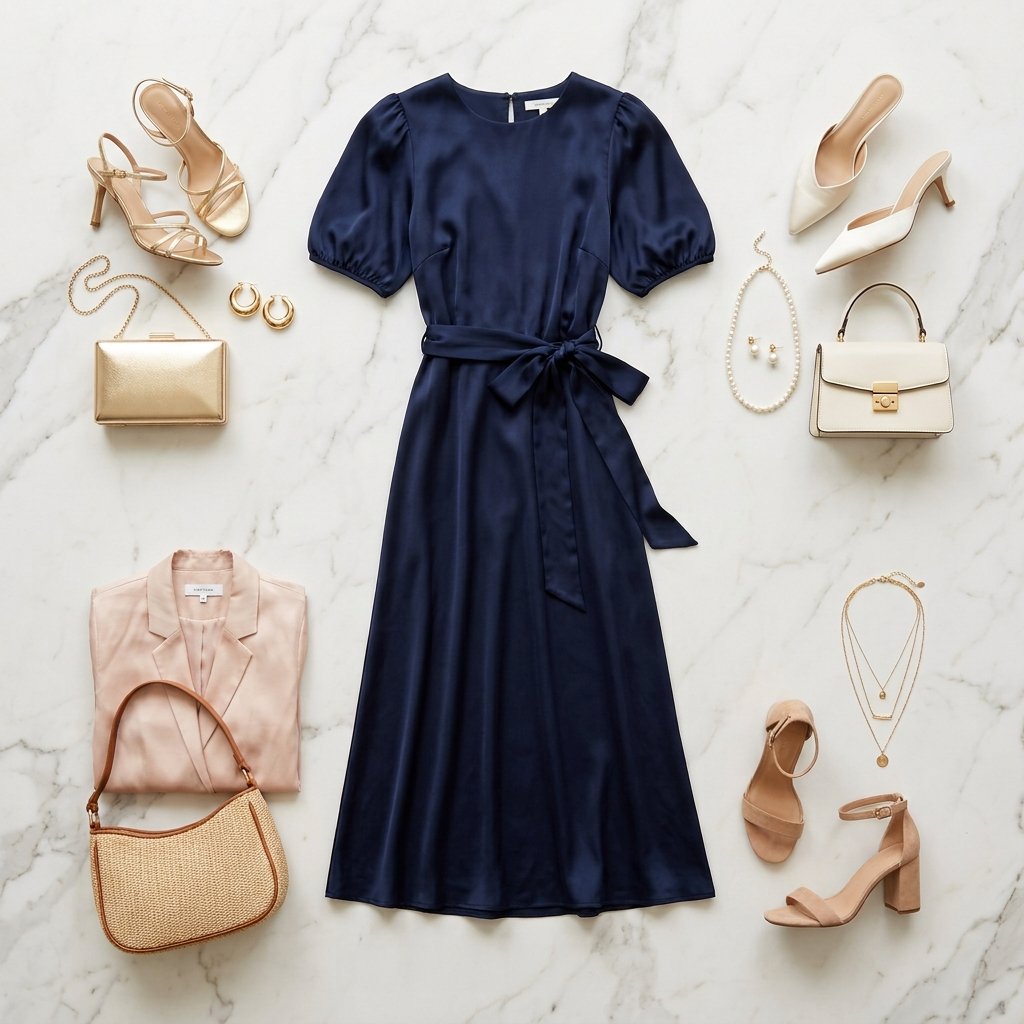
Wedding season tests a wardrobe in a specific way. One wedding a summer is easy to plan around. Two or three turn into a real logistical and financial exercise. Four or more, which happens often in years when everyone seems to marry at once, can start to feel like a second job devoted to never repeating an outfit in front of the same crowd.
That anxiety deserves a closer look, because most of it is invented. The idea that a second wedding in the same dress looks inappropriate is a pressure the fashion industry benefits from encouraging, since buying something new each time is far more profitable for retailers. In reality, a well-chosen outfit worn intelligently more than once is not only acceptable, it’s often smarter and more elegant than a string of rushed purchases.
The word doing the real work in that sentence is intelligently. Wearing the same dress to the same guests without changing a single detail is what actually risks notice. Re-wearing a thoughtfully chosen outfit with different accessories, different hair, and possibly a different layer reads as something else entirely. The dress stays the same. The look does not.
This guide covers how to pick an outfit built for repeat wear, how to transform it convincingly between events, and how to adapt it across seasons and dress codes without added stress.
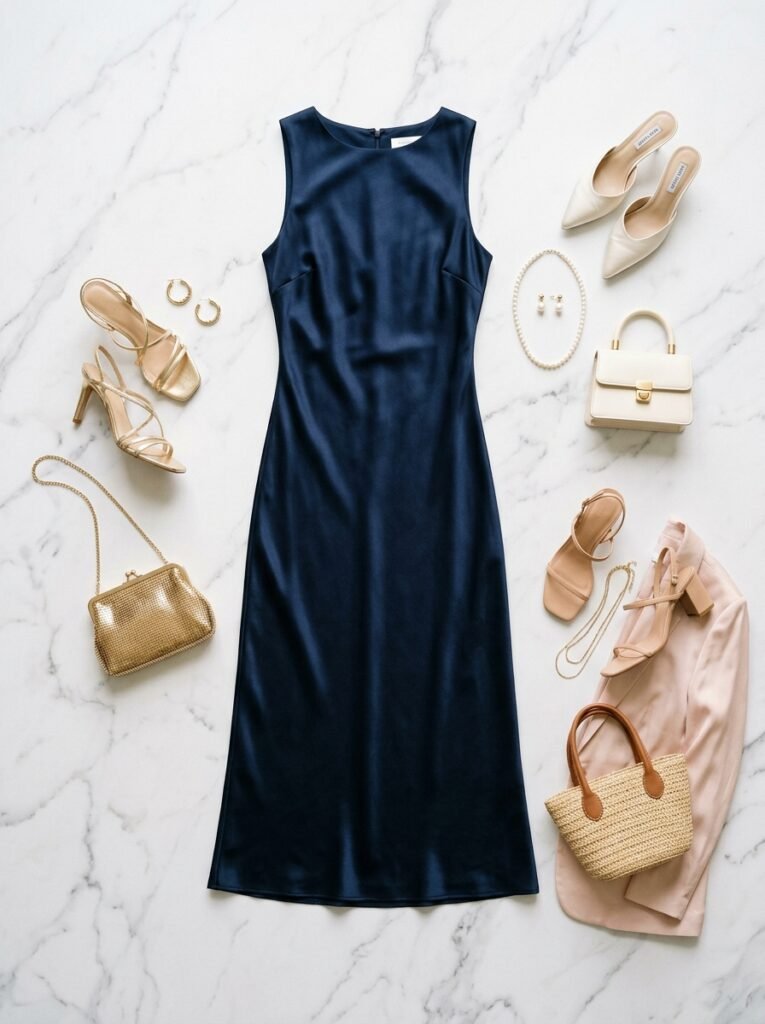
Why Most Outfits Cannot Be Re-Worn and How to Choose One That Can
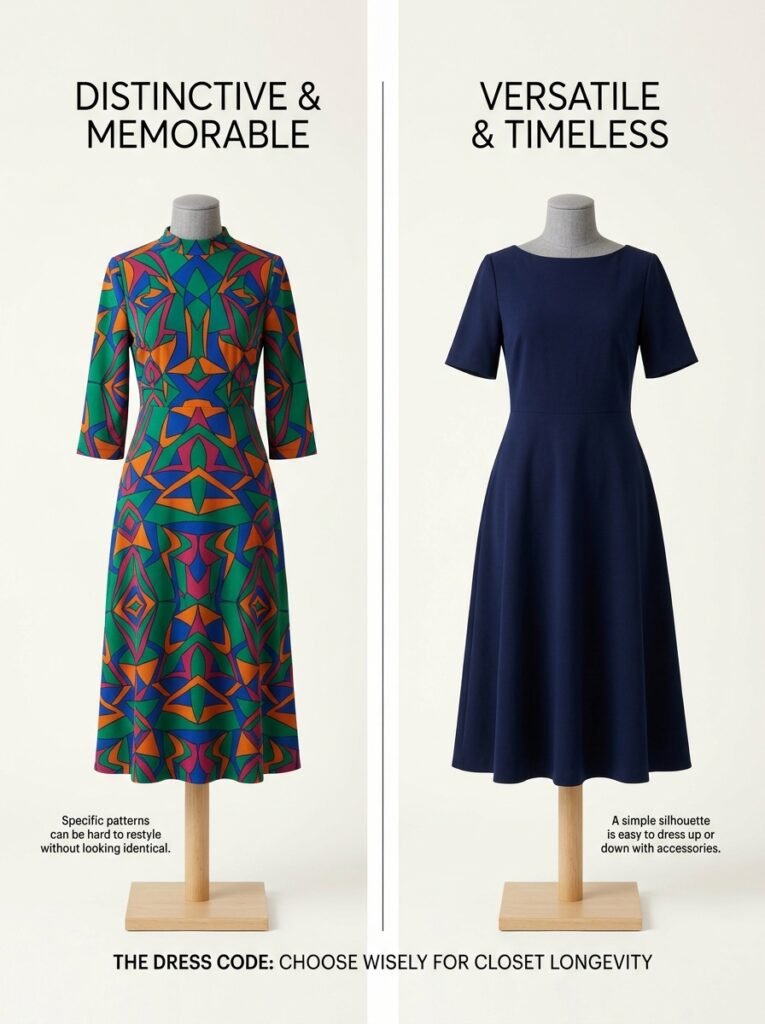
Most wedding guest outfits fail at re-wearing not because someone has already seen them, but because they were never chosen with versatility in mind. A highly distinctive print stands out immediately. An unusual silhouette reads as a signature piece rather than a wardrobe staple. A heavily embellished or novelty item only works one specific way. These pieces get remembered because they carry a high visual specificity, not necessarily because they lack beauty.
An outfit built for re-wearing follows a different set of criteria: styling versatility, a neutral or sophisticated color palette, an elegant silhouette that avoids reading as a signature statement, and fabric that photographs well and holds up across multiple wearings.
None of this requires a boring outfit. It calls for a beautiful piece with a classic quality, closer to timeless elegance than trend-driven novelty, built to be restyled rather than locked into one fixed look.
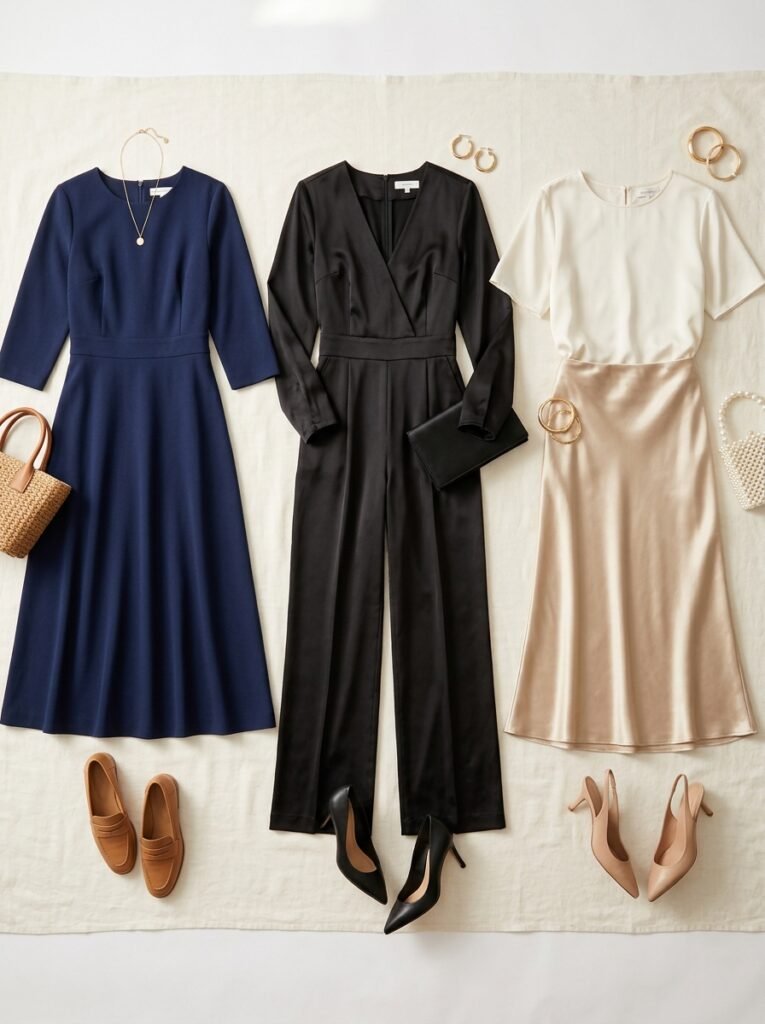
The Outfit Types That Re-Wear Best
Not every garment holds up equally well to repeat wear. Certain silhouettes, fabrics, and color choices work significantly better for this purpose than others.
A solid-color midi or maxi dress in a sophisticated tone, deep navy, burgundy, forest green, black, dusty rose, or champagne, forms the most re-wearable foundation for a wedding guest wardrobe. Solid colors are harder to identify as the same garment across different events than a distinctive print, since the eye registers color rather than a unique pattern. A black midi dress styled differently at two weddings simply reads as a black dress each time, which draws no attention at all.
A well-cut jumpsuit in a solid color or subtle texture offers the same advantage, with the added benefit that its more androgynous shape photographs differently depending on the accessories and whether a blazer goes over it.
Elegant separates, a sophisticated skirt paired with a quality top bought to work together, offer the most flexibility overall. Each piece can also mix with other items already in the closet, and the pairing itself reads as a deliberate outfit choice that changes dramatically with different accessories and layers.
What tends to work against re-wearing: a highly distinctive print or pattern that’s easy to identify on sight, a novelty silhouette that reads as one unique piece rather than a style category, or an outfit built around a single standout element, like a dramatic neckline or an unusual color combination, since those details are exactly what people remember first.
The Transformation Framework: What You Change Between Events
This is the practical core of re-wearing well. Five elements, changed individually or together, transform how an outfit reads from one event to the next.
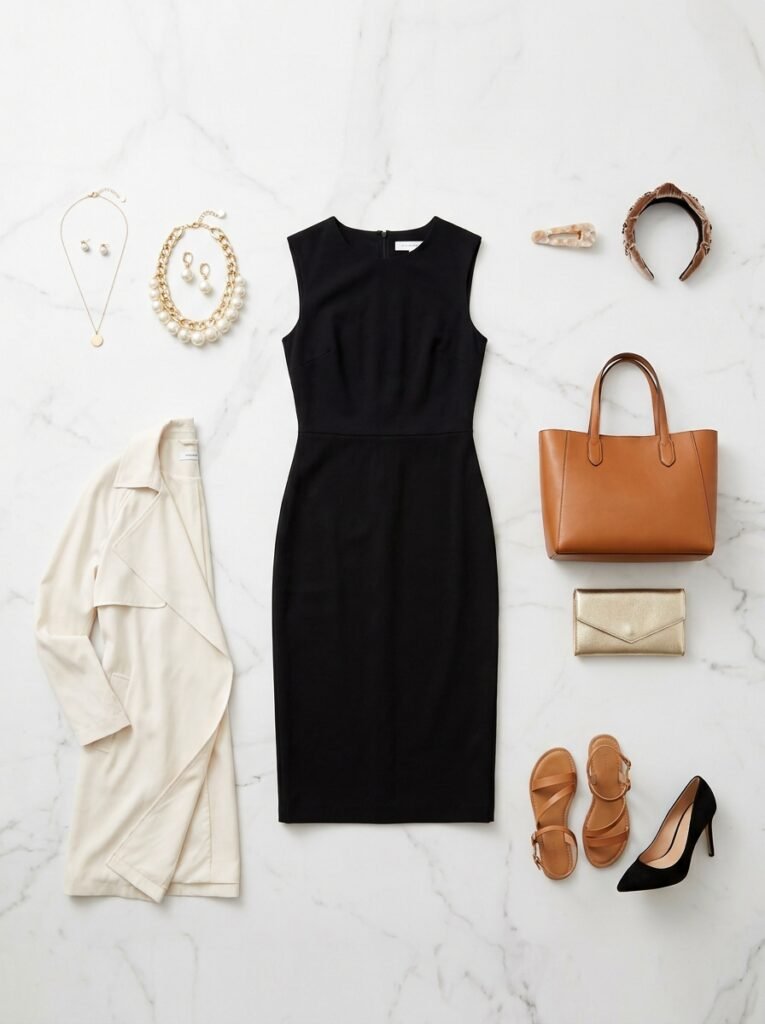
Shoes deliver the fastest, highest-impact change available. A champagne midi dress worn with strappy gold sandals reads one way. The same dress with pointed ivory mules reads completely differently at first glance. Nude block heels create a third impression, and a low kitten heel in a matching tone creates a fourth. Shoes shift the proportion between hemline and leg, the overall formality, and the visual impression of the whole outfit more than any other single swap.
Jewelry comes next. Statement earrings at one wedding, a collar necklace with simple studs at another, a layered fine chain at a third. The same dress paired with different jewelry photographs as a different look, since the eye lands on whatever sits closest to the face first.
Bags and clutches shape how an outfit reads in terms of formality and mood. A simple satin clutch suits one event, a woven rattan bag suits a garden celebration, and a structured leather minibag suits something more formal. Each produces a genuinely different impression from the same underlying dress.
Hair and makeup transform the look most dramatically of all, since they change the wearer rather than the garment itself. Pinned-up hair at one event, loose waves at the next, a sleek low bun at a third. A bold lip paired with no lip the next time around. Different hair and makeup applied to the same outfit consistently reads as a different look in photos and in person.
Layers and cover pieces stretch one outfit across different seasons or formality levels. A tailored blazer over a slip dress at one event, a lace bolero over the same dress at a more traditional ceremony, a silk wrap at an outdoor evening event. Each layer shifts both the silhouette and the formality noticeably.
Combined, these five elements can produce five to ten genuinely different-reading appearances from one core outfit. The dress stays constant. The look does not.
Managing the Guest List Variable
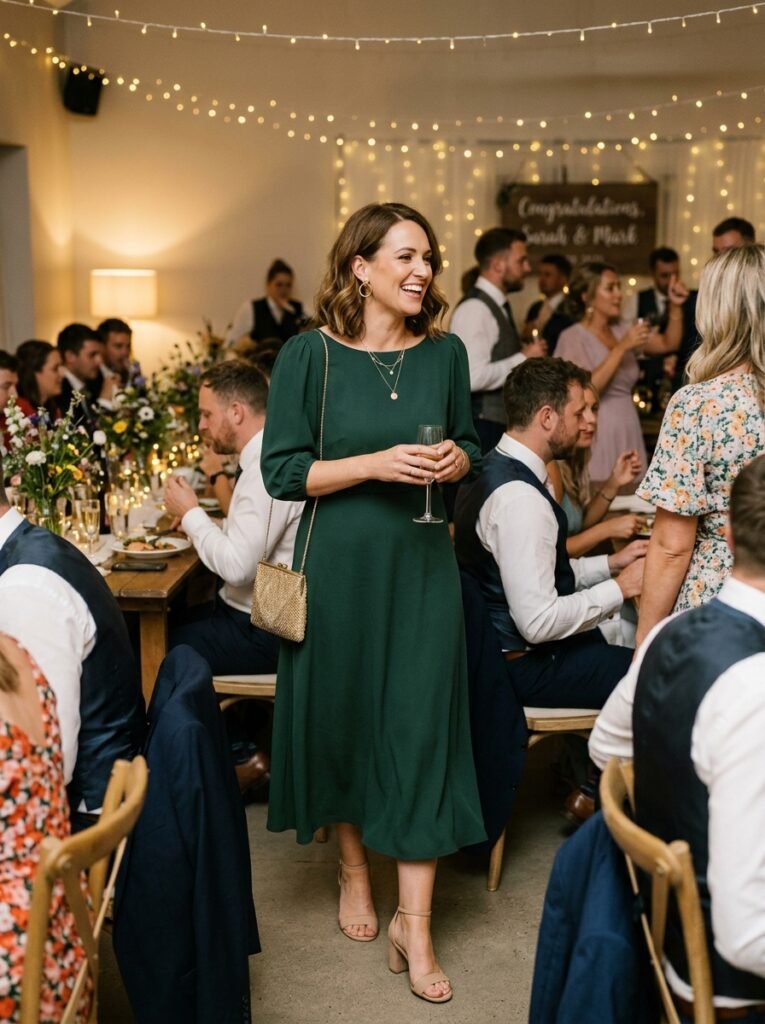
The single most important practical factor in re-wearing is who else will be there. The real concern isn’t wearing the same outfit twice. It’s wearing it twice in front of the same people.
When weddings draw from entirely separate guest lists, one from family, one from a professional network, one from college friends, the same outfit can be worn with minimal changes, since no one in the room saw it the first time.
When the same friend group attends multiple weddings together, transformation matters far more. Changing the hair, jewelry, shoes, and possibly a key layer is worth the extra effort in that scenario.
If the couple has already seen the outfit at an engagement party or bridal shower, it can still work for the wedding with noticeably different styling, though it’s worth thinking through carefully.
A reliable rule of thumb: changing at least three of the five transformation elements, shoes, jewelry, bag, hair, or layer, produces a genuinely different-reading look regardless of who’s in the room. Changing all five amounts to a complete transformation.
Seasonal Adaptation: The Same Outfit Across Different Wedding Conditions
Re-wearing across seasons or venue types relies on the layering side of the transformation framework rather than accessories and hair alone.
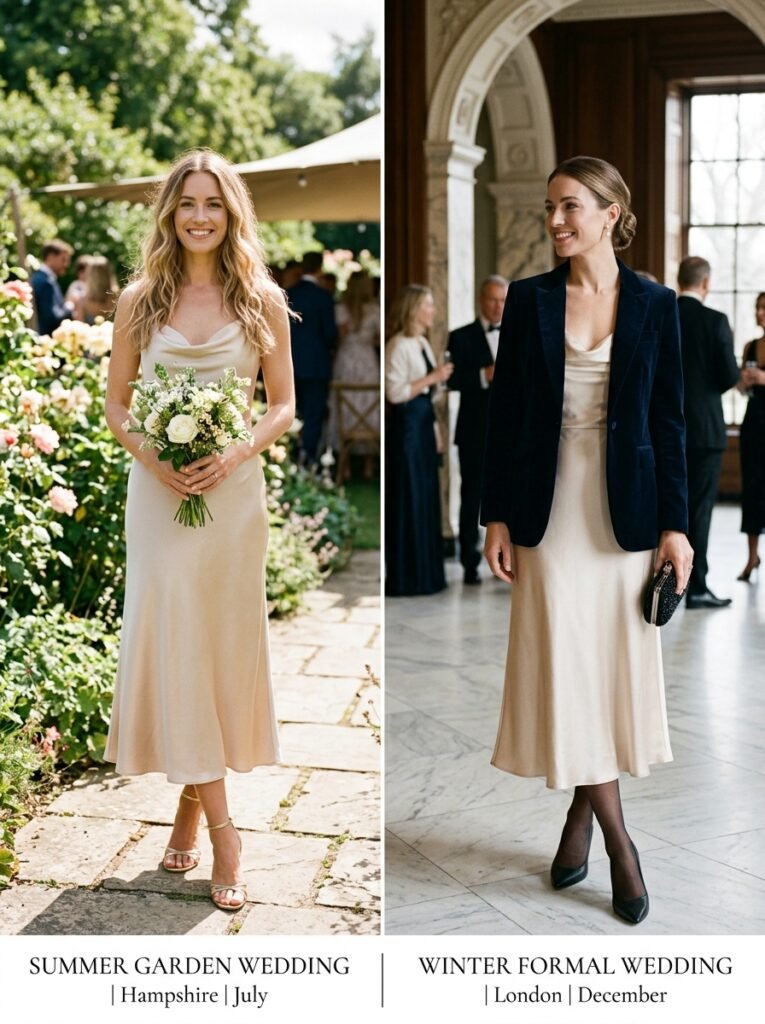
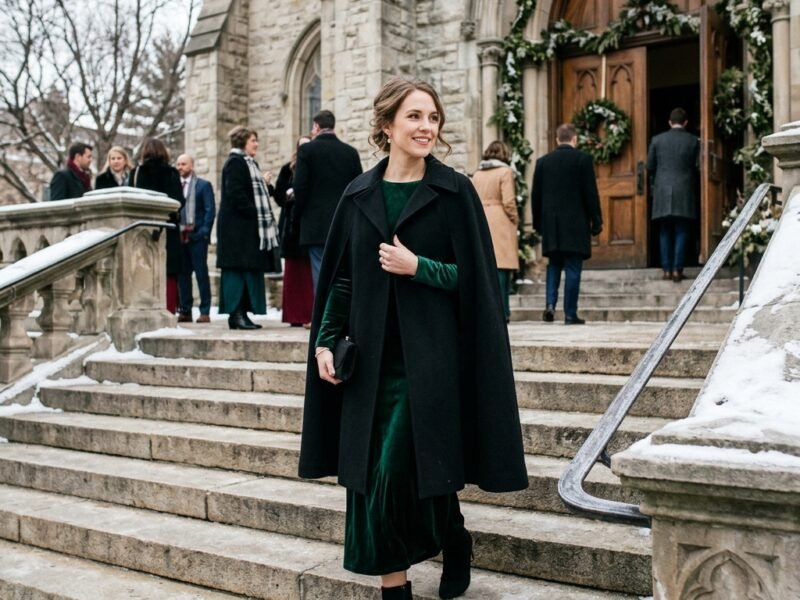
A silk or satin midi dress perfect for a spring garden wedding adapts for winter with a tailored velvet blazer, dark sheer tights, and a shoe offering more coverage than a summer sandal. The dress stays the same. The seasonal read shifts entirely.
A cocktail-length dress worn to a smart casual outdoor wedding can elevate to a formal indoor evening event by swapping loose hair and casual accessories for a formal updo, statement jewelry, heeled sandals or pumps, and a sleek clutch. Formality often comes down to styling choices as much as the garment itself.
The reverse also works. Taking a formal piece down for a relaxed outdoor celebration just requires relaxed accessories: a straw or woven bag, lower or flat shoes, loose natural hair, and lighter jewelry. Everything around the dress signals ease, even if the fabric itself is formal.
When to Pair With a Different Piece Entirely
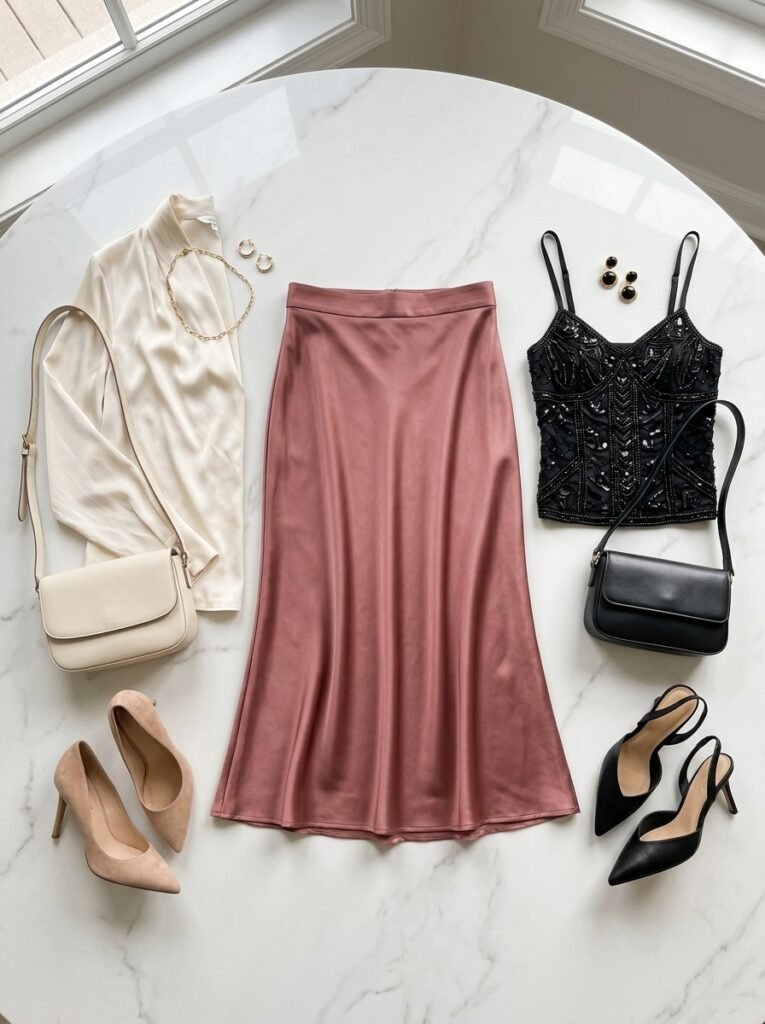
One highly effective strategy for separates involves swapping the pairing between events. A satin skirt worn with a silk blouse at the first wedding pairs with a different top entirely at the second, creating what feels like a new outfit even though the skirt hasn’t changed.
This trick works best when the swapped piece looks noticeably different. Replacing a draped cream blouse with a fitted black silk camisole produces two entirely different impressions from the same skirt. A structured, embellished top instead of a simple camisole makes the skirt read formal rather than relaxed. Only someone paying very close attention would recognize the repeated piece, and even then, the new pairing tends to read as a deliberate choice.
Keeping the top and swapping the bottom works just as well, though it requires having two bottom pieces built to pair with the same top from the start.
Practical Tips for Keeping a Re-Worn Outfit Looking Fresh
A dress returned to perfect condition after each wearing behaves very differently from one worn, crumpled, and put away without care. The physical condition of the outfit between wearings is what makes the whole strategy work.
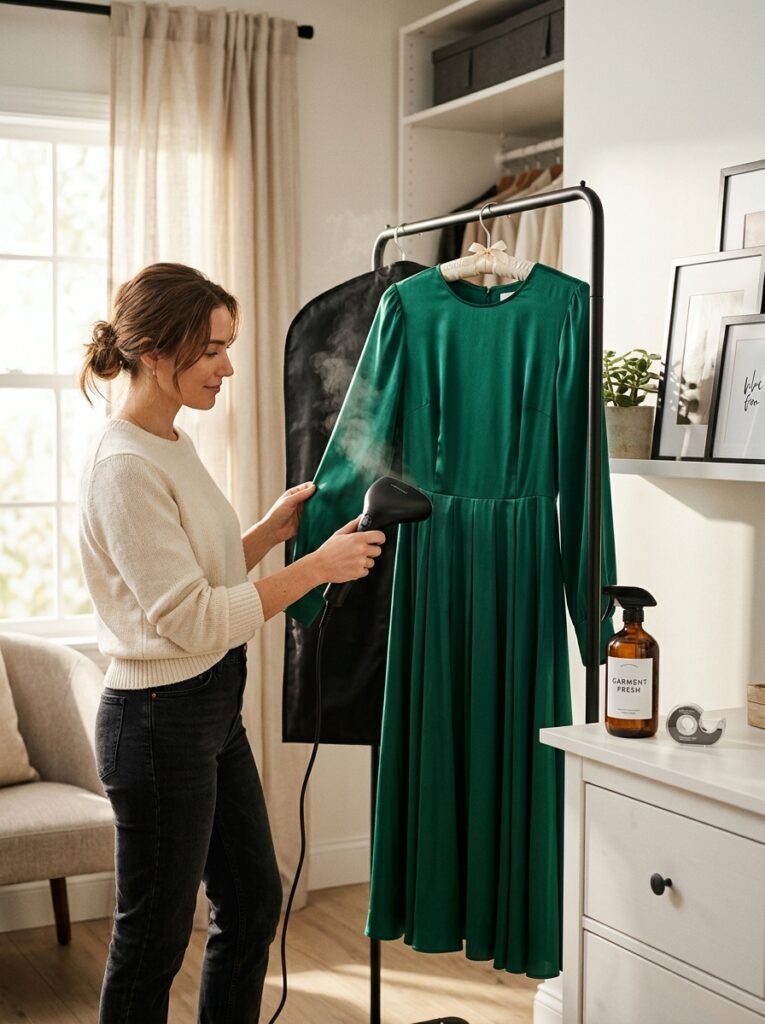
Steaming preserves fabric better than ironing across multiple wearings. A handheld steamer used after each wearing, and again before the next, keeps fabric smooth without the shine marks or stress a hot iron can leave behind.
Spot cleaning marks immediately, rather than hoping they fade in storage, keeps stains from setting. Whether the garment needs a full wash or dry clean depends on the fabric and how much it was worn, but light wear in clean conditions doesn’t always require a full clean between events.
Storage matters just as much. A padded hanger inside a garment bag prevents creasing far better than folding the piece on a shelf.
Keeping a small supply of fashion tape on hand means a neckline, hemline, or strap that behaved well the first time keeps behaving well the second and third.
The Psychology of Re-Wearing: Releasing the Pressure
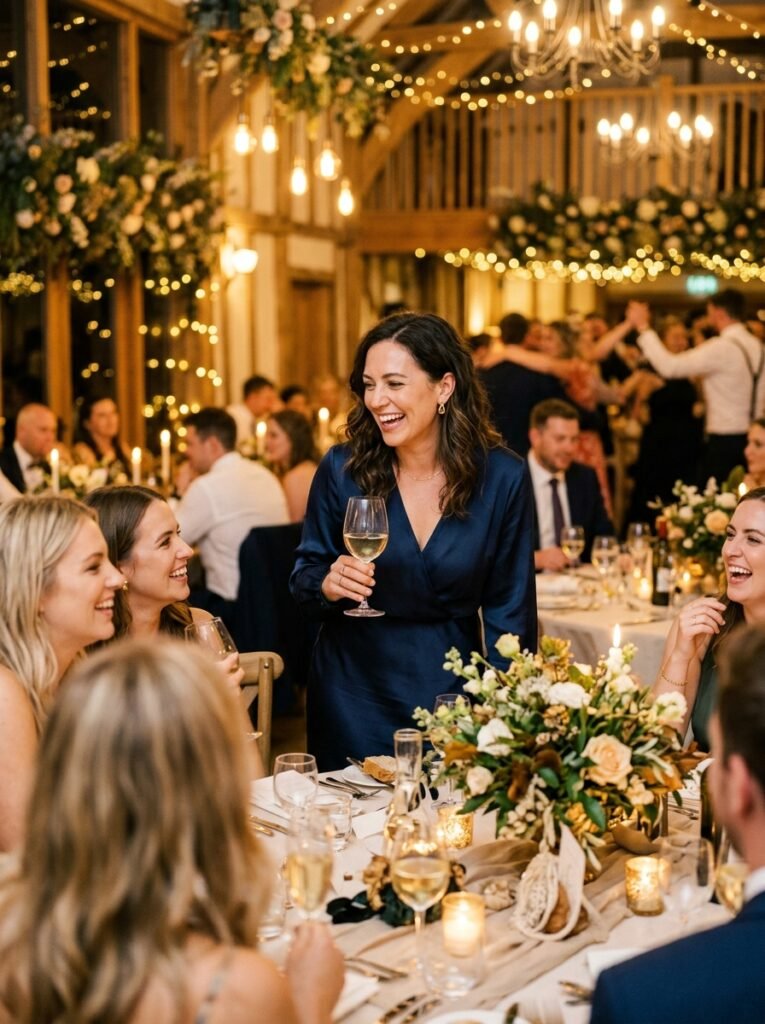
There’s a broader point worth stating plainly. The social pressure against repeating an outfit is far more intense in imagination than in reality. Most guests focus on the couple, the food, the dancing, their own outfits, and catching up with people they haven’t seen in a while. Nobody is tracking what you wore to the last wedding.
The people most likely to notice are the ones documenting the event, and even they’re focused on the couple rather than the guests. On the rare occasion someone does notice, the reaction is almost always nothing, since re-wearing a great outfit is something most people either already do or quietly wish they did more.
This self-consciousness is also worth examining because of what it drives. Fashion research backs this up directly: the Ellen MacArthur Foundation’s widely cited textiles-economy research found that clothing gets worn far fewer times before disposal than it did fifteen years earlier, a trend driven largely by pressure to avoid repeating outfits. That pressure tends to push people toward rushed, over-budget purchases that are less thoughtfully chosen than a single well-picked piece worn several times over.
Building a Re-Wearable Wedding Guest Wardrobe
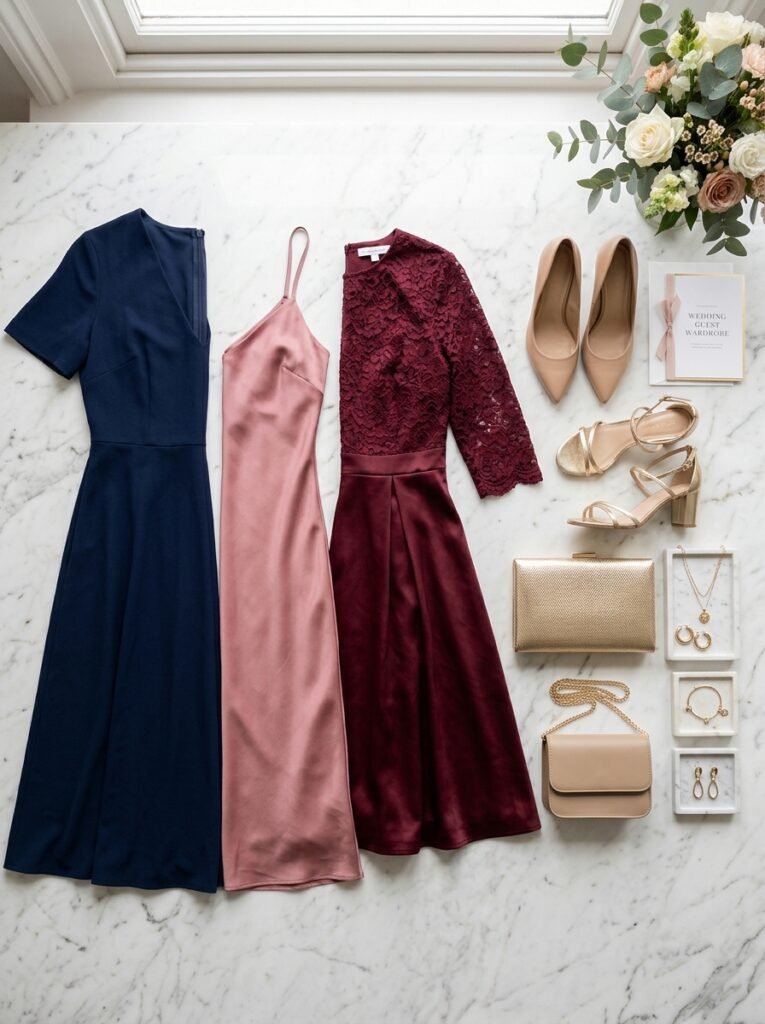
Anyone facing a full season of weddings benefits from building a small, intentional wardrobe rather than solving each event separately. Two or three excellent outfits paired with a shared accessory system cover far more ground than a closet full of one-time purchases.
Two or three pieces in complementary tones, navy or deep green, dusty rose or champagne, burgundy or black, cover most dress codes from smart casual through cocktail with the right accessories. A shared set of shoes in nude and gold, jewelry that crosses all three outfits, and one or two neutral bags mean the accessory investment works across the whole system rather than one single piece.
This approach asks for a slightly higher upfront investment in quality over quantity, but it delivers a wardrobe that carries an entire wedding season without the stress of a fresh outfit decision for every invitation. For readers weighing what’s appropriate at different times of day, this guide to day versus night wedding outfits is a useful companion when deciding how to style each piece for a specific event.
Frequently Asked Questions
Is it acceptable to wear the same dress to two weddings? Yes, entirely. Re-wearing the same dress to two different weddings is completely acceptable, and it’s more practical and thoughtful than buying something new for each event. The only scenario needing extra attention is when a significant number of guests overlap between the two weddings, in which case changing the accessories, shoes, hair, and at least one other element is worth the effort.
How many weddings can you wear the same outfit to? There’s no fixed limit. A well-chosen, versatile outfit styled differently each time can go to as many events as needed without meaningful social consequence. The real limits are the garment’s physical condition and whether the same people keep seeing it. Two or three wearings within one wedding season feels comfortable for most people, and beyond that, transformative styling and good garment care make additional wearings entirely reasonable.
What is the best color to buy for a re-wearable wedding guest outfit? Deep, sophisticated solids perform best. Navy, forest green, burgundy, black, and deep champagne all work well because they photograph as color rather than pattern, suit most dress codes, and avoid the immediate recognizability of a bold print or unusual color combination. They also adapt easily across seasons with different accessories and layers.
Should I tell people I am re-wearing an outfit? There’s no obligation to, and most style professionals recommend wearing a re-worn outfit confidently without comment. Pointing it out is more likely to draw attention than simply wearing it well. If someone does notice and mentions it, a relaxed acknowledgment works fine: it’s a beautiful dress, and it earns its place at weddings.
Can I re-wear to a wedding an outfit I wore to the same couple’s engagement party? This comes down to personal preference rather than a strict rule. Some people feel fine wearing the same outfit to both events, especially with significant styling changes. Others prefer something new for the wedding itself. If the same guests attended both events and the engagement party was formal enough to be well-photographed, a fresh outfit or a substantial transformation of the original is the safer route.
Re-Wearing as Intentional Style
The most sophisticated approach to a wardrobe isn’t owning more. It’s using what you already own more intelligently. Re-wearing a beautiful outfit to multiple weddings isn’t a budget compromise. It’s a form of style confidence, the confidence that a well-chosen piece speaks for itself no matter how many times it’s been worn.
The people with the most genuinely elegant wardrobes rarely buy something new for every occasion. They invest thoughtfully in pieces that adapt across contexts and look beautiful because they were chosen well, not because they’re brand new.
A wedding guest outfit isn’t a disposable purchase. It’s a piece of your wardrobe. Wear it well, style it differently each time, and let go of the pressure to perform novelty at every event. The result isn’t just more practical for wedding season. It’s a more confident and elegant approach altogether.

[…] can feel excessive in daylight. A guest planning several celebrations this season may find this guide to re-wearing one outfit across multiple weddings […]