
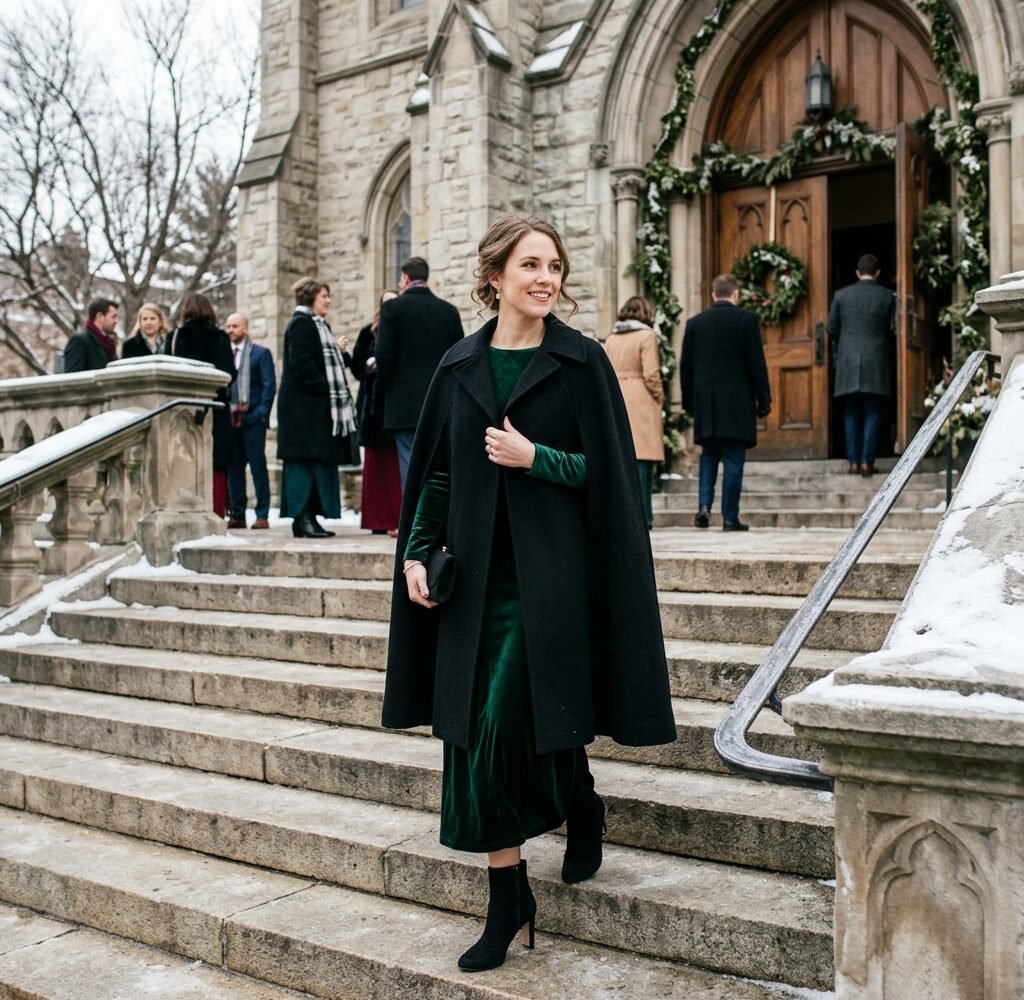
A summer wedding outfit is mostly one decision. A winter wedding outfit is a stack. There is the dress or suit underneath, the coat for the walk from the car, and the cape or wrap that may stay on through the ceremony. Then there is whichever layer comes off once the reception room turns out to be warm. Each piece is seen at a different point in the day, and most photographs happen outdoors, where the outermost layer is the only one visible.
That is why winter guest dressing tends to go wrong in one particular way. A beautiful dress gets chosen, then the nearest coat gets added, and the group photo shows a navy puffer where a velvet midi should have been.
The sections below treat the stack as a single outfit. They start with what winter changes about a wedding, then cover coats, capes and velvet in turn. After that come venue-based outfit formulas, colors, shoes and a few practical details. Everything here is a styling suggestion, so the couple’s dress code and the venue’s conditions always come first.
What Winter Changes About a Wedding Invitation
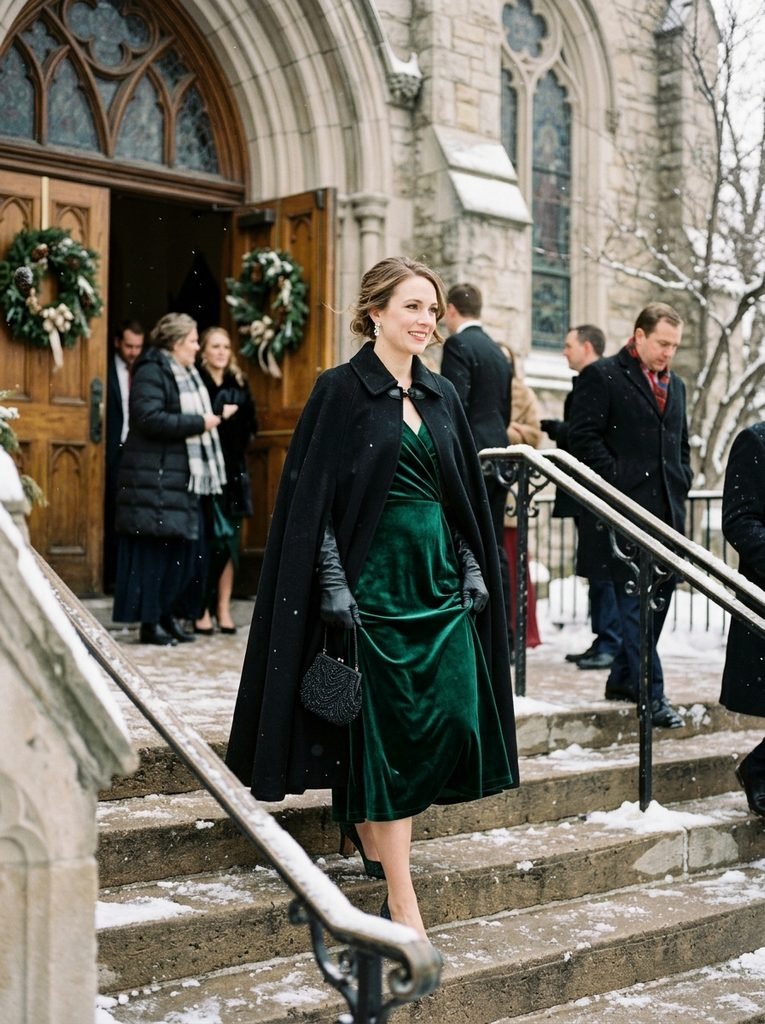
Dress code words mean the same thing in January as in June, but the conditions around them shift. Three things matter most. Temperature swings are the first: an old stone church or converted barn can stay cold all day, while a hotel ballroom may run warm. Early darkness is the second, since a two o’clock ceremony can finish near sunset, which turns a daytime look into an evening one. The third is that arrival lines, confetti and portraits on the steps usually happen outside, in the cold.
Fabric ends up doing the work that the dress code cannot. Cocktail attire in July might be a light, fluid dress. In December the same dress code tends to move toward crepe, satin, velvet and fine wool. If a refresher on reading each level of formality is useful, the wedding guest outfits guide on this site covers it, so this article stays focused on what the cold adds.
Choosing a Coat That Belongs at a Wedding
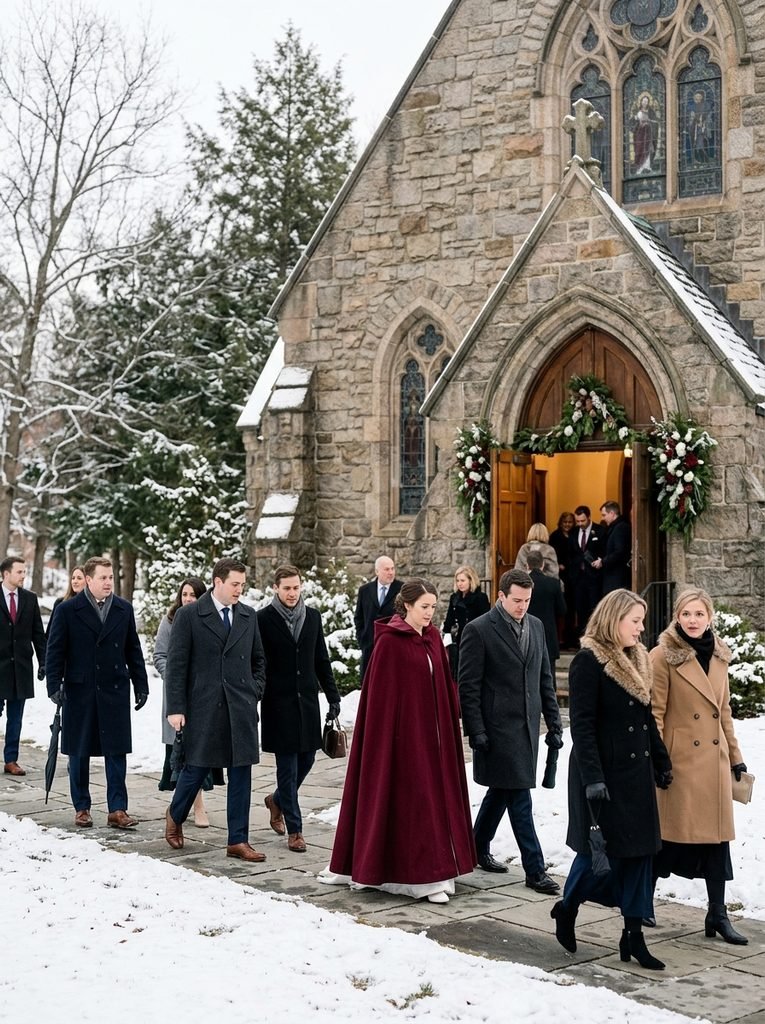
An everyday coat is built for commuting. A wedding coat has a different brief, because it will be photographed beside people in their best clothes and then handed over to a cloakroom for several hours.
Length Against the Hem
A coat that stops just above a midi hem leaves a narrow band of dress showing, which can look accidental. A clearly shorter coat, such as a hip-length style over a fluid skirt, looks deliberate. A full-length coat that just covers the hem avoids the question altogether. With a floor-length gown, a coat that grazes the ankle keeps the line unbroken. Trousers are easier, since most coat lengths sit well over them.
Fabric and Color
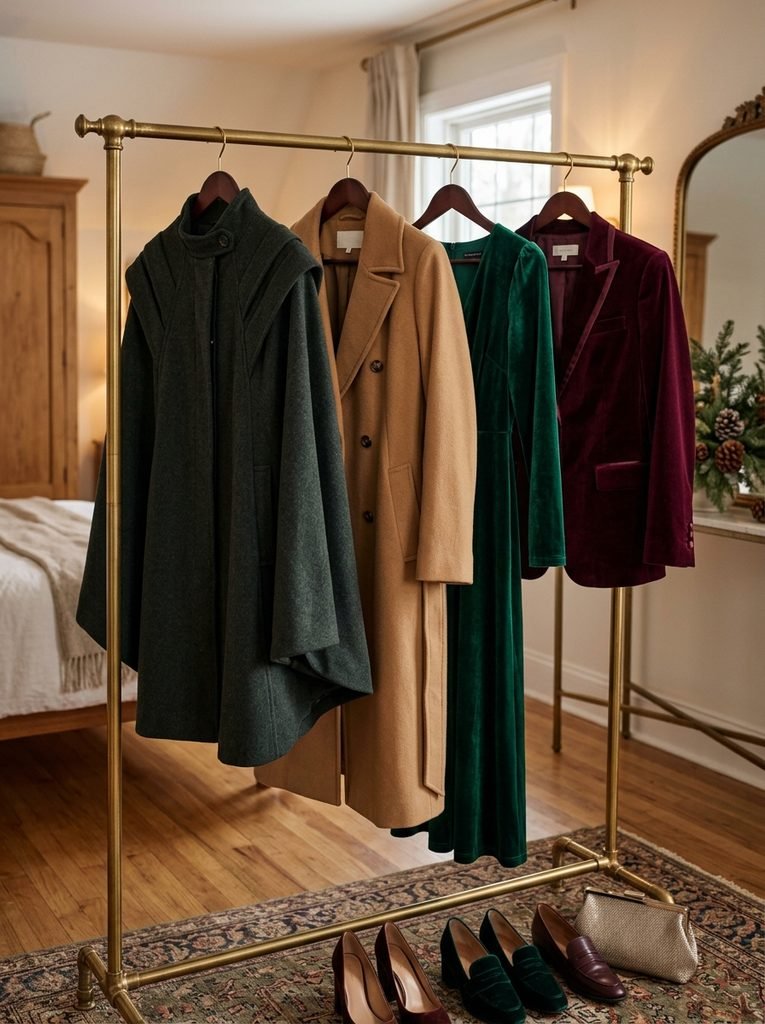
Wool and wool-cashmere blends have a smooth, dense surface that looks formal in photographs. Black, charcoal, navy, camel, deep green and burgundy all sit comfortably beside dark and jewel-toned outfits. A puffer is the warmest option for a long wait outdoors, but its volume tends to flatten a dress and can look casual beside formal attire. If a puffer is the only warm choice, a longer, sleeker black cut helps. Another option is to wear it for the journey and swap to a dressier layer on arrival. White and ivory coats belong on the avoid list, because they can read as part of the bridal look in a photograph.
The Coat in the Group Photo
Group photos often happen before anyone steps inside, so the coat is what appears. A quick pass with a lint roller and a tidy collar matter more than expected. For a wider look at how each coat shape works with what sits beneath it, the winter coat outfits guide walks through camel, puffer and shearling styles.
Capes and Wraps: Drama With a Few Practical Catches
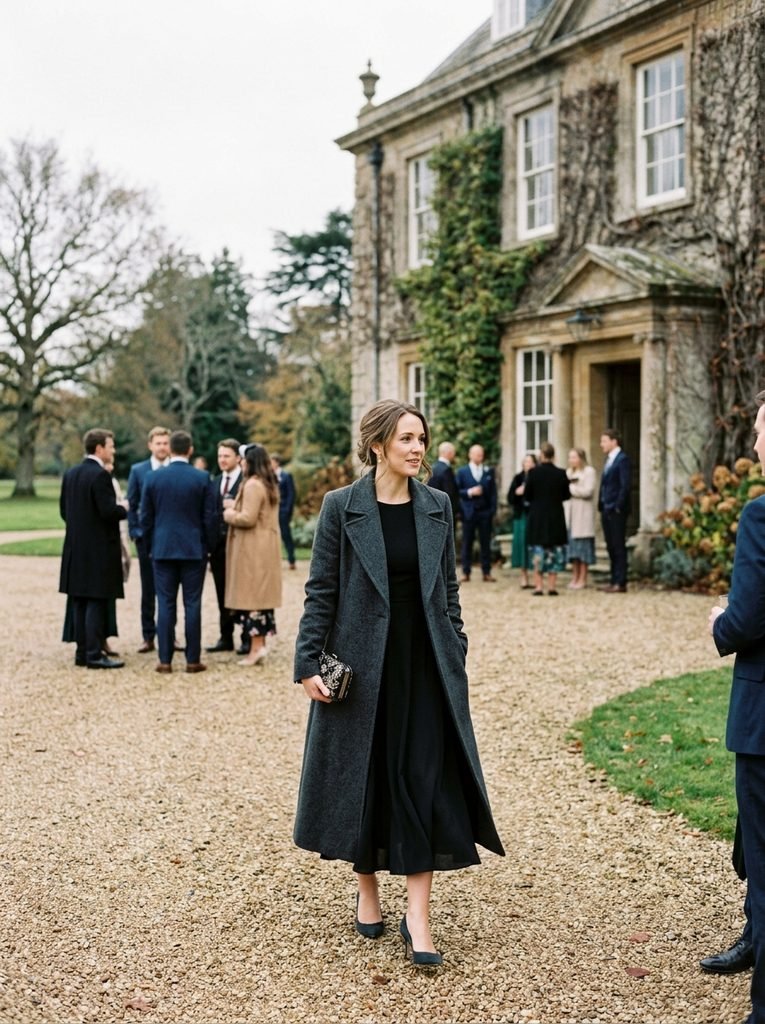
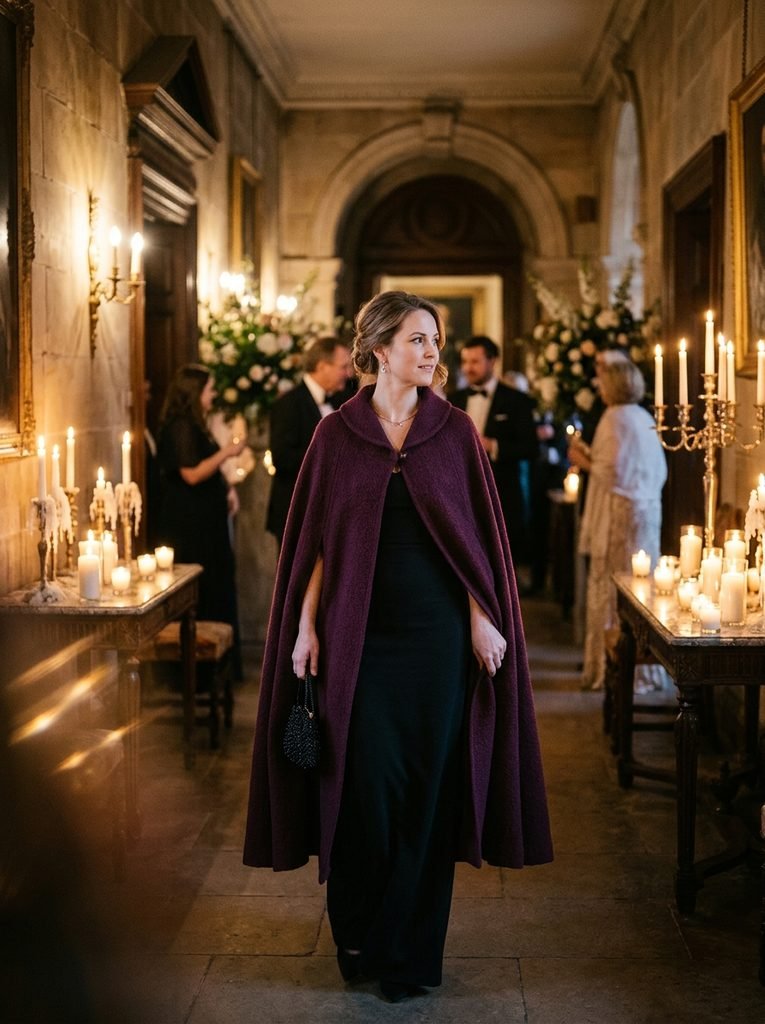
A cape suits a wedding because one piece does two jobs. It covers a bare-armed dress and it adds shape. Three versions come up most often. A wool cape, usually knee-length with armholes or slits, behaves like a coat with a softer outline. A cape-sleeve blazer or short cape layer sits over the shoulders and suits trousers or a slim dress. A cashmere or wool-blend stole is not technically a cape, but it plays the same role and is easy to take on and off.
A few practical points help. A cape without armholes can slide when reaching for a glass or hugging a relative, so a brooch pinned through the fabric or a hidden hook at the neck keeps it in place. Wrists stay exposed, so gloves earn their place. A long hem can bunch behind in a pew, and folding the cape forward over the lap solves that.
Proportion matters too. A cape over a very full skirt creates two competing shapes, while a slim column, a slip dress or tailored trousers give it room. Winter bridal looks often include capes, and the winter wedding outfit ideas for brides show several. A guest cape therefore works best in a clearly non-bridal color and fabric, such as plum, bottle green, charcoal or black wool.
Velvet That Reads as Guest Dressing, Not Costume
Velvet’s dense pile catches light unevenly. That gives a dress depth in candlelit rooms and makes dark shades look almost liquid. It is also a warm fabric, which suits an unheated venue and can feel like a lot in a crowded ballroom.
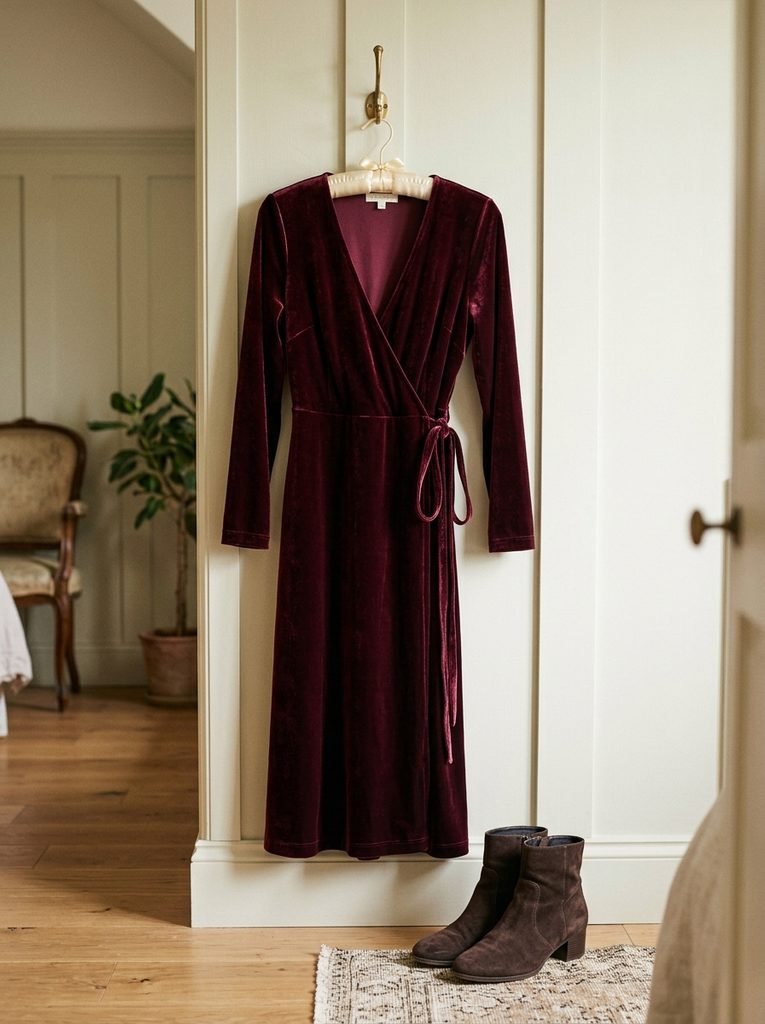
The most dependable shapes are a long-sleeved midi wrap dress, a column with a back slit, a velvet jumpsuit, or a velvet blazer over silk trousers. A velvet midi skirt with a fine knit or silk blouse works as well. A useful guide is to pair one velvet piece with something smooth, such as satin, crepe or fine knit. Velvet from head to toe can look heavy in photographs.
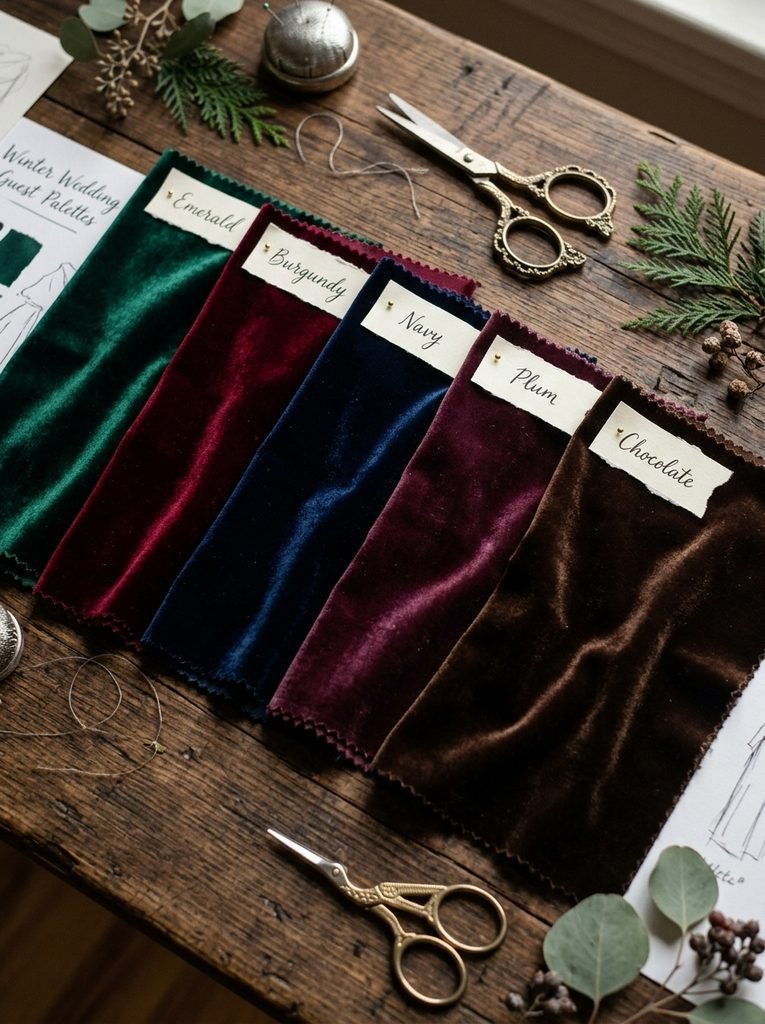
Emerald, burgundy, midnight blue, deep plum, chocolate and black are the safest colors. Mid-tone teal or rust suits a daytime ceremony. Ivory, blush and champagne velvet are worth skipping, since they tend to photograph as bridal.
Velvet shows pressure. A bag strap or seat belt can leave a mark, and a long ceremony can crush the pile at the back of a skirt. A clutch avoids the strap problem, and a skirt with a little structure recovers better. For care, Eileen Fisher’s velvet guide says a handheld steamer removes wrinkles and restores crushed pile. It also recommends padded hangers, since folding can leave permanent creases. The care label on the garment always takes priority.
Five Looks Matched to the Kind of Venue
The venue says more about the right outfit than the season does. These combinations are starting points, written as complete stacks.
A Stone Church, Then a Hotel Reception
A midnight-navy velvet midi dress with long sleeves, opaque black tights and polished ankle boots handles both rooms. A long charcoal wool coat goes over it for the church, with a pashmina folded in the bag for the cold pews. Heels can wait in a tote for the ballroom.
A Country House With Gravel and Lawn
A plum velvet wrap dress, block-heel boots and a black wool cape suit the mix of indoor and outdoor. Stilettos sink into gravel and lawns, so a broader heel keeps the walk to the marquee comfortable. Leather gloves cover the wrists the cape leaves bare.
A Candlelit Black-Tie Evening
A floor-length emerald velvet column or a black crepe gown works with a long black wool cape or ankle-length coat. Keep jewelry simple, since the fabric carries the look. The black-tie wedding guest guide goes deeper on what that dress code requires.
A Barn or Rustic Venue
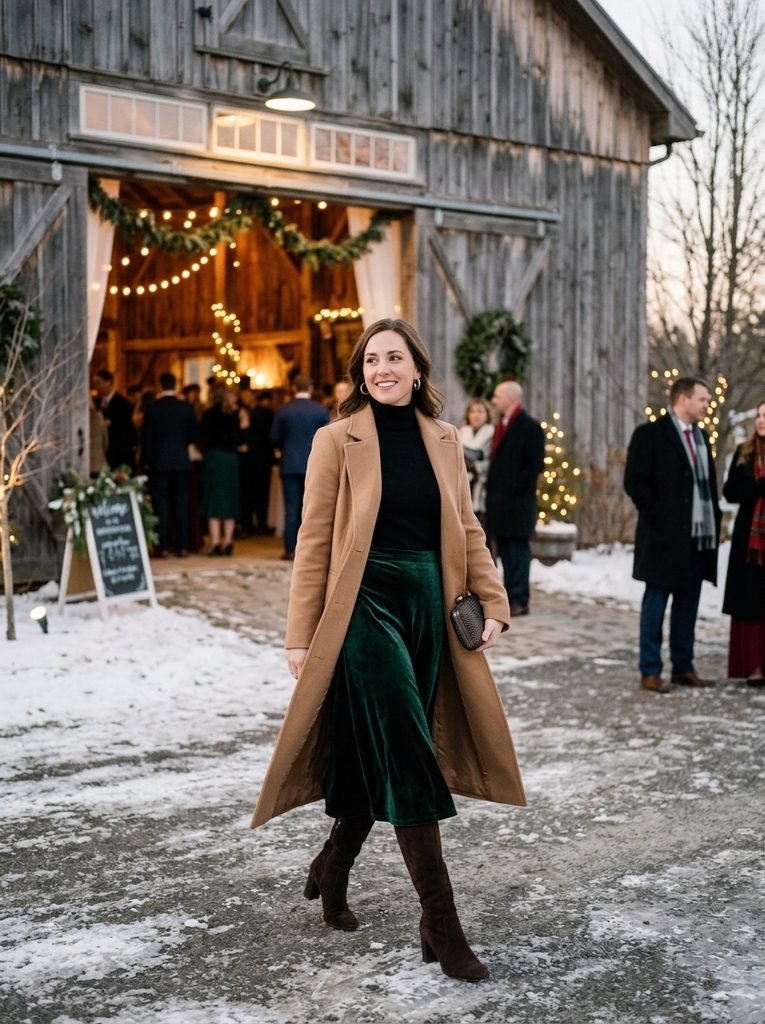
A burgundy velvet slip skirt with a charcoal fine-knit top, knee-high leather boots and a long camel coat suits a heated barn with a cold walk from the car park. The knit gives warmth indoors, and the coat handles the path outside.
A City Registry Office or Restaurant
A black crepe jumpsuit with a velvet blazer in deep green, loafer-style heels and a belted wool coat looks sharp and moves easily between taxis, steps and a small dining room. The blazer doubles as the warm layer once the coat is off.
Colors for Winter Guests, and the Ones to Skip
Deep, saturated colors suit winter light and sit well in photographs. Emerald, burgundy, midnight blue, deep plum, forest green and chocolate brown all read as celebratory without competing with anyone. Black remains a reliable choice for evening and formal weddings. Metallics in bronze, pewter or antique gold work as accents on a bag, shoe or earring.
The colors to skip are the usual ones, with a winter twist. White, ivory and cream are out, and so are pale champagne and anything that photographs near white. Winter adds fabrics that blur the line, such as ivory faux fur, cream bouclé coats and pale silvery velvets. Winter bridal looks often use velvet, capes and wraps, so these textures are not off-limits for guests. They simply need to sit in a clearly different color family from the bride’s.
Shoes, Tights, Bags and Other Cold-Weather Details
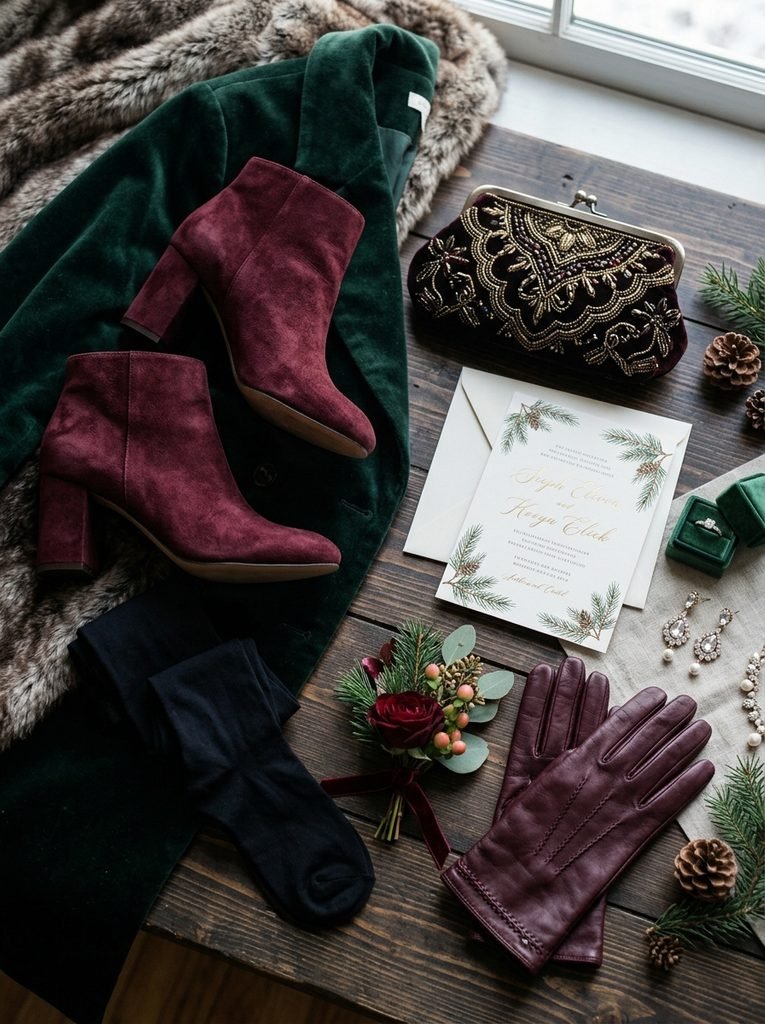
Footwear carries more weight in winter. Frozen ground, damp lawns and gravel favor block heels or polished ankle boots over stilettos. Suede can suffer in slush, so smooth leather is the more forgiving choice. A pair of heels in a tote lets the boots handle the outdoors and the heels handle the dance floor.
Opaque tights in black or a deep shade of the dress add warmth and keep the outfit looking finished beneath a midi hem. Sheer styles feel thin once the temperature drops, though they can work in a warm hotel ballroom.
For bags, a clutch or small crossbody keeps both hands free for gloves and glasses. Drop earrings can catch on scarf fringe or a cape collar, so studs or small hoops tend to be easier. A thin scarf in a dark color tucks inside a coat without bulk. Finally, a small hand warmer or a pair of lined gloves in the coat pocket is a modest addition that makes a long outdoor photo session far more pleasant.
Matching the Outer Layer to the Outfit Underneath
When two pieces compete, the outfit loses focus. This table pairs common winter guest outfits with outer layers that tend to suit them.
| Outfit underneath | Outer layer that tends to suit it | Why it works |
|---|---|---|
| Velvet midi dress | Long wool coat in charcoal, black or camel | Smooth wool lets the pile stand out |
| Floor-length column | Wool cape or ankle-grazing coat | Keeps the vertical line unbroken |
| Sleeveless or strapless dress | Cape or stole with a closure, plus gloves | Covers shoulders and arms outdoors |
| Velvet blazer with trousers | Belted wool coat | Structure sits beside structure |
| Full-skirted dress | Cropped jacket or short cape | Avoids crushing the volume |
| Jumpsuit | Longer coat or wrap | Covers the hips and legs on the walk |
A single well-chosen outer layer can cover several of these outfits, which helps anyone attending more than one winter wedding.
Quick Answers on Winter Wedding Outfits
Can a guest wear velvet to a winter wedding?
Yes, and it suits the season well. Darker jewel tones and black work best, while ivory, blush and champagne velvet are better left to the bride.
Is a cape appropriate for a guest?
It can be, provided it sits in a clearly non-bridal color such as plum, green, charcoal or black. A closure at the neck helps it stay put.
Is a puffer coat acceptable?
It is the most practical option for long outdoor waits. A longer, sleeker cut in black looks more polished, and a dressier layer can replace it indoors.
Should the coat stay on during the ceremony?
That depends on the venue’s temperature. A cold church often calls for a coat or cape to stay on, while a heated room usually does not.
What if the venue is warm inside?
Choose an outfit that looks complete without the outer layer. A velvet dress, a tailored jumpsuit or a blazer with silk trousers all work without a coat.
Dress the Whole Stack
A winter wedding outfit is only as good as its weakest layer. The coat appears in the arrival photos, the cape or wrap may stay on through the ceremony, and the dress or suit underneath carries the evening. Choosing all three together, in colors that suit the season and stay clear of the bride’s, is what makes the outfit feel settled.
Start with the layer that will be seen most, then build the rest around it. Once the coat, cape or velvet piece is right, the shoes, bag and jewelry tend to follow without much effort.

Leave a Reply