
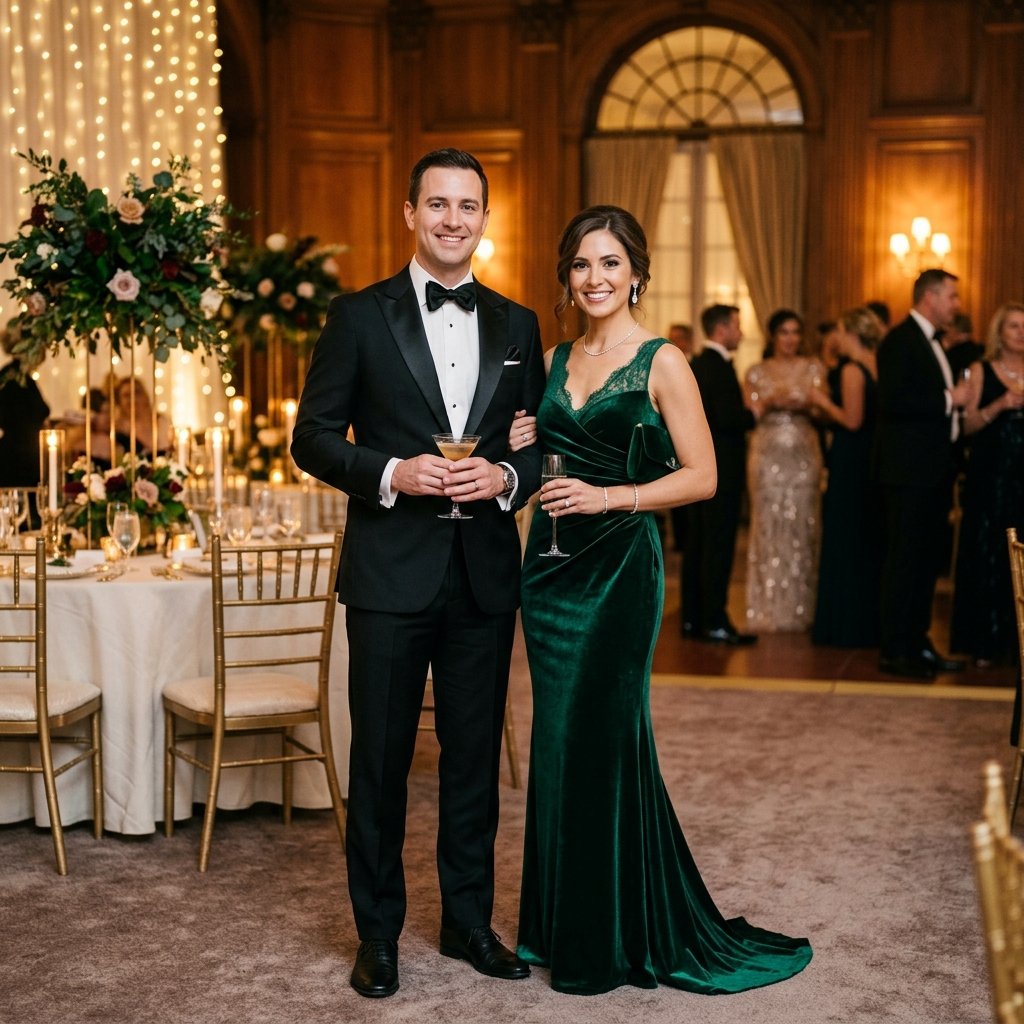
A wedding invitation marked “black tie” can send even a confident dresser into a small panic. Is a regular suit acceptable? Does the dress need to reach the floor? Is color allowed, or does the code call strictly for black and jewel tones? These questions come up constantly, and most guests have wondered about the exact same things at some point.
Black tie ranks among the most formal dress codes a wedding guest will encounter, and getting it right genuinely matters. Showing up underdressed tends to feel obvious in every photo. Overthinking it can produce a look that reads stiff rather than polished. This guide breaks down what black tie actually means, what to wear whether shopping for one person or a couple, and the small mistakes that trip up even experienced wedding guests.
Part of the confusion comes from how many dress codes sit close together on paper. “Formal,” “black tie optional,” and “cocktail attire” all describe elevated dressing, but each one asks for something noticeably different once a guest actually opens the closet. Reading the invitation wording carefully, rather than assuming based on the venue or the time listed, is usually the fastest way to settle the question before shopping starts.
What Black Tie Actually Means for Wedding Guests
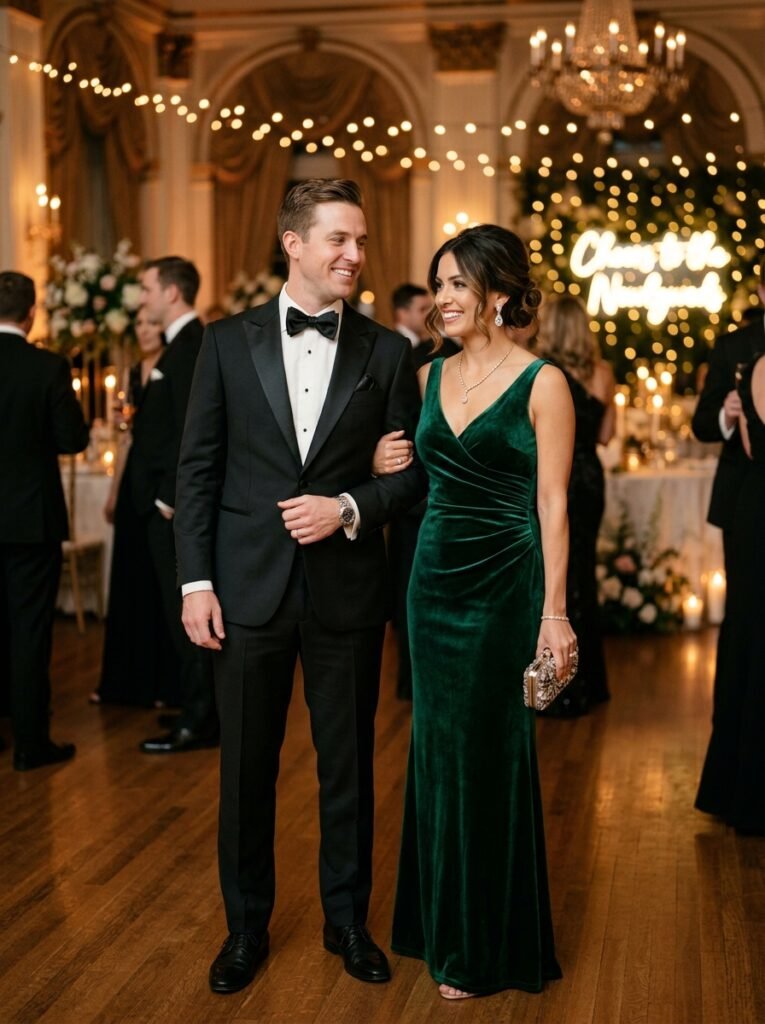
Black tie is a formal dress code that traditionally calls for tuxedos for men and floor-length gowns for women. The Emily Post Institute’s long-running attire guide places black tie just below white tie, the most formal Western dress code, and well above cocktail attire or semi-formal wear.
For a wedding specifically, black tie signals that the couple wants an elevated, elegant evening: chandeliers, candlelight, a live band, and an overall atmosphere of sophistication. It’s usually reserved for evening ceremonies and receptions, and it’s a strong sign the couple has put real thought into creating a polished, formal experience for guests.
An invitation reading “black tie optional” or “black tie preferred” allows more flexibility. A dark, well-tailored suit works for men in that case, and a long dress or a very elegant cocktail dress works for women. True black tie, without the word “optional,” is stricter and calls for a full tuxedo and a formal gown.
The term itself dates back to the late nineteenth century, when the dinner jacket, or tuxedo, emerged as a slightly less formal alternative to the tailcoat required for white tie events. That history is part of why black tie still reads as more relaxed than white tie while remaining well above anything described as simply “formal” or “cocktail.” Knowing where a specific wedding sits on that spectrum makes every other decision, from fabric to footwear, considerably easier.
What Women Should Wear to a Black-Tie Wedding
Dressing for a black tie wedding as a woman generally comes down to length, fabric, and overall formality. Here’s how to think through each piece.
Dress Length and Style
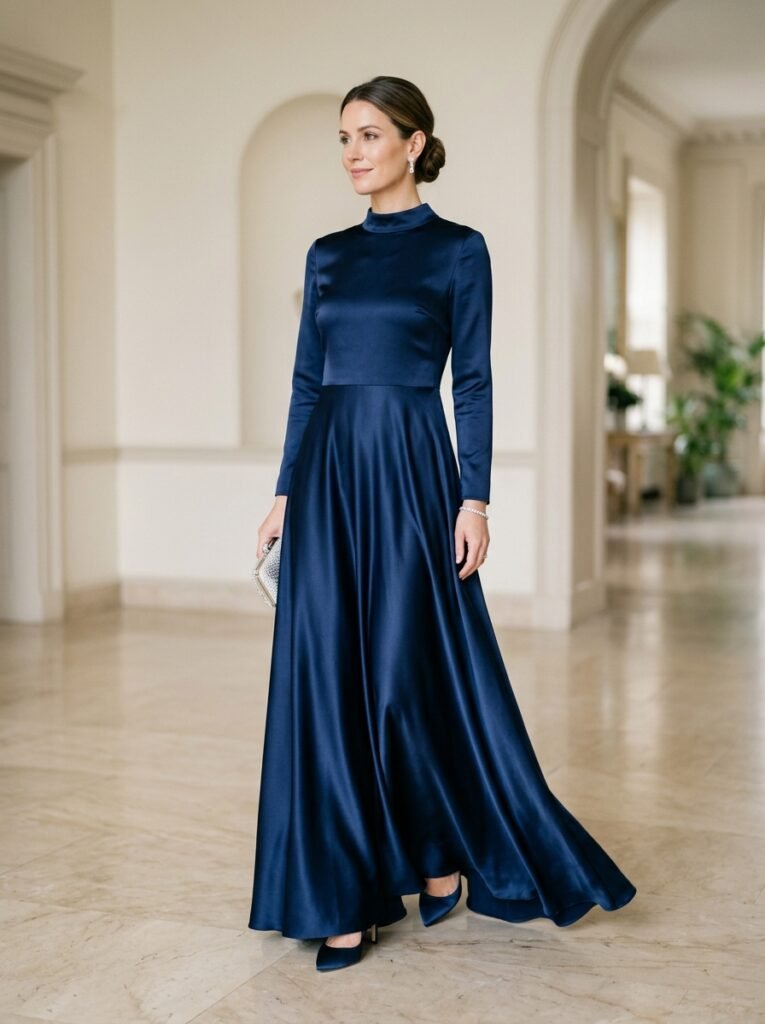
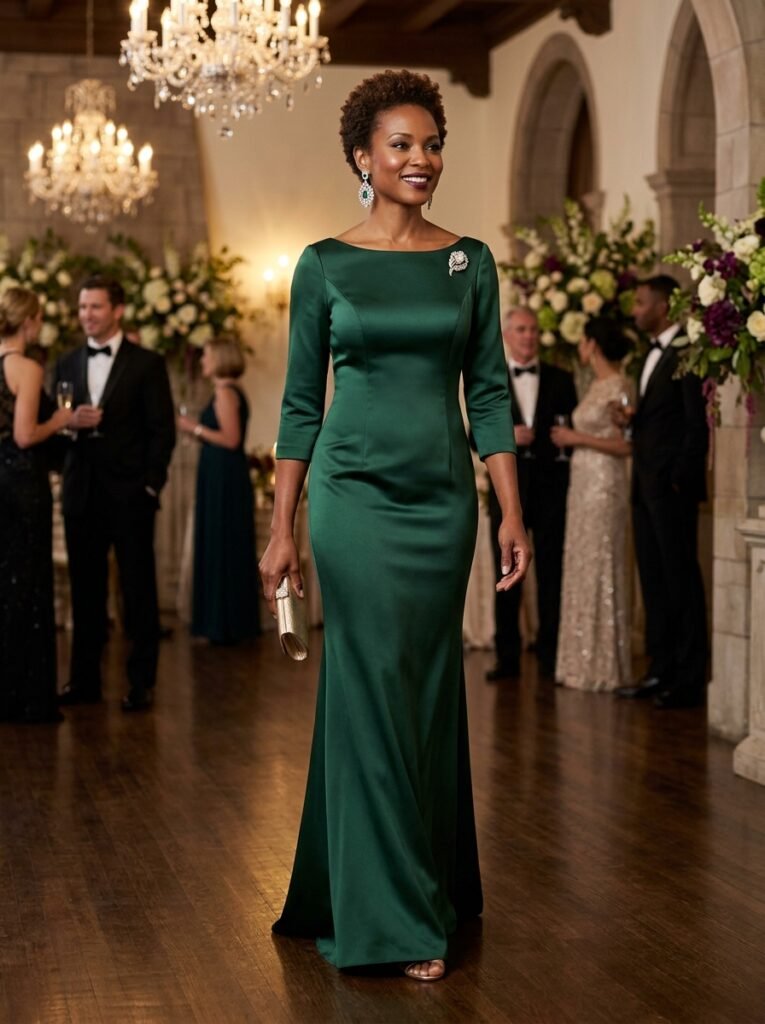
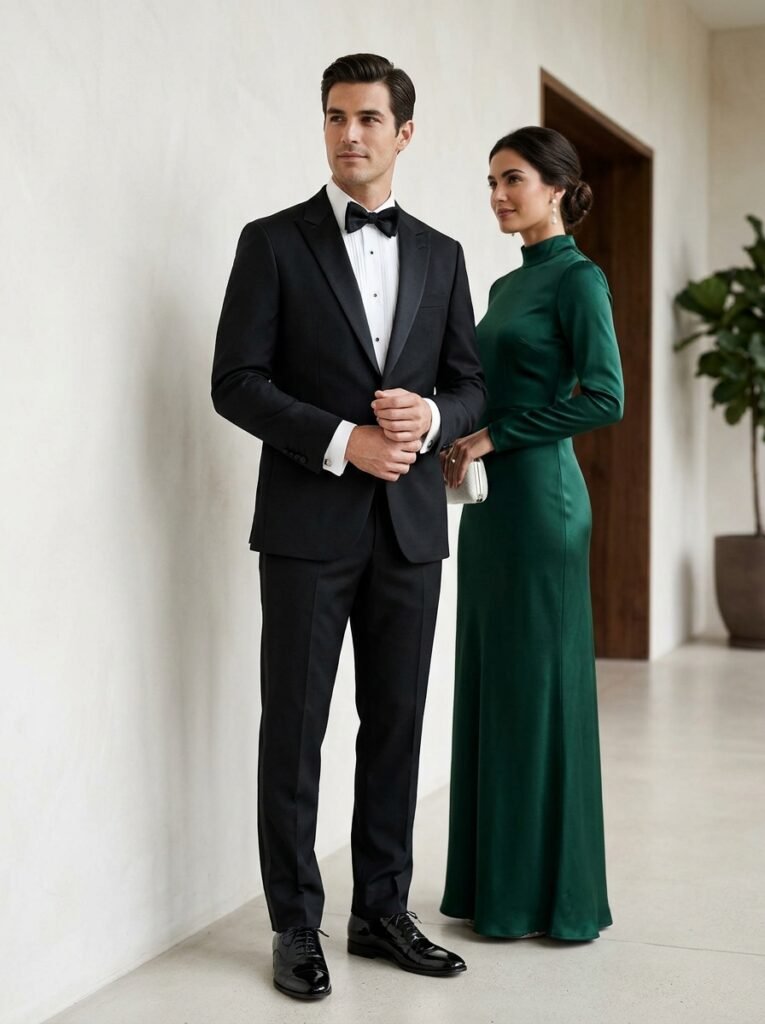
A floor-length gown is the traditional and safest choice for true black tie. It doesn’t need heavy embellishment, but it should feel formal rather than casual. A clean silhouette in a rich fabric like satin, silk, or crepe reads as elegant without trying too hard.
A high-quality midi or tea-length dress in a formal fabric can work too, especially for black tie optional events. The fabric and cut need to feel elevated rather than casual, since a midi dress in cotton or jersey tends to read as too relaxed for the setting.
Colors and Fabrics
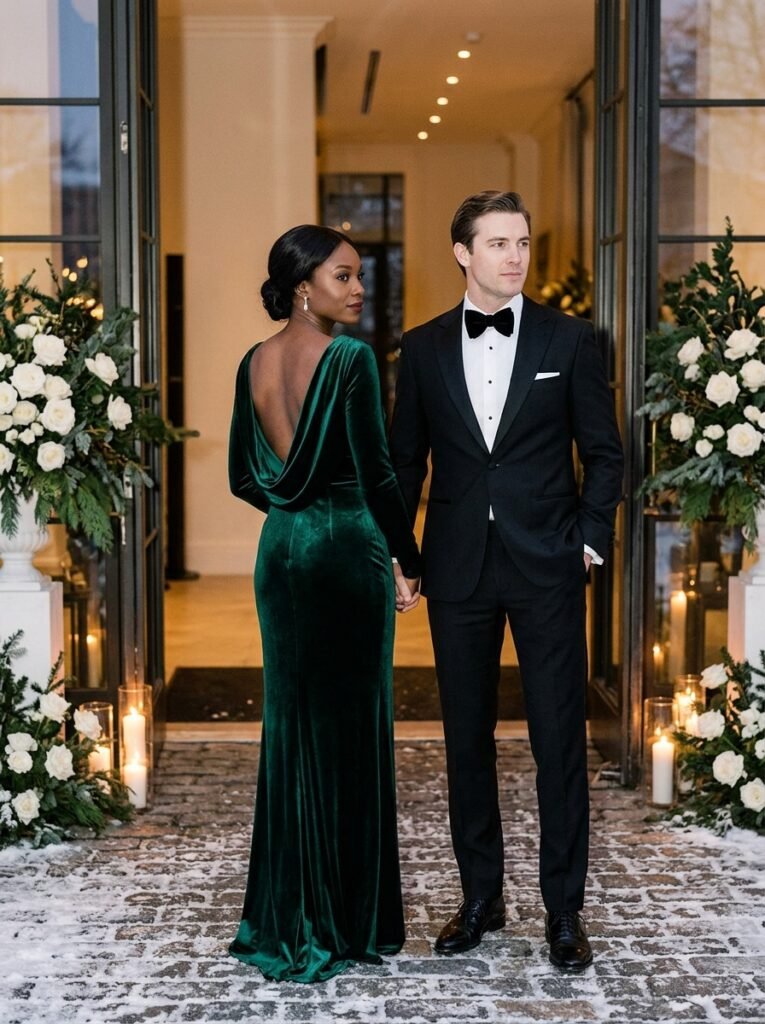
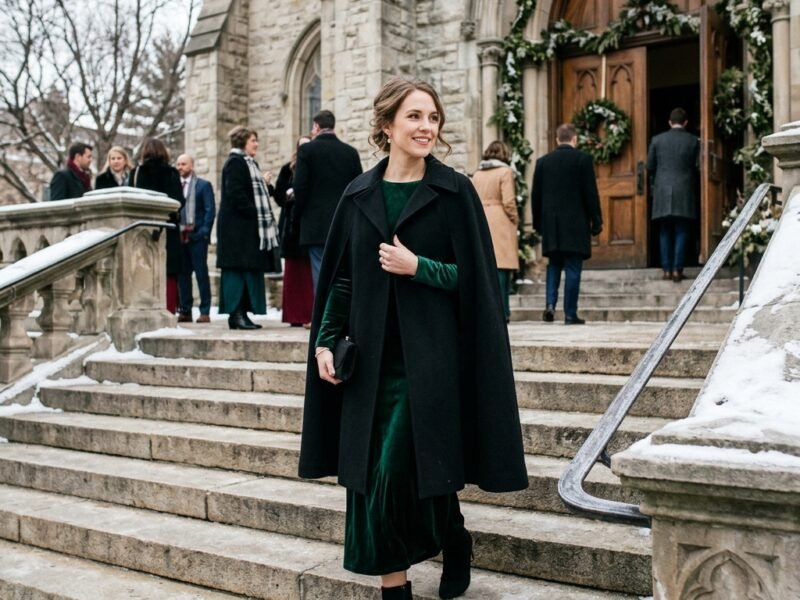
Black remains a safe and elegant choice for black tie events, but it’s far from the only option. Deep jewel tones like emerald, sapphire, burgundy, and navy look stunning in evening lighting and photograph beautifully. Soft metallics, like champagne or soft gold, work well for a slightly softer formal look.
As a wedding guest, pure white, ivory, or anything that could be mistaken for a bridal look is worth avoiding, even at the most formal events. Very bright, neon colors also tend to feel out of place beside the deep, rich tones that dominate most black tie wardrobes.
Shoes, Jewelry, and Accessories
Heels are the traditional choice for black tie, whether a classic pump, a strappy sandal, or something with a bit of shimmer. A low block heel in a formal fabric like satin can still look polished while staying easier to dance in.
Jewelry is a good place to lean into a little sparkle. Statement earrings, a delicate necklace, or a stack of fine bracelets all work well. A small clutch remains the go-to bag choice, since anything too large or casual tends to clash with the rest of the outfit’s formality.
Outerwear and Wraps
A formal wrap, a structured shawl, or a tailored evening coat solves the practical problem of a chilly car ride or an outdoor cocktail hour without breaking the formality of the rest of the outfit. A faux fur stole, a silk pashmina, or a fitted velvet jacket in a coordinating tone all work, while a casual denim jacket or a puffer coat, however warm, reads as noticeably out of place layered over a formal gown.
What Men Should Wear to a Black-Tie Wedding
For men, black tie follows a clearer, more traditional formula, though there’s still room to make it feel personal.
The Traditional Tuxedo
A classic black tuxedo with a satin lapel, a white dress shirt, and a black bow tie is the standard for black tie weddings. Midnight navy is a widely accepted alternative to black and can look especially striking in evening light.
The jacket should fit cleanly through the shoulders without pulling or bunching, and trousers are typically finished with a satin stripe down the side seam. A cummerbund or a formal vest adds a traditional finishing touch, though a well-tailored tux can look sharp without one too.
When a Dark Suit Can Work
If the invitation specifies “black tie optional,” a very dark, well-tailored suit in black, charcoal, or midnight navy, paired with a crisp white shirt and a formal tie, can substitute for a full tuxedo. Lighter suit colors like tan or light gray, or anything with a visible pattern, read as too casual for the setting.
For true black tie without the word “optional,” a proper tuxedo works better than dressing up a regular suit, since the difference is usually noticeable both in photos and in person.
Shoes and Finishing Touches
Polished black leather dress shoes or patent leather formal shoes are the standard pairing for a tuxedo. Simple, dark dress socks and a classic wristwatch round out the look without adding unnecessary bulk.
A pocket square in white or a subtle complementary tone is a small, easy way to add personality without breaking from the dress code’s formality.
Seasonal Considerations for Black-Tie Wedding Attire
The season and venue of the wedding can shape some of the smaller details, even within a strict dress code. Readers dressing for a warm-weather ceremony specifically may also want the fabric-by-venue breakdown in the summer wedding guest guide.
For warm-weather black tie weddings, lightweight wool or tropical-weight tuxedo fabrics keep men comfortable without sacrificing formality. Women might lean toward breathable fabrics like silk or chiffon rather than heavier satin, especially for outdoor summer ceremonies.
For colder or winter weddings, richer fabrics like velvet accents, heavier satin, or deeper jewel tones tend to feel especially fitting. A formal wrap or shawl in a coordinating color adds warmth for women without disrupting the outfit’s overall elegance.
Outdoor black tie weddings, increasingly common, sometimes call for slightly more practical footwear, like a block heel instead of a thin stiletto, especially if the ceremony takes place on grass or uneven ground.
What to Avoid Wearing to a Black-Tie Wedding
A few choices tend to clash with the formality black tie calls for, even when they seem reasonable at first glance.
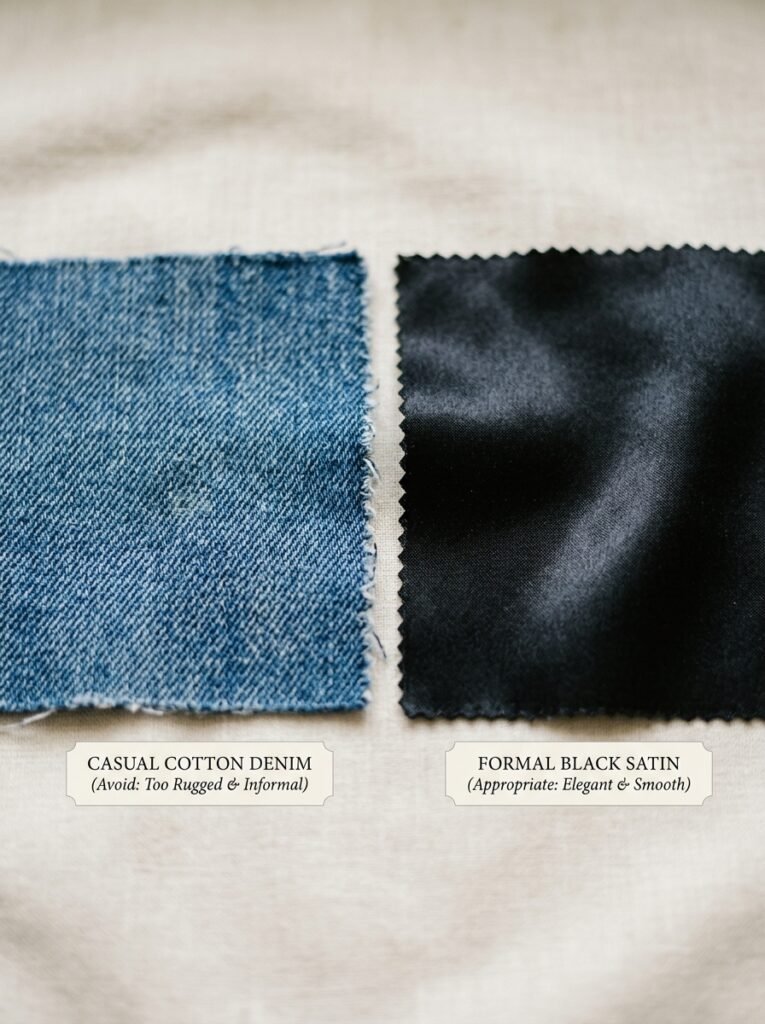
Casual fabrics like cotton, denim, or jersey generally don’t belong at a black tie event, regardless of how well they’re styled. Black tie’s formality comes largely from fabric choice, so sticking to satin, silk, velvet, or fine wool makes a noticeable difference.
Short cocktail dresses, unless the invitation specifically says “black tie optional,” tend to read as underdressed for a true black tie event. When in doubt, longer is generally the safer choice.
Novelty ties, overly casual accessories, or sneakers of any kind, even dressy ones, don’t fit within the black tie dress code for men. Even at more relaxed weddings, this particular dress code calls for a traditional approach.
Bright white or ivory outfits are worth avoiding as a guest, since they can visually compete with the bride, even unintentionally.
Common Mistakes Guests Make With Black Tie Dress Codes
Even well-intentioned guests sometimes get a few details wrong when dressing for a black tie wedding.
Confusing “black tie” with “formal” or “cocktail attire” is one of the most common mix-ups. These dress codes look similar on paper but call for noticeably different levels of formality, so double-checking the invitation wording carefully is worth the extra minute.
Renting a poorly fitted tuxedo is another frequent issue. An ill-fitting jacket, or trousers that run too long or too short, can make even a proper tuxedo look sloppy, so getting measurements checked closely matters, especially with rental options.
Underestimating how formal the dress code truly is tends to be a common misstep too. Black tie sits at the higher end of formality, so a nice work outfit or a standard cocktail dress usually won’t feel quite right in the room.
Overlooking small details, like scuffed shoes, mismatched belt and shoe colors, or wrinkled shirts, can also take away from an otherwise well-chosen outfit. These finishing touches matter more at formal events than casual ones.
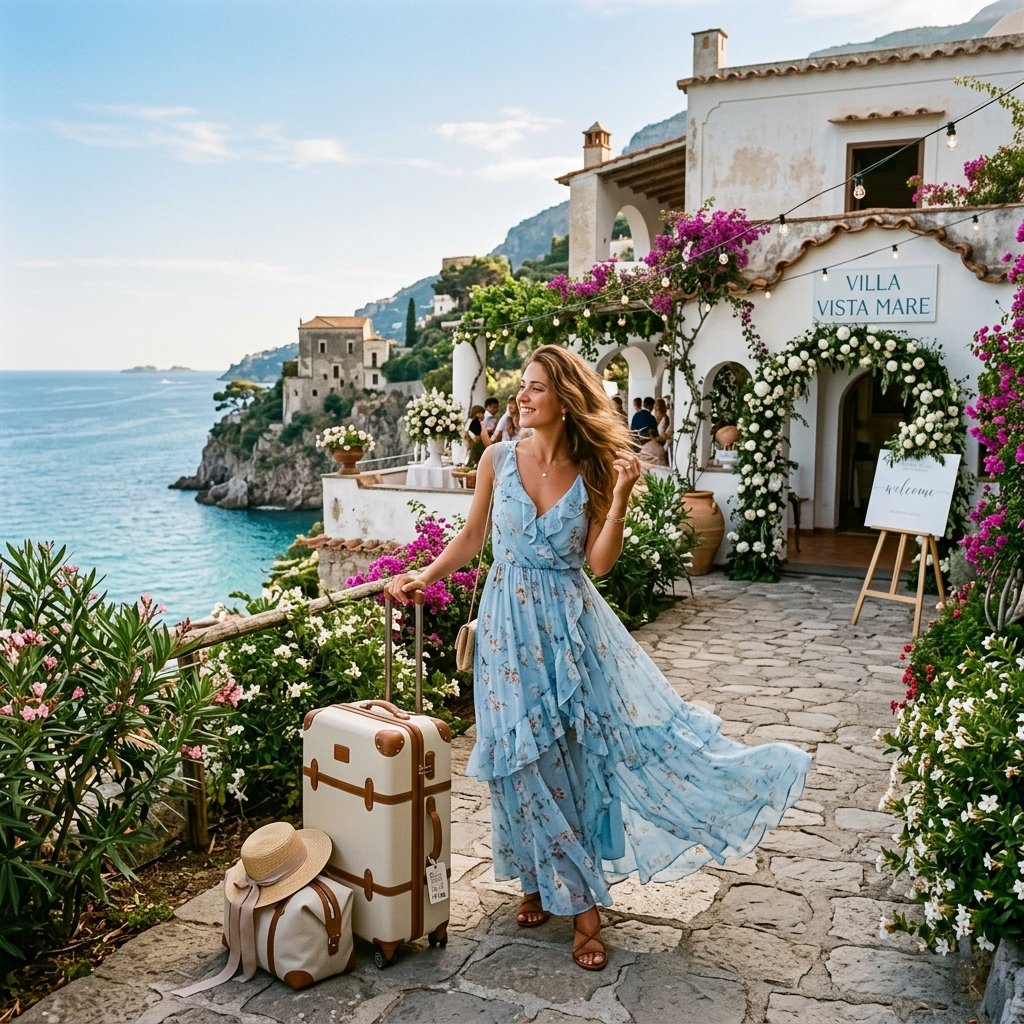
Packing for a destination or travel-heavy black tie wedding introduces its own set of small errors. A gown or tuxedo jacket stuffed into a checked bag often arrives creased in ways a steamer can’t fully undo, so carrying formalwear on as a garment bag, even when it means less overhead space for everything else, tends to save the outfit from an unplanned wrinkle emergency the morning of the event.
Expert Tips for Getting Black Tie Right
A few extra details help an outfit feel fully put together rather than just technically correct.
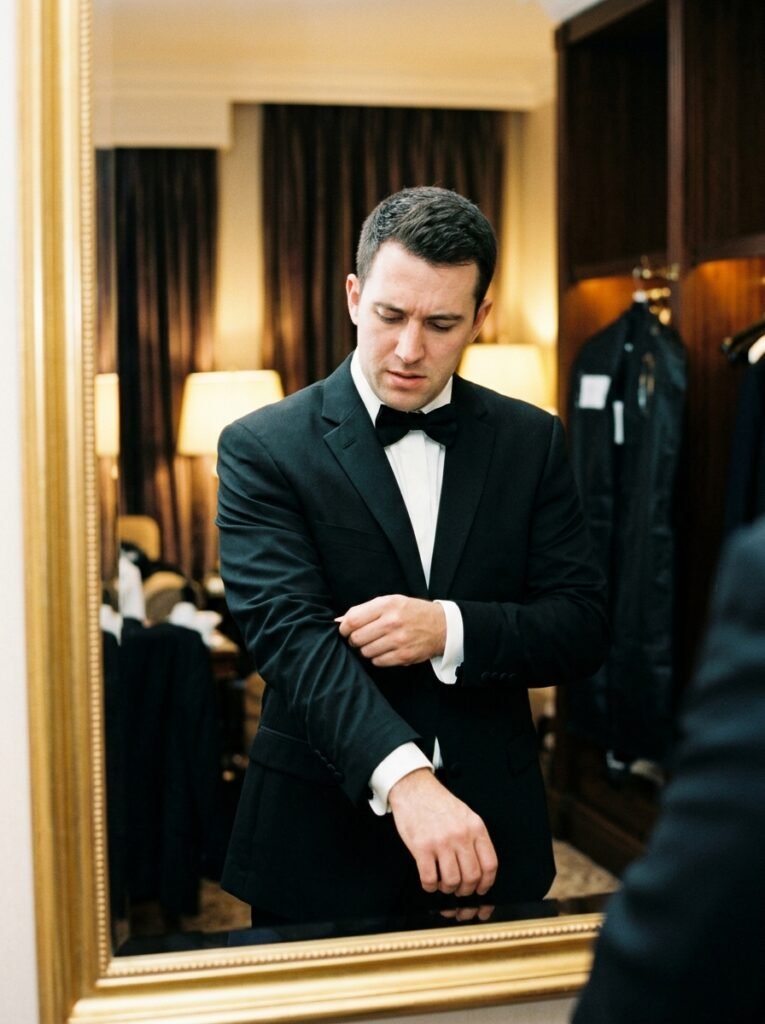
Tailoring, even for a rental tuxedo or a dress bought off the rack, makes a noticeable difference in how polished the final look feels. A properly fitted outfit almost always looks more expensive and intentional than an ill-fitting one, regardless of the actual price tag.
Reaching out to the couple or checking the wedding website is a completely reasonable step when the dress code feels unclear. Most couples are happy to clarify, and asking beats guessing incorrectly.
Choosing quality fabrics over trendy details tends to age better in photos too. A classic, well-made outfit in a rich fabric still looks elegant years down the line, while overly trendy pieces can feel dated sooner.
Comfort matters just as much as formality. Black tie weddings often involve hours of standing, dancing, and mingling, so shoes and fabrics that move comfortably make the whole night more enjoyable. Guests still weighing the ceremony’s overall timing and lighting against their outfit choice may find the day vs. night wedding outfit guide useful alongside this one.
Frequently Asked Questions
Is black tie the same as formal attire? Not exactly. Black tie is more formal than standard “formal” or “cocktail” dress codes and typically calls for a tuxedo and a floor-length gown rather than a suit or cocktail dress.
Can I wear a short dress to a black tie wedding? For true black tie, a floor-length gown is the safer and more traditional choice. A dressy midi or tea-length dress in a formal fabric can work if the invitation specifies “black tie optional.”
Do men have to wear a bow tie to a black tie wedding? Yes, a bow tie is the traditional choice for true black tie. A long tie is more commonly associated with business or semi-formal attire.
What colors are appropriate for a black tie wedding guest? Black, deep jewel tones like emerald and sapphire, and soft metallics all work well. White, ivory, and overly bright neon shades are best avoided.
Can I rent a tuxedo instead of buying one? Yes. Renting is a common and practical choice for black tie weddings, as long as the fit is properly tailored to individual measurements.
Does an outdoor black tie wedding change any of these rules? The core formality stays the same, but footwear and outerwear usually need small adjustments. A block heel handles grass or gravel more reliably than a thin stiletto, and a formal wrap covers the practical gap left by an evening ceremony without a full building around it.
Final Thoughts
Black tie weddings call for a little extra thought when it comes to outfit choice, but once the basics click, dressing for one becomes far less intimidating. Focusing on formal fabrics, appropriate lengths, and a polished fit builds confidence the moment a guest walks into the room.
Whether the choice is a classic tuxedo or a rich, floor-length gown, the goal stays simple: look elegant, stay comfortable, and celebrate the couple in a way that matches the formality and joy of their evening.

[…] over to the photographer entirely. For couples still working out other pre-wedding style decisions, this guide to black-tie wedding dress codes covers the same formality logic in more detail for guests and hosts […]
[…] Black tie and black tie optional sit at the most formal end and deserve their own careful reading — the distinction matters enough to warrant a dedicated breakdown, covered step by step in What to Wear to a Black-Tie Wedding: A Complete Guest Guide. […]