
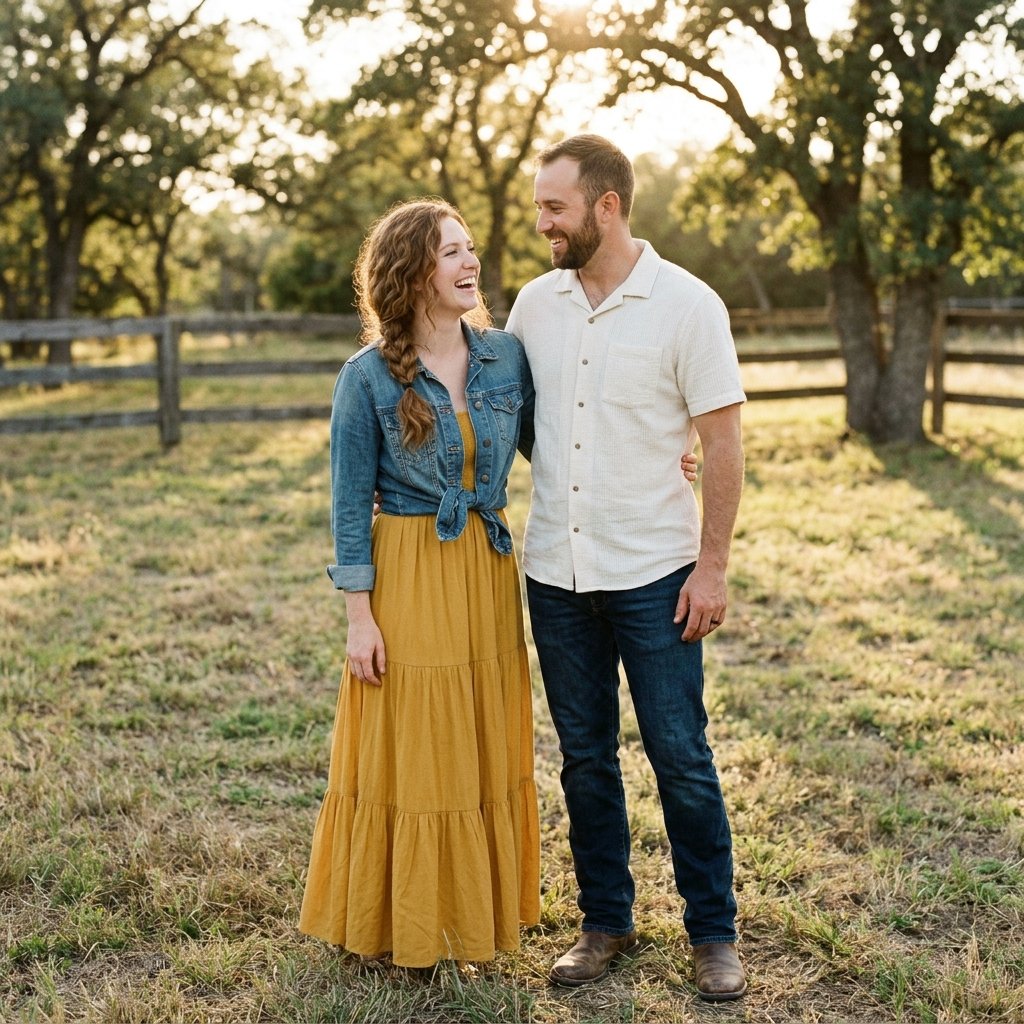
An engagement ring arrives, a photographer gets booked, and a fresh wardrobe panic sets in almost immediately. What does a couple actually wear for photos destined to sit on save-the-dates, hang on a living room wall, and greet visitors from a grandmother’s mantel for decades?
The problem has a clear solution, and working through it can be genuinely enjoyable once the rules are known. Great engagement photoshoot outfits are rarely about the price tag. They come down to understanding what a camera rewards, what it punishes, and how two people can look connected without dressing identically.
This guide breaks down every part of that decision: the colors that read well on camera, outfit formulas that rarely miss, ways couples can coordinate without matching, the small details photographers always notice, and the mistakes that quietly undermine an otherwise gorgeous session.
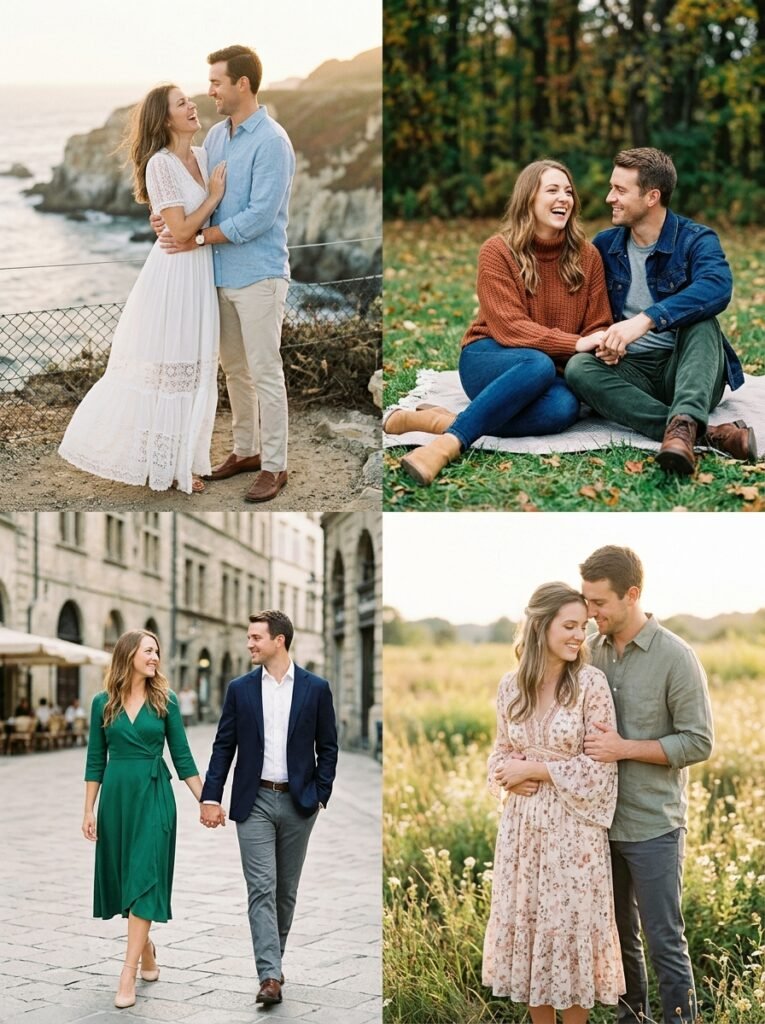
Why Outfits Make or Break Engagement Photos
Photographers understand something most couples never consider: a camera does not see clothing the way a mirror does.
Human eyes adjust constantly. They forgive a wrinkle, overlook a busy print, and soften a harsh color without effort. A lens does none of that. It freezes every detail and amplifies contrast until small flaws become permanent features. A bold pattern turns into the loudest object in the frame. Unironed linen reads as rumpled fabric. A neon top can even cast an unflattering glow onto a subject’s chin and neck.
The reverse holds equal power. Fabric that moves photographs with a kind of poetry a static outfit cannot match. Colors that echo the surrounding location make an image feel intentional rather than accidental. Clothing that actually fits keeps a couple looking polished across every angle, not just one lucky frame.
An outfit, in other words, is not an afterthought to the photos. It functions as half the photograph itself, which makes choosing it deliberately one of the highest-impact decisions in the entire planning process.
Start with the Location and the Season
Before anyone falls in love with a specific outfit, the setting and the time of year deserve consideration first, since location quietly dictates the dress code.
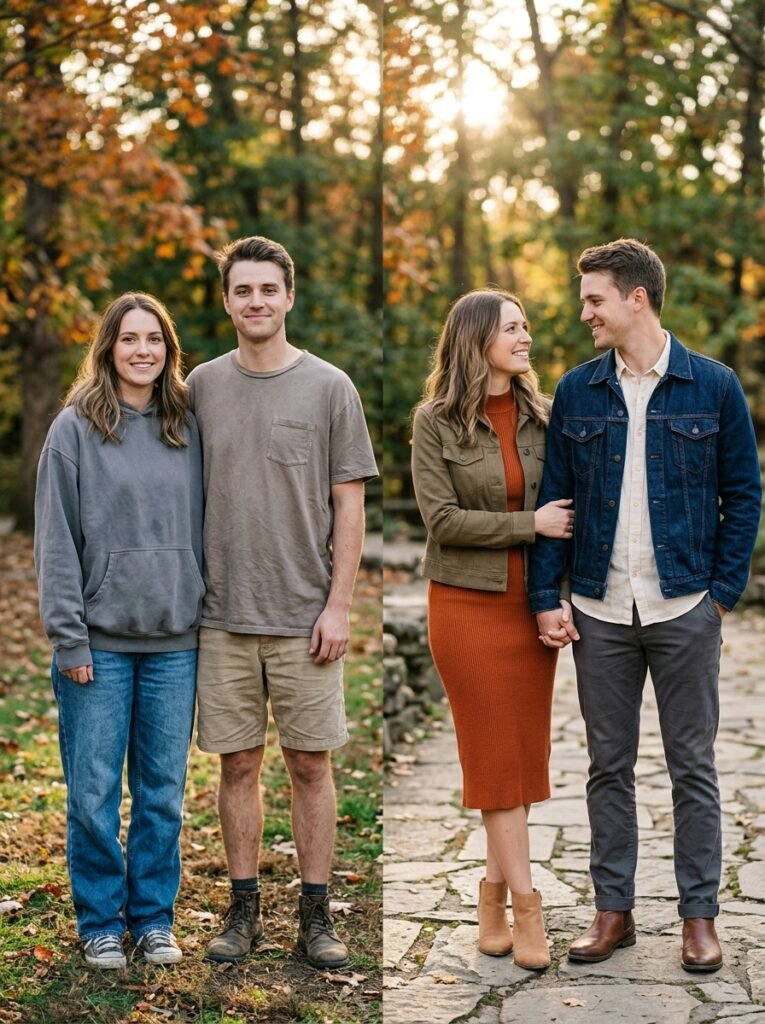
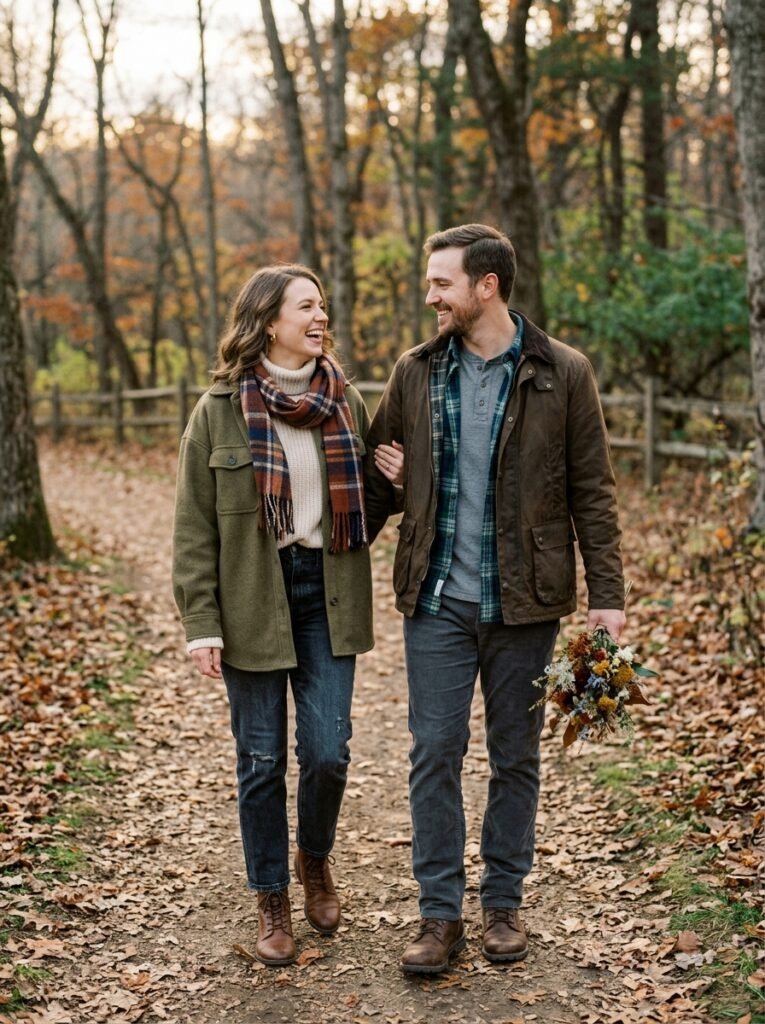
A beach or lakeside session calls for light, breezy fabrics, muted colors, and simple sandals or bare feet, with formality kept low throughout. A field, orchard, or golden-hour meadow suits flowing maxi dresses in earthy tones that catch both wind and light. An urban downtown shoot can carry far more polish, favoring tailored pieces, deeper colors, and dressier shoes against concrete and glass backdrops. A relaxed at-home session welcomes soft knits, denim, and bare feet on a sofa. Winter shoots reward anyone who loves texture, since long coats, turtlenecks, and rich-toned scarves stand out beautifully against a bare landscape.
Season shapes the palette as well. Spring favors soft pastels and creams. Summer suits airy neutrals and warm whites. Autumn was practically built for rust, mustard, and olive tones. Winter leans toward burgundy, forest green, and camel.
Matching formality and palette to the setting makes the outfits feel native to the photos rather than imported into them.
The Colors That Photograph Beautifully and the Ones That Fight Back
Color choices tend to make or break an outfit decision more than any other factor, so an honest breakdown helps.
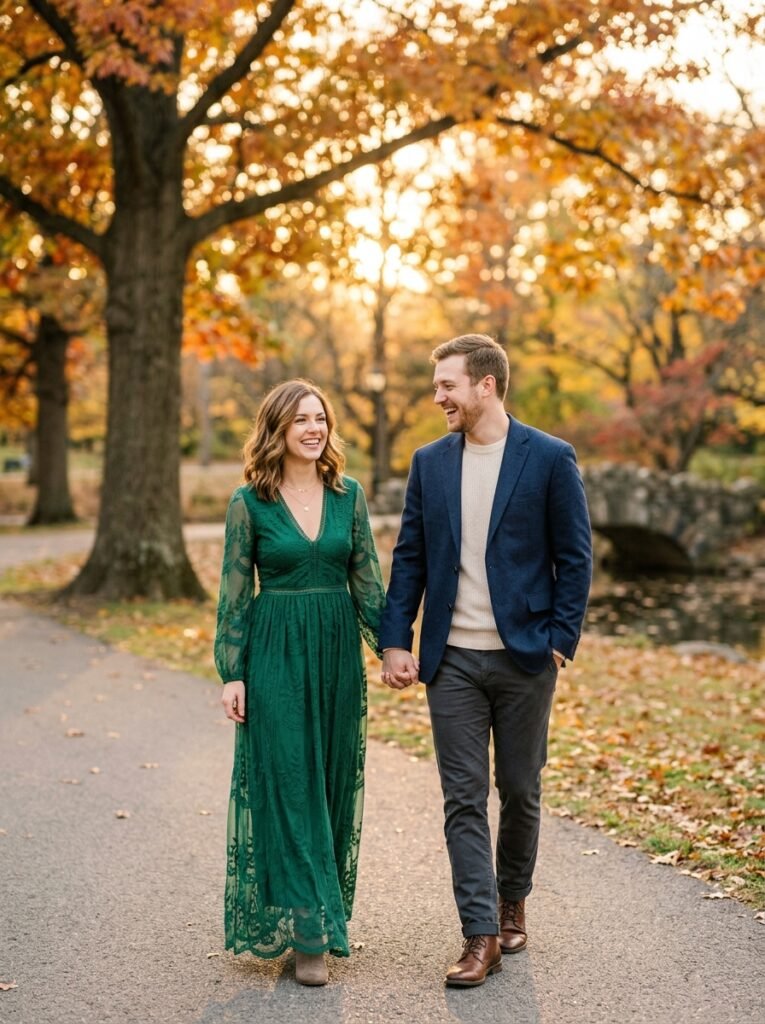
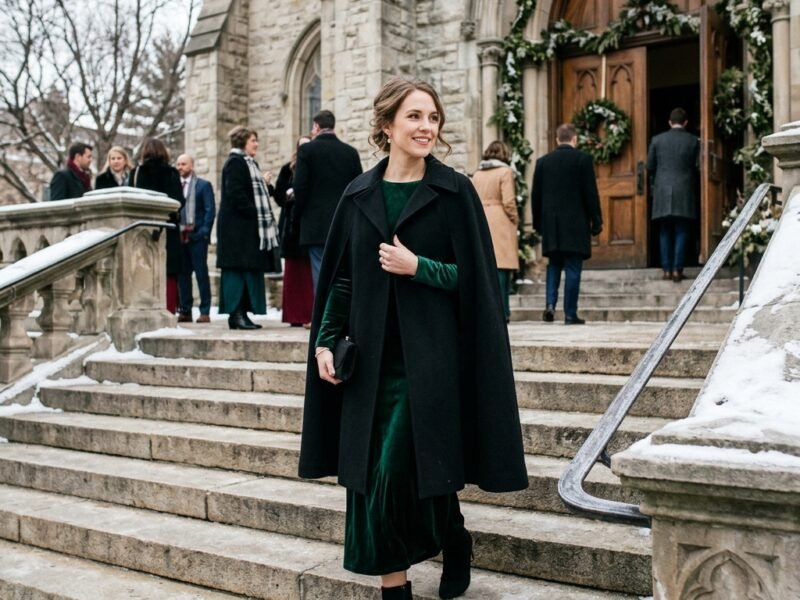
Muted, earthy, and dusty tones remain the most dependable heroes. Cream, camel, sage, terracotta, dusty blue, mauve, and soft olive photograph beautifully because they flatter most skin tones, harmonize with outdoor settings, and let faces stay the brightest element in a frame. Couples chasing more drama can lean into jewel tones instead. Emerald, burgundy, and deep navy read as rich and romantic, particularly in autumn light or against city architecture.
Certain choices consistently cause trouble. Neon and ultra-bright shades bounce unwanted color onto skin and pull attention away from faces. Large logos and graphics turn a romantic portrait into something closer to an advertisement. Tight, small-scale patterns, including thin stripes and micro checks, can shimmer strangely on camera, an optical effect editing rarely corrects.
Two special cases deserve a note. All-white outfits can look stunning but risk losing detail in bright sunlight, so cream or ivory tends to work better, leaving pure white to the eventual wedding gown. All-black outfits work well for formal city shoots, though the color can feel heavy in a sunny meadow.
When uncertainty strikes, muted and moody almost always outperforms bright and busy.
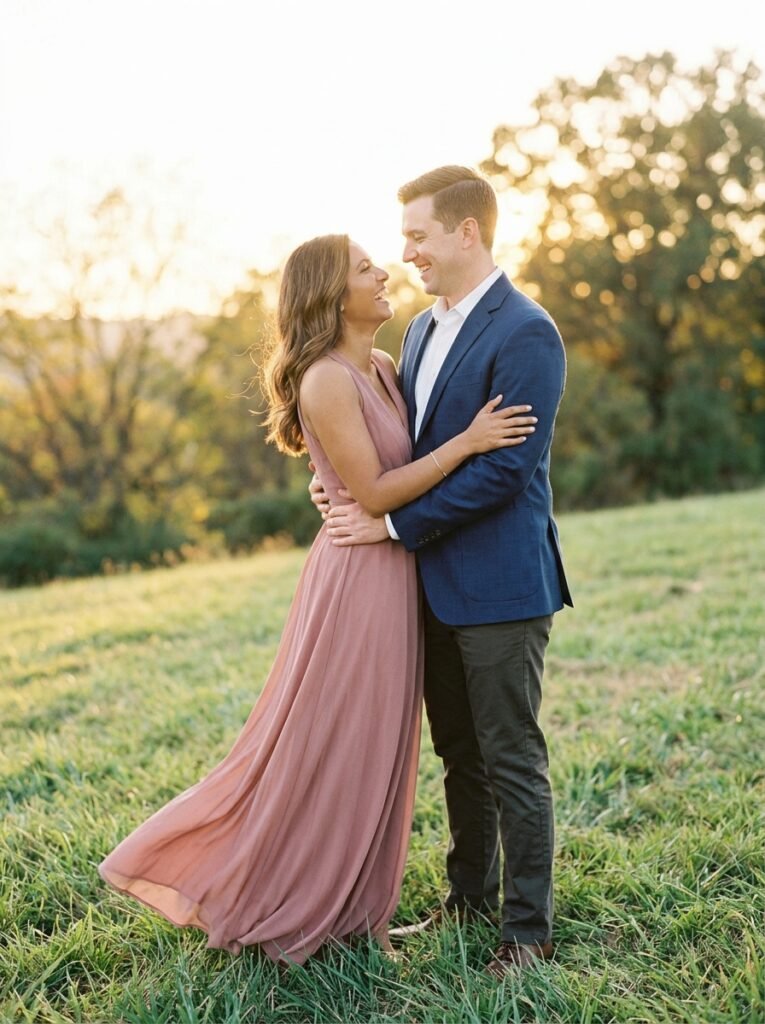
Outfit Formulas That Always Work
Hiring a personal stylist is not required. Four proven formulas cover nearly every location, season, and comfort level, and photographers reach for each one repeatedly.

The Flowy Maxi or Midi Dress
If engagement photos had an official uniform, this dress would be it. A long dress in a soft fabric like chiffon, crepe, or lightweight satin gives the camera continuous movement, catching wind, swirling during walking shots, and draping beautifully during an embrace. A muted solid or a soft, large-scale floral works well, and a leg slit or fluttery sleeves add extra motion. Nearly every photographer, asked for a single suggestion, offers some version of this dress.
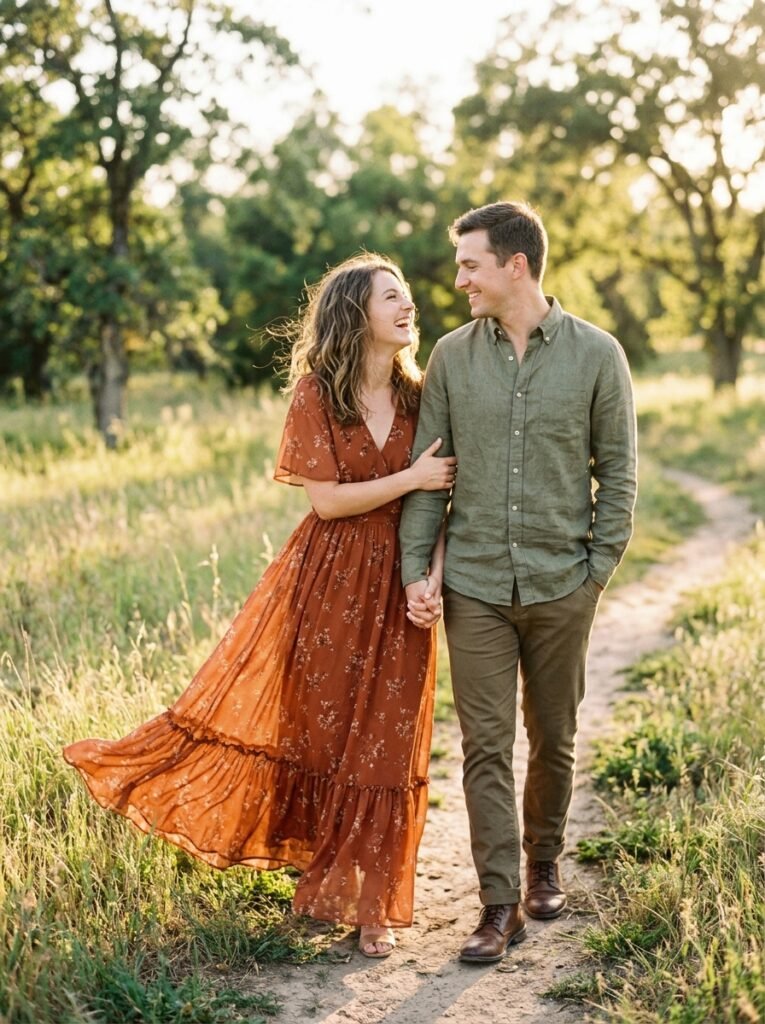
The Elevated Casual Look
Couples who want to look like themselves, only slightly polished, tend to gravitate here. Well-fitted jeans paired with a silk blouse, a fitted bodysuit under a flowing skirt, or tailored trousers with a soft knit all read as effortless on camera. The elevation lives entirely in the details: properly fitted clothing, fabric with subtle texture or sheen, and one refined element like elevated shoes or gold jewelry. This formula suits coffee-shop sessions, city strolls, and any couple who finds formal wear too costume-like.
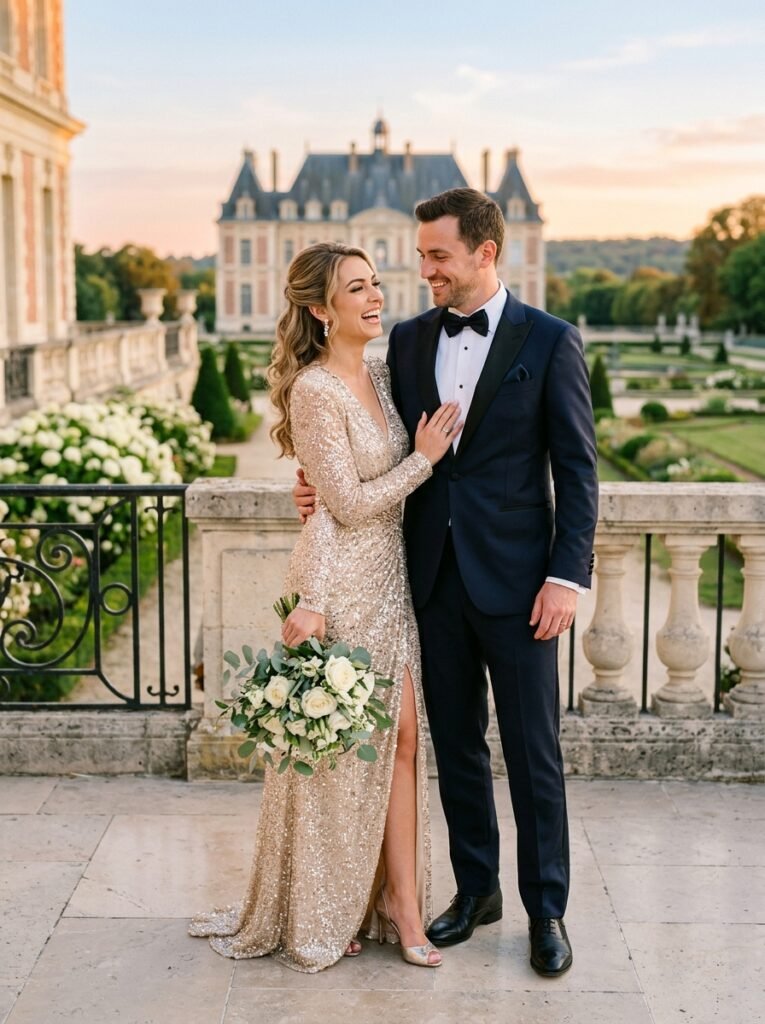
The Formal Glam Option
Sessions that include an evening city location, a dramatic overlook, or simply a wish for one set of magazine-worthy photos benefit from going formal for part of the shoot. A floor-length gown in a jewel tone paired with a partner in a well-fitted suit instantly creates occasion. Satin and structured crepe photograph luxuriously in low light, and rooftop or streetlight settings reward the drama. Photographers often save this look for the second half of a session, once both people are relaxed and warmed up.
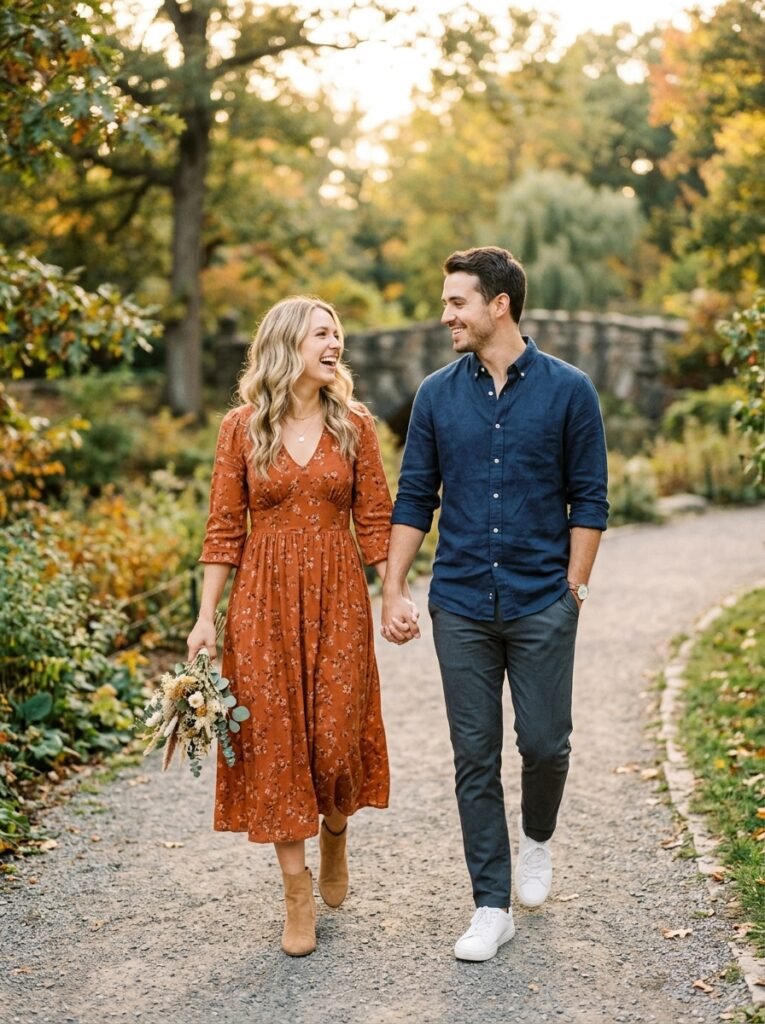
The Cozy Layered Look for Cooler Months
Autumn and winter sessions thrive on texture. A chunky knit sweater paired with a long coat, a turtleneck under a wool wrap, suede boots, and a genuinely huggable scarf all bring a warmth that summer outfits cannot replicate. Layers also give a photographer plenty of material to work with, from coats billowing mid-walk to hands tucked into shared pockets and scarves passed between partners. A palette of rust, cream, camel, and forest green turns cold weather into an advantage rather than an obstacle.
How to Coordinate as a Couple Without Matching
The goal is looking like a couple rather than a uniform, and a simple system makes that easy to achieve.
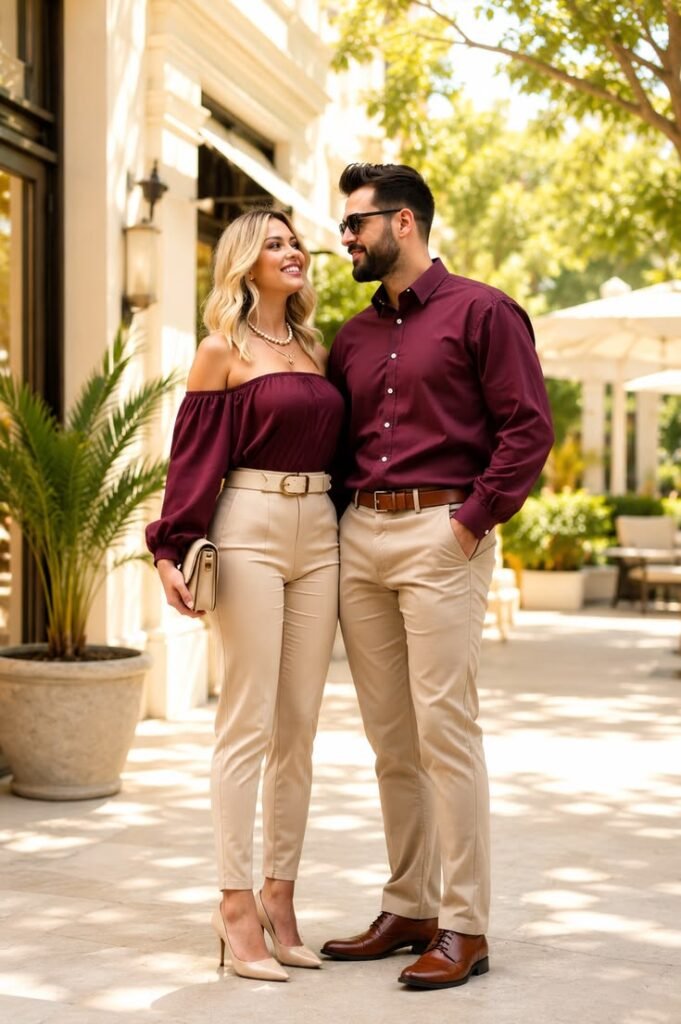
Choosing the anchor outfit first, usually the dress, sets the tone, since it carries the most visual weight. The partner’s look should then draw from colors within the same palette rather than matching the exact shade. A sage dress pairs naturally with cream, tan, or soft gray, not with more sage. Complementary tones photograph better than identical ones nearly every time.
The one-pattern rule helps too. When one partner wears a print, the other should stick to solids, which keeps the frame from feeling busy.
Formality levels need to match exactly. A gown paired with sneakers and a t-shirt reads as two separate events, so an elevated dress calls for an equally elevated partner outfit. Couples weighing exactly how formal to go for a given venue can borrow cues from this breakdown of day versus night wedding dress codes, since the same logic applies to matching formality levels within a single outfit.
The partner’s outfit deserves real attention, because fit matters just as much on camera. Well-fitted chinos or trousers, a shirt or knit that skims rather than bags, and sleeves that end at the right point all show. A blazer remains the easiest instant upgrade in menswear, and a quick tailoring visit costs little while showing up in every single photo.
Laying both outfits on a bed together before the shoot offers a useful test. If the pairing would look right at a nice dinner, it will look right in the photos too.
The Details the Camera Always Catches
Photos are unforgiving toward small oversights, so a pre-session checklist pays off.
Booking a manicure matters, since engagement shoots always include ring close-ups. Hands become the most photographed part of the body for the day, and a neutral or soft polish keeps the ring itself as the star.
Steaming every garment the night before prevents trouble, because wrinkles the eye forgives stay crisp and visible on camera. Linen tends to be the worst offender.
Shoes deserve a check too. Full-length shots capture them, so scuffed sneakers and dusty heels end up preserved forever. Packing flats for walking between locations, then switching for the frames that matter, solves the problem.
Underlayers matter more than most couples expect. Visible lines, straps, or digging fabric will show clearly, so seamless pieces and a proper fitting earn their keep.
Jewelry works best kept minimal and meaningful. Since the ring is the headline, earrings and a delicate necklace should support the look rather than compete with it.
Emptying pockets beforehand avoids an easy mistake. Phones, keys, and wallets create visible bulges in standing shots, so handing them to the photographer’s bag before the first frame keeps lines clean.
Practical Tips for Outfit Changes and the Day Itself
A little logistics keeps the entire day smooth and the resulting photos relaxed.
- Plan on one to two outfits for a standard session, typically one relaxed look and one elevated look, and confirm the count with the photographer ahead of time.
- Run a full dress rehearsal about a week early. Sitting, walking, twirling, and hugging in each outfit reveals problems standing still never would.
- Take phone photos of each outfit in natural light beforehand. A camera reveals things a mirror simply cannot.
- Send the photographer pictures of both outfits in advance so backdrops can be planned around the palette.
- Pack a small emergency kit with safety pins, blotting papers, a lint roller, touch-up lipstick, and flat shoes.
- Check the forecast twice and have a wind plan ready, since wind becomes either a flowy dress’s best prop or its worst enemy.
Couples who prepare tend to relax faster, and relaxed couples consistently produce the best photos.
Common Outfit Mistakes That Show Up on Camera
Photographers see the same wardrobe missteps session after session.
Brand-new shoes top the list of offenders. Stiff, unworn shoes change how a person walks, and pained walking shows in nearly every candid frame. Breaking them in for a week beforehand solves the issue.
Dressing for the mirror instead of movement causes trouble too. An outfit that looks flawless standing still but restricts hugging, sitting, or twirling fights the photographer through the entire session.
Blending into the backdrop is a quieter mistake. A sage dress in a sage field, or cream against a white wall, tends to disappear, so asking the photographer what colors the location needs helps avoid it.
Over-accessorizing crowds the frame, and every extra statement piece pulls attention away from faces and the ring itself.
Last-minute shopping tends to produce outfits that have never been tested for movement, hemming, or steaming, which is exactly how surprises become permanent.
Ignoring the partner’s outfit until the final night is the classic misstep. Fit and formality on that side carry half of every photo, and a rushed, baggy shirt shows just as clearly as a rushed dress would.
What Photographers Wish Every Couple Knew
Ask several engagement photographers about outfits, and their advice tends to converge quickly.
Movement beats everything else. Fabric that flows gives a photographer wind shots, walking shots, and spin shots, which explains why the flowy dress recommendation never seems to fade.
Comfort shows on camera. An outfit that feels good relaxes a person’s face and posture, and that ease separates stiff photos from genuinely magic ones.
Coordinating with the location matters as much as coordinating with a partner. The backdrop functions as a third member of the palette, and most photographers are happy to advise once outfit photos are sent ahead of time.
Doing slightly more than everyday makeup and hair pays off, since cameras soften both. A professional blowout is often worth booking for the confidence boost alone.
Golden hour earns its reputation for good scientific reasons, not just tradition. As the sun drops low, its light passes through more atmosphere, which filters out cooler blue wavelengths and lets warm, flattering tones through, a phenomenon Adobe’s photography team explains in detail. That low, diffused light softens shadows and evens out skin tones without any editing required, which is exactly why photographers keep steering couples toward the hour before sunset.
Frequently Asked Questions
What should couples wear for engagement photos?
A flowing midi or maxi dress in a muted tone remains the most reliable choice, paired with a partner in complementary solids at a matching formality level. Fabrics that move, colors suited to the location, and an outfit that allows hugging and walking comfortably all matter more than price.
What colors look best in engagement photos?
Muted earthy tones such as cream, sage, terracotta, camel, and dusty blue photograph most reliably, while jewel tones like emerald and burgundy add richer drama. Neons, large logos, and tiny busy patterns tend to distract on camera and are worth avoiding.
How many outfits should a couple bring to an engagement shoot?
One to two outfits suits a standard one- to two-hour session, usually one relaxed casual look plus one elevated or formal option. Confirming the plan with the photographer in advance helps, since every change adds shooting time.
Should couples match their outfits exactly?
Coordinating rather than matching works best. Building both outfits from one shared color palette, keeping patterns limited to one person, and matching formality levels exactly all read as connection rather than costume.
What should a couple avoid wearing for engagement photos?
Neon colors, large logos, tiny tight patterns, brand-new unbroken shoes, and anything that restricts movement or reveals visible lines all tend to cause trouble. An outfit that only works standing perfectly still is usually worth leaving at home.
Final Thoughts
Engagement photos capture a season of life that never repeats, and the right outfits let those photos do their real job: showing two people happy and at ease, in clothes that flatter quietly instead of performing loudly.
Starting with the location, building a muted palette around it, choosing fabric that moves, coordinating rather than matching, and rehearsing everything a week early all set the stage. From there, the details can be handed over to the photographer entirely. For couples still working out other pre-wedding style decisions, this guide to black-tie wedding dress codes covers the same formality logic in more detail for guests and hosts alike.
Decades from now, nobody will remember where a dress came from or what it cost. They will see two people completely delighted with each other, dressed in a way that let that delight shine through. That is the entire assignment, and it is now a fully solvable one.

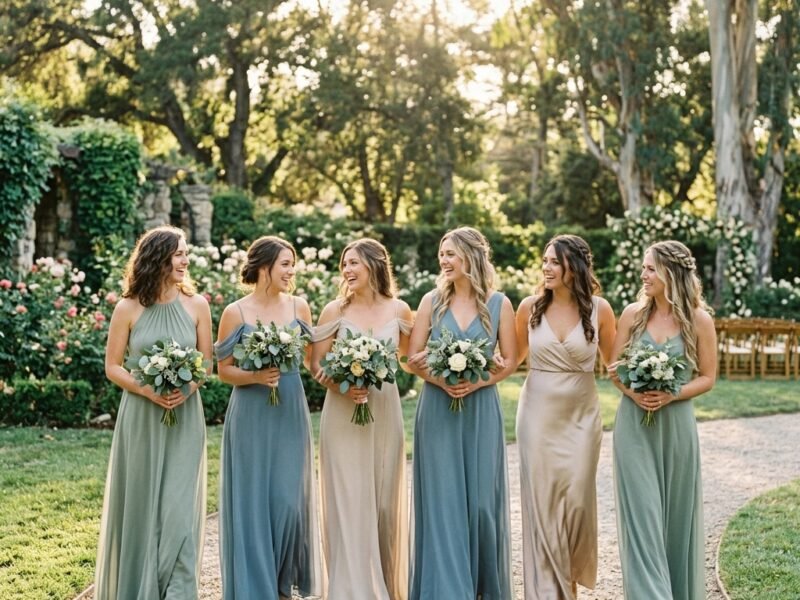
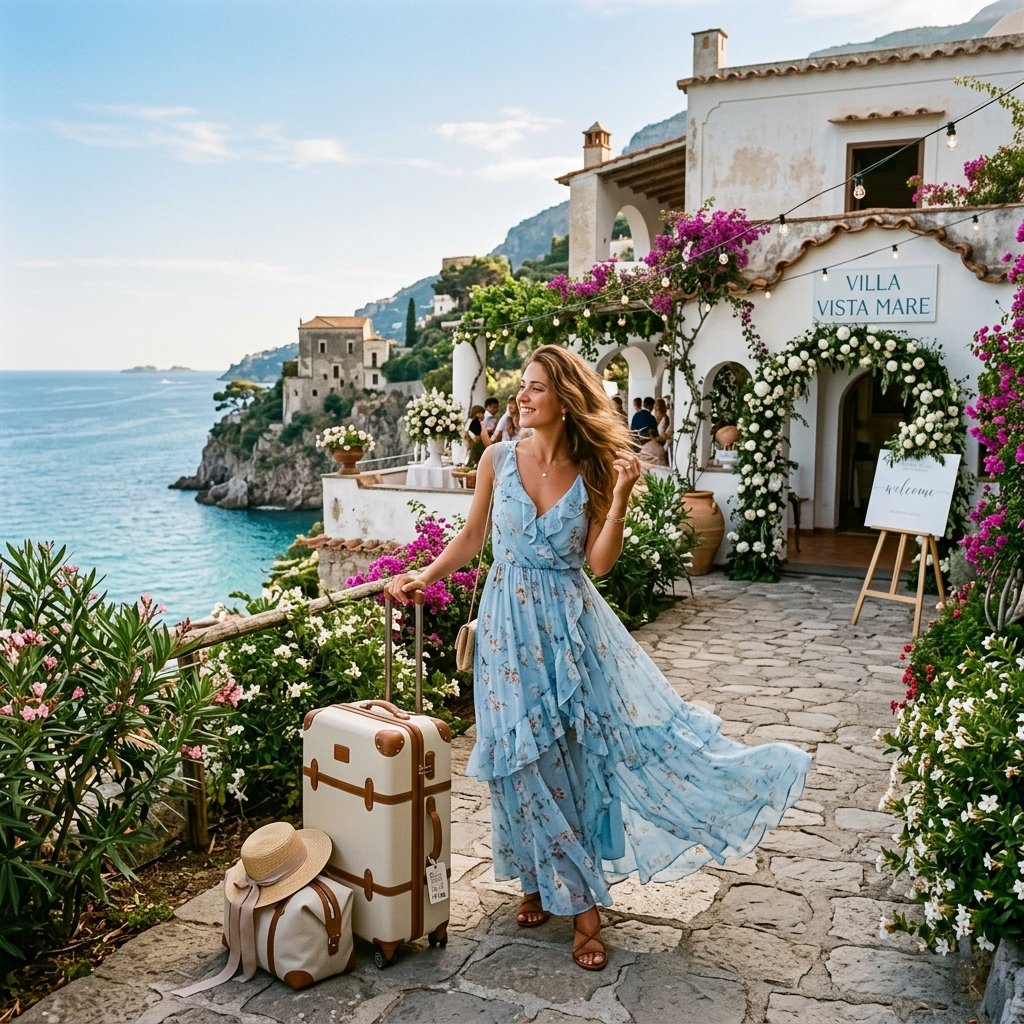
[…] and a few simple pieces fill a suitcase efficiently. For a wider view of dressing for pictures, the engagement photoshoot outfit guide covers color and fit considerations that apply well beyond one […]