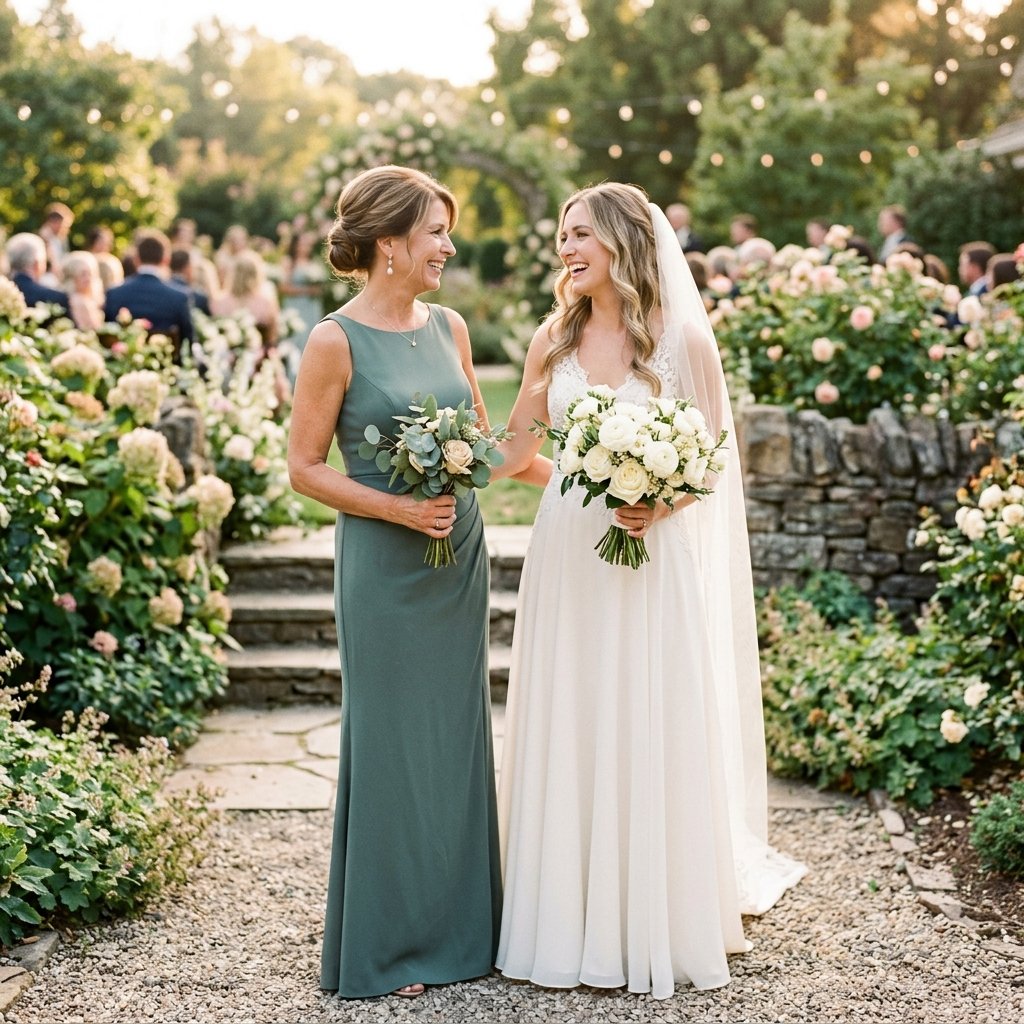
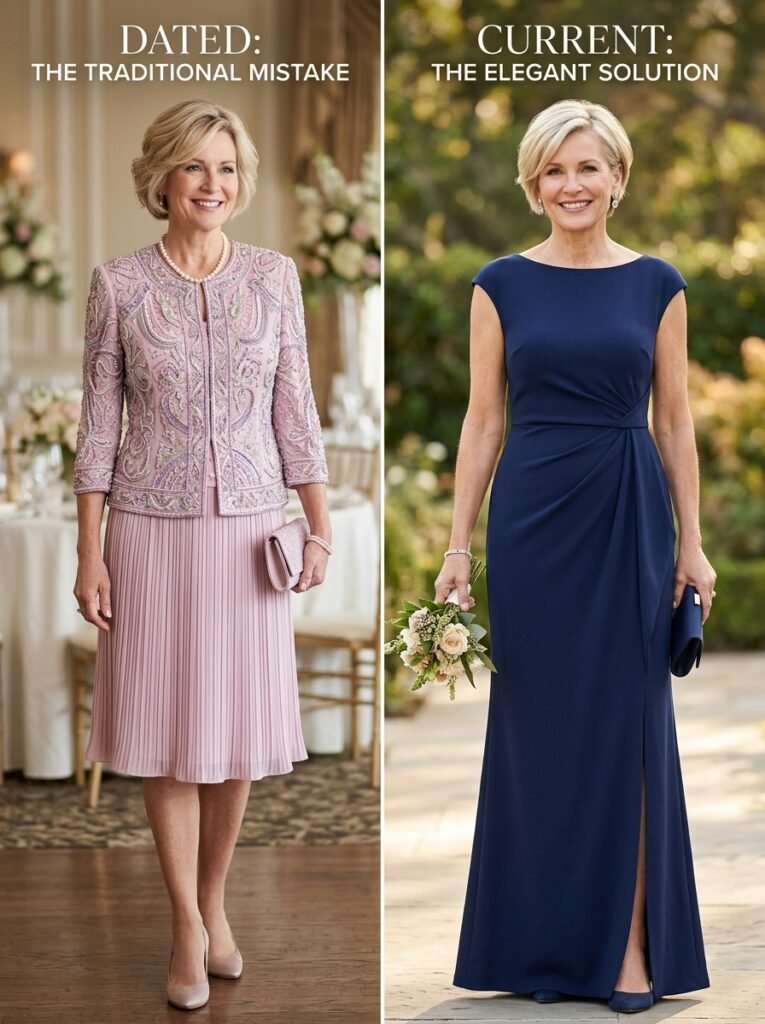
A particular kind of outfit has become synonymous with the mother of the bride, and anyone who has attended enough weddings recognizes it instantly. A heavily beaded jacket in pastel brocade. A matching skirt suit in champagne or mint with an elaborate lapel. An embellished two-piece that reads as formal but not current, dressed but not stylish. These outfits come from a corner of the formalwear market seemingly designed to signal a role rather than reflect a person.
The mothers of brides and grooms who look most elegant in wedding photographs rarely wear those outfits. Instead, they wear something that could belong to their actual wardrobe, elevated appropriately for the occasion. Something that lets them look like themselves on their best day, rather than costumed in a category of dress adopted specifically for the role.
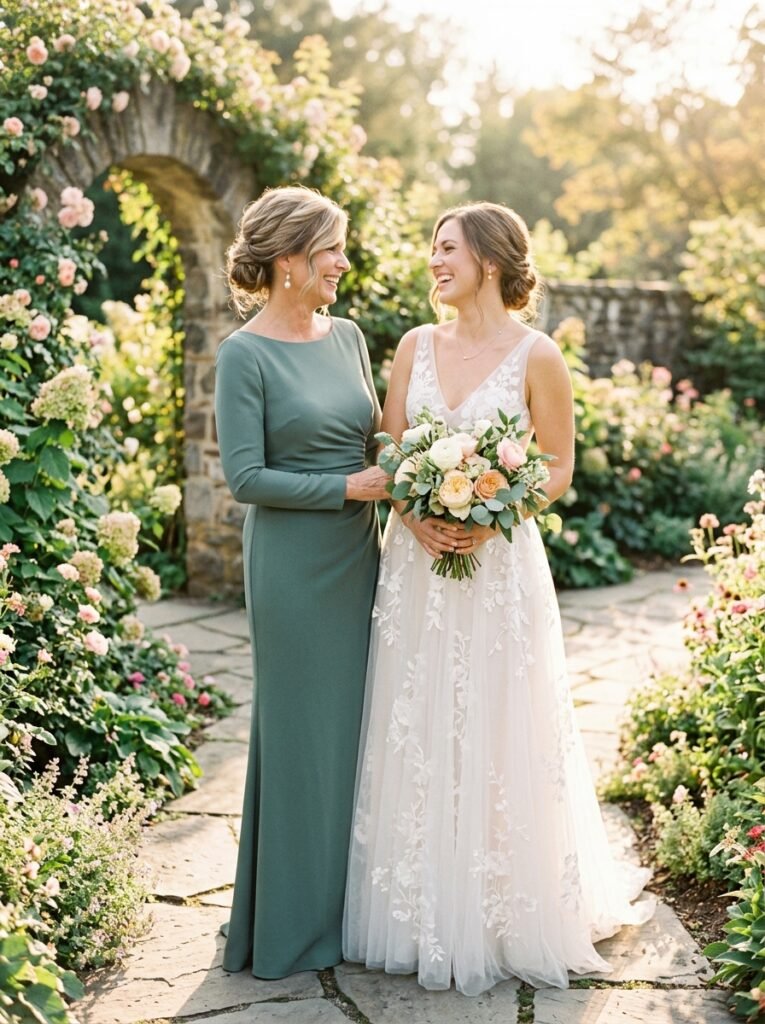
This guide is built for the mother of the bride who wants to look genuinely elegant rather than role-coded, to appear in photographs as a woman of substance and style, and to feel comfortable and like herself for an entire day. The recommendations range from traditional to contemporary, but each one reads as current, elegant fashion rather than a category the wedding industry defined in advance.
The Biggest Mistake in Mother of the Bride Dressing
Naming the single most common mistake makes the rest of this guide easier to apply.
The mistake is choosing an outfit for the role instead of the person. When a mother starts from the question of what a mother of the bride is supposed to wear, she lands in territory shaped by convention rather than by what genuinely suits her. The beaded jacket, the matching set, the heavily structured gown: these choices fulfill a visual expectation rather than reflecting personal style.
A better approach starts from what makes a woman look and feel genuinely wonderful, within a few practical parameters. The color should not compete with the bride, particularly avoiding white and ivory. The formality should match the venue and dress code. The silhouette should stay comfortable through photographs, a ceremony, and dancing. Within those limits, the room for personal style is far wider than most mothers of the bride assume once they step into the formalwear section.
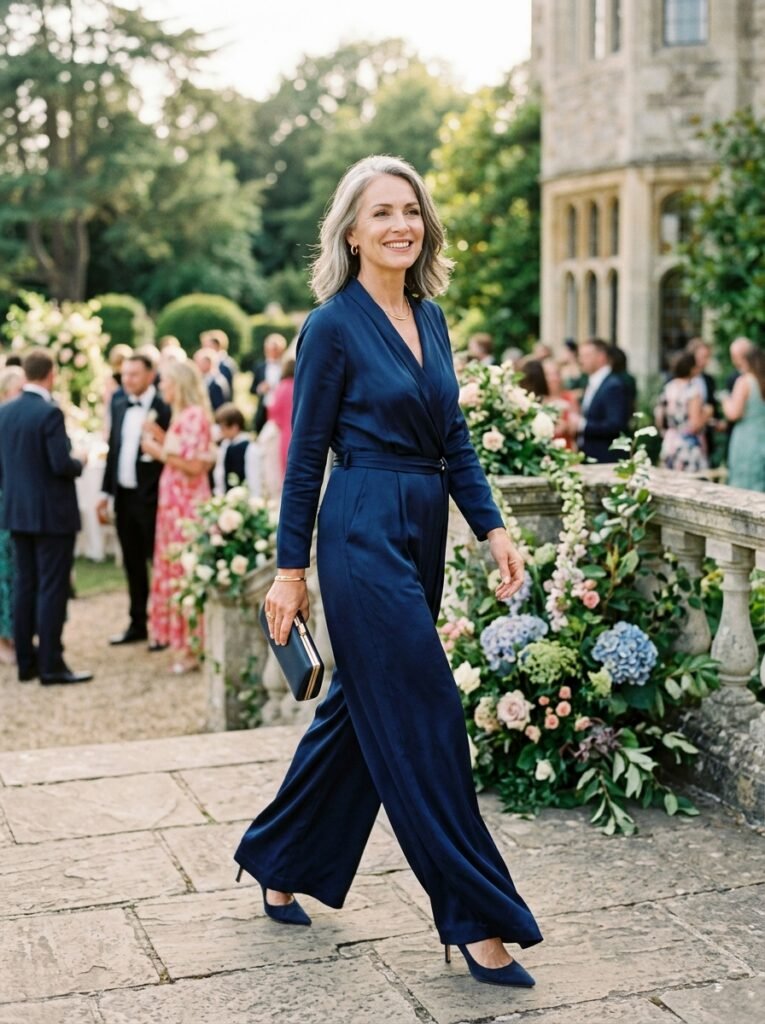
A Sophisticated Jumpsuit in a Rich Colour
A beautifully cut jumpsuit in a sophisticated color is one of the most modern and genuinely flattering mother of the bride options available, and it sidesteps the dated quality of more conventional formal choices.
A wide-leg silk or crepe jumpsuit in deep navy, forest green, burgundy, or champagne carries the formal presence the occasion requires while reading as current fashion rather than traditional formalwear. Its unbroken vertical line elongates the silhouette more than most two-piece or gown options, and the practicality, no hem to manage, no separate pieces to coordinate, makes it one of the most comfortable formal choices around. Choosing a fabric with real weight and drape, a fluid crepe or a good silk blend, keeps it polished through the full day rather than looking tired by the reception.
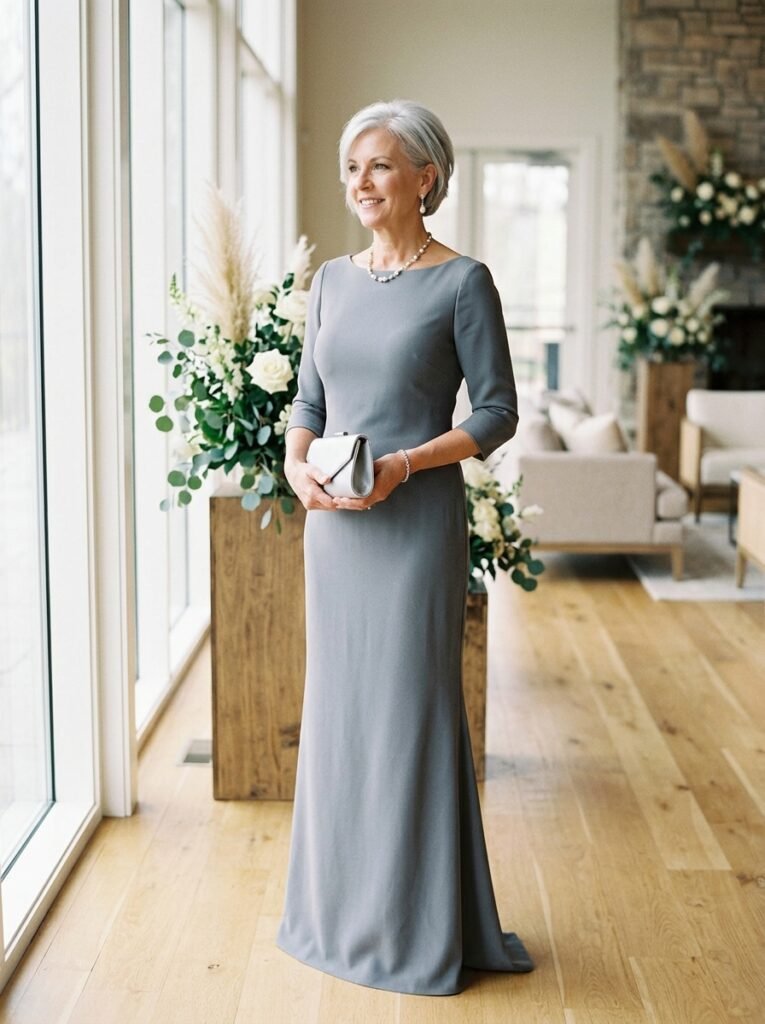
A Floor-Length Column Gown in a Sophisticated Neutral
A simple, beautifully cut column gown in a sophisticated neutral, warm taupe, dusty grey, deep champagne, or muted blush, reads as completely current while staying thoroughly occasion-appropriate.
The column silhouette avoids the dated quality that comes from era-specific design features like a peplum waist or a ruched side. A clean column that relies on fabric quality and cut rather than embellishment ages far more gracefully in photographs. The neutral color range sits clearly apart from bridal white while still reading as intentional rather than simply safe: a dusty grey column gown in heavy crepe remains a genuinely beautiful, genuinely current formal choice.
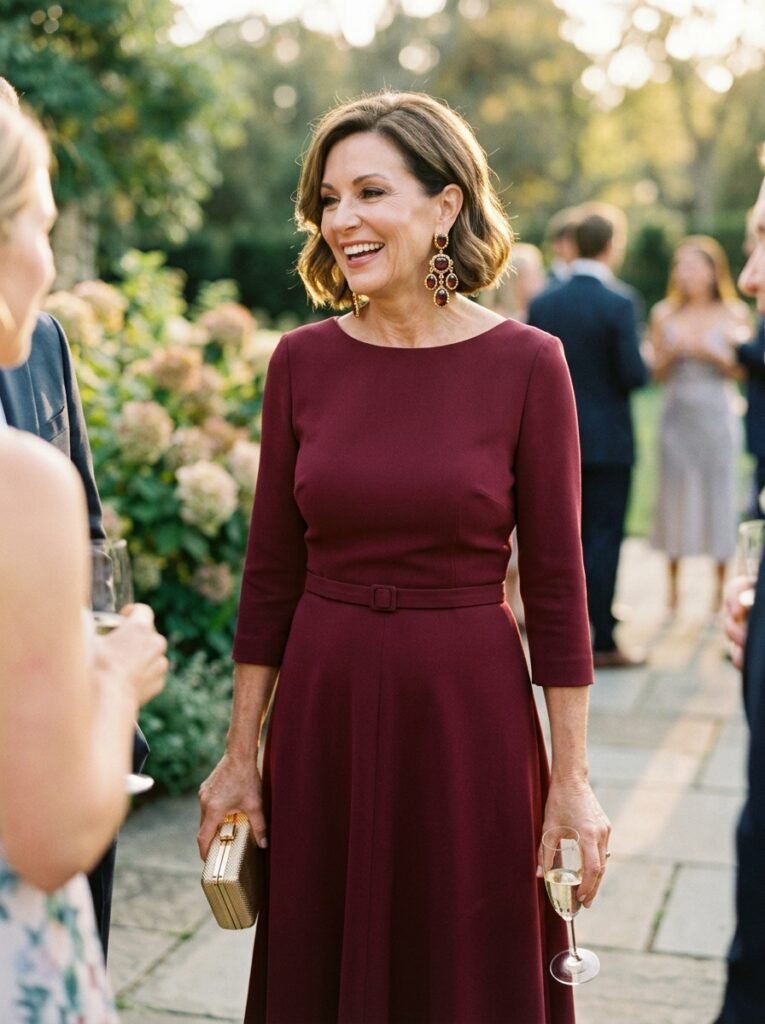
An Elegant Midi Dress With a Statement Accessory
A well-chosen midi dress in a quality fabric, paired with a single statement accessory, works particularly well for less formal or outdoor weddings where a floor-length gown might feel like too much.
The midi length flatters most ages and body types, skips the hem management of a full gown, and reads as intentionally elegant rather than casual. A rich, solid-color midi with a defined waist and quality fabric, heavy silk, fluid crepe, or a well-made structured cotton blend, photographs beautifully. The statement accessory should be one deliberate choice, extraordinary earrings, a significant necklace, or a beautifully chosen clutch, since restraint elsewhere is what separates polish from trying too hard.
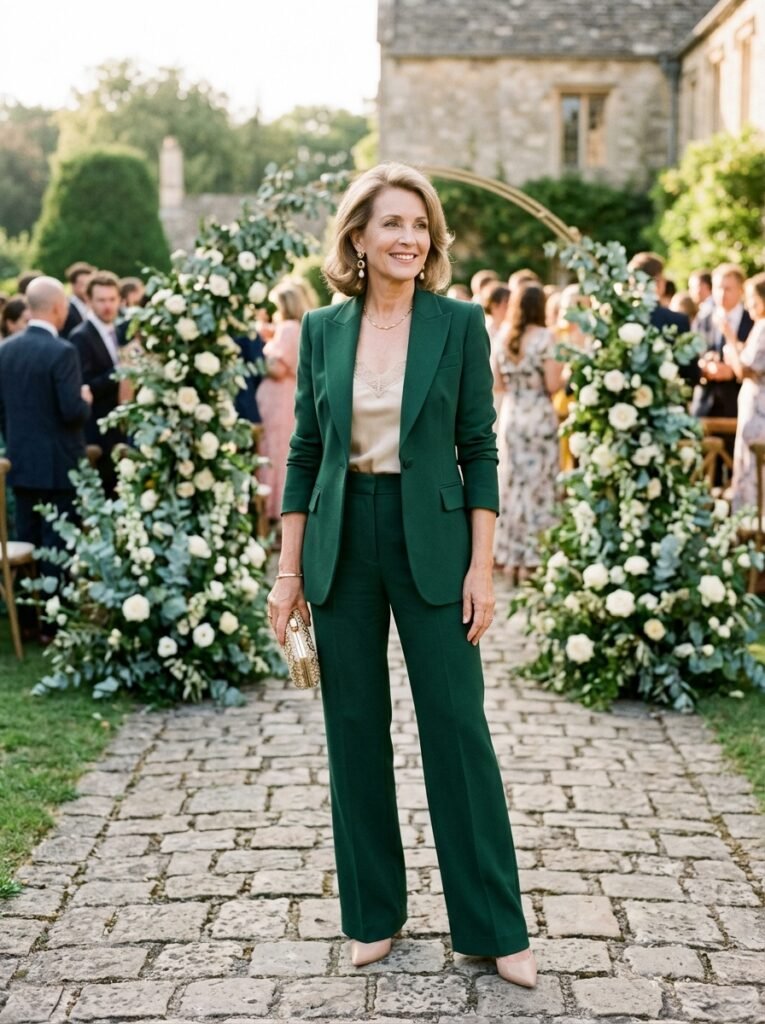
A Tailored Pantsuit With a Beautiful Blouse
A women’s pantsuit, with a matching blazer and straight or wide-leg trouser, ranks among the most enduringly elegant mother of the bride options because it reads as both powerful and refined, and genuinely contemporary in a way traditional formalwear rarely does.
A pantsuit in deep navy, warm olive, sophisticated plum, or classic black, paired with a beautifully chosen blouse, creates a complete formal look with a clean, structured quality. The blouse carries the personal expression within the suit’s contained silhouette, whether a silk camisole, a draped blouse with a softened neckline, or an embellished top. Matching the trouser fabric to the blazer keeps the whole thing reading as a deliberate suit rather than a casual blazer worn loosely with trousers.
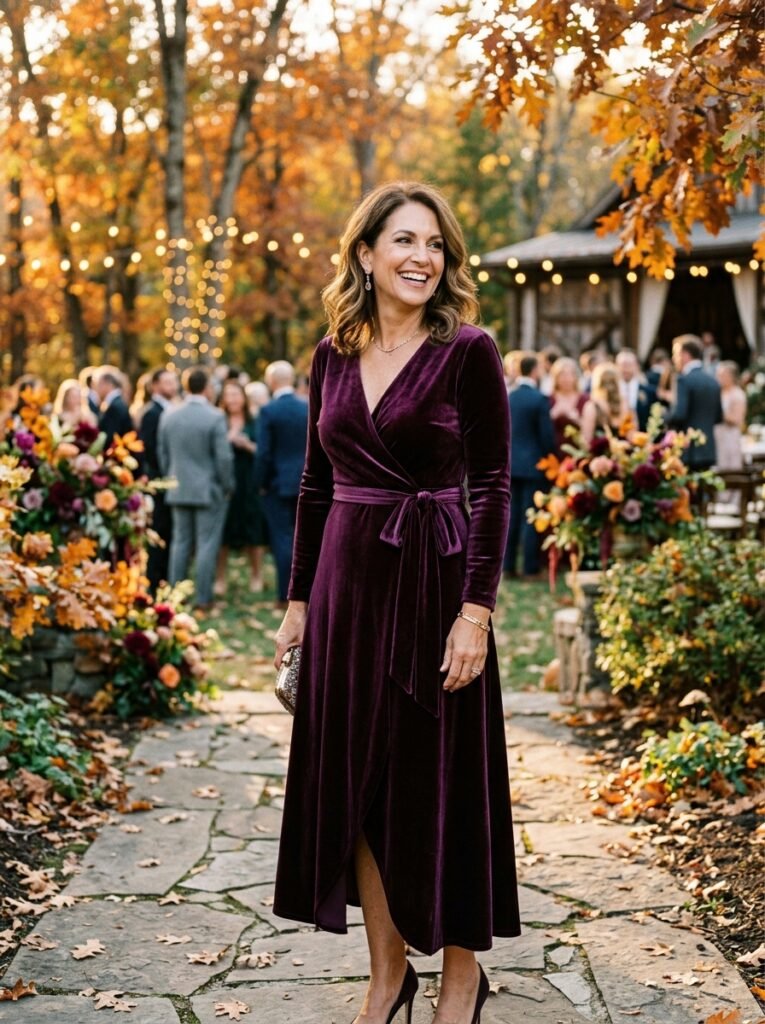
A Wrap Dress in a Luxurious Fabric
The wrap dress earns its place here for the same reason it appears in nearly every body-type and occasion guide: it genuinely flatters different proportions and can be elevated to formal territory through fabric alone.
A wrap dress in heavy silk, autumn or winter velvet, rich lined chiffon, or fluid satin creates a look that is flattering, comfortable, and genuinely elegant rather than costume-like. Its adjustable construction accommodates different proportions with ease, and the wrap’s V-neckline is one of the most universally elongating options available. Fabric choice determines whether it reads as formal or casual: the same pattern in lightweight jersey is a daytime dress, while heavy velvet or silk charmeuse with embellishment becomes a genuinely formal one.
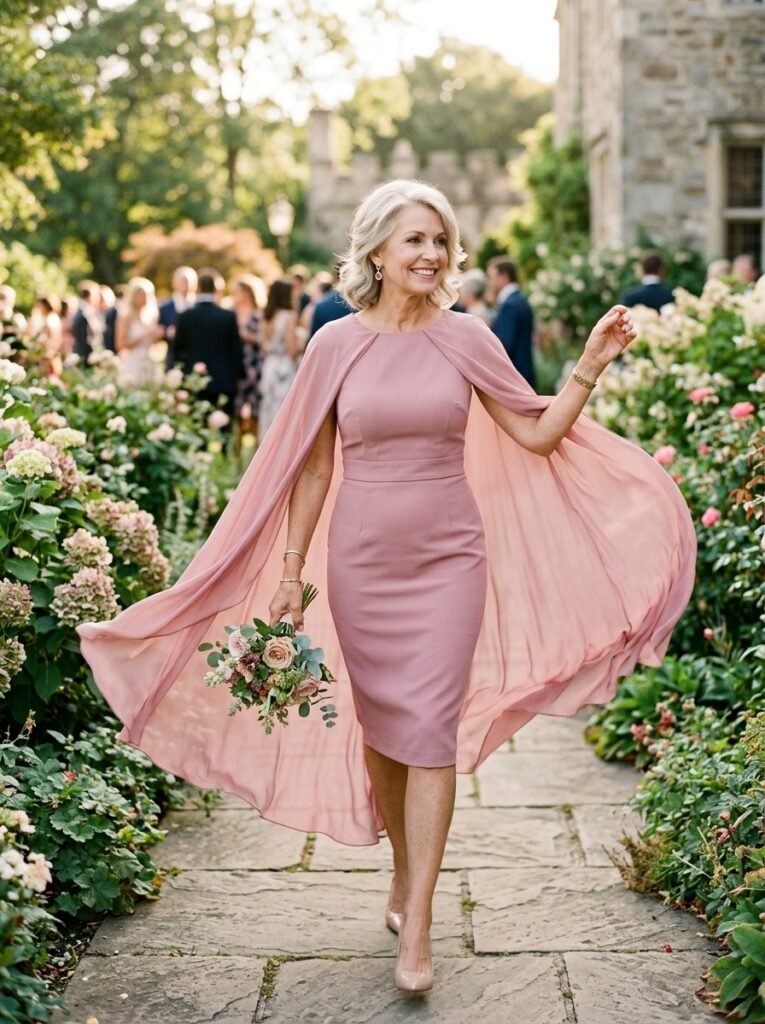
A Cape or Overlay Detail for Feminine Drama
A dress with an attached cape, an overlay panel, or a chiffon overskirt creates a distinctly feminine, formally appropriate look with a quality of movement a simple dress or gown cannot match.
A fitted dress topped with a flowing chiffon overlay stays contained in its inner silhouette while turning dramatically fluid on the outside. The cape adds length, movement, and formality to what might otherwise be a simple base, and in outdoor or garden photographs it moves beautifully, creating real visual dynamism. It also gives a mother uncomfortable with a very fitted silhouette a structured inner dress beneath a flowing outer layer, combining the strengths of both approaches.
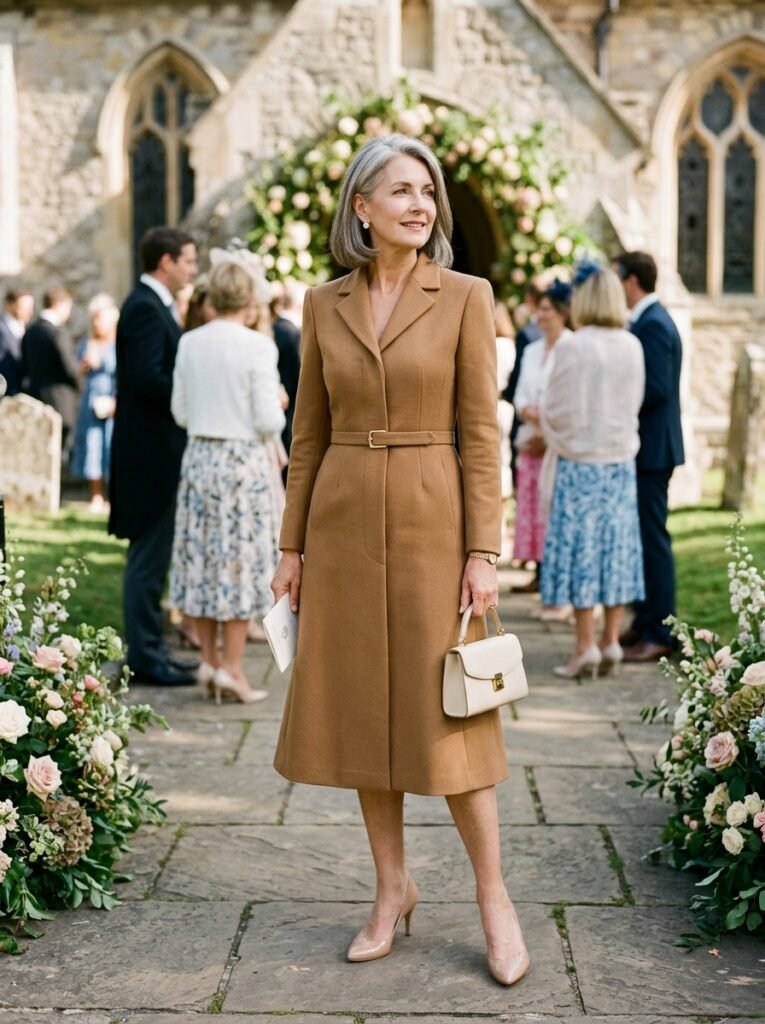
A Tailored Coat Dress for a Classic Occasion
The coat dress, structured like a tailored coat but functioning as a dress in its own right, is a classic mother of the bride choice that has stayed relevant across decades by avoiding the costume quality of more explicitly formal options.
A well-tailored coat dress in deep navy, warm camel, slate, or rich burgundy reads as both formal and contemporary, since the tailoring communicates intention while the coat structure avoids fussy embellishment. It also suits morning or midday ceremonies particularly well, where the occasion calls for something structured and refined but a full evening gown would feel out of proportion.
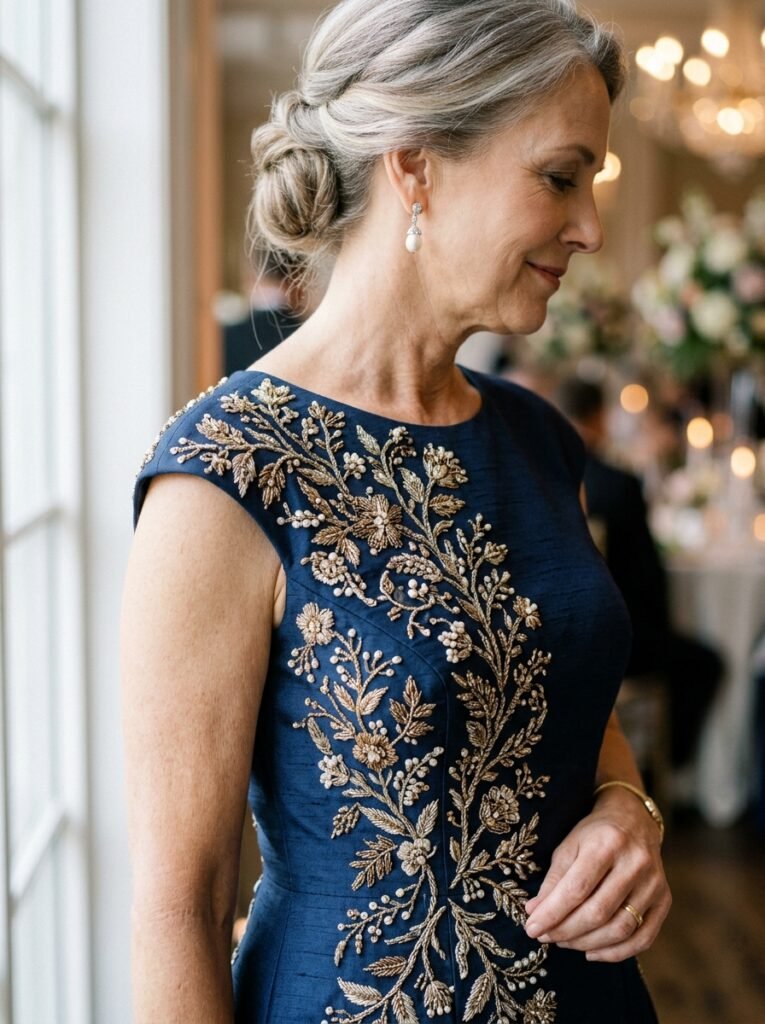
Rich Embroidered or Embellished Fabric Without the Jacket
The beaded jacket over a matching dress is the quintessential dated mother of the bride look, yet the same embroidery and embellishment can look genuinely elegant in a different format.
An embellished or embroidered gown or midi dress, where the detail is built into the fabric rather than layered on as a jacket, reads very differently: a beautifully embroidered skirt panel, crystal detail at the neckline and cuffs, or a heavily beaded dress worn as a single complete garment. Embellishment stays current when it is minimal and strategic, a beaded neckline on an otherwise plain dress, or fully integrated into the fabric structure. What tends to date a look is embellishment piled across every surface at once, jacket, bodice, and skirt together.
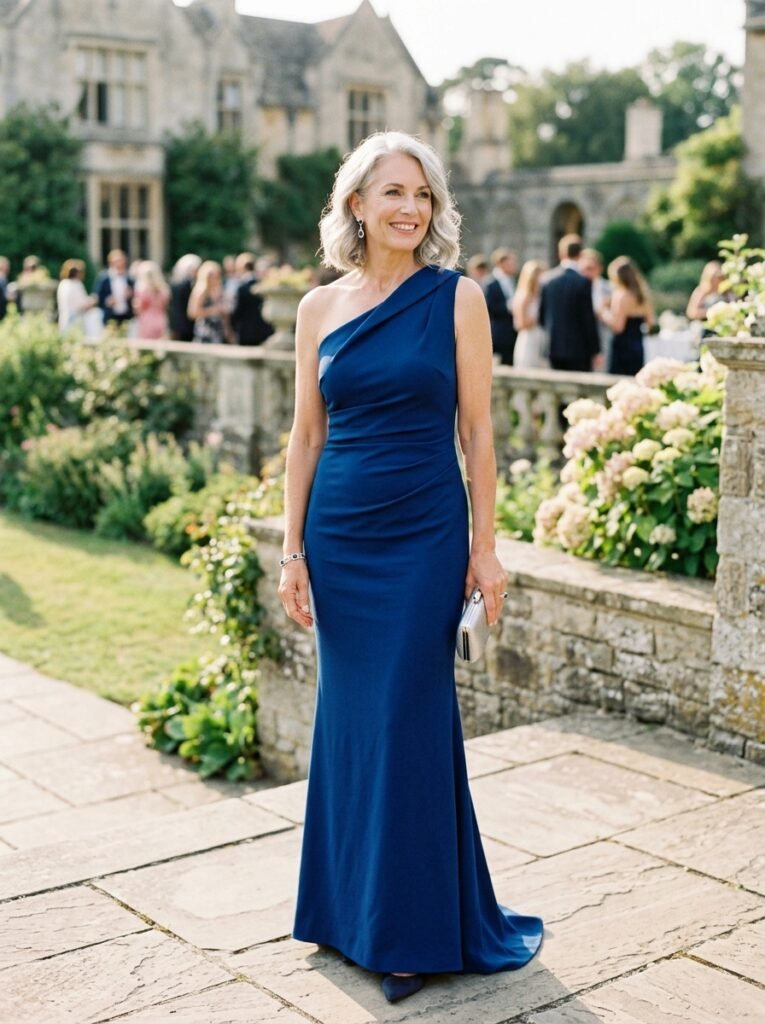
A One-Shoulder or Asymmetric Neckline in a Formal Length
An asymmetric or one-shoulder neckline on a floor-length or midi gown is a surprisingly effective choice, since the asymmetry creates a contemporary quality a symmetrical neckline at the same length simply would not have.
The asymmetric line draws attention to the shoulder and collarbone rather than the overall silhouette, flattering most body types. In photographs, a one-shoulder neckline in a formal gown adds visual interest and a fashion-aware quality that reads as someone who knows exactly what she is doing.
Deep Jewel Tones for Impact
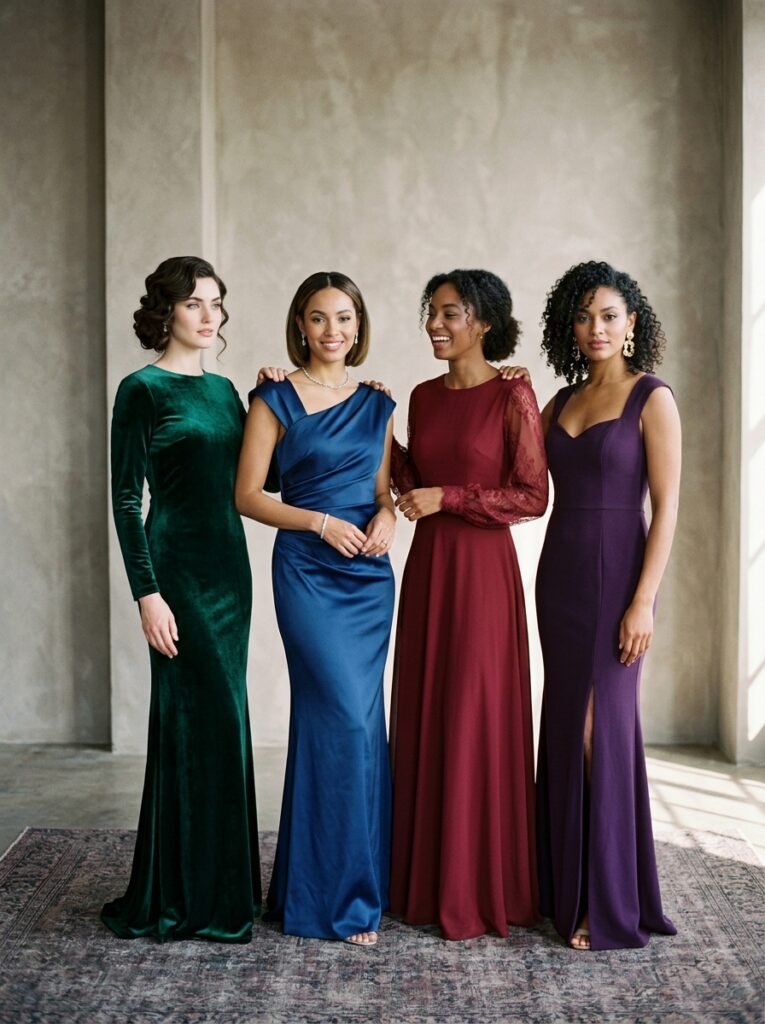
Color choice matters as much as silhouette, and deep jewel tones remain one of the most reliably elegant families available for this role.
Deep emerald, sapphire, burgundy, amethyst, teal, and forest green photograph with extraordinary richness and never compete with bridal white or ivory. They flatter a wide range of skin tones at mid-to-deep saturation and carry a luxurious quality that reads as intentional. The specific tone within a jewel family matters more than the general category: a blue leaning teal or navy reads sophisticated, while a bright, primary-leaning blue can look formal in the wrong way. A mid-depth, slightly muted version of any jewel tone tends to look more expensive than a fully saturated one.
A Metallic Gown or Jacket for Evening Weddings
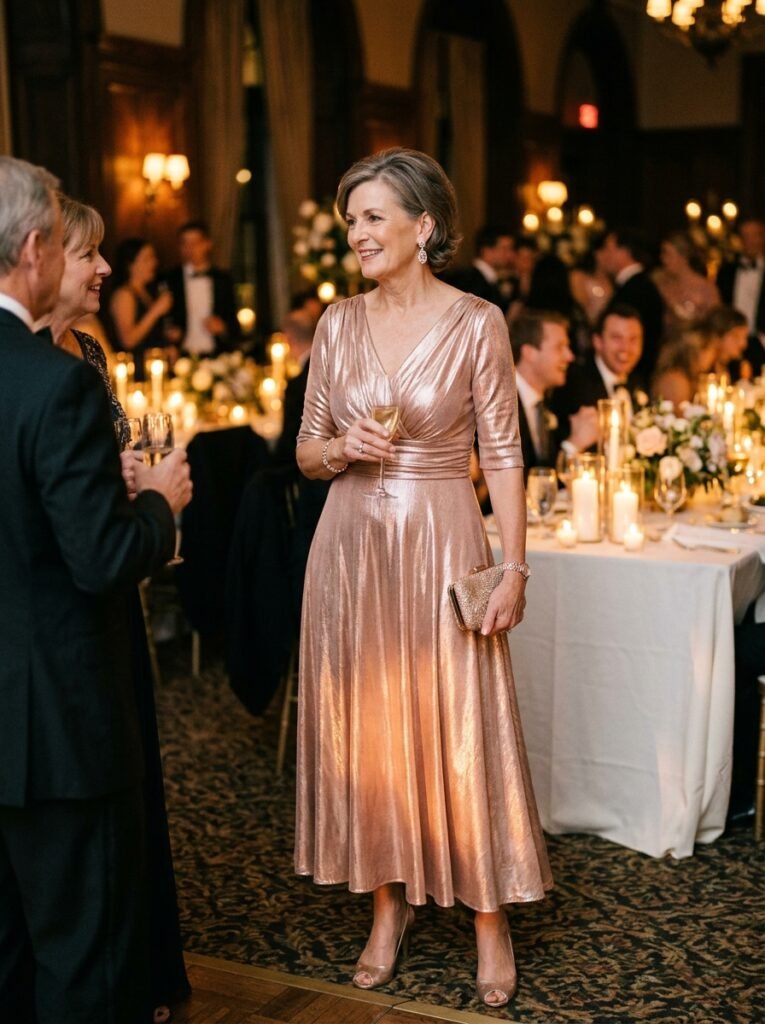
For evening or formal weddings with a cocktail dress code or above, a metallic gown, jacket, or top communicates genuine occasion dressing without defaulting to the conventional brocade jacket that reads as purchased from a category rather than chosen with personal style in mind.
A gold or rose gold metallic gown in a fluid fabric, a silver or pewter jacket over a simple coordinating dress, or a champagne metallic midi with a clean silhouette all sit firmly in formal territory while reading as fashion choices. Metallics work best under warm artificial lighting, where they catch reflective quality beautifully; in full daylight they can look slightly garish, but in candlelight and indoor reception lighting they become one of the most photogenic choices available.
Coordinating Colour With the Wedding Party
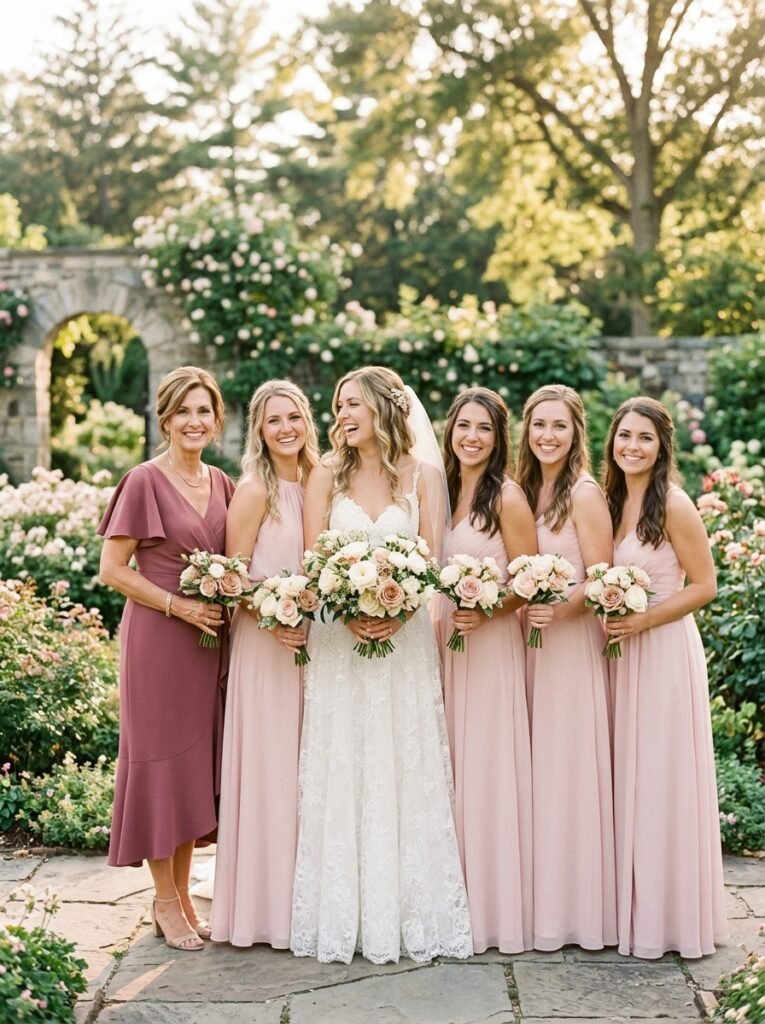
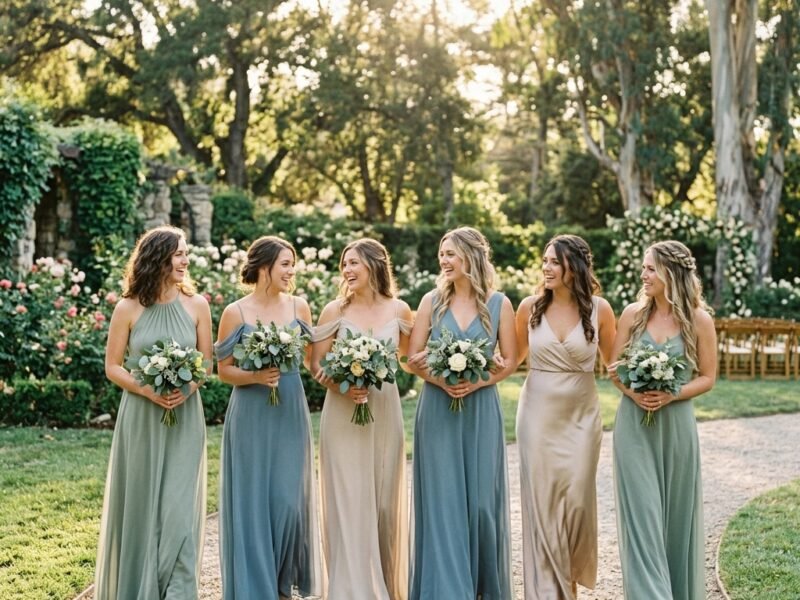
The mother of the bride has more color flexibility than any other participant, but one point deserves explicit attention: the outfit should be chosen in relationship to the wedding party’s palette, not in ignorance of it.
This does not mean matching the bridesmaids or forcing a connection to the florals. It means staying aware of the overall visual palette and choosing a color that sits comfortably within or alongside it, rather than creating a jarring contrast that pulls attention in photographs for the wrong reason. Communicating early with the bride about colour palette and decorative tone lets the mother shop with clear parameters from the start, which benefits both the full wedding photographs and the individual family portraits.
What to Look for in Fabric and Construction
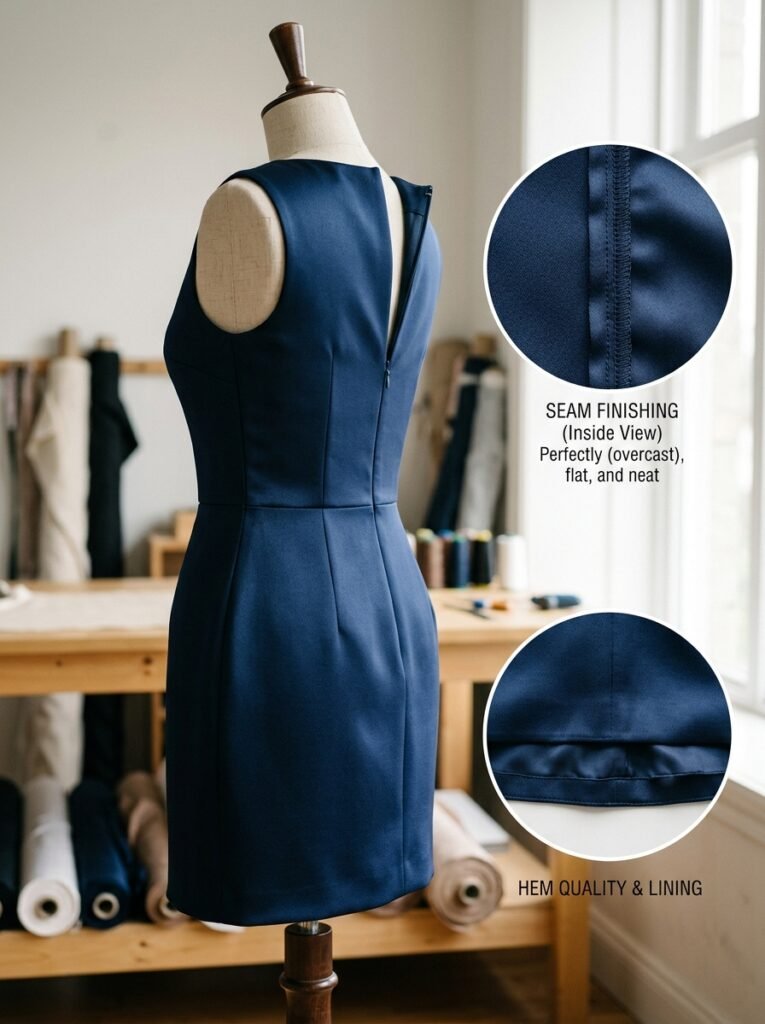
At wedding-level formality, fabric quality and construction determine the final result more than any specific design feature. A beautifully designed outfit in a cheap fabric looks inexpensive regardless of styling, while a simple, well-cut outfit in a quality fabric looks elegant regardless of design complexity.
Natural fibres and quality synthetics that behave like them, silk, crepe, weighty polyester, heavy chiffon, substantial jersey, hold their shape through a full day of wearing. Thin, lightweight synthetics prone to creasing or clinging are worth avoiding for an event that spans many hours. Construction quality shows at the seams, the hem, and the closures: seams that lie flat, a hem that falls evenly, and a closure that functions smoothly all matter, and these qualities are easiest to judge by trying the garment on and moving in it rather than evaluating it on a hanger.
Shoes and Accessories That Complete the Look Without Competing
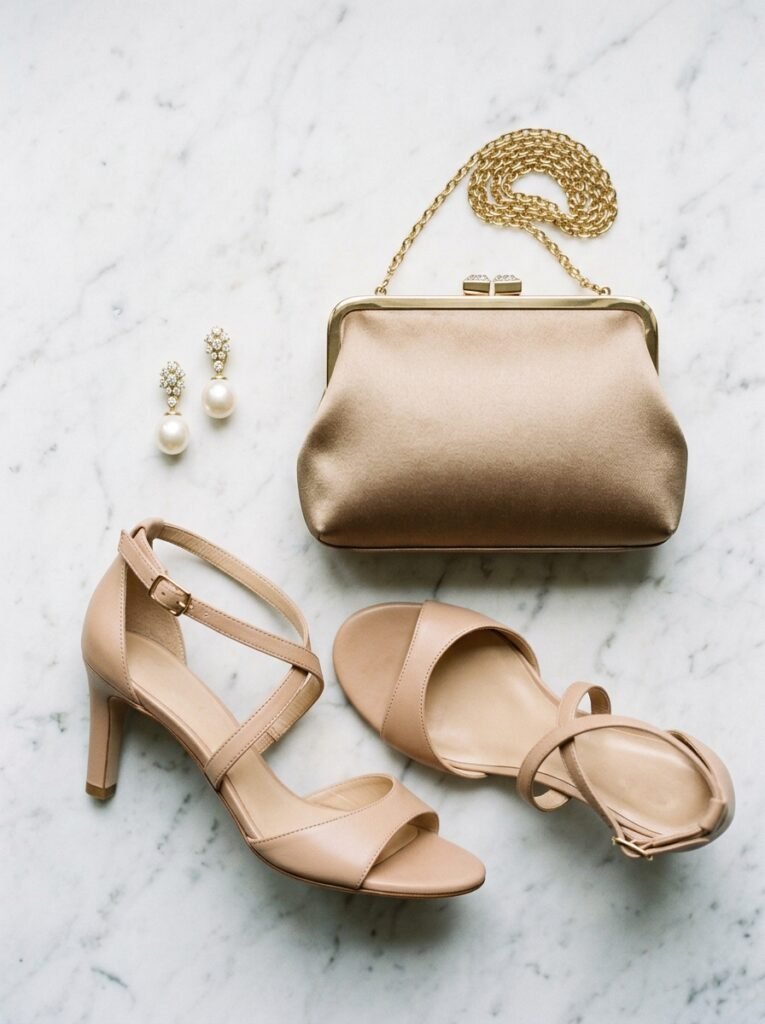
Accessories and shoes deserve the same intentionality as the outfit itself. The most common mistake in this area runs in either direction: underaccessorising a formal look, or over-accessorising because the occasion seems to call for a lot.
The most elegant approach chooses two or three genuinely good pieces rather than a full collection in one category: one striking pair of earrings matters more than earrings plus a necklace plus a bracelet plus a brooch. Shoes need to perform through ceremony standing time, photographs, cocktail hour, and often dancing, which makes comfortable heel height more important than the height that photographs best while standing still. Block heels, kitten heels, and low strappy sandals all offer formal appearance with far better comfort than high stilettos. A clutch or small structured bag in a complementary tone finishes the look without adding unnecessary visual weight.
Getting the Fitting Right
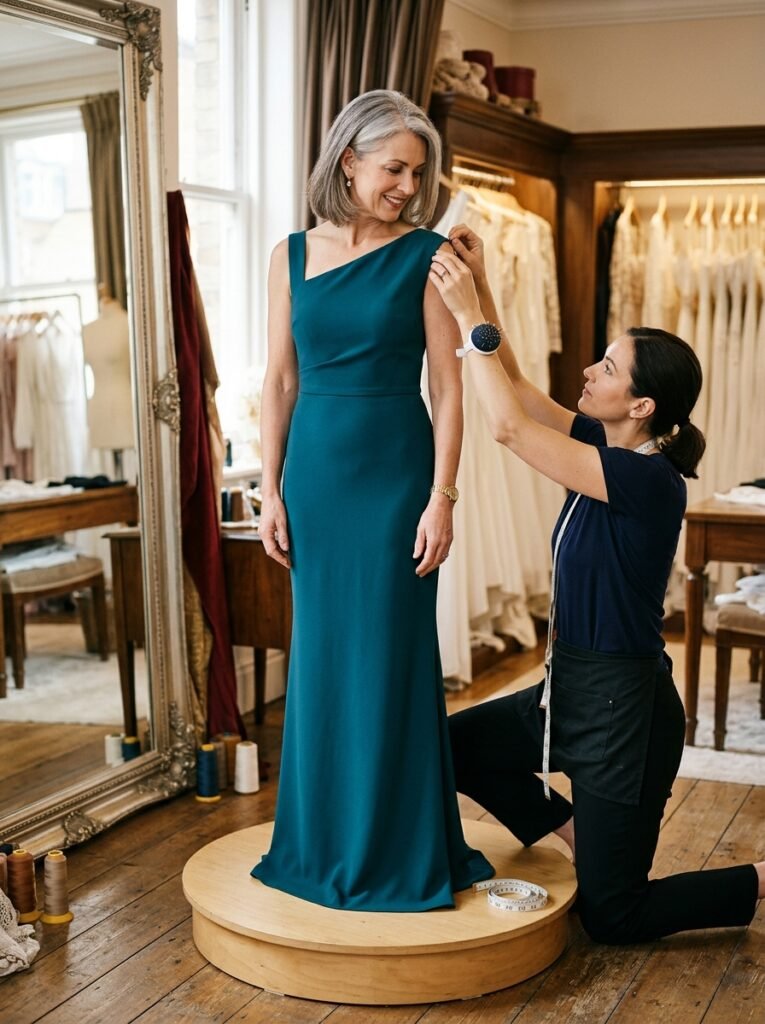
The difference between a mother of the bride who looks extraordinary in photographs and one who simply looks appropriately dressed almost always comes down to fit. A dress that fits through the shoulder, bust, waist, and hip looks elegant regardless of design complexity, while even a minor fit issue, an off shoulder seam, a slightly tight bodice, creates a distraction that undermines the whole look.
Most formal gowns require some alteration, which reflects how mass-produced formalwear is sized to averages rather than individual bodies, not any flaw in the wearer. Budgeting for alterations early, choosing a dress with enough lead time, and working with an experienced formalwear seamstress all help. The final fitting should land within about four weeks of the wedding, close enough to be accurate but with room left for a correction if one is needed.
Frequently Asked Questions
What colour should a mother of the bride avoid wearing? White, ivory, cream, and any colour that could read as bridal in a photograph should be avoided as a primary colour, including pale champagne that photographs cream, light all-over lace, and heavily embellished near-white fabrics. An exact match to the bridesmaid colour is also worth avoiding, since it can create visual confusion in photographs, though complementing that palette is entirely appropriate.
How formal should a mother of the bride outfit be? Formality should match the venue and dress code. A black-tie or formal evening wedding calls for a floor-length gown or an equally formal alternative; a cocktail-level wedding suits a midi or knee-length option; a garden party or casual outdoor wedding reads better in a sophisticated midi than an overdressed floor-length gown. As the Emily Post Institute’s dress code guide notes, formality should generally follow the stated dress code rather than personal instinct alone, and dressing one level above that instinct tends to work better than the reverse.
Can a mother of the bride wear a trouser suit? Yes. A well-fitted trouser suit in a sophisticated fabric and formal colour is an increasingly popular, genuinely elegant choice. It tends to be more comfortable than a gown across a full day and photographs with a clean, strong quality gowns do not always achieve. Quality fabric, excellent tailoring, and a colour that reads as occasion-appropriate rather than business casual all matter here.
How early should a mother of the bride begin shopping for her outfit? Four to six months before the wedding suits most scenarios, allowing time to compare retailers, consider a custom or made-to-order option, and finish alterations without rushing. Waiting until the final weeks limits both selection and fitting time. Early conversation with the bride about colour palette and formality means shopping can begin with clear parameters rather than requiring later revisions.
Is it acceptable for the mother of the bride to wear black? Yes, particularly for evening and formal weddings. The older convention against black at weddings has largely fallen away in most contemporary settings, though confirming there is no specific preference against it is worth doing before committing. A beautifully chosen black gown or suit remains an elegant, timeless choice that photographs well under any lighting.
The Woman in the Photograph
The wedding photographs that show a mother of the bride looking truly extraordinary share one thing: she does not look like a mother of the bride. She looks like herself, dressed at her absolute best. The role disappears from her appearance because she chose the outfit from the perspective of personal style rather than an assigned category.
That is the goal this guide has worked toward from the first paragraph: not an outfit that fulfills a role expectation, and not a look that is merely appropriate, but one that reflects who she actually is and makes her feel genuinely beautiful through one of her family’s most photographed days. Anyone still weighing colour and formality together with the rest of the wedding party’s timeline may find this guide to day versus night wedding outfit choices useful for narrowing those decisions further.
The beaded jacket will keep existing. The pastel brocade suit will too, for as long as a demographic keeps buying them out of habit. Extraordinary alternatives exist at every price point and from nearly every formalwear retailer, and they will serve both the wearer and the photographs far better than the category choice ever could. Choosing the dress that makes her look like herself at her most beautiful is, in the end, the entire assignment.

[…] Wedding Outfits Ideas […]
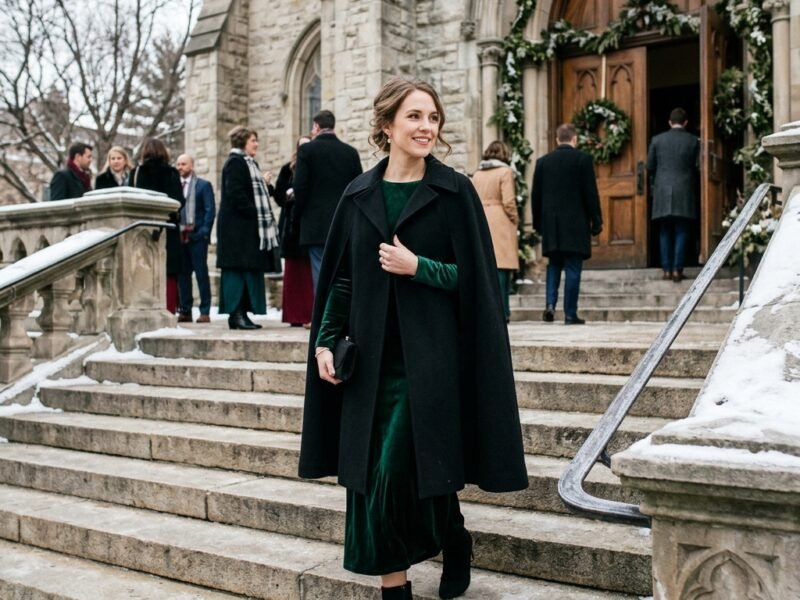
[…] guide to mother of the bride outfits that avoid a dated look covers a related but distinct question, which specific fabrics and silhouettes have come to feel […]