
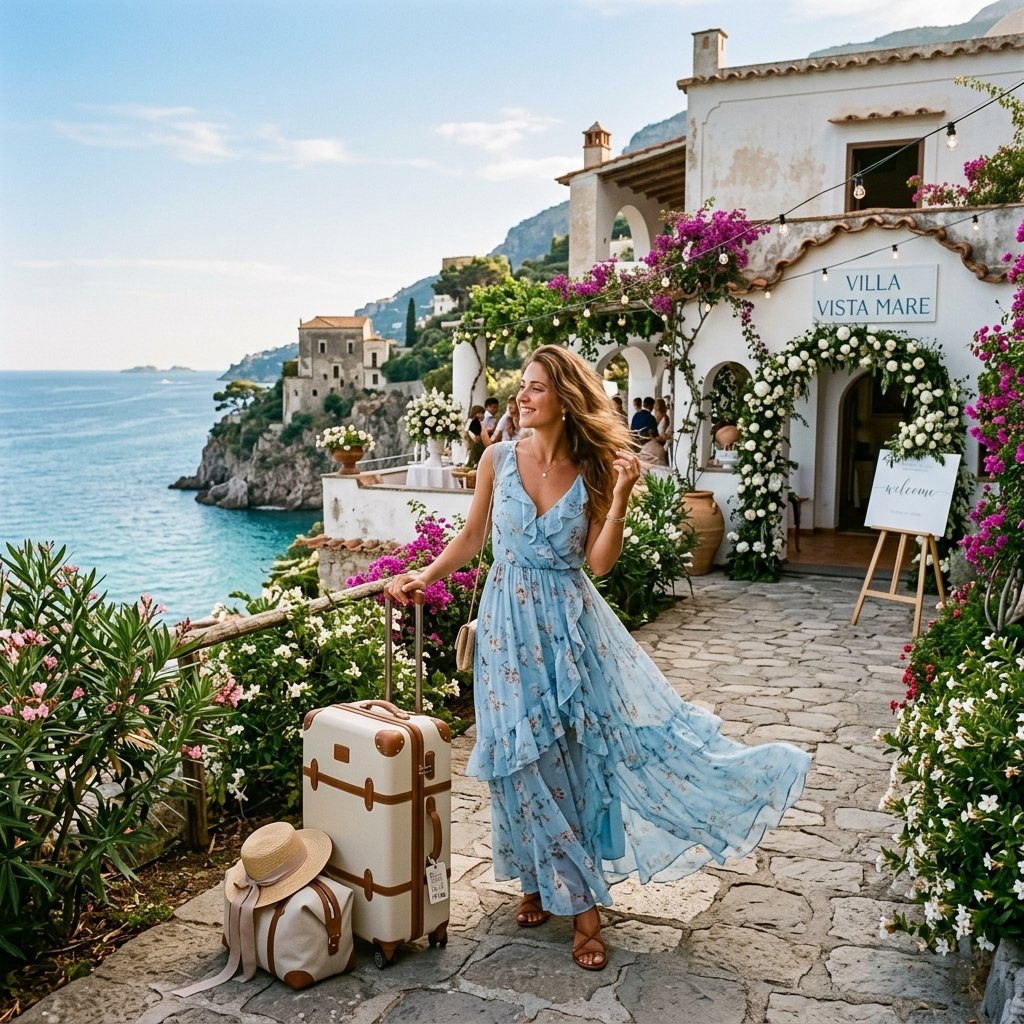
Getting invited to a destination wedding usually triggers two reactions at once. The first is excitement about a few days somewhere new. The second is a quiet moment of dread about what, exactly, goes in the suitcase.
Unlike a local wedding, where one outfit and a backup plan will do, a destination wedding is rarely a single event. It’s a weekend with a welcome gathering, a ceremony, a reception, and often a group breakfast the next morning, all while you’re living out of one bag you had to keep under fifty pounds. The outfits have to be dressier than a normal trip calls for, yet they still have to survive a flight, a rideshare, and however many days pass before there’s a chance to hang anything up properly.
This is less about individual outfit ideas and more about solving a specific logistics problem: how to look like a well-dressed guest at every part of a multi-day celebration without hauling four garment bags through an airport.
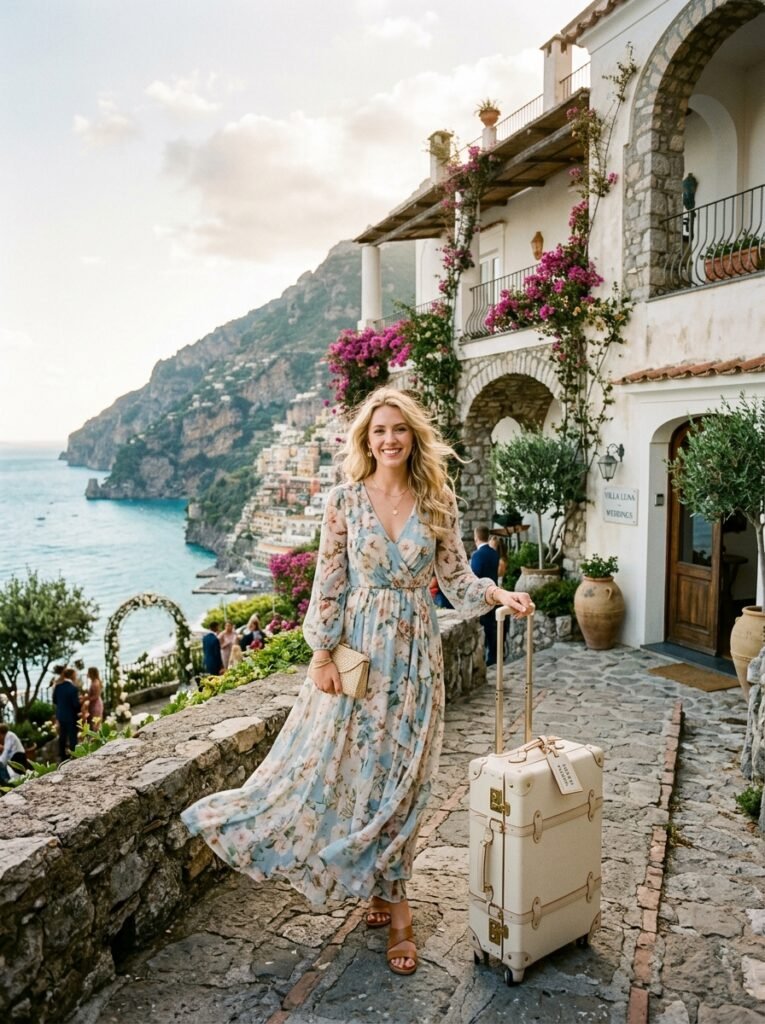
What a Destination Wedding Weekend Actually Involves
Before packing anything, it helps to know what’s actually on the schedule, since destination weddings tend to run longer than a single evening.
- A welcome event, often the night guests arrive. Usually casual to semi-casual, sometimes at a restaurant or a poolside bar.
- The ceremony itself, which tends to sit at the top of the formality scale for the whole weekend.
- The reception, immediately after or later the same evening, with more room to move and dance.
- A next-day gathering, frequently brunch or a farewell breakfast, almost always the most relaxed event of the trip.
Not every destination wedding includes all four, but most include at least three. That’s the real packing challenge: three or four distinct looks, appropriate to three or four distinct formality levels, all fitting into luggage that also needs to survive a flight.
The Suitcase Math: How Many Outfits You Actually Need
The instinct is to pack a separate outfit for every hour of the trip. Resist it. A workable destination wedding wardrobe usually comes down to four or five pieces, worn in different combinations.
- One ceremony outfit. This is non-negotiable and shouldn’t double as anything else.
- One outfit that can flex between welcome event and brunch, since both tend to sit at a similar formality level.
- One reception outfit, which can sometimes be the ceremony outfit with a shoe and jewelry swap, depending on how strict the invitation’s dress code is.
- One layer, like a blazer, wrap, or light cardigan, that adjusts any of the above for temperature or an unexpectedly formal moment.
- One backup, only if there’s room. Not for a new occasion, just in case something wrinkles beyond saving or doesn’t fit the way it did at home.
This is fewer outfits than most people instinctively pack, but it’s also more than enough, since nobody at a three-day wedding weekend is tracking whether your shoes repeated.
Fabrics That Actually Travel Well
The fabric choice matters more here than for an ordinary vacation, because guest attire tends to be more structured, and structure is exactly what suffers in a suitcase.
Reliable choices: jersey, matte jersey, ponte knit, ITY fabric, ribbed knits, ribbed jersey wrap dresses, and ,structured jumpsuits made from a stretch blend. These hold shape without needing much recovery time once unpacked.
Riskier choices, worth it anyway for the ceremony: silk, chiffon, and satin. These wrinkle or crease more visibly, but they’re also the fabrics that photograph the way guest attire is supposed to photograph. The fix isn’t avoiding them entirely, it’s isolating them.
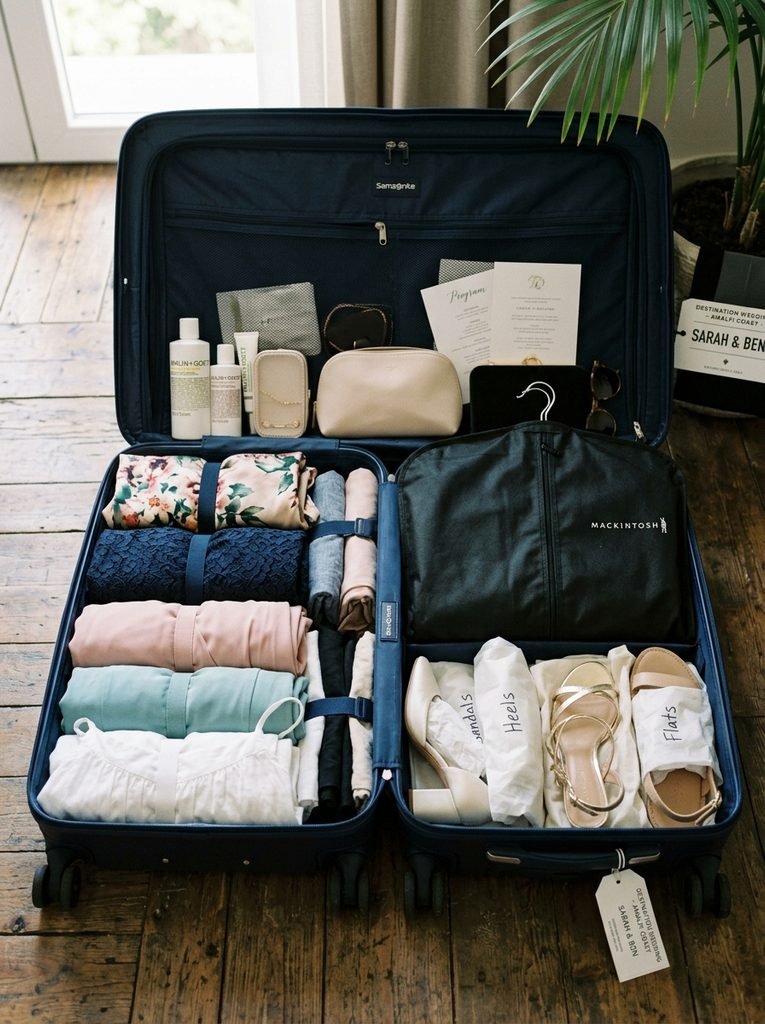
- Pack the one silk or chiffon piece rolled inside a dry cleaning bag, not folded flat against other clothes.
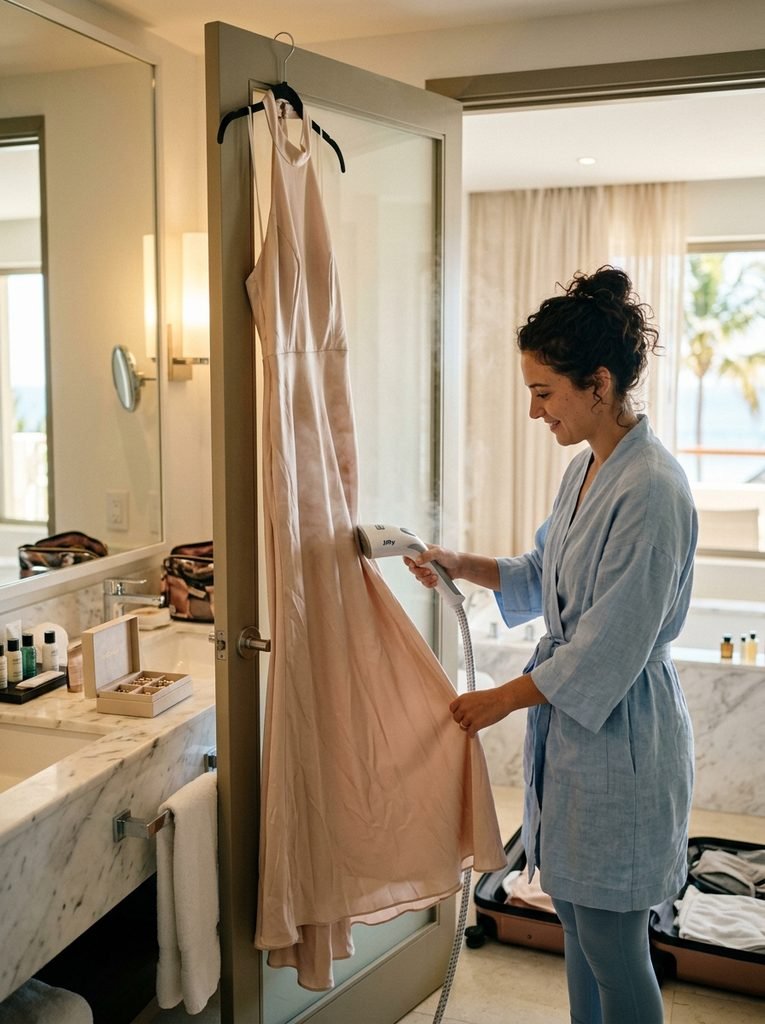
- Hang it in the bathroom during a hot shower the evening before it’s worn. Steam does most of the work.
- Avoid packing it near shoes, belts, or anything with a buckle that could snag or dent the fabric.
A small travel steamer, if there’s room, solves more wedding-weekend wrinkle problems than any packing trick. It weighs very little and works faster than the shower method.
Dressing for the Destination’s Climate
The venue location changes the outfit far more than the wedding itself does, since a ceremony outfit built for a Tuscan hillside doesn’t automatically work for a beach in Tulum.
Tropical and beach destinations. Breathable natural fibers and fibers that mimic them, like linen blends and lightweight viscose, hold up against heat and humidity. Structured fabrics wilt fast in this climate, so a slightly looser silhouette usually looks better by the time the ceremony actually starts.
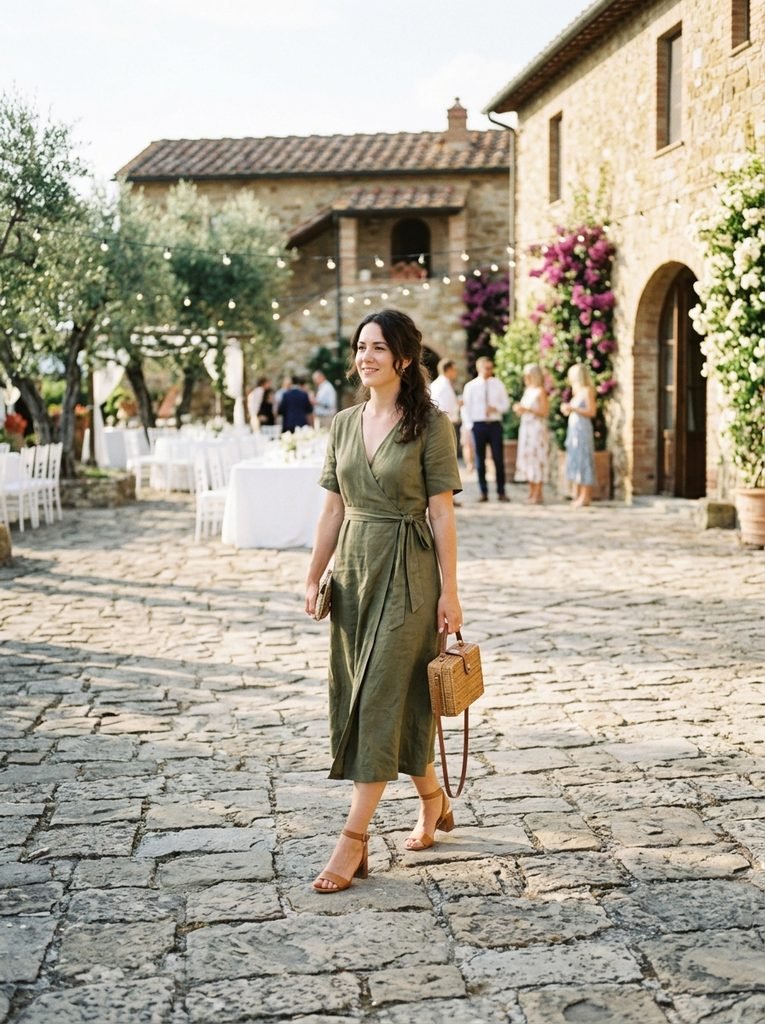
European countryside or old town destinations. Cobblestones rule out thin heels immediately. A block heel or a dressy flat handles uneven ground far better, and a midi length avoids catching on stone steps.
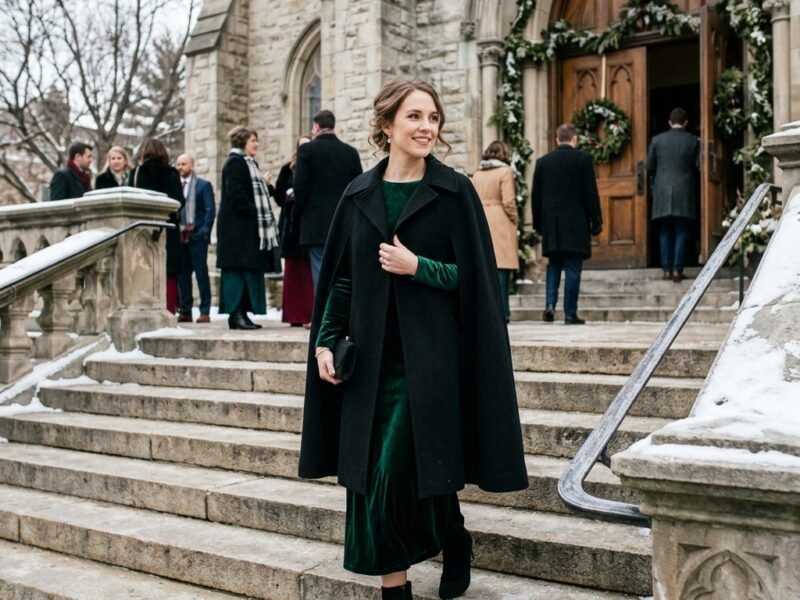
Mountain or lake settings. Evenings cool down fast even when the day started warm. A wrap or shawl earns its space in the suitcase here more than almost anywhere else, since ceremonies at altitude often run later into a cooling evening.
Desert resort destinations. Daytime heat and nighttime chill both show up in the same 24 hours. Layering, rather than picking one temperature to dress for, solves this more reliably than any single outfit choice.
Some of the same climate logic that applies to a general trip applies here too, and a broader breakdown of dressing by destination is worth a look if the wedding is only part of a longer stay.
The Ceremony Outfit
This is the one outfit worth building the entire suitcase around, since it carries the most visual weight and the least room for error.
Color matters more at a ceremony than at any other event of the weekend. White, ivory, and anything that could be mistaken for it from a distance stays off the table, no exceptions, regardless of how far the shade is from the bride’s actual dress. Beyond that, most invitations either state a dress code directly or hint at one through the setting. Formal destination weddings still mean floor length or a structured cocktail dress. Casual beach ceremonies allow a flowing midi or a lightweight jumpsuit.
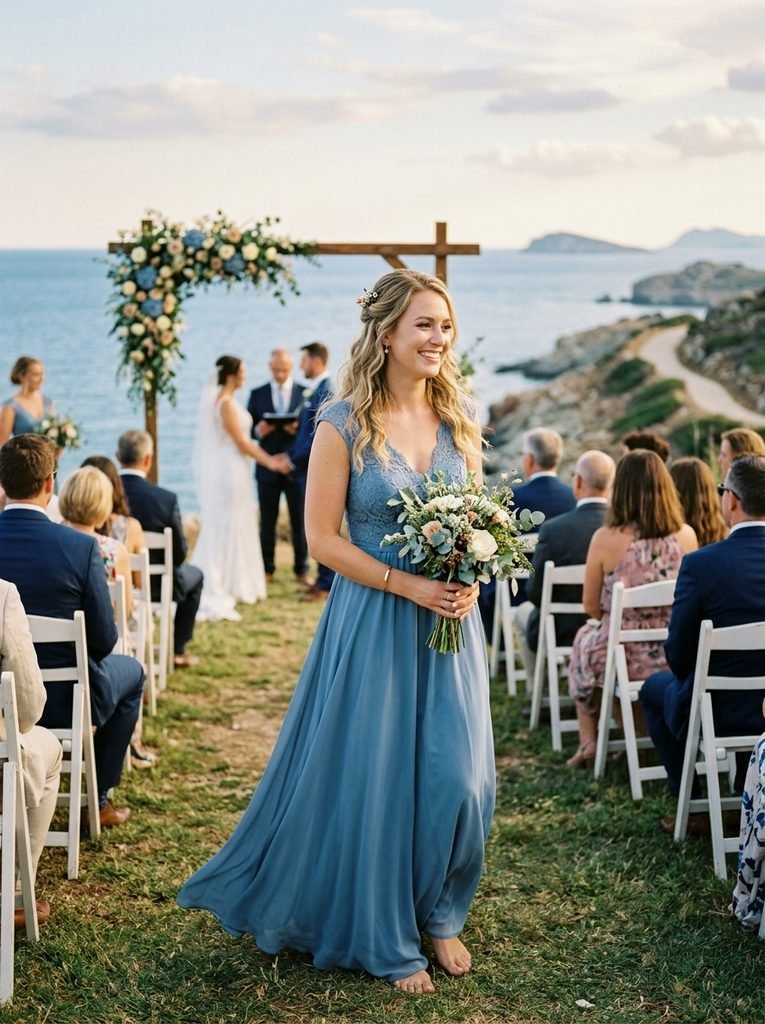
Footwear deserves its own thought here, since ceremony locations are often outdoors on sand, grass, or gravel. A flat sandal, a low block heel, or wedges hold up in a way that a stiletto simply does not. Nobody remembers what shoes a guest wore. Several people remember a guest sinking into the lawn during the vows.
Keep accessories relatively minimal for the ceremony specifically. Anything larger and more decorative can wait for the reception a few hours later, once photos of the actual ceremony are behind you.
The Welcome Event or Rehearsal Dinner Look
This event usually sits one notch below the ceremony in formality, and it’s the easiest one to build from pieces already in the suitcase for other purposes.
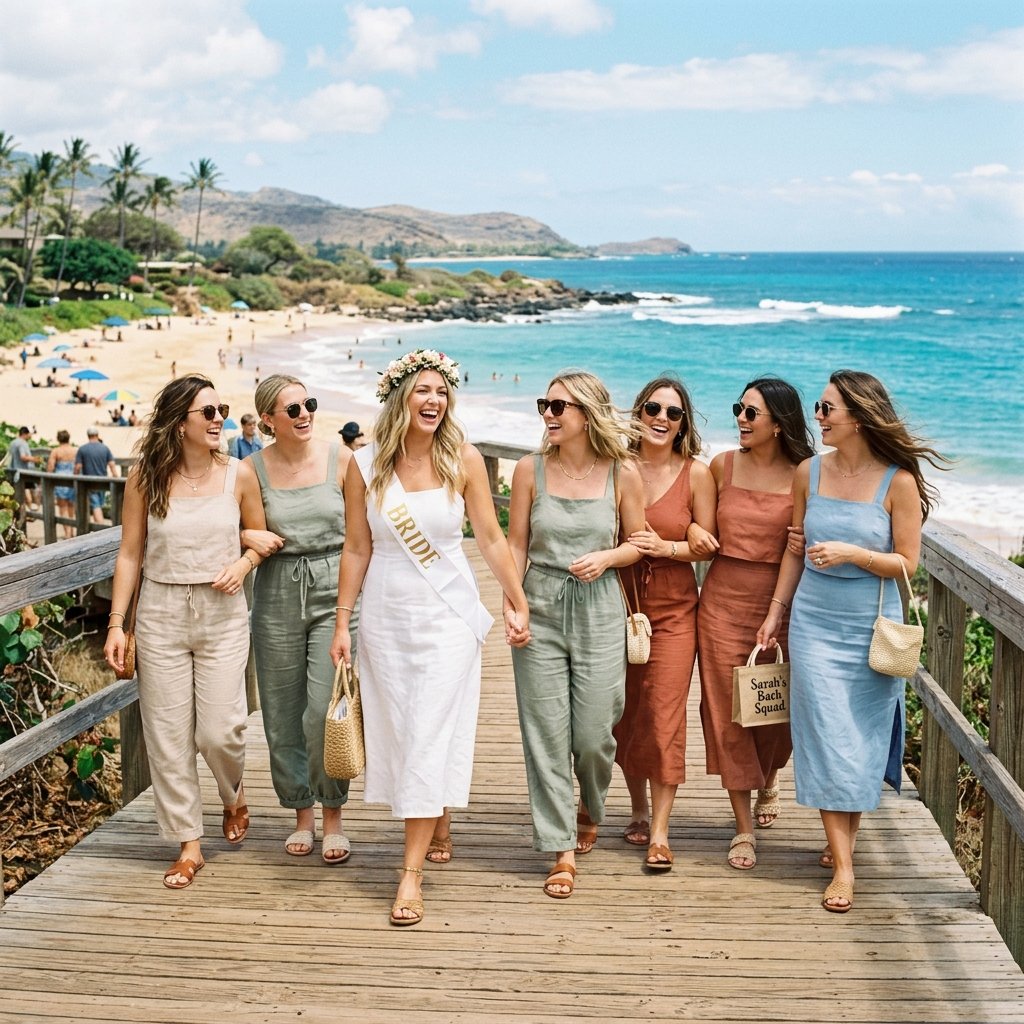
A relaxed dress, a linen set, or a jumpsuit with sandals typically fits the tone, especially if the welcome event happens at a restaurant, a beach bar, or a hotel terrace. This is also the outfit most likely to double as the next morning’s brunch look with a small swap, like trading heels for flats or removing a layer.
Since the welcome event is often the first time guests meet each other, it’s worth erring slightly more polished than “vacation casual,” even if the setting looks relaxed on paper. A step above what you’d wear to dinner at home usually reads correctly.
The Reception Outfit and What Changes for Dancing
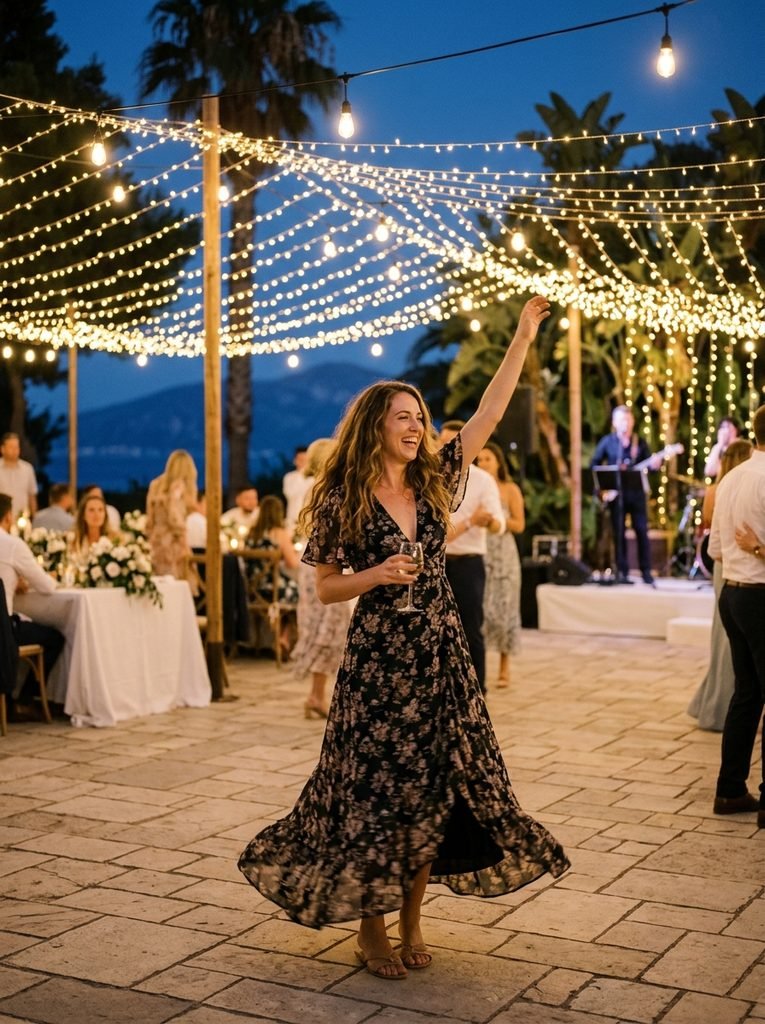
If the ceremony outfit and reception outfit are the same, this is the moment to change something. A cardigan or blazer removed, jewelry added, or a full shoe swap all shift the tone enough to photograph as two distinct looks rather than one long day in the same dress.
Comfort earns more weight here than at any other point in the weekend, since receptions run for hours and usually involve some amount of dancing. A second, more comfortable pair of shoes, packed specifically for this purpose, prevents the common scramble of guests going barefoot by 10 p.m.
If the reception includes an evening chill, which happens more often than people expect even at warm-weather weddings, ideas for dressier pieces that still pack down small apply well here, particularly for anyone wanting a bit more shine for the later part of the night without adding real bulk to the suitcase.
The Day-After Brunch
This is the lowest-stakes outfit of the weekend and also the one most people forget to plan for entirely, usually because it gets packed as an afterthought.
Something simple and comfortable works fine here: a sundress, linen separates, or the same outfit worn to the welcome event with fresh accessories. Sunglasses do a lot of the visual work at this event for reasons that don’t need much explaining after a wedding reception.
If the morning flight or drive home follows shortly after, building the brunch outfit around travel comfort as well saves an extra outfit change later in the day. Comfortable outfit strategies for the travel day itself apply directly here, since the brunch outfit and the travel outfit are often, practically speaking, the same thing.

Packing and Travel Logistics That Actually Matter
The outfits only work if they arrive in wearable condition, which makes the packing method almost as important as the outfit choices themselves.
- Roll casual pieces, fold structured ones. Jersey and knit fabrics roll well. Anything with a blazer-style structure holds shape better folded along its natural seams.
- Shoes go in first, stuffed with socks or jewelry to use dead space, and wrapped so they don’t mark other clothing.
- Jewelry travels safer in a pill organizer or a soft pouch than loose in a bag, where it tangles and occasionally disappears into a seam.
- A single garment bag, even a basic one, is worth checking as a personal item if the ceremony outfit is genuinely delicate. Airlines generally allow this, and it removes the fold-and-hope approach entirely for the one outfit that can’t afford damage.
- Carry the ceremony outfit and one backup daytime outfit in a carry-on, not checked luggage, if the itinerary allows it. Lost luggage on a normal trip is inconvenient. Lost luggage before someone else’s wedding is a genuine problem.
- Pack a small emergency kit: safety pins, a stain pen, double-sided tape, and a spare pair of nude tights or shapewear, since these solve the majority of last-minute guest wardrobe issues without needing a store nearby.
What to Leave at Home
Anything that needs ironing and can’t be steamed. Not every hotel room has an iron, and not every guest wants to spend wedding morning tracking one down.
A brand new pair of shoes. The ceremony lawn is not the place to discover a shoe doesn’t actually fit the way it did in the store.
More than one “just in case” formal outfit. One backup is sensible. Three is extra weight for a scenario that almost never happens.
Heavy statement jewelry for a daytime outdoor ceremony. It reads better at the reception, once the lighting and setting shift to something that can carry it.
Anything you haven’t actually tried on recently. Weight and fit shift, and a wedding morning is the wrong moment to find out a dress doesn’t zip the way it used to.
Frequently Asked Questions
How many outfits do I really need for a three-day destination wedding? Four or five pieces, worn across different combinations, usually cover a welcome event, ceremony, reception, and brunch without needing a separate look for every single hour.
What if the invitation doesn’t specify a dress code? Look at the venue and time of day for clues. A resort ceremony at sunset generally signals more formal than a backyard-style gathering at noon, and it’s reasonable to ask another guest or the couple directly if it’s genuinely unclear.
Is it ever okay to rewear an outfit across two events? Yes, especially between the welcome event and the brunch, which usually sit at a similar formality level. Swapping shoes or accessories is often enough to make it feel distinct.
How do I keep a delicate ceremony outfit from wrinkling in transit? Roll it inside a dry cleaning bag rather than folding it flat, and steam it the evening before with a hot shower or a small travel steamer if you have one.
Should I check my ceremony outfit or carry it on? Carry it on if at all possible, along with one backup daytime outfit, so a delayed or lost bag doesn’t affect the one event that can’t be rescheduled.
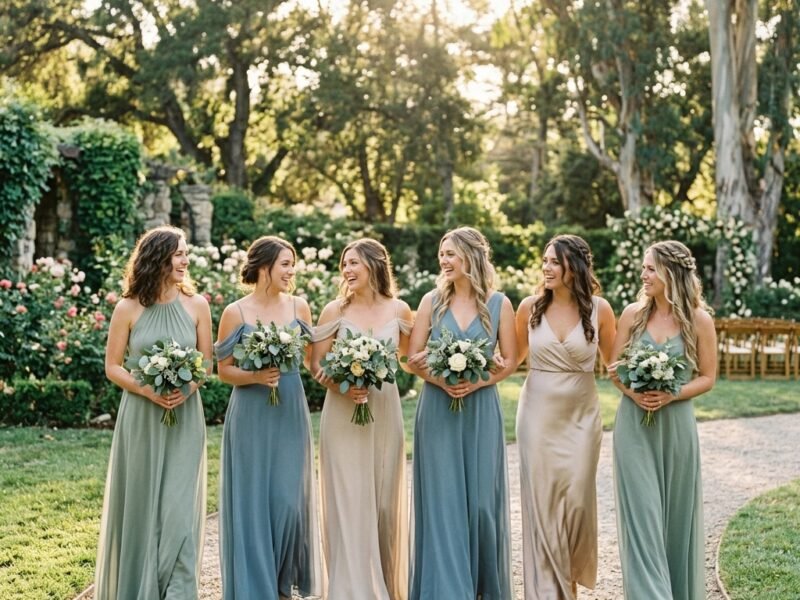
What’s the safest color choice if I’m unsure about the dress code? A mid-tone color in a flattering neutral, like a soft green, dusty blue, or terracotta, tends to photograph well across ceremony and reception lighting and rarely reads as under or overdressed.
Packing Light Doesn’t Mean Packing Wrong
A destination wedding asks more of a suitcase than almost any other kind of trip, since the outfits need to look considered while surviving actual travel. The fix isn’t packing more. It’s packing fewer pieces that each do more work, protecting the one or two that genuinely can’t be replaced if something goes wrong, and building in enough flexibility that a wrinkled hem or a delayed bag doesn’t turn into a real problem.
Handled that way, the outfits stop being the stressful part of the invitation, and the trip goes back to being what it was supposed to be in the first place.

Leave a Reply