Few phrases on an invitation cause as much quiet panic as “cocktail attire.” It sounds specific enough to have a clear answer, yet ask five people what it means and there’s a decent chance you’ll get five different outfits.
Part of the confusion comes from how often the phrase gets stretched. A corporate holiday party, a wedding reception, a gallery opening, and a milestone birthday dinner can all list “cocktail attire” on the same invitation format, even though the actual expectations at each one shift quite a bit. The phrase is doing a lot of work for two words.
This is meant to clear up what cocktail attire actually asks for, how it changes depending on the event, and where people tend to get it wrong in either direction.

What Cocktail Attire Actually Means, in Plain Terms
At its core, cocktail attire describes a dress or outfit that’s more polished than everyday clothing but stops short of full formal wear. It’s the middle setting on the formality dial, built for events that are dressy without being a black-tie occasion.
A few defining traits show up consistently across events labeled this way:
- Length typically falls at or above the knee, though a shorter midi length is generally acceptable too. Floor-length gowns tend to overshoot cocktail attire into formal territory.
- The silhouette is fitted or structured rather than flowing and loose. Cocktail attire has a put-together quality that separates it from daytime casual wear.
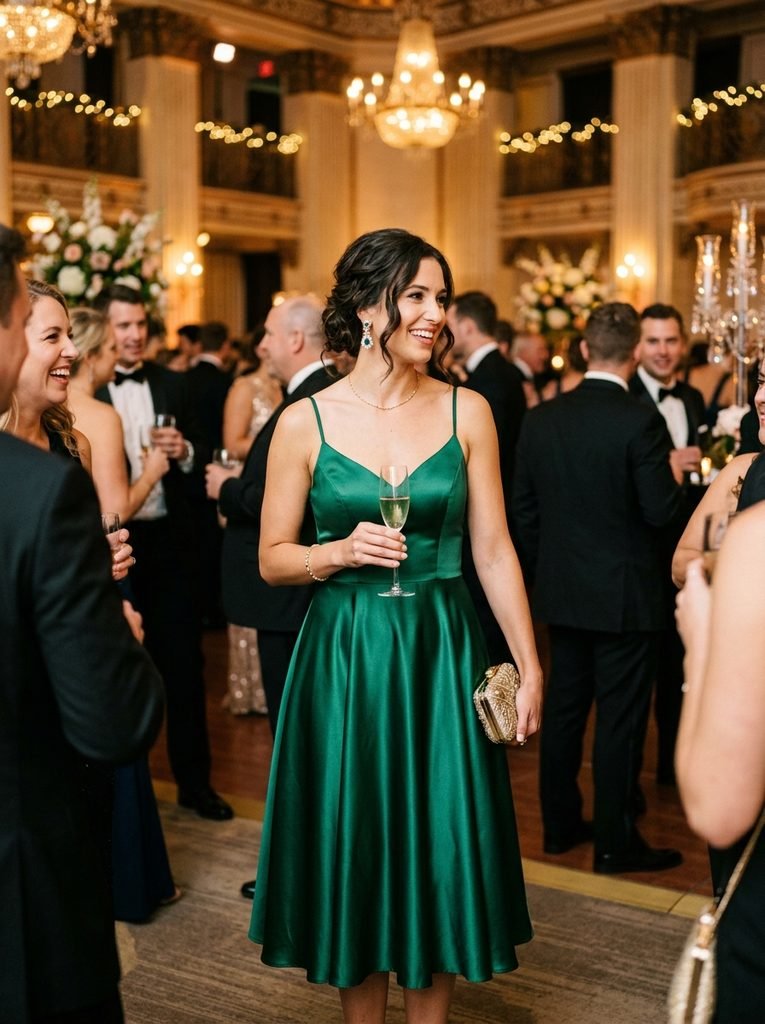
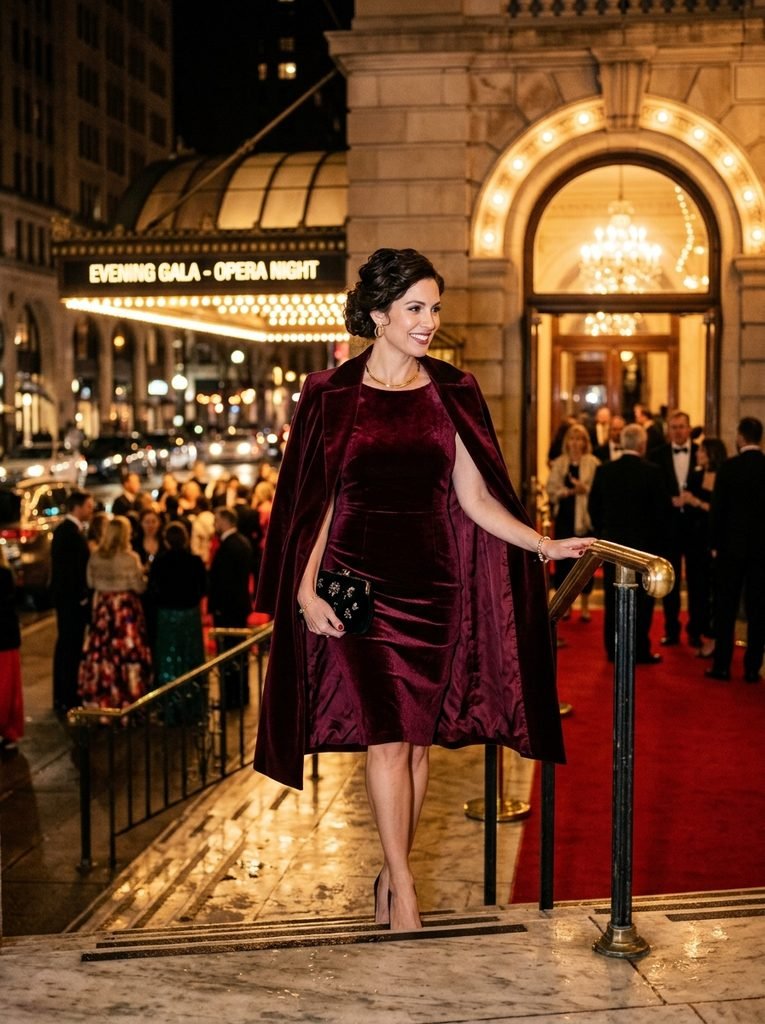
- Fabric carries more weight than cut. Satin, crepe, velvet, and structured knits all read as cocktail appropriate even in a relatively simple silhouette.
- Shoes are dressy, generally heels or a polished flat, rather than anything sneaker adjacent.
None of this means the outfit has to be complicated. A well-made sheath dress in a good fabric checks every box on this list without needing embellishment.
Where Cocktail Attire Sits on the Formality Scale
Cocktail attire makes more sense once it’s placed next to the dress codes around it, since most of the confusion comes from not knowing where the boundaries are.
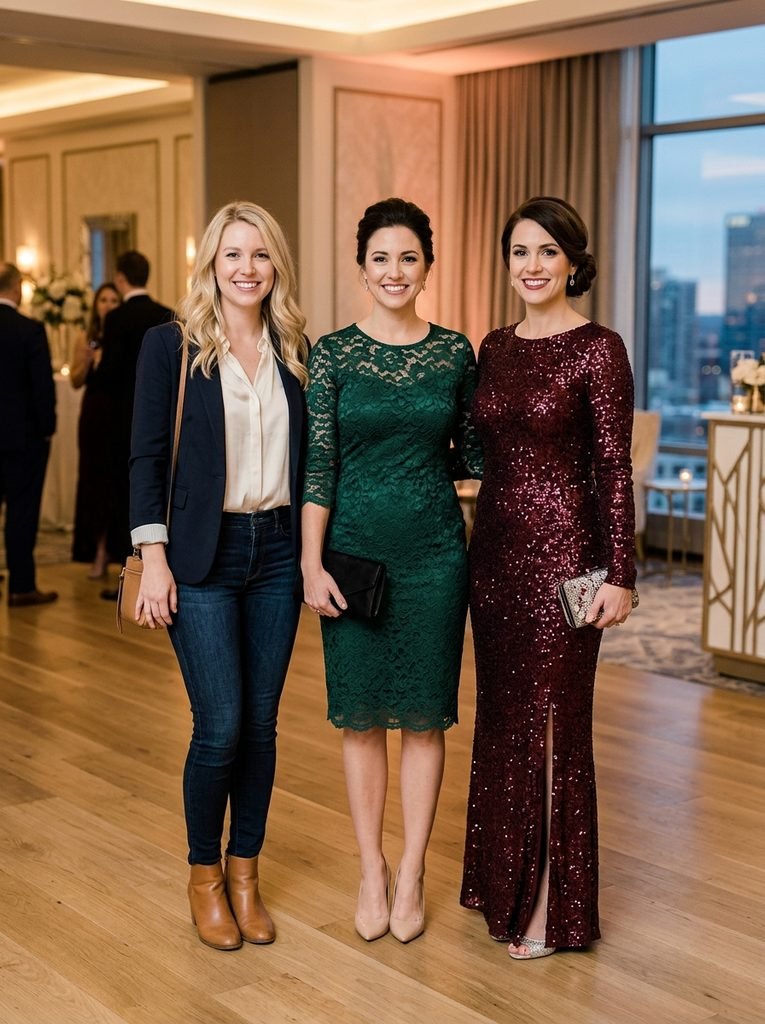
Casual or smart casual. Jeans, relaxed separates, sundresses. Comfortable first, polished second.
Cocktail attire. Dressy, fitted, above or at the knee, dressier fabric and finish, but not floor length or overtly glamorous.
Semi-formal. Sits close to cocktail attire but tends to allow a slightly longer hemline and a bit more room for a dressy jumpsuit or midi dress.
Formal or black-tie optional. Floor-length gowns become the expected default, though a very elevated cocktail dress can sometimes pass here if the invitation explicitly allows a shorter length.
Black tie. Gowns only, generally with a more elaborate fabric or detail than formal wear requires.
Cocktail attire sits distinctly in the middle of this scale, which is exactly why it gets misread in both directions. Some guests dress semi-formal thinking it’s the safer bet. Others undersell it and end up closer to smart casual.
The Words That Get Added to “Cocktail” and What They Change
Invitations rarely stop at the plain phrase. The modifiers attached to it usually contain the actual instructions, and skipping past them is where most of the guesswork creeps in.
“Cocktail optional.” This generally signals a more relaxed version of the event, where dressy separates or an elevated jumpsuit work just as well as a full cocktail dress.
“Dressy cocktail” or “elevated cocktail.” A push toward the formal end of the scale. Richer fabrics, more polish, and a slightly longer hemline all read correctly here.
“Cocktail chic” or “creative cocktail.” An invitation to add personality, whether that’s a bold color, a statement accessory, or an unexpected silhouette, while still keeping the overall formality where cocktail attire sits.
“Semi-formal cocktail.” Usually a hybrid instruction, meaning a midi or below-the-knee cocktail dress rather than something shorter and more casual.
When an invitation includes a modifier, it’s worth taking it literally rather than defaulting to the plain cocktail attire interpretation. The added word is doing more work than it might seem to at first glance.
What Actually Works, Silhouette by Silhouette
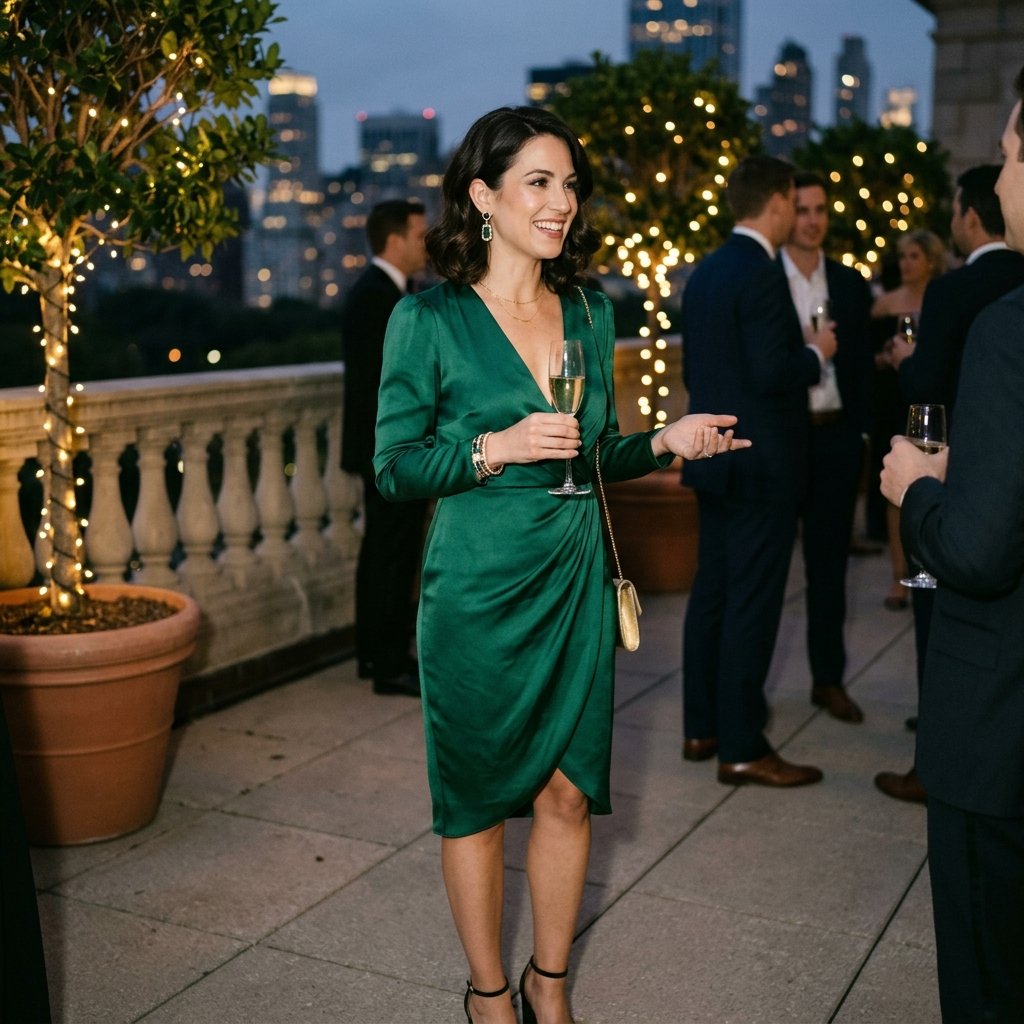
The classic cocktail dress. A fitted or A-line dress landing at or just above the knee remains the most reliable choice, largely because it reads correctly at nearly every event that lists this dress code.
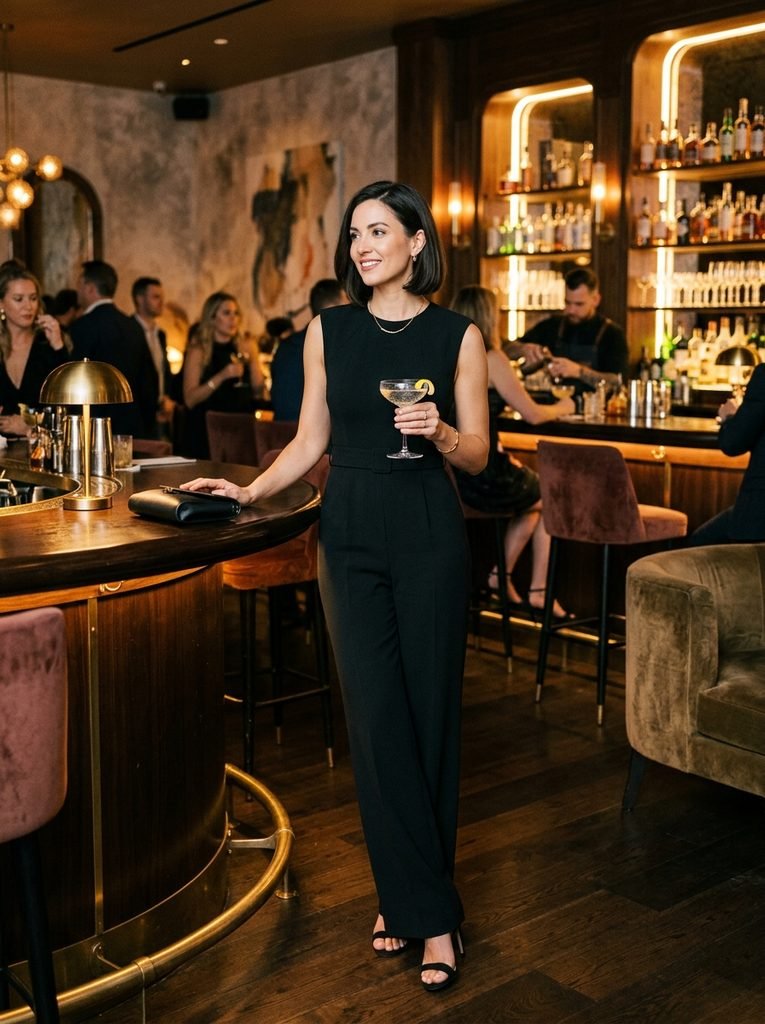
The dressy jumpsuit. A well-tailored jumpsuit in a cocktail-appropriate fabric, like crepe or a structured knit, works for most cocktail events and offers a genuine alternative for anyone who prefers pants.
Dressy separates. A silky top paired with tailored trousers or a fitted skirt can match cocktail attire exactly, provided the fabric and fit both lean polished rather than everyday.
The midi dress. Increasingly common at cocktail events, particularly ones that lean slightly more formal. A midi in a structured or fluid fabric bridges cocktail and semi-formal without overcommitting to either.
What tends to undershoot the dress code: casual sundresses, anything in jersey or cotton with no structure, and flat sandals without a dressier finish.
What tends to overshoot it: floor-length gowns, heavily embellished formalwear, and anything that would look more at home at a black-tie gala than a cocktail hour.
Fabric and Color Choices That Read as Cocktail
Fabric does more to communicate formality than cut alone, which is why two dresses with an identical silhouette can land in completely different dress code categories.
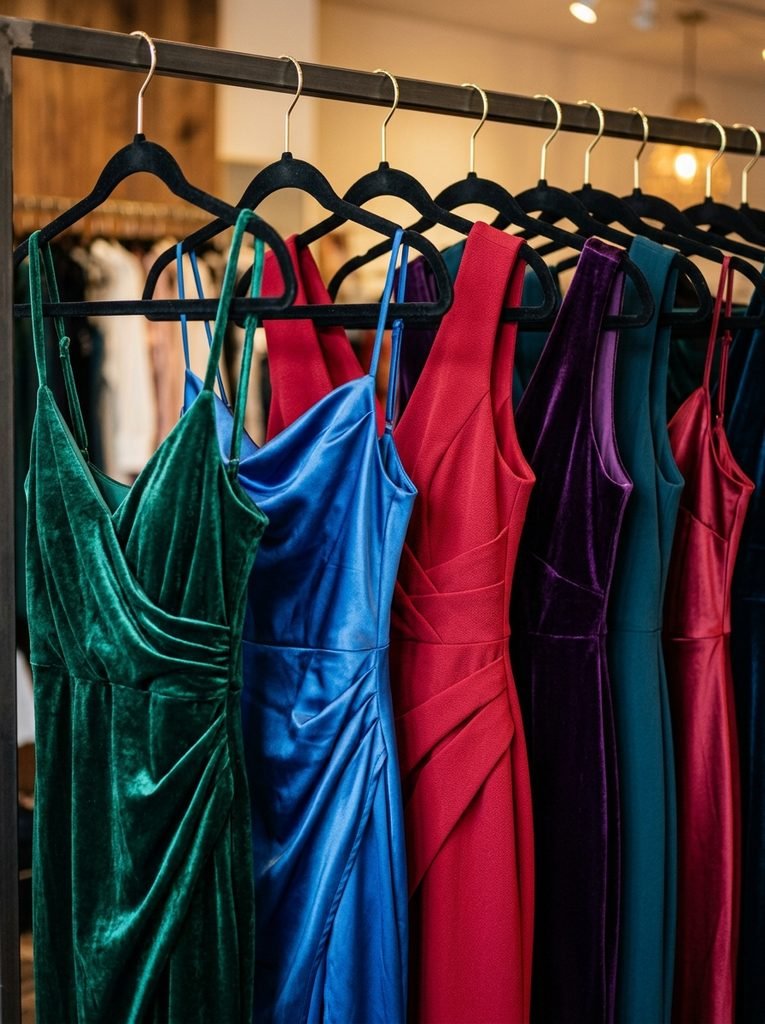
Reads as cocktail: satin, crepe, velvet, structured jacquard, matte jersey with a tailored cut, and faux leather in a fitted silhouette.
Reads as more casual than intended: linen, cotton poplin, unstructured jersey, and anything with a distinctly daytime print.
Color has more flexibility here than most people assume. Jewel tones, black, deep neutrals, and metallics all sit comfortably within cocktail attire. Pastels and brighter colors work too, provided the fabric and cut still carry the necessary polish. The dress code is more forgiving on color than it is on fabric and structure.
How the Event Changes the Interpretation
The same two words on an invitation can point to slightly different outfits depending on what kind of event is actually happening.
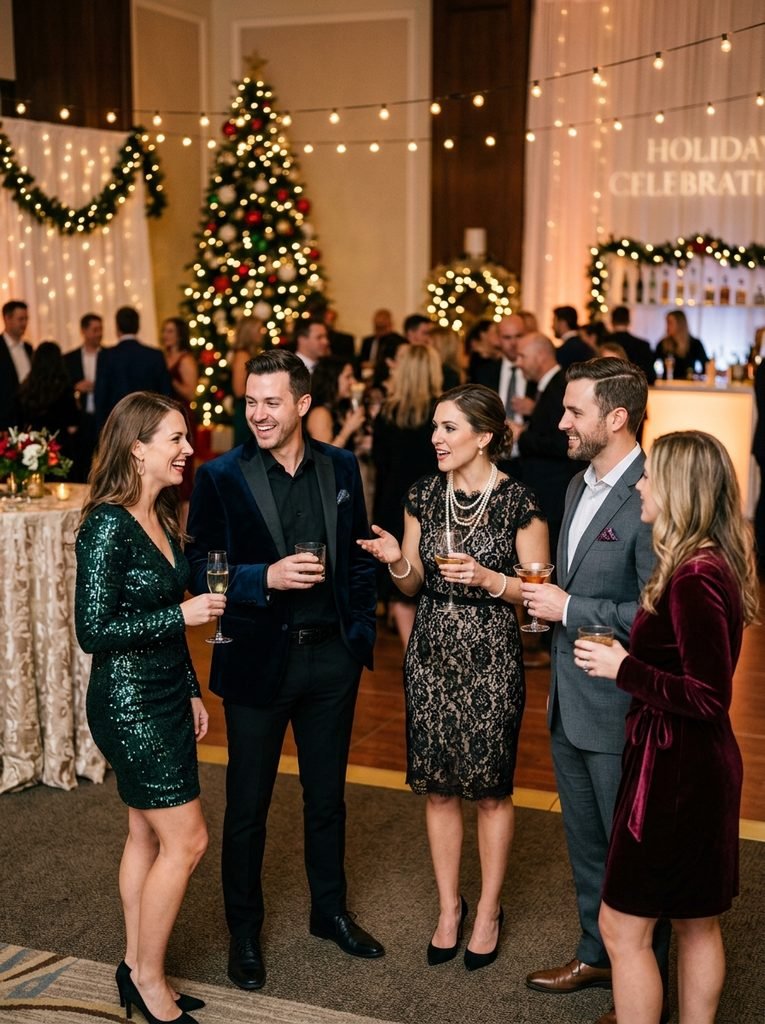
A corporate holiday party. Cocktail attire here tends to lean toward the more conservative end. A well-fitted dress or dressy separates in a rich but not overly sparkly fabric usually reads correctly for a room full of colleagues.
A wedding reception. Cocktail attire at a wedding often allows a bit more personality and color, though the usual guest etiquette still applies. Avoiding white, cream, or anything that could be mistaken for bridal remains the one hard rule regardless of dress code. For weddings that lean more casual overall, dress code guidance built specifically around wedding guest etiquette covers some of the same color and coordination questions from the guest side.
A milestone birthday or private party. Usually the most flexible interpretation, where a slightly bolder or more fashion-forward take on cocktail attire tends to be welcomed rather than questioned.
A gala or fundraiser. Often the highest end of cocktail attire’s range, closer to the formal border. A dressier fabric, a more structured silhouette, and elevated accessories all help here.
An outdoor cocktail event. Practical considerations start to matter alongside formality. A fitted dress that still allows movement across grass or gravel, paired with a block heel rather than a stiletto, solves the same problem that comes up at outdoor wedding ceremonies with a similar terrain issue.
Shoes and Accessories
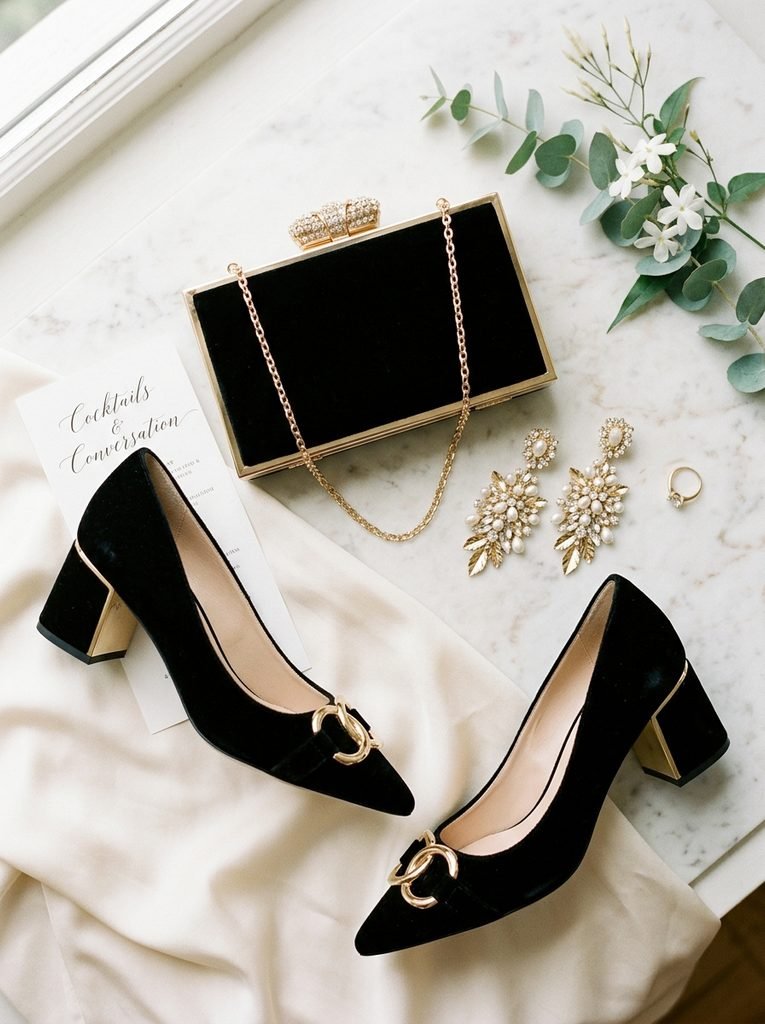
Footwear at a cocktail event generally falls into two reliable categories: a heel, whether stiletto, block, or kitten, or a polished flat with some visible design detail, like a pointed toe or a metallic finish. Sneakers, even dressy ones, and flat sandals without embellishment both undersell the dress code.
Accessories are where cocktail attire allows the most personal expression. A statement earring, a structured clutch, or a bold cuff all fit comfortably within the dress code’s expectations, and this is generally the category where guests can push slightly further than the outfit itself without risking looking underdressed or overdressed.
One detail worth noting: cocktail attire rarely calls for a full formal clutch-and-wrap combination the way black-tie events do. A single strong accessory usually does more for the outfit than several smaller ones layered together.
Seasonal Adjustments
Warm-weather cocktail events. Lighter fabrics like crepe and structured cotton blends keep the formality intact without the discomfort of heavier materials. A cropped jacket or wrap, rather than a full coat, handles any air conditioning without breaking the silhouette.
Cold-weather cocktail events. Velvet and richer jewel tones both suit the season and the dress code at once. A tailored coat, rather than a puffer or anything overtly casual, keeps the arrival outfit consistent with the one underneath it.
Transitional-season events. A midweight fabric like a structured knit or a lighter velvet bridges both temperature extremes without needing a full seasonal wardrobe swap.
For anyone attending a cocktail-level event as part of a larger holiday season, outfit ideas built around evening shine and sparkle overlap usefully with cocktail attire’s fabric guidance, particularly for the dressier end of the scale.
Common Mistakes Worth Avoiding
Treating cocktail attire as a synonym for “formal.” Floor-length gowns and heavily beaded formalwear both overshoot what the dress code is actually asking for, and can read as trying too hard at events built around a lighter kind of dressy.
Underestimating it as “date night casual.” A sundress or unstructured separates fall short of the polish cocktail attire calls for, even at more relaxed cocktail events.
Ignoring the modifier word on the invitation. “Cocktail optional” and “dressy cocktail” point in genuinely different directions, and treating them identically usually means missing the host’s actual intent.
Choosing comfort over structure entirely. Cocktail attire allows for comfortable choices, but the outfit still needs some tailoring or structure to read correctly, rather than leaning entirely into loungewear-adjacent fabric.
Forgetting the venue. An outdoor cocktail hour on grass calls for different footwear than an indoor rooftop bar, regardless of what the invitation’s dress code technically permits.
This same kind of formality mismatch shows up at family events too, where guests sometimes default to overly conservative choices out of caution. The same logic that helps mother of the bride outfits avoid reading overly matronly applies here: a dress code exists to guide the outfit, not to flatten it into something generic.
Frequently Asked Questions
Can I wear pants to a cocktail attire event? Yes. A well-tailored jumpsuit or dressy trouser and top combination fits cocktail attire as long as the fabric and fit both lean polished rather than casual.
Is black always a safe choice for cocktail attire? Generally yes, since black consistently reads as dressy across nearly every version of the dress code, though it’s worth checking whether the event has requested a specific color palette.
What’s the difference between cocktail attire and semi-formal? Semi-formal generally allows a slightly longer hemline and a bit more flexibility toward formalwear, while cocktail attire stays fixed around the knee-to-midi range with a dressier but not gown-length silhouette.
Can I wear a midi dress to a cocktail event? Yes, particularly for events that lean toward the more formal end of cocktail attire. A structured or fluid midi in the right fabric works well without overshooting into formal territory.
What should I avoid wearing to a cocktail attire event? Floor-length gowns, casual sundresses, sneakers, and anything in an unstructured, everyday fabric like plain cotton or basic jersey all miss the mark in one direction or the other.
How formal should shoes be for cocktail attire? A heel or a polished flat with some design detail both work. Flat sandals without embellishment and sneakers generally read as underdressed for this particular code.
The Short Version
Cocktail attire asks for polish without full formality: a fitted silhouette, a dressier fabric, a hemline at or near the knee, and shoes that match the effort of the rest of the outfit. The modifiers attached to the phrase, and the type of event it’s attached to, both shift the details slightly, but the core formula holds steady across almost every version of it.
Once that’s clear, the invitation stops being a puzzle and starts being exactly what it was meant to be: a straightforward signal for how dressed up the night is supposed to feel.

[…] come with their own quirks. If the invitation says “festive cocktail,” it helps to read what cocktail attire actually asks for before guessing at […]