
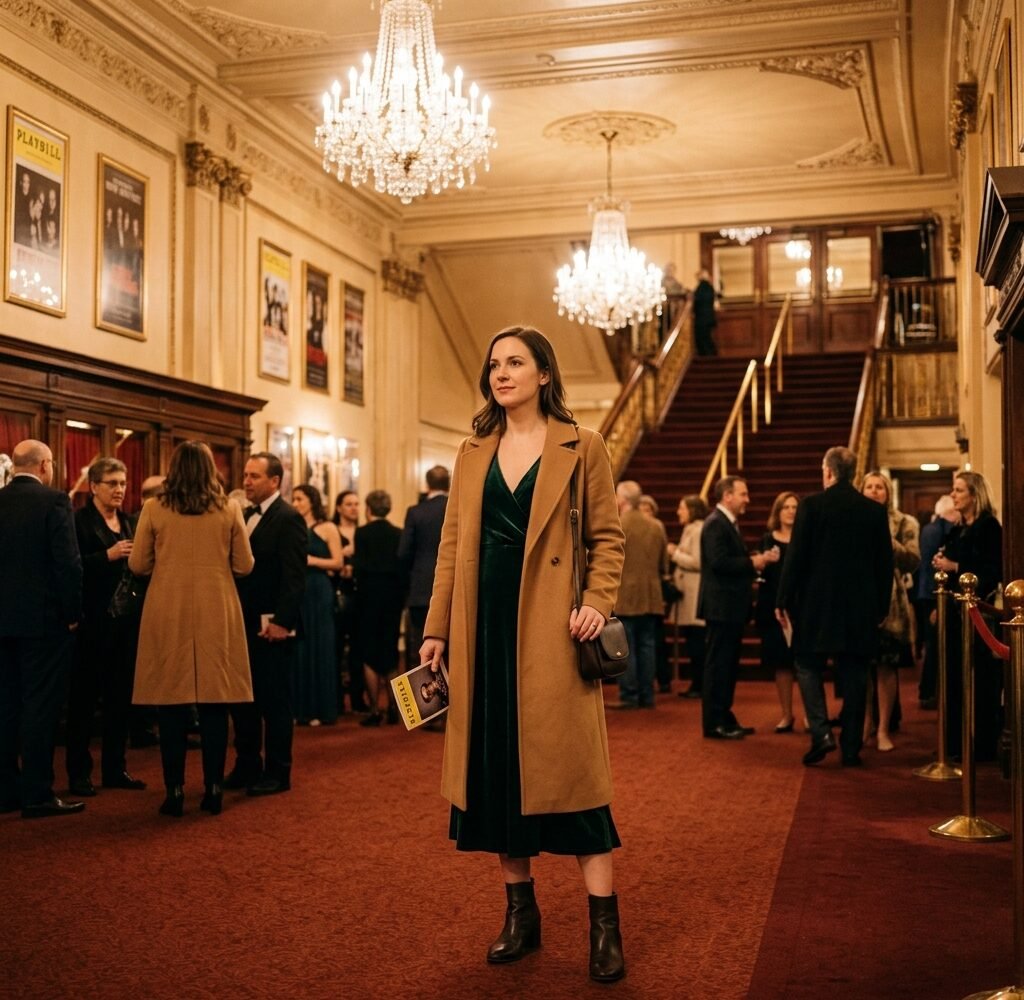
An evening at the theatre follows a strange clothing schedule. There is the walk from the station or hotel in whatever weather the city offers, then a cloakroom or a coat folded onto a lap, then a warm auditorium with narrow seats, and finally the walk home in the dark. A good outfit has to survive all four stages, and it should still look pleasant in the foyer photograph.
The reassuring part is that the rules are loose. The practical part is that comfort matters more than most people expect. This guide covers what the dress code actually is on both sides of the Atlantic, how to read different kinds of performances, outfit formulas that suit a long sit, and the small details that make an evening easier: shoes, bags, coats, and fabrics.
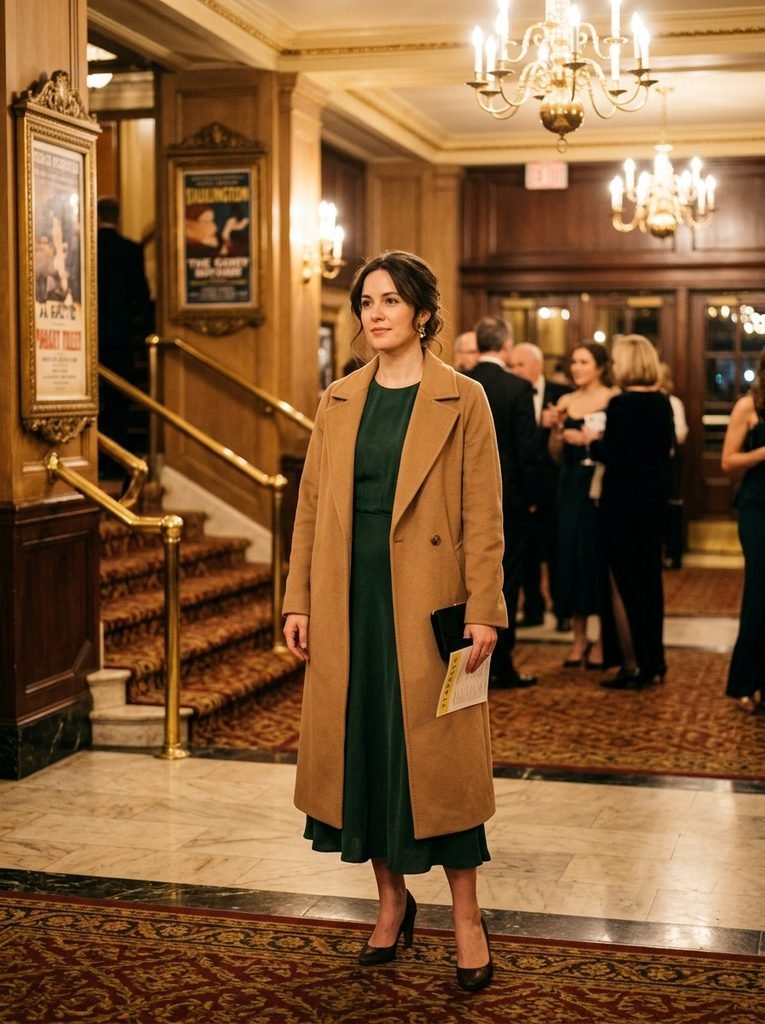
Is There a Dress Code at the Theatre?
Mostly no. In London, Visit London notes that audiences can wear whatever they like unless a theatre or venue has stated a dress code in advance. On the other side of the Atlantic, the New York Theatre Guide says most Broadway theatres no longer have dress codes, though some venues keep long-standing traditions about how people dress.
In practice, audiences range from jeans and trainers to cocktail dresses and suits, often in the same row. Evening wear is not out of place, and neither is something plainer. The simplest habit is to check the theatre or production website once before the date, in case a special performance has a stated dress code.
| West End | Broadway | |
|---|---|---|
| Official dress code | Generally none for regular performances | Generally none for regular performances |
| Typical audience style | Smart casual to casual, with some dressed-up evenings | Smart casual to business casual, with dresses and collared shirts common |
| Weather factor | Rain and mild winters, so a light waterproof layer helps | Colder winters and hot summers, so coats and cooling layers matter more |
| Walking before and after | Short walks around theatre districts | Often longer walks through busy blocks |

Dress for the Seat, Not Just the Stage
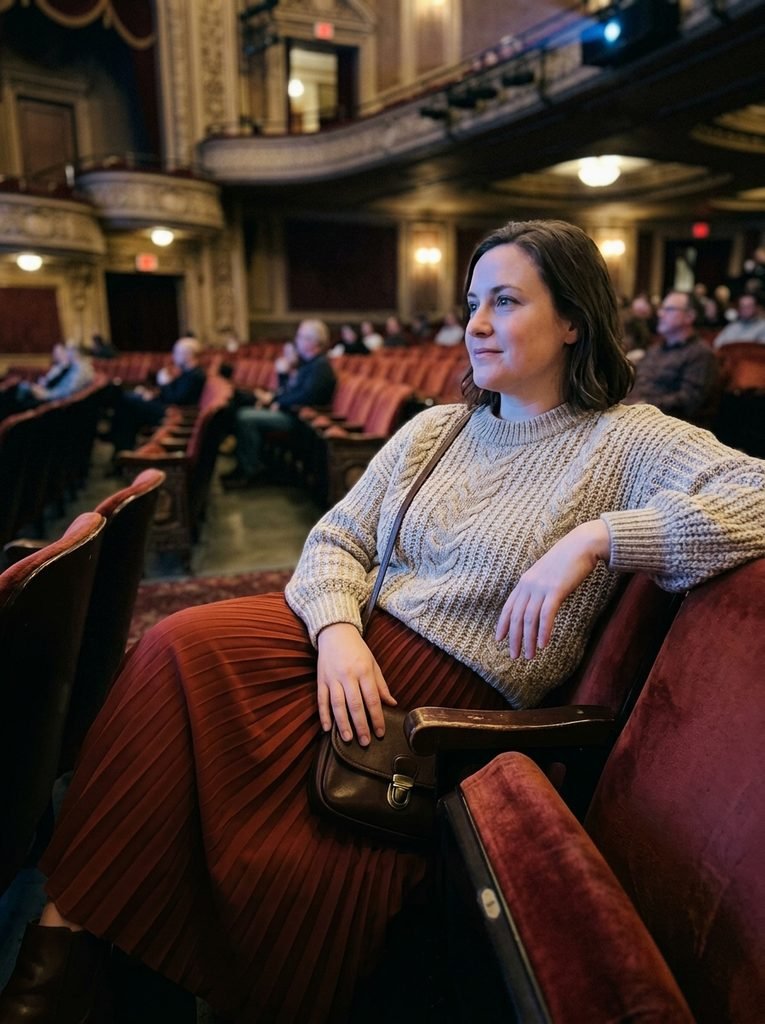
Before thinking about color or silhouette, think about the next three hours. Theatre seating is often snug. Many auditoriums are warm once full, and the legroom in older buildings can be limited. Many seats also have no under-seat storage, so a large bag ends up in an awkward place at your feet.
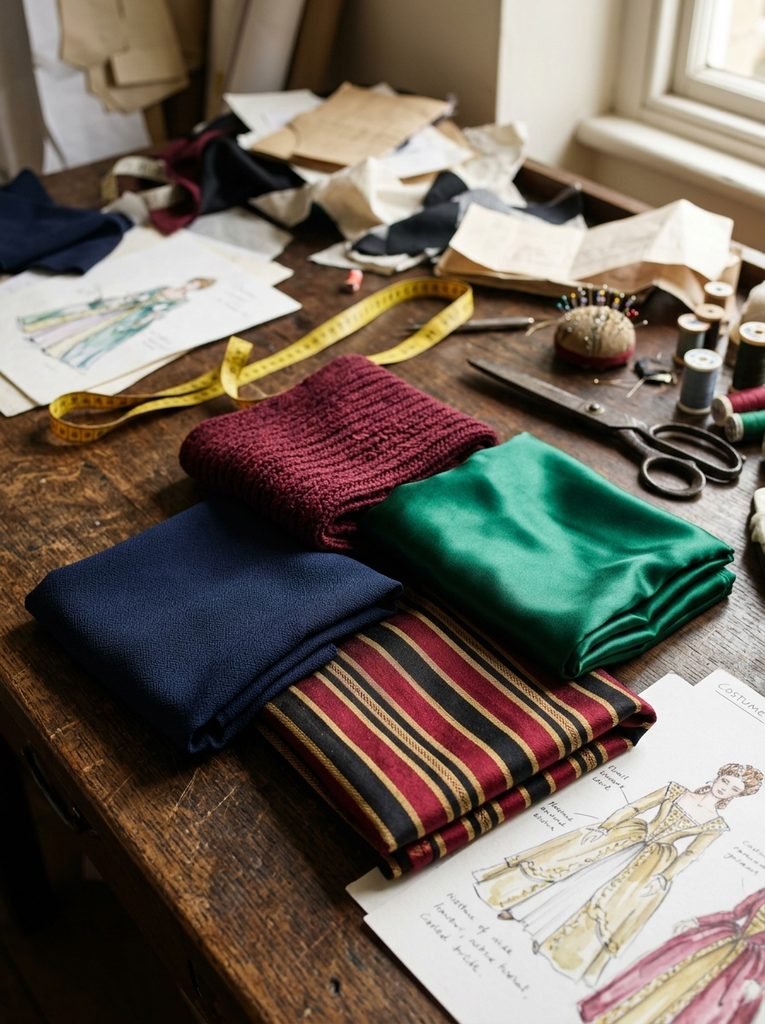
That points toward clothes that stay comfortable seated for a long time. Waistbands should not dig, skirts should not ride up, and layers should come off without a struggle. A fabric that creases badly will look tired by the interval, so something with a little drape, such as crepe, knit, or a soft satin, tends to hold its shape.
It also helps to dress in layers that can be removed. A cardigan or blazer can come off in a warm auditorium and go back on for the cooler foyer or the walk home. This is the opposite of a concert, where the challenge is standing for hours, as covered in the concert outfit guide. The theatre is about sitting comfortably and still looking composed.
Reading the Occasion: Matinee, Evening, or Opening Night
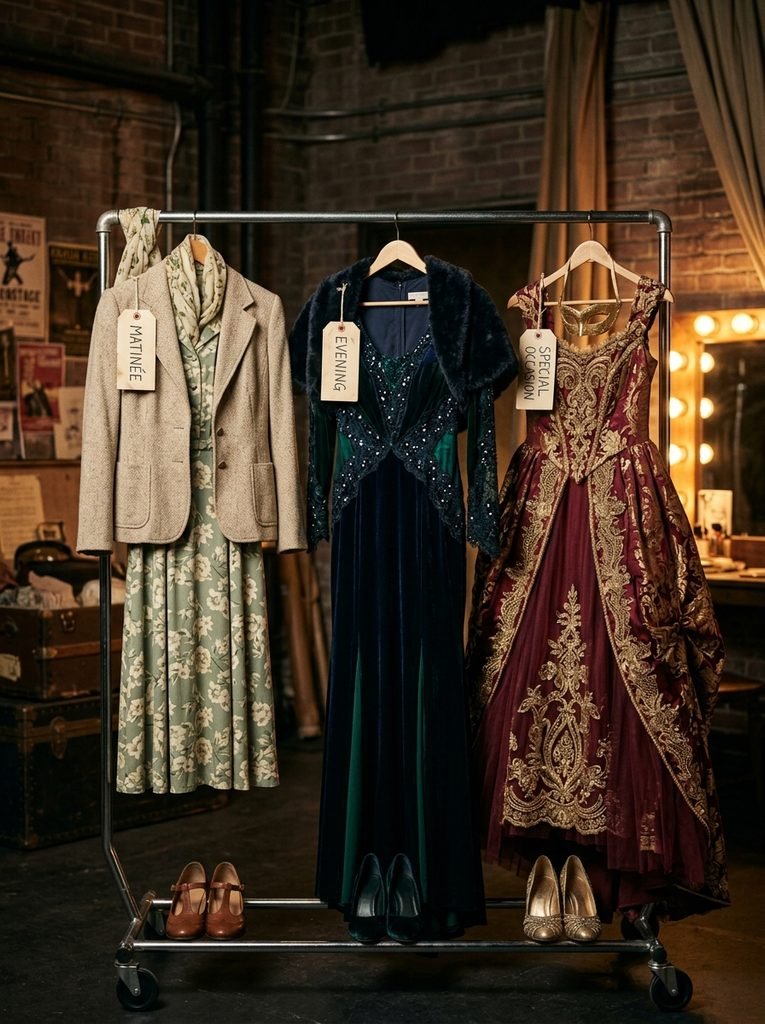
The performance time changes the feel of the outfit more than the venue does.
Matinee Afternoons
Matinees are usually the most relaxed. Many people arrive in daytime clothes, often after lunch or a museum visit. A knit dress with boots, tailored trousers with a fine sweater, or smart jeans with a crisp shirt all fit. Lighter colors and daytime textures look natural here.
Evening Performances
Evenings invite a little more polish, though it can be subtle. A silk or satin blouse with trousers, a midi dress, or a jumpsuit gives an evening feel without being formal. Darker colors, richer fabrics, and a bit of jewelry make a difference. The smart casual dress code guide is a helpful reference for how far to go in either direction.
Opening Nights and Special Events
Premieres, galas, and opening nights are the occasions where people tend to dress most formally. If the invitation or ticket mentions a dress code, follow it. Without one, a cocktail dress, a dressy jumpsuit, or a tailored suit is a safe choice, and anyone wanting a longer gown has permission to wear one. For formal events with black tie in the details, this black-tie wedding guest guide covers how to dress at that level.
Five Outfit Formulas That Work
Each of these is built for sitting comfortably and walking in real weather.
The Midi Dress With Boots
A midi dress in a fabric with some weight, such as a jersey, a crepe, or a fine knit, is among the most comfortable ways to dress for a long evening. Add tights and ankle or knee-high boots for cold weather. A structured jacket or a long coat makes it feel finished. Deep green, navy, burgundy, and chocolate look rich under theatre lighting.
Wide-Leg Trousers and a Silk Blouse
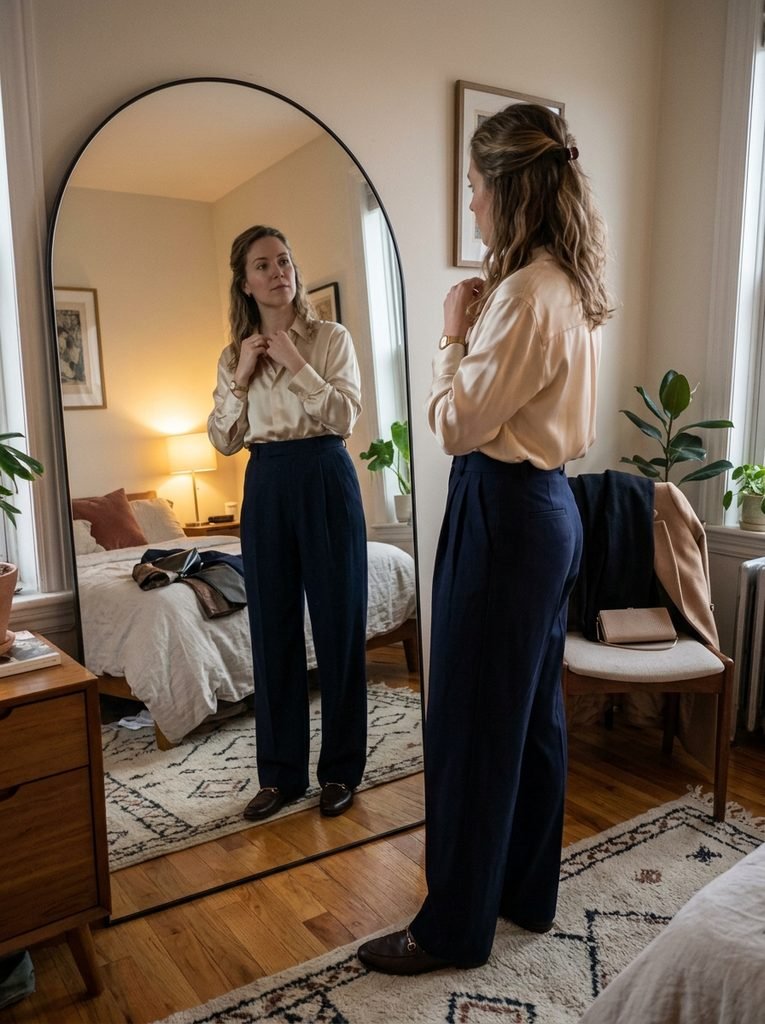
Tailored wide-leg trousers with a satin or silk-feel blouse feel dressed up while staying roomy in the seat. Tuck the blouse in and add a slim belt to define the waist. Loafers, low heels, or polished ankle boots all suit this combination. A blazer on top handles chilly foyers.
The Jumpsuit
A jumpsuit in a soft, matte fabric solves the whole outfit in one piece. Look for one with stretch or a relaxed cut, since seated comfort matters more than a sharp fit. A dark color, such as black, ink blue, or forest green, looks polished with simple gold jewelry and a small bag.
A Knit Skirt and Fine Sweater
A midi skirt in a knit or soft pleated fabric with a fitted fine-gauge sweater is warm, easy, and quietly elegant. Choose a skirt with a little stretch so it sits well when seated. Pair with boots or flat shoes, and add a statement earring for the evening.
Smart Jeans and a Blazer
For anyone who prefers jeans, a dark, clean pair with no rips and a straight or slim cut looks right at the theatre. Add a tailored blazer, a crisp shirt or silk-feel top, and leather shoes or neat ankle boots. This formula suits matinees, casual evenings, and any show where the mood is relaxed.
The Cold-Weather Problem: Coats, Layers, and the Cloakroom
Winter evenings are where theatre outfits get complicated, because the outfit that works outside may be too warm inside. A few habits help.
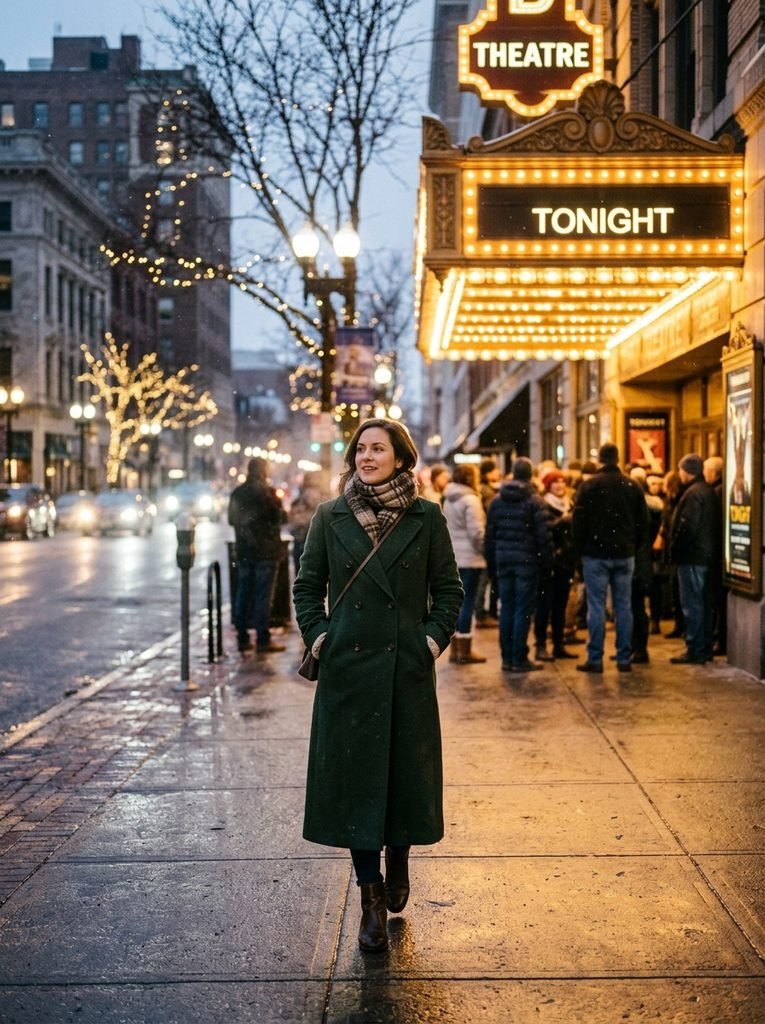
Choose a coat that is easy to carry. Many theatres offer a cloakroom or coat check, though availability varies, so check ahead. If one is not available, a coat that folds neatly on your lap is easier than a voluminous puffer. For ideas on cold-weather coats that look polished, the winter coat outfits guide covers camel, check, and oversized styles.
Wear thinner layers under the coat rather than one heavy knit. A fine merino or a silk-blend top keeps you warm outdoors and comfortable indoors. The New York Theatre Guide suggests wearing thicker but fewer layers on cold days, which keeps things simple when it is time to take a coat off.
Add a scarf, gloves, and a hat only if they can be tucked into a bag or coat pocket. Wet-weather evenings call for a compact umbrella and shoes with some grip, as theatre-district pavements can be slippery.
Warm Evenings and Summer Shows
Theatres can be warm when full, and summer makes that worse. Breathable fabrics matter most: cotton, linen blends, viscose, and lightweight crepe. A linen-blend dress, a sleeveless jumpsuit, or wide-leg trousers with a short-sleeve silk top keep things cool.
It is still worth bringing a light layer, because air conditioning in some venues can run cool. A thin cardigan, a cotton blazer, or a pashmina folds small and handles the difference. Avoid anything that sticks to the skin in the heat, since a long sit makes discomfort obvious.
Shoes You Can Actually Stand In
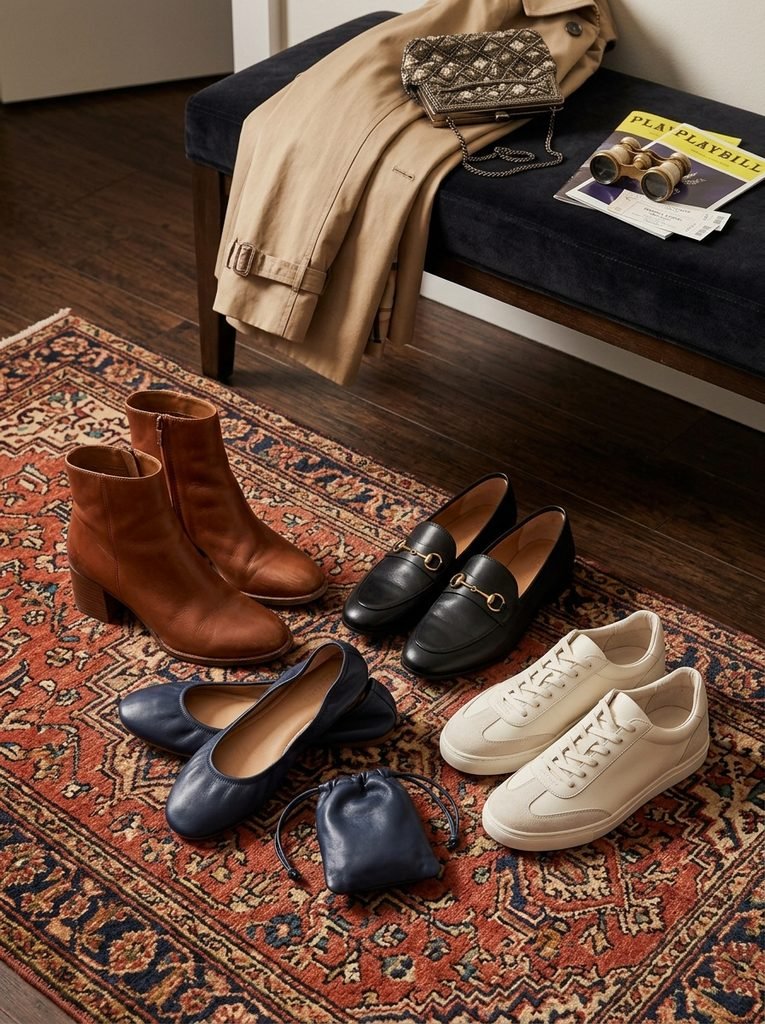
Shoes are where the evening is won or lost. The walk to the theatre, the interval queue, and the walk home can add up to more steps than people plan for. Heels are fine for short distances, but a block heel or a wedge is easier to sit and stand in than a stiletto.
Loafers, low boots, ankle boots, and ballet flats all look at home in a theatre. Clean leather or minimal canvas sneakers are also common in many audiences, particularly at matinees and musicals. Anyone wearing heels might pack a pair of foldable flats in a tote for the journey home, a tip the New York Theatre Guide also recommends.
Bags, Jewelry, and Small Details
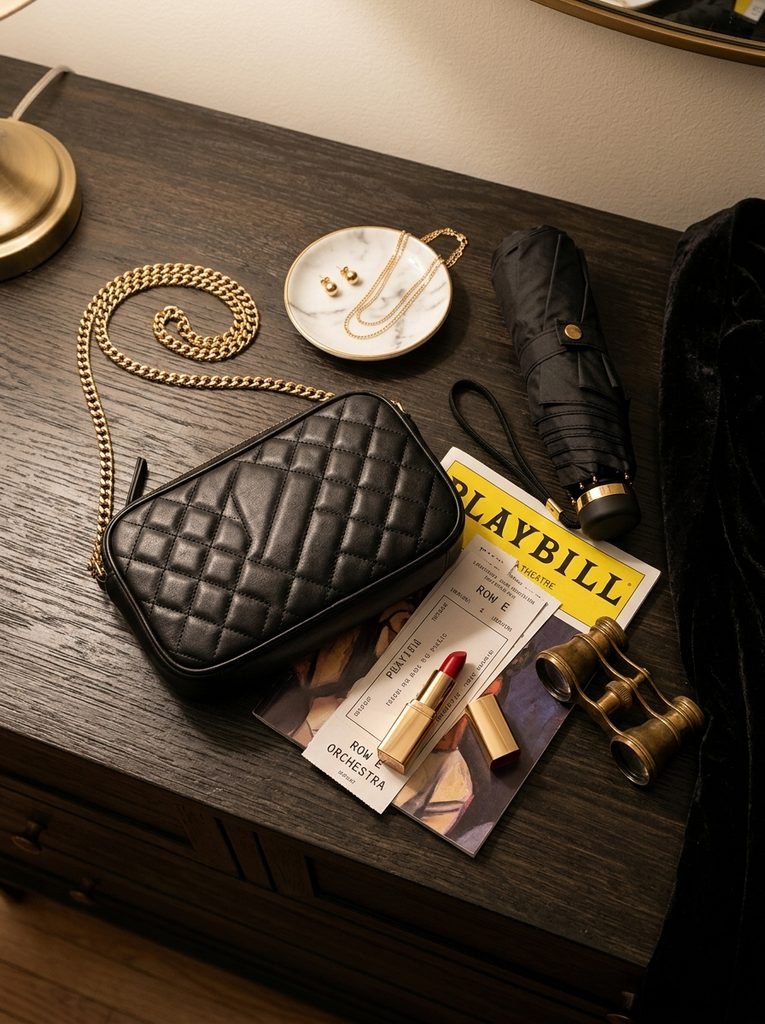
Bags should be small. A crossbody or compact shoulder bag fits beside you or on your lap without taking up space. If you must carry more, a slim tote that can slide flat under the seat works better than a structured bag.
For jewelry, keep it quiet. Bracelets that jingle or bangles that clack against an armrest can be distracting in a silent moment. Studs, small hoops, and delicate chains look elegant and make no noise. Tall hats and large hair accessories can block the view of the person behind you, so save them for another occasion.
Dressing for the Show Itself
Some shows invite a nod to their theme. At certain productions, a color reference or a small detail is part of the fun. The New York Theatre Guide mentions wearing a pink or black dress to a certain well-known musical as a playful tribute. A scarf in the show’s color, a themed pin, or a dress in a character’s shade lets you join in without wearing a costume.
Full fancy dress is a different matter. Visit London notes it is generally not common at London theatres, although a few productions actively encourage it. If you are unsure, check the show’s website or social pages, and keep a costume to the shows that clearly welcome it.
For immersive productions, where the audience may move around the space, practical clothes matter more. Think comfortable shoes, flexible layers, and nothing that restricts movement.
Colors and Fabrics That Handle a Long Evening
Darker colors suit theatre lighting and hide the small marks that come from a bar drink or a cramped seat. Navy, black, forest green, burgundy, and deep plum are all dependable. Jewel tones, such as emerald or sapphire, add richness without feeling loud.
Patterns that work well include small florals, subtle checks, and fine stripes. They disguise creases and look good in low light. If you want a light color, such as cream or pale blue, accept the risk of a spilled interval drink, or carry a tote to keep things protected.
Fabrics matter as much as colors. Crepe, jersey, ponte, fine knit, and soft satin tend to resist creasing and move well when seated. Stiff cotton and unlined linen crumple fast, so they may look worn by the second act.
Quick Answers Before the Curtain
Can I wear jeans to the theatre?
Yes. Choose a clean, dark pair without rips and dress them up with a blazer, a nice top, and tidy shoes.
Should I dress up for a matinee?
Not necessarily. Matinees tend to be more relaxed, so smart casual is usually enough.
What about trainers?
Clean, minimal trainers are common in many audiences, especially at musicals and matinees.
Do I need formal wear for a West End or Broadway show?
No, unless the theatre or event states one. Evening wear is welcome for those who want it.
What should I carry?
A small crossbody bag, a compact umbrella if needed, and perhaps foldable flats for the walk home.
One Last Check Before You Leave
Run through a short list before heading out: a layer that comes off easily, shoes that work for walking and sitting, a bag small enough for a lap, and an outfit that does not need constant adjusting. If those four are sorted, the rest is a matter of personal taste.
The theatre has become a place where all kinds of dressing coexist, so the right outfit is one that lets you forget about it once the lights go down.


Leave a Reply