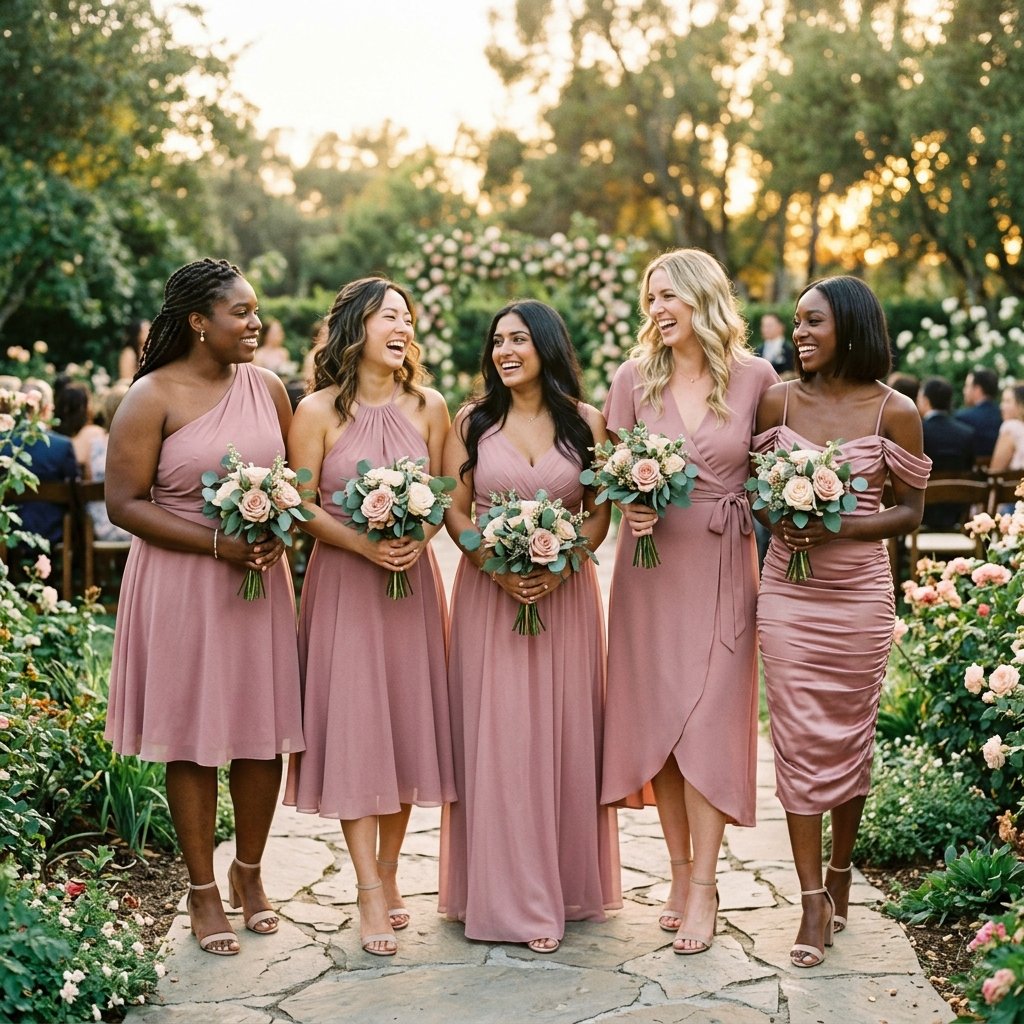
Choosing bridesmaid dresses for a group is rarely simple. Bridesmaids differ in body type, height, and colouring. A dress that looks extraordinary on one woman can look completely different on the next. The real challenge is finding something that works genuinely well across a range of bodies, not something that flatters a few and gets tolerated by the rest.
Two strategies solve this problem. The first picks a single dress designed to flatter the broadest range of body types. The second lets each bridesmaid choose her own dress within a shared framework, such as a colour, a fabric, or a style family. This guide covers both, along with the styling principles that make each work.
None of these ideas frame a body type as something to hide. Every recommendation here helps a bridesmaid feel genuinely beautiful and comfortable. Bridesmaids who feel good bring a different energy to a wedding than bridesmaids managing an uncomfortable dress all day. Photographs and the celebration itself both improve when the dresses genuinely work.
Why Bridesmaids Need a Different Approach Than the Bride
A bride chooses a dress for herself alone. She has the time and flexibility to find something built for her body. A bridesmaid instead chooses from options someone else has narrowed, in a colour picked for group cohesion rather than her own most flattering tone. Her preferences sit secondary to the overall vision.
A bridesmaid dress that truly flatters multiple body types shares a few qualities. A flexible waistline, whether a natural seam, an empire seam, or an adjustable tie, suits different torso lengths. A versatile neckline suits different bust sizes. A skirt that flows rather than hugs accommodates different hips and thighs far more gracefully than anything fitted. Textile researchers call this quality drape, the way a fabric folds and falls under its own weight, and note that drape behaviour shapes how comfortably a garment translates a flat pattern onto a real body.1 A fabric with strong drape moves differently on different bodies while staying flattering on each one.
The One-Shoulder Dress
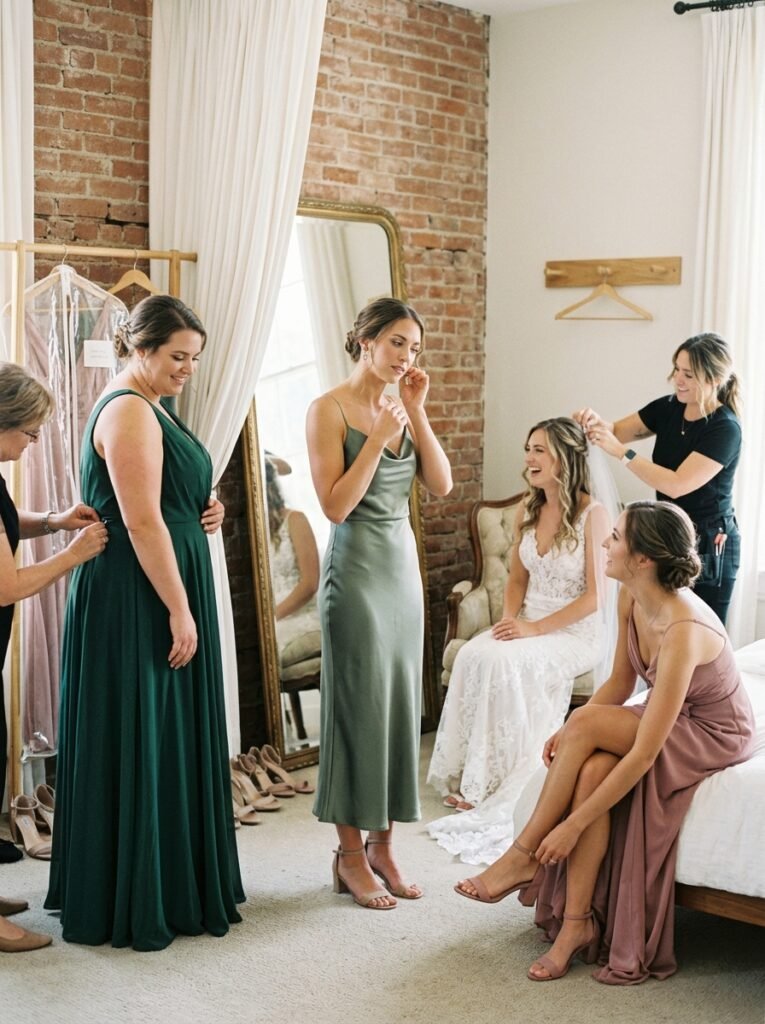
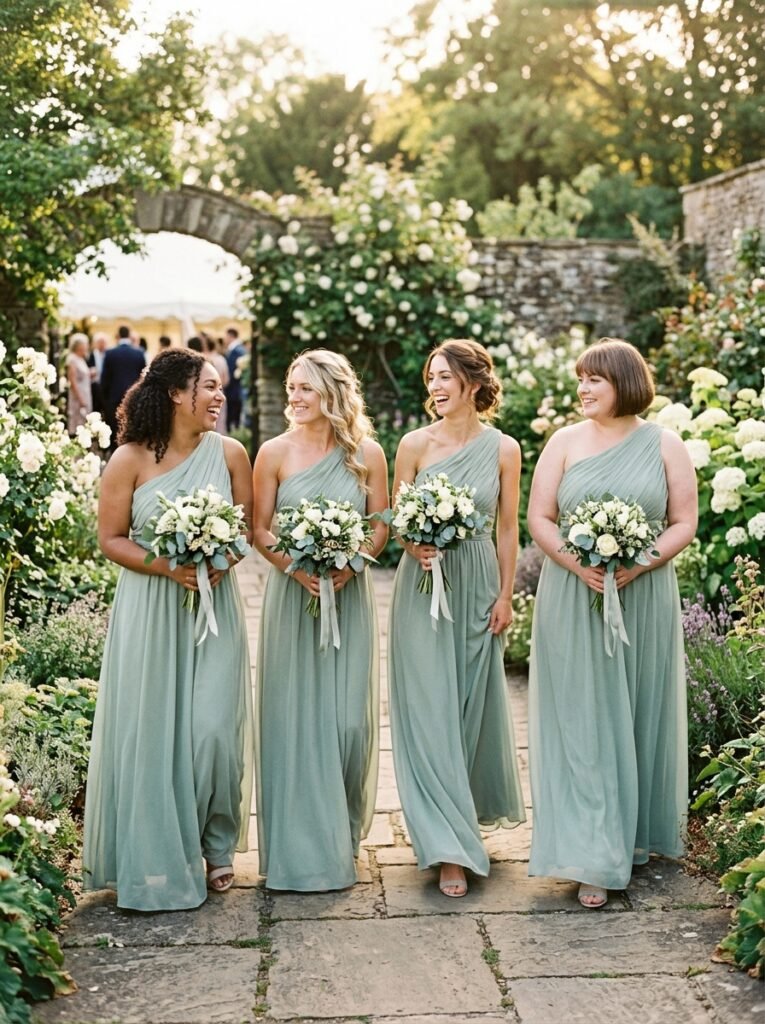
A one-shoulder dress with a flowing A-line skirt flatters a wide range of bodies. The asymmetry creates a diagonal line that slims and elongates, while the single shoulder draws attention upward rather than down the body. This helps bridesmaids with different bust sizes, since a one-shoulder bodice distributes support differently than a strapless design.
The A-line skirt beneath it skims rather than hugs from the waist down. It moves beautifully in photographs and accommodates most hip and thigh widths without creating stress points.
Styling note: Repeated asymmetry across a line of bridesmaids photographs as cohesive but dynamic, rather than static and uniform.
The Convertible or Infinity Dress
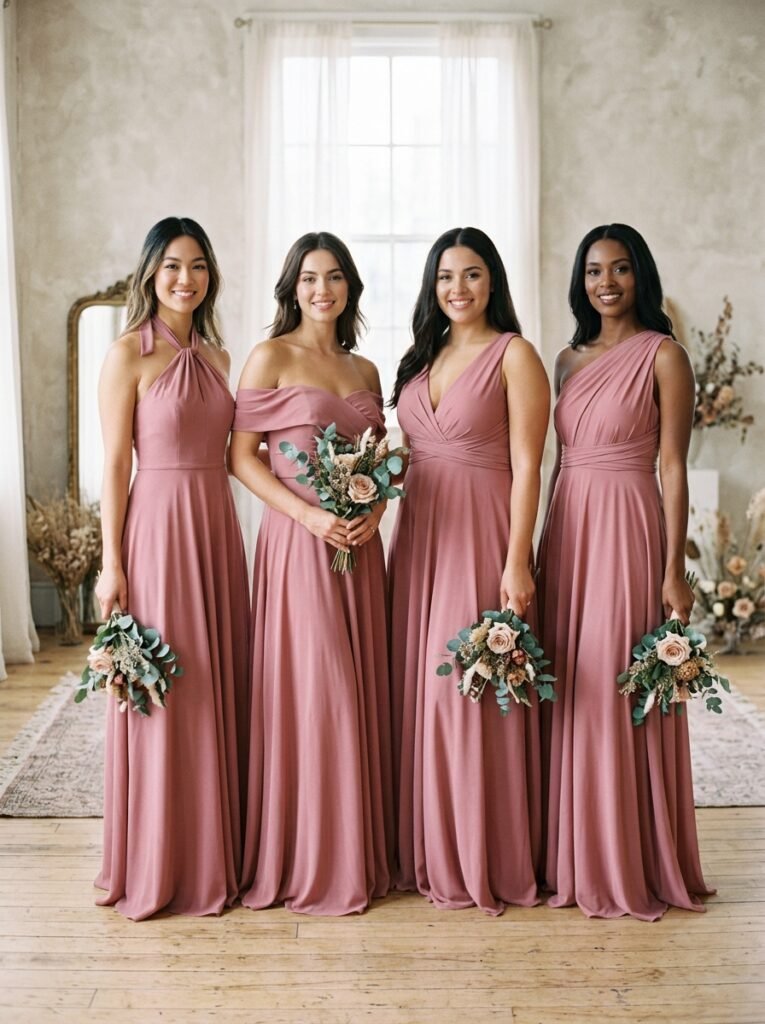
A convertible dress is a long length of fabric with ties that arrange into dozens of styles. Each bridesmaid wears the same fabric, and often the same colour, in whatever configuration suits her body. One might tie it as a halter, another as a V-neck wrap, another as a one-shoulder.
The skirt typically falls as a full, flowing A-line regardless of the top style. Choose a quality convertible dress with enough weight to fall cleanly in every configuration. This approach removes the pressure of finding one universally flattering neckline, since each woman makes her own choice.
A Wrap Dress in a Fluid Fabric
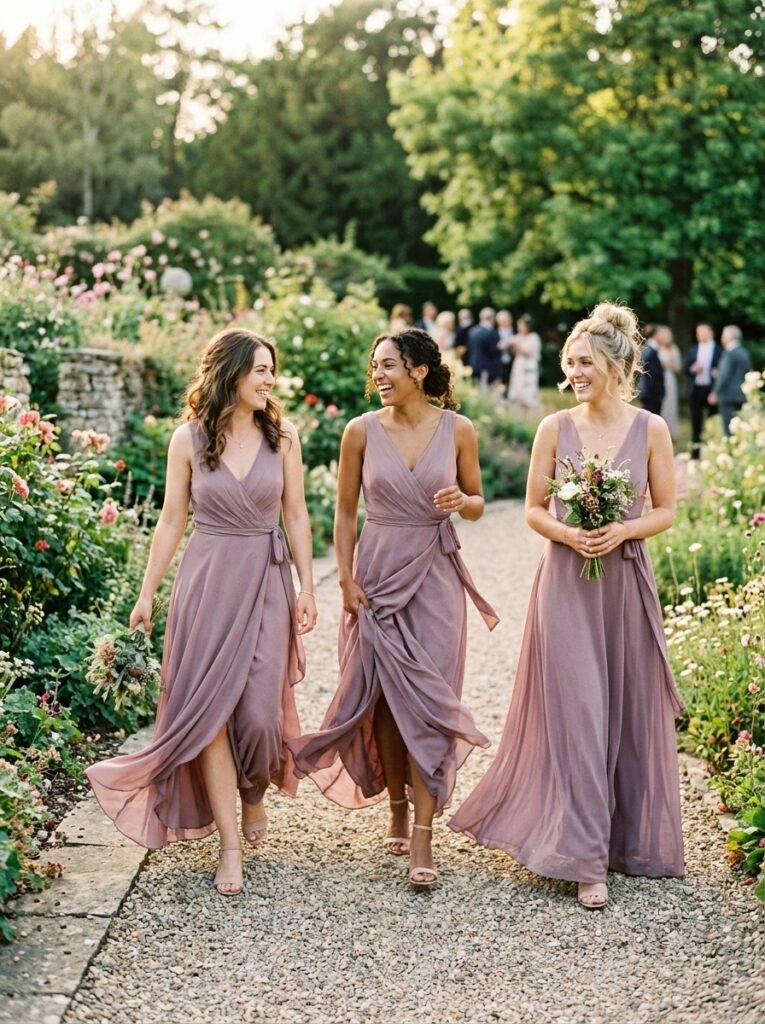
The wrap dress appears on nearly every body type guide, and it earns that reputation. The wrap creates a V-neckline that draws the eye inward. The waist ties adjust naturally to different sizes, since the dress ties rather than sews to a fixed measurement. The flowing skirt accommodates most hips and thighs without restriction.
A bridesmaid can tie it tighter or looser depending on comfort, rather than committing to a sewn seam that either fits or does not. Choose a fabric with enough weight to drape rather than cling or turn sheer when the ties open. Medium-weight crepe and quality lined chiffon both work well.
A Chiffon Maxi With an Empire Waist
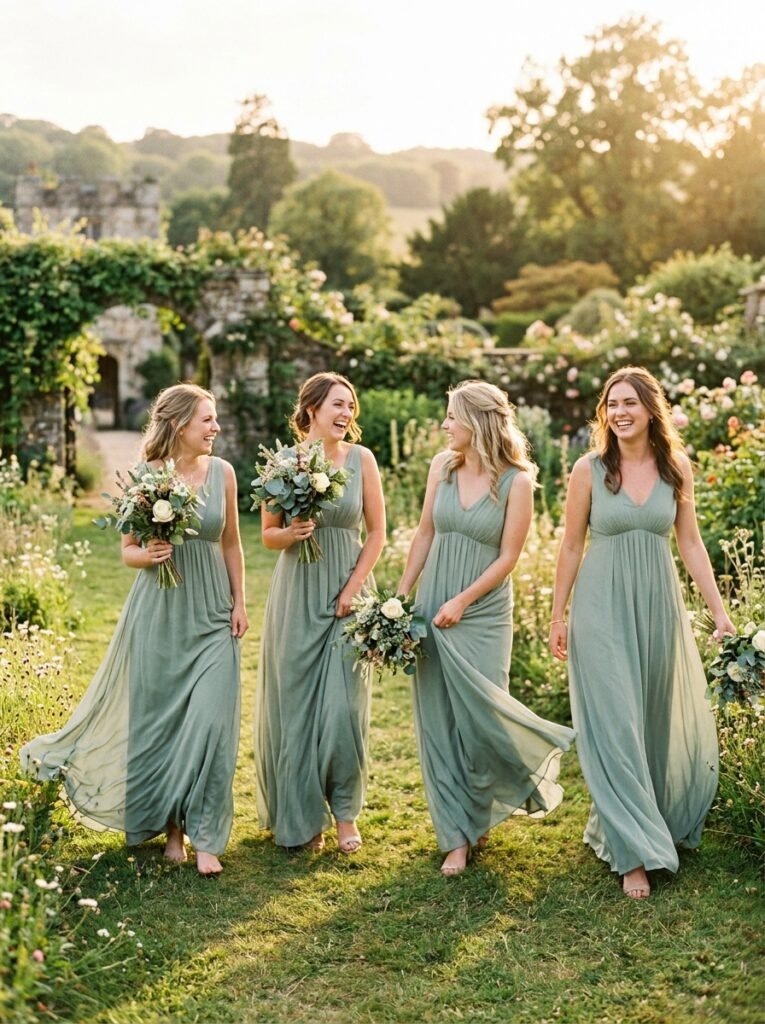
An empire waist dress places its seam just below the bust and lets the skirt fall freely from there. This sidesteps the challenge of fitting several different waist and hip measurements at once. The underbust is typically the narrowest point of the torso, so the seam creates waist definition at a consistent point rather than the natural waist, which varies between individuals.
In flowing chiffon or lightweight crepe, an empire maxi creates a romantic look that moves beautifully in photographs. Fabric choice matters here: a heavy or stiff fabric will sit against the body instead of draping away from it, which removes the silhouette’s benefit.
A Midi With a Ruched Bodice
A ruched bodice gathers fabric horizontally across the chest, creating stretch and texture. The gathered fabric expands or contracts against the body beneath it, avoiding the pulling or gaping a smooth bodice would create. The gathering also draws the eye toward the centre rather than the width, producing a subtle narrowing effect.
A midi length, between the knee and ankle, suits most heights without the hemming a floor-length gown needs. It sits comfortably between casual and very formal, which fits most wedding settings.
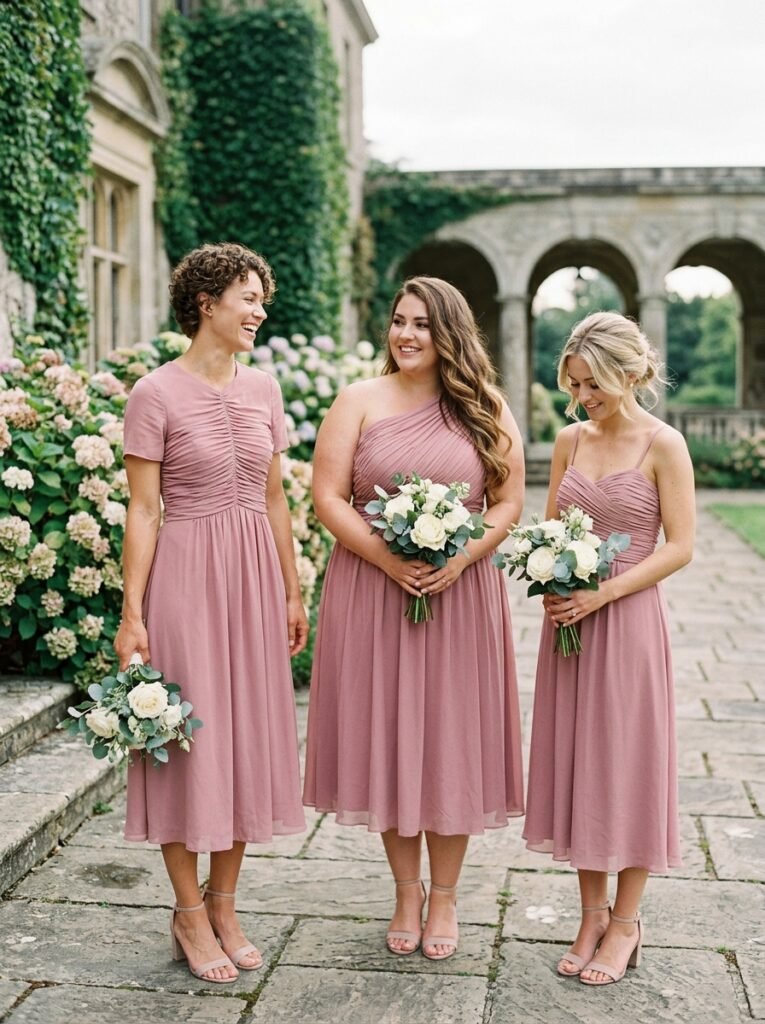
Allowing Mixed Styles in a Shared Colour
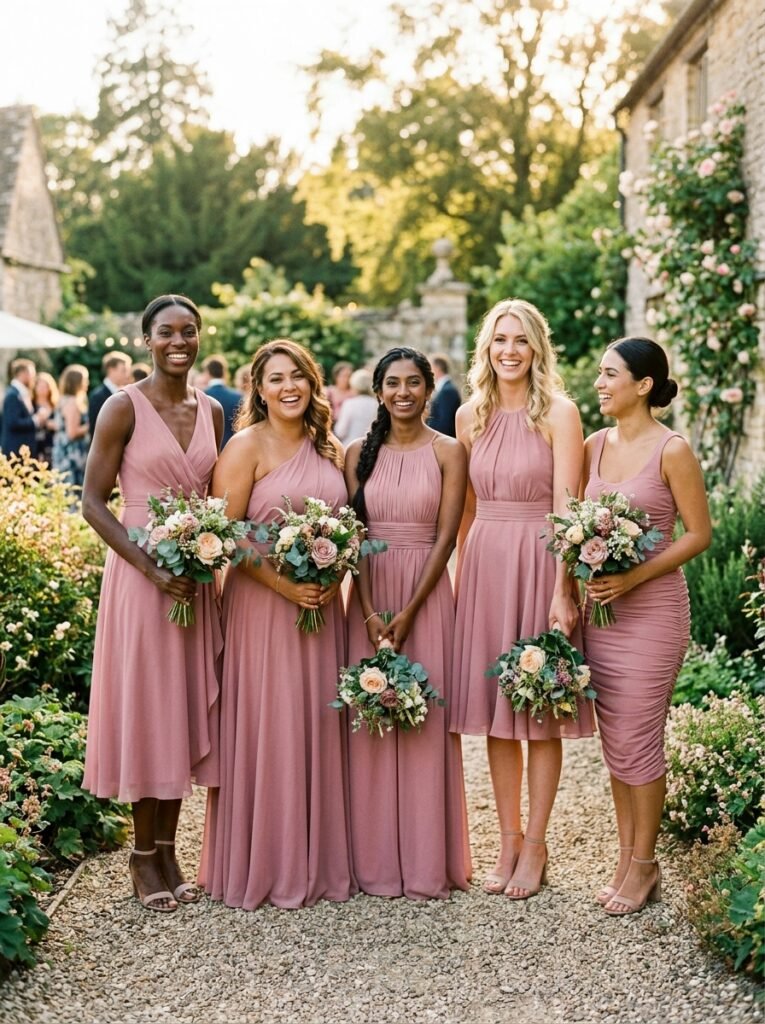
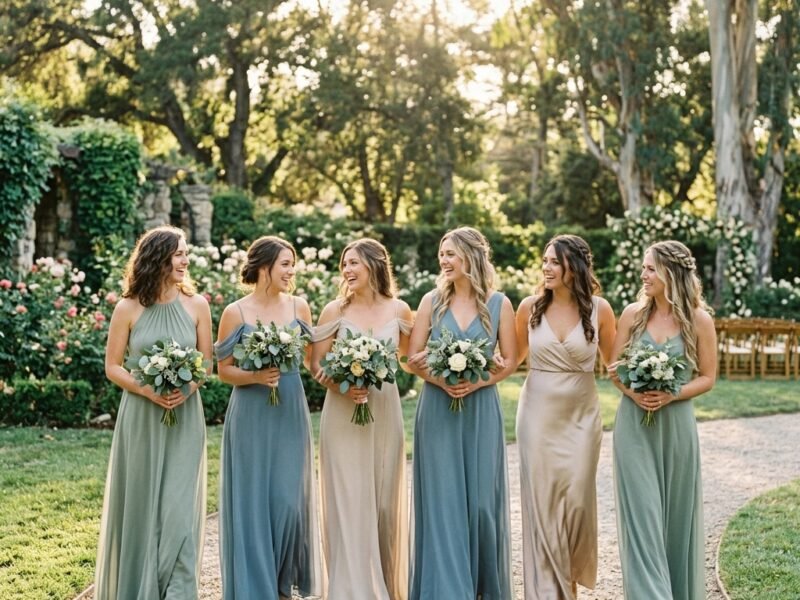
One of the most successful approaches picks a colour or colour family and lets each bridesmaid choose her own style within it. No single dress style flatters every body equally, so this approach gives each woman the agency to choose what suits her. Couples building out the wider wedding party, including mother of the bride outfits, often apply the same colour-family logic to connect the group without forcing identical silhouettes.
Define the colour range clearly enough that the group photographs cohesively. A specific shade, such as dusty rose or sage green, gives the most defined result. Azazie, BHLDN, and Anthropologie’s bridesmaid collection all carry consistent colour options across different styles, which keeps matching simple.
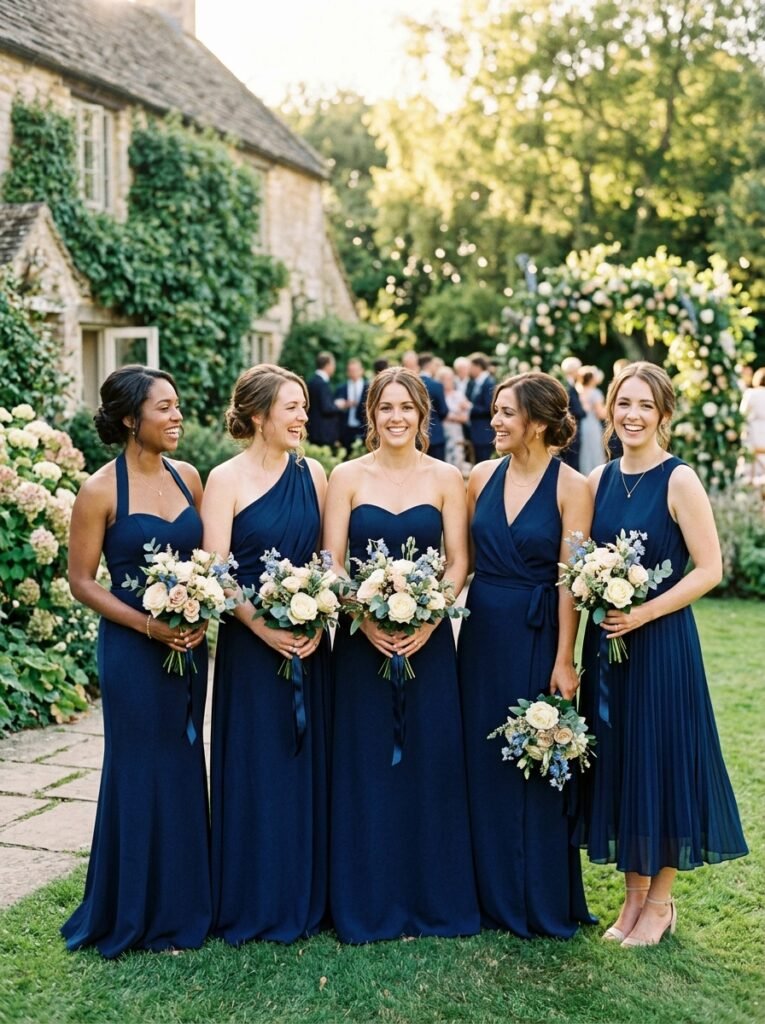
A Halter Neck Dress With a Flared Skirt
A halter neckline wraps fabric around the neck and leaves the back open. It suits narrower shoulders or a smaller bust well, since it creates the impression of broader shoulders while the open back elongates the view. A larger bust needs good internal support built into the bodice, so check construction before committing to this neckline for a group.
The flared skirt below balances the width the halter creates across the shoulders. This works particularly well on pear-shaped bodies, since the halter adds visual presence up top while the skirt flows from the widest point rather than hugging it.
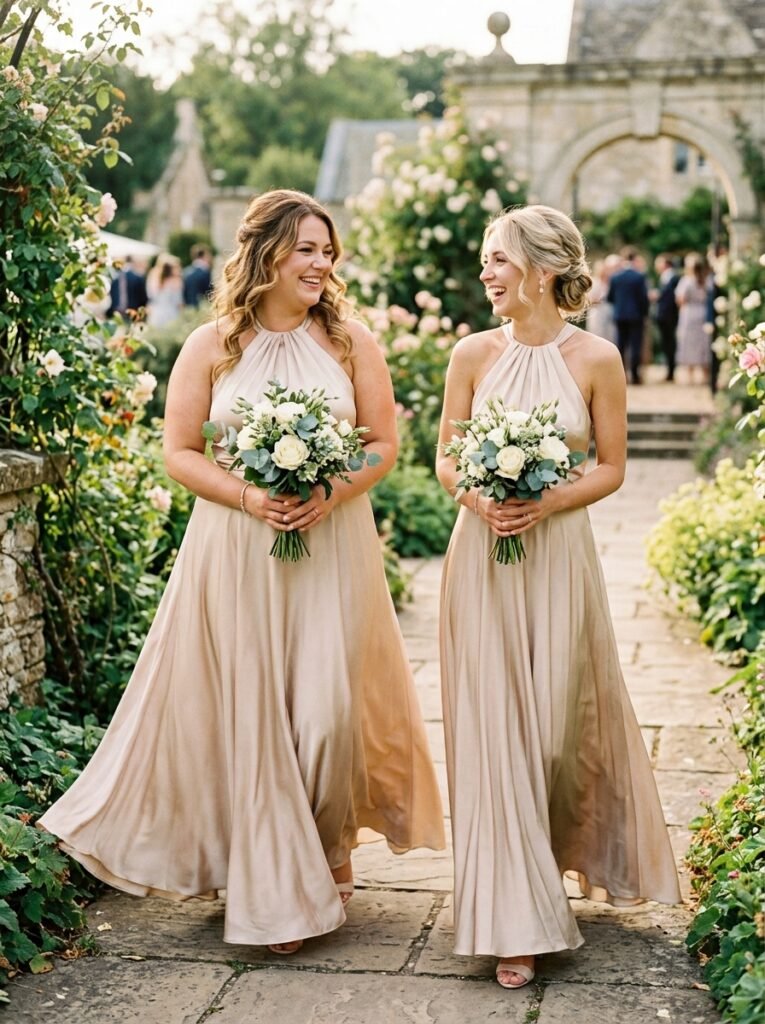
A Strapless Dress With a Structured Bodice
A strapless dress with a properly boned bodice has outlasted many bridesmaid trends for one reason: a well-built strapless bodice creates a clean line across the chest that suits a wide range of bust sizes. Construction is the crucial qualifier. Without boning, a strapless bodice relies entirely on tight fit, which creates discomfort and constant adjustment.
Across different body types, a strapless dress needs individual fitting for each bridesmaid. Sizing should be chosen for her specific bust and ribcage rather than defaulting to the rest of the dress’s size. Most brands now offer separate bodice and skirt sizing, which makes this far more practical than it once was.
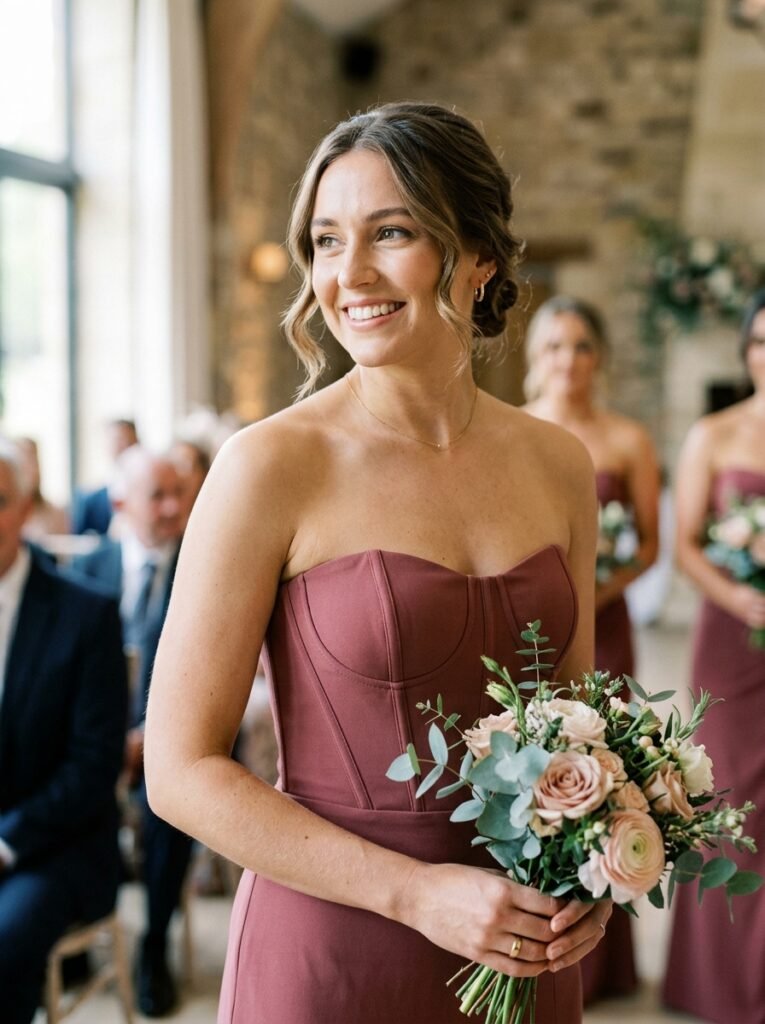
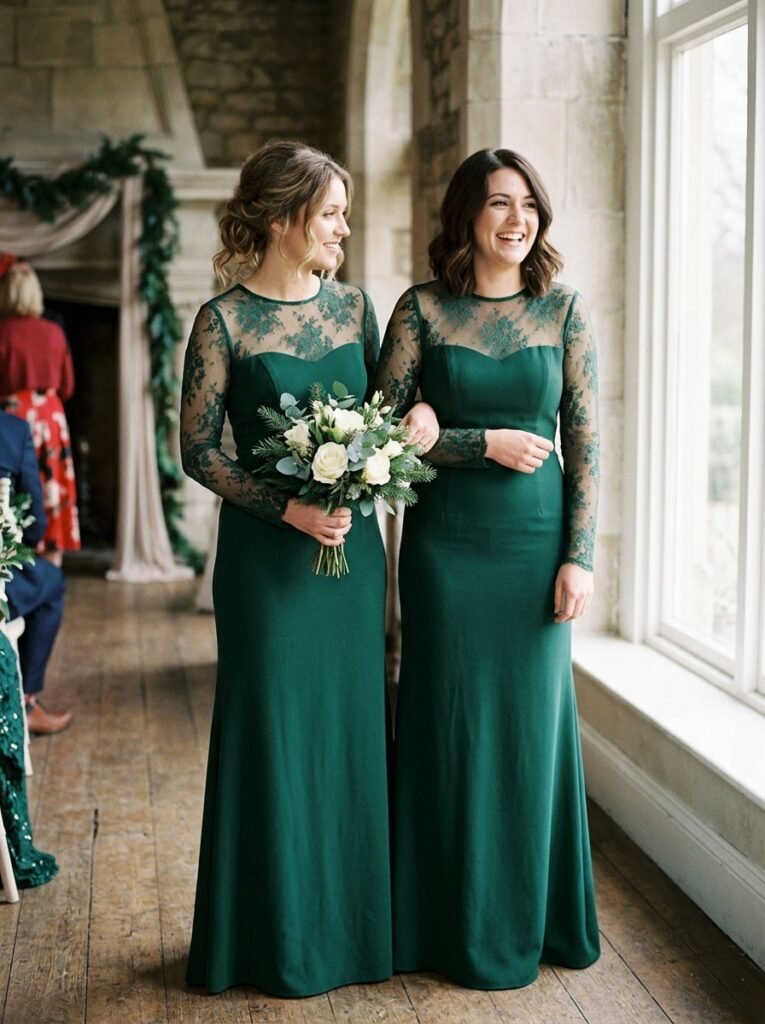
A Long-Sleeve Dress for Coverage and Elegance
A floor-length dress with long sleeves, fitted, flared at the cuff, or sheer, provides coverage some bridesmaids value while creating a genuinely elegant look for formal and traditional weddings. It removes any concern about exposed arms entirely, rather than requiring a cover layer that may not match the overall look.
Raise this option with bridesmaids early in the selection process. Some women feel significantly more comfortable and beautiful with covered arms. A sheer long sleeve in chiffon or lace over a fitted inner sleeve photographs beautifully without the visual weight of a fully opaque sleeve.
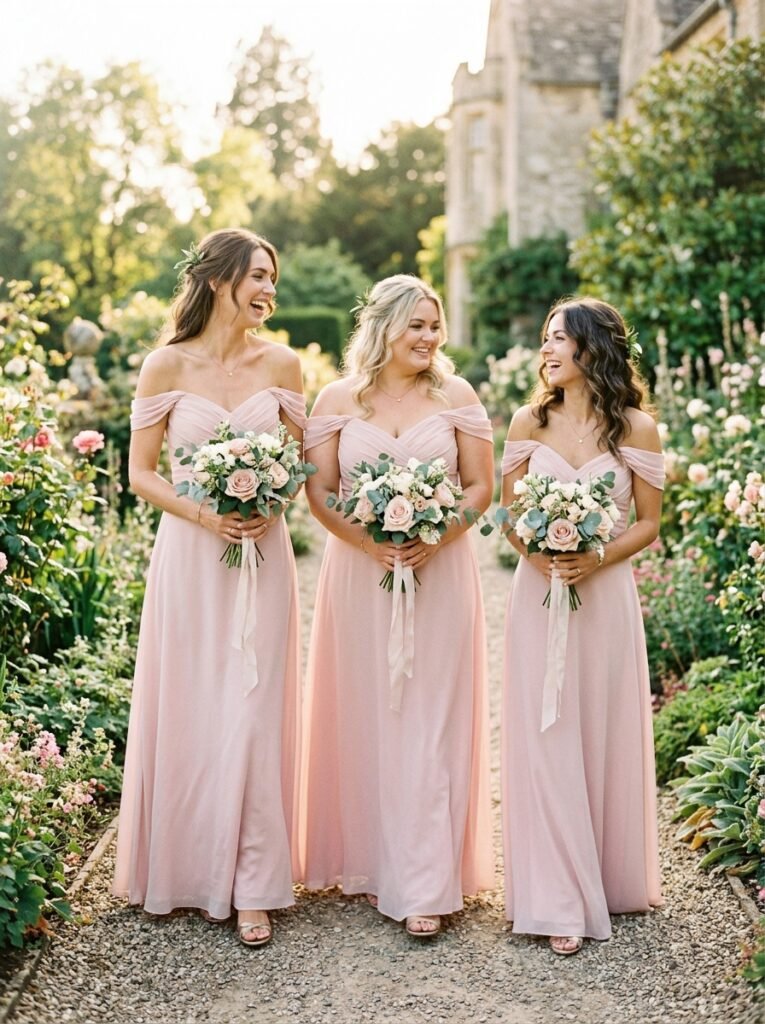
Off-the-Shoulder for a Romantic Aesthetic
An off-the-shoulder neckline sits fabric below the natural shoulder line and frames the collarbone. It suits a medium to larger bust particularly well, since the horizontal line creates visual width at the chest that balances a fuller bust. It also flatters narrower shoulders, since the framing gives the appearance of definition without relying on the natural shoulder itself.
An off-shoulder dress needs to sit securely without the bridesmaid holding it up. A quality version uses internal structure, elastic, or both to stay positioned through movement and dancing. Test this at the final fitting, ideally while moving around.
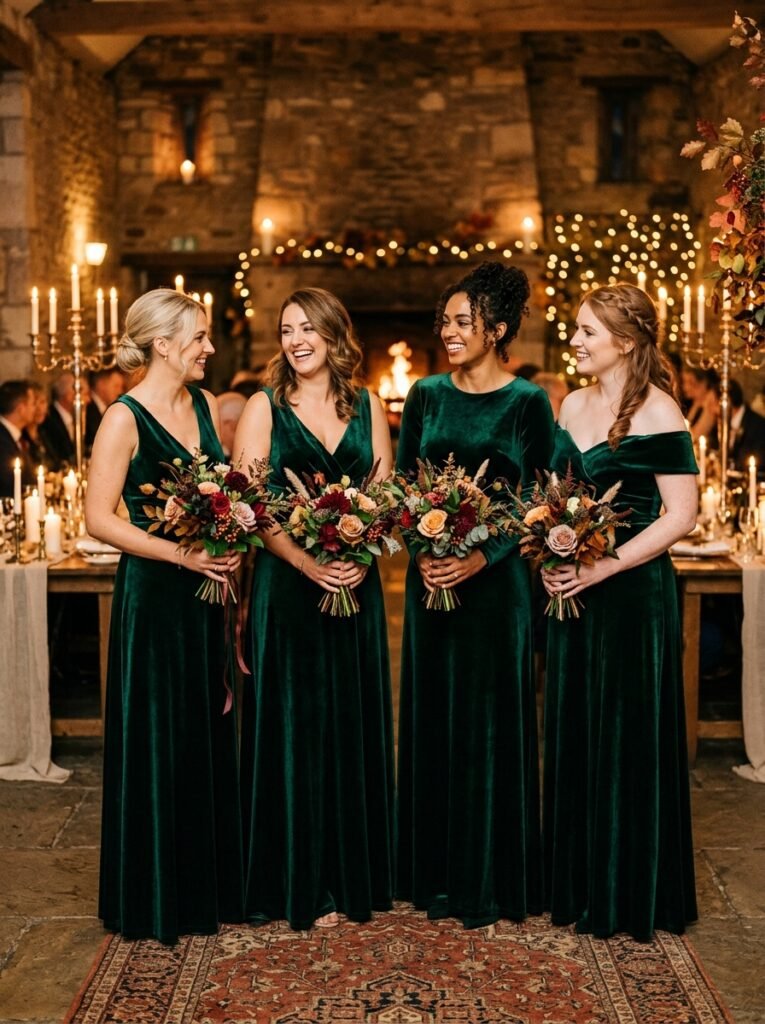
Velvet for Autumn and Winter Weddings
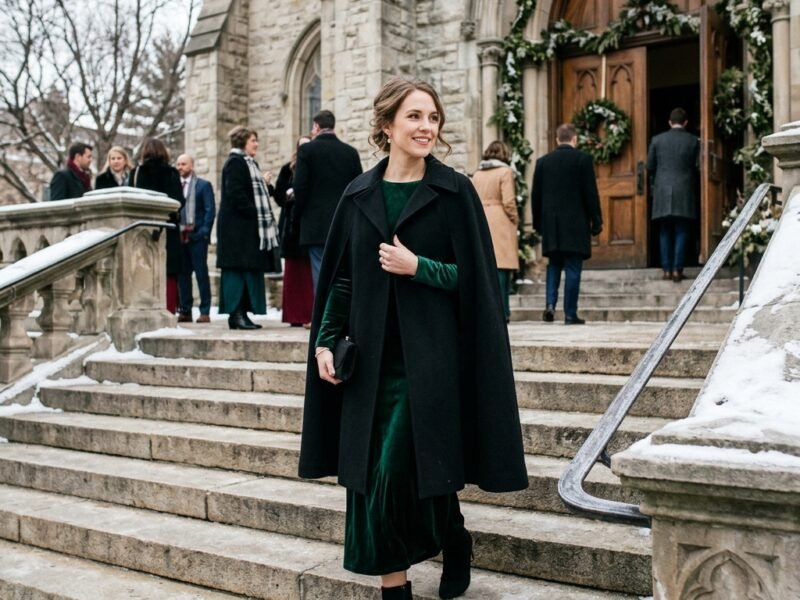
Velvet bridesmaid dresses create depth of colour that lighter fabrics cannot replicate. A floor-length velvet dress in emerald, burgundy, navy, or plum suits a cooler-season wedding and provides warmth that chiffon cannot. Velvet absorbs and reflects warm light in a way that adds dimension in photographs, where lighter fabrics can look flat.
For a mixed body type group, velvet works best in an A-line or a style with some drape in the skirt. Velvet is a relatively unforgiving fabric and shows the body’s silhouette more directly than a fluid material would.
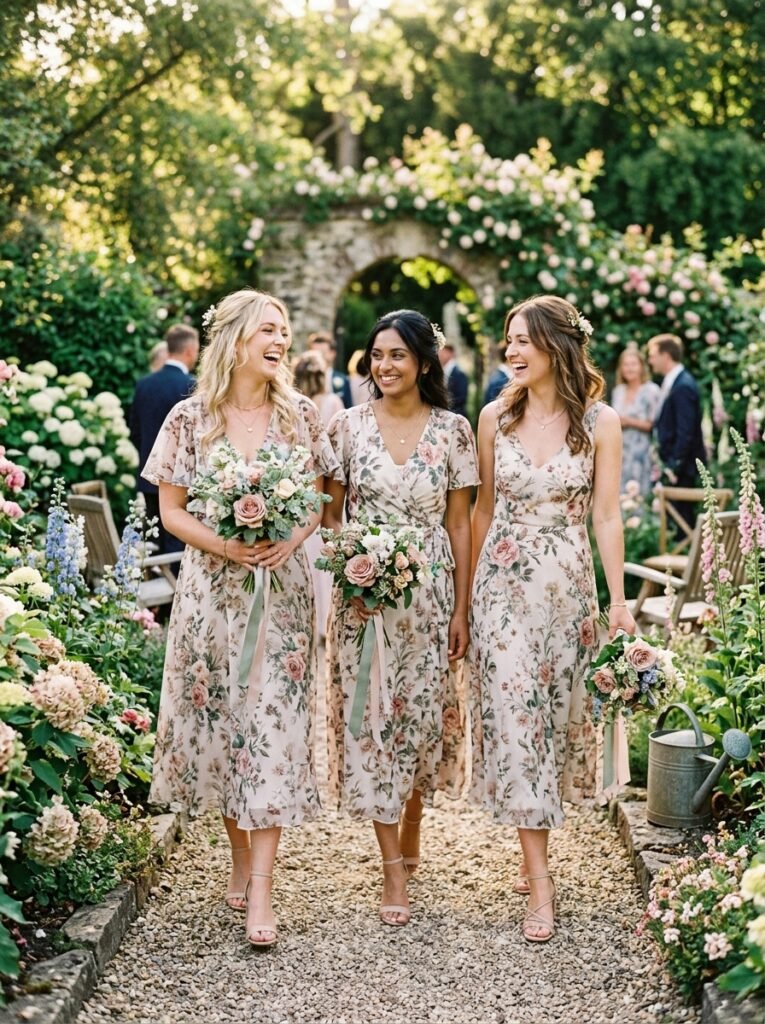
Floral Bridesmaid Dresses for a Garden Aesthetic
Floral print dresses have grown popular for relaxed, outdoor, and garden-style weddings, where a solid colour can feel too formal. A mixed group in a consistent floral print, or coordinated florals sharing a common colour, creates a charming visual cohesion distinct from a single solid colour. The print also flatters naturally, since the eye travels across the pattern rather than the body’s outline.
A medium-scale print tends to flatter the widest range of bodies. Very large florals feel heavy on smaller frames, while very small florals disappear on larger frames.
Separates for Maximum Individual Flattery
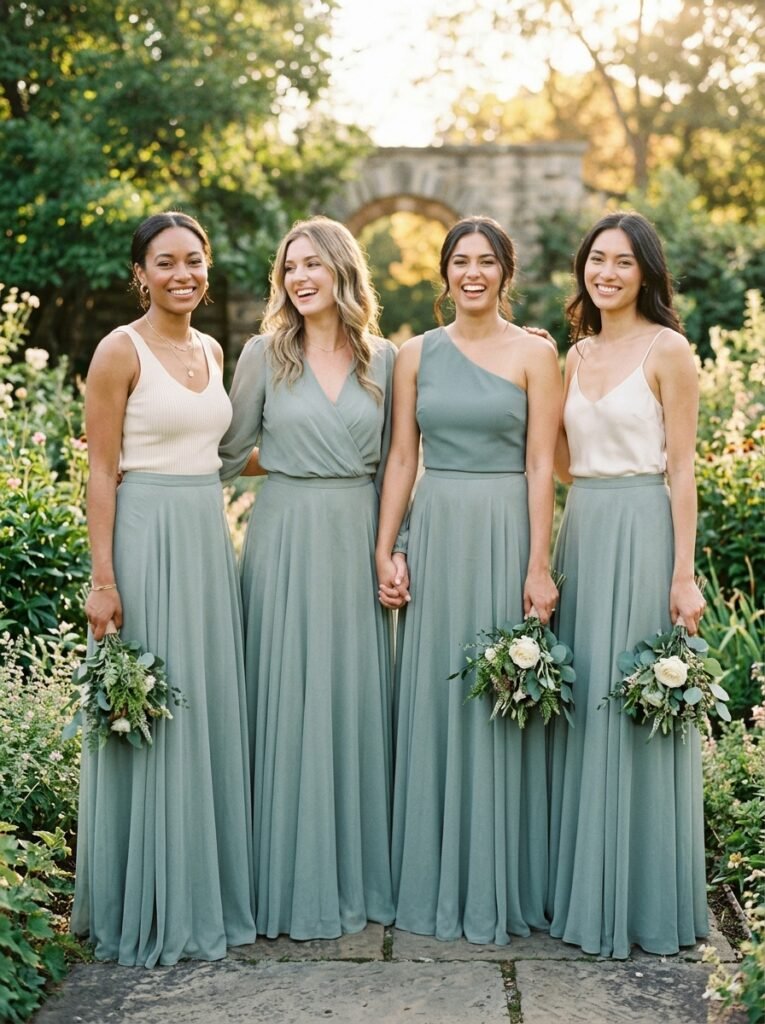
Bridesmaid separates choose a skirt and top independently within a consistent colour palette. This is the most individualised approach, since each bridesmaid picks the top that suits her torso and the skirt that suits her lower body, rather than needing one garment to do both jobs well.
A bridesmaid larger through the bust can choose a bigger top and a smaller skirt size. Azazie, BHLDN, and Anthropologie all offer separates. Keep the top and skirt in matching or compatible fabric weight, since a big fabric mismatch creates a disconnected look.
A Slip Dress in a Luxury Fabric for the Modern Wedding
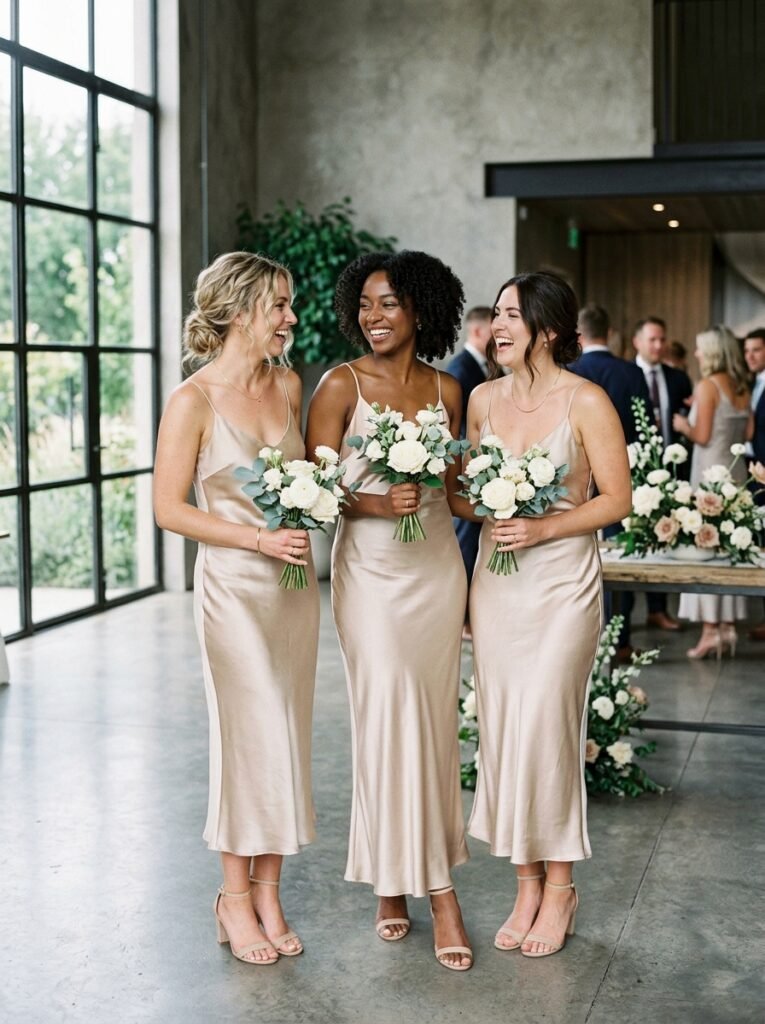
A minimal satin or crepe slip dress suits a contemporary, editorial, or relaxed formal wedding, largely because of how the fabric moves and catches light. It flatters women who prefer a minimal silhouette without seams, structure, or design details, and it stays comfortable through a long day, since there is no boning to feel and no restriction in the skirt.
A slip dress works best in a fabric with enough weight to fall smoothly rather than cling. A very lightweight satin can highlight the silhouette beneath it. A heavier satin or matte crepe accommodates more body types comfortably.
Key Styling Choices That Flatter Across the Group
Beyond the dress itself, a few styling choices significantly affect how well a group looks across different body types.
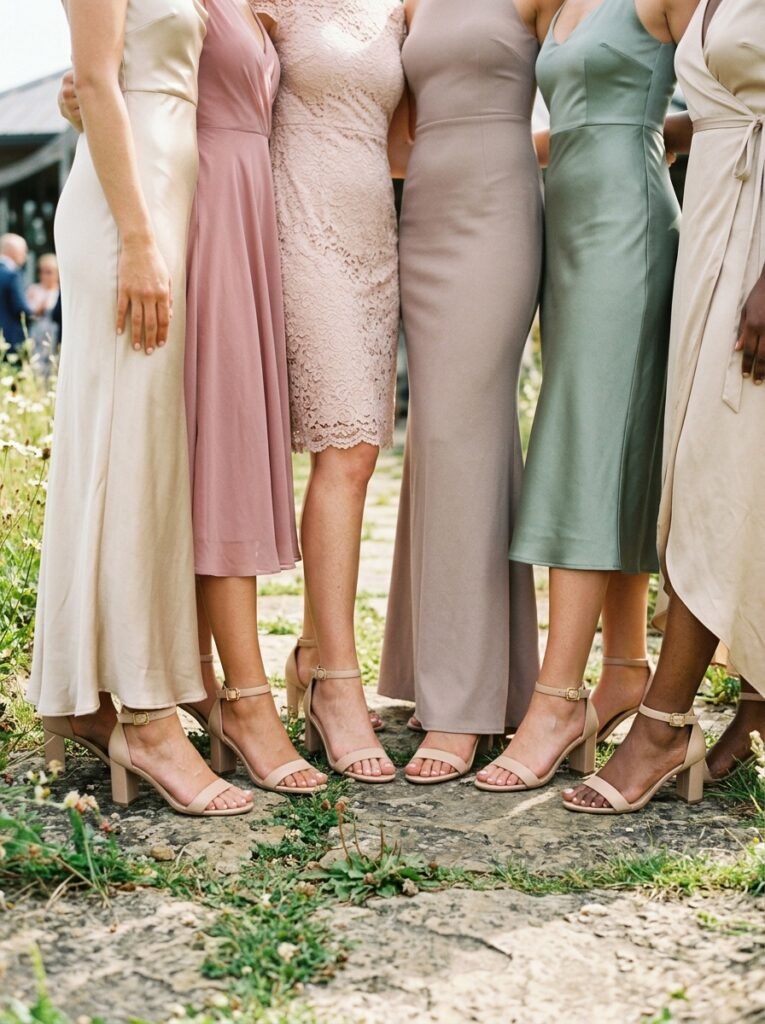
A consistent shoe colour ties different dress styles and silhouettes together in a photograph. Let each bridesmaid choose her own comfortable heel height rather than forcing one height across the group. Some women dance well in heels; others cannot manage them after two hours, and forcing the issue creates discomfort that shows up in photos.
A consistent approach to jewellery and hair, all down, all up, or half-up half-down, creates cohesion even when dress styles and body types vary.
Common Mistakes in Bridesmaid Dress Selection
A few patterns come up often and are worth naming. Anyone building a full wedding wardrobe, from the bridal party through the wedding guest outfits worn by extended family, tends to hit similar fit and fabric traps.
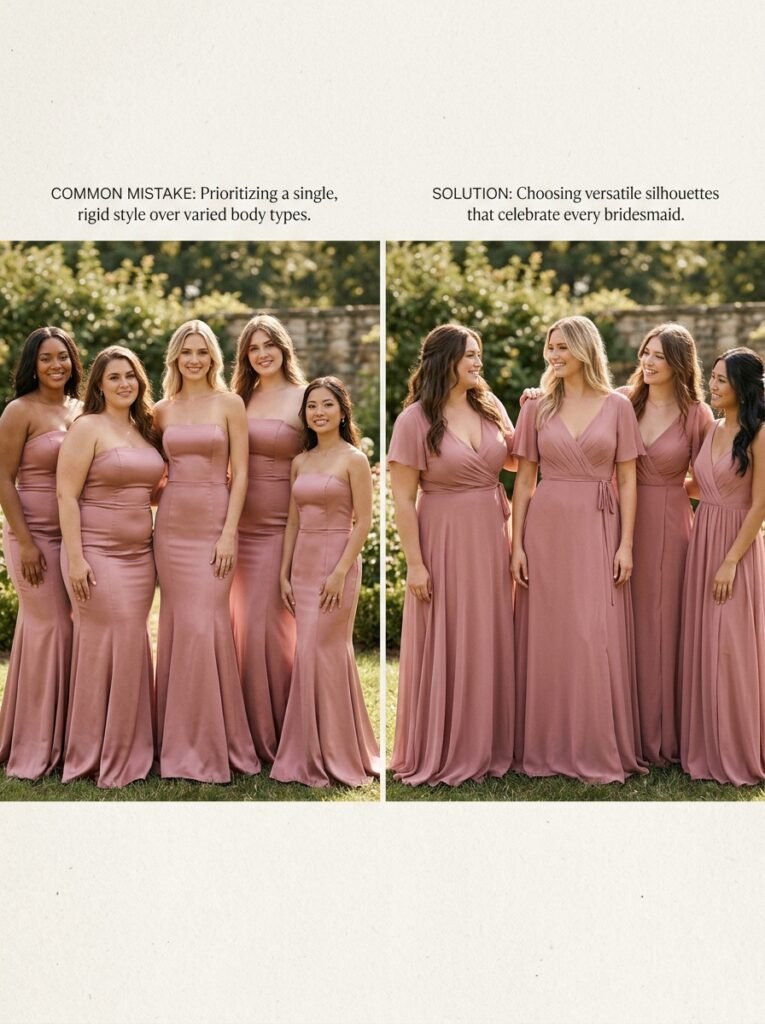
Judging a dress on how it looks on one bridesmaid, usually the one closest to the sample size, is the most common mistake. It produces obvious imbalance in group photos. Ask each bridesmaid to visualise the dress on her own body instead.
A very fitted dress across diverse bodies requires precise individual fitting and more alteration work. A dress with some flow or adjustability is a safer choice. Very unforgiving fabrics, lightweight satin, structured taffeta, or sheer chiffon, tolerate little variation and demand precise fitting for everyone.
Leaving too little time for alterations causes avoidable stress. Nearly every bridesmaid needs some adjustment. Order dresses four to six months ahead and finish alterations at least six weeks before the wedding.
Frequently Asked Questions
What is the most universally flattering bridesmaid dress style? An A-line or wrap-style dress in a fabric with good drape, such as chiffon, crepe, or fluid jersey, is consistently cited as the most flattering across body types. It fits through the bodice and flares gently from the waist, avoiding tension at the hip while offering enough volume to photograph well.
How do you choose dresses that flatter different heights? Floor-length dresses stay the most height-neutral, since they can be hemmed to any height and keep their formality regardless. Tea-length and midi dresses are also relatively neutral. Very short or mini styles look proportionally different across a mixed-height group.
Is it acceptable to have bridesmaids in different dress styles? Yes, and it has become common. Mixed-style dressing, where bridesmaids wear different dresses in the same colour or fabric family, is now a mainstream choice. It typically produces a group that looks more individually beautiful and lets each woman choose what genuinely suits her.
What should bridesmaids with different skin tones wear? Warm dusty rose, sage or olive green, terracotta, champagne, and dusty blue photograph well across most skin tones. Very pale colours can look washed out on deeper skin, while bold saturated colours can overwhelm fair skin. A mid-saturation, slightly muted shade tends to work broadly.
How important are bridesmaid dress alterations? They are essential, not optional. Standard sizes are built around averaged measurements, not individual bodies, so most bridesmaids need some adjustment. A well-altered dress makes a dramatic difference compared with an unaltered one. Budget for alterations from the start of planning.
When Everyone Feels Beautiful, It Shows
The best wedding photographs are not the ones with perfectly matching bridesmaid dresses. They are the ones where bridesmaids look like they are genuinely enjoying themselves. Those two things are related but not identical, and the dress is only part of what creates them.
The practical choices in this guide, the wrap dress with its adjustable tie, the convertible dress that lets each woman style her own neckline, the mixed-style approach, all prioritise genuine comfort over the theoretical perfection of an identical look.
Every bridesmaid who wears something she feels beautiful in gives the day something no styling can replicate: genuine, unself-conscious joy. That quality always shows in photographs, and it remains the right goal to work toward.

[…] guide to bridesmaid dresses that flatter every body type goes deeper into specific silhouettes and which construction details matter for different […]
[…] guidance on choosing a silhouette based on body type more broadly, the bridesmaid dress guide organized by flattering fit covers many of the same silhouette principles, waist definition, fabric drape, sleeve construction, […]
[…] judging from a screen. If the bride also wants the group to choose their own shapes, the guide to bridesmaid dresses that flatter every body type covers silhouette decisions, and the guide to mismatched dress codes shows how to give open […]
[…] preferences and climates, or the same cut in slightly different shades from one palette. The bridesmaid dress guide goes through how to balance a group look when people have different tastes and comfort […]