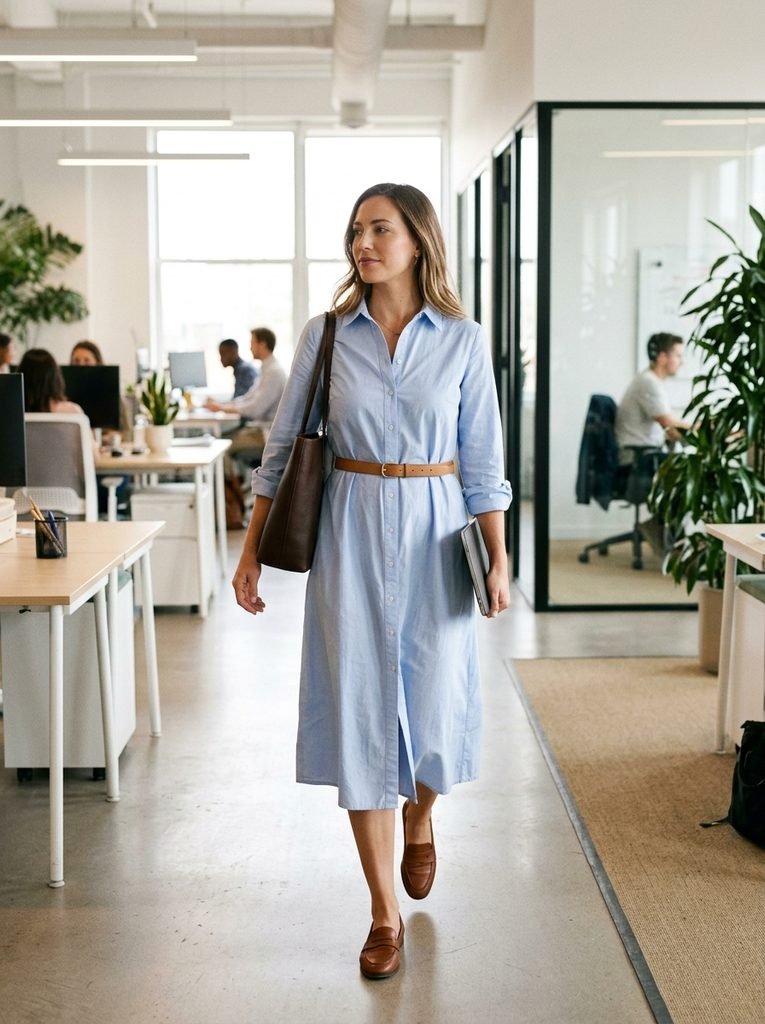
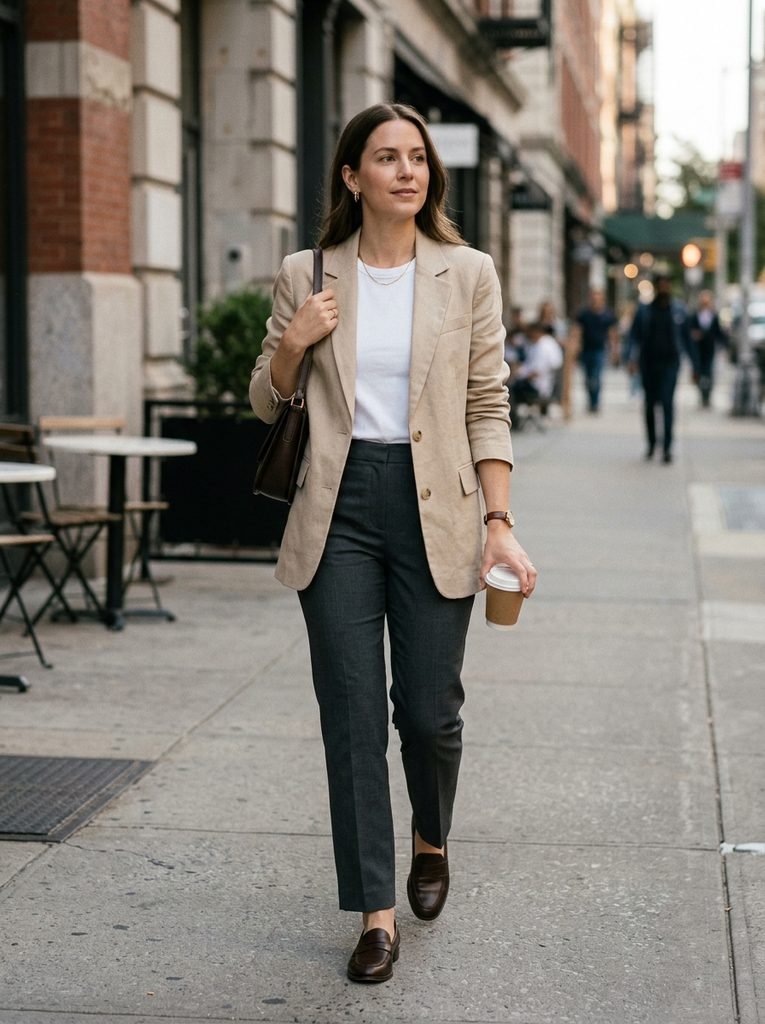
Search for business casual outfits and the same picture keeps appearing: a sand-colored blazer over a white tee, straight trousers, a neat tote bag. It is a perfectly good outfit. It is also so common that it has stopped saying anything about the person wearing it.
The beige blazer earned its place by solving several problems at once, which is why swapping it out is harder than it sounds. Grab a different jacket and the outfit often falls flat, because the replacement is not doing the same work. This guide breaks down what a blazer actually contributes, then shows pieces, colors, and fabrics that can cover those duties, and ends with a full work week of outfits that never touch the usual jacket.
What a Beige Blazer Actually Does for an Outfit
Strip away the trend talk and a blazer does five practical things.
It builds a shoulder line, which gives soft clothing a frame. It signals effort at a glance, because a jacket tells a room that the person dressed on purpose. It adds a layer for cold offices and aggressive air conditioning. It brings clean edges and pockets, which make a plain top look finished. And in a neutral shade it goes with almost everything already in the closet, so it asks for no planning.
That last point explains the beige. It is the lowest-risk color for a piece that has to work with everything, not necessarily the best-looking one.
Replacing it, then, means replacing the five jobs. A bold jacket that handles one of them and ignores the rest tends to look like a costume piece. The table below pairs each job with options that can take it over.
Five Jobs, Five Replacements
| Job the blazer does | Pieces that can do it instead |
|---|---|
| Frames the shoulders | Crisp poplin shirt, sleeveless waistcoat, boxy twill shirt jacket |
| Signals effort | Collared fine-gauge knit, shirt dress, matching knit set |
| Adds a layer | Buttoned cardigan, knit vest, light wrap |
| Gives clean edges and pockets | Belted dress, shirt jacket with chest pockets, trousers with a defined crease |
| Works with everything | Tonal palette in navy, olive, chocolate, or gray |
The Waistcoat
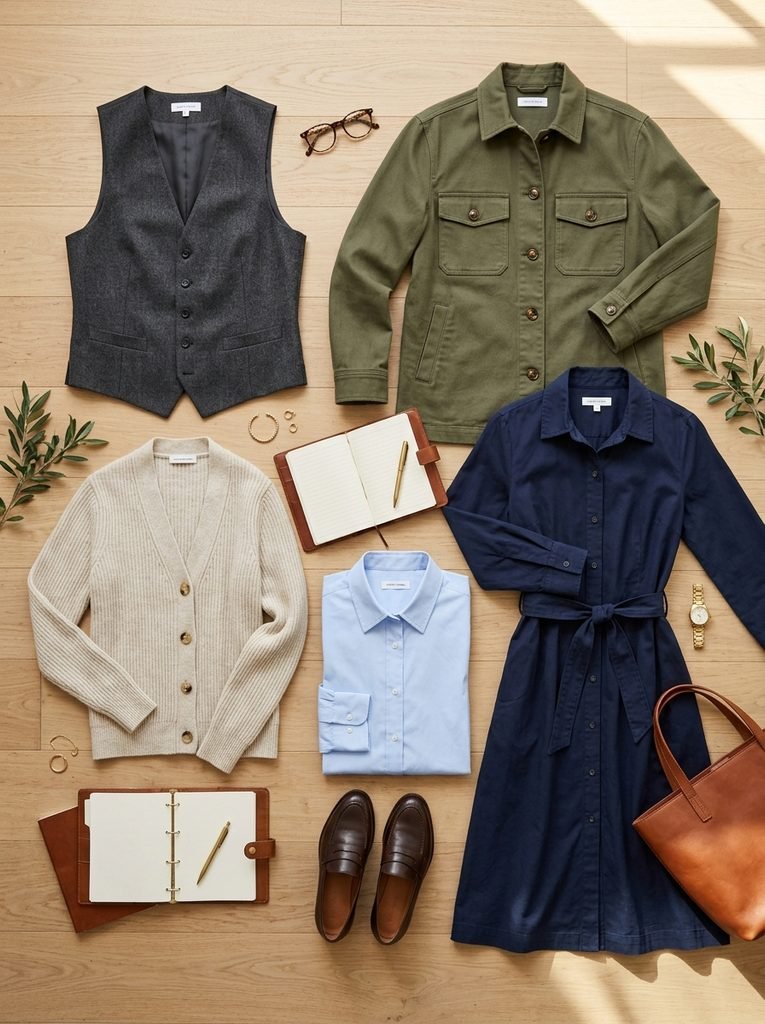
A tailored waistcoat is the closest thing to a blazer’s structure without the sleeves. Worn over a poplin shirt with the cuffs turned back, it gives a defined waist and a clean front, and it suits warm offices where a full jacket feels like too much. A lined or firm fabric matters here, because a floppy vest tends to gape.
The Shirt Jacket in Twill
A shirt jacket in heavy cotton twill or a wool blend has the pockets and shoulders of outerwear with the ease of a shirt. In olive, ink navy, or chocolate it reads smarter than a denim jacket and warmer than a blouse. Buttoned over a knit tank, it behaves almost like a blazer in a different outfit.
The Cardigan Worn Buttoned
A fine-gauge cardigan buttoned up and worn as a top can look surprisingly sharp, especially in merino or a cotton blend with a flat knit surface. A high neckline and small buttons help. Chunky cardigans slouch, which defeats the purpose.
The Dress That Needs No Third Layer
A belted shirt dress, a knit midi, or a wrap dress with a defined waist carries its own structure. These are among the easiest business casual options, since the outfit is complete once it is on. Adding a jacket afterward becomes a choice instead of a requirement.
The Matching Knit Set
A knit top with a skirt or trousers in the same yarn looks coordinated at once, much like a suit would, but feels far softer. It works well in offices where a suit is too much and a single blouse feels too little.
Colors That Replace Beige Without Clashing
Beige works because it is quiet. The alternatives below keep that calm and add a little character, and each is built around one anchor color in the trousers or skirt.
Olive is the closest relative of beige in terms of versatility. It sits happily with cream, white, and tan, and it hides the day’s creases better than pale shades. Ink navy suits anyone who likes a crisp base, and it looks sharp with pale blue, white, and brown leather. Chocolate brown feels warmer and less expected than black, especially with sky blue or ivory on top. Slate and charcoal gray give a cool, modern base for lilac, soft pink, or a white shirt with a faint stripe.
Tonal dressing is another route. A pale blue shirt, mid-blue trousers, and navy shoes stay within one color family, yet the shifts in shade keep the outfit from looking flat. Deep wine works best in small doses, such as a knit vest or a bag.
Whatever the palette, keeping the total to two or three colors, shoes and bag included, makes the outfit look planned.
Trousers, Skirts, and Shoes That Do the Heavy Lifting
Without a jacket, the lower half carries more of the outfit. Choosing it with care takes pressure off everything above the waist.
Trousers
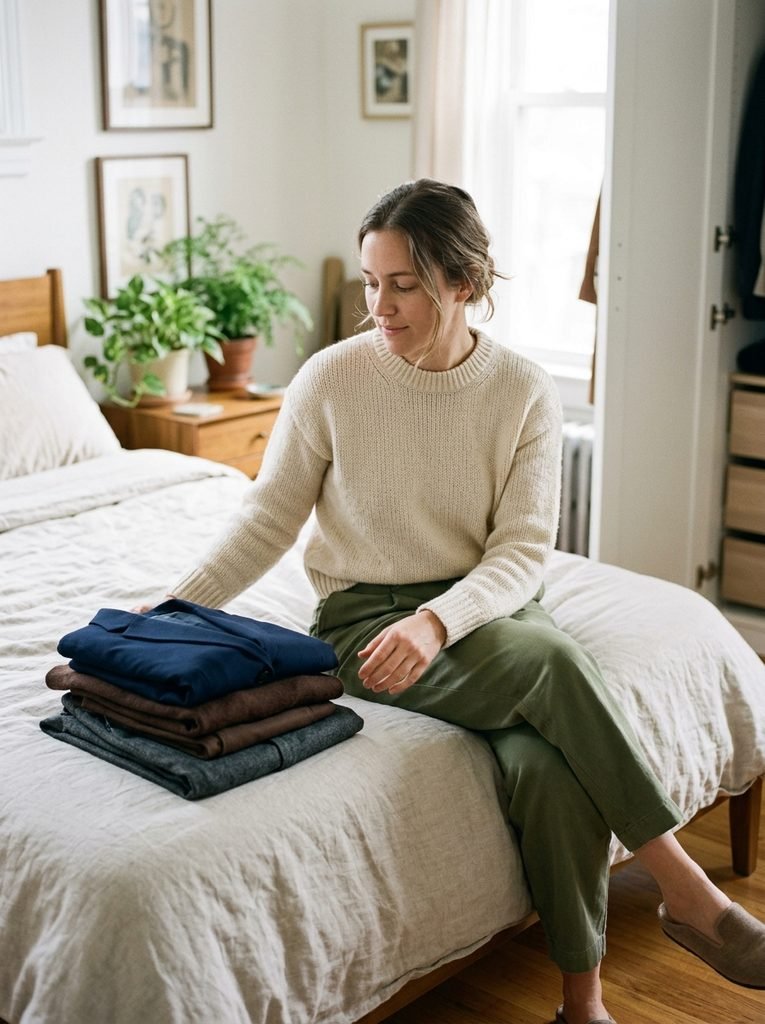
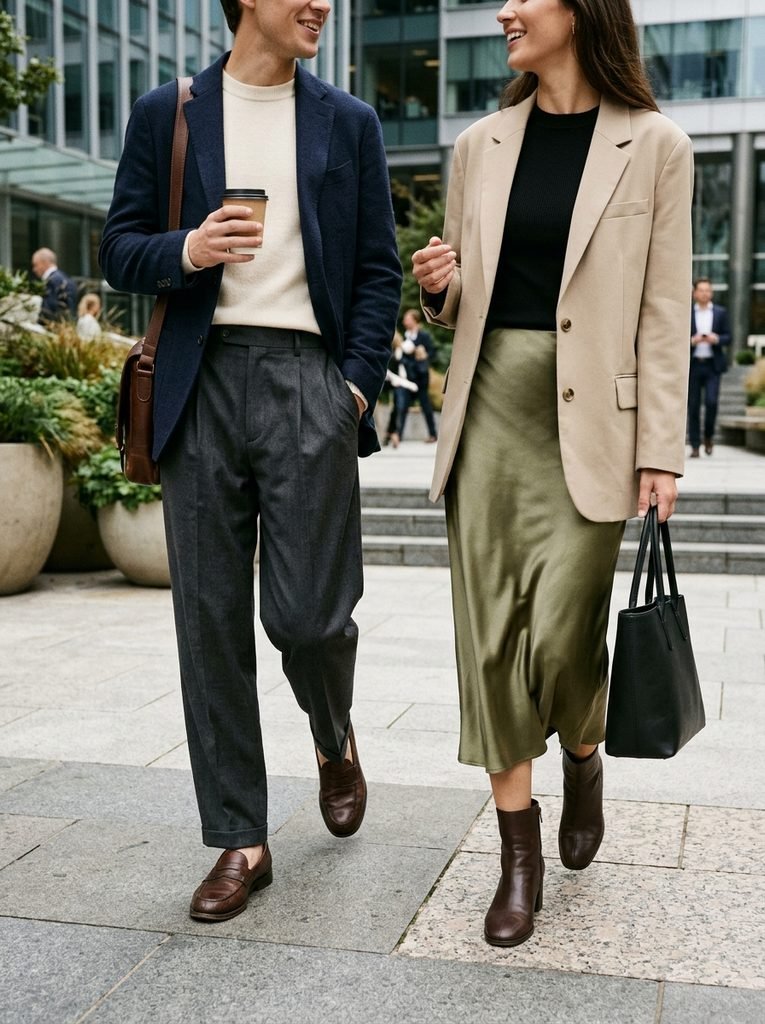
Pleated wide-leg trousers in a fabric with some weight drape well and move nicely when walking. A straight trouser with a visible crease looks tailored even with a simple knit. Cropped trousers that show the ankle suit loafers and keep the proportions light. Very thin, stretchy fabrics that cling are best saved for weekends.
Skirts
A pleated or satin-finish midi skirt adds movement and pairs well with a fitted knit or crisp shirt. A straight knee-length skirt in a wool blend feels office-ready on cooler days. Check the slit height and the fabric opacity in daylight before wearing it to work.
Shoes
Loafers, Mary Janes, ballet flats, and low block heels all read as business casual. Ankle boots work through autumn and winter. Minimal leather sneakers can suit offices that allow them, though the dress code should be the guide. Matching the leather tone of shoes, belt, and bag keeps the whole outfit coherent.
Fabrics That Make a Jacketless Look Read as Polished
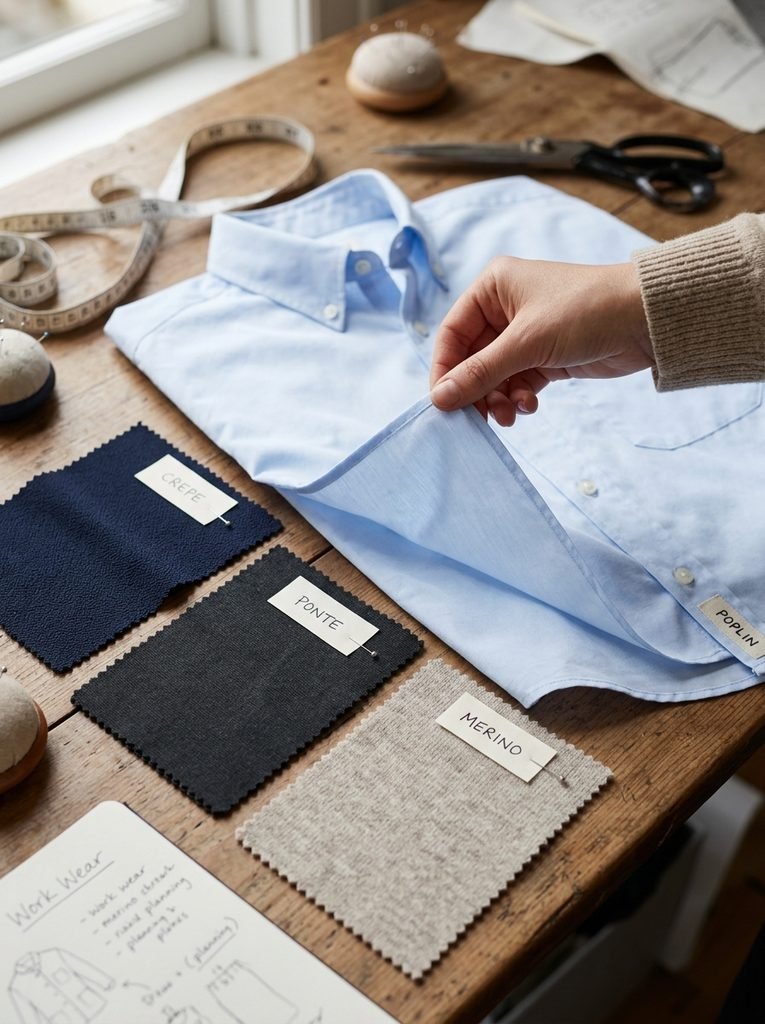
Texture and weight step in where structure used to be. Poplin and fine twill hold a crisp collar, and crepe drapes without showing every crease. Ponte knit keeps its shape through a long day, and fine merino or cotton knits sit smooth against the body. Very thin jersey and lightweight satin tend to look casual under office lighting, because they cling and wrinkle.
A simple test is to lift a corner of the fabric. If it holds some shape rather than collapsing, it will usually look more finished when worn. Hanging clothes overnight or steaming them briefly handles most creases better than rushed ironing.
Knitwear needs a little care to avoid pilling and stretching. Woolmark’s guide to washing a wool sweater says to check the care claim first, turn the garment inside out or use a laundry bag, and use the wool setting or a cold, delicates cycle if machine washing is allowed. Hand washing is the safer route when in doubt.
A Work Week Without the Blazer
These five outfits cover the most common office moods, from a first-day-of-the-week polish to a relaxed Friday.
Monday: Belted Shirt Dress and Loafers
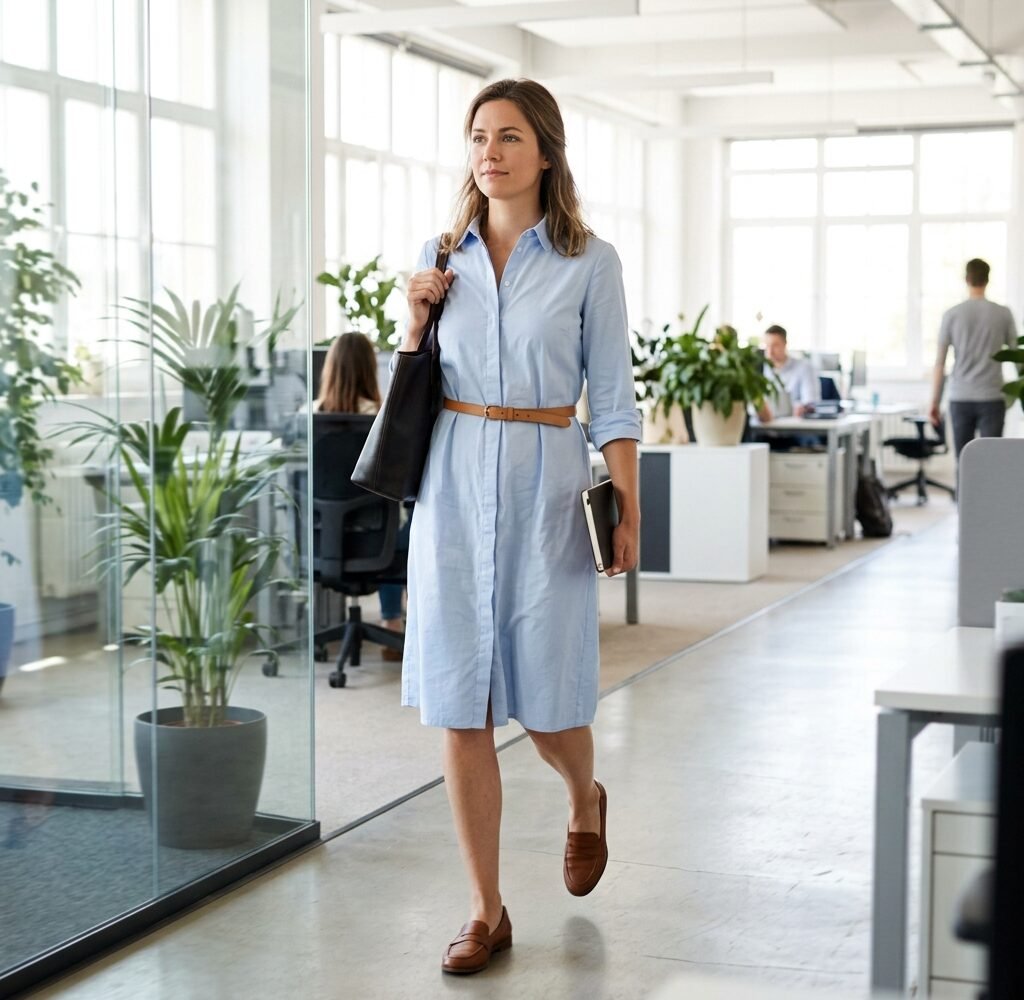
A stone or pale blue poplin shirt dress, a brown leather belt, and polished loafers make a complete outfit in a few minutes. Rolling the sleeves once adds ease, and a structured bag finishes it.
Tuesday: Waistcoat, Poplin Shirt, and Straight Trousers
A charcoal waistcoat over a white poplin shirt with the cuffs turned back gives shape without a jacket. Dark straight trousers with a clear crease, brown loafers, and small gold hoops keep it sharp and simple.
Wednesday: Fine Knit Set in Navy
A fine merino top with a matching pleated skirt in ink navy looks tailored and feels soft. Mary Janes add a gentle, slightly retro note, and sheer tights suit cooler days.
Thursday: Chocolate Shirt Jacket Over a Cream Tank
A chocolate twill shirt jacket buttoned over a cream knit tank, with wide-leg navy trousers and ankle boots, delivers color and texture in one outfit. The shirt jacket handles the layer, the pockets, and the shoulder line together.
Friday: Pleated Midi and Knit Polo
A slate pleated midi skirt with a tucked white collared knit polo is relaxed without being sloppy. Minimal leather sneakers can finish it in offices that allow them, and loafers work everywhere else.

Offices Run Cold: Layers and Outerwear
Going without a blazer does not mean going without warmth. A neutral cardigan or light wrap kept at the desk covers the cold-air hours without changing the outfit. Knit layers with fitted sleeves are easier to wear under a coat than bulky ones, which bunch at the elbows.
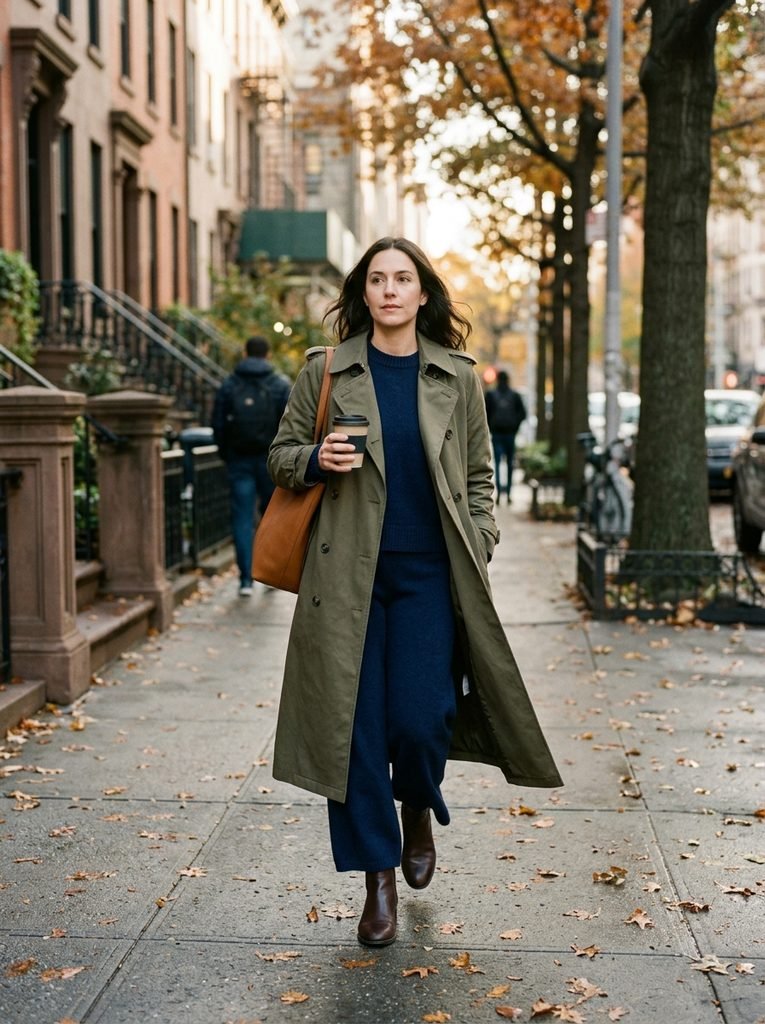
On the commute, the outerwear does the finishing. A coat in a shade that suits the outfit underneath, such as a trench in stone, olive, or navy, makes a jacketless look feel complete from the front door. The ideas in how to wear a trench coat beyond classic khaki show how far that single piece can stretch.
Checking What Your Office Means by Business Casual
Business casual rarely means the same thing in two workplaces. SHRM’s reporting on clarifying dress codes notes that the phrase is often unclear, and that some people read it as jeans and a hoodie while others expect something far smoother. Another SHRM piece on dress codes after the pandemic points out that many workplaces now lean more casual and that employees are better served when they have a copy of the current code.
A written policy, if there is one, is the first stop. After that, noticing what colleagues wear on ordinary Tuesdays tells more than any guide. When unsure, a slightly more polished version of what others wear is a safer starting point than a more relaxed one.
Interview days follow different logic, and the guide to job interview outfits that read as confident, not corporate covers that side in more detail.

Small Things That Quietly Lower the Polish
A few details drag down an otherwise good outfit more than the main pieces ever do.
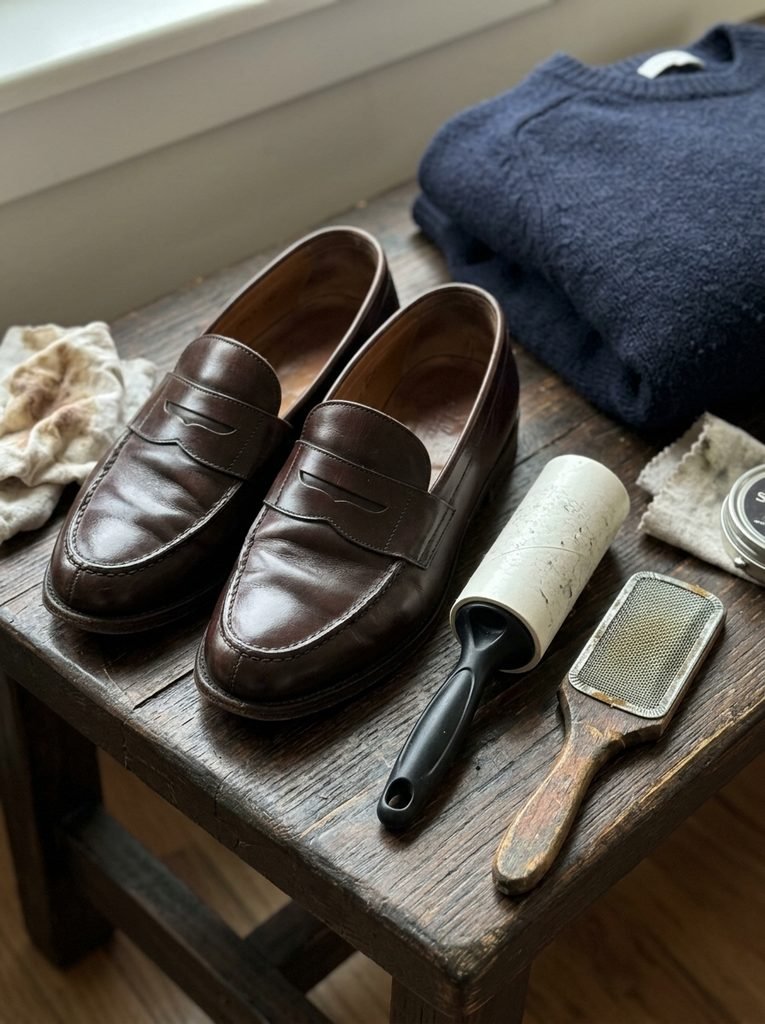
Faded black trousers are a common culprit. The gray cast in the fabric makes the whole outfit look tired, and a dark navy or charcoal pair often looks fresher. Pilled knits show up in daylight, so a fabric shaver or a comb for knitwear is worth keeping nearby. Worn heel tips and scuffed toes catch the eye more than people expect, particularly on loafers.
Sheer fabrics deserve a daylight check at home, because office lighting can be unforgiving. Hems that drag or fray stand out too. Fit matters more than the specific item, and the approach in outfits for every body type offers a useful way to think about matching shapes and silhouettes without treating any body as a problem.
Quick Answers Before Getting Dressed
Does every business casual outfit need a third layer?
No. A dress, a collared knit, or a poplin shirt with tailored trousers is complete on its own. A third layer mostly serves temperature and personal taste, not a rule.
What works in summer when a jacket feels like too much?
A sleeveless waistcoat in a light linen blend or a crisp short-sleeve poplin shirt with pleated trousers keeps the structure without the heat. Pure linen wrinkles quickly, so blends with some cotton or viscose tend to hold up better through a long day.
Is a blazer ever still the right call?
Yes. A blazer in navy, olive, or a soft check does all five jobs well, and some meetings call for exactly that. The point here is range, not a ban.
A Jacket Is Only One Way to Look Dressed
A collar, a belt, a clear color, a fabric with some weight, and shoes in good repair are other ways to look dressed. Once those pieces are in place, the beige blazer becomes an option instead of a habit, which is a much better position to dress from.

Leave a Reply