
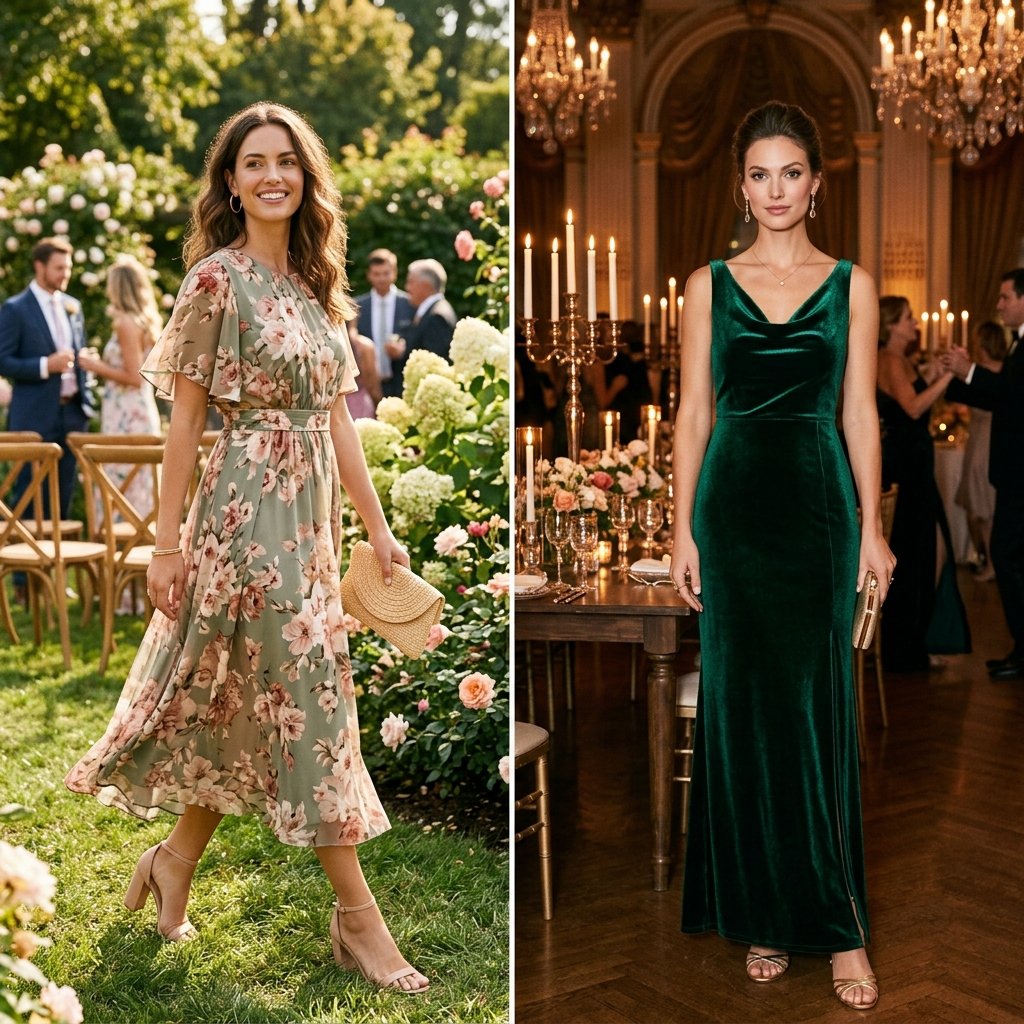
Wedding invitations create a specific kind of outfit confusion. Most occasions have an obvious dress code. A wedding adds variables that complicate the choice: the stated dress code, the venue, the season, the couple’s aesthetic, and one factor guests rarely weigh, the time of day.
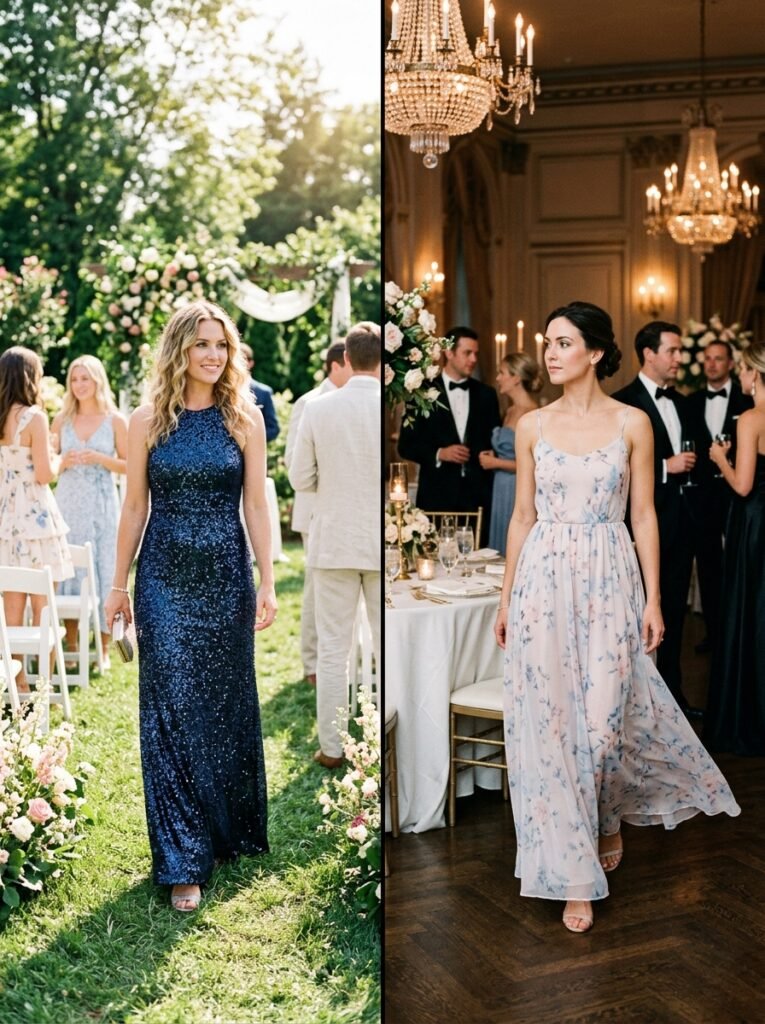
An outfit that suits a four o’clock garden ceremony can feel mismatched at an eight o’clock ballroom reception. A floral midi that reads fresh under afternoon sun can look pale under candlelight. A beaded column dress that glows at night can feel overdone at a Saturday lunchtime wedding on a vineyard.
The time of day shapes what photographs well and what fits the visual world a couple builds for their celebration. Once that logic becomes clear, outfit choices get considerably easier.
This guide covers twenty outfit ideas, ten for daytime weddings and ten for evening events, each with the reasoning behind it. Guests, bridesmaids, and brides weighing a celebration’s timing will find practical direction here.
Why the Time of Day Shapes What You Wear
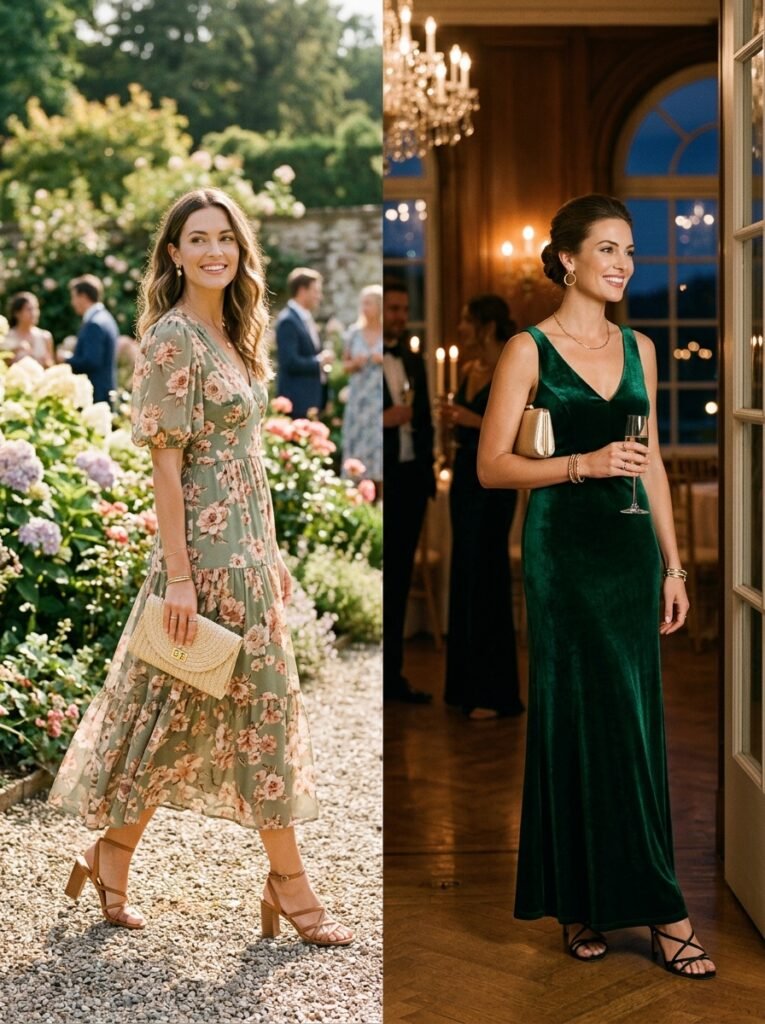
Natural light and artificial light treat fabric, color, and silhouette differently. This principle drives nearly every recommendation below.
Daylight is bright, directional, and cooler in tone. It reveals texture with precision, renders true color accurately, and exposes the sheerness of lightweight fabric, the detail of a floral print, the weave of linen. This honest light rewards texture, fresh color, and relaxed silhouettes.
Evening light, whether from candles, chandeliers, warm bulbs, or string lights, sits at a much lower color temperature than daylight. Lighting research published on ScienceDirect notes that warm-white sources cluster around 2,700 to 3,500 Kelvin, well below daylight’s roughly 6,500 Kelvin, and that lower temperatures push color perception toward yellow and red. That shift is why candlelight deepens color and makes metallics glow. A matte fabric can look flat under candlelight, while satin or velvet comes alive.
A floral chiffon dress and a beaded velvet gown are not interchangeable across day and night events for this reason. Each piece is, in effect, designed by the light it will be seen in.
Ten Daytime Wedding Outfit Ideas
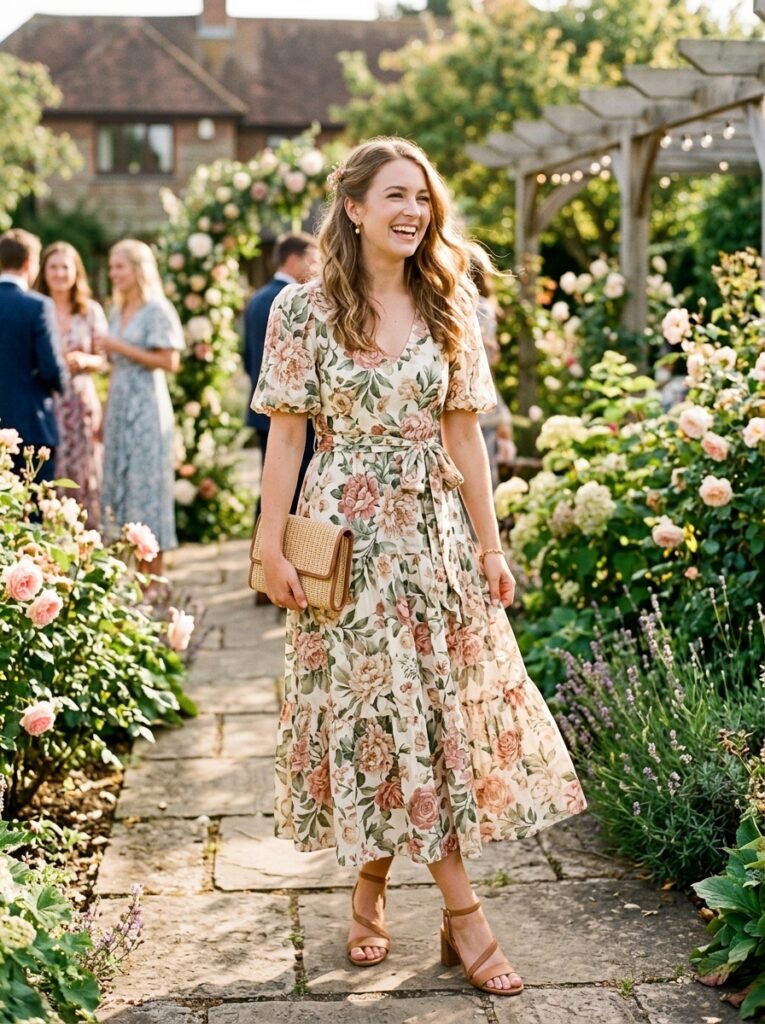
The Floral Midi Dress
The floral midi holds its status as the quintessential daytime wedding guest outfit for real reasons. Natural light renders a floral print’s color and detail with full clarity, and the freshness reads as celebratory across spring through early autumn.
A mid-tone or warm-neutral ground color, sage, dusty rose, warm cream, soft rust, works better than a dark or bold background, which belongs more naturally to evening. The silhouette can range from a structured wrap to a flowy A-line, provided the fabric moves.
Block-heeled sandals, a woven clutch, and minimal jewelry complete the look. The print carries the outfit.
Linen or Cotton Two-Piece Set
A linen or cotton co-ord set in a warm neutral or soft color ranks among the more modern daytime choices and suits outdoor or garden settings well. Natural fiber texture renders beautifully in daylight, and a well-cut co-ord reads as genuinely styled rather than simply dressed.
A wide-leg trouser with a matching blazer in warm oatmeal, or a high-waisted skirt with a relaxed button-front top, strikes the right balance for a smart-casual or garden party dress code.
This is not an outfit for a formal daytime ceremony. For a relaxed vineyard brunch or garden party afternoon, though, a linen co-ord performs exceptionally well.
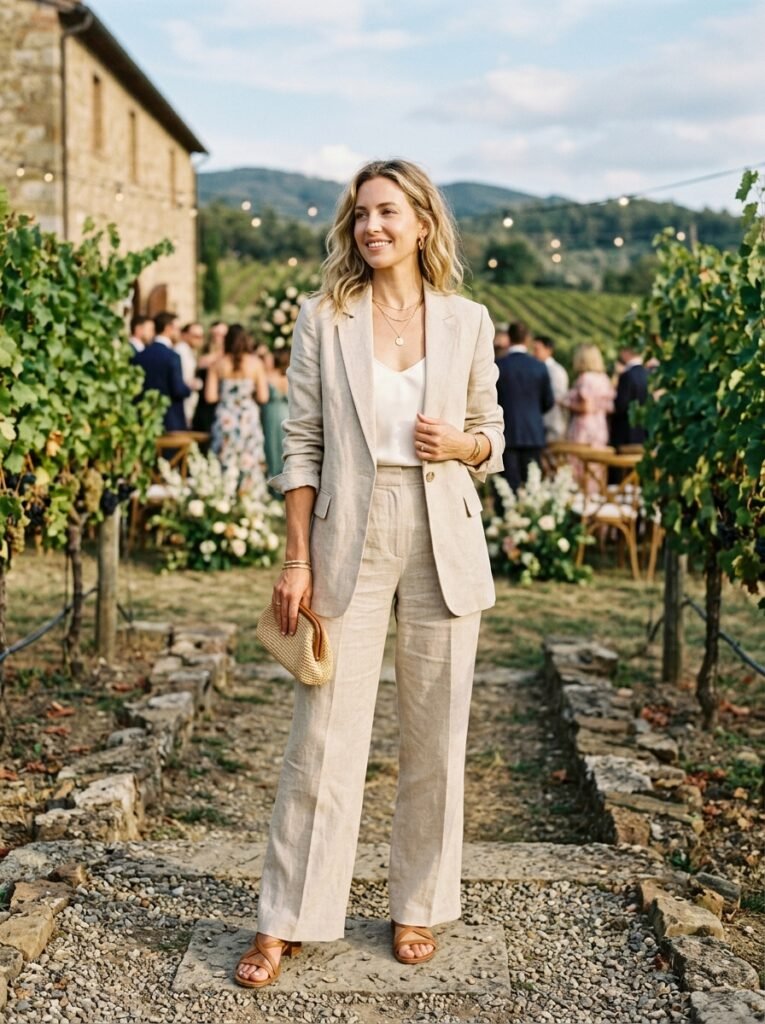
The Wrap Dress in a Warm Tonal Print
A wrap dress in a tonal, nature-inspired print, watercolor botanicals or soft abstract marks in warm complementary tones, counts among the most foolproof daytime guest outfits. It flatters most body types and photographs consistently well in natural light.
A wrap dress needs enough fabric weight to drape cleanly. Lightweight jersey or crepe holds the silhouette without clinging or gaping. Too light looks insubstantial in photographs; too stiff loses the wrap’s elegance.
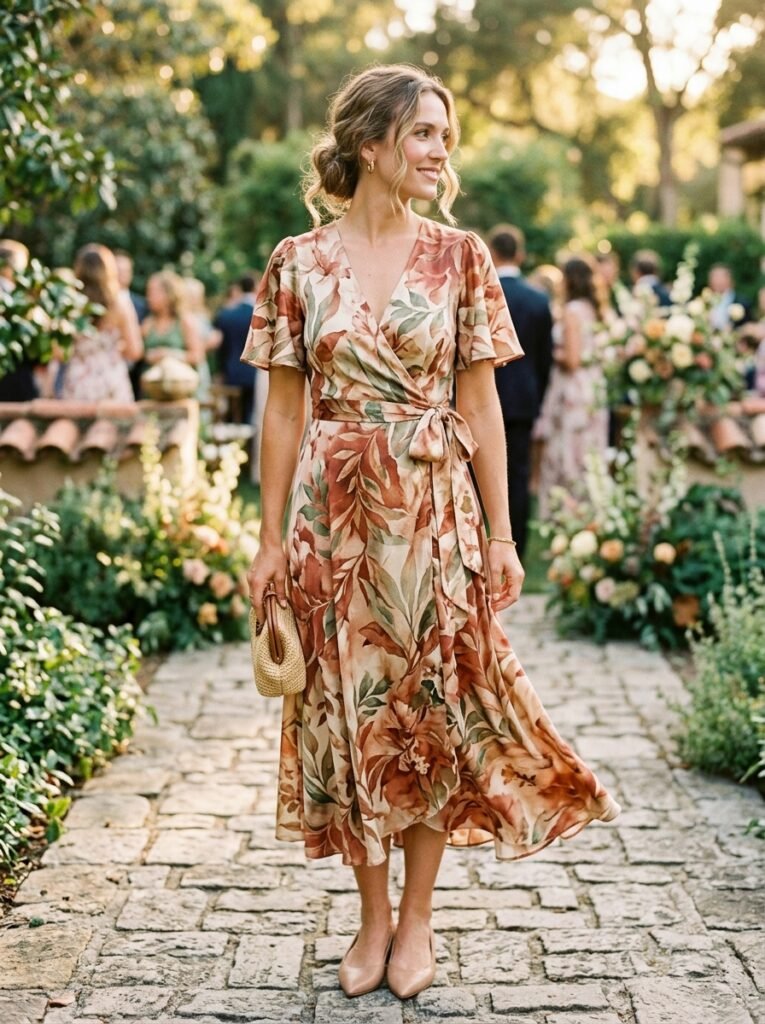
A Tiered or Ruffled Chiffon Dress
Chiffon and its relatives, georgette, organza, lightweight crepe, reward natural light in a way heavier fabrics cannot. Sheerness, movement, and the way lightweight fabric catches an outdoor breeze all require sunlight to register properly.
A tiered or ruffled chiffon dress in warm white, soft blush, or a muted floral earns its place as a daytime classic for this reason. Under artificial evening lighting, that same luminosity reads as flat.
Simple strappy sandals and a minimal bag complete the look. The dress leads.
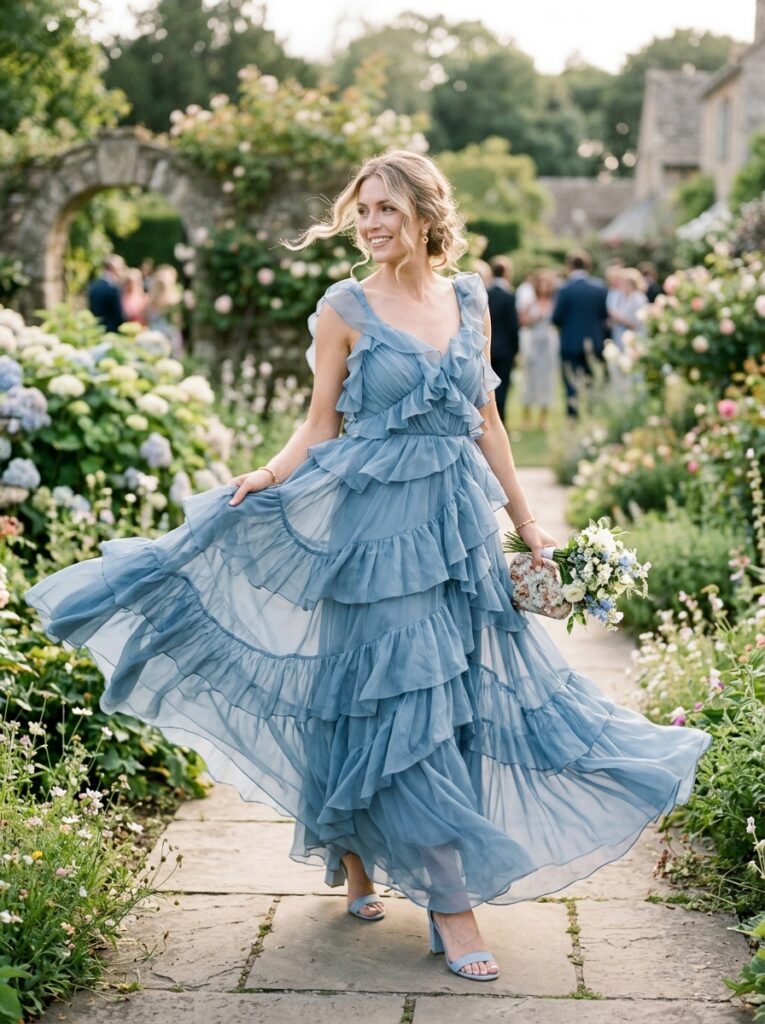
A Pastel Suit or Tailored Set
A pastel suit, powder blue, soft lavender, pale mint, or warm blush, worn as a complete two-piece to a daytime wedding, reads as stylish and appropriate. Pastels take on a fresh, luminous quality in natural daylight.
A tailored blazer and wide-leg trouser over a simple silk camisole gives a polished, gender-forward guest look that spans most daytime dress codes.
Pastels rarely work at evening weddings. Warm artificial light tends to wash them out, stripping the freshness that makes them effective in daylight.
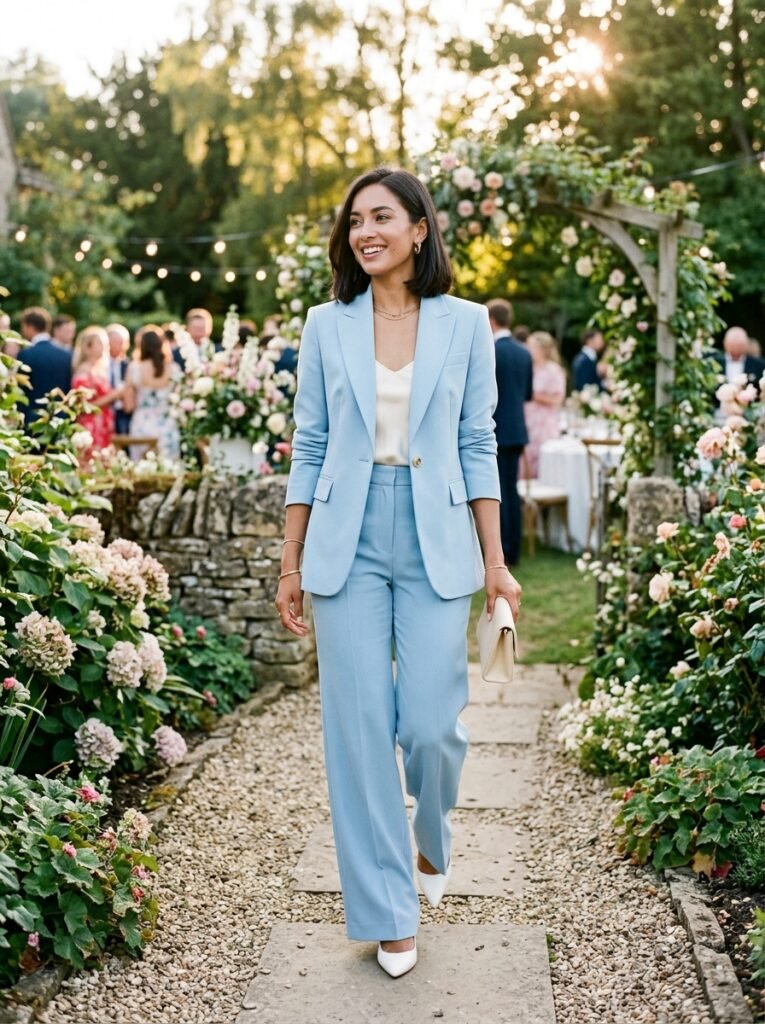
The Sundress With Elevated Accessories
A beautiful sundress that would not typically qualify as wedding-appropriate can become occasion-worthy with the right accessories. A quality-fabric sundress turns into a guest outfit once paired with serious jewelry, a structured clutch, and proper shoes.
This approach works specifically for relaxed or beach daytime weddings. The sundress itself needs a good quality fabric free of casual details like unfinished hems.
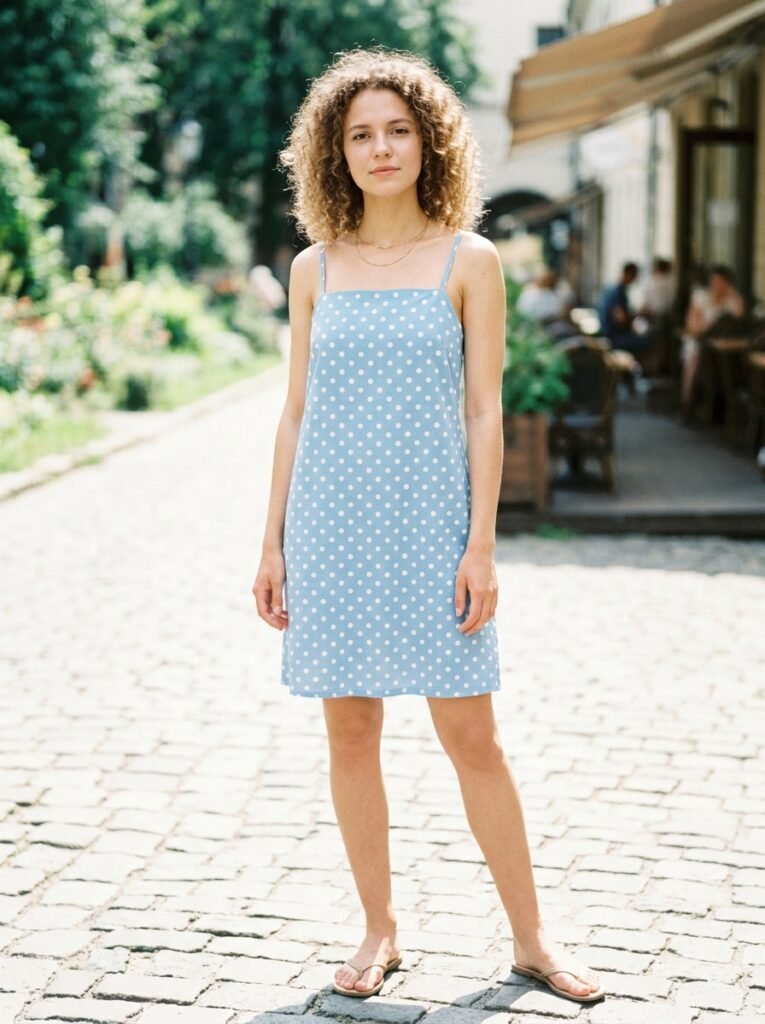
Printed Wide-Leg Trousers With a Simple Top
Wide-leg trousers in a bold print, paired with a simple, fluid top, forms a daytime formula that looks more put-together than its parts suggest. The contrast builds visual interest without competing with the wedding itself.
Natural light lets the trouser print read with full clarity. Evening light tends to weigh bold print trousers down, and the contrast with a simple top loses its effect.
Trousers in silk, quality polyester, or structured crepe hold the wide leg’s body, paired with a tucked-in silk camisole in a complementary tone.
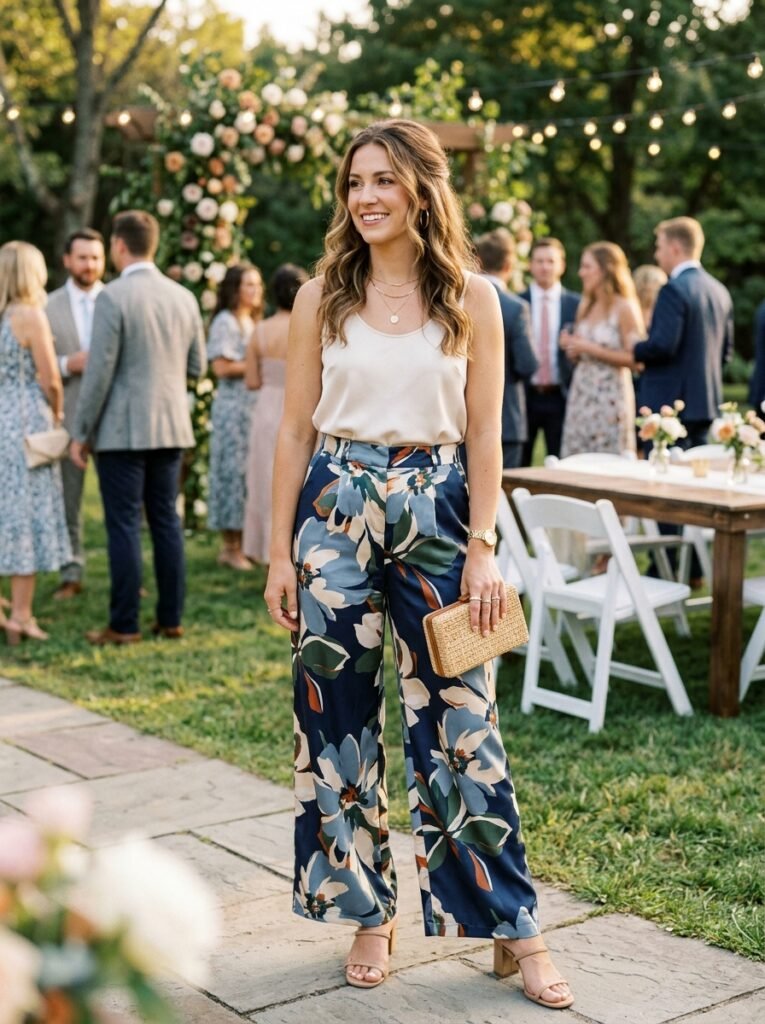
A Tea-Length Dress With a Nipped Waist
The tea-length dress, hitting between the knee and ankle, carries a vintage charm suited to daylight settings. Exposed ankle in a strappy heel adds lightness, and a nipped waist creates feminine, retro elegance for afternoon garden ceremonies.
A fabric with some structure, structured cotton or a ponte knit, keeps the nipped waist holding shape throughout the day. Block heels and minimal jewelry complete the outfit.
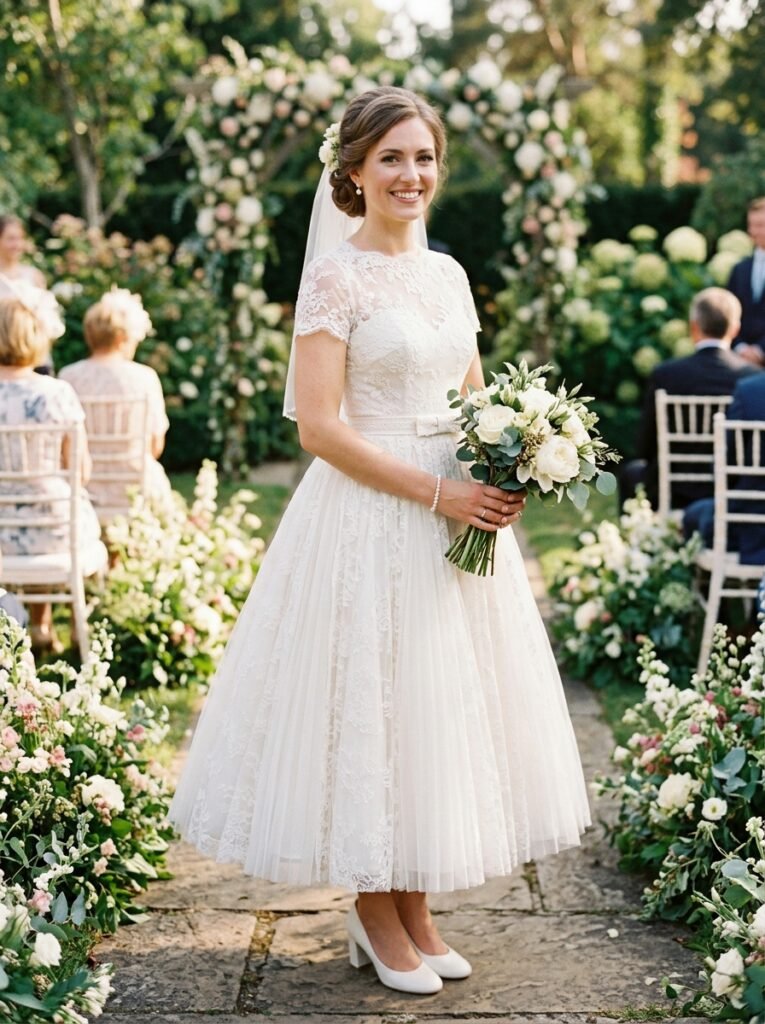
A Brightly Coloured Blazer and Dress Combination
A brightly colored blazer over a simple dress, with the blazer rather than the dress carrying the statement, stands out for the right reasons. It reads as put-together without pulling focus from the couple.
A cobalt blazer over a white slip dress, or a mint green blazer over a printed dress, both work. Bright colors keep their clarity in daylight that they lose under warm evening light, making this a specifically daytime approach.
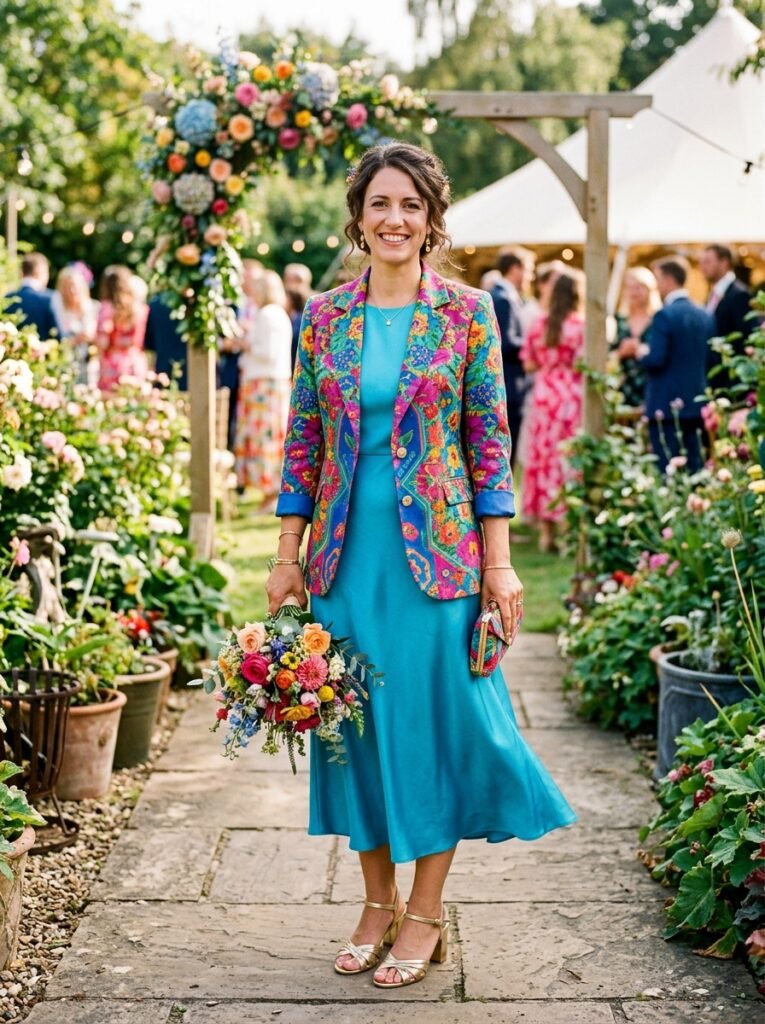
Embroidered or Textured Fabric in a Light Palette
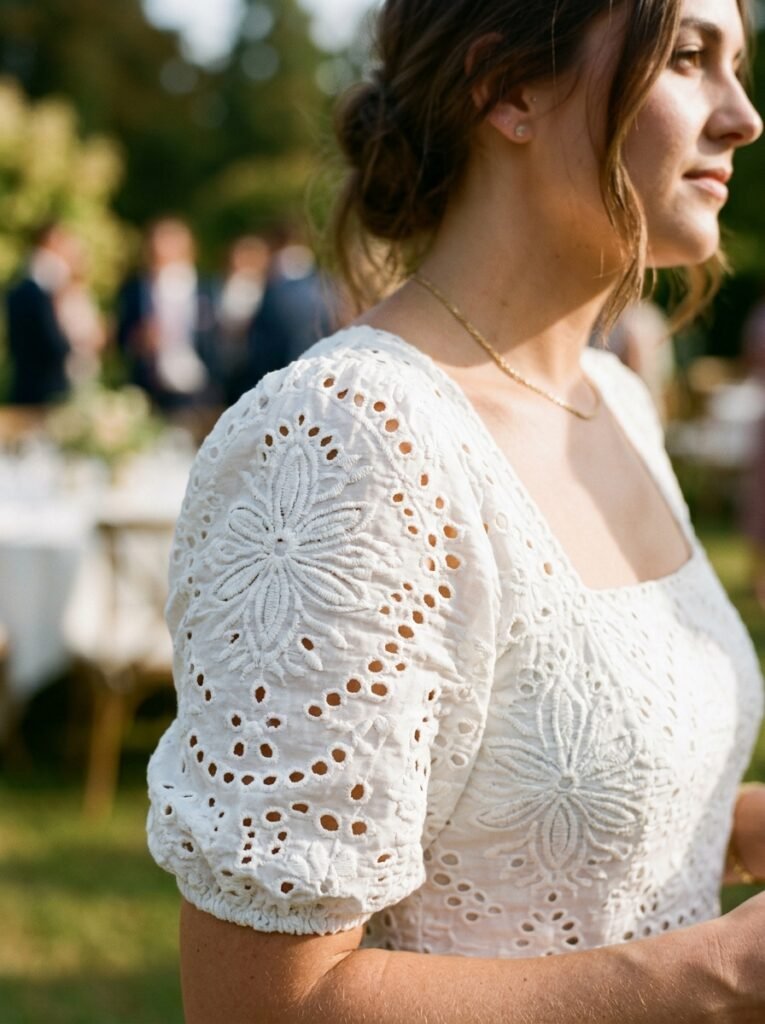
Embroidered fabric, broderie anglaise, textured jacquard, or raised floral patterns in a light palette suit natural light exceptionally well. The three-dimensionality casts shadows and highlights that natural light renders in fine detail.
Artificial light flattens that same embroidery and mutes much of its impact. For daytime celebrations, choosing fabric with textural interest pays off.
Ten Evening Wedding Outfit Ideas
A Beaded or Sequined Dress
No outfit suits an evening wedding better than a dress with beading, sequins, or embellishment that catches light. Under candlelight, embellished fabric moves light around the room in a way no other fabric replicates.
The same dress in full afternoon daylight can look overdone. Under evening light, it looks perfectly matched to the occasion.
Rich jewel tones, classic black, midnight navy, champagne, or gold all read magnificently in evening light. Everything else should stay minimal. The dress is the look.
A Velvet Gown or Midi in a Jewel Tone
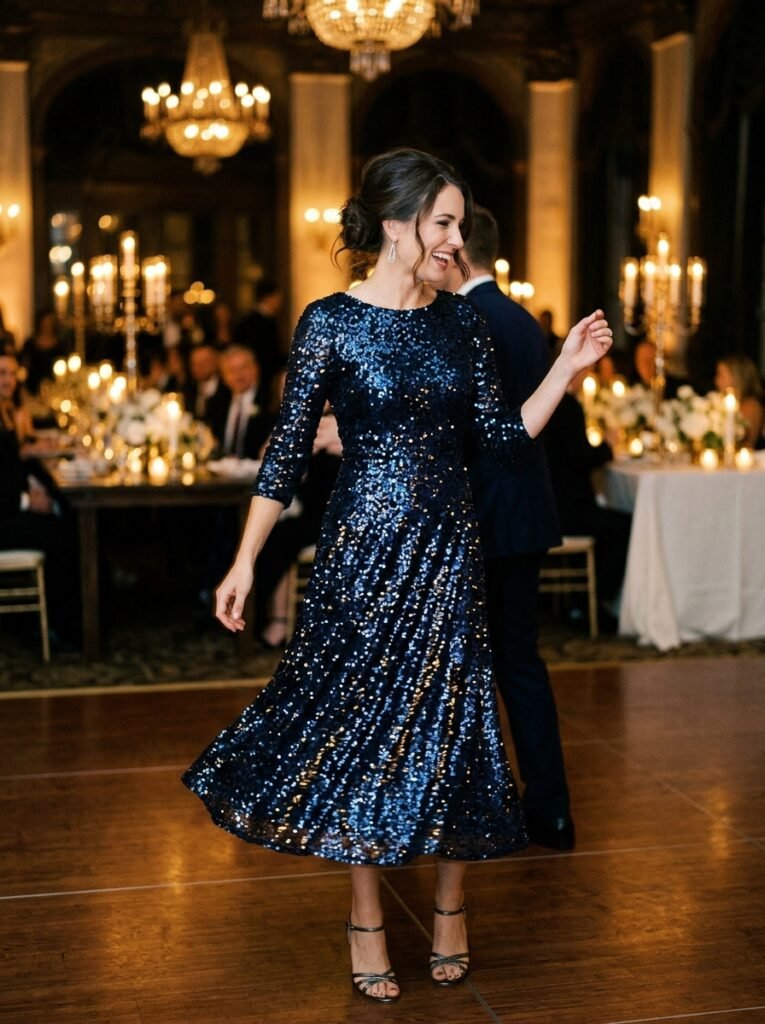
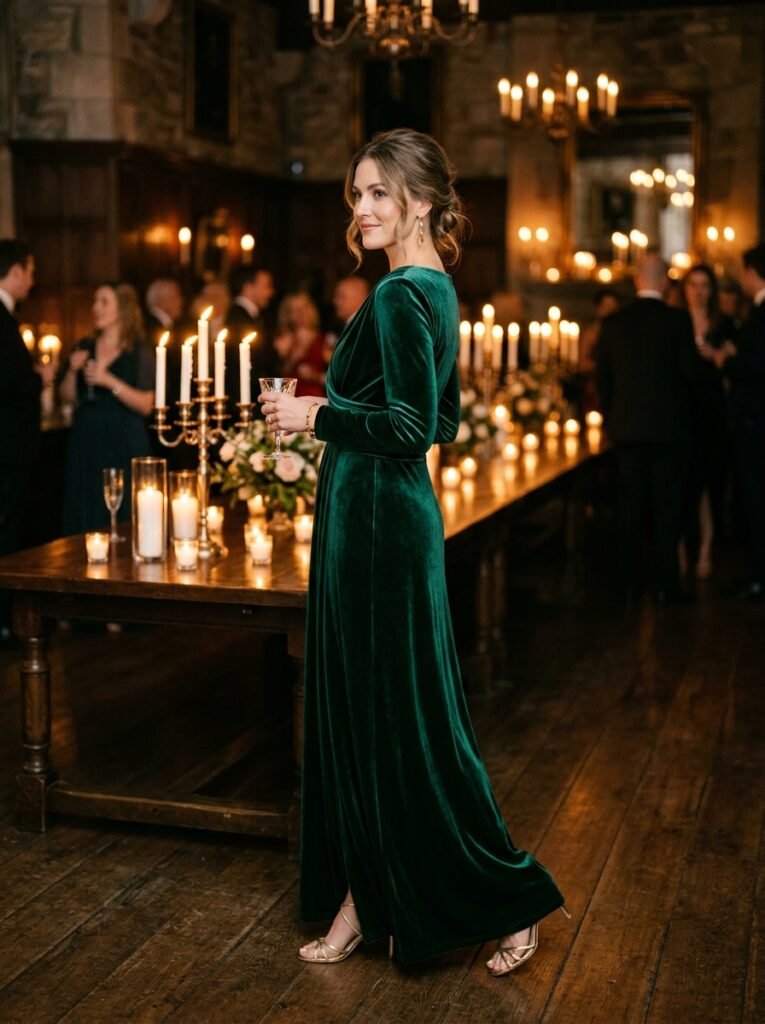
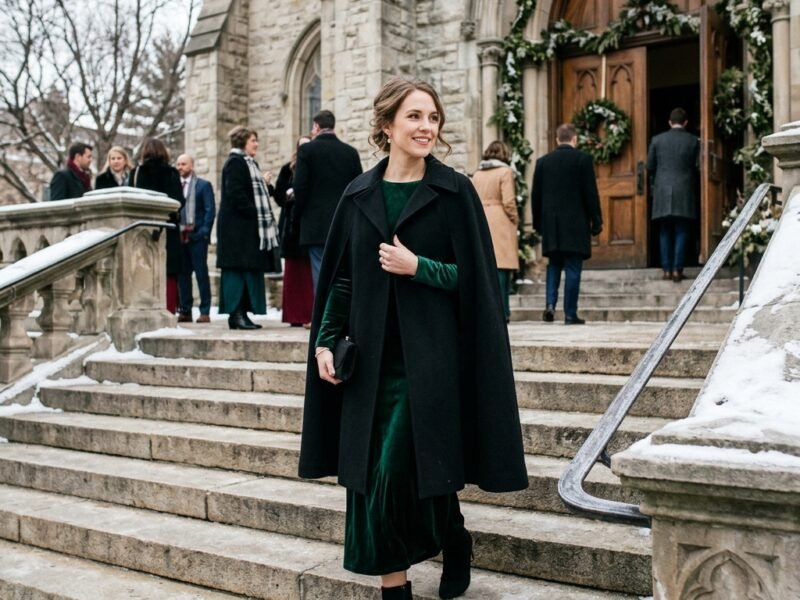
Velvet functions as an evening fabric the same way linen functions as a daytime fabric. Its pile absorbs and reflects warm light, building depth that daylight cannot replicate. In natural daylight, velvet can look heavy and flat; in a candlelit ballroom, it looks like luxury.
A velvet midi or floor-length gown in emerald, deep burgundy, sapphire, or plum ranks among the most beautiful evening guest looks possible.
Simple gold jewelry and a small metallic clutch finish the outfit. The velvet leads completely.
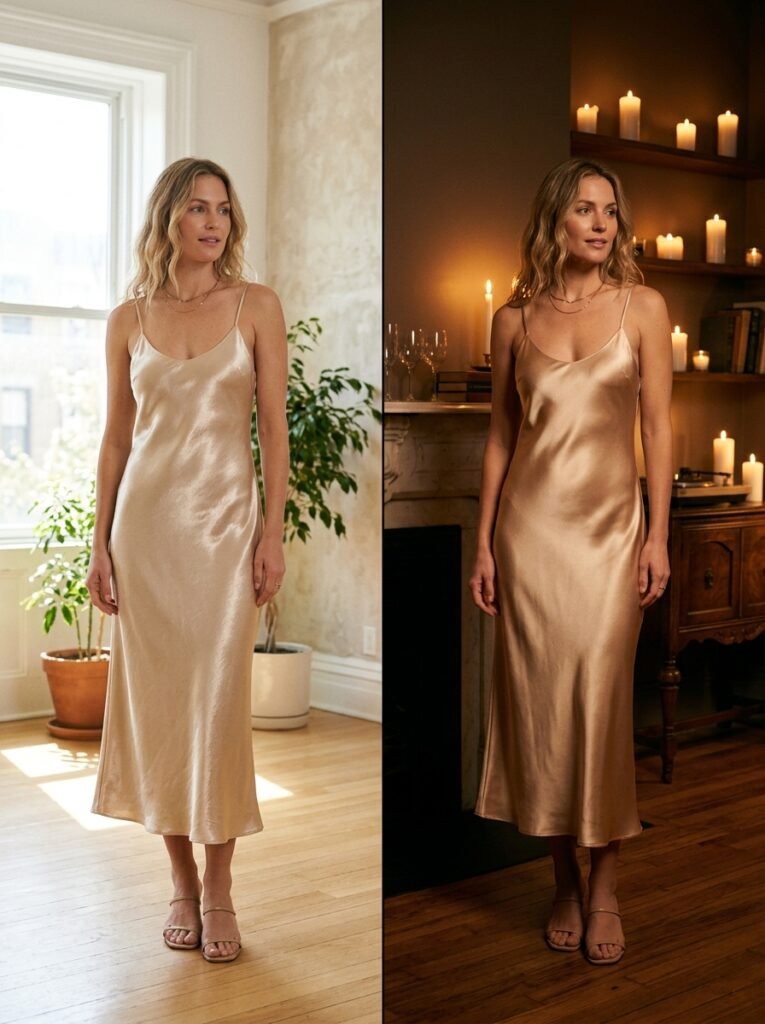
A Satin Column or Slip Dress
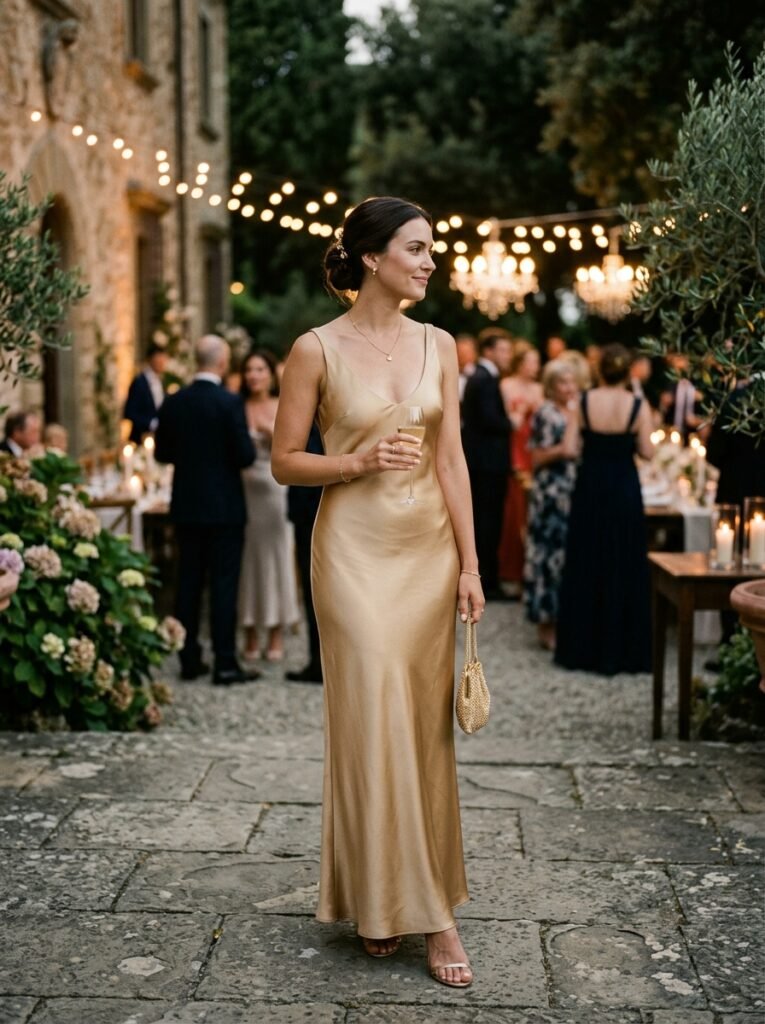
Satin, whether true silk or quality polyester satin, carries a shine that behaves differently under different light. In natural daylight, satin can look brash and overly shiny. Under warm evening light, it takes on a soft, liquid glow.
A satin column dress or slip dress in champagne, black, deep green, or ivory counts as an evening classic for this reason. It reads as sleek and appropriate for the formality of most evening events.
Minimal accessories work best. A single fine chain, simple stud earrings, and strappy heels complete a look where fabric and silhouette already carry the outfit.
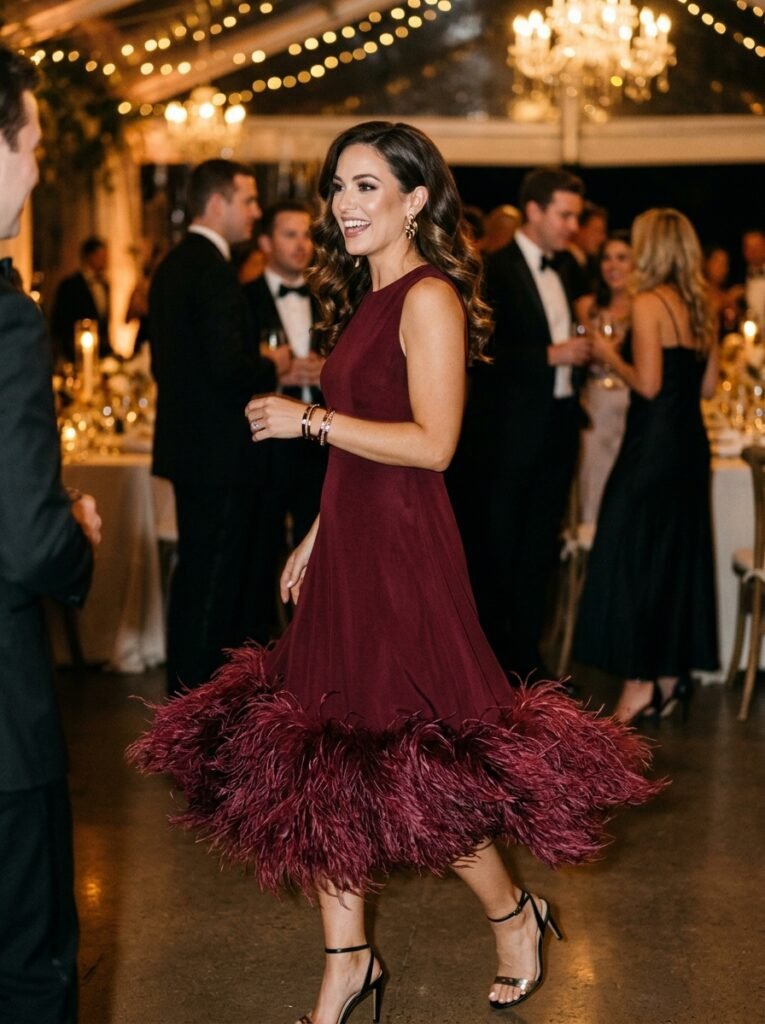
Dramatic Feather or Fringe Detail
Feather trim and fringe detailing that moves with the body both read as evening details. Artificial light renders their movement most beautifully, since flickering, directional warm light enhances the motion.
A midi dress with feather hem trim, or a fringe dress that moves under reception lights, makes a memorable, clearly evening-appropriate choice, and photographs spectacularly in evening reception shots.
Daytime events rarely suit these details well. They can look slightly costume-like in full natural daylight.
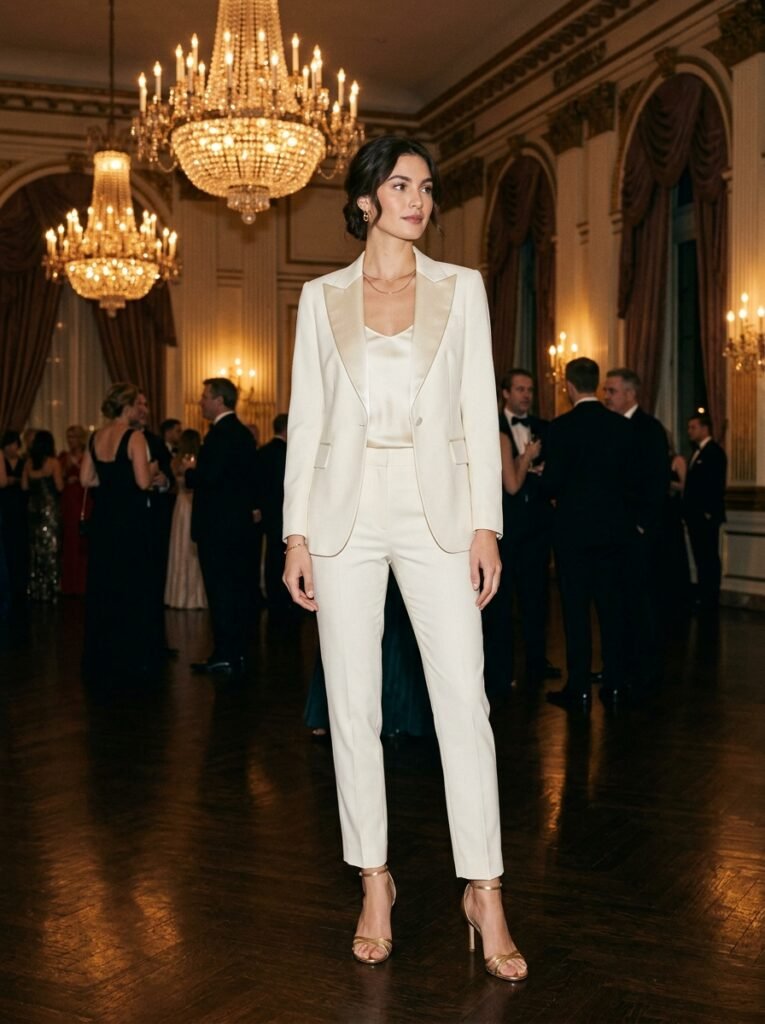
A Tuxedo-Style Suit in Black or Ivory
A tuxedo-style suit, classic black with satin lapels, ivory with minimal detailing, or deep navy in a slim cut, has become a genuinely powerful evening guest option for women. Its formal precision belongs entirely to evening events.
A silk camisole, strappy heeled sandals, and minimal jewelry let the suit do the work. This look photographs beautifully and reads as occasion-aware at a formal night celebration.
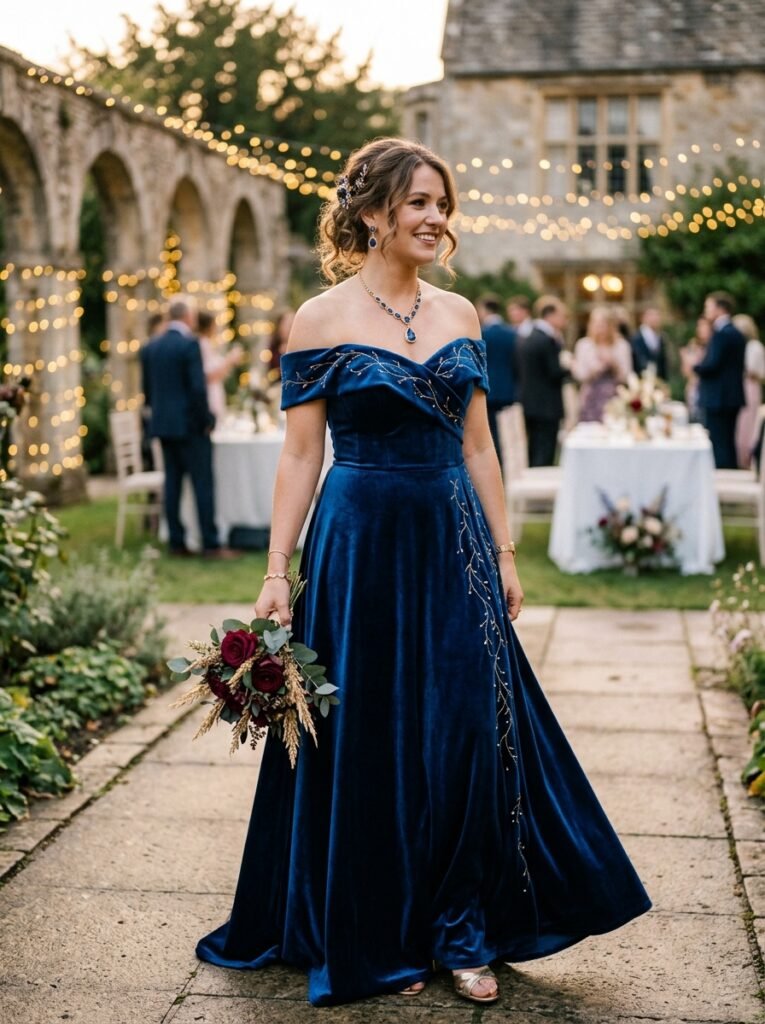
A Rich-Toned Maxi Dress With Bare Shoulders
A floor-length dress in a rich, saturated tone with a bare-shoulder neckline makes a consistently beautiful evening guest choice. Length, bare shoulders, and deep color together build a look that reads as unambiguously formal.
Deep terracotta, burgundy, forest green, sapphire, and burnt orange all photograph richly under warm evening light. The floor length keeps formality intact while the bare shoulder adds glamour.
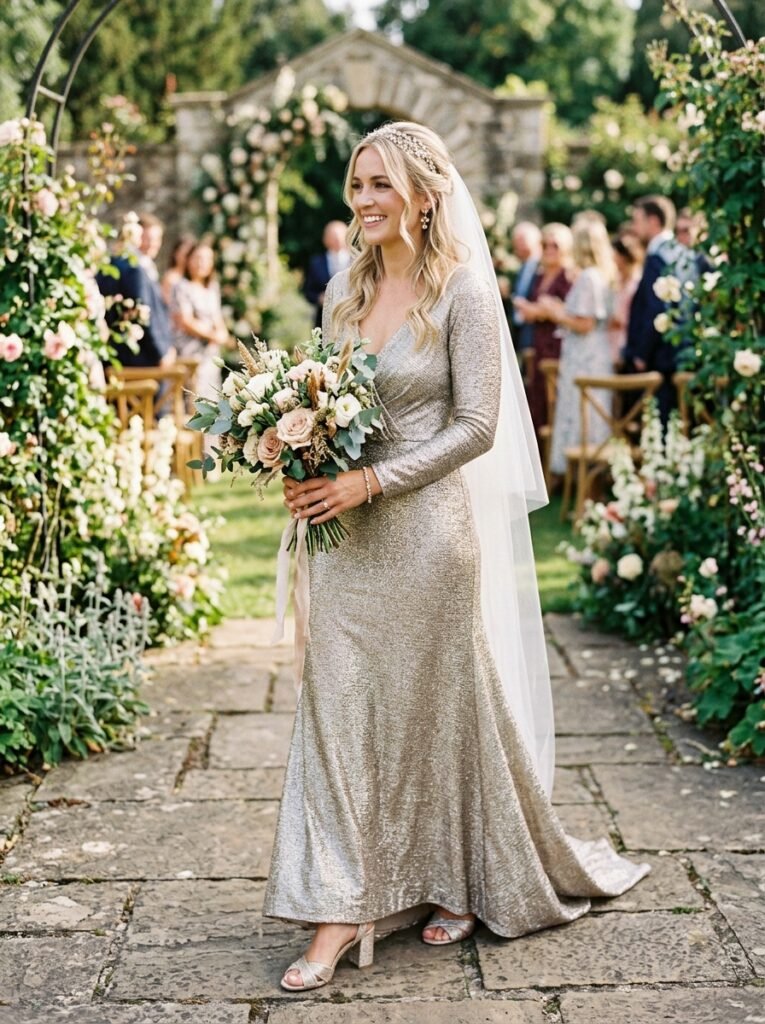
A Metallic or Lurex Knit Dress
A metallic knit, working gold, silver, or bronze lurex thread into a fitted silhouette, sits between casual and glamorous, suiting the contemporary evening guest well. It carries less formality than a beaded gown but reads more evening-appropriate than anything without metallic content.
A fitted metallic knit midi, worn with barely-there heels and simple earrings, makes a modern look spanning most evening dress codes.
The metallic catch of the knit under warm reception lighting is what makes this look work specifically in evening settings.
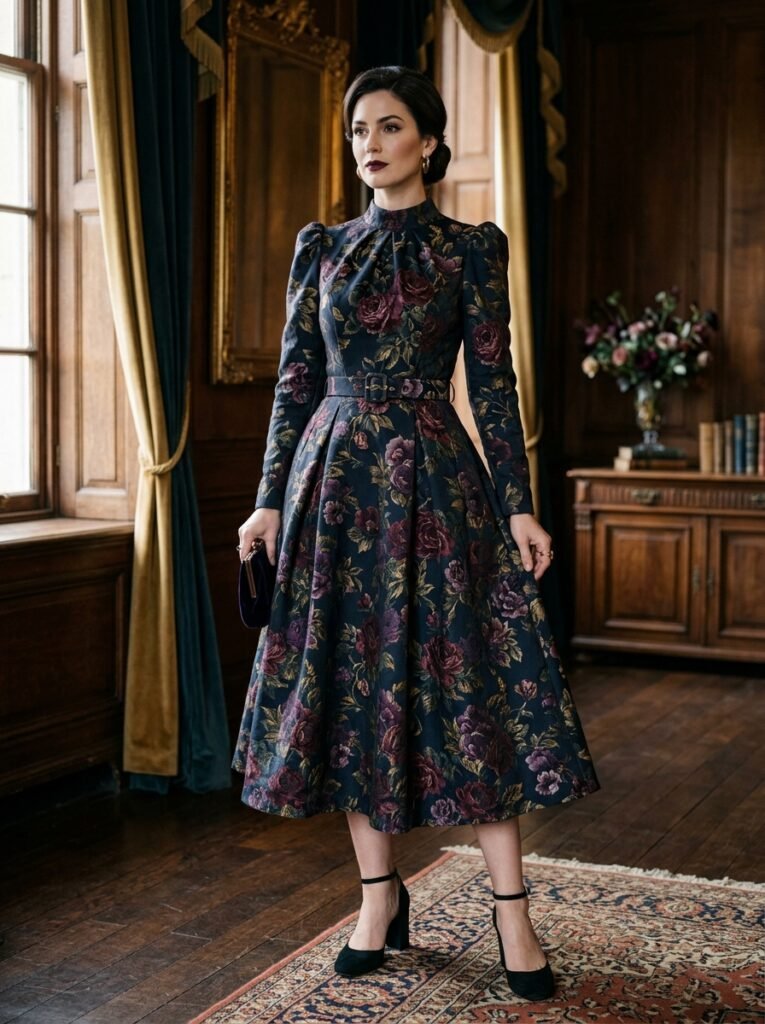
Dark Floral in a Structured Silhouette
A structured dress in a dark floral print, dark roses on black or dark botanicals on deep navy, marks an evening-specific choice that does not translate to daytime. Warm evening light lets it read as sophisticated; the same print looks heavy in daylight.
A structured midi or floor-length silhouette with a fitted bodice and flared skirt gives an evening look a distinctive, editorial quality. It is not the most obvious choice, which is precisely what makes it memorable.
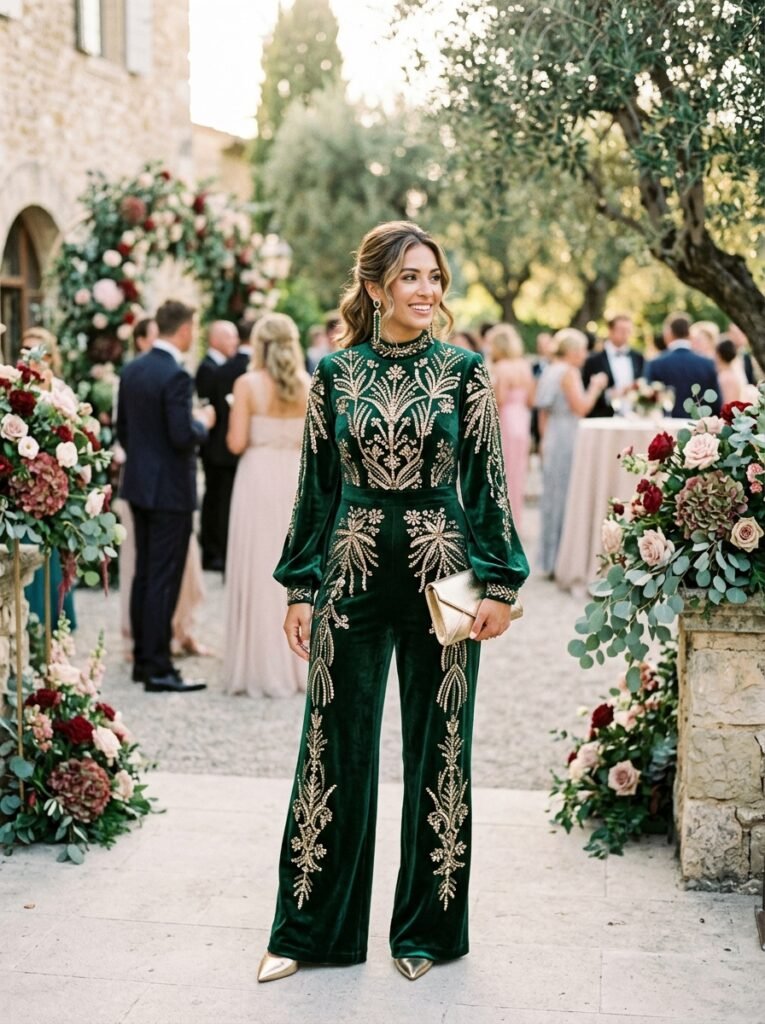
An Embellished Jumpsuit in a Rich Colour
A wide-leg jumpsuit with embellishment details in a rich evening color offers one of the best dress alternatives for guests who prefer trousers at formal events. A jumpsuit in burgundy velvet with subtle sequin detail reads as occasion-appropriate while staying distinctive.
The jumpsuit silhouette combined with evening fabrics feels modern and celebratory. Pointed heeled mules and simple jewelry finish the look.
Timeless Black With a Single Statement Element
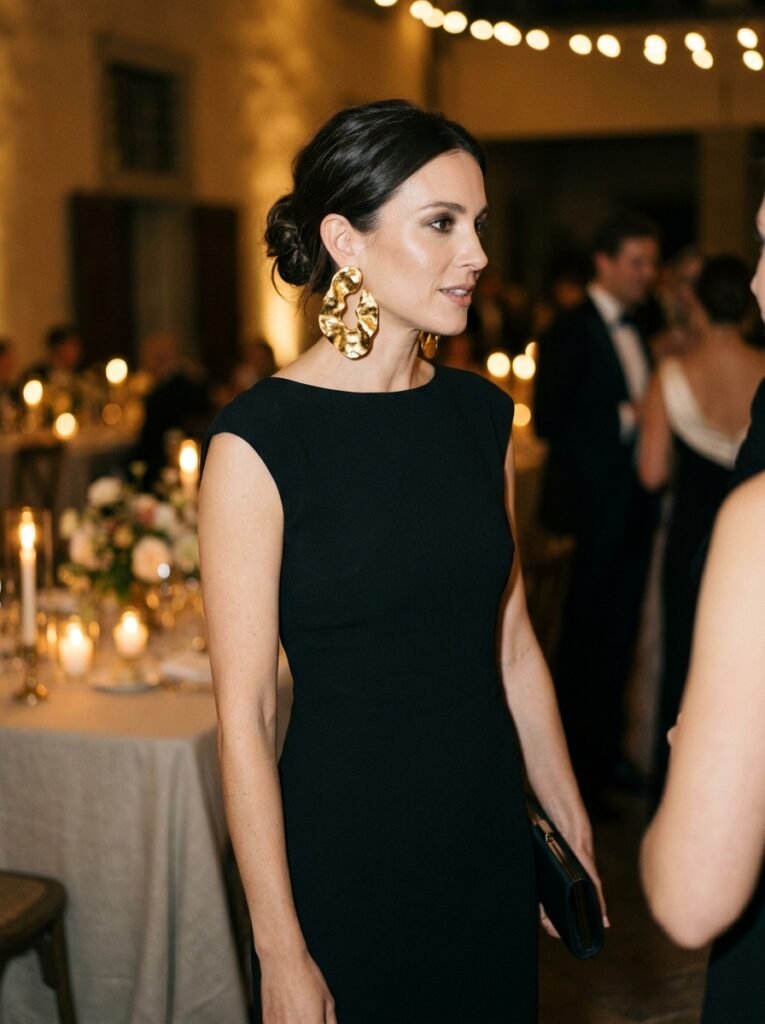
Black remains one of the most reliably appropriate evening guest colors. A black outfit paired with a single statement element, a dramatic neckline, exceptional jewelry, or a bold shoe, reads as consistently elegant.
A simple black column dress with sculptural gold earrings. A black midi with a plunging neckline and pointed heels. The formula stays the same: black as the foundation, one element that makes it occasion-worthy.
Evening light gives black a depth flat daylight rarely matches. It belongs most reliably to after-dark events.
Choosing Between Day and Night: A Practical Guide
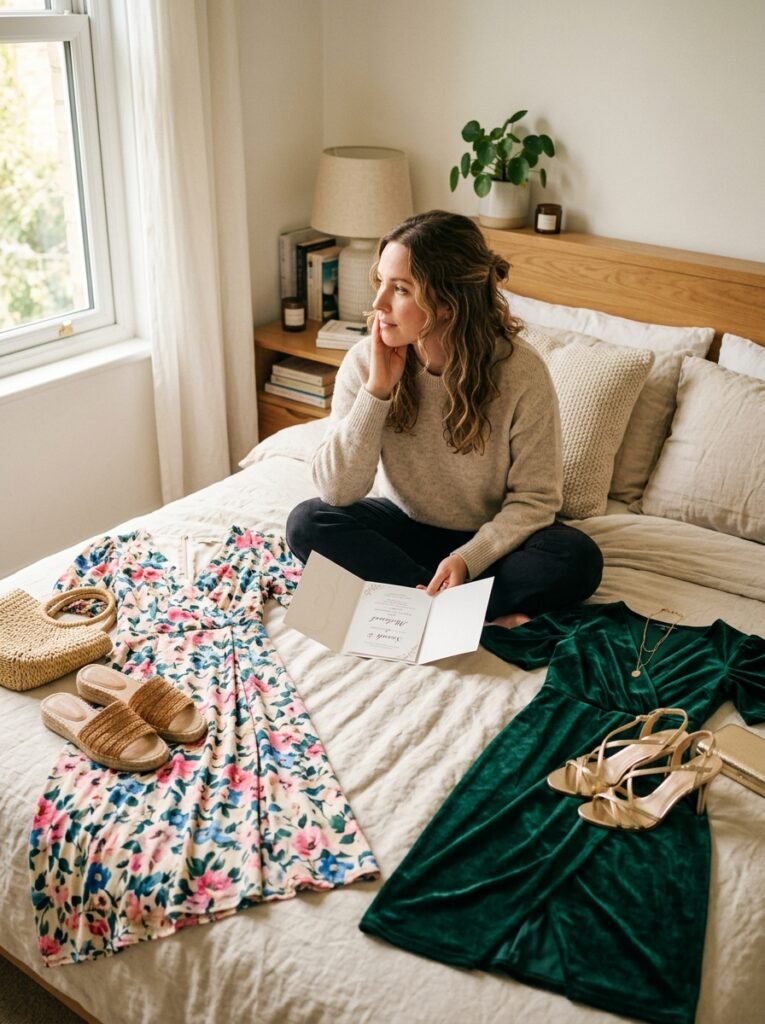
The choice between a daytime and evening wedding outfit is not purely personal preference. It responds to a specific context, and a short checklist makes the right call clearer.
What is the dress code? It sets the formality level, the primary filter. Black tie or formal evening points toward the evening section. Smart casual or garden party points toward the first several daytime ideas.
What time does the ceremony start? Before two in the afternoon counts as fully daytime. Between four and six sits in transition territory, where either direction works but the reception tips into evening. Seven or later reads as evening from start to finish.
What is the venue? A garden, vineyard, or barn almost always signals a daytime context. A ballroom or manor house more often signals an evening venue, or one styled for evening regardless of start time. Guests weighing an outdoor ceremony can find more venue-specific direction in this guide to outdoor wedding guest outfits.
What fabrics draw the eye? A pull toward chiffon, linen, and light tones signals a daytime look. A pull toward satin, velvet, and rich colors signals an evening one. That instinct usually tracks something true about the event ahead.
Common Wedding Outfit Mistakes Related to Timing
Wearing heavy evening fabrics to a daytime wedding ranks as the most common timing mistake. A heavily embellished dress or velvet midi carries a slight air of dressing for a different occasion at an outdoor afternoon wedding, since the lighting is not present to do what those fabrics need.
Wearing breezy, lightweight fabrics to a formal evening event creates the reverse problem. A floaty chiffon dress at a black tie wedding can look underdressed once everyone else is in velvet and satin under candlelight.
Ignoring the transition causes a third mistake. When an event starts in late afternoon and runs into evening, the outfit needs to hold up at both ends. A satin slip dress works from late afternoon through evening; a heavily structured formal gown can feel excessive in daylight. A guest planning several celebrations this season may find this guide to re-wearing one outfit across multiple weddings useful.
Frequently Asked Questions
Can the same dress work for a day wedding and an evening wedding? Some dresses genuinely span both: a well-chosen midi in a warm tonal print, or a solid-color structured dress in a mid-tone, can transition with different accessorizing. Pieces at the extreme ends transition poorly.
What colours work for both day and night wedding outfits? Mid-toned warm neutrals such as terracotta, camel, and muted olive sit comfortably across both contexts. Rich jewel tones work in both settings but belong primarily to evening. Pastels belong primarily to daytime. Black works across both but feels most at home in the evening.
What shoes work for both a daytime outdoor ceremony and an indoor evening reception? A block-heeled strappy sandal in nude or gold ranks as the most reliable all-day shoe, since it handles outdoor terrain better than a stiletto. Very high stilettos work best saved for fully indoor evening events.
Is it appropriate to change outfits between the ceremony and reception? Yes, particularly when the ceremony is an outdoor daytime event and the reception is a formal evening affair. A slightly more casual ceremony outfit, followed by a more formal reception look, tends to work best.
What jewellery works best for daytime versus evening wedding outfits? Daytime jewelry tends toward lighter, more delicate pieces: fine chains, small studs, a simple bracelet. Evening jewelry can carry more presence: statement earrings, stacked bracelets, bolder rings. Jewelry calibrated for evening light can look overdone in afternoon sun.
The Bottom Line
Day and night weddings function as genuinely different aesthetic events, and the outfits that serve each one best reflect those differences in fabric, color, silhouette, and detail. The goal stays the same either way: to look as though the outfit was chosen with the specific event in mind.
That awareness is not complicated once the underlying logic clicks. Light shapes what fabrics do. Context shapes what feels appropriate. The time of day sits inside both.
The twenty ideas in this guide give any guest, bridesmaid, or bride a strong starting point in either direction. Picking the context first, then the idea that resonates most, builds a look with real confidence behind it.

[…] partner outfit. Couples weighing exactly how formal to go for a given venue can borrow cues from this breakdown of day versus night wedding dress codes, since the same logic applies to matching formality levels within a single […]
[…] weighing colour and formality together with the rest of the wedding party’s timeline may find this guide to day versus night wedding outfit choices useful for narrowing those decisions […]
[…] weighing the ceremony’s overall timing and lighting against their outfit choice may find the day vs. night wedding outfit guide useful alongside this […]
[…] available. For a deeper look at how time of day should factor into shoe and outfit choices, 20 Day vs Night Wedding Outfit Ideas breaks down the light-driven logic behind daytime versus evening […]
[…] for every invitation. For readers weighing what’s appropriate at different times of day, this guide to day versus night wedding outfits is a useful companion when deciding how to style each piece for a specific […]
[…] day-to-night approach used for wedding guest dressing follows a similar logic, choosing a base piece and adjusting it with layers and accessories rather […]