
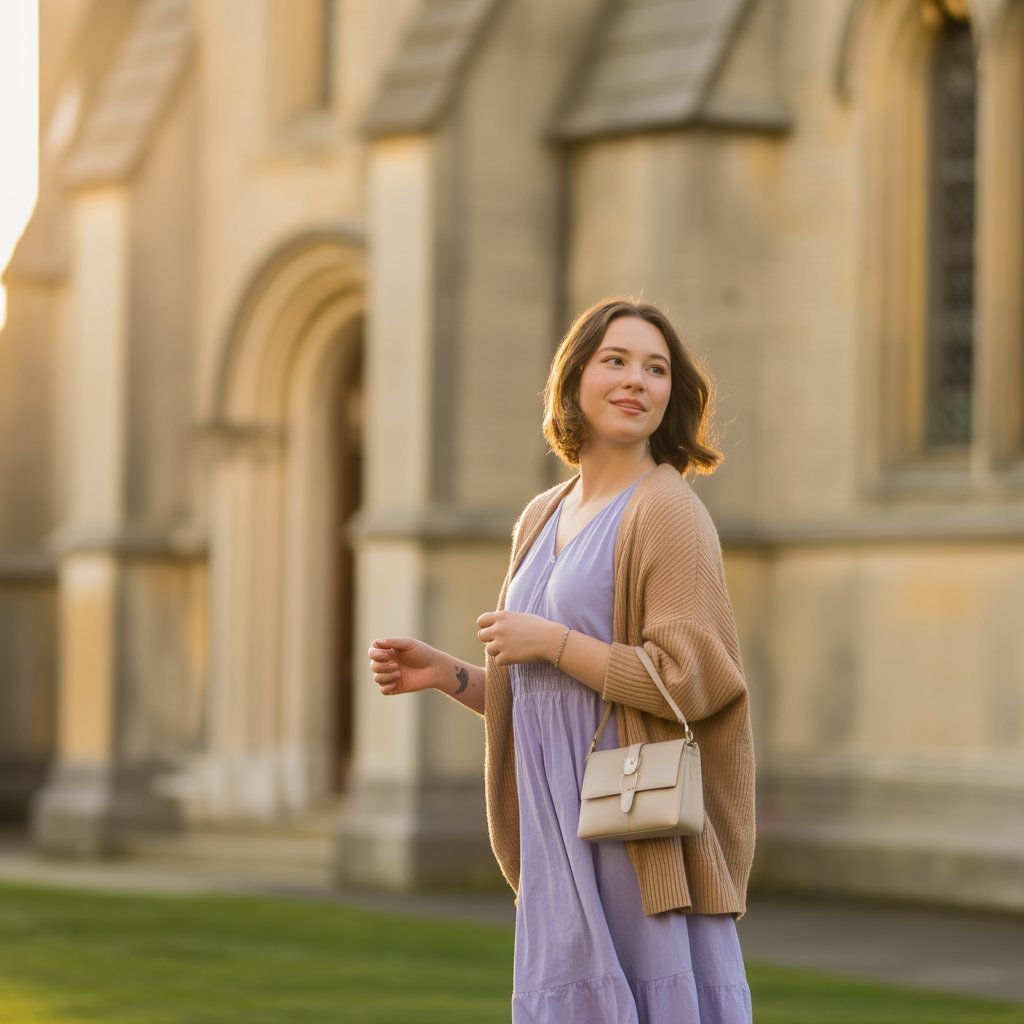
Easter is rarely just one event. There’s the church service in the morning, often the most formal Sunday of the spring calendar. Then brunch, somewhere between polished and relaxed depending on who’s hosting. Then, for a lot of families, an afternoon that involves a backyard, a basket hunt, a niece who wants to be picked up, and grass that doesn’t care what you’re wearing.
Planning a single outfit for all of that is a genuinely different problem than planning for a wedding or a holiday party, because the day doesn’t stay in one register. What reads as appropriately dressed up for a pew at ten in the morning can feel overdone by two in the afternoon, and what’s comfortable enough for a yard full of kids can look underdressed walking into a church an hour earlier.
This guide works through the day in the order it usually happens, from the modesty expectations of a church setting through the softer, brighter energy of brunch and into the practical demands of whatever comes after. The goal isn’t one perfect dress that does everything. It’s a small set of choices that let you move through the day without changing clothes twice or standing out for the wrong reason at any single stop.
Understanding the Shape of an Easter Sunday
Before getting into specific pieces, it helps to think honestly about what the actual day looks like, because the outfit decisions that follow depend entirely on it.
Most Easter Sundays have some version of this structure: a religious service in the late morning, a meal shortly after that ranges from a formal seated brunch to a casual backyard spread, and then an open-ended afternoon that might include an egg hunt, photos, a walk, or simply sitting around a table for a few more hours.
The formality curve across that timeline generally goes down, not up. Church tends to be the most dressed-up part of the day, brunch softens slightly, and the afternoon is where comfort usually wins. That downward slope is the opposite of how most special occasions work, where the day builds toward a formal evening, and it’s the main reason a single fully formal outfit or a single fully casual one rarely covers the whole day well.
Knowing this shape in advance makes the rest of the planning much easier, because it turns one hard decision into a few smaller, more specific ones.
What Counts as Church Appropriate for Easter
Easter tends to be one of the more dressed-up Sundays of the year for many congregations, even ones that are casual the rest of the year, so it’s worth thinking about the service specifically rather than assuming a regular Sunday outfit will carry over.
A few general guidelines come up consistently across most denominations and congregations, though it’s always worth checking with family or the specific church if there’s any doubt:
- Necklines that sit at or above the collarbone, rather than deep V-necks or anything strapless
- Hemlines at or below the knee for skirts and dresses, particularly for kneeling or seated portions of a service
- Shoulders covered, or a light layer such as a cardigan or blazer on hand to cover them
- Fabric with enough structure or weight that it doesn’t read as sheer or overly casual under indoor lighting
None of this means the outfit needs to be somber. Easter services are typically bright, celebratory occasions, and pastel colors, floral prints, and soft spring fabrics are entirely appropriate within those modesty guidelines. The goal is coverage and polish, not muted color.
Building a Base Outfit That Can Carry the Whole Day
The most efficient way to handle a multi-stop Easter Sunday is to think in terms of one base outfit plus a small number of swappable pieces, rather than three separate looks.
A structured dress in a spring color, worn with a cardigan or blazer for church, works as the foundation. That same dress, minus the layer and with the shoes swapped for something lower, carries comfortably into brunch. By the afternoon, if there’s a backyard component, the cardigan can come back on for warmth, or the whole look can shift down further with flats and simpler jewelry.
This approach saves the trouble of packing a full outfit change and avoids the slightly awkward moment of showing up to brunch in something noticeably different from what you wore to the service an hour earlier. It also means the investment goes into one strong piece rather than three separate outfits that each only get worn for part of the day.
The day-to-night approach used for wedding guest dressing follows a similar logic, choosing a base piece and adjusting it with layers and accessories rather than committing to two unrelated outfits, and the same principle applies well to a holiday with several distinct stops.
Pastels Without Looking Costume-Like
Pastels are closely associated with Easter for a reason, but there’s a real difference between wearing pastel with intention and ending up looking like a walking Easter basket. The line between the two usually comes down to how the color is paired, not the color itself.
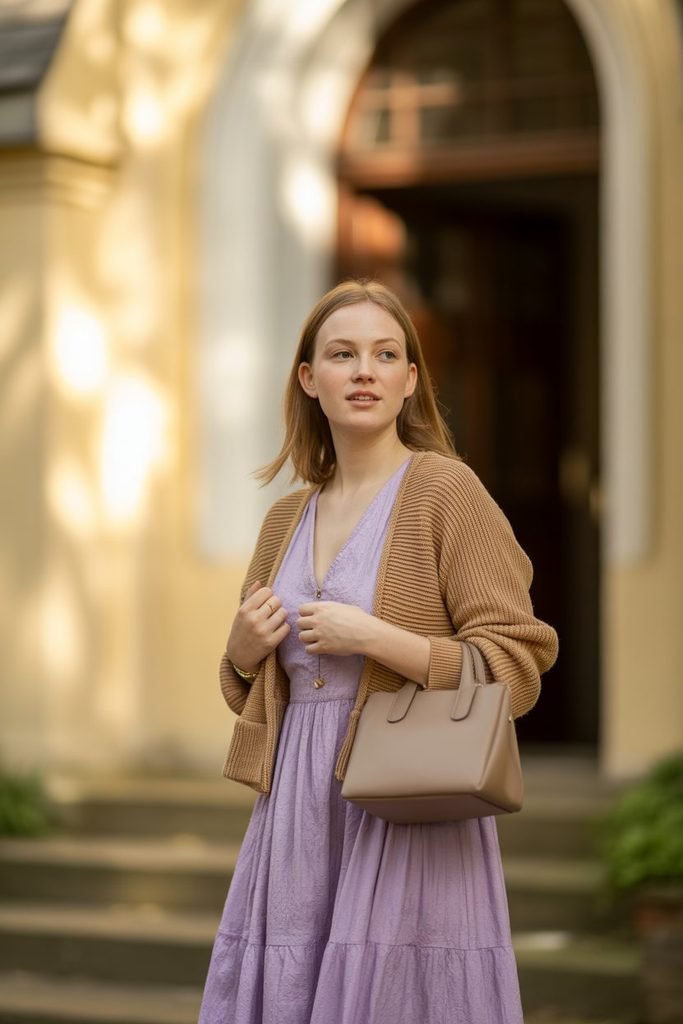
A single pastel piece anchored by a neutral, camel, white, soft grey, or tan, tends to look considerably more elevated than pastel worn head to toe. A lilac dress with a camel cardigan and neutral flats reads as spring-appropriate and put together. The same dress paired with a mint bag and a yellow cardigan starts to tip into costume territory.
Deeper, slightly dustier versions of pastel shades, dusty lilac instead of bright lavender, sage instead of neon mint, butter yellow instead of bright lemon, also photograph and wear more like grown-up spring color and less like a children’s party palette. This distinction matters more for Easter than almost any other holiday, because the seasonal color cues are so strong that it’s easy to lean too far into them without meaning to.
Florals That Read Elegant, Not Juvenile
Floral print is the other Easter color signature, and like pastels, it works best within a few specific guidelines rather than any floral automatically being the right choice.
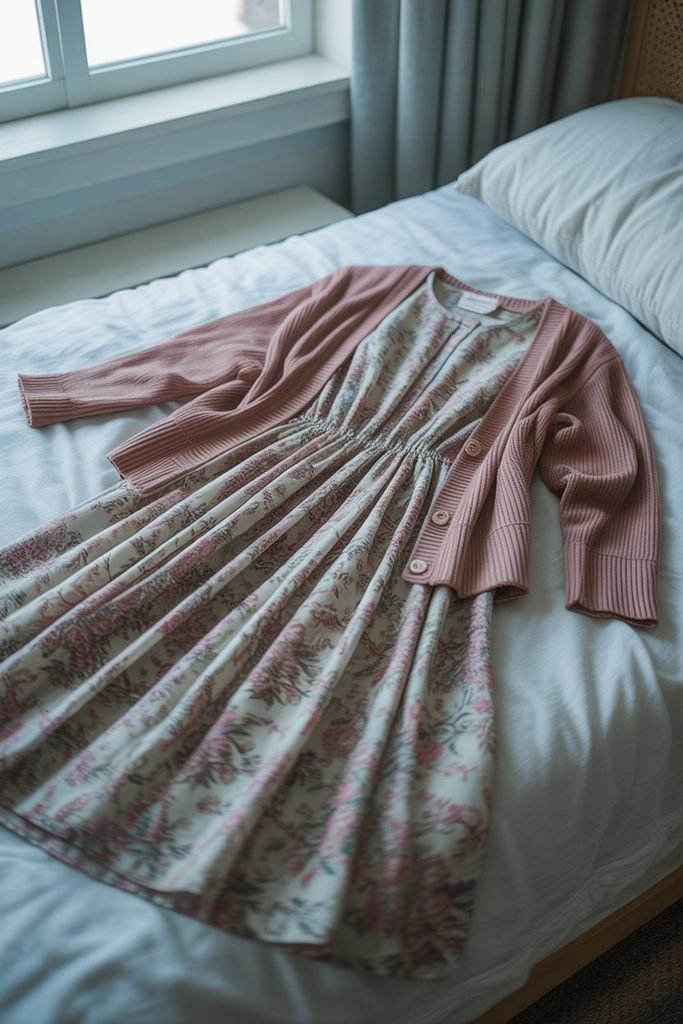
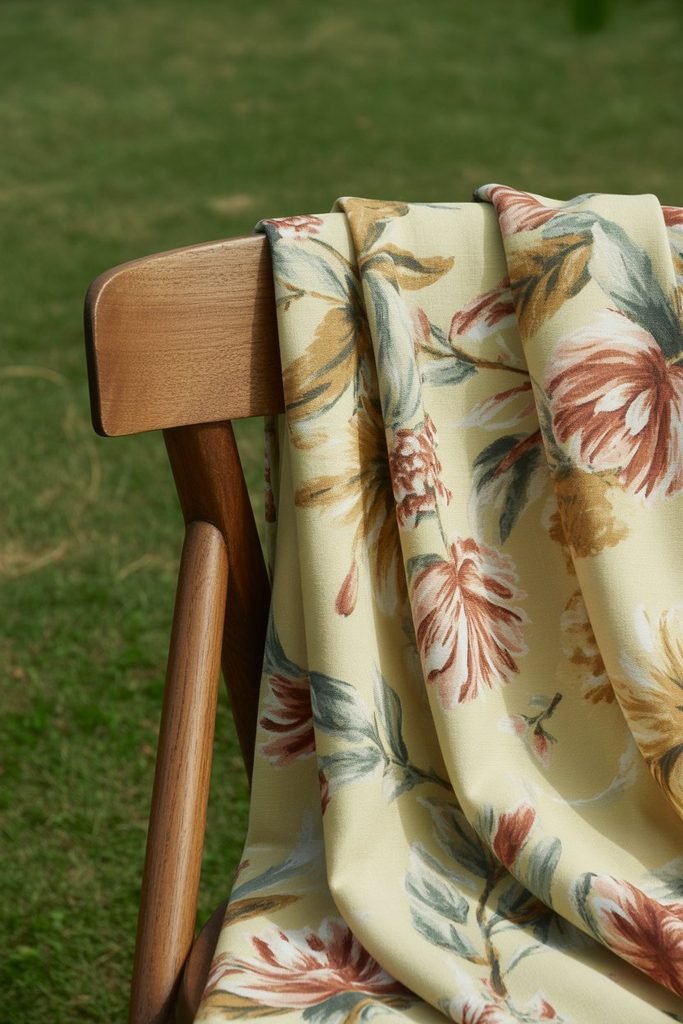
A medium-scale print, not so small it disappears from a few feet away and not so large it overwhelms a smaller frame, tends to be the most versatile choice for both the church portion of the day and everything after. Very small ditsy florals can feel slightly younger and more casual, while oversized, dramatic florals can feel more evening than daytime appropriate.
Ground color matters as much as the flowers themselves. A floral print on a white, cream, or soft neutral background feels fresh and springlike. The same print on a black or very dark background shifts the entire mood toward something more formal and less obviously seasonal, which can be useful if a more subdued look is wanted for a more traditional service.
Fabric weight is worth checking as well. A floral in a lightweight, structured cotton or a quality crepe holds its shape through a full day of sitting, standing, and moving between locations. A very sheer or very lightweight floral chiffon can start to look slightly limp by the time brunch photos happen, particularly if the day involves any wind or outdoor time.
Dresses Versus Separates for a Multi-Stop Day
Both dresses and separates work well for Easter, and the right choice mostly comes down to how much flexibility is wanted across the day.
A dress is simpler. One decision, one silhouette, and the outfit is essentially done once shoes and a layer are chosen. This is the lower-effort option and tends to work particularly well for anyone who would rather not think too hard about coordinating multiple pieces.
Separates offer more room to adjust as the day shifts. A skirt and blouse combination for church can lose the blouse’s tucked-in structure and gain a light cardigan for brunch, then swap the skirt for a pair of trousers if there’s a full outfit change planned for the afternoon. This takes more planning upfront but gives more control over how formal or casual each part of the day feels.
Neither approach is inherently better. A dress suits a day with fewer stops or less time between them. Separates suit a longer day with more distinct settings, particularly if there’s a wider temperature swing to manage as well.
The Layering Piece That Makes the Transition Work
If there’s one piece worth choosing carefully for an Easter outfit, it’s the layer, because it does more work across the day than almost anything else in the outfit.
A lightweight knit cardigan in a neutral or soft tone is one of the most versatile options. It provides shoulder coverage for church, can be removed for brunch if the room is warm, and adds warmth back for an outdoor afternoon without looking like it was added as an afterthought.
A cropped blazer in a soft color or a classic neutral serves a similar function with slightly more polish, and works particularly well over a simpler dress that could use a bit more structure for the church portion of the day.
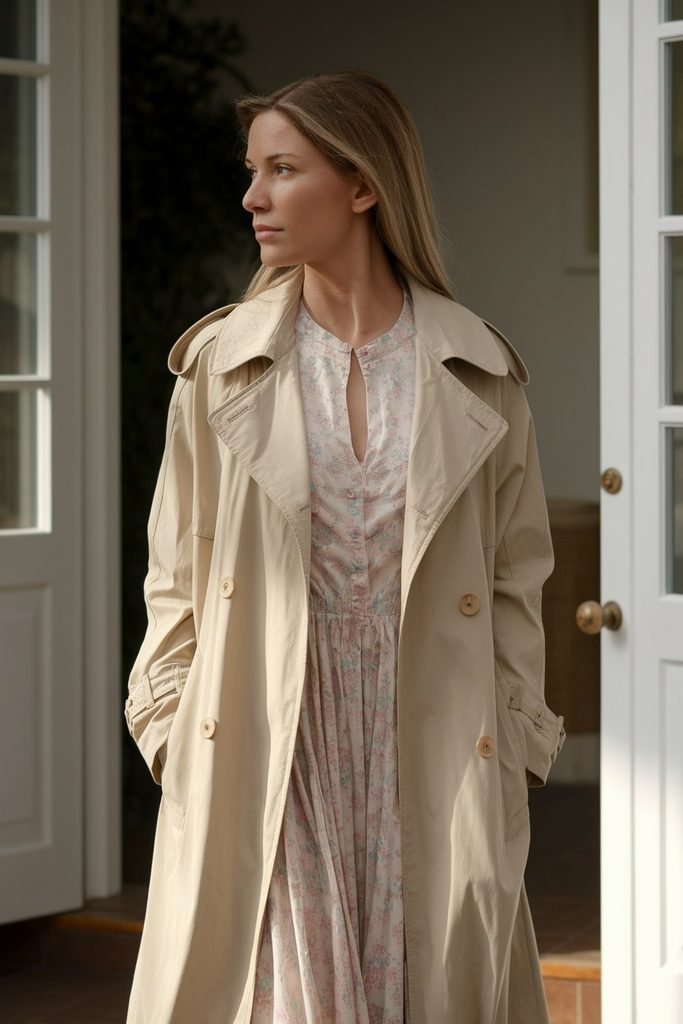
A trench coat or lightweight jacket is worth considering as an outer layer if the morning is cool, since it can be removed entirely once the temperature rises through the afternoon, functioning more as outerwear than as part of the outfit itself.

Shoes That Survive Pews, Patios, and a Backyard
Footwear is where a lot of Easter outfits quietly fall apart, mostly because the shoe that looks best with the dress isn’t always the shoe that can handle every stop on the day’s schedule.
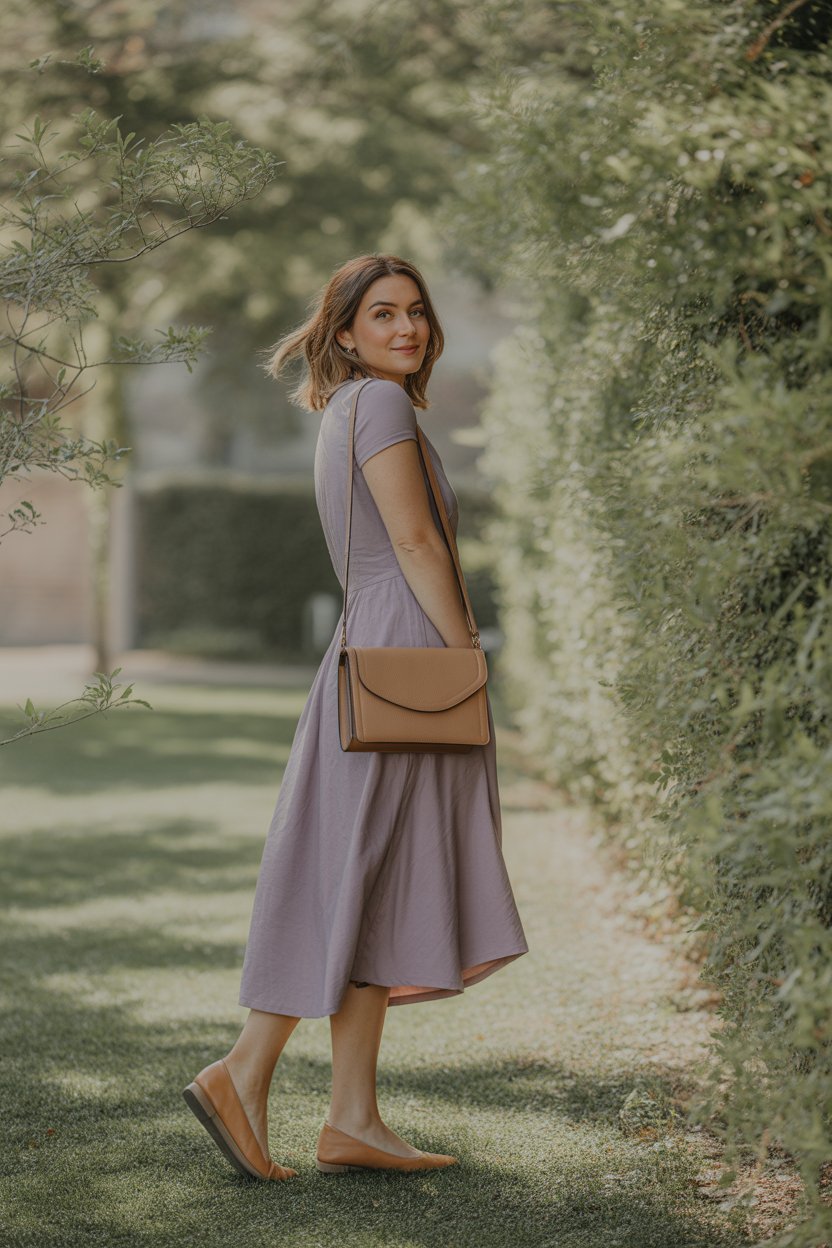
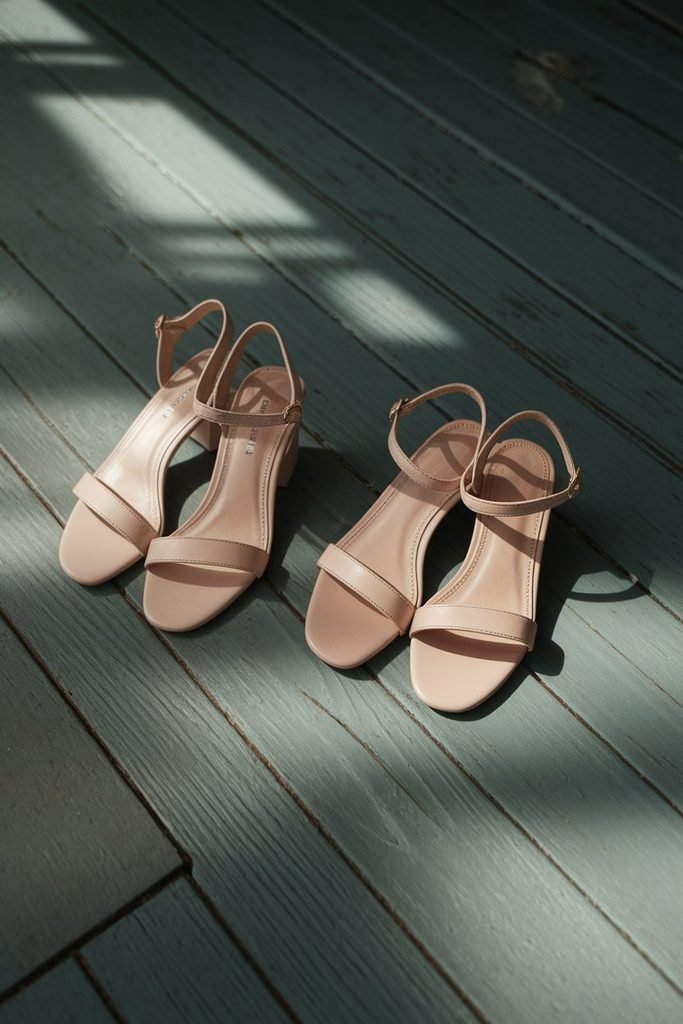
A block-heeled sandal or a low pointed-toe flat tends to be the most practical choice across a full Easter Sunday. Both hold up on grass or uneven ground better than a thin stiletto, both photograph well, and both are comfortable enough to wear from the church pew through several hours of standing and walking without needing a shoe change partway through the day.
If the afternoon specifically involves an egg hunt or significant outdoor time, it’s worth having a backup pair of flats or simple sneakers on hand even if the primary shoe is dressier. Nobody needs to be chasing a toddler across a lawn in heels, and a quick shoe swap for the last stretch of the day doesn’t detract from how put-together the earlier photos look.
A Few Weather-Smart Adjustments
Easter falls at a point in the calendar where weather can swing significantly depending on region and year, and building in a little flexibility for temperature is worth the extra thought.
For a cooler morning that warms up by afternoon, layering is the simplest solution: a cardigan or light jacket that can come off as the day goes on, paired with a dress or separates that work fine on their own once the outer layer is gone.
For a day that’s warm throughout, breathable natural fibers, cotton, linen blends, and lightweight crepe, hold up considerably better over several hours than heavier synthetic fabrics, particularly for anyone spending real time outdoors during the afternoon portion of the day.
For a day with a genuine chance of rain, it’s worth choosing shoes and fabrics that can handle a little moisture without being ruined, and keeping a compact umbrella or a coat with a hood on hand rather than hoping the forecast is wrong.
Common Mistakes With Easter Sunday Outfits
A handful of predictable issues come up every year around Easter dressing, and most of them are avoidable with a little planning.
Underestimating the formality of the church portion. A regular Sunday outfit that would be perfectly fine most weeks can read as underdressed on the specific Sunday when the rest of the congregation has made more of an effort.
Overcommitting to the pastel or bunny-adjacent theme. Leaning too far into every seasonal color and print cue at once tends to look more costume than considered, even when each individual piece is genuinely nice on its own.
Choosing shoes for the photos rather than the whole day. A beautiful heel that only needs to survive twenty minutes of posed photography is a very different shoe from one that needs to make it through church, brunch, and a backyard.
Ignoring the temperature swing. Spring weather is unpredictable enough that an outfit chosen for the morning’s temperature can be genuinely uncomfortable by mid-afternoon without a layer that adjusts.
Packing an entirely separate outfit for later without a clear plan for when to change. A full outfit swap can work well, but it needs a specific window built into the day, or it tends to get skipped entirely once the schedule runs long.
A Simple Way to Plan the Whole Day at Once
Rather than shopping separately for church, brunch, and the afternoon, it helps to think through the full day before buying anything, using a short list like this one:
- Choose one base outfit that meets the modesty expectations of the church service
- Choose one layering piece that can come on and off as the day’s formality shifts
- Choose one pair of shoes comfortable enough for the whole day, with a backup pair on hand if the afternoon involves significant outdoor time
- Check the forecast a few days out and adjust fabric weight accordingly
- Decide in advance whether a full outfit change is happening later, and if so, when
Retailers such as Anthropologie and Reformation carry dresses and separates in the softer, slightly dustier pastel tones that tend to photograph well for spring holidays without tipping into costume territory, and both offer pieces in fabrics with enough structure to hold up across a full day of movement.
For anyone building the outfit around a favorite seasonal color, the same logic covered in choosing outfits that work across an entire day rather than one moment applies here too: comfort and polish aren’t opposites, and the best Easter outfit is usually the one that still looks intentional by the fourth hour rather than only the first.
Frequently Asked Questions
What should you avoid wearing to church on Easter? Very short hemlines, deep necklines, strapless styles, and sheer fabric without a slip or lining are generally worth avoiding for the church portion of the day, even if the rest of the outfit is otherwise seasonal and festive. A light cardigan or blazer is an easy way to adjust a dress that might be slightly too bare on its own.
Is white appropriate to wear on Easter? Yes, white is a traditional and widely appropriate Easter color, particularly for daytime church services and brunch. The main consideration is fabric weight and lining, since white fabric can be more prone to showing through in bright daylight than darker colors, so a slip or a slightly heavier fabric is worth choosing for a fully white outfit.
What if it’s still cold where you live on Easter? A structured coat or a heavier cardigan over a spring dress works well for a cooler Easter, and knee-high boots or closed-toe flats are a practical substitute for open sandals if the temperature hasn’t fully turned yet. The dress or separates underneath can still reflect spring colors even if the outer layer is more suited to lingering cold.
Can the same outfit work for both church and brunch? In most cases, yes, particularly with a small adjustment like removing a cardigan or swapping to a slightly lower heel. The formality gap between a church service and a brunch that follows immediately after is usually small enough that one outfit, lightly adjusted, covers both comfortably.
What’s the most practical shoe for a full Easter Sunday? A block-heeled sandal or a low flat in a neutral tone tends to be the most versatile choice, since both hold up on uneven ground and stay comfortable through several hours of standing, sitting, and walking between locations. Keeping a backup pair of simple flats on hand is worth it if the afternoon includes any real outdoor activity.
Getting Dressed Once for a Day That Asks for Three Different Things
Easter Sunday asks more of an outfit than most holidays do, not because any single part of the day is especially demanding, but because the day moves through three genuinely different settings in the space of a few hours. A church service, a meal, and an afternoon that might end up anywhere from a formal dining room to a backyard covered in plastic eggs.
The outfits that work best for that kind of day aren’t the most elaborate ones. They’re the ones built around a strong, simple base, a layer that can come on and off, and shoes that don’t need to be babied. Everything else, the pastel color, the floral print, the exact silhouette, is a matter of personal taste built on top of that practical foundation.
Get the foundation right, and the rest of the day takes care of itself. The outfit that gets you through church, brunch, and whatever comes after without a single change of clothes is, in the end, the most successful Easter outfit there is.


Leave a Reply