A booking confirmation arrives with one line at the bottom: dress code, smart casual. No examples, no photos, and no hint of whether the restaurant has linen tablecloths or a wall of plants and a loud playlist. That single line sends plenty of closets into a small panic, because the phrase promises polish and relaxation in the same breath.
The good news is that smart casual is more forgiving than its reputation suggests. It works like a dial rather than a rule, and a few real outfits show where the dial sits for different places. This guide explains the term in plain language, walks through three settings with full outfits, offers a quick way to test any look before leaving the house, and covers seasons, venues, and the small slips that give people away.
What Smart Casual Means, Without the Fog
Dictionaries agree on the basics. Oxford Learner’s Dictionaries describes smart casual as a style of dressing in which clothes are neat but not formal, and its own example is a hotel whose dress code rules out shorts and slippers. Dictionary.com puts it as neat or professional-looking but fairly casual, and dates the term to the early 1920s.
Beyond that, the phrase gets hazy. The Wikipedia entry on smart casual calls it an ambiguously defined dress code and notes that the line between smart casual and business casual is disputed. That matches real life, where two venues can mean quite different things by the same two words.
A practical reading helps. Smart casual means clothes that look chosen, fit well, and stay in good condition, yet would feel comfortable through a three-hour dinner. Business casual leans toward the office, while smart casual tends to appear on restaurant bookings, gallery invitations, hotel dining rooms, and weekend events, so the outfits below lean social rather than professional.
The Smart Casual Dial: Three Settings, Three Real Outfits
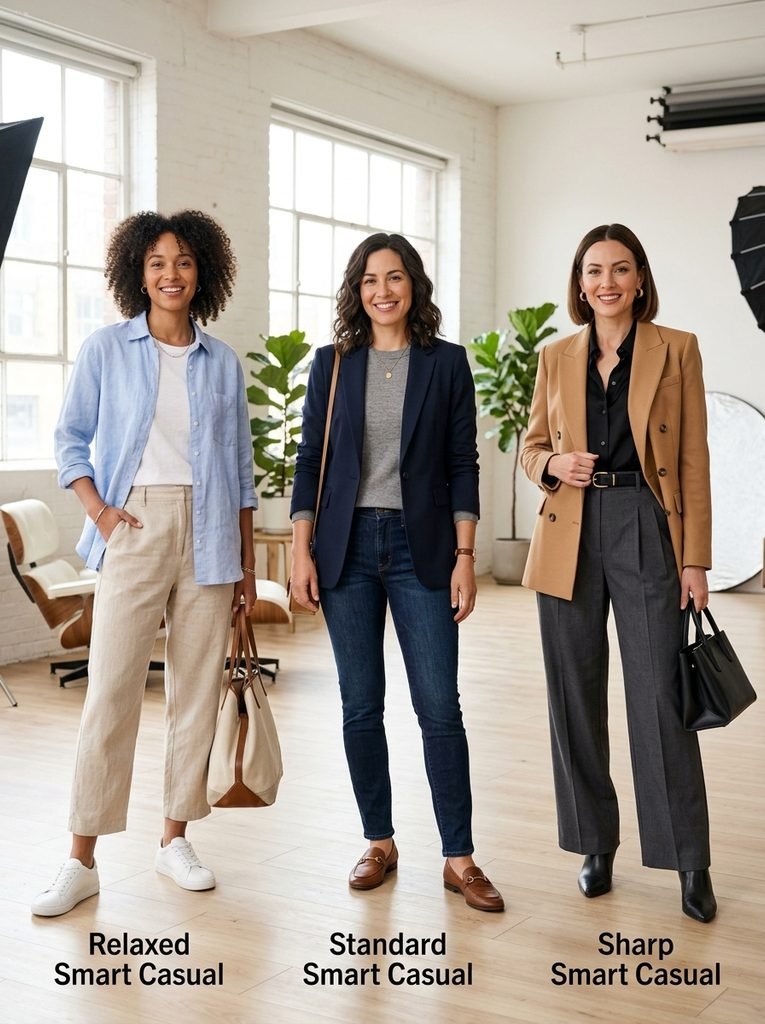
Think of smart casual as a dial with three useful stops. The right one depends on the venue, the time of day, and how the invitation is worded. Each stop below comes with a complete outfit.
Setting One: Relaxed
This suits cafe lunches, bookshops, and casual weekend plans where the invitation still mentions a dress code.
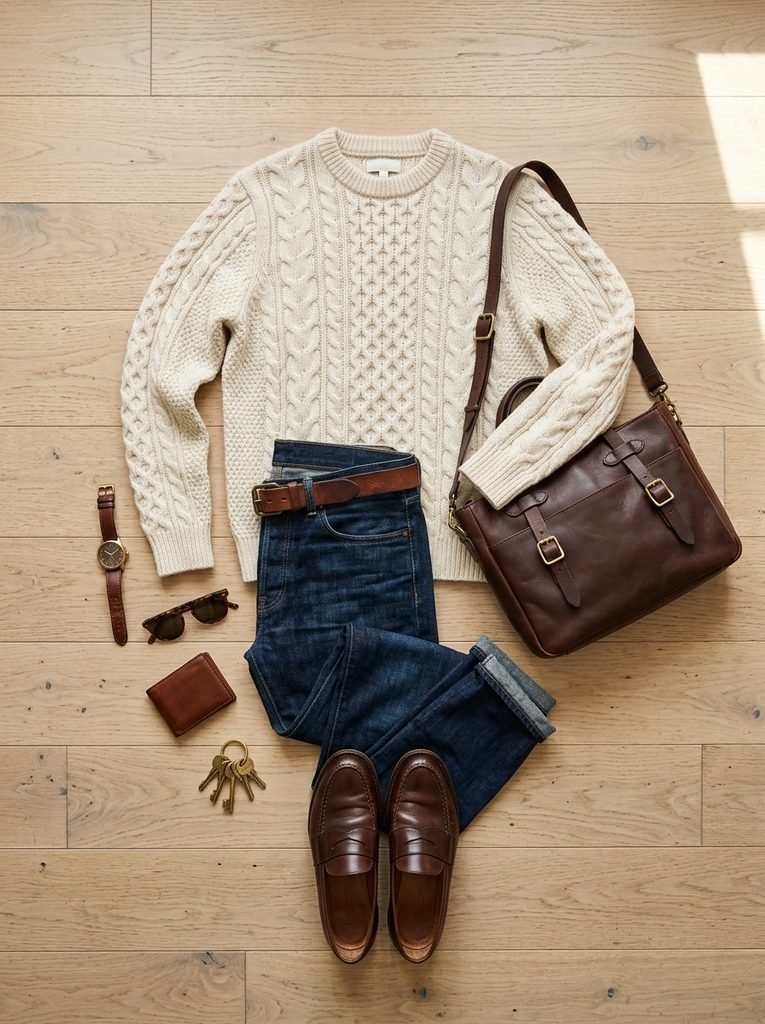
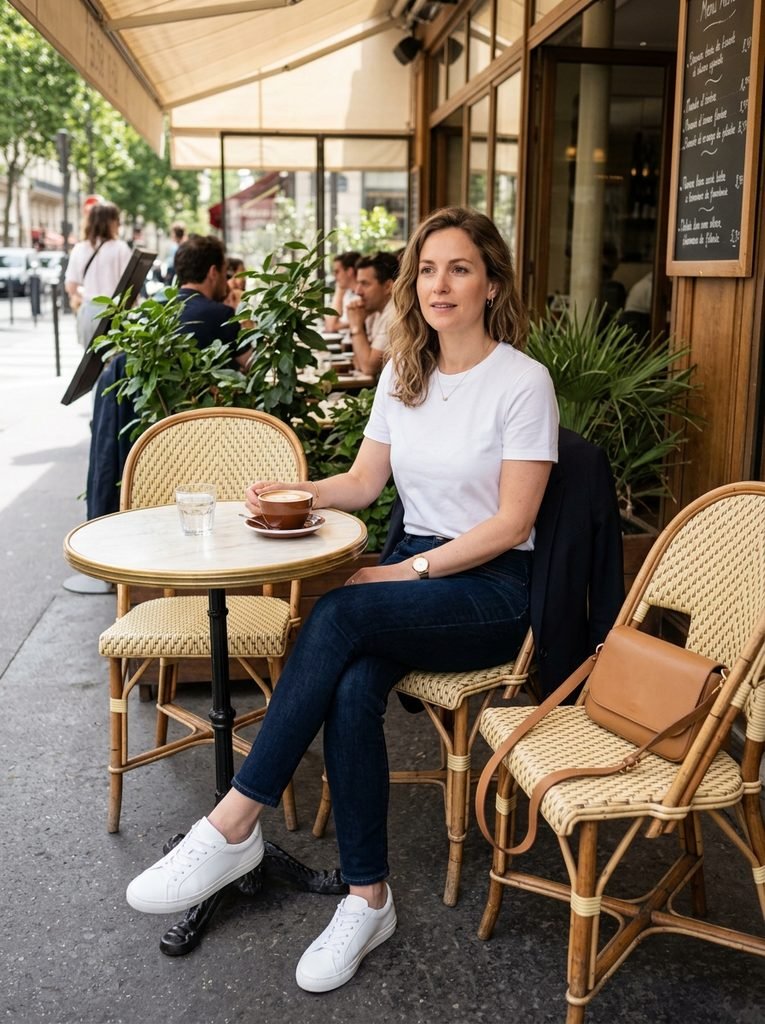
The outfit: dark straight-leg jeans without fading or rips, a crisp white tee tucked in, a fine-gauge cardigan in oatmeal worn open, clean white leather sneakers, and a small tan leather crossbody bag. The jeans and tee are the casual part. The cardigan and leather bag lift the outfit, and the tucked hem gives a visible waistline. Everything is pressed, nothing is faded, and the sneakers are spotless.
Setting Two: Standard
This is the setting most invitations point to: restaurant dinners, gallery evenings, and long lunches.
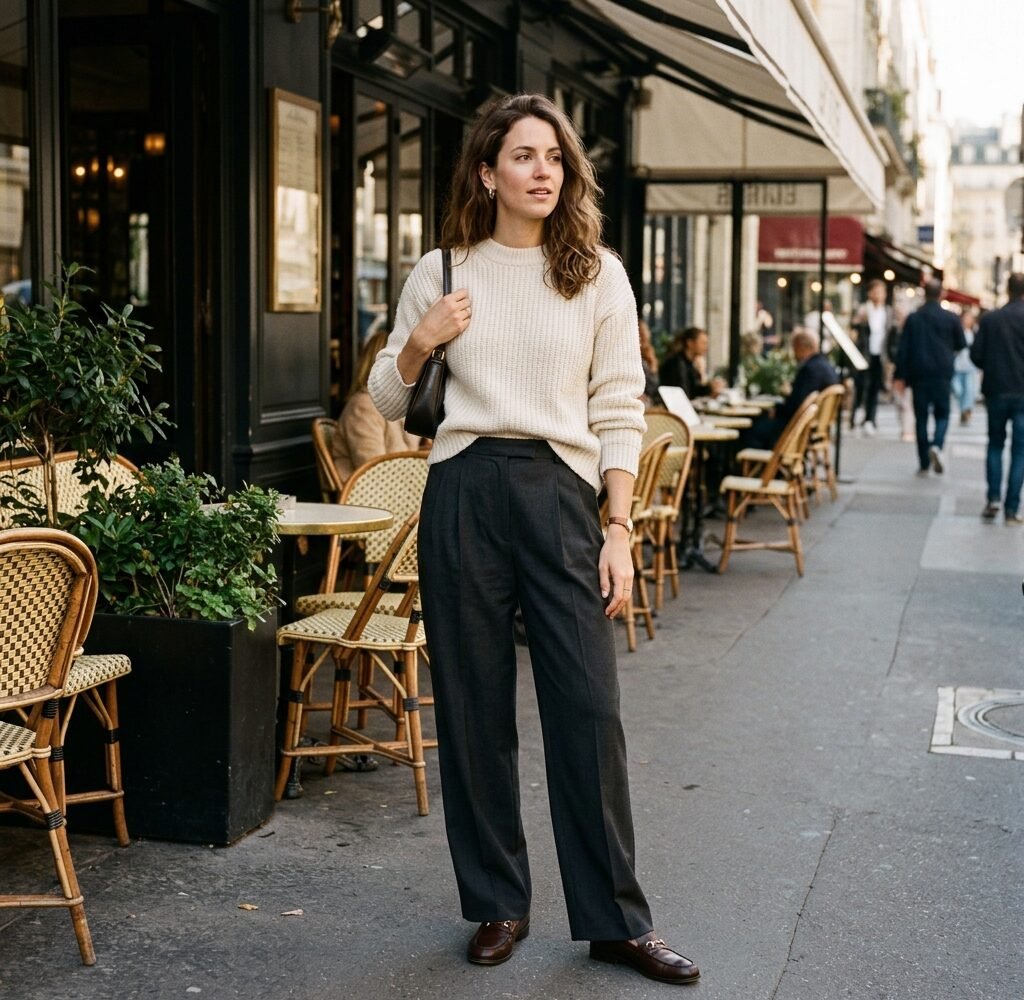
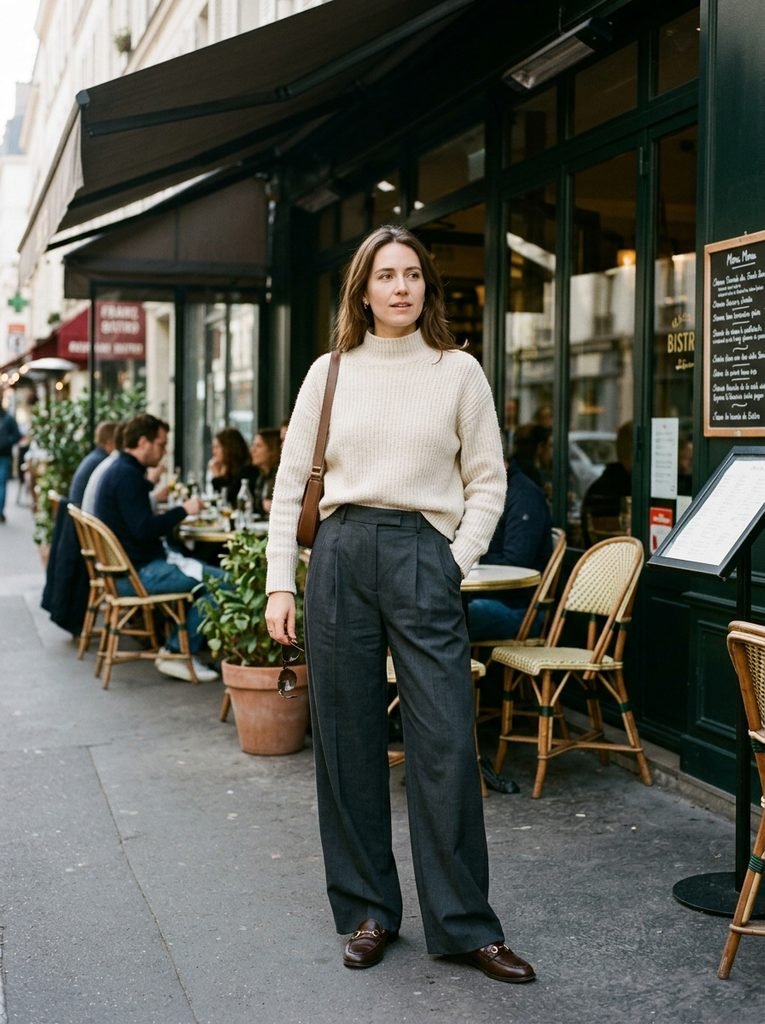
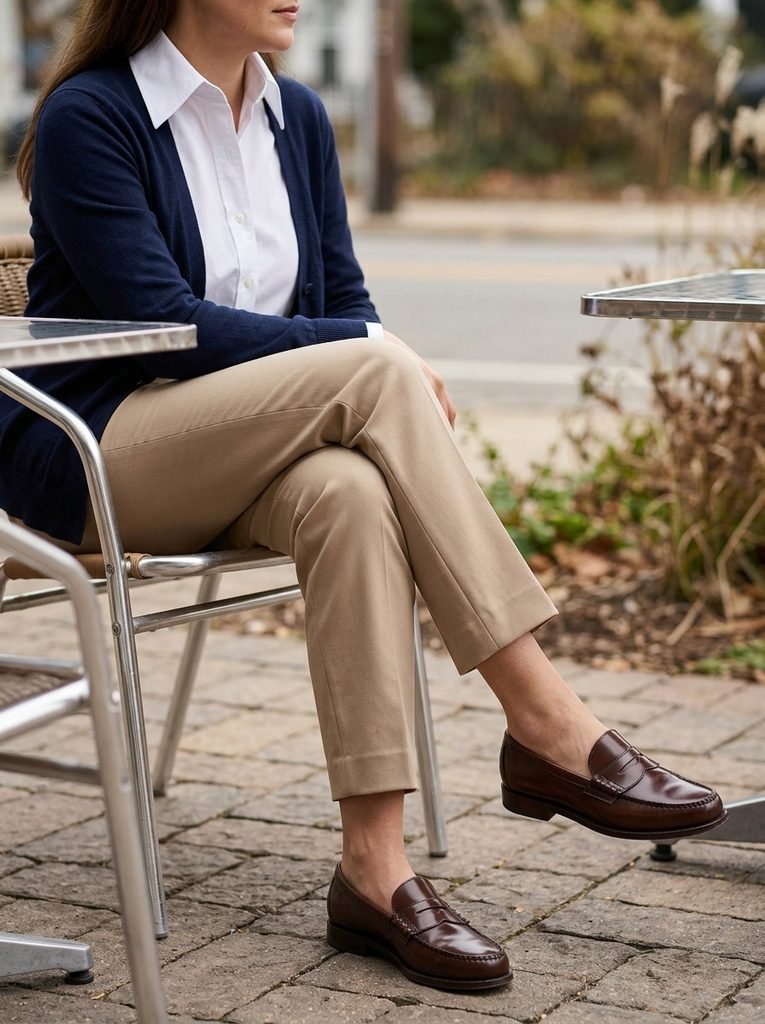
The outfit: wide-leg trousers in charcoal or olive with a clear drape, a fine merino knit in cream or sky blue, polished loafers, a structured shoulder bag, and slim gold earrings. The trousers and loafers carry the smart side, while the knit keeps things soft. Nothing needs a jacket unless the room runs cold, and the whole outfit can go from a reservation to a late walk home without any adjustments.
Setting Three: Sharp
This fits hotel bars, theater nights, and dinners where the host has added a note asking guests to dress up a little.
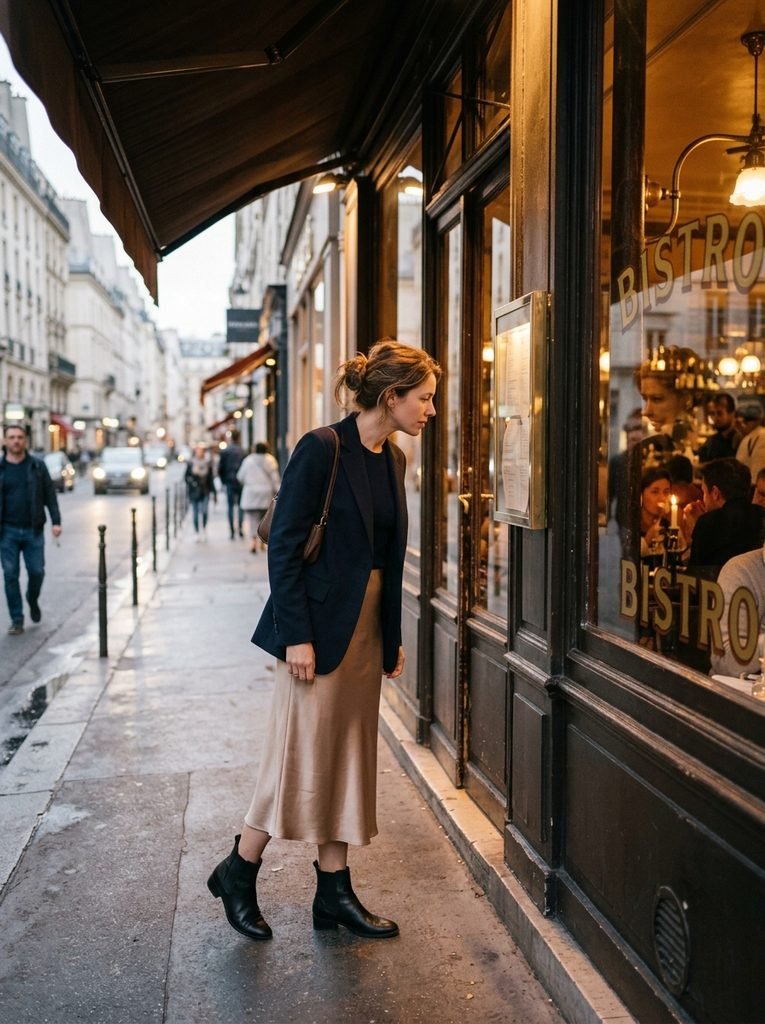
The outfit: a satin-finish midi skirt in deep green or chocolate, a fitted ribbed knit tucked in, a tailored navy blazer, ankle boots with a low block heel, and a small structured bag. This sits close to the border of cocktail territory, so the extra effort shows through fabric and tailoring instead of sparkle.
A Quick Signal Count for Any Outfit
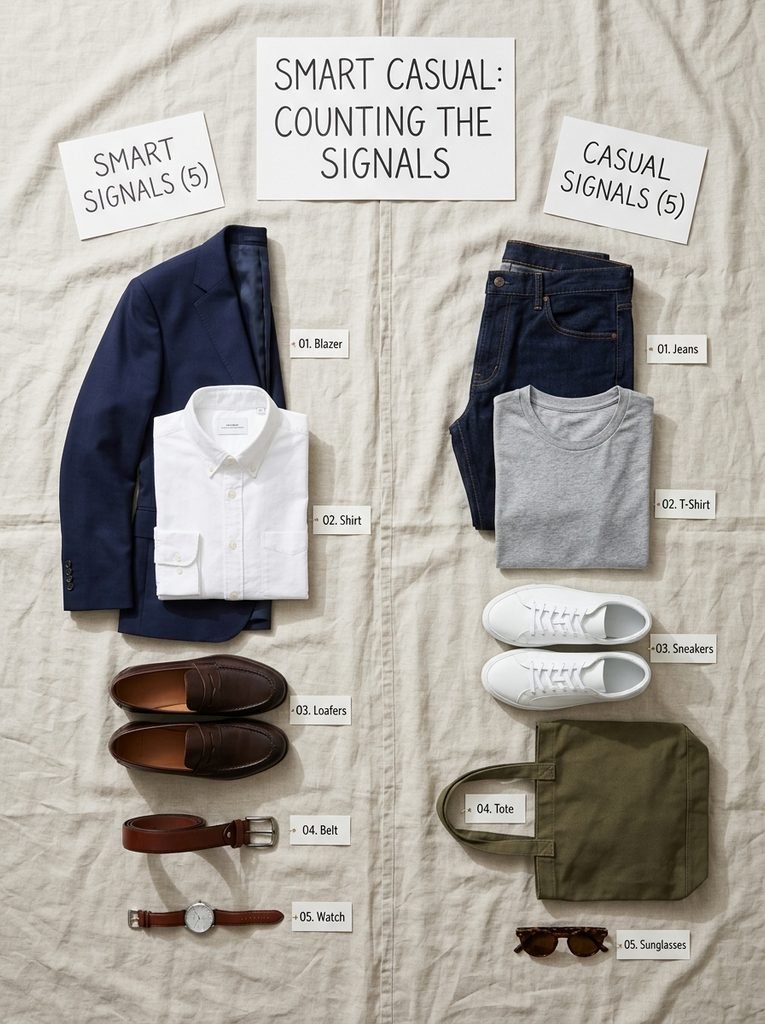
A simple way to check an outfit is to count signals. Some pieces read as dressed up at a glance, and others read as relaxed. Most successful smart casual looks hold roughly two dressed-up signals for every relaxed one. This is a styling rule of thumb rather than an official standard, but it works well in a hallway mirror.
| Reads as smart | Reads as casual |
|---|---|
| Collar or fine knit neckline | Graphic or logo tee |
| Tailored or pleated trousers | Joggers or leggings |
| Loafers, leather shoes, or ankle boots | Running trainers or flip-flops |
| Dark, clean denim | Faded, ripped, or distressed denim |
| Structured bag | Gym tote or backpack |
| Pressed fabric with some weight | Thin, creased jersey |
A tee, jeans, and sneakers show three casual signals and no smart ones. Swap the sneakers for loafers and the tee for a fine knit, and the count flips to two smart signals for one casual, without buying anything elaborate. When the count leans heavily casual, the outfit usually feels like errands. When it leans heavily smart, it starts moving toward business or cocktail dressing.
What Smart Casual Usually Rules Out
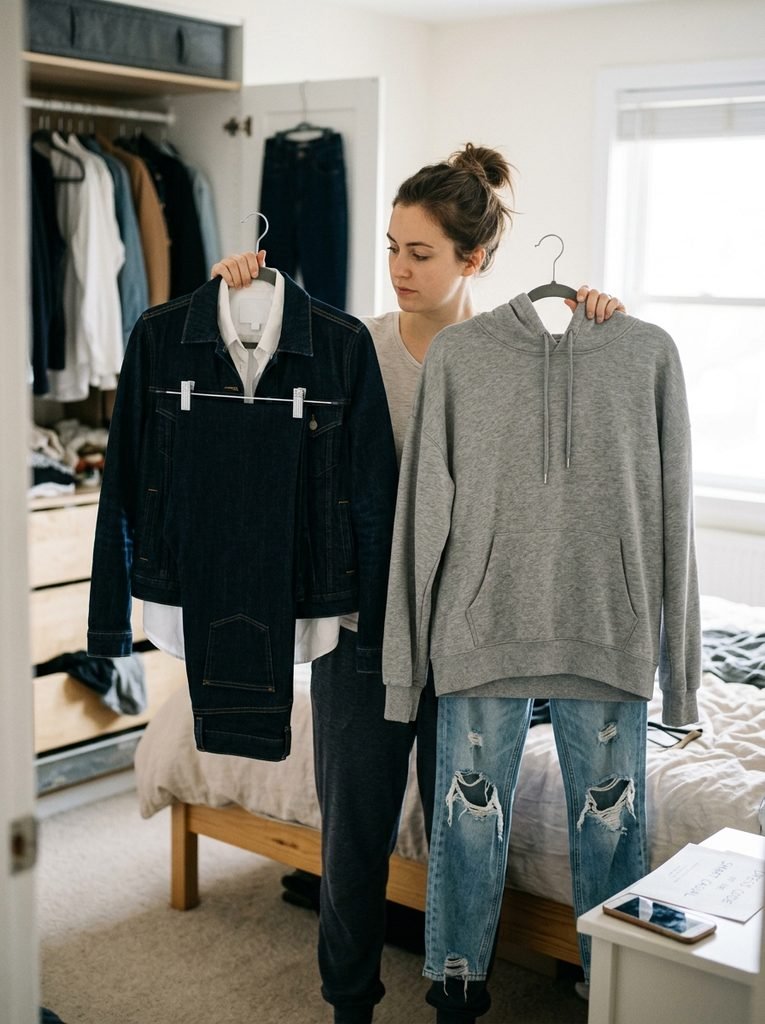
Dress codes vary from place to place, so this list is a general guide rather than a standard. Sportswear such as running shoes, hoodies, and jogging bottoms is commonly excluded. Distressed denim, beach shorts, and flip-flops often are too, and so are tees with large logos or slogans.
What surprises many people is how little needs to go. Dark denim, clean leather sneakers, and a simple tee can all pass, as long as the rest of the outfit shows some effort. The common thread is condition and intent: anything that looks worn out, stretched, or clearly made for a gym tends to fall short.
Real Outfits Across the Seasons
Warm Weather
A navy cotton-blend shirt dress with the sleeves rolled once, a thin brown belt, and flat leather sandals with a polished finish look relaxed and tidy at once. A light cardigan kept in the bag handles cold air conditioning in dining rooms. Stone-colored trousers with a sleeveless fine-knit top in white make a pants-based alternative.
Cool Weather
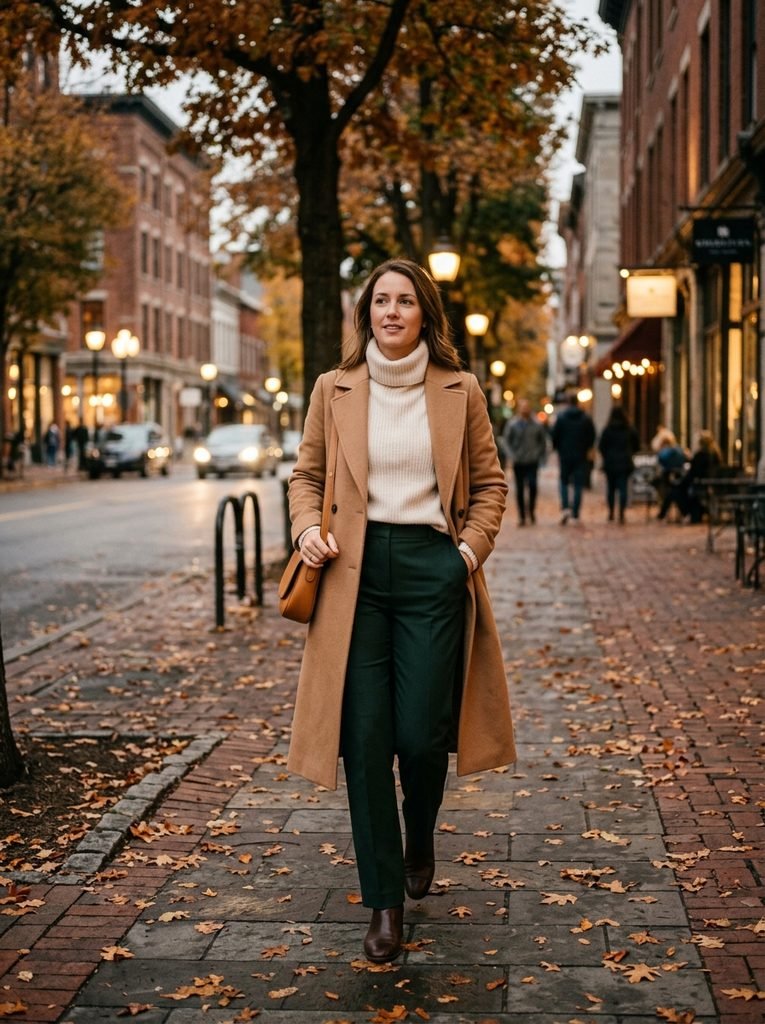
Dark green wool-blend trousers, a cream merino roll neck, brown ankle boots, and a camel coat make a calm, warm outfit with a clear smart side. The coat does the finishing, so the layers underneath can stay simple.
Cold Weather
Charcoal wool trousers, a thin black turtleneck, a long oatmeal cardigan, and leather boots handle winter evenings well. Restaurants and galleries are often warm inside, so thin layers that can come off work better than one heavy sweater. A scarf in a quiet tone adds a final touch on the walk there.
Reading the Place Before Choosing a Setting
The dress code is only half the information. A few cues help decide where the dial should sit. The venue’s own photos show whether guests wear jackets or tees. The time of day matters, since an 8 p.m. dinner usually asks for more than a noon lunch. The neighborhood and price level also hint at the room’s mood, so a candlelit cocktail bar leans toward setting three while a neighborhood bistro leans toward setting two.
Travel adds another layer, because hotel restaurants often set their own rules. Packing one or two outfits from setting two usually covers most evenings away, and the vacation outfit ideas packed for any destination guide is a useful companion for choosing pieces that work from beach days to dinner.
Fit, Fabric, and Finish: The Quiet Details
Smart casual rewards small details. Collars and cuffs should look pressed, hems should sit evenly, and shoes should be clean and in good repair. Mid-weight cotton, wool blends, and crepe look sharper than very thin jersey, which tends to cling and crease.
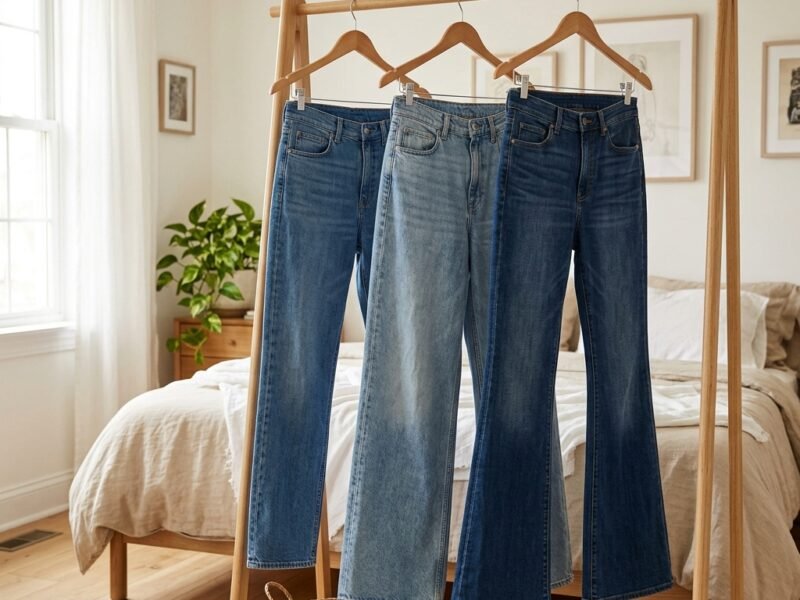
Fit does more than price. A shoulder seam that sits on the shoulder, trousers that skim the leg instead of pooling or pinching, and a hem that lands in the right spot all make an outfit look chosen. For dark jeans, an even wash without heavy fading at the knees keeps them on the smart side.
Stepping Up or Down a Notch
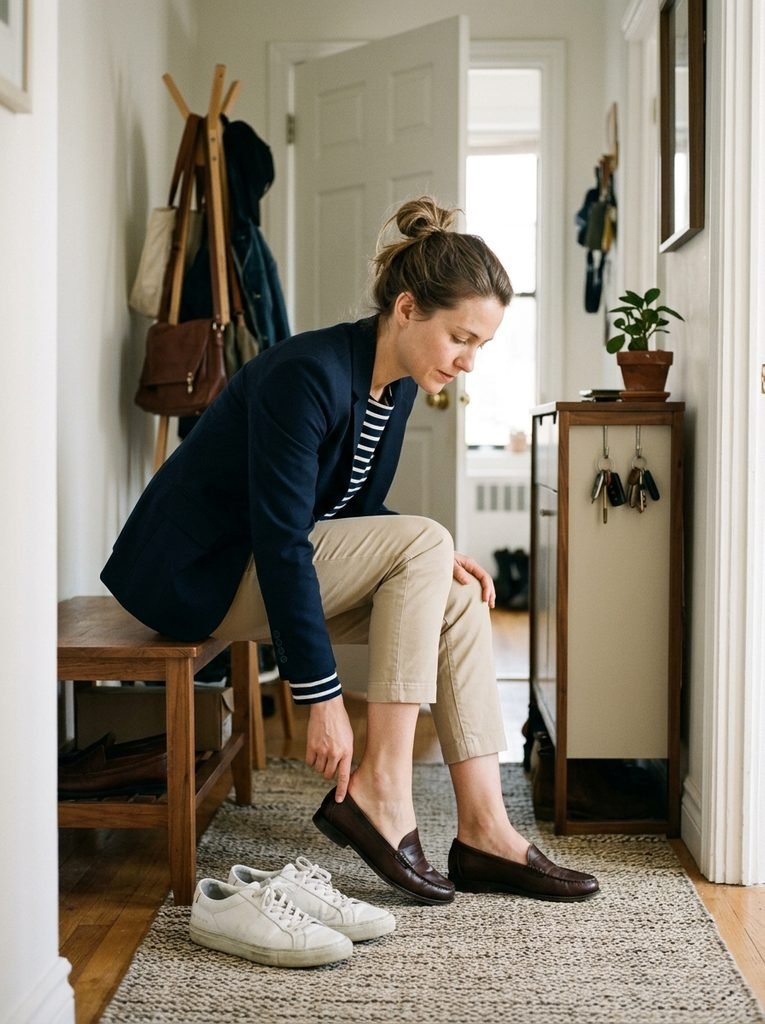
If a venue looks dressier than expected, three quick changes help. Swap sneakers for loafers or boots, add a blazer or structured cardigan, and trade a tee for a fine knit or blouse. For events that call for more than this, cocktail attire, decoded covers the next rung of the formality scale.
If the room is more relaxed than expected, undo a button, roll the sleeves, or take the jacket off. For the other end of the dial, these casual outfit ideas that look effortlessly chic show how everyday pieces can still look put together.
Quick Answers on Smart Casual
Can jeans be smart casual?
In most places, yes, when they are dark, clean, and well-fitted, with no rips or heavy fading. Venue rules vary, and some more formal rooms ask guests to skip denim, so it is worth checking the wording on the booking.
Are sneakers allowed?
Minimal leather or canvas sneakers in good condition pass in many settings. Running shoes and chunky athletic styles are more often excluded. When unsure, loafers or ankle boots are the safer choice.
Is smart casual the same as business casual?
The two overlap a lot, and reference sources note that the distinction is disputed. In everyday use, business casual leans toward workplaces and smart casual toward social venues, so the specific wording of an invitation or policy is the best guide.
The Mirror Test Before the Door
Before leaving, a last glance is enough. Does the outfit look chosen? Could it sit through a long dinner comfortably? Would any single piece look out of place at the next table? If the answers are yes, yes, and no, the dress code has been met.

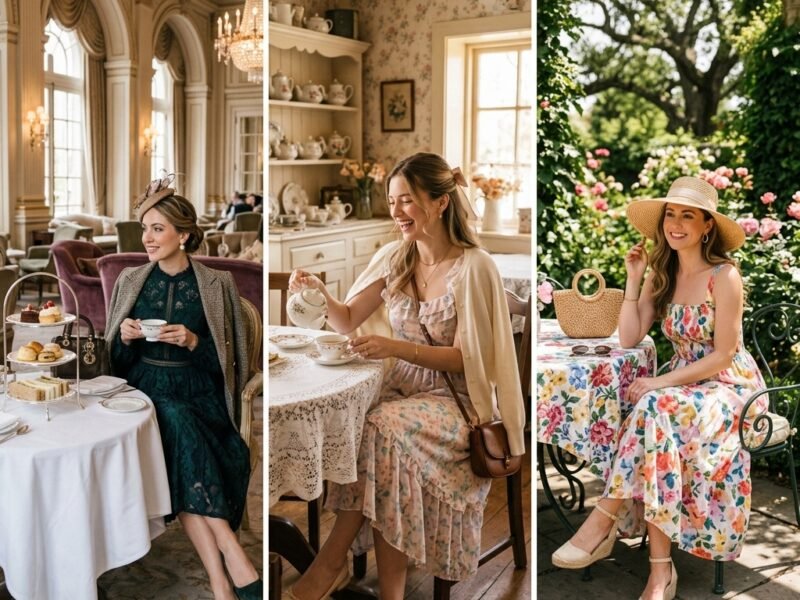
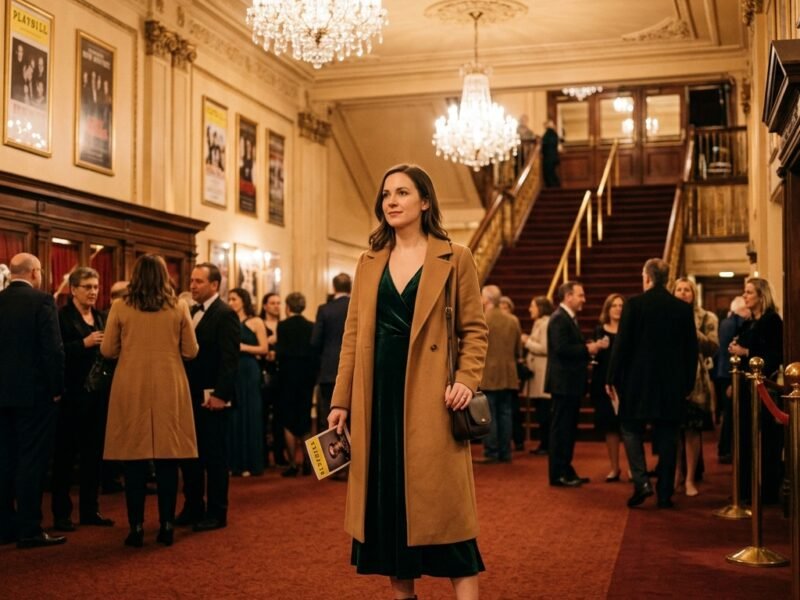
[…] without being formal. Darker colors, richer fabrics, and a bit of jewelry make a difference. The smart casual dress code guide is a helpful reference for how far to go in either […]
[…] loafers suit those who prefer a more casual feel, as long as the jeans are clean and unripped. The smart casual dress code guide offers more help calibrating this middle […]