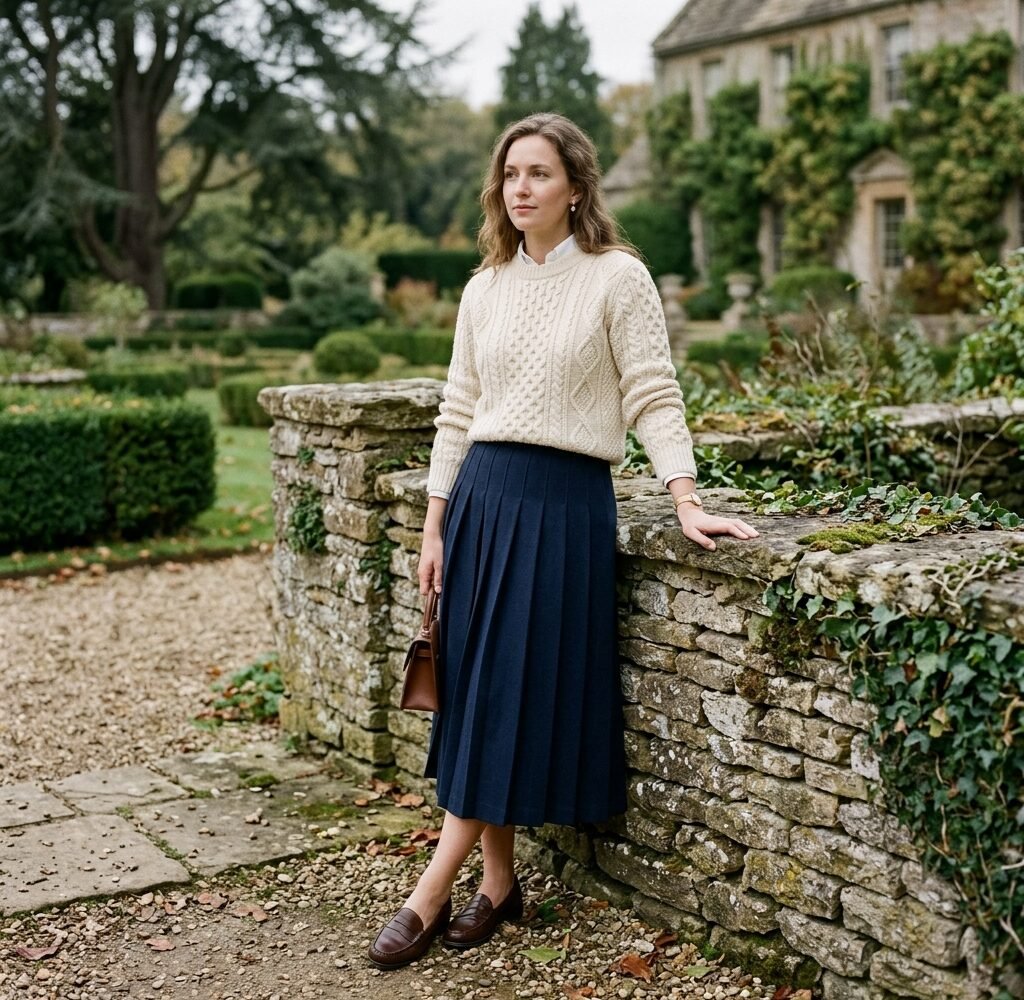
Old money style has a reputation for being impossible to buy into, as though the look depends on a family estate and a grandmother’s cedar-lined wardrobe. In practice, most of it comes down to a short list of ordinary garments: a thick knit, a collared shirt, a pleated skirt, a leather shoe with a low heel. Those turn up in regular stores and on secondhand racks every week.
This guide skips the mood-board vocabulary and works from the garments themselves. It names eight pieces to look for, explains what to check before paying for each, and then builds six full outfits from them. A shopping map, a care section, and a list of costume traps follow, so the look stays wearable rather than staged.
What the Look Is Really Made Of
The old money aesthetic romanticizes the way inherited wealth is imagined to dress: quietly, in sturdy clothes, without logos doing the talking. It draws heavily on preppy and country traditions, which is why sweaters, tweed, quilted jackets, and leather loafers appear again and again. It is worth remembering that this is a style idea rather than a documented way real families dress, so it works best as inspiration instead of a rulebook.
Three things hold the look together. The first is heritage garments, meaning shapes that have barely changed in decades. The second is a muted palette that feels familiar rather than trendy. The third is condition, since the clothes look cared for and slightly lived in, never brand new and never worn out.
None of those three depends on price, which is why a thrifted wool skirt can do the job as well as a costly one.
Eight Pieces to Look For, and What to Check Before Buying
Each piece below is common enough to find without a long hunt. The checks beside each one help separate a good find from a disappointing one.
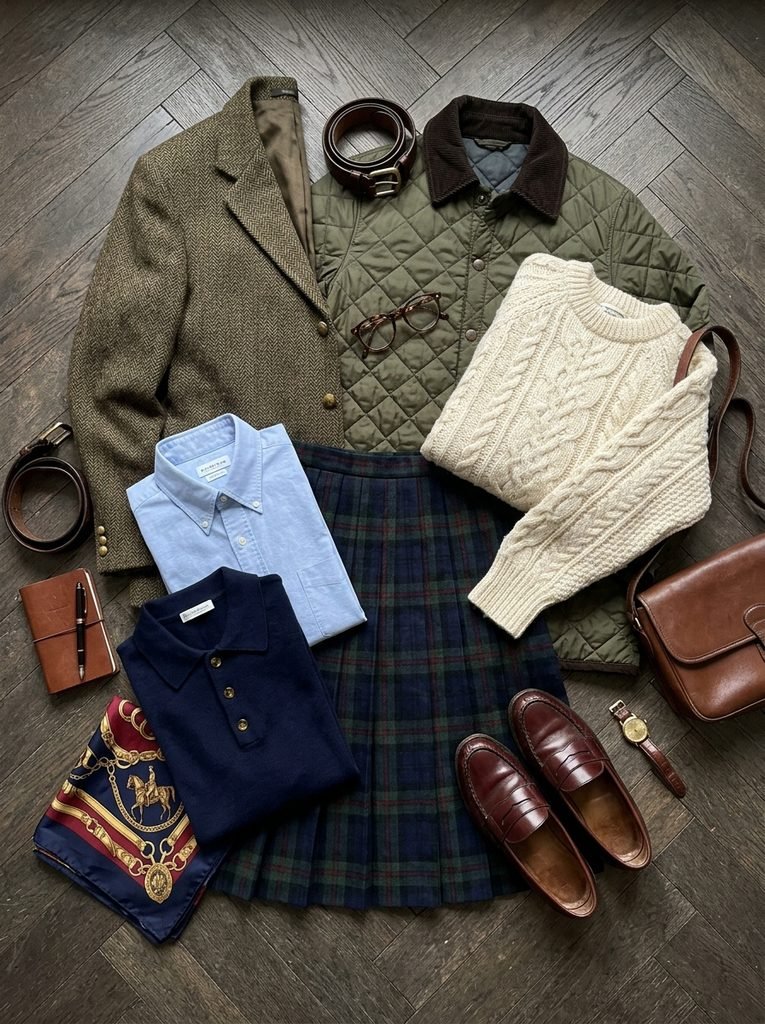
The Cable-Knit Sweater
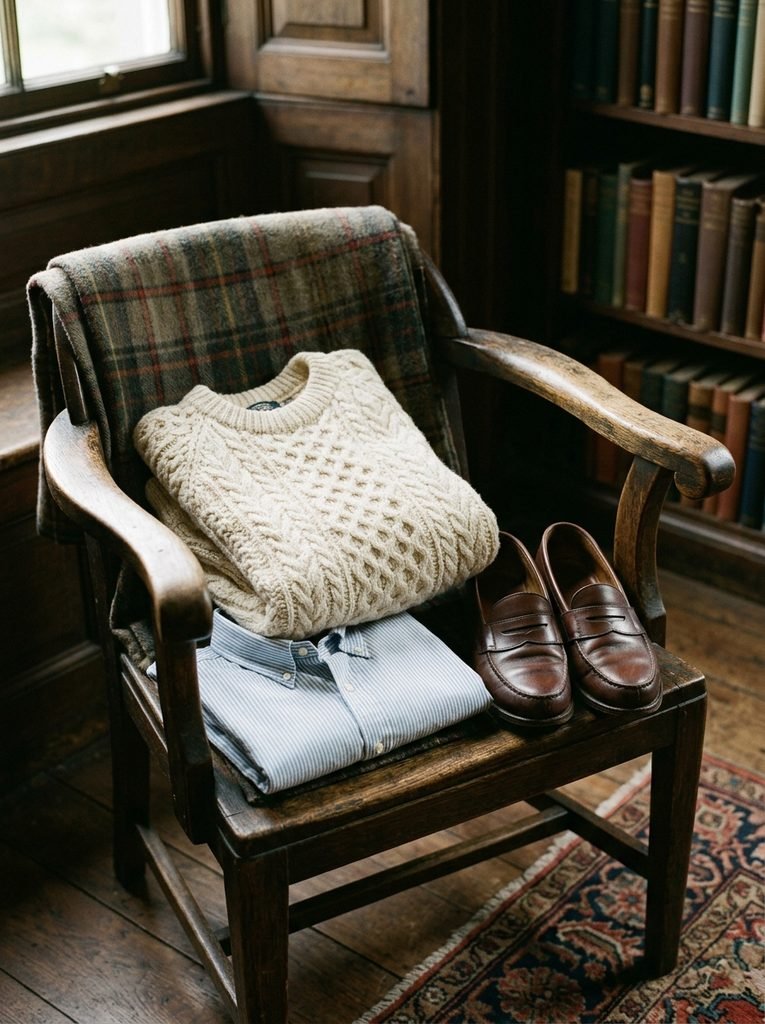
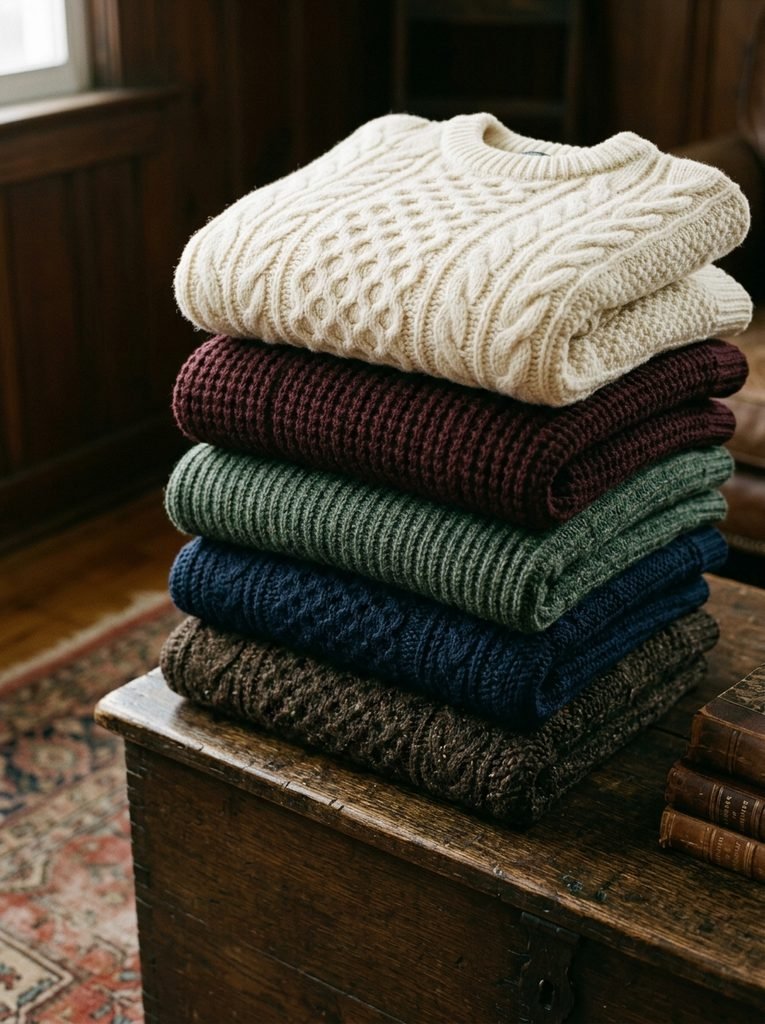
A cream or navy crew neck with a woven-rope pattern is the most recognizable piece in the whole look. Check that the stitches look tight and even, that the ribbed cuffs and hem spring back when stretched, and that the fiber content leans toward wool or a wool blend. A fuzzy, pilled surface is easy to spot under bright store lighting and hard to fix later. A slightly roomy fit suits the style, and a collared shirt underneath with the collar peeking out finishes it.
The Oxford Cloth Button-Down
Oxford cloth is a cotton basket weave that feels thicker and slightly more textured than smooth poplin, which gives the shirt a relaxed, lived-in character. Light blue and white with a fine stripe are the classic choices. Look for a collar that rolls softly instead of lying flat, and buttons that feel firmly attached. A shirt a little larger than usual, with the sleeves pushed up, looks right.
The Pleated Wool-Blend Skirt
A knee-length pleated skirt in navy, forest green, or a quiet plaid moves nicely and pairs with almost everything above the waist. Check that the pleats are sharp and stitched down at the waistband, that the lining is smooth, and that the hem is even. In secondhand shops, measure the waistband instead of trusting the tag, because older sizing runs differently.
The Quilted Jacket
A diamond-quilted jacket in olive or navy, often with a corduroy collar, handles damp weather and sits well over knits. Check the zip and snaps, the lining at the cuffs, and whether it still closes comfortably over a thick sweater. Light wear at the cuffs is fine, while a broken zip is not.
The Tweed or Herringbone Jacket
This is the piece that most often turns up secondhand at a fraction of its original cost. A jacket in genuine Harris Tweed carries the Orb mark, and the Harris Tweed Act 1993 protects the name by law, with the cloth handwoven by islanders in the Outer Hebrides. Many lovely tweeds are not Harris Tweed, so the label is only one clue, and hand-feel, lining, and fit matter just as much. Check the elbows for thinning and the lining for tears.
The Pique Polo
A short- or long-sleeve polo in pique cotton, with a modest collar and no oversized logo, brings an easy club-lunch feel. Look for a collar that stands up without stiffening and a fabric with a light, waffle-like texture. A fine-knit merino polo suits cooler days.
The Leather Loafer
A penny or plain loafer in brown, burgundy, or black leather finishes most of the outfits below. Check that the heel is low, the leather has no deep cracking, and the sole has life left, since a worn heel changes the way a shoe feels to walk in. Polish and a visit to a cobbler can revive a good pair for a modest cost, which keeps buying secondhand realistic. Very glossy, plastic-looking finishes are best avoided.
The Silk Scarf and Pearl Studs
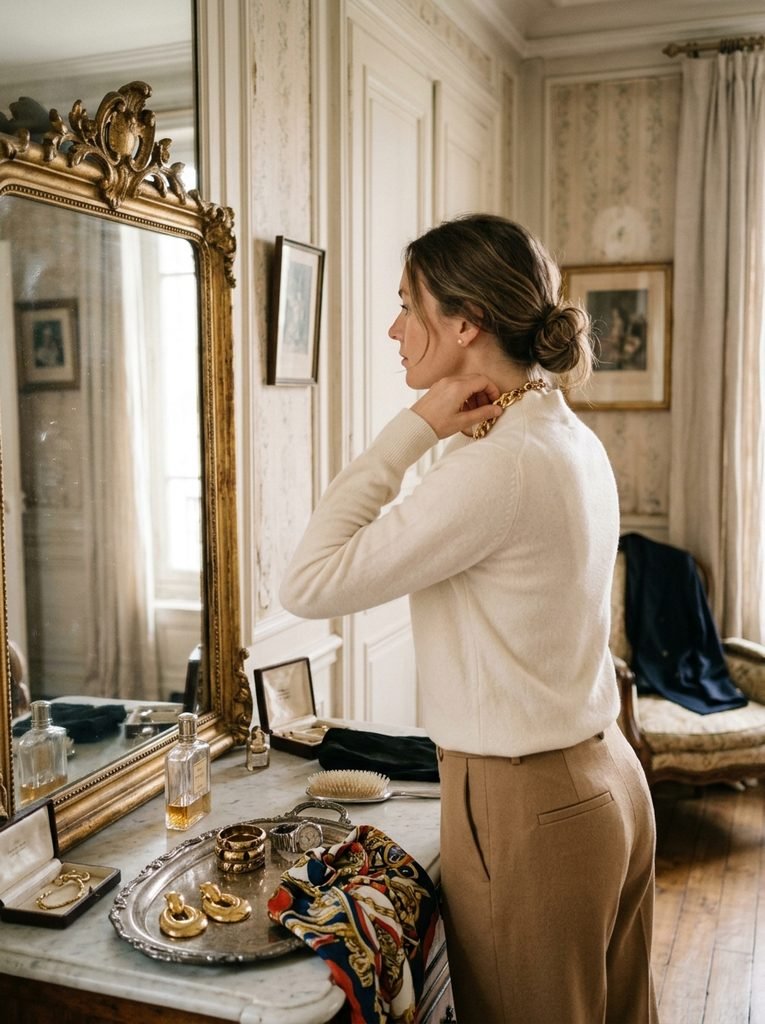
Accessories finish the look without adding logos. A square scarf tied at the neck, looped on a bag, or worn as a headband adds a note of color, and small pearl studs add a soft shine. Faux pearls with a gentle luster look better than overly bright plastic ones, and real pearls are not required for the effect to work.
Six Outfits Built Piece by Piece
Each outfit below uses two or three heritage pieces and plain companions, so nothing looks staged.
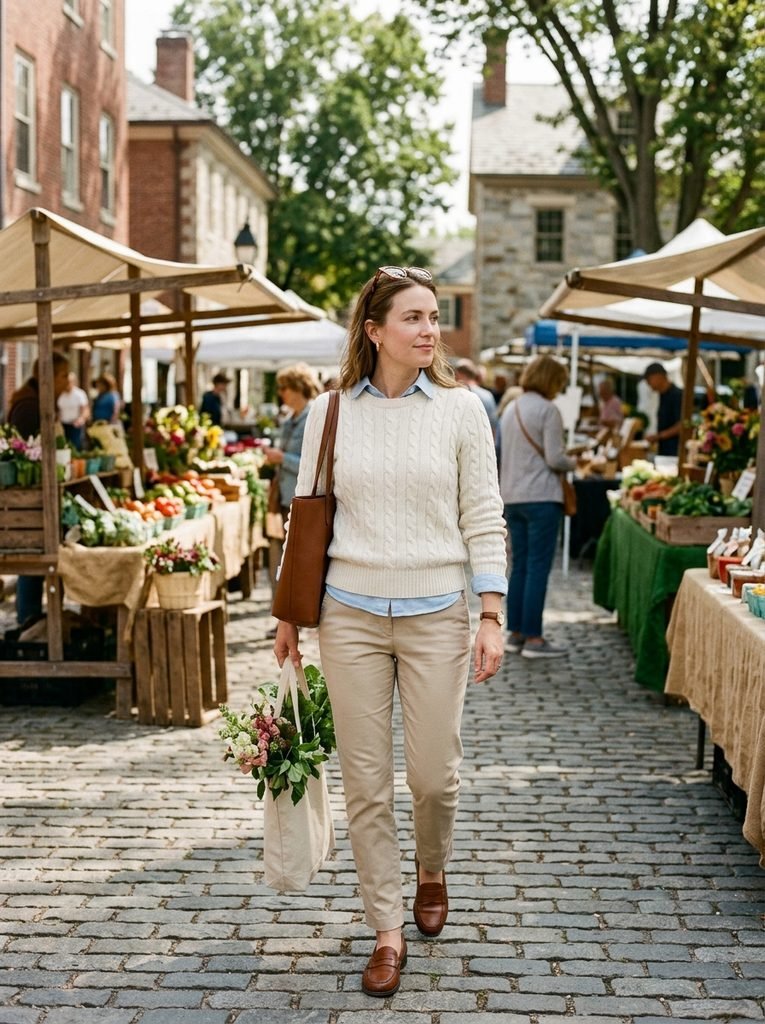
Saturday Market Walk
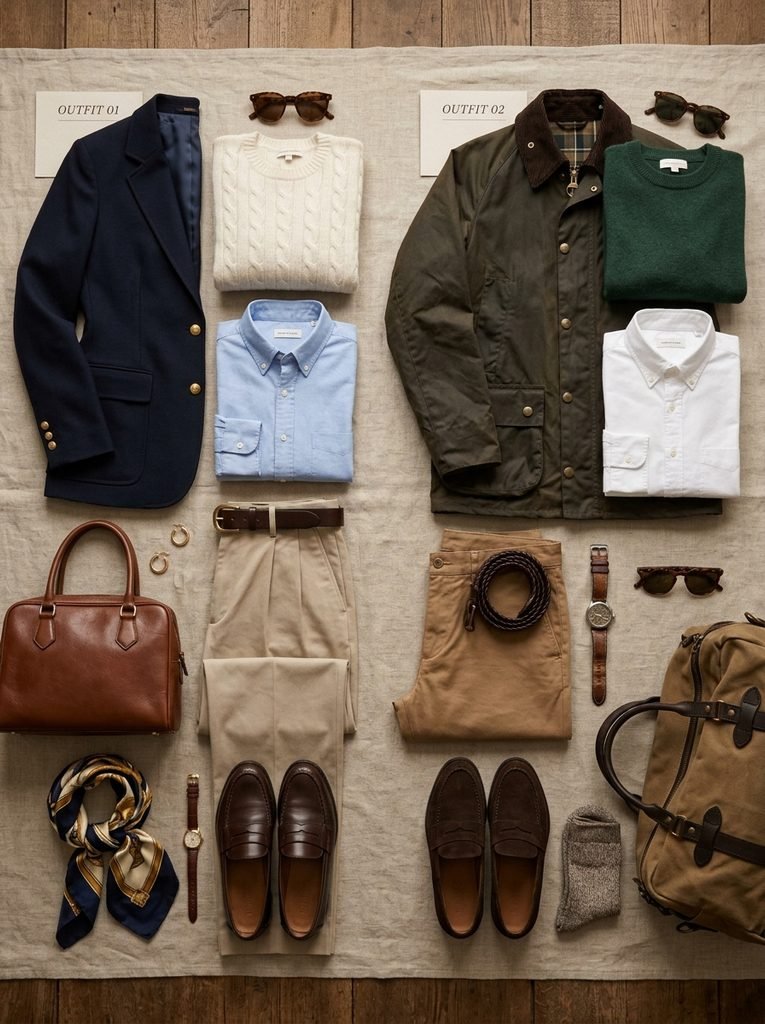
A cream cable-knit sweater over a light blue Oxford shirt with the collar showing, straight ecru chinos, brown loafers with thin socks, and a canvas tote. The shirt collar and cuffs at the edges of the sweater add layers without bulk.
Lunch at the Club
A navy pleated skirt, a white pique polo tucked in, a thin brown belt, loafers, and pearl studs. A navy cardigan over the shoulders handles a cool room. It is simple, and it looks finished.
Rain Walk in the Park
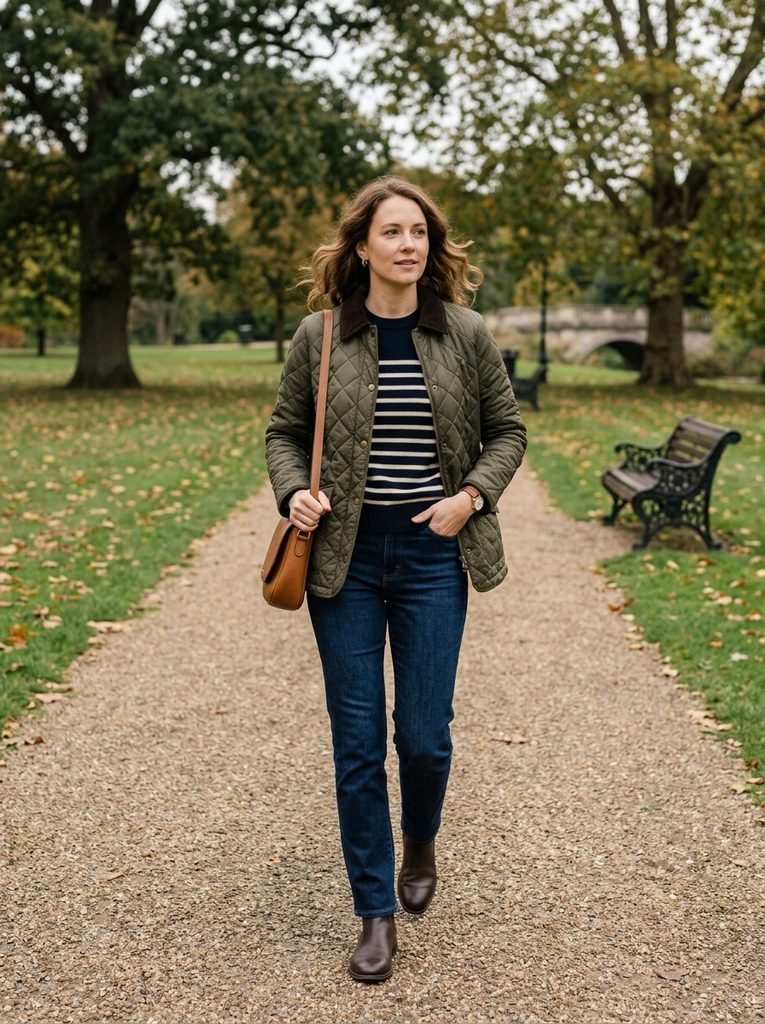
An olive quilted jacket over a navy-and-cream striped knit, dark straight jeans or corduroy trousers, and brown leather lace-up boots with a rubber sole. A silk scarf knotted at the neck brings a bit of color against gray weather.
Dinner Out
A brown or gray tweed jacket over a thin black turtleneck, wide-leg wool-blend trousers with a pressed crease, loafers, and a scarf kept in the bag. The jacket does the formal work, so everything else can stay calm.
Travel Day
A navy cardigan buttoned over a white tee, straight trousers in stone or navy, loafers that slip off easily at security, and a roomy leather or canvas bag. Fabrics that resist heavy creasing help here, and the airport outfit ideas for comfort guide covers more practical comfort details.
Holiday Weekend
A deep burgundy fine-knit sweater with a forest green pleated skirt, dark tights, and leather ankle boots keeps the festive colors muted. A camel coat on top finishes it, and the winter coat outfits where the outerwear does the talking guide shows more ways to build around a coat.
The Color Palette: Muted, Familiar, Slightly Faded
Heritage colors borrow from outdoor life: boat navy, bottle green, tennis-court cream, saddle brown, and oxblood. Combining two of these with one lighter tone, such as pale blue or ecru, produces calm outfits that rarely clash. Stripes and plaids sit comfortably in the same families.
A deeper color on the bottom half with a lighter one on top mirrors many of the outfits above. Bright, high-contrast colors and large logos read as the opposite of the look. A softened shade like washed navy or a worn-in olive suits the lived-in idea better than a very fresh, saturated one.
Keeping each outfit to two or three colors, shoes and bag included, makes the whole thing look deliberate.
A Realistic Shopping Map
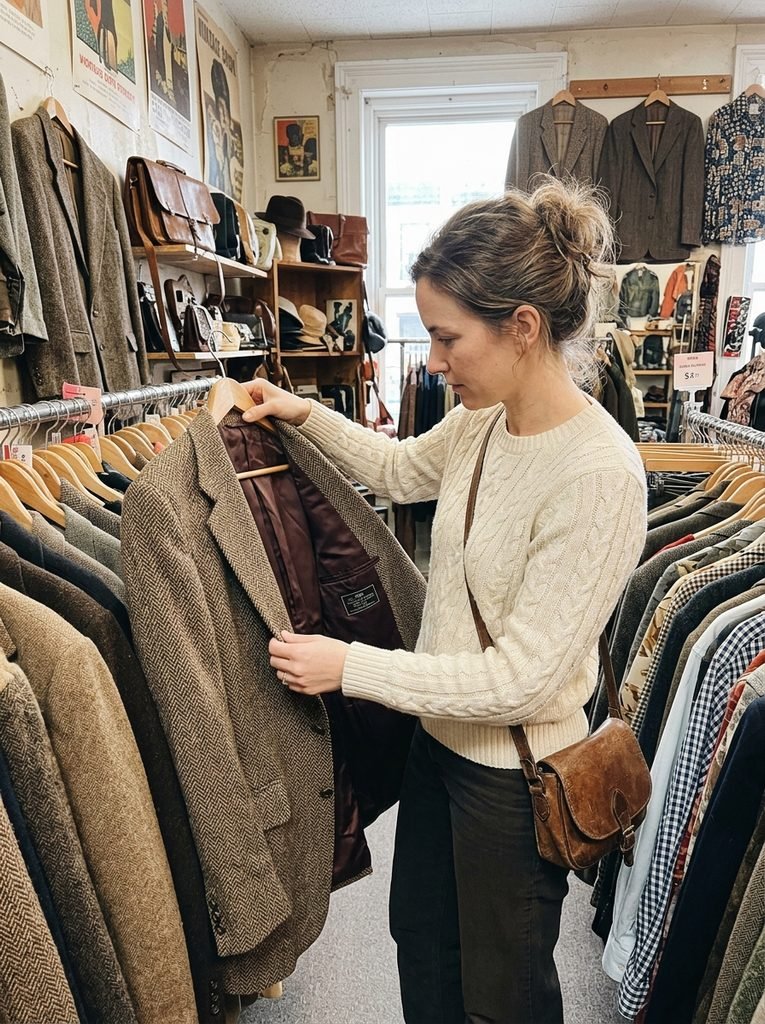
Secondhand and consignment shops are the best hunting ground for tweed, wool skirts, quilted jackets, and loafers. Measuring garments before buying, checking wool for small holes, and smelling for stored mustiness save disappointment later.
Men’s and unisex sections are worth a look too. Cable knits, Oxford shirts, and quilted jackets are often cut roomier there, which suits the relaxed shape of the style, and trying a size or two is easy.
Mainstream retailers and outlets work well for polos, Oxford shirts, and simple knits. Reading the fiber label matters more than the name on the tag. For a broader plan on building a small, hard-working wardrobe, the capsule wardrobe guide with ten pieces and thirty outfits covers the logic in more depth.
Care That Keeps Pieces Looking Lived In, Not Worn Out
Wool knits last longest with gentle treatment. Woolmark’s guide to washing a wool sweater says to check the care claim first, turn the garment inside out or use a laundry bag, and use the wool setting or a cold, delicates cycle if machine washing is allowed. Folding knits on a shelf instead of hanging them keeps the shoulders from stretching, which is a general storage habit rather than a rule.
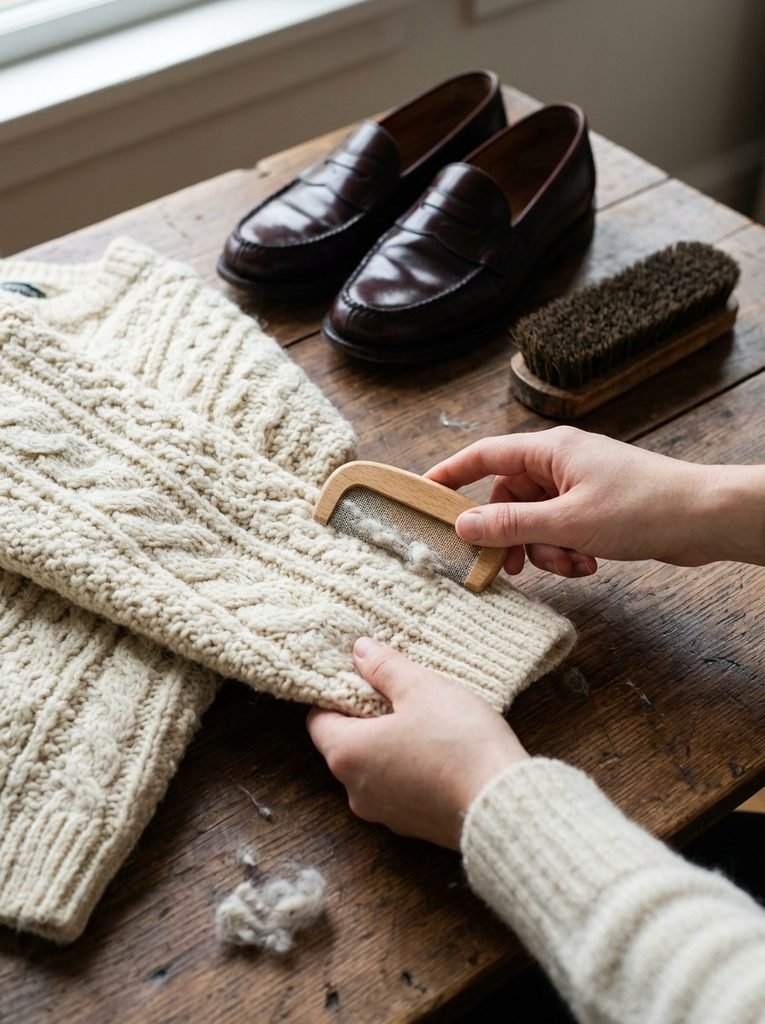
A small comb for knitwear removes pills in a minute. Pleats hold their shape when pressed lightly under a cloth, and tweed benefits from a gentle brush and fresh air. Leather loafers last far longer with polish and a rest day between wears.
Anything wool that arrives from a secondhand shop deserves a careful inspection for moth holes before it goes in the closet.
Mistakes That Turn the Look Into a Costume
The most common slip is wearing every heritage item at once. A blazer, pearls, scarf, headband, loafers, and structured tote all together start to look like a costume, and two or three heritage pieces with plain companions look far more natural.
Logo pieces work against the idea, since the look depends on restraint. Clothes that are too tight also miss the mark, because the style leans relaxed and slightly roomy. Shoes that look stiff and plastic-bright stand out, while a little honest wear on leather suits the look. Perfectly flat, spotless pressing is not required either, and a softly rolled collar looks more at ease than a rigid one.
Quick Answers on Old Money Outfits
Is old money the same as quiet luxury?
They are related but not identical. Quiet luxury focuses on quality without logos, while old money adds a heritage and preppy layer with tweed, quilting, and cable knits. For fabric-by-fabric ideas on looking expensive, the 20 outfit ideas that look expensive without the price tag guide goes through the details.
Do I need real pearls or designer labels?
No. The look depends on shape, fabric, and condition. A good faux pearl stud or an unbranded wool sweater serves the idea just as well.
Can the look work for everyday life?
Yes. Most of the pieces are everyday garments, and swapping loafers for clean leather sneakers handles busy days without losing the character.
Dressed Like It Has Always Been There
The strongest old money outfits look as if the pieces have been in the closet for years, because they are chosen for shape and condition instead of novelty. A sweater, a collared shirt, a pleated skirt, and a decent pair of loafers are enough to start, and each additional piece can arrive slowly, one good find at a time.

Leave a Reply