
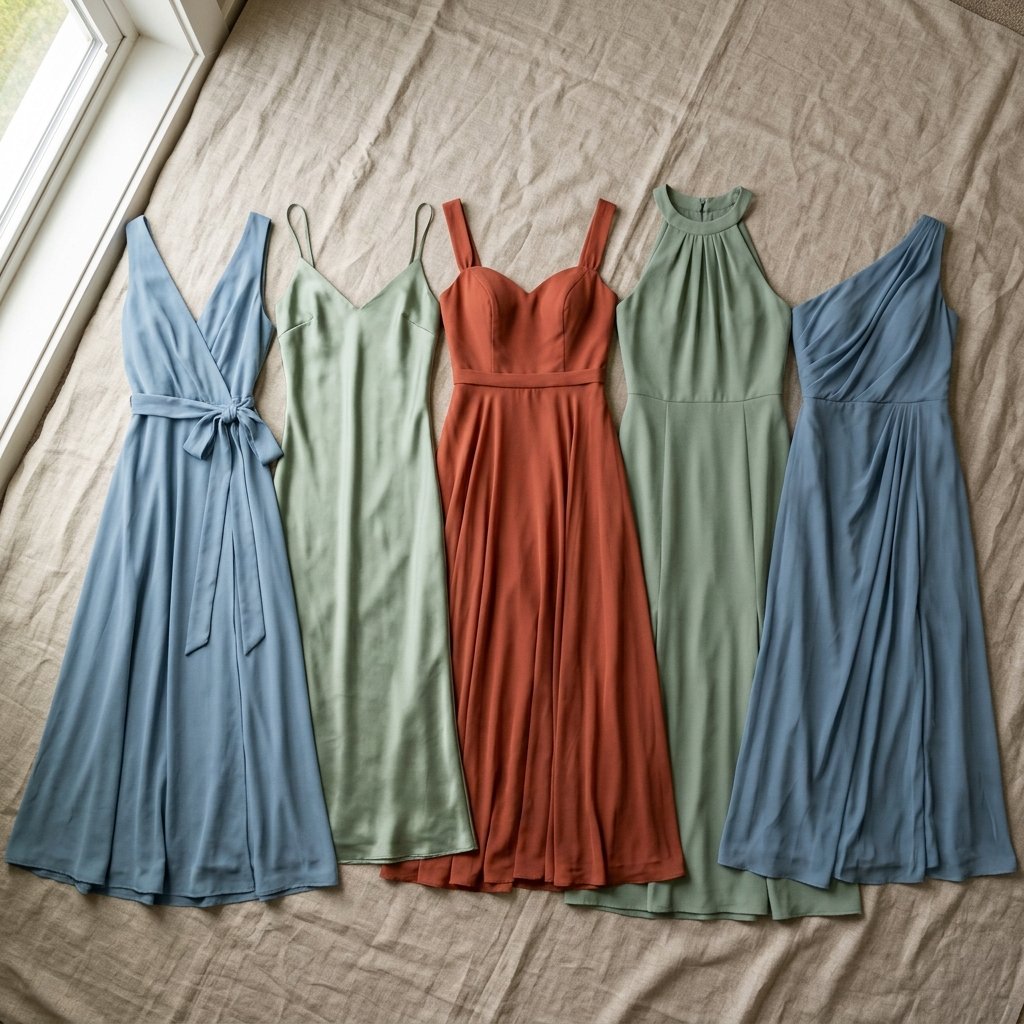
A text arrives from the bride: mismatched, wear whatever you like, just keep it in the family of colors we talked about. On the surface that sounds like the easiest dress code a bridesmaid could ask for. No fitting appointments in a group of eight, no arguing over whether the empire waist works on everyone, no ordering the same dress in six different sizes and hoping the alterations budget holds.
In practice, an open-ended dress code creates a different kind of decision fatigue. Without a single dress to point to, a bridesmaid is left interpreting vague instructions on her own, guessing at a color family from a Pinterest board, and hoping her choice doesn’t land three shades off from everyone else in the wedding party photos.
The good news is that a mismatched dress code is far easier to get right than it first appears once it’s broken into a few clear steps. This guide walks through how to read the instructions correctly, how to choose a dress that suits your own body and budget, and how to avoid the handful of predictable mistakes that turn a stylish mismatched lineup into an accidental one.
What “Mismatched” Actually Means as a Dress Code
Not every bride means the same thing when she says mismatched, and figuring out which version she has in mind is the first real task.
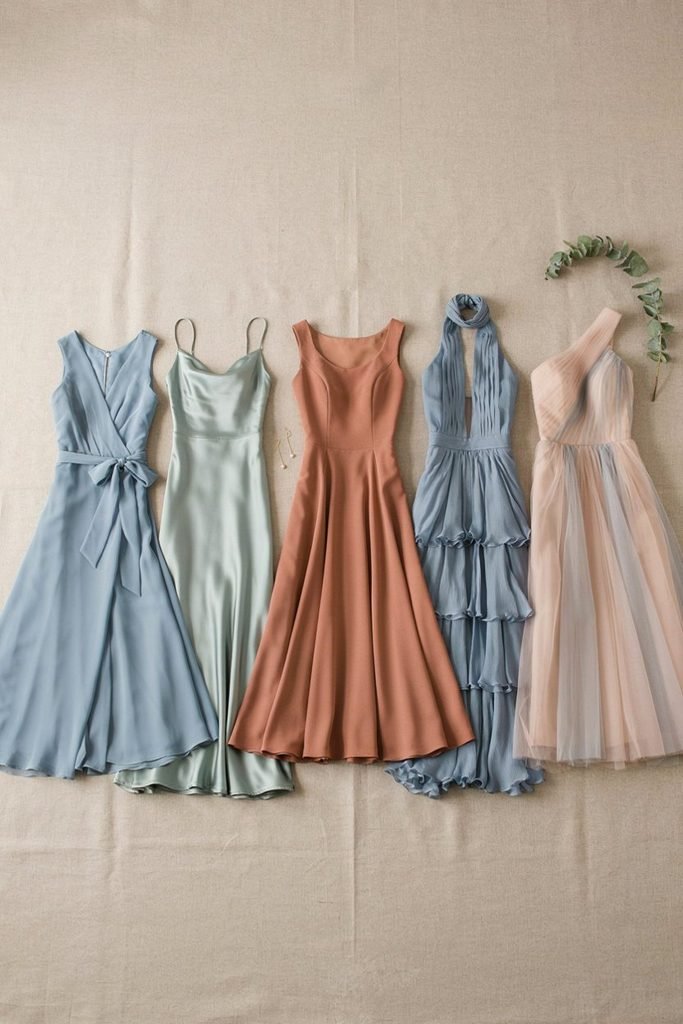
Some brides mean fully open. Any silhouette, any shade within a broad category like jewel tones or earth tones, any length. The unifying thread is simply a mood rather than a specific palette.
Others mean something closer to controlled variation. One exact color, worn in whatever style each bridesmaid prefers. This version photographs as far more coordinated than a truly open call, even though it still counts as mismatched because no two dresses are identical.
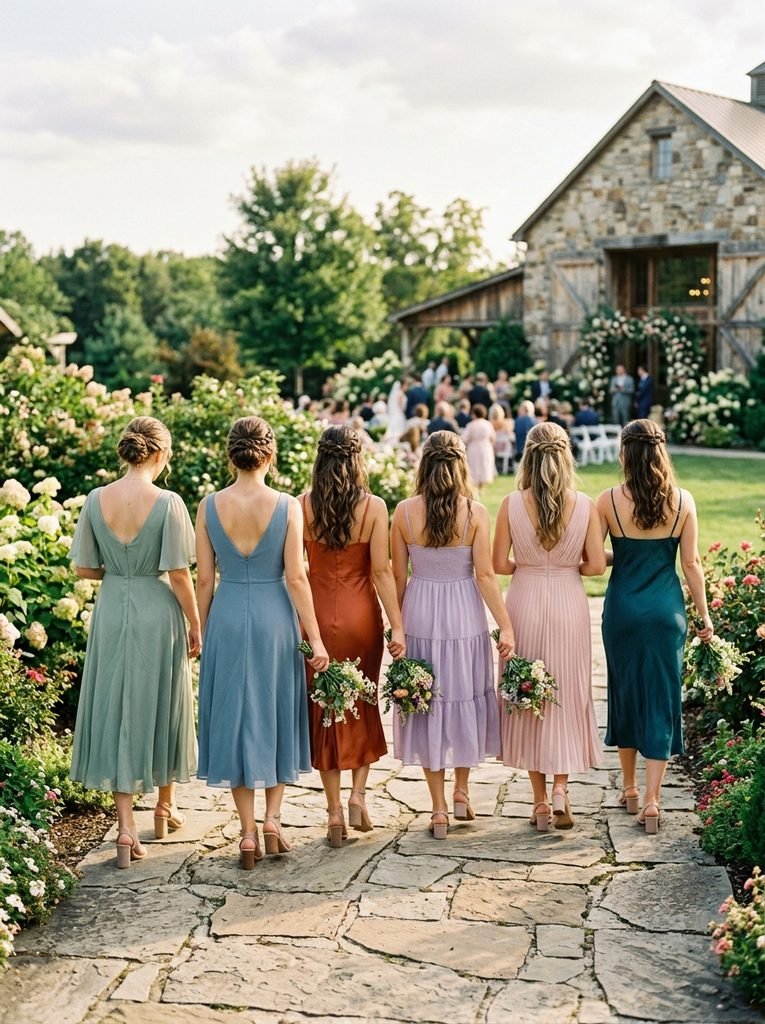
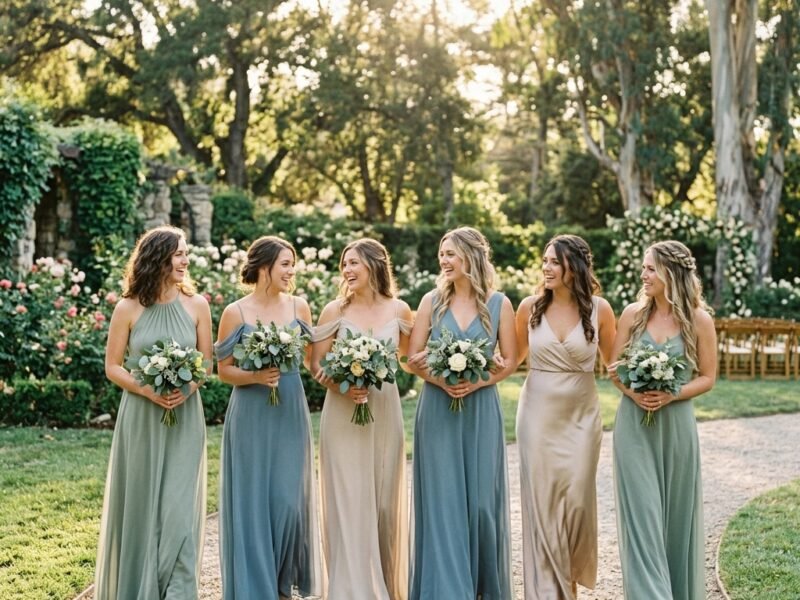
A third version sits in between: a small palette of two or three named shades, so bridesmaids in dusty blue, sage, and terracotta stand together and still read as a set. This middle option has become the most common approach for weddings that want the relaxed, individual feeling of mismatched dressing without the risk of a jarring result in photos.
Before buying anything, it helps to know which of these three the bride actually has in mind, because the shopping process looks different for each one.
Get the Real Parameters Before You Shop
A mismatched dress code is not the same as no dress code, and treating it that way is where most of the confusion starts. There are usually still boundaries, even if nobody has spelled them out clearly in the group chat.
A short conversation with the bride or the wedding coordinator before shopping saves far more time than it costs. Worth asking directly:
- Is there one approved color, or a small set of colors to choose from?
- Should the dresses be the same fabric family, or does that not matter?
- What length is expected: floor length, midi, or is that open too?
- Is there a formality level in mind, garden party casual versus black tie formal?
- Are there any colors or patterns specifically off the table?
Most brides have at least a rough picture in their head even when the instruction sounds loose, and asking a few direct questions early tends to produce a much clearer answer than “surprise me” ever does on its own.
Reading a Color Palette Correctly
Vague color language is where mismatched dress codes go wrong most often. A bride who says “shades of blue” is often picturing something narrower than the full range from pale powder to deep navy, and a bridesmaid who shows up in cobalt when everyone else chose dusty slate can end up standing out for the wrong reason.
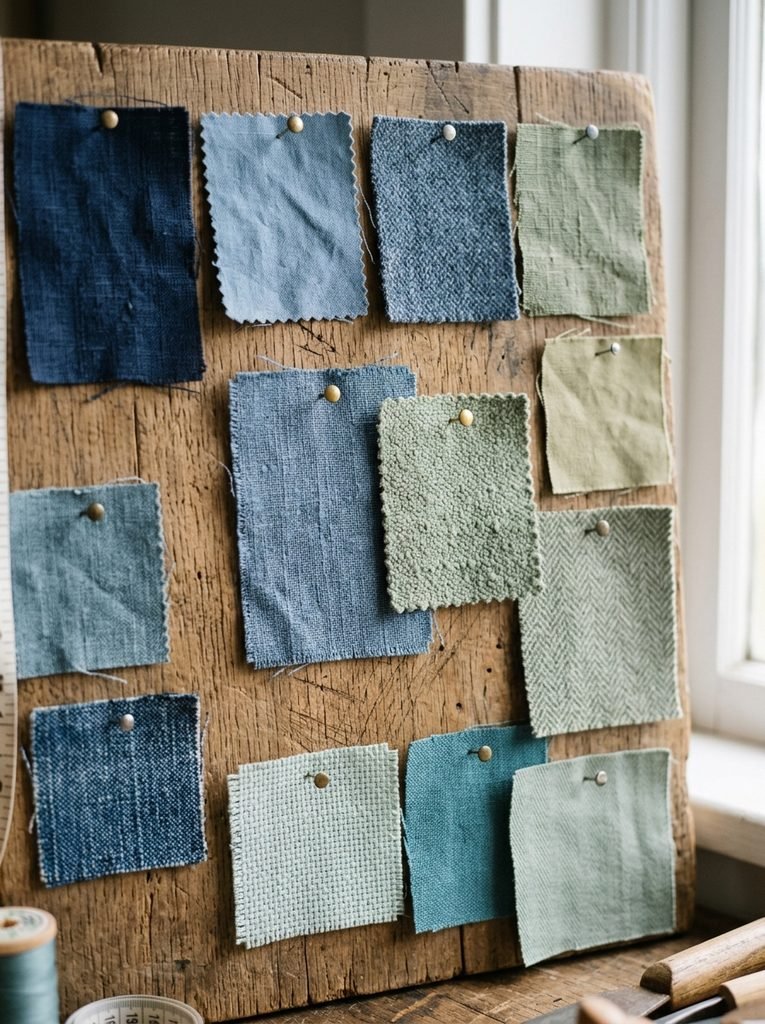
A practical way around this is to ask for a reference image, a swatch, or even a single sample dress the bride likes, rather than relying on a color word alone. Words like “sage” or “terracotta” mean different things depending on who’s picturing them.
If the bride has genuinely left the color open within a broad family, such as any warm neutral or any jewel tone, a useful habit is checking in with the other bridesmaids before finalizing a purchase. A quick photo shared in the group chat once a dress is chosen, before it ships, gives everyone a chance to notice if two people have accidentally landed on nearly the same shade or two wildly different depths of the same color.
Lighting also plays a role that’s easy to underestimate. A dress that photographs as a soft dusty blue on a laptop screen can look considerably more saturated or slightly grey once it’s under the venue’s actual lighting, whether that’s bright outdoor sun for an afternoon ceremony or the warmer, dimmer glow of an evening reception. Where possible, ordering fabric swatches or a single sample before committing to a full order helps close that gap between the screen and the room the dress will actually be worn in.
Choosing a Silhouette That’s Actually Yours
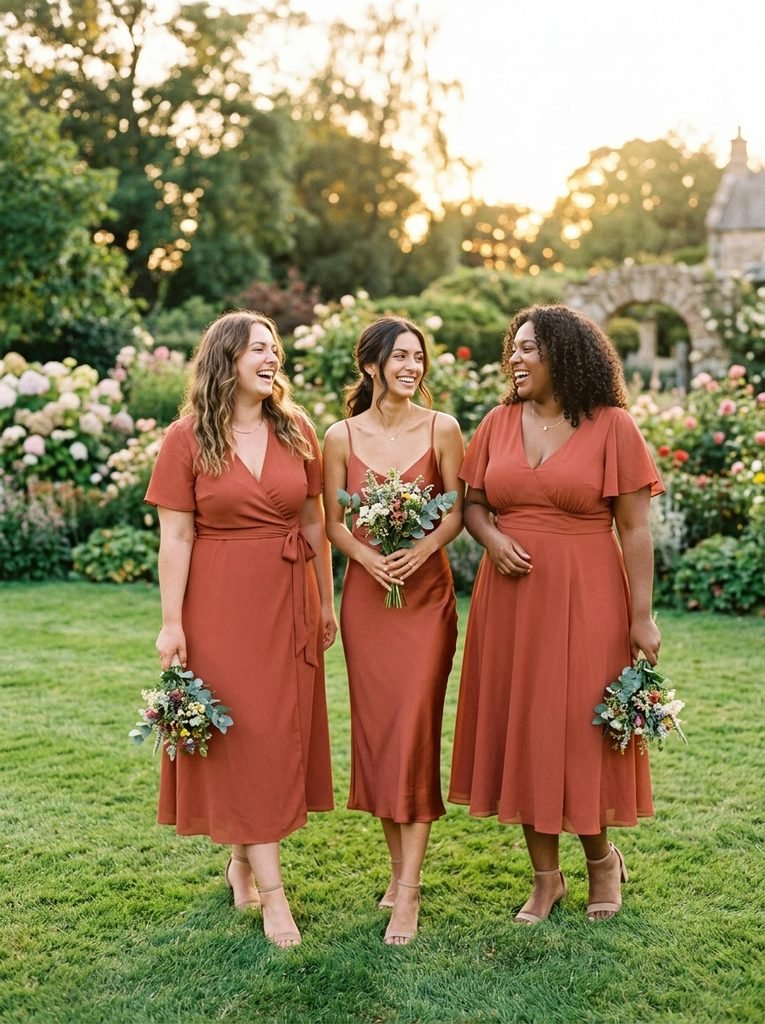
One of the genuine advantages of a mismatched dress code is the freedom to choose a silhouette based on personal comfort and body shape rather than settling for whatever a single group order allows. That’s worth taking seriously rather than defaulting to the first flattering dress that appears in a search.
A wrap dress in a fluid fabric works well for a wide range of body types because the tie adjusts at the waist rather than committing to a fixed seam. A slip dress in a heavier satin or matte crepe suits a minimal, modern aesthetic and tends to be one of the most comfortable options for a full day of standing, dancing, and photographs. An A-line with a defined waist gives more structure for anyone who prefers a fitted bodice with room to move below it.
The guide to bridesmaid dresses that flatter every body type goes deeper into specific silhouettes and which construction details matter for different proportions, and it’s a useful next stop once the color and formality level are settled.
The one thing worth avoiding in a mismatched lineup is choosing a silhouette purely because it’s trending, without checking that it actually suits your comfort level for the day. A structured strapless dress looks striking in a single photo and can become genuinely uncomfortable by hour six of a reception if it wasn’t the right choice for your body to begin with.
Matching Formality Without Matching Fabric
A mismatched dress code still has a formality ceiling and floor, even when the exact dress is left open. This is the detail that trips people up more than color ever does, because two dresses can be in a similar shade and still look mismatched in the wrong way if one reads as cocktail party and the other reads as backyard barbecue.
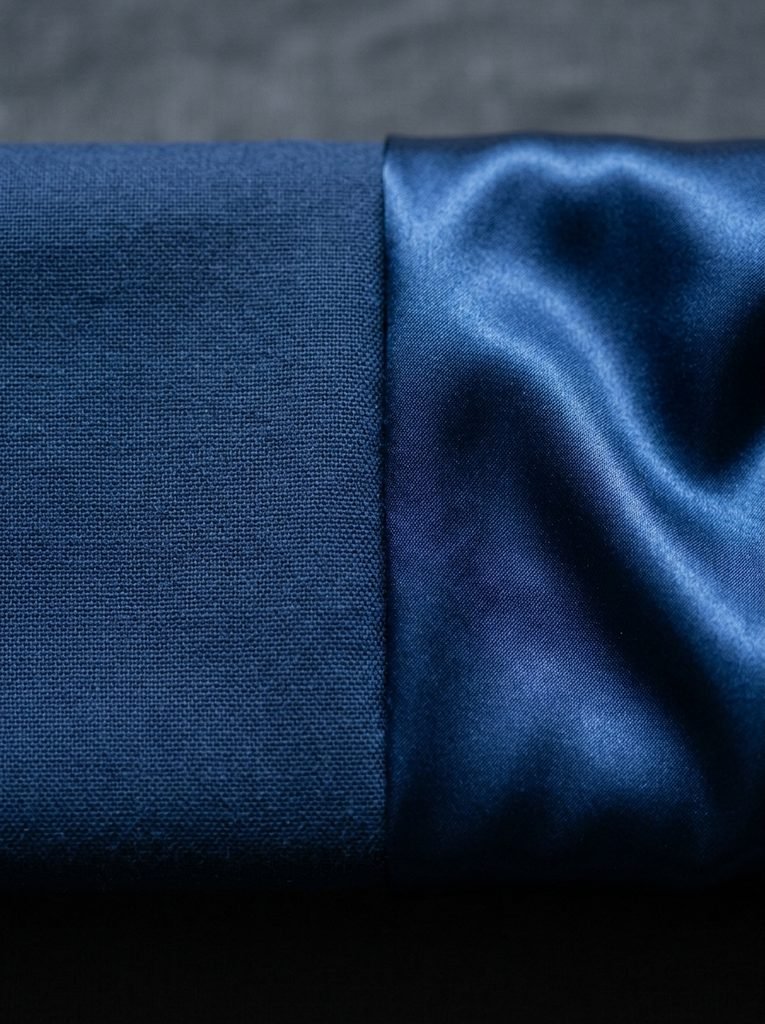
Fabric weight and finish are the biggest signals of formality. A crisp cotton sundress and a liquid satin slip dress in the same shade of blue will not read as part of the same wedding party, even though the color technically matches. Chiffon, crepe, satin, and velvet all sit at a more formal register than cotton, linen, or jersey, and mixing across that line is usually where a mismatched group starts to look accidentally uneven rather than intentionally varied.
If the wedding has a stated formality level, a black-tie wedding guide is a useful reference for understanding what fabrics and details that level of formality typically calls for, even though it’s written for guests rather than the wedding party specifically. The same fabric logic applies.
A simple rule that holds up well across most mismatched weddings: pick a fabric family, not just a color, and stay reasonably close to what the rest of the group has chosen even if the actual dress style is completely different.
Length Is the One Detail Worth Keeping Consistent
Silhouette can vary freely. Necklines can vary freely. Length is the detail that has the biggest visual impact on how coordinated a mismatched group looks in photos, and it’s worth treating as close to fixed even when nothing else is.
A lineup where most bridesmaids are in floor length gowns and one is in a knee length cocktail dress creates a visual gap that reads as an error rather than a style choice, regardless of how well the colors match. The same is true in reverse, with one long dress standing out among a row of shorter ones.
If the bride hasn’t specified a length, it’s worth confirming directly rather than guessing, since this single decision affects the group photo more than almost anything else in the mismatched approach. Midi length has become a common middle ground for exactly this reason: it reads as coordinated across a group without requiring identical dresses.
Coordinating With the Group Without a Group Chat Meltdown
Mismatched dressing works best with a little quiet coordination happening in the background, even though the whole point is that nobody is wearing the same dress. A group chat with a shared folder of photos, one for each bridesmaid once she’s chosen her dress, is a simple, low-effort way to catch problems before they become permanent.
Two bridesmaids ordering nearly identical dresses by coincidence is more common than it sounds, particularly when everyone is shopping from the same handful of popular retailers. A quick photo check before anyone’s return window closes solves this cheaply.
It also helps to designate one person, often the maid of honor, as the informal point of contact for questions about the palette or the formality level, rather than leaving every bridesmaid to interpret the instructions independently and hope for the best. This isn’t about controlling anyone’s choice. It’s about making sure eight independent decisions still add up to a group that looks like it was styled with some intention.

Budget-Friendly Ways to Build a Mismatched Look
A genuine advantage of a mismatched dress code, beyond the styling freedom, is that it opens up far more shopping options than a single ordered style ever could. Bridesmaids aren’t locked into one retailer’s price point or availability, which means there’s real room to shop according to what each person can actually spend.
Retailers like Lulus and ASOS carry a wide range of occasion dresses at accessible prices in most of the colors that come up often in mismatched weddings, from sage to dusty rose to deep jewel tones. For anyone who would rather not buy a dress they’ll wear once, rental services such as Rent the Runway offer designer-level dresses for a fraction of the retail price, which can be a genuinely practical option for a bridesmaid attending several weddings in one season.
Secondhand and consignment platforms are also worth checking for anyone hoping to spend less without sacrificing quality, particularly for a dress in a specific shade that might otherwise be hard to find at a lower price point.
Whatever the budget, it’s worth communicating early if cost is a concern. A bride who understands that one bridesmaid needs a lower price point can often adjust the palette or formality expectations slightly to make that easier, but only if she knows before dresses are already ordered.
Accessories and Shoes That Tie It Together
When the dresses themselves vary, accessories become the easiest and most effective way to create visual cohesion across the group without asking anyone to compromise on the dress they actually want.
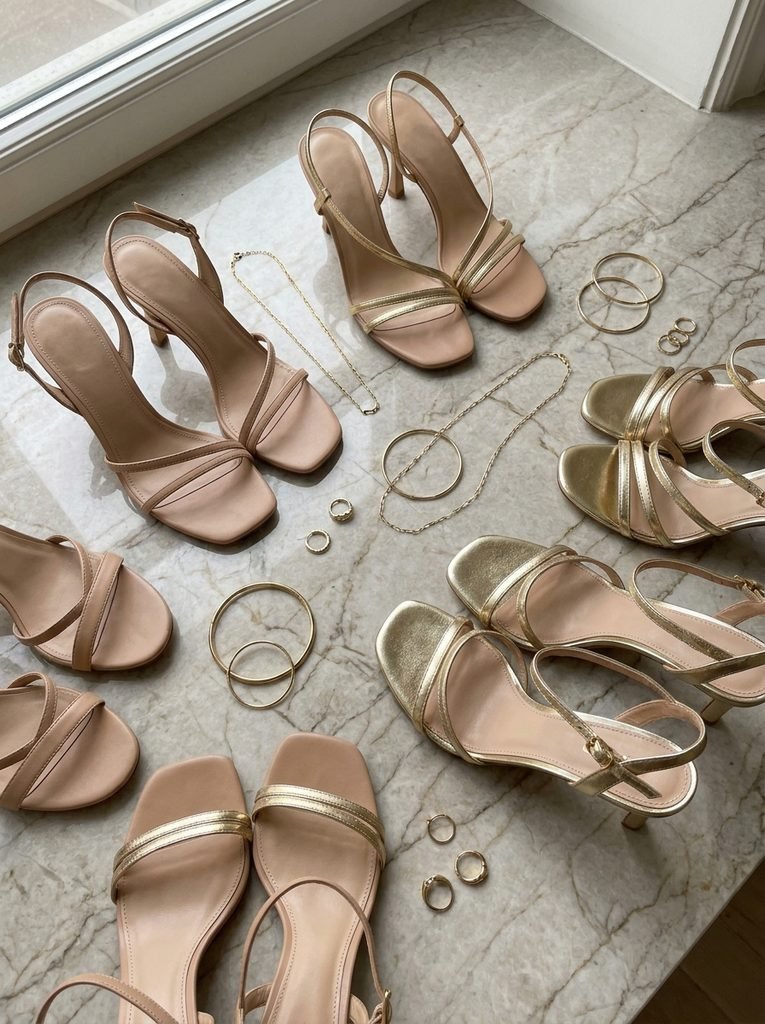
A consistent shoe color across the group, even if the actual shoe style differs, creates a strong unifying line at the bottom of every photograph. Nude, gold, or a single metallic tone all work well for this because they read as neutral against a range of dress colors.
Jewelry is another easy point of coordination. A shared decision to keep jewelry minimal, or to all wear a similar metal tone, gold instead of silver for example, pulls the group together visually even when the dresses themselves are entirely different silhouettes and shades.
Bouquets, if the florist is coordinating with the bridal party, often do more to unify a mismatched group than anything else, since the same greenery and flower choice repeated across every bridesmaid creates a consistent visual thread that the eye follows straight through the lineup regardless of what each person is wearing underneath it.
Common Mistakes With a Mismatched Dress Code
A handful of patterns come up again and again with mismatched dress codes, and most of them are avoidable with a little upfront communication.
Interpreting the color instruction too literally or too loosely. “Earth tones” can mean anything from pale sand to deep chocolate brown depending on who’s picturing it, and checking a reference image before buying avoids the guesswork entirely.
Ignoring formality level in favor of color matching alone. A dress can be the exact right shade and still look out of place if it’s in the wrong fabric or the wrong level of dressiness for the event.
Buying too early or too late. Buying the moment the dress code is announced, before other bridesmaids have chosen, increases the odds of an accidental match or a length that ends up out of step with everyone else’s choice. Waiting until the final weeks risks limited stock in the right color and size. A window of two to four months before the wedding tends to work well for most mismatched dress codes.
Forgetting the length conversation. As covered above, this is the detail most likely to create an uneven photo, and it’s easy to overlook because it feels like a smaller decision than color.
Not accounting for weather or venue. A mismatched dress code still needs to hold up to an outdoor ceremony, a beach setting, or a cold evening reception, and the fabric and coverage choices should reflect that regardless of how open the styling instructions are.
A Simple Checklist Before You Buy
- Confirm the exact color, color family, or reference image with the bride
- Confirm the expected length for the group
- Confirm the formality level and general fabric expectations
- Share a photo of the chosen dress with the group before the return window closes
- Check the venue and season to make sure the fabric and coverage make sense
- Coordinate shoe tone and jewelry style loosely with the rest of the bridal party
- Order with enough time left for alterations if needed
Making Individual Choices Add Up to One Cohesive Group
The appeal of a mismatched dress code is real. It lets each bridesmaid show up in something that actually fits her taste, her comfort, and her budget, rather than compromising on a single style chosen to work reasonably well for everyone and perfectly for no one.
That freedom works best with a small amount of structure underneath it. A shared understanding of color, length, and formality gives every bridesmaid room to make her own choice while still landing somewhere that reads as a group rather than a coincidence. The dresses don’t need to match. They just need to agree on the same basic language.
Get those few details right, and a mismatched dress code stops being a source of stress and starts being exactly what it was meant to be: a chance for every bridesmaid to look like herself on the day that calls for it most.

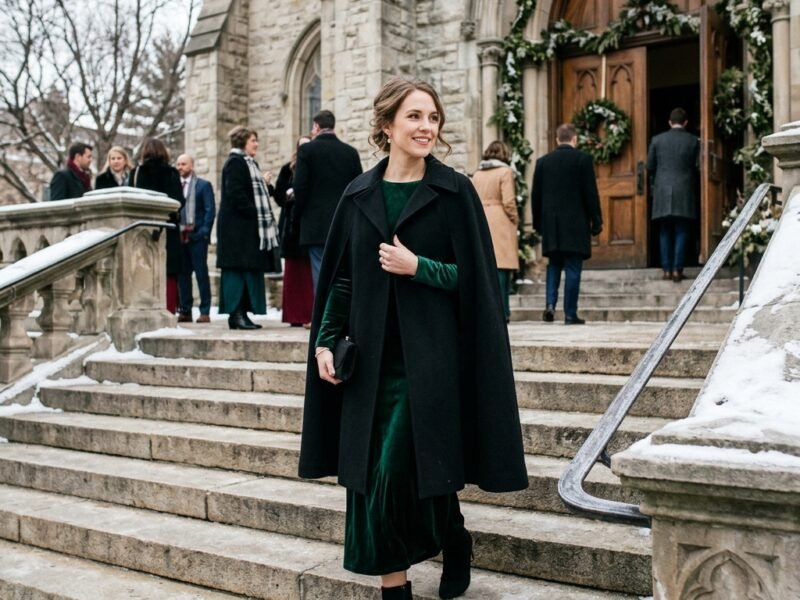
[…] remains the one hard rule regardless of dress code. For weddings that lean more casual overall, dress code guidance built specifically around wedding guest etiquette covers some of the same color and coordination questions from the guest […]
[…] before, the mindset is the same one that helps with tricky wedding party rules, like working out a mismatched bridesmaid dress code: read the specific requirement first, then build the outfit around […]