
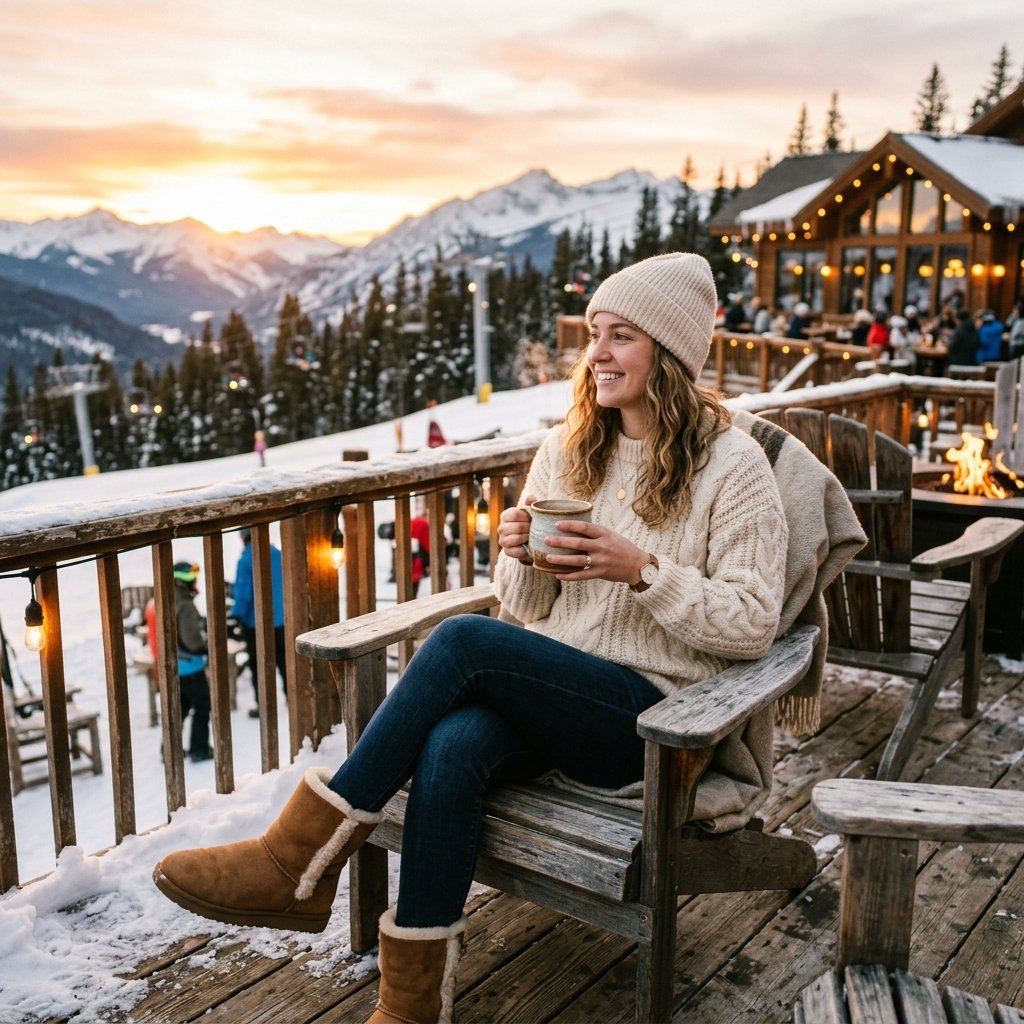
A ski trip has a strange packing problem built into it. You need gear tough enough for wind and wet snow, but you also need something decent to wear four hours later when you’re sitting by a fire with a mug in your hand. Most packing lists treat these as two separate wardrobes. That’s usually where the suitcase starts overflowing.
The better approach is to think of your ski trip clothing as one connected system rather than two outfits stapled together. A handful of pieces, chosen with intention, can carry you from the lift line to the lodge without a full change of clothes. This piece walks through how to build that kind of wardrobe, piece by piece, without turning it into a research project.
Why a Ski Wardrobe Needs to Multitask
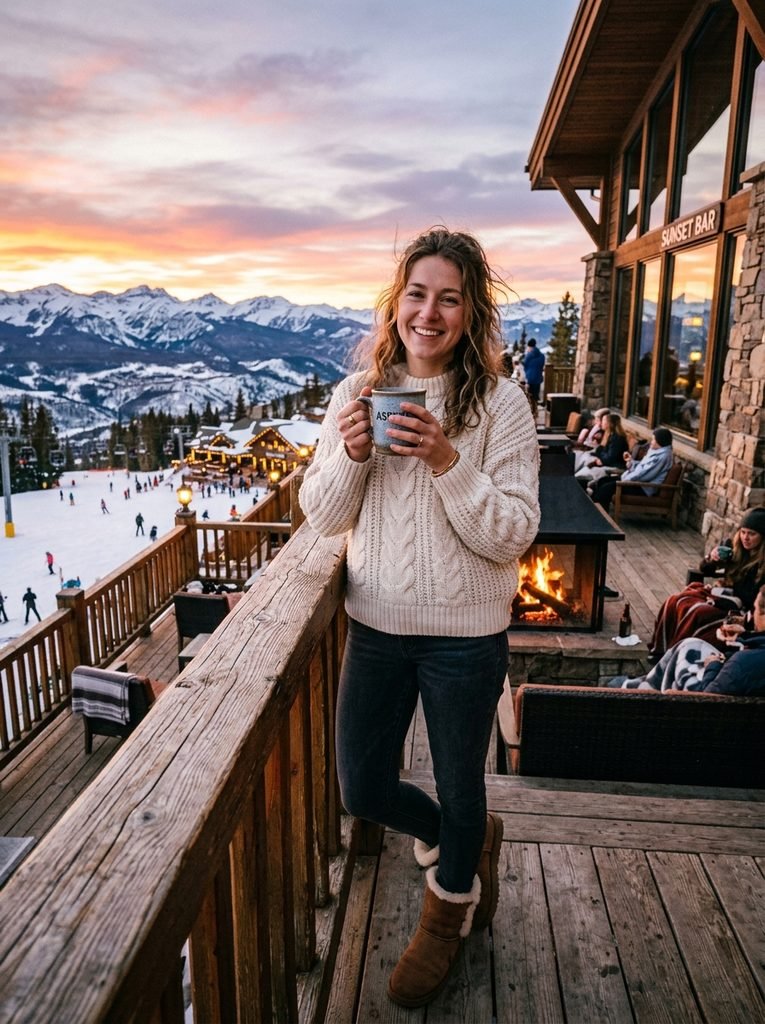
On the mountain, your clothes are working equipment. They need to handle moisture, wind, and temperature swings that can hit 20 degrees between morning and afternoon. Off the mountain, in the lodge or the village, the priorities flip. Warmth still matters, but so does looking like a person and not a marshmallow.
The trick is picking items that can quietly shift between those two jobs. A few examples of what that looks like in practice:
- A mid layer sweater that’s warm enough under a shell but presentable enough to wear alone at dinner
- Snow boots with enough tread for icy paths but a shape that doesn’t scream “hiking gear” in a restaurant
- A base layer top that doubles as a going-out top under an open cardigan
None of this requires buying an entirely separate “après” wardrobe. It just means being a little more selective about what earns a spot in your bag. Once you start shopping this way, packing gets faster too, because every item has to justify two jobs, not one.
Build the Layering System Before You Think About Style
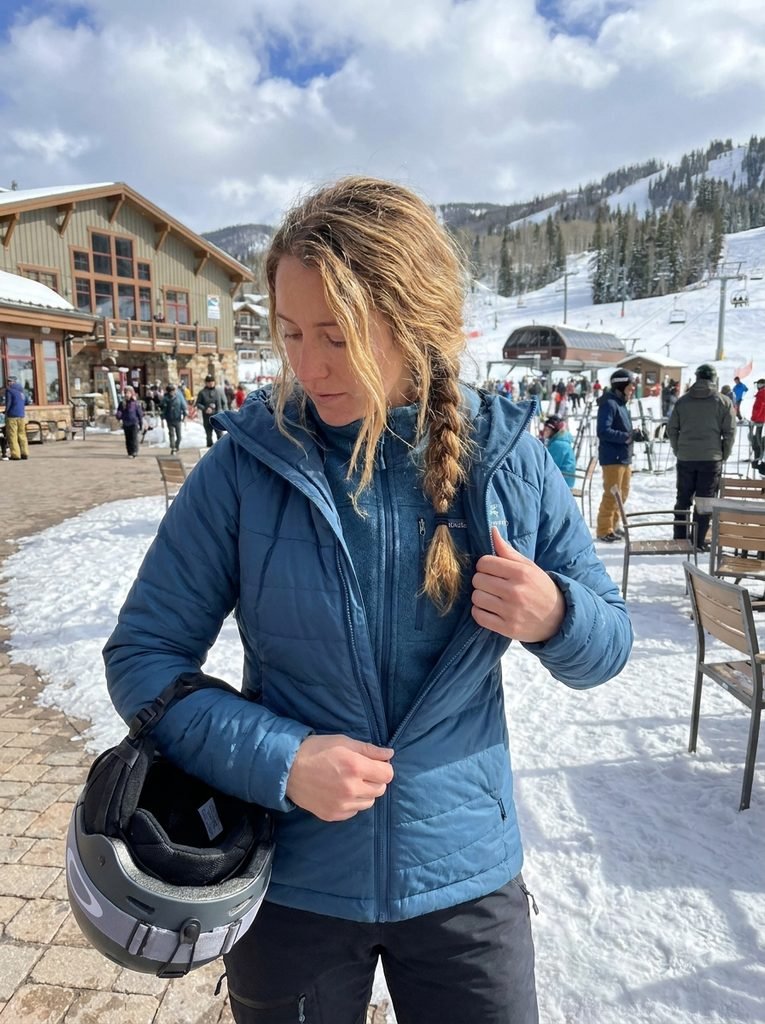
Layering is the backbone of any ski trip outfit, and it’s worth getting right before worrying about how anything looks. A properly built layering system, the kind REI’s own gear guide breaks down clearly, usually comes down to three parts: a base layer that wicks moisture, a mid layer that traps heat, and an outer shell that blocks wind and snow.
The Base Layer Does More Than You Think
A good base layer isn’t just for skiing days. Merino wool or a merino blend top regulates temperature well enough that you can wear it under a cardigan at dinner without overheating indoors. Because it resists odor better than synthetic fabrics, you can repeat it two or three times on a trip without anyone noticing.
Pack two base layer tops and one or two bottoms. That’s usually plenty for a five to seven day trip if you’re rinsing them in a sink partway through. Avoid cotton entirely here. It holds moisture instead of moving it away from your skin, which is exactly the opposite of what you want on a cold mountain morning.
Choose a Mid Layer That Can Stand Alone
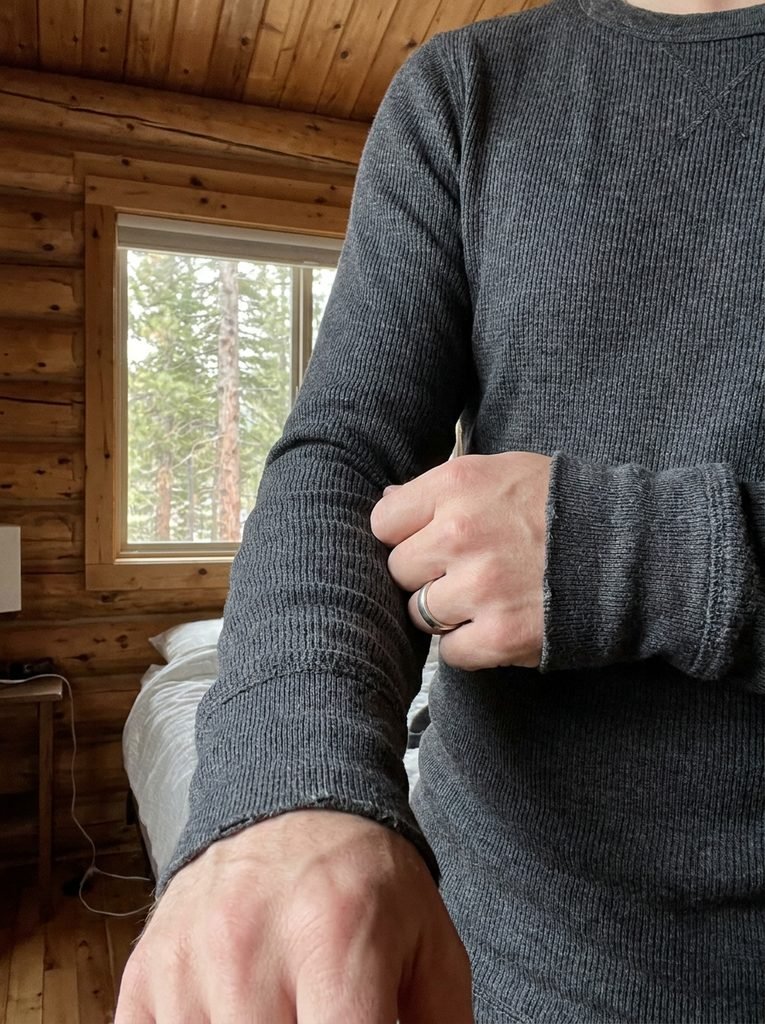
This is where the multitasking really starts. Instead of packing a technical fleece that only makes sense under a jacket, look for a chunky knit or a quarter-zip sweater in a natural fiber. It should be warm enough to layer under a shell in the morning, then work as the main event once you’ve peeled off your outerwear at 4pm.
A cable knit, a fair isle pattern, or a simple ribbed turtleneck all do this job well. Stick to one or two colors that pair with everything else you’ve packed, rather than picking a sweater for its print alone. If a piece only works as a mid layer and nothing else, it’s probably not worth the suitcase space on a short trip.
Keep the Shell Simple
Your outer shell is the one piece that stays purely functional. A waterproof, breathable jacket in a color you actually like will do more for your overall look than a fashion-forward shell that leaks by lunchtime. Save the personality for what’s underneath, and treat the shell as the quiet, reliable piece that just needs to do its job well.
Getting From the Slopes to the Lounge Without Changing Everything
The transition moment, right after the last run, is where most people either overpack or end up stuck in ski pants at happy hour. A little planning avoids both.
The simplest method is swapping only what needs swapping:
- Trade snow pants or bibs for jeans, leggings, or corduroys once you’re off the mountain
- Keep the same base layer and mid layer on top, just remove the outer shell
- Switch ski boots for snow boots that can also handle a walk into town
This means your suitcase only needs one extra bottom and one pair of boots to cover both parts of the day, rather than duplicate outfits for morning and evening.
If your resort has lockers or a car nearby, stash a change of bottoms and boots there in the morning so you’re not lugging them up the mountain. Small logistics like this make the whole system easier to actually stick to, especially on a trip where you’re moving between three or four different environments in a single day.
Après-Ski Style, Without Overthinking It
Après style has quietly become its own category of fashion in recent years, with brands building entire capsule collections around it. As The Zoe Report has noted, mountain style now covers everything you wear on and off the slopes, and it’s become a real focus for both legacy fashion houses and outdoor brands. You don’t need to buy into a whole capsule collection to get the look right, though. A few well-chosen pieces do the job.
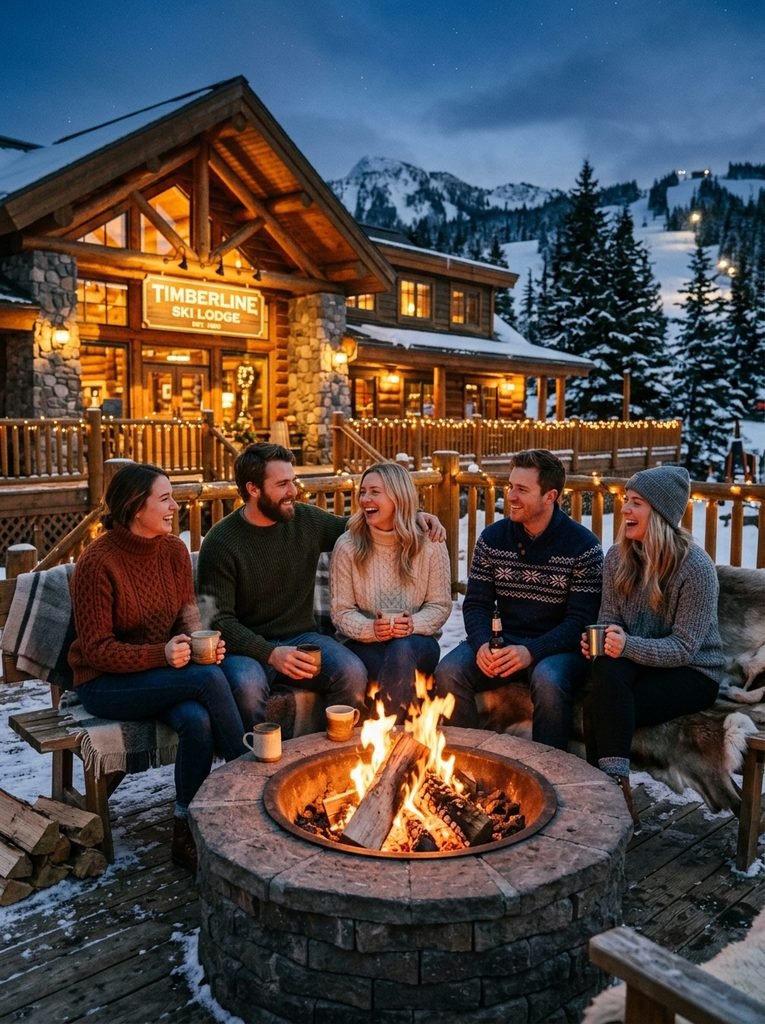
Sweaters Are the Real Workhorse
If you only upgrade one category of clothing for a ski trip, make it sweaters. A thick knit in wool, alpaca, or a wool blend reads as intentional rather than thrown together, and it photographs well against a snowy backdrop if that matters to you. Bring one neutral option and one with a bit more personality, whether that’s a color, a pattern, or an interesting collar.
A sweater also solves the “what do I wear tonight” problem faster than almost anything else in your bag. Pair it with jeans and boots and you’re done, no separate evening outfit required.
Footwear That Handles Ice and Hardwood Floors
Fireside footwear needs to do two jobs: grip on packed snow and look reasonable indoors. Shearling-lined boots, especially ones with a low block heel or a simple lace-up shape, tend to work in both settings. Avoid anything with an aggressive lug sole meant purely for hiking trails. It’ll track snow and grime everywhere and won’t look right with jeans.
If you tend to get cold feet easily, look for a boot with a warm lining rated for actual sub-zero temperatures rather than a fashion boot that only looks warm. Comfort matters more than style here, since you’ll likely be walking on packed ice more than once during the trip.
One Statement Coat Earns Its Space
If your suitcase has room for one non-essential item, let it be a coat with a bit of presence. A long shearling, a bold color puffer, or a wool overcoat worn for dinners and walks into the village adds more to your trip photos than another neutral fleece would. Just make sure it’s warm enough for actual outdoor temperatures, not just indoor errands.
Accessories That Cross Over Between Both Settings
Small accessories carry a surprising amount of the visual work on a ski trip, and most of them can move between the mountain and the lodge without any adjustment.
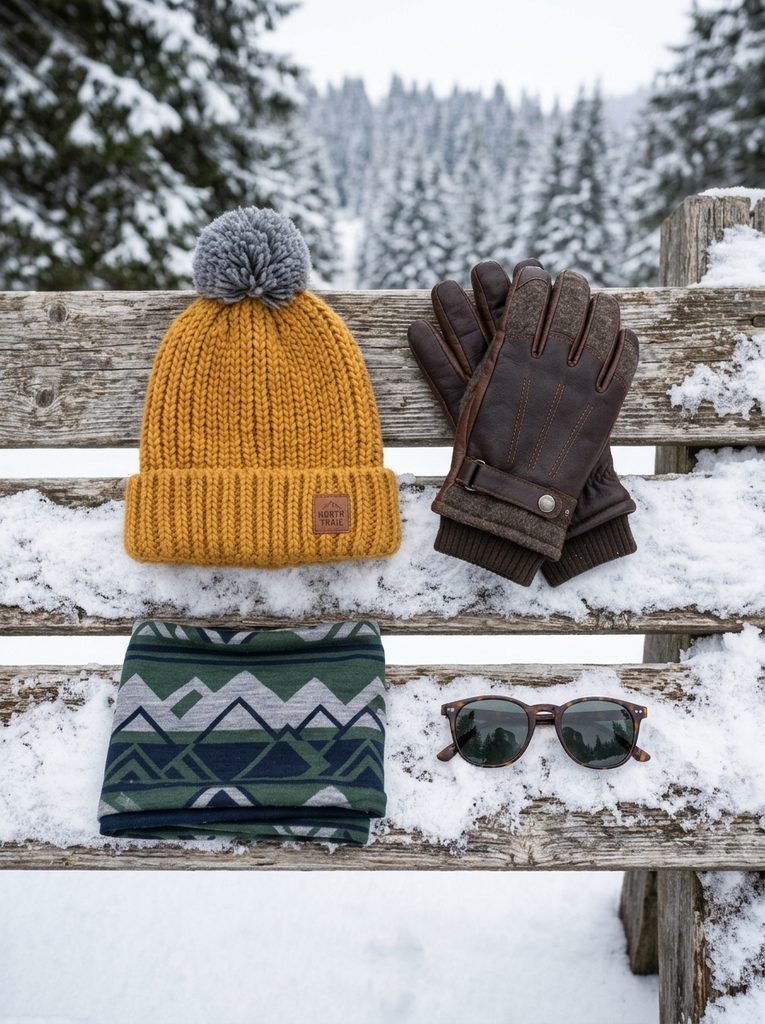
- Beanies: A ribbed or cable knit beanie in a neutral tone works under a helmet and at dinner
- Buffs or scarves: A merino buff protects your face on the chairlift and doubles as a neck scarf later
- Gloves: Leather-palmed gloves look more put together off the mountain than bulky mitts
- Sunglasses: A polarized pair with real UV protection matters more than people expect, since snow reflects a large share of UV radiation, a point eye care resources like All About Vision cover in detail when discussing sun exposure on the slopes
None of these need to be flashy. Consistent, well-chosen accessories tend to look more deliberate than statement pieces that don’t relate to anything else you’re wearing. If you’re short on packing space, accessories are usually the easiest place to add personality without adding bulk.
Coordinating Color and Texture Without Overplanning
You don’t need a color-coded spreadsheet to make a ski wardrobe look pulled together. A simpler method works just as well: pick one neutral base (cream, camel, charcoal, or navy) and one accent color that shows up in two or three pieces, like a sweater, a beanie, and a pair of gloves.
Texture does a lot of the visual heavy lifting in winter outfits. Mixing a chunky knit with a smooth shell, or a shearling boot with a sleek puffer, adds interest without needing extra colors. This is part of why a lot of mountain style photographs well even in plain snow settings. The textures carry the outfit.
If you’re someone who likes a bit more pattern, keep it contained to one piece per outfit, whether that’s a fair isle sweater or a printed buff, and let everything else stay simple around it. Overloading an outfit with multiple patterns tends to look busier in photos than it does in person, especially against a bright white snow background.
How Climate and Destination Change the Formula
Not every ski trip calls for the same wardrobe, and the resort you’re heading to changes the math a little. A dry powder destination like Colorado or Utah tends to run colder but drier, so heavier mid layers and a warm shell go further than waterproofing alone. Alpine resorts in Europe often deal with wetter, heavier snow, which makes a genuinely waterproof (not just water-resistant) shell more important.
Spring skiing trips, on the other hand, often run warmer during the day and drop sharply once the sun goes down. In that case, it helps to pack one lighter mid layer alongside your usual warm one, so you’re not stuck sweating through an afternoon on the deck in a heavy sweater. Checking the average temperatures for your specific dates and elevation, rather than assuming “ski trip equals freezing,” saves you from over-packing warm layers you’ll barely wear.
A Simple Way to Pack for a Long Weekend or a Full Week
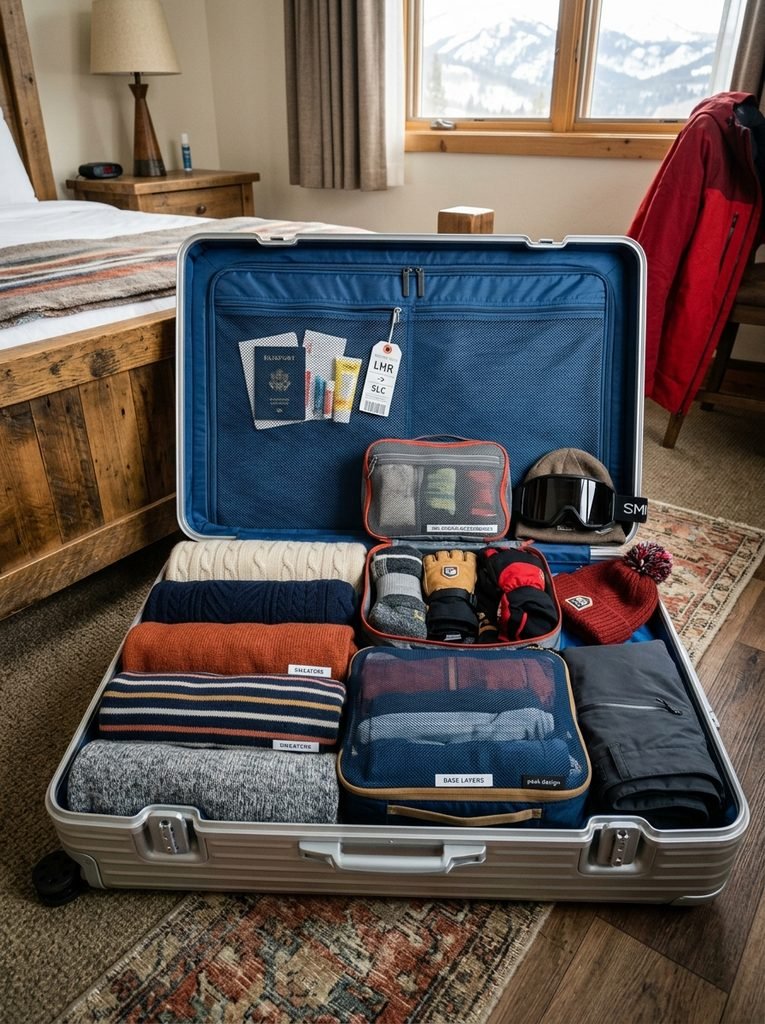
Packing light for a ski trip feels harder than it actually is, mostly because bulky items eat up so much suitcase space. A rough capsule approach keeps things manageable:
- 2 base layer tops, 1–2 base layer bottoms
- 2 sweaters (one neutral, one with personality)
- 1 pair of jeans or corduroys for evenings
- 1 pair of leggings for lounging or extra layering
- 1 ski shell, 1 pair of ski pants or bibs
- 1 statement coat for evenings
- 1 pair of snow or shearling boots
- 1 beanie, 1 buff or scarf, 1 pair of gloves, sunglasses
Wearing your bulkiest coat and boots on the plane rather than packing them saves a surprising amount of suitcase space, and it’s a trick most frequent winter travelers rely on. Rolling knitwear instead of folding it also helps prevent the kind of deep creases that are hard to shake out once you’ve arrived.
A Few Mistakes Worth Avoiding
A handful of small missteps tend to repeat themselves on ski trips:
- Packing an entirely separate wardrobe for evenings instead of building pieces that cross over
- Bringing only technical fleece for mid layers, with nothing that works as standalone knitwear
- Choosing style over function for the outer shell, which usually ends with someone cold and wet by 11am
- Skipping real UV-rated sunglasses because goggles seem like enough
- Overpacking “just in case” outfits that never get worn
Most of these come from planning the slope wardrobe and the lodge wardrobe separately. Once you start thinking of them as one connected system, the list of things you actually need gets shorter, not longer.
A Few Common Questions
Can you wear jeans while skiing?
Regular jeans aren’t a good idea on the slopes since denim holds moisture and offers little wind protection. Save jeans for après hours and stick to proper ski pants or bibs while you’re actually skiing.
How many outfits do you actually need for a five day trip?
With a layering approach, two to three base layer sets, two sweaters, and one pair of evening bottoms usually cover a full week, since pieces get reused in different combinations rather than worn once and swapped out.
Is it worth buying a separate après-ski wardrobe?
Not really. A couple of intentional pieces, like a good sweater and a pair of boots that work both outdoors and in, do the job without needing a whole second suitcase.
Packing With a Plan, Not a Guess
A ski trip wardrobe doesn’t need to be complicated to work well in both settings. The pieces that perform best are usually the simplest ones: a good base layer, a sweater that can stand on its own, boots that handle both ice and floors, and a handful of accessories that don’t need to be swapped out twice a day. Once those basics are in place, the rest of the packing list gets a lot shorter, and so does the guesswork once you’re actually on the trip.




[…] anyone who wants a deeper look at layering logic for freezing conditions, this piece on ski trip outfits that still look good après shows how the same principles can look stylish rather than purely […]
[…] close-fitting base layer comes first, such as a thermal top or fine merino. The ski trip outfit guide on this site covers base layers in more detail. A wool jumper or zip-neck knit goes over it. The […]