
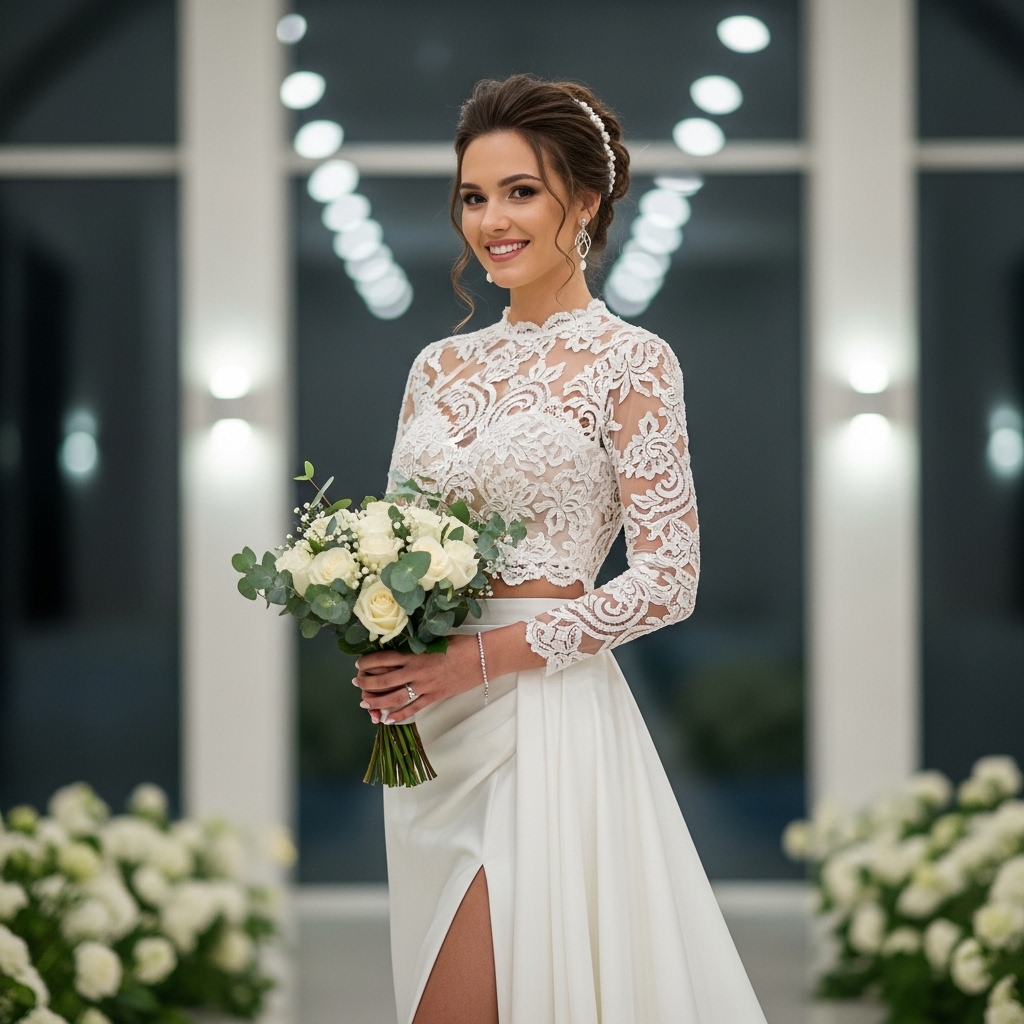
Bridal fashion has widened considerably, and 2026 brings a fresh wave of modern bridal outfit trends that sit alongside the traditional gown rather than replacing it. Brides now choose from creative silhouettes, technical fabrics, and unconventional bridal outfit ideas shaped around the venue, the season, and the length of the day itself. The range runs from minimalist satin and statement sleeves to bridal suits, jumpsuits, and detachable skirts. Each carries different practical demands. Some need nine months of lead time and three fittings; others come off a rail and need a hem. This guide covers 30 modern bridal outfit trends and treats those demands as part of the decision, because a gown that arrives late or cannot survive a dance floor fails regardless of how it looked on the hanger. Whether the preference runs to classic elegance, romantic lace, fashion-forward design, or minimalist bridal outfits, the notes below cover what each one asks for.
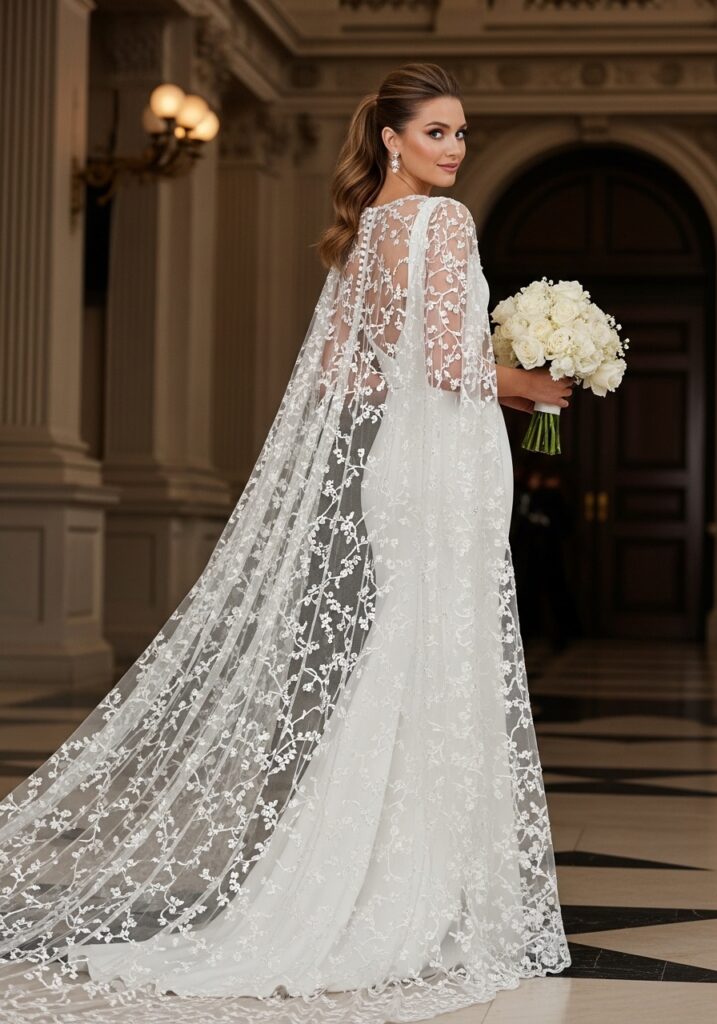
1. Minimalist Satin Wedding Dresses
Satin rewards good fit and punishes bad fit, which is the whole story with minimalist gowns. No beading or lace exists to break up the surface, so every pull across the hip shows. Brides drawn to this silhouette should budget for more alteration appointments than the boutique initially suggests, not fewer.
Duchess satin holds structure. Crepe-back satin drapes softly and clings more. The two behave nothing alike despite sharing a name on the tag, and asking which one a sample is cut from tells more than any photograph.
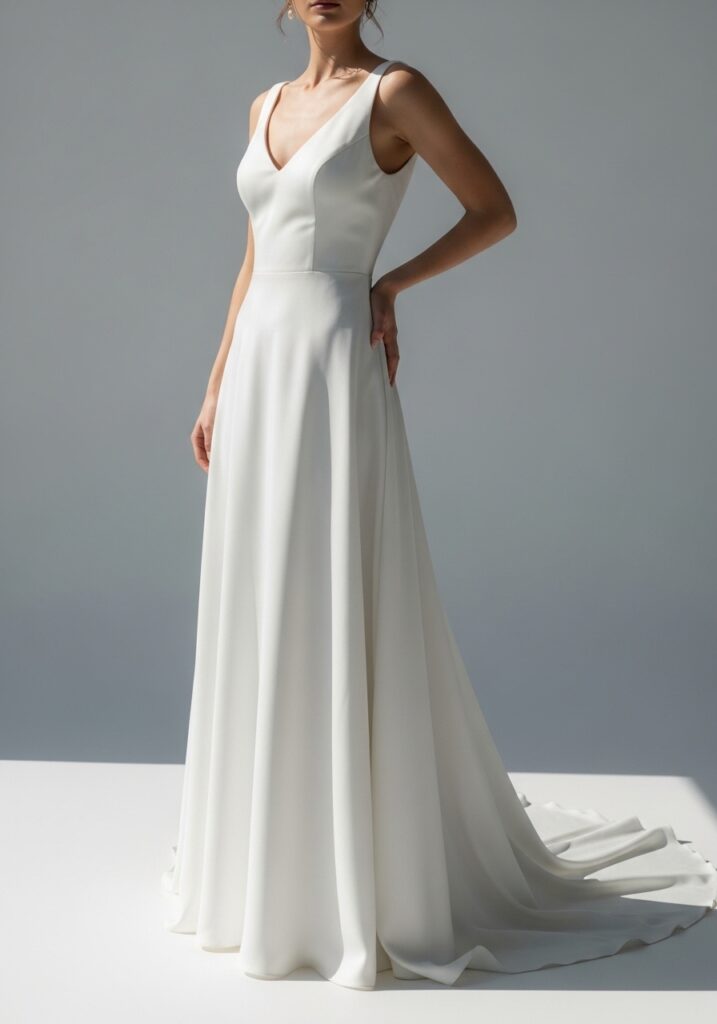
2. Statement Sleeve Bridal Gowns
Puff, bishop, and sheer lace sleeves all read as dramatic in photographs. They also change how a gown wears across an entire day. A structured puff sleeve limits how far the arms lift, which matters at the moment of a first dance or a bouquet toss.
Detachable versions solve this. Many designers now build sleeves that clip at the shoulder seam, giving the ceremony drama and the reception freedom. Brides should confirm the attachment method before ordering, since a poorly hidden clip shows in every profile shot.
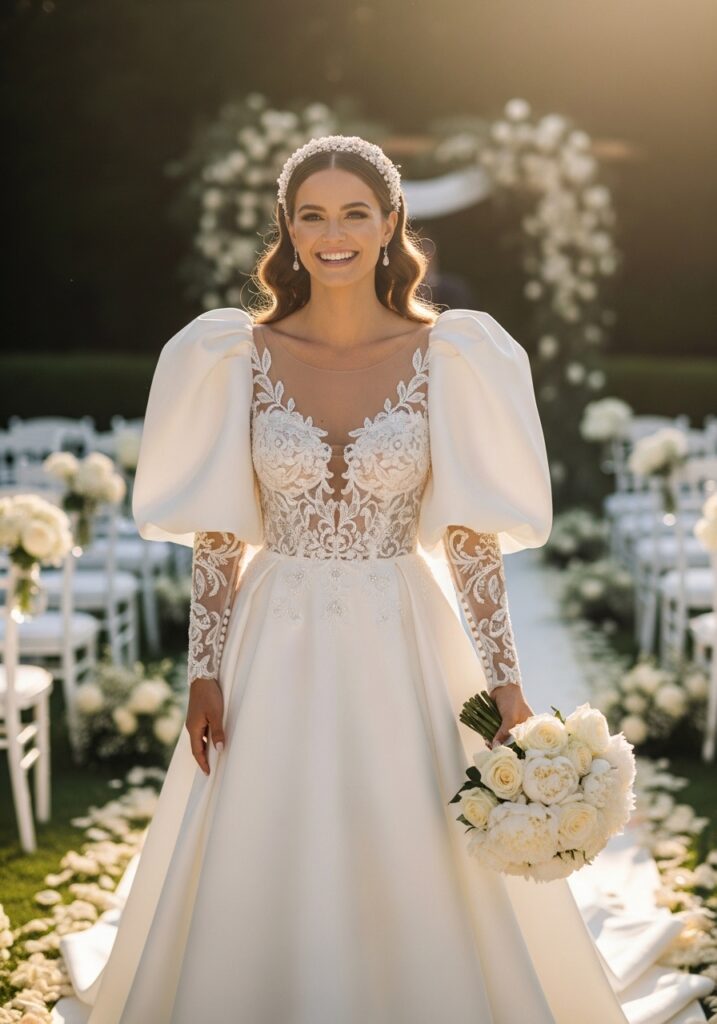
3. Bridal Suits for Modern Brides
A bridal suit costs less than most gowns and demands more from the tailor. Off-the-rack suiting rarely fits the shoulder and the waist correctly on the same body, and the shoulder is the one part a tailor cannot easily fix. Buying to fit the shoulder and altering everything else is the standard approach.
Courthouse ceremonies and city weddings suit the look particularly well. Wool crepe and heavy viscose hold their shape through a long day. Linen photographs beautifully for the first hour and creases badly for the rest.
4. Detachable Overskirt Wedding Dresses
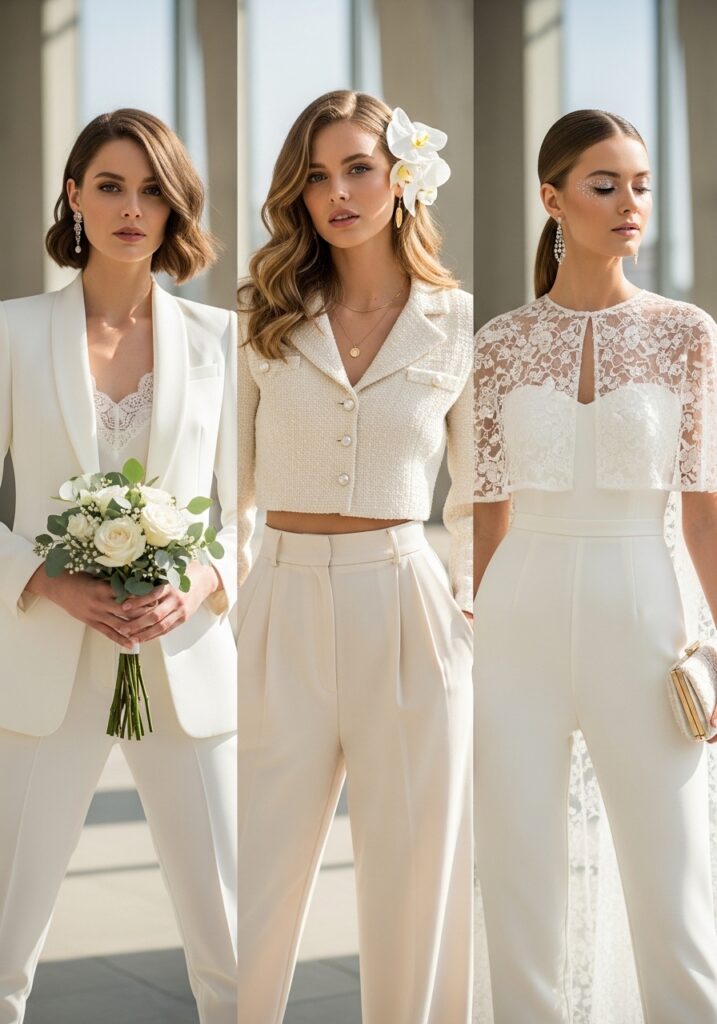
An overskirt buys two silhouettes from one purchase. The ceremony gets volume; the reception gets a fitted dress underneath. The mechanism matters more than the fabric: hook-and-bar closures hold better than ties, and a waistband hidden beneath a belt removes at speed.
Brides should practise the removal before the day. Doing it once in a fitting room, unassisted, reveals whether it needs a second pair of hands. Discovering that mid-reception is the version nobody wants.
5. Sheer Lace Illusion Dresses
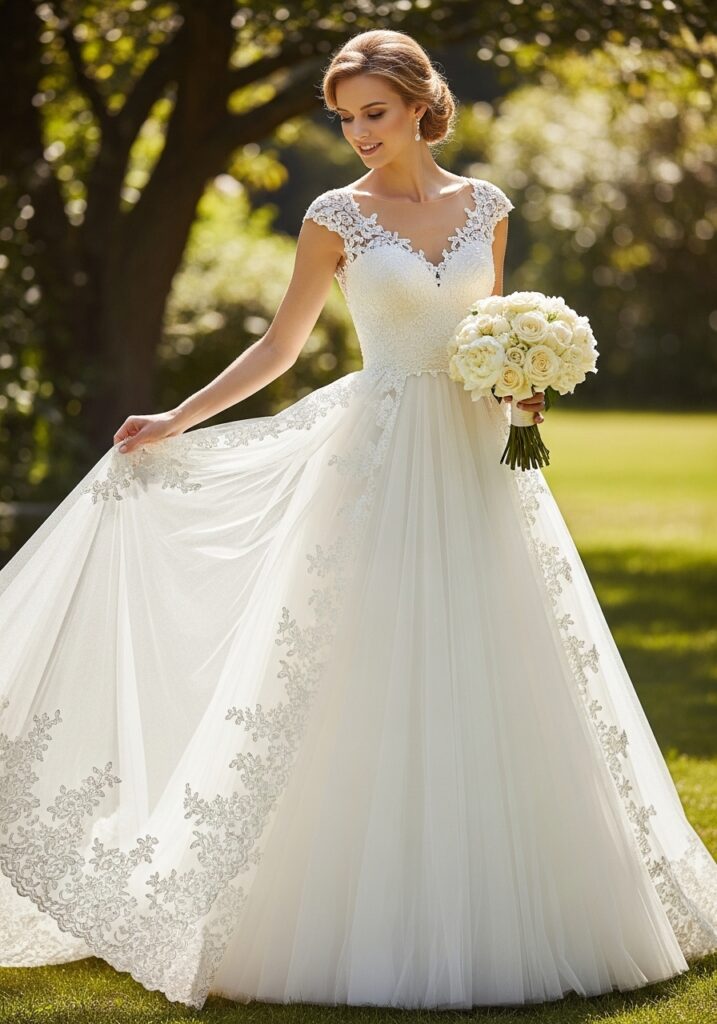
Illusion panels use fine tulle in a shade matched to the wearer’s skin, and the match is what decides whether the effect works. A tulle that reads slightly too pink or too grey turns invisible lace into a visible patch. Reputable designers offer several tulle tones for this reason.
The lace itself sits on top. Chantilly stays light and delicate; guipure carries weight and structure. Neither is better, but they suit very different necklines.
6. High-Slit Bridal Dresses
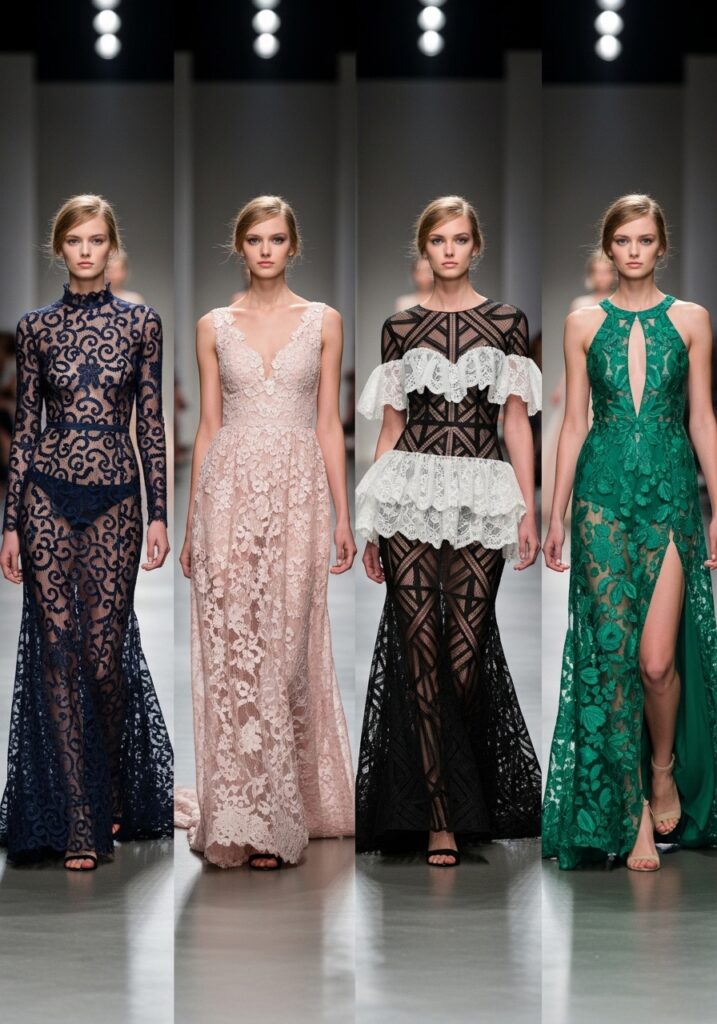
Slit height is a walking decision, not a styling one. A slit that opens above mid-thigh requires constant management while moving, and constant management shows in candid photographs. Most brides settle a few inches lower than the sample after walking in it.
The slit also puts shoes on display for the first time all day, which shifts them from an afterthought to a real part of the budget.
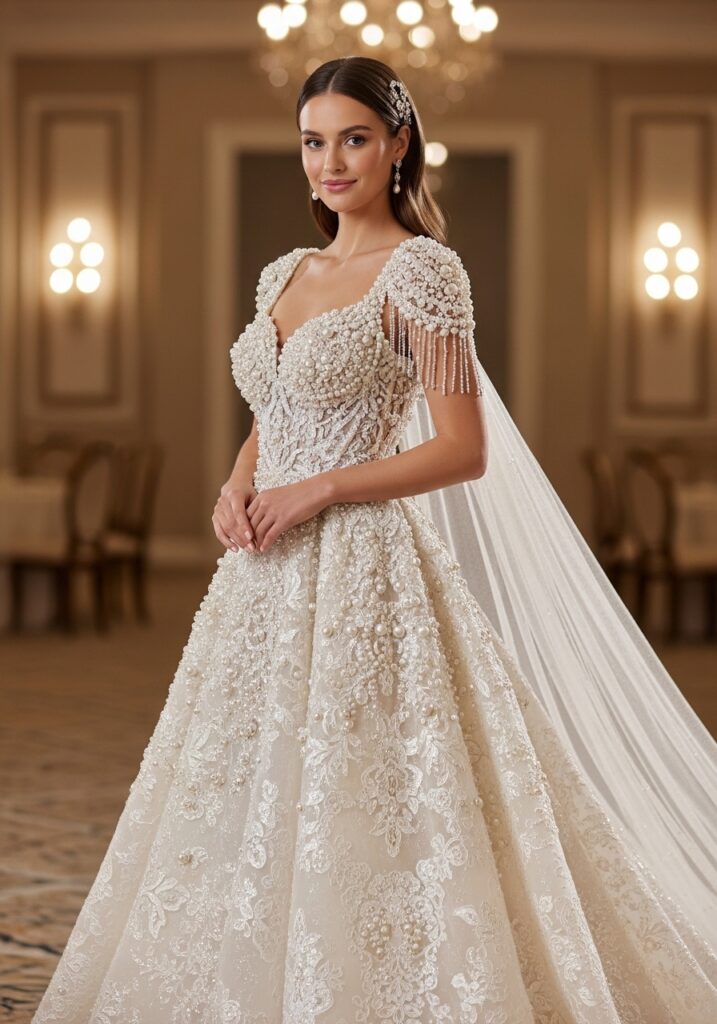
7. Pearl Embellished Bridal Dresses
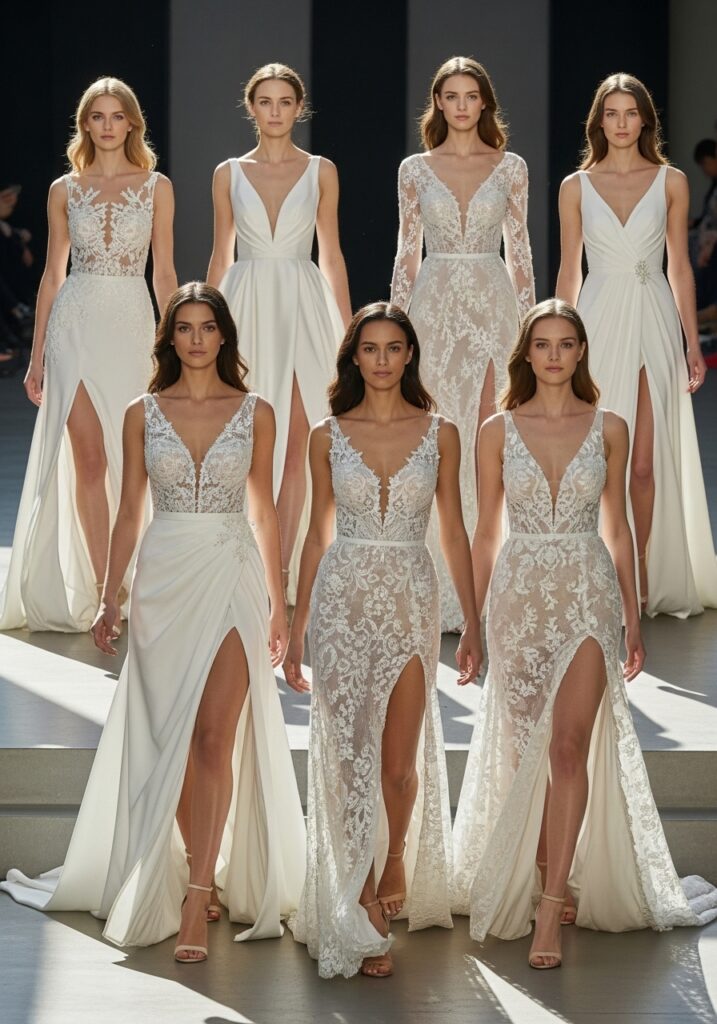
Pearl work runs from a light scatter across a bodice to dense clusters along a sleeve, and the difference lands on the invoice. Hand-placed pearls are billed by labour hours, so a heavily worked gown carries a long production window as well as a high price.
Weight is the second consideration. A pearl-covered bodice adds real mass at the shoulders, which pulls on straps over several hours. Trying a heavily embellished sample and standing in it for a full ten minutes reveals more than a thirty-second look in the mirror.
Cathedral ceremonies and coastal weddings both carry the finish well, since pearl reads softly under any light rather than flashing like crystal.
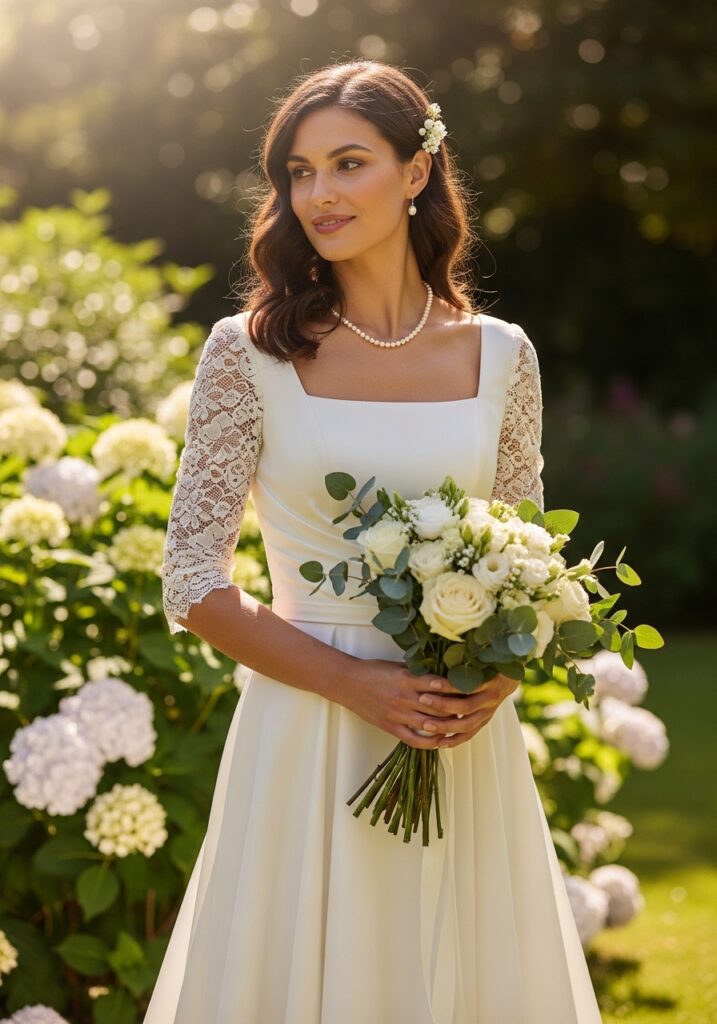
8. Square Neckline Wedding Dresses
The square neck frames the collarbone with a straight horizontal line, and that line is unforgiving of a poor fit. Gaping at the top edge is the most common alteration issue, usually fixed by taking in the side seams above the bust rather than adjusting the neckline itself.
It pairs cleanly with both ballgown skirts and slim sheaths. Necklaces compete with it, so most brides skip them and let earrings carry the jewellery.
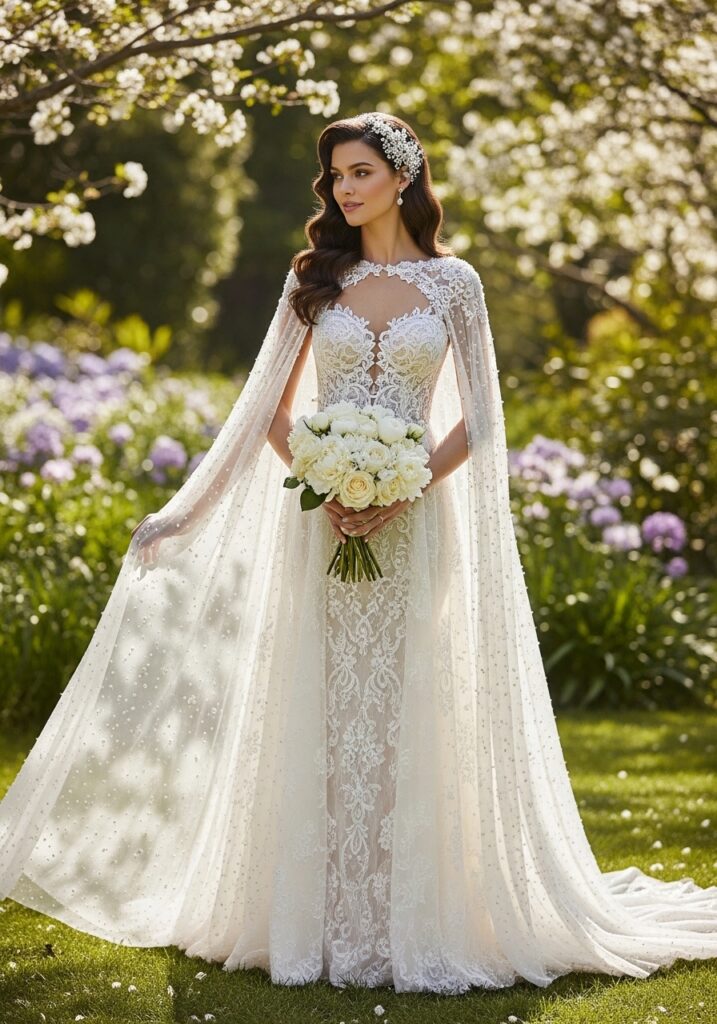
9. Bridal Dresses with Capes
Capes have taken over territory that veils held for a century. They photograph well from behind, add coverage for religious ceremonies, and detach for the reception without disturbing the gown underneath.
Wind is the variable nobody plans for. A floor-length sheer cape behaves unpredictably outdoors, and a coastal or clifftop ceremony can turn it into a sail. Shoulder-attached versions hold steadier than neck-tied ones.
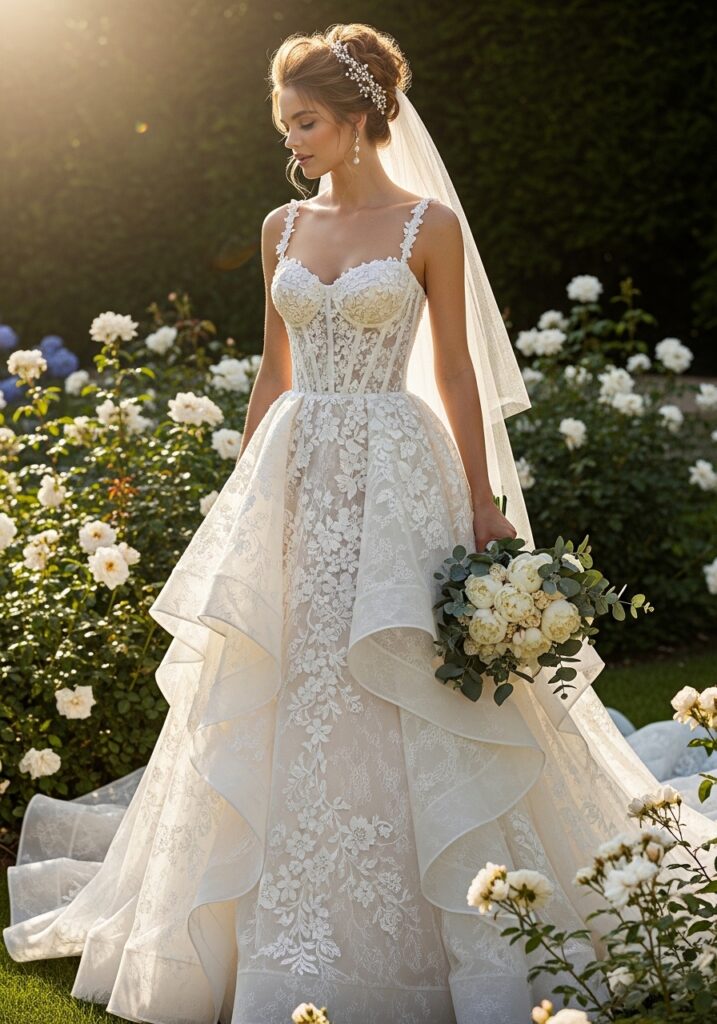
10. Corset Bodice Bridal Gowns
A corset bodice creates its shape through internal boning, and the fitting process differs from any other gown. Sizing follows the ribcage rather than the waist. A corset laced too tightly restricts breathing enough to matter across a long ceremony, and it shows in the face before it shows in the silhouette.
Exposed boning has become a design feature rather than a construction detail. Hidden support gives a cleaner, more traditional line.
Lace-up backs also solve a practical problem: they accommodate weight change between the first fitting and the wedding, which a zip cannot.
11. Basque Waist Wedding Dresses
The basque waist drops the bodice into a V below the natural waistline, lengthening the torso visually. It flatters most proportions, though it needs precise placement — a point that sits even slightly too low reads awkward rather than elegant.
Designers are cutting it in satin, lace, and silk, and pairing it with both full skirts and fitted shapes. Alterations to the waist point are difficult once the gown is constructed, so this is a detail worth getting right at the ordering stage rather than the fitting stage.
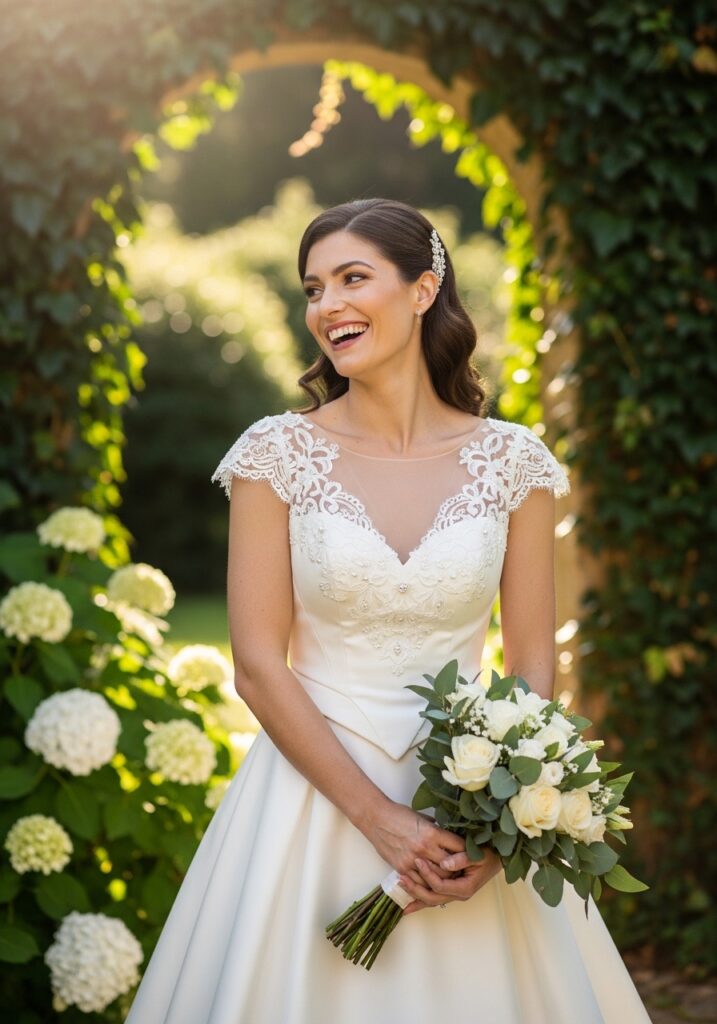
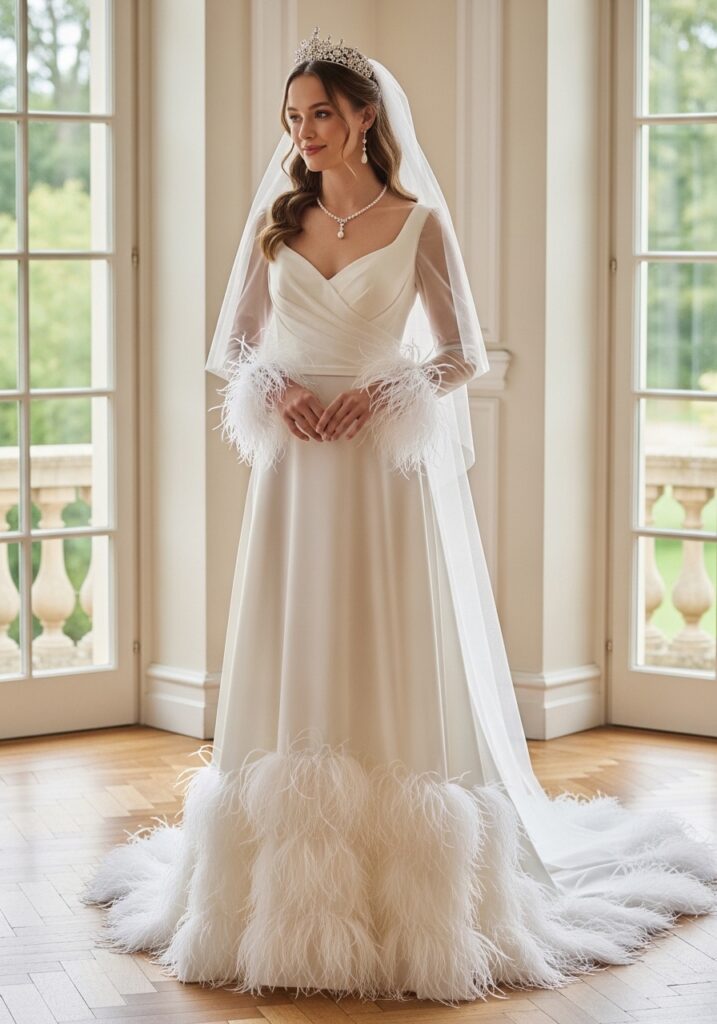
12. Feather Trim Bridal Gowns
Feathers shed. Every feather-trimmed gown loses some across an evening, and ostrich sheds more than marabou. Venues with dark carpet make this obvious; most brides decide they do not care once the movement in photographs comes back.
The trim works best at a hem or cuff, where it catches motion. Across a full bodice it adds bulk without much payoff. Many designers pair it with plain satin precisely to keep the balance.
Evening receptions suit it better than daylight ceremonies, since feathers read as festive rather than formal.
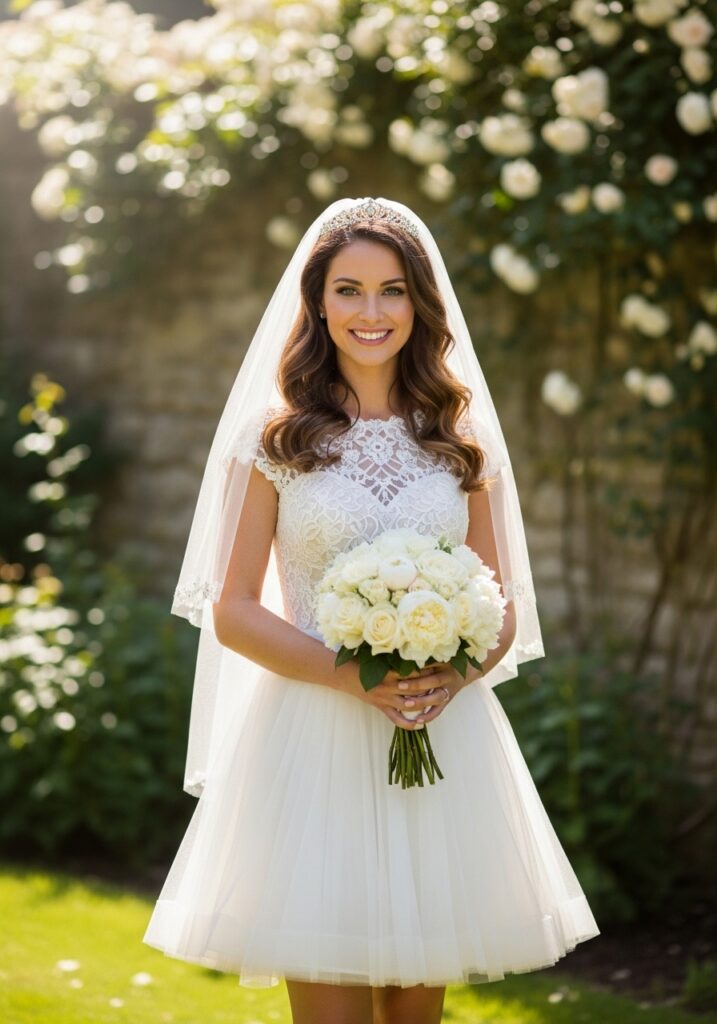
13. Short Bridal Dresses
Short gowns cost less to alter and far less to store afterwards. Hemming a mini or tea-length dress is a straightforward job, where hemming a full-length gown with a train can run into serious labour.
City weddings, register offices, and second looks all suit the length. Lace and structured satin keep it formal; jersey pulls it toward casual quickly. Brides planning a reception outfit change often pair a short dress with the ideas in this guide to modern bridal reception outfits, which covers the second-look decision in far more depth.
14. Colored Wedding Gowns
Blush, champagne, lavender, and pale blue have moved from novelty to mainstream. This is less a break from tradition than a return to it. The V&A notes that the white wedding dress only became the norm after Queen Victoria’s 1840 marriage, and that her choice was driven partly by a desire to support Britain’s struggling handmade lace industry, for which white showed the work best.
Practically, colour changes what surrounds it. Bouquet, bridesmaids, and venue flowers all have to agree with the gown rather than default to white. Fabric swatches sent to the florist solve this early.
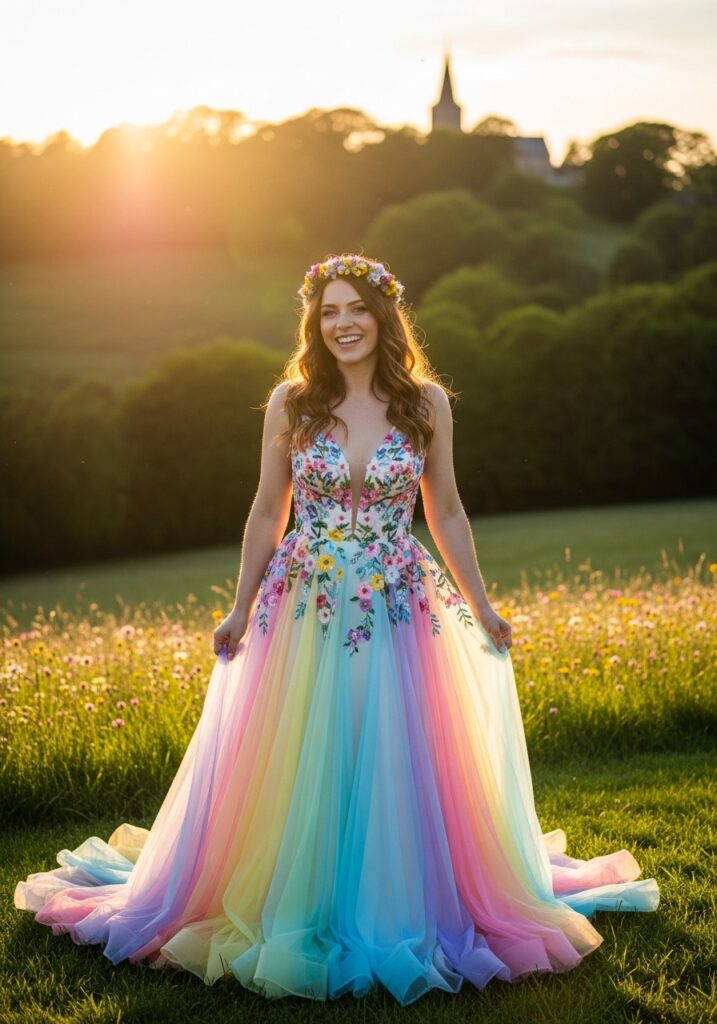
15. Floral Embroidered Bridal Dresses
Embroidery on tulle keeps a gown light while adding pattern, which is why it dominates spring and outdoor weddings. Machine embroidery covers ground quickly and repeats; hand embroidery varies across the gown and costs several times more.
Threadwork also snags. Anyone wearing a ring with prongs, or handling a heavily beaded bouquet wrap, should expect to catch it at least once.
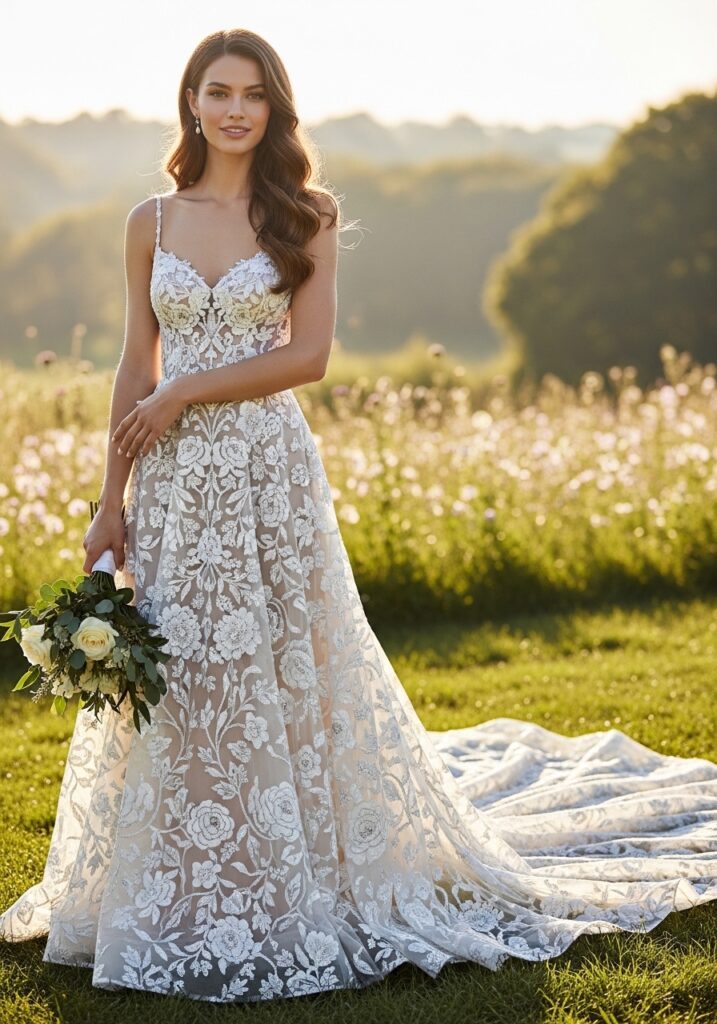
16. Convertible Bridal Dresses
Convertible designs remove sleeves, overskirts, or trains to produce a second look from one gown. The economics are good: one purchase, one set of alterations, two silhouettes.
The failure point is always the join. Poorly engineered attachment leaves a visible seam or a bulky ridge when the piece comes off. Examining the gown in its stripped-back state, not just its full state, is the test that matters — a convertible dress has to look finished both ways.
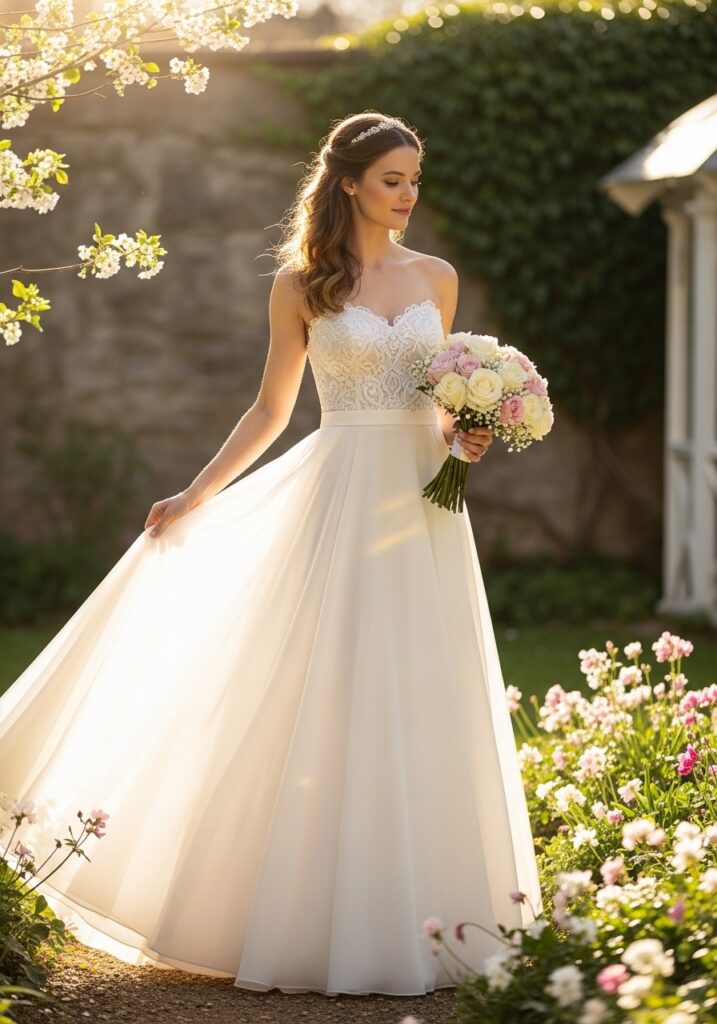
17. Bridal Jumpsuits
The jumpsuit has moved from alternative to established, and it fits an elopement or a city ceremony as naturally as any gown. Torso length decides the fit entirely. Off-the-rack jumpsuits are cut for an average rise, and anyone above or below that will need the crotch seam adjusted — an alteration many tailors quietly dislike.
The other consideration is the bathroom, which sounds trivial and is not across a twelve-hour day. Styles with a back zip or a dropped waist make this manageable. This round-up of bridal jumpsuit ideas covers the silhouettes in detail.
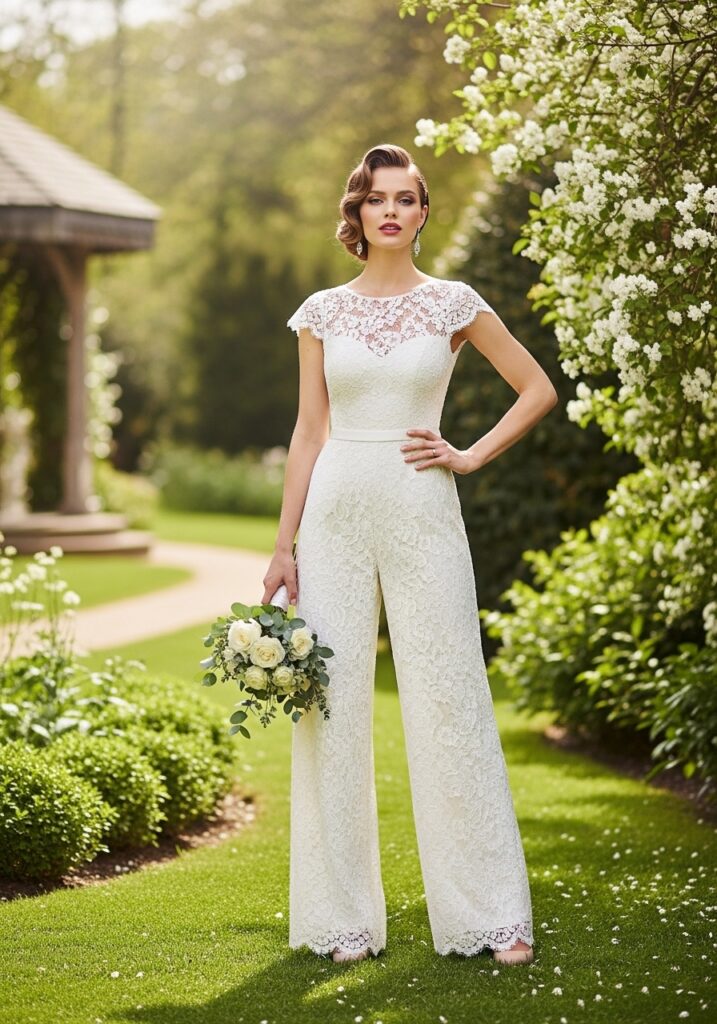
18. Vintage Inspired Bridal Gowns
Vintage-inspired means newly made in an older shape, and that distinction matters. Genuine vintage gowns carry fragile seams, obsolete sizing, and fabric that may not survive alteration. A reproduction offers the 1920s drop waist or the 1950s tea length without the risk.
Victorian high necks, Edwardian lace, and 1930s bias cuts are all in current production. Each demands different underpinnings, and a bias-cut gown in particular will show any seam beneath it.
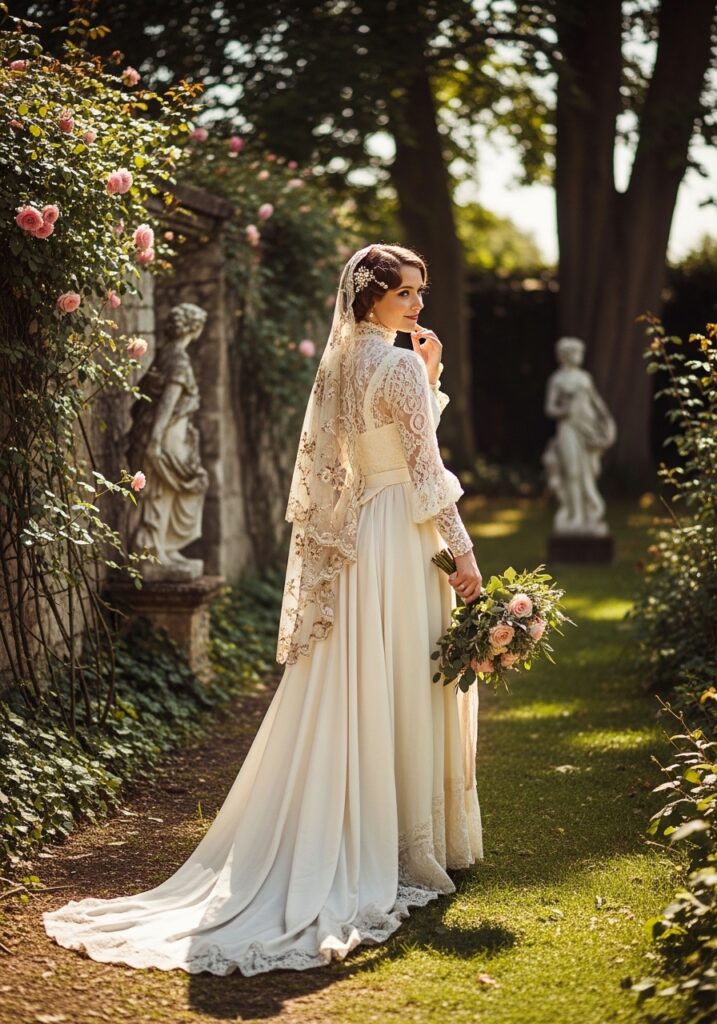
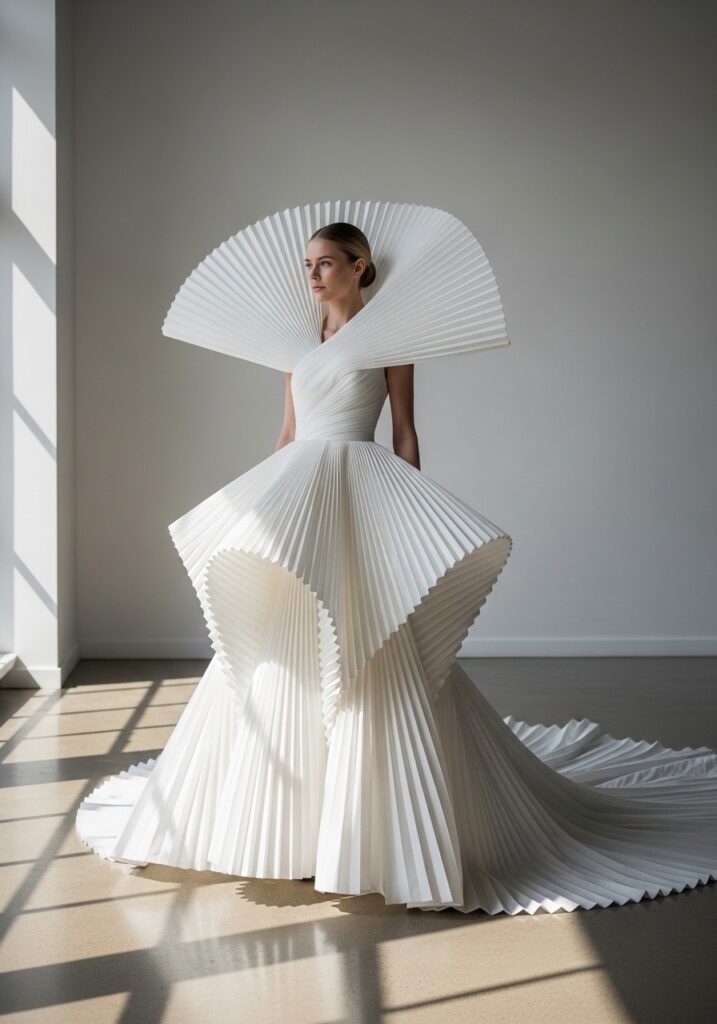
19. Sculptural Bridal Dresses
Sculptural gowns make their impact through structure rather than decoration. Mikado and heavy satin hold the folds and angles that define the look, because lighter fabrics simply collapse.
These shapes are the least forgiving on this list. Structure holds exactly one silhouette, so weight change between fitting and wedding causes real problems. Final fittings should sit close to the date, ideally within two weeks.
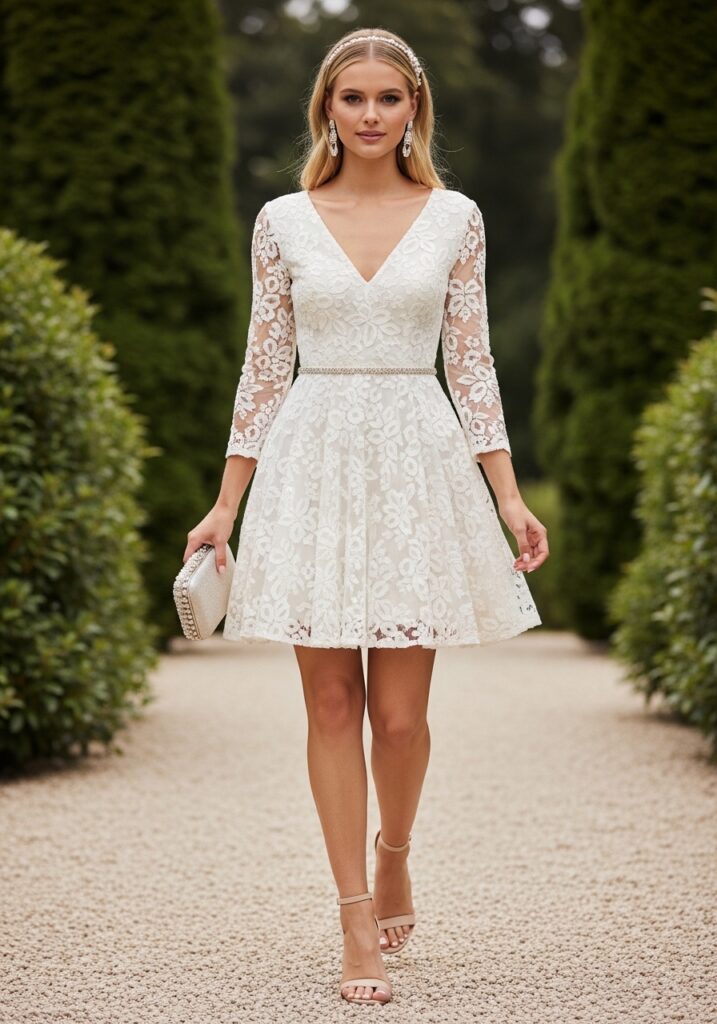
20. Bridal Mini Dresses for Reception
A reception mini exists to be danced in, which sets the brief. Sequins, feathers, and metallics all work because the dress no longer has to carry the formality of a ceremony.
Sequinned versions have one quirk worth knowing: sequins scratch. A heavily sequinned mini will catch on tights and on other guests’ clothing across a night of close dancing. A lining that extends slightly past the hem reduces it.
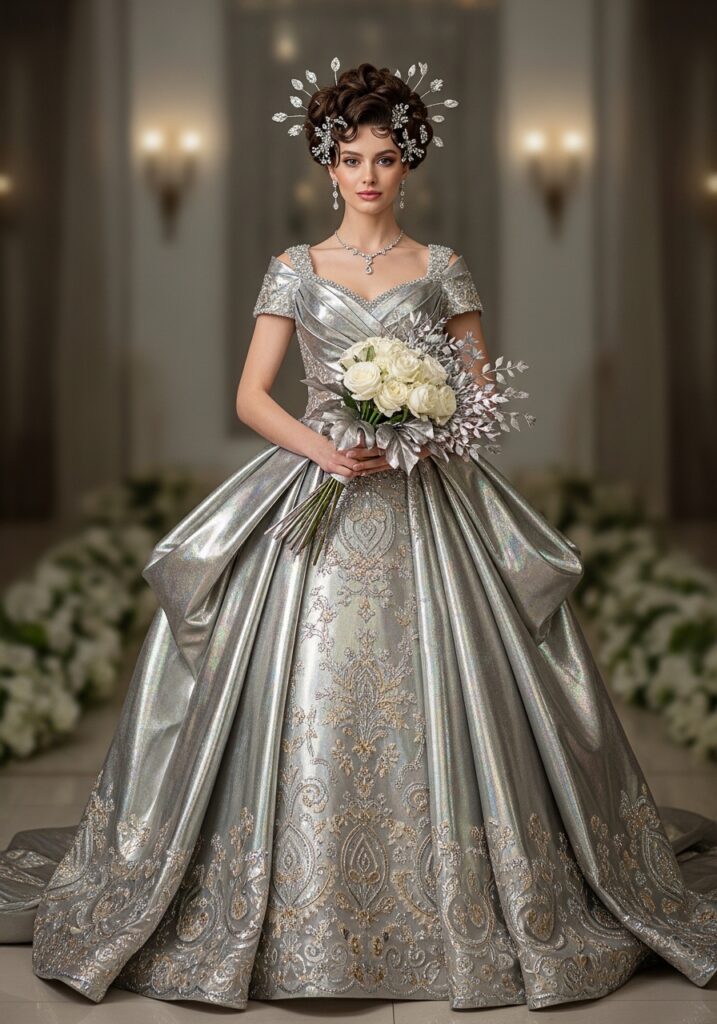
21. Metallic Bridal Fabrics
Silver, champagne, and gold gowns behave differently under different light sources, and that is the whole risk. Metallic fabric that glows under warm reception lighting can look brassy in flat daylight, or the reverse.
Testing a swatch under the actual venue lighting removes the guesswork. Failing that, photographing it under both daylight and artificial light gives a reasonable preview. Evening ceremonies flatter the finish most.
22. Romantic Tulle Bridal Gowns
Volume in a tulle skirt comes from layer count, not from fabric weight. Silk tulle costs considerably more than nylon and hangs softer, with less of the scratchy quality that makes cheaper tulle uncomfortable against the leg.
Practical planning matters here more than most. A wide tulle skirt has to fit through a car door and into a bathroom stall. Brides should test both before the day, since neither problem has a solution on the morning itself.
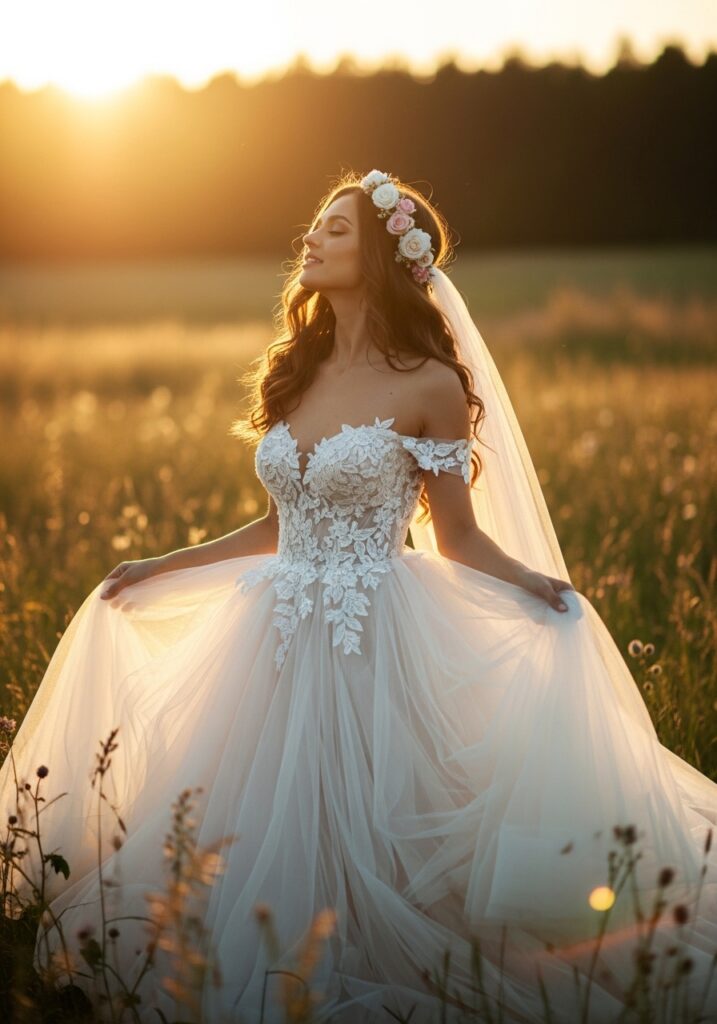
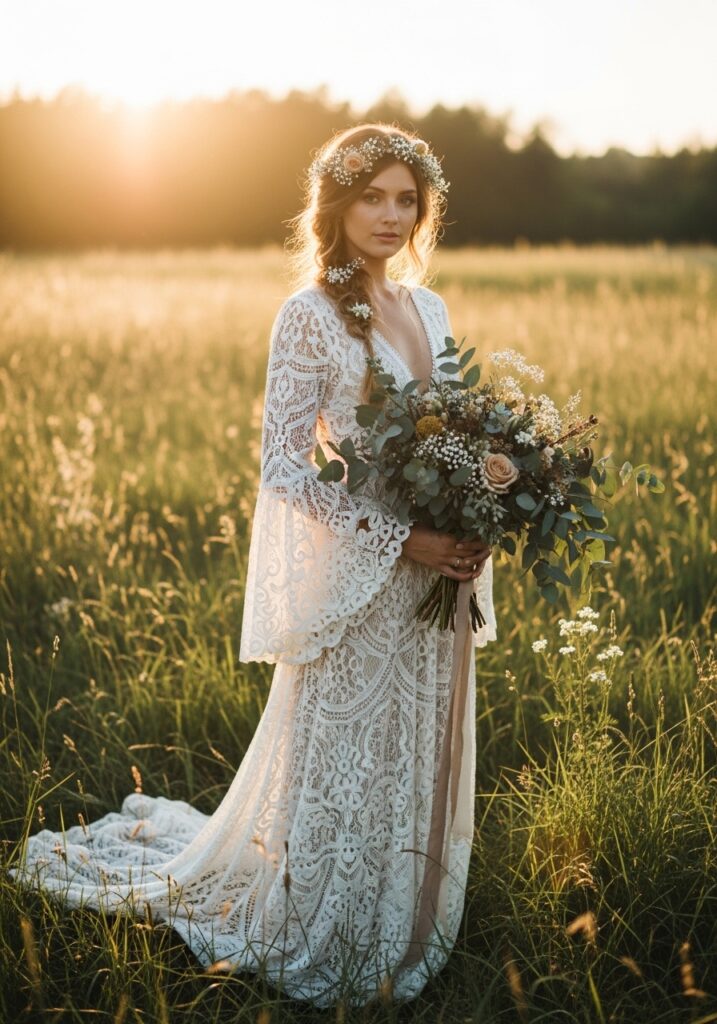
23. Boho Lace Bridal Outfits
Boho lace suits beach and woodland ceremonies because it moves and breathes. Cotton-based lace and crochet handle heat far better than synthetic alternatives, which trap it.
Sand and hems are the recurring problem outdoors. A slightly shorter hem, or a gown with a bustle point, keeps the fabric clear of the ground. Bell sleeves catch on everything at a rustic venue, which is a fair trade for most brides who choose the look.
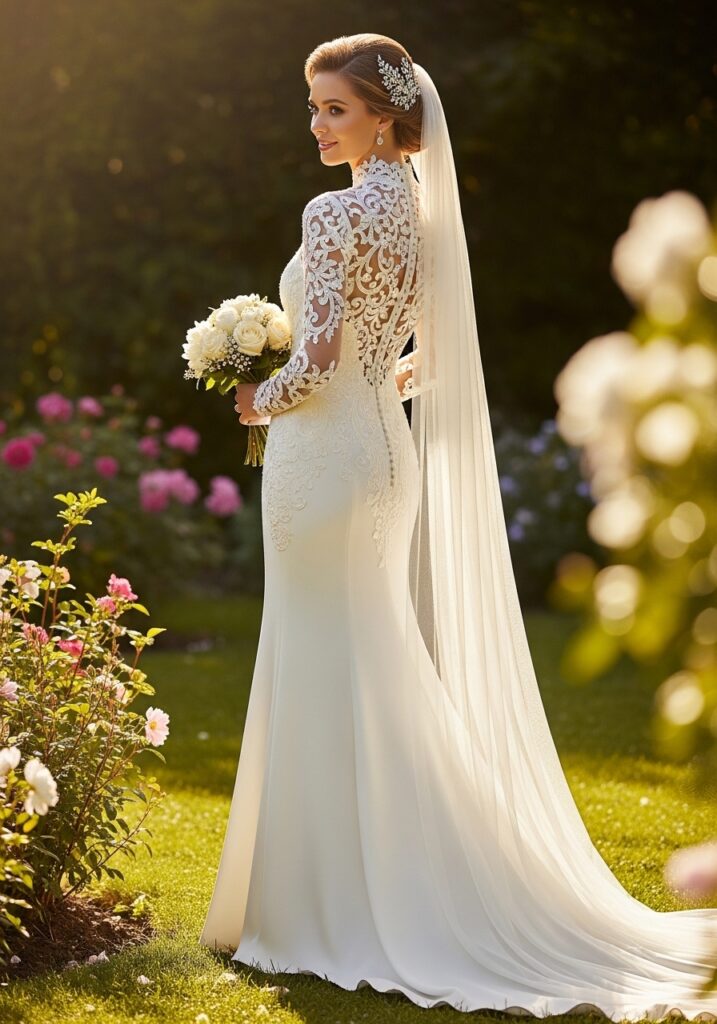
24. High Neck Bridal Dresses
A high neckline covers the chest and shoulders, which makes it a practical choice for religious ceremonies with dress requirements. It also frames the face closely, so hair worn up rather than down usually balances it better.
Heat is the trade-off. A lace or illusion high neck traps warmth around the throat, and a summer ceremony makes that immediately apparent. Many designers pair the neckline with an open back for exactly this reason.
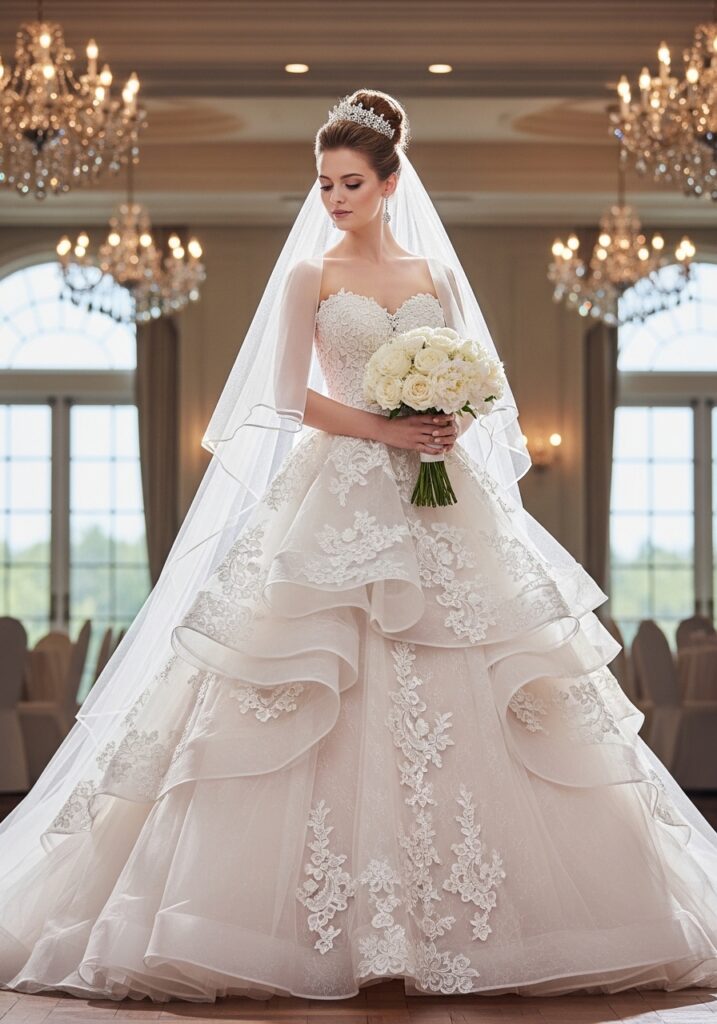
25. Layered Skirt Wedding Dresses
Tiered organza, chiffon, and tulle build volume that moves independently with each step. The effect depends on the tiers being cut on the correct grain; a badly cut layer hangs limp and drags the ones below it.
Weight accumulates faster than expected. Six or eight layers carry real mass at the waist across a full day, and a supportive waistband stops it pulling downward by the evening.
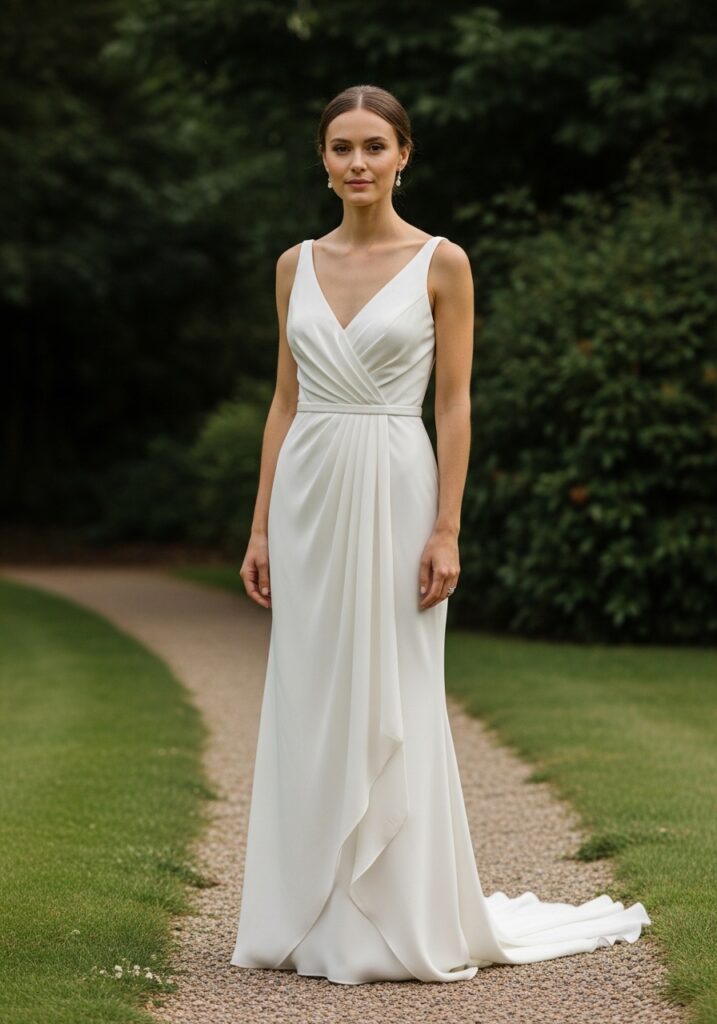
26. Draped Silk Wedding Dresses
Silk drapes better than any synthetic imitation, and it also wrinkles faster and marks more easily. Water spots on silk are permanent without professional cleaning, which makes an outdoor ceremony in uncertain weather a genuine consideration.
Cowl necklines, wrapped waists, and Grecian skirts all rely on that fluid fall. Steaming, never ironing, is the rule for the morning of the wedding.
Minimalist brides gravitate to this for good reason: the fabric supplies the interest, so nothing else has to.
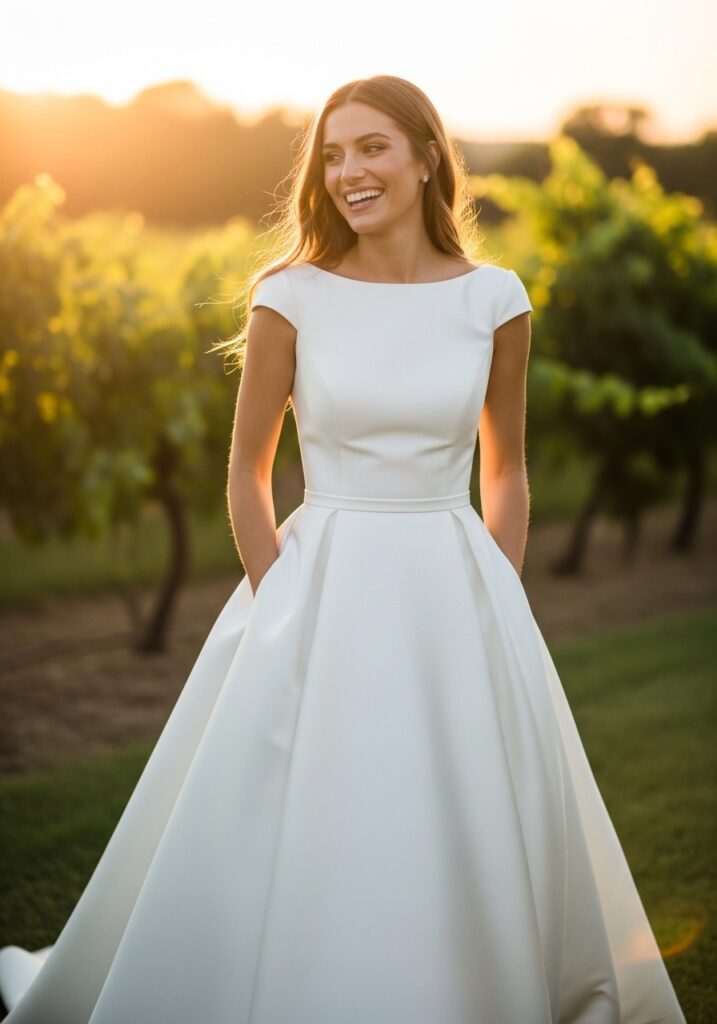
27. Wedding Dresses with Pockets
Pockets have gone from novelty to a genuine selling point. They hold a lipstick, a tissue, and a folded set of vows without a bag, which removes one thing from a bridesmaid’s hands.
Overfilling ruins the line of the skirt, so the capacity is smaller in practice than it looks. A skilled seamstress can also add side-seam pockets to an A-line or ballgown that lacks them, usually for a modest fee.
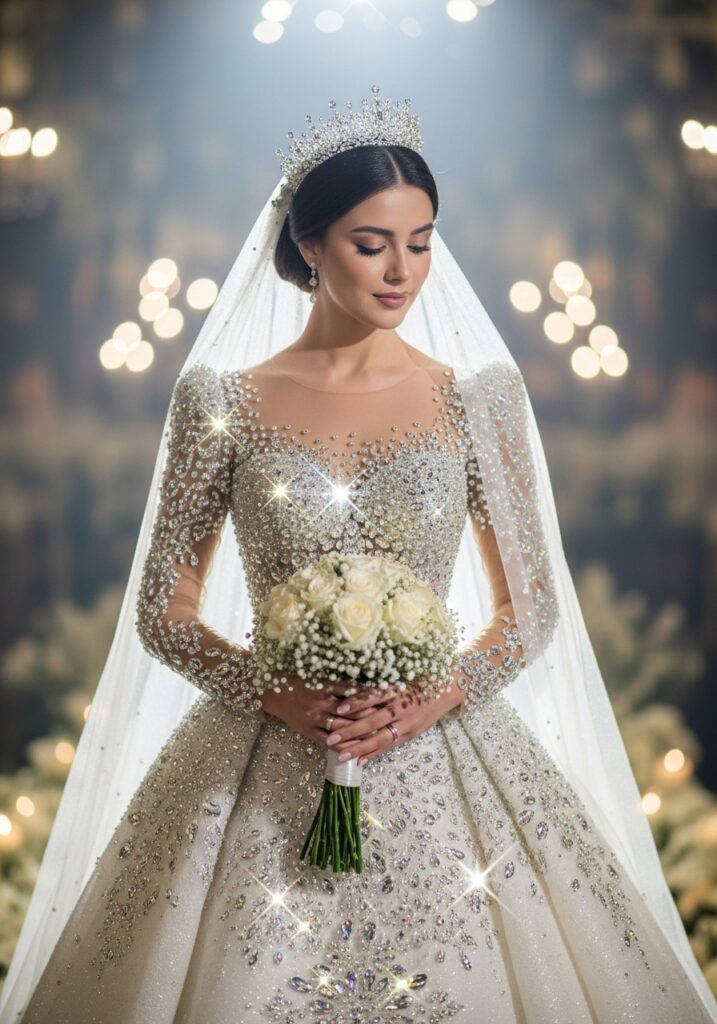
28. Crystal Embellished Bridal Gowns
Crystals throw light harder than pearls or sequins, which makes them the natural choice for evening and candlelit receptions. Under a photographer’s flash they can also blow out, producing bright white spots where detail should be.
Mentioning a heavily crystalled gown to the photographer in advance is worth doing, since it changes how they light the formal shots.
Weight applies here as it does with pearls. Hand-placed crystal work extends the production timeline considerably, and rush orders on this level of embellishment are rarely possible.
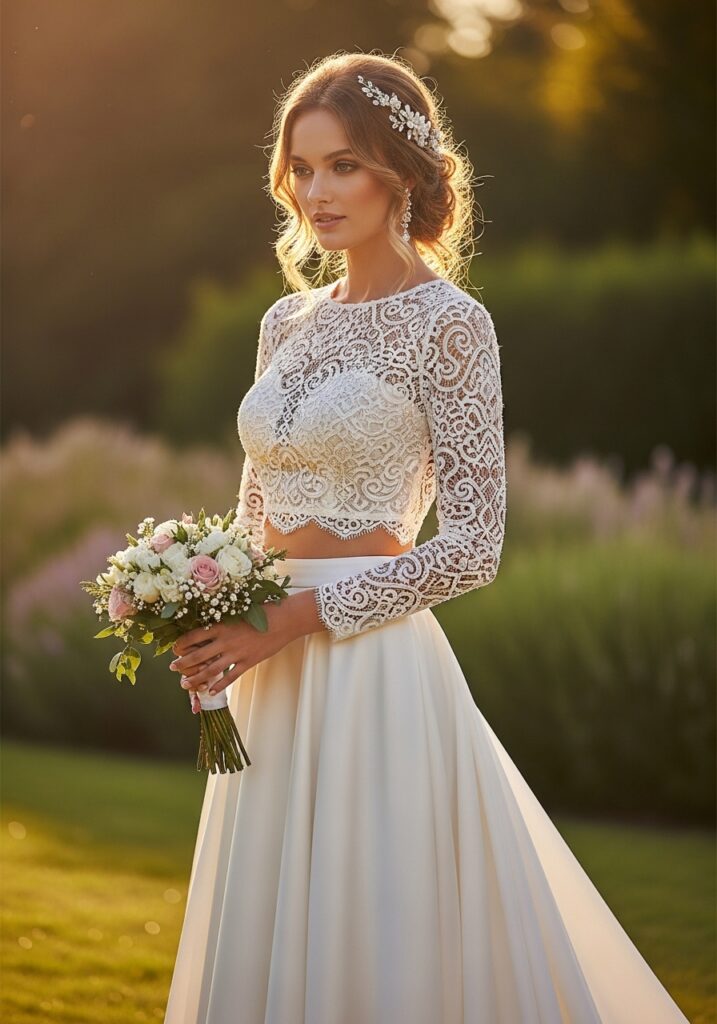
29. Bridal Two-Piece Outfits
Separates solve a fit problem that gowns cannot. Anyone who sizes differently on top and bottom gets a correct fit on both halves without extensive alteration, which is the practical argument behind the trend.
They also allow mixing: a lace bodice with a tulle skirt, or a minimalist top with a structured one. The join between the two pieces needs attention, since a gap at the waist appears when the arms lift. A high-waisted skirt with a slightly overlapping top prevents it.
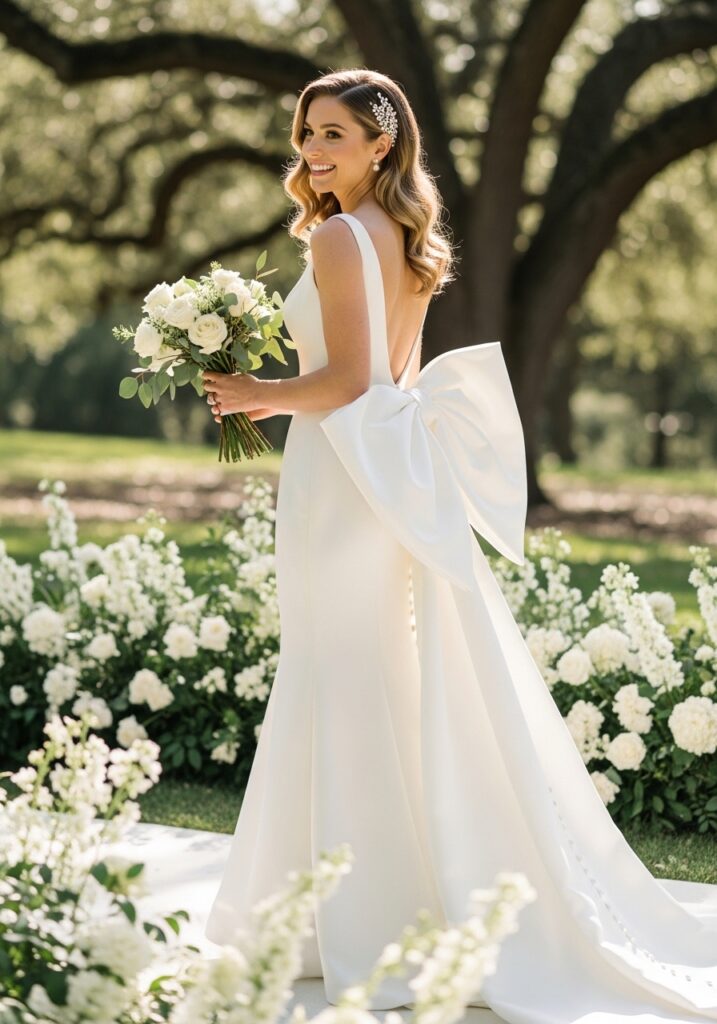
30. Statement Bow Wedding Dresses
Bows have moved from a trim detail to the main event, appearing oversized at the back, the waist, or one shoulder. A large back bow reads brilliantly walking down the aisle and awkwardly while seated at dinner.
Detachable versions handle both. Structured taffeta or mikado holds a bow shape through an evening, where soft satin flattens within hours. Anyone drawn to the look should ask what sits inside the bow, since most large ones are built over an internal support.
Conclusion
Choosing a bridal outfit is one of the more enjoyable parts of wedding planning, and one of the earliest deadlines. The modern bridal outfit trends of 2026 give brides more room than any previous generation, and that range comes with a scheduling reality attached. Custom and heavily embellished gowns typically need six to nine months from order to final fitting. Off-the-rack pieces, suits, and separates compress to weeks.
Whether the choice lands on a minimalist satin gown, a lace dress, a tailored bridal suit, or a crystal-embellished ballgown, three questions narrow the field fast. Does it suit the venue and the season? Does it allow movement across a full day? And does it arrive with enough margin for alterations? These 30 bridal fashion trends for 2026 reward a bride who answers those early, because the best outfit is the one that fits properly, arrives on time, and survives the last dance.

[…] self on the coldest day of the year. Brides exploring broader inspiration can also browse these bridal outfit trends for additional seasonal […]