
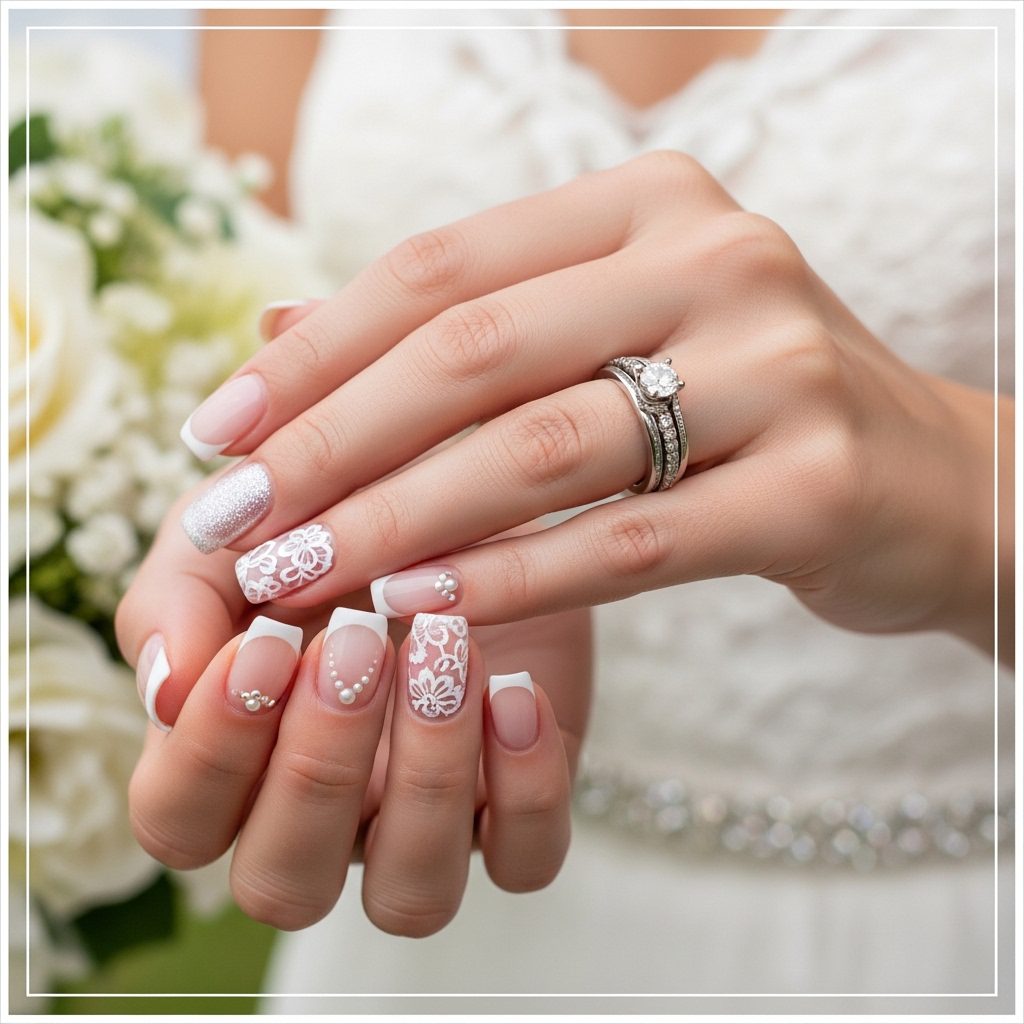
Wedding photographs return to the hands far more often than most people expect. The ring exchange, the bouquet, the cake, the signing of the register — each one puts a manicure in frame at close range. That makes the wedding nail design a working part of the bridal look rather than an afterthought. Well-chosen bridal nails sit comfortably with the gown, agree with the jewellery, and survive from the ceremony through the last dance. This guide sets out 30 wedding nail ideas alongside the practical detail that rarely appears on a salon menu: how each finish wears, what it costs in appointment time, and how far ahead to book it. The designs run from classic French tips and milky nudes to chrome, foil, and full crystal work, covering minimalist, glamorous, vintage, and modern weddings alike.
1. Classic French Bridal Nails
The French manicure has outlasted every trend cycle since the 1970s, which explains its permanent place on bridal menus. A pale pink or nude base carries a crisp white band along the free edge. The width of that band sets the entire mood: a slim line reads modern, a thicker one reads traditional. Technicians call the curve where the two colours meet the smile line, and an uneven one is the most common flaw in the whole design. Checking it in daylight before leaving the salon takes ten seconds and saves a great deal.
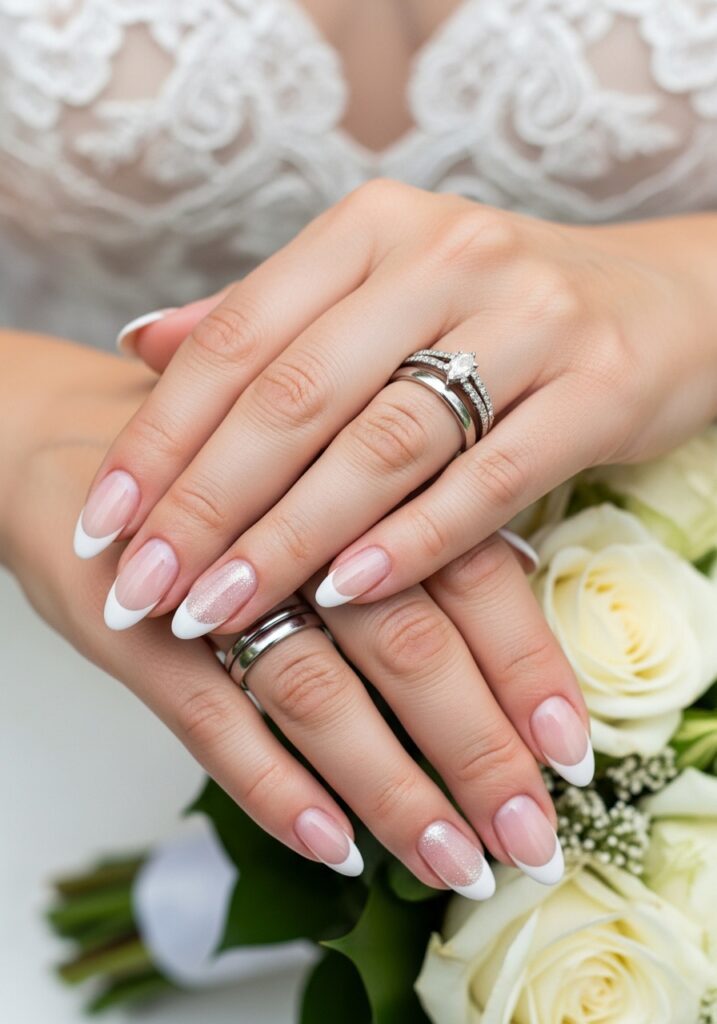
2. Nude Glossy Bridal Nails
Nude polish depends on matching the undertone rather than the shade name. Beige suits warm skin, soft blush suits cool skin, and peach sits between the two. The high-shine top coat does most of the work here, since the colour itself contributes almost nothing on its own. Two thin coats beat one thick coat every time. A thick coat pools at the cuticle and stays soft for days, which is exactly how a dent appears the night before a wedding.
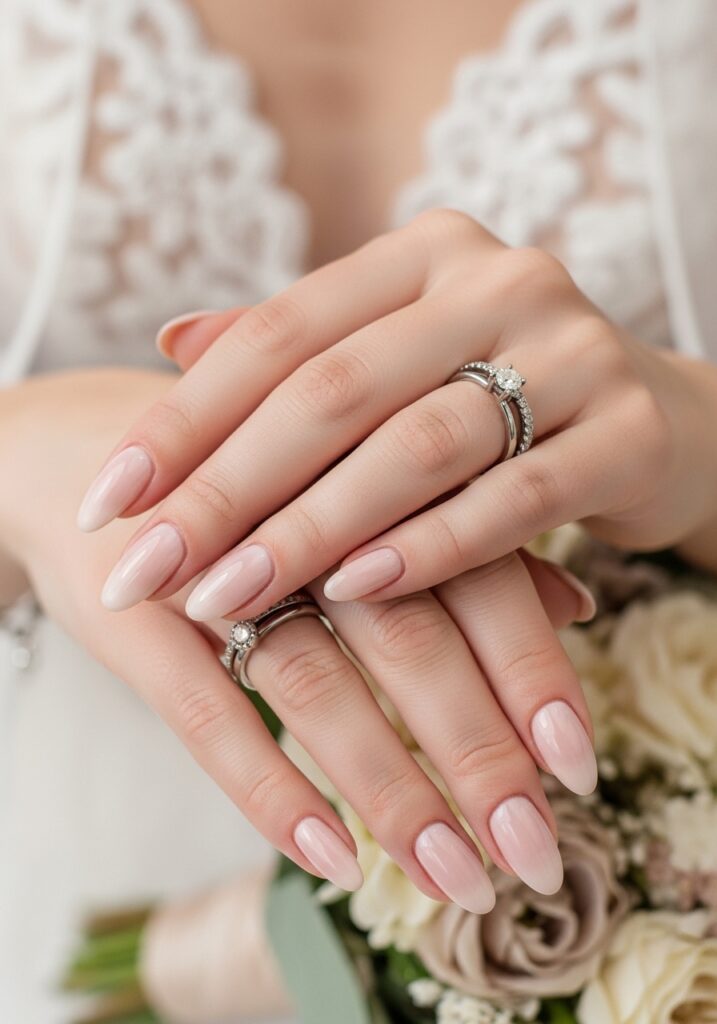
3. Soft Pink Romantic Nails
Pastel pink asks less of a bride than anything else on this list. It disguises small chips, grows out without an obvious line, and needs no touch-up between ceremony and reception. Brides leaving for a honeymoon the next morning often pick it for that reason alone. A shimmer top coat warms it up for evening light, though it does slow down removal later.
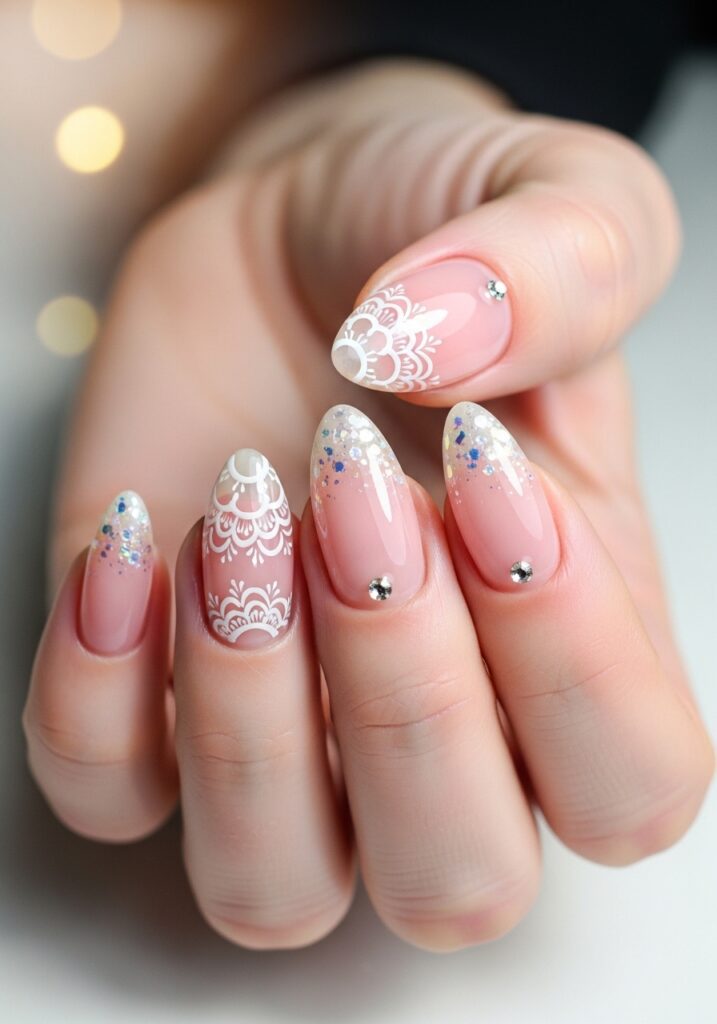
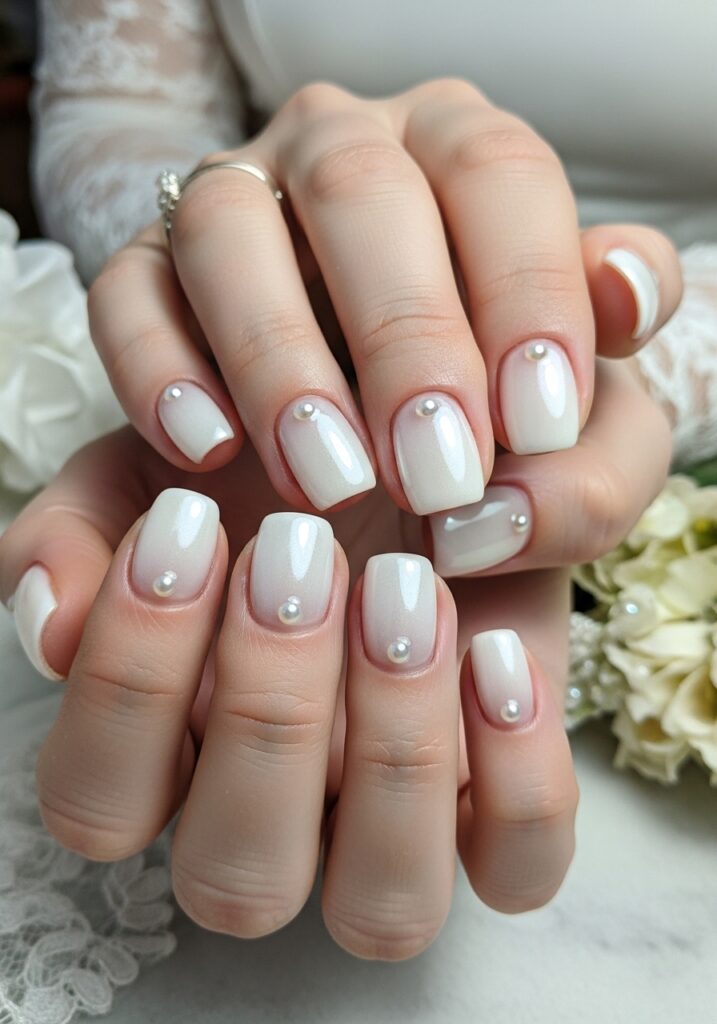
4. Pearl Accent Bridal Nails
Flat-back pearls sit on top of the nail, which means they catch on fabric. Brides in beaded or lace gowns should limit them to one or two nails and place them near the cuticle rather than the tip. Half-pearls hold better than full spheres. Sealing a gel top coat around each edge prevents the usual failure, which is a pearl lifting somewhere between the speeches and the dancing.
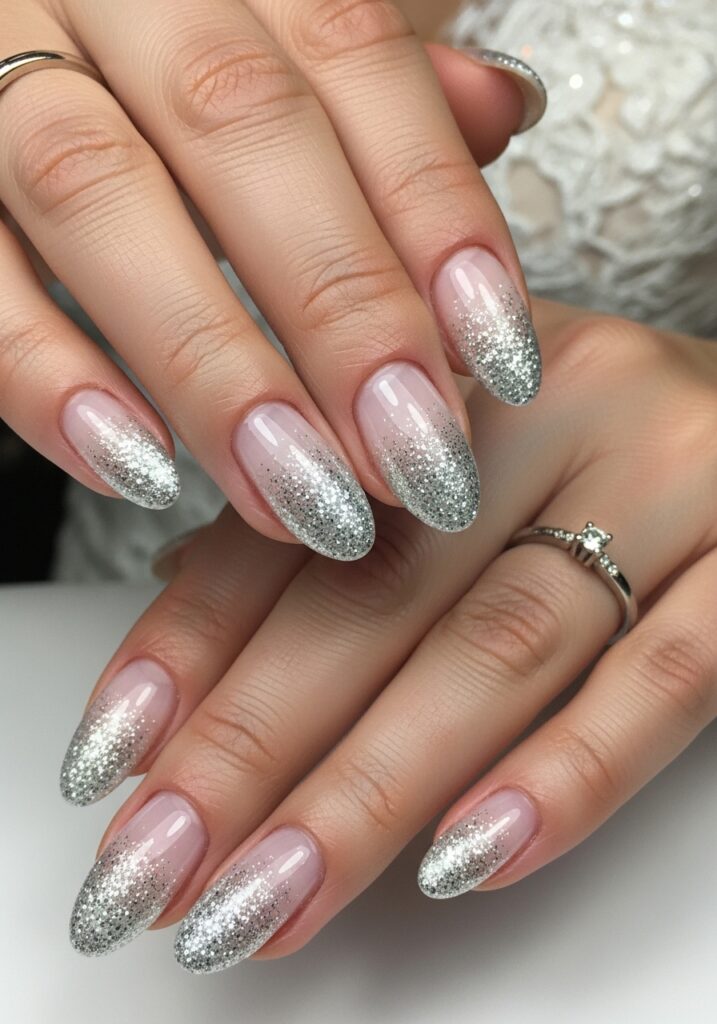
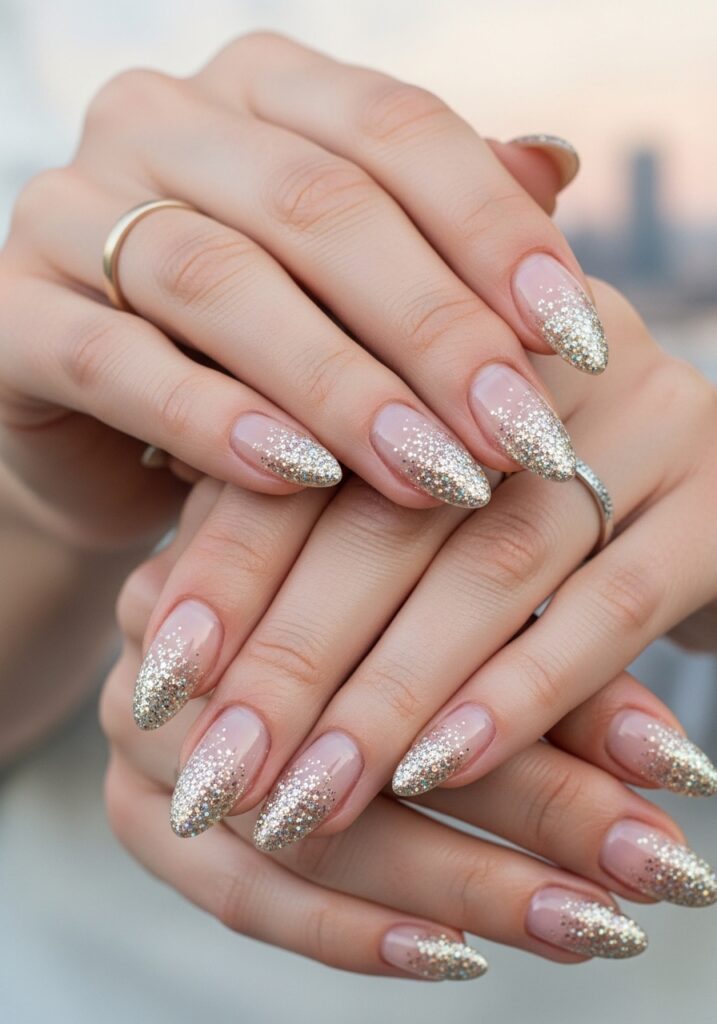
5. Glitter Ombre Wedding Nails
A glitter gradient starts sheer at the cuticle and builds density toward the tip, usually across three light passes with a sponge. The build matters more than the glitter. A rushed application leaves a hard edge instead of a fade, and no top coat hides that. Silver reads cool under daylight while champagne reads warmer under candlelight, so evening receptions tend to favour the second.
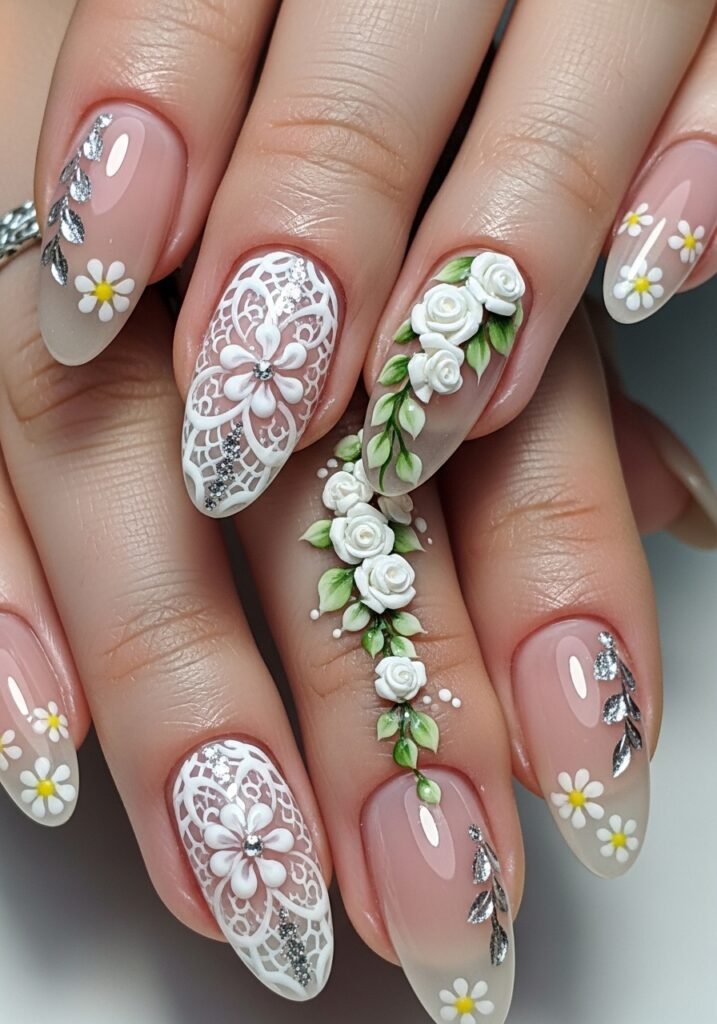
6. Floral Bridal Nail Art
Hand-painted florals need a long appointment slot, not a quick pre-wedding booking. Decals cost less and go on faster, though the pattern repeats across fingers unless the technician varies the placement deliberately. Garden ceremonies and spring weddings carry the design well. Booking two or three days before the wedding leaves a margin to correct anything that goes wrong without a panic.
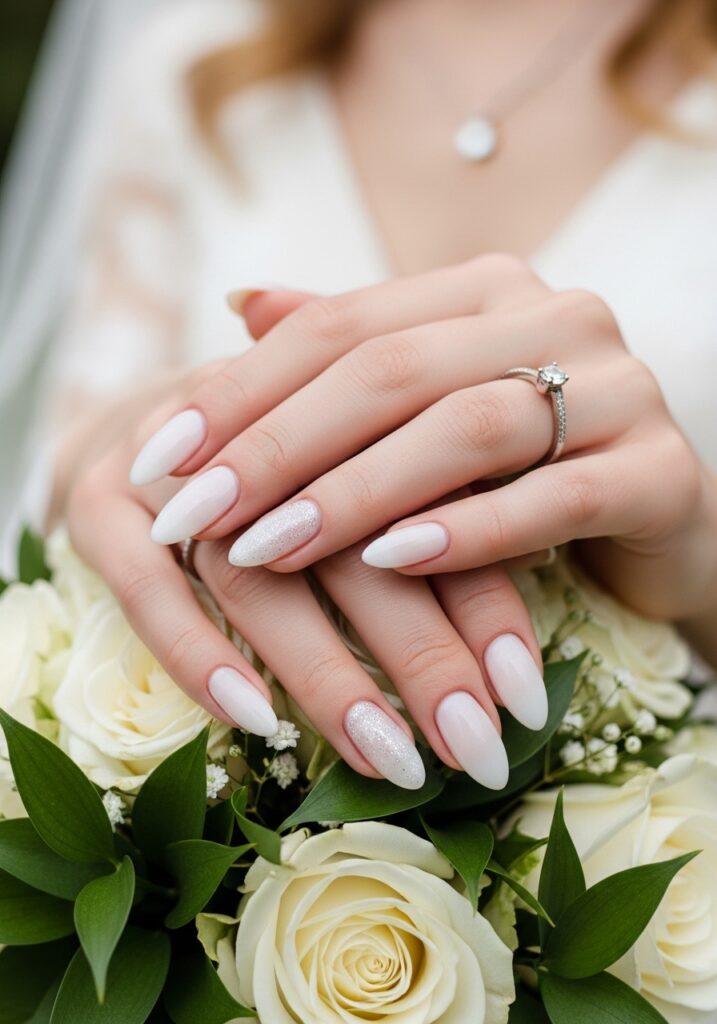
7. Milky White Bridal Nails
Milky white is translucent rather than opaque, and that is the whole point of it. The colour builds across two or three sheer coats until the nail looks lit from beneath instead of painted over. Short nails suit it particularly well. One warning: milky formulas magnify every ridge in the nail plate, so a smoothing base coat stops being optional.
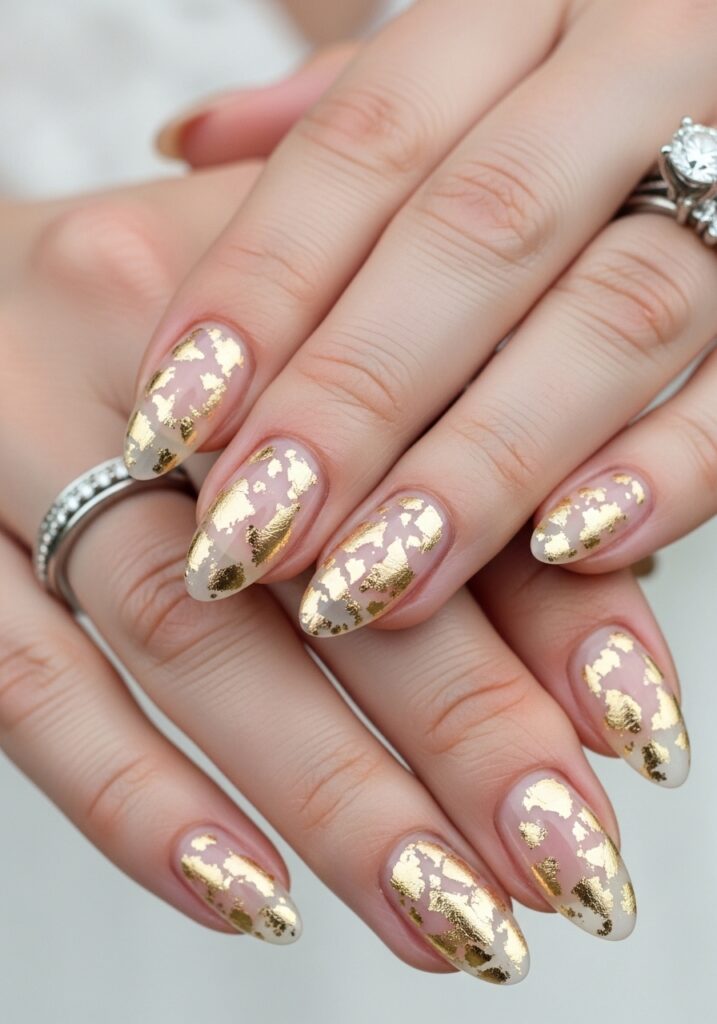
8. Gold Foil Bridal Nails
Foil arrives as thin leaf pressed into a tacky gel layer and then sealed under a top coat. The irregular fragments are the appeal, so even, deliberate placement usually looks worse than a scattered one. Gold suits warm palettes, champagne gowns, and gold jewellery. It also disguises damage better than almost any other finish, since the pattern was never uniform to start with.
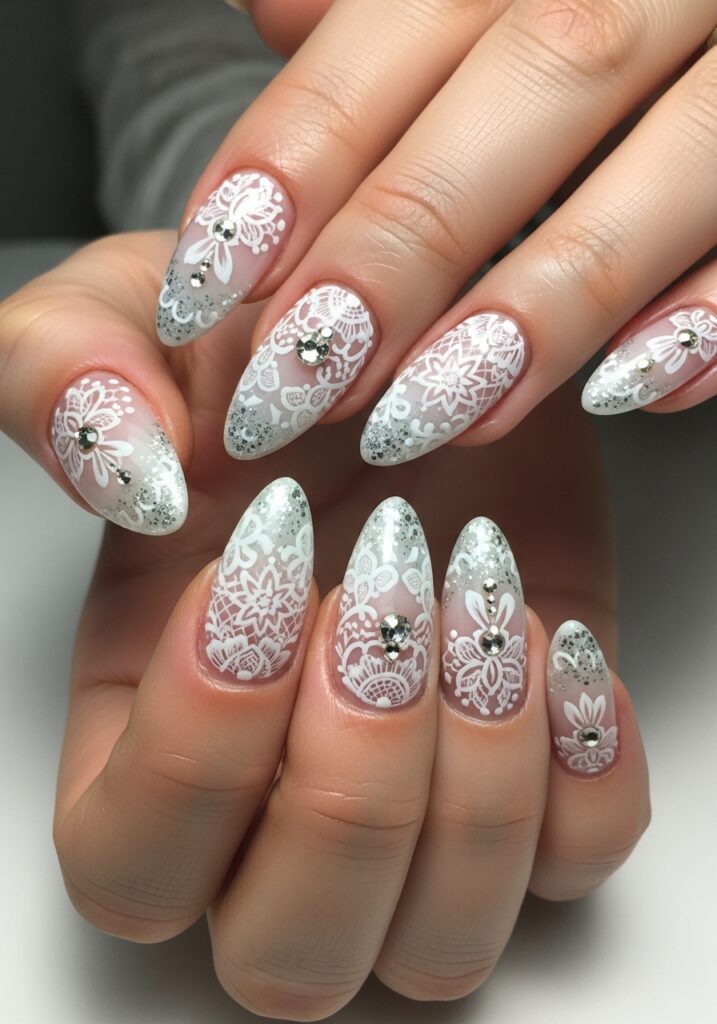
9. Lace Inspired Wedding Nails
Lace patterns come from either a fine liner brush or a stamping plate. Stamping produces cleaner repeats and costs less. Freehand work matches an actual gown pattern far more closely. Brides who want the second version should bring a photograph of the dress fabric to the appointment. The detail reads best on medium-length nails, since a very short nail leaves little canvas to work across.
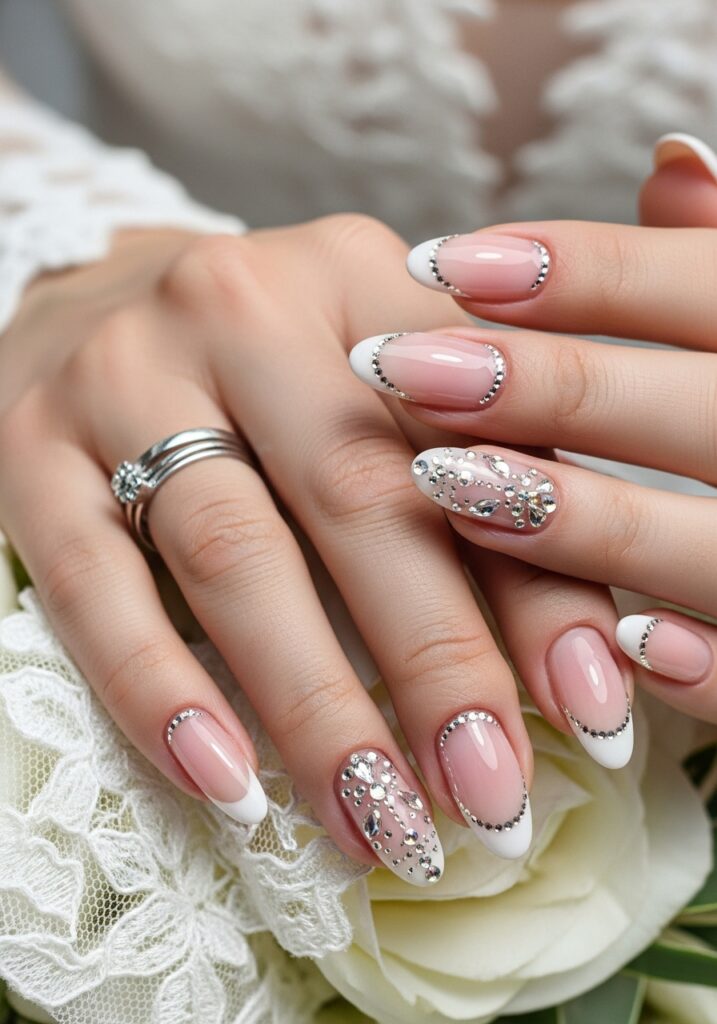
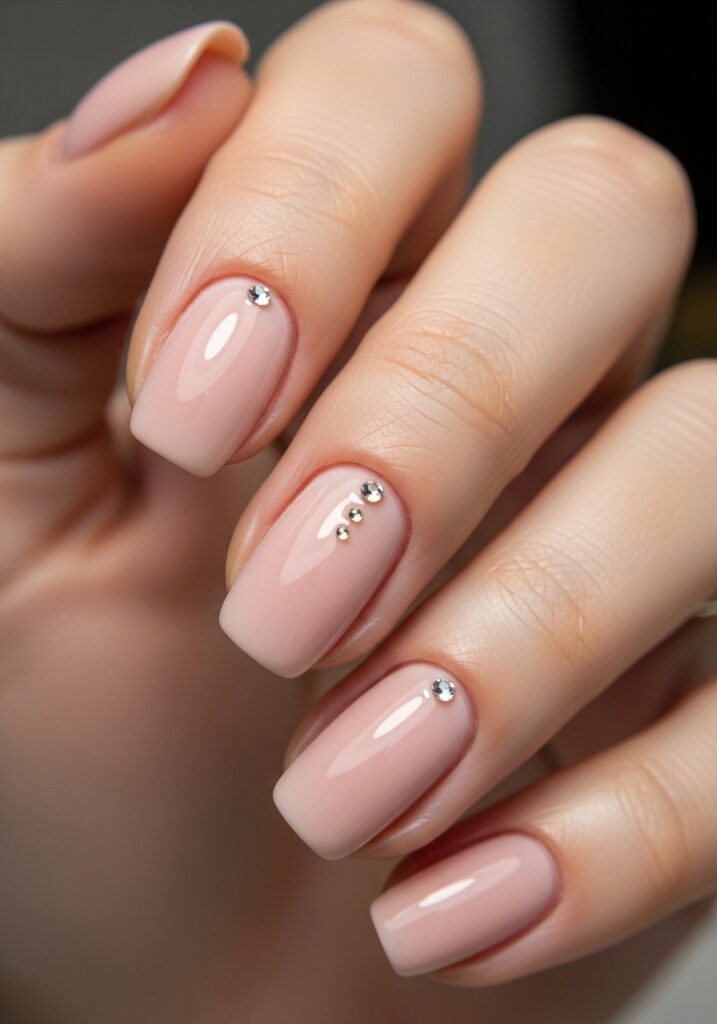
10. Crystal Accent Bridal Nails
Rhinestone placement decides whether this design looks refined or heavy. Two or three stones near the cuticle of a single nail is the usual restraint. Crystals set into gel hold considerably longer than crystals glued on top of a cured surface. Anyone planning to cut a cake, dance, or change outfits should keep stones away from the free edge, because that is where every knock lands.
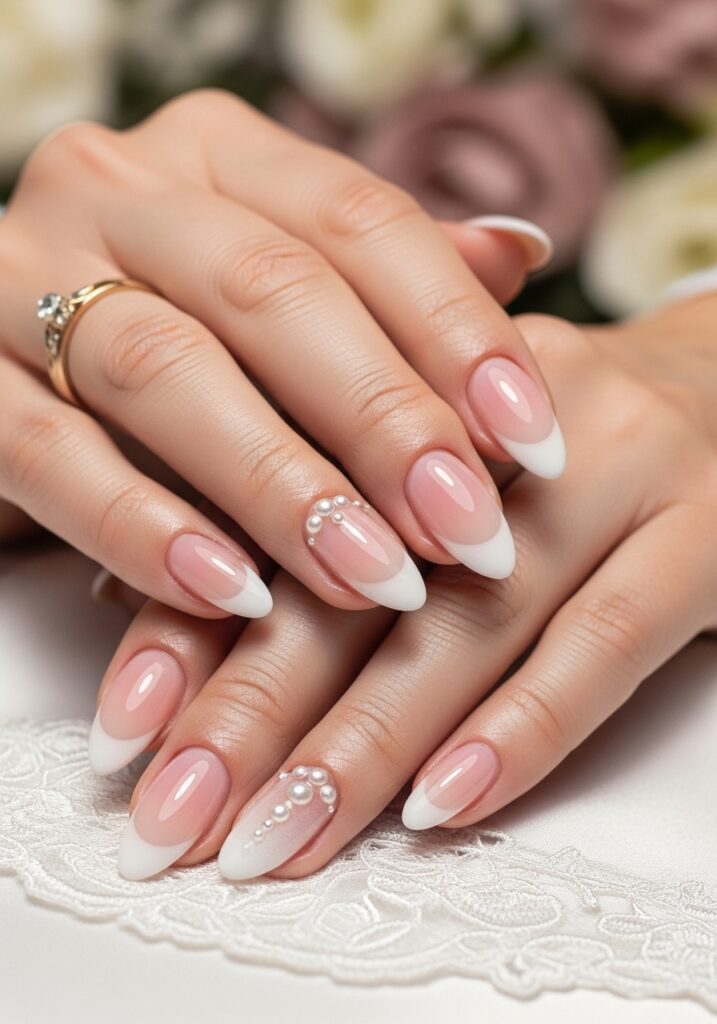
11. Baby Boomer Bridal Nails
Baby boomer nails, listed on some salon menus as French ombre, blend a nude base into a creamy white tip with no visible line between them. Technicians build the fade with a sponge, or by buffing two gels together before curing. The result flatters every nail length, which is why it turns up on so many bridal price lists. It also grows out almost invisibly, a real advantage when the appointment sits three weeks ahead of the wedding rather than three days.
12. Chrome Glazed Bridal Nails
Chrome comes from a fine powder buffed into a cured gel base and then sealed. Over a nude, the finish lands closer to pearl than to mirror, and that softer version is what most brides book. It needs a gel base to work at all, so this is not an option in regular polish. The reflective surface also exaggerates any ridge underneath, which makes nail preparation more important than the colour choice.
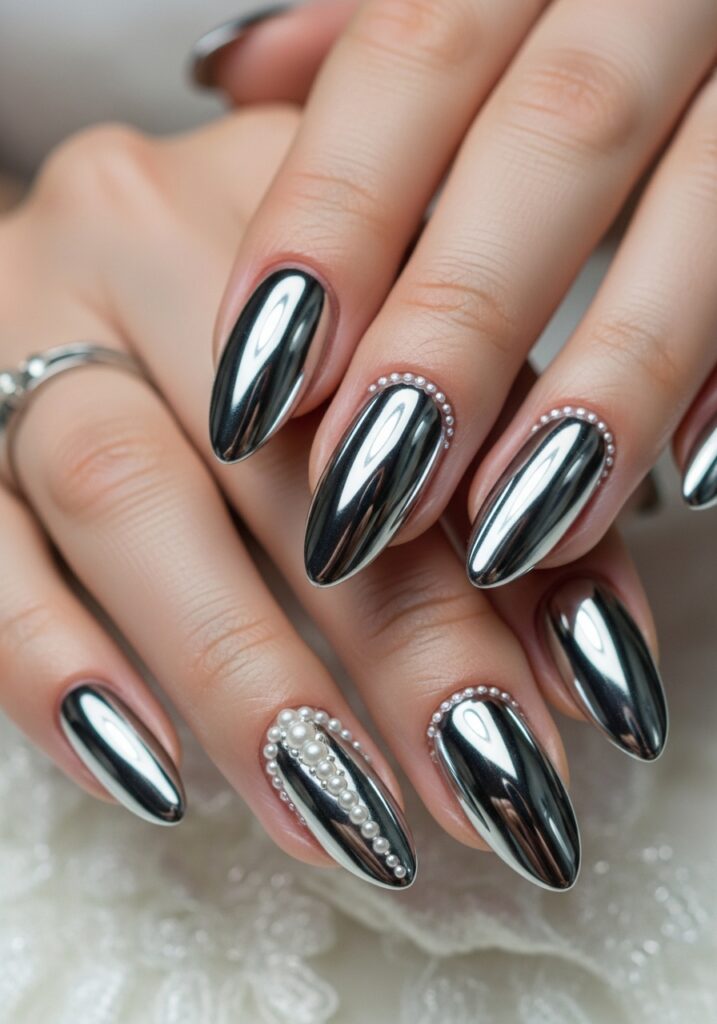
13. Rose Gold Wedding Nails
Rose gold sits between pink and copper, and it shifts noticeably depending on the light source. Warm reception lighting pushes it toward copper. Daylight keeps it pink. Brides matching it to jewellery should hold the two side by side rather than trusting a screen, since metallics render badly on phones. Used on a single accent nail, it reads much softer than a full set.
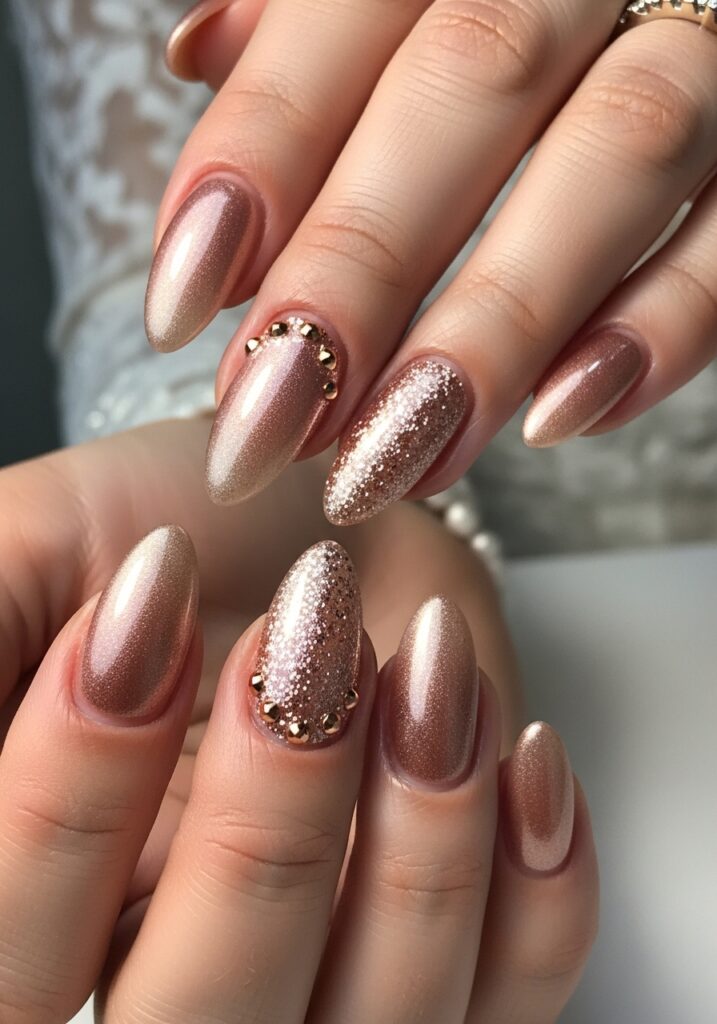
14. Almond Shape Bridal Nails
Almond tapers along the sides and rounds at the tip, which lengthens the apparent line of the finger. It is also more fragile than a square or squoval shape, since the narrowed point carries the same force across less material. Brides with naturally short nails can reach much of the same lengthening effect through shape and colour alone, as this guide to designs that make short nails look longer lays out in more detail.
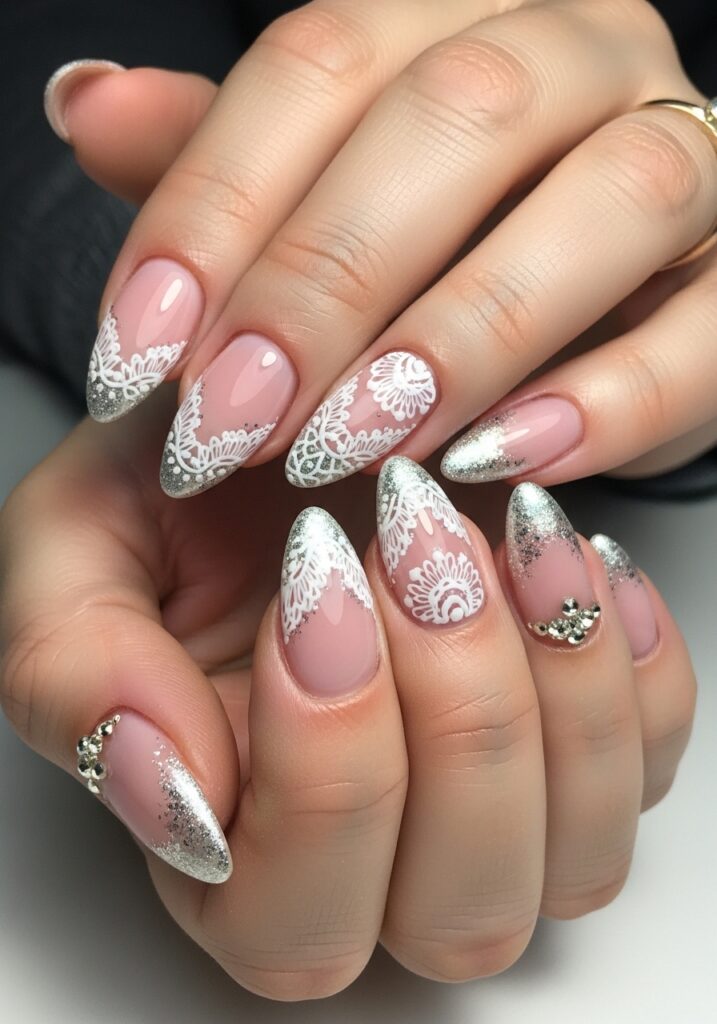
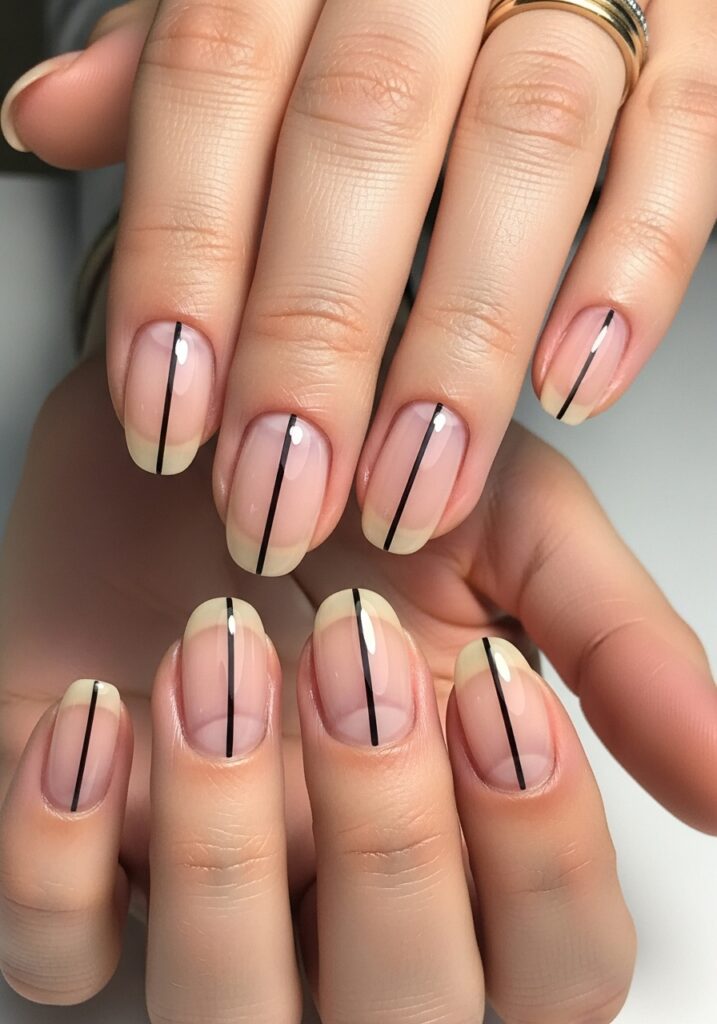
15. Minimalist Line Nail Art
Thin gold or white lines over a neutral base produce a design that takes minutes rather than an hour. A striping brush draws them, and a steady hand matters more than any flair for pattern. Because the artwork is sparse, it tolerates regrowth better than dense designs do. A few millimetres of growth does not break the composition the way it breaks a full-coverage pattern.
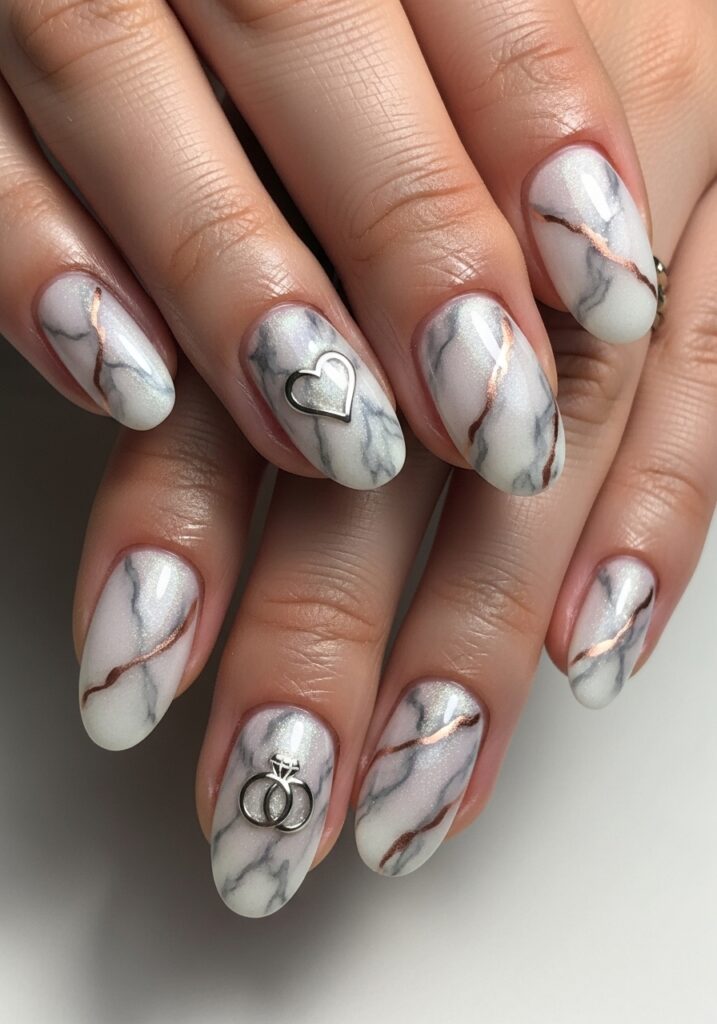
16. Marble Wedding Nails
Marble veining gets drawn while the base is still wet, usually with a fine brush dragged through soft grey over white and blurred before curing. No two nails match, and that is the intended outcome. The pattern scales down well, so shorter nails carry it without looking crowded. Gold veining costs extra and warms up the design for brides who find the grey version too cool.
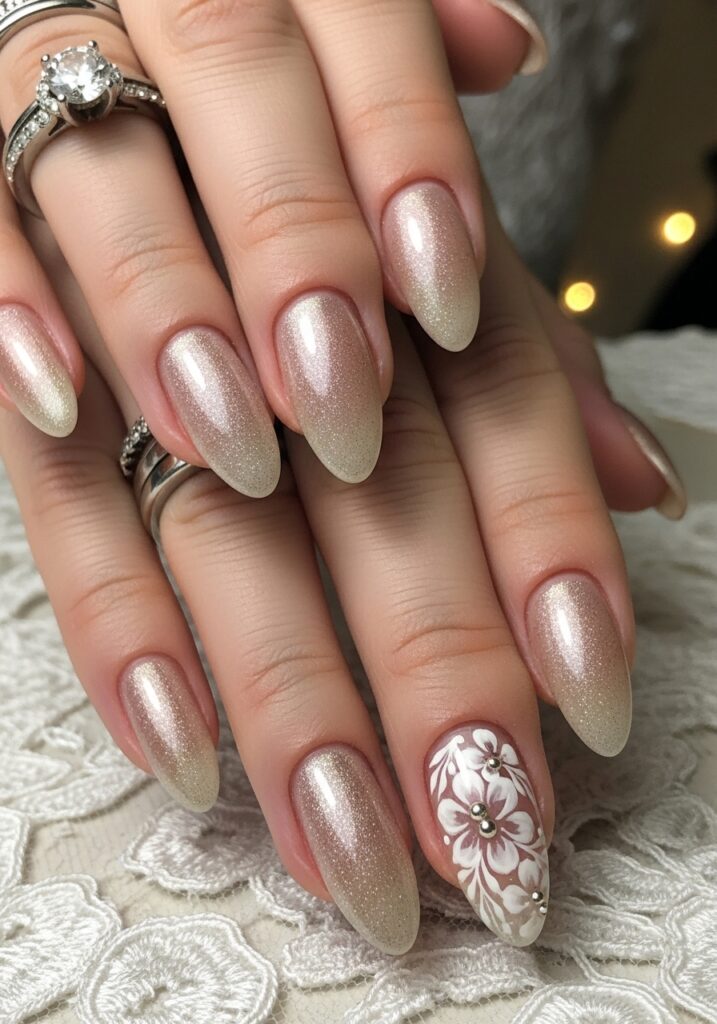
17. Champagne Shimmer Bridal Nails
Champagne shimmer differs from glitter mainly in particle size. The flecks stay fine enough to read as a glow rather than as individual sparkles, which keeps the finish wearable in bright daylight photographs. It sits comfortably with ivory and cream gowns, where a cool silver can look slightly off. One coat over a nude base is usually plenty. A second tips the effect into metallic.
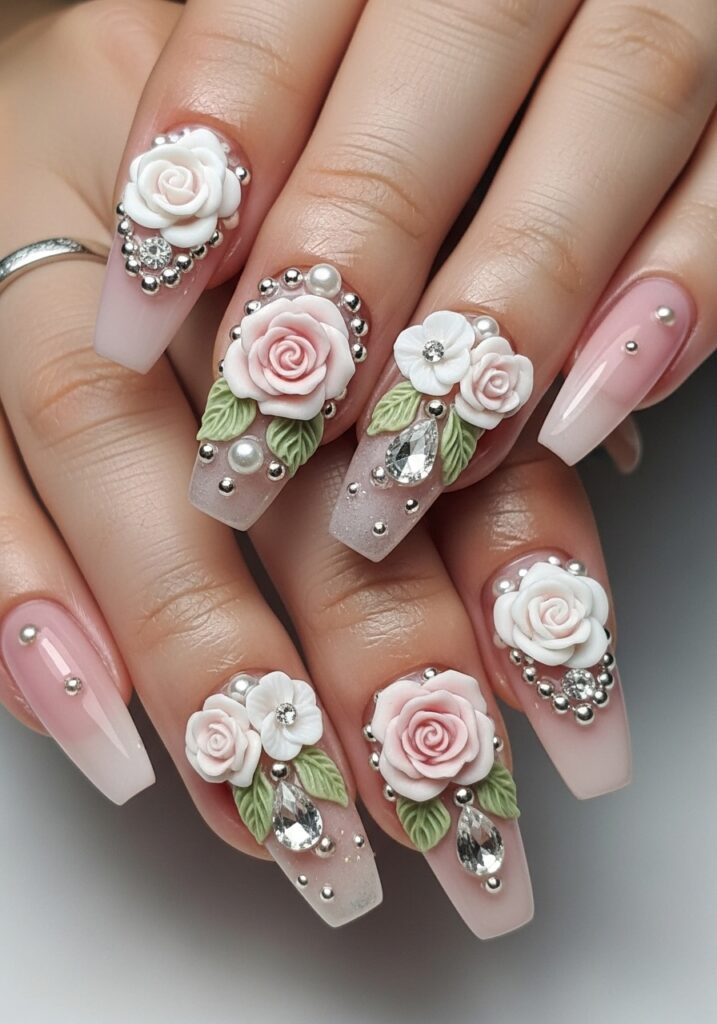
18. 3D Floral Bridal Nails
Sculpted flowers are built from acrylic or hard gel and cured directly on the nail, adding genuine height. They snag on fabric, so most technicians keep them to one nail per hand. Brides who have never worn acrylic should book a trial set well in advance: the FDA notes that traces of methacrylate monomers left behind in artificial nails can cause redness, swelling, and pain in the nail bed among people who have become sensitised to them. A test run weeks earlier surfaces a reaction on an ordinary Tuesday rather than on the wedding morning.
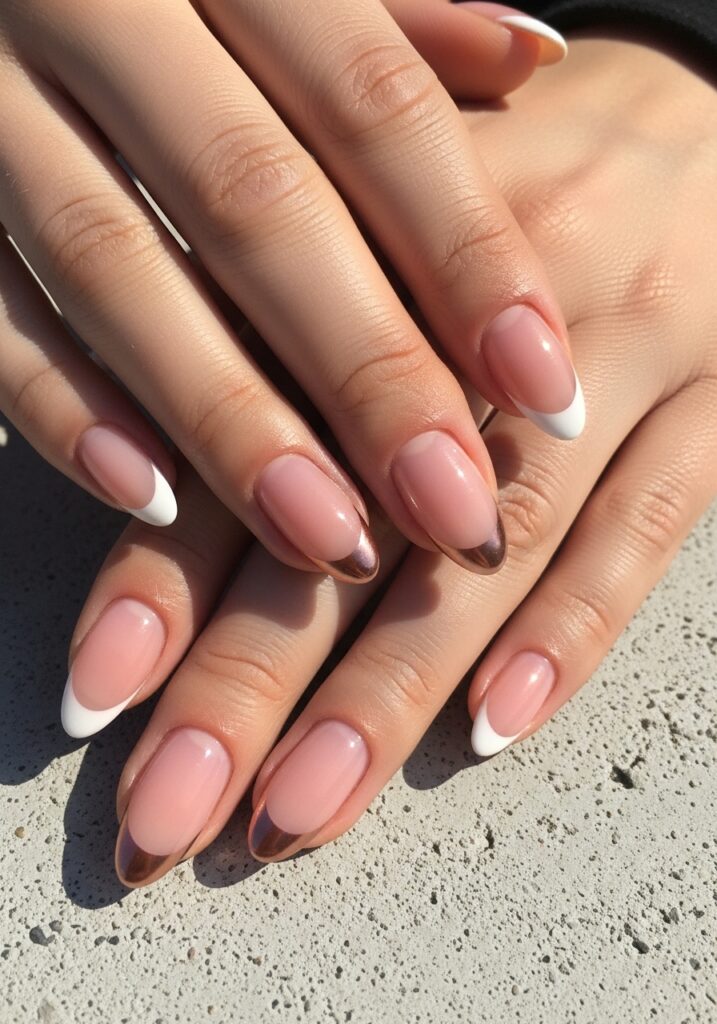
19. Modern French Tip Nails
The modern French swaps the white tip for gold, glitter, pastel, or a shade pulled from the wedding palette. Micro tips, where the line barely reaches a millimetre, have largely replaced the thick 1990s band. The shape of the line can change too. A slanted or V-shaped tip reads as a deliberate choice rather than a dated one.
20. Matte Nude Bridal Nails
A matte top coat strips out the shine and shows fingerprints and oil far more readily than gloss. Hand cream applied just before photographs will leave marks, so the order of operations matters on the day. The velvet texture suits minimalist gowns. Matte also mutes whatever sits underneath, which means a nude picked under gloss will look a shade deeper once it is flattened.
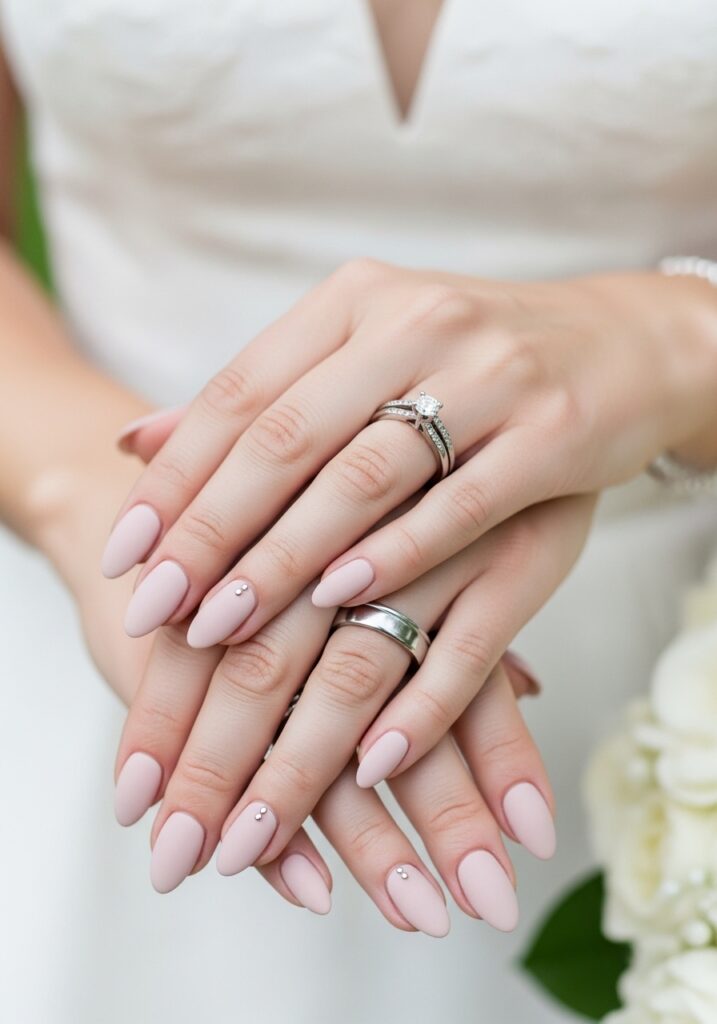
21. Diamond Dust Nails
Diamond dust uses ultra-fine reflective particles suspended in a clear layer, closer to a dusting than to glitter. It scatters light in small points instead of flashes. Removal takes noticeably longer than plain polish, because the particles resist acetone. That is worth knowing for anyone handling their own soak-off, and the same caution applies to most sparkle finishes done at home with gel.
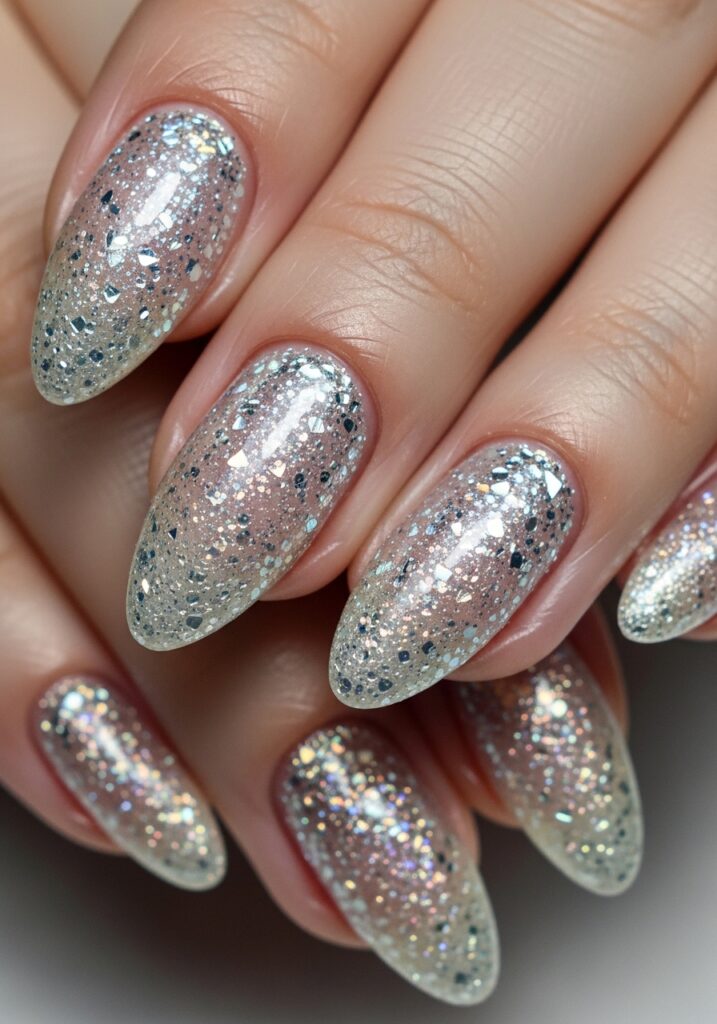
22. Blush Ombre Bridal Nails
Blush ombre runs pink at the base into pale white at the tip, a softer relative of the baby boomer. The direction can also be reversed for an even subtler result. Because the two shades sit close together, blending mistakes show far less than they would across a high-contrast fade. That makes it a sensible first attempt for anyone practising the technique at home.
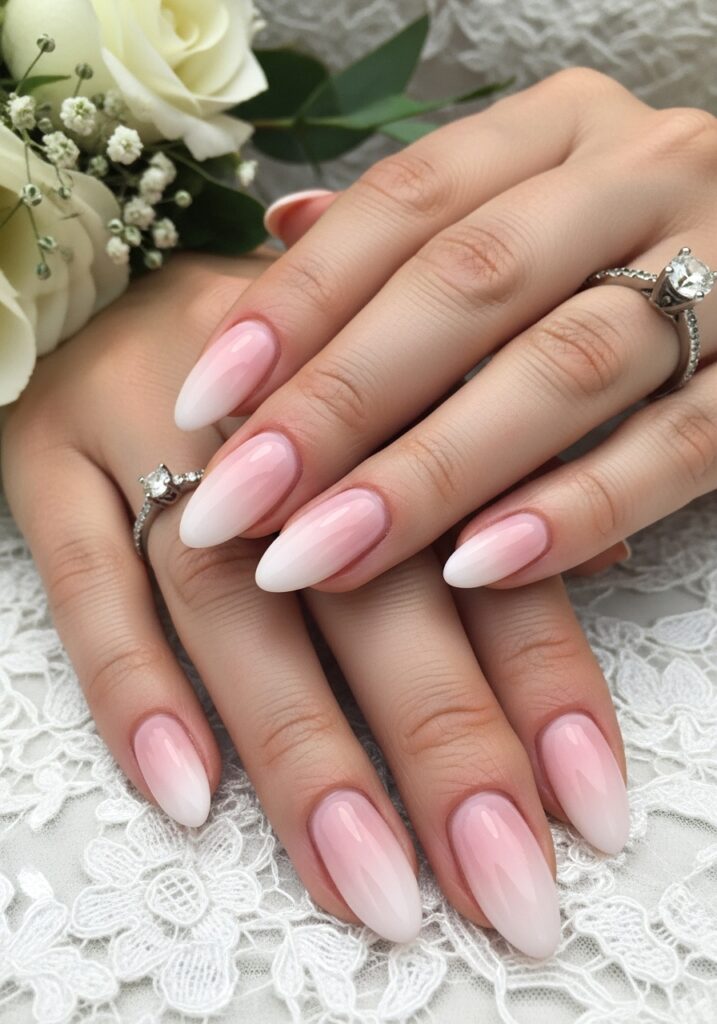
23. Vintage Pearl Bridal Nails
Vintage pearl relies on smaller stones than the standard pearl accent, often arranged in a line or crescent rather than a cluster. Cream-toned pearls sit better against ivory gowns than bright white ones do. Brides wearing inherited pearl jewellery should bring a piece along to the appointment, since pearl tones vary far more than most people expect.
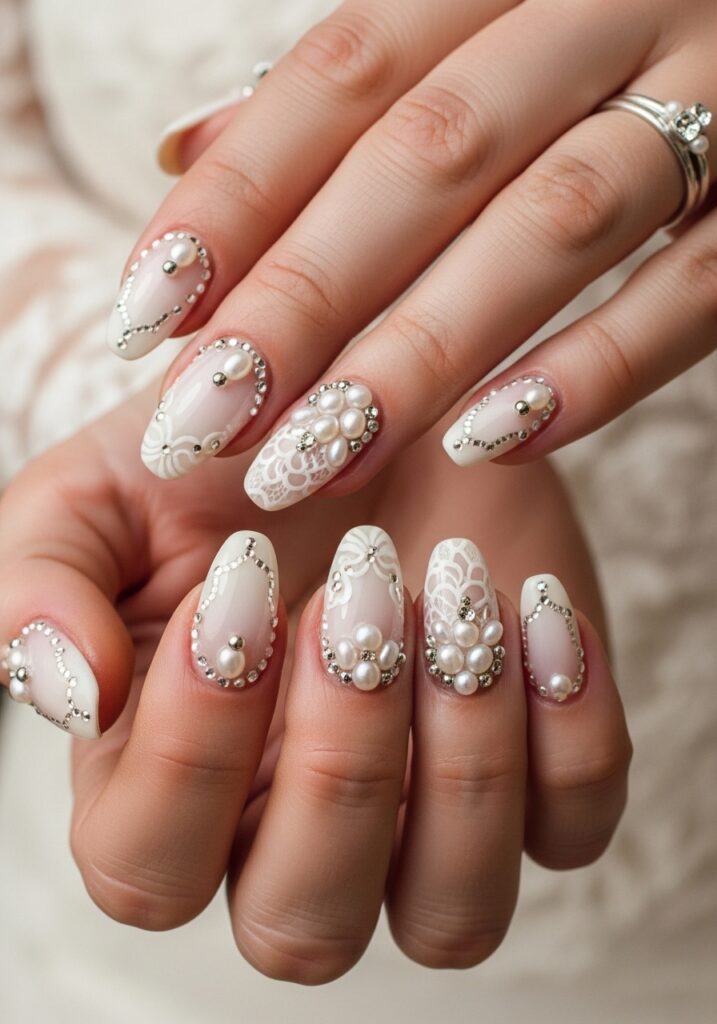
24. Minimal Crystal Accent Nails
Restraint is what separates this from the fuller crystal version: one stone per hand, sometimes only on the ring finger. Placing it near the cuticle keeps it clear of impact and out of the way when the ring slides on. It is also the cheapest embellishment on the list, since salons normally charge per stone rather than per set.
25. Champagne Glitter Tips
Glitter along the free edge replaces the white of a French tip. The sparkle masks the growth line as the nail moves outward, so this version holds its look noticeably longer than a standard French before it needs attention. A three-week gap between appointment and wedding is workable here, which cannot be said of most tip designs.
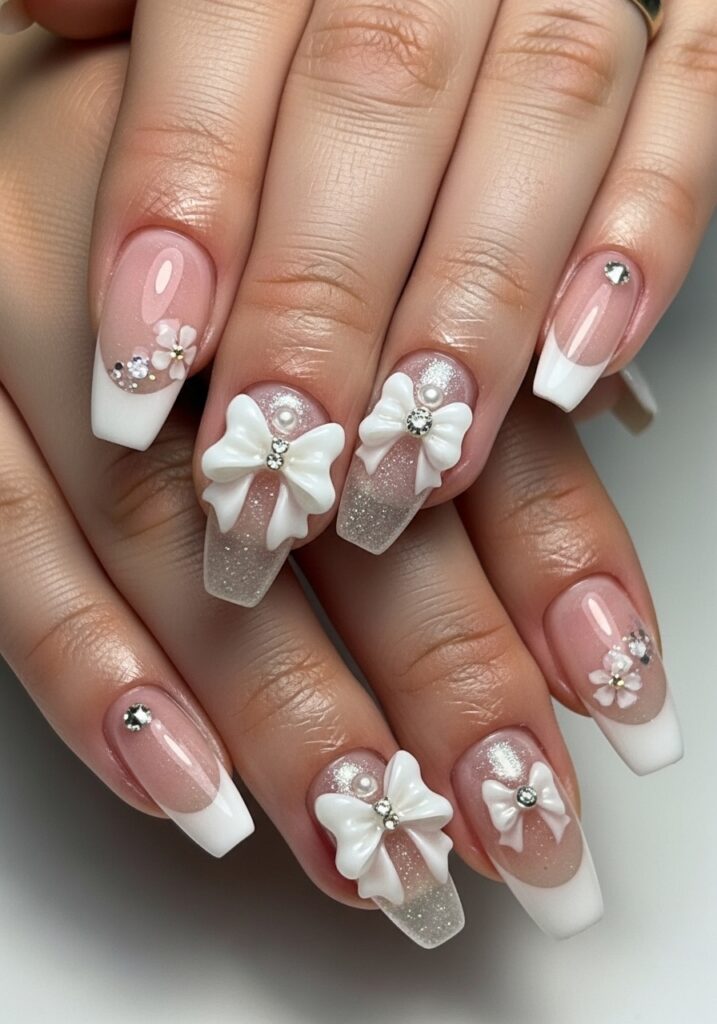
26. Bridal Bow Nail Art
Bows appear either as painted outlines or as small metal and resin charms. Charms add height and catch on things; painted bows do neither. Keeping a single bow on one nail stops the design tipping into novelty. It suits smaller weddings and registry-office ceremonies more comfortably than a cathedral setting.
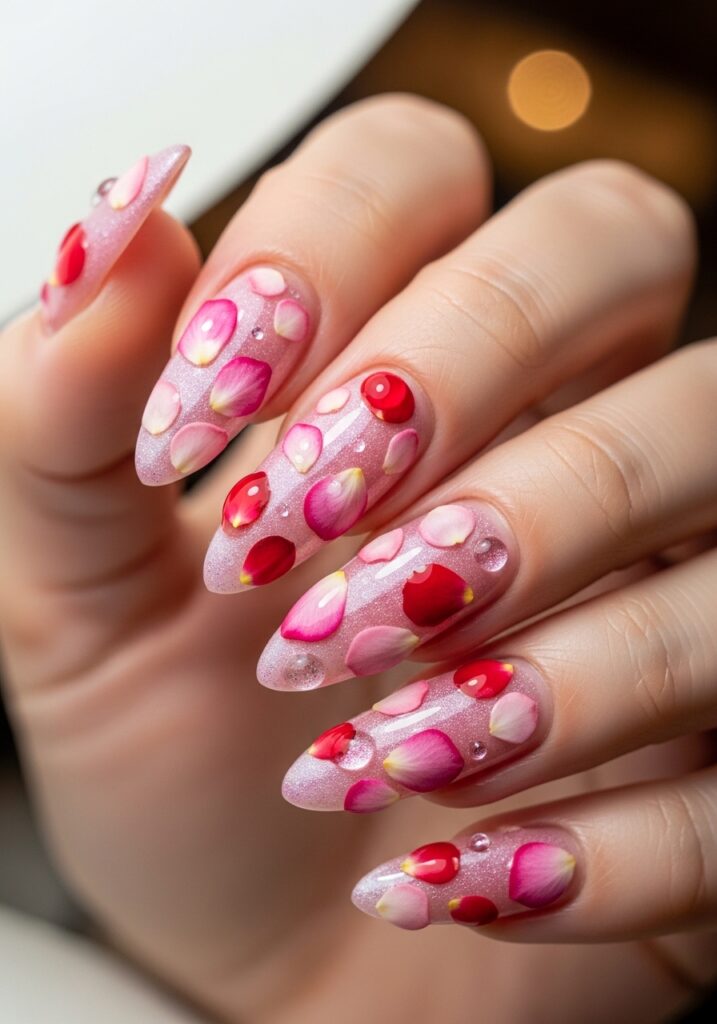
27. Rose Petal Nail Design
Petals layered in soft pink over nude give a looser, less structured effect than a defined flower. The technique loads a brush with two shades at once, so the colour shifts across every stroke. It pairs naturally with a bouquet in the same tone, which is worth coordinating with the florist rather than guessing at a shade match.
28. Pastel Bridal Nails
Lavender, blush, and soft peach all read as colour without reading as bold. Pastels do show tip wear sooner than nudes, since the contrast against the nail bed is higher and chips have nowhere to hide. Spring and outdoor ceremonies suit them well. Brides matching bridesmaids’ dresses should test the shade under the actual venue lighting wherever that is possible.
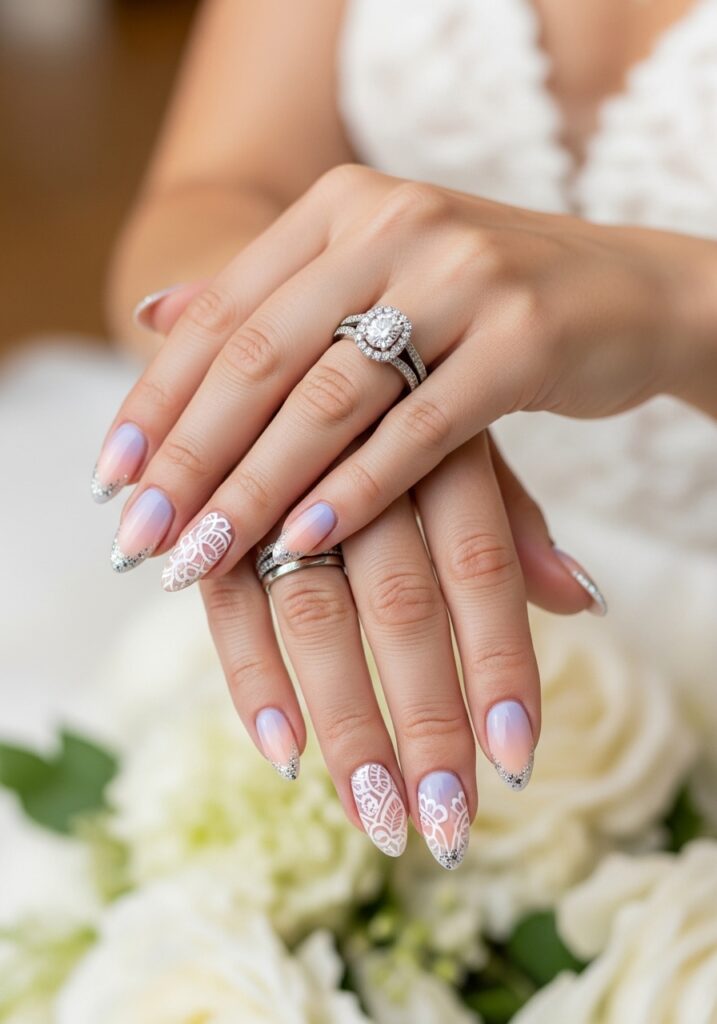
29. Elegant Swarovski Crystal Nails
Swarovski stones cost considerably more than generic rhinestones and refract light more cleanly, which is the reason to pay the difference. They are heavier too, so a secure setting matters more. Most technicians bill separately for the stones and the application labour. Confirming both figures before the appointment avoids an uncomfortable surprise at the till.
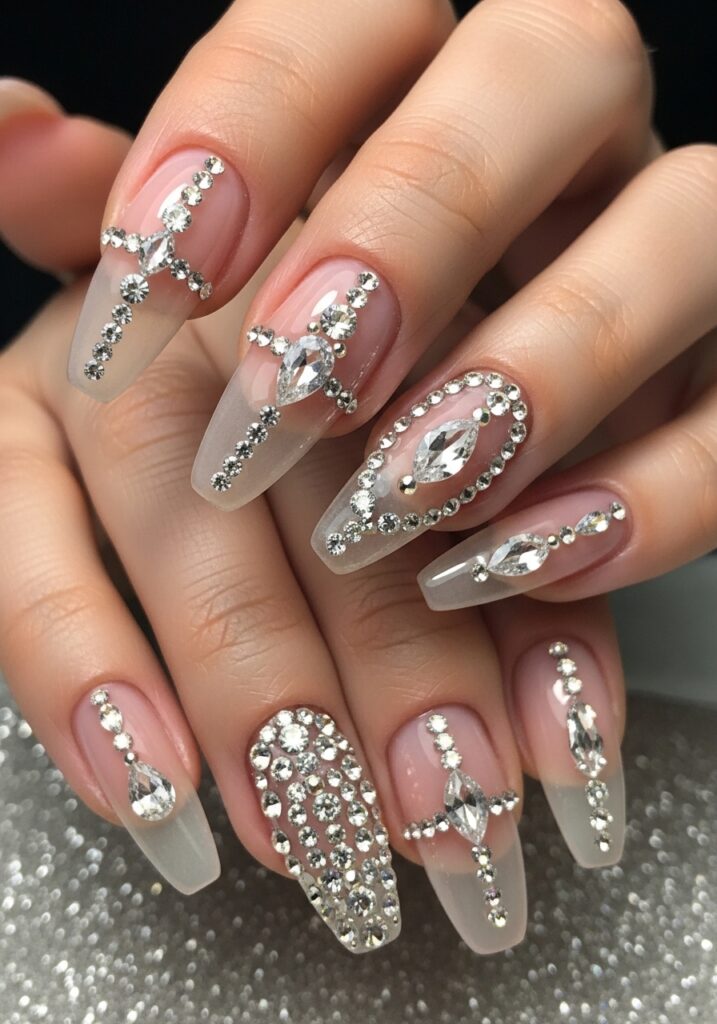
30. Soft Romantic Bridal Nails
This is less a single design than a combination: a neutral shade, a whisper of shimmer, a rounded or almond shape, and nothing further. It works for brides who decide late, since almost any salon can execute it without booking a specialist. It also holds up consistently across daylight, candlelight, and camera flash, which few of the more decorated options manage.
Conclusion
Nails turn up in more wedding photographs than most brides anticipate, and choosing a wedding nail design is only half the decision. Timing, durability, and the gap between the appointment and the ceremony carry just as much weight as the picture on the salon wall. The 30 wedding nail ideas above run from bare nude to full crystal, and the two ends behave very differently. Simpler finishes grow out gracefully and forgive a chip. Heavily embellished sets look their best on the day but demand a later appointment and more care through the reception. Matching the design to the gown, the jewellery, and the venue lighting narrows the field quickly, and booking a trial for anything sculpted or embellished narrows the risk further.


Leave a Reply