
Most brides plan the wedding gown for months before anyone mentions the rehearsal dinner. The dress for the aisle gets fitted, photographed, and obsessed over, while the outfit for the night before often gets overlooked entirely until the week arrives.
That oversight carries more weight than it seems. The rehearsal dinner marks a bride’s first public appearance as the guest of honor, and it usually gets photographed almost as heavily as the wedding itself. The formality of the evening shifts from couple to couple, which leaves many brides unsure where to start.
This guide breaks the decision down piece by piece. It covers how to read a rehearsal dinner dress code, what suits every formality level from backyard casual to full black-tie, the recurring question about wearing white early, and the missteps worth avoiding before the big night arrives.
Why the Rehearsal Dinner Outfit Deserves Real Thought
A rehearsal dinner can feel like a footnote compared to the wedding, but several details make the evening genuinely distinct.
The bride becomes the center of attention the moment she walks in, regardless of intent. Guests’ eyes naturally drift toward her, since she represents half of the couple being celebrated. Two families often meet properly for the first time at this dinner, which raises the emotional stakes of the room.
Cameras appear more often than most brides anticipate. Rehearsal dinners get documented casually by guests and sometimes professionally by a hired photographer, and these candid shots frequently become some of the most relaxed images from the entire wedding weekend.
A long-standing tradition also plays into the evening. Many brides choose to wear white the night before as a soft lead-in to the wedding day itself, though nothing requires this choice.
In short, this dinner functions as the opening scene of the wedding weekend. A bit of planning here sets a tone that carries into everything that follows.
Decoding the Rehearsal Dinner Dress Code
Formality should get settled before any outfit gets chosen, since a rehearsal dinner can range from a beach cookout to a black-tie affair. The venue usually offers the clearest clue.
A backyard, brewery, or laid-back restaurant signals relaxed dressing. A nice restaurant, winery, or garden venue points toward smart or cocktail attire. A hotel ballroom, an upscale space, or any invitation with a printed dress code signals formal or black-tie territory.
A printed dress code should always take priority over guesswork. When no code appears, the venue, the time of day, and the season become the best guides, since evening events almost always read dressier than daytime ones. The Emily Post Institute’s attire guide offers a useful general reference for translating an invitation’s wording into an actual outfit, and it applies just as well to wedding-adjacent events as it does to formal parties.
One privilege belongs only to the bride. Guests generally aim to match the stated dress code, while the bride can sit comfortably at the top of it, or even slightly above. A touch more polish than the room is expected of the guest of honor, not seen as excessive.
Once the formality is settled, the outfit choices narrow considerably. The sections below break down exactly what works at each level.
Casual Rehearsal Dinner Outfit Ideas
Casual should never be mistaken for careless. A backyard gathering, a brewery, or an easygoing restaurant calls for a look that stays relaxed while still reading as clearly special.
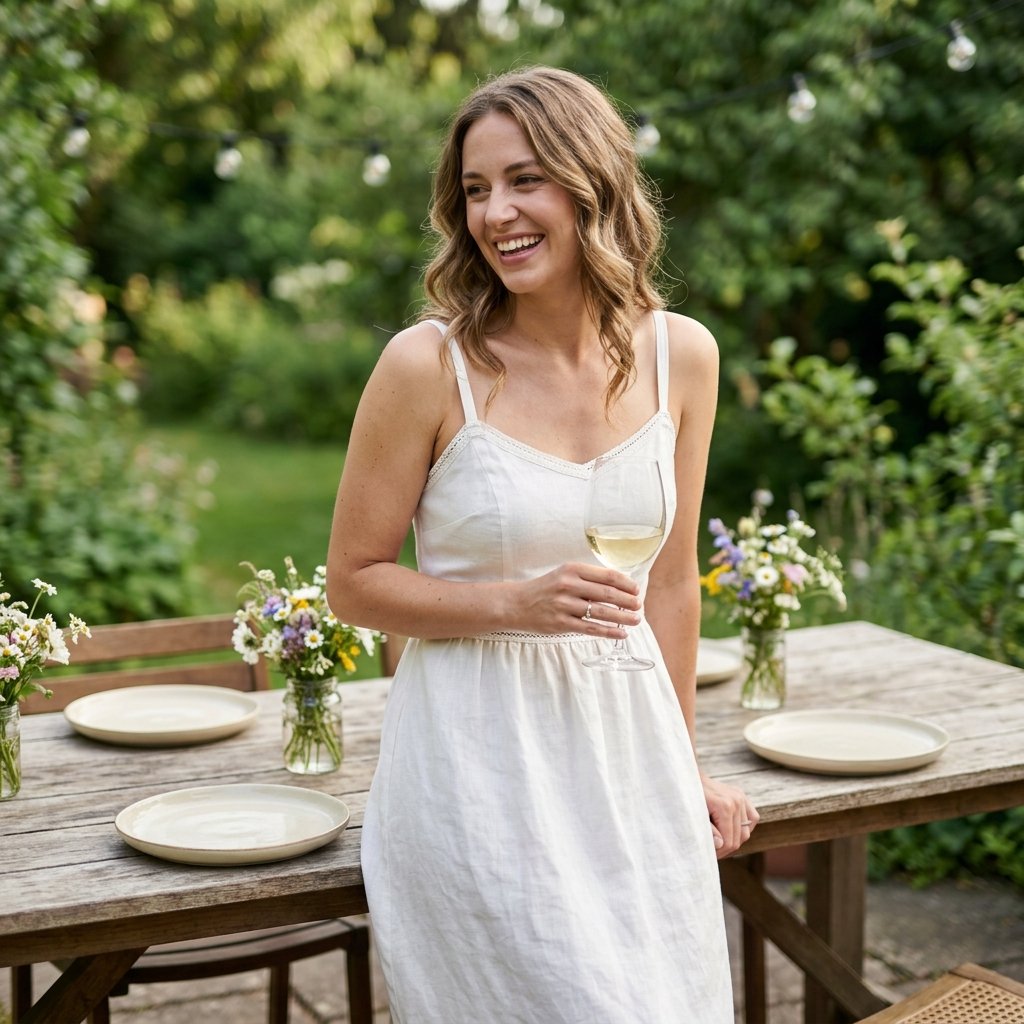
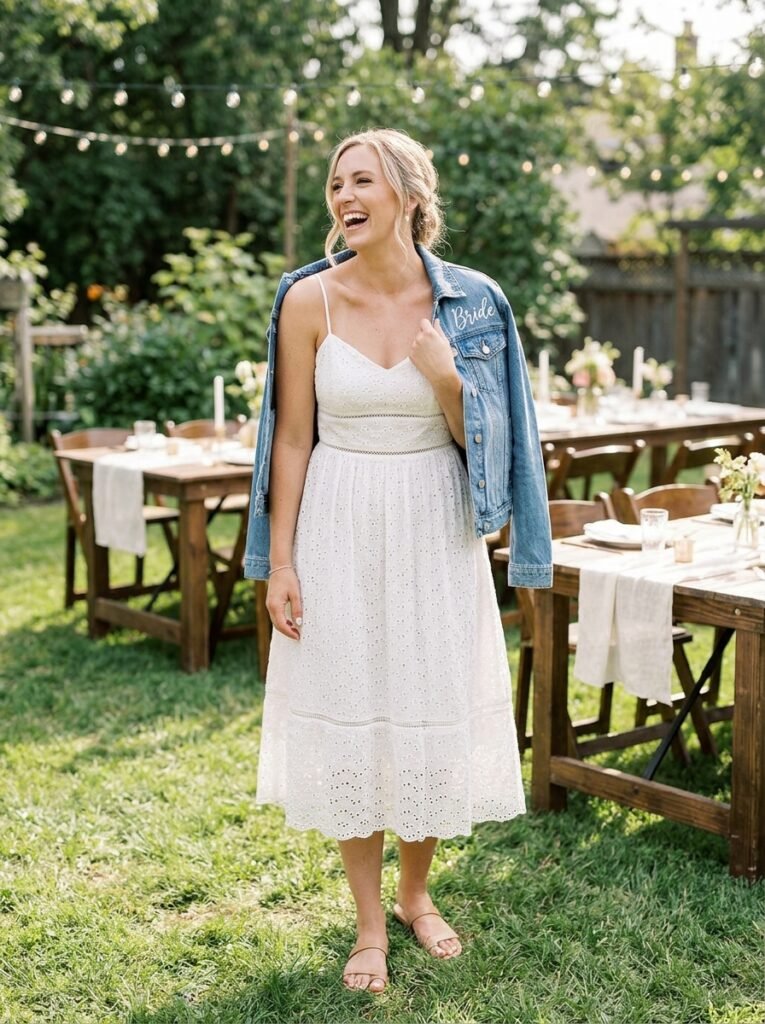
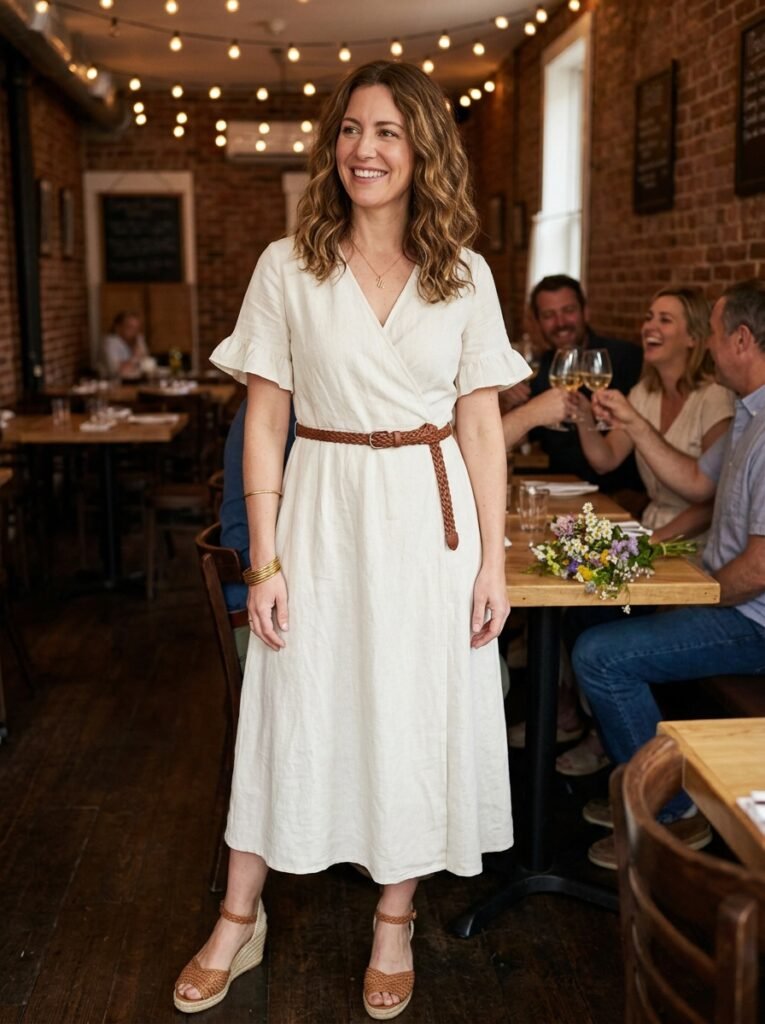
A flowing white or cream sundress remains the easiest winning choice, since it feels feminine and unmistakably bridal without effort. A white or pastel jumpsuit offers a modern alternative that photographs well and allows full freedom of movement. A midi dress in a soft print or solid color also suits daytime or outdoor settings nicely.
Elevation through detail matters more than formality at this level. Delicate jewelry, a fresh manicure, styled hair, and a good pair of sandals or espadrille wedges turn a simple dress into something intentional and celebratory. A denim jacket or a light knit layered over bare shoulders keeps an outdoor evening comfortable without breaking the casual mood.
Anything reserved for errands should stay in the closet. Casual, in this context, means easy and polished rather than plain, and the distinction lives entirely in the small finishing touches.
Smart Casual and Cocktail Rehearsal Dinner Looks
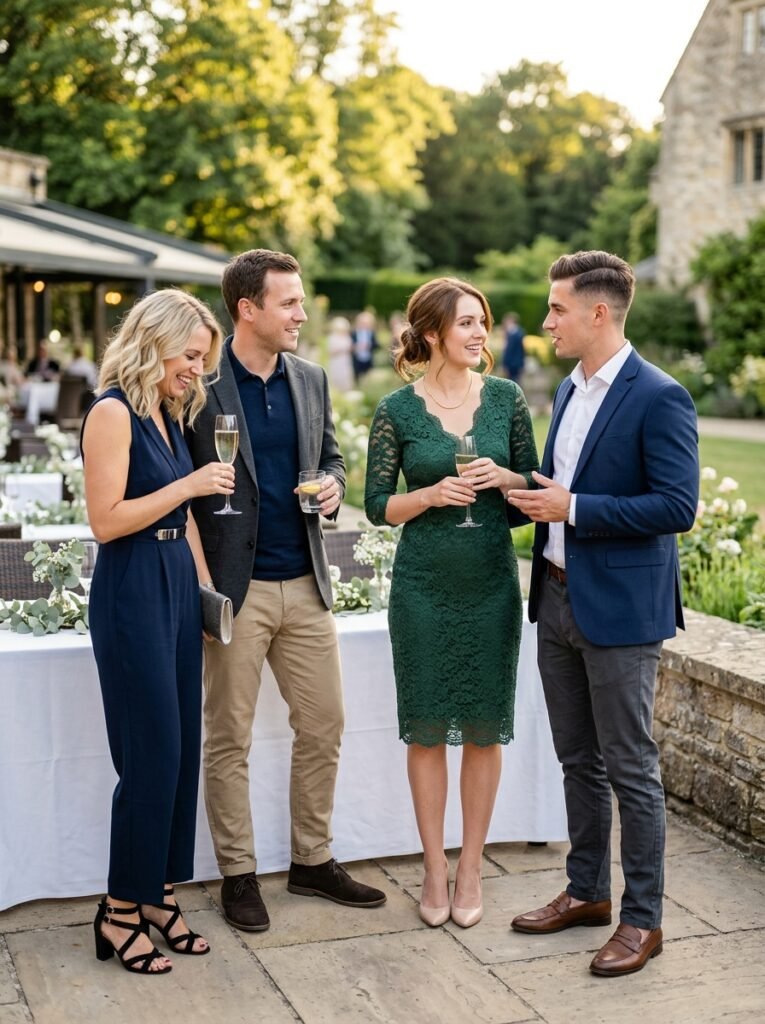
This formality level covers most rehearsal dinners, since nice restaurants, wineries, and garden venues fall squarely into cocktail territory. It also tends to give brides the most room to experiment.
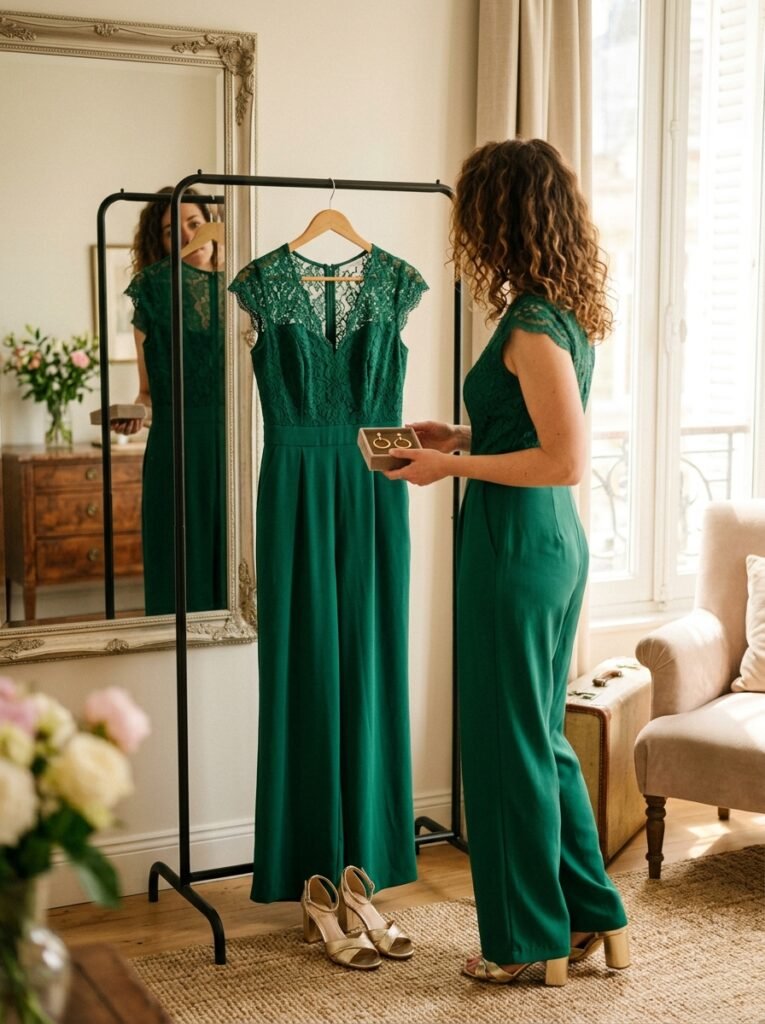
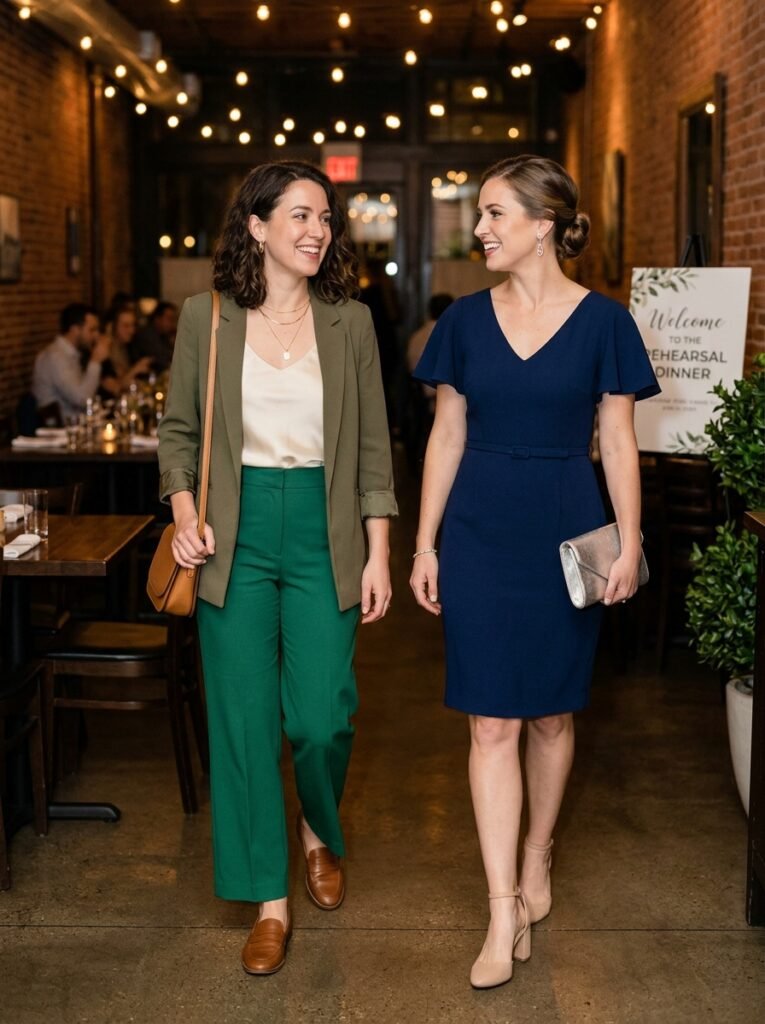
A white cocktail dress remains the classic pick, whether the silhouette is fit-and-flare, a sleek slip, or a playful A-line. A jumpsuit in white or a bold, celebratory shade reads as confident and fashion-forward. A midi or slip dress in satin, chiffon, or lace strikes a natural balance between dressy and relaxed. Brides who lean toward separates can also pair a statement blouse with a flowing skirt or tailored wide-leg trousers for a polished, modern combination.
Accessories carry real weight at cocktail level. Statement earrings, dressy heels or sandals, a small clutch, and a considered hairstyle bring the whole outfit together. A pair of bridal white heels, a delicate hair accessory, or a fresh flower tucked into the hair also signals bride without saying a word.
Polished and celebratory should be the goal here. Guests typically make a visible effort at cocktail-level events, so the bride’s outfit should match that same energy.
Formal and Black-Tie Rehearsal Dinner Attire
A ballroom, an upscale venue, or a stated formal or black-tie dress code opens the door to a genuinely show-stopping outfit, second only to the wedding gown itself.
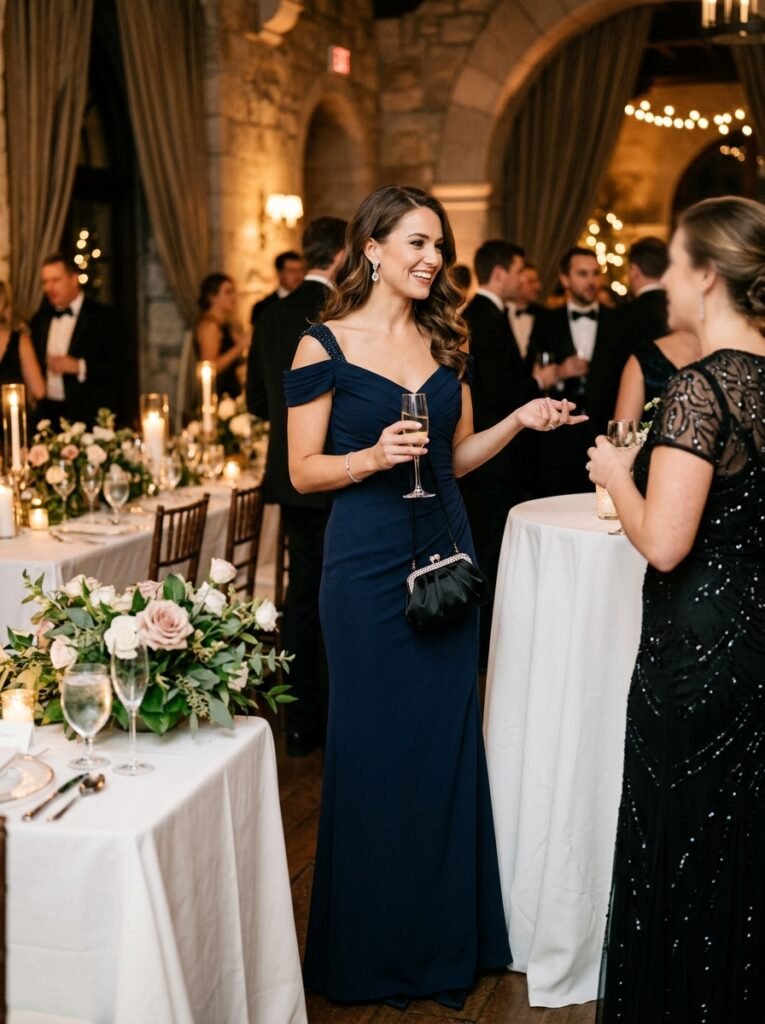
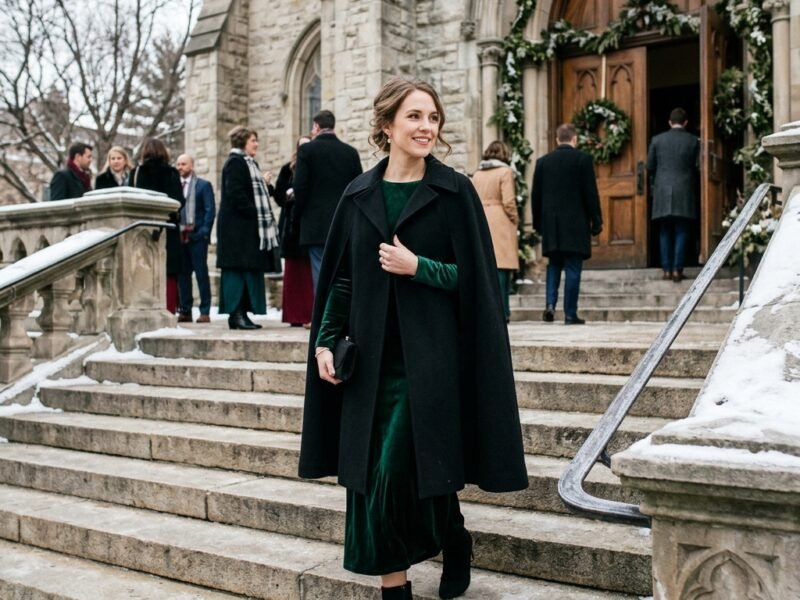
A floor-length gown remains the most obvious black-tie choice, and many brides select white or ivory for a pre-wedding glow. A rich jewel tone such as emerald, sapphire, or deep berry makes an equally striking statement. An elegant midi or tea-length dress in a luxe fabric fits formal-but-not-quite-black-tie evenings well. A wide-legged formal jumpsuit gives brides who want drama without a gown a chic alternative, and a beaded or embellished cocktail dress adds sparkle for an evening celebration.
Fabric carries most of the formality at this level. Satin, silk, chiffon, velvet in cooler months, or anything beaded or shimmering reads as appropriately elevated. Statement jewelry, elegant heels, a refined clutch, and polished hair and makeup complete the picture. Since this look sits close to wedding-day formality, choosing a silhouette distinctly different from the actual gown helps keep the two evenings feeling separate.
Looking spectacular without upstaging the wedding day itself remains the balance to strike. Saving the most dramatic version of the bridal look for the aisle keeps the rehearsal dinner feeling like a gorgeous preview rather than a rival moment.
Should the Bride Wear White the Night Before
Nearly every bride wonders about this question, and the honest answer is simpler than it seems. The choice belongs entirely to her.
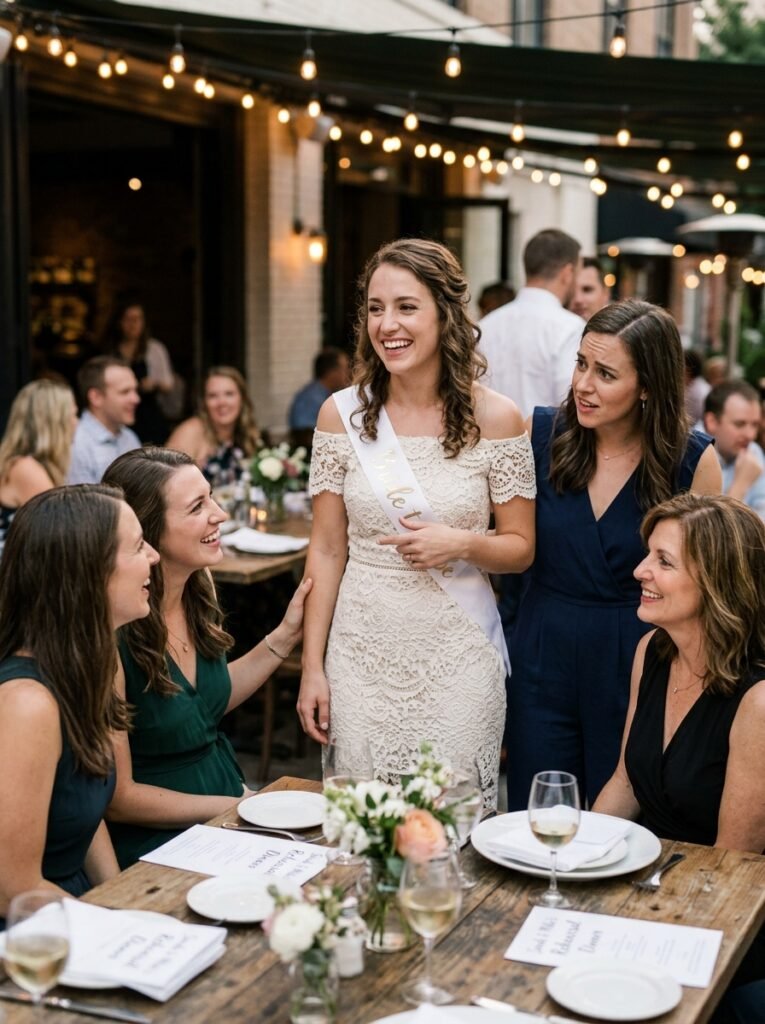
Wearing white the night before is a popular tradition that helps the bride stand out and creates a gentle visual bridge into the wedding day. Many brides enjoy having a second, more relaxed opportunity to wear white across the weekend, and the look tends to photograph beautifully.
Plenty of brides choose color instead, deliberately, so the wedding gown remains the single white moment of the weekend. A jewel tone, a soft pastel, a floral print, or a bold statement shade can feel fresh and confident, and the contrast against the gown becomes even more striking as a result.
One detail makes this decision easier. Since guests generally avoid wearing white, the bride holds one of the only opportunities outside the wedding itself to wear it without question. Brides who would rather save white entirely for the aisle should trust that instinct just as confidently. Neither choice is wrong, only the one that feels most authentic.
Matching the Outfit to Season and Venue
A rehearsal dinner outfit should suit the time of year and the setting, not only the formality level, and a few adjustments keep the look both comfortable and appropriate.
Spring and summer favor light fabrics such as chiffon, cotton, and linen blends, along with florals, pastels, and breezy silhouettes. A light layer becomes useful once the sun drops at an outdoor evening event. Autumn and winter call for richer fabrics like satin, velvet, and heavier crepe in deeper tones, with a wrap, a tailored coat, or long sleeves added for warmth.
The venue fine-tunes the details further. A beach or garden setting favors softer, flowier pieces along with shoes built for grass or sand, so wedges beat stilettos every time. A restaurant or winery welcomes structured, polished looks, while a ballroom or formal space calls for full glamour.
Comfort should guide every decision above all else. The bride typically stands during the rehearsal itself, mingles for hours afterward, and sits through a long dinner, so the outfit needs to hold up through all three phases of the evening.

Practical Tips for Choosing a Rehearsal Dinner Outfit
A small amount of planning makes this decision effortless rather than stressful.
- Plan the outfit at least a month in advance to leave time for shipping, exchanges, or alterations.
- Choose a silhouette or color distinctly different from the wedding gown so each night feels like its own occasion.
- Confirm the formality with the planner or host whenever the invitation leaves it unstated.
- Run a full movement test at home, since standing, mingling, and sitting all happen during the same evening.
- Break in shoes ahead of time and pack a flat or wedge backup for outdoor venues.
- Consider how colors and patterns photograph, favoring flattering shades and avoiding busy prints that shimmer oddly on camera.
A few minutes of preparation now buys a genuinely carefree evening later.
Common Rehearsal Dinner Outfit Mistakes to Avoid
Brides tend to repeat the same handful of missteps, and all of them are easy to sidestep with a little foresight.
Leaving the decision until the last minute ranks as the most common mistake, often resulting in an outfit that feels thrown together on a night that deserves more care.
Underdressing for the venue creates a similar problem, leaving the bride feeling out of place as the guest of honor. When formality feels uncertain, leaning slightly dressier almost always serves the bride better than leaning too casual.
Some brides unintentionally overshadow their own wedding by choosing something so dramatic for the rehearsal that the gown feels like less of a reveal the next day. Saving the most bridal version of the look for the aisle avoids that trap.
Ignoring comfort trips up plenty of brides, since pinching shoes or a restrictive silhouette can turn a joyful evening into an endurance test.
Forgetting the weather and venue often leads to a beautiful outfit that simply does not suit the sand, the grass, or the evening chill, so dressing for the actual setting matters more than dressing for the photos alone.
Skipping the finishing details is the quietest mistake of all, since even a simple dress needs considered shoes, jewelry, and hair to read as intentional rather than rushed.
What Stylists Wish Every Bride Knew
Stylists who dress brides for a full wedding weekend tend to repeat the same handful of pieces of advice.
Treating the rehearsal dinner as its own event, rather than an afterthought, pays off. The evening opens the wedding weekend and lives on in photos brides return to for years.
Being slightly overdressed almost always reads as safe for the bride. When formality feels unclear, aiming for the top of the dress code fits the role of guest of honor naturally.
Letting the two looks contrast strengthens both nights. A rehearsal outfit that differs from the gown in shape or color keeps the wedding-day reveal feeling distinct and special.
Comfort reads as confidence on camera. An outfit that allows real movement and relaxation tends to photograph better than a stunning but restrictive one ever could.
Building in one small bridal signal helps too. White heels, a hair flower, or delicate jewelry let guests recognize the bride instantly, even in a relaxed setting, and stylists consider that detail half the fun of the night.
Frequently Asked Questions
What should a bride wear to her rehearsal dinner?
The outfit should match the venue’s formality, with the bride dressing a touch above her guests as the guest of honor. A flowing white sundress suits casual settings, a white or bold cocktail dress fits smart-casual evenings, and a floor-length gown or elegant jumpsuit works for formal and black-tie dinners.
Does the bride have to wear white to the rehearsal dinner?
No requirement exists either way. Wearing white the night before is a popular tradition that helps the bride stand out, though choosing a jewel tone, pastel, or print works just as well and keeps the wedding gown as the singular white moment. The decision comes down to personal preference.
What does the bride wear to a casual rehearsal dinner?
A flowing white or cream sundress, a chic jumpsuit, or a pretty printed midi dress all work well. Delicate jewelry, nice sandals or wedges, a fresh manicure, and styled hair elevate the look so the bride reads clearly as the guest of honor rather than a fellow guest.
How dressy should a rehearsal dinner outfit be?
The outfit should match whatever the venue calls for, with the bride comfortably sitting at the top of that dress code. Casual venues call for relaxed but special looks, restaurants and wineries suit cocktail attire, and ballrooms or stated formal codes call for gowns or elegant formal wear.
Should the rehearsal dinner outfit differ from the wedding dress?
Ideally, yes. A different silhouette or color keeps each night feeling like its own occasion and preserves the impact of the wedding-day reveal. Many brides choose a shorter or more relaxed style for the rehearsal and save the full gown for the aisle. Brides considering a non-traditional option for the rehearsal night might also look at bridal jumpsuit ideas for a fresh, comfortable alternative to a dress.
Final Thoughts
The rehearsal dinner functions as the opening scene of the wedding weekend, and dressing well for it turns out to be far simpler than the year-long gown search suggested it might be. Reading the formality from the venue, dressing a comfortable notch above the guests, and choosing something distinctly separate from the wedding-day look covers most of the decision.
Whether that ends up being a breezy white sundress in a backyard, a confident cocktail dress at a winery, or a show-stopping gown in a ballroom, the real rules stay simple: look intentional, stay comfortable, and feel completely like yourself. Brides planning an outdoor or destination celebration around the same weekend may also want to browse beach wedding dress ideas for looks that carry the same effortless spirit into the ceremony itself.
Planning a little ahead, breaking in the shoes, adding the small details, and building in one signal that says bride sets up a genuinely carefree evening. The night becomes exactly what it should be: a joyful, relaxed, beautifully dressed preview of the best day of a bride’s life, arriving the very next morning.

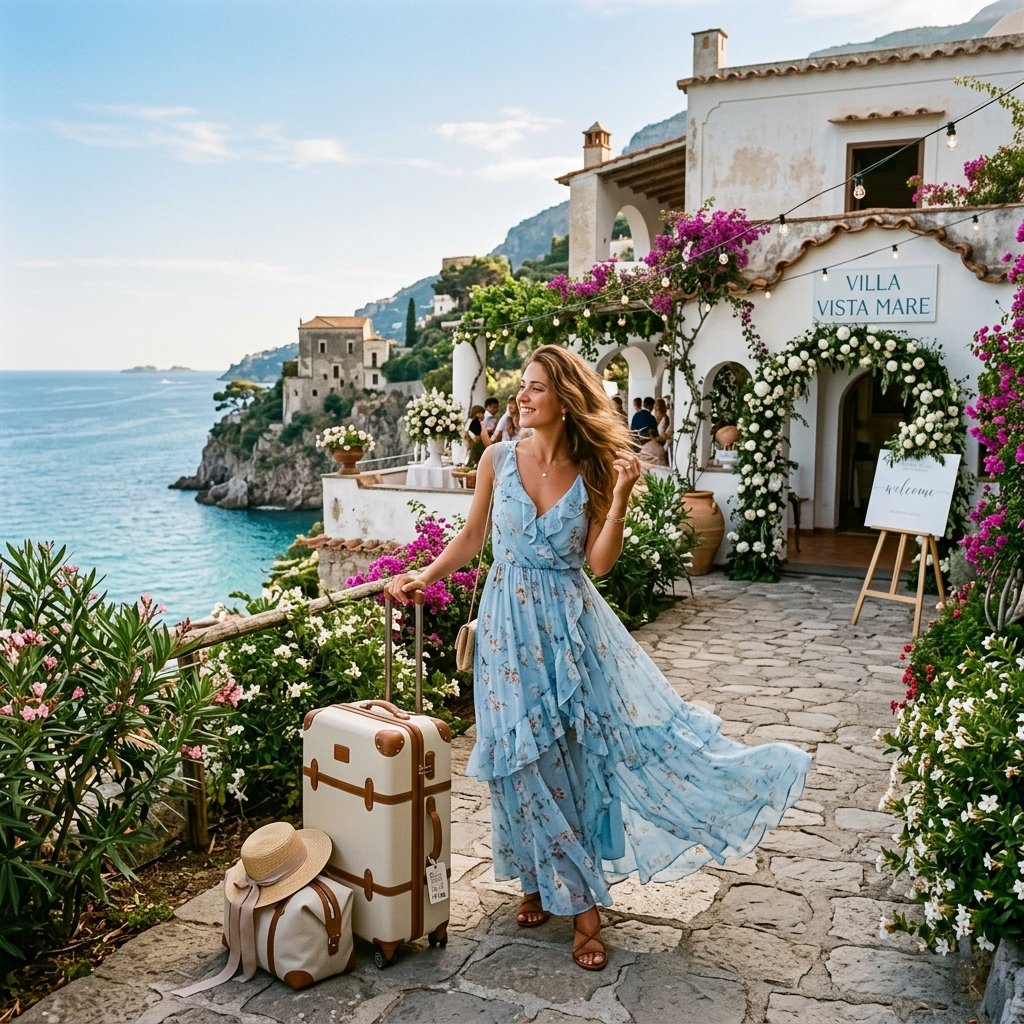
[…] mapping out the rest of the wedding weekend around the same trip may also find it useful to browse rehearsal dinner outfit ideas, since destination weekends often call for more than one carefully packed […]
[…] during a fitting rather than the morning of. The same planning applies to the night before, so the rehearsal dinner outfit guide for the bride is worth a look when mapping out the whole wedding […]