
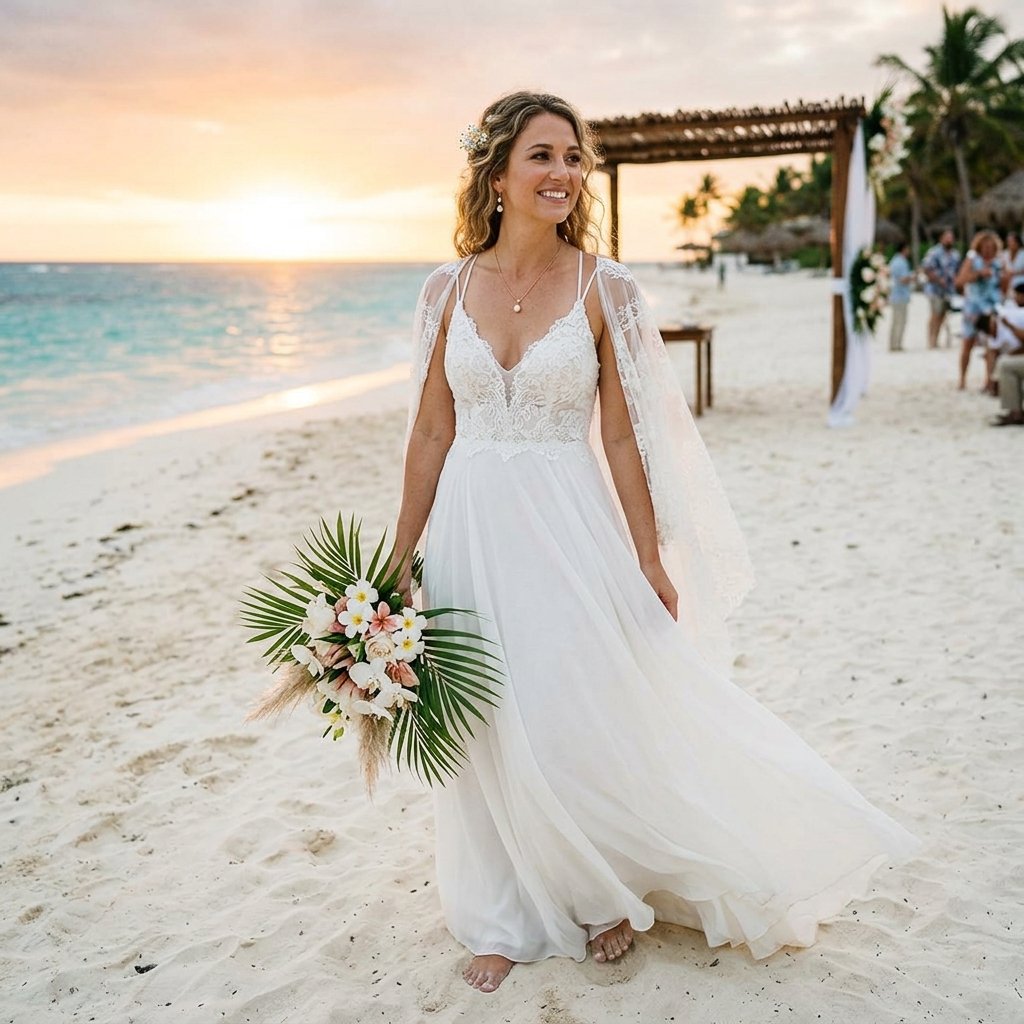
Choosing a coastline for the ceremony changes what a wedding gown needs to do. A dress admired under soft showroom lighting suddenly has to survive sand, wind, humidity, an airplane, and an ocean backdrop with a breeze that behaves like an uninvited bridesmaid.
The good news arrives quickly. A beach wedding dress is not a compromise. Many of the most breathtaking bridal looks were designed specifically for this setting, built around movement, light, and bare feet in the sand. Success comes down to choosing the fabrics, silhouettes, and details that thrive by the shore instead of fighting it.
This guide walks the destination bride through every part of that decision. It covers the styles that photograph beautifully against water, the fabrics built for heat, the train and veil questions, how to fly with a gown, and the mistakes most brides wish someone had flagged sooner.
Why Beach Weddings Change the Dress Rules
A beach ceremony rewrites the physics of wedding dressing, and understanding why makes every later decision easier.
Start with the ground itself. Sand is soft, uneven, and everywhere, so long heavy trains become sweepers, stiletto heels become tent pegs, and a dragging hem collects the shoreline as an unwanted souvenir.
The air adds its own pressure. Coastal breezes stay fairly constant, so lightweight fabrics that catch the wind look ethereal, while stiff structured skirts simply get shoved around. Humidity and heat work against the bride too, turning heavy satin and dense beading into a physical workout and making breathability a genuine comfort issue rather than a luxury.
The journey matters as well. A destination gown has to fold into a garment bag, survive a flight, and emerge wearable in a hotel room far from the original seamstress.
Every recommendation in this guide follows from those three realities. At the beach, light wins, movement wins, and simple wins. Light, moving, and simple also happen to look gorgeous in photographs.
The Fabrics That Love the Beach
Fabric ranks as the single most important decision a destination bride makes, since it determines how the dress behaves in wind, heat, and a suitcase.
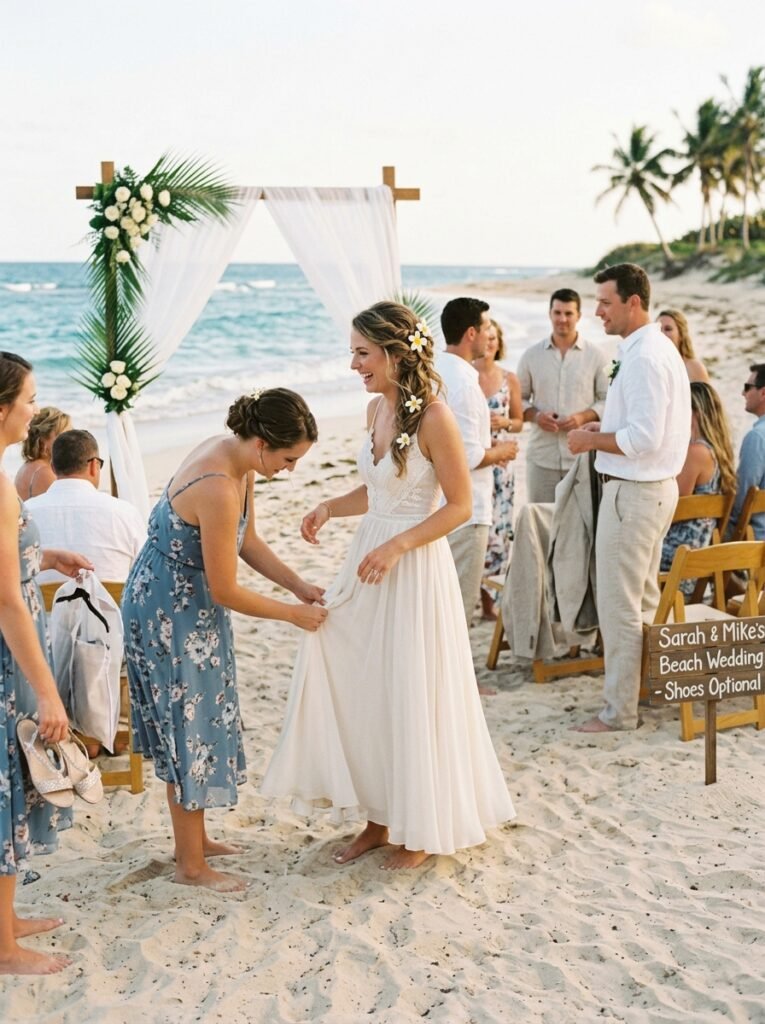
The featherweights lead the list. Chiffon floats on every breeze and forgives both heat and travel creases, earning its reputation as the queen of beach fabrics. Georgette behaves similarly with slightly more weight. Lightweight crepe works as the traveler’s secret weapon, fluid on the body and remarkably resistant to wrinkling after packing. Soft tulle brings airy romance when the layers stay light, and delicate laces add texture and barefoot boho spirit without trapping heat.
Silk charmeuse deserves an honest caveat. It drapes like liquid and photographs beautifully, but it creases easily, so a steamer needs to be waiting at the destination.
The heavyweights belong at home. Thick structured satins, stiff ballgown layers, and gowns dense with beading and boning were built for climate-controlled ballrooms. On a warm shoreline, they turn heavy, hot, and stubborn in the wind, and they punish every step through sand.
A simple test helps during fittings. Crushing a handful of the skirt gently and releasing it reveals a lot; fabric that flows back happily will love the beach.
The Most Beautiful Beach Wedding Dress Styles
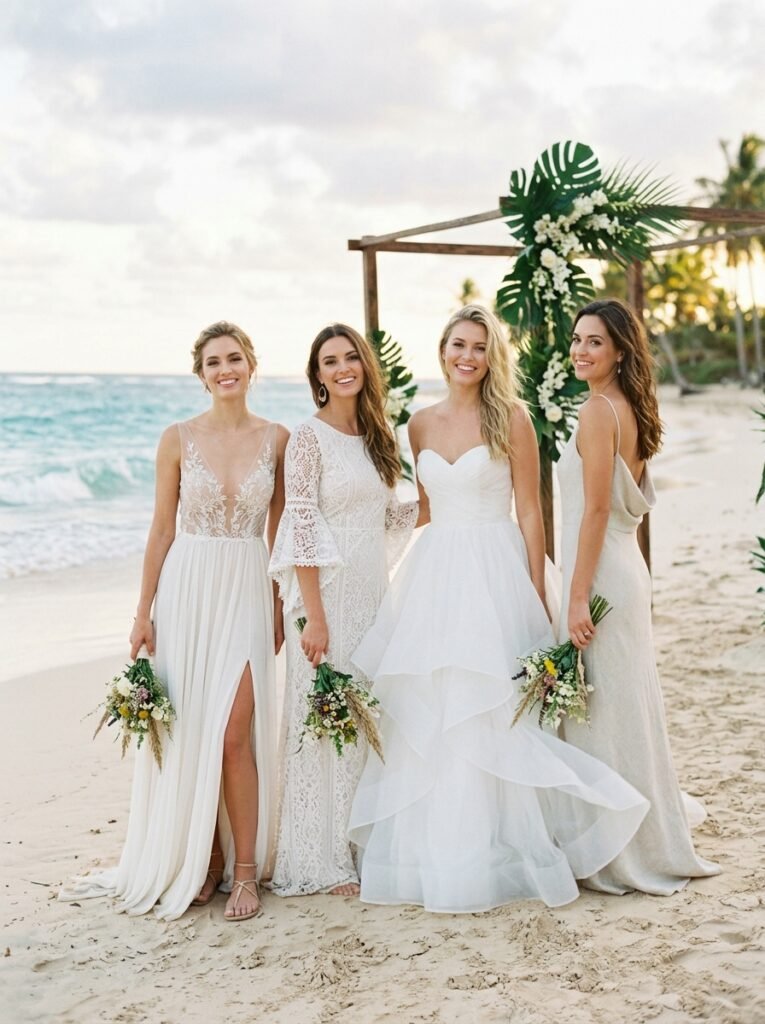
Five silhouettes account for nearly every stunning shoreline bride ever photographed, and together they cover every taste from ethereal to minimalist.
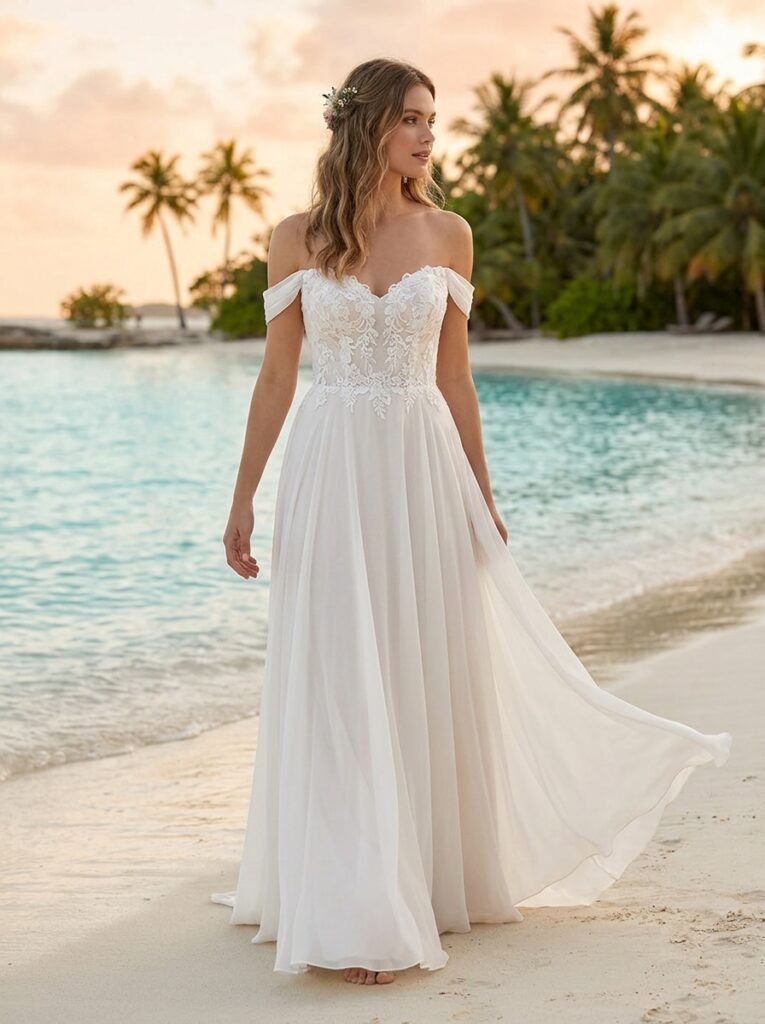
The Flowing Chiffon A-Line
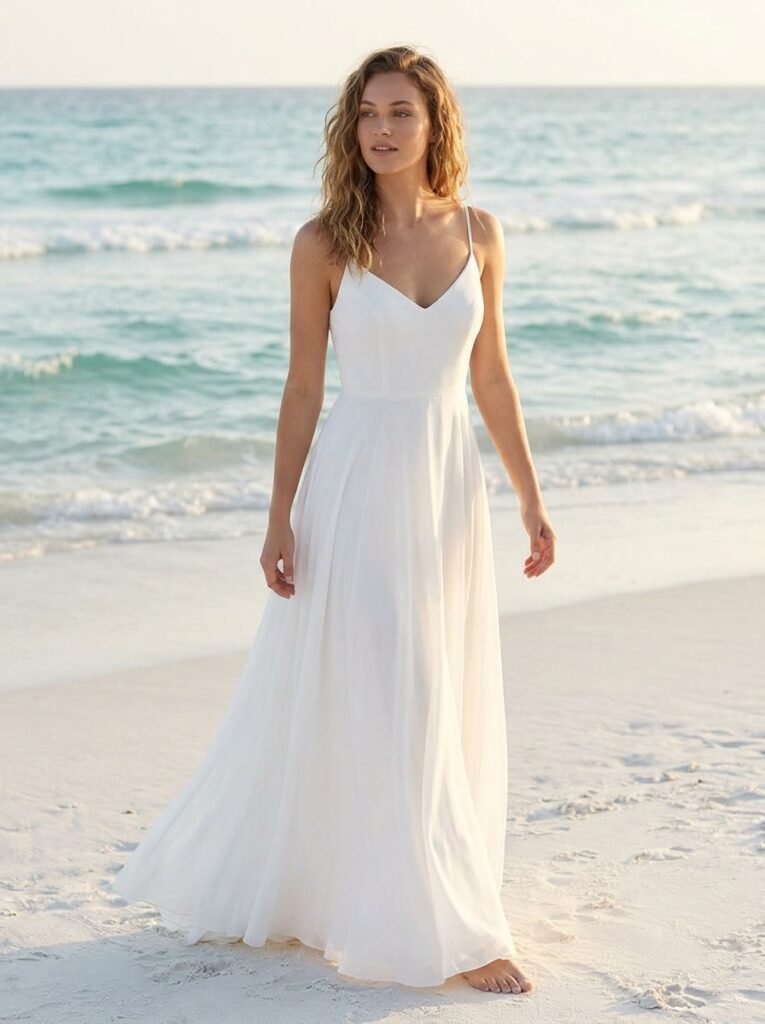
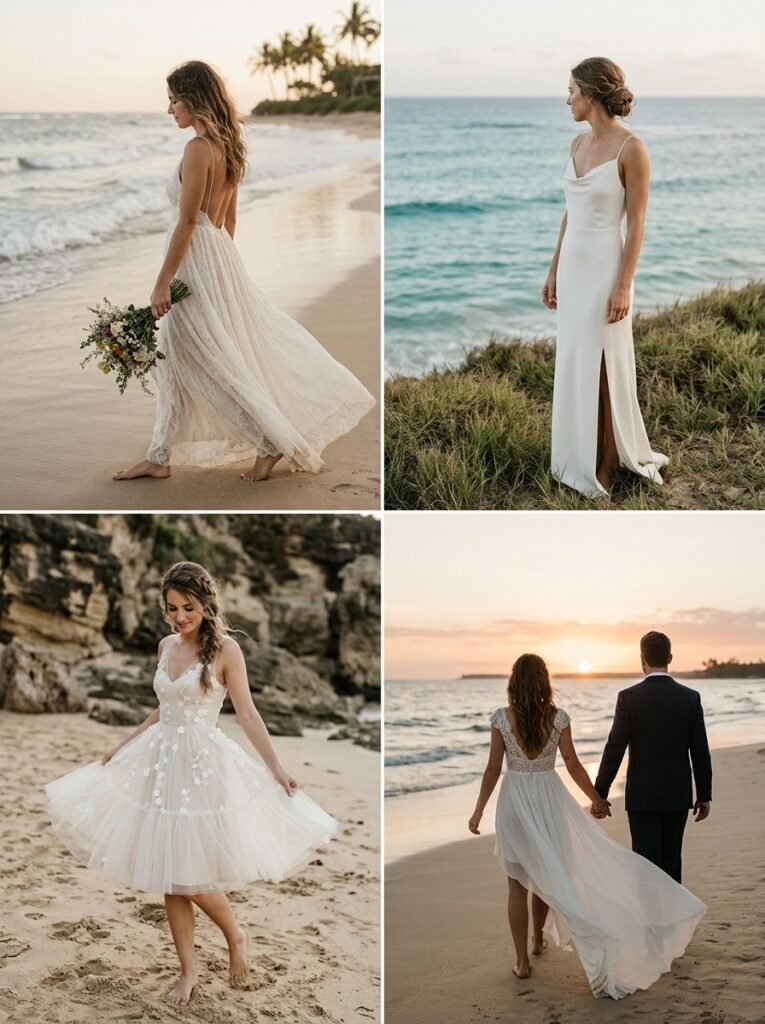
This silhouette functions as the default answer for beach brides. A soft A-line in chiffon skims the body, flares gently from the waist, and turns every gust of wind into a photograph. It flatters nearly every figure, moves beautifully during a barefoot processional, and feels almost weightless through a warm ceremony. A version with a flowing skirt and minimal lining floats best, letting the fabric create the shape instead of structure. The result stays timeless, comfortable, and endlessly photogenic.
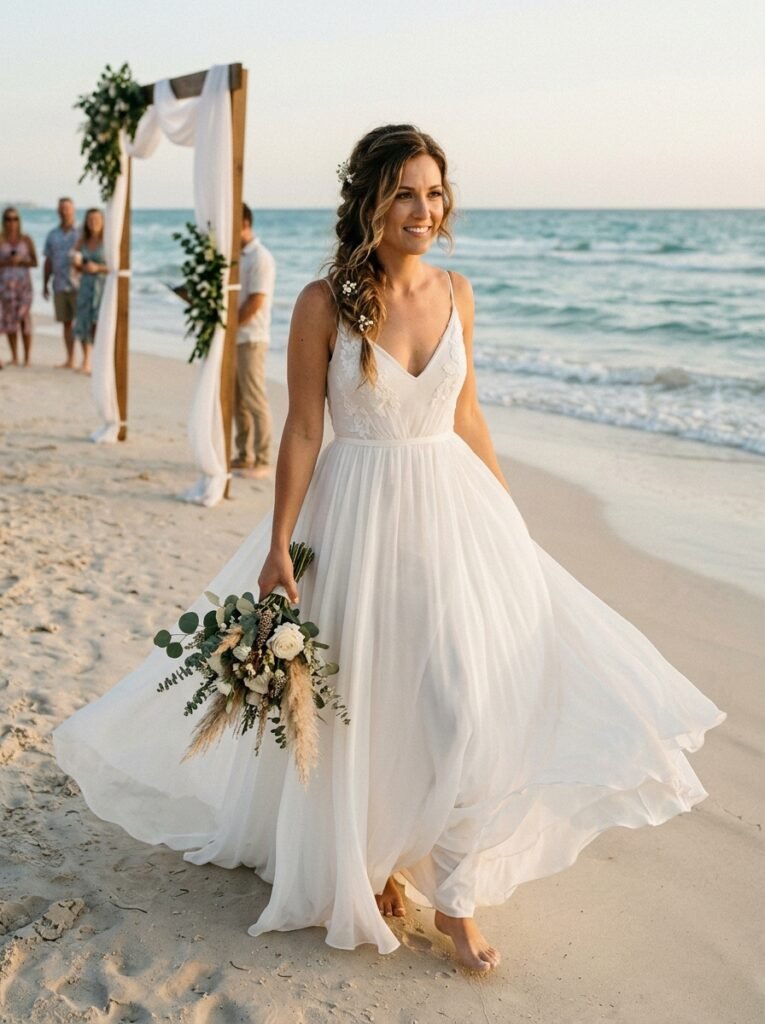
The Bohemian Lace Gown
The boho lace dress functions as the unofficial uniform of destination weddings, and it earns that reputation honestly. Soft, unstructured lace with bell sleeves, crochet panels, an open back, and a relaxed fit builds barefoot-goddess energy that suits sand better than any ballroom. The open weave of lighter laces breathes well in heat, and the easy silhouette moves naturally with the body. Paired with loose waves and minimal jewelry, the whole look feels like it grew out of the coastline rather than arriving by plane.
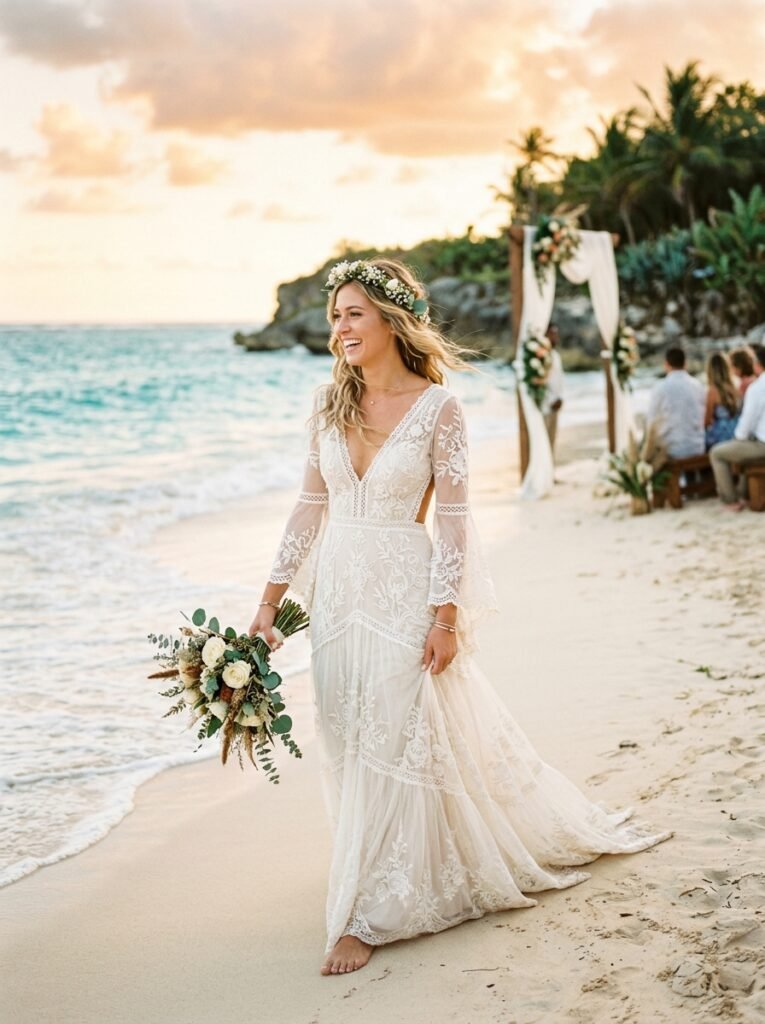
The Silk Slip Dress
For the minimalist bride, a bias-cut slip gown delivers quiet impact. It skims rather than clings, moves like water with every step, and photographs with an understated elegance that lets the ocean do the decorating. It also packs smaller than almost any other bridal silhouette, a genuine gift for a destination suitcase. Two honest caveats apply: silk needs steaming on arrival, and the unstructured cut offers little built-in shaping, so a careful fitting matters. Handled well, this silhouette reads as beach bridal at its chicest.
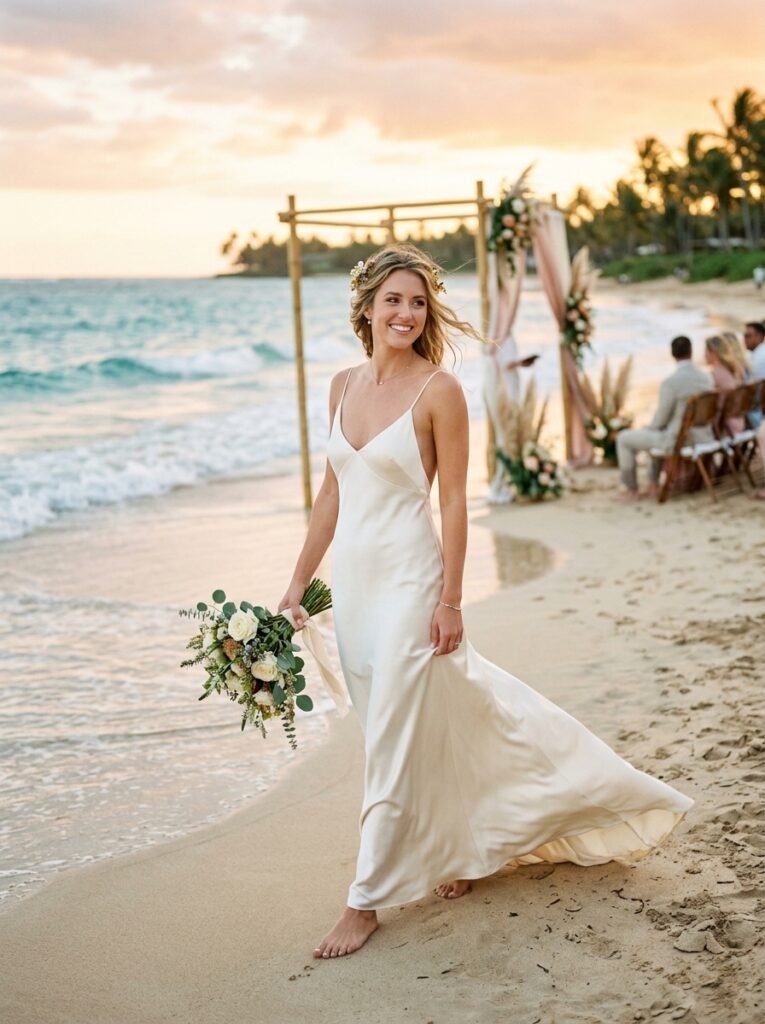
The Two-Piece or Modern Set
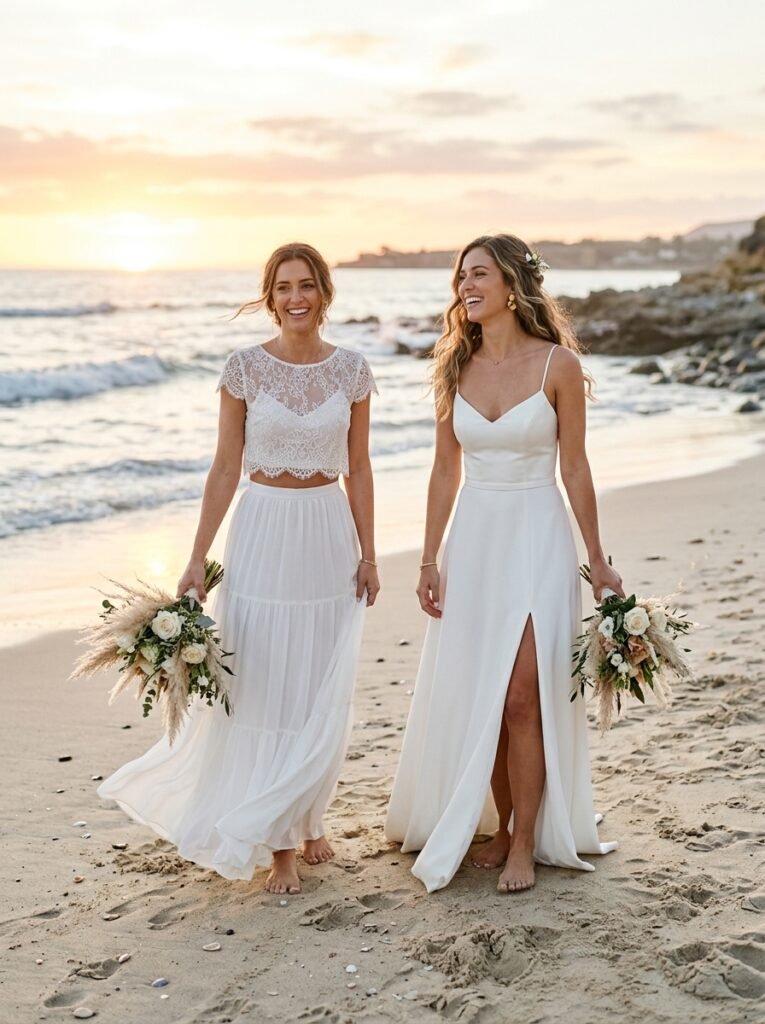
A bridal crop top paired with a flowing skirt, or a bodice-and-skirt set, has become the modern destination choice, and its practicality keeps surprising people. The separation at the waist creates genuine airflow in the heat, the pieces pack flat, and the top can be restyled for a reception-ready second look after the ceremony. This option suits laid-back beach celebrations especially well, and it lets brides with different top and bottom sizing get a noticeably better fit than a one-piece gown allows.
The Short or High-Low Dress
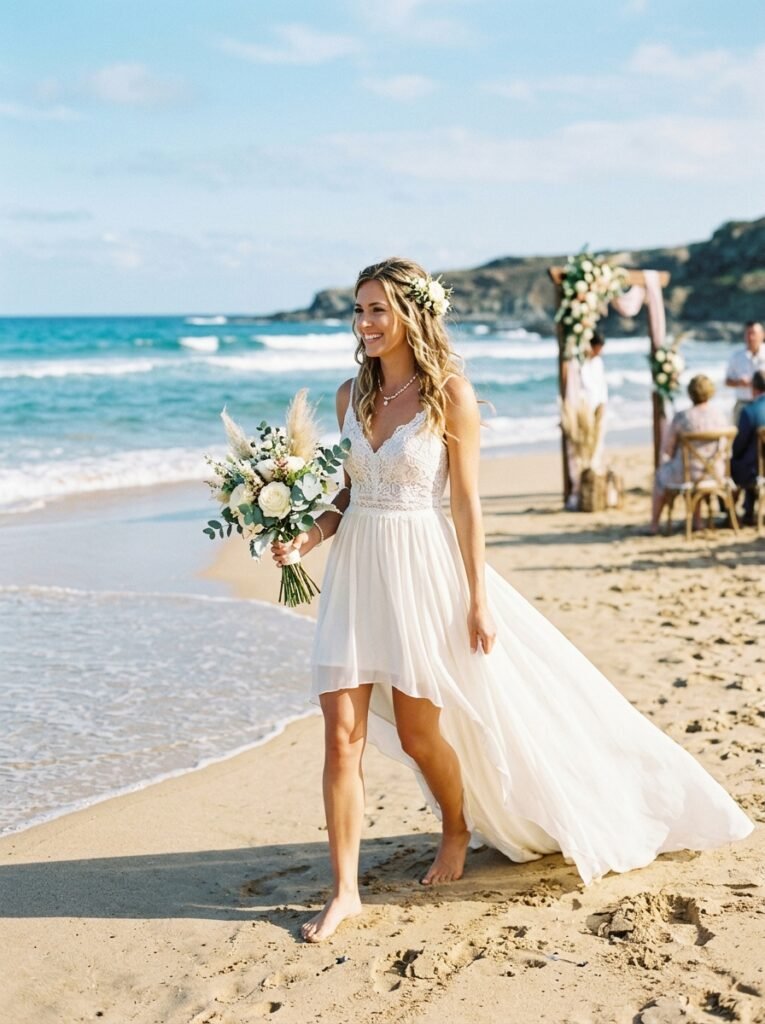
For casual shoreline ceremonies, elopements, and brides who plan to step into the water for photos, a shorter length becomes a genuine power move. A knee-length or midi dress, or a high-low hem that flows long behind and clears the sand in front, keeps the bride cool, shows off pretty sandals, and makes moving across the beach genuinely easy. Flowing fabrics and romantic details like flutter sleeves or delicate lace keep the shorter length reading unmistakably bridal.
Necklines, Backs, and Sleeves for Sun and Sea
Once the silhouette is settled, the finer details adapt the dress to the setting.
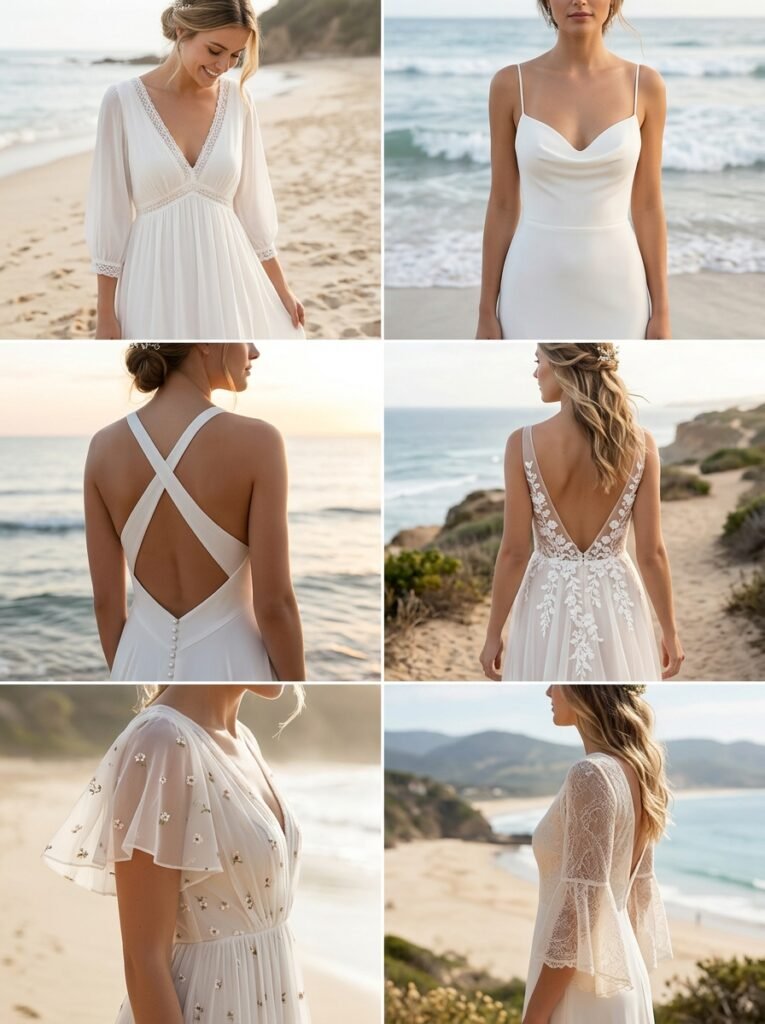
Open and low backs read as the beach signature, striking against sun-warmed skin and cooler in the heat, and they turn every walking-away shot into art. Sunscreen simply needs to reach the places the dress does not cover.
Off-shoulder necklines suit the romantic bride, framing the collarbones and catching the breeze, while halters offer real support and stay put in wind. One small warning applies to halters: tan lines can show quickly if a swimwear honeymoon follows right after.
Flutter and cap sleeves earn their place at sunny ceremonies, adding movement while giving the shoulders a little relief during a long golden-hour photo session.
A strapless bodice is the one style worth reconsidering, not because it fails outright, but because wind, dancing, and a full day of raised arms often lead to tugging in half the candid shots. Brides who love strapless should insist on an impeccable fit or add delicate removable straps as insurance.
The Train, the Hem, the Shoes, and the Veil
A handful of practical questions come up for nearly every beach bride.
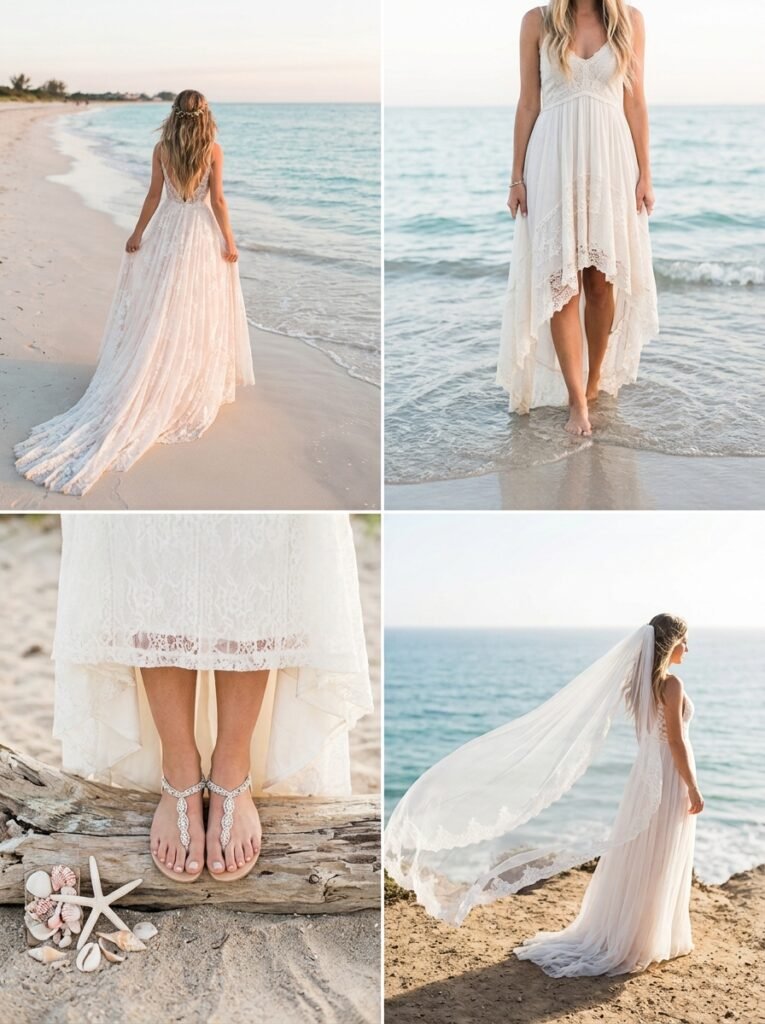
Start with the train. Cathedral trains and sand make a doomed pairing, collecting shells and seaweed before the vows even finish. A sweep or brush train adds drama in photos with far less drag, a detachable train offers both options in one dress, and skipping the train entirely keeps the bride completely free. Whatever gets chosen, a bustle for the reception is worth asking about.
The hem should hover rather than drag. Having it finished to graze the top of the foot, in the exact shoes worn on the day, lets it float over sand instead of plowing through it.
Shoes lose out to physics on sand, since heels sink almost instantly. Embellished flat sandals, barefoot sandal jewelry for a true toes-in-the-sand ceremony, or espadrille wedges for a venue with decking or a boardwalk all work far better.
The veil deserves an honest conversation too. A long veil in coastal wind tends to become a kite, stunning for exactly one photo and chaotic for the rest. Brides who want a veil should choose a shorter length anchored with a firm comb, or consider fresh flowers, a delicate vine, or loose waves that let the wind style the hair instead of fighting it.
How to Travel With a Wedding Dress
Getting the gown to the destination intact counts as its own small project, and a few steps remove most of the risk.
The dress should never get checked. It travels in the cabin, folded gently in a sturdy garment bag with tissue cushioning the folds. Airlines vary on closet space, so calling ahead to ask about storage on the specific aircraft helps avoid surprises at the gate. The Transportation Security Administration’s official guidance on what travelers can bring through security confirms that wedding gowns are permitted through checkpoints. Dresses that cannot lay flat for the X-ray get screened manually instead, so a little buffer time for screening is worth planning for.
Arriving two or three days early creates a helpful buffer. That window covers delayed flights, gives the dress time to hang and relax, and leaves room for a professional steam if needed. Unpacking the gown immediately upon arrival, hanging it high, and letting gravity begin the de-wrinkling process all help. A hot shower running with the dress nearby in the bathroom softens stubborn creases, and a handheld steamer finishes the job.
Some brides ship the dress ahead to a venue coordinator with insurance and tracking attached. That approach can work, though most stylists agree the safest place for a wedding gown is within arm’s reach the entire way there.
Practical Tips for the Destination Bride
A few planning habits make the entire dress journey smoother.
- Order the dress six to nine months ahead and mention the beach destination at the very first boutique appointment.
- Schedule the final fitting one to two weeks before flying, close enough to be accurate and early enough to fix surprises.
- Run a full movement rehearsal in the dress, including walking, sitting, hugging, raising arms, and dancing.
- Wear the dress for an hour somewhere warm to preview how the fabric feels against real heat.
- Pack a mini emergency kit with safety pins, fashion tape, a stain pen, and a small sewing kit.
- Plan the ceremony for late afternoon so both photos and comfort benefit from golden hour instead of noon glare.
Each of these steps costs only minutes and saves the day at least once.
Common Beach Wedding Dress Mistakes
Destination brides tend to stumble in the same few places, and every one of them is avoidable.
Buying for the showroom instead of the shoreline ranks as the biggest mistake. A dramatic structured gown that stuns under boutique lighting can turn into a heavy, wind-fighting burden on sand, so keeping the beach in mind at every fitting matters.
Heels cause trouble next. Brides sink their way through processionals in stilettos every season, a problem a quick venue check would have prevented.
The cathedral veil turning into a kite is a classic mishap, along with hems cut for ballroom floors that drag through wet sand within minutes of arriving.
Checking the gown as luggage counts as the true heartbreaker, one lost bag away from disaster, and it never needs to happen.
Skipping the heat test surprises many brides, since dense fabrics and full linings that felt fine in air-conditioned fittings can become saunas by four in the afternoon.
Leaving the steaming plan to chance rounds out the list. Even forgiving fabrics emerge from a suitcase needing help, and beach towns do not always keep a presser on standby.
What Bridal Stylists Wish Destination Brides Knew
Stylists who dress beach brides all season tend to repeat the same wisdom.
Movement is the aesthetic. The wind that worries so many brides is the very thing that makes shoreline photos feel magical, so a dress that dances with it works better than one built to resist it.
Lighter never means less bridal. An unstructured chiffon or lace gown reads every bit as ceremonial as a ballgown, just spoken in the beach’s own language.
Mentioning the word destination at the first appointment pays off. Good consultants immediately steer toward travel-friendly fabrics and construction, and that guidance costs nothing extra.
Comfort shows up in every photo. A bride who feels cool, unpinched, and free to move looks radiant in candids in a way structure alone cannot fake.
Finally, buying for the location beats buying for the lighting. The dress has one real job, and that job happens on sand at golden hour, not under a showroom chandelier.
Frequently Asked Questions
What kind of dress is best for a beach wedding?
A lightweight, flowing dress works best, with the chiffon A-line and the bohemian lace gown standing out as the two most reliable choices. Breathable fabric, minimal structure, a sweep train or none at all, and a silhouette that moves easily in wind and sand all matter more than a dramatic showroom silhouette.
What fabrics work best for a beach wedding dress?
Chiffon, georgette, lightweight crepe, soft tulle, and delicate laces handle heat, wind, and travel beautifully. Heavy structured satins, dense beading, and stiff ballgown layers trap heat and fight the coastal breeze, so they generally work against a beach setting.
Can a bride wear a train on the beach?
Yes, as long as it stays short. A sweep or brush train adds drama without dragging, and a detachable train provides both looks in one gown. Cathedral-length trains tend to collect sand and seawater, so most beach brides skip them entirely.
How should a bride travel with a wedding dress?
Carrying it onto the plane in a sturdy garment bag, never in checked luggage, protects the gown best. Asking the crew about closet space at boarding, arriving two or three days early, hanging the dress immediately, and packing or booking a steamer all reduce risk on arrival.
What shoes pair well with a beach wedding dress?
Flat embellished sandals, barefoot sandal jewelry, or espadrille wedges all work as beach-proof options, since stiletto heels sink straight into soft sand. The hem should be finished to match whichever shoes get worn on the actual day.
Final Thoughts
The perfect beach wedding dress is not a scaled-down ballroom gown. It belongs to its own category of bridal style, built from light fabric, easy movement, and details chosen for salt air instead of chandeliers. Choosing within that language turns the setting from a challenge into a co-designer.
Picking the featherweight fabric, keeping the train short and the shoes flat, rehearsing the movement, and guarding the gown in the cabin the entire way there covers the essentials. Brides mapping out the rest of the wedding weekend around the same trip may also find it useful to browse rehearsal dinner outfit ideas, since destination weekends often call for more than one carefully packed look.
Somewhere out there is a stretch of sand with a bride’s name on it, golden hour already scheduled. With the right fabric, silhouette, and travel plan, the dress worn on that sand will be exactly, beautifully right.



[…] focus on the natural surroundings. Brides comparing a beach-specific wardrobe can also browse this beach wedding dress guide for more coastal-ready […]
[…] planning an outdoor or destination celebration around the same weekend may also want to browse beach wedding dress ideas for looks that carry the same effortless spirit into the ceremony […]