
By the time the dress comes off its hanger, a good share of the wedding photographs may already exist. There is a hair dryer humming in one corner, a steamer hissing in another, a half-finished coffee on the windowsill, and somebody fastening a bracelet on somebody else. All of it happens while the bride is wearing something that is not the dress.
That is why the robe deserves a little more thought than it usually gets. It appears in the candid shots, the detail shots, and the quiet moment at the window. It has to look good in a close-up and in a crowded room, stay comfortable through hours of sitting, and avoid wrecking a finished hairstyle.
This guide looks at the options in order: robe or pajamas, the fabrics that handle light well, cuts that behave in candid frames, color choices for the room, what goes underneath, five complete getting-ready sets, and how to dress the rest of the bridal party around the bride.
The Morning Is Its Own Photo Shoot
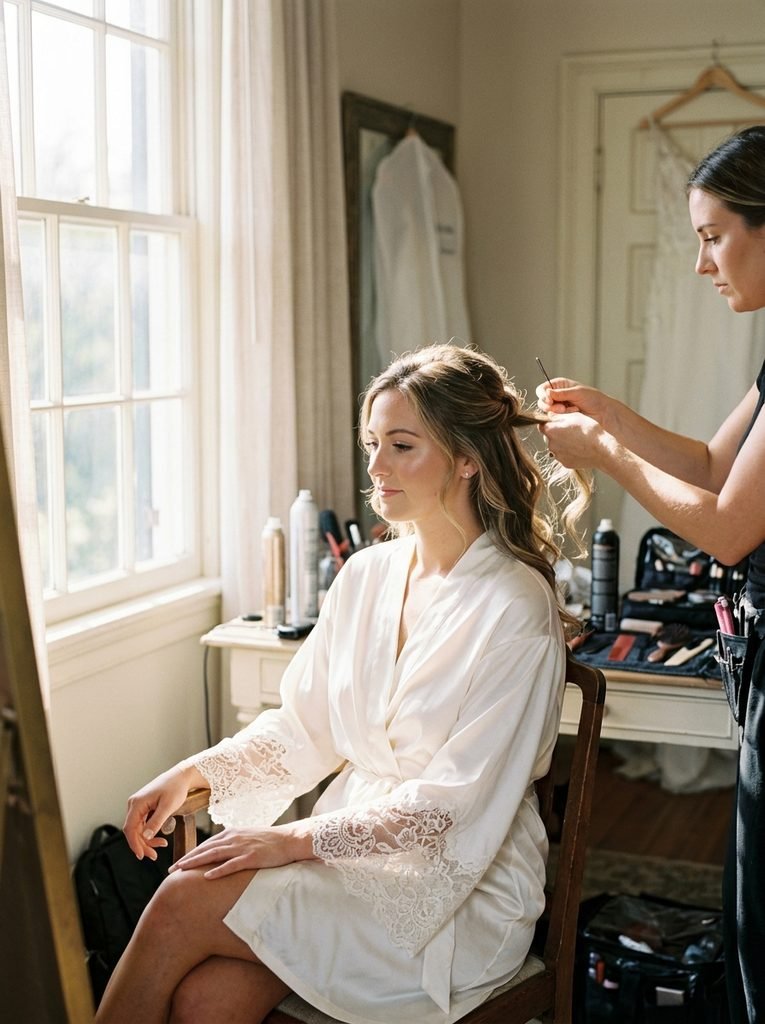
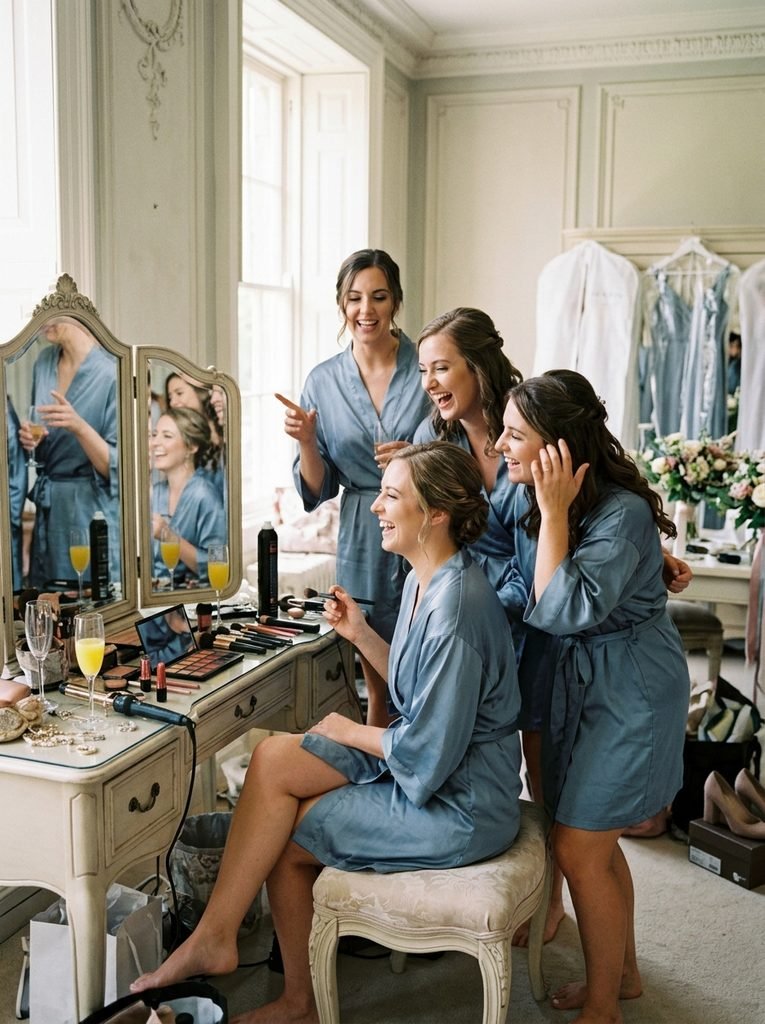
Wedding-morning photography has its own rhythm. There are tight shots of makeup brushes and curling irons, wider frames of friends laughing around a mirror, and posed portraits near a window. The bride is usually in a robe, a set, or a dressing gown for all of them.
A few features of that setting make clothing decisions different from the ceremony:
- Most of the time is spent sitting, often with arms raised for hair and makeup
- Lighting is usually a mix of window light, lamps, and ring lights, so colors shift from corner to corner
- Hairstyles and faces are finished before clothes are, so anything pulled over the head is a risk
- Several people move around the same small room, which makes snagging, tripping, and fabric slippage more likely
A robe suits this workflow because it opens at the front and slips on and off without touching hair. Pajama sets and shirts can work as well, but they have to follow the same logic. Anything that needs to come off overhead or sits tightly at the neckline is better saved for after the hair is done.
Robe, Pajama Set, or Something Else?
Robes remain the most common getting-ready choice, though they are no longer the only one. Each option has strengths.
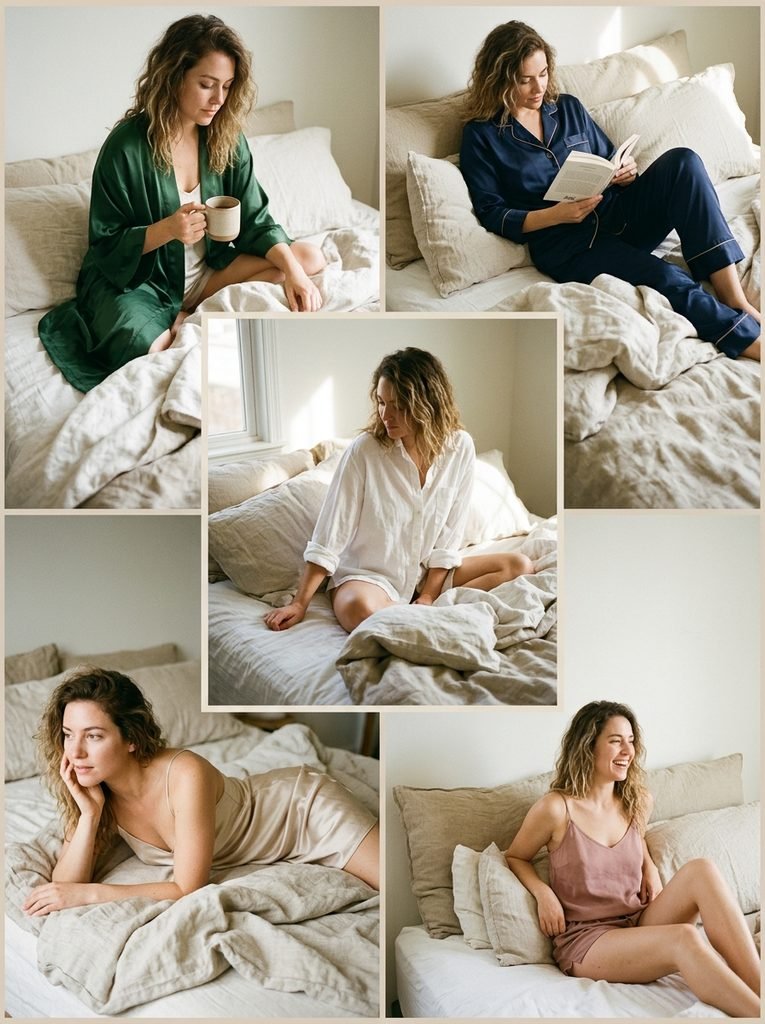
The robe. A classic wrap robe is easy to wear and easy to remove, and it gives the photographer a flowing shape to work with. It also hides whatever is underneath, which helps when the dress has an unusual neckline.
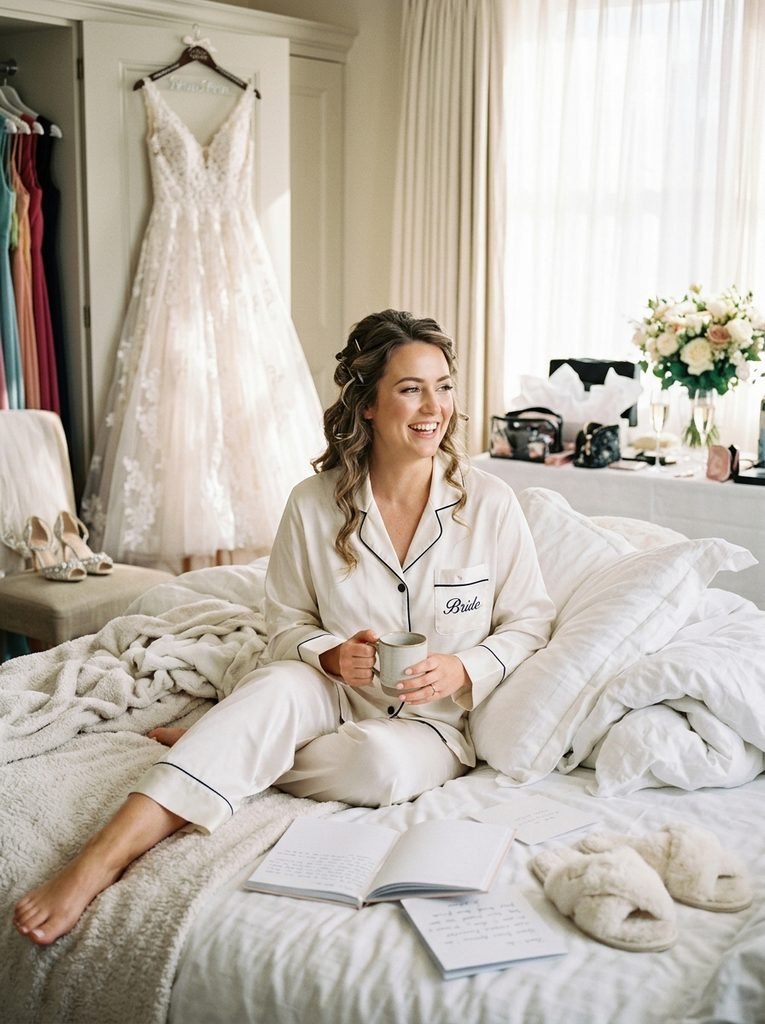
The matching pajama set. A button-front top with shorts or trousers feels relaxed and playful. Some brides wear pajamas through hair and makeup and then switch to a robe for portraits. Nashville Bride Guide notes this approach as a popular way to combine comfort with a more polished photo.
An oversized shirt. A crisp white poplin shirt worn open over a slip looks modern and understated. It suits small weddings, courthouse ceremonies, and brides who find robes a bit costume-like.
A slip dress with a separate robe. This pairing is a quietly elegant option. The slip looks like an outfit on its own, so the bride can take off the robe for portraits at the window without changing anything.
A cami set. A soft camisole and shorts under a light robe is practical for warm weather. It also moves easily during active moments like lacing shoes or zipping a dress.
Choose according to the tone of the day. A formal ballroom wedding tends to look right with a long satin or lace robe, while a garden or beach wedding suits something looser and lighter.
Fabrics That Catch Light Without Glare
Fabric makes the largest difference in how a robe photographs. Satin is the popular favorite, though not all satin behaves the same way.
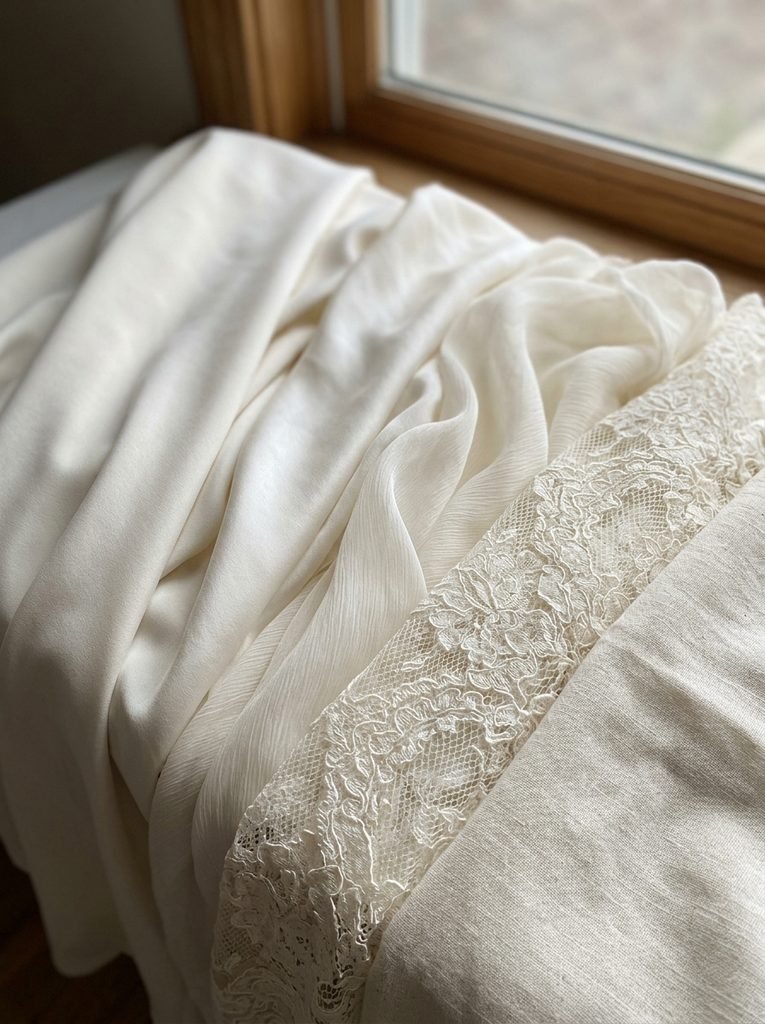
Matte satin and silk. These fall softly and reflect light gently. They look luxurious in window light and avoid the hard shine that cheaper finishes can produce. Washable silk is a practical alternative to traditional silk because it tolerates travel better.
Chiffon or georgette overlays. A sheer outer layer adds movement. A chiffon robe over a satin slip catches the breeze from an open window and gives candid shots an airy look.
Lace trim. Lace borders on cuffs, collars, or hems add texture and read clearly in close-ups. Lace that sits near the face should be soft, since scratchy edges will bother the neck by midday.
Cotton and waffle weaves. Cotton robes feel comfortable and appear natural in daylight. They suit casual weddings and anyone who prefers a spa-style look.
Velvet and plush fabrics. For winter weddings, velvet or soft fleece robes add warmth and richness, particularly in deep colors.
Some finishes work against the camera. Homebodii’s guide to bridal robes points out that stiff polyester satin tends to crease easily and can reflect flash harshly, and that very thin satin can look see-through in bright light. A quick test before the day helps: stand beside a window, move around, and check how the fabric catches the light and whether it wrinkles after sitting for ten minutes.
Cuts That Flatter in Candid Frames
The shape of a robe matters as much as its fabric, because getting-ready photos are rarely posed.
Length
Knee-length robes feel playful and are easy to move in. Mid-calf styles are the most versatile, and they look elegant without dragging on the floor. Floor-length robes offer the most drama in portraits, though they can be hot in summer and tricky to manage on stairs.
Sleeves
Kimono sleeves are loose and easy to move in. Bell or flutter sleeves add movement, which photographs nicely when arms are raised. Fitted sleeves look neat but can restrict hair and makeup. Whatever the style, the cuffs should sit clear of the wrists so rings and bracelets remain visible in detail shots.
Neckline and Closure
A wrap robe with a shawl collar looks classic and sits comfortably over most necklines. A deep V should stay in place when the bride leans forward, so check it in the mirror before buying. A self-tie waist helps adjust the fit through the day, and a hidden snap at the crossover can stop gaping.
Pockets
A pocket might seem like a luxury, but it is helpful for lip balm, a phone, or a tissue during the long wait.
One last fit point is ease. A robe should be loose enough to wear over a slip or set without pulling across the shoulders. Sizing up slightly is usually better than wearing something tight for several hours.
Choosing Color for the Room, Not Just the Robe
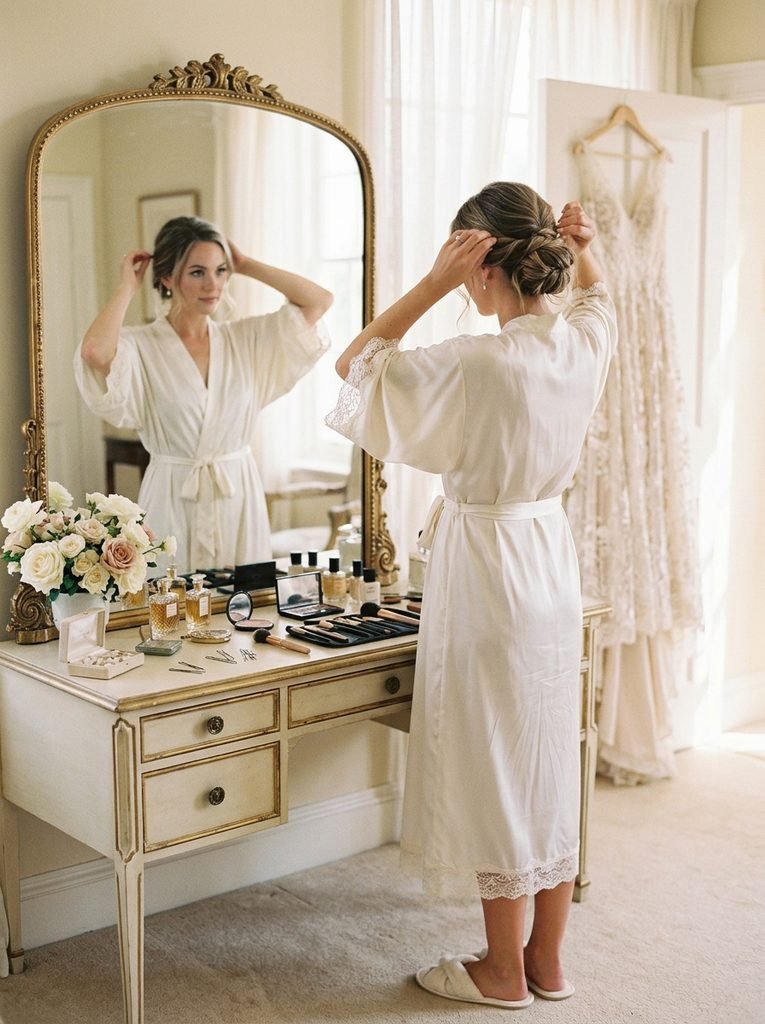
Most brides wear ivory or white robes, and most bridal parties wear a coordinated color. The surrounding room matters just as much as the garments.
Hotel suites and rented homes often have strong, warm lamp lighting and neutral walls. Warm light can turn bright white robes slightly yellow and make cool shades like icy blue appear flat. Ivory, champagne, and soft blush tend to look more natural under warm bulbs, while crisp white looks best near large windows with daylight.
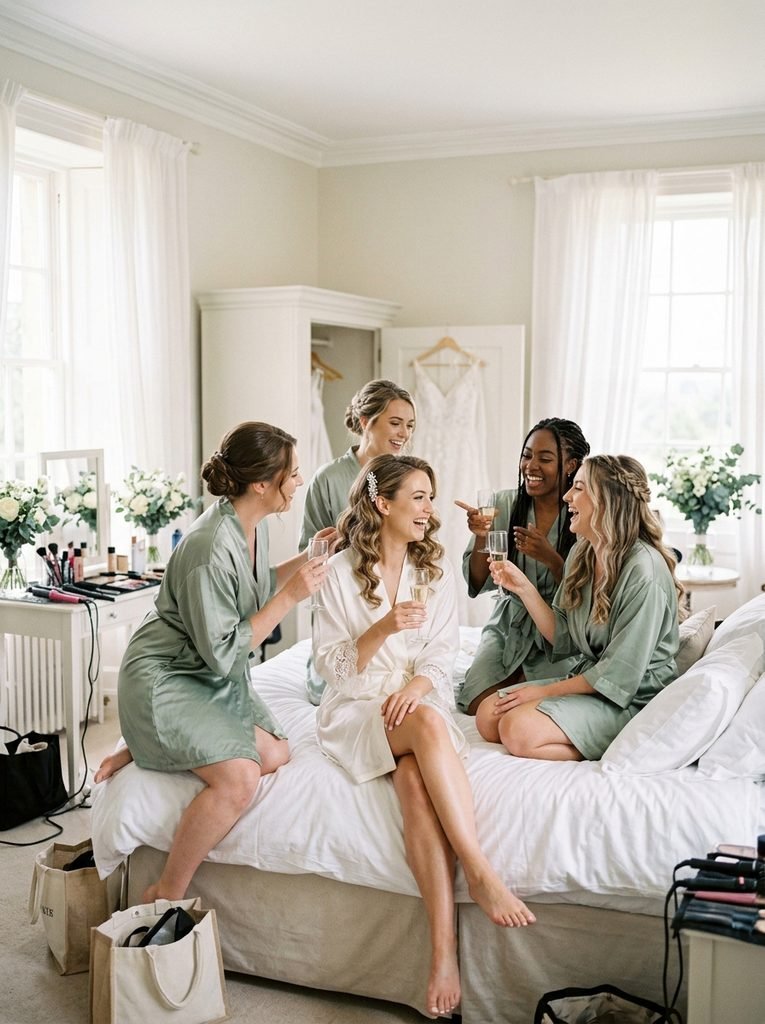
For bridesmaids, a muted color from the wedding palette usually photographs best. Dusty blue, sage, mauve, and terracotta stand out gently against a white robe without clashing. Jewel tones such as emerald or deep burgundy create stronger contrast and suit winter or evening weddings. Neon and very bright shades can cast color onto skin, so they are safer avoided.
Patterns work well when they are subtle. A small floral print on satin or a tonal stripe adds interest without competing with the bride. If everyone wears a different pattern, keep the color family consistent so the group looks cohesive in wider shots.
What to Wear Underneath
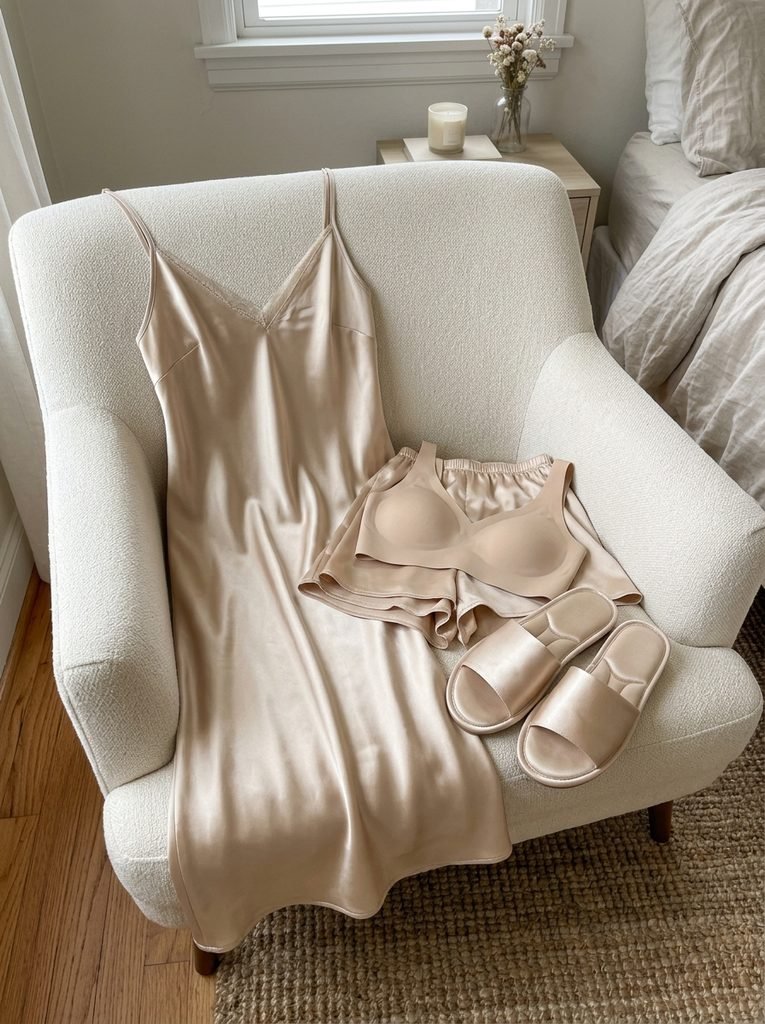
Because robes open at the front and move around, whatever sits beneath them is visible at times. A slip dress, a chemise, or a cami set in a smooth fabric keeps the look neat. Nude or champagne tones usually disappear best under ivory, and matching the color to the robe gives the cleanest result.
Avoid anything with tight elastic, seams, or straps that might leave marks before the dress goes on. Strapless gowns in particular are easier to wear if the bride has not spent hours in a snug bra. A soft bralette or a slip with a built-in cup is often more comfortable for the wait.
It also helps to think about the dress itself. A gown with a low back may need a different undergarment than a high-neck style, and it is wise to confirm the final choice during a fitting rather than the morning of. The same planning applies to the night before, so the rehearsal dinner outfit guide for the bride is worth a look when mapping out the whole wedding weekend.
Getting-Ready Sets for Different Wedding Moods
The Lace and Satin Morning
A long ivory robe with lace cuffs, worn over a champagne satin slip. This is the classic look for a formal ceremony, and it photographs beautifully next to a mirror or a tall window. Add pearl earrings and slim slippers.
The Pajama Set Morning
A satin pajama set with contrast piping, such as ivory trimmed in navy, with a robe kept nearby for portraits. It suits brides who prefer comfort and a slightly playful tone, and it works well with matching sets for the bridal party.
The Crisp White Shirt Morning
An oversized white poplin shirt over a slip or bike shorts, sleeves rolled to the forearm. It feels modern and relaxed, and it suits courthouse and small-venue weddings. A simple gold necklace is all it needs.
The Summer Garden Morning
A lightweight chiffon robe over a cotton cami set, with bare feet or woven slides. The chiffon moves with the breeze, and the cotton underneath stays cool. This pairing suits outdoor weddings and warm climates.
The Winter Cozy Morning
A velvet or plush robe in champagne or deep green over a silk set. It brings warmth and texture to a cold-weather morning and gives the photographer rich color against snowy windows.
Dressing the Bridal Party Around the Bride
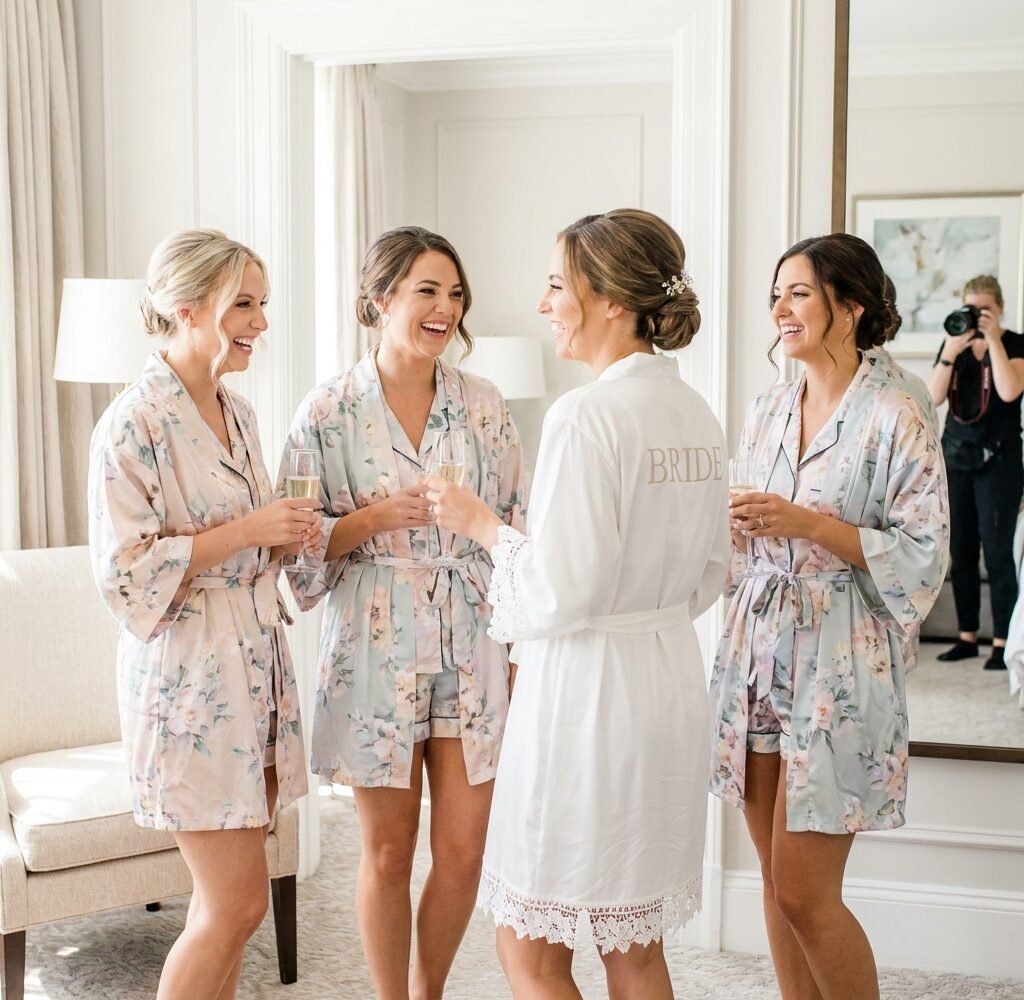
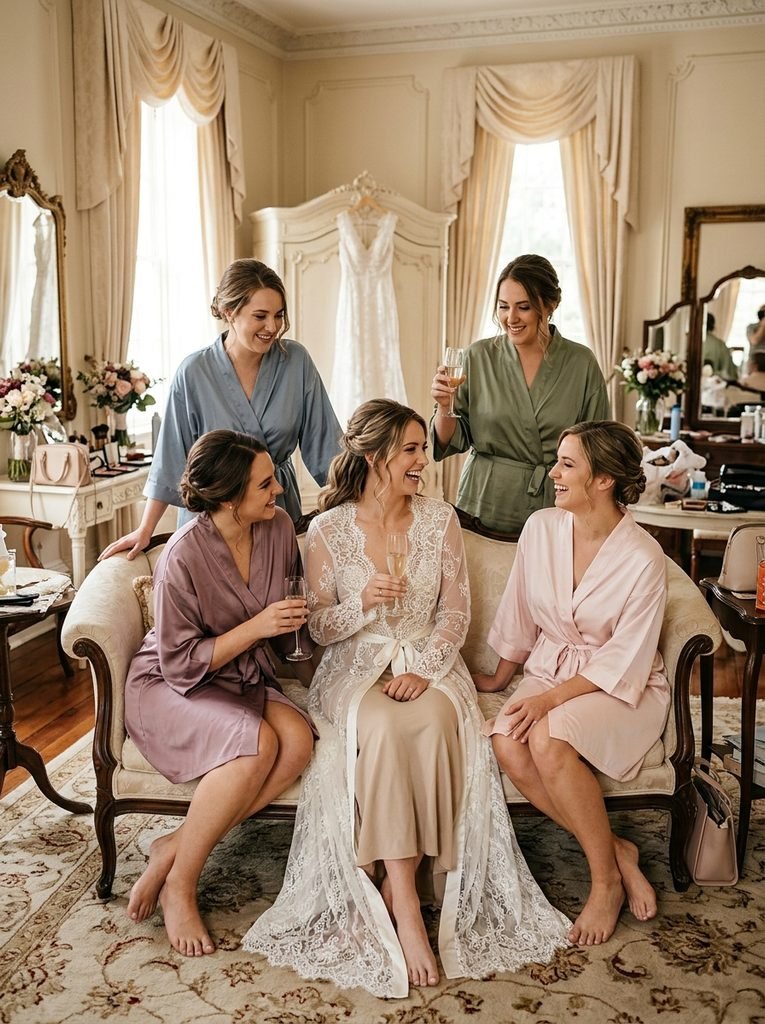
A bridal party in matching robes looks cohesive in group shots. Some details are worth checking in advance.
Matching style and color is the simplest approach, but variety can work too. Everyone can wear the same color in different cuts, which suits different preferences and climates, or the same cut in slightly different shades from one palette. The bridesmaid dress guide goes through how to balance a group look when people have different tastes and comfort levels.
Sizing and shipping deserve early attention. Robes are often sold in limited size ranges, and personalized ones can take a few weeks to produce. Ordering well ahead of the wedding leaves time for exchanges.
The bride’s robe should stand apart gently. A different color, a longer length, or extra trim distinguishes her without overpowering the group. Many brides also add small touches to the party’s robes, such as initials on the sleeve or a role stitched on the back.
Personal Touches That Show Up in Photos
Small personalization often turns a robe into a keepsake. Monograms on a breast pocket or sleeve, a word like “Bride” across the back in script, or the wedding date embroidered on the hem all appear in photographs. Choose thread colors with enough contrast to read from a distance, and keep lettering simple enough to stay legible when the fabric folds.
Other details extend the theme. A wooden hanger with the bride’s name looks lovely hanging on the door with the dress. Matching slippers, a silk eye mask, and a ribbon around the robe’s belt all make good detail shots. Placing the robe over a chair with flowers or jewelry nearby gives the photographer a ready-made still-life.
Small Practical Details Before the Day
A few simple steps keep the robe photo-ready:
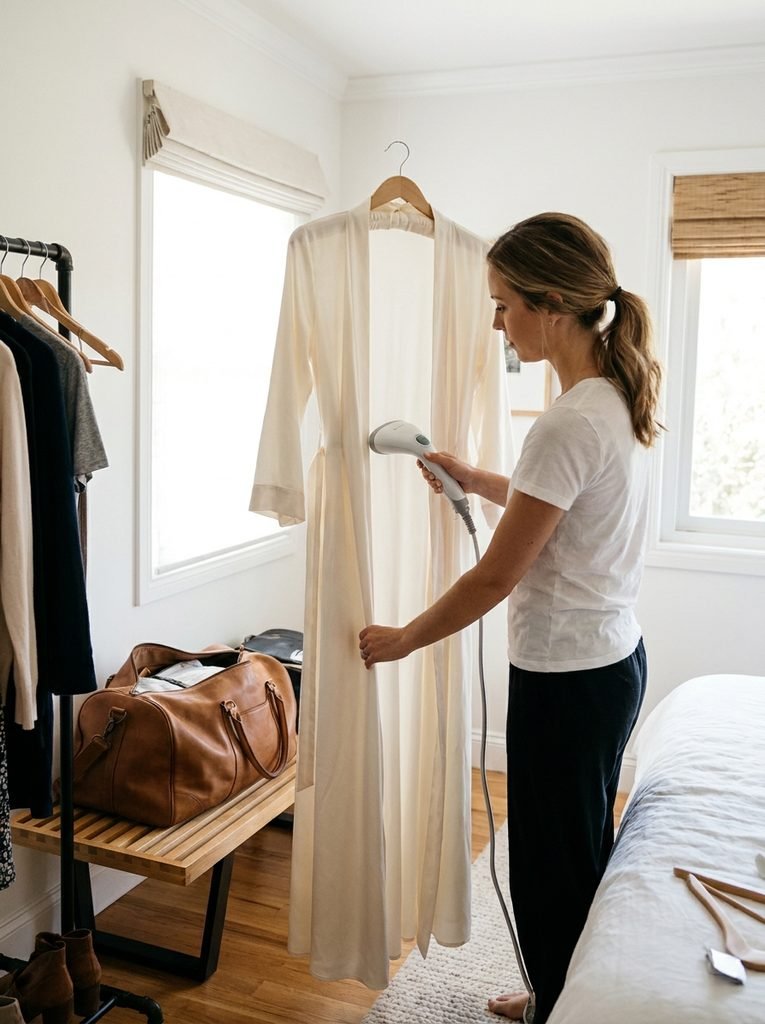
- Steam it the night before, since satin and chiffon wrinkle easily and creases show in close-ups
- Wear it once at home to test comfort, closure, and how it moves while sitting
- Check seams and trims for anything that might catch on hairpins or jewelry
- Hang each robe on its own padded hanger so it does not crush in a suitcase
- Pack a spare in case of spilled coffee or makeup smudges
- Keep a lint roller nearby, particularly for velvet and dark colors
After the wedding, the robe can keep working. Many brides take it along on the honeymoon, and the honeymoon outfit guide shows how a robe and a few simple pieces fill a suitcase efficiently. For a wider view of dressing for pictures, the engagement photoshoot outfit guide covers color and fit considerations that apply well beyond one session.
Quick Answers Before You Order
Should the bride’s robe be white?
Ivory, white, champagne, and blush are all popular, and the best choice depends on the room lighting. Ivory and champagne tend to look softer under warm lamps.
Is satin too shiny for photos?
A soft or matte satin photographs well. Stiff, glossy satin is more likely to glare and wrinkle.
How early should robes be ordered?
A couple of months ahead is a comfortable window for sizing, personalization, and any exchanges.
Are pajamas better than robes?
Neither is better. Robes are easier with finished hair and look formal, while pajamas feel relaxed and suit casual weddings.
What length works best?
Mid-calf is the most versatile. Knee-length suits warm weather and floor-length suits formal weddings with plenty of space.
The First Photographs of the Day
Getting-ready photographs capture a quieter version of the wedding, full of nerves, laughter, and small rituals. The robe or set that appears in them does not need to be elaborate, but it should be comfortable, flattering in motion, and well matched to the room.
Pick a soft fabric, choose a cut that moves easily, coordinate colors with the room and the bridal party, and steam it the night before. The rest will be taken care of by the people in the frame.


Leave a Reply