
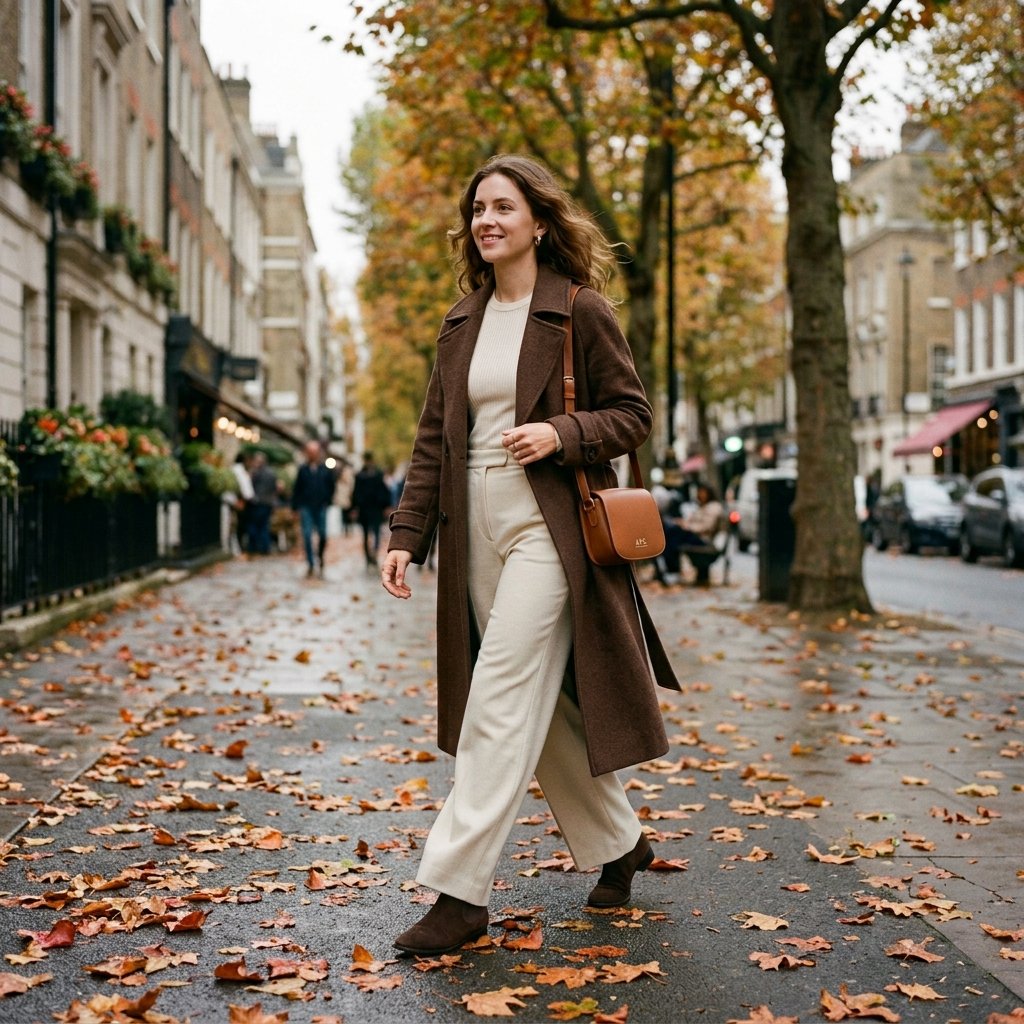
Ask most people what a fall outfit looks like and the answer arrives fast: jeans, boots, and some kind of sweater. It’s not wrong exactly. It’s just incomplete. Somewhere between September and December, an entire wardrobe gets reduced to one silhouette repeated in slightly different colors, while everything else sits in the closet waiting for a season that keeps forgetting about it.
That habit is worth questioning. Not because sweaters are a problem, but because leaning on one piece for three months of dressing gets predictable fast, and it leaves a lot of genuinely useful clothing unworn. Fall has more range than that. Structured jackets, vests, denim in different weights, trousers with real drape, even dresses with the right layer underneath, all of it works for the season once the outfit is built with a bit more thought than “grab the cream knit again.”
This guide looks at fall dressing from a wider angle. Instead of one hero piece worn on repeat, the ideas below focus on layering logic, color choices that actually suit the season, and combinations that hold up whether the morning starts cold and the afternoon warms up, which is most mornings in fall.
None of this requires buying an entirely new wardrobe. Most of the pieces described below, a shacket, a vest, a pair of wide-leg trousers, already exist in some form in a lot of closets. The shift is in how they get combined, not in how much gets purchased.
Why Fall Wardrobes Collapse Into One Piece
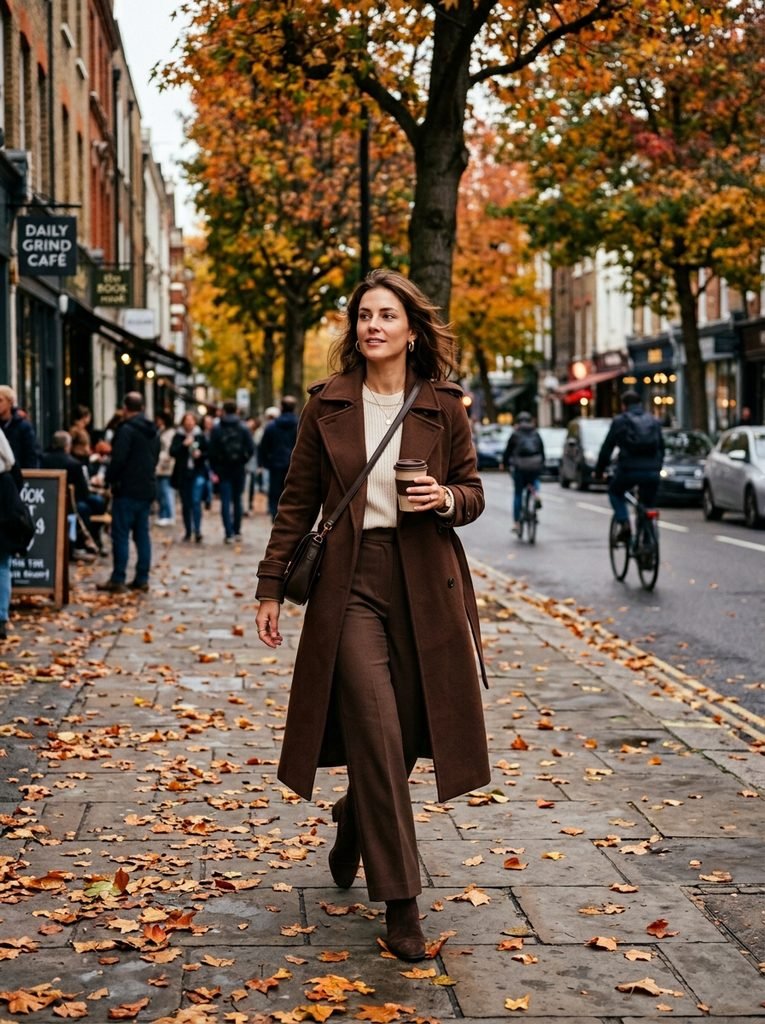
There’s a practical reason sweaters take over. Fall temperatures swing more than any other season, sometimes by fifteen or twenty degrees between morning and afternoon, and a sweater feels like a safe answer to that unpredictability. It’s warm enough for a cool start, breathable enough not to overheat by noon, and it requires almost no decision making.
The trouble is that safety becomes a rut. When one category of clothing solves every outfit decision, other pieces stop getting worn, closets start to feel smaller than they actually are, and getting dressed turns into picking a color rather than building a look.
Retail marketing plays a role too. “Sweater weather” is a phrase built for selling knitwear, and it works so well that it quietly narrows what people reach for the moment the temperature drops. Fall dressing is bigger than one category of clothing, and treating it that way opens up outfits that feel less repetitive by October.
There’s also a cost side to this worth mentioning. A wardrobe that leans almost entirely on one category tends to mean buying more of that category over time, since a handful of sweaters wear out or feel repetitive faster when they’re doing all the work. Spreading the load across jackets, vests, trousers, and dresses means each piece gets worn less often on its own, which usually makes the whole wardrobe last longer.
Start With Temperature Layers, Not a Single Garment
The fix isn’t finding a sweater alternative that does everything a sweater does. It’s splitting that job across a few lighter pieces instead of asking one garment to handle it alone.
A workable structure looks like this:
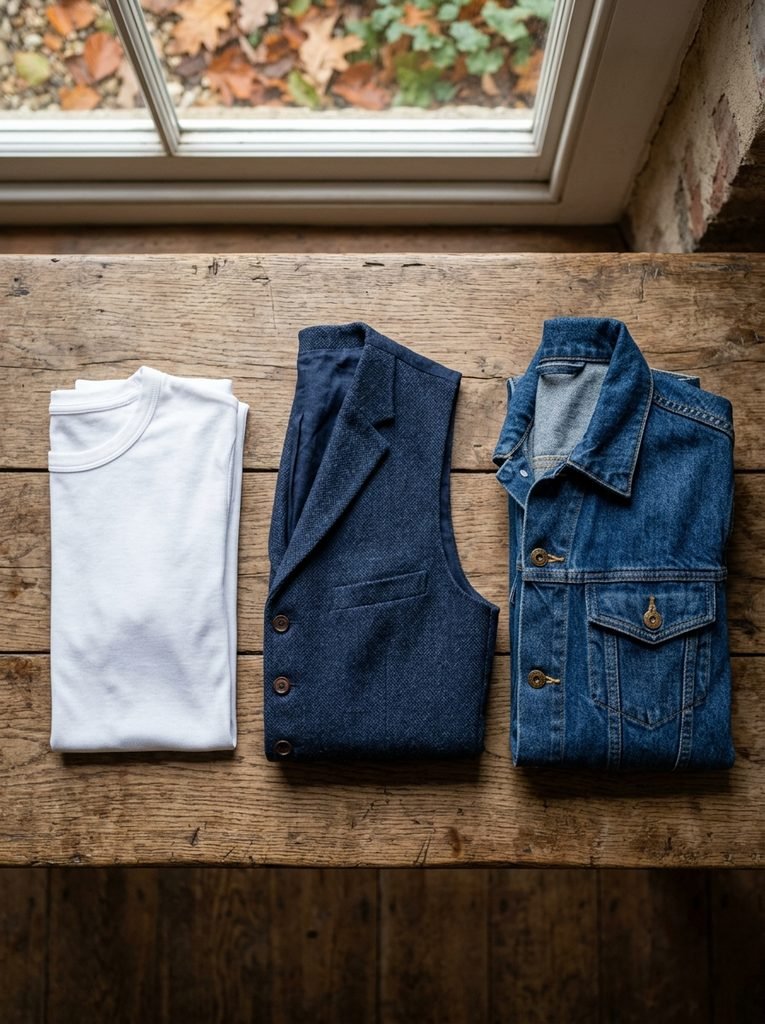
- A base layer that sits close to the body, like a fitted tee, a long sleeve top, or a lightweight turtleneck
- A structure layer that adds shape and warmth without bulk, like a button-down shirt, a vest, or a light knit that isn’t the main event
- An outer layer that handles wind and temperature drops, like a jacket, coat, or shacket
- Footwear and one accessory that ties the layers together, whether that’s boots, a scarf, or a bag in a coordinating tone
Splitting warmth across three or four lighter pieces instead of one heavy one also solves the indoor problem sweaters create. A sweater that’s perfect on a cold walk becomes uncomfortable the second you’re in a heated office or a crowded café. Separate layers can be removed one at a time instead of leaving you stuck in something too warm with nothing underneath.
This is the same logic behind building a capsule wardrobe, where a handful of pieces are chosen specifically because they combine well with each other. Fall layering works best when the pieces in rotation were chosen with that same cross-compatibility in mind, rather than picked one at a time without a plan.
Trenches, Shackets, and Utility Jackets Instead of Knitwear
Outerwear can carry a fall outfit on its own, which makes it one of the easiest sweater substitutes to lean on. A jacket sets the tone for the whole look, which means what’s underneath it can stay simple.
Trench coats are having a strong season for exactly this reason. Beyond the classic beige, trench coats are showing up in navy and chocolate brown, some finished with leather or suede detailing, and they work over almost anything from a plain tee to a fitted dress. A trench does the visual work a sweater usually does, minus the bulk.
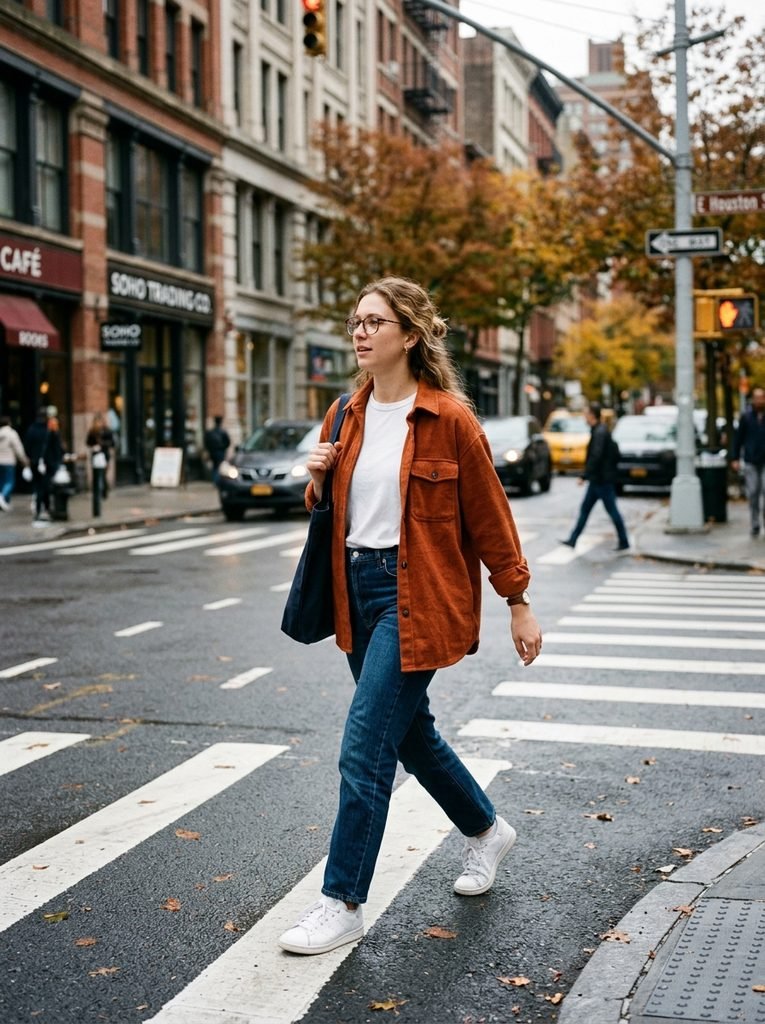
Shackets, the hybrid between a shirt and a jacket, are another strong option. Worn open over a tee and jeans, or buttoned partway with the sleeves pushed up, a shacket reads as put together in a way a plain sweater sometimes doesn’t. It’s also worth keeping a lighter version on hand for travel days, since the same layering logic that works for a commute works just as well for an airport.
Utility jackets, the kind with patch pockets and a slightly boxy cut, add a different texture to the mix. They pair well with straight denim and a simple top, and they photograph better than most sweaters because the structure holds its shape instead of collapsing into soft folds.
Vests Are the Most Underrated Fall Piece
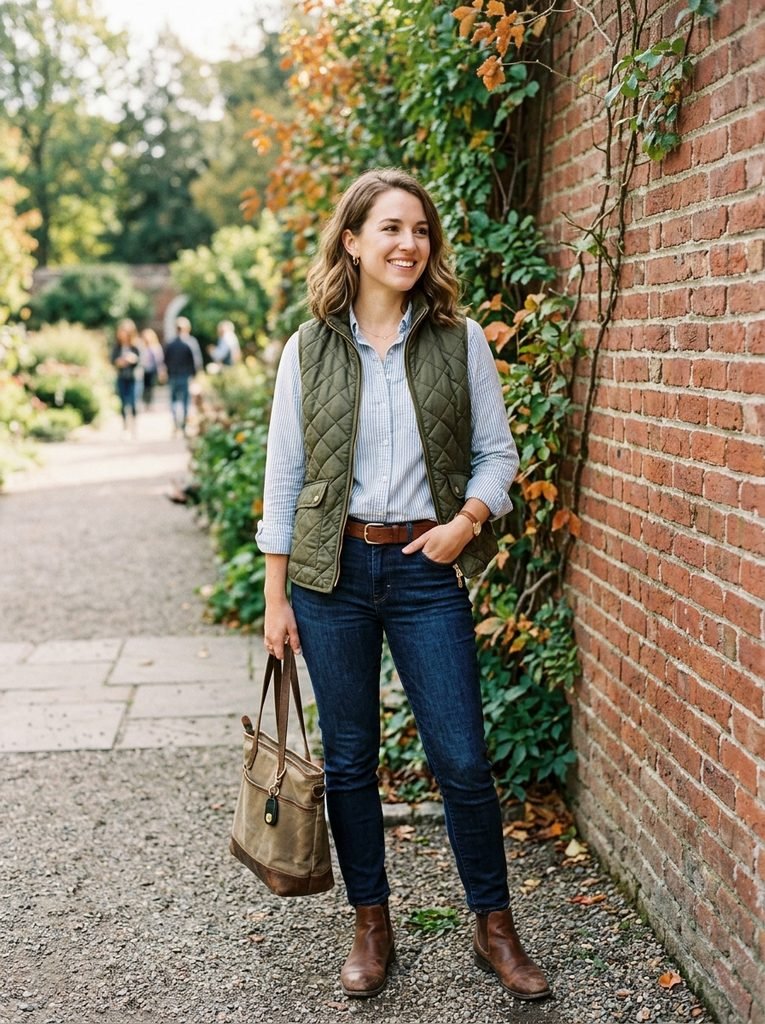
Vests get overlooked because they seem like half an outfit, but that’s exactly why they work so well for fall. A vest adds warmth and shape without covering the arms, which means whatever’s underneath, a button-down, a fitted tee, a long sleeve top, still gets to show.
Quilted or puffer vests bring texture and a slightly sporty edge, and they layer easily over a shirt without adding bulk at the shoulders the way a puffer jacket sometimes does. Tailored vests, closer to a waistcoat, do the opposite. They add polish, work well over a crisp shirt, and pair surprisingly well with wide-leg trousers or a midi skirt for something closer to smart-casual.
A few vest combinations worth trying:
- A quilted vest over a long sleeve tee, dark denim, and low sneakers
- A tailored vest over a button-down, straight trousers, and loafers
- A shearling-lined vest over a lightweight top and a midi skirt
The vest formula also solves the layering problem from a different angle than a jacket does. It stays comfortable indoors more easily than most coats, which makes it a genuinely useful piece rather than something worn only for the walk between the car and the door.
Let Denim and Trousers Carry the Outfit
When the top half of an outfit stays simple, like a plain tee or a light layer, the bottom half gets room to do more of the visual work. This is where fall denim and trousers earn their place instead of playing background to whatever sweater sits on top.
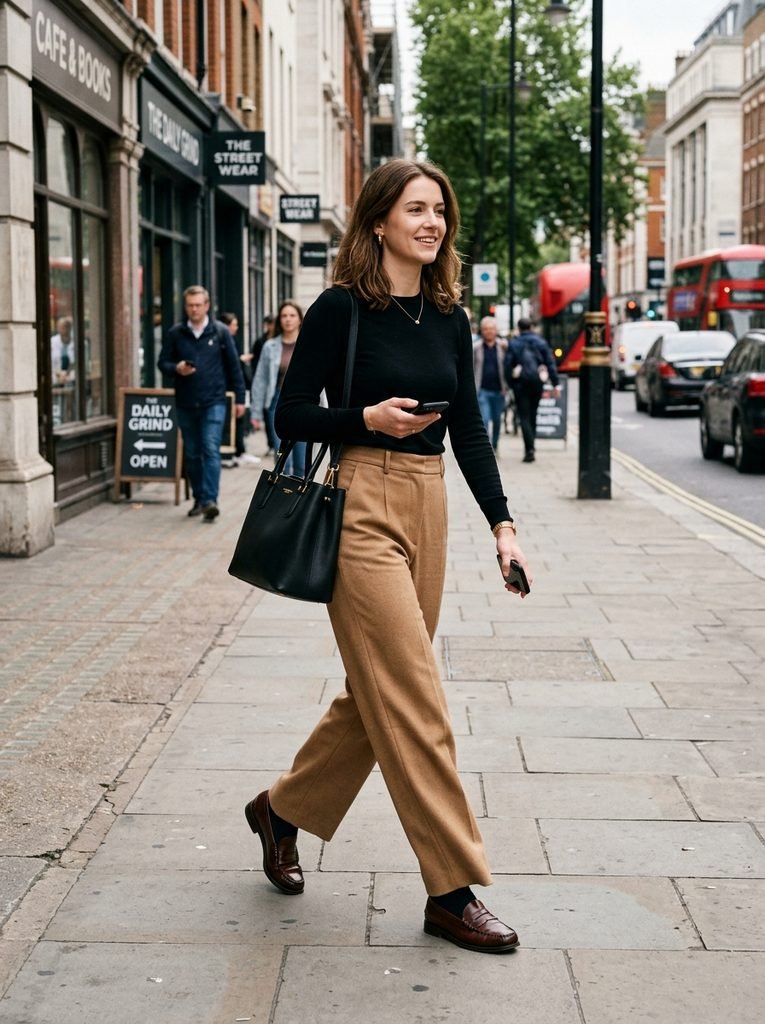
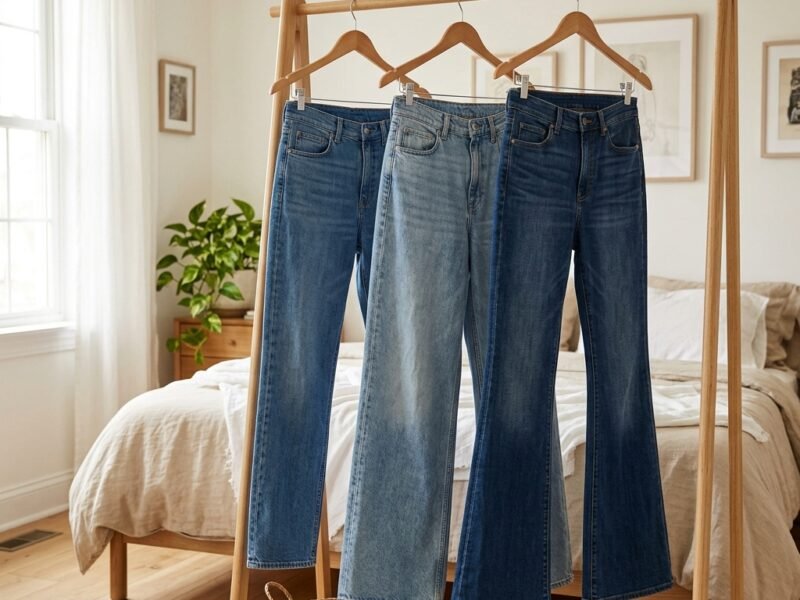
Wide-leg trousers in camel, chocolate, or olive read as fall-appropriate without needing a heavy knit anywhere in the outfit. Corduroy, in a slim or wide cut, brings texture plain denim doesn’t, and it photographs particularly well in the low afternoon light fall tends to have. Straight leg jeans remain the most versatile option of the group, working equally well with a shacket, a vest, or a blazer.
Fit matters more here than usual, since the trousers or jeans carry more visual weight than they would hidden under a bulky sweater. Choosing a cut that suits your proportions, the same thinking behind guides on outfits for different body types, makes a bigger difference in a bottom-led outfit than it does when everything’s covered by layers.
Adjusting These Ideas for a Milder or Colder Fall
Fall doesn’t look the same everywhere, and the layering formulas above should flex depending on climate rather than being followed exactly as written.
In places where fall stays mild, closer to light jacket weather than true cold, the base and structure layers can often stand on their own. A button-down over a tee, or a vest over a long sleeve top, may be enough without adding a heavier outer layer at all. The color and texture ideas still apply, they just carry less of the temperature workload.
In colder regions, the same formulas work by adding weight to the outer layer rather than piling on more layers underneath. A wool coat or a heavier shacket in place of a lighter jacket keeps the same silhouette while adding real warmth. Thermal or brushed-back leggings under trousers, and a heavier scarf instead of a light one, handle the rest without changing the outfit’s structure.
The formulas hold up because layering is a system rather than a fixed recipe. Once the base, structure, and outer layer roles are understood, any piece within those categories can be swapped for something heavier or lighter depending on what the actual weather is doing that day. That flexibility is part of what makes this approach more useful long term than defaulting to one sweater regardless of the forecast.
A Color Palette That Feels Like Fall Without Being Predictable
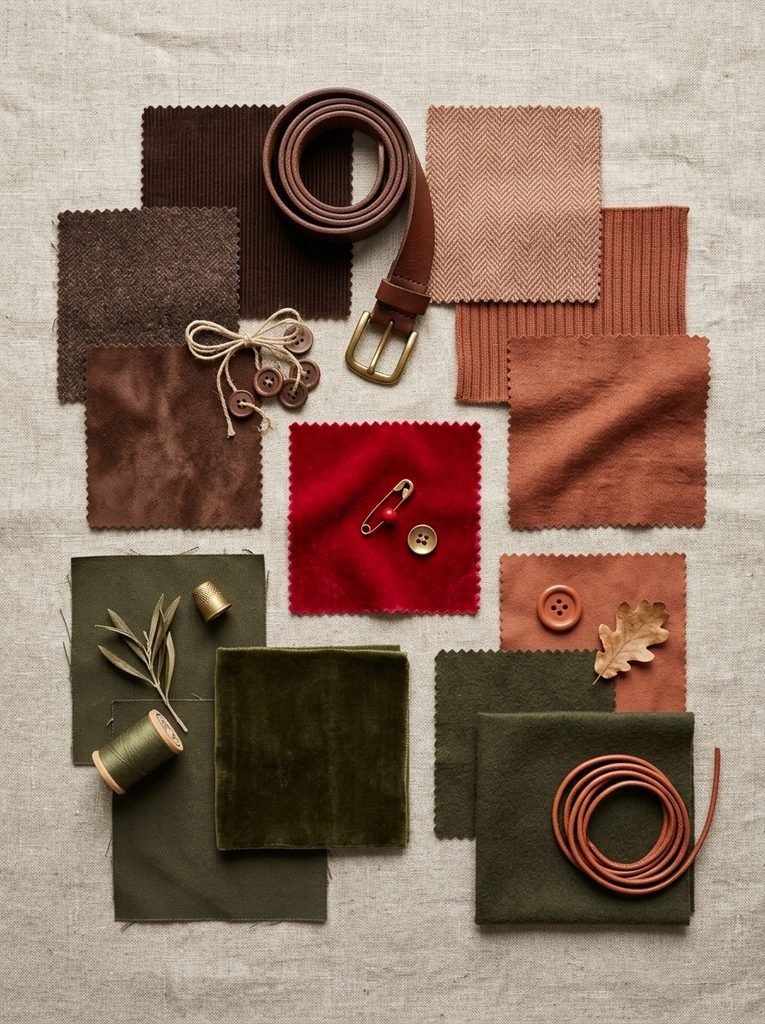
Fall color doesn’t have to mean burgundy and brown on repeat, though both still work well as a base. This season’s palette leans into deeper, earthier neutrals like clay, chocolate, and olive, paired with brighter accents that keep the look from feeling flat.
A few ways to work with that palette:
- Use chocolate brown or deep olive as the base color for a jacket, trousers, or boots, since both act almost like a neutral
- Add one unexpected accent color, like cherry red or a warm mustard, through a bag, scarf, or single top rather than the whole outfit
- Keep navy in rotation as a bridge color that works with both warm earth tones and cooler grays
The goal isn’t matching every piece to a trend report. It’s using color the way layering works, in small, deliberate doses that add interest without turning the outfit busy. A neutral base with one confident color decision usually reads better than an outfit built from five different trend colors at once.
Dresses and Skirts Still Belong in Fall
Dresses often get sidelined in fall because they read as a summer category, but the right layering brings them straight back into rotation. A midi slip dress under an open jacket, or a shirt dress with tights and boots, covers the same warmth ground as jeans and a sweater without repeating the same silhouette everyone else is wearing.
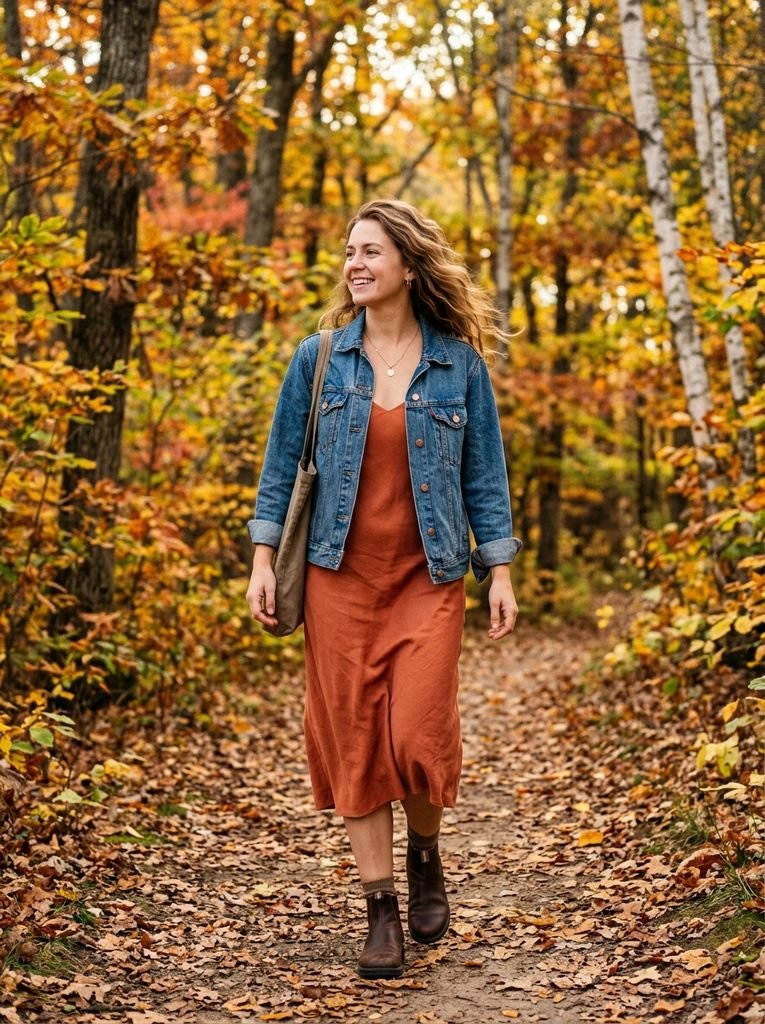
A terracotta or rust colored slip dress under a denim jacket, finished with ankle boots, makes a straightforward fall outfit that skips knitwear entirely. A structured button-down worn over a slip dress and belted at the waist creates a completely different look from the same two pieces worn separately.
Skirts follow the same logic. A midi skirt in a substantial fabric, paired with a fitted top, a vest or blazer, and boots, holds up through a full fall day without needing anything chunky layered on top.
Footwear and Accessories That Change the Whole Look
Shoes and accessories do more to shift an outfit’s personality than most people give them credit for, and they’re an easy way to keep a small rotation of clothing from feeling repetitive.
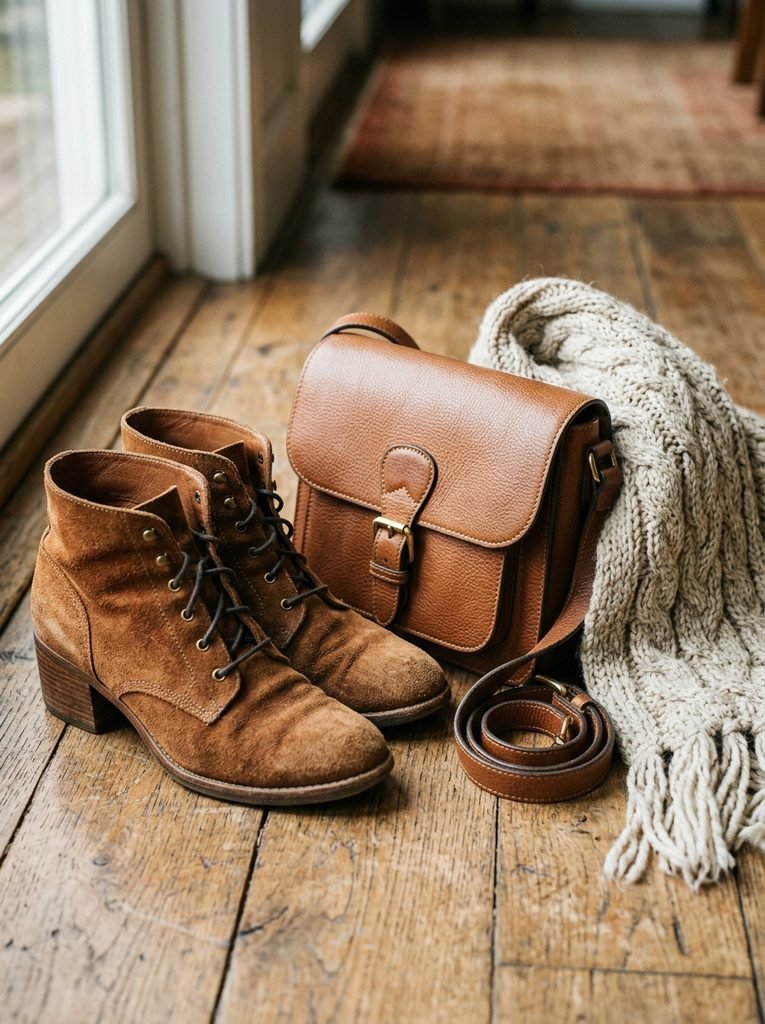
Suede is a strong texture for fall footwear this season, showing up on everything from low-profile sneakers to ankle boots. A suede boot instantly reads as more considered than a plain leather one, without requiring any change to the rest of the outfit. Loafers remain a reliable option for anything trouser or midi skirt based, while a low sneaker keeps denim-based outfits from feeling too dressed up.
On the accessory side, a few small additions make a bigger difference than they should:
- A structured crossbody bag in a contrast color adds polish to even the simplest jeans and tee combination
- A wool or cashmere-blend scarf works as both a functional layer and a color accent
- A belt worn over a jacket or coat, rather than under it, adds shape to an otherwise straight silhouette
None of these require a sweater to work. They’re simply the finishing decisions that make a layered outfit feel complete instead of unfinished.
Five Fall Outfit Formulas Without a Single Sweater
Sometimes the easiest way to break a habit is a short list of alternatives to reach for instead. These five combinations use the layering ideas above without a single knit sweater anywhere in the mix.
- Straight leg jeans, a fitted tee, a shacket, and suede ankle boots
- Wide-leg trousers, a silk or satin cami, a tailored vest, and loafers
- A midi slip dress, an open denim jacket, ankle boots, and a crossbody bag
- Corduroy trousers, a button-down shirt, a quilted vest, and low sneakers
- A midi skirt, a fitted long sleeve top, a trench coat, and block heel boots
Each formula follows the same underlying structure: a base layer, a structure layer, an outer layer, and shoes that match the effort level of the rest of the outfit. Swap any single piece for something already in the closet and the formula still holds.
Common Mistakes That Keep Fall Outfits Feeling One-Note
A few habits tend to undercut fall outfits even when the individual pieces are good.
Going fully neutral without any contrast is the most common one. An entire outfit in brown, tan, and olive can look put together, but without at least one point of contrast, whether that’s a different texture, a lighter shade, or a small color accent, it can also read as flat rather than deliberate.
Treating shoes as an afterthought is another. A carefully built outfit finished with worn out sneakers or scuffed boots undoes a lot of the effort that went into the rest of it. Footwear doesn’t need to be expensive, but it does need to look chosen.
Skipping proportion is a subtler mistake. Pairing a boxy jacket with equally loose trousers, or an oversized shacket with wide-leg denim, can bury the shape of the outfit entirely. Balancing at least one fitted element against one relaxed one keeps the silhouette readable.
Overcomplicating the accessory layer trips people up too. Adding a scarf, a hat, layered jewelry, and a bag all at once can crowd an outfit that would look better with one or two well-chosen additions. Fall gives more opportunity for accessories than summer does, but more isn’t automatically better.
And finally, ignoring the shoulder seasons at either end of fall leads to outfits that only work for a few weeks in the middle. Building in pieces that layer up or down easily, the same habit worth carrying into cozier winter dressing once the temperature drops further, keeps the wardrobe working from the first cool morning through the last one before real winter sets in.
The Takeaway
A sweater will always have a place in a fall wardrobe. It’s just not the only piece that belongs there. Trenches, vests, shackets, structured trousers, and dresses layered the right way all do the same job a sweater does, just with more variety and considerably less repetition.
Building outfits around layering logic instead of one default garment turns fall from a season of the same three outfits on rotation into one with actual range. The pieces don’t need to be new or expensive. They mostly need to be combined with a bit more thought than usual.

[…] anyone building the rest of an autumn wardrobe alongside a Halloween outfit, ideas for dressing well through the fall season generally is a useful companion piece, since many of the same rich colors and textures that work for […]
[…] For family photos, coordination is easy when two or three colors repeat across the group instead of everyone wearing the exact same shade. The same palettes fit neatly into a wider autumn wardrobe, as shown in these fall outfit ideas that don’t rely on a single sweater. […]
[…] than a thick wool jumper. Those who commute in lighter autumn coats can borrow ideas from this fall layering guide, while anyone heading to the mountains may prefer the gear-focused advice in these ski trip outfit […]
[…] without disturbing the others, so the outfit still looks finished once the jacket is hung up. The fall layering guide on this site explores the same warmth-in-stages logic with vests, shackets, and […]
[…] layering logic in this fall outfit guide applies well here, especially the idea of building from a base layer, a structure layer, and an […]
[…] leg jeans are also a quiet workhorse for layered outfits, as shown in this fall outfit guide, where they sit under shackets, vests, and […]