

Great style rarely comes from chasing trends. It comes from specific, deliberate choices. A fabric weight, a cut, a proportion each decision matters more than the overall mood. The outfits that photograph well and hold up in real life are built on details, not moods. This guide breaks down ten outfit formulas. Each one is anchored to a concrete fabric, silhouette, or styling decision. That anchor is what makes a look wearable rather than merely describable. None of these formulas require a full wardrobe overhaul. Most rely on pieces already sitting in a closet. Restyling them with more intention is often enough. A stylist rarely reaches for something new first. She reaches for a familiar piece and changes how it gets worn.
Fashion historians at the Museum at FIT have long framed silhouette and proportion as the two forces behind coordinated dressing. A fitted piece paired with a loose one photographs as intentional. Two loose or two fitted pieces together tend to lose that clarity. That principle runs through every formula below. Fitted plays against loose. Structure plays against fluidity. One deliberate point of contrast a belt, a texture, a single accessory does more work than five competing details. Keeping that ratio in mind while getting dressed turns a random combination into something considered.

Classic White Shirt and Denim Combination
A crisp white cotton poplin shirt, cut a size larger than usual, forms the base of this look. The extra room through the shoulders reads as relaxed rather than sloppy. That only works if the fit stays intentional elsewhere. The sleeves stay long, or roll to just below the elbow. High-waisted straight-leg jeans in a mid-blue wash complete the pairing. A mid-tone wash photographs more naturally than a stark light or dark denim. A partial front tuck, rather than a full tuck, keeps the silhouette relaxed. It still defines the waist without effort. Tucking only the front third of the shirt does the work. Leaving the back loose finishes the effect. A contrast-toned belt sharpens the outline further. Tan works against blue denim, and black works against a darker wash. Gold stud earrings add a small point of polish. They avoid competing with the denim’s texture. White leather sneakers suit daytime errands and weekend plans. A block-heeled sandal in nude or tan extends the same formula into evening. The added heel height elongates the leg against straight denim. This formula works equally well as a base for layering, since a fitted denim jacket or a long cardigan slides over it without disrupting the proportions underneath.

Elegant Satin Skirt Everyday Look
A bias-cut satin midi skirt works best in polyester or viscose satin, not silk. The blend resists water spotting and survives daily wear far better than delicate silk. Champagne and black remain the most versatile shades for everyday rotation. A mid-calf length balances the fabric’s natural drape without dragging on the floor. In cooler months, a fitted ribbed knit tucked in keeps the skirt’s silhouette visible. A loose top layered over fluid satin tends to erase the shape entirely. Two soft fabrics together lose all definition against each other. Ankle boots in cognac leather ground the look for autumn. The warmer tone contrasts nicely against the satin’s cool sheen. Warmer months call for a fitted white tank instead. Flat leather sandals keep the silhouette equally clean with less layering. Jewelry stays minimal here. One delicate layered necklace, or a pair of drop earrings, is enough. Never wear both at once, since satin already reflects plenty of light on its own. A structured handbag in a neutral tone completes the look. It adds no extra visual noise to an already fluid silhouette.

Effortless Casual Street Style Outfit
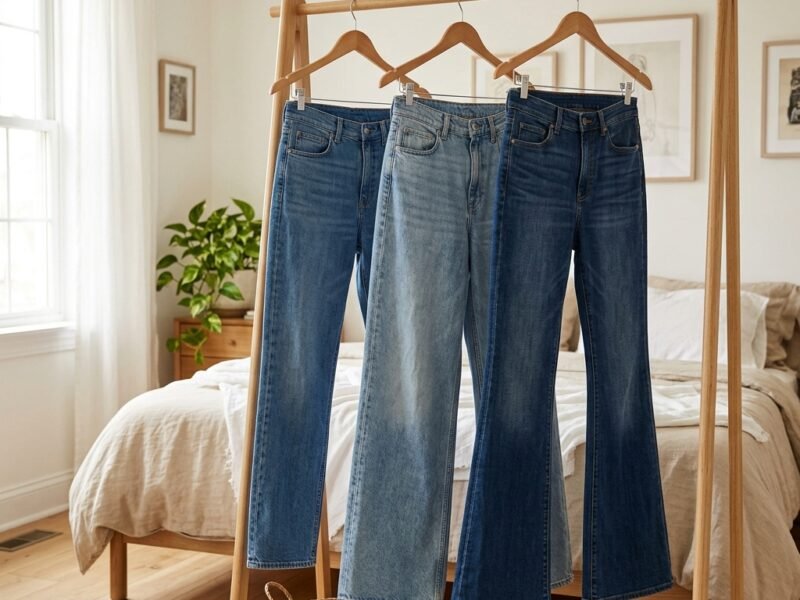
Wide-leg jeans need a rigid, non-stretch denim to hold their drape. Stretch denim loses its shape by evening and starts to bag at the knee. A fitted plain tee, tucked in completely, sets up the right proportion. It makes the wide leg read as deliberate rather than shapeless. An oversized jacket denim, utility, or a cropped bomber left unzipped finishes the silhouette. It adds a third layer of volume that still reads as balanced. This fitted-loose-loose sequence reads as intentional street style. Swapping in a fitted jacket on top flattens the whole look. It cancels out the wide-leg drama entirely. Chunky trainers in white or black anchor the outfit at the feet. They match the oversized proportions above rather than fighting them. A crossbody bag worn across the body keeps the proportions clean. Balancing it on one shoulder interrupts the jacket’s line instead. Simple hoop earrings round out the styling without adding competing texture. A baseball cap or beanie can extend the same formula into colder weather. Neither piece requires changing the core outfit underneath.

Romantic Floral Dress With Feminine Charm
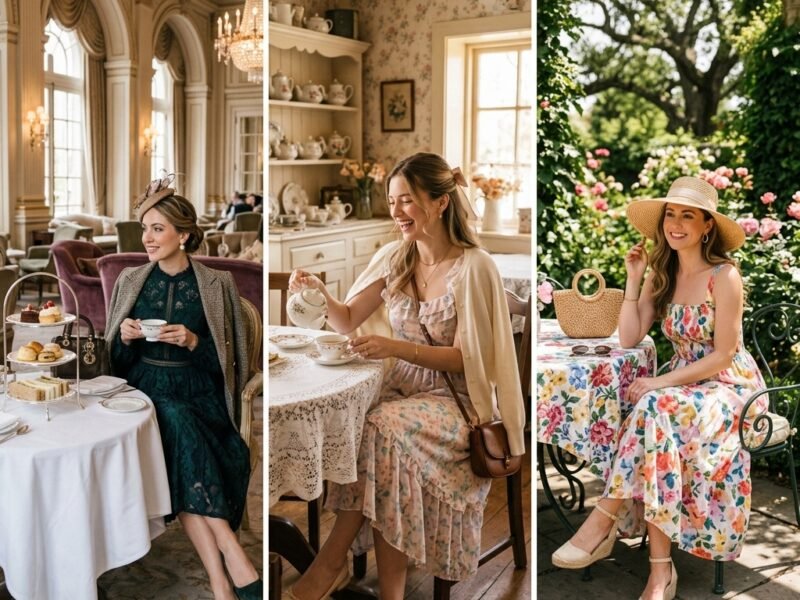
A floral midi or maxi dress works best in lightweight cotton or chiffon. Both fabrics move naturally without clinging to the body in warm weather. A grounded print, on a white or navy base, photographs more clearly than an all-over busy pattern. The eye has a clear background color to rest on. Grounded prints also pair more easily with plain accessories. Nude or tan block-heel sandals suit the hemline better than a strappy flat. A flat sandal tends to disappear visually under longer fabric and gets lost in photographs. One simple gold pendant necklace draws attention toward the neckline. It avoids competing with the print itself. Cooler weather calls for a cropped cardigan in a color already present in the print. Ankle boots in cognac leather work just as well. Either change shifts the same dress from a garden-party look into an autumn transitional one. Nothing else in the outfit needs to change. A small woven or structured bag, depending on the occasion, finishes the silhouette. It should never overwhelm the dress’s softness.

Effortless Linen Outfit for Fresh Summer Style
A linen-cotton blend shirt holds its shape better than 100% linen. It also wrinkles less, a difference that matters more for a shirt than for trousers, since a shirt stays visible all day. Matching or coordinating wide-leg linen trousers, in white, beige, or olive, complete the set. They keep the palette cohesive without requiring an exact matching set. Rolling the sleeves to the elbow keeps the look relaxed. Leaving the top two buttons open reinforces that same relaxed feel. Flat leather slides or espadrilles suit the fabric’s texture far better than a structured heel. A woven straw tote reads more appropriate here than a structured leather bag. Leather feels too formal and stiff against linen’s natural texture. Gold hoop earrings finish the outfit with a small amount of shine against the matte fabric. This formula stays strictly warm-weather. Linen carries almost no insulating warmth, unlike cotton or wool. It simply doesn’t translate into cooler months the same way. For travel-friendly ways to build on this palette, this vacation outfit guide covers packing-light strategies for warm-climate trips. It also breaks down how many linen pieces to bring without over-packing a suitcase.

Statement Leather Jacket Fashion Look
A cropped or hip-length leather jacket works over a plain fitted tee for daytime wear. Straight-leg jeans complete the base outfit underneath. A matte-finish faux leather version offers a lower-maintenance alternative with a similar effect. For evening, the same jacket layers over a slip dress with combat boots. That single swap shifts the entire mood without requiring a second jacket. A structured leather jacket needs a soft, fluid piece underneath it. Skipping that softness creates a stiff, head-to-toe effect that can look more costume than considered. Another structured piece, like a blazer or a stiff button-down, doubles up that rigidity instead of balancing it. Black leather ankle boots and a sleek crossbody bag carry the look through both versions. Neither piece needs to be swapped between day and evening. Silver jewelry reads better than gold against leather’s cool undertone. Minimal silver pieces a ring, a pendant, small hoops finish the outfit with one cohesive metal tone throughout.

Chic Matching Co Ord Set for Effortless Style
A matching two-piece set works best in a single neutral tone. This applies whether the set is a rib-knit top and trouser or a blazer-and-trouser suiting set. A bold pattern limits how often the set gets re-worn, so neutrals tend to work harder. A co-ord’s real advantage over separately matched pieces comes down to dye lot. Both pieces share the exact same shade from the same production run. Two separately bought “close enough” tones rarely match that precisely. That precise match is what actually creates a polished effect. Pointed-toe heels and a structured bag shift the set into evening or dinner territory. The formality comes entirely from footwear and accessories. Trainers and a crossbody bag keep the same set daytime-appropriate. It stays comfortable for a full day of errands or work. Footwear alone moves this outfit between registers. Nothing else in the formula needs to change, which makes a co-ord one of the more efficient pieces in a working wardrobe. A thin belt worn at the waist, over the top layer, adds definition for anyone who wants a more fitted silhouette.

Elegant Black Dress That Never Goes Out of Style
A well-fitted midi-length black dress works best in a structured knit, such as ponte or scuba. A woven fabric creases badly when packed, which a knit avoids entirely. The knit stretches with movement and resists wrinkling. That matters when the dress needs to move from a work day into evening without a change of clothes. A denim jacket or blazer with flat sandals suits daytime wear. It keeps the dress practical for an office setting or a casual lunch. Evening calls for statement drop earrings and a heeled sandal. A tailored coat draped over the shoulders, rather than fully worn, reads as more relaxed than buttoned up. One rule holds throughout every version of this outfit. Pick a single statement element bold earrings, a bright bag, or a bold lip rather than several at once. A plain black dress functions as a backdrop for accessories. It is not meant to compete with them. Overloading it with several loud elements undoes the simplicity that made the dress work in the first place. Choosing the dress in a slightly stretchy ponte also means it can go straight from a suitcase to an evening event with almost no wrinkling to manage beforehand.

Cozy Knitwear Outfit With a Luxury Touch
An oversized rib-knit or cable-knit sweater, in a chunky gauge, needs a fitted bottom underneath. Straight-leg jeans, tailored trousers, or a satin midi skirt all work well to balance the added volume on top. An oversized top paired with an oversized bottom doubles the volume instead of balancing it. Wide-leg trousers under a chunky sweater erase the silhouette entirely, leaving no visible shape underneath the layers. A loose front tuck defines the waist without a full tuck. A full tuck would flatten the sweater’s intentional volume. Leather ankle boots and a structured crossbody bag complete the base layers. They add a firmer texture against the soft knit above. A long wool or wool-blend coat works well as outerwear here. It layers over the sweater’s bulk without compressing the sleeves the way a fitted coat would. This same layering approach carries directly into the transitional-season formulas in this fall outfit roundup. That guide builds on the same fitted-loose logic for cooler weather and adds further coat and layering pairings.

Glamorous Evening Outfit for Special Moments
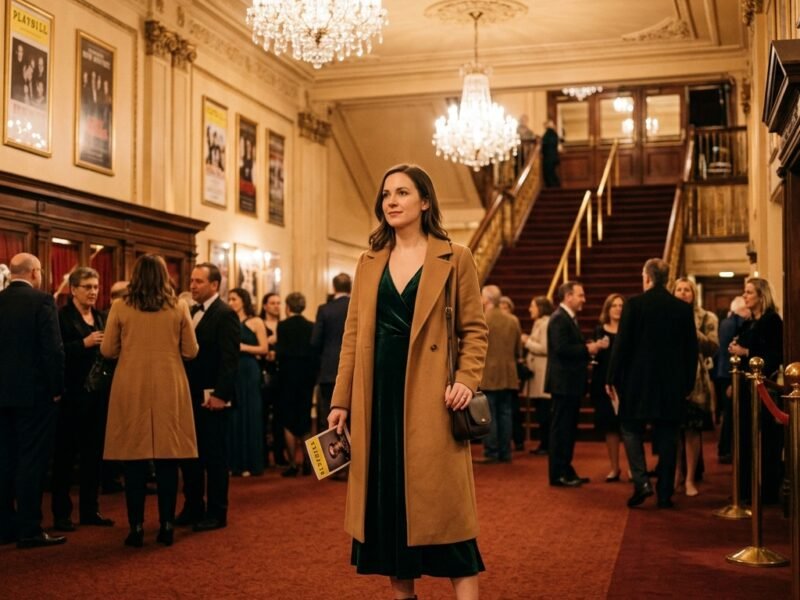
A bias-cut satin slip dress skims the body rather than clinging to it. That quality makes it a dependable, forgiving evening choice across body types. A tailored jumpsuit in matte crepe offers an alternative for anyone who prefers trousers to a dress. Crepe holds its structure under evening lighting better than shinier fabric. Shinier fabric can look flat and washed out in flash photography. One texture carries more visual impact than several combined. Velvet accessories work well against a satin dress. A single sequin or metallic clutch works just as well against a matte jumpsuit. Mixing multiple shiny textures at once tends to cancel out the effect of each. Statement drop or chandelier earrings pull focus toward the face. That detail matters specifically in low, warm evening lighting, where a smaller earring can disappear entirely. A heeled sandal should match the wearer’s skin undertone rather than the dress color. That match elongates the leg line far more effectively than a color-matched shoe. A color-matched shoe visually shortens the leg by cutting it off in contrast. A small clutch, sized for essentials only, keeps the whole silhouette clean through a full evening.

Conclusion
The gap between an outfit that photographs as put-together and one that reads as generically nice usually comes down to a handful of concrete choices. Fabric weight and structure matter more than most people expect. Which piece is fitted versus loose matters just as much. That ratio is what reads as intentional rather than accidental. One deliberate point of contrast a belt, a texture, a single statement accessory does more visual work than several competing ones layered on at once. These ten formulas work as starting points rather than fixed rules. Swapping in fabrics and colors already sitting in a closet still holds up. The same proportion logic behind each pairing carries the look, not any single piece.
Saving favorites now makes it easier to rebuild a full outfit later. Pieces already on hand are usually enough, without needing to shop for something new every time an occasion comes up. A closet edited around fabric, fit, and proportion tends to outlast one built around passing trends.

[…] formulas that build on the same fitted-loose proportion logic used throughout this list, this outfit ideas guide breaks down ten additional looks worth working from. Readers building a full capsule wardrobe […]