
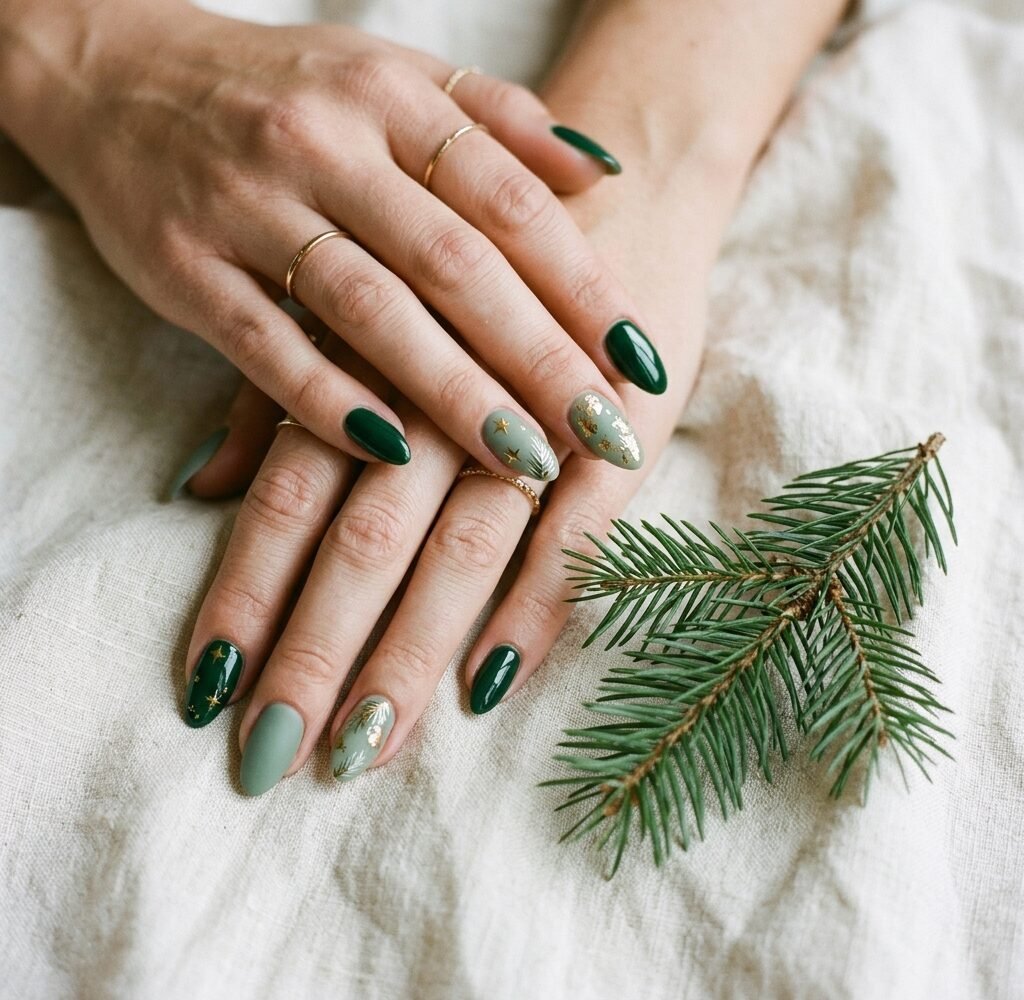
Walk up to a wall of nail polish in December and the bottles labelled green rarely agree with each other. One leans toward blue and glints like a gemstone. Another is so grey and soft it looks like dried herbs. A third sits so deep that it reads as black until sunlight hits it. All three are sold as green, and all three make completely different manicures.
That range is what makes green such a rewarding color for Christmas nails. It nods to evergreen branches and ribbon-wrapped gifts without needing a single tree painted on a thumbnail. This guide sorts green into three families, emerald, sage, and pine, then looks at the designs that suit each one, how the shades behave under holiday lighting, and what to wear alongside them.
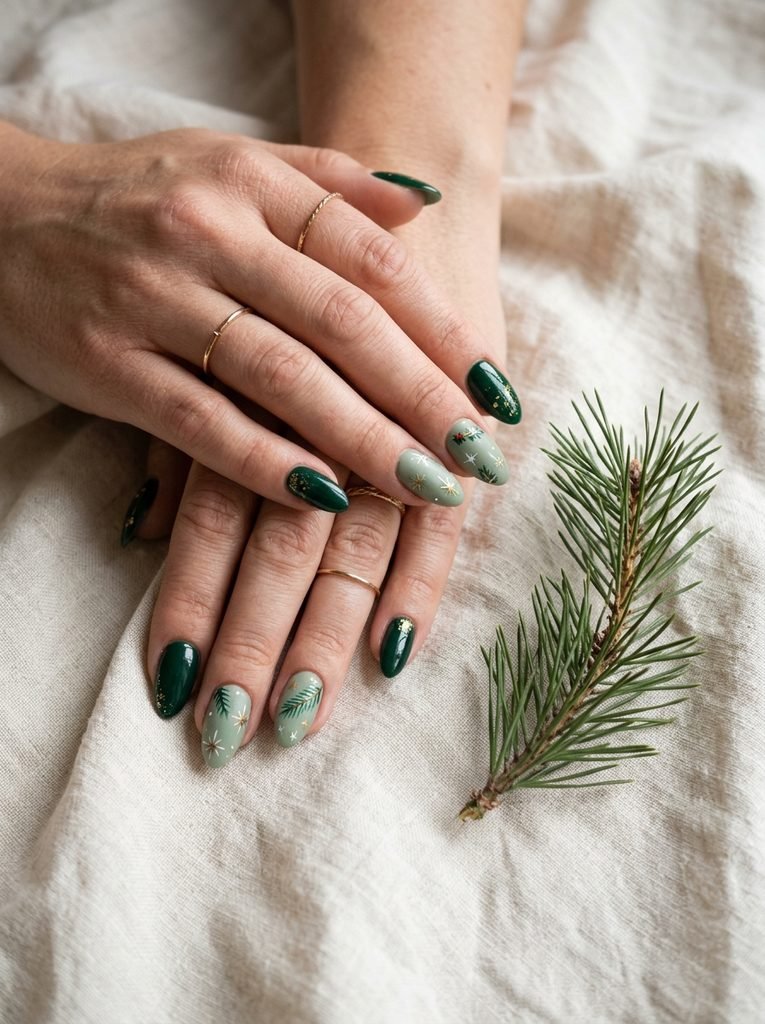
Three Greens, Three Very Different Moods
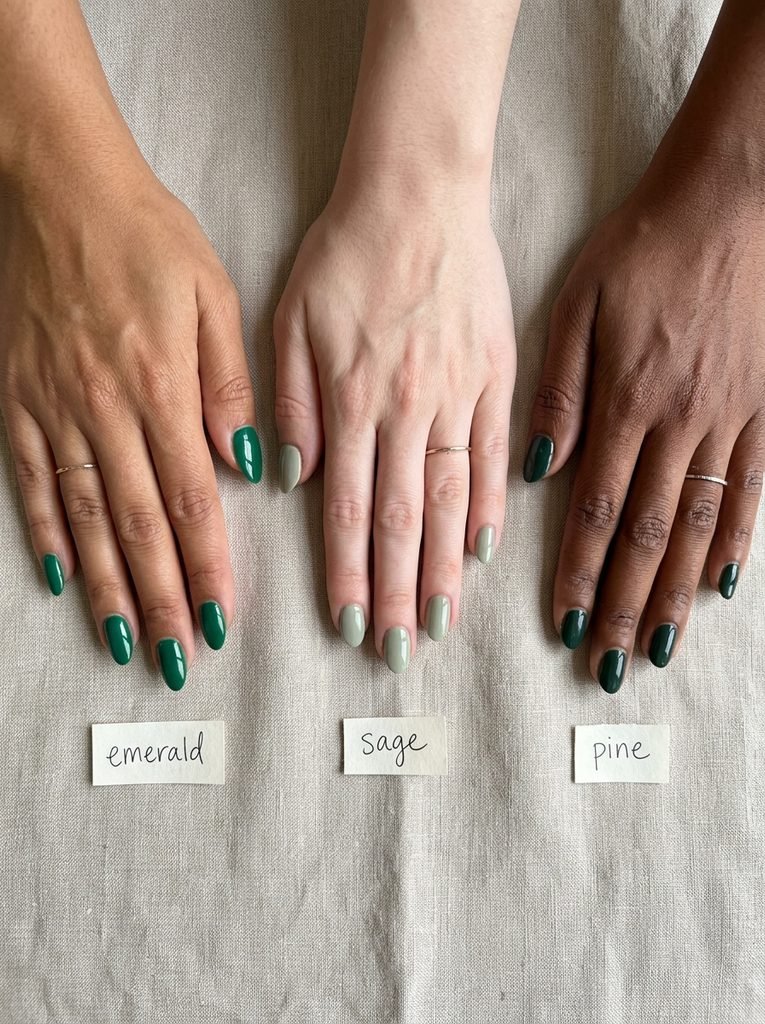
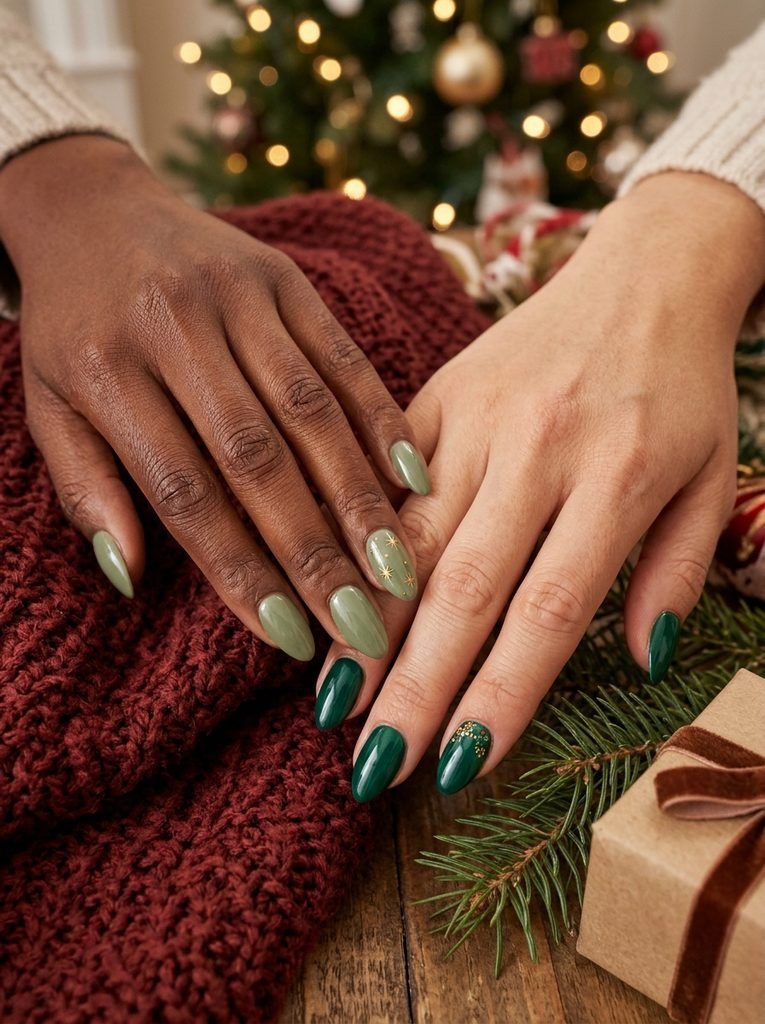
Most green polish falls close to one of three reference points. Knowing which one a shade resembles makes shopping easier, and it gives you clearer words to use when you show a reference photo to a nail technician. The difference comes down to undertone and depth.
| Shade family | Undertone | Depth | Overall mood | Sits well beside |
|---|---|---|---|---|
| Emerald | Blue-leaning | Medium to deep, highly saturated | Rich, jewel-like, dressy | Gold, black velvet, ivory |
| Sage | Grey or yellow-leaning | Light to medium, muted | Soft, calm, natural | Cream, champagne, oatmeal knits |
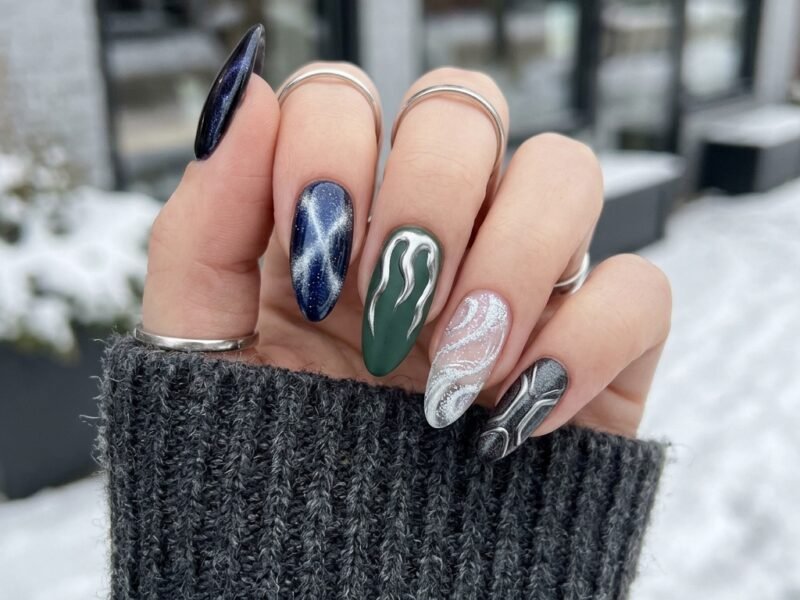
| Pine | Cool, with a hint of black | Very deep | Moody, wintry, understated | Silver, white, burgundy |
Emerald is the loudest of the three and the one most people picture first when they think of green nails. Sage is the opposite. It behaves almost like a neutral and can sit comfortably next to a lot of colors. Pine falls somewhere in between, quiet in tone but dark enough to make a strong visual statement.
A simple trick when choosing: compare the bottle against a plain white sheet of paper rather than judging by the cap. Against white, a blue-leaning emerald and a yellow-leaning olive-sage separate immediately, and so do the two types of deep green that can look identical in the bottle.
Emerald Nails: The Jewel-Tone Choice
Emerald asks very little of you. Because the color is so saturated, even a plain manicure looks deliberate. The designs below keep that richness at the center rather than burying it under extra decoration.
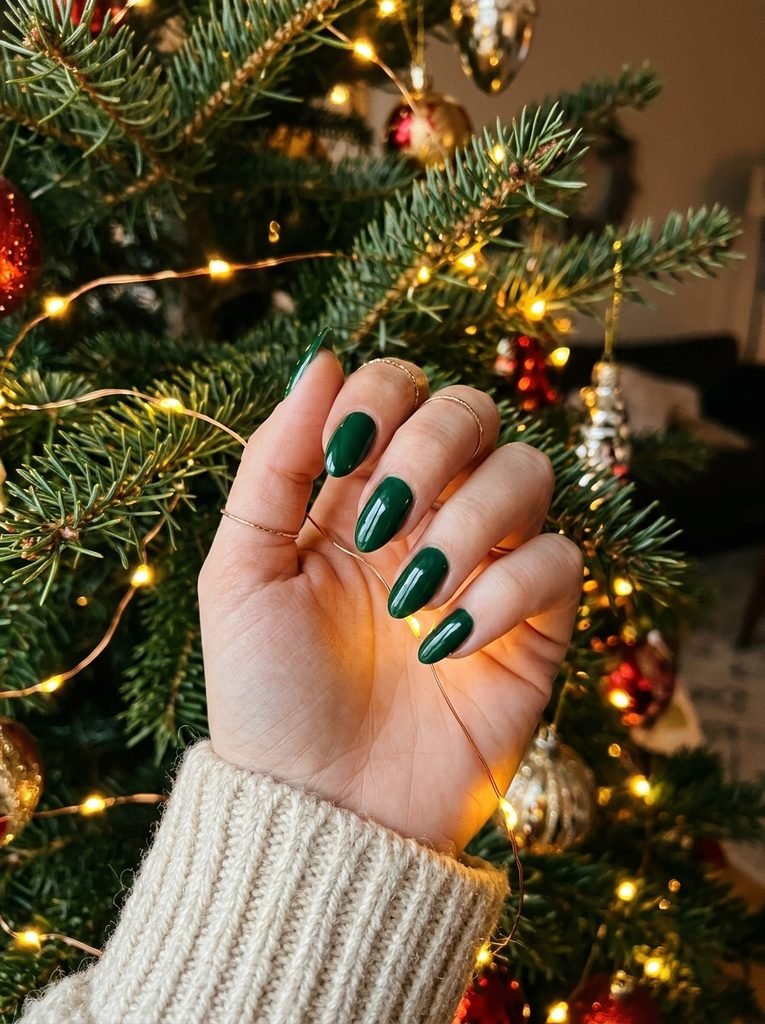
A Glossy Solid Emerald
Two thin coats and a glossy top coat is all this look needs. A solid emerald nail resembles a gemstone ring in the way it reads, finished the moment it is applied. It also photographs well, since the color holds its depth on camera without needing glitter or foil to attract attention.
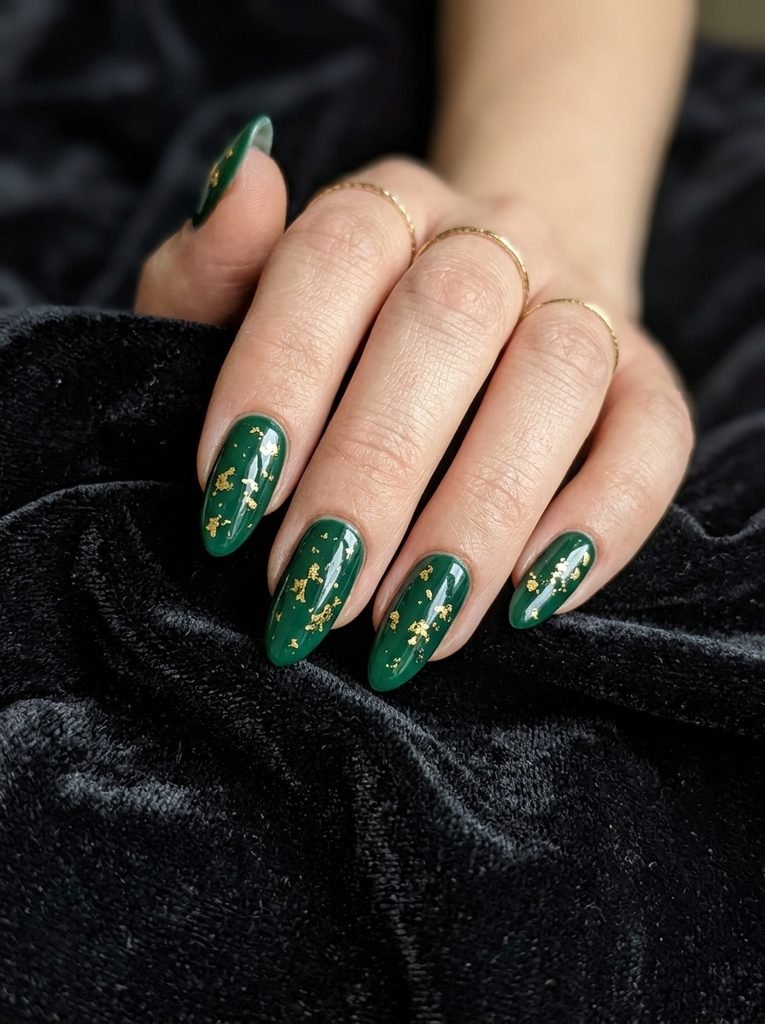
Emerald With Sparse Gold Foil
Placing a few flakes of gold foil on the nail while the final color coat is still slightly tacky creates the look of light catching on a bauble. The trick is restraint. Keep the flakes concentrated toward one side of the nail, or on just two fingers. Dense foil across every nail starts to look like confetti instead of ornament.
Magnetic Emerald Cat-Eye
Magnetic polishes contain tiny metallic particles that line up when a small magnet is held above the wet nail. The result is a thin band of reflected light that seems to move as the hand moves. In emerald, it looks a lot like velvet ribbon. The effect depends on holding the magnet steady for several seconds, so it usually takes a round or two of practice to get right.
Sheer Pink Base With an Emerald Tip
This one reverses the usual logic of a French manicure. A soft, barely-there pink or beige base sits underneath a slim emerald tip, so the green becomes a crisp outline instead of a full block of color. It suits people who like the look of green but find a fully covered nail too heavy for daytime.
Sage Green Nails for a Quieter December
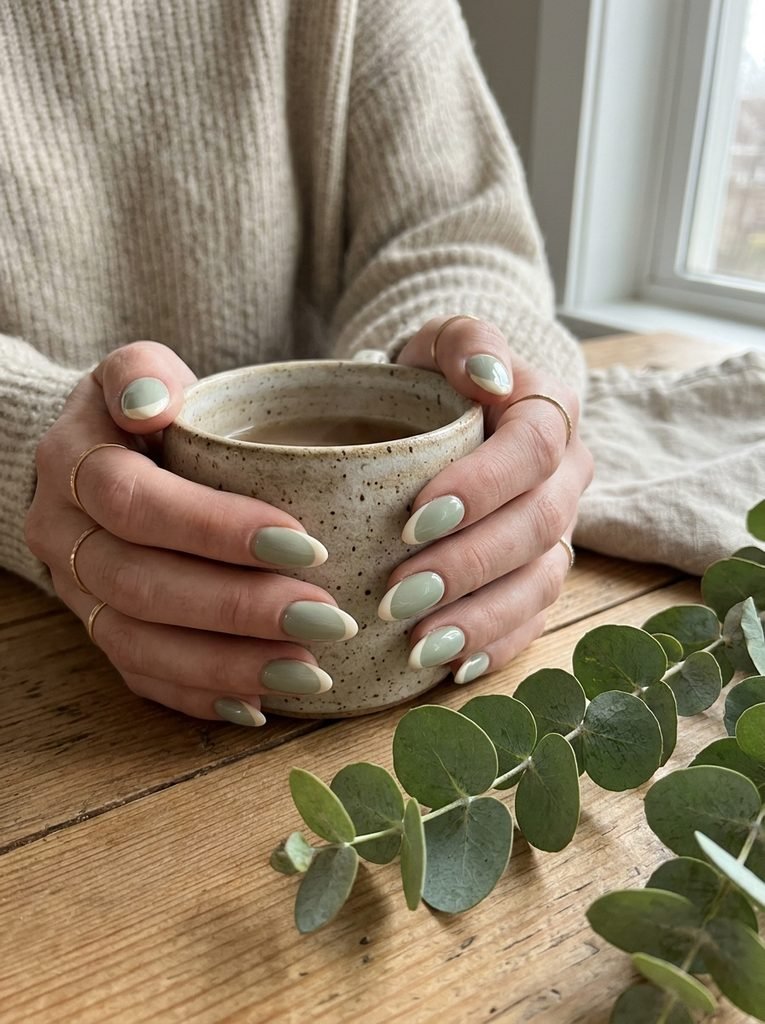
Sage is the answer for people who love green but do not want their nails to announce Christmas from across the room. Greyed down and slightly dusty, it passes for a neutral in many outfits. In a December setting, though, it quietly links back to rosemary sprigs, eucalyptus garlands, and frosted pine needles.
Milky Sage
A semi-sheer sage in a milky finish has a look similar to frosted sea glass. It usually needs three thin coats to build even coverage, which is actually a benefit. The softer color means grow-out lines and small flaws are far less visible than they would be under a dark, opaque shade.
Sage With a Cream Tip
Pairing a pale sage base with a thin cream tip creates a gentle, low-contrast version of a French manicure. The two colors sit so close in tone that the overall effect is soft and slightly vintage. It works well for people who want something that feels seasonal but still plays nicely with everyday wardrobes.
Sage and Champagne Shimmer
A single champagne shimmer nail among sage ones adds warmth without introducing a loud metallic. Gold can look strong against muted green, while champagne sits in the same quiet register. The two together have a look that feels a little like candlelight on a woven wreath.
A Hand-Painted Sprig
One thin stem with a few tiny leaves, painted in a slightly deeper green on a single sage nail, is the closest this color family comes to Christmas imagery. A fine brush or even a sharpened toothpick will do the job. Keep the leaves small and slightly uneven, since perfectly symmetrical foliage looks stiff.
Pine Green Nails: Deep, Cool, and Close to Black
Pine is the shade people most often mistake for black at first glance. In a dim room it nearly disappears into the dark, and then daylight reveals a cold, forest-floor green underneath. That slow reveal is what gives pine its appeal. It looks restrained from a distance and more interesting up close.
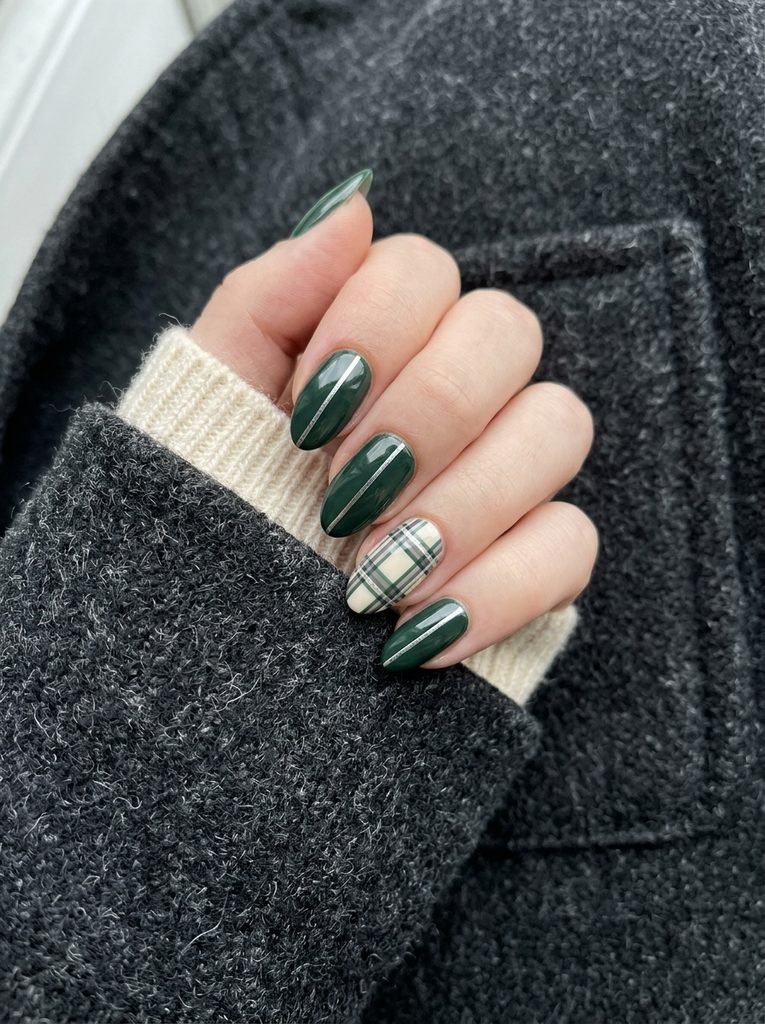
Pine With a Fine Silver Line
A single thin silver line running along the cuticle or across the nail adds a flash of brightness against the dark base. Silver suits pine better than gold, since the cool undertone of the green pulls toward cool metals. The overall effect is crisp and slightly wintry, a bit like frost on evergreen branches.
Pine and Cream Tartan
Thin cream lines crossing one another over a pine base create a miniature tartan, a pattern closely tied to the season. It looks best on one or two accent nails, with the remaining nails kept in plain pine. A fine detail brush or a long striping brush makes the lines easier to keep straight.
Pine Fading Into Burgundy
Blending pine at the cuticle into burgundy at the tip brings the traditional red and green pairing into a much darker, more muted range. Because both colors are deep, the transition feels moody instead of bright. A makeup sponge dabbed with each shade does most of the blending work.
Designs That Work Across All Three Greens
Some ideas are flexible enough to move between emerald, sage, and pine with only a change of color. These four work in any of them, and each one looks noticeably different depending on the green chosen.
A Negative-Space Branch
Leave most of the nail bare, or coated in a clear or sheer nude, and paint a small branch with short needles along one side. In emerald it looks jewel-like and graphic. In sage it looks almost botanical, like a pressed leaf. In pine, it looks closer to a silhouette.
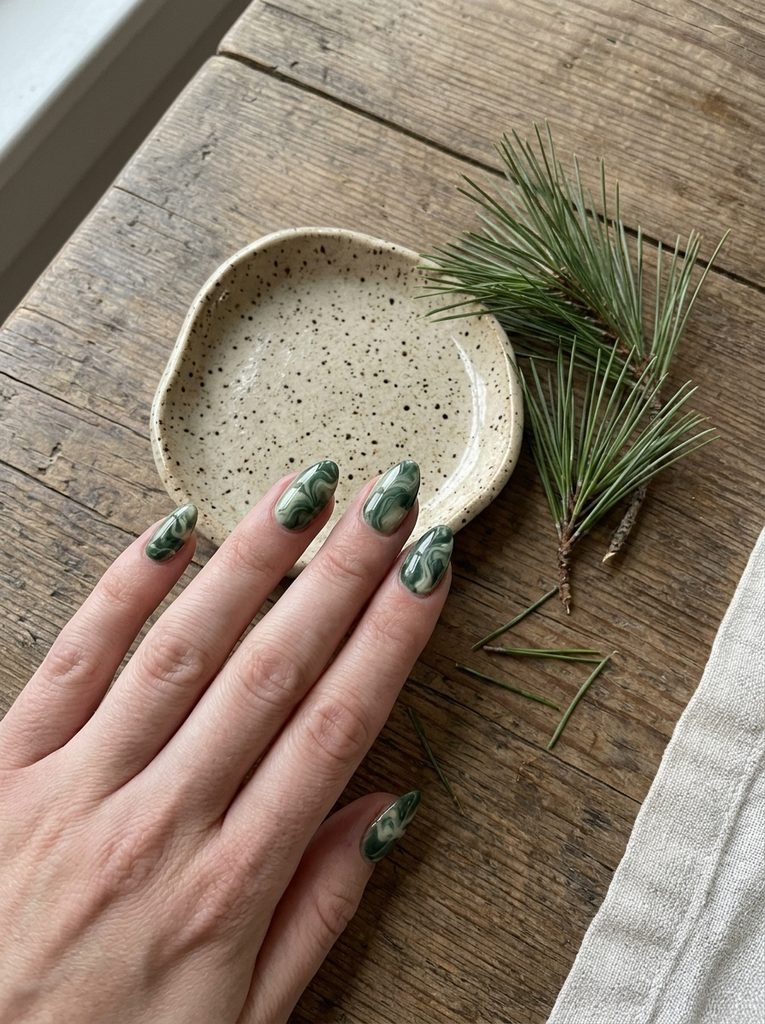
Marbled Green and Ivory
Swirling a green shade with ivory or white creates a stone-like pattern that suits all three families. The simplest approach is to place small dabs of each color on a wet base and drag a thin brush through them in slow curves. Emerald marble resembles malachite, while sage marble looks calmer and chalkier.
Speckled Green
A scattering of tiny dark or light flecks across a green base gives a texture similar to terrazzo or a speckled ceramic mug. On sage, small cream flecks look soft and handmade. On emerald, tiny gold dots feel richer. On pine, white specks resemble the first flurry of snow.
Green With a Single Red Accent
Bright red and bright green split evenly across every finger can feel loud. Reducing the red to a single accent nail among four green ones changes the picture entirely, since the red becomes a small point of interest instead of half the design. Burgundy and oxblood sit more quietly beside pine, while a clearer red looks better beside emerald.
How Green Looks Under Holiday Lighting
Green is one of the colors most affected by the light around it, and December rooms are full of unusual lighting. This is worth thinking about before you commit to a shade, especially if you want your manicure to look a specific way in photos.
Warm string lights and candles add a yellow-orange cast to a room. Under that kind of light, yellow-leaning sage tends to drift toward olive, while a blue-leaning emerald can look slightly darker and less vivid. Pine can nearly vanish in a dimly lit room, appearing close to black until light hits it directly.
Winter daylight is cooler and thinner, and it usually shows a shade’s true undertone more clearly. A sage that looked warm indoors may look noticeably greyer by a window. Flash photography tends to flatten color, and phone cameras can shift green slightly depending on the surrounding light.
These are general observations rather than strict rules, since every polish formula behaves a little differently. A practical habit is to look at your nails in the actual lighting where you will spend most of your time, or take a quick photo indoors, before settling on a final shade.
What to Wear Beside Green Nails
A manicure rarely sits alone for long. It appears next to sleeves, cuffs, jewelry, and whatever you happen to be holding. Thinking about the outfit helps you choose the right green.
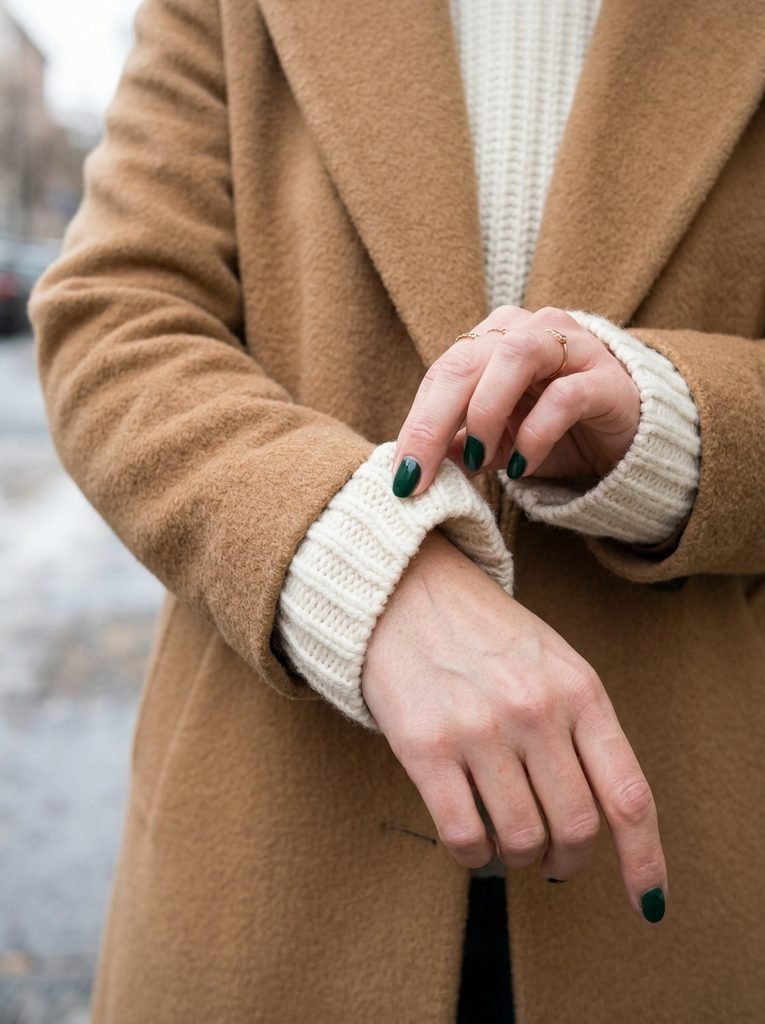
Emerald and black velvet are a natural pair, since both have depth and a slightly glossy surface. Emerald also sits comfortably beside ivory and cream, where it looks crisp and clear. Sage suits oatmeal, camel, and soft grey knitwear, and it softens a red outfit instead of competing with it.
Pine works well with tartan skirts, charcoal coats, and white shirts, where its quietness becomes an advantage. If you want a look that suits heavy winter layers, the guide to winter nail colors to wear with chunky knits and wool coats covers a wider range of shades beyond green. For a broader holiday palette that mixes in reds and plums, the post on Christmas nail ideas that feel festive, not cheesy is a useful companion.
Choosing a Green for Your Nail Length and Shape
Nail length changes how a design reads, and green behaves differently on short and long nails. This section is mostly about visual balance, so treat it as a set of style observations instead of fixed rules.
Short nails tend to suit simple, clean looks. A sheer sage, a glossy emerald solid, or a single thin line in pine all stay neat within a smaller surface. Complicated patterns such as tartan can get crowded on a short nail, so a single accent finger is usually enough.
Longer nails give you more surface for marbling, branches, and gradients. A negative-space branch or a pine-to-burgundy fade has room to breathe on a longer nail. Shape matters too, and the breakdown in nail shapes compared, and which one actually suits your fingers is a useful reference if you are unsure whether a design will sit better on an oval, square, or almond nail.
Getting a Smooth Green Manicure at Home
Deep greens are less forgiving than they look. Pine and emerald show streaks and thick edges clearly, and sheer sage reveals uneven coverage if the first coat is applied too heavily. A few small habits make a visible difference.
- Use thin coats. Two or three light layers dry more evenly than one heavy coat, and they are less likely to pool near the cuticle.
- Start with a base coat. It gives the color something smooth to grip, and many people find it helps keep deeply pigmented shades from leaving a faint tint on bare nails.
- Seal the tip. Running the top coat along the free edge of the nail helps the color stay put through daily use.
- Clean up as you go. Dark green shows on skin around the cuticle very easily. A small brush dipped in remover tidies the edges before the polish fully dries.
If you prefer a longer-lasting finish, the walkthrough in at-home gel manicures, and how to get salon-quality nails for less covers the tools and steps involved.
Quick Answers About Green Christmas Nails
Which green is easiest for a beginner? A sheer or milky sage is usually the most forgiving, since small flaws are harder to see. A solid emerald is the next easiest, as long as the coats are kept thin.
Which green looks the most neutral? Sage. Its muted, greyed-down tone lets it sit alongside many colors without feeling loud.
Can I wear green nails after Christmas? Yes. Pine and emerald suit most of winter, and sage works well for much of the year, especially in spring.
Do dark greens look good on short nails? Many people find they do. A glossy solid in emerald or pine looks tidy and deliberate on a shorter nail, and one accent finger is usually enough for added detail.
Choosing Your Green
The three families are simple to remember. Emerald is for a polished, dressy finish, sage is for a softer and more everyday look, and pine is for depth and quiet drama. Any of them can hold a plain glossy coat, a single thin line, or one small accent, and none of them needs more than that to look seasonal.
Before booking an appointment or opening a bottle, decide which mood suits the month ahead. Then check the shade against a sheet of white paper and in the lighting where it will be worn. Those two small steps usually settle the choice faster than any trend list.

[…] Emerald velvet looks rich with a champagne or soft gold pearl, and with a deep, glossy burgundy for a jewel-box effect. A pale pink with a pearly sheen gives a lighter, more romantic mood. For more depth on this shade family, see these green Christmas nail designs. […]