

Nobody agrees on exactly where a pixie stops and a bob starts, and the bixie lives in that gap. The name is a blend of the two words, and the cut is a blend of the two shapes: cropped and tapered at the back and sides, longer and softer on top and around the face. It reads as a pixie that kept some extra length, or a bob that lost some weight.
That in-between status is the appeal, and it is also the source of the confusion. Saved photos labeled bixie, pixie bob and short shag can look nearly identical, and a label alone will not tell a stylist what you want. This guide breaks the cut into its parts, compares it with its neighbors, shows five ways it can look, and covers styling, upkeep and how to explain it clearly.
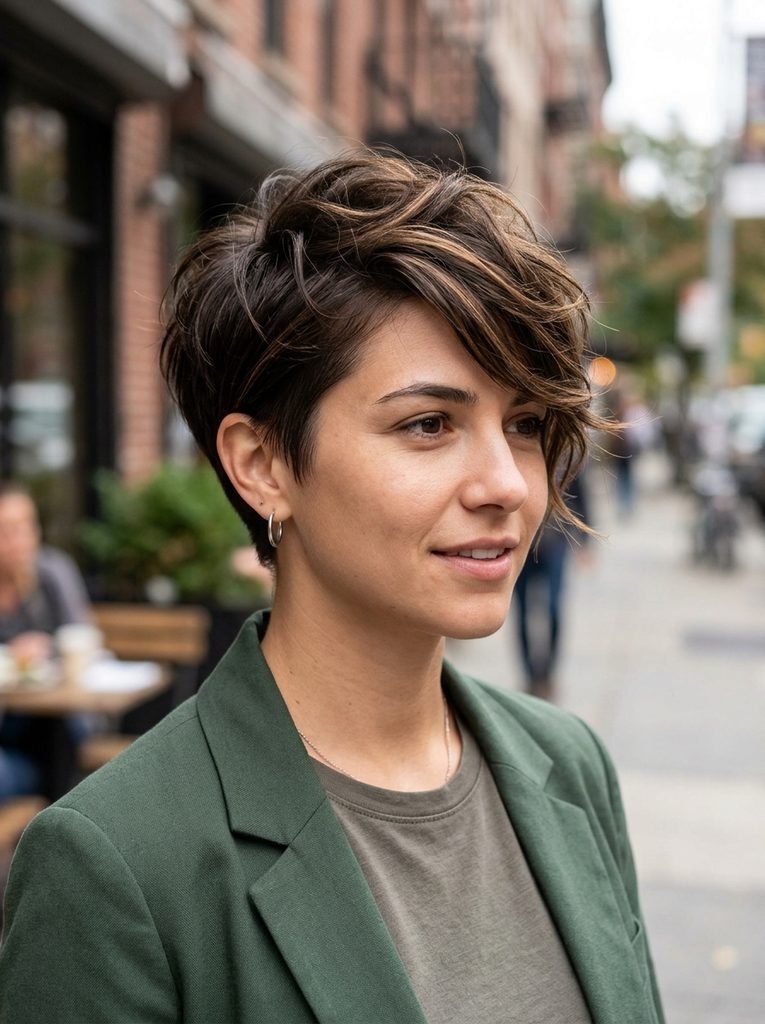
The Anatomy of a Bixie, Section by Section
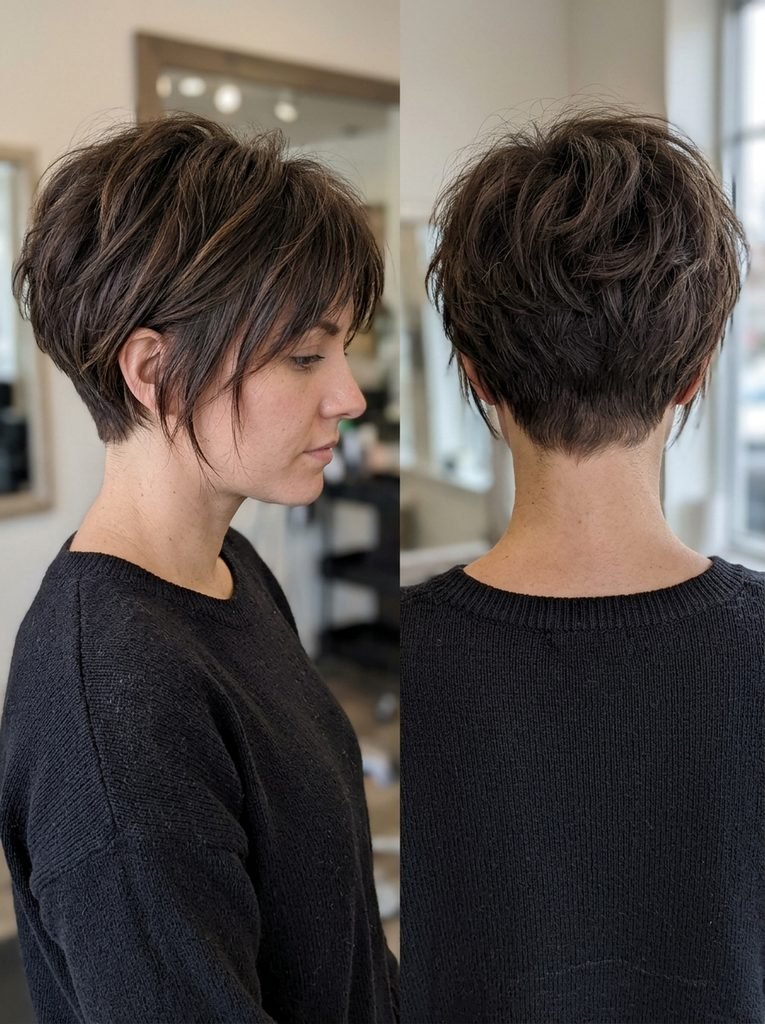
Describing the cut by section is more useful than describing it by name. Vogue Singapore’s explainer on the bixie notes that the layers sit shorter at the nape and sideburns and longer on top and around the face. Each zone does a different job, so it helps to look at them one at a time.
The Back and Sides
This is the pixie half of the cut. The nape and the hair around the ears stay short and tapered, which clears the neck and puts the jaw and ears on show. The taper can be soft, blending gently into the neckline, or closer, with a more visible gradient. A softer taper pulls the shape toward a bob, and a closer one pushes it toward a pixie.
The Top and Crown
The bob half lives here. Longer layers through the crown give the cut volume and something to style. Because the top contrasts with the short sides, even a small amount of texture creates a clear shape. Vogue Singapore points out that the cut can add body to fine hair, and the extra length on top is a big part of why.
The Front and Fringe
Face-framing pieces and a fringe tie the sections together. They can fall at jaw length, sweep across the forehead or stay as soft side pieces. The same Vogue piece describes a look similar to a choppy bob with face-framing bangs, worn down, tousled or wavy. Of all the choices in the cut, the fringe changes the mood the most, which is why it gets its own section further down.
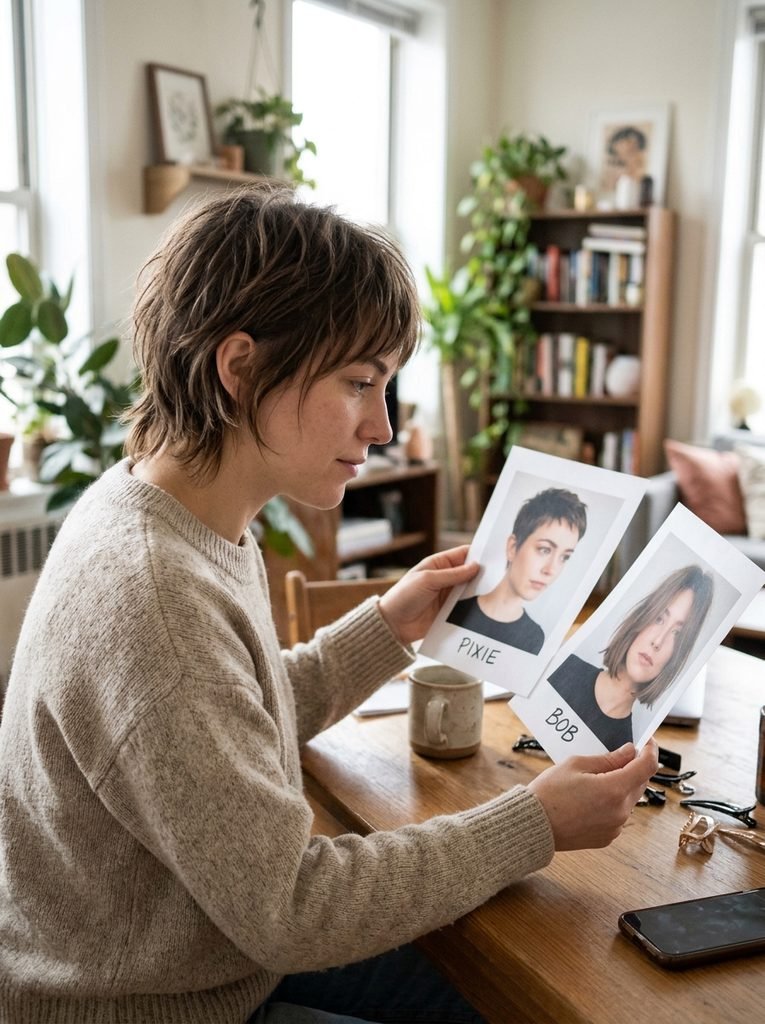
Bixie vs. Pixie vs. Bob vs. Shaggy Bob
Four neighboring cuts get mixed up in reference photos. The table below compares them by section, which is easier to spot in a picture than by name.
| Cut | Back and sides | Top and crown | Overall feel |
|---|---|---|---|
| Pixie | Cropped close | Short, closely cut | Precise and graphic |
| Bixie | Short and tapered | Longer, textured layers | Soft-edged and tousled |
| Bob | Follows the same line as the sides | One length or lightly layered | Neat and solid |
| Shaggy bob | Layered throughout | Choppy, uneven layers | Loose and lived in |
A stylist quoted in Stylist’s feature on the bixie describes it as having the short length and choppy layers of a pixie with the fuller shape of a bob. The article also places it as edgier than a typical blunt bob, with some of the texture of a French bob and the relaxed feel of a shag.
Maintenance falls in between as well. Vogue Singapore says a pixie loses its shape quickly and needs more precise edges, so a bixie can go a little longer between cuts. A bixie still usually needs more salon visits than an average bob, because the short nape and sides are the first areas to look untidy.
Five Ways to Wear a Bixie
One haircut can look quite different depending on how it is finished. These five versions use different products and different moods, so you can match one to the kind of day ahead.
1. Choppy and Tousled
This is the version most people picture. Dry the hair mostly by hand, then work a small amount of paste or wax through the top and crown with your fingers, pulling pieces in different directions. The ends look piecey and a little undone, while the tapered nape keeps the whole shape tidy.
It suits straight and slightly wavy hair, where the layers show clearly. The trade-off is that the texture only looks intentional when the haircut underneath is well shaped. Heavy product flattens the effect quickly, so a pea-sized amount warmed between the palms is usually plenty.

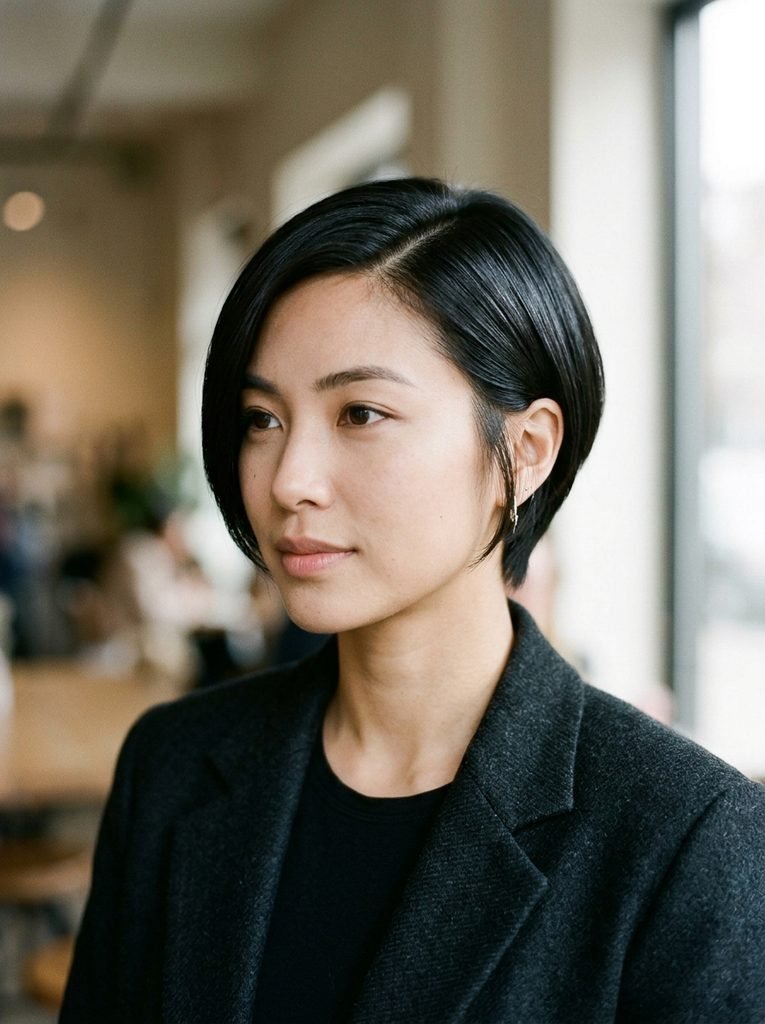
2. Sleek With a Side Part
Smooth the top with a small brush while drying, add a drop of shine serum, and part the hair deep to one side. The longer side sweeps across the forehead or behind one ear. This is the most polished option, and the clean lines at the nape become a design feature rather than a detail.
A tuck behind the ear shows off the short sides and any earrings. Because the finish is neat, it looks best with a fresh trim. If it starts to look heavy at the temples or drift at the neckline, that is usually the sign the shape needs tidying.
3. Soft Waves and a Swept Fringe
Loose waves on the longer top section soften the cut and make it feel more feminine. A small curling iron, or simple air-drying with a light cream, builds them. The fringe can sweep to the side, as The Handbook notes, and stays soft because it blends into the waves around it.
Keep the sides and nape smoother than the top, so the contrast between short and long stays clear. Waves that run all the way down tend to make the cut look more like a standard bob. A bit of texture spray through the ends gives the waves some grip without stiffness.

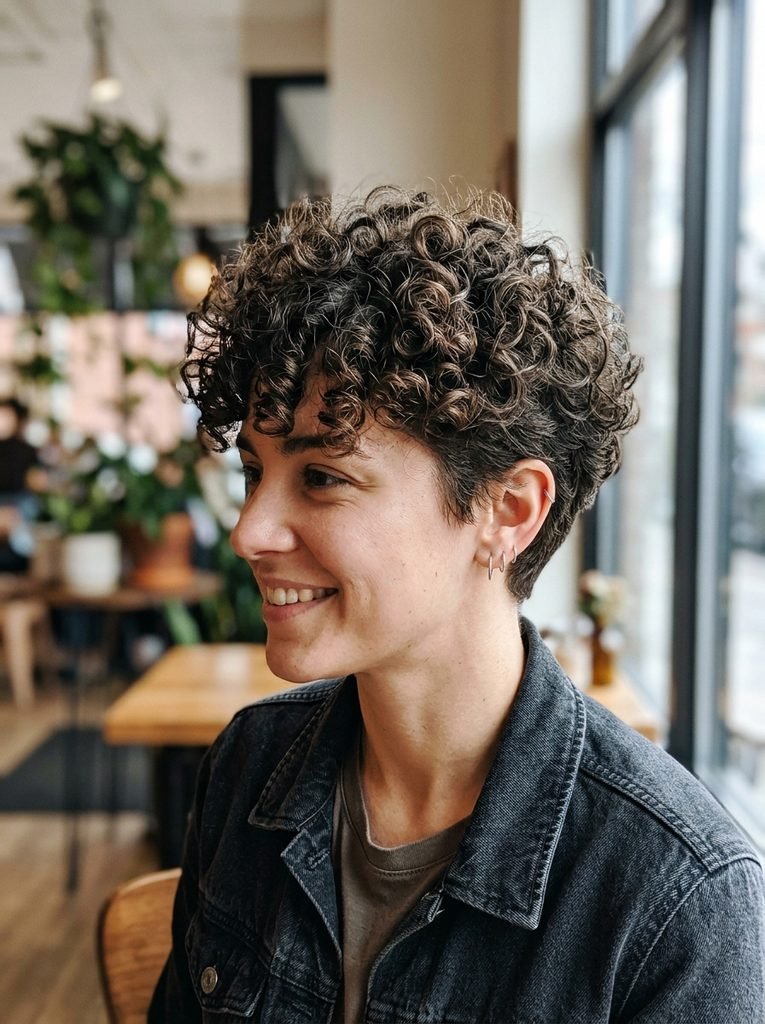
4. The Curly Bixie
Curls and a bixie work well together, and the sources agree the cut is not limited to straight hair. The short sides control bulk, while the longer top gives curls room to form a rounded crown. Apply curl cream or gel to very wet hair, diffuse gently and leave it alone until it dries fully.
Curls shrink as they dry, so the length on top will look shorter than it did wet. It is worth explaining your curl pattern at the consultation and asking how much length will remain once the curls spring back. Reference photos with a similar texture are more useful than straight-haired ones.
5. Slicked Down and Edgy
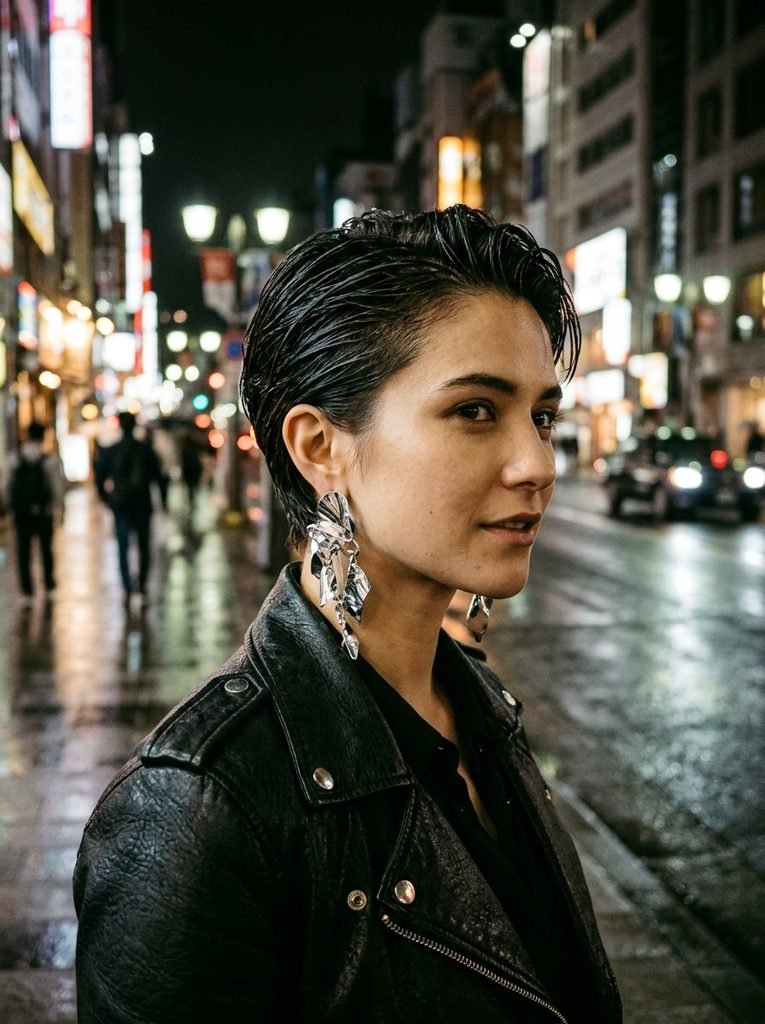
A wet-look finish suits the bixie better than it suits many longer cuts, because the shape is compact enough to stay controlled. Work a small amount of gel or pomade through damp hair, then comb it back or flat to one side. The short sides sit close to the head, which gives the look its graphic edge.
This version makes any untidy nape lines obvious, so it works best soon after a trim. It also dresses up easily with a statement earring or a bold lip. For daytime, running fingers through the top once it dries loosens the finish.
Who Tends to Suit a Bixie
The cut gets described as adaptable, and that is mostly fair, with some practical caveats. Think of the notes below as general styling observations, and treat a consultation as the final word, since a stylist can see your hair in person.
Fine hair often benefits, since the longer top gives lift and the short sides remove weight from the places where hair tends to sit flat. If thinness is your main concern, these hairstyles that make thin hair look thicker show other shapes worth comparing. Wavy and curly hair also work well, as described above. Thick, coarse hair is workable too, though the stylist will need to remove bulk carefully so the top does not puff outward.
Face and features matter in a more practical way than a strict shape chart. Vogue Singapore says the cut suits oval faces and draws attention to cheekbones, jawline, shoulders and neck. Short sides leave the ears and neck exposed, so it helps to feel comfortable with that. Glasses frames, earrings and necklines all become more visible.
Lifestyle is the last factor. A bixie dries quickly, but it will not go into a ponytail, and a tight bun is out of the question. If you rely on tied-back hair for work or exercise, a headband or small clip can handle the front sections, though the back will stay loose.

A Five-Step Morning Routine
A routine shared by hairstylist Alicia Dobson in The Handbook makes a good template for most versions. Adjust the products to your texture.
- Start with damp hair, either towel-dried or lightly misted.
- Lift the roots at the crown, blow-drying away from the scalp for movement. Curly hair can be diffused instead.
- Separate the pieces around the face and crown, and style any longer fringe.
- Warm a small amount of texturizing wax or paste between your fingers and define the layers.
- Finish with a light setting spray.
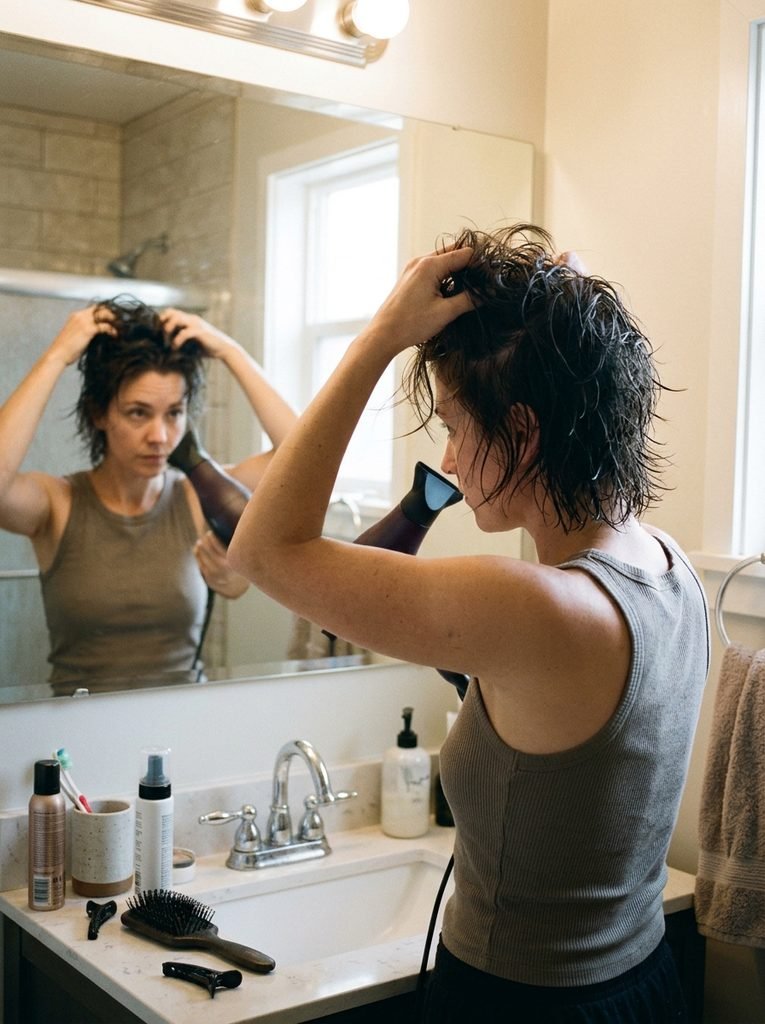
Short hair dries quickly, so the heat portion is brief. It is still worth keeping heat modest. The American Academy of Dermatology suggests letting hair air dry when possible, using the lowest heat setting and using hot tools less often, and it also recommends choosing a hairstyle that does not depend on long-lasting hold products. A bixie suits that approach, since its layers do most of the work.
Which Product for Which Finish
Short hair holds very little product before it looks weighed down, so the choice matters more than the amount. These are general observations, and your own texture may prefer something different.
| Product | Works best for | The finish it gives |
|---|---|---|
| Light cream | Wavy and curly hair, frizz control | Soft and flexible |
| Paste or wax | Straight and wavy hair, defined layers | Piecey and matte |
| Gel or pomade | Slicked-down and side-parted looks | Glossy and controlled |
| Texture spray | Fine hair that needs grip | Airy and lightly rough |
| Dry shampoo | Second-day roots and crown | Lifted and fresh |
One product is usually enough for a given day. Layering a cream, a paste and a spray on a short cut tends to leave the top looking heavy rather than textured.
Dressing a Bixie Up for the Evening
The cut does not need much to shift from casual to dressed up. Switching from paste to a little shine serum smooths the top and makes the outline look cleaner. A deep side part with the longer section tucked behind one ear shows off earrings and the neckline. Sleeker finishes pair well with structured jackets and open collars, while a tousled version suits knitwear and relaxed shirts. For a special occasion, a small pearl pin or a thin metallic clip on the longer side adds polish without covering the shape.
Choosing a Fringe for Your Bixie
The front of the cut is where most personalization happens. A side-swept fringe is the easiest option, since it blends into the longer top and leaves one eyebrow visible. Curtain-style pieces, parted in the middle and swept outward, add softness to the face and work well with waves. A shorter, wispier fringe gives a lighter, more playful look but needs more regular trims to keep its line.
The difference between the two soft styles is mostly in the finish, and the guide to wispy bangs versus curtain bangs lays that out clearly. For a bixie, the main point is that the fringe should connect to the layers rather than sit apart from them. A fringe that blends in looks like part of the cut, while a separate block can make the shape feel disjointed.
Upkeep: Lines, Layers and the Rhythm of Trims
The nape and sideburn areas set the rhythm. They are short, so even a little growth changes how clean the outline looks, while the longer top takes more time to lose its shape. How often to trim depends on how fast your hair grows and how sharp you like the edges, so the best guide is whoever cuts your hair. Many people find it helpful to book the next appointment before leaving the previous one.
Between trims, a light touch works best. Heavy product builds up fast on short hair and flattens the layers, a point covered well in the guide to short hair styling that looks elegant, not overdone. A quick rinse and a fresh dab of paste usually restores the shape better than adding more spray.
If you ever want to grow the cut out, the bixie is a useful middle stage. The piece on pixie cuts that grow out gracefully walks through that timeline in detail, so there is no need to repeat it here.
What to Say at the Consultation
Because “bixie,” “pixie bob” and “short shag” get used loosely, a clear description does more than a label. The stylist quoted in Stylist suggests asking for a bob with lots of short layers and texture, and bringing photo references. That is a good starting formula, and these points make it more specific:
- Photos from the front, side and back, since the nape shape is hard to see from the front
- How close you want the taper at the nape and around the ears
- How long the top and crown should be
- Which fringe you would like, if any
- How much time you want to spend styling each morning
A good consultation should also leave you with a realistic idea of how the cut will behave on your own texture, rather than a photo-perfect promise.
Small Details That Change the Look
A bixie leaves the ears, neck and jawline uncovered, so accessories show up more than usual. Small studs and slim hoops sit quietly, while a longer drop earring becomes a focal point with a sleek finish. A thin headband or a single barrette keeps the front tidy on busy days without disturbing the shape. Glasses frames also interact with the cut, since the short sides leave the arms of the frame fully visible. Try on your usual accessories in the mirror before you decide on the length at the sides.
Quick Answers About the Bixie
Is a bixie the same as a pixie bob?
The two names are used for similar hybrid shapes, so reference photos matter more than the label. Both sit between a pixie and a bob, with short sides and a longer top.
Does a bixie work on curly hair?
Yes. Curly versions exist, and the shorter sides keep bulk under control. Ask for a stylist who is comfortable cutting curls, and talk through the shrinkage in advance.
Is a bixie low maintenance?
It is easy to style day to day, since it dries fast and does well with a little texture. It does need more frequent trims than a typical bob to keep the nape and sides clean.
Can a bixie be tied back?
Mostly no. The back and sides are too short for a ponytail or bun. Small clips and headbands can hold the front sections away from the face.
A Cut With Room to Adjust
The best thing about a bixie is how easy it is to push in either direction. Keep the sides closer for a pixie feel, or leave more length on top for something softer. Choose the fringe last, since it changes the mood without altering the cut underneath. Bring photos of the nape as well as the front, decide how much styling you want to do, and the rest of the conversation with your stylist gets easier.



Leave a Reply