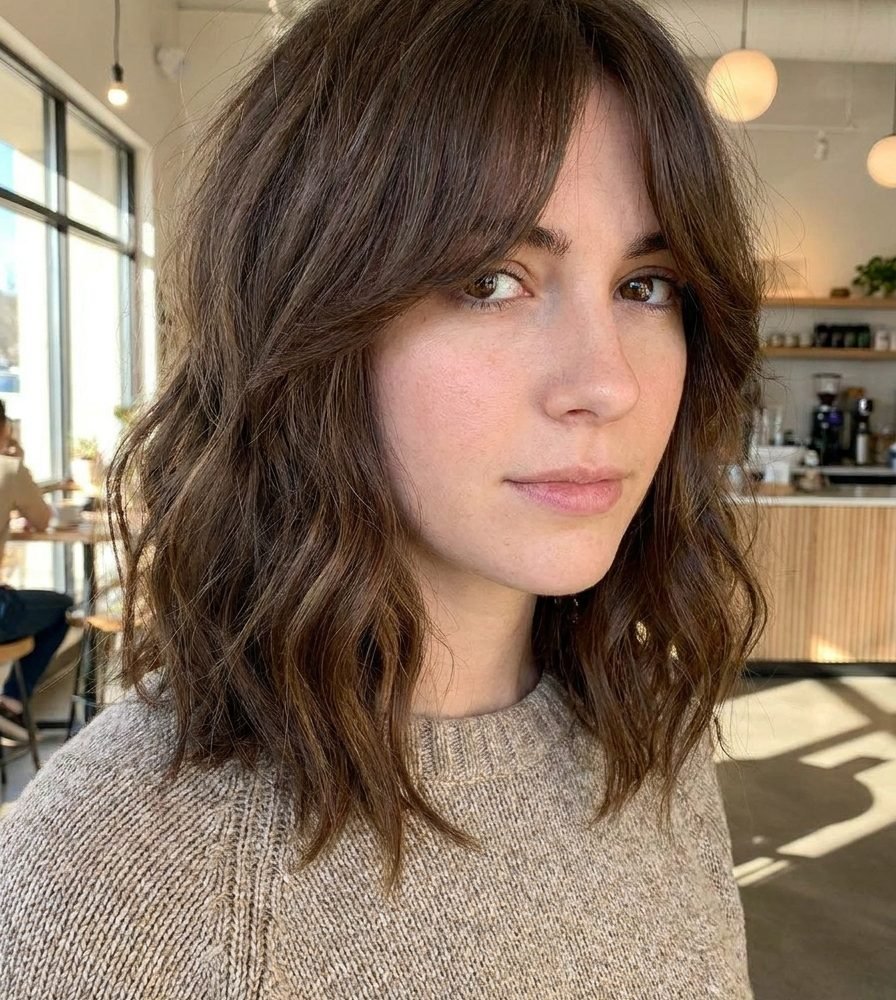
Ask a handful of people where a lob should end and the answers will range from the chin to the middle of the chest. The name is shorthand for long bob, and shorthand leaves a lot of room for interpretation. That vagueness explains why the cut is so easy to save on a Pinterest board and so hard to describe once you are sitting in the chair.
This guide narrows it down to one landmark, the collarbone. A collarbone lob is long enough to behave like proper hair and short enough to stay light, which makes it a comfortable middle ground for anyone caught between a bob and a long cut. Ahead you will find how it compares with its neighbors, six distinct ways to wear it, fixes for the usual annoyances, and a plain way to ask for it.

What a Lob Is, and Why the Collarbone Makes a Good Landmark
The lob is a medium-length variation of the bob. Wikipedia’s entry on the lob describes it as sitting between long hair and a bob, cut just above the shoulders, at shoulder level or just below. That is a generous range, and the two ends of it look quite different in photos. A lob that stops above the shoulders feels crisp and close to the neck. One that dips below them starts to move, brush against collars and swing when you turn your head.
The collarbone sits toward the lower end of that range, and it works well as a reference point for a few reasons. You can find it on your own body without a mirror, so nobody has to guess what “a bit past the shoulder” means. It gives a stylist a clear target. It also leaves enough length to gather into a low ponytail or a half-up style, which the shortest lobs cannot manage.
Because it hangs lower, the collarbone version shows more movement too. Even a blunt cut swings slightly, and a wave or bend in the ends reads clearly instead of looking tight. That balance of structure and softness is a big part of why the length photographs so well.

Lob, Bob and Long Layers: Seeing the Difference
Photos can blur these lengths together, so the comparison below uses body landmarks rather than names. A classic bob, as Wikipedia’s bob cut page outlines, typically sits around the jaw, keeps all the hair above the shoulders and leaves the back of the neck exposed.
| Cut | Where it ends | Back of the neck | Can it be tied up? | General feel |
|---|---|---|---|---|
| Classic bob | Around the jaw | Usually visible | Rarely | Neat and structured |
| Shoulder-length lob | At the shoulders | Covered | A short, loose ponytail | Easygoing |
| Collarbone lob | Touching or just below the collarbone | Covered | Low ponytail, half-up, small bun | Soft and flexible |
| Long layers | Mid-back or longer | Covered | Any style | Full and moveable |
The biggest practical difference is coverage. A bob leaves the neck bare, while a collarbone lob frames it, which changes how scarves, earrings and collars sit. Compared with long layers, the lob carries less weight, so it tends to dry faster and hold a shape with less effort.
Layering is a separate decision. A lob can be cut in one length or with soft shaping through it, and the guide to layered haircuts and what to ask for explains how to talk through that part with whoever is cutting.
Six Ways to Wear a Collarbone Lob
The same haircut can look quite different depending on the finish. Each of the six versions below relies on a different tool or shape, so you can match one to the amount of time you actually have in the morning.
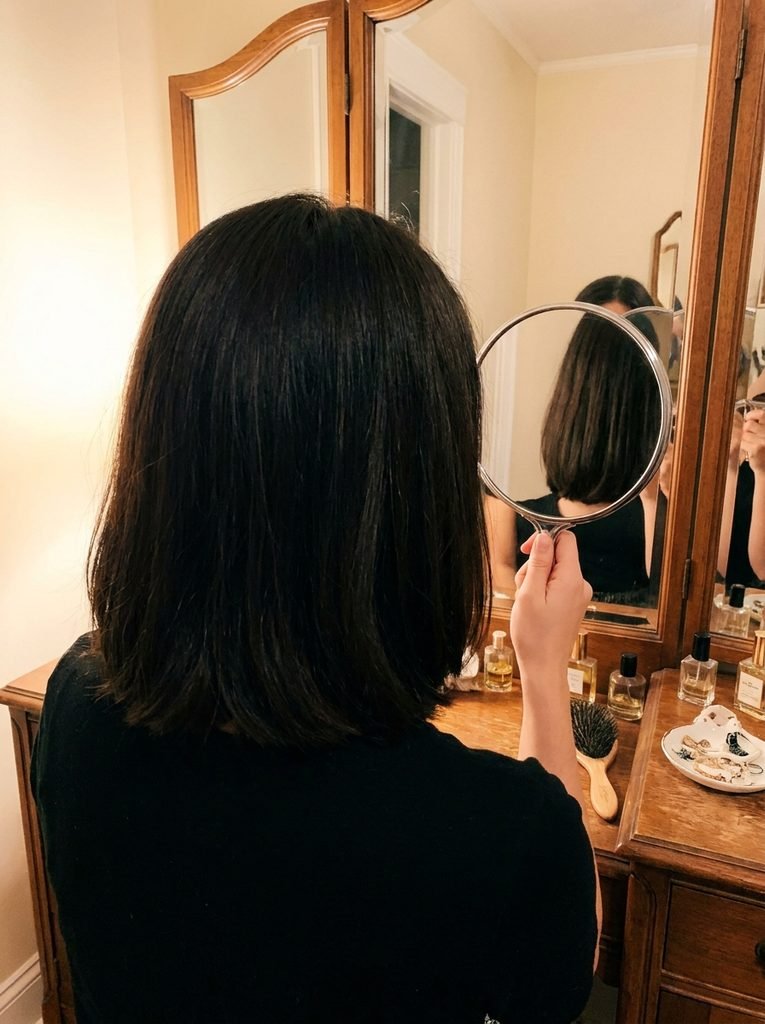
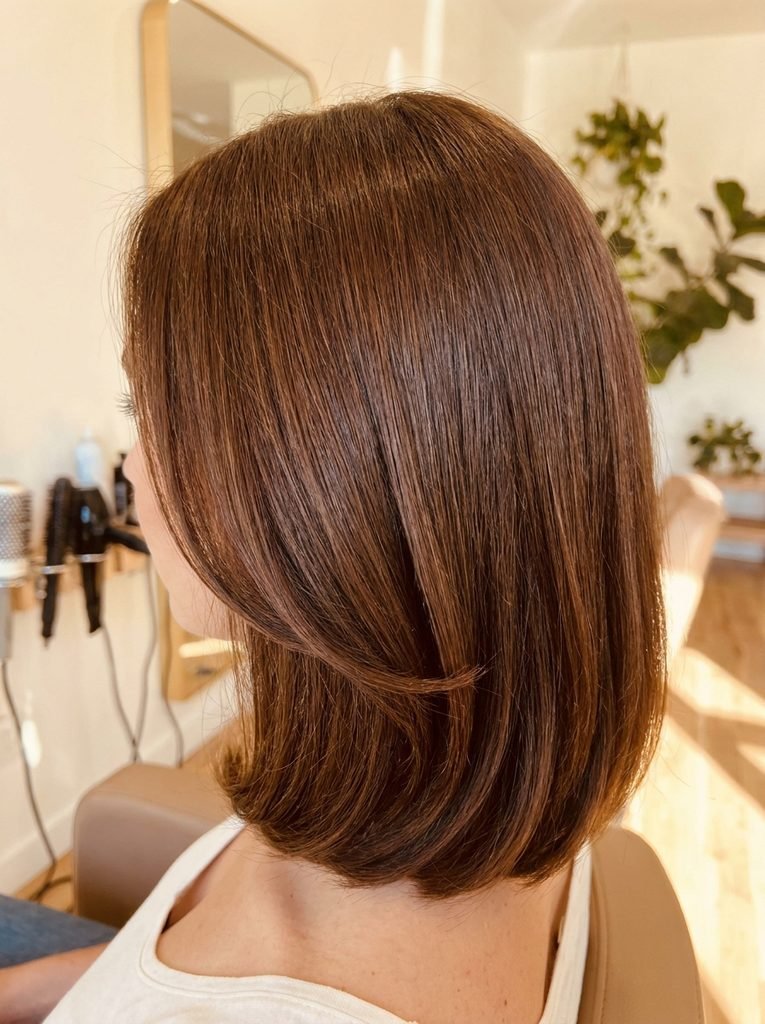
1. The Blunt Line With a Glossy Finish
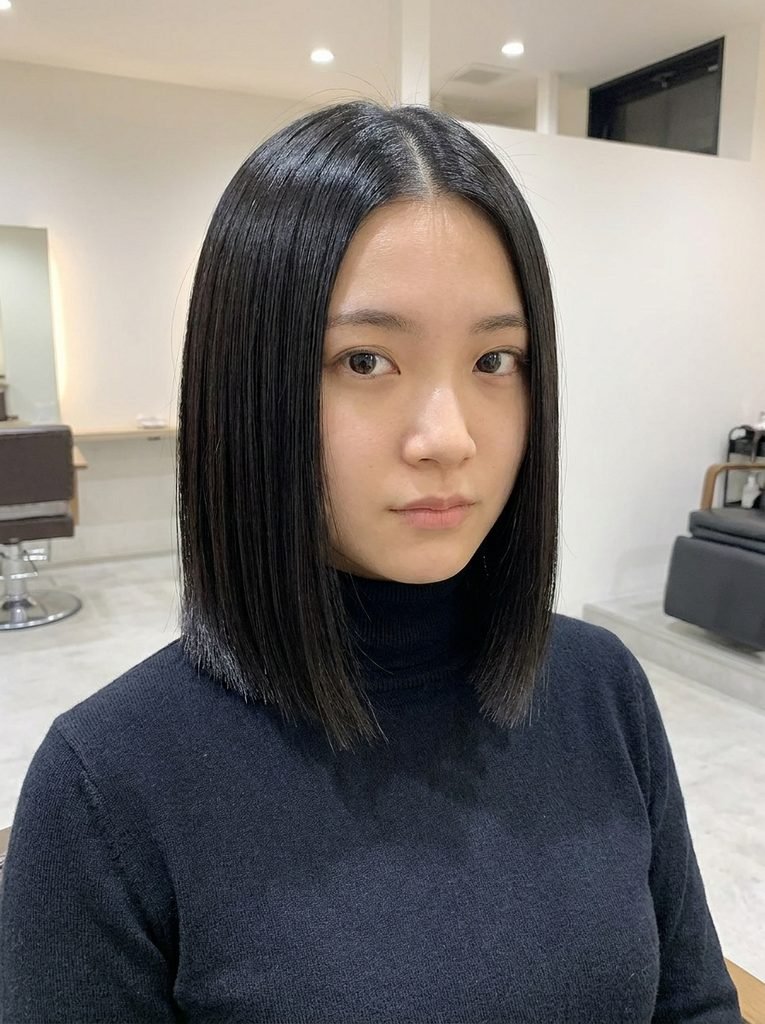
This version has one job, which is to show off a clean, straight edge. The hair is cut to a single length, dried smooth and left to hang, so the line at the bottom becomes the whole design. Straight and softly wavy hair suit it best, since both let the edge read clearly. A middle part makes it look symmetrical and formal, while a side part softens it.
Finishing takes a small amount of smoothing cream through damp hair, a paddle brush or medium round brush while drying, and a touch of shine serum on the ends. The trade-off is visibility. A blunt edge shows uneven growth and dry ends sooner than a softer one, so it looks best when the trim is fresh.
2. The Soft Bend Blowout
Here the ends turn slightly, either under toward the neck or out toward the shoulders, so the cut feels shaped rather than flat. Dry the hair with a medium round brush, wrap the last few inches around it, and let each section cool on the brush for a few seconds before letting go. Cooling helps the shape hold.
Keep the curve loose. A tight tuck gives a lob a stiff, set look, while a gentle turn looks like the hair simply wants to fall that way. If the ends flip outward more than you like, a quick rake with your fingers loosens them. This is the most polished option on the list, and it suits days that call for dressier hair without a full styling session.
3. Air-Dried Waves
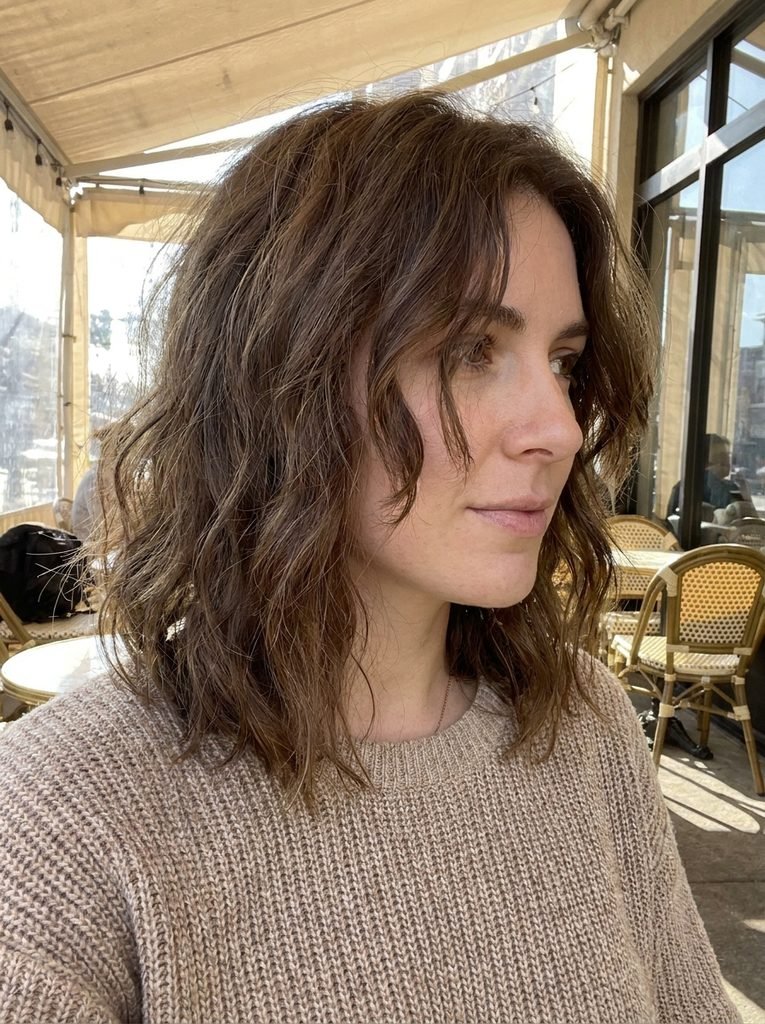
Naturally wavy hair has an advantage at this length, because a lob gives waves room to move without the weight that pulls them straight. Work a light cream or a little sea salt spray through damp hair, scrunch upward, and leave it alone while it dries. A diffuser on low heat speeds things up if the morning is tight.
The edge matters more than the waves themselves. A neatly trimmed perimeter makes loose texture look chosen, while a ragged one can look neglected. Twisting two or three front sections around a finger as they dry gives the face-framing pieces a little direction. Waves also pull upward as they dry, so this version often lands higher than the length it was cut at, which is worth remembering when you book.
4. The Lob With Curtain Bangs
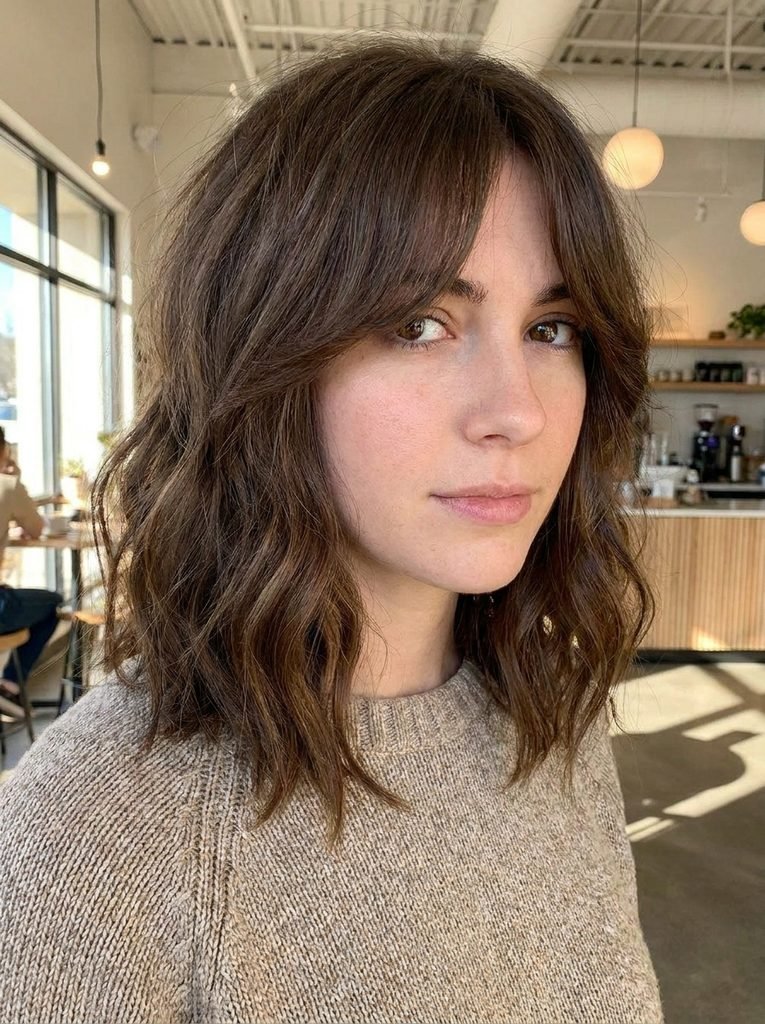
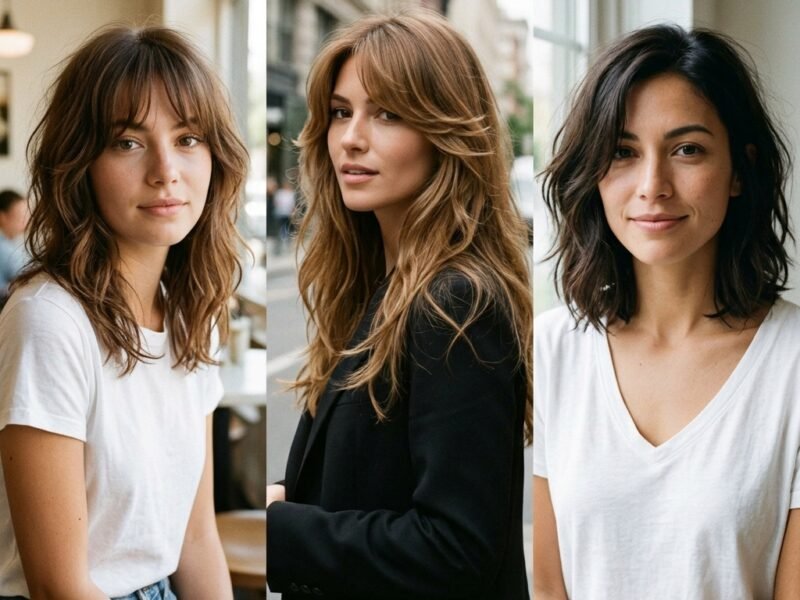
Curtain bangs parted in the middle and swept to each side pair naturally with a collarbone lob. The shorter front pieces end near the cheekbones and the length falls away behind them, which draws attention to the eyes and keeps the sides from looking heavy. This guide to curtain bangs and how to ask for them covers the cutting details and the grown-out stage.
For a lob specifically, the useful point is length. There is enough hair behind the bangs to tuck them behind the ears once they get long, so the grow-out phase stays gentle. They do need a few seconds of direction each morning, a round brush or a warm dryer pass to sweep them outward, otherwise they tend to drift back toward the center of the forehead.
5. The A-Line Slope
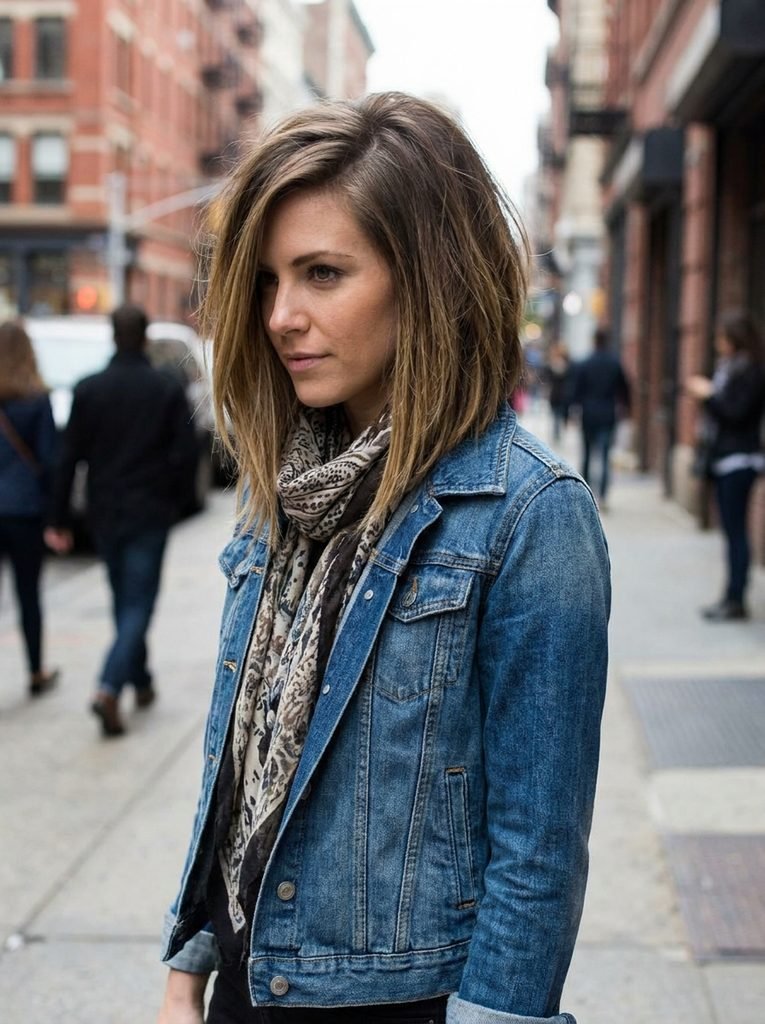
An A-line lob is cut slightly shorter at the back and a little longer at the front, so the line slopes down toward the face. The usual version keeps the back near the collarbone and lets the front reach a little lower, often by only an inch or two. A gentle slope reads soft and modern, while a steeper one starts to look dramatic.
The slope draws the eye down the front of the body, which can make the neck look longer, and it works well with a deep side part. Straight hair shows the angle most clearly. On wavy hair the line softens into something that looks more relaxed than designed. Bring a photo of the angle you want, since “a little longer in front” means different things to different people.
6. Half-Up and Pinned Back
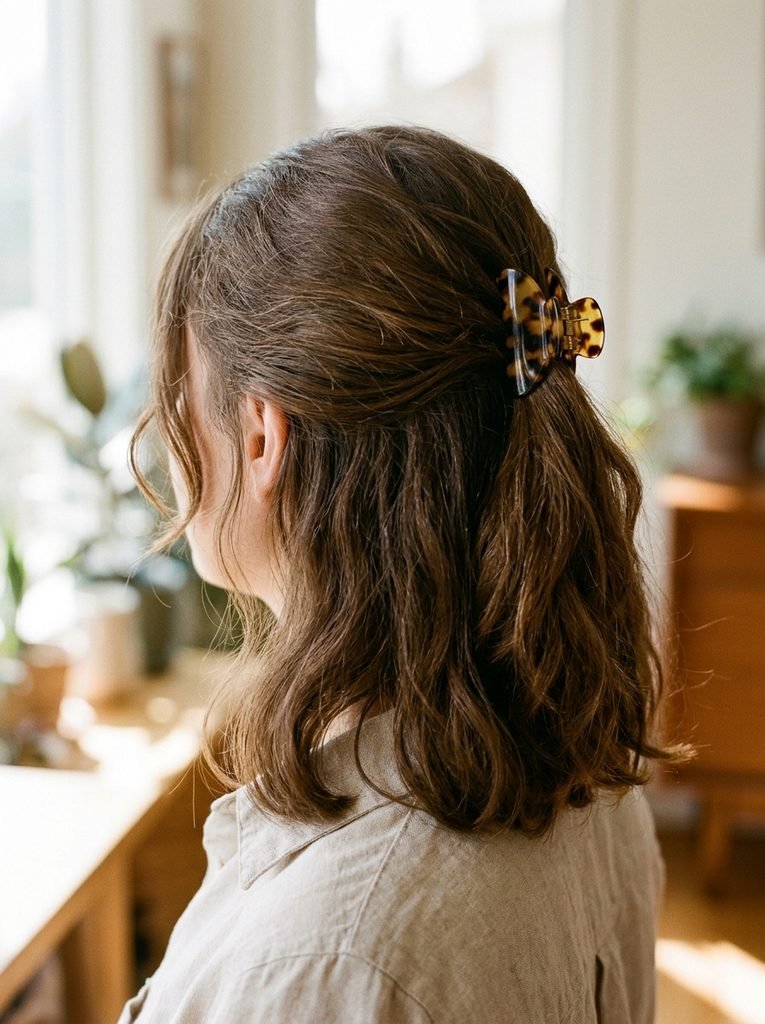
Collarbone length gives you enough hair to pull back without losing the softness of the cut. A half-up style with a small claw clip or a barrette keeps hair off the face while the lengths hang loose below it. Tucking one side behind the ear is an even quicker alternative. The claw clip hairstyles guide shows how clips behave across different lengths.
A low ponytail is possible, though the shorter pieces near the nape and face will usually slip out, which tends to look pretty rather than messy. Keep the hold loose. The American Academy of Dermatology suggests wearing hair loosely pulled back and using covered elastics made for styling, which also keeps a lob looking relaxed.
Fixing the Usual Lob Complaints
Most frustrations with this length come from a few predictable places, and each has a straightforward adjustment.
Ends That Get Pushed Around by Collars and Straps
The collarbone is also where scarves, coat collars and bag straps sit, so the ends can kick outward by the afternoon. A slightly softened perimeter helps, as does finishing with a gentle turn under. Hair that is fully dry before a coat goes on holds its shape better than hair that is still damp. In colder months, a half-up version avoids the collar problem altogether.
A Shape That Widens Toward the Bottom
Thick, wavy and curly hair can build width at the ends and form a triangle. Removing weight from inside the hair, instead of shortening the outline, usually helps. It is reasonable to tell the stylist that you want to keep the length at the collarbone while reducing bulk. Curly hair is easier to judge when it is dry, so asking how the cut will look in that state is a sensible habit.
Flat Roots and Limp Ends
Fine hair can look sparse at the ends when too much is taken out, so a blunt perimeter tends to keep a lob looking fuller. Lift at the roots comes from drying the hair upside down or aiming the dryer upward at the crown. For more shapes to compare, see these hairstyles that make thin hair look thicker.

A Five-Minute Routine That Keeps Heat Low
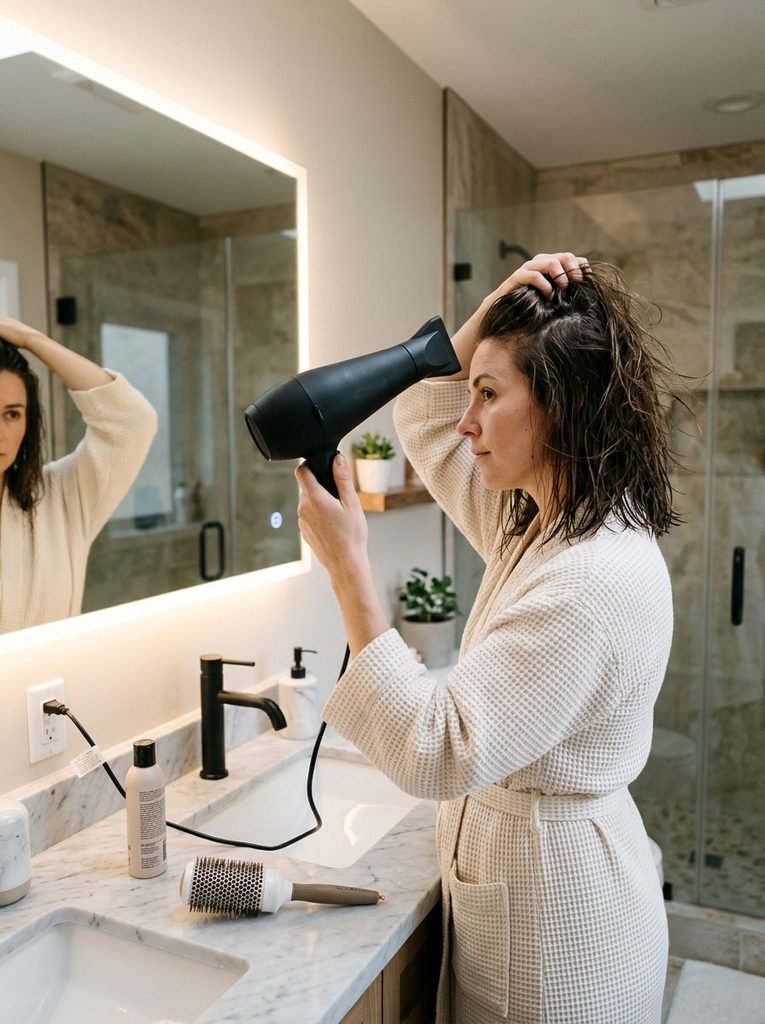
A lob rarely needs a long routine. Four steps cover most mornings:
- Start with damp, not dripping, hair and work a small amount of cream or mousse through from mid-length to ends.
- Dry the roots first, lifting them with your fingers or a brush, then move on to the lengths.
- Shape only the last few inches, turning the ends under or leaving them straight.
- Finish with a touch of serum on the ends and shake the roots loose.
Heat deserves some restraint. The same American Academy of Dermatology page recommends letting hair air dry when possible, using the lowest heat setting, limiting how long hot tools stay on the hair, and using them less often, ideally about once a week or less. It also suggests choosing a hairstyle that does not depend on long-lasting hold products. Both points fit this cut well, since a lob usually looks better with soft movement than with a rigid finish.
What to Wear Around a Collarbone Lob
Because the ends rest near the collarbone, the neckline of whatever you wear becomes part of the picture. That makes outfit choices easier to plan than they are with longer or shorter cuts, and it is a big reason the length looks so good in styled photos.
Open necklines such as a V-neck, a scoop or a wide boat neck leave the collarbone visible, so the hair frames it and the ends fall cleanly. High collars and turtlenecks are friendlier to a blunt or softly bent lob than to a wavy one, because the fabric pushes the ends outward and waves can bulk up around the roll. Chunky scarves do the same thing, so tucking the hair inside the scarf or wearing it half-up keeps the shape tidy.
Earrings stand out against this length, especially when one side is tucked behind the ear. Small studs and slim hoops sit quietly, while longer drops read well with a center part and a straight finish. These are styling observations rather than rules, and a quick mirror check with your usual outfits will tell you more than any list.

Color That Shows Up on a Collarbone Lob
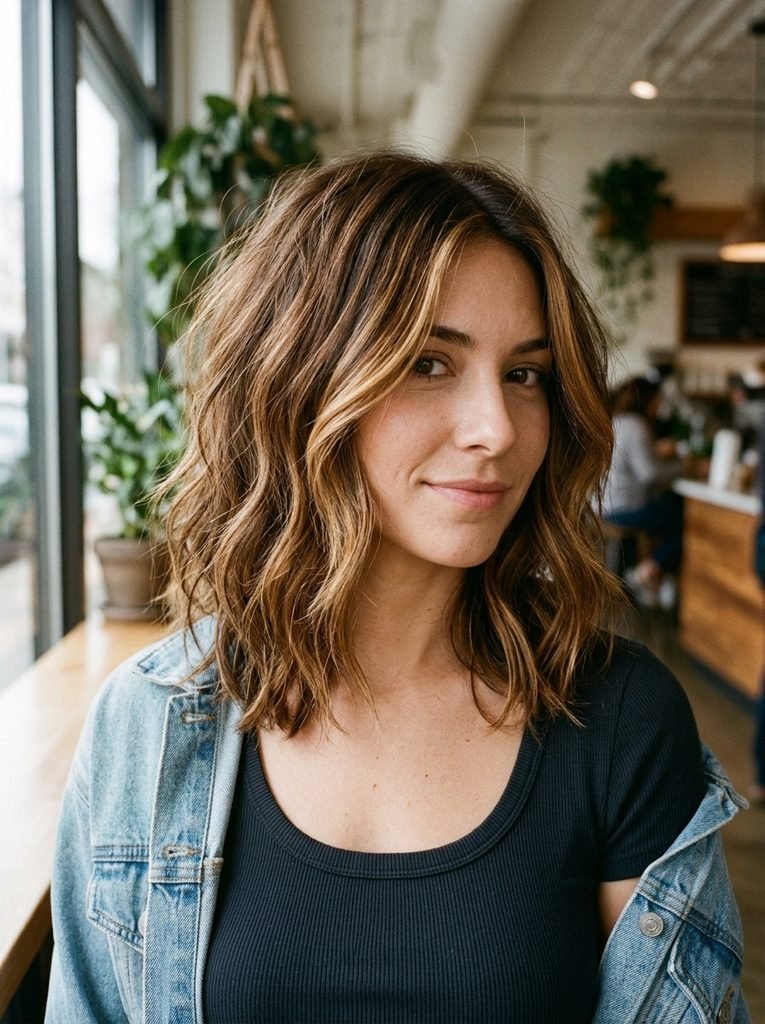
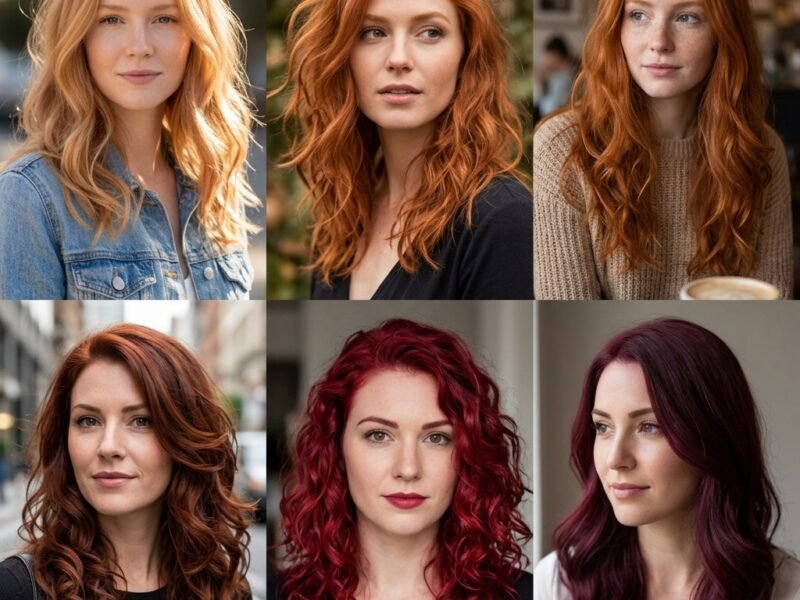
At this length, color is visible at a glance, so the finish you choose matters. A single even shade emphasizes the edge, which suits the blunt version. Soft dimension, such as lighter pieces around the face or a gradual tone shift through the lengths, makes waves and bends easier to see. As a general styling observation, deep brown and espresso shades add gloss to a clean edge, while caramel and honey tones add depth to a textured one.
Color also affects condition. The AAD advises using conditioner after every shampoo and leaving more time between coloring services when possible. A blunt edge makes dry ends more obvious, so both habits are worth following.
Trims, Growth and the In-Between Stage
A lob grows slowly toward the shoulders, and how quickly it looks grown out depends on the edge. A blunt line shows its age sooner because the shape visibly drops and the corners soften. A textured or lightly layered edge hides growth for longer. How often to trim depends on how fast your hair grows and how sharp the cut is, so the advice of whoever cuts your hair is the best guide.
Growing a lob out is easy because it is already well on the way to long hair. Layers can be added gradually, and the collarbone length works in half-up styles the whole way. Going shorter is just as simple, since the step from collarbone to shoulder is a small one. That makes this length a low-risk place to test a shorter cut.

How to Ask for a Collarbone Lob
Clear wording saves time at the consultation. A few points are worth stating out loud:
- Where it should land, for example touching the collarbone when dry
- A blunt edge or a softer, textured one
- Your usual part, and any interest in bangs
- How you normally dry and style your hair
- Reference photos from the front and the back
Hair rises as it dries, especially if it is wavy or curly, so a length measured wet may end up higher. Asking where the cut will fall once dry avoids the surprise.
Quick Answers About the Lob
Is a lob the same as a long bob?
Yes. The two names describe the same family of cuts. “Lob” simply signals that the length has moved past the jaw and into the shoulder area.
Does a lob suit fine hair?
It can. A blunt, one-length perimeter generally makes fine hair look denser at the ends, and the collarbone length is short enough to avoid dragging the hair flat. Keep any layering light and internal.
Can a collarbone lob be tied back?
Partly. A half-up style or a loose low ponytail works, though the shortest pieces will fall around the face and neck. A tight bun is harder to hold at this length.
Does it need daily styling?
Not necessarily. Air-dried versions need a little cream and some scrunching, while blunt versions look best with a quick smoothing pass. Either way, the cut leans toward easy rather than elaborate.
Choosing Your Version
Pick the finish that matches your mornings rather than your mood board. If you like a clean line and do not mind regular trims, the blunt version pays off. If you want shortcuts, air-dried waves or a half-up clip ask for the least. The curtain bangs and the A-line slope are additions you can try later, because the base cut stays the same underneath. Hold a photo next to your own collarbone, decide where the ends should land, and the rest of the choices get much easier.

[…] lob haircut shows color as a clean block, which suits glossy burgundy and mahogany. The solid line makes the […]