
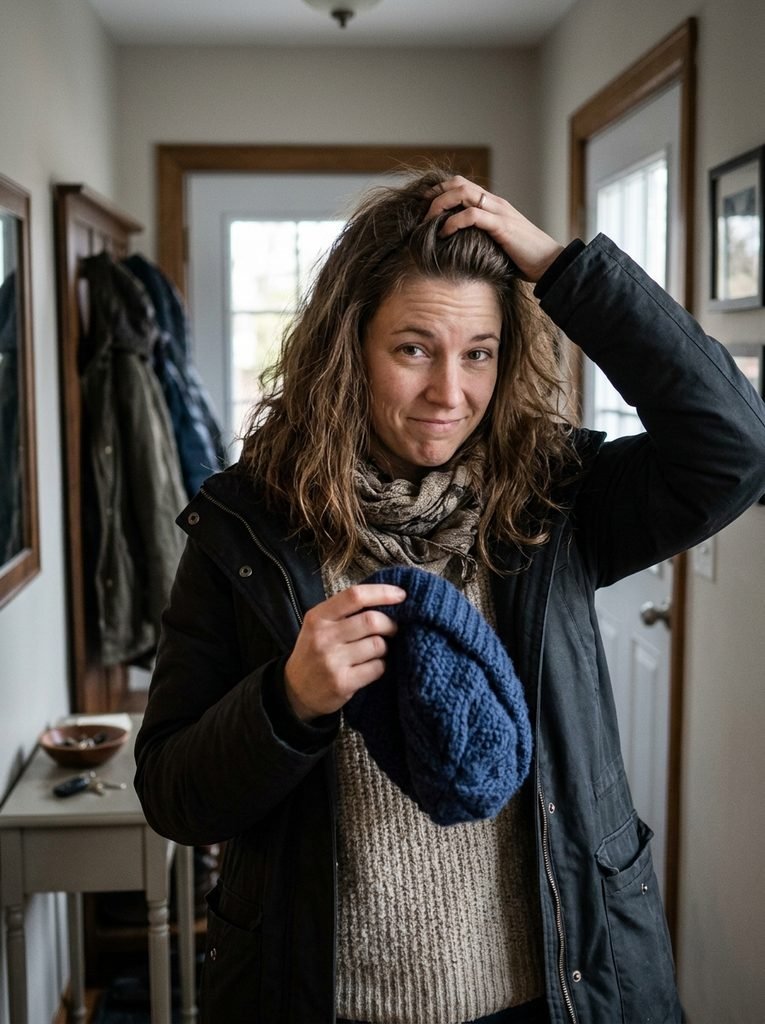
A beanie solves the cold in about two seconds and creates a new problem in about two minutes. The hat comes off, and the hair underneath is flat at the crown, strangely bent at the sides, and carrying a faint line where the cuff pressed. Anyone who has stood in a cafe doorway trying to fix it with their fingers knows the feeling.
The good news is that hat hair is mostly predictable. It comes from pressure, static, and moisture, and each of those can be managed with a few small choices: how the hair is styled before the hat goes on, how the beanie sits, and what happens in the first minute after it comes off. This guide covers the causes, the best styles by hair length and texture, beanie fit, and a quick reset routine.
Why Hat Hair Happens
Three things combine to create the flattened look.
Pressure. A snug beanie pushes hair against the scalp for hours, so roots lose their lift. The hair also sets in whatever direction it was pressed, which is why the sides often bend inward.
Static. Knit fibers, especially wool and acrylic, rub against hair and build static. The result is flyaways that stand up the moment the hat leaves the head.
Moisture. A warm head under a close-fitting hat can get damp, particularly while walking or commuting. Slightly damp hair is easier to reshape, which means it sets into a squashed form more readily than dry hair.
Seeing the cause makes the fix more logical. Reduce pressure with the right fit, limit static with the right fabric and product, and keep hair dry and textured before the beanie goes on.
Prep Before the Beanie Goes On
The most useful step happens before the hat is anywhere near the head. Hair that is fully dry holds its shape better than hair that is slightly damp, so give it a few extra minutes or finish with a cool blast from a dryer if time allows.
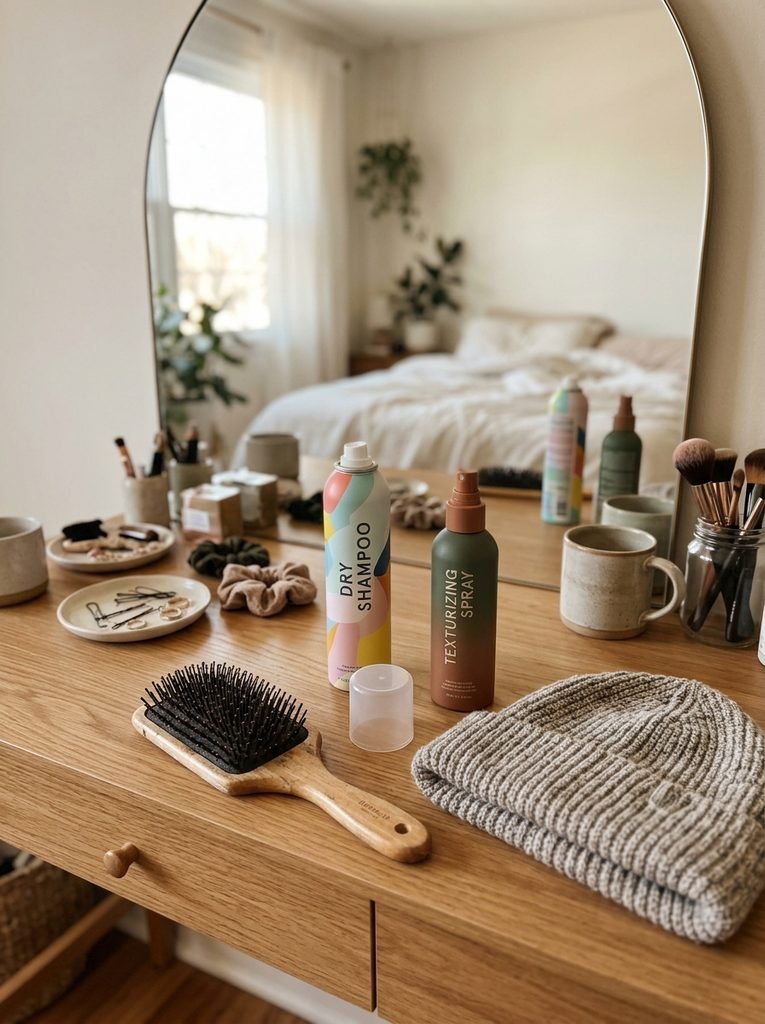
A little texture helps a great deal. Straight hair can slide under a beanie, and the Beauty Department’s hat guide suggests giving straight hair some texture so the hat does not keep slipping off. A light texturizing spray or a dusting of dry shampoo at the roots adds grip and lift.
Avoid heavy oils and rich creams at the crown. They can make hair look limp under pressure, and they tend to show up as flatness the moment the hat comes off. Save richer products for the lengths and ends.
Part placement matters too. A deep side part tends to bend more sharply under a hat than a center part. Switching to a softer, slightly off-center part, or sweeping the roots to the side with fingers, makes the shape less obvious when the beanie is removed.
Hairstyles That Survive the Beanie, by Length
The right style depends mainly on hair length and texture. Here is a quick overview before the details.
| Hair type | Style that works well | Why it works | Beanie fit |
|---|---|---|---|
| Long, straight | Low braid or loose waves | Keeps lengths smooth and away from the neck | Standard or slightly slouchy |
| Long, wavy | Half-up twist or low ponytail | Protects waves and leaves the crown less squashed | Roomy |
| Medium | Low twisted ponytail or tucked sides | Holds hair neatly behind the ears | Standard |
| Short or bob | Side-swept tuck or textured crop | Avoids pressure on a short fringe | Fitted, worn slightly back |
| Curly or coily | Loose twist-out or braids with a lined beanie | Reduces friction and keeps definition | Stretchy, roomy, lined |
Long Hair
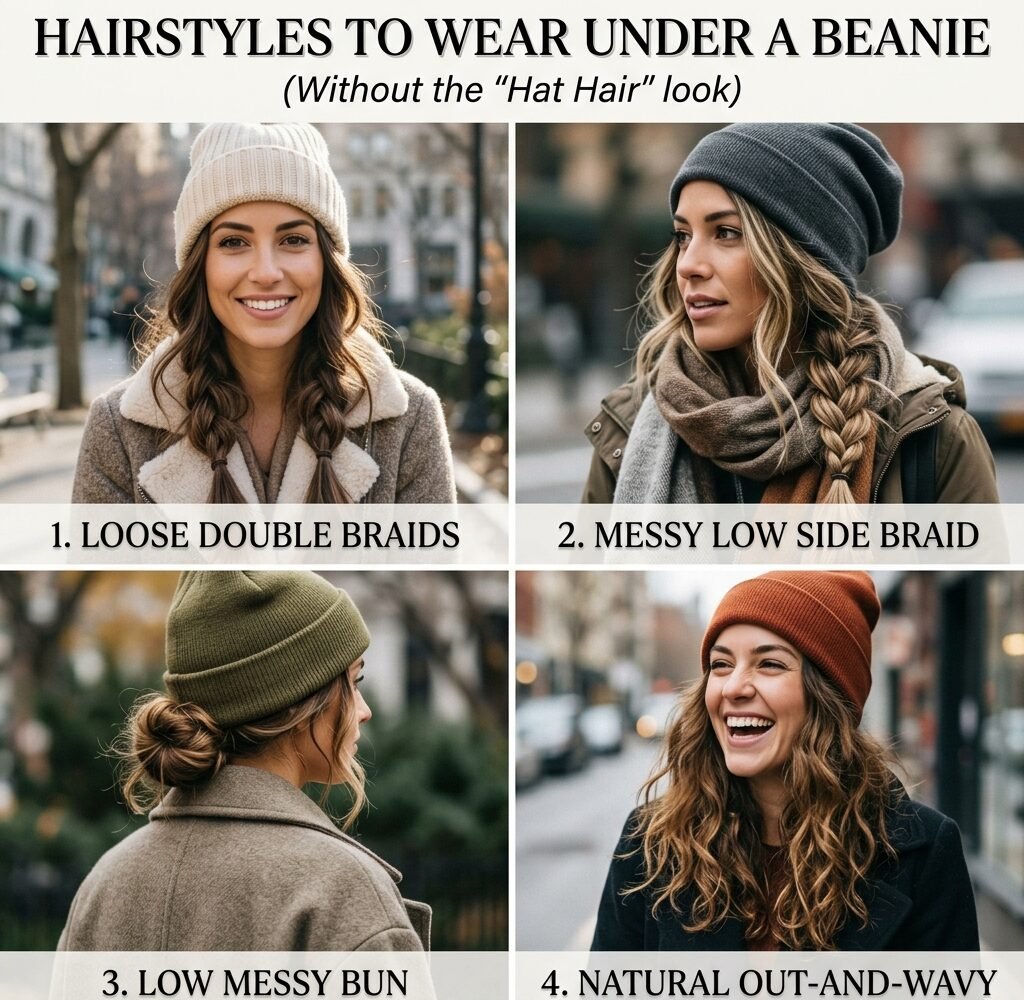
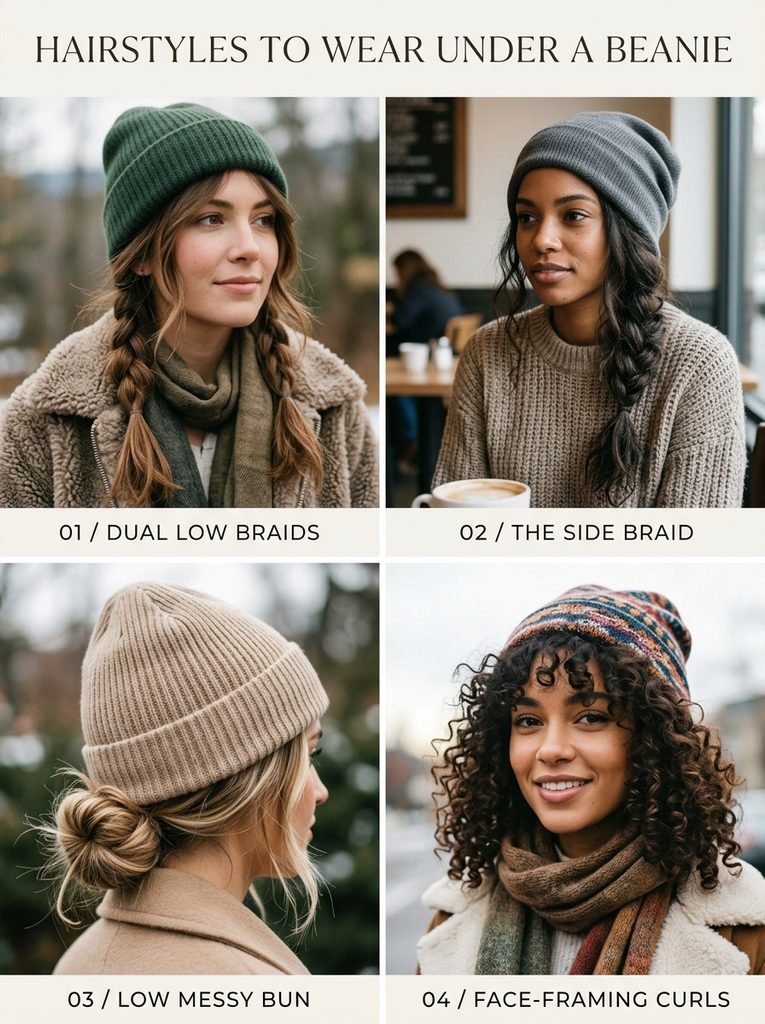
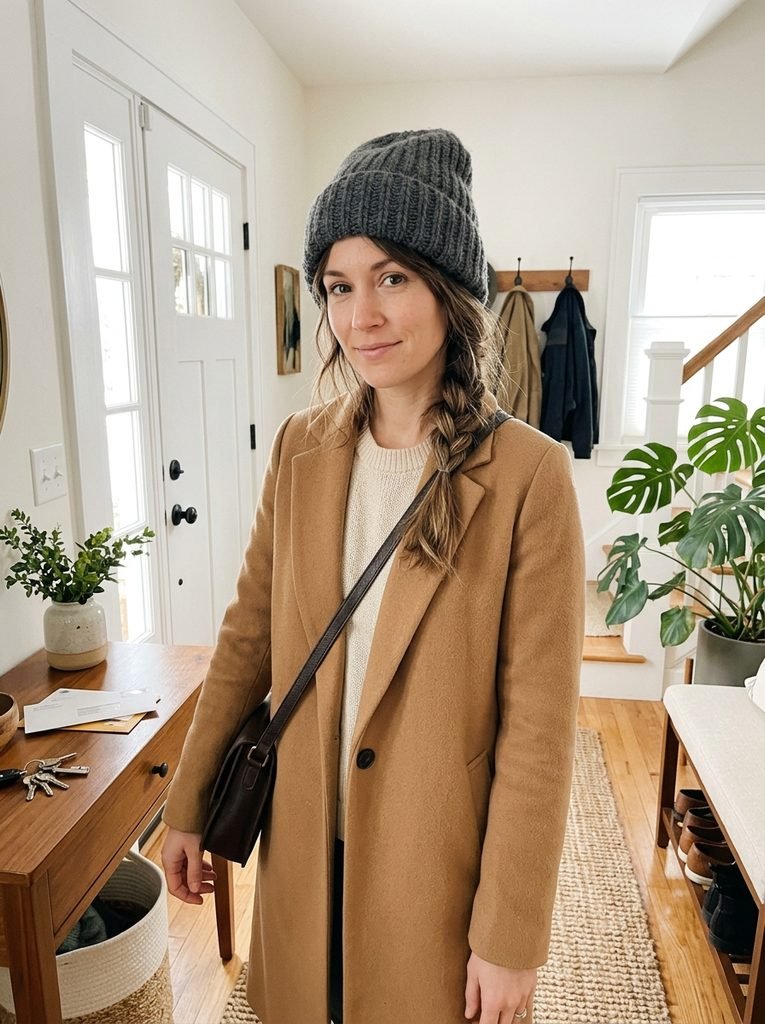
Long hair has the most options. A loose low braid, worn to the side or down the back, keeps hair tidy and removes any chance of a tangled nest at the nape. When the beanie comes off, only the crown needs a quick lift.
Loose waves are the other easy choice. The Bustle article on hat hairstyles reports that professionals named loose, full waves as the number one easy style under a hat, partly because texture hides any flattening. Waves can be created with an overnight braid or a quick pass of a wand before leaving.
A half-up twist keeps hair away from the face while leaving the lengths free. A low ponytail or low bun sits below the beanie’s edge, so the hat does not press on it. Avoid a high bun, since a beanie either flattens it or sits oddly over the bump.
Medium-Length Hair
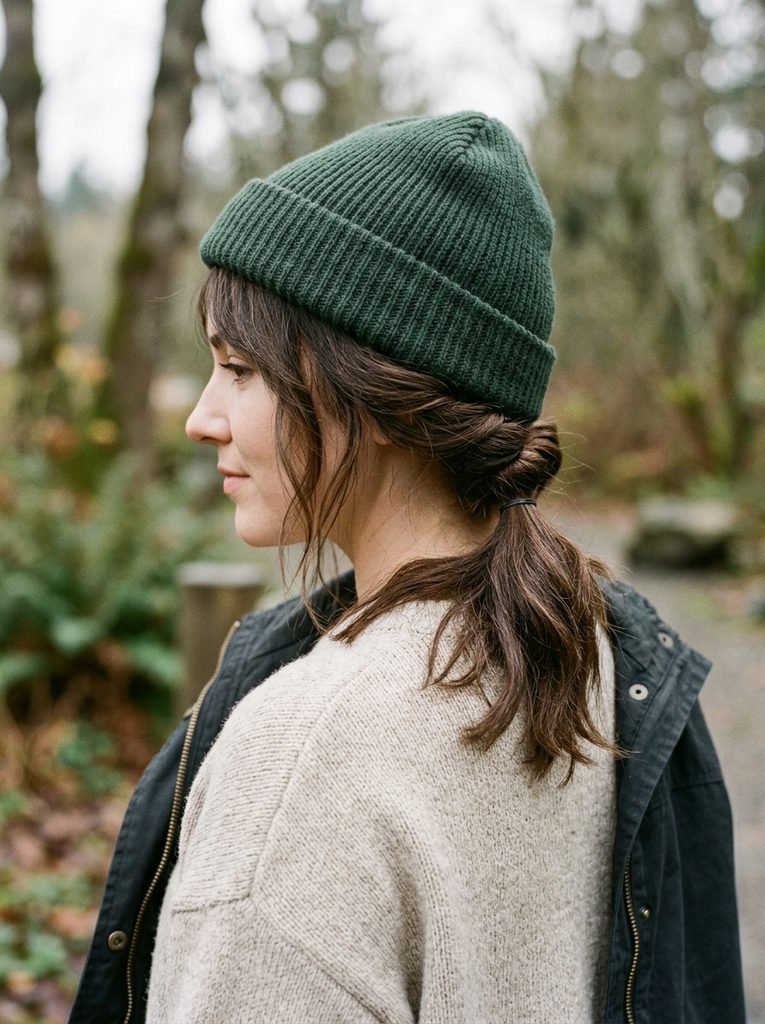
Medium hair often hits the shoulder and flips out in an unplanned way under a hat. A low twisted ponytail is one fix, because it gathers everything neatly. Another is to tuck the sides behind the ears before putting the beanie on, then pull out a couple of face-framing strands for softness.
A half-up section, secured with a small clip below the crown, keeps hair out of the face without pressing on the top. Layers are forgiving under a beanie, and the layered haircut guide explains how cuts with movement tend to recover more easily from a hat.
Short Hair, Bobs, and Pixies
Short hair has an advantage: there is less hair to flatten and nothing to tangle. The key is to leave the front area free, so the fringe or short layers show under the beanie rather than being pressed beneath the cuff. Wearing the hat slightly back on the head, with the cuff sitting above the hairline, achieves this.
Sweeping a short fringe to the side and securing it with a small pin helps if the hat tends to push it into the eyes. For bobs, tucking one side behind the ear and leaving the other loose creates a relaxed asymmetry. More short-hair styling ideas appear in the elegant short hair guide.

Bangs and Fringes
Bangs are the part of the hair most likely to be damaged by a beanie. A hat pressed low across the forehead pushes them flat or into an odd bend. The simplest solution is to fold the cuff higher or pull the hat back just enough to leave the fringe visible.
Curtain bangs and softer shapes, like the ones in the bottleneck bangs article, recover more easily because they are designed to blend into the sides. Heavier blunt bangs may need a quick brush and a touch of dry shampoo after the hat comes off.
Curly and Coily Hair
Curls and coils need a different approach. The main concerns are compression, which flattens definition, and friction, which can lead to frizz. A roomy, stretchy beanie with a smooth lining, ideally satin or silk-feel, reduces both.
Styles that keep curls grouped and protected work well. A loose twist-out, large flat twists, or braids tucked under the hat limit friction and make the hair easier to reshape afterwards. A pineapple-style high puff, loosely secured, can also be worn under a slouchy beanie if the hat has enough space.
When the beanie is removed, fluff the roots gently with fingertips and refresh with a light mist of water or a leave-in product. Avoid brushing dry curls, which can break up the pattern.

Choosing a Beanie That Is Kinder to Your Hair
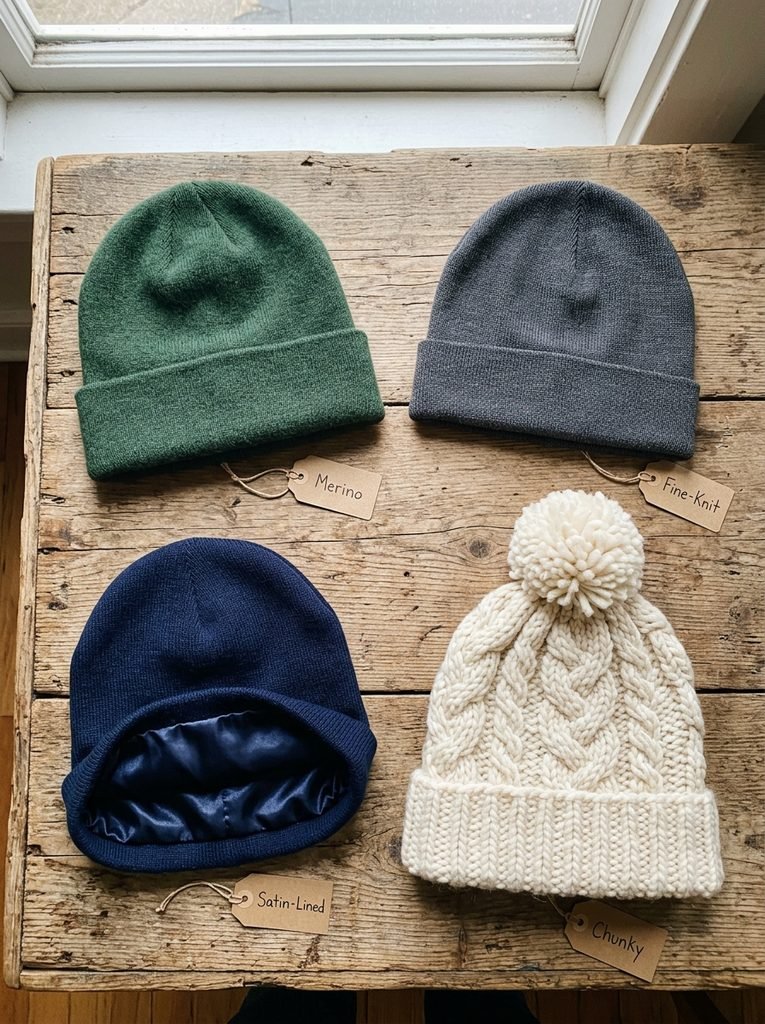
Beanie choice matters nearly as much as the hairstyle. Fit is first. A hat that is too tight creates pressure lines and flattens the crown, while one that is slightly roomy allows hair to keep its volume. A slouchy shape gives extra space, and a fitted beanie works better for short hair and cropped cuts.
Fabric comes second. Soft cotton blends, fine merino, and cashmere-blend knits tend to cause less static than coarse acrylic. A smooth lining, such as satin or silk-feel fabric, lets hair glide rather than catch, and it is useful for fine, curly, or textured hair.
Band width is a small but real detail. A thick folded cuff presses a defined line, whereas a thin cuff or an unfolded edge leaves a softer mark. Wearing the cuff slightly higher on the forehead, rather than low across the brow, reduces the line at the hairline.
How to Position the Beanie
Placement changes the result. Wearing the beanie further back on the head exposes the hairline, softens the face, and keeps pressure off the front of the hair. Pulling it low over the ears is warmer but flatter, so this works best on very cold days.
Pinching the crown slightly while placing the hat can create extra room at the top so hair does not feel crushed. For longer styles, check that the ends and braids hang freely rather than being pushed up into the hat.
For people with thick hair, a small mirror check before leaving the house is useful, because bulk can bunch at the nape or behind the ears in ways that are not obvious until later.
The Two-Minute Reset After You Take It Off
Even with a good style, a quick reset helps. Doing it right away, rather than waiting, prevents the flattened shape from setting.
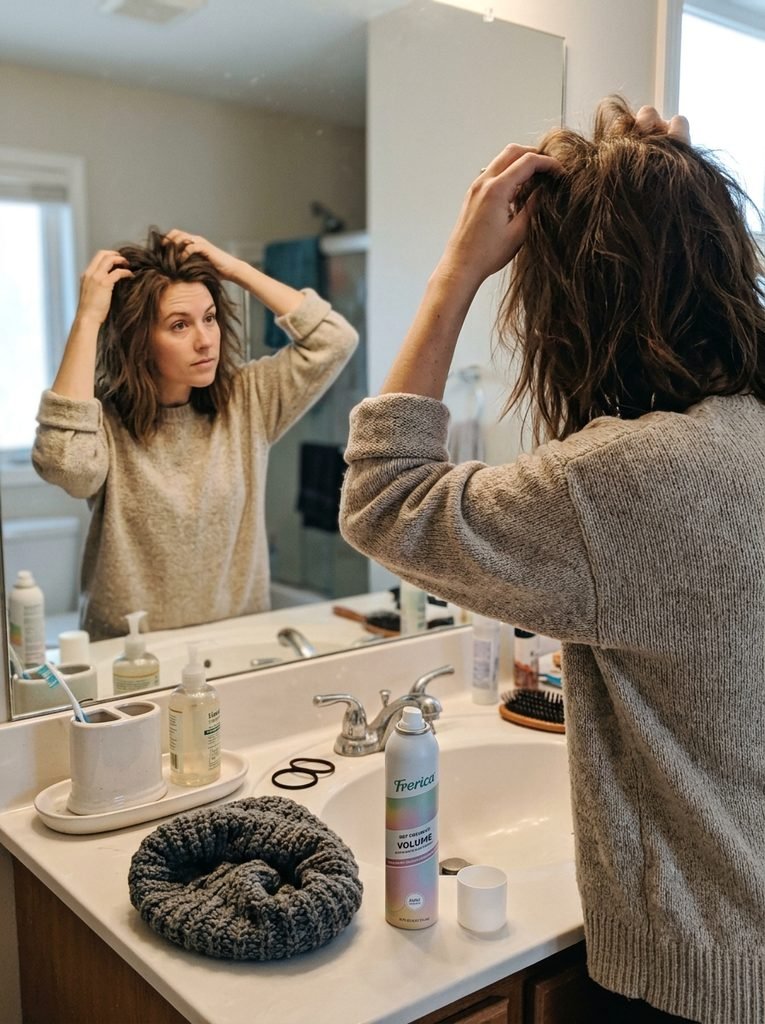
- Shake and lift. Remove the beanie and shake the hair out. Use fingertips to lift the roots at the crown and the sides.
- Flip upside down. Bending forward and running fingers through from the roots adds volume quickly.
- Refresh the roots. A small amount of dry shampoo or texturizing powder revives flat sections and absorbs moisture.
- Smooth static. A drop of lightweight serum or a touch of hand cream on the palms, run lightly over the surface, controls flyaways.
- Use cool air if needed. A short blast of cool air from a hair dryer resets damp spots, and it works well in a restroom with a hand dryer.
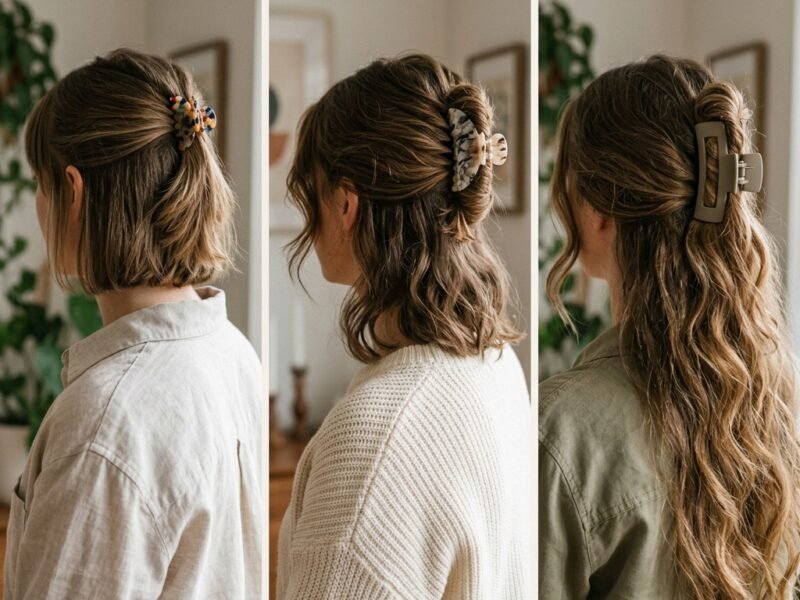
For wavy and curly hair, a spritz of water and a quick scrunch usually brings the pattern back. A claw clip at the crown for a few minutes can also help lift roots while you finish getting ready.
Match the Hairstyle to the Outfit
A beanie hairstyle looks best when it fits the rest of the outfit. A chunky knit beanie with a long braid and a puffer coat gives a relaxed winter feel. A fine-knit beanie with loose waves and a wool coat looks polished and warm. For outings like markets and fairs, where you will be outside for hours, the Christmas market outfit guide shows how to layer scarves, coats, and hats without losing the look.
Color is a simple tool. A beanie in a shade close to the coat looks cohesive, while a contrasting color adds a focal point near the face. Hair color matters too, as warm brunettes often look good against camel, olive, and cream, and cooler blondes against grey and navy.
Mistakes That Create the Flat-Crown Look
A few habits quickly create hat hair. Putting a beanie on damp hair is the biggest one, since damp hair sets in the shape it is pressed into. Pulling the hat on very tight is another, because it compresses the roots and leaves a visible line.
Too much product at the roots can make hair heavy and flat, and wearing a rough wool hat on bare, fine hair increases static. Brushing hair completely smooth before the beanie also removes the natural texture that helps hair spring back.
Finally, wearing the hat for hours without a break can leave moisture trapped. Taking it off for a minute when indoors lets the scalp and hair breathe.
Quick Answers on Beanie Hairstyles
What is the best hairstyle under a beanie?
Loose waves, a low braid, and a low twisted ponytail are reliable choices, because they keep hair neat and avoid pressure at the crown.
How do I avoid flat hair under a beanie?
Start with dry hair, add light texture at the roots, choose a slightly roomy beanie, and wear it a little back on the head.
Can I wear a beanie with bangs?
Yes. Fold the cuff higher so it sits above the fringe, or sweep the bangs to the side and pin them lightly.
Is a satin-lined beanie worth it?
Many people with fine, curly, or textured hair find lined beanies reduce friction and static, so it can be a helpful choice.
How do I fix hat hair quickly?
Shake out the hair, lift the roots with fingertips, add a little dry shampoo or texturizer, and finish with a quick blast of cool air.
One Small Routine to Remember
Think of beanie hair as a three-step habit: dry hair with a little texture before the hat, a roomy beanie worn slightly back, and a quick root lift after. That routine covers most hair types and lengths, and it takes less time than restyling from scratch.
The rest is personal preference. A braid, a ponytail, or loose waves all work. The best choice is the one that stays comfortable for the whole day and looks good when the hat finally comes off.



Leave a Reply