
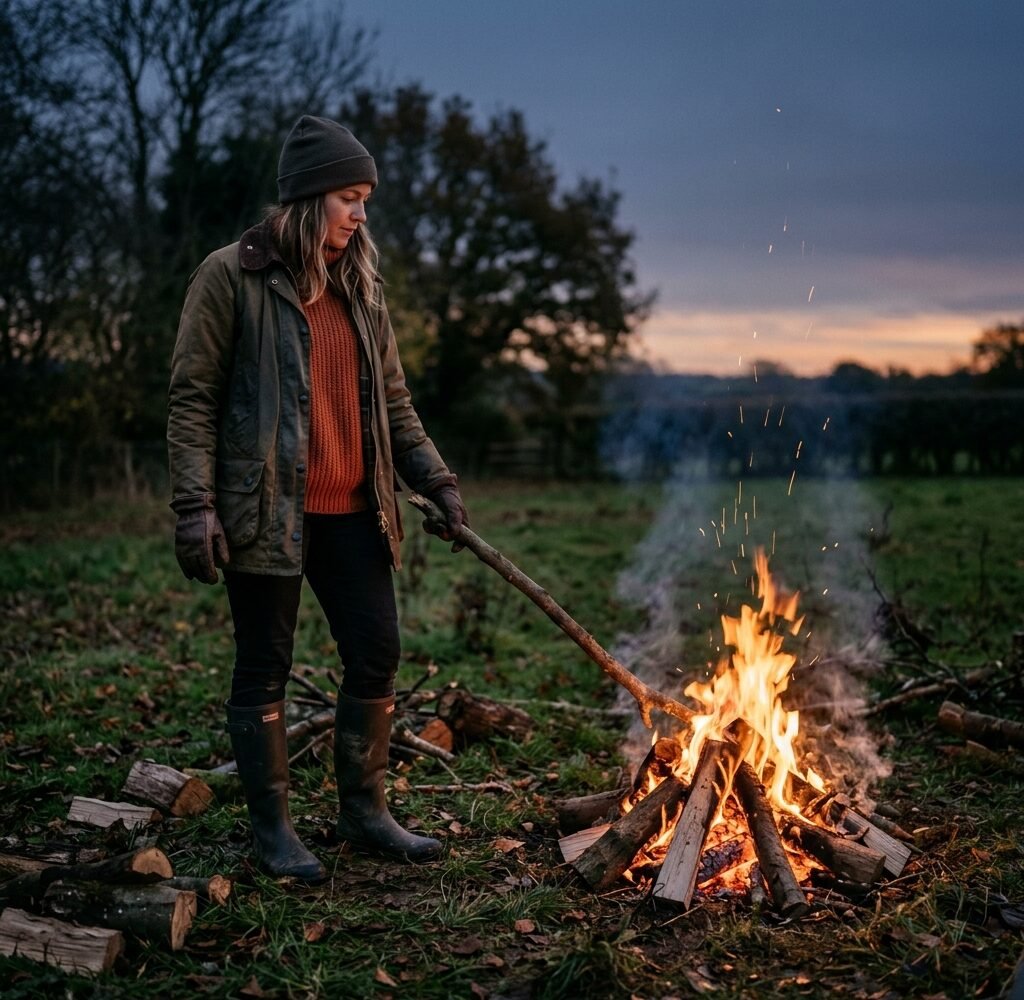
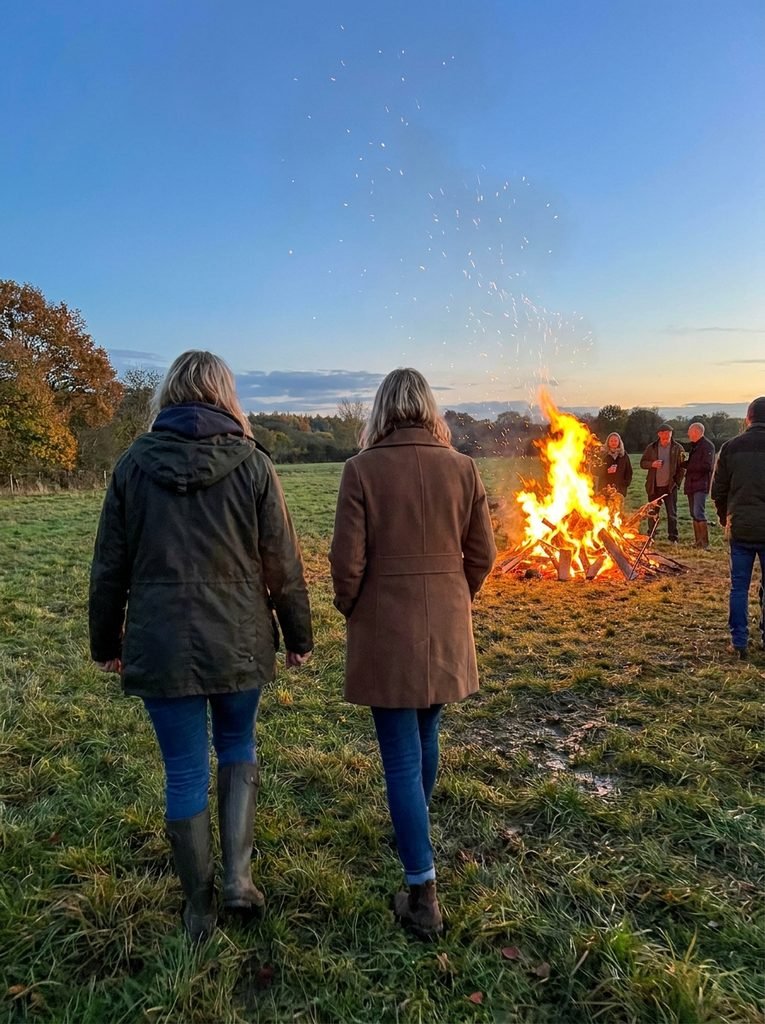
By eight o’clock on the fifth of November, a field full of people has sorted itself into two kinds. Some have faces toasted by the fire and backs going numb. Others have drifted so far from the flames that they have forgotten the fire exists. Everyone stands on grass that has been soaking up autumn rain for weeks, and at some point someone hands over a sparkler and a pair of gloves that do not quite fit.
Bonfire Night asks more of an outfit than most evenings out. The cold is uneven, the ground is wet, and the most important accessory is a pair of gloves. Nobody wants to look like they dressed for an expedition, either, because the photos of sparkler trails usually include the person holding them.
The sections below follow the title: cold, mud and sparklers. After a look at what the evening does to clothes, they cover layering, footwear, sparkler-friendly dressing, fabric, color, four complete outfits and a short pack list. Safety points come from published guidance, and the style suggestions are general observations.
What a Bonfire Field Actually Does to an Outfit
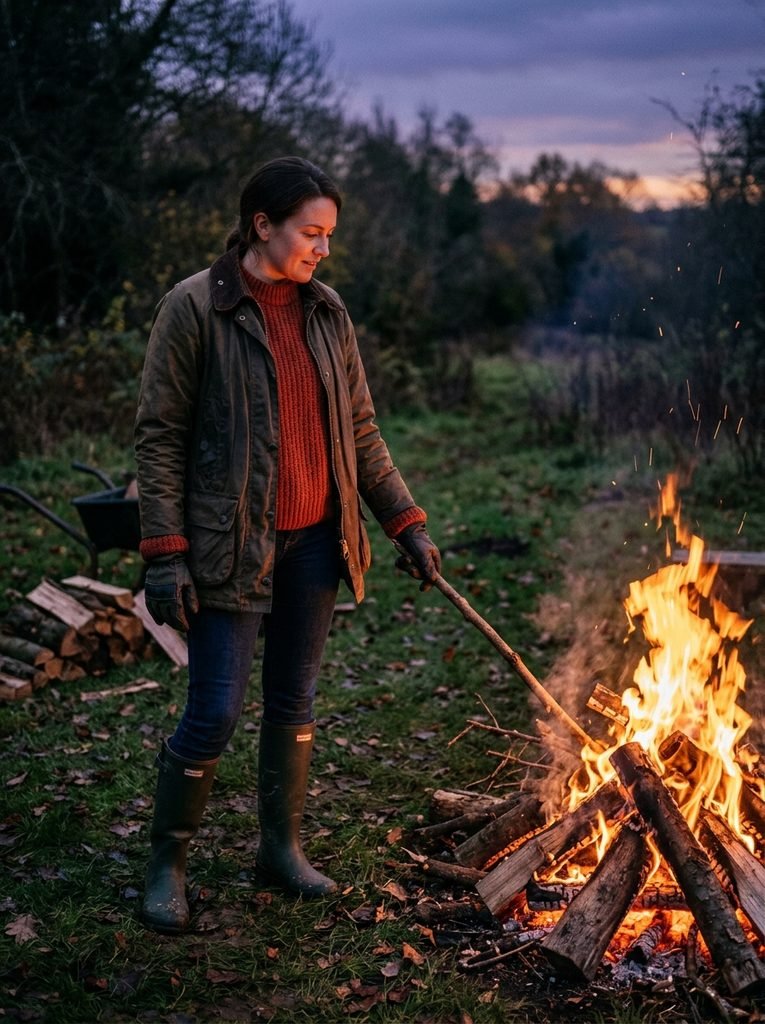
Most bonfire evenings last two to four hours, and nearly all of it is spent standing outdoors. A few conditions are specific to the night. The fire throws strong heat at whatever faces it, while the back of the body stays in cold air. The ground is usually grass or churned soil trampled by a crowd, so mud arrives early and stays. Food adds its own hazards, from toffee apple drips to hot chocolate and onion-heavy burgers eaten without a table.
Smoke is the quieter factor. Wood smoke settles into wool, hair and coat linings, and the smell is often still there the next morning. Light is the last one. The fire and the fireworks are the only illumination, so colors look different and dark clothing nearly disappears at the edge of a crowd.
None of this calls for a special costume. It calls for a handful of specific choices, taken here in the order people tend to notice them: the cold first, then the ground, then the sparklers.
Layering for a Hot Front and a Cold Back
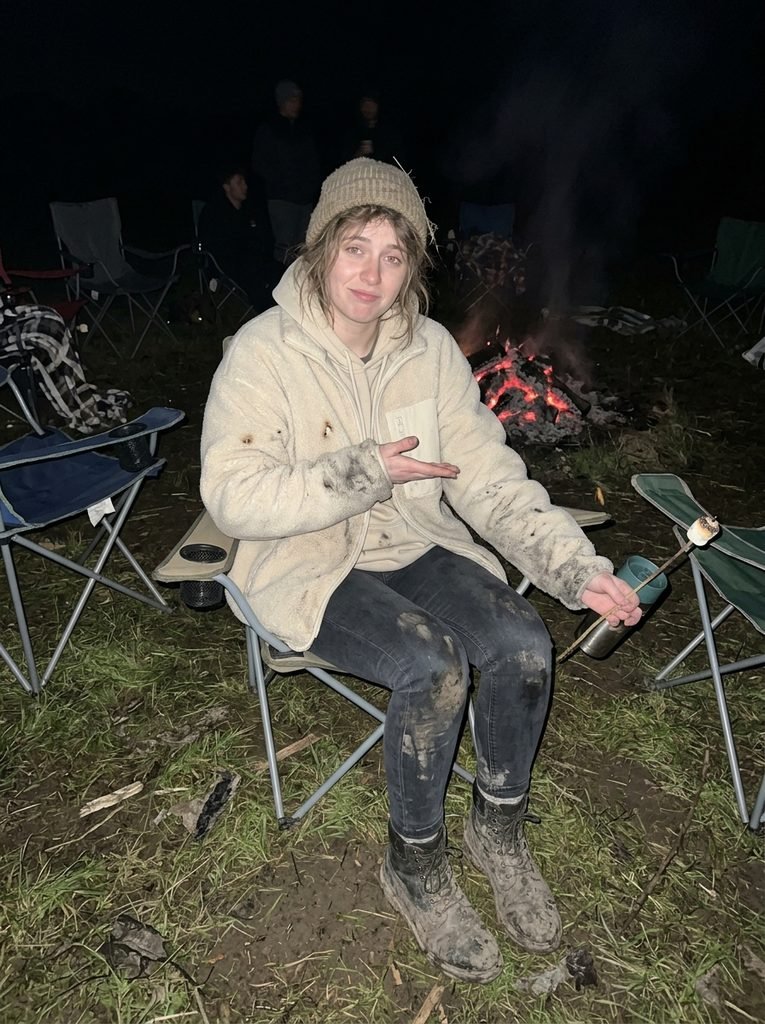
The usual winter habit of one big coat does not suit a fire. A single heavy layer cannot adjust, so it is too warm at the flames and too thin once the wind picks up from behind. Three thinner layers solve this, because each one can open, come off or be tucked away.
A close-fitting base layer comes first, such as a thermal top or fine merino. The ski trip outfit guide on this site covers base layers in more detail. A wool jumper or zip-neck knit goes over it. The outer layer should open easily at the front with a zip or large buttons, so heat can escape when standing near the fire. Wool coats, waxed jackets and padded parkas all work, and the winter coat outfits guide compares how each shape sits over what is underneath.
Scarves deserve one small rule near flames and sparklers. Long loose ends are better tucked inside the coat, and a snood or neck warmer avoids the problem entirely. A beanie covers ears and keeps hair controlled, which pays off later. Leave a little room under the coat for the extra layers, since a tight coat over thick knitwear traps sweat and then feels cold.
Footwear for Mud, Wet Grass and Long Standing
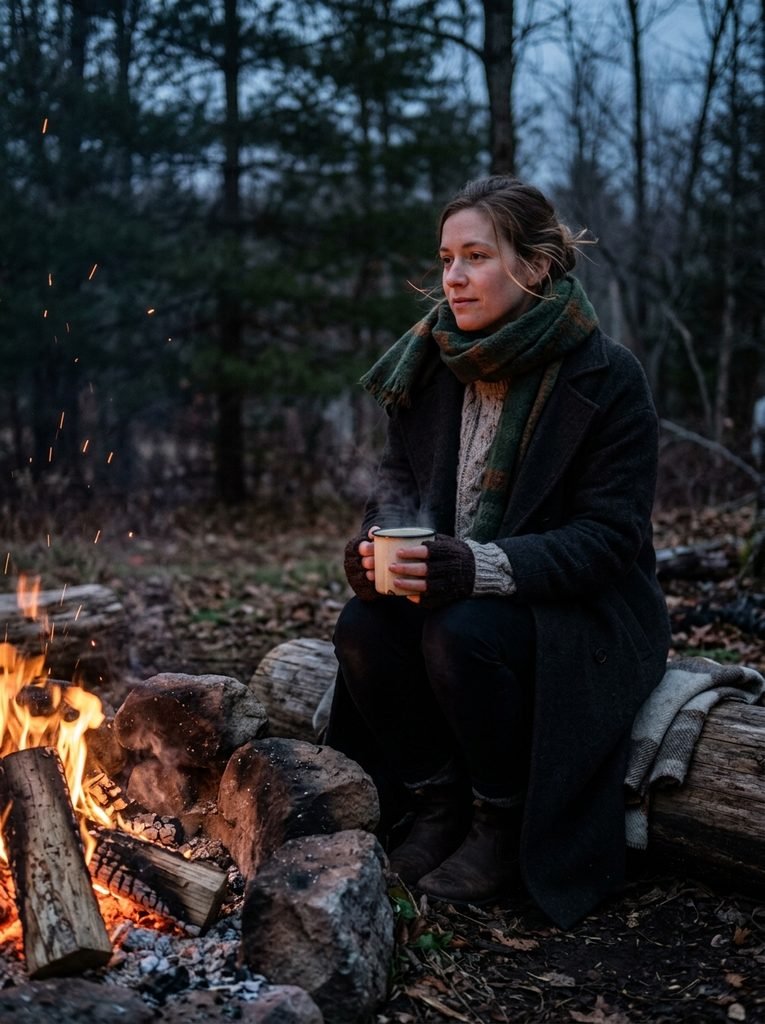
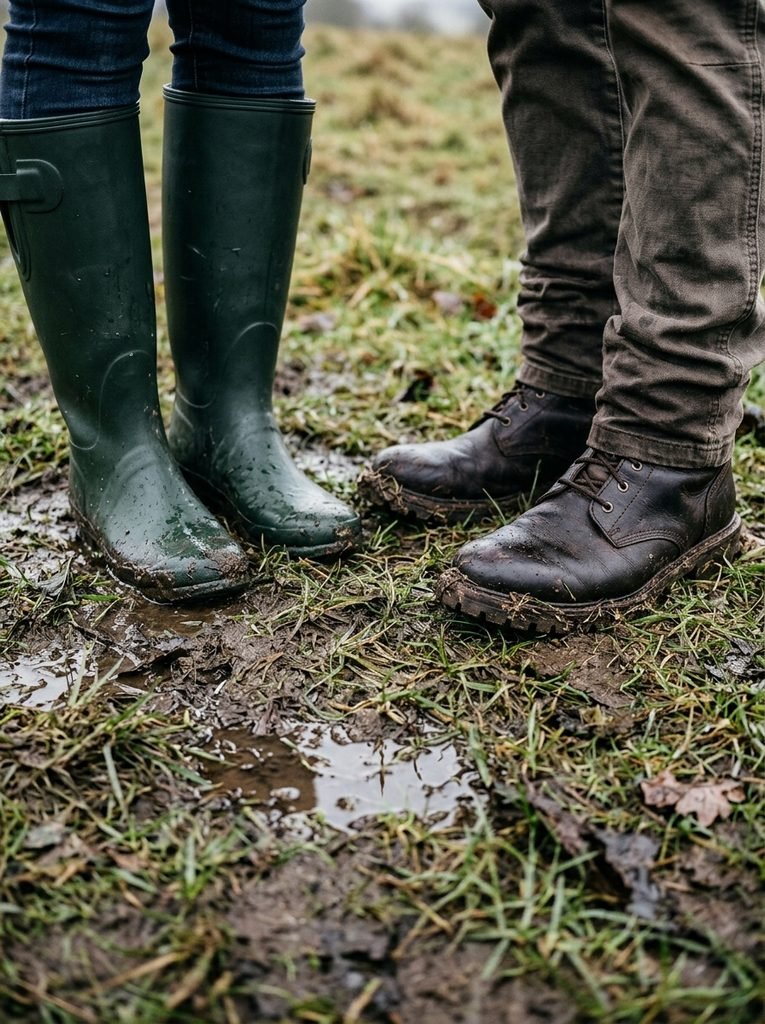
Footwear shapes the whole evening more than any other piece. Wet ground and a long stand call for grip, a sole thick enough to keep the cold out, and room for warm socks.
Wellies are the obvious answer and a good one. Lined or neoprene styles keep feet warmer, and a wool boot sock folded over the top adds a neat band of texture. The countryside style guide covers fit, height and color in detail. Waterproof leather ankle boots with a lugged sole suit anyone who wants something less rural, and they slip under straight-leg trousers more neatly than wellies do.
Suede, canvas sneakers and flat smooth soles are best left at home. Mud shows on pale shoes immediately, and a slippery sole is unhelpful on a slope. A wool or wool-blend sock helps with warmth, and a thin pair underneath can add more, provided the boot still fits comfortably with both on.
Trousers matter too. Straight or slightly wide dark trousers cuffed above the ankle, or tucked into wellies, keep hems out of the mud. Long, wide hems drag. Because the evening involves hours of standing, a cushioned insole helps, and the concert outfit guide explains how comfort changes over long stretches on your feet. The same thinking carries over to a field.
Dressing for Sparklers
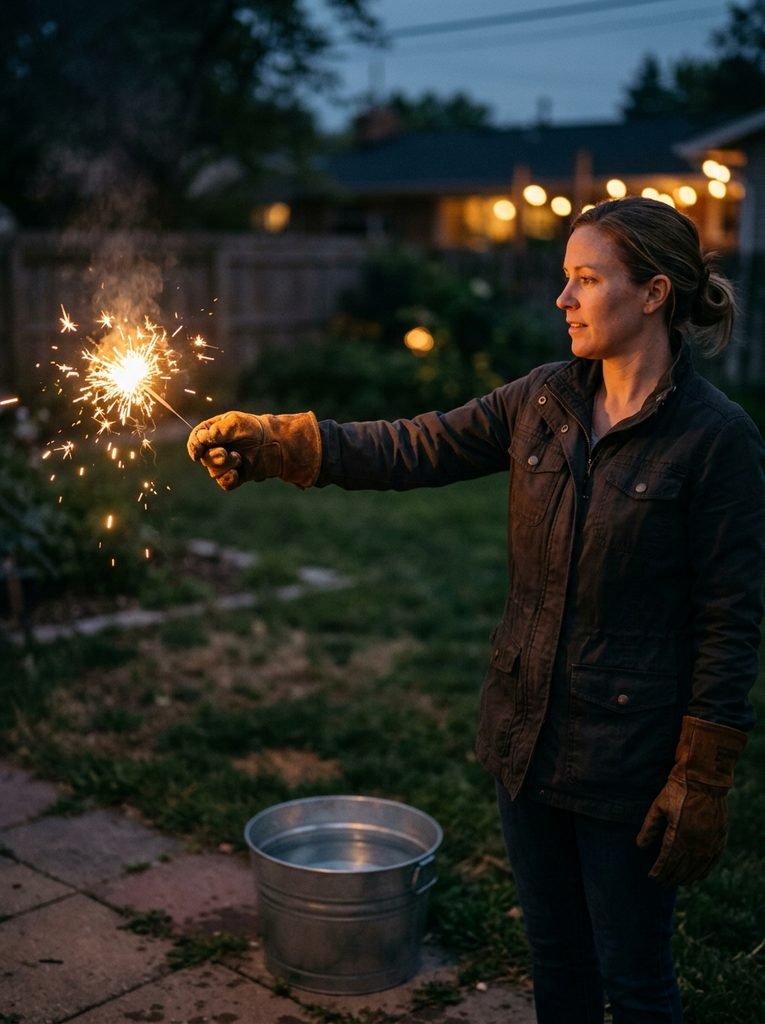
Sparklers turn clothing into a safety question, so this section stays close to published guidance. RoSPA’s fireworks safety page says sparklers burn at high temperatures and that everyone handling them should wear gloves. They should be held at arm’s length and lit one at a time. They should not be given to under-fives, and used sparklers belong in a bucket of cold water. A separate RoSPA firework safety page recommends suitable protective clothing, such as long sleeves and gloves, when using sparklers.
Northern Ireland’s official safety advice adds that gloves should preferably be leather. It also warns that fireworks can set fire to clothing and advises against taking sparklers to public displays, so checking an event’s rules before packing any is sensible.
On the style side, leather gloves in black, tan or oxblood look polished and can stay on for the whole evening. Choose a pair thin enough to grip a wire but intact, with no worn patches. Fitted cuffs beat wide bell sleeves or loose, flowing fabric that could drift toward a flame. Long sleeves that end at the wrist, with the glove overlapping, leave no gap. A low braid, a bun or a beanie keeps hair out of the way. Tucked scarves, secured bag straps and hair pulled back also tend to look tidy in photographs.
Fabrics That Cope With Sparks and Smoke
Wood smoke and flying embers both leave marks. As a general styling observation, dense wool, tightly woven cotton, denim and waxed cotton are what many people reach for around fires. Thin synthetic shells and fuzzy fleece are more easily pitted or marked by a stray spark. Treat that as a preference rather than a tested rule, and keep a respectful distance from the flames whatever the fabric.
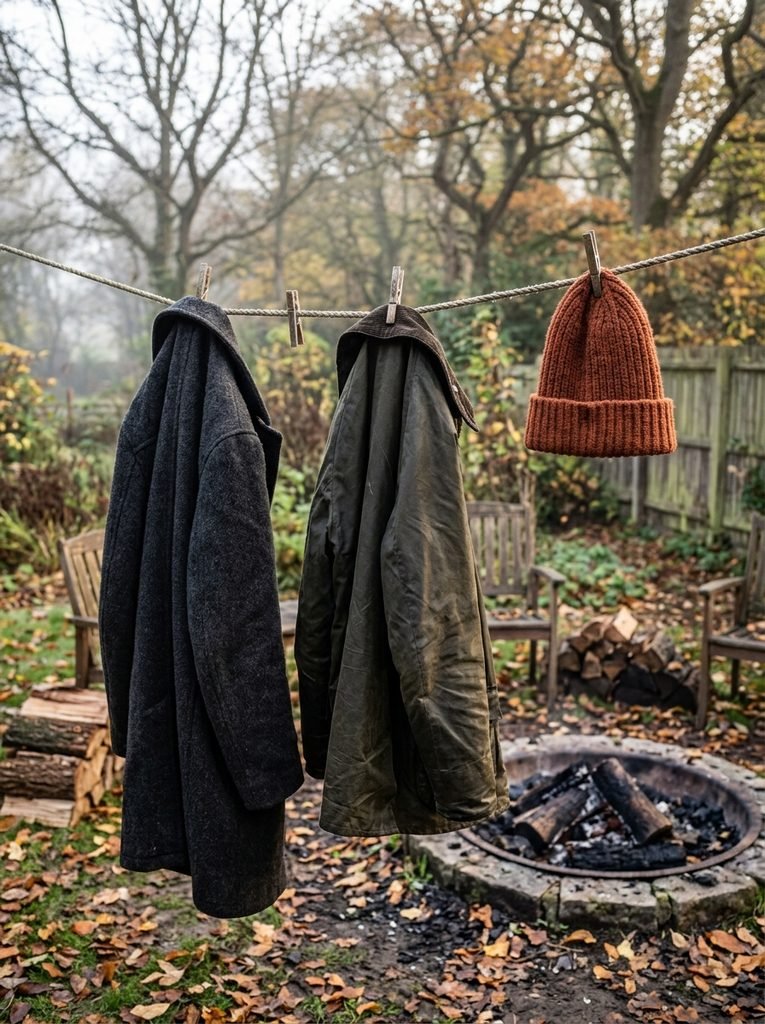
Smoke clings to anything porous. Wool coats and knit hats hold the smell for days, so hanging outer layers outdoors or in a well-ventilated space afterward helps. Washable layers can go through the machine according to their care labels. A spare beanie is a useful extra, since hair soaks up smoke quickly, and a delicate silk scarf is better left at home.
Food spills are the other consideration. Dark or patterned fabrics hide toffee and hot chocolate better than pale knits, and a pocket of wet wipes is more useful than it sounds.
Color and Visibility in the Dark
Firelight is warm, and it changes colors. Rust, burgundy, bottle green, mustard and camel glow in it, while pale grey and icy blue can turn flat. A deep orange knit that looks loud in daylight often looks exactly right beside a fire.
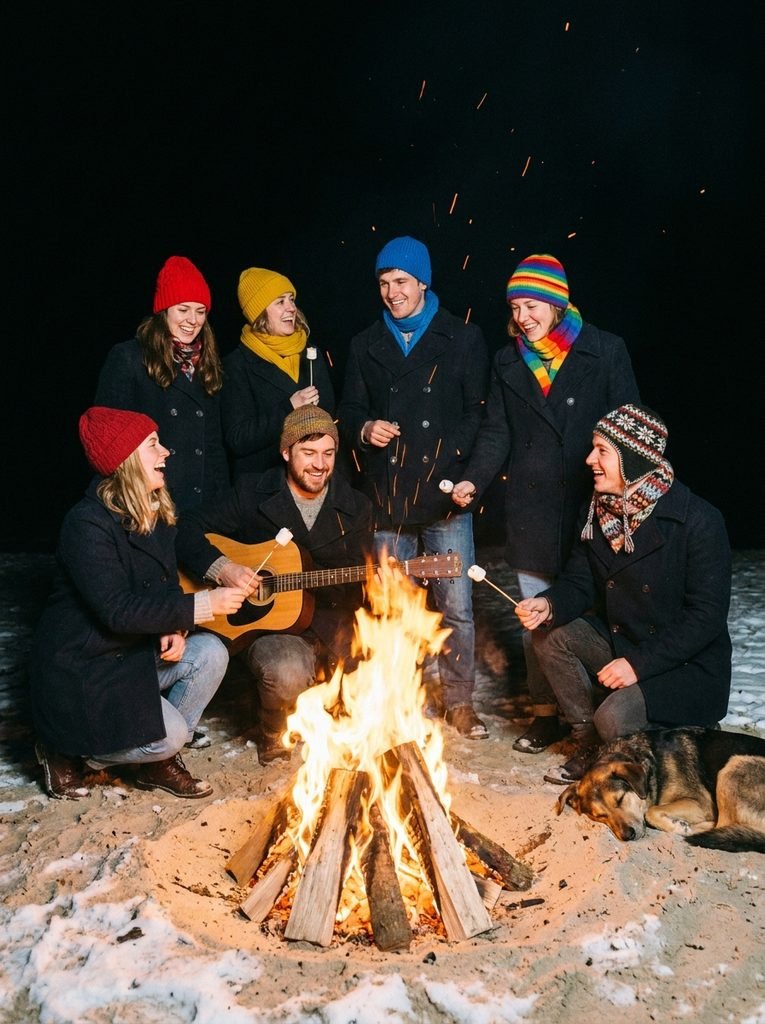
Darkness has a downside. A group in black coats can lose each other at the edge of a crowd. One bright detail helps, such as a mustard beanie, a red scarf or a reflective strip on a bag or wellies. The accent also shows up in photographs, where sparkler trails read best against a darker background. For children, a bright hat or reflective jacket makes them far easier to spot among other families.
Four Outfits for Four Kinds of Bonfire Night
The best outfit depends on where the fire is. These combinations are starting points.
The Big Public Display
A park display means queues, crowds and a long stand. A thermal base layer, a rust wool jumper, dark straight jeans and waterproof lugged-sole boots work well, with a quilted parka or wool coat on top. A bright beanie helps friends spot each other, and a zip-up crossbody bag keeps hands free for gloves and cups.
The Village Green or Farm Field
Mud is the main event here. Lined wellies, corduroy or moleskin trousers, a chunky cream knit and a waxed jacket handle the ground and the damp. A tartan snood and lined gloves add warmth, and a flat cap or beanie keeps ears covered.
The Back Garden With Sparklers
A garden is close to home and close to the action. Dark jeans, a fitted long-sleeve knit and a zip-front parka keep cuffs neat. Leather gloves, a low braid and ankle boots with grip complete the look. A pair of hand warmers in the pocket helps between sparklers.
The Pub Garden or Fire Pit Evening
A belted wool coat over a ribbed roll-neck and wide-leg dark trousers looks sharp beside a fire pit. Leather ankle boots with a lugged sole handle damp paving, and a long wool scarf tucked inside the coat finishes it. A small crossbody bag leaves room for a drink.
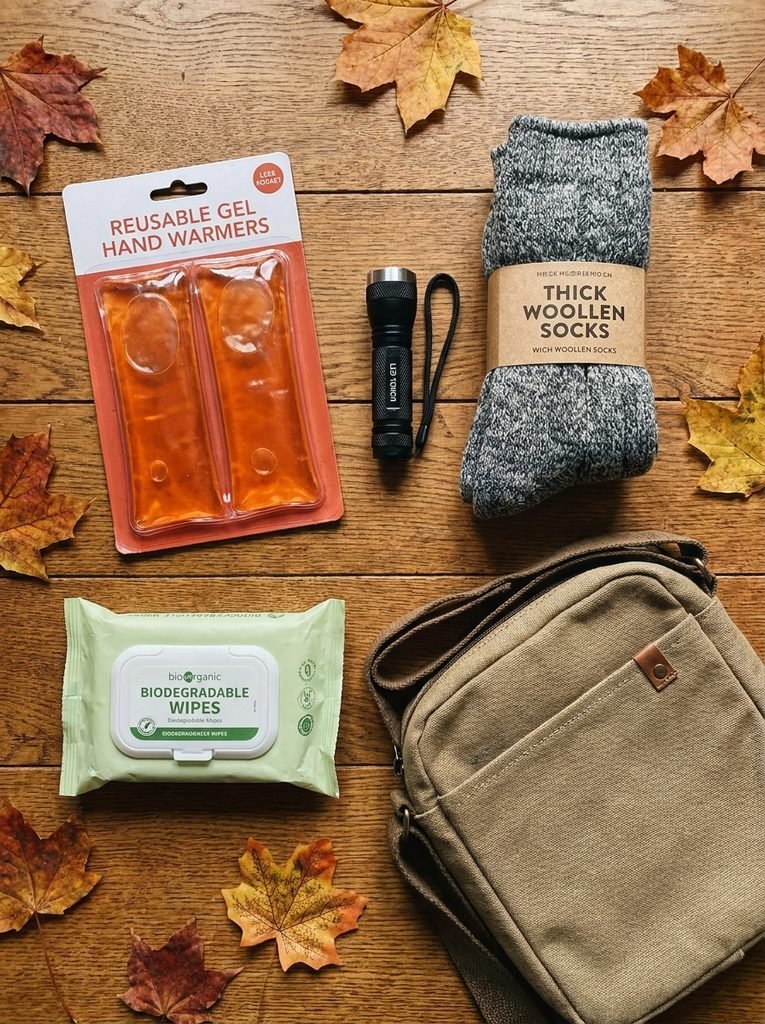
A Small Pack List for the Night
A few small items make a bigger difference than another layer.
| Item | What it handles |
|---|---|
| Hand warmers | Pocket warmth when gloves come off |
| Small torch or phone light | Finding the way over uneven ground in the dark |
| Spare socks | Damp feet on the journey home |
| Tissues and wet wipes | Sticky toffee fingers and runny noses |
| Waterproof sit pad or folded bin bag | A dry seat on damp grass or a cold bench |
| Zip-up crossbody bag | Keeps hands free for gloves and a hot drink |
Quick Answers on Bonfire Night Clothing
What should I wear to Bonfire Night?
Three thinner layers, waterproof boots with grip, a hat and gloves. Leave room for layers under the coat and choose a coat that opens easily at the front.
Are wellies a good idea?
Yes, especially lined ones on muddy ground. Waterproof ankle boots with a lugged sole are a tidier alternative.
What gloves suit sparklers?
RoSPA advises gloves for anyone handling sparklers, and official Northern Ireland guidance says leather is preferable. Choose a pair in good condition that still lets you grip.
Is a puffer jacket a good choice near a fire?
Many people prefer dense wool or waxed cotton near flames, since thin synthetic shells can be marked by sparks. Keep a safe distance whatever the coat.
How do I get the smoke smell out?
Air outer layers outdoors and wash what is washable according to the care label. A spare hat keeps the worst of it away from hair.
Dress for Both Sides of the Fire
A good Bonfire Night outfit works for the warm face and the cold back, the wet ground and the moment someone hands over a sparkler. Start with the boots, add layers that can open and close, and finish with gloves that fit. Once those are right, the rest is color and personality: a rust knit that glows in firelight, a bright hat that makes you easy to find.
An outfit that handles the practical parts well is the one nobody thinks about once the first firework goes up.


Leave a Reply