
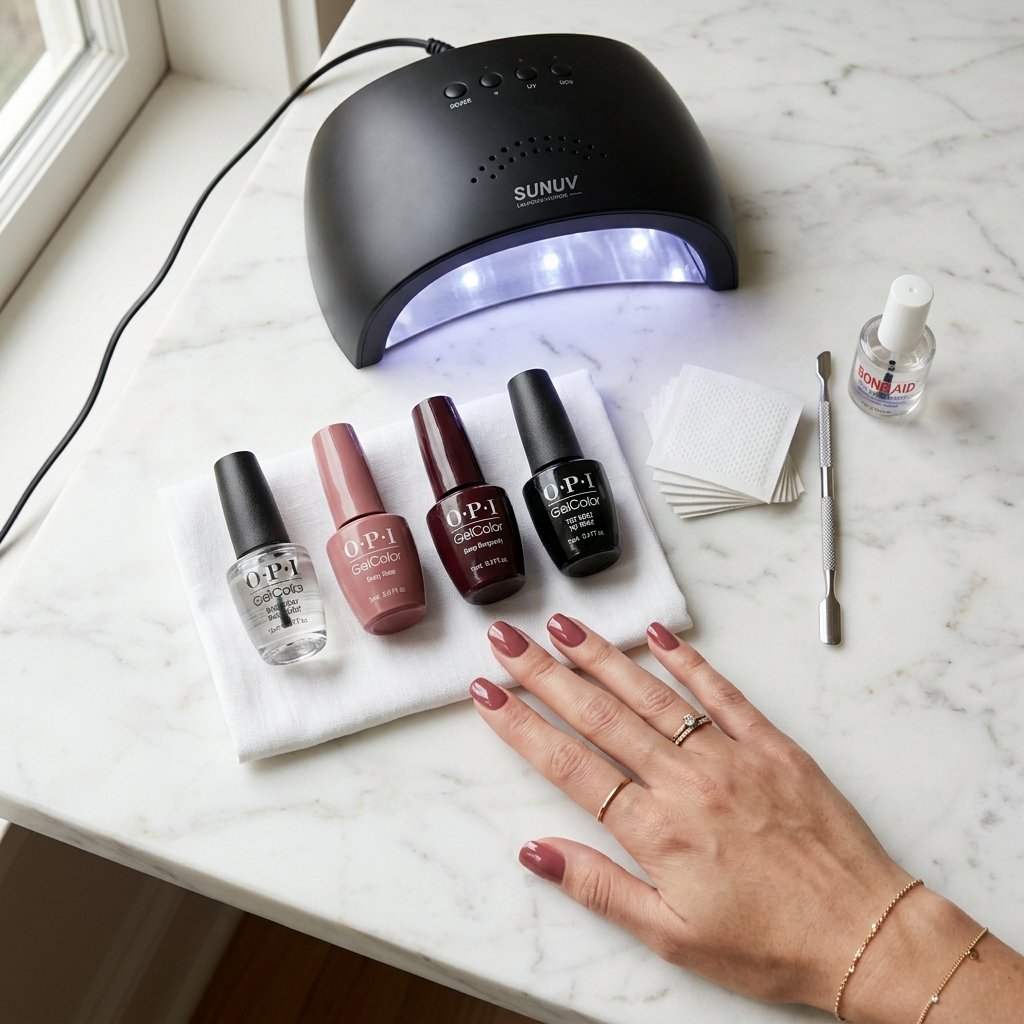
A regular gel manicure costs more than the appointment fee alone. There is the fee itself, typically thirty to sixty dollars depending on location and any nail art. There is the tip. There is the time spent driving, waiting, sitting through the service, and driving home again. Repeated every two to three weeks, that routine adds up to somewhere between seven hundred and fifteen hundred dollars a year, plus a substantial chunk of free time.
For many women, that math eventually stops working. Gel manicures stay in the budget until they do not, and they become one of the first expenses cut when money or time gets tight.
What the nail industry rarely advertises is that salon-level results are genuinely achievable at home. Not a rough approximation, and not a compromise. The gap between gel that chips within a week and gel that stays glossy for two weeks or longer comes down to technique rather than talent.
The divide between salon gel and at-home gel used to come down to product access and equipment. That divide has narrowed considerably. Professional-grade gel systems are now sold directly to consumers, LED lamps are inexpensive and widely available, and the technique, while it takes practice, is learnable within a handful of sessions. This guide covers what actually makes at-home gel nails work.
What Makes Gel Nails Different From Regular Polish
Before covering the how, the what matters. Understanding why gel behaves differently from regular polish explains why each step in the process exists, and why skipping any step causes specific, predictable problems.
Regular nail polish dries through solvent evaporation. The liquid in the bottle evaporates into the air as it sits, leaving pigment behind as a dried film. This process is slow, sensitive to heat and humidity, and produces a soft film that dents and chips relatively fast.
Gel polish works through an entirely different chemical process. It does not dry through evaporation. It cures through a photochemical reaction triggered by specific wavelengths of UV or LED light. That light initiates polymerisation, a process where individual molecules cross-link into a hard, durable network. This is why gel needs a lamp to set, and why it stays wet and workable no matter how long it sits in open air.
The cured network produces a film that is significantly harder and more flexible than regular polish, which explains why gel lasts weeks instead of days. It also explains why gel resists standard nail polish remover and needs acetone to break down that cross-linked structure.
This chemistry is why the preparation steps matter so much. A surface that gel is meant to bond to permanently needs to be clean, dry, dehydrated, and lightly roughened so the product has something to grip. Skipping any prep step does not slightly reduce durability. It changes what the gel is actually adhering to, which is the root cause of most lifting and peeling.
What You Actually Need to Get Started
The upfront cost is the biggest barrier to at-home gel, but it is a one-time investment that pays for itself within two or three applications. Here is what belongs in a starter kit and why each piece matters.
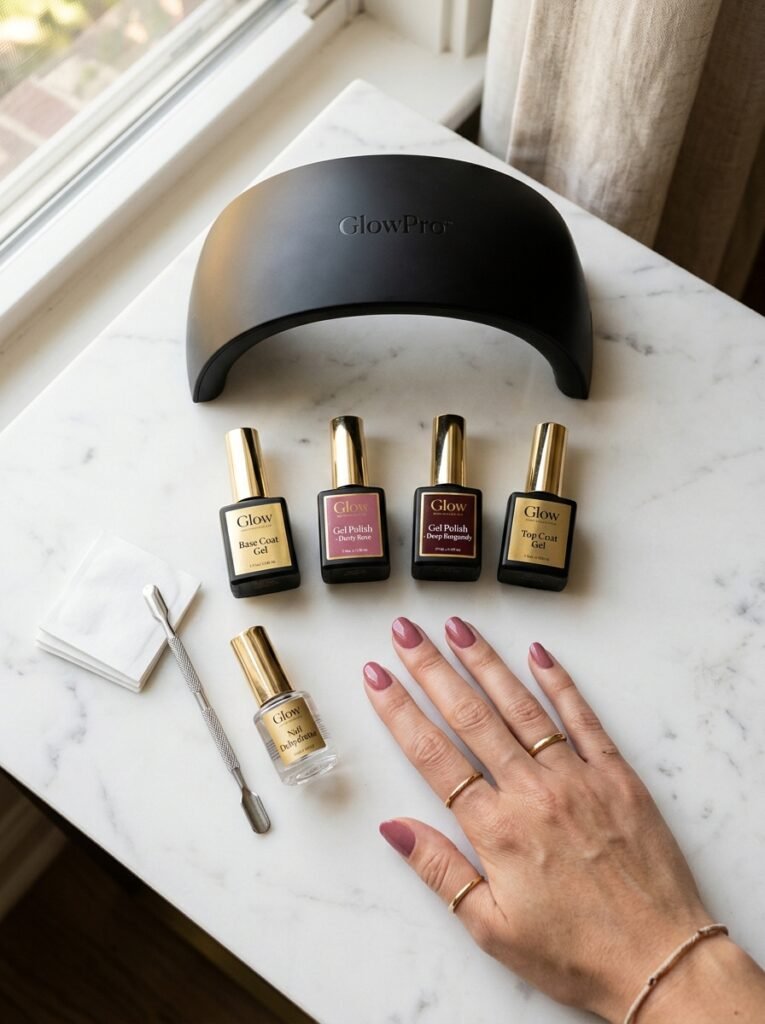
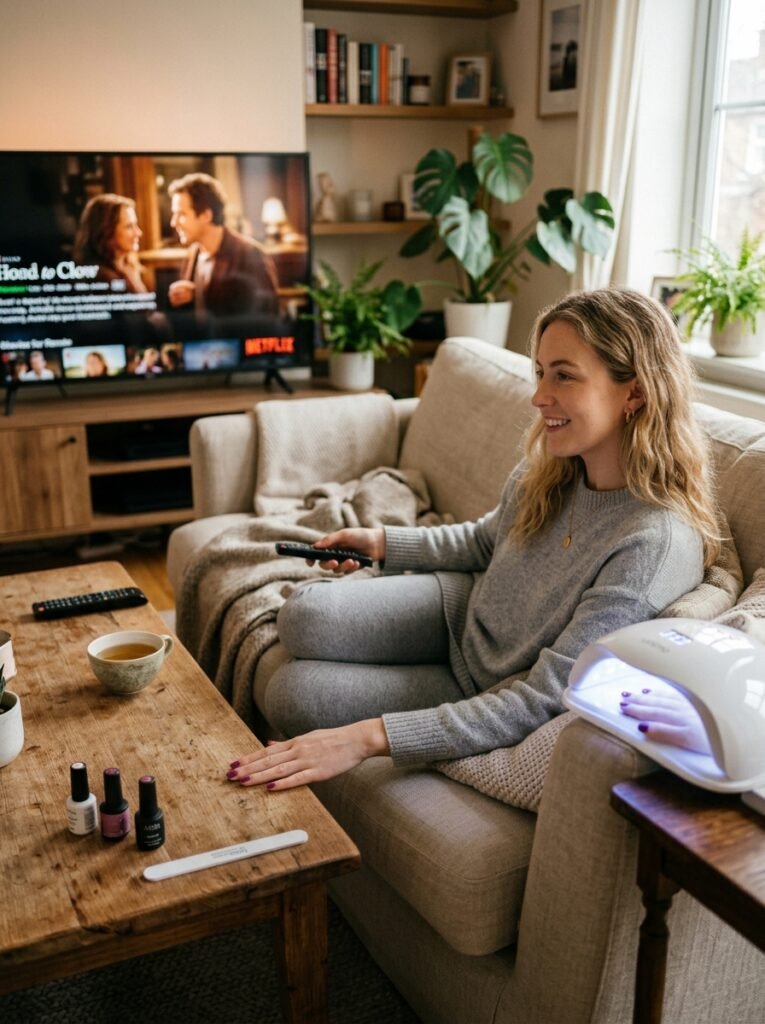
An LED lamp is the foundation of the entire system. UV lamps still work, but they cure more slowly, take up more space, and their bulbs degrade faster than LED bulbs do. A lamp with at least thirty-six watts is generally recommended for full, even curing. Budget options start around twenty dollars and handle most gel systems fine, while professional-grade lamps in the sixty-to-one-hundred-dollar range cure faster and more evenly. This is the one item worth spending appropriately on.
A complete gel system, rather than individual pieces bought separately, is the smarter starting point. A system includes a base coat, colour gels, and a top coat from a single manufacturer, formulated to work together. Mixing brands across those three products is a common beginner mistake, and it often causes lifting, crinkling, or poor adhesion that gets blamed on technique when the real issue is product incompatibility.
OPI Gel Color, Gelish, CND Shellac, Kiara Sky, and ORLY Gel FX are all professional-grade systems sold to consumers, with strong reputations for durability and accurate colour.
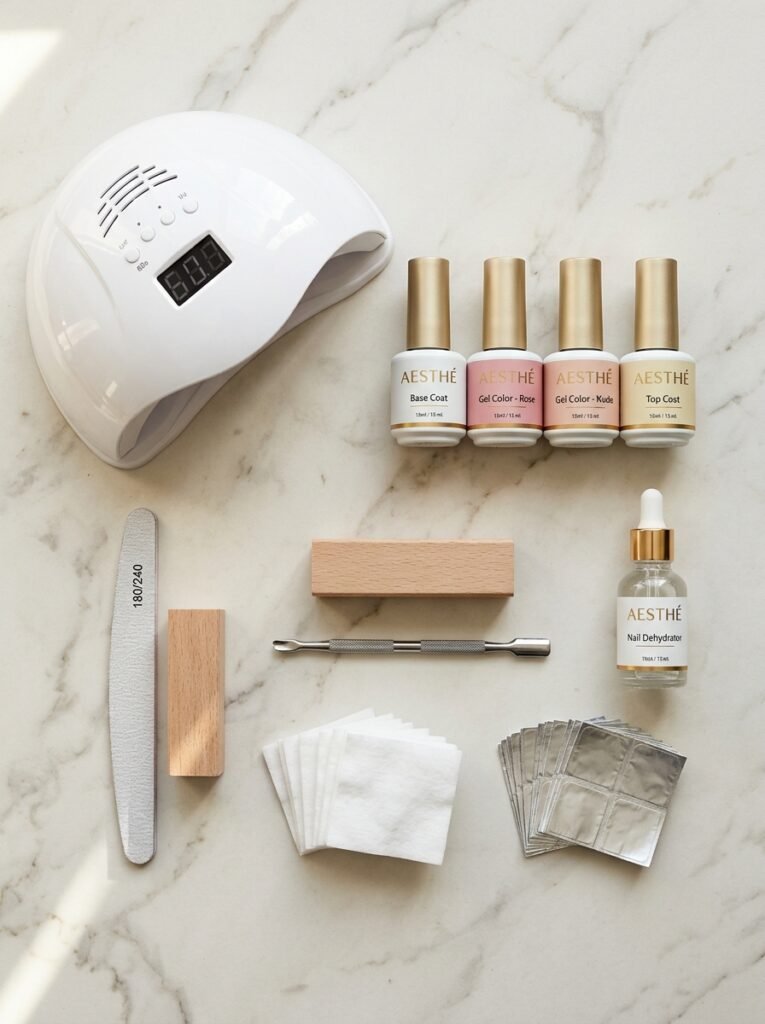
Beyond the lamp and the gel system, a full kit needs a nail file and buffer, a cuticle pusher, and a nail dehydrator or isopropyl alcohol. It also needs a pH bonding primer for those prone to lifting, lint-free wipes, and acetone for removal. Most of these items are inexpensive and last through dozens of applications.
Nail Preparation: The Step That Determines Everything
If one lesson matters most, it is this: preparation is not a preliminary step before the real work starts. Preparation is the work. How a gel manicure performs over the following two to three weeks is decided almost entirely before the first bottle of gel gets opened.
Nails should start clean and dry, with no leftover polish, lotion, or oil on the surface. Even a trace of hand cream from earlier in the day can weaken adhesion in ways that only become obvious around day five, when one nail starts to lift.
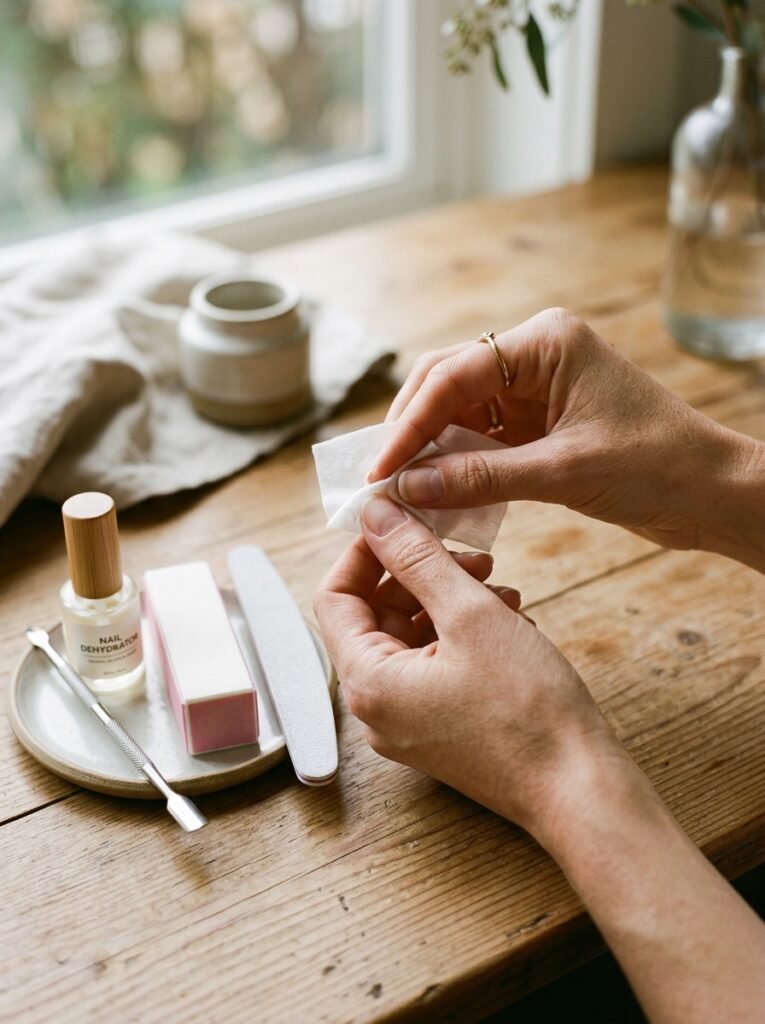
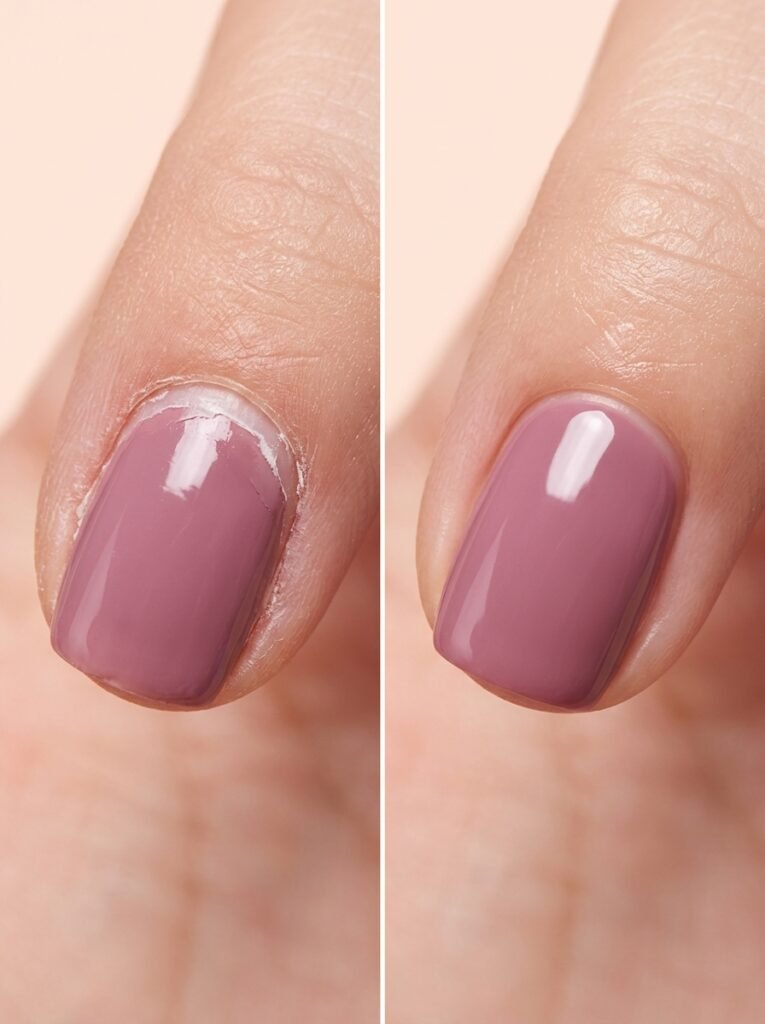
Cuticles should be pushed back and gently cleaned. Gel applied over cuticle skin, rather than only on the nail plate, lifts from that edge first, and lifting tends to spread once it starts. Cuticles do not need cutting, just pushing back with any overhang cleared from the nail plate.
Nails should be shaped before anything else happens. Whatever shape is preferred needs to be set now, since filing after gel is cured risks cracking the edge.
The shine should be lightly buffed off the nail surface. This step gets skipped often because it feels counterintuitive to scuff a nail on purpose. That light abrasion, though, creates the microscopic texture the base coat needs to grip. A gentle pass with a soft buffer or fine-grit file is enough.
A nail dehydrator or pure isopropyl alcohol on a lint-free wipe should clean the nail surface, removing any leftover dust, oil, or moisture. It needs to dry fully before the next step. This single step prevents more lifting than almost anything else, and it costs almost nothing.
Anyone with naturally oily nail beds, or a history of gel lifting, may benefit from a thin layer of pH bonding primer applied after dehydration and briefly cured under the lamp. It is not necessary for everyone, but it reliably solves problems that dehydration alone does not fix.
The Application Process Step by Step
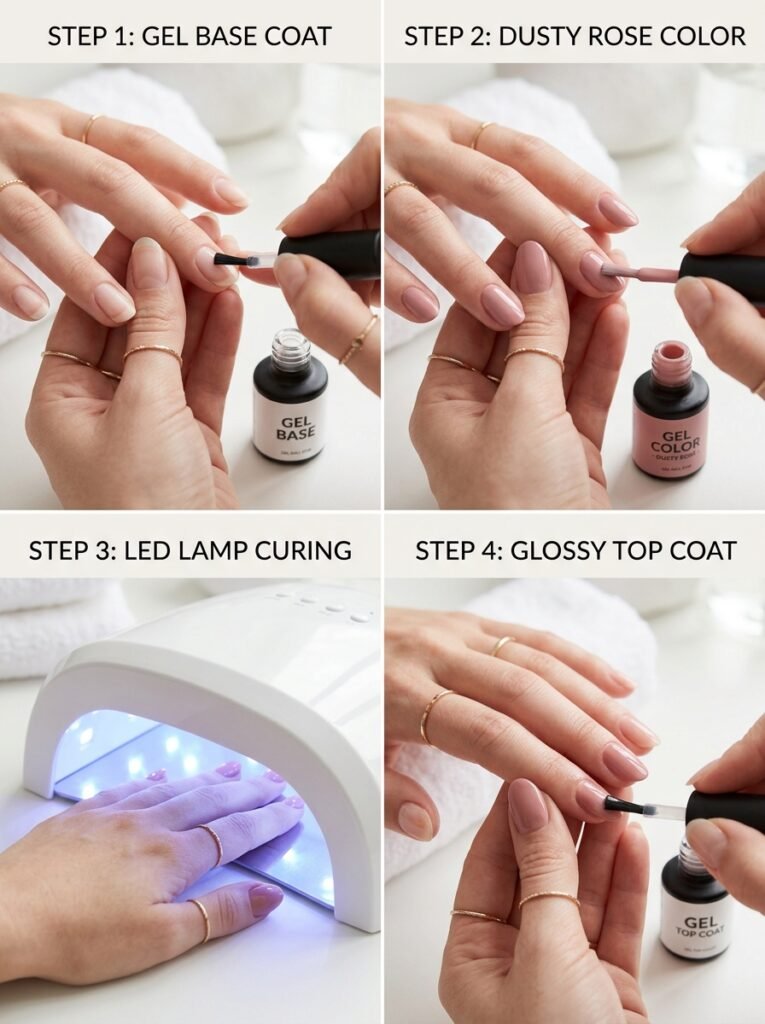
With preparation handled properly, application is the more enjoyable part. The rhythm repeats for each product: apply a thin layer, cure under the lamp, move on.
Base coat goes on first, in a thin, even layer, starting about a millimetre from the cuticle to prevent flooding and the lifting that follows. Thin means thin: pooling at the edges or drag marks from the brush both signal too much product. The free edge should be capped by running the brush across the nail tip. Curing time is typically thirty to sixty seconds under an LED lamp, per the base coat’s instructions.
The first colour coat follows the same rules: thin, applied near but not touching the cuticle, with the free edge capped. Two thin colour coats almost always look better than one thick coat, since a thick coat is more likely to cure unevenly, shrink at the edges, or stay tacky underneath. Each coat gets cured separately.
A second colour coat follows the same technique, then gets cured.
Top coat goes on in a thin, even layer, with the free edge capped generously since that edge is where wear starts first. Curing time for top coat often runs slightly longer than for colour coats.
After the final cure, the nail surface should be wiped with a lint-free wipe dampened in isopropyl alcohol, which removes the sticky inhibition layer left behind by curing. That step reveals the high-gloss finish underneath. Top coats labelled no-wipe skip this step entirely.
Getting a Finish That Actually Looks Salon Quality
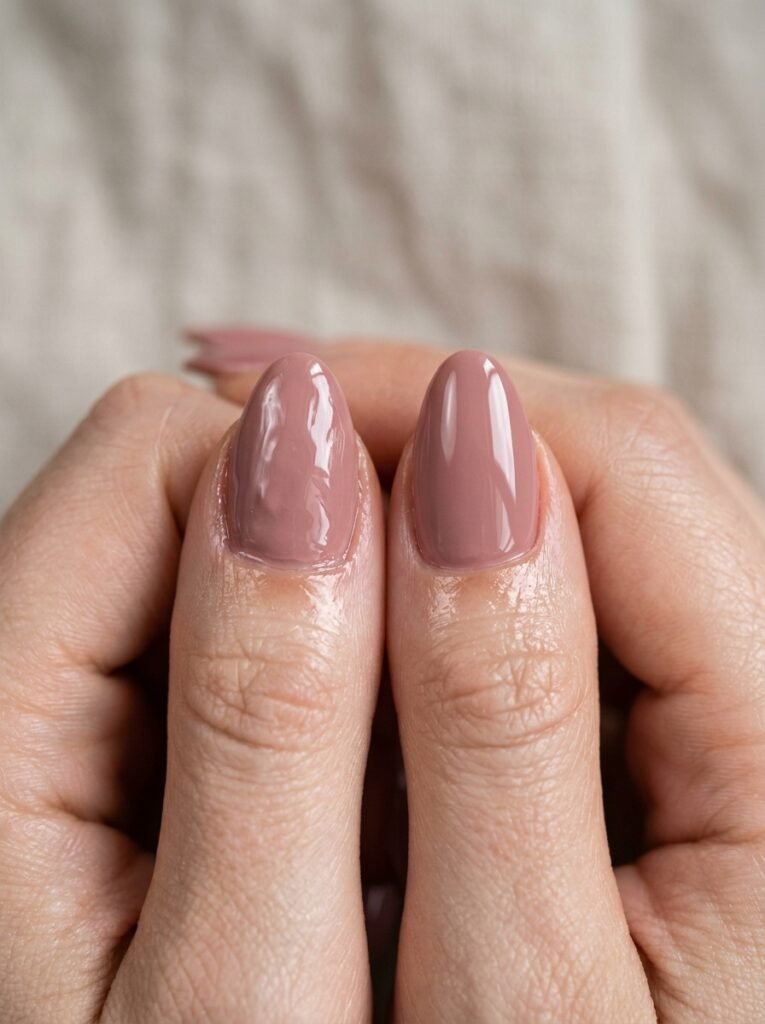
The technical steps produce durability. Finishing details make at-home gel genuinely comparable to salon work.
Flooding the cuticle is the most visible beginner mistake, and the one that makes at-home gel look obviously homemade. Gel belongs on the nail plate only, with a clean margin between product and skin. Getting this right takes slow, controlled brush strokes, and sometimes a few seconds of open-air drying on a flooded section before curing, which allows time to correct placement before it sets permanently.
Even distribution across the whole nail, rather than concentrating product in the centre, separates salon results from home ones. A common instinct is to load more gel in the centre where coverage feels most important, but that produces a manicure that looks raised or domed in the middle. Spreading gel evenly from edge to edge keeps the cured result flat and smooth.
Capping the free edge on every layer is not optional if durability matters. The nail tip is where chipping and peeling begin, and each layer sealed across that edge adds to the barrier holding everything together.
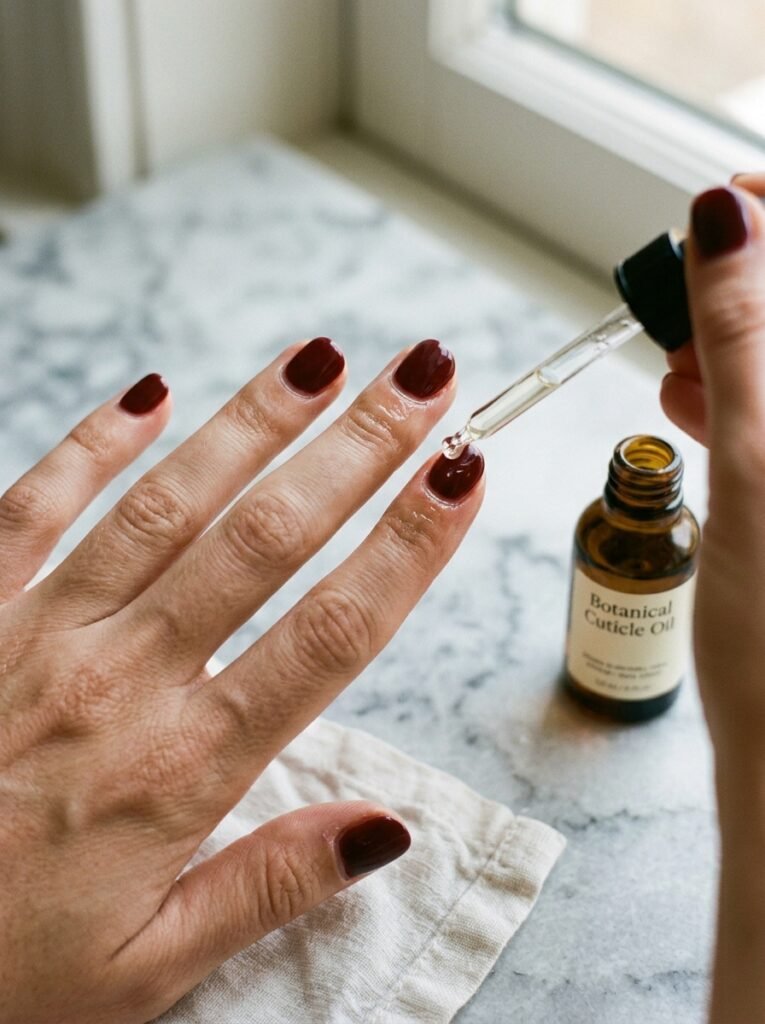
Cuticle oil applied after completion, and consistently throughout the life of the manicure, keeps surrounding skin healthy and gives the whole look a more finished, professional appearance.
How to Remove Gel at Home Without Wrecking Your Nails
Improper removal, not the gel itself, causes most of the nail damage blamed on gel polish. Peeling gel off does not just remove the product. It takes layers of nail plate along with it, leaving nails thin and weak. Done correctly, the acetone soak method removes gel with essentially no damage to the nail underneath.
The shine should be lightly buffed off the top coat first, which lets acetone penetrate the gel rather than sit on a sealed surface.
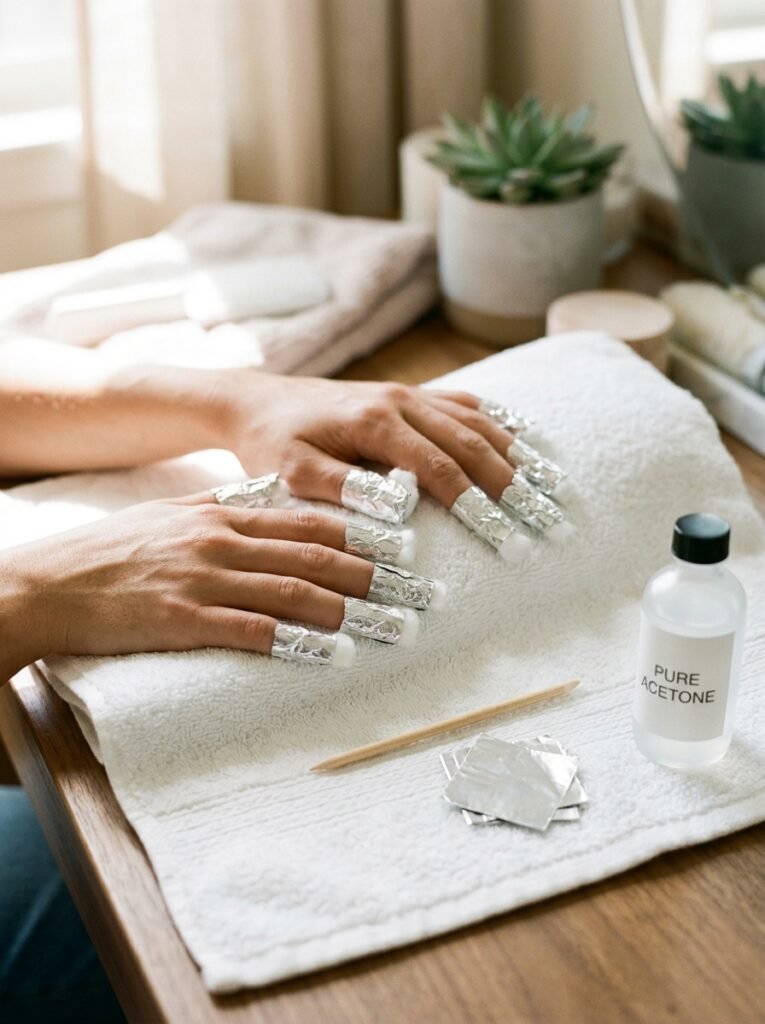
A small piece of cotton soaked in pure acetone, not diluted acetone-based remover, gets placed directly on the nail. Each finger gets wrapped in a small piece of foil to hold the cotton in place.
The wraps stay on for ten to fifteen minutes. After that, the gel should have lifted from the nail and slide off easily with gentle pressure from a cuticle stick. Significant resistance means more time is needed, not more force.
Picking, peeling, or scraping should be avoided entirely. Gel that will not release needs more time in acetone, never more pressure from a tool.
Cuticle oil should be applied generously after removal, with a day or two of rest before reapplying if nails feel sensitive or thin. Between applications, a nail-strengthening base coat and regular cuticle oil keep nails in good shape for continued gel use.
What the Research Says About Skin Sensitivity to Gel Products
Nail health is not only about mechanical damage from removal. Dermatology research has documented allergic contact dermatitis linked to acrylate compounds used in gel and acrylic nail products. A 2024 retrospective study in the peer-reviewed journal Contact Dermatitis examined eight years of patch-test data from Amsterdam University Medical Centers. Nearly all patients diagnosed with this reaction tested positive for 2-hydroxyethyl methacrylate, commonly known as HEMA, a key ingredient in most gel systems.
The same study found that avoiding further contact with acrylate-containing products cleared symptoms completely in most affected patients. Symptoms appeared most often on the fingers and hands, with occasional reactions on the face and neck.
This does not mean gel manicures are inherently unsafe. It means persistent redness, itching, or peeling around the fingers after repeated gel use is worth taking seriously rather than dismissing as ordinary dryness. Switching products or consulting a dermatologist are reasonable responses to a suspected sensitivity.
Making Your At-Home Gel Last Two to Three Weeks
Durability beyond the first week is where at-home gel earns its comparison to salon work, or falls short of it. Preparation and application set the foundation, but how nails are treated during wear matters too.
Prolonged water exposure in the first few hours after application should be avoided. Gel finishes curing the moment it leaves the lamp, but the bond between gel and nail plate keeps strengthening over the following day or two. Wearing gloves for dishes and cleaning during that window meaningfully extends wear time.
Cuticle oil should go on daily. This is the maintenance step skipped most often, and it should not be. Dry cuticles and nail beds lead directly to lifting at the edges. Cuticle oil keeps that margin flexible instead of dry and prone to peeling back.
Nails should be treated as tools handled with some care, not as tools for opening things. Using nails to tear packages, peel labels, or pick at objects creates repeated micro-stress at the free edge that eventually causes chips and breaks. This does not mean handling nails delicately to the point of inconvenience, just building a few conscious habits that add days of wear.
When minor lifting appears at a cuticle edge, a small drop of gel glue or nail glue, pressed flat and held in place, can extend a manicure significantly rather than forcing an early, full redo.
Common At-Home Gel Mistakes and How to Fix Them
Knowing what goes wrong, and why, turns troubleshooting into a straightforward process.
Lifting within the first few days almost always traces back to preparation. Oil or moisture left on the nail plate, cuticle skin that was not pushed back properly, or a skipped dehydration step are the most common causes. The fix is not a better gel or a stronger lamp. It is starting over with more thorough prep.
Gel that stays sticky or soft after curing is either undercured or incompatible with the lamp’s wavelength. Checking that the lamp and gel system match, and curing for the full specified time, usually resolves it. An underpowered or ageing lamp can also cause undercuring.
A streaky or uneven first colour coat is not a mistake. It is the expected look of a single thin coat on most gel formulas, and a second thin coat resolves it. Compensating with one thick coat instead creates a separate set of problems.
Gel that has flooded into the cuticle and already cured can be lifted away gently with an orange stick or cuticle pusher. Preventing it in the first place comes down to slow, controlled brush strokes and a brush that is not overloaded with product.
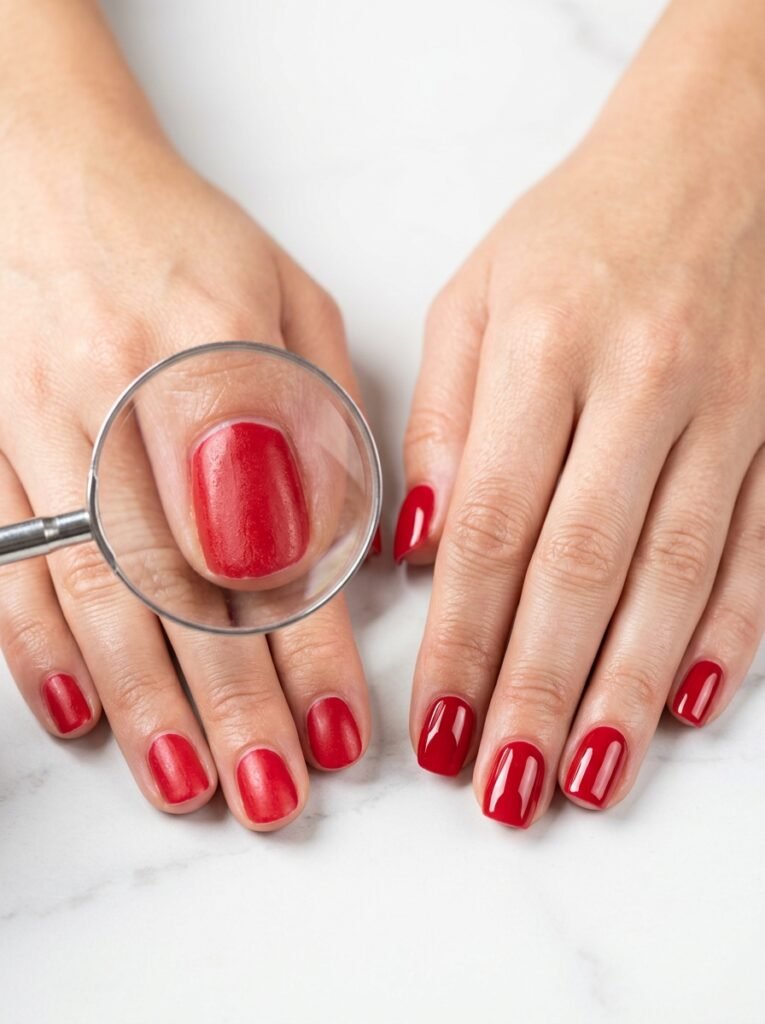
A dull or matte finish after wiping away the inhibition layer usually means the wipe carried too much alcohol, the top coat went on too thin, or that particular top coat formula simply does not produce high gloss. Switching to a different top coat brand often clears up persistent dullness.
Frequently Asked Questions
How long do at-home gel nails actually last compared to a salon? With proper preparation and application, at-home gel nails last two to three weeks, matching the typical lifespan of professional salon gel. The gap in longevity between salon and home results comes almost entirely from preparation thoroughness rather than product quality, since professional-grade products are widely sold for home use.
Is at-home gel safe for nails? Gel applied and removed correctly causes minimal nail damage. The damage typically associated with gel use traces back to improper removal, especially peeling or picking gel off instead of using the acetone soak method. With correct preparation, application, and removal, at-home gel is no more damaging than salon gel, though anyone experiencing persistent irritation should consider an acrylate sensitivity as a possible cause.
What is the best gel nail kit for beginners? A complete system from a single brand is the strongest recommendation for beginners, since it removes product incompatibility as a variable. Gelish, OPI Gel Color, and ORLY Gel FX are consistently reliable starter systems with wide colour ranges and strong adhesion. Paired with a thirty-six-watt LED lamp, any of these produce genuinely professional-quality results.
Can you do gel nails on short nails? Gel works particularly well on short nails, since it adds a layer of hardness that helps resist breaking and chipping, and the technique stays identical regardless of length. Readers looking for more inspiration at shorter lengths can browse this guide to short nail designs that work with the length you have. Gel is also one of the more effective ways to grow nails out, since the hardened coating protects the plate from the breaks that stall growth.
How often should you take a break from gel nails? There is no universally agreed-upon schedule, but giving nails a week or two off every few months allows the nail plate’s health to be assessed and any thinning or dryness treated with oil and strengthening products. Nails that stay consistently healthy, with good thickness and no dryness or brittleness, can generally continue with gel use as long as removal stays careful.

The Real Value of Learning This Skill
The first application takes longer than five minutes. So does the second. By the third or fourth attempt, enough familiarity develops with the steps and the feel of the products. A full set of ten fingers then takes around forty-five minutes, roughly what a salon appointment takes once travel and waiting are factored in.
The difference is that forty-five minutes at home costs roughly three to five dollars in product, compared with fifty dollars and a tip at a salon. There is no travel time, and it happens whenever it is convenient rather than whenever a salon has an opening.
The nail industry is built around the idea that salon services set the standard, with at-home versions as a lesser substitute. That holds true for some services. For gel nails, with the right system and a modest investment in learning the technique, it does not. The results are comparable. The cost is a fraction of salon pricing. The convenience is considerably better. For brides comparing pre-wedding options, the same durability advantage applies to bridal nail designs that need to hold up through a full day of photos.
That combination makes gel nails a skill worth a few practice sessions to learn properly.


Leave a Reply