
Gel behaves differently from polish, and almost every problem people have with it traces back to that difference. Polish dries as solvent evaporates. Gel cures under a lamp, hardening from a liquid into a solid polymer in seconds. That is why gel needs no drying time and survives three weeks, and it is also why thick coats fail — light cannot reach the bottom of a heavy layer, so the underside stays soft and the whole thing lifts. Lifting matters more than it sounds. DermNet notes that once the nail plate separates from the bed, the detached portion will not reattach, and the aim of treatment is simply for new growth to come in attached. That takes months. Thin coats, a capped free edge, and product kept off the skin prevent nearly all of it. The designs below assume those three habits.
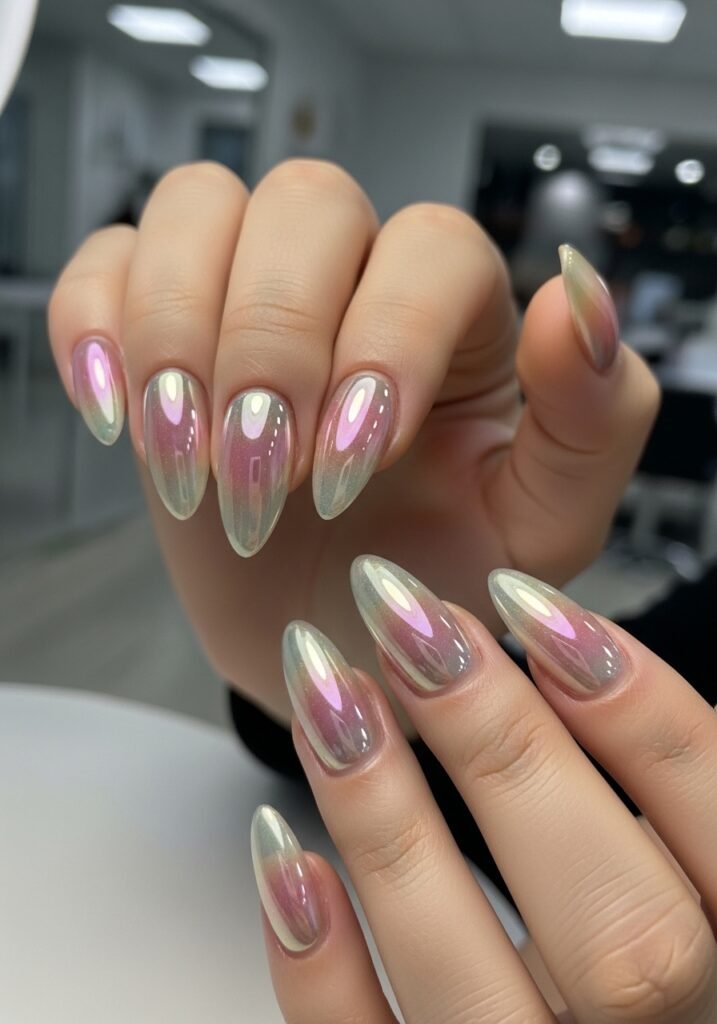
Glazed Donut Chrome Nails
Chrome powder buffs into a cured gel layer and gets sealed under a top coat, which makes this gel-only work. No polish reproduces it. Over a milky base the finish reads pearl rather than mirror, and that softer version is what most people mean by glazed. The powder magnifies whatever sits beneath, so the base has to be filed level before it goes on.
Styling Tips:
- Use a milky white or soft pink gel base
- Buff the powder lightly rather than packing it on
- Choose almond or oval shapes
Why It Works:
- Reflection reads as condition, not decoration
- Neutral enough for any setting
- Grows out with a soft rather than hard line
Aura Gradient Nails
The glow at the centre comes from an airbrush or a sponge, then gets sealed under gel. Blending is where it fails: a hard edge between the centre and the surround reads as a blob rather than a glow. Building colour across three light passes produces the fade, and one heavy pass never does. Curing between passes locks each layer before the next goes on.
Styling Tips:
- Blend two or three shades that sit close together
- Build the glow across three light passes
- Cure between passes to stop muddying
Why It Works:
- Depth without any linework
- Adapts to any colour pairing
- Forgiving of an unsteady hand
Micro French Tips
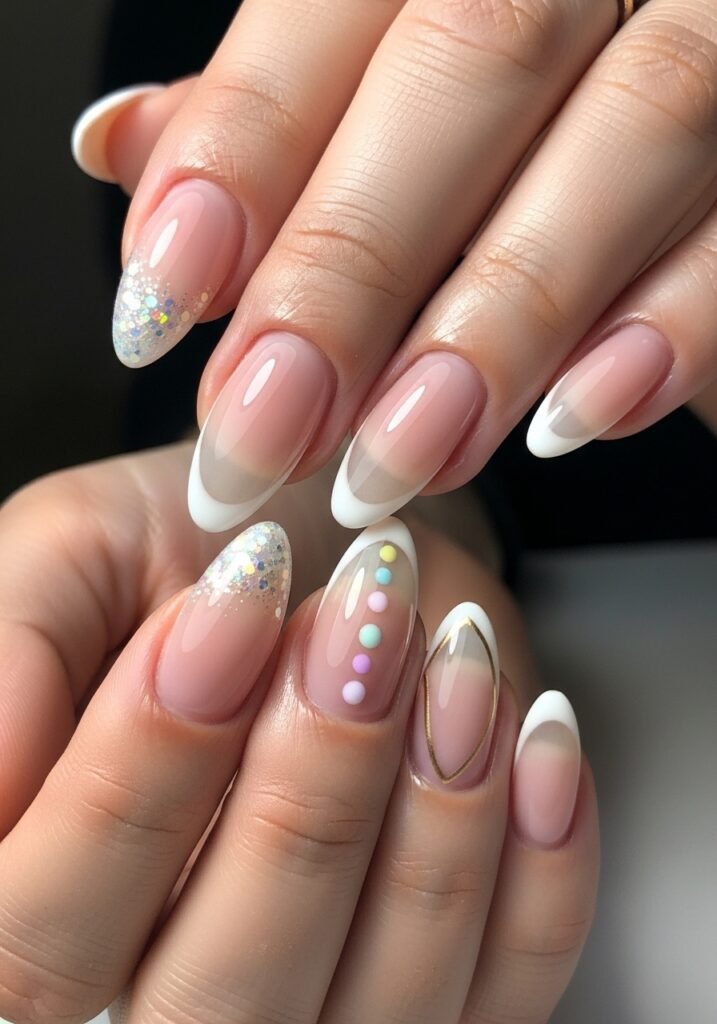
The tip reduces to a line barely a millimetre deep. Precision at that scale is difficult freehand, so guide stickers earn their place even for confident hands. Turning the finger sideways lets the brush follow the natural curve of the free edge rather than fight it. The thin line also suits short nails, since it does not shorten the visual length the way a thick band does.
Styling Tips:
- Use a fine liner brush or guide stickers
- Keep the base sheer nude or milky
- Cap the tip line to stop it wearing off first
Why It Works:
- Only the tip needs painting
- Reads modern rather than dated
- Suits short nails particularly well
Fruit-Inspired Nails
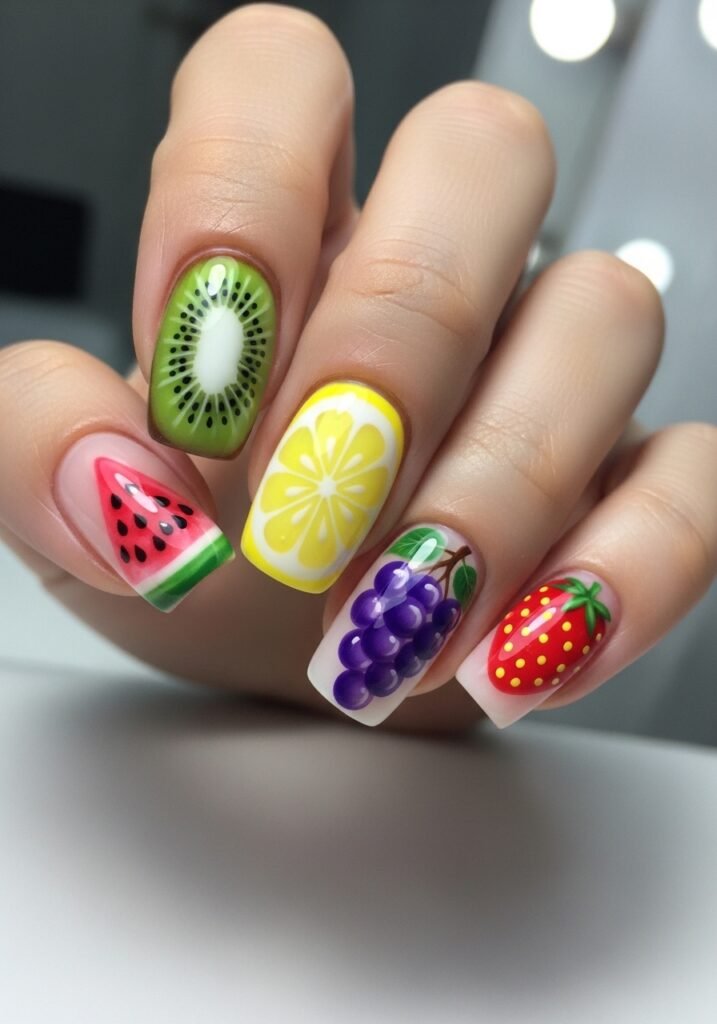
Cherries and strawberries are built from dots rather than drawn: two dots and a stem line make a cherry. A dotting tool handles both. Scale is what keeps it from tipping into novelty — motifs under three millimetres read as detail, larger ones read as costume. One or two accent nails is the working limit.
Styling Tips:
- Build fruit shapes from dots, not brushstrokes
- Keep motifs under three millimetres
- Cure each colour before adding the next
Why It Works:
- No drawing skill required
- Small scale keeps it wearable
- Works on a nude or pastel base
Pearl & 3D Nails
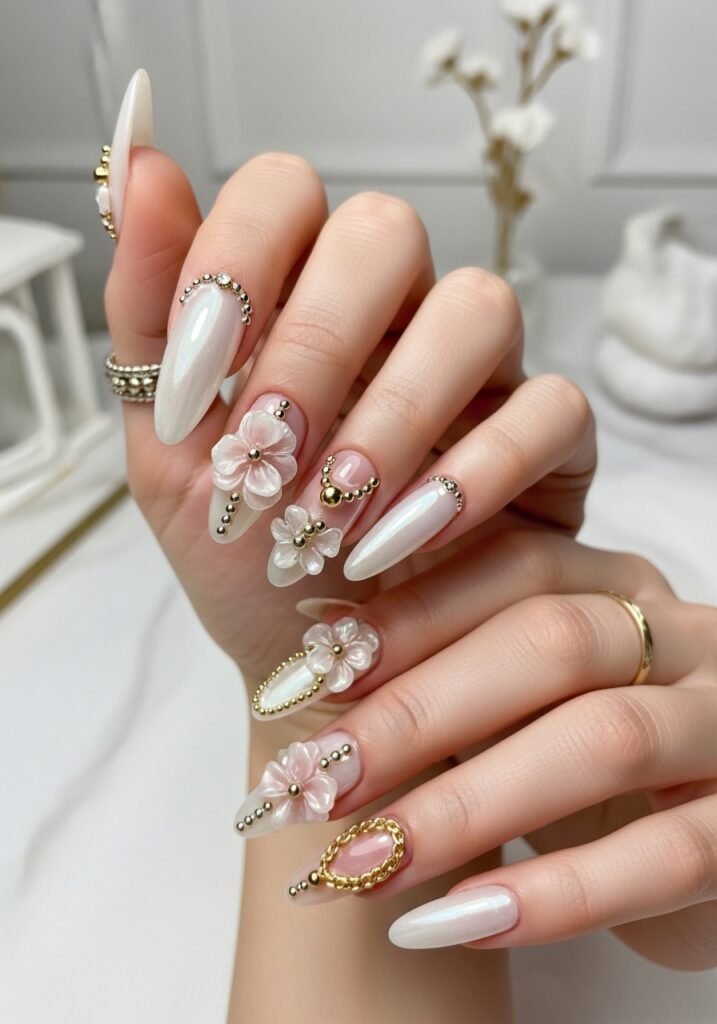
Pearls and stones set into uncured gel hold far longer than anything glued onto a finished surface. Weight is the consideration people miss: a densely embellished nail carries real mass, and that load pulls at the tip through ordinary use. Clustering near the cuticle rather than the free edge keeps the leverage low and the set intact.
Styling Tips:
- Set embellishments into uncured gel
- Cluster near the cuticle, not the tip
- Seal every edge under a thick top coat
Why It Works:
- Texture replaces artwork entirely
- Suits weddings and events
- Half-pearls hold better than full spheres
Matte Black Contrast Nails
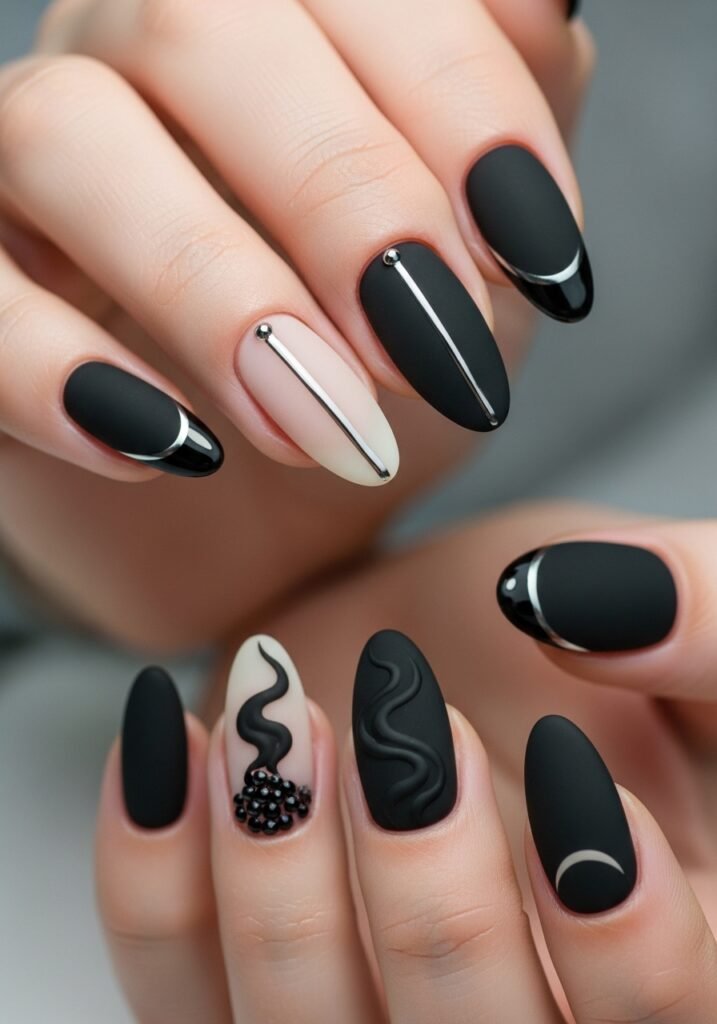
A matte top coat over black, with glossy shapes drawn on top, produces contrast from finish rather than colour. Dark pigment blocks light, so black gel needs longer curing than a pale shade — often double. Undercured black stays tacky underneath and lifts within days, which is the most common failure with this design.
Styling Tips:
- Cure black longer than pale shades
- Add glossy lines over the cured matte layer
- Keep the drawn shapes simple
Why It Works:
- Contrast without a second colour
- Reads sharp at close range
- Matte softens the starkness of black
Pastel Ombre Nails
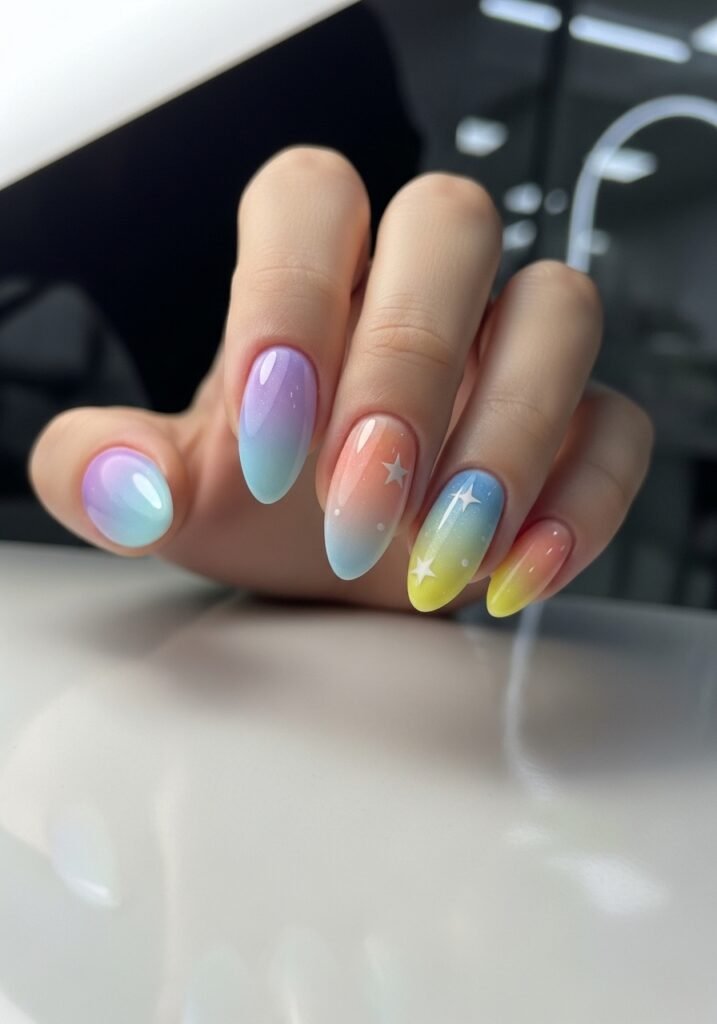
Two pastels blended with a sponge, built across light passes. Pastels carry low pigment load, so they streak on the first coat and need a second. Because the shades sit close together in lightness, blending errors barely register — which makes this the most forgiving gradient on the list to attempt.
Styling Tips:
- Expect two coats for pastel coverage
- Dab with a sponge rather than pressing
- Cure between passes to hold the fade
Why It Works:
- Low contrast hides blending mistakes
- Works with any two-shade pairing
- Suits every nail length
Jelly Transparent Nails
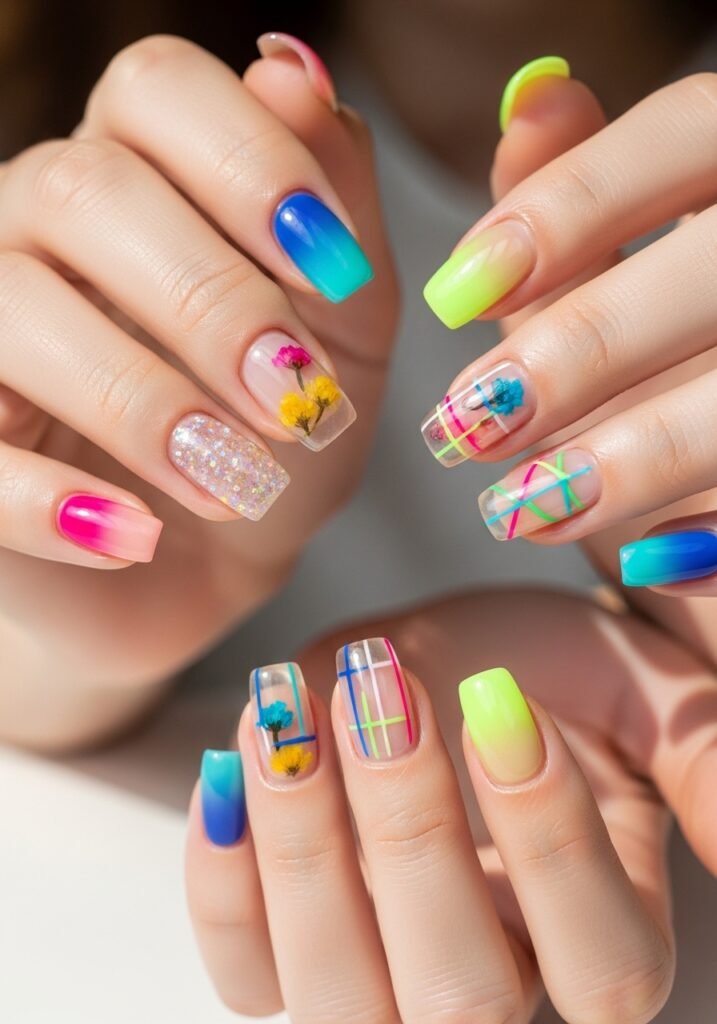
Jelly relies on translucent gel layered so colour deepens while staying see-through. Polish cannot hold this; it either covers or streaks. The transparency creates one specific problem — any lifting at the cuticle shows through the nail rather than hiding beneath colour, which makes prompt removal more important here than on opaque sets.
Styling Tips:
- Build colour across three sheer layers
- Cure each layer fully before the next
- Watch for lifting, which shows through
Why It Works:
- Depth impossible in regular polish
- Glitter or charms can sit between layers
- Reads bright without being opaque
Earthy Tone Nails
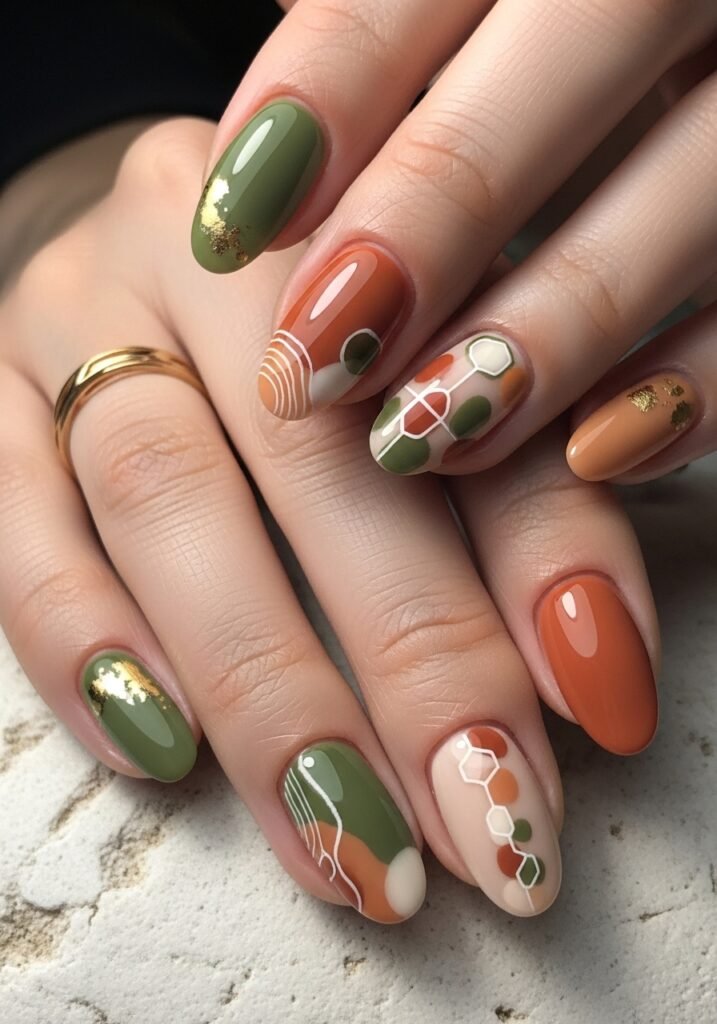
Chocolate brown, warm beige, and muted olive all deposit colour rather than needing any technique. The practical note is regrowth: mid-tone and deep shades show the line at the cuticle sooner than pale nudes, because contrast against the nail bed is higher. Two to three weeks is the realistic window before a refill or removal.
Styling Tips:
- Expect a two to three week window
- Try matte for a softer, less reflective finish
- Vary shades across fingers for interest
Why It Works:
- Colour that still reads neutral
- Pairs cleanly with gold jewellery
- No artwork or tools needed
Gold Foil Nails
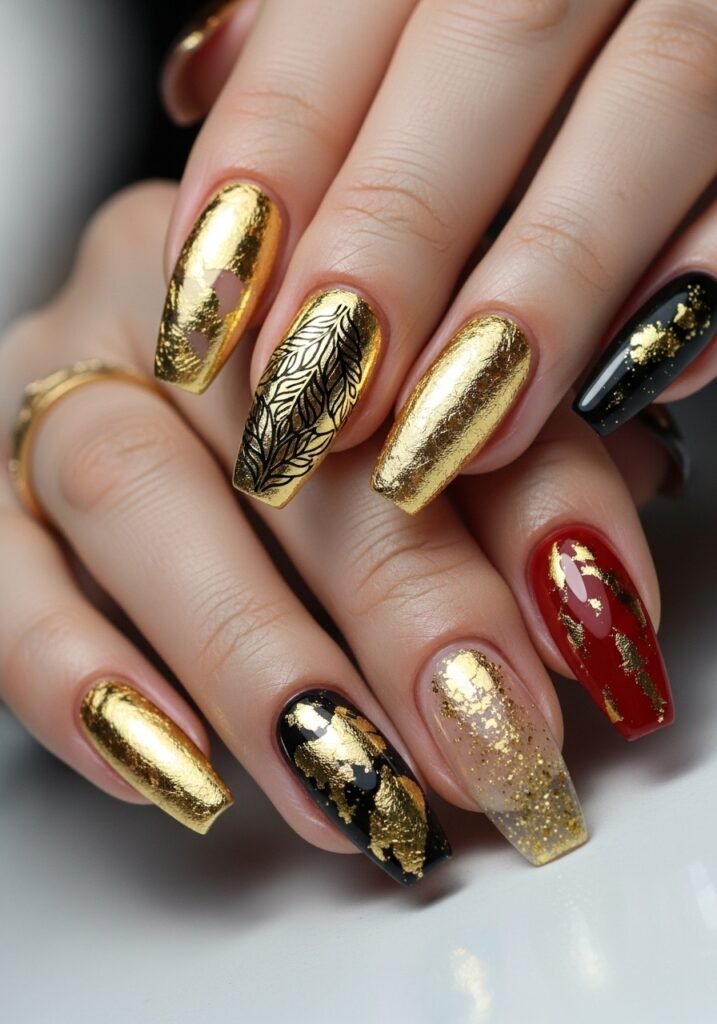
Foil presses into a tacky layer and seals underneath. Gel makes this easier than polish, because the uncured surface stays tacky as long as needed rather than drying while the foil is being placed. Irregular fragments are the appeal, so scattered placement beats deliberate arrangement. Every edge needs sealing or it lifts within days.
Styling Tips:
- Press foil into the tacky layer with tweezers
- Scatter rather than arrange
- Seal thickly over every raised edge
Why It Works:
- Random placement cannot be wrong
- Disguises wear as the set ages
- Reads as jewellery rather than glitter
Icy Chrome Nails
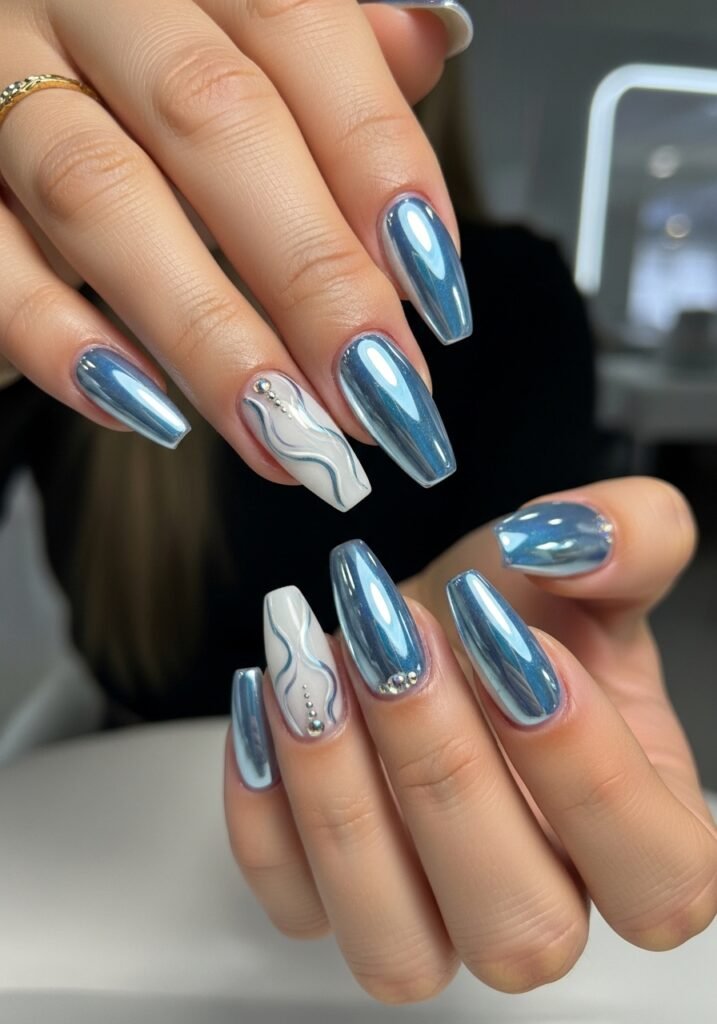
Cool-toned chrome powder over a pale base produces a frosted, mirror-like finish. It is the most demanding version of the technique, because a true reflection shows every imperfection underneath. Any ridge, bubble, or uneven cure becomes visible distortion. This is the design most likely to disappoint at home and the one where preparation earns the price difference.
Styling Tips:
- File the base perfectly level first
- Apply over a pale or white base
- Seal immediately after buffing
Why It Works:
- Highest impact with no artwork
- Suits cool-toned jewellery
- Shifts with every movement
Daisy Floral Nails
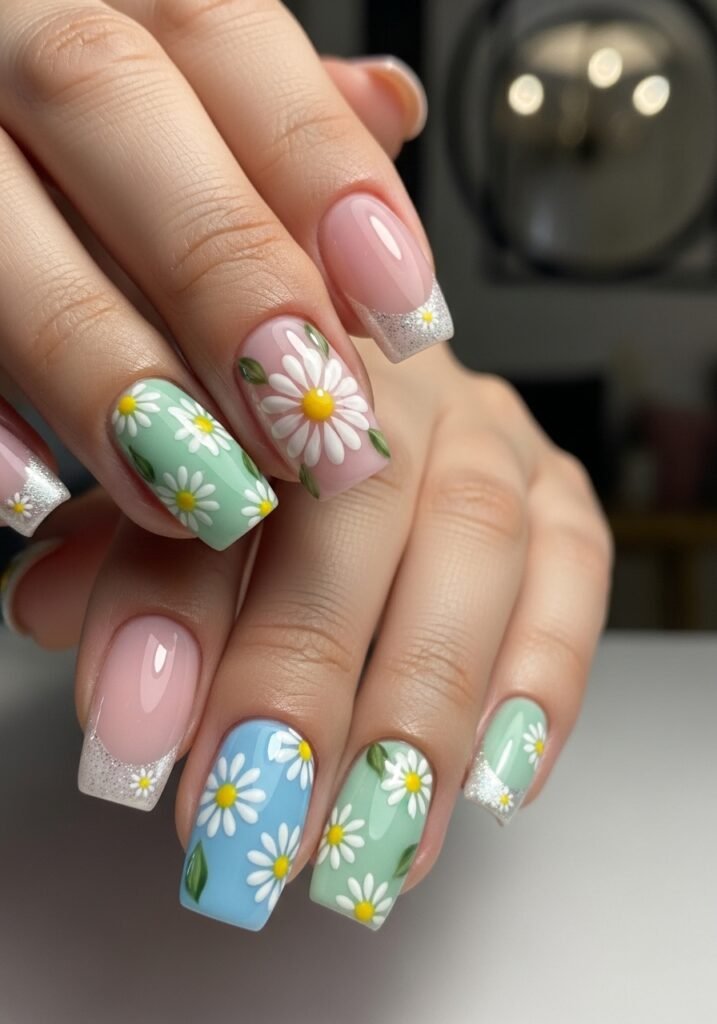
Five dots in a ring with a sixth in the centre produces a daisy. No petal shapes need drawing, and a dotting tool does the whole job. Curing the white petals before adding the yellow centre stops the two colours bleeding into one another — that single pause is the difference between a flower and a smudge.
Styling Tips:
- Place five dots in a ring, then one centre
- Cure petals before adding the centre
- Keep daisies to one or two nails
Why It Works:
- Built entirely from dots
- Cheerful without being childish
- Works on any base colour
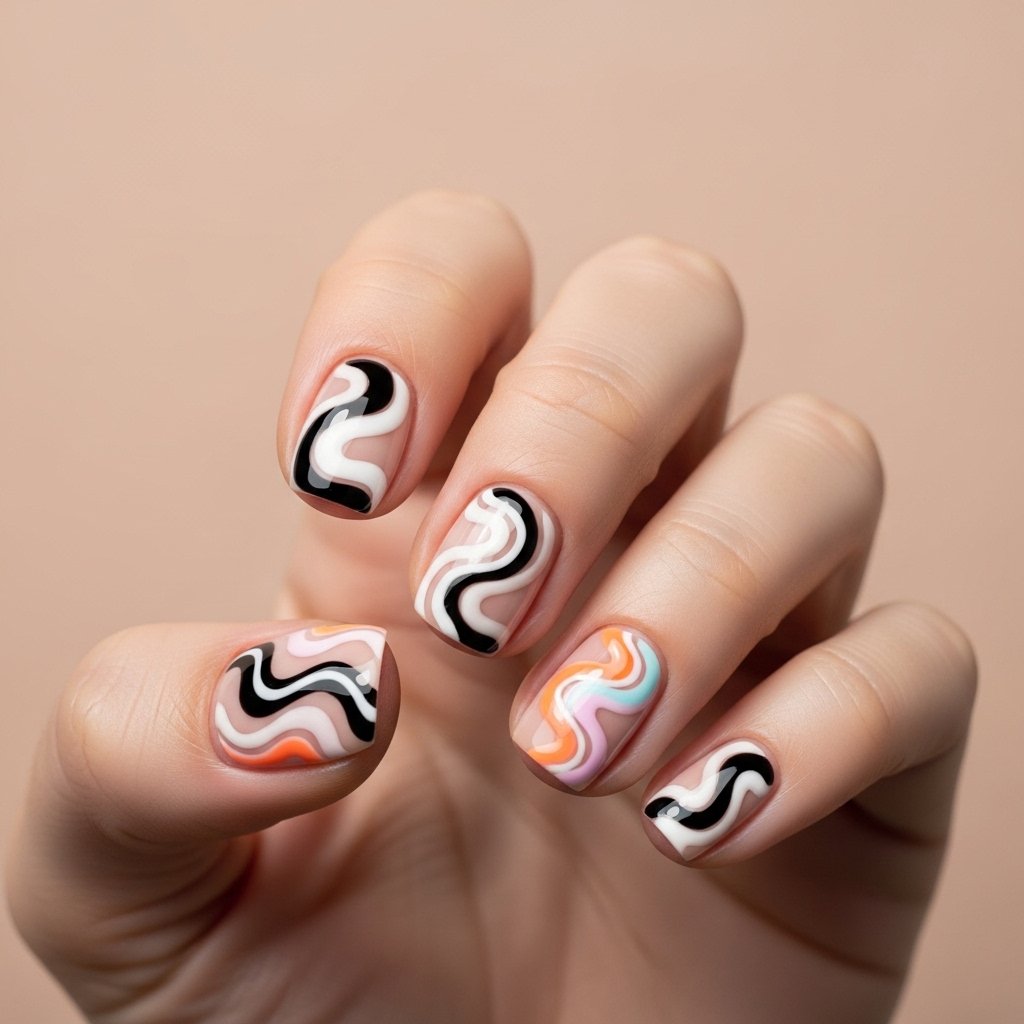
Abstract Swirl Nails
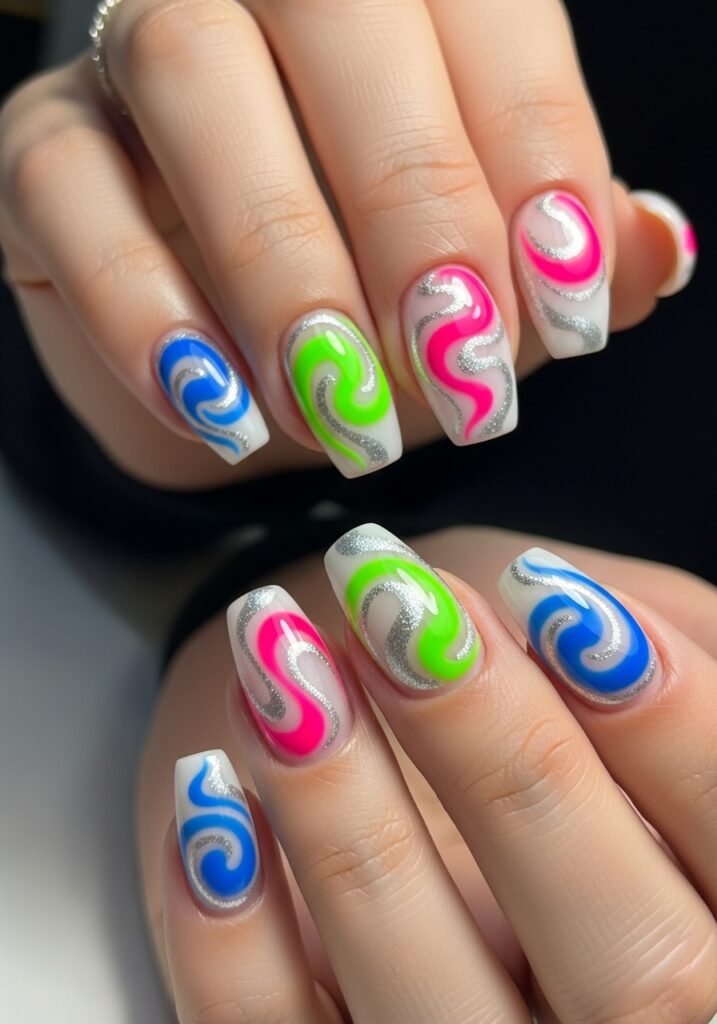
Swirls are drawn freehand with a liner brush, and the absence of a correct version is what makes them forgiving. Line weight decides the character more than colour does: a consistent thin line reads graphic, varying thickness reads hand-drawn. Gel helps here because the line stays workable until it cures, unlike polish which starts setting immediately.
Styling Tips:
- Use a thin liner brush and one continuous motion
- Limit to two or three colours
- Cure before adding a crossing line
Why It Works:
- No correct version to fail against
- Every nail can differ
- Works on short and long shapes alike
Milky White Minimal Nails
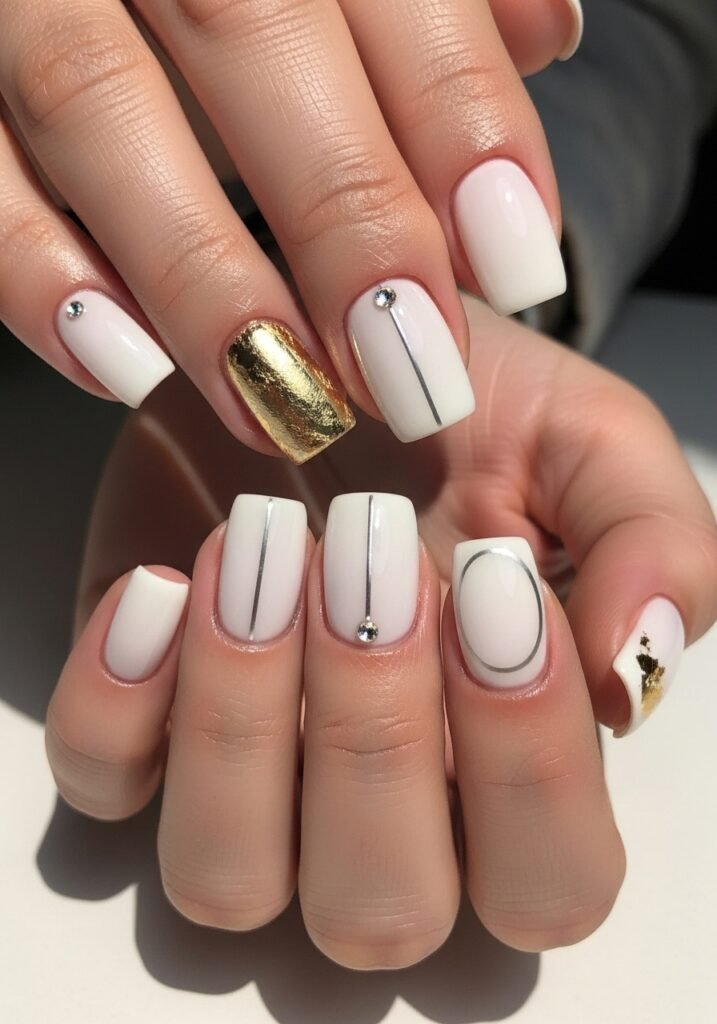
Milky white is translucent rather than opaque, built across two or three sheer coats until the nail looks lit from beneath. That translucency magnifies every ridge underneath, so a smoothing base matters more here than with any opaque shade. Over a poorly prepared nail it reads chalky rather than luminous.
Styling Tips:
- Build across two or three sheer coats
- Smooth ridges before the first layer
- Finish with a high-gloss top coat
Why It Works:
- Softer than a stark white
- Grows out almost invisibly
- Suits every skin tone
Cat Eye Magnetic Nails
Magnetic gel holds fine metallic particles that align when a magnet passes over the wet surface, producing a shifting band of light. The particles must be aligned and cured immediately, so speed matters. Holding the magnet closer produces a sharper band, and deep shades show the effect best because contrast is higher.
Styling Tips:
- Pass the magnet over wet gel, then cure at once
- Hold the magnet closer for a sharper band
- Choose deep shades for contrast
Why It Works:
- Movement impossible with flat colour
- No artwork required
- Each nail can be angled differently
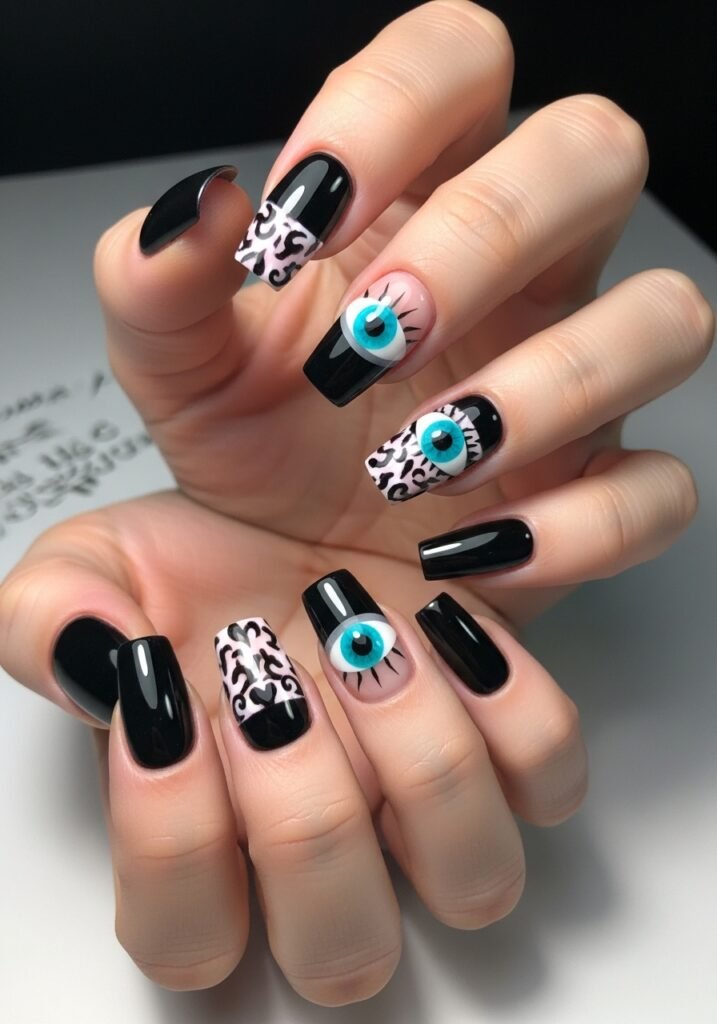
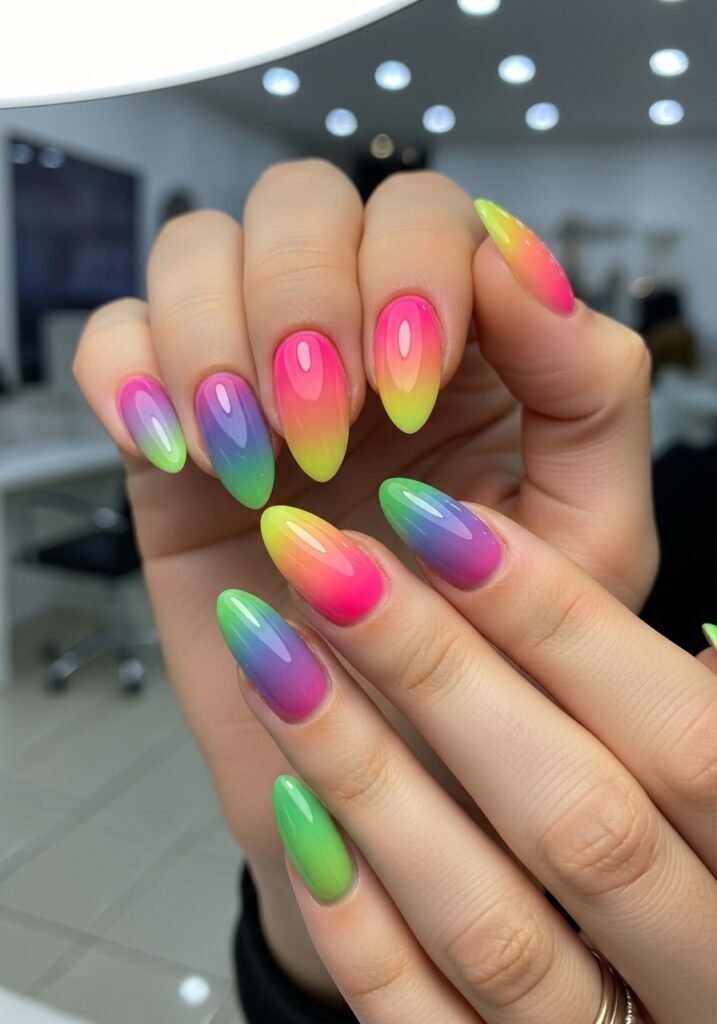
Neon Pop Nails
Neon pigments have famously weak coverage and usually need a white base underneath to reach full brightness. Without it they read chalky and uneven. Neons also fade under sunlight faster than any other colour family, so a set worn on holiday looks duller after a fortnight than the same set worn indoors.
Styling Tips:
- Apply over a white base for full brightness
- Expect fading with sun exposure
- Keep the shape simple to let colour lead
Why It Works:
- Highest visual impact of any finish
- Suits warm-weather wardrobes
- Works as a full set or single accent
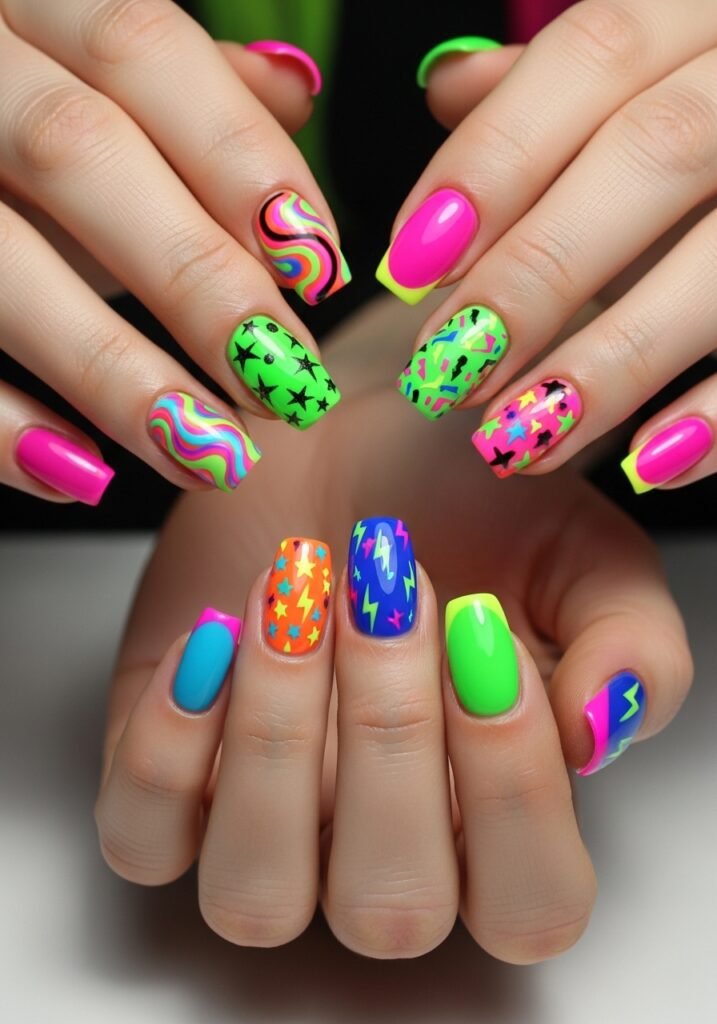
Marble Stone Nails
Veining is drawn into a wet layer with a fine brush, then blurred before curing. Timing is the whole skill. Drawn too early the lines spread and muddy; left too late they read as hard strokes rather than stone. Gel gives a longer working window than polish, which is why marble is easier in this medium.
Styling Tips:
- Draw veins into wet gel, then blur
- Cure only once the blur looks right
- Add fine gold veining for warmth
Why It Works:
- No two nails match, which reads bespoke
- Neutral palette stays wearable
- Forgiving of imprecise brushwork
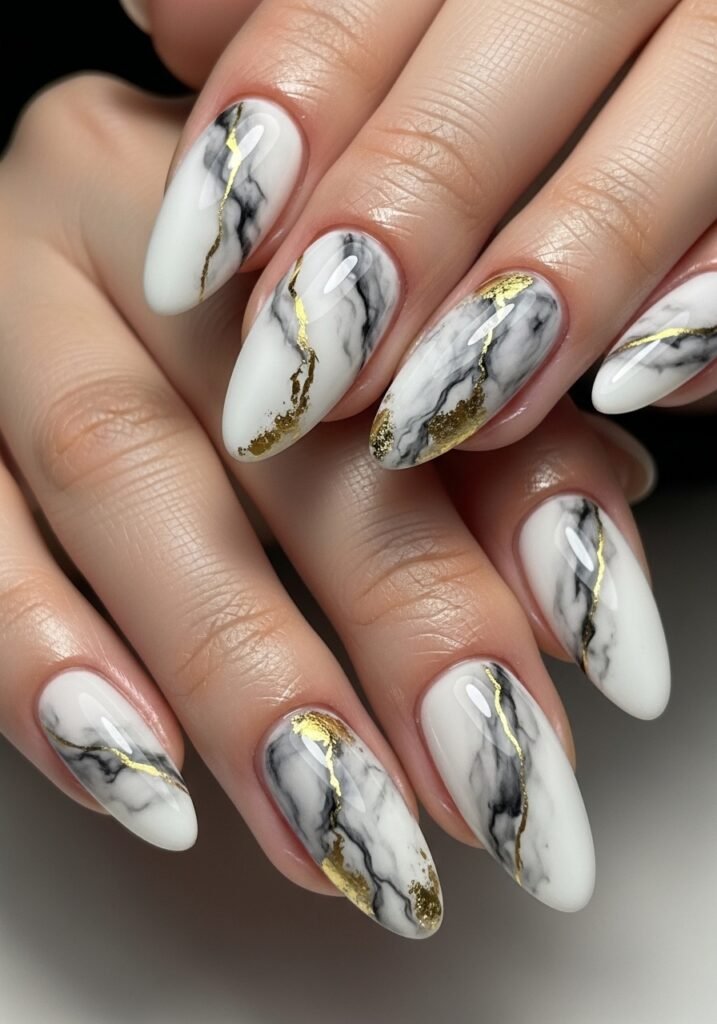
Glitter Gradient Nails
Glitter concentrated at the tip, fading toward the cuticle. Density builds across passes rather than in one heavy application, which is what separates a gradient from a band. The trade-off comes at removal: glitter suspended in gel resists acetone considerably, so the soak runs longer than for plain colour.
Styling Tips:
- Build density across three passes
- Keep the base nude or pastel
- Allow extra soaking time at removal
Why It Works:
- Sparkle without full coverage
- Hides tip wear as it ages
- Suits events and everyday alike
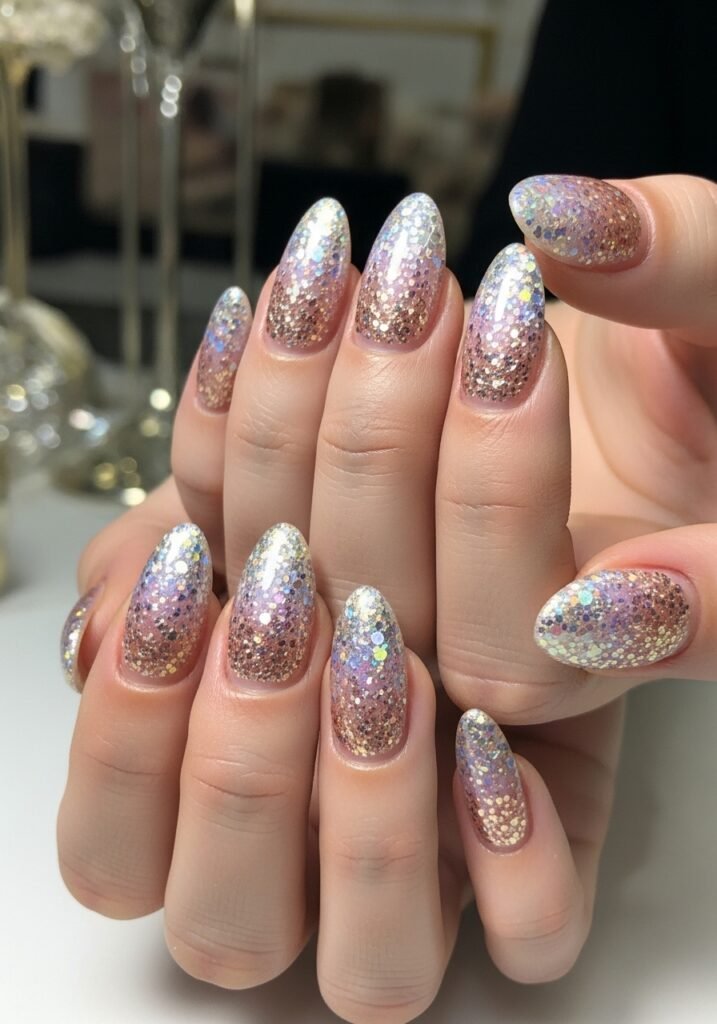
Nude Glossy Nails
The plainest option here, and the one where application shows most clearly. With no pattern to distract, the cuticle line becomes the focus. Leaving a hair’s width of bare nail at the base does two things: it looks neater, and it stops gel touching skin, which is where lifting begins. Undertone matters more than shade name.
Styling Tips:
- Match the nude to skin undertone
- Leave a hair’s width clear at the cuticle
- Cap the free edge on every coat
Why It Works:
- Suits every setting
- Hides a chip better than any colour
- Longest practical wear of any finish
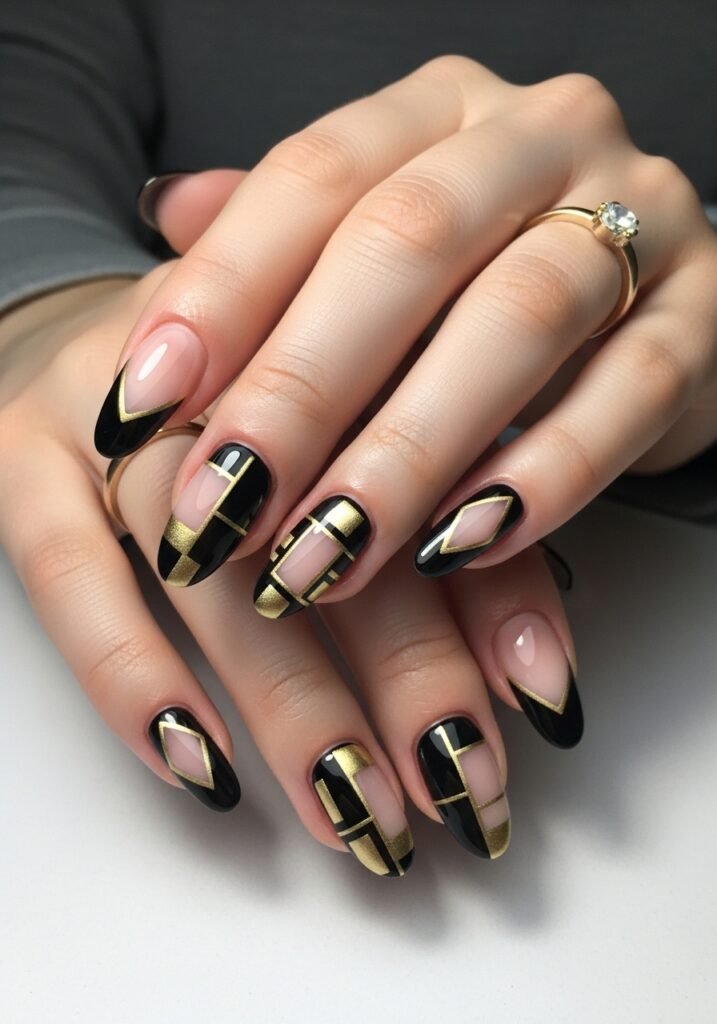
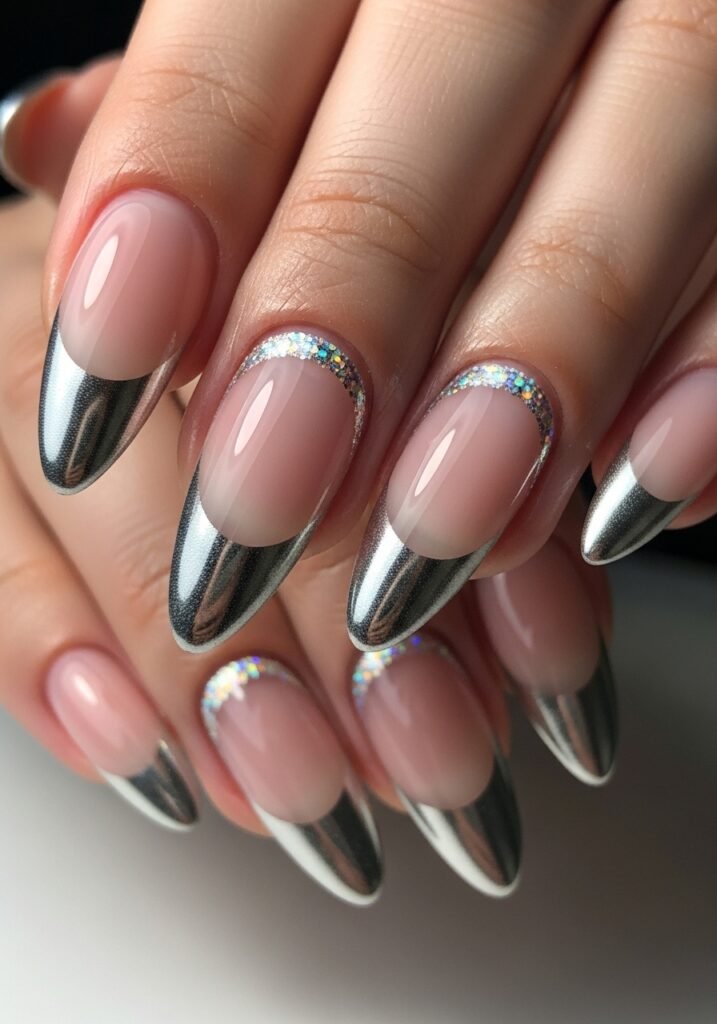
Metallic French Tips
A chrome or metallic line replacing the white tip. Chrome needs a gel base to adhere at all, so this cannot be done in polish. The reflective line exaggerates any unevenness along the free edge, which makes the smile line harder to get right than on a standard French. Guide stickers solve most of it.
Styling Tips:
- Apply chrome over a cured gel base
- Use guide stickers for an even line
- Match the metal to jewellery already worn
Why It Works:
- Familiar structure, updated finish
- Reads sharper than a white tip
- Works from office to evening
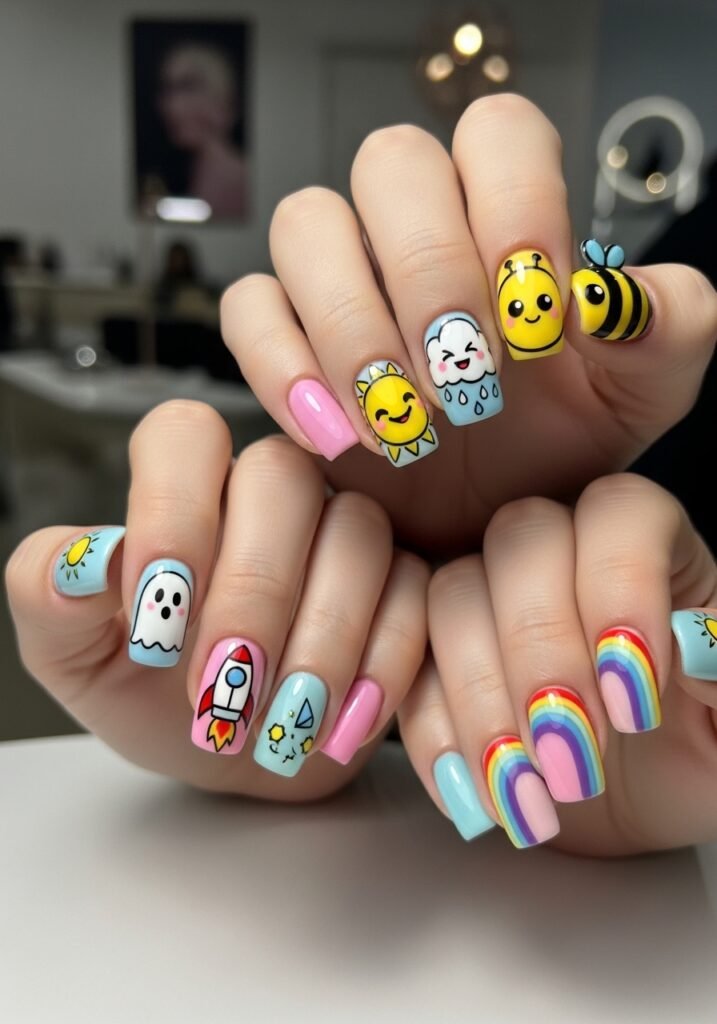
Cartoon Nail Art
Bold outlines and flat colour blocks make cartoon work read clearly at nail scale, where shading does not. The outline goes on last, over cured colour, so a wobble can be wiped before curing rather than ruining the layer beneath. This is the longest appointment on the list, and salons bill it by time.
Styling Tips:
- Block in colour first, outline last
- Wipe mistakes before curing, not after
- Keep it to one or two nails
Why It Works:
- Flat colour reads clearly at small scale
- Endlessly customisable
- Outlines forgive uneven edges
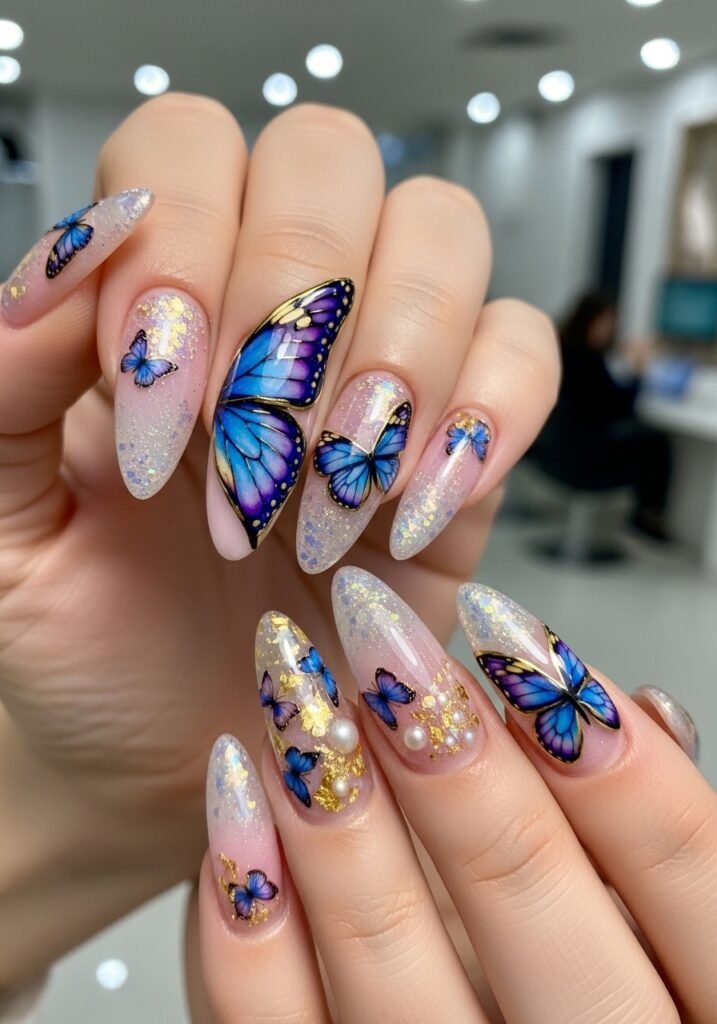
Butterfly Nails
Butterflies are among the hardest shapes to paint and the easiest to apply as decals. Translucent wings layered under a top coat produce the floating effect; opaque decals sit flat and read as stickers. Sealing every edge is what stops them lifting, and gel’s thicker top coat handles that better than polish.
Styling Tips:
- Choose translucent decals over opaque
- Press down with a rubber-tipped tool
- Seal every edge under the top coat
Why It Works:
- Removes the drawing entirely
- Translucency creates depth
- Small scale keeps it refined
Velvet Nails
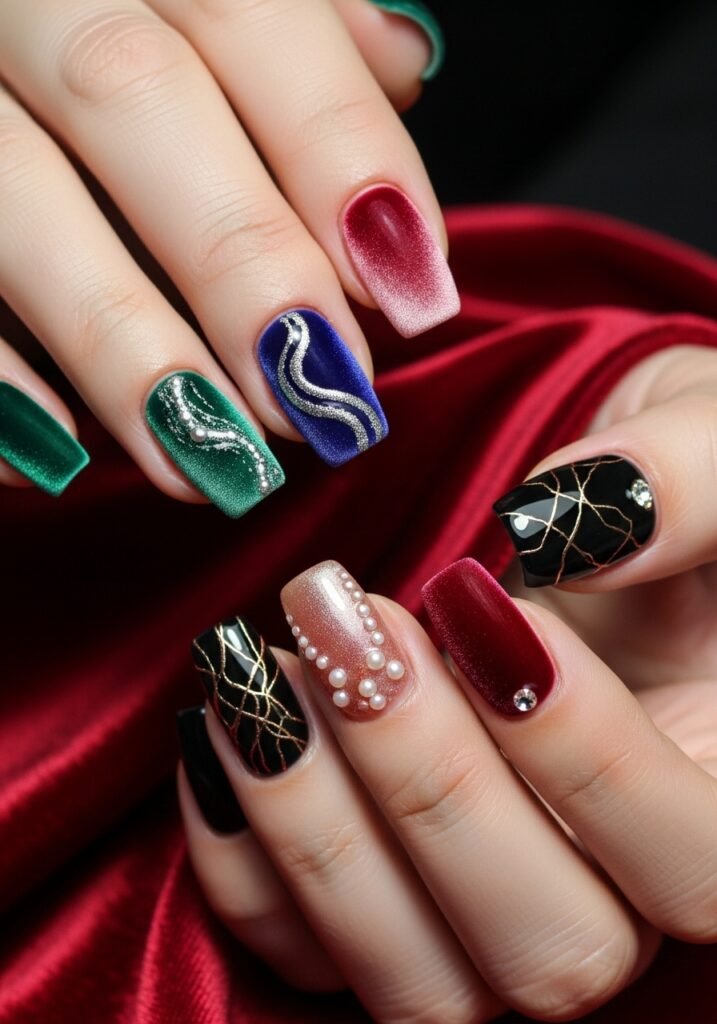
Velvet uses the same magnetic technique as cat eye, but the magnet is held flat rather than angled, producing a diffused sheen across the whole nail instead of a single band. Deep shades show it best. Anyone setting up to do gel work at home will find the full process in this guide to at-home gel nails.
Styling Tips:
- Hold the magnet flat, not angled
- Choose burgundy, navy, or emerald
- Cure immediately after the magnet passes
Why It Works:
- Texture without any raised surface
- Shifts under changing light
- Suits autumn and winter palettes
Color Block Nails
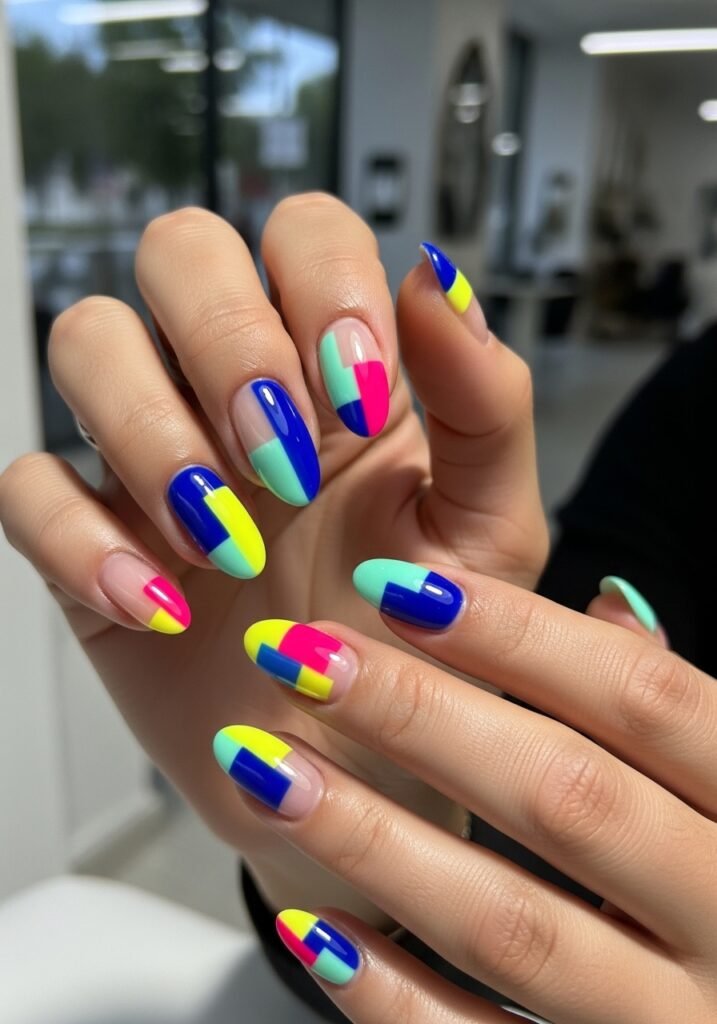
Two or three colours divided into clean geometric sections, with tape marking the boundaries. Each section needs curing before the next goes on, or the colours pull into each other when the tape lifts. Gel makes this far easier than polish, since curing sets the boundary instantly rather than waiting for it to dry.
Styling Tips:
- Cure each section before taping the next
- Seal the tape edge with clear gel first
- Limit to two or three colours
Why It Works:
- Tape produces sharp edges
- Bold result from simple shapes
- Adapts to any palette
Short Natural Gloss Nails
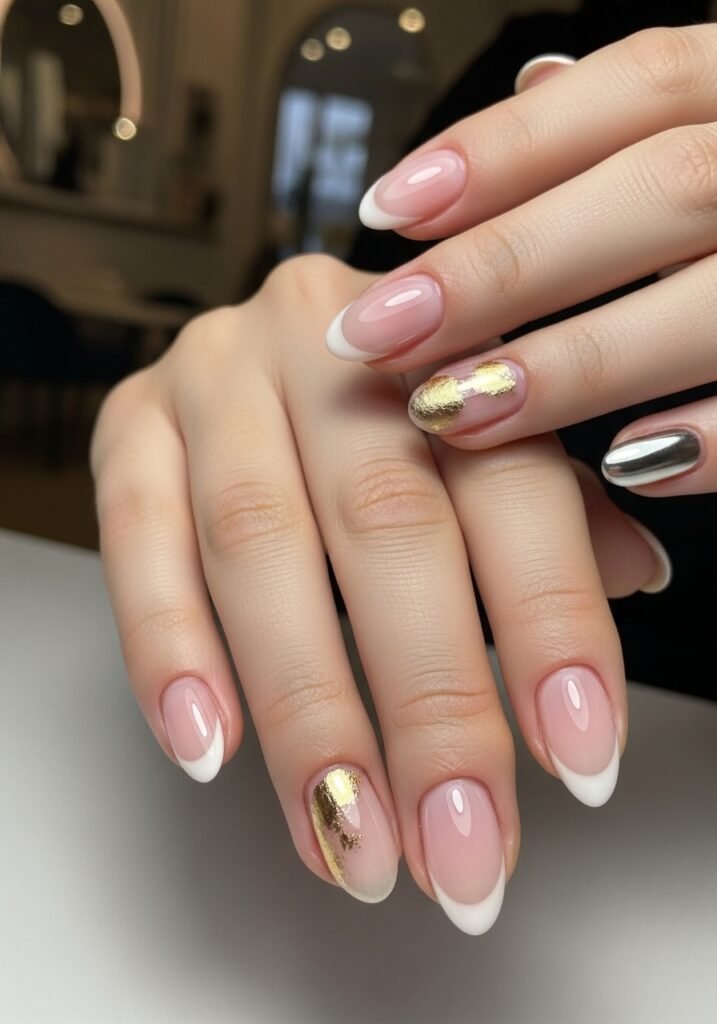
Gel over short natural nails, with no colour beyond a sheer tint. It is the lowest-maintenance option here and the one that suits gel’s real strength — three weeks of chip-free wear rather than any visual effect. Keeping the free edge capped is what delivers that. Further short-nail approaches appear in this guide to minimal short nail designs.
Styling Tips:
- Keep nails trimmed level before applying
- Use a clear or sheer tinted gel
- Cap the free edge on every layer
Why It Works:
- Three weeks without chipping
- No regrowth line to manage
- Suits any setting or wardrobe
Conclusion: Save These Nail Ideas Before They Go Viral!
Gel rewards technique more than it rewards design choice. Four habits carry across every finish above. Apply thin coats, because light cannot cure through a thick layer and the underside stays soft. Cap the free edge on every layer, which roughly doubles the time before wear starts at the tip. Keep product clear of the cuticle and side walls, since lifting begins wherever gel touches skin. And cure fully, allowing longer for dark pigments that block light.
Removal is the fifth, and the one with lasting consequences. Gel is filed and soaked, never picked. Pulling a set off takes layers of the nail plate with it, and a separated nail does not reattach — it has to grow out, which takes months. Anyone comparing which finishes need gel and which work in ordinary polish will find that set out in this guide to 2026 nail trends.



Leave a Reply