Being petite on a wedding day is not a problem that needs solving. Much advice aimed at shorter brides suggests otherwise, framing height as something to fix, correct, or compensate for. That framing is not particularly useful or accurate.
What is genuinely useful is understanding how specific silhouettes, fabrics, details, and styling choices interact with a shorter frame. That knowledge lets a petite bride choose a look that feels tall, elongated, and completely her own, rather than visually compressed or overwhelmed by the dress.
Real styling logic explains why certain choices photograph better on petite frames, and why others, however beautiful in the abstract, can work against a shorter silhouette. Understanding that logic puts a bride in control of her own choices, rather than dependent on whatever a boutique stylist happens to suggest on the day.
This guide covers every element of a petite bridal look: gown silhouette, neckline, veil, shoes, hair, and accessories. It offers specific, practical guidance on what to reach for, and what deserves a second look before saying yes.
Understanding the Petite Frame Before You Shop
The fashion industry defines petite as five foot four and under, though the styling principles that elongate a petite figure grow more useful the shorter someone is. Between five one and five four, most of what follows applies directly. At five feet or under, the advice becomes even more relevant.
The styling goal for a petite bride is not to look taller in an artificial way. It is to create vertical visual lines the eye can travel without interruption, choosing proportions suited to the frame rather than overwhelming it.
A taller bride has visual space that absorbs elaborate detail, volume, and complexity. A petite bride has less of that space, so detail and volume need to be chosen more selectively and placed more strategically. This is not a limitation. Some of the most elegant, genuinely stunning wedding looks exist precisely because every element was chosen with intentionality rather than abundance.
The most common petite bridal mistakes are not about being short. They involve choices that interrupt the vertical line, break the silhouette at the hip, or add so much volume that the dress wears the bride.
Silhouettes That Work Beautifully on Petite Frames
Gown silhouette is the single most significant decision for a petite bride, and the one where the elongating effect varies most dramatically depending on what gets chosen.
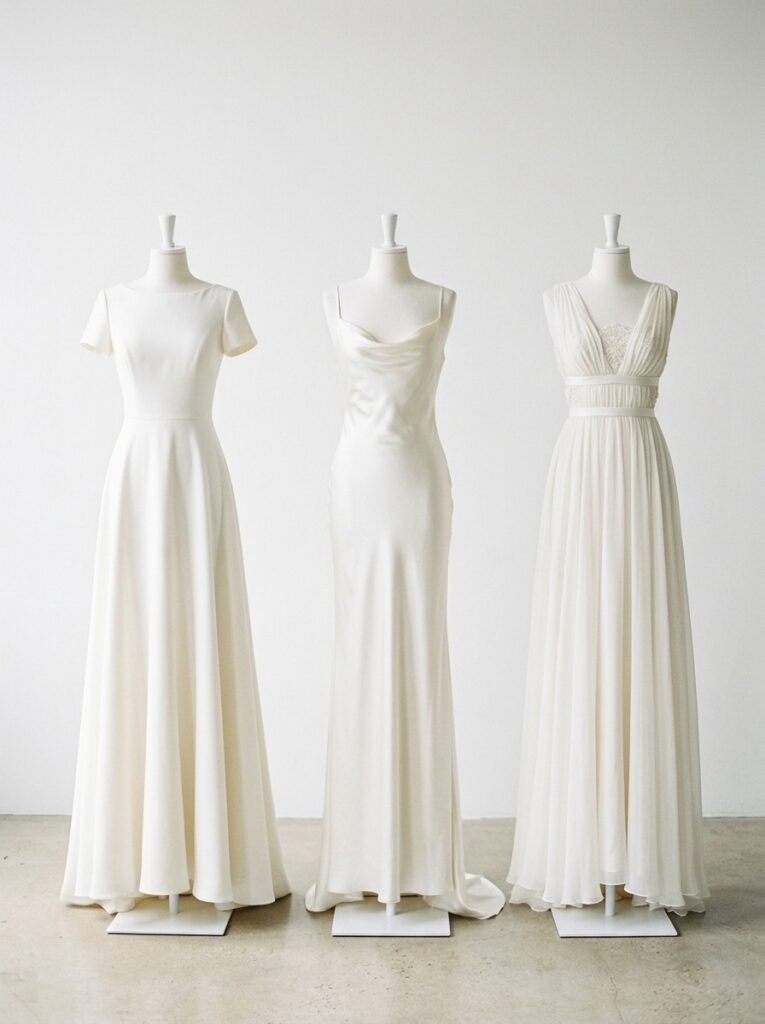
The A-Line
The A-line is the most universally flattering silhouette. For petite brides, it is especially reliable, since it creates a continuous line from bust to hem with no interruption. Its gentle flare from the natural waist keeps the eye moving downward, rather than stopping at the hip.
An A-line also allows movement and flow that photograph beautifully without adding much volume. It is not a full ball gown, which can overpower a petite frame, but it holds enough shape to look genuinely bridal.
The key is that the flare should begin at the natural waist or very close to it. A low A-line that flares from the hip instead cuts the visual line horizontally at the widest point, which shortens rather than elongates.
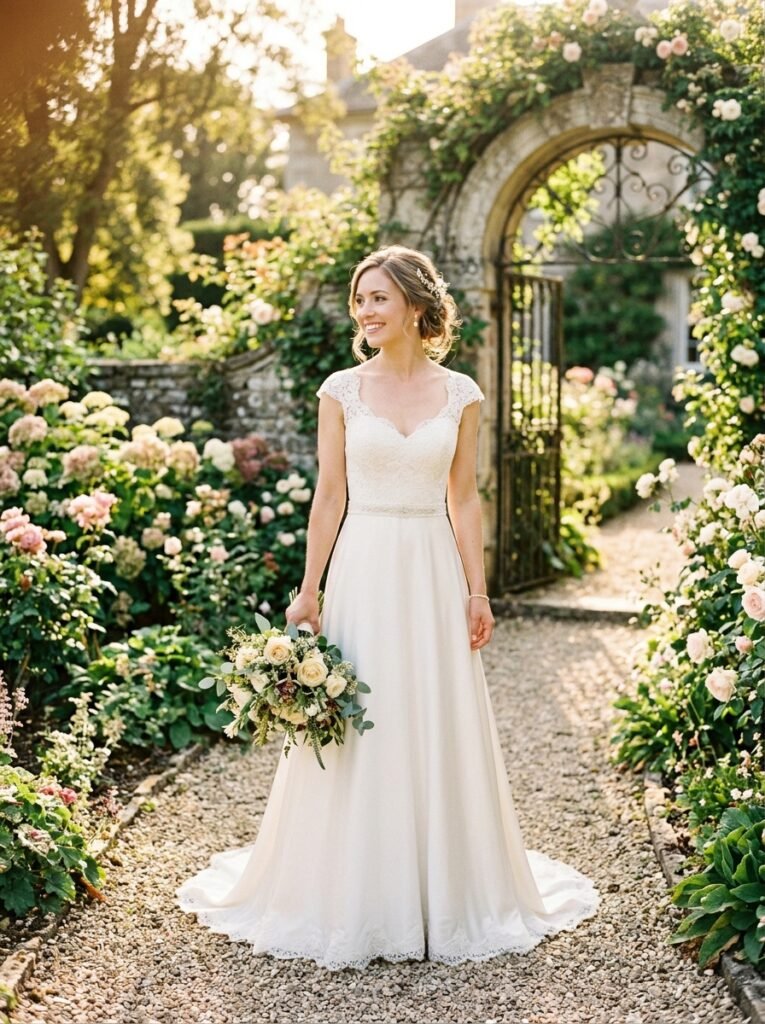
The Column or Sheath
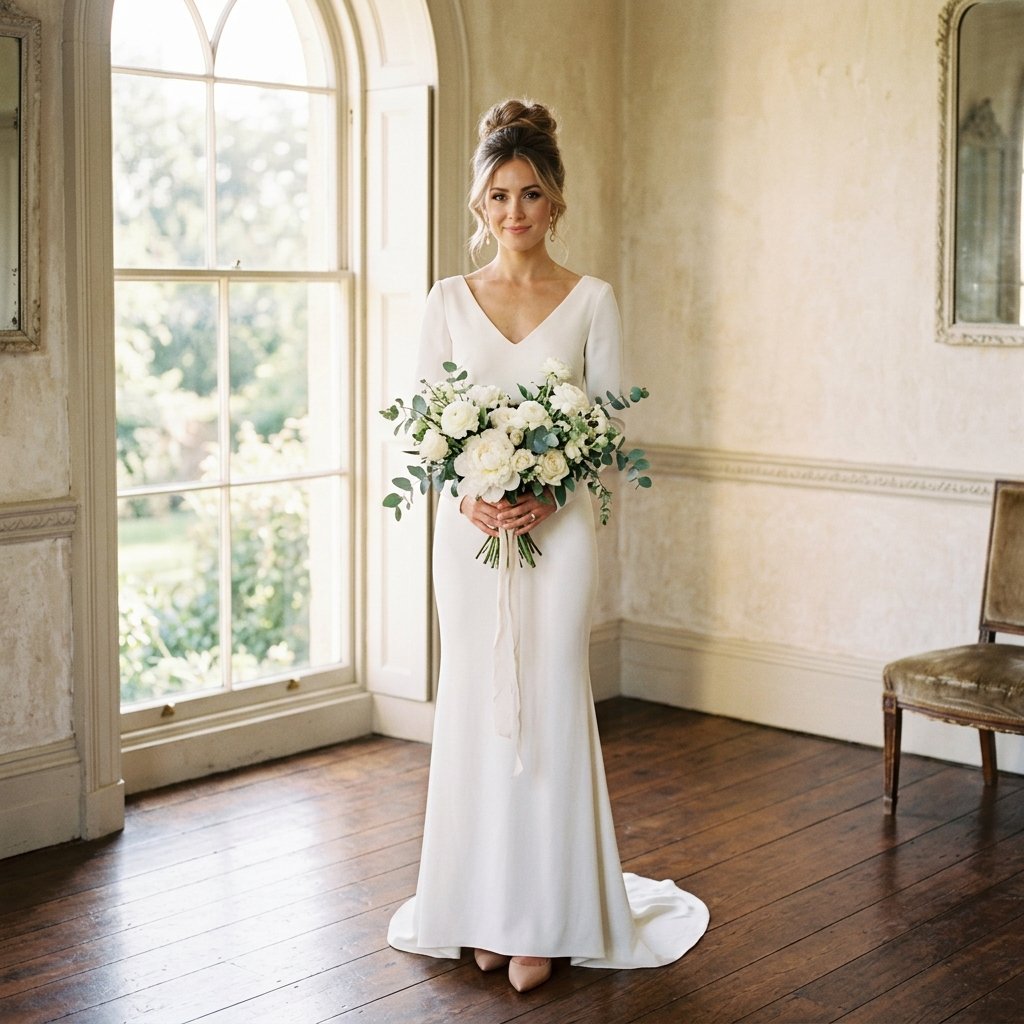
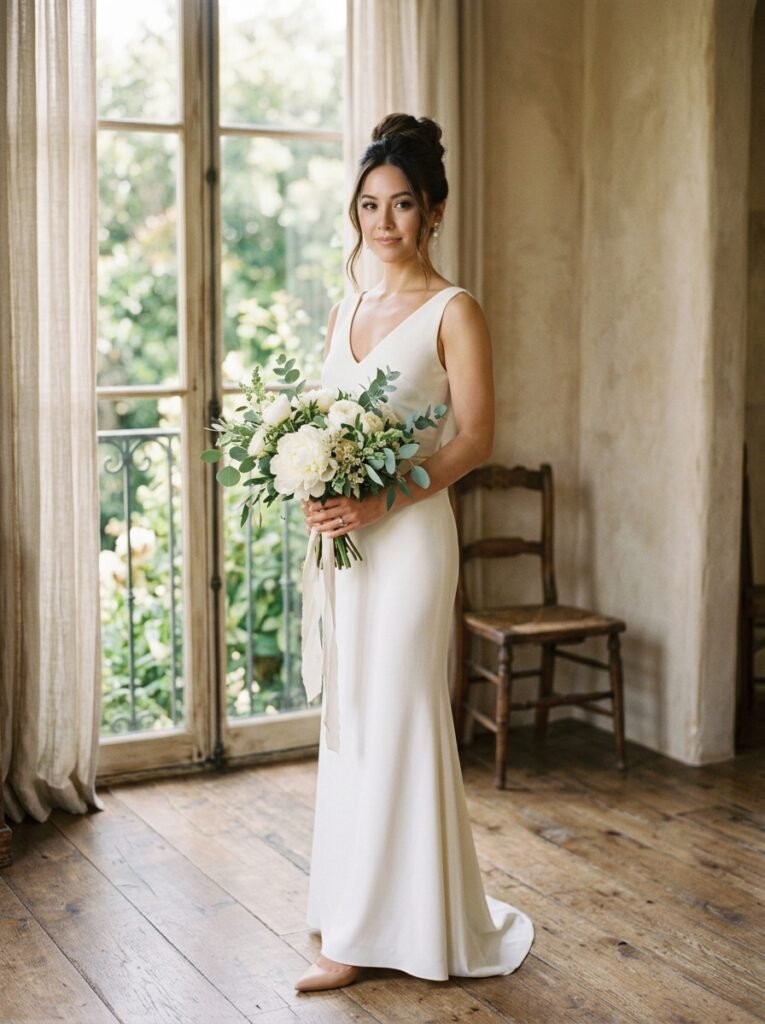
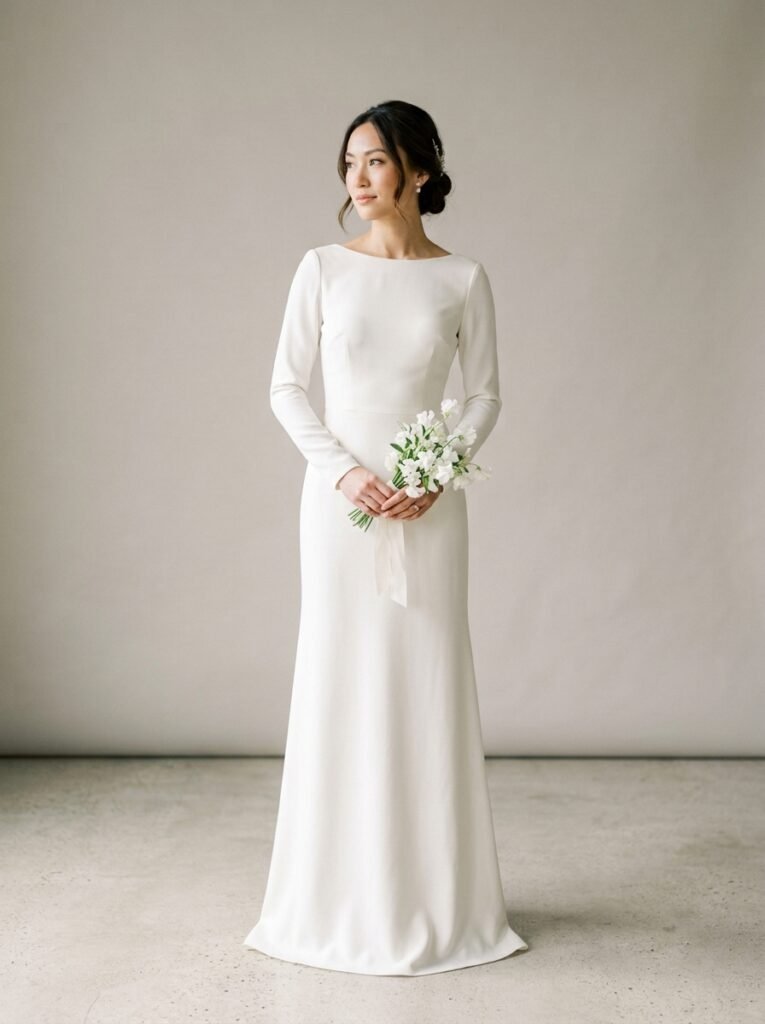
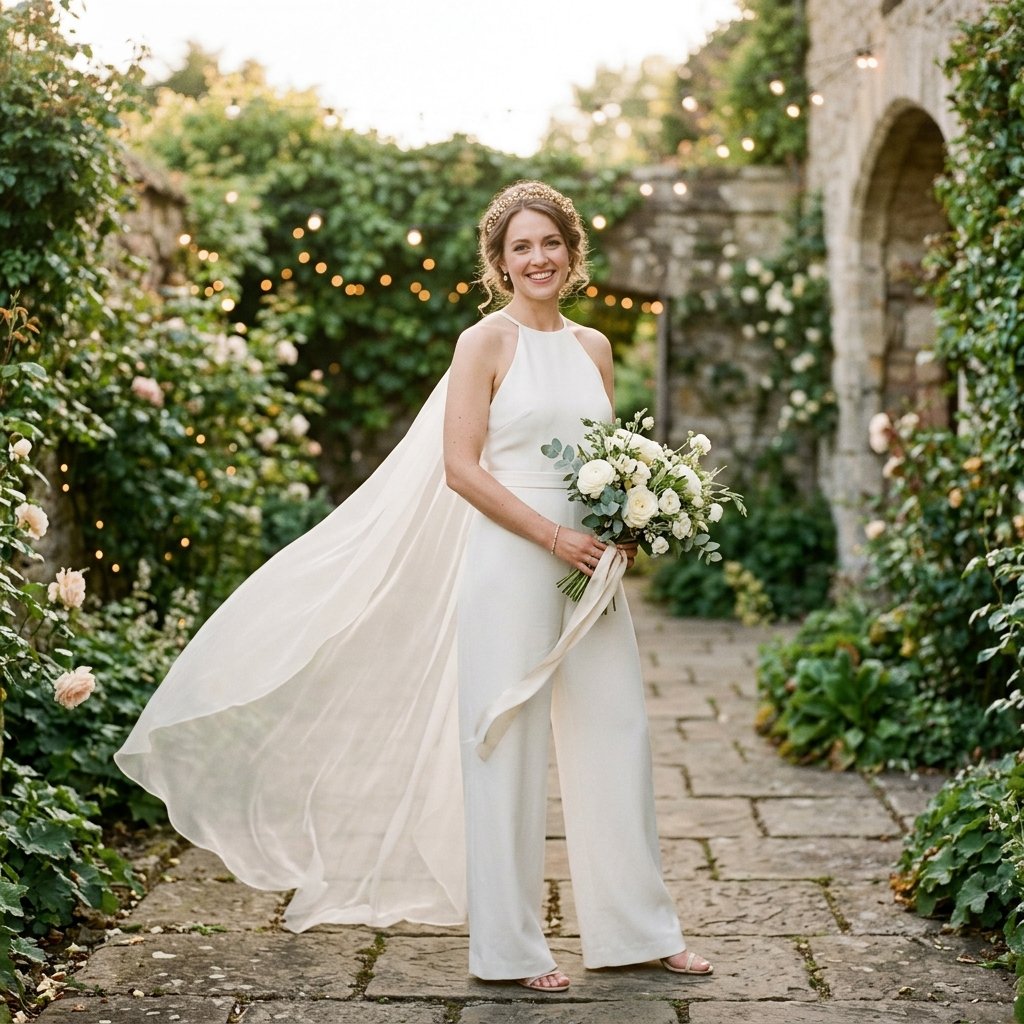
The column or sheath is the single most elongating gown shape for a petite bride, since it creates an unbroken vertical line from shoulder to hem. There is no horizontal interruption at the waist, no flare of skirt, and no gathering that disrupts the eye’s upward travel.
A slim column in a fluid fabric, crepe, silk charmeuse, or well-draping satin, can make a petite bride look extraordinarily tall. The trade-off is that it demands confidence in a minimal, body-skimming cut, so it suits brides who feel genuinely comfortable in fitted clothing.
For brides who love the column look but want more ease, a slight flare at the hem, sometimes called a trumpet or fit-and-flare silhouette, adds a dramatic sweep without interrupting the elongating line.
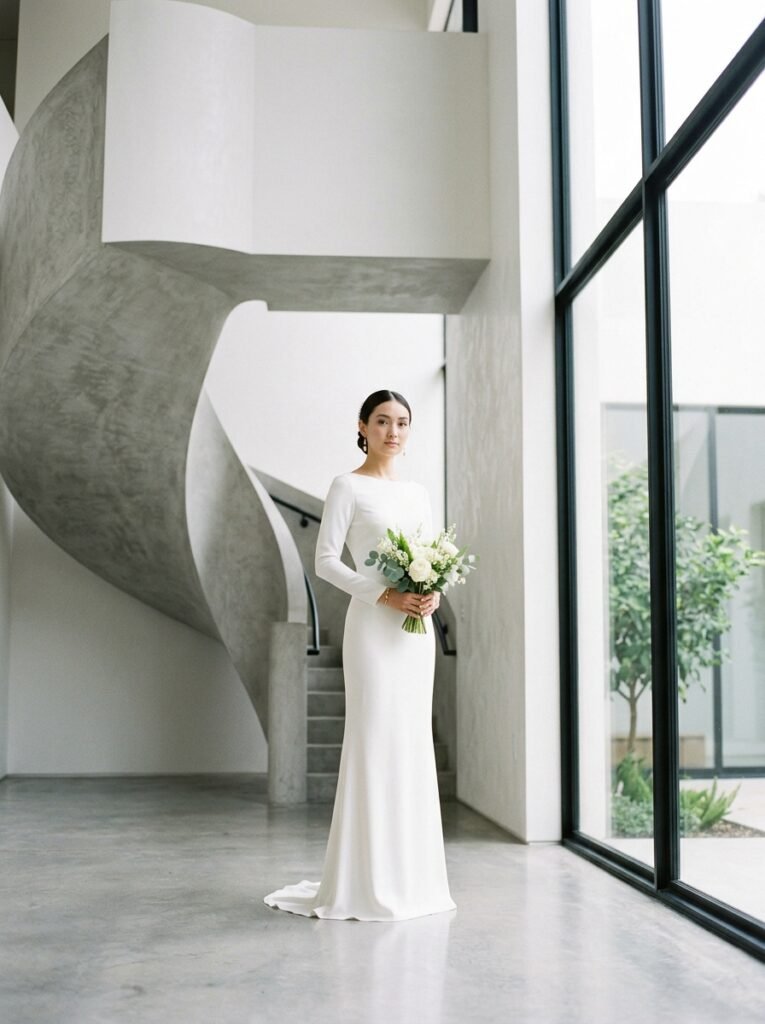
The Empire Waist
The empire waist, where the seam sits just below the bust and the skirt falls straight from there, reliably elongates petite brides because it raises the visual waistline significantly. Placing the defining seam directly under the bust creates the impression that the leg begins almost at the chest, which lengthens the overall silhouette dramatically.
Empire styles work particularly well for petite brides who want a flowing, romantic look without the structure of a fitted bodice. In chiffon, silk, or lightweight crepe, an empire gown can look genuinely ethereal on a smaller frame.
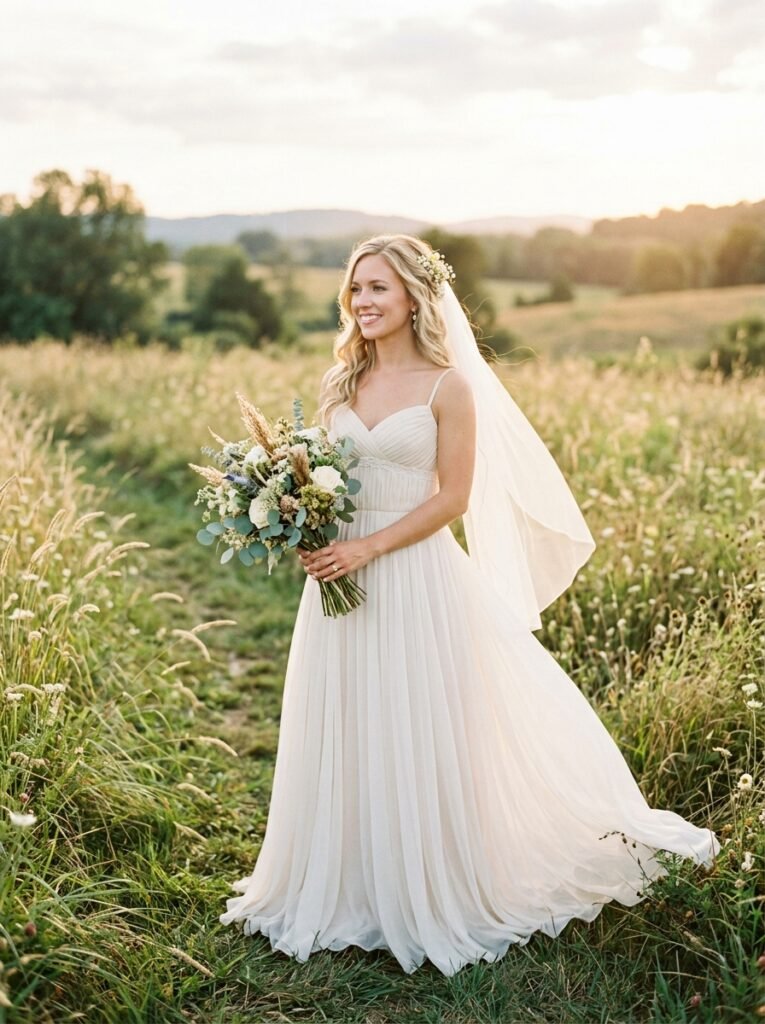
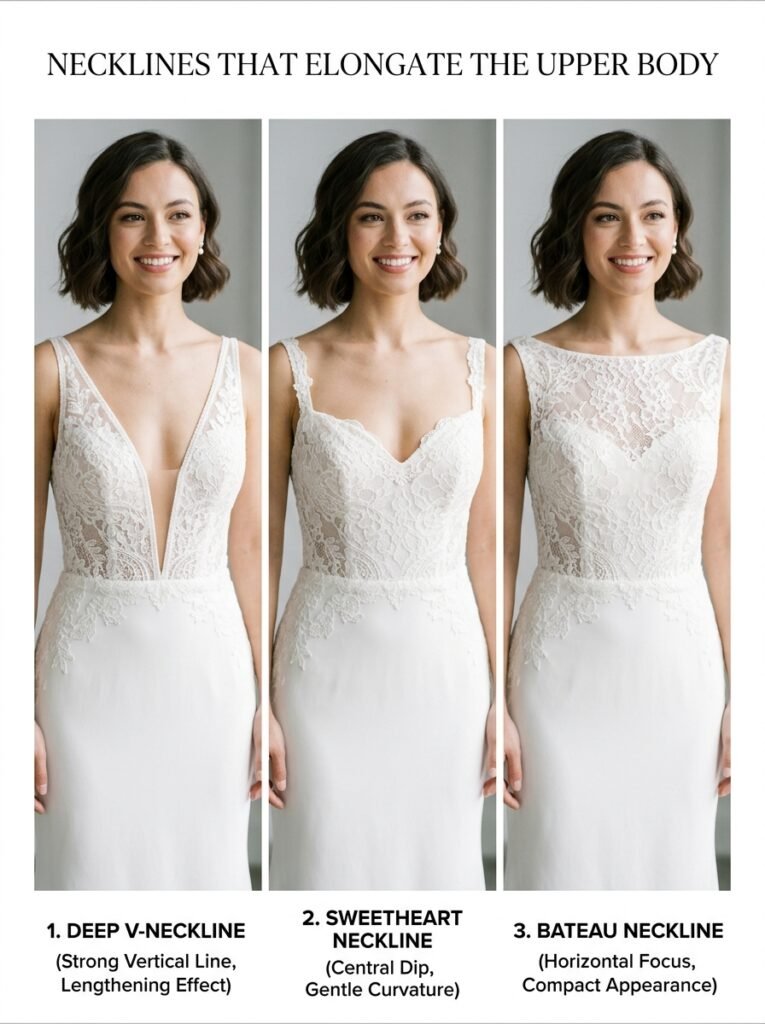
Necklines That Elongate the Upper Body
Gown necklines are often chosen for aesthetics alone, without considering how they interact with a bride’s height and proportions. For petite brides, the neckline is an opportunity to add vertical length to the upper body.
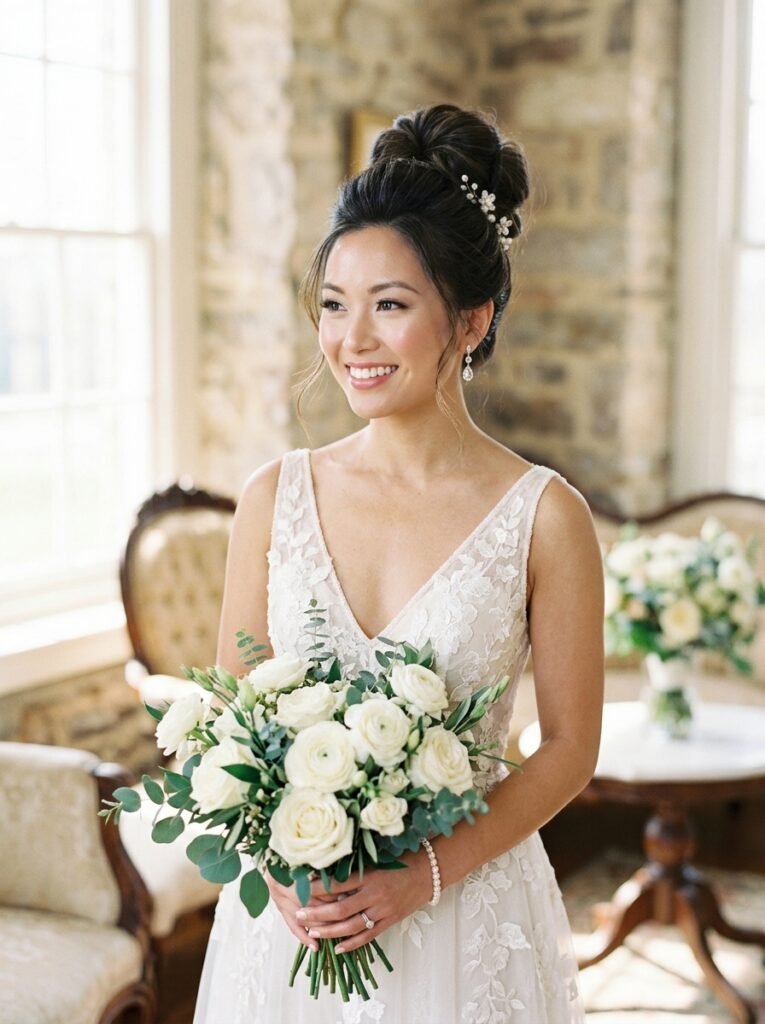
V-necklines are the most reliably elongating choice, since the downward point draws the eye toward the centre of the body and lengthens the torso visually. A deep V can be dramatically elongating on a petite frame, though even a subtle V outperforms a straight horizontal neckline.
Sweetheart necklines carry a subtle V quality at the centre that also suits petite frames well. Their curved dip draws the eye downward and inward rather than horizontally across the chest, supporting the elongating effect.
Bateau or boat necklines, which run horizontally from shoulder to shoulder, create a strong horizontal line that can visually widen the upper body and shorten the neck. These can look beautiful on taller brides but tend to work less effectively for petite frames seeking vertical emphasis.
High necklines and halter styles can work for petite brides, but benefit from a slim, uncluttered bodice that avoids adding visual bulk without corresponding length to balance it.
Off-shoulder and portrait necklines, which create a horizontal line across the collarbone, need the same careful consideration as boat necklines. They can look stunning on petite brides when the proportions align, but they need assessing on the body rather than on a hanger.
Dress Length: Where Hemlines Land Matters
For petite brides, hemline length is not just an aesthetic preference. It carries real consequences for how tall the overall silhouette reads.
Floor-length gowns elongate most effectively, since they maintain the vertical line all the way to the ground. Properly altered so it just grazes the floor, the eye travels the full length uninterrupted, making the bride look as tall as possible.
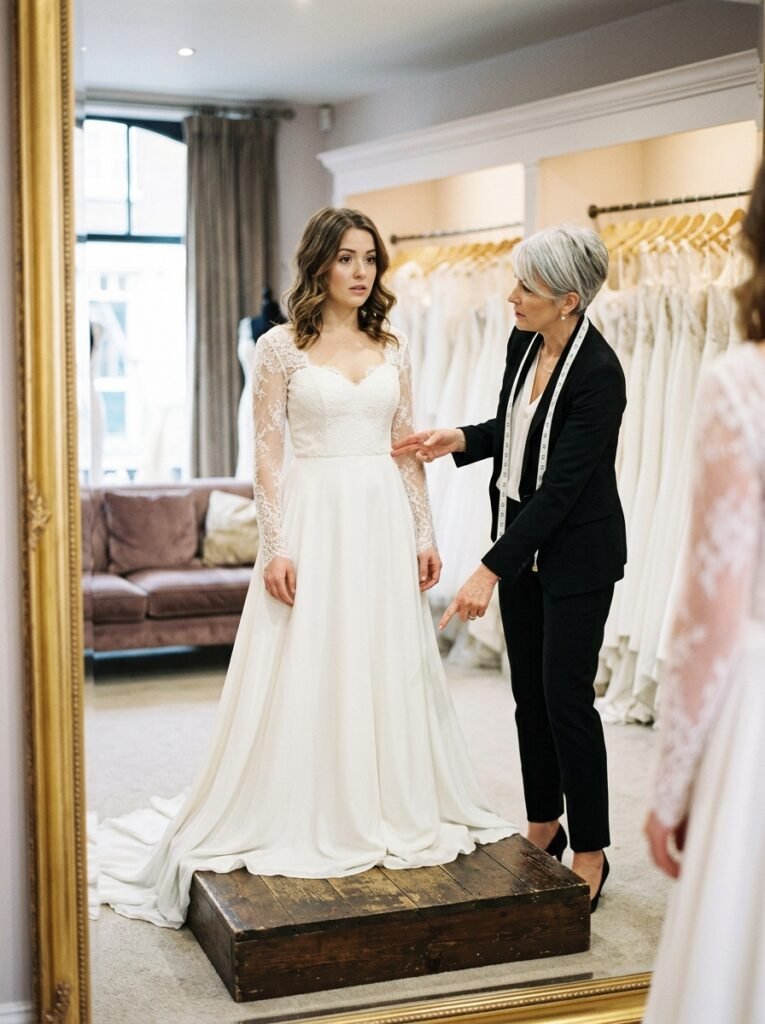
The critical caveat is alterations. A floor-length gown on a petite bride requires hemming, often significantly, and it needs care so the proportion from natural waist to floor stays intact. A gown hemmed incorrectly can lose the visual impact of floor length if too much comes off the bottom without accounting for overall proportion. Alteration costs are worth budgeting for early, alongside the rest of a realistic bridal budget, since a significant hem can be one of the pricier line items.
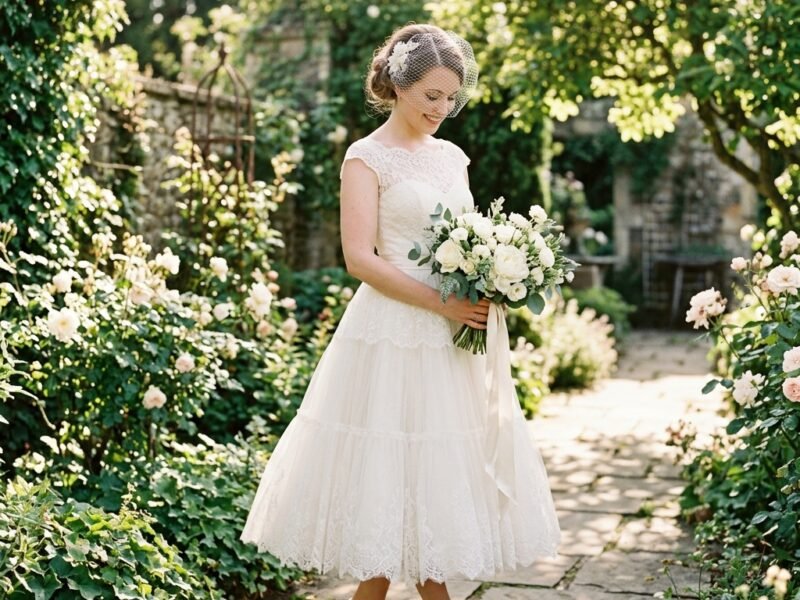
Tea-length and midi hemlines, falling between knee and ankle, can charm on petite brides, particularly for garden, outdoor, or less formal weddings. They interrupt the vertical line more than a floor-length gown, though an exposed ankle and leg in a heel can partly compensate.
Mini hemlines suit brides who love them, and the elongating effect of showing the full leg with a heel is real. The wedding’s context and formality matter here more than height considerations.
One hemline that deserves more consideration is the asymmetrical cut, dipping lower at the back than the front, especially when the front falls at or above the knee. It can create a horizontal break that emphasises rather than minimises shorter stature.
Waistlines and Embellishments: Where Detail Lives
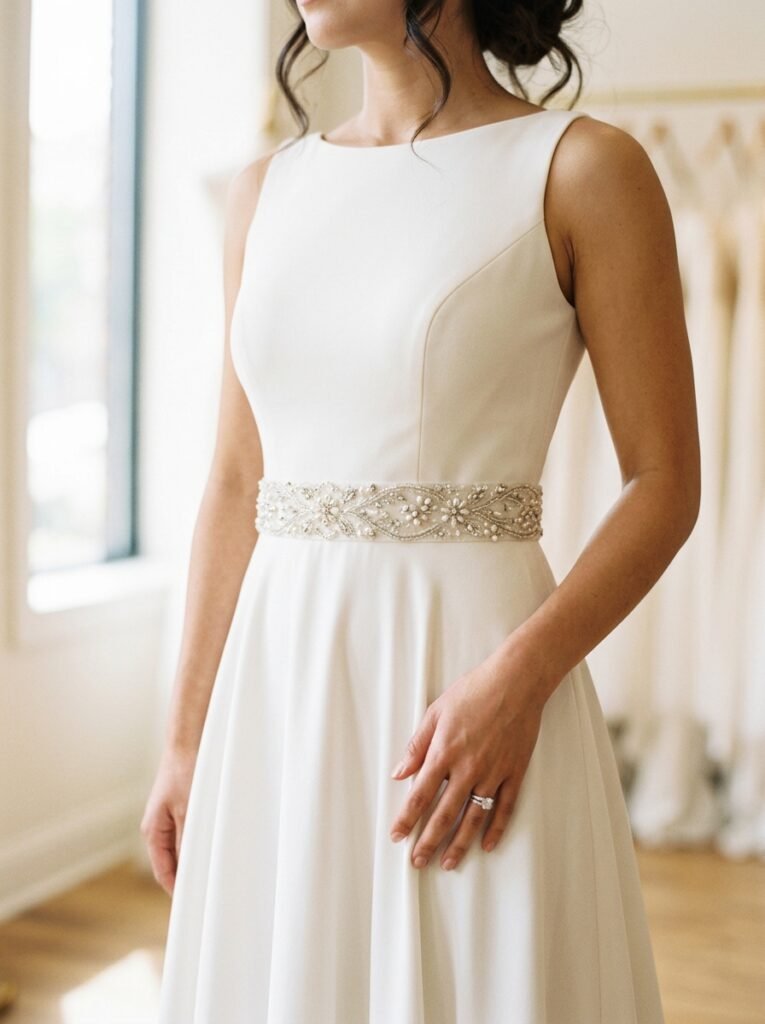
Where embellishment, banding, and waist definition sit has a significant effect on how a petite figure reads. Anything placed at the natural waist or above tends to help. Anything placed at or below the hip divides the silhouette at its widest point and interrupts the elongating effect.
An embellished waistband at the natural waist draws attention to the narrowest point of the body, visually lengthening both the torso above it and the skirt below. This is one of the most useful styling tools available to a petite bride.
Embellishment concentrated at the neckline or bodice draws the eye upward, which also supports vertical visual movement.
Heavily embellished hips, or wide horizontal banding across the hip, create a visual stopping point at the widest part of the body. They deserve careful consideration when elongation is the goal.
Lace running vertically through the skirt, rather than in horizontal tiers, adds texture and interest while preserving the vertical line. Horizontal tiers or bands of lace, particularly multiple tiers, create horizontal interruptions that shorten a petite silhouette.
Trains on petite brides are entirely appropriate and can look spectacular. A cathedral train in particular adds drama and extends the vertical line in photographs. A very long train takes up more visual space proportionally on a shorter bride, so the total look needs to feel balanced.
Veils and Headpieces That Help Rather Than Hinder
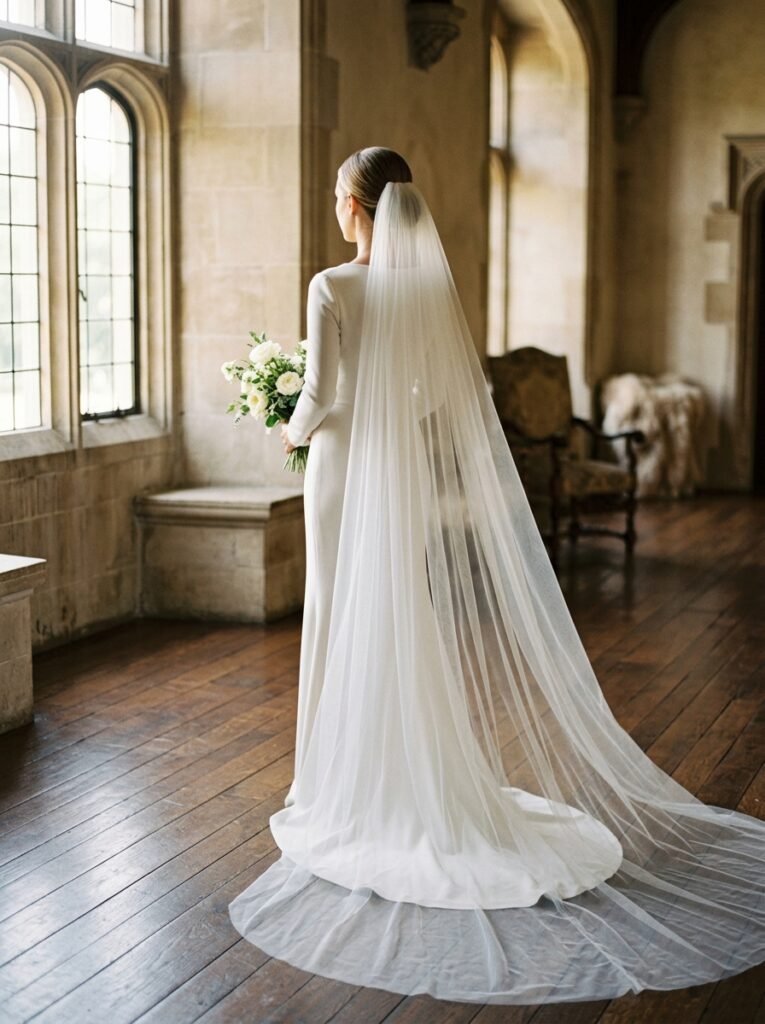
The veil is one of the most significant height-related decisions for a petite bride, since it affects the overall vertical silhouette from head to train.
A cathedral or chapel veil falling from a high attachment point creates a dramatic downward sweep that elongates the entire look. The length from the top of the head to the end of the veil forms a vertical line that makes the whole silhouette read taller.
A fingertip veil in a single layer, attached at the crown, is a reliable, universally flattering choice, since it extends the visual line past the waist without adding bulk.
Blusher veils worn over the face create a romantic, enclosed silhouette. They work beautifully for petite brides when the rest of the styling stays clean and uncluttered.
Wide, heavily gathered veils with multiple layers deserve careful consideration, since they can add horizontal width that competes with the vertical line a petite bride is working to establish.
Hair combs, floral crowns, and minimalist headpieces can all work beautifully without any veil. For petite brides skipping the veil, hairstyle height can compensate meaningfully, particularly an updo that adds a few inches to the overall silhouette.
The Height Power of Heels and Shoes
Shoes offer the most direct height addition available to a petite bride. For anyone comfortable in heels, they are one of the simplest, most effective tools in the entire styling toolkit.
A four-inch heel is not for everyone, and it does not need to be. Even a two-inch block heel adds measurable height while staying manageable for a full day of wedding events. Comfort across six to ten hours matters most, since an uncomfortable heel gets abandoned by cocktail hour, taking the height benefit with it.
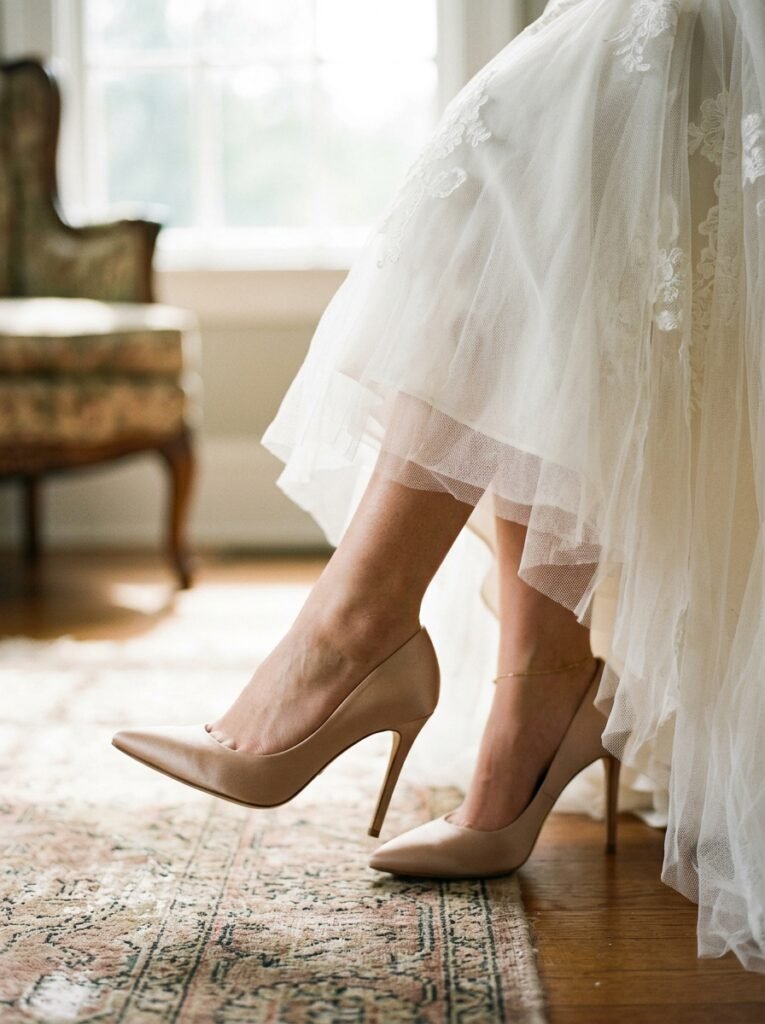
For brides choosing heels, nude or skin-toned shoes elongate most effectively, since they extend the leg visually rather than creating a horizontal line at the ankle. Pointed-toe styles lengthen the visual line of the foot further.
Strappy sandals are beautiful and work well for petite brides, though very wide ankle straps can create a visual band that interrupts the leg line. A thin, delicate strap elongates more effectively than a thick ankle strap.
For brides who skip heels, pointed-toe flats or mules in a neutral, skin-matching tone minimise the visual break at the ankle and preserve as much leg line as possible.
Hidden platform heels inside a closed-toe shoe can add height without the feeling of wearing a high heel, which some brides find genuinely useful.
Hair and Makeup Choices That Add Visual Height
Hairstyle is the final element of a petite bridal look, and one that can add or subtract apparent height quite meaningfully.
Updos add height by raising the visual mass of hair above natural head height. A chignon, a high bun, or a high ponytail all extend the vertical line above the dress.
Voluminous hairstyles that add height at the crown, such as a bouffant-influenced updo or a style with lift at the root, work particularly well for petite brides. They create visual height without the formality of a strict updo.
Half-up styles, adding height at the crown while letting length fall, offer a middle-ground option: romantic, with some extra visual height.
Hair worn fully down in loose waves or curls looks beautiful but does not add visual height. Petite brides who want their hair down should make sure the dress silhouette is doing enough elongating work on its own.
For makeup, a clean, luminous base brightens rather than flattens the face. A slight lift at the outer corner of the eye, through liner or shadow, helps the face read open and upward rather than horizontal. These are subtle effects, but they add to the overall impression of elongation.
What Perception Research Actually Says About Vertical Lines
Most petite styling advice, including the vertical-line principle running through this guide, rests on a piece of folk wisdom: vertical lines lengthen, horizontal lines shorten. The science behind that idea is older, and more contested, than most style guides let on.
The underlying phenomenon is known as the Helmholtz illusion, named for the nineteenth-century physicist who first described it. A 2022 paper in the peer-reviewed journal i-Perception, published by SAGE, traced the popular belief back over two hundred years, to a Japanese beauty handbook from 1813. The paper noted that this belief actually runs opposite to Helmholtz’s original finding, where horizontal stripes made a square look taller than vertical stripes did.
Later studies on real clothing and real bodies have produced mixed, sometimes contradictory, results. That does not make every vertical-line principle in this guide baseless. Silhouette, seam placement, and unbroken sightlines behave differently from a printed stripe pattern; a column gown works through continuous shape, not an optical stripe illusion. It is simply worth knowing the tidy version of this rule is less settled in vision science than bridal blogs suggest.
Common Mistakes Petite Brides Make When Shopping
A few specific patterns come up repeatedly and are worth naming clearly.
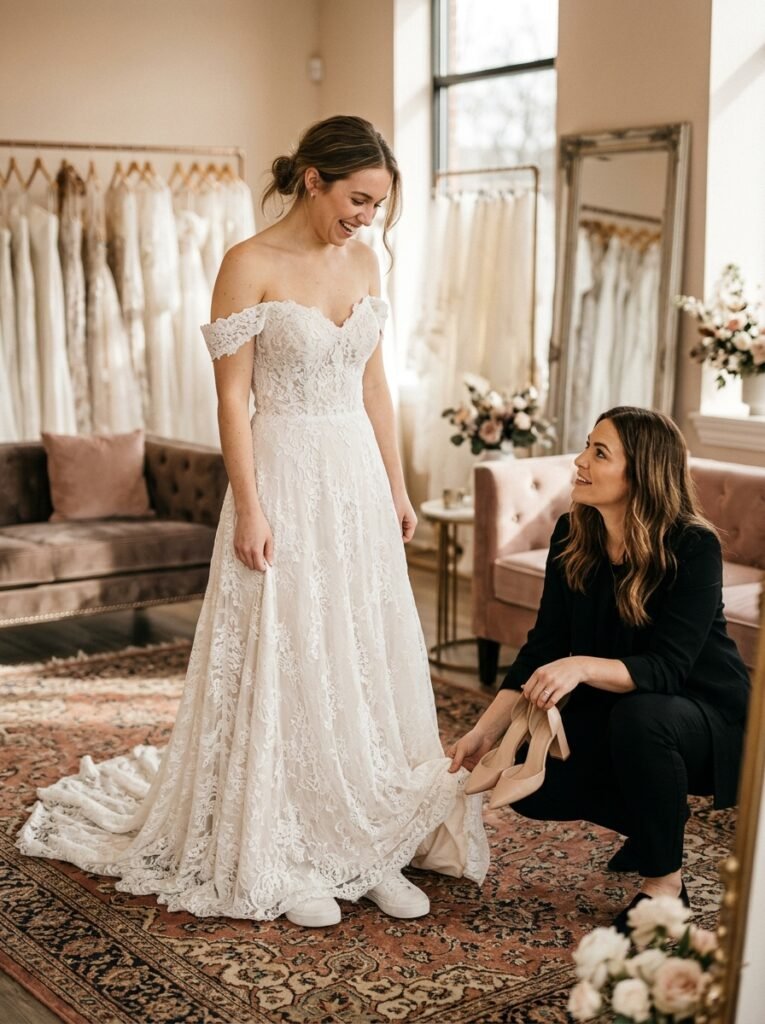
Trying on gowns without the right shoes misleads many petite brides. A gown’s proportions and hemline shift significantly with heel height, so bringing the planned heel to every fitting avoids the problem.
Saying yes to a dress on the hanger, before trying it with the correct size in mind, is another common trap. Sample sizes on a petite frame reveal little about a properly fitted, hemmed dress. Asking a consultant to pin excess fabric during try-on shows the true silhouette.
Over-choosing volume because it looks bridal is a third pattern. Ball gowns and heavily gathered silhouettes look spectacular on tall models, but can overwhelm a petite frame until the dress becomes the statement. Volume can work on a petite bride, but the proportions need to feel balanced rather than consumed.
Choosing a dress for generic flattery, rather than for what it does for a specific frame and height, is a final pitfall. Flattering and elongating are different criteria. A dress can look lovely without adding visual height, and for a bride who wants both, that distinction matters.
Frequently Asked Questions
What is the most flattering wedding dress for a petite bride? The A-line and column silhouettes are the most consistently flattering, since both create an unbroken vertical line that elongates the figure. The A-line suits a wider range of body types, while the column elongates most dramatically for brides comfortable in a fitted, body-skimming cut.
Should petite brides wear floor-length or shorter gowns? Floor-length gowns generally elongate more than shorter hemlines, since they maintain the vertical line all the way to the ground. Properly hemmed and paired with the right heel, a floor-length gown on a petite bride reads as extraordinarily elegant. Shorter hemlines can work beautifully too, showing the leg and heel for a different kind of perceived height.
What shoes should a petite bride wear to look taller? Nude or skin-toned heels with a pointed toe elongate most effectively, since they extend the leg visually rather than breaking it at the ankle. Even a modest two-inch heel adds measurable height. Comfort across the full wedding day matters more than choosing the highest heel available.
Can a petite bride wear a ball gown? Yes, with attention to proportion. It works best when the bodice stays slim, the skirt’s volume begins at the natural waist rather than the hip, and the overall scale does not overwhelm the frame. A mini crinoline, rather than a full cathedral-scale underskirt, delivers the look in more suitable proportions.
Does a petite bride need to avoid horizontal embellishments? Not entirely, but they deserve careful placement. Horizontal embellishments at the natural waist can flatter, since they draw attention to the narrowest point. Horizontal embellishments across the hip, or in multiple tiers through the skirt, tend to interrupt the elongating line more significantly and deserve close assessment on the body before committing. For a related look at styling around body shape more broadly, this guide to plus-size bridal outfits that truly flatter covers similar proportion principles from a different starting point.
The Look That Belongs to You
The most important takeaway here is not a list of dos and don’ts, but a framework for evaluating choices on an individual body rather than in the abstract.
Every recommendation here works as a starting point, not a rule. Some petite brides look extraordinary in ball gowns with maximum volume. Some look most like themselves in a short dress with flat sandals, height an afterthought. Confidence in a genuinely loved look always matters more than technically following the elongating principles.
This guide offers the knowledge to make those choices intentionally. It means understanding what a silhouette will do on her own frame, before falling for it on a model six inches taller. It means walking into appointments already knowing what to ask for.
Wedding day photographs last a lifetime. In every one of them, a bride looks like exactly what she is: herself, on one of the best days of her life. Every styling decision leading up to that moment exists simply to make the clothes feel like an extension of that truth, not a costume someone else chose for her.

Leave a Reply