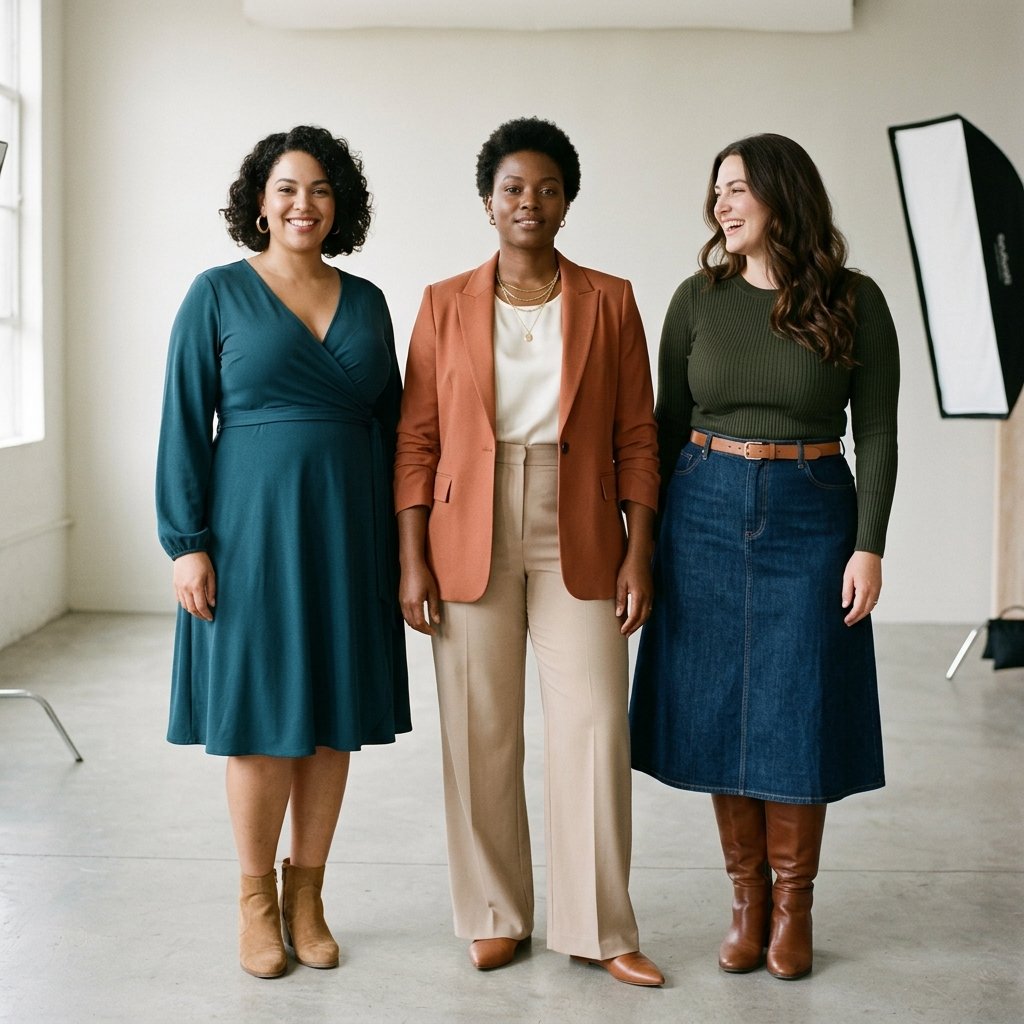
Body type dressing guides carry a complicated history. Many are built on the premise that certain shapes are the goal and others are a deviation, treating getting dressed as an exercise in disguise. That framing misses the point entirely and isn’t a useful way to think about clothing.
The genuinely useful skill is understanding how silhouettes, proportions, and design details interact with different body shapes. The goal isn’t concealment. It’s intention: choices that feel right on an actual body, photograph the way a woman wants, and create the sense of balance she’s personally after. Different women want different things from their wardrobes, so the most useful advice equips readers to choose for themselves rather than prescribing one uniform answer.
Real principles do govern how clothing interacts with the body. A wrap dress reads differently on an hourglass figure than on an apple shape, not because one body outranks the other, but because the wrap silhouette responds to proportion in predictable ways. Understanding those interactions speeds up shopping, clarifies wardrobe edits, and takes friction out of getting dressed each morning.
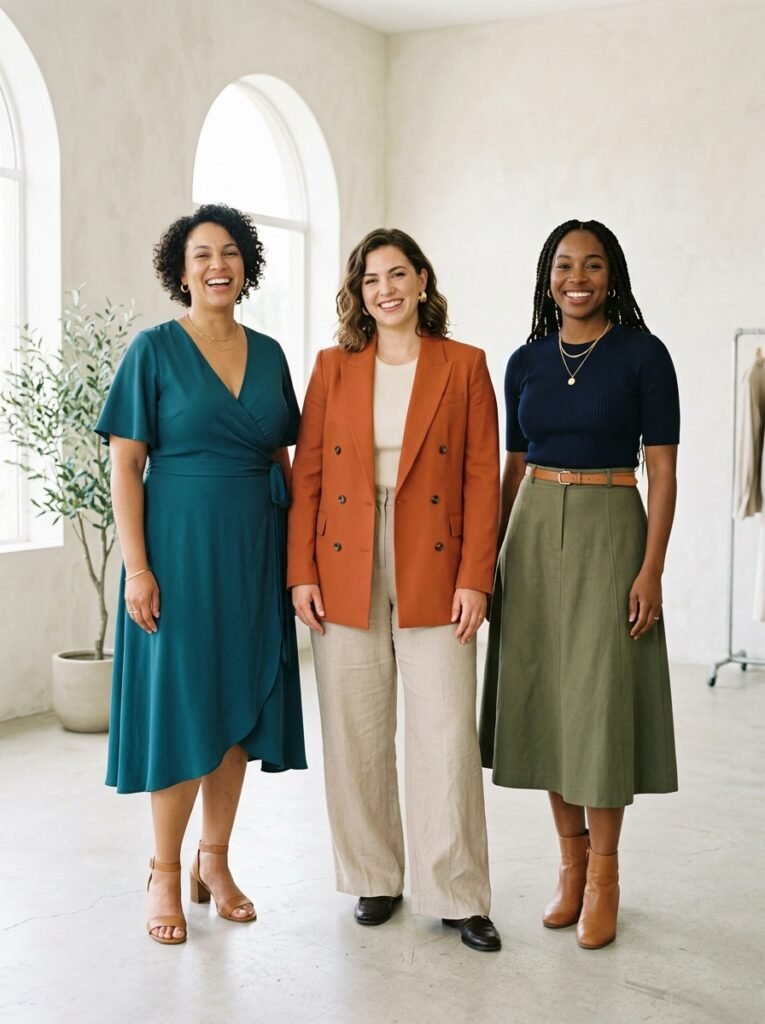
This guide covers three commonly referenced body types: apple, pear, and hourglass, with specific, practical outfit guidance for each. Few bodies fit neatly into a single category, and that’s completely normal. Most women sit somewhere between shapes, so the principles from multiple sections often apply together.
What Body Type Categories Actually Mean
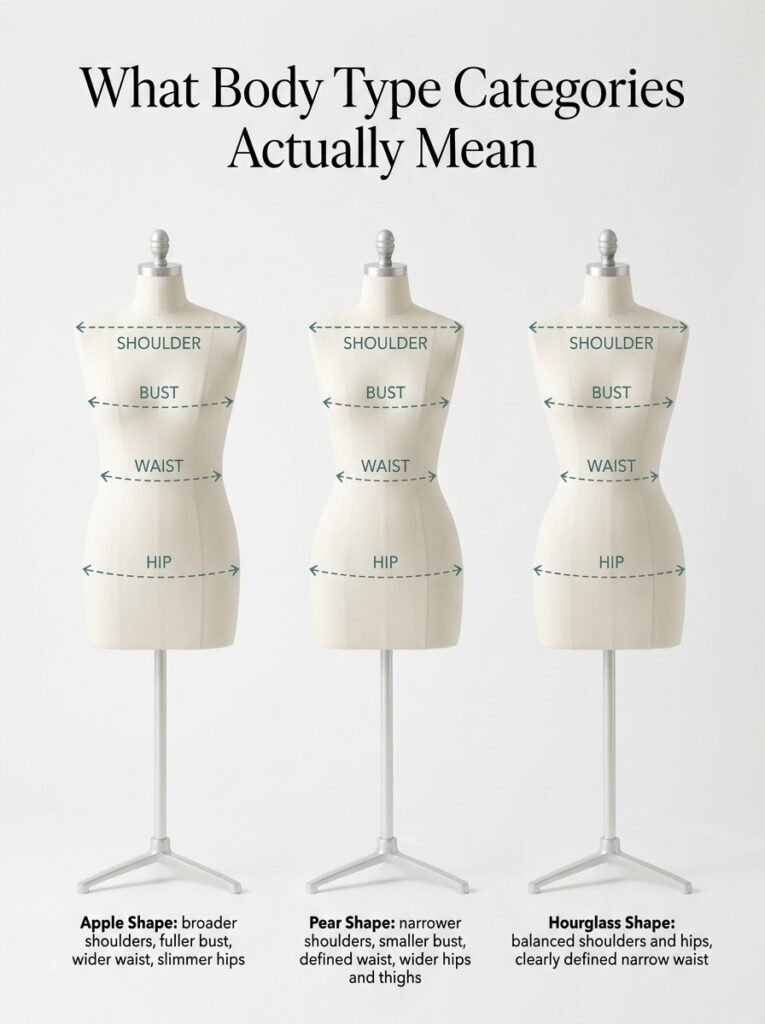
Body type categories in fashion offer a simplified framework for describing where volume, mass, and width sit on the body. They aren’t medical categories, fitness benchmarks, or value judgements. They function purely as shorthand for proportional relationships.
An apple shape carries more volume through the midsection and upper body relative to the hips and legs. Shoulders and bust tend to match or exceed hip width, with less waist definition between them.
A pear shape carries more volume below the waist, through the hips, thighs, and lower body. Shoulders sit narrower than the hips, and the waist usually stays fairly defined.
An hourglass shape has bust and hip measurements that are roughly equal, with a notably narrower waist between them. Because most clothing is designed around this proportion, hourglass figures tend to find flattering options across the widest range of silhouettes.
Few women sit in exactly one category. Someone might carry pear proportions overall while also holding weight in the midsection, creating a hybrid shape where both pear and apple guidance apply in different areas. A study published in Frontiers in Psychology found that women’s clothing practices connect closely to personality traits and body image, suggesting that dressing with intention supports body confidence more than rigidly matching a single category ever could. These categories work best as loose frameworks, not fixed labels.
Outfits for the Apple Body Type
The apple body type carries more volume through the chest, midsection, and upper body, with slimmer legs by comparison. When elongation is the goal, the priority becomes lengthening the torso visually, highlighting the legs, and finding waist definition without cinching in a way that adds bulk.
What Works Best for the Upper Body
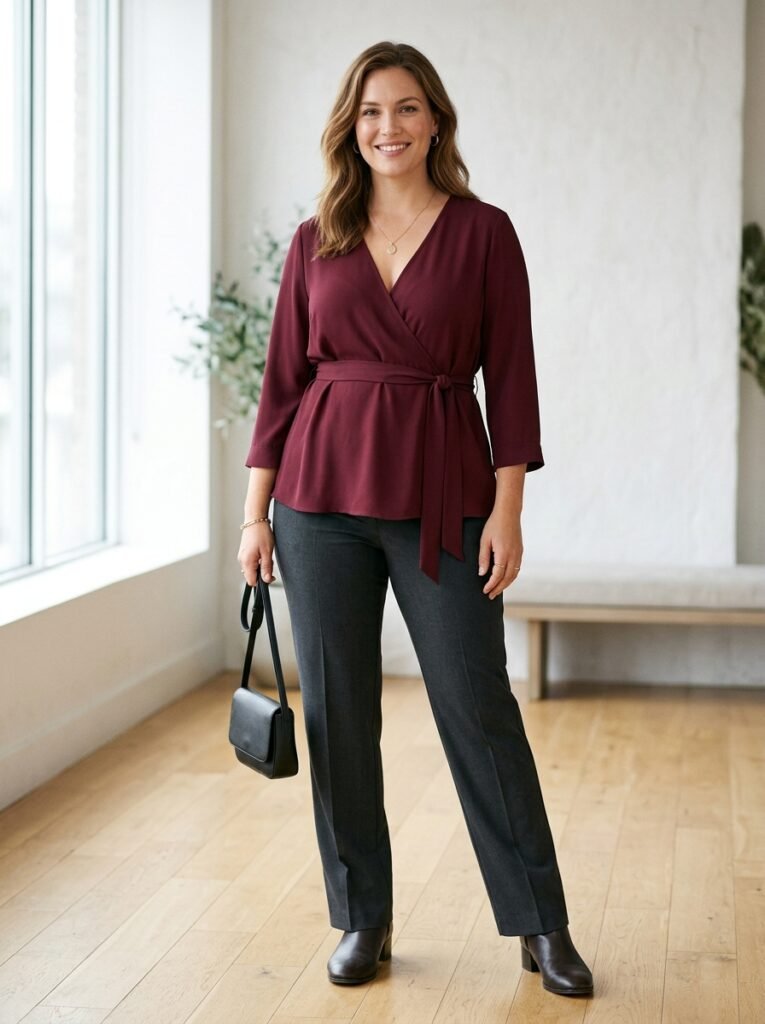
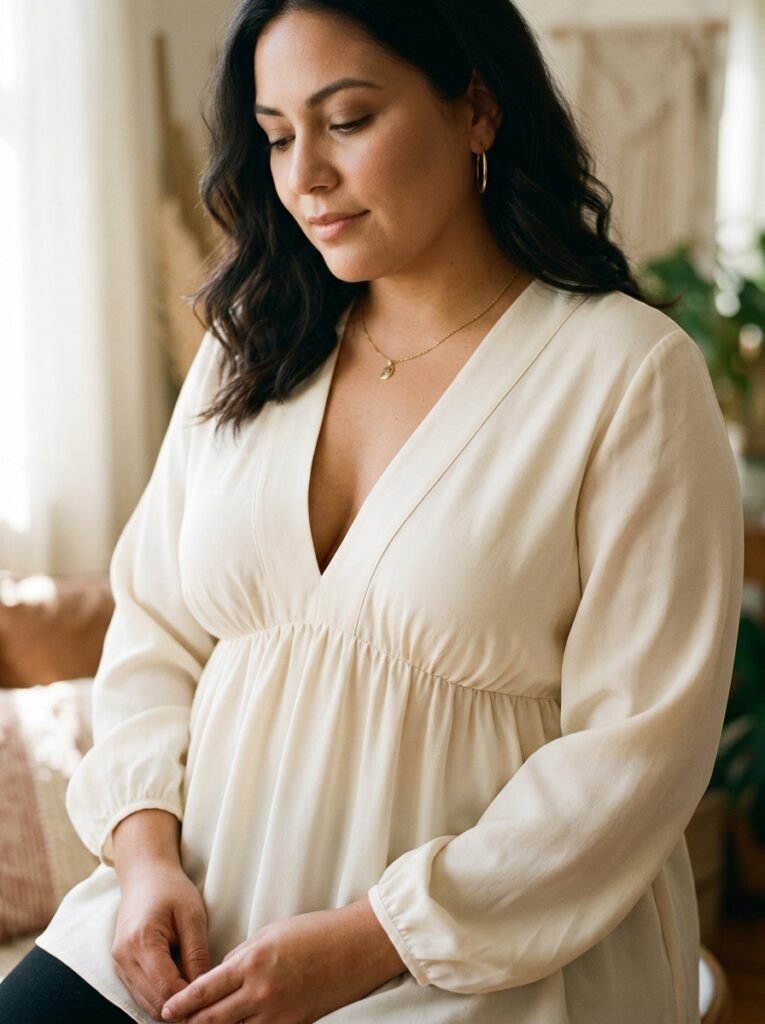
Empire waist styles rank among the most reliable choices for apple shapes. The seam sits just under the bust, at the torso’s narrowest and highest point, letting fabric fall freely below it rather than cling to the midsection. In a flowing fabric such as jersey, chiffon, or silk, an empire waist dress skims the body instead of gripping the belly.
V-necklines and deep scoop necks pull the eye downward and inward rather than across the chest’s widest point, making them one of the most effective elongating tools available. A deeper V, within a comfortable range, produces a stronger lengthening effect.
Open, flowy fabric through the midsection avoids the pulling that structured or fitted cuts create across the belly. Wrap dresses, loose button-downs, and blazers worn open all build a sweeping vertical line through the torso that reads as elegant rather than fitted.
Monochromatic dressing offers a particularly powerful tool for apple shapes. A single colour worn head to toe, especially in a darker or mid-tone shade, builds an unbroken vertical line and elongates the body without changing the garments themselves.
What Works Best for the Bottom Half
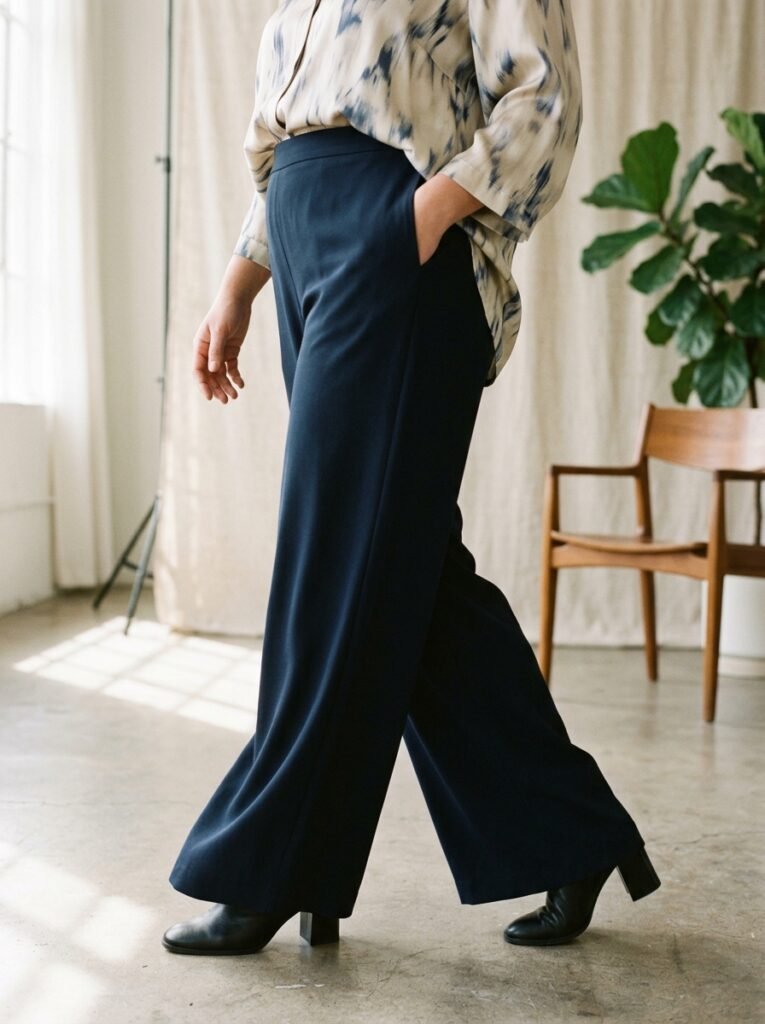
The legs often stand out as a strength for apple shapes, and showing them off frequently produces the strongest proportion-balancing result. Straight-leg or wide-leg trousers in a fluid fabric create long, clean lines through the lower body without adding bulk.
A-line and flared skirts that sit at the natural waist and skim outward through the hip balance a wider upper body by adding similar width below. This avoids the sharp contrast a pencil skirt creates by narrowing the hip well below the shoulder line.
Shorts and shorter skirts in a fabric that falls away from the body, rather than clinging, let apple shapes showcase the legs while keeping the thigh area visually light.
Outfits to Build
A flowy empire waist maxi dress in a solid dark or mid-tone colour offers one of the most complete single-garment solutions for an apple shape. It handles the upper body with a V or scoop neck, defines a high waist, and flows freely to the floor.
Wide-leg dark trousers paired with a V-neck wrap blouse in fluid fabric create a polished, proportion-balanced outfit. The wide leg echoes the upper body’s width while the V-neck draws the eye inward.
A longline open blazer over a fitted cami, tucked into straight trousers, builds a column effect through the torso. The open blazer adds a vertical line that skims rather than defines the midsection.
Outfits for the Pear Body Type
The pear body type carries more volume through the hips, thighs, and lower body relative to narrower shoulders. The waist is typically well defined. Visual balance for pear shapes usually comes from adding width and interest above the waist while choosing lower body silhouettes that flow from the hip rather than hug it.
What Works Best for the Upper Body
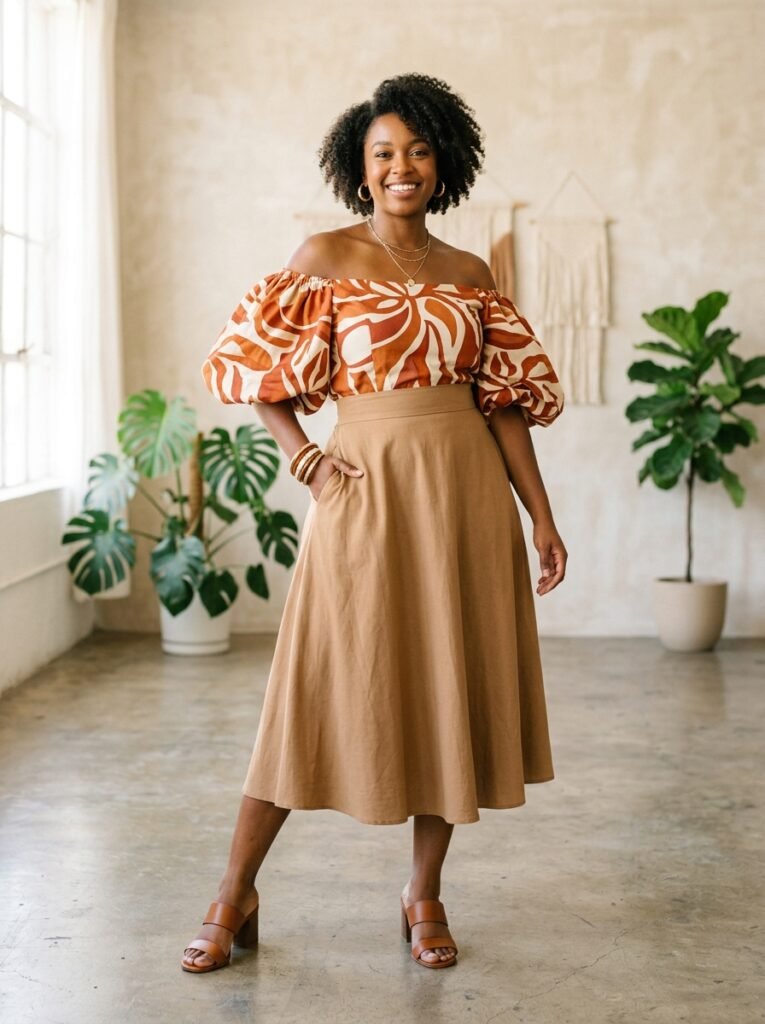
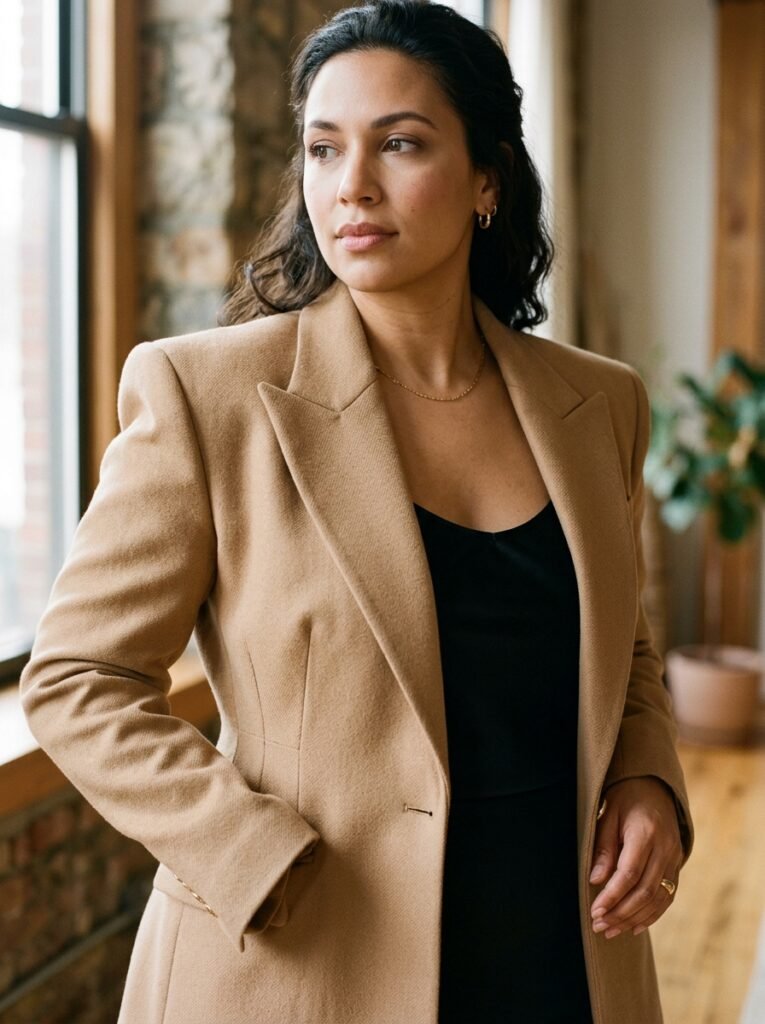
Adding visual interest, texture, or width to the shoulders is the primary balancing strategy for pear shapes. Boat necklines and off-shoulder styles that sweep horizontally across the shoulders work especially well, creating a wide line that matches or approaches the hip’s width.
Statement sleeves, puffed shoulders, structured blazers with padded shoulders, ruffle detailing at the neckline, and horizontal stripes or bold prints all add visual presence to the upper body. On a pear shape, these elements don’t overwhelm the silhouette because the lower body provides a counterbalancing foundation.
Bright colours, bold patterns, and eye-catching details make the strongest impact when placed above the waist. A brightly coloured structured top with a neutral lower half, or an embellished neckline with a simple skirt, draws the eye upward and creates balance.
What Works Best for the Lower Body
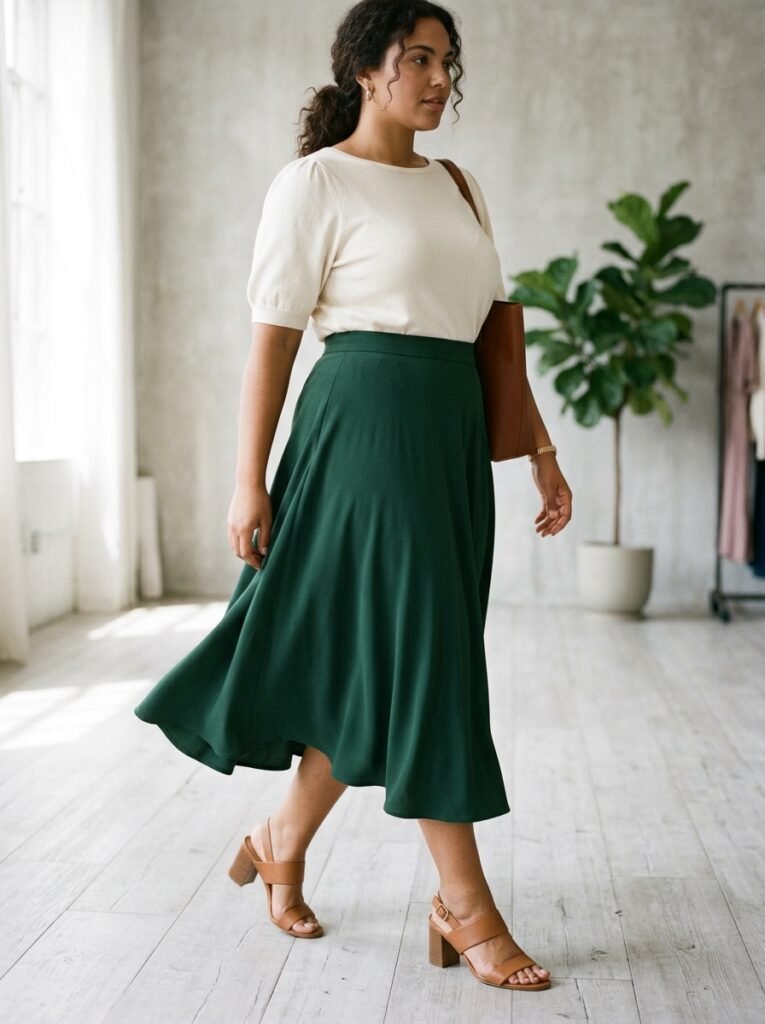
A-line and flared skirts stand out as the most universally flattering lower body silhouette for pear shapes. They flow outward from the waist through the hip instead of hugging the widest points, celebrating the defined waist without fitted tension across the hip.
Wide-leg trousers in fluid fabric work extremely well for pear shapes. The wide leg builds a straight vertical line from hip to floor, making the hip appear slimmer by proportion and the overall silhouette more balanced.
Darker colours and quieter textures below the waist keep visual weight low-key, balancing nicely against a more interesting upper body. This proportional dressing principle has held up for decades because it works reliably.
Wrap skirts and draped silhouettes that fall from the hip prove more forgiving than fitted styles. The drape creates movement rather than definition, which reads softer and more elegant on a fuller hip.
What to Approach With Care
Skinny jeans and very fitted trousers work beautifully on many pear shapes but can emphasise the contrast between upper and lower body width when paired with tops that add no volume above the waist. Pairing fitted lower body pieces with a more voluminous or structured top solves this rather than avoiding fitted pieces altogether.
Very flouncy, tiered, or gathered skirts add volume through the hip rather than flowing away from it, which can increase rather than reduce the hip’s visual presence. This works well when the goal is celebrating the hips rather than balancing them.
Outfits to Build
A bold structured blazer in a bright colour or strong print, worn over a neutral camisole and tucked into wide-leg dark trousers, delivers one of the most polished, balanced outfits a pear shape can build. Wide shoulders from the blazer, colour interest above the waist, and a long vertical line through the trousers work together.
An off-shoulder top in a warm colour, paired with a fluid A-line midi skirt in a complementary neutral, creates a beautifully balanced look, adding width above and flow rather than definition below.
High-waisted wide-leg jeans with a tucked-in horizontal-stripe top work well because the stripe adds upper body width while the wide leg creates a long, balanced line from waist to floor.
Outfits for the Hourglass Body Type
The hourglass body type has bust and hip measurements close in width, with a significantly narrower waist between them. Most tailored clothing, designed around a defined waist, tends to fit hourglass proportions naturally. Styling for this shape usually means celebrating the waist and balanced proportions without adding bulk that obscures the silhouette.
What Works Best
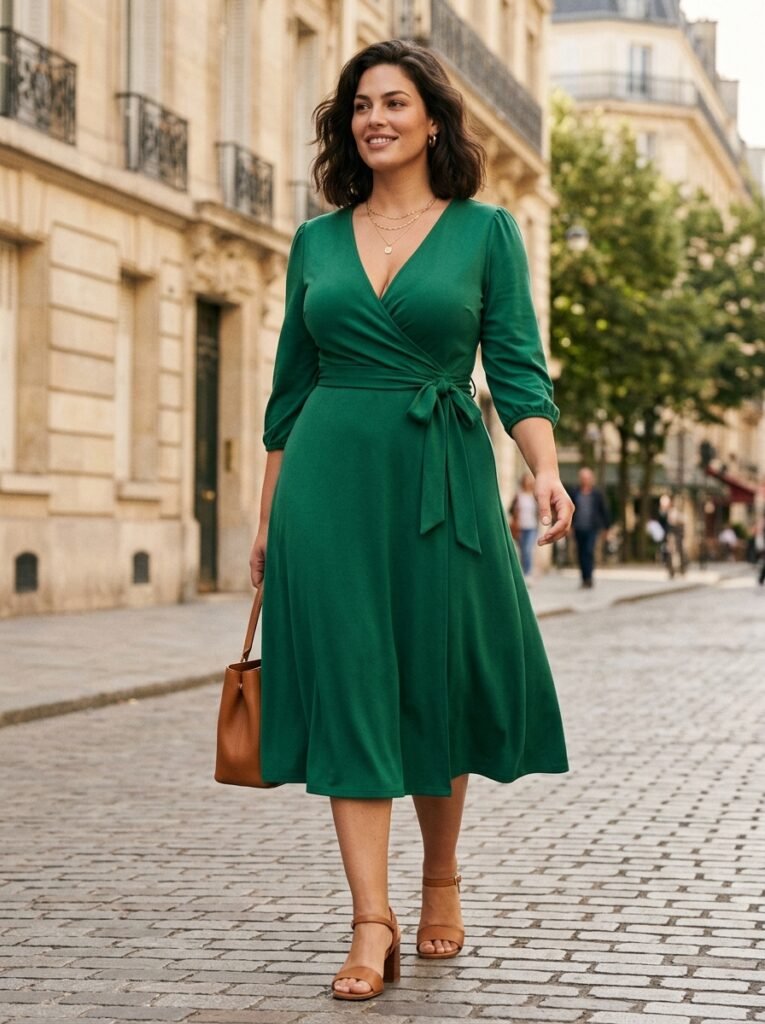
Wrap dresses were designed, in effect, for hourglass bodies. The adjustable wrap creates a V-neckline, defines the waist precisely, and flows from the hip to highlight the waist-to-hip curve. Nearly any fabric and length works well on this silhouette.
Fit-and-flare silhouettes, dresses and skirts fitted through the bodice and waist that flare from the hip, celebrate the hourglass shape more directly than any other cut. The flare begins exactly where the hip is widest, echoing the body’s natural line.
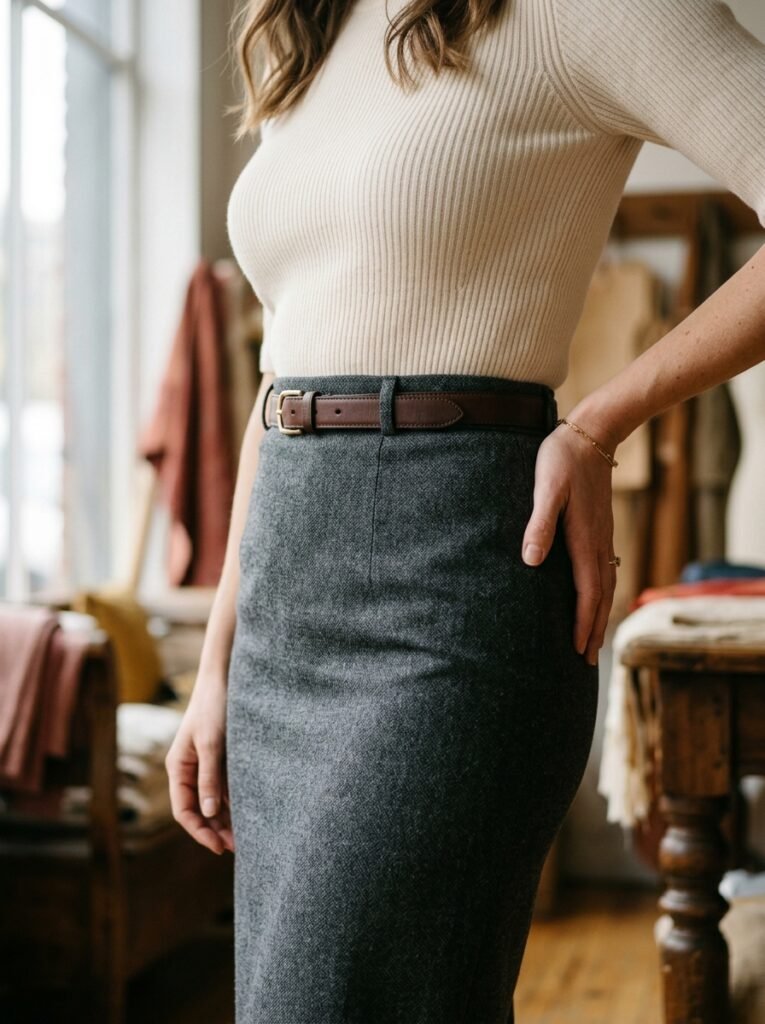
Belted styles offer a reliable tool for hourglass figures. Even a simple belt at the natural waist reveals waist shape instantly and creates the classic proportion this body type already has.
High-waisted bottoms work particularly well for hourglasses because they emphasise waist definition from below, letting the hip curve away from a nipped-in point and the outfit read as one proportional unit.
Bodycon and form-fitting silhouettes suit the hourglass figure well because equal bust and hip measurements let the garment stretch to accommodate both without pulling awkwardly at either end. Stretchy fabric performs better than rigid fabric here.
What to Approach With Care
Boxy, oversized tops and dresses without waist definition can obscure the hourglass waist and read as rectangular rather than curved. That’s not necessarily a problem for a casual or androgynous aesthetic, but it works against anyone hoping to celebrate this shape.
Very stiff, structured fabrics that resist movement can create fitting challenges at the hip and bust simultaneously, since both areas are fuller than the waist. Fabric with drape or stretch performs better than rigid fabric for hourglass proportions.
Horizontal banding across the hip or bust’s widest point, without corresponding waist definition, can interrupt the hourglass curve and create a boxy impression. A belt or defined waist elsewhere in the outfit corrects this immediately.
Outfits to Build
A wrap dress in a rich jewel tone stands as the quintessential hourglass outfit. It requires no additional styling decisions; the dress’s shape does the work.
A fitted ribbed knit top, tucked into a high-waisted A-line midi skirt with a thin belt at the waist, creates a polished, proportion-celebrating outfit for casual and smart-casual settings alike.
A tailored blazer belted at the waist, worn over a silk camisole and high-waisted wide-leg trousers, builds an elegant, streamlined look where the belted waist defines the outfit.
Denim That Works for Every Body Type
Denim deserves its own section because it comes up across all three body types, and the fit variables in jeans are specific enough to warrant direct guidance.
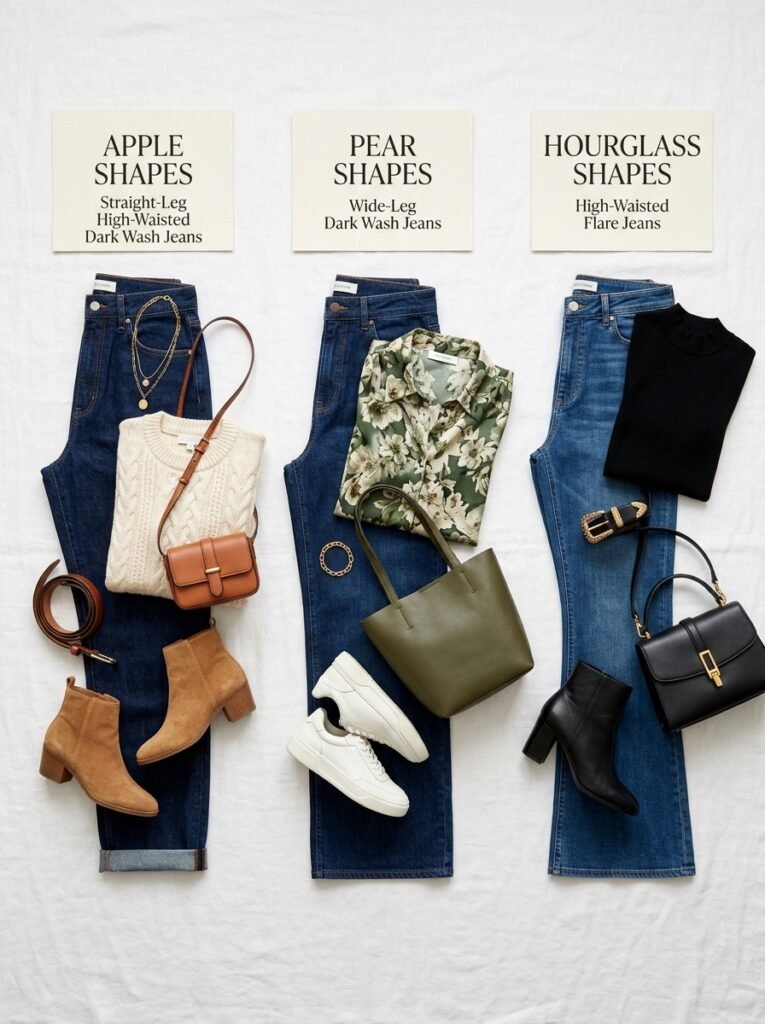
Apple shapes tend to look best in high-waisted styles with a straight or slightly wide leg. The high waist creates definition at the narrowest available point, and the straight leg builds a long, clean line. Stretchy fabric that doesn’t pull across the belly matters here; rigid denim creating tension through the midsection rarely sits well.
Pear shapes benefit from wide-leg or straight-leg jeans in a darker wash, which balance the hip by adding width through the lower leg that approaches hip width, producing a more vertical silhouette. Slim or skinny cuts work best paired with upper body elements that visually widen the shoulders.
Hourglass shapes suit high-waisted jeans in almost any leg width, since the high waist emphasises the natural waist. Bootcut and flare jeans celebrate the hip-to-waist ratio particularly well by adding width at the hem that echoes the hip.
Common Mistakes Across All Body Types
A handful of mistakes appear consistently regardless of body type and undermine the goal of dressing with intention.
Shopping for the label rather than the fit ranks high among them. A size on a tag reveals almost nothing about whether a garment will work on an individual body; fit is the variable that matters, not the number. Trying on multiple sizes and choosing whatever fits properly, rather than whatever matches a preferred number, remains one of the most useful habit shifts in personal style.
Buying pieces rather than outfits creates a similar dead end. A top that looks great on a hanger but pairs with nothing already in the closet stalls a wardrobe regardless of body type. Buying with specific outfit combinations in mind produces a wardrobe that actually functions, rather than a pile of pieces that never quite come together.
Avoiding an entire clothing category after one bad experience closes off options unnecessarily. One pair of wide-leg trousers that didn’t work doesn’t mean wide-leg trousers never work. Brand sizing, cut, and fabric vary enormously, and a different cut or fabric often produces an entirely different result.
Ignoring alterations as a tool leaves fit on the table. Most clothing fits a theoretical average rather than a specific body, and tailoring a piece that fits in one area but not another often costs less than finding something that fits perfectly off the rack. Hem adjustments, waist suppression, and taking in a shoulder seam are straightforward alterations that transform fit.
Frequently Asked Questions
How can someone identify their body type? Volume distribution relative to the shoulders, waist, and hips reveals the shape. Wider shoulders and midsection relative to the hips point to an apple shape. Wider hips than shoulders with a defined waist point to a pear shape. Similar bust and hip width with a notably narrower waist points to an hourglass shape. Anyone who doesn’t fit cleanly into one category isn’t alone, and principles from multiple sections likely apply.
Do styles outside a recommended body type still work? Absolutely. These guidelines describe what tends to work for specific proportions and goals, not fixed rules. The real value of body type guidance lies in explaining why something isn’t working or pointing toward options a person hadn’t considered, never in ruling out something she loves.
What clothing item works most universally across body types? High-waisted, well-fitted bottoms perform positively across all three body types because the high waist creates waist definition regardless of where the natural waist sits. A good pair of high-waisted wide-leg trousers, in a neutral colour and quality fabric, delivers one of the most consistent, polished results across shapes.
Does body type dressing still apply at plus sizes? Yes. The underlying principles connecting silhouette, proportion, and design to the body apply at every size. Apple, pear, and hourglass proportions occur across the full size range, and the same styling logic follows. What changes is sizing availability, which has expanded significantly across most retailers in recent years.
Which fabrics work best for each body type? Fluid, draping fabrics such as jersey, silk, crepe, and chiffon perform well across all three body types because they skim the body rather than cling or stiffen. Apple shapes benefit from fabric that moves freely through the midsection. Pear shapes benefit from structure above the waist and fluidity below. Hourglass shapes do well with fabric that has some stretch or drape, since both the bust and hip need accommodation.
The Bottom Line
Body type dressing, at its best, functions as a tool for understanding one’s own body well enough to make clothing choices that feel intentional rather than accidental. It isn’t a prescription or a limitation. It’s context.
The most stylish women aren’t the ones who follow body type rules most rigidly. They know their bodies well enough to recognise what works, experiment confidently with what doesn’t, and choose clothes based on what they love rather than what they’re supposed to wear.
The principles in this guide work best as a starting point rather than a rulebook. Testing them against real experience, keeping what proves useful, and setting aside what doesn’t turns dressing well into a practice rather than a destination. Readers building a wardrobe that photographs well without chasing every trend may also find 20 Outfit Ideas That Look Expensive Without the Price Tag useful for applying these same silhouette and fabric principles to everyday dressing. Anyone shopping for body-type-specific dressing ahead of a wedding season can also find focused guidance in Plus-Size Bridal Outfits That Truly Flatter.


[…] For readers who want more guidance on choosing silhouettes that work with their proportions, the guide to outfits for every body type breaks down flattering cuts by […]
[…] A matching printed co-ord, whether an oversized graphic check, a baroque or damask print in jewel tones, an abstract painterly print, or a retro geometric in bright colour blocks, works as a full set with chunky platform loafers and a micro bag pulled from one tone in the print. The set is already visually busy. So the shoes and bag stay in solid colours pulled directly from the print, rather than a separate pattern or an unrelated bright colour. That way they read as part of the same story instead of competing with it. Readers who want more guidance on choosing prints and cuts that work with their proportions can find it in the guide to outfits for every body type. […]
[…] a bulky sweater. Choosing a cut that suits your proportions, the same thinking behind guides on outfits for different body types, makes a bigger difference in a bottom-led outfit than it does when everything’s covered by […]
[…] can find extra advice on hem length and line in this petite styling guide, and the overview of outfits for every body type helps with matching proportions to different frames. Both approaches rely on the same idea: choose […]
[…] that is open and left to fall straight. Another person may like the full slouch. The approach in outfits for every body type is a useful reference for matching silhouettes to proportions without treating any shape as a […]
[…] will vary from person to person, and no single cut works for every frame. The outfits for every body type guide on this site covers how to match shapes to proportions, and the ideas here sit comfortably […]
[…] a wider look at proportion-based dressing, this guide to outfits for every body type covers more ground than jeans […]