
Hair trends move faster than most people can book an appointment, and 2026 has settled on a clear direction: cuts that hold their shape as they grow out. Bobs, layered shags, curtain bangs, and soft waves all share that quality. The difference between a haircut that works and one that frustrates rarely comes down to the cut itself. It comes down to upkeep — how often it needs trimming, how much heat it demands, and how it behaves eight weeks later. This guide covers 25 trendy hairstyles for women in 2026, with that maintenance reality attached to each one. A cut that suits the face shape but demands forty minutes every morning will not survive a working week, however good it looked in the salon chair.
1. The Soft Layered Butterfly Cut
The butterfly cut keeps long length while stacking shorter layers through the crown, producing volume without a real loss of hair. Its appeal is structural: the short layers do the framing, and the long layers keep the silhouette.
Grow-out is where it earns its keep. As the layers lengthen, the cut softens into a standard long layered shape rather than turning awkward, which buys about four months between salon visits. Anyone considering the shape in detail will find a fuller breakdown in this round-up of butterfly haircuts.

2. The Modern Italian Bob
The Italian bob sits between chin and collarbone with a soft blunt edge. That extra inch over a traditional bob matters more than it sounds — it clears the jaw and stays tuckable behind the ear.
Fine hair benefits most, since the blunt perimeter reads as density. The trade-off is precision: a blunt line shows every millimetre of uneven growth, so this cut needs trimming roughly every six to eight weeks to stay sharp.

3. Effortless Beach Waves
Beach waves have loosened considerably. The 2026 version leans undone rather than defined, which lowers the skill required and shortens the styling time.
Three routes produce the same result. A curling wand gives the fastest, most controlled version. Overnight braids on damp hair use no heat at all. Air-drying with a salt spray works on hair that already holds a bend. The braid method costs nothing and takes ten seconds before bed.

4. Curtain Bangs with Long Layers
Curtain bangs part at the centre and sweep outward, blending into the length instead of sitting separately from it. That blending is the entire reason for their staying power.
Blunt fringes reach an awkward stage within weeks. Curtain bangs simply become longer face-framing pieces, and many people stop trimming them entirely for a few months. The daily cost is real, though: they need shaping with a round brush most mornings, since they dry in whatever direction they land overnight.

5. The Textured Shag Cut
The shag builds choppy layers throughout with weight lifted from the crown. Wavy and curly hair suit it because the cut works with an existing pattern rather than imposing one.
Straight hair needs product to show the layers at all — without texture the shape reads as unfinished rather than deliberate. That single detail decides whether the cut looks intentional. Most stylists will say so at the consultation if asked directly.

6. The Sleek Glass Hair Look
Glass hair depends on a flat cuticle reflecting light in a single unbroken plane. A blunt cut supplies the surface; a straightener supplies the finish.
Temperature deserves attention here. Research on heat treatment of hair found that 140°C marks a critical threshold — below it, structural changes to the fibre stay largely reversible, and above it they become profound and irreversible. Many irons default well above that, so the setting matters more than the tool.
A single pass at a moderate temperature beats three passes at a high one. The shine comes from the flat cuticle, not from the heat.

7. The Romantic Loose Bun
The loose bun trades the tight, pinned version for volume and deliberate imperfection. Pulled-out strands at the temples and a slightly collapsed shape are the point.
Freshly washed hair fights this style constantly, sliding out of every pin. Second-day hair holds it without effort. Anyone planning the look for an evening event should skip the wash that morning.

8. The Layered Wolf Cut
The wolf cut sits between a shag and a mullet, with heavy layering at the crown and length kept at the ends. The 2026 version has softened noticeably, which widens its appeal beyond the people who wore the original.
Thick hair carries it best, since removing bulk is half the job. Fine hair can end up looking sparse at the ends, and the fix is asking the stylist to keep the perimeter blunt rather than feathered.

9. The Classic Blunt Bob
A blunt bob relies entirely on the line. There are no layers to disguise anything, so the cut has to be precise and the hair has to be healthy — split ends read immediately along a straight perimeter.
This is the highest-maintenance cut on the list in terms of salon frequency. Six weeks is the realistic interval before the line loses definition. It is also among the fastest to style at home, which is the trade most wearers accept.

10. The High Volume Blowout
Big, bouncy volume comes from tension and direction, not from product. A round brush pulls each section up and away from the head while the dryer follows behind it.
The step most people skip is the cool shot. Volume sets as the hair cools in position, so releasing a section while it is still warm undoes the work. Holding the brush in place for a few extra seconds is what makes the difference between an hour of body and a full day of it.

11. The Long Face-Framing Layers
Face-framing layers concentrate the shaping at the front and leave the back largely untouched. That limited scope is why the cut carries almost no risk — anyone unsure about layers can start here and go further later.
The layers remove weight where hair tends to sit flat against the cheeks. They also grow out invisibly, blending back into the length without a defined stage.

12. The French Girl Bob
The French bob falls just under the chin, usually with a light fringe and deliberately imperfect ends. Over-styling ruins it. The cut is designed to look slept-on.
That makes it one of the lowest-effort options on this list — air-drying is the intended finish rather than a compromise. It sits shorter than the Italian bob, which means it cannot be tied back, a genuine consideration for anyone who exercises or works in a kitchen. This guide to chic short hairstyles covers the bob and pixie variations in more depth.

13. The Messy Top Knot
The top knot has loosened along with everything else. Height at the crown and a few escaped strands replace the smooth, tight version.
It performs best on unwashed hair, which makes it the natural second- or third-day option. Placement matters for comfort: a knot sitting directly on the crown pulls at the hairline over a long day, and shifting it slightly forward or back relieves that.

14. The Soft Curly Lob
Curly hair shrinks, sometimes dramatically. A lob cut to the collarbone on wet hair can land above the chin once it dries, which surprises people every time.
Stylists who cut curls dry avoid the problem entirely, and it is worth asking whether a salon offers that. Internal layers keep the shape from turning triangular at the bottom, which is the most common complaint about curly bobs.

15. The Sleek Low Ponytail
Gathered at the nape, brushed smooth, finished with a strand of hair wrapped over the elastic. The whole thing takes under two minutes.
Tension is the thing to watch. A very tight ponytail worn daily puts sustained strain on the hairline, and switching the height between wears spreads that load. A soft-coated elastic causes less breakage at the gather point than a standard band.

16. The Wispy Bangs Trend
Wispy bangs use less hair than a blunt fringe and sit lighter on the forehead. Point-cutting creates the softness, which is why they look thinner than the amount of hair actually involved.
They suit anyone testing the idea of a fringe without committing to one. Growth of three or four weeks pushes them into eye-level territory, so a trim between full appointments becomes part of the routine.

17. The Boho Braided Crown
Braids wrapped around the head form a continuous band, which reads as romantic and holds firmly for hours. Weddings, festivals, and summer events all suit it.
Length is the constraint. Hair shorter than shoulder-length rarely reaches around the head, though a partial crown across the front achieves a similar effect. Pinning the braid at four or five points rather than two stops it drifting through an evening.

18. The Retro 90s Layers
Nineties layers bring back flipped ends and heavy body through the mid-lengths. The look depends almost entirely on blow-drying technique rather than on the cut.
A large round brush turning outward at the ends creates the flip. This is one of the more time-consuming styles here — twenty to thirty minutes for medium-length hair, and longer for thick hair. The payoff is that it holds its shape for two or three days.

19. The Natural Textured Afro
Shaping is what separates a well-cut afro from an overgrown one. The curl pattern supplies the volume; the cut supplies the outline, and the two need each other.
Moisture retention drives the daily result more than any styling step. Leave-in conditioner and a sealing oil hold definition through the day, and a satin pillowcase preserves it overnight far better than cotton, which draws moisture out of the hair.

20. The Half-Up Half-Down Waves
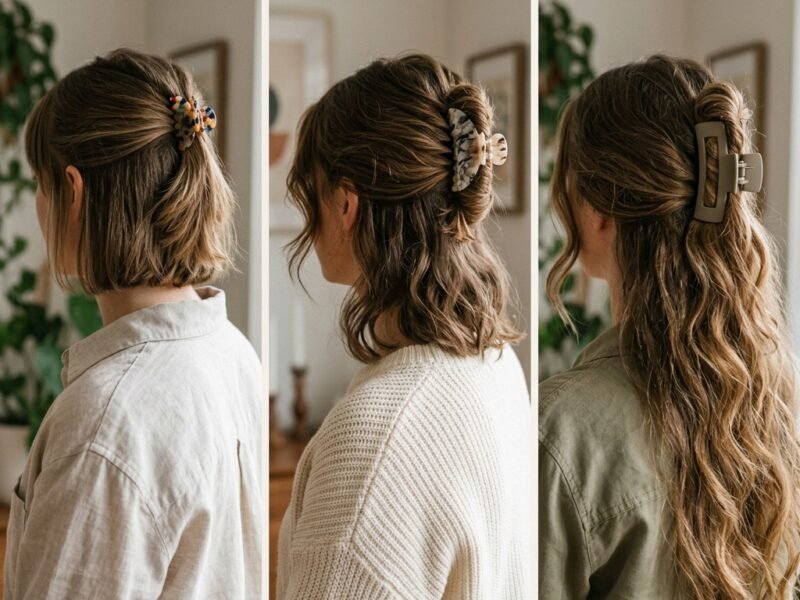
The top section goes back, the rest stays down, and soft waves run through both. It works across nearly every length and texture, which explains its permanence.
The one adjustment worth making is where the top section is gathered from. Taking it from ear to ear gives a fuller shape; taking it from further forward leaves too little hanging loose and unbalances the look.

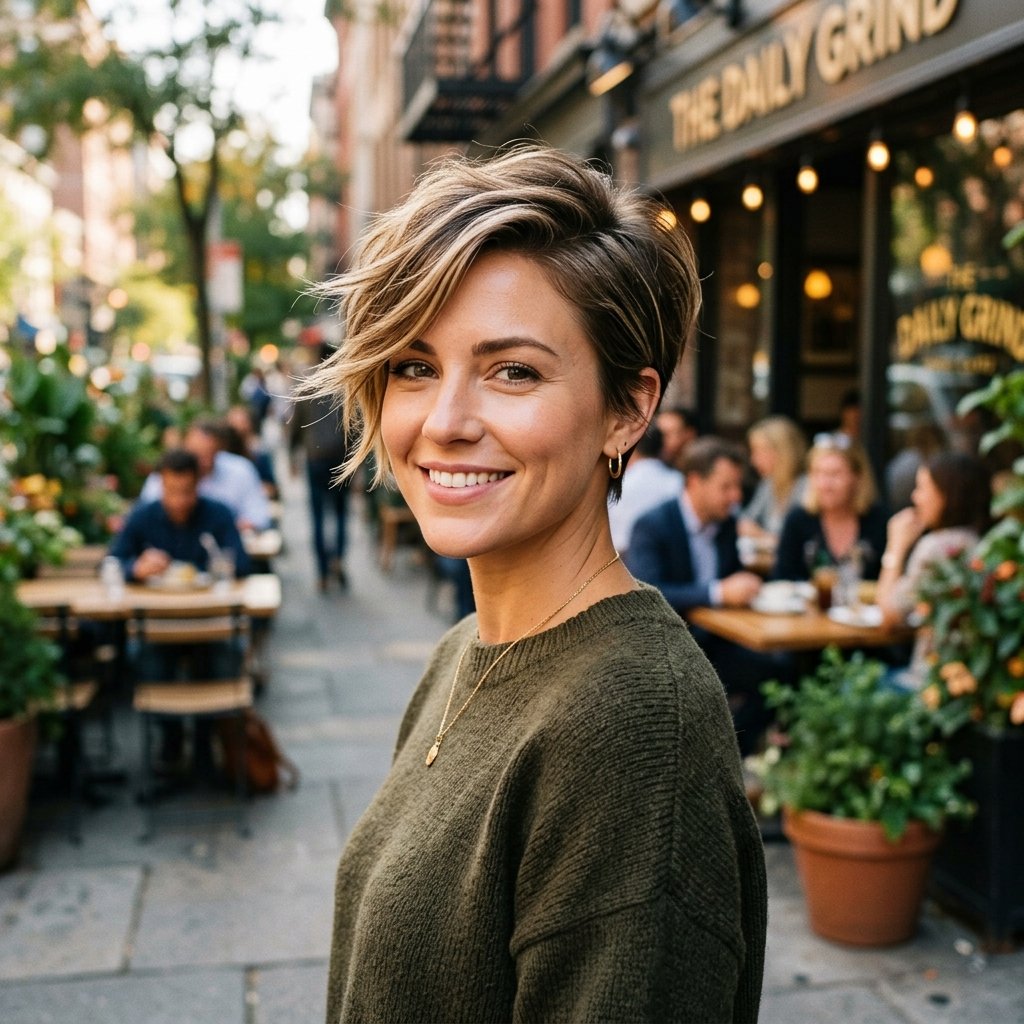
21. The Textured Pixie Cut
Choppy layers give a pixie movement and stop it lying flat against the head. Longer fringe sections have become standard, which allows the cut to be worn forward, swept, or pushed back.
Salon frequency is the honest downside. A pixie loses its shape within four to six weeks, faster than any other cut here. Daily styling in exchange runs to about two minutes with a small amount of paste.

22. The Glossy Hollywood Waves
Hollywood waves are set, not curled. Every section is wound in the same direction, pinned flat while it cools, and only brushed out at the end.
Brushing is the step that intimidates people, and skipping it leaves separate ringlets rather than a continuous S-wave. A soft bristle brush blends the curls into one another. Setting the waves an hour before an event, then brushing just before leaving, gives the cleanest result.

23. The Layered Medium Cut
Shoulder-length hair has one recurring problem: the ends flick outward where they hit the shoulder. Layers solve it by breaking up the weight at that exact point.
The cut suits straight, wavy, and curly textures alike, and it tolerates growth well. Anyone caught between growing hair out and cutting it short usually lands here, which is why it never really falls out of rotation.

24. The Bubble Ponytail
Elastics spaced down the length of a ponytail create segmented bubbles. Each section gets gently pulled outward after tying, and that pulling is what forms the shape.
Spacing the elastics evenly is the only real skill involved. Uneven gaps produce lopsided bubbles that no amount of adjustment fixes. Fine hair needs closer spacing to keep each bubble full.

25. The Long Mermaid Waves
Mermaid waves run long, loose, and continuous, usually with subtle highlights adding dimension through the curve of each bend.
A wide-barrel wand covers long hair faster than a narrow one and produces the softer wave the look calls for. Alternating the direction of each section prevents the whole head reading as one uniform curl, which is what separates waves from a set.

Conclusion
The hairstyles running through 2026 favour movement and texture over rigid structure, and most of them tolerate a degree of imperfection by design. That is good news for anyone without forty minutes to spare each morning.
Three questions narrow the choice quickly. How often will it need cutting? How much daily styling does it actually require? And what does it look like eight weeks from now? A blunt bob and a butterfly cut sit at opposite ends of that scale, and neither is wrong — they simply suit different routines. Bringing photographs to a consultation and asking directly about upkeep produces a better outcome than choosing on appearance alone.

[…] you are collecting ideas, the roundup of 25 trendy hairstyles for women in 2026 includes both a curtain bangs with long layers example and a separate wispy bangs entry, so you can […]
[…] you enjoy browsing different fringe options, the fringe-heavy looks in this roundup of trendy hairstyles for women in 2026 show curtain and wispy variations that make a helpful visual […]
[…] more ideas on cuts that hold their shape with very little effort, the 2026 hairstyle roundup is a good place to browse. Save the looks that feel relaxed and settled, then notice how few […]
[…] a little smoothing cream can look just as good. For softer, more styled looks, the ideas in our 2026 hairstyle roundup include loose waves and layered shapes that work well with knits and […]
[…] options like a half-up twist that pair well with a scarf, and the soft waves and layers in our 2026 hairstyle roundup suit a cream knit and green skirt […]