

The gap between a home blow-dry and a salon one rarely comes down to the style itself. It comes down to the finish. A salon result reads as polished because the hair surface is smooth, the hardware is hidden, and the part line is clean. The physical basis is straightforward. Academic reference work on hair structure notes that a healthy cuticle reflects light and limits friction between strands, and that this outer scale layer governs the lustre of the hair. Everything a stylist does at the end of an appointment serves that goal. This guide covers 24 simple everyday hairstyles and the finishing move that makes each one look done rather than improvised. Most take under five minutes. The finishing pass usually takes another thirty seconds, and it is the part people skip.

1. Classic Low Ponytail
The low ponytail takes about forty seconds. What makes it look salon-done is the wrapped strand covering the elastic.
Take a thin section from underneath the ponytail, wrap it around the base, and pin the end upward into the tail. Pinning downward lets it slip out by mid-morning. That single detail is the difference between a tied-back look and a styled one.

2. Loose Textured Waves
Waves look homemade when every section curls the same way. Alternating the direction of each section is the fix.
Wind one section toward the face, the next away, and repeat. The bends then interlock instead of stacking into a uniform curl. Leaving the last inch straight also stops the ends reading as ringlets. Layered cuts show this best, and this guide to soft layered styles covers which shapes carry movement.

3. Messy Bun
A messy bun collapses when the base is loose. Structure underneath, mess on top, is the working order.
Twist the ponytail firmly and secure it properly first. Only then pull pieces free at the temples and soften the outer edge. Building it loose from the start gives a bun that slides down rather than one that looks relaxed.

4. Half-Up Half-Down Twist
Proportion decides this one. Sections taken from just above each ear give the balance most people are aiming for.
Taking from further forward leaves too little hanging loose. Twisting away from the face rather than toward it also keeps both sections flat against the head, where twisting inward makes them stand away.

5. Sleek Straight Hair
Straight hair is where the cuticle argument shows most plainly. Nothing breaks up the light, so smoothness is the entire effect.
One slow pass at a moderate temperature produces more shine than three fast passes at a high one. Repeated passes roughen the surface, and a roughened surface scatters light instead of reflecting it. Serum belongs on the last few inches, where the hair is oldest and driest.

6. Braided Crown
Two braids crossing the top of the head form the crown. Thinning each braid before pinning is what keeps it delicate.
A thick braid sits proud of the head and reads bulky. Pinning at four or five points around the circumference rather than two stops the whole arrangement drifting backward over the day.

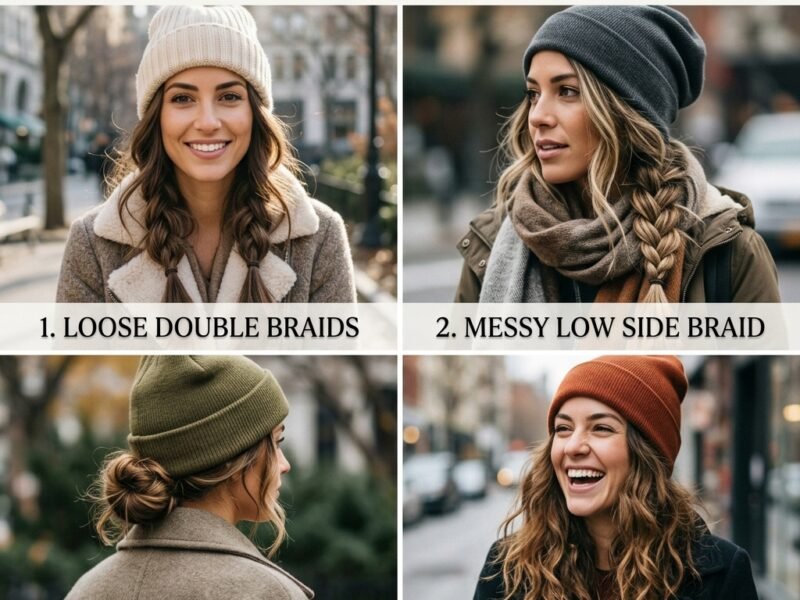
7. Side Braid
Swept over one shoulder, this braid can be done entirely by feel. No mirror required.
Widening it afterwards should start at the tail and move upward. Starting at the crown loosens the top first and the braid unravels before the ends gain any width. Fine hair benefits most from that widening, and this guide to braids for thin hair covers the prep that makes it hold.

8. Low Twisted Bun
Pin angle is the whole game with a low bun. Pins pushed straight in slide out under the weight.
Angling them back against the direction of the twist makes them grip. Three or four placed around the perimeter hold better than six crammed into the centre. Day-old hair also holds this shape considerably better than freshly washed hair.

9. High Ponytail
Height comes from where the hair is gathered, not from how tightly it is pulled. Tipping the head forward brings everything to the crown.
Two elastics stacked together hold that height without painful tension. A boar bristle brush passed over the surface flattens flyaways more effectively than adding more product, because it lays the cuticle down rather than coating it.

10. Soft Curtain Bang Waves
Curtain bangs need directing while damp. Once dry, they set in whatever direction they landed overnight.
A round brush pulling each side outward and slightly back takes about thirty seconds. Curling the lengths away from the face keeps everything moving in one direction, which is what makes the two elements read as a single style rather than two.

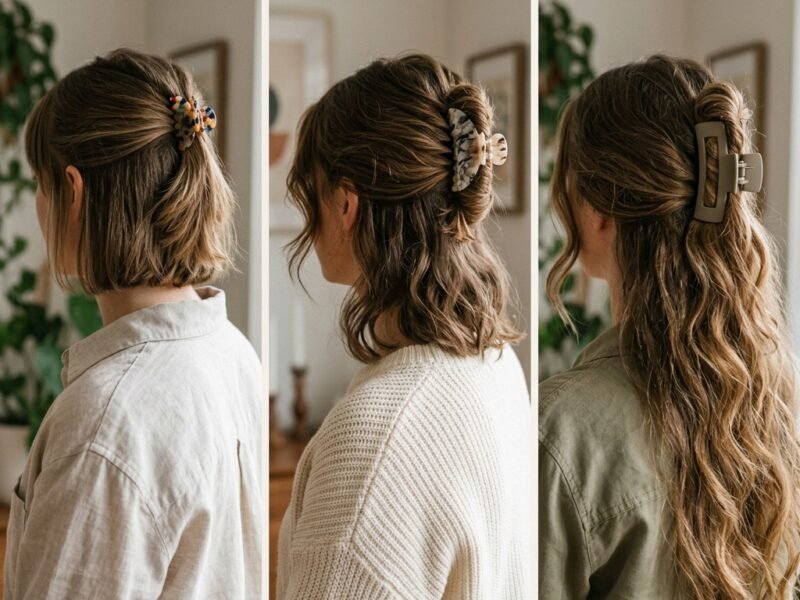
11. Simple Claw Clip Twist
Fifteen seconds, and the fastest option here. The twist is what people skip.
Gathering and clipping flat gives the clip nothing to bite into. Twisting upward first creates a column the teeth can grip. Clip size also has to match hair volume, since a small clip on thick hair fails within the hour regardless of technique.

12. Low Braided Ponytail
Braiding the tail of a ponytail keeps it controlled through a full day. Nothing tangles and nothing whips about.
Braiding loosely rather than tightly keeps strain off the ponytail base, which already carries the weight through one elastic. A small soft band at the end avoids the visible bulge a thick one creates in profile.

13. Straight Hair with Middle Part
A centre part draws attention to itself when it drifts. Precision matters more here than in any other style on the list.
Running a comb tail straight back from the bridge of the nose finds the true midpoint. Hair trained to a side part resists for several days, and combing it into position while damp retrains it far faster than restyling dry.

14. Textured Low Ponytail
Texture applied to the wrong place is the common error here. The visible part of a ponytail starts below the elastic.
Spray belongs at the mid-lengths, not the roots. Product at the roots only dulls the gathered section without adding anything to the tail. Three or four gentle tugs at the crown after tying create height; more than that collapses it.

15. Simple Side Part Blowout
Volume sets as the hair cools, not while it is hot. That is the step separating a blowout from a dry.
Holding each section on the brush for a few seconds after the dryer moves away locks the shape in place. Releasing while warm undoes it immediately. Directing the nozzle downward along the shaft also lays the cuticle flat, which is where the shine comes from.

16. Loose Everyday Braid
A braid worn at the back cannot be checked by feel, which is why it often comes out uneven.
Taking roughly equal sections each pass is the whole discipline. Uneven pickups produce a braid that widens and narrows down its length. Braiding on second-day hair also holds far better than on clean hair.

17. Half-Up Top Knot
Only the top section goes up, so the knot stays small and secure. Weight is never the problem here.
Taking too much into the knot creates the sliding issue a full bun has. A section running roughly temple to temple is enough, and it leaves plenty of length flowing underneath.

18. Twisted Side Ponytail
Two twists running into a side-gathered tail add detail to an otherwise plain shape.
Securing each twist with a small clear elastic before joining them stops both slipping. Doing everything in one motion is faster and usually means one side loosens within the hour. Gathering forward over the shoulder also keeps the tail clear of a chair back.

19. Natural Curly Puff
Curls flatten at the point where the band grips. A soft fabric tie compresses far less than a standard elastic.
Fluffing the puff from underneath rather than the top restores volume without disturbing the definition on the surface. Refreshing with a water and leave-in mix works better than adding fresh product to dry curls, which mostly sits on top.

20. Smooth Low Bun
The smooth bun is the most exposed style here. Every bump on the way back shows.
Brushing from the ends upward removes tangles without dragging them toward the gather point. A small amount of cream on the brush rather than on the hands distributes evenly instead of concentrating in one patch. Both steps lay the cuticle flat, which is what produces the polish.

21. Quick French Braid
The French braid adds hair to the outer strands as it travels, which is what keeps it flat against the scalp.
Equal pickups each pass produce an even braid. Unequal ones produce a braid that bulges and pinches. Widening it afterwards, again from the tail upward, softens the whole line and makes it look finished rather than functional.

22. Loose Shoulder-Length Waves
Shoulder-length hair flicks outward where the ends meet the shoulder. Waves disguise that; straight styling exposes it.
Concentrating the bend through the mid-lengths and leaving the ends softer keeps the shape from turning under abruptly. A light texture spray at the mid-lengths adds hold without the stiffness a hairspray leaves.

23. Elegant Hair Scarf Ponytail
A scarf tied over the elastic changes a plain ponytail for the cost of ten seconds.
Fabric decides whether it holds. Grosgrain and cotton grip a knot; satin and silk slip and need a double tie. Tying the scarf over the elastic rather than instead of it means the ponytail survives even when the bow works loose.

24. Effortless Air-Dried Hair
Air-drying depends almost entirely on timing. Product applied to soaking hair dilutes; applied to dry hair it sits on the surface.
Damp is the state that works. Scrunching upward encourages the natural pattern, and then leaving the hair alone until it dries fully is the harder half. Touching curls while they dry breaks the clump, which is what causes frizz rather than definition.

Conclusion
A salon finish comes from four moves repeated across almost every style here. Hide the hardware. Lay the cuticle flat rather than coating it. Let shapes cool before releasing them. And clean up the part line, which is the first thing the eye reads.
None of those add more than thirty seconds. The 24 simple everyday hairstyles above each rely on one or two of them, and the entries name which. Two further habits carry across the whole list. Second-day hair grips where freshly washed hair slides, so the wash schedule matters as much as the styling. And product placement follows the age of the hair — mid-lengths and ends, not roots, because that is where the surface is roughest and the shine is hardest to hold.

Leave a Reply