
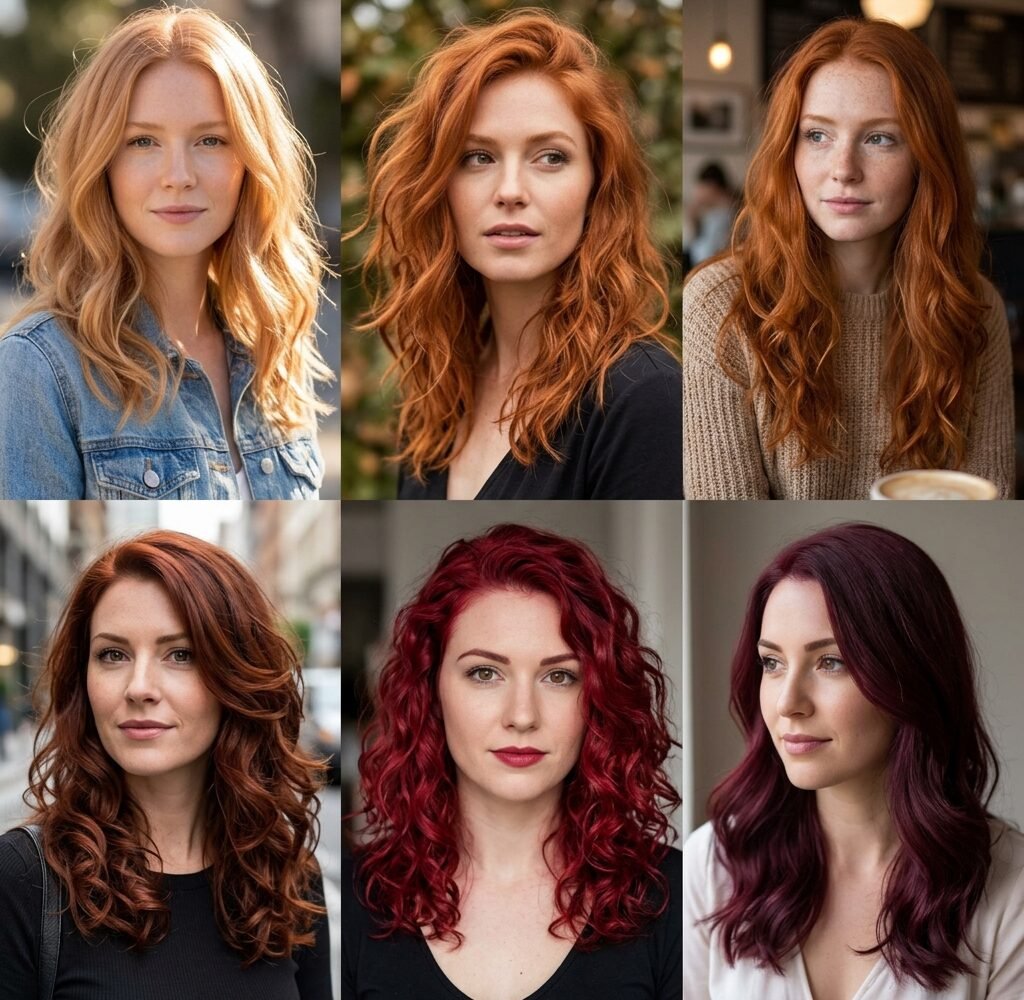
Ask ten people to picture red hair and you will get ten different pictures. One sees a pale, peachy glow in afternoon sun. Another sees a bright copper penny, and a third sees a dark wine shade that looks almost brown until it catches the light. All of them are right, because red covers more ground than any other hair color family.
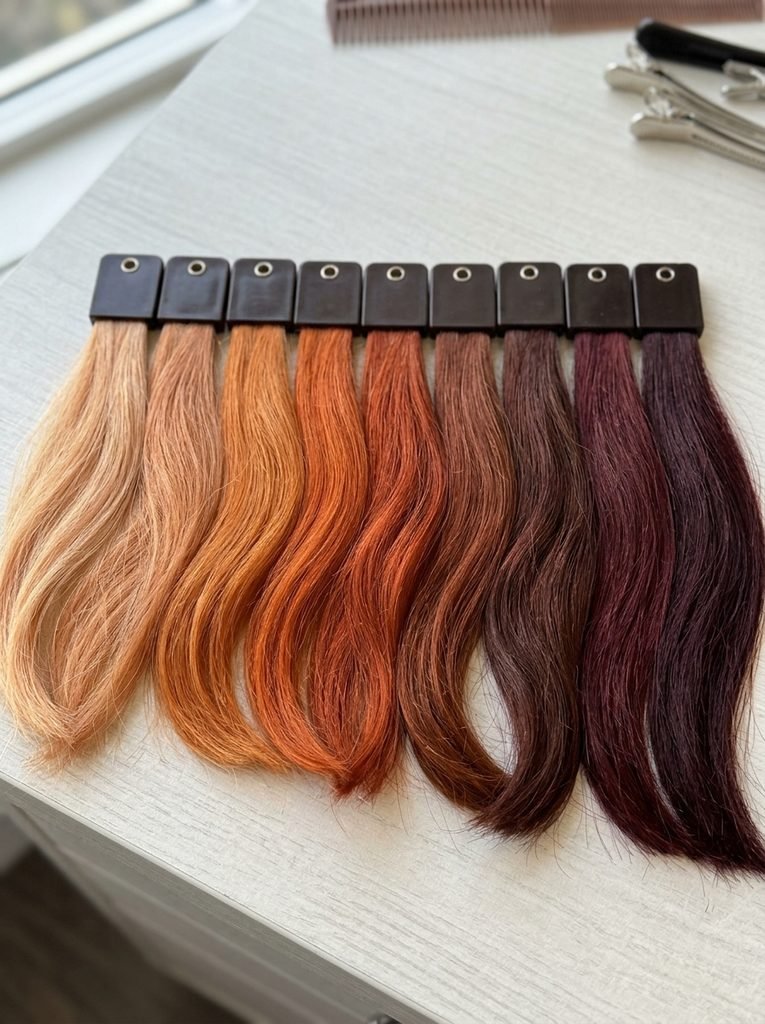
That range is what makes red tempting and a little intimidating. Shade names blur together on Pinterest boards, and the same photo can be labeled copper, ginger or auburn depending on who posted it. This guide lays the shades out in a single line, from the softest strawberry blonde to the deepest burgundy, so you can see where each one sits and what it asks of you.
Along the way you will find notes on starting colors, placement, upkeep and the cuts that show red off. Everything here is a general styling observation rather than professional color advice, since results depend on your natural shade, your hair’s history and a colorist’s judgment.

Two Dials That Explain Every Red
It helps to think of red as controlled by two dials. The first is depth, meaning how light or dark the color sits. The second is tone, meaning how golden and orange the red looks compared with how cool and violet it looks.
Turn depth toward light and tone toward gold, and you land on strawberry blonde or copper blonde. Move toward dark and cool, and you arrive at mahogany and burgundy. Shade names matter less than where a color falls on those two dials, which is also a handy way to describe what you want to a colorist.
| Shade | Depth | Tone | Overall impression |
|---|---|---|---|
| Strawberry blonde | Light | Warm, peachy | Soft blonde with a pink-gold glow |
| Copper blonde | Light to medium | Warm, golden orange | Bright and glossy, like polished metal |
| Ginger | Medium | Warm orange | Lively and vivid, the most orange of the group |
| Copper | Medium | Warm orange-red | Richer than ginger, brighter than auburn |
| Cinnamon brown | Medium to dark | Warm red-brown | A brunette with a spiced red glow |
| Auburn | Medium to dark | Warm red-brown | Grounded and rich, more brown than copper |
| Mahogany | Dark | Red with a cool edge | Deep red-brown with a hint of plum |
| Burgundy | Dark | Cool red-violet | Wine-like and dramatic in direct light |
The Lightest Reds: Where Red Meets Blonde
Strawberry Blonde
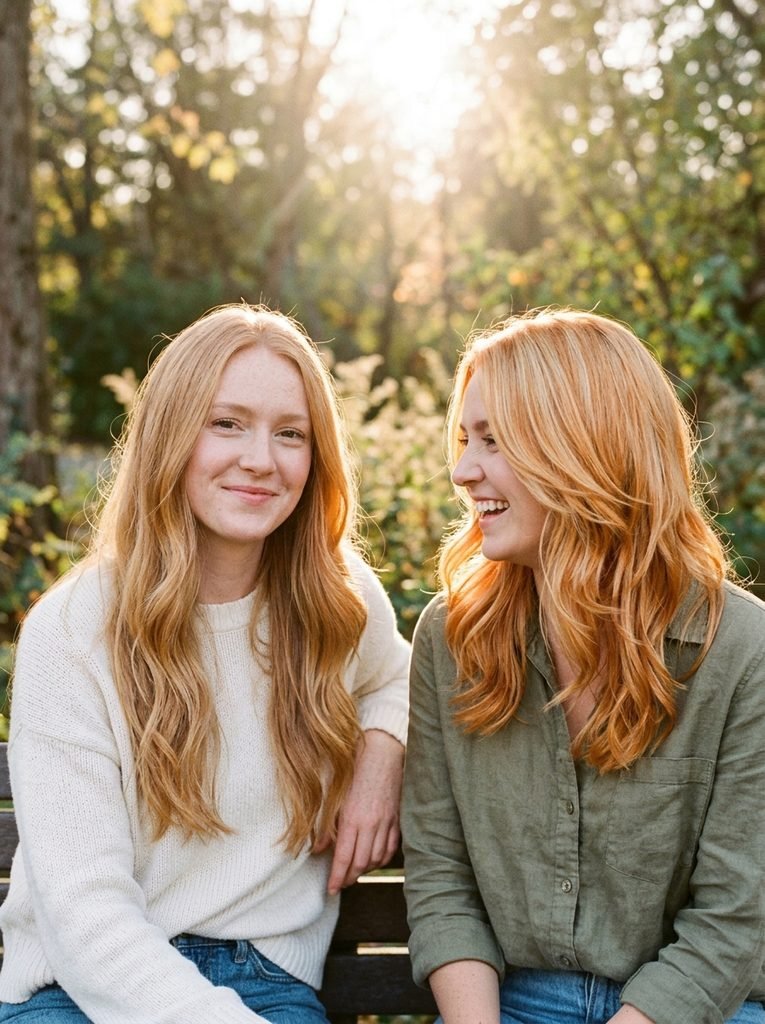
Strawberry blonde is blonde with a breath of red running through it. In daylight it reads as a warm, peachy gold. Indoors it can look almost like a sun-kissed blonde, which is why many people treat it as the gentlest way into the red family.
The finish depends on how much pink or gold sits in the mix. A pinker version looks soft and rosy against fair skin, while a more golden one looks like honey with a copper edge. Pale shades show every change in light, so expect the color to shift from room to room.
Copper Blonde
Copper blonde moves a step further. It keeps the light, bright base of blonde but pours in more orange and gold, giving the hair a metallic sheen when it catches light. Think of the color of a freshly polished kettle rather than a pale peach.
This shade often looks best with some dimension. A flat, single tone can read as slightly orange, while a mix of lighter and deeper copper pieces gives the hair movement. If you like the idea of red but want to keep a sunny, lived-in feel, copper blonde sits comfortably in that space.
The Middle Ground: Ginger, Copper and Cinnamon
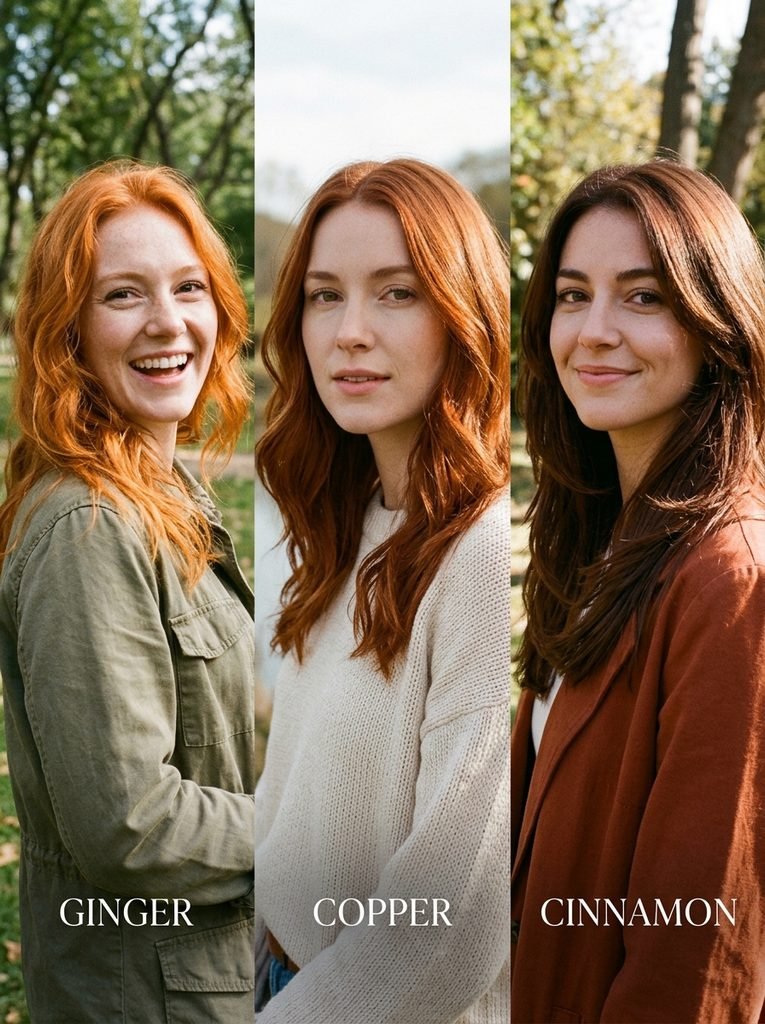
Here the red stops being a hint and becomes the main event. These are the shades most people picture when they think of classic red hair, and they share a warm, orange-leaning character.
Ginger is the most orange of the three. It looks lively and bright, and it tends to photograph with a lot of energy. Copper sits slightly deeper and more refined, with a gleam that catches light across the lengths. The two overlap enough that names get swapped constantly, so a reference photo is more useful than a label.
Cinnamon brown is the quiet cousin. It is essentially a brunette shade with a red warmth running through it, noticeable in sunlight but subtle in a dim room. If a full copper feels like too much of a leap, cinnamon offers a wearable test run. Color brands often suggest that copper tones suit people with peach or golden undertones, though personal taste usually matters more than any chart.
Auburn and Mahogany: The Wearable Dark Reds
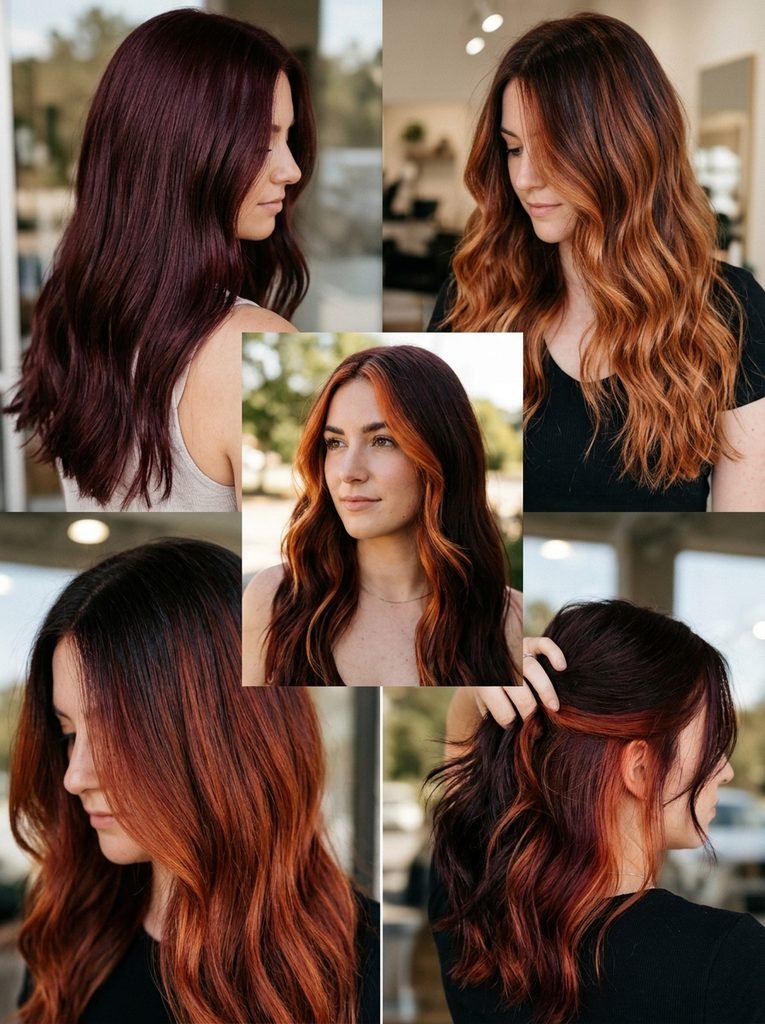
Auburn is the shade that many people find easiest to live with. It blends the warmth of brown with hints of burnt orange or red, which is why Wella’s guide to red hair colors frames it as the more muted option for anyone who finds bright red too bold. In soft light it can pass for a natural brunette shade, and in sunlight the red comes forward.
Auburn also varies more than people expect. A lighter, golden version leans toward copper. A deeper, browner version sits near chestnut. The one thing the versions share is that the red is part of the brown rather than sitting on top of it, which keeps the whole effect grounded.
Mahogany takes auburn a step darker and cooler. Imagine polished wood with a faint plum undertone. It looks dense and glossy, and it suits people who want richness without brightness. In low light it reads almost brown, then flashes red when you turn toward a window.

Burgundy and Wine: The Deepest End
Burgundy is where red turns cool. Retail color brands often describe it as a mix of cool red and dark violet, and that description matches what you see: a wine tone with a purple glint that deepens in shadow. This breakdown of red shades from a hair care brand pairs burgundy with medium to deep skin tones, though again, preference should lead.
Within burgundy there is a spectrum of its own. A black cherry version sits very dark and looks nearly black indoors. A plum-leaning burgundy shows more violet. A true wine shade sits in the middle, with a clear red heart. Because these colors are dense, they reflect light as a sheen rather than a color, which makes them look especially good on smooth, glossy hair.
Burgundy suits anyone who wants a noticeable change without fully committing to a bright red. In office light it can look reserved, and outdoors it looks richer than most people expect.

What Your Starting Color Means for the Result
Natural or current hair color changes which reds are easy and which take more steps. This is general guidance rather than a promise, and previously colored hair behaves differently from untouched hair, so a colorist’s assessment always comes first.
Blonde hair is the most flexible base for light reds. Strawberry blonde and copper blonde need relatively little change. Very light hair can struggle to hold deep reds evenly, since it lacks the underlying warmth darker hair carries, and a colorist may add warmth first so the shade does not look flat.
Light to medium brown hair sits close to copper, cinnamon and auburn, which often means a smoother path to those shades. The red adds warmth without a big shift in depth.
Dark brown hair leans naturally toward auburn, mahogany and burgundy. Brighter coppers on a dark base commonly need lightening first, which adds steps and extra upkeep.
Black hair often shows deep reds as a glint rather than a bold change, especially burgundy and black cherry. Brighter shades usually call for lightening, so many people begin with a subtle red and build from there.
Where to Place the Red
Color placement changes the character of a shade as much as the shade itself. The same copper can look quiet or striking depending on where it sits.
All-over color gives the strongest, most uniform look. It suits shades like burgundy and mahogany, where a solid, glossy finish is the point.
Balayage places the red in soft, hand-painted sweeps, often deeper at the roots and brighter toward the ends. It tends to grow out gently, which makes it a popular choice for copper and auburn.
Face-framing pieces brighten only the front sections. A few copper ribbons around the face against a darker auburn base add light exactly where the eye goes first.
A root melt, where a deeper shade blends into the roots, softens the line that appears as hair grows. It suits bright reds on dark bases, where regrowth would otherwise show quickly.
A peekaboo layer hides color underneath, so red appears only when the hair moves or is pinned up. It is a low-risk way to try a bold shade like copper or burgundy without wearing it all day.
Red Fades First, So Plan for It
Red shades are widely described as the quickest to fade, and anyone considering the color should plan for that from the start. Bright coppers in particular can drift toward a warmer, more orange tone over time, while deep reds can look flatter and less glossy.
A few habits slow the process. Color-safe shampoo and cooler rinse water help preserve pigment, and a heat protectant guards against styling heat. Many people also use a color-depositing conditioner between appointments to top up the tone, and colorists often offer a gloss that refreshes shine and shade.
The practical point is to treat red as a color with a maintenance rhythm. Ask a colorist how often a refresh makes sense for your chosen shade, since it varies with hair type, wash frequency and how bright the red is.
Cuts and Textures That Show Red Off
Red looks different depending on the shape it sits in. Layered cuts catch light at the edges of each layer, so dimension shows up easily. A choppy shag haircut creates that effect, with copper and auburn picking up different shades at every layer.
A lob haircut shows color as a clean block, which suits glossy burgundy and mahogany. The solid line makes the sheen the star. Long, loose waves spread the color across more surface, and a beach wave hairstyle shows off the way balayage shifts from deep roots to brighter ends.
Very short cuts tend to read as a single concentrated tone, so a saturated shade can look especially bold. Longer hair has room for gradient, which suits softer transitions like strawberry blonde into copper.
Why Photos Make Red Hard to Judge
Red is the shade most easily distorted by a camera. Warm indoor bulbs push everything toward orange. Filters can boost saturation until a soft auburn looks fiery. Flash can flatten the sheen that makes burgundy look rich.
Before saving a reference photo, check it in more than one light if you can. Daylight is the most honest, so look for images taken near a window or outdoors. Bring two or three photos to a colorist, including one that shows what you do not want, since a shade you dislike often explains your taste better than one you love. Describing the depth and tone you want, using the two dials from earlier, gives a colorist something precise to work from.
Quick Answers
Which red looks the most natural? Auburn and strawberry blonde tend to read as the most natural, because they sit close to shades hair can grow in.
Can I try red without a big commitment? Glosses, semi-permanent color and peekaboo layers are lighter ways to test a shade. Results vary with your base color, so a colorist can say what is realistic.
Do red shades suit every skin tone? There is no fixed rule. Warm coppers are often paired with peach or golden undertones, and cooler burgundies with deeper or olive tones, but many people break those pairings happily.
Why does my red look brighter or flatter over time? Pigment gradually washes out, which can shift the tone warmer or leave it duller. A gloss or color-depositing conditioner is a common way to rebalance it.
Choosing a Red You Can Live With
The best red is rarely the most dramatic one on the board. It is the shade that fits your starting color, your patience for upkeep and the way you actually wear your hair. A soft strawberry blonde, a lived-in auburn and a glossy burgundy all count as red, and each asks for a different kind of commitment.
Pick the end of the spectrum that matches your mood, collect a few daylight photos, and let depth and tone guide the conversation. The rest is a matter of taste.



Leave a Reply