
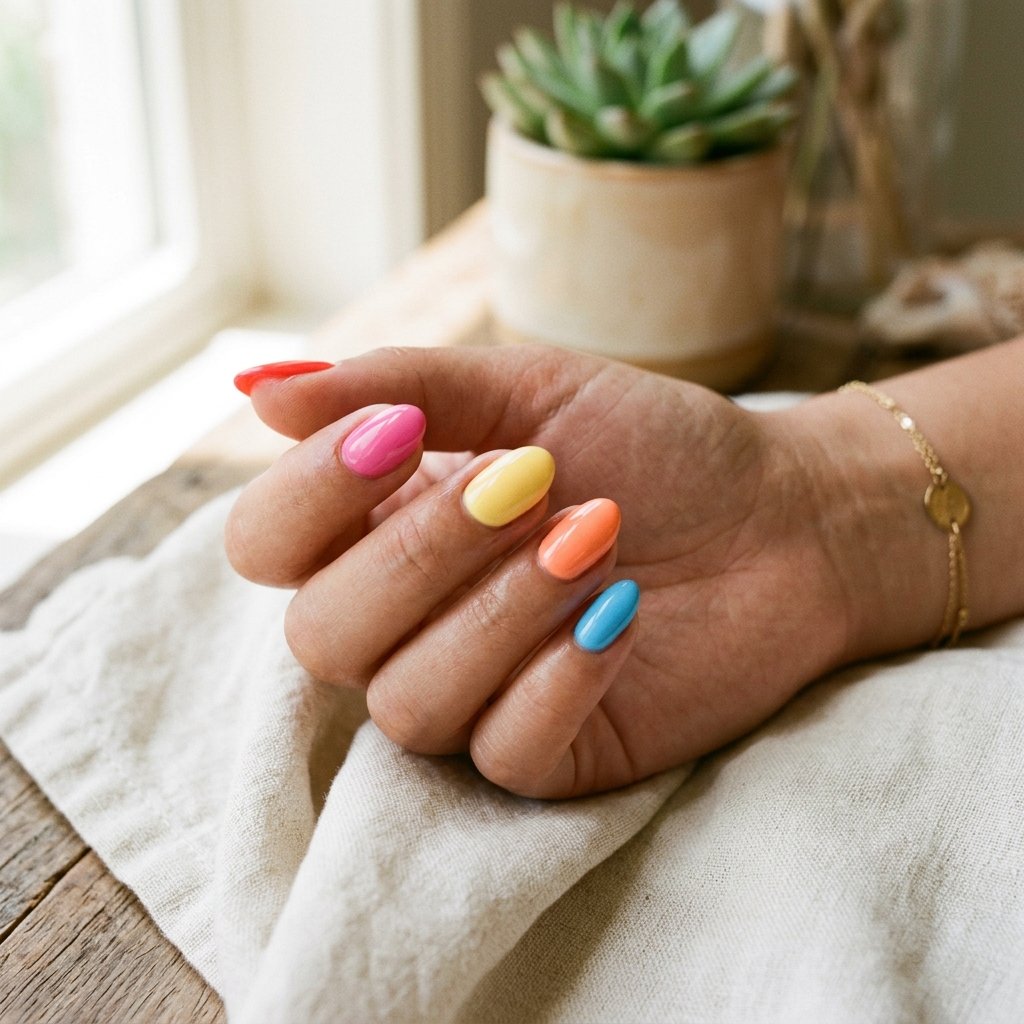
Most shoppers pick nail polish the way they pick paint for a wall: a colour catches the eye, it comes in the right finish, and that settles it. The results are perfectly fine. But nail technicians and beauty editors whose manicures always look exactly right, rather than merely fine, tend to work from a different starting point: how colour interacts with skin tone.
The right nail colour reflects light back toward the hand in a way that makes skin look more alive and more rested. The wrong colour does the opposite, creating a contrast that can make surrounding skin look dull or washed out. That difference has little to do with polish quality or application skill. It comes down to understanding which colour families work with a given skin tone and which ones fight against it.
This guide breaks the topic down by skin tone, starting with the undertone identification that makes the rest of the advice useful, then moving into specific recommendations for fair, light-to-medium, olive, medium-to-deep, and rich dark skin. A final section covers colours that cross skin tone lines and work well for almost anyone.
Understanding Undertones Before Choosing Nail Colour
Skin tone and skin undertone are different things, and the recommendations in this guide operate primarily on undertone rather than overall lightness or darkness. Getting the undertone right is what makes a colour look brilliant rather than just acceptable.
Undertone refers to the colour cast beneath the surface of the skin, one that stays fairly consistent regardless of tanning or seasonal changes to the surface tone. Dermatology has historically classified skin using scales like the Fitzpatrick system, built around sun sensitivity rather than colour itself. More recent research, including Google’s peer-reviewed work on the ten-shade Monk Skin Tone Scale, has shown that skin tone spans a far wider spectrum than older six-point systems captured, which is part of why this guide treats fair, light-to-medium, olive, medium-to-deep, and rich dark skin as distinct categories rather than folding them into a handful of broad groups.
Within that spectrum, undertone falls into three broad categories: warm, cool, and neutral. Warm undertones carry a yellow, peachy, or golden quality. People with warm undertones often find gold jewellery flatters more than silver, and that orange, yellow, and warm red nail families sit well against their skin.
Cool undertones carry a pink, red, or bluish quality. People with cool undertones often find silver jewellery flatters more than gold, and that blue, purple, and cool pink nail families work well against their skin.
Neutral undertones sit between the two and can wear both warm and cool colour families, generally looking best in shades that are not extreme in either direction.
Identifying undertone is straightforward: checking the veins on the inside of the wrist in natural daylight reveals green or olive veins for warm undertones, blue or purple veins for cool undertones, or a mix for neutral. Holding gold and silver fabric against the face works as a second check; whichever makes the skin look more awake indicates the matching undertone.
Nail Colours for Fair Skin
Fair skin ranges from the palest porcelain to a light complexion with visible warmth or pinkness. The specific undertone within fair skin determines which direction the most brightening colours fall.
For fair skin with cool or pink undertones:
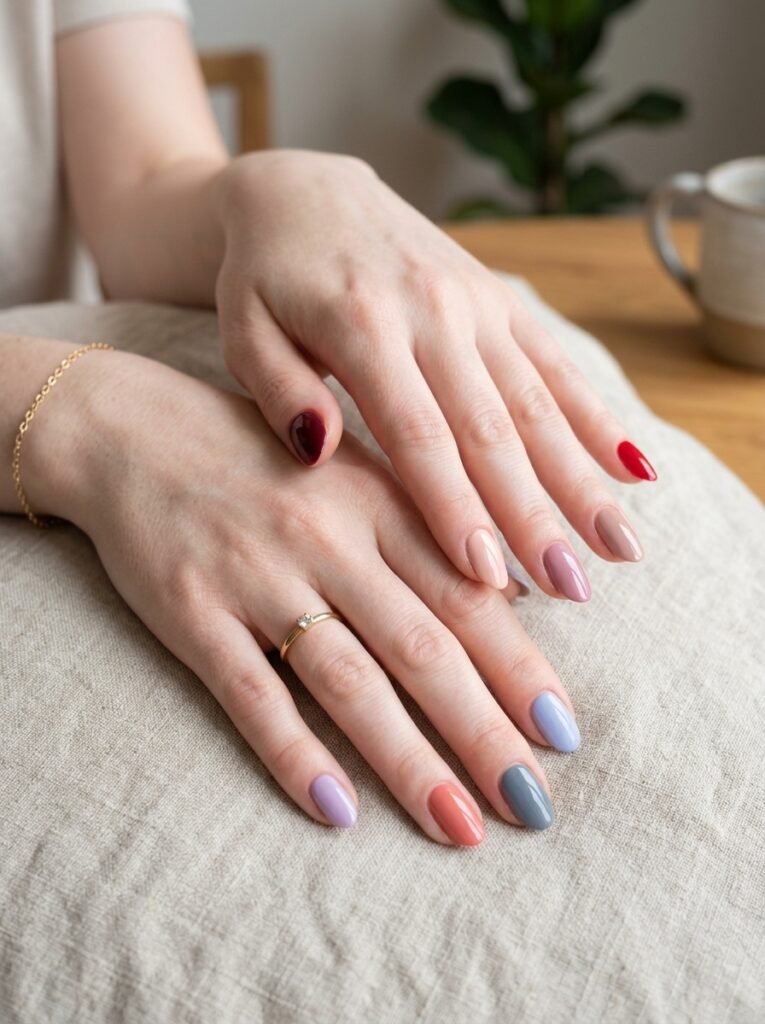
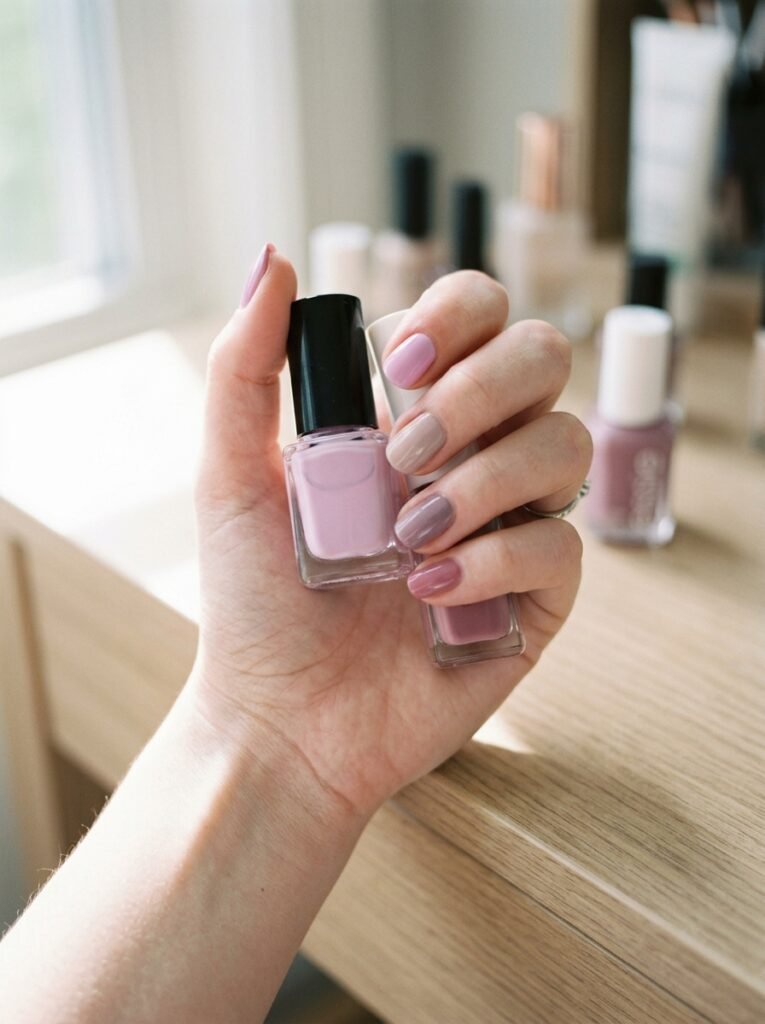
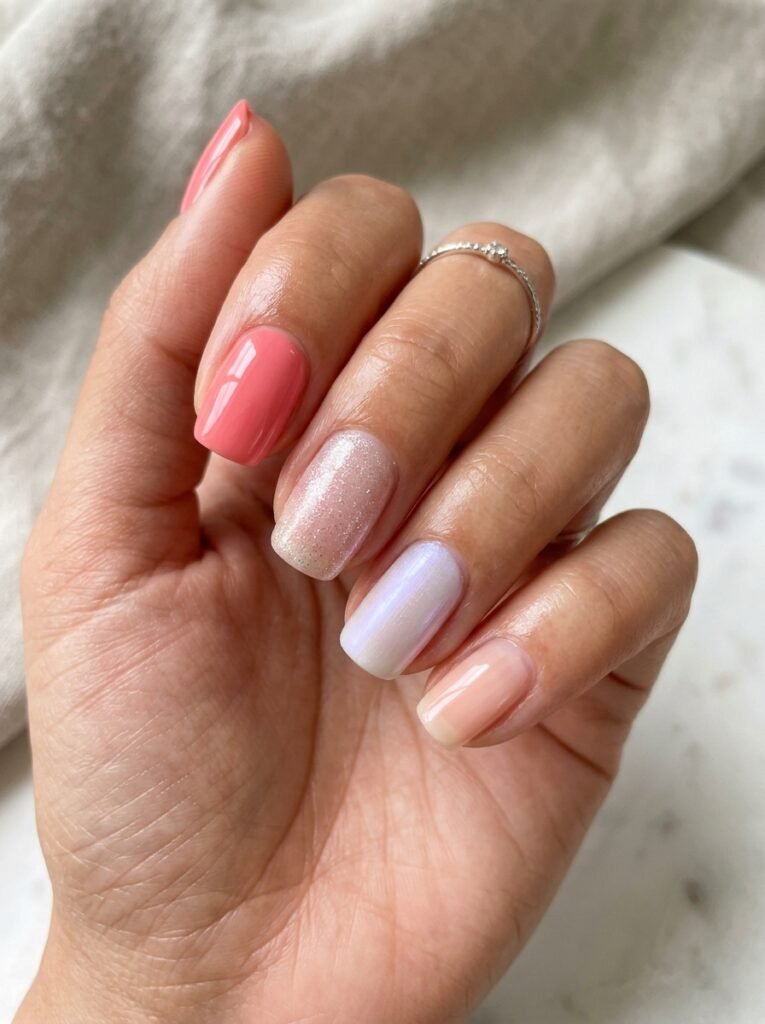
A sheer nude in a pink-white base is among the most universally brightening choices, creating a clean, polished impression without any jarring contrast. Choosing a nude slightly pinker or cooler than the skin, rather than an exact match, avoids the illusion of bare nails.
Soft lavender and lilac are extraordinarily flattering because the purple-adjacent tone reflects blue and pink light that complements the undertone. A pale icy lavender against very fair cool-toned skin brightens in a way warm tones on the same skin cannot match.
Pale baby pink remains a classic because it echoes and amplifies the pink undertone already present, creating a cohesive, luminous effect. Soft blue and slate tones offer a more directional option: a dusty slate or soft periwinkle catches light and creates a defined, elegant contrast against fair skin.
For fair skin with warm or golden undertones:
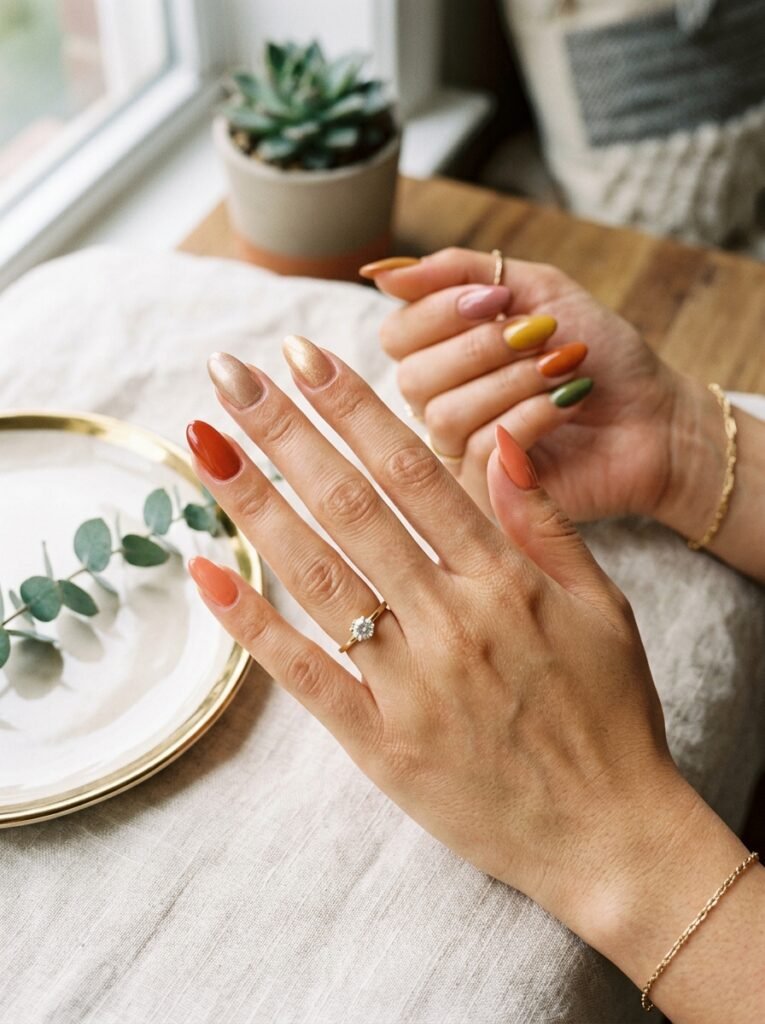
Peach and warm nude tones are the most naturally brightening choice. A sheer peach or slightly orange-tinted nude sits against warm undertones in a way that reads as luminous rather than pale, drawing out the existing warmth in the skin.
Warm, orange-adjacent coral in a cream finish brightens warm fair skin more effectively than most other colour families. Warm champagne and golden beige create a luxurious effect by reflecting gold-adjacent light back toward the hand, remaining refined while genuinely skin-brightening.
Nail Colours for Light to Medium Skin
Light to medium skin covers a wide range of complexions with warmth, neutrality, or coolness, often with more visible natural colour. This range has the most flexibility across colour families.
For light to medium skin with cool undertones:
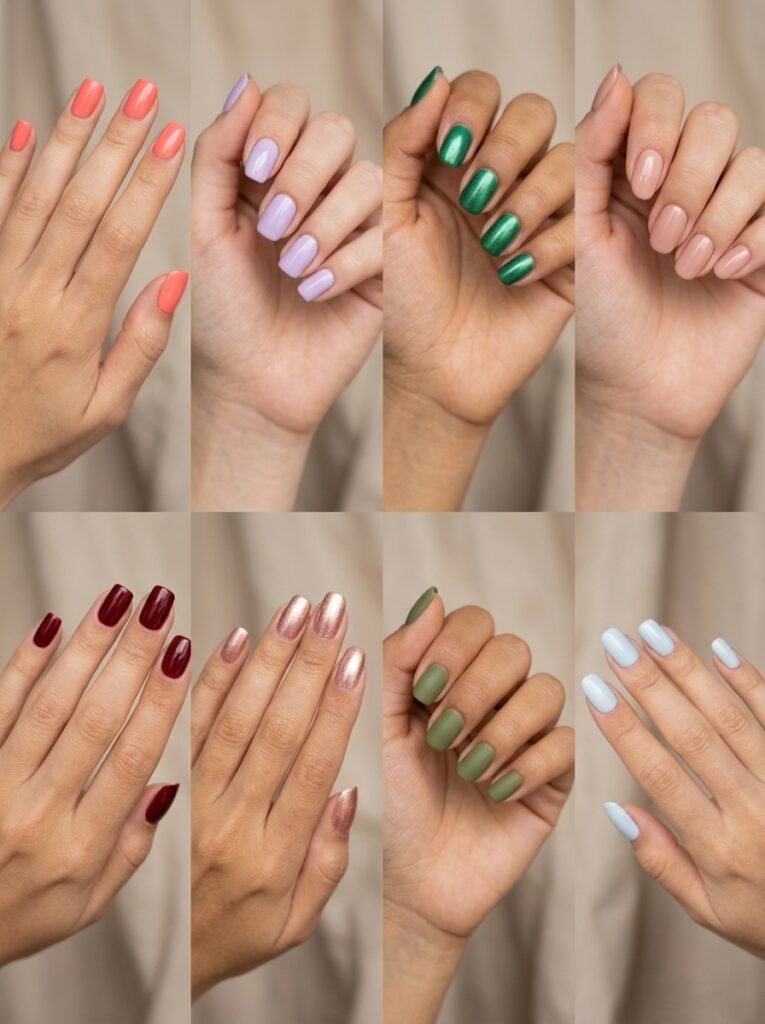
A dusty rose or muted mauve, deeper than the pale pinks suited to fair skin, brings out natural colour while the cool, rosy tone complements the undertone. Berry shades at medium depth, cranberry, soft raspberry, or cool fuchsia, catch light and reflect cool pink energy for a vibrant, brightening effect.
A cool, ashy taupe reads as sophisticated and polished against cool-toned light to medium skin, creating an editorial impression rather than the flatter effect a warm beige taupe would produce.
For light to medium skin with warm or neutral undertones:
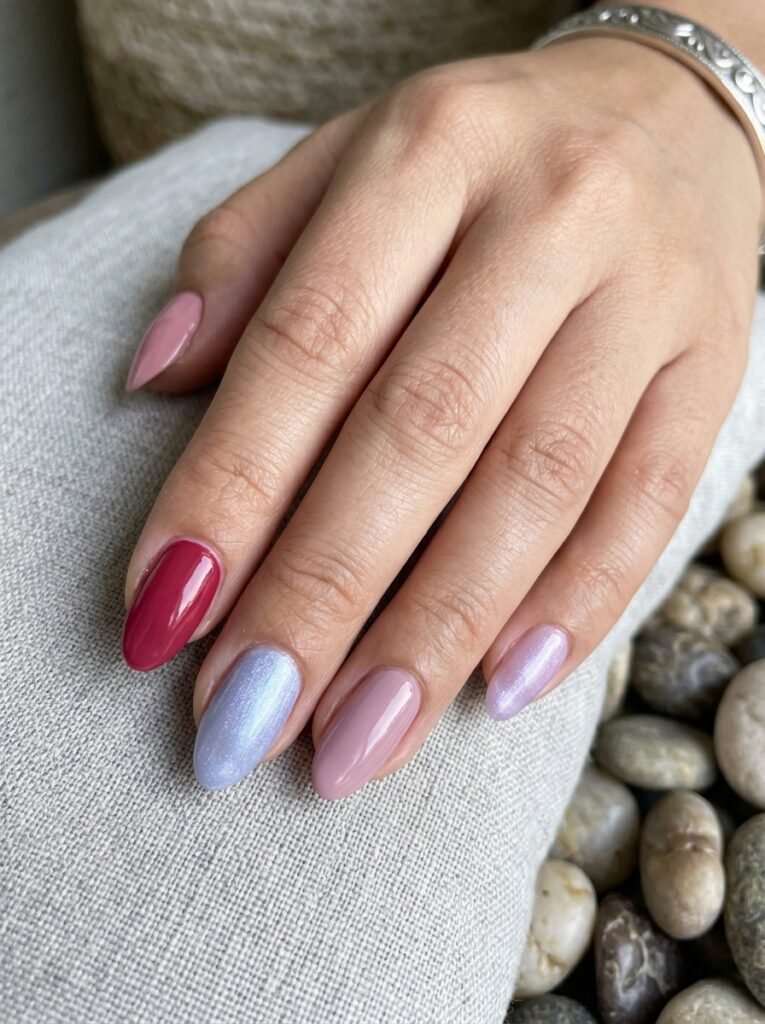
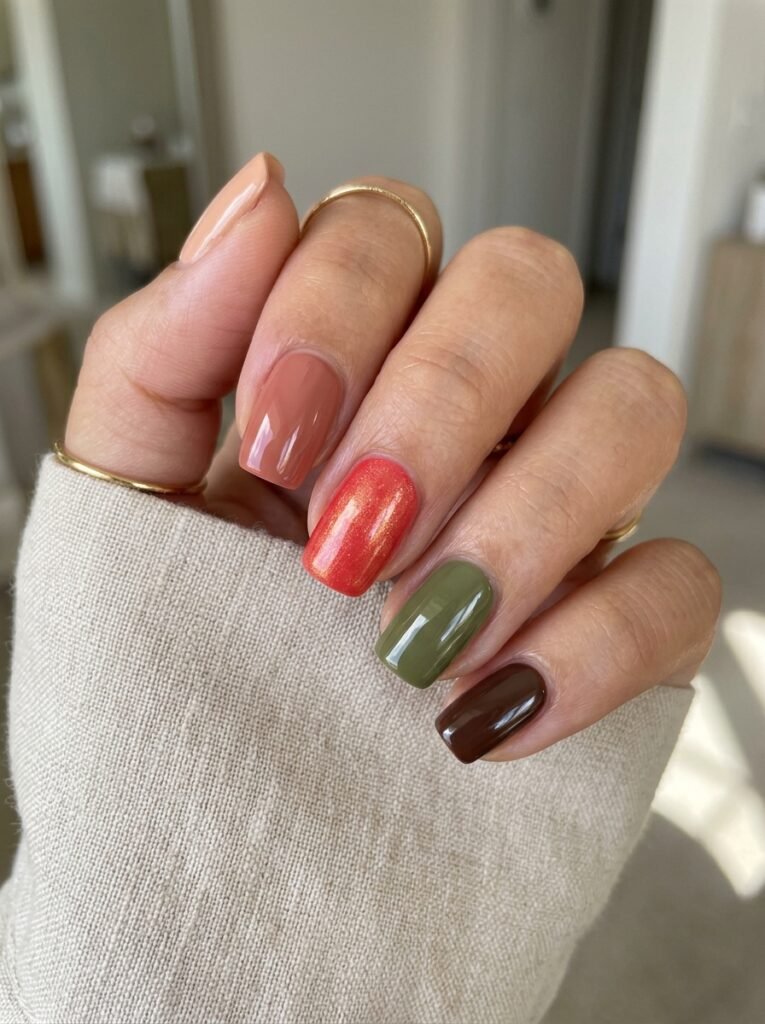
Warm terracotta and burnt orange, which can look jarring on cool skin, create an energising, cohesive contrast on warm undertones. A warm tan or sandy beige nude sits naturally against this skin without high contrast, making it an easy everyday shade.
Golden yellow and mustard tones are more directional but specifically flattering here. A deep golden yellow or sophisticated mustard in a cream finish can make warm-toned light to medium skin glow in a way few other colours achieve.
Nail Colours for Medium to Olive Skin
Olive skin carries a warm, green or yellow undertone beneath a medium depth of colour. It is one of the most forgiving complexions for nail colour, though specific choices brighten it most effectively.
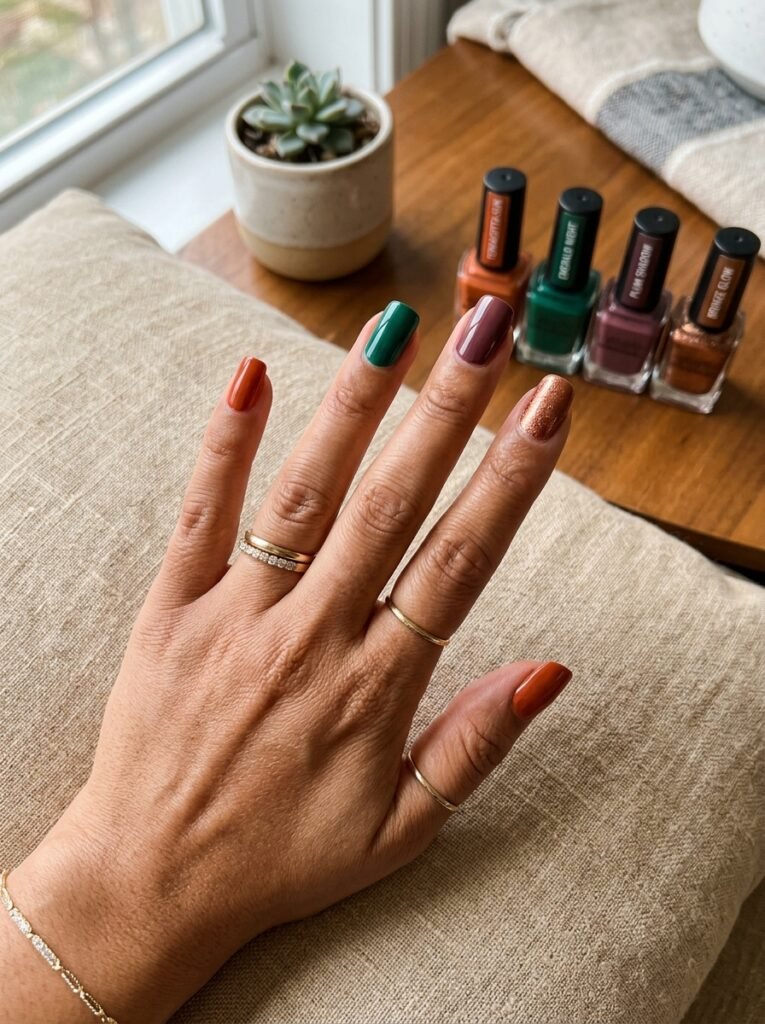
Warm colours and earthy tones sit in harmony with olive undertones, while cool, stark tones can emphasise the green quality rather than working with it. Rich terracotta and burnt sienna draw out the gold in olive skin, and a cream finish provides more impact than a sheer one.
Warm rust and copper add a metallic dimension that is particularly brightening. Olive green itself, in a rich, warm shade, creates an unexpected harmony rather than blending in, and deep warm burgundy or wine tones flatter because their warmth works with olive undertones instead of against them.
Nude tones for olive skin should lean warm and slightly tan rather than pink or ashy, since an ashy or pink nude can look stark and washed out against this undertone.
Nail Colours for Medium to Deep Brown Skin
Medium to deep brown skin spans warm caramel and honey tones through rich medium brown, with both warm and cool undertones appearing across the range.
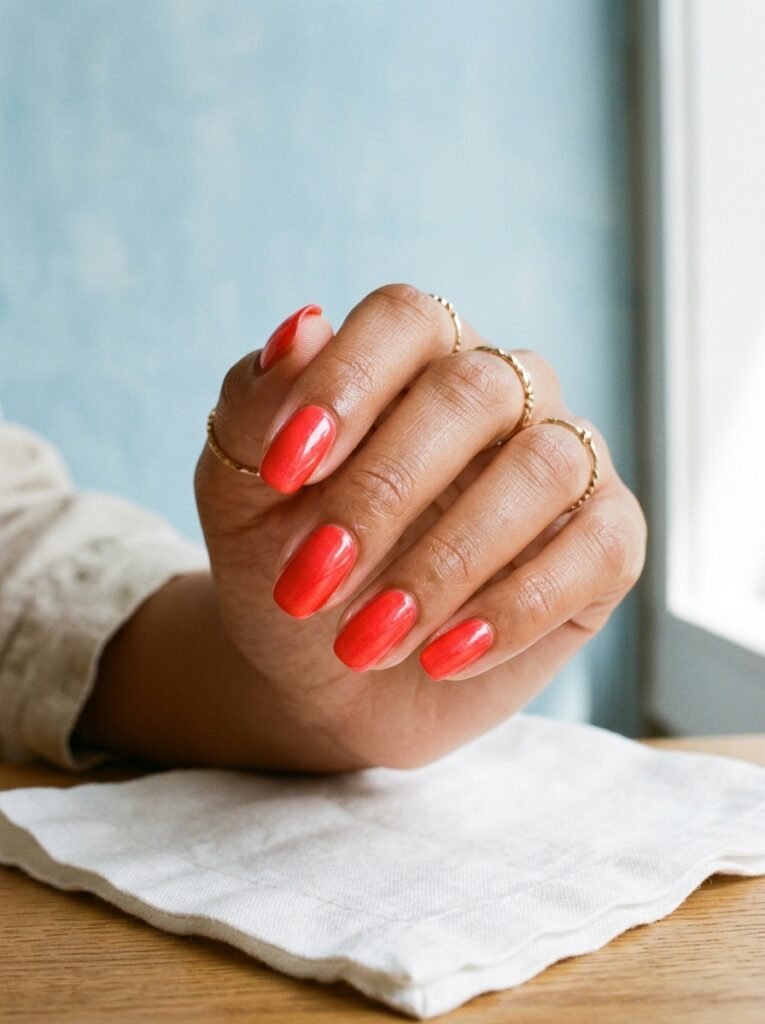
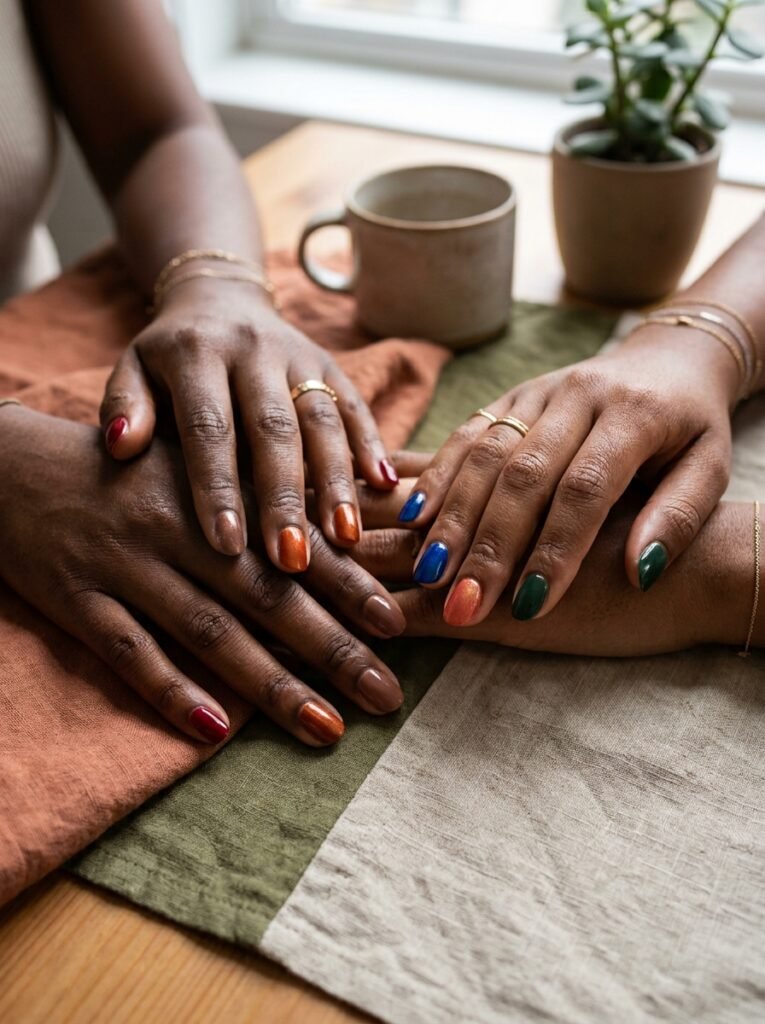
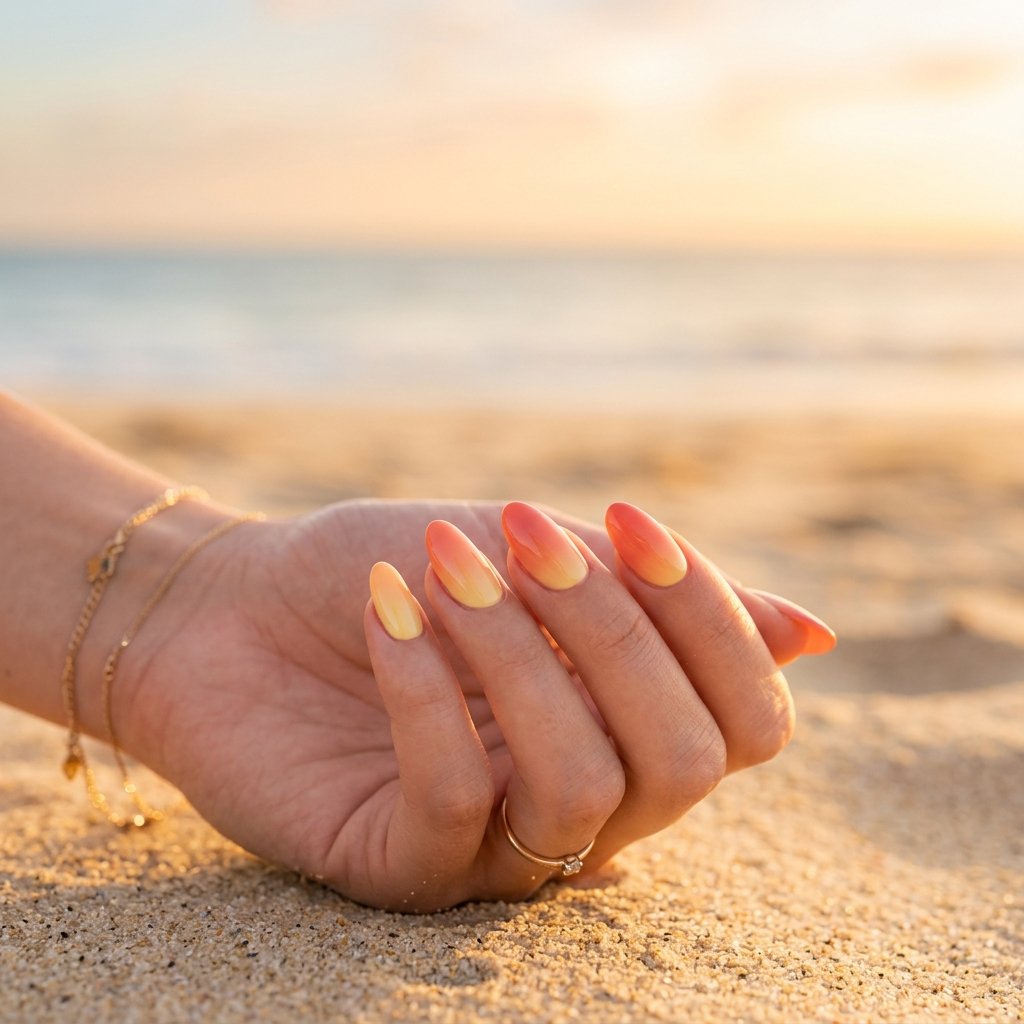
For warm undertones in this range, the most brightening colours create vibrant contrast without washing out the skin. A classic red with a warm, slightly orange undertone rather than a blue-based red produces one of the most powerfully brightening combinations available in nail colour. Vibrant orange and deep coral bring an energy paler complexions cannot always carry, and warm gold or bronze metallics reflect light back toward the skin for a rich, luminous look.
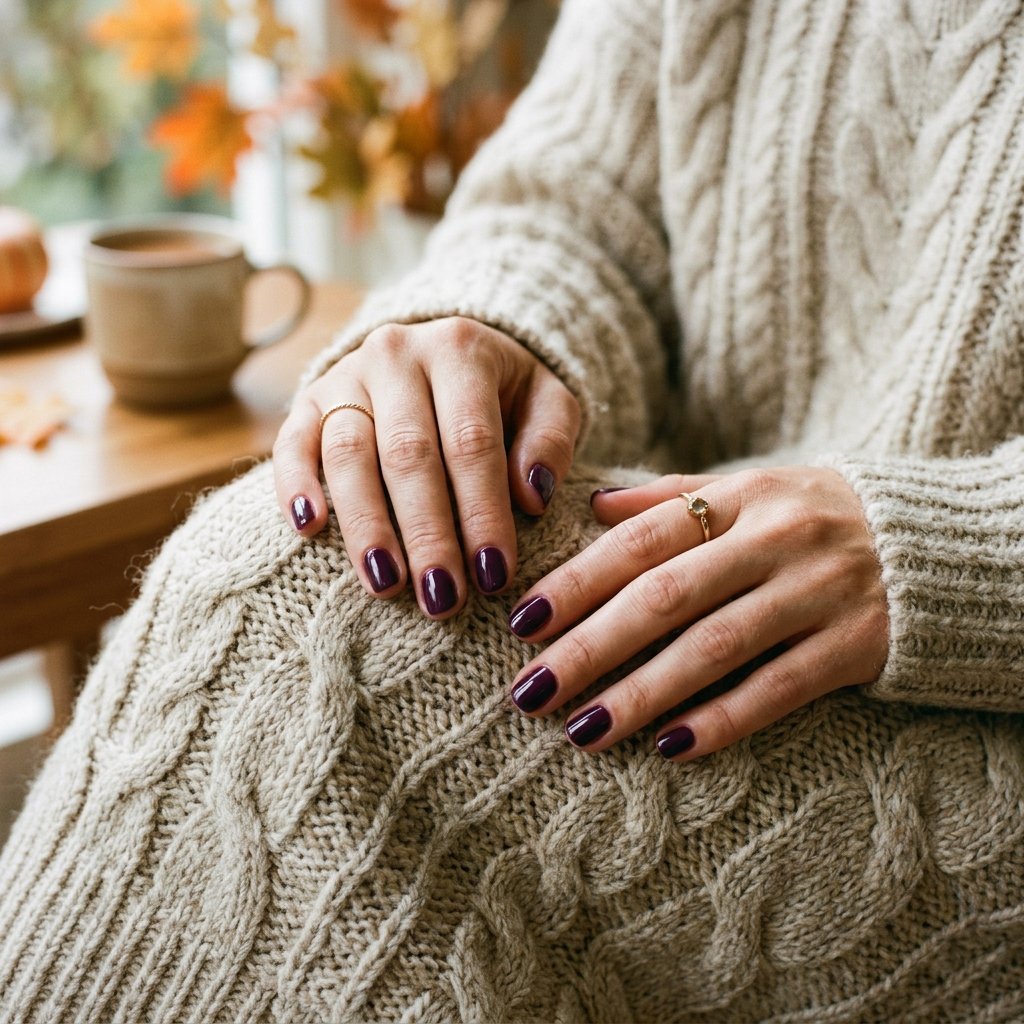
For cool undertones, jewel tones create strong contrast: a rich cobalt blue or deep cool purple can look spectacular. Deep plum and cool berry work best at full saturation, since pale or sheer versions of these tones can look washed out against medium to deep skin.
Nail Colours for Deep and Rich Dark Skin
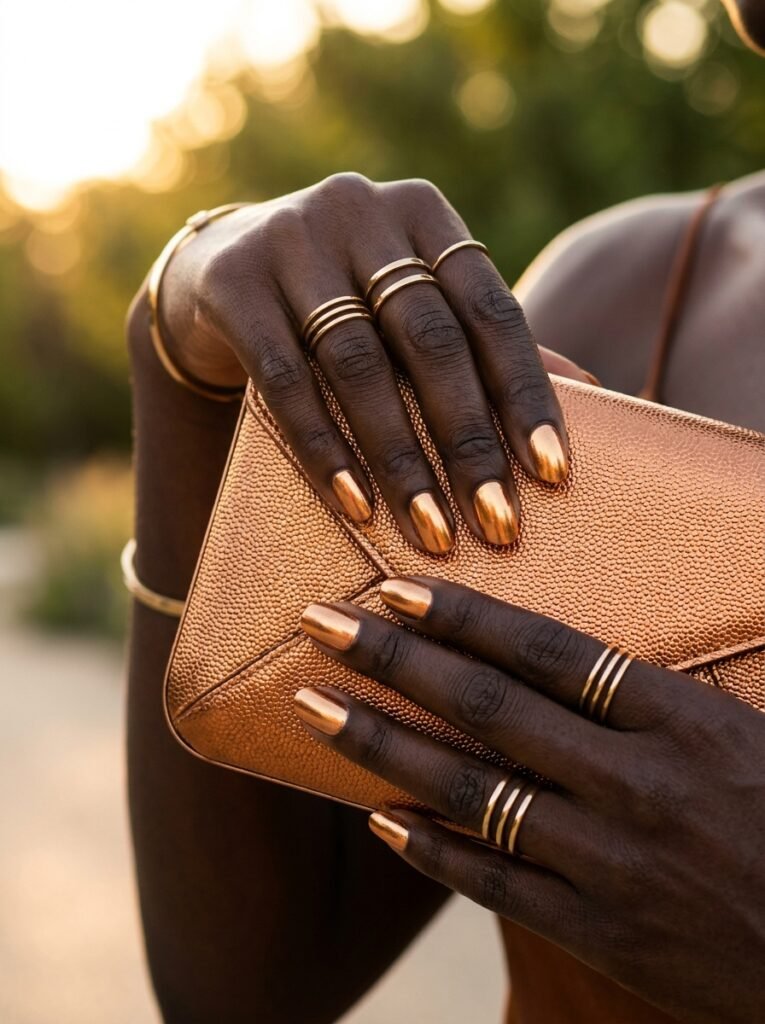
Deep skin, from rich dark brown to the deepest ebony, is most dramatically served by saturated, full-depth colour. Sheer or pale shades can look invisible or mismatched here, while rich, full-depth colour makes the skin glow.
Vibrant, saturated jewel tones, a rich emerald, deep sapphire, or intense violet, create dramatic, sophisticated contrast. True red at full saturation is one of the most classically flattering choices regardless of undertone, and warm copper or gold metallics produce an almost incandescent effect that sits in natural harmony with the warm undertones common in deep skin.
Deep navy and midnight blue offer a moody, unexpectedly brightening option at full depth. Nude tones need care: a shade matched closely to the skin’s own depth creates a clean, elongated effect, while a significantly lighter nude can look mismatched. Brown-caramel and warm toffee nudes generally outperform pink or beige ones.
Bold, graphic nail art in high-contrast colours also reads especially well here, since the depth of the nail bed provides a rich background that makes any placed colour look more vivid.
Universally Flattering Nail Colours Across Skin Tones
Some colour families appear across virtually every skin tone guide because they genuinely work across most undertones and depths, with variation within the family for specific complexions.
Classic red is the most reliably cross-skin-tone colour in existence, shifting slightly warmer or cooler by undertone but brightening essentially every skin tone at medium to deep saturation. Deep berry and wine tones cross most lines too, provided the saturation runs deep rather than pale.
A classic French manicure, in its traditional white tip or contemporary nude-tip variations, creates a clean, brightening effect on most skin tones by working with the skin’s natural colour rather than against it. A high-gloss topcoat over bare, well-groomed nails is arguably the most universal option of all, brightening the hand without any pigment.

Finishes That Enhance the Brightening Effect
Beyond colour, the finish of the polish shapes how brightening the overall look reads against the skin.
Cream finishes are the most universally flattering for brightening purposes, since the opaque, smooth surface reflects light evenly and defines a clean edge between nail and skin. Glossy finishes amplify that effect further by reflecting light actively, adding a dimension of brightness a matte finish removes.
Metallic and chrome finishes are the most dramatically brightening of all, behaving like tiny mirrors on the nail bed. Gold, copper, or rose gold suit warm undertones, while silver or cool chrome suit cool ones. Matte finishes remain sophisticated but absorb rather than reflect light, producing less of a brightening effect than a glossy version of the same colour, though that simply serves a different aesthetic goal. A person exploring more of these finishes, from chrome to glitter, may enjoy browsing glam nail designs built around reflective finishes for further inspiration.
Common Mistakes in Nail Colour Selection
A few consistent errors keep people from getting the most brightening effect from their nail colour choices.
Choosing a nude too close to the exact skin tone makes the nail effectively disappear rather than creating the subtle contrast that reads as polished. A nude slightly different from the skin in a complementary direction generally works better than an exact match.
Going too pale on deep skin, on the assumption that lighter reads as more elegant, creates a washed-out impression that serves neither the colour nor the skin. Deep skin is most dramatically brightened by full-saturation, fully opaque colour.
Going too dark on fair skin without checking the undertone match can create a contrast that reads as dramatic rather than brightening; it works when undertones align, but the colour family needs to match the undertone rather than oppose it.
Focusing only on colour while ignoring finish overlooks how much the finish itself changes the result. Skipping a natural-light test before committing is another common misstep, since salon lighting and daylight can present the same colour very differently.
Frequently Asked Questions
What nail colour makes hands look younger? Colours that complement the skin undertone make hands look more awake. A warm-toned nude, a classic red in the right undertone, or a sheer glossy pink generally creates a fresher impression than very dark or very stark colours. Cuticle care and a high-gloss topcoat contribute as much as the shade itself.
What nail colour makes nails look longer? A clean, even coat unbroken by art or pattern creates the impression of length, particularly a nude close to the skin tone with a sheer quality, or a French tip with a slim white line. Very dark or bold contrasting colours tend to make nails look shorter by drawing attention to width instead.
What nail colour is best for a job interview? A clean, chip-free nude or sheer pink reads as professional and well-groomed in most interview contexts. A classic burgundy or deep navy also works in many professional settings, provided the manicure itself is in excellent condition, which matters as much as the colour.
Can someone with warm undertones wear bright nail colours? Yes. Undertone guidance identifies which colours sit most naturally against the skin, not which colours are off-limits. Anyone can wear any colour they love; for warm undertones specifically, corals, warm reds, and golden tones tend to look more naturally luminous than cool pinks or icy blues, though preference always outweighs general guidance.
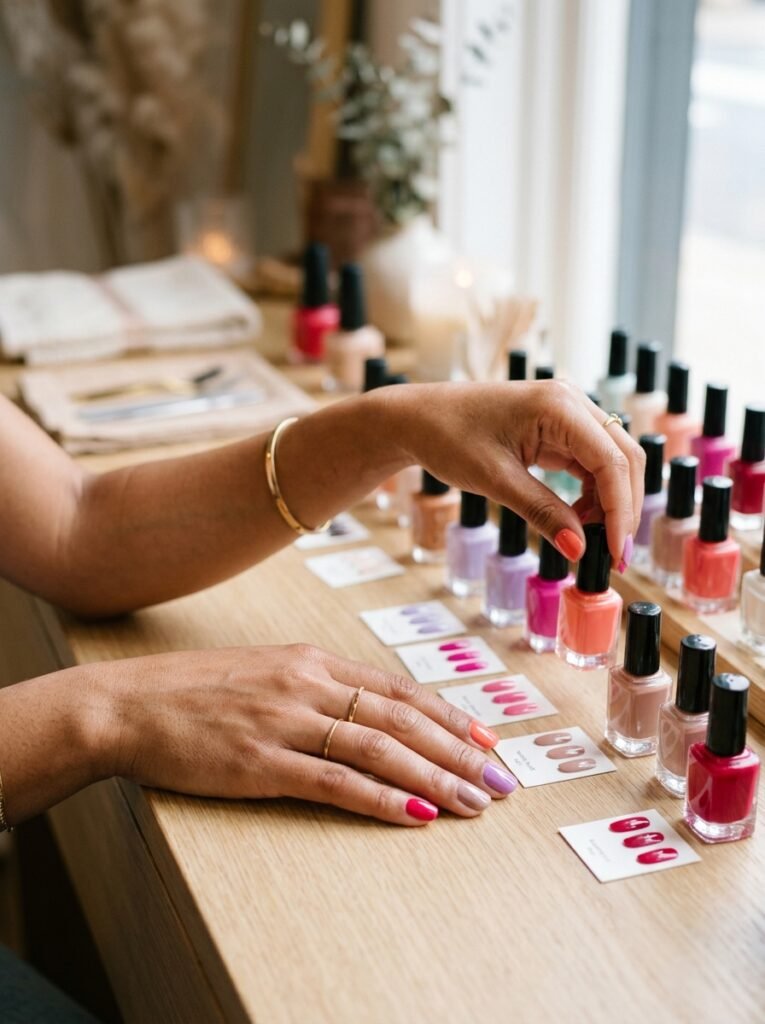
How does someone find the right nude for their skin tone? A nude slightly warmer or cooler than the skin, depending on undertone, generally works best. Warm undertones suit a peachy or golden nude; cool undertones suit one with a subtle pink or rosy cast; neutral undertones often do well in a true beige or a grey-beige greige. Testing in natural light rather than store lighting gives the most accurate result.
The Simple Truth About Nail Colour and Skin Tone
The relationship between nail colour and skin brightness is not complicated once it clicks. Colours that share or complement the skin’s undertone create harmony that reads as luminous. Colours that clash with the undertone create discord that can make both the colour and the skin look less alive than they are.
None of this narrows anyone’s colour choices to a small approved palette. It is about finding the right direction within the family already loved: a warm red and a cool red both exist within “red,” just as a warm nude and a cool nude both exist within “nude.” A reader wanting to put this into practice on a fresh set might browse 2026’s nail trends with undertone in mind before booking an appointment.
This guide works as a framework for what to try next, or for troubleshooting why a colour that looked good in theory did not quite deliver in practice. The goal is simple: nails that look exactly the way they were intended to look, a goal well within reach once the logic behind it is clear.


[…] look most natural in a rosy or taupe nude. A closer breakdown of undertone matching appears in this skin-tone guide to nail color, which covers the same principle in more depth for anyone building out a full polish […]