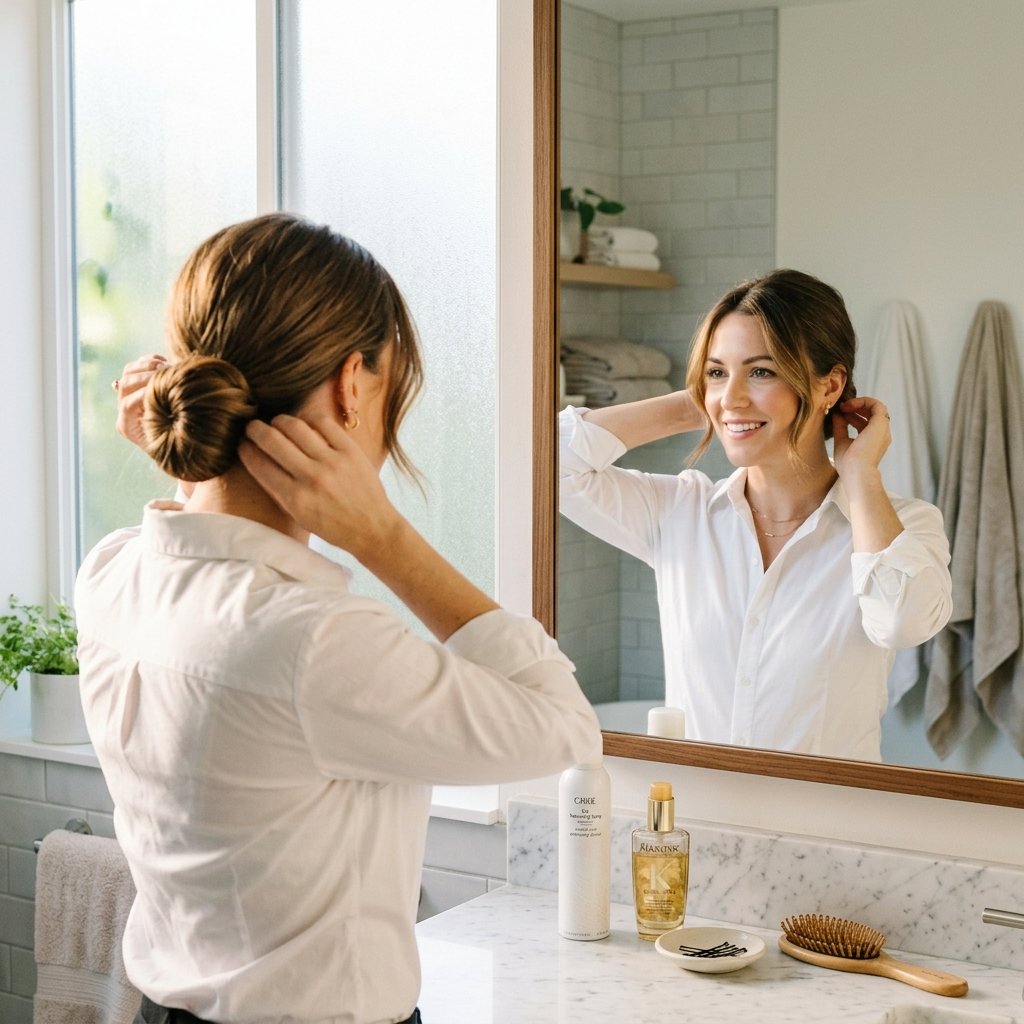
The alarm goes off, and the snooze button gets hit three times, then once more for good measure. By the time she is actually out of bed, the calm morning has turned into a fifteen-minute sprint to the door. Her hair sits somewhere between sleep-flat and vaguely chaotic.
The scenario is common. Government time-use data backs it up: women spend roughly 49 minutes a day on personal grooming, according to the U.S. Bureau of Labor Statistics American Time Use Survey, and on a rushed morning that number can shrink to almost nothing. Hair is usually the first casualty. It defaults to whatever can be achieved fastest, often a ponytail that looks more tired than intentional, or simply leaving the house hoping nobody looks too closely.
Looking put-together at the office does not require an extra forty-five minutes and a full set of hot tools. Some of the most polished, professional hairstyles take five minutes or less, because they rely on technique and the right products rather than time and effort. Once a woman knows which styles actually deliver on that promise, and how to execute them quickly, morning hair stops being an obstacle.
These are the office hairstyles that work on almost no time and still look like a woman has her life together.
Why Quick Hairstyles Can Still Look Incredibly Polished
A common assumption holds that a hairstyle’s polish is proportional to the time invested in it. Spend thirty minutes and the result looks professional. Spend five and the result looks like five minutes of effort. That assumption is wrong, and understanding why changes how a morning routine gets approached.
Professional-looking hair really comes down to three things: shape, smoothness, and intentionality. A hairstyle with a clear silhouette, lying reasonably smooth where it should, reads as done on purpose. It looks polished regardless of how long it actually took. Styles that look rushed tend to be undefined, frizzy in an unintentional way, or clearly a default rather than a choice.
The styles in this guide hit all three marks. Each has a distinct shape. Each works with the hair’s natural texture rather than fighting it. And each looks deliberately chosen, which is what makes it read as professional even in a meeting or on a video call.
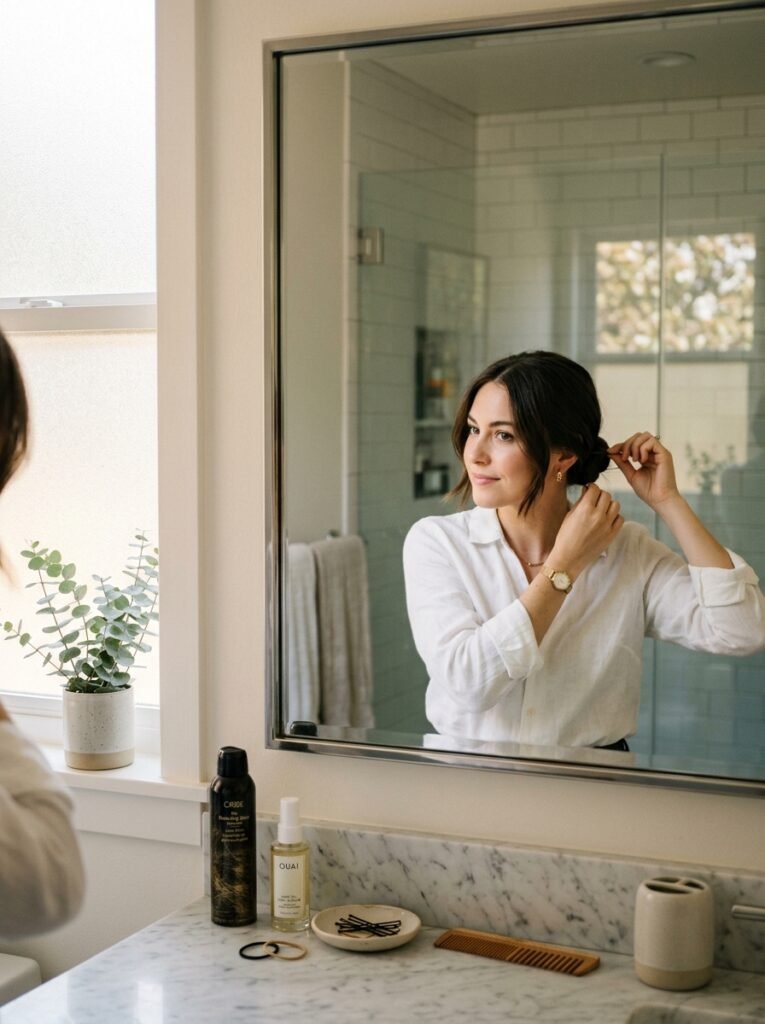
Preparation matters just as much. Keeping the right products accessible cuts execution time. So does deciding on a style before standing in front of the mirror, and working with day-old texture rather than against it. Second-day hair, in particular, is genuinely easier to style into most of these looks than freshly washed hair.
The Sleek Low Bun
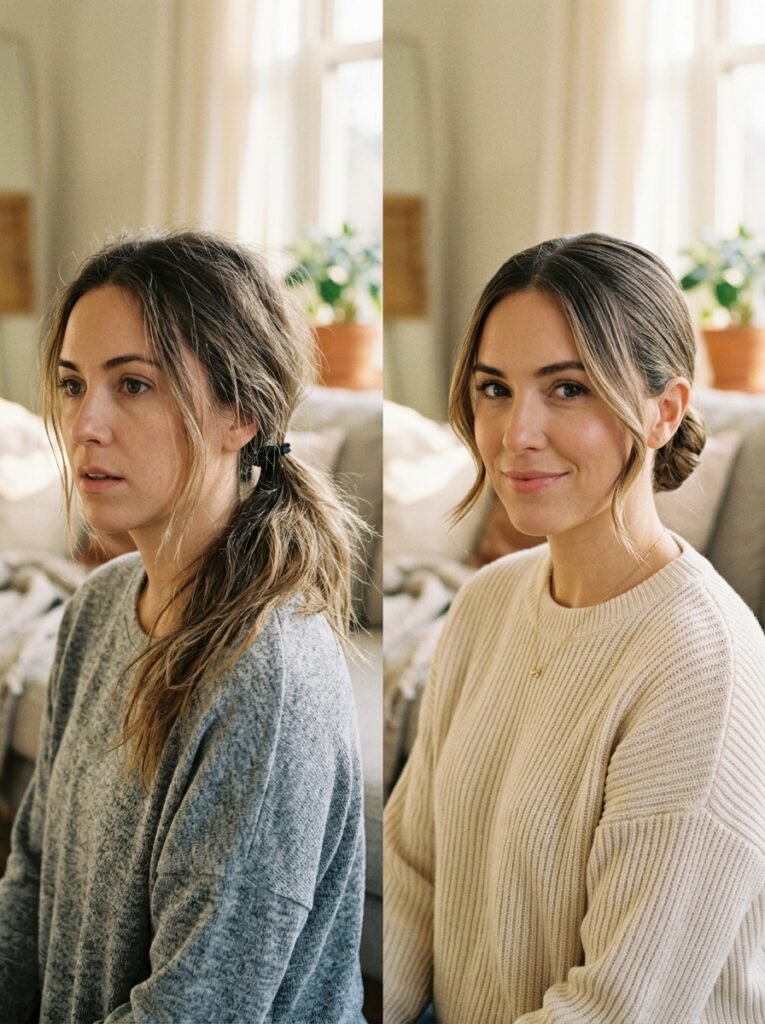
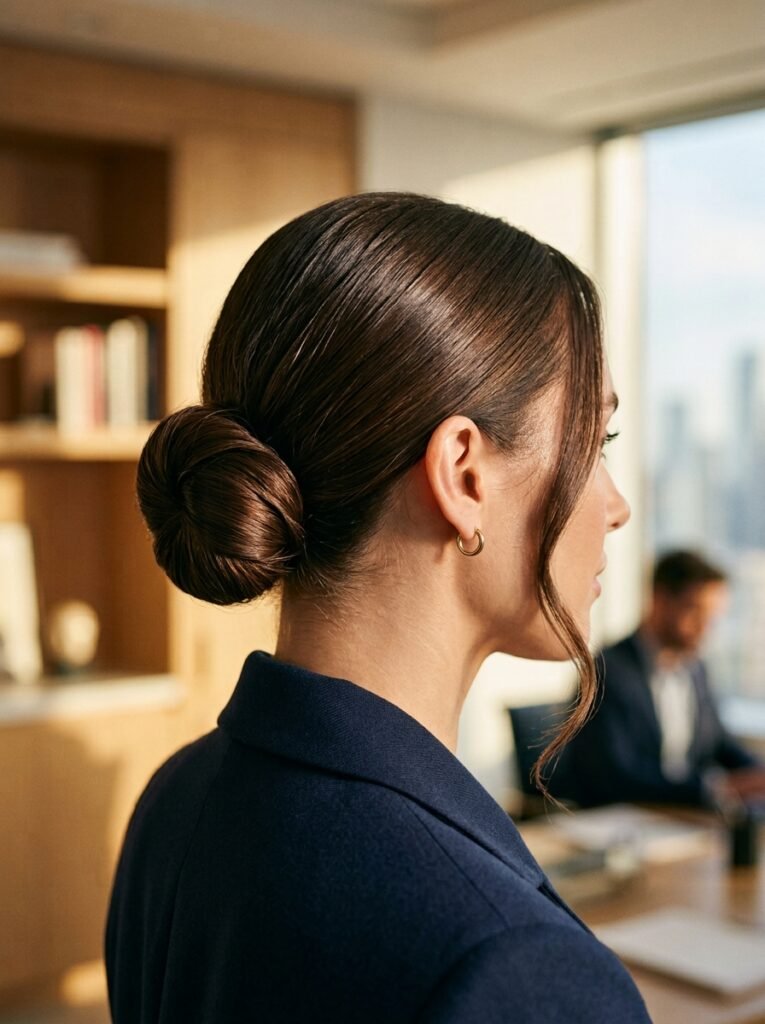
The low bun is the undisputed champion of office hairstyles. It works across hair types, lengths, and textures. It photographs well and suits every industry, from creative to corporate. And it takes under three minutes for anyone who has done it twice before.
The key to a polished low bun, rather than a messy one, lies in placement and how the front section is managed. The bun should sit at the nape of the neck rather than higher, since higher placements read more casual. A nape-level bun carries a quietly elegant quality that elevates the entire look.
For the front, a clean centre or side part, smoothed back with a fine-tooth comb and a light hold product, works well. Soft face-framing pieces left out intentionally work too. Both approaches succeed but read differently. A smooth, pulled-back front feels more severe and corporate. Soft pieces feel more approachable and contemporary.
Execution is quick: gather the hair at the nape, twist once or twice, coil into a bun shape, and secure with bobby pins or a strong elastic. An imperfect bun benefits from a spritz of flexible hold hairspray, which smooths the surface without stiffening it and makes a casual bun read far more intentional.
Fine hair that struggles to hold a bun benefits from light back-combing before twisting, which adds the grip and volume needed to keep everything in place.
The Polished Ponytail
The ponytail is the style most women default to when time runs out. A meaningful gap separates a rushed ponytail from a polished one, though closing that gap takes only about ninety additional seconds.
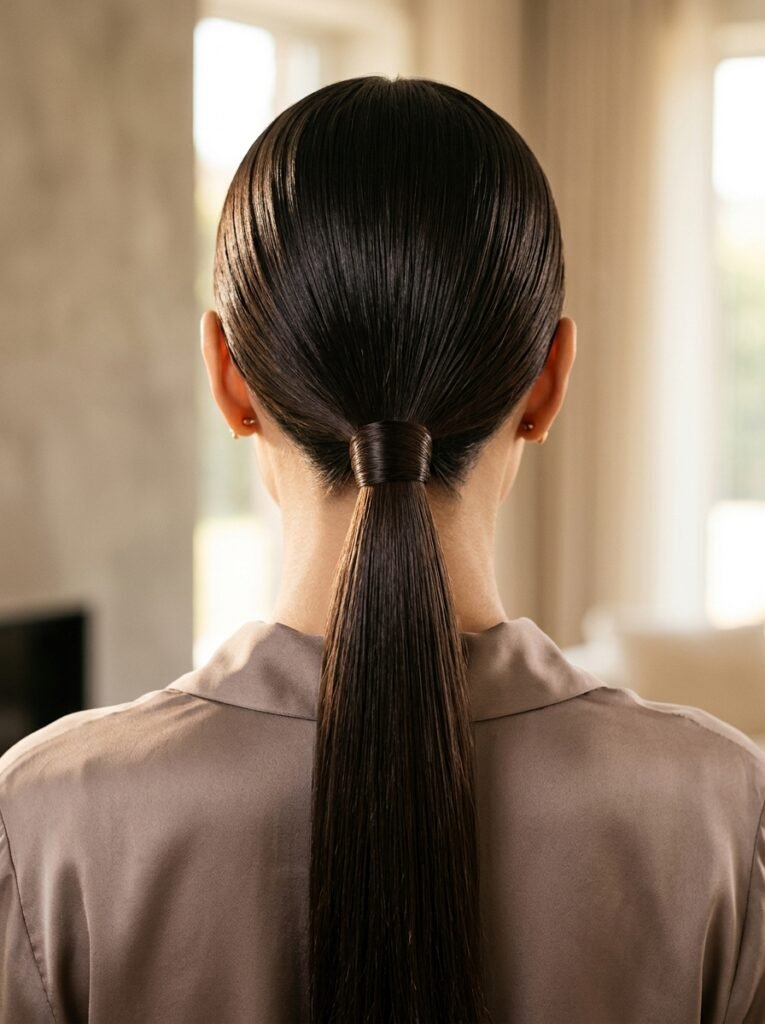
Placement matters first. A ponytail positioned at the crown reads sporty and casual. One placed at the occipital bone, the bump at the back of the head, reads polished and professional. Dropping the position slightly lower than feels natural shifts the entire look.
The second adjustment involves the elastic. A small piece of hair from the ponytail wraps around the elastic until hidden, with the end secured by a bobby pin underneath. That single step transforms a functional ponytail into one that looks deliberately styled. This detail separates the office-appropriate version from the gym version.
Any frizz or flyaways benefit from a soft-bristle brush and a small amount of serum or pomade smoothed over the crown before the hair goes up. A smooth surface at the crown is what makes a ponytail look clean rather than rushed.
Dry shampoo applied at the roots before styling adds the grip and volume that helps a ponytail sit higher and hold better throughout the day.
The Half-Up Twist
The half-up twist may be the best five-minute office hairstyle for women who want something that looks genuinely styled rather than simply contained. It works beautifully on second or third-day hair, requires no heat, and holds its put-together quality throughout the day with little maintenance.
The technique itself is simple. The top section of hair, from the temples back, twists on each side toward the centre of the head. Securing where the twists meet, with bobby pins or a small claw clip, covers the entire process. The result is a half-up style that looks intentional and polished, with no visible elastic, no tools required, and a soft, feminine silhouette that suits most office environments.
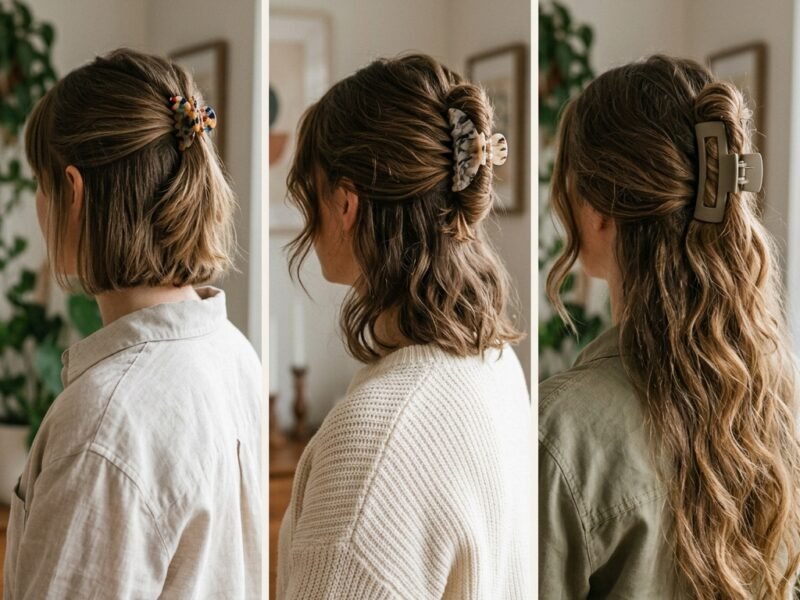
The small claw clip version has become particularly popular in recent seasons, and for good reason. A quality tortoiseshell or neutral-toned clip, securing a simple half-up twist, reads as current and put-together. It tracks with how offices actually look now, rather than how corporate hairstyle guides from a decade ago imagined they would.
For extra polish, pulling the front pieces down slightly and curling them loosely around a finger for a few seconds before releasing adds a soft frame around the face. That finishing touch takes about twenty additional seconds.
Readers with fine strands looking for more grip-focused options can also browse this guide to hairstyles that make thin hair look thicker.

The French Tuck Updo
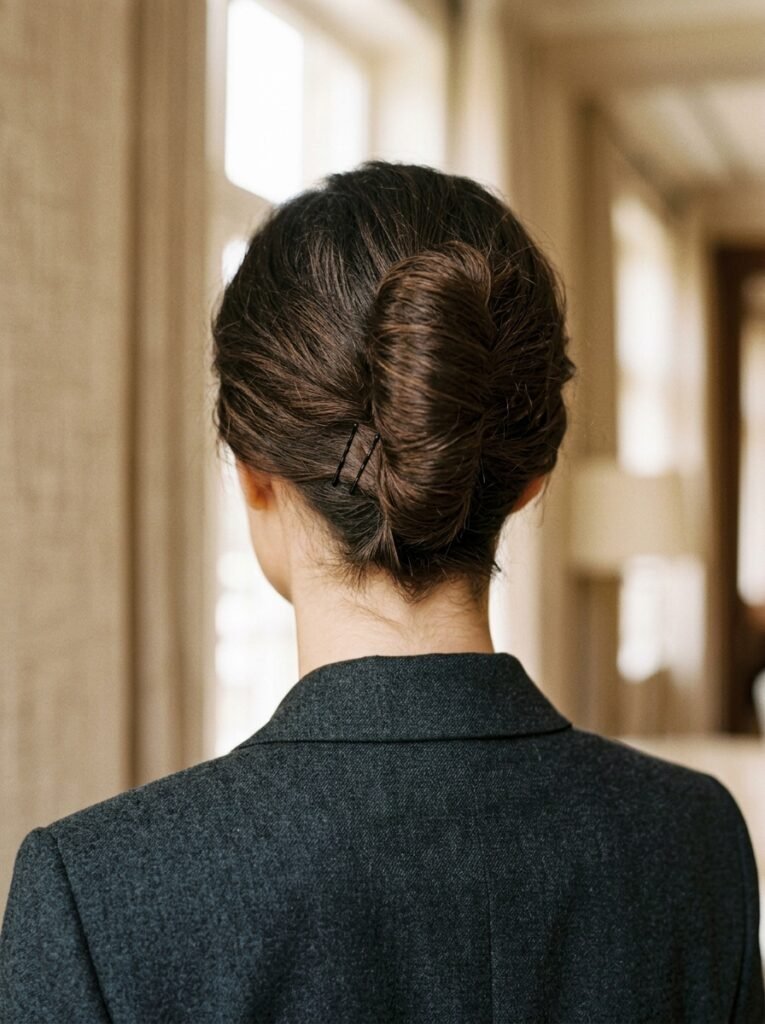
This lesser-known but highly practical style suits medium to long hair, looks like it took real effort, and takes about four minutes. It is essentially a low bun variation where the ends get tucked rather than coiled. The result is a looser, more textured look for environments where a strict bun might feel too severe.
The process starts the same way as a low bun: gathering hair at the nape. Instead of coiling the length into a bun shape, it folds up toward the head and tucks under the base of the gather. Bobby pins placed horizontally grip the tuck firmly. The result resembles a chignon but requires no skill beyond knowing where to place the pins.
This style benefits from not being too smooth. A little surface texture, whether from natural dryness, a texturising spray, or simply skipping over-smoothing beforehand, makes the tuck look editorial and modern rather than strictly formal. It also holds exceptionally well, meaning fewer adjustments throughout the day than a hastily pinned bun might require.
The Sleek Side-Swept Look
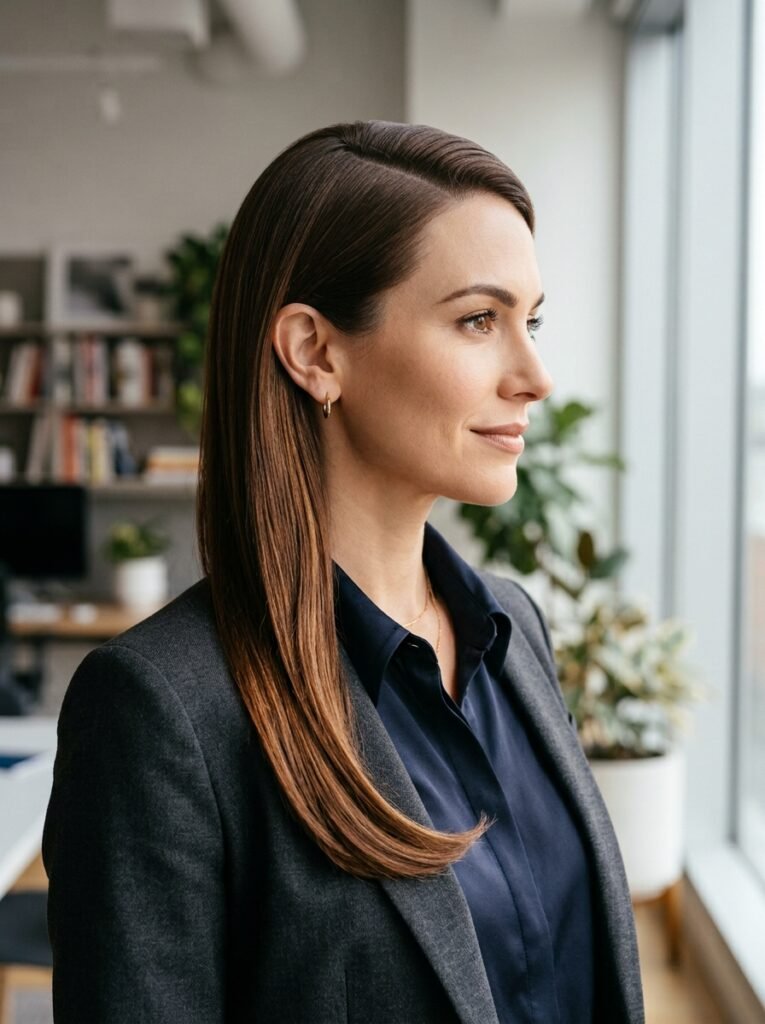
Not every five-minute office hairstyle involves an updo. For women with shorter hair, or hair not quite long enough for reliable updos, a sleek side-swept look works instead. It delivers the polished, professional quality an office environment calls for, in under five minutes.
The technique stays simple. A small amount of smoothing serum or light pomade goes onto damp or dry hair first. A wide-tooth comb or paddle brush sweeps everything to one side. A discreet pin behind the ear secures it, or the weight of the style simply holds it in place. Longer lengths tuck neatly behind the ear on the swept side.
The right product here is a light smoothing serum rather than anything heavier, which would look greasy rather than sleek. Working it through the mid-lengths and ends, rather than the roots, keeps the result clean.
Naturally textured or curly hair works well with this style too, since it leans into texture rather than fighting it. A curl-defining cream in place of a smoothing serum on a side sweep with natural texture reads beautiful and effortless in a modern office setting.
The Braided Accent Style
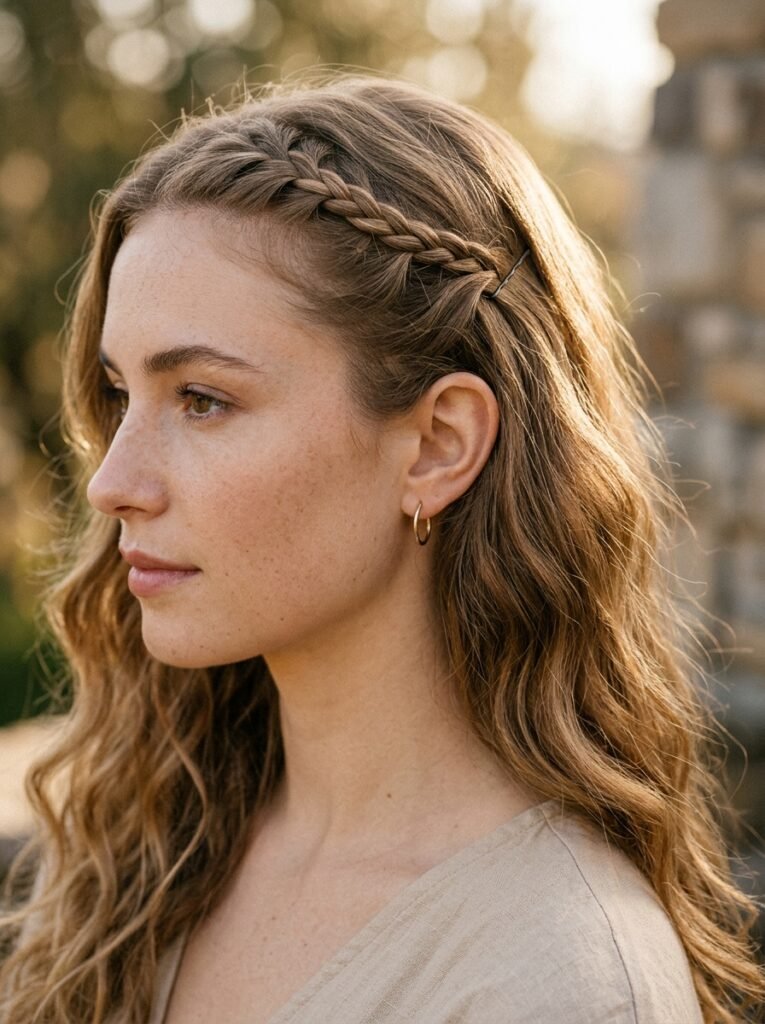
Adding a single braid to an otherwise simple hairstyle takes roughly two additional minutes. It adds enough visual interest to make the whole look feel genuinely styled rather than merely managed.
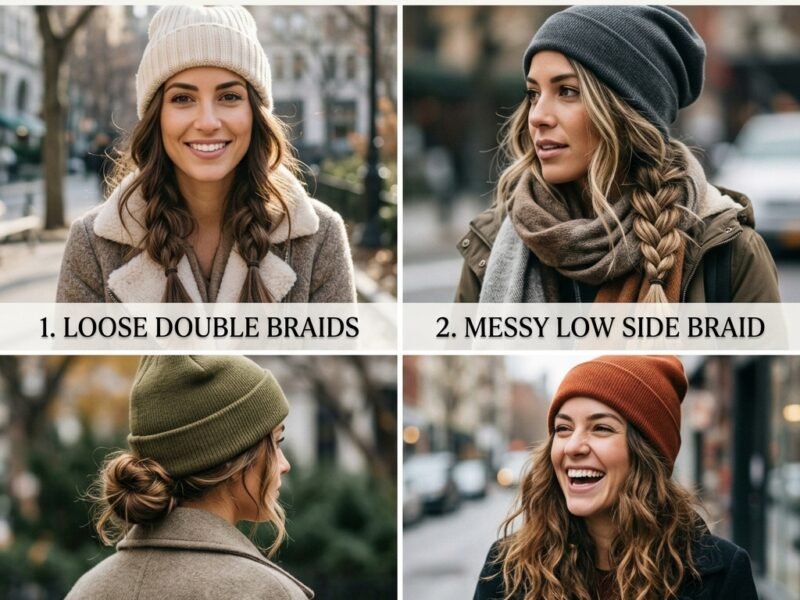
The most office-appropriate version uses a thin braid taken from one side of the hairline. It sweeps back and pins at the back of the head, with the rest of the hair worn down or gathered into a simple low ponytail. The result creates an accent that draws the eye and reads as intentional, without feeling too casual or decorative for a professional setting.
A Dutch or French braid running along one side of the head, pinned at the back of the neck, offers another variation. Paired with a low bun for the remaining hair, it looks far more complex than it actually is. Once a basic French braid becomes second nature, this entire style takes about four minutes.
The single braid technique also solves days when hair is doing something specific and difficult. A problematic front section, an uneven wave pattern, or an uncooperative hairline can all be managed by folding that section into a braid rather than fighting it into submission.
The Claw Clip Updo
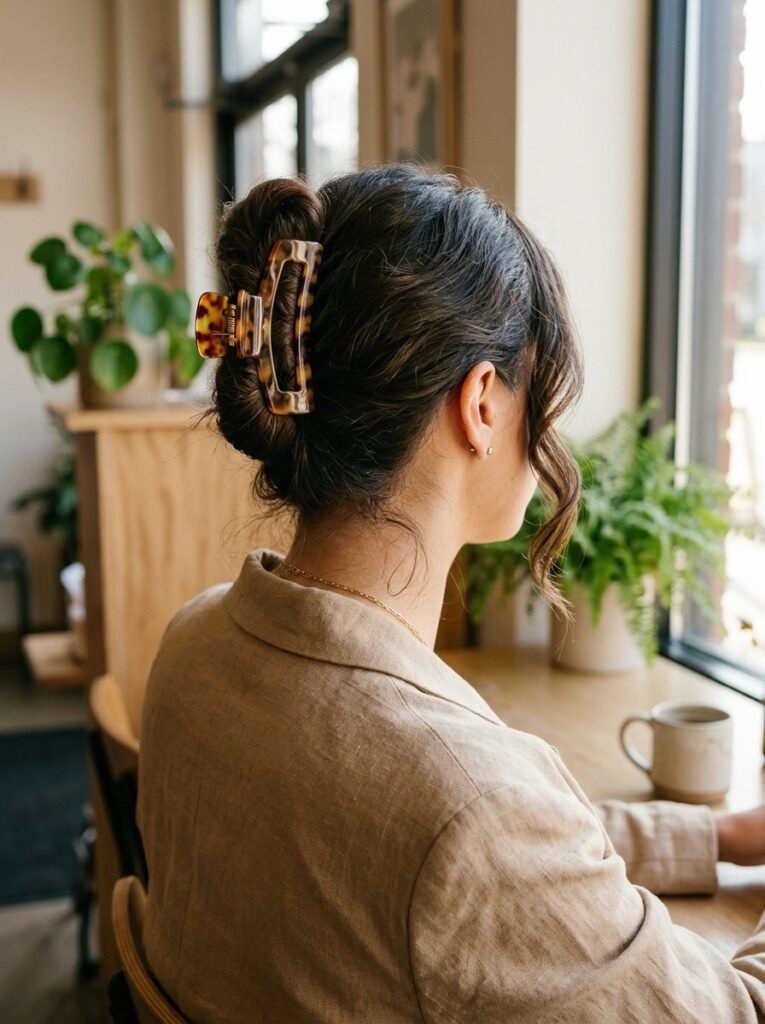
The claw clip has enjoyed a genuine resurgence in recent years, and it has earned it. A good claw clip in a quality material, tortoiseshell, marble effect, or solid neutral, holds an updo in place all day. It looks intentional and current. And it takes under two minutes to execute, including the time spent finding the clip.
The most polished technique involves a slightly messy but intentional gathered style. Gathering the hair loosely as if for a bun, twisting it a half to full rotation, and clipping it in place with the claw angled upward completes the look. Ends that escape or fan slightly above the clip belong to the style rather than counting as a flaw, which is what makes this option so forgiving.
Clean hair is not required for this style. Second or third-day hair with natural texture actually holds a claw clip style better and looks more effortlessly editorial than freshly washed hair. A light mist of dry shampoo at the roots beforehand adds the grip and volume that keeps the clip in place for the full day.
Clip size matters. Too small, and it looks incongruous and struggles to hold everything. Too large, and it can look clunky. A medium claw clip that comfortably holds the hair’s volume without straining is the right size for most heads.
Products That Make Every Style Faster
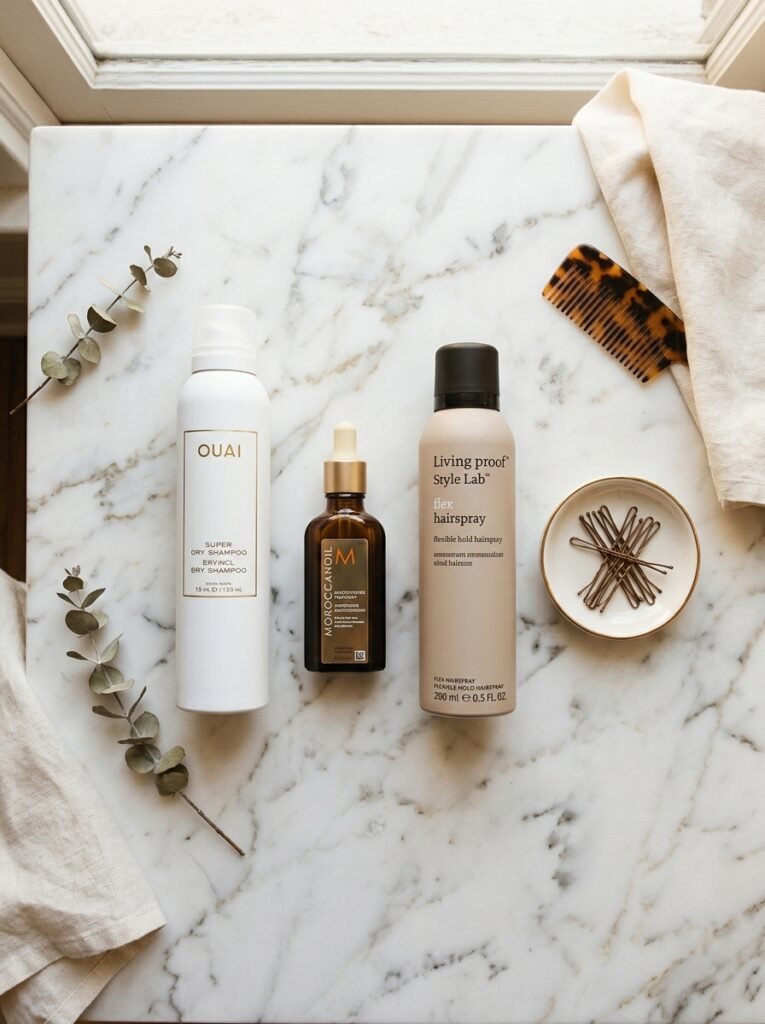
Knowing which products to keep within reach in the morning cuts styling time significantly. A full collection is not necessary. Four products cover nearly everything.
Dry shampoo is non-negotiable for any version of this routine. It absorbs oil, adds grip and volume at the roots, and makes second-day hair significantly more cooperative for every style covered here. Applying it before styling, rather than after, and letting it sit for thirty seconds before brushing through, gets the best results.
A light smoothing serum or cream manages frizz and surface texture without adding weight or greasiness. A small amount worked through the mid-lengths before styling is often the difference between a surface that looks intentional and one that looks unclear.
A flexible hold hairspray proves more useful than a strong-hold formula in most of these styles. It allows smoothing and adjusting without the stiffness that makes a style look dated. Spraying it onto a hand first and smoothing over the surface, rather than spraying directly onto the hair, produces a more natural finish.
Bobby pins in a shade close to natural hair colour are worth buying and keeping accessible. The chrome pins sold in most drugstores show up against most hair colours and undermine the polished quality any style is supposed to support invisibly.
Common Quick Hairstyle Mistakes to Avoid
A few specific mistakes consistently undermine quick office hairstyles and deserve naming directly.
Using too much product in too little time ranks among the most frequent. The instinct while rushing is to apply more product to manage things faster. More product usually creates a heavy, greasy result rather than a polished one. The right amount is always less than it feels like while applying.
Ignoring the edges and hairline is another common misstep. An otherwise controlled style can be undermined entirely by a hairline that received no attention. A light application of edge control helps, as does a smoothing serum, or even a clean toothbrush with a touch of hairspray along the hairline. Any of these makes a considerable difference to how a style reads from the front.
Choosing a style that fights the hair’s current state also backfires. A very sleek, smooth style attempted on hair that is dry, frizzy, and uncooperative takes far longer than it should and still looks off. On those days, a style that works with texture rather than against it is always the faster, better-looking choice: a braided style, a claw clip updo, or a half-up twist. A quick look at these heatless overnight curl techniques can also help prevent those uncooperative mornings before they start.
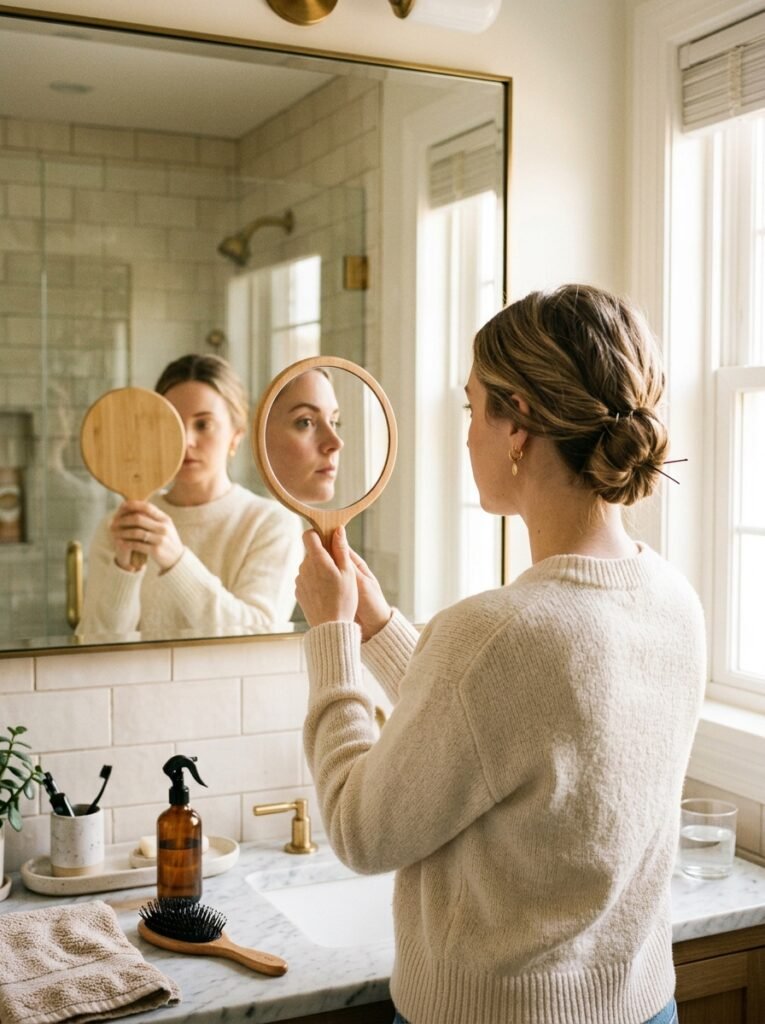
Skipping a mirror check at the back rounds out the list. Five seconds spent checking the back of a style in a handheld mirror catches problems that would otherwise surface in a reflection at work. A loose bobby pin, a visible elastic, or a spot needing one more pin takes seconds to fix at home and considerably longer to address in an office bathroom.
Frequently Asked Questions
- What is the fastest professional hairstyle for fine hair? The low ponytail with a wrapped elastic is consistently the fastest, most reliable option for fine hair. The elastic provides firm hold that does not depend on hair thickness to stay in place. A claw clip updo also works well because the clip does the structural work. Heavy buns that rely on hair volume to hold their shape tend to collapse on finer hair throughout the day and are worth avoiding.
- How does hair look good when it is greasy and there is no time to wash it? Dry shampoo applied at the roots and left to absorb for at least thirty seconds before brushing through offers the fastest fix. Following with a style that keeps the roots off the face, a ponytail, an updo, or a half-up style, draws less attention to root texture than wearing hair down. A sleek style with hair deliberately pulled back smooth can also read as intentional rather than greasy.
- Which office hairstyles suit naturally curly or textured hair? The half-up twist, the claw clip updo, and the braided accent style all work with natural texture rather than requiring smoothing or straightening first. For curly and textured hair, a curl-defining cream or light styling foam refreshes the curl pattern before styling. This takes about the same time as applying a smoothing product to straight hair.
- Can these hairstyles be done without heat tools? Every hairstyle in this guide is heat-free. None require a straightener, curling iron, or blow dryer, which is precisely what makes them achievable in five minutes. The only tools needed are a brush or comb, bobby pins, an elastic or claw clip, and the right products for the hair type at hand.
- What should happen if hair is wet and there is no time left? The claw clip updo is the fastest option for damp hair, since it secures wet hair smoothly and allows it to dry in a contained, intentional shape. A sleek low bun on damp hair also works and dries smoothly over the course of the morning. Wearing wet hair down to the office is worth avoiding where possible, mainly for comfort, since it tends to dry unevenly and can feel uncomfortable for hours.
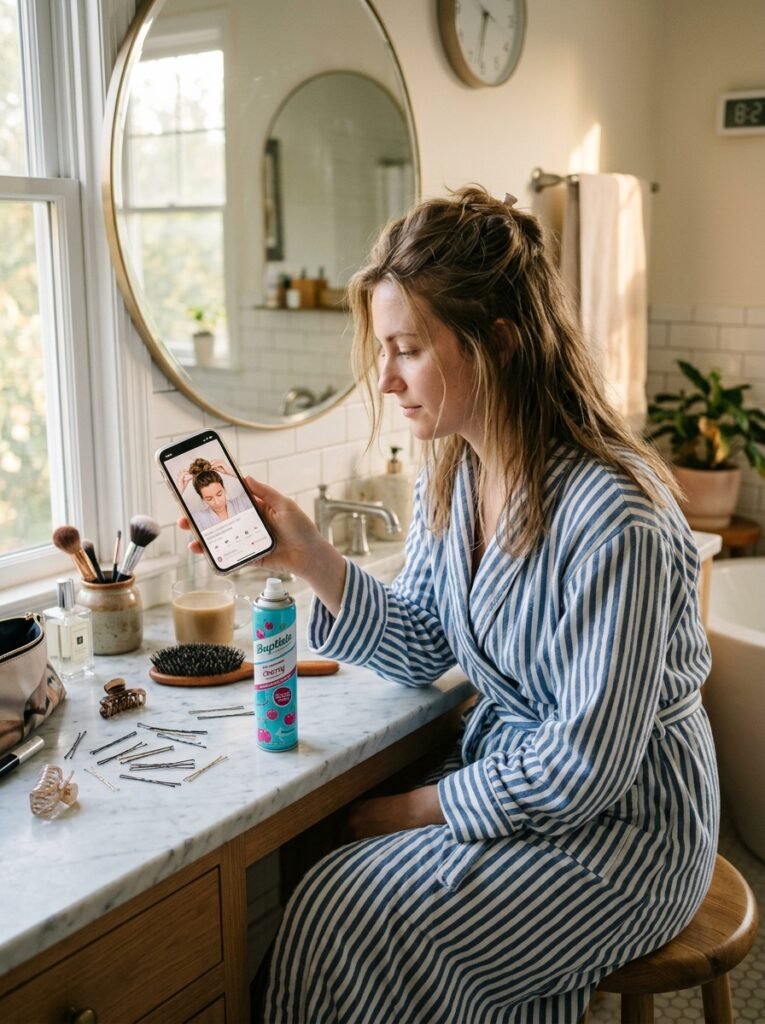
The Morning Routine That Actually Sticks
The best office hairstyle routine is not the one with the most options or the most elaborate techniques. It is the one actually executed at seven in the morning, half-awake and running behind. That means keeping a small rotation of two or three styles that require no real thought. It means storing the necessary products within arm’s reach. And it means accepting that good enough and done beats perfect and late, every time.
Picking one style from this guide to practise over the coming week builds real speed. Repeating it a few times turns it automatic. Adding a second style after that builds a genuine rotation. Within a month, a real quick-hair repertoire emerges, one that handles any morning regardless of how many times the snooze button gets hit.
Hair does not have to make mornings harder. With the right five-minute styles in the rotation, it becomes something to stop thinking about entirely, and that is exactly the kind of effortless that looks best.



Leave a Reply