
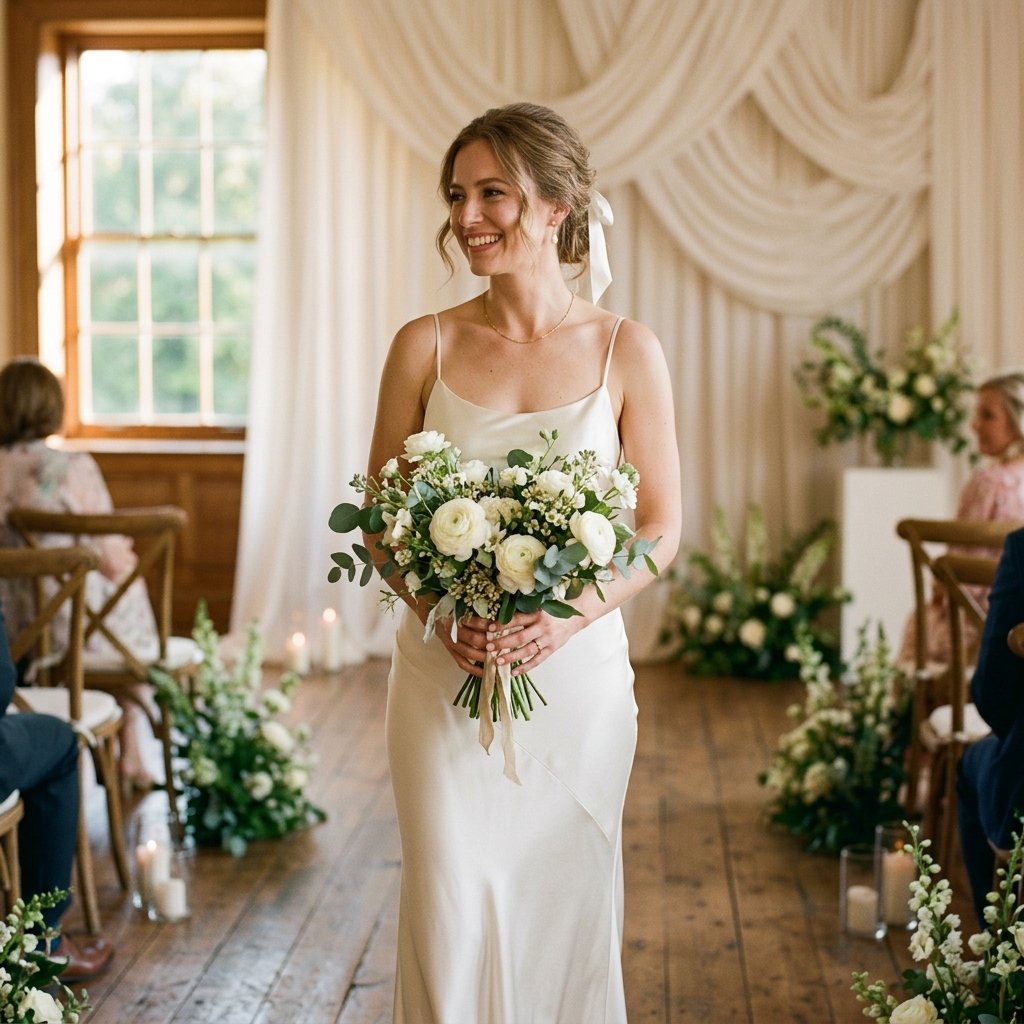
Here is a truth the wedding industry rarely advertises. A bridal gown’s price tag has little to do with how stunning it looks on the wedding day. It has far more to do with the designer label sewn inside, the boutique markup, the sample fees, and the assumption that an emotionally charged bride will spend more than she planned.
The average wedding dress in the United States now costs around $2,100, according to The Knot’s 2026 Real Weddings Study, and that figure sits before alterations, accessories, or a veil enter the picture. Many brides spend considerably more. Yet some of the most breathtaking wedding-day looks ever photographed cost a fraction of that number, because the women wearing them chose strategy and creativity over a marketing machine’s assumptions.
This guide serves those brides. It is written for anyone who wants to look extraordinary on her wedding day without spending a small fortune on a garment worn once. That outcome is entirely achievable. It is not a consolation prize or a compromise. It is a genuine choice that often produces a more personal and more beautiful result than the traditional boutique route ever could.
Rethink What a Bridal Outfit Actually Has to Be
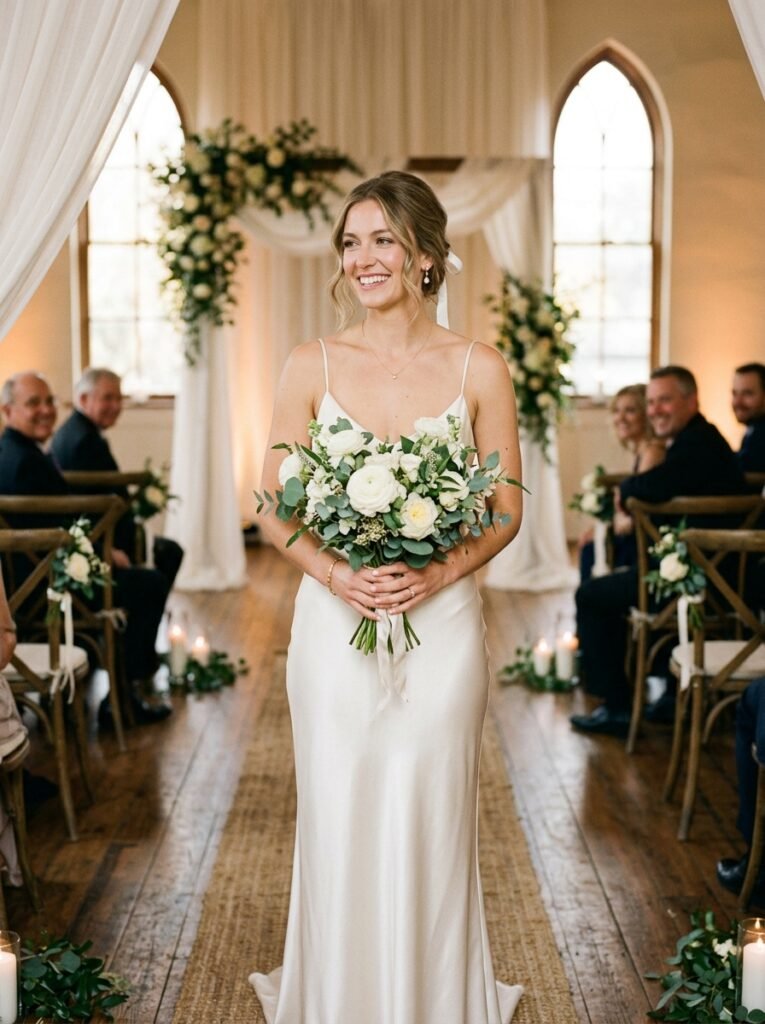
The most liberating step in planning a budget bridal look is letting go of an assumption. A wedding dress does not have to come from a bridal boutique. It does not need to be white or ivory, carry a train, read as formal, or arrive in a box labeled specifically for brides.
That framing was invented by an industry, and accepting it costs money every time.
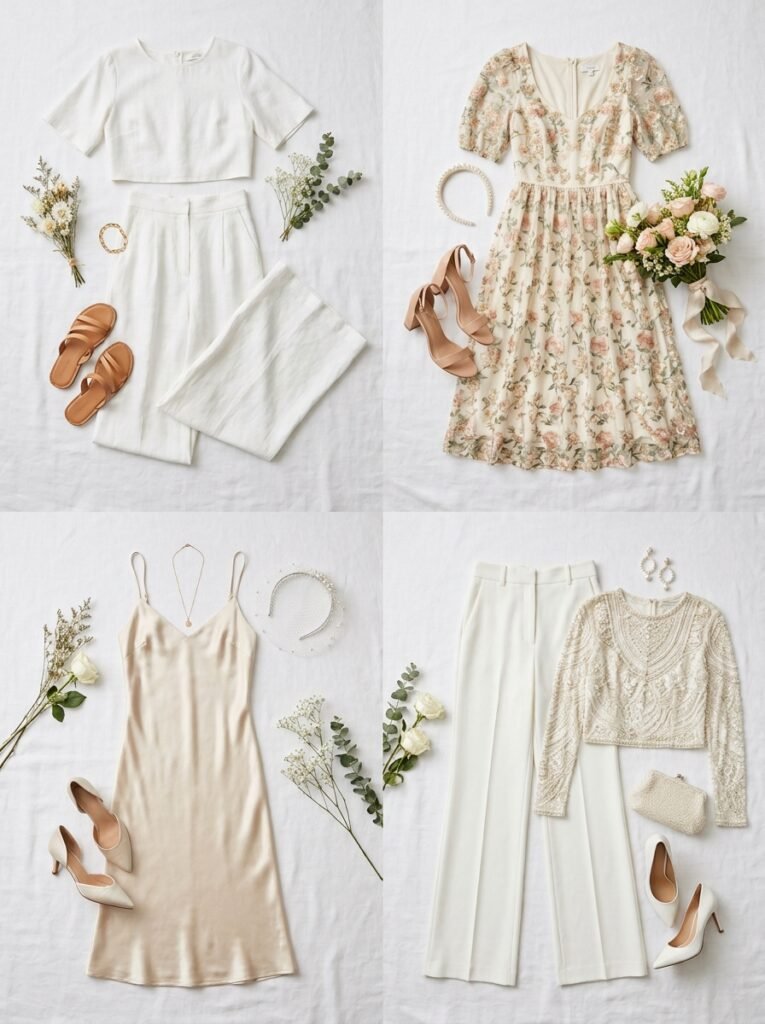
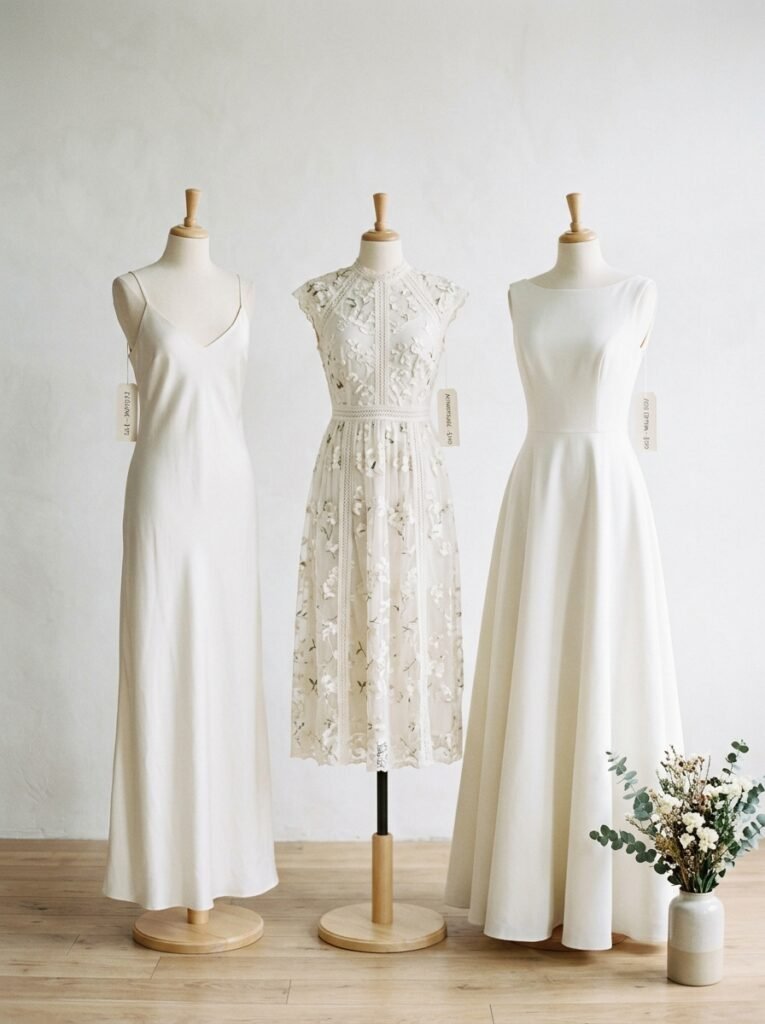
Some of the most stunning bridal outfits in recent years have been floral midi dresses from ordinary womenswear retailers, priced around $50–$150. Slip dresses in champagne or ivory satin from a department store typically run $80–$200. Vintage gowns sourced from a resale shop land between $100–$400, depending on condition and era. Two-piece sets in coordinating white linen for a beach ceremony cost roughly $100–$250 for the full set. A pair of wide-leg white trousers paired with a beaded top can come in under $100 and still look magnificent.
The dress code for any wedding is the one the bride sets. Once that idea takes hold, the landscape of options widens considerably, and prices drop with it. A budget of $50–$400 covers nearly every non-boutique route above, compared with $1,500–$5,000+ for a traditional bridal-label gown.
Shop Bridal Sample Sales and Trunk Shows
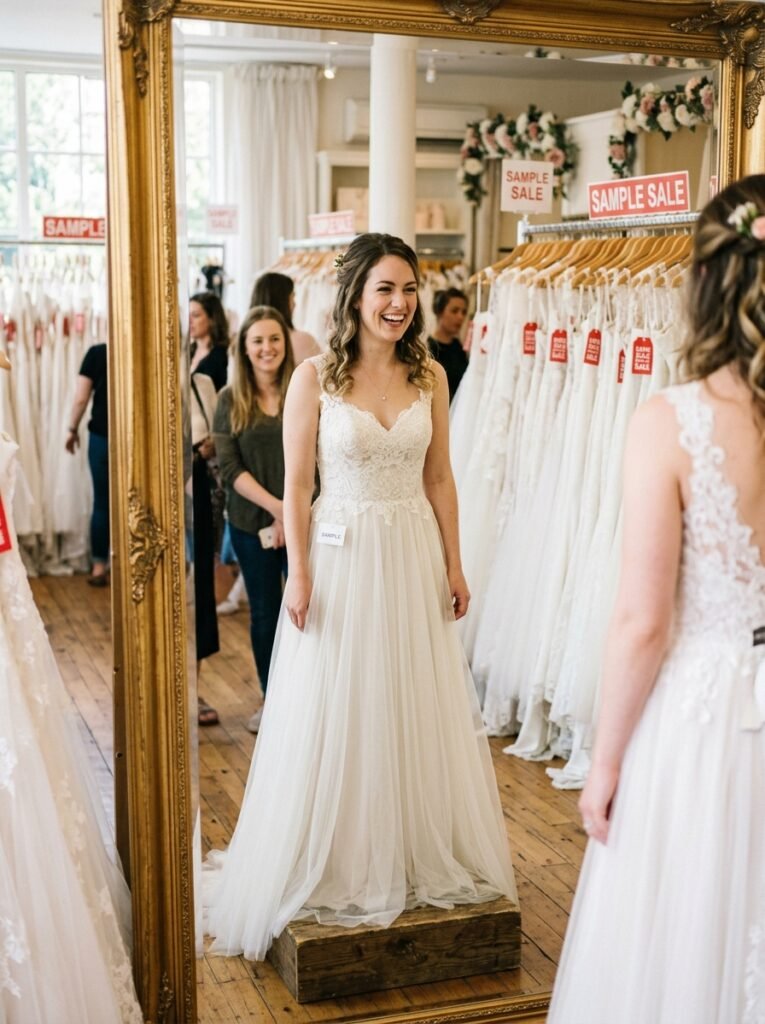
A bride who wants a traditional bridal gown at a fraction of retail should start with sample sales. Every boutique eventually clears out its sample gowns, the floor models tried on during appointments, to make space for new inventory. Those samples typically sell for $200–$800, down from an original tag that could reach $1,500–$5,000+.
Sample gowns usually run in a narrow size range, often bridal sizes eight through twelve, but a skilled seamstress can work with more variance than most brides expect. Alterations on a sample gown typically add $150–$500, depending on how much reworking is needed.
Trunk shows offer a different opportunity. When a designer visits a boutique to showcase a full collection, the boutique often discounts orders placed during that event, usually by 10–20%. On a full-price gown, that can mean savings of $200–$1,000. Following favorite bridal designers on social media and joining boutique mailing lists remains the most reliable way to catch these events before they sell out.
Flexibility drives sample sale success. A bride may not find the exact dress she imagined, but she may find something even better at a price that justifies saying yes immediately, often landing a gown that would normally cost $2,000+ for well under $1,000 all-in, alterations included.
Explore Bridal Lines From Non-Bridal Retailers
This category has expanded significantly in recent years, and for good reason. Brands built outside the bridal world have entered the space with collections that skip the inflated bridal markup entirely.
BHLDN, Anthropologie’s bridal line, consistently offers gowns in the $300–$800 range, with design quality that rivals boutique offerings priced two to three times higher. H&M’s bridal pieces sit at the more accessible end, roughly $70–$200. Reformation runs higher, generally $300–$500, reflecting its sustainable-fabric positioning. ASOS Bridal spans a wide range, about $80–$300, with frequent sales pushing it lower. Azazie, known for made-to-order and customizable options, typically falls between $150–$400.
These retailers also tend to offer better size inclusivity than traditional bridal boutiques, more flexible return policies, and the convenience of shopping without a high-pressure appointment. A bride who already knows her style and measurements often finds this route genuinely superior in every way. Brides exploring non-traditional silhouettes may also want to browse bridal jumpsuit options for another way to skip the boutique gown entirely.
Reading reviews carefully and checking size guides thoroughly pays off. Ordering early enough to allow time for alterations matters too. Budgeting an extra $50–$200 for tailoring is wise regardless of which retailer a bride chooses.
Consider Pre-Owned and Vintage Bridal Gowns
A wedding dress worn once by someone else is still a wedding dress. It is also frequently an extraordinary gown that its original owner spent significant money on and is now selling for a fraction of the cost, often in near-perfect condition because it was indeed worn only once.
Stillwhite, Nearly Newlywed, PreOwnedWeddingDresses.com, and Tradesy are platforms built specifically for resale bridal gowns, with prices typically landing around $200–$900 for gowns that originally retailed for $1,500–$4,000+. eBay and Facebook Marketplace surface options too, often from local sellers, which simplifies pickup and inspection and can push prices even lower, around $100–$500, since no platform fee sits inside the seller’s asking price. Consignment stores in larger cities often carry pre-owned gowns in person, usually priced around $300–$800.
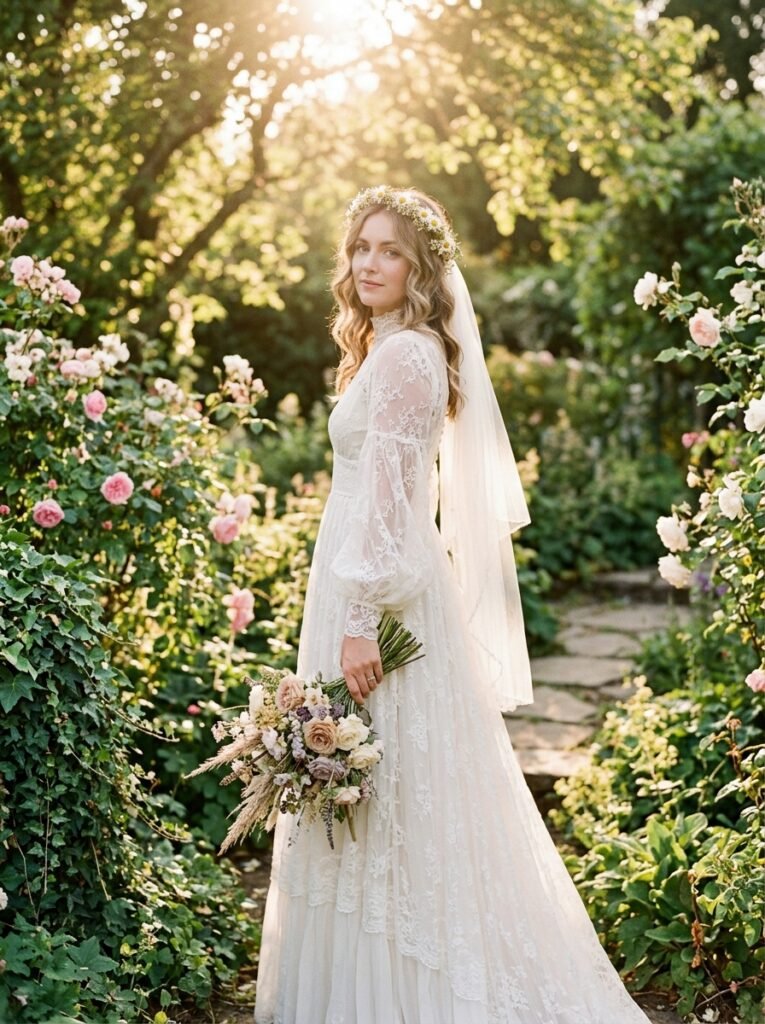
Vintage bridal forms a separate and wonderful category entirely. A 1970s prairie-inspired gown with delicate lace sleeves. A 1980s column dress with simple elegance that reads completely current today. A 1950s tea-length dress perfectly suited to a garden wedding. These pieces surface at estate sales for $50–$300, vintage shops for $150–$500, and online platforms like Etsy and Vestiaire Collective for $100–$600, priced according to age rather than beauty.
The only real caution with pre-owned and vintage gowns involves budgeting extra funds for cleaning and alterations. These steps are almost always necessary but rarely expensive relative to the savings on the gown itself, typically $100–$300 combined for professional cleaning and a fitting.
Build a Look With Separates
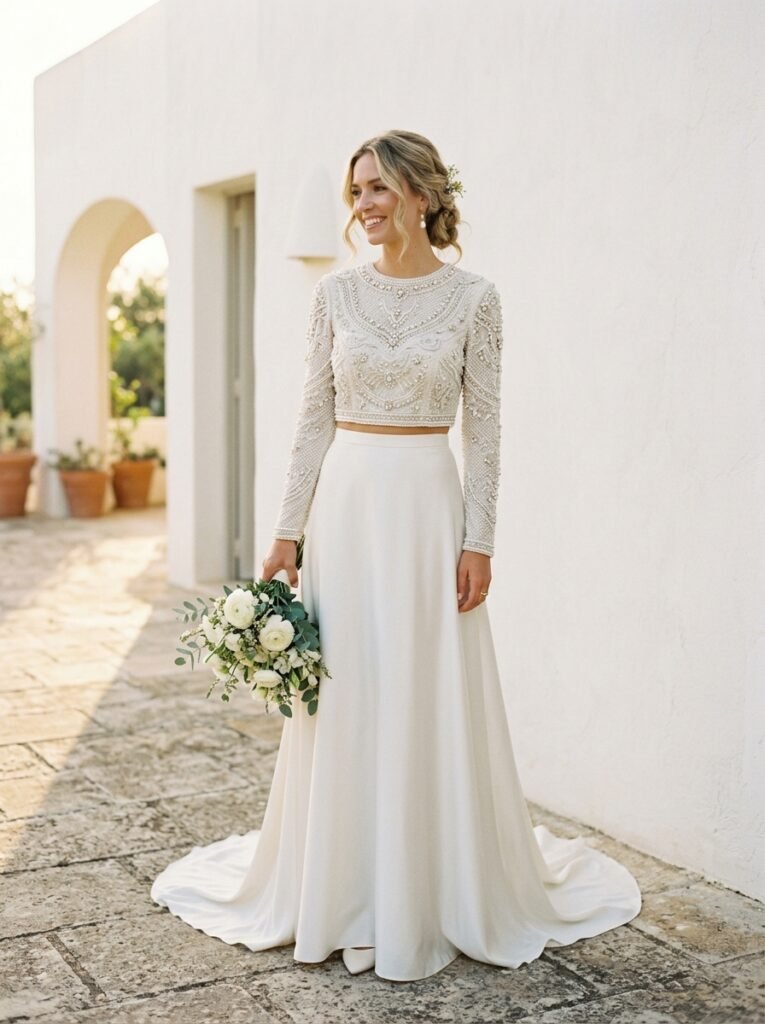
One of the most underrated and increasingly popular approaches to bridal dressing is separates: a top and skirt chosen independently and worn together. This approach offers creative flexibility that a single gown never can, and it frequently lands at a lower price point.
A beaded crop top, priced $80–$250, paired with a simple satin skirt with a sweep train, priced $100–$300. A structured lace bodysuit, $60–$180, worn with a full tulle skirt, $80–$250. A simple silk camisole, $40–$100, matched with a flowing crepe skirt, $60–$150, and a beautiful blazer added for the ceremony, $80–$200. A button-down white linen shirt, $30–$80, tucked into wide-leg white trousers, $40–$100, finished with a striking pair of heels.
Separates work particularly well for brides who cannot find a single gown combining everything they love, since mixing pieces lets aesthetics blend freely. Readers drawn to this idea may also enjoy a closer look at bridal jumpsuit ideas for brides who skip the gown altogether. Because each piece is purchased individually and often from non-bridal retailers, the combined price frequently lands around $150–$450 total, often lower than a single traditional gown.
Separates also add flexibility at the reception. Swapping out the skirt after the ceremony, removing the blazer once dancing starts, and transitioning from formal to festive costs nothing extra, unlike a full second reception dress, which typically runs $150–$500 on its own.
Rent Your Wedding Dress
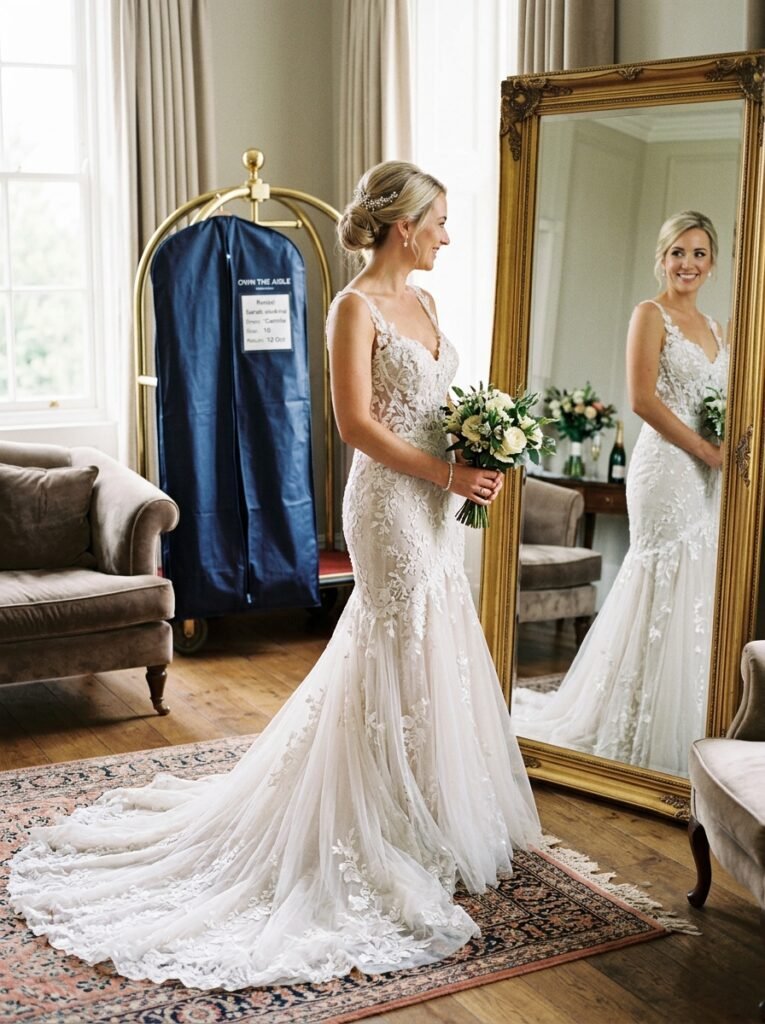
The rental market for formalwear has expanded significantly, and bridal gowns are increasingly part of that conversation. Services like Rent the Runway and Vow to be Chic offer access to designer-level bridal gowns for a fraction of retail price, typically $100–$400 for a rental, versus $1,500–$5,000+ to buy the same designer gown outright, since a bride pays for a single use rather than lasting ownership.
Renting is probably not the right choice for a bride who wants to keep the gown. But for many brides, what actually matters is how the dress looks on the day itself. Whether it is rented or owned changes nothing about the photographs, the experience, or the memories.
Renting also solves the post-wedding storage question entirely. Most wedding dresses end up boxed in a closet after the big day. Returning a rental means never having to decide what to do with it again, and it saves the $100–$300 many brides otherwise spend on preservation and boxing services.
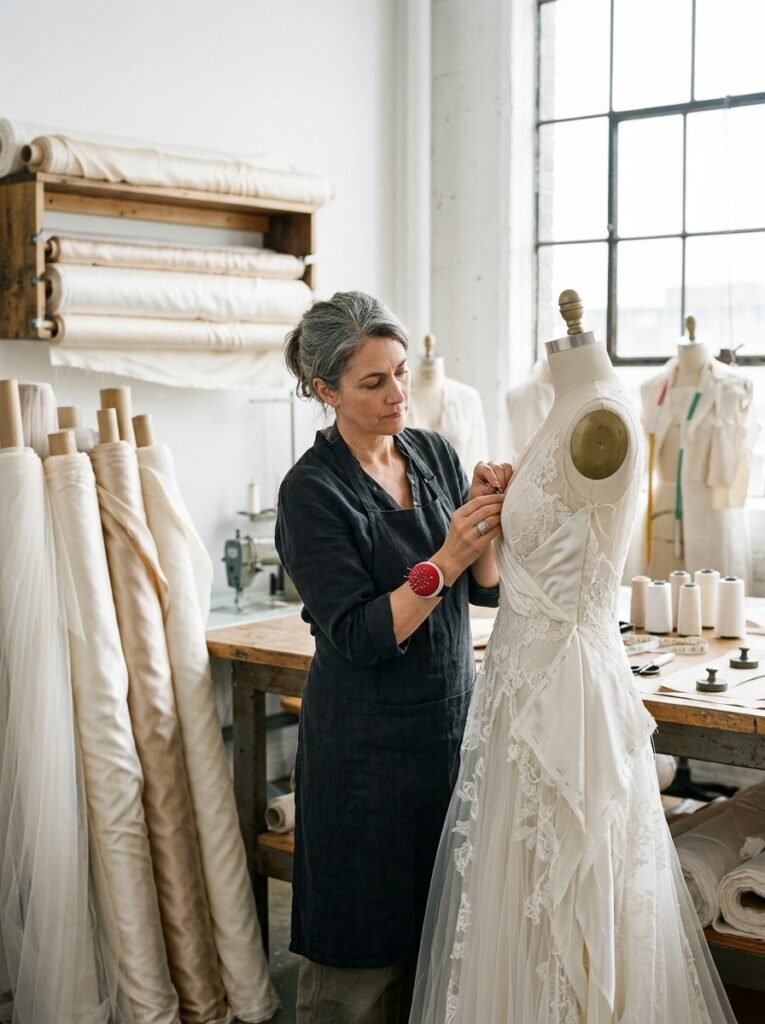
Find a Seamstress and Start With Fabric
This route requires more lead time than the others, but it deserves consideration from any bride with a specific vision who has not found the right dress off the rack. A custom dress, made by a local seamstress from independently purchased fabric, can produce extraordinary results at a price genuinely comparable to ready-to-wear.
Finding the right seamstress matters most. Reviewing portfolios carefully, requesting references from previous clients, and asking honest questions about what a seamstress can and cannot execute all help. A local seamstress experienced with formal garments differs completely from someone who sews casually.
Bringing reference images works better than describing a vision in words alone. Choosing fabric with a seamstress’s input helps too, since she knows what will hold its structure. Building in at least three to four months, and ideally six, leaves room for multiple fittings and adjustments.
The result can be a genuinely one-of-a-kind gown priced around labor and materials rather than branding and boutique overhead.
Style Your Accessories Strategically
Accessories quietly drain bridal budgets. The veil, the shoes, the jewelry, the hairpiece, the something borrowed and something new each feel small individually, but the total adds up fast.
A few strategic choices dramatically lower accessory spending without compromising the overall look.
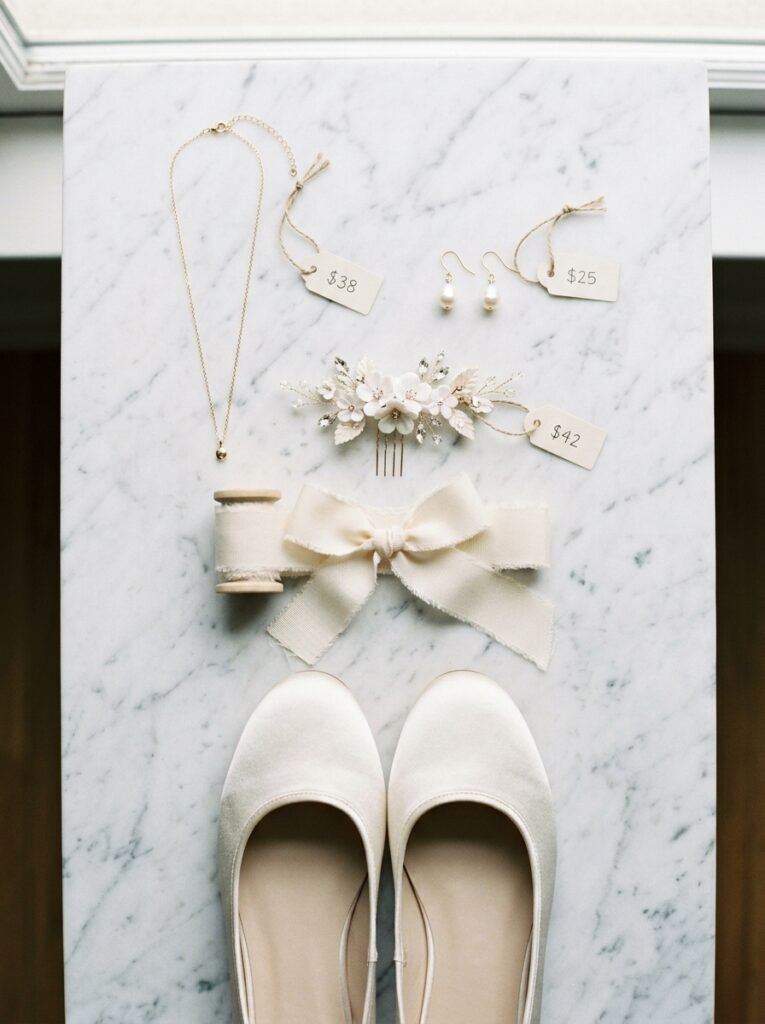
Jewelry from non-bridal sources is almost always cheaper than the same style marketed as bridal. A delicate gold chain necklace from a regular jewelry retailer. Pearl drop earrings sourced vintage. A rhinestone hairpin from a craft supply store that costs a few dollars and looks identical to a forty-dollar bridal version.
Veils rank among the most overpriced items in the bridal category. Buying tulle by the yard from a fabric store and having a seamstress cut and edge it costs a fraction of the boutique price. Skipping the veil entirely in favor of a floral crown, a ribbon, or simply well-styled hair photographs just as beautifully and costs significantly less.
Shoes worn for only a few hours at an indoor event represent an easy place to save. A comfortable pair of heels or flats in white, ivory, or metallic from a regular shoe retailer photographs identically to a designer pair.
Shop End-of-Season Bridal Sales
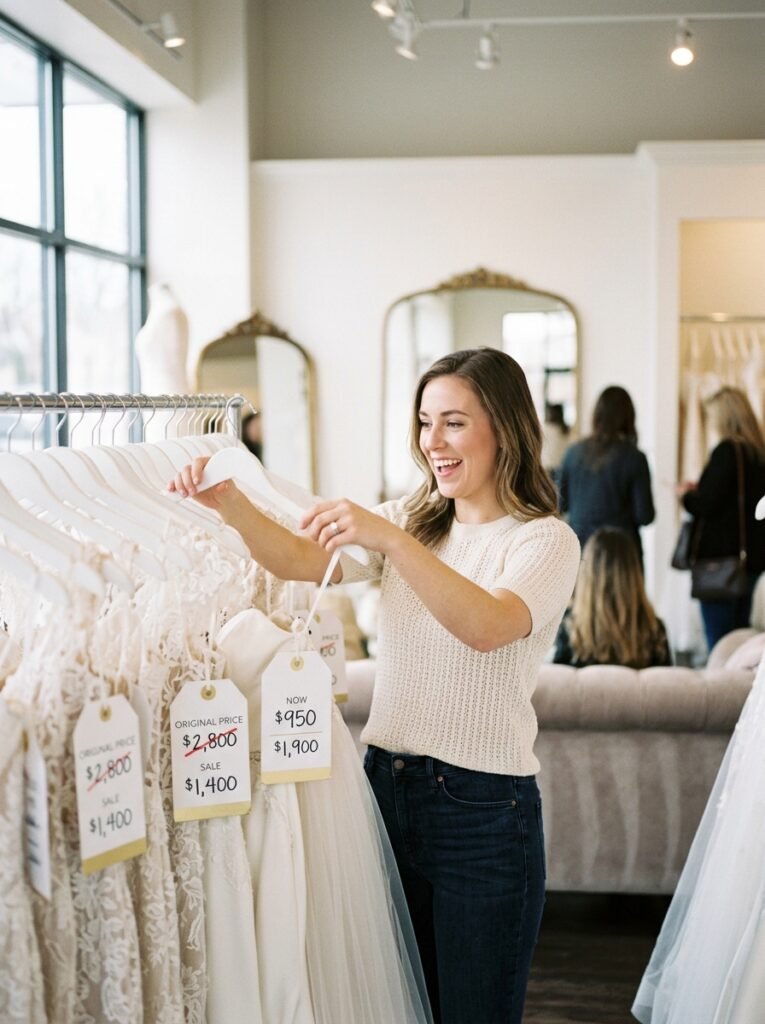
Bridal boutiques and retailers with bridal lines run clearance sales at specific times of year, and knowing the timing can mean real savings on full retail merchandise, not just floor samples.
January and July tend to be the peak clearance periods for bridal retail, timed around inventory transitions and new collection arrivals. Signing up for boutique email lists and following favorite brands on social media surfaces these announcements early.
The trade-off with end-of-season clearance is limited selection, and a bride whose wedding is approaching soon may not have time for standard alterations. But for someone planning well ahead with some flexibility on style, clearance pricing on full retail merchandise can be exceptional.
Use the Bridesmaids Dress Strategy
A surprising number of brides have used one approach to great success: shopping the bridesmaids section. Formal gowns designed for bridesmaids frequently come in white, ivory, champagne, and blush, are made to comparable quality standards, and cost dramatically less because they sit outside the bridal category.
Azazie, David’s Bridal, JJ’s House, and similar retailers all carry bridesmaid styles in white or near-white that read as completely appropriate wedding gowns. The styling often reads simpler and more modern than traditional bridal, a look many contemporary brides prefer. Brides considering unconventional sizing routes may find related guidance in this roundup of flattering plus-size bridal outfits.
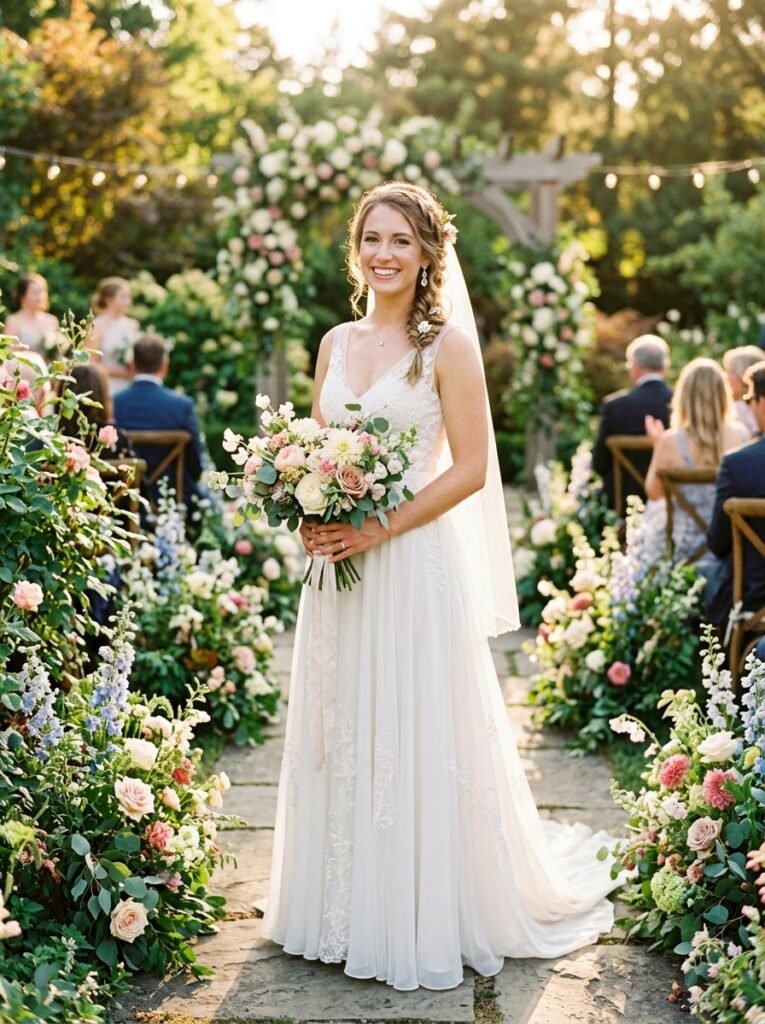
No wedding guest will know where the dress came from. They will see a bride walking down the aisle in a beautiful gown that fits her and makes her feel wonderful. That is the whole point.
Common Budget Bridal Mistakes to Avoid
Knowing what to avoid matters as much as knowing what to pursue.
Leaving too little time ranks as the most common and most consequential mistake. Budget bridal shopping often requires more time than boutique shopping because it involves research, waiting for sales, sourcing alterations from independent seamstresses, and sometimes waiting on shipping. Starting at least six months ahead helps, and eight to ten months works even better.
Buying without understanding a return policy leads to regret. Confirming the return or exchange policy before purchasing matters most when buying online. Reading reviews from people with a similar body type and ordering swatches when available both help avoid surprises.
Forgetting to budget for alterations catches many brides off guard. Nearly every dress, at every price point, needs some alteration. Factoring that cost in from the beginning beats treating it as a surprise later. A two-hundred-dollar dress needing three hundred dollars of alterations is still a five-hundred-dollar dress.
Letting other people’s opinions override personal taste undermines the whole process. Budget bridal shopping requires confidence in one’s own vision. Well-meaning friends and family may react with surprise to some of the approaches in this guide. The goal is feeling beautiful on the wedding day, not impressing guests with a receipt.

Frequently Asked Questions
- How much should a bride realistically budget for a bridal outfit on a budget? A genuinely stunning bridal look, including the dress, accessories, and alterations, can be achieved for two hundred to eight hundred dollars, depending on the approach chosen. Renting, buying pre-owned, or shopping non-bridal retailers lands at the lower end. A sample sale gown with alterations typically falls in the middle. Custom-made options can go in either direction depending on location and design complexity.
- Is it acceptable to wear a non-white dress to a wedding? Completely and entirely. Wedding dress color conventions have shifted considerably and continue evolving. Blush, champagne, gold, pale blue, sage, even black or red now appear on modern brides. The only real question is what makes a bride feel most like herself.
- Where is the best place to find pre-owned wedding dresses? Stillwhite and Nearly Newlywed offer the largest inventory with built-in buyer protections. Poshmark and eBay also surface options, typically at lower prices but with less structured protection. Local Facebook Marketplace listings and consignment shops allow in-person inspection before purchase.
- Can a seamstress really alter a dress significantly? A skilled seamstress can often take a dress in or let it out by two to three sizes, and more dramatic structural changes, like altering a neckline, removing sleeves, or adding a train, are frequently possible. Consulting a seamstress before purchasing resolves most fit questions in advance.
- When is the best time to shop for a budget wedding dress? January and July suit clearance sales best. Pre-owned listings and sample sales turn over constantly, so checking often pays off any time of year. Custom dressing works anytime, provided at least four to six months remain before the wedding.
The Bottom Line
A wedding dress does not become more beautiful because of what it cost. Beauty comes from fit, movement, and the feeling a bride gets when she looks in the mirror on one of the most significant days of her life.
Every approach in this guide can produce a genuinely stunning bridal look. Intention connects all of them. Knowing what matters, staying open to unexpected sources, and allowing enough time for good decisions make the difference.
Wedding photographs stay on the wall for decades. No one looking at them will know what the dress cost. They will see a bride on her wedding day looking exactly like herself, at her most beautiful. That result never required spending a fortune to achieve.

[…] for overall proportion. Alteration costs are worth budgeting for early, alongside the rest of a realistic bridal budget, since a significant hem can be one of the pricier line […]
[…] A delicate sash or ribbon in a coordinating color is a popular, low effort way to mark the guest of honor. Many hosts already provide one as part of the shower decor. Statement earrings or a delicate necklace add polish without competing with the outfit. A light cardigan, wrap, or delicate jacket offers practical warmth for outdoor or transitional weather while still looking intentional. A small clutch or crossbody bag keeps hands free for gifts, hugs, and photos throughout the event. Brides watching their budget can find more affordable styling angles in this guide to stunning bridal outfit ideas on a budget. […]