
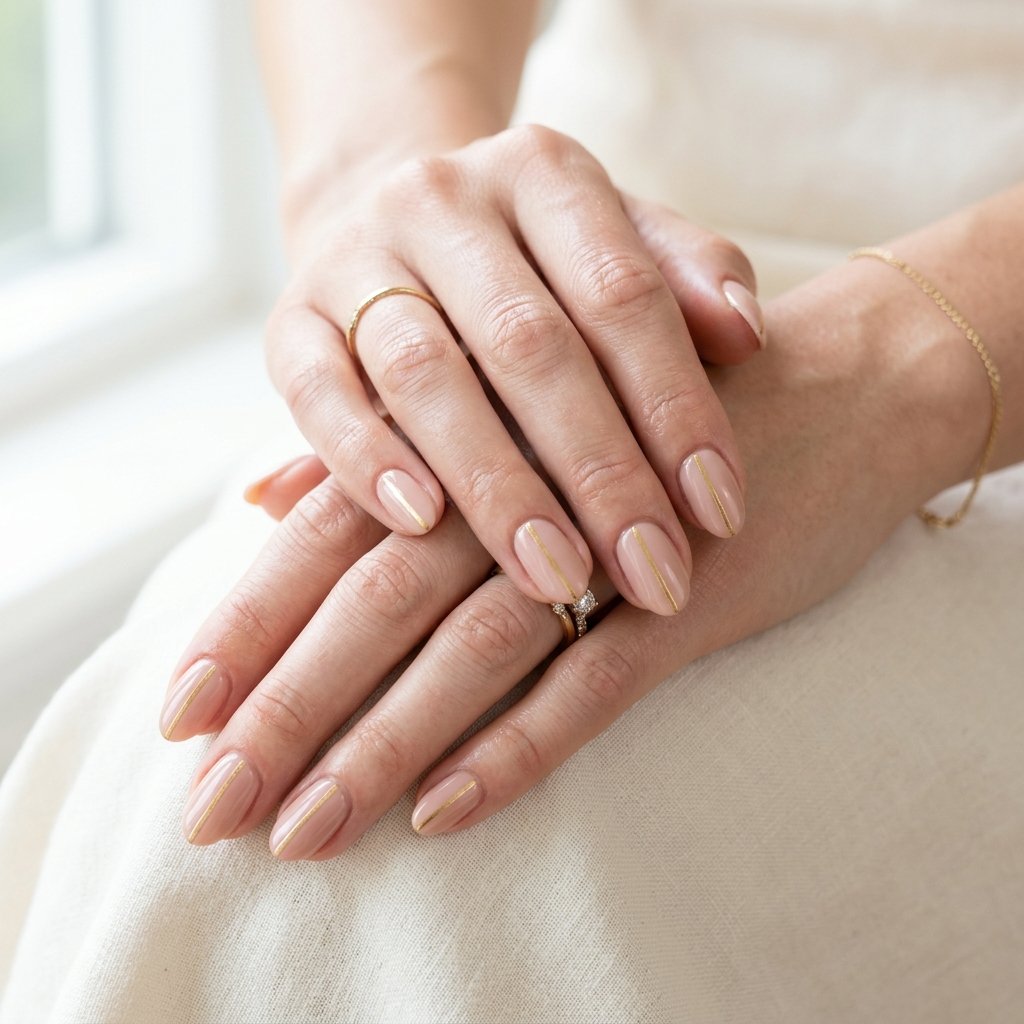
Short nails carry an unfair reputation in the nail art world. Most beauty feeds favor long, tapered acrylics and sweeping almond shapes that extend well past the fingertip. Anyone working with shorter nails, whether by choice, habit, or natural growth, can start to feel like certain looks are simply out of reach.
That assumption doesn’t hold up. Nail shape, color, and design placement have a dramatic effect on how long fingers and nails appear. The right combination makes a short nail look noticeably longer without extensions, overlays, or anything added to the natural nail. The effect comes down to visual perception, and understanding the basic principles behind it opens up far more options than most people expect.
This guide walks through the most effective nail designs, colors, and techniques for creating the illusion of length on shorter nails. Some rely on color theory, others on line direction, and a few are simple styling choices that make a surprising difference.
Why Nail Design Actually Affects Perceived Length
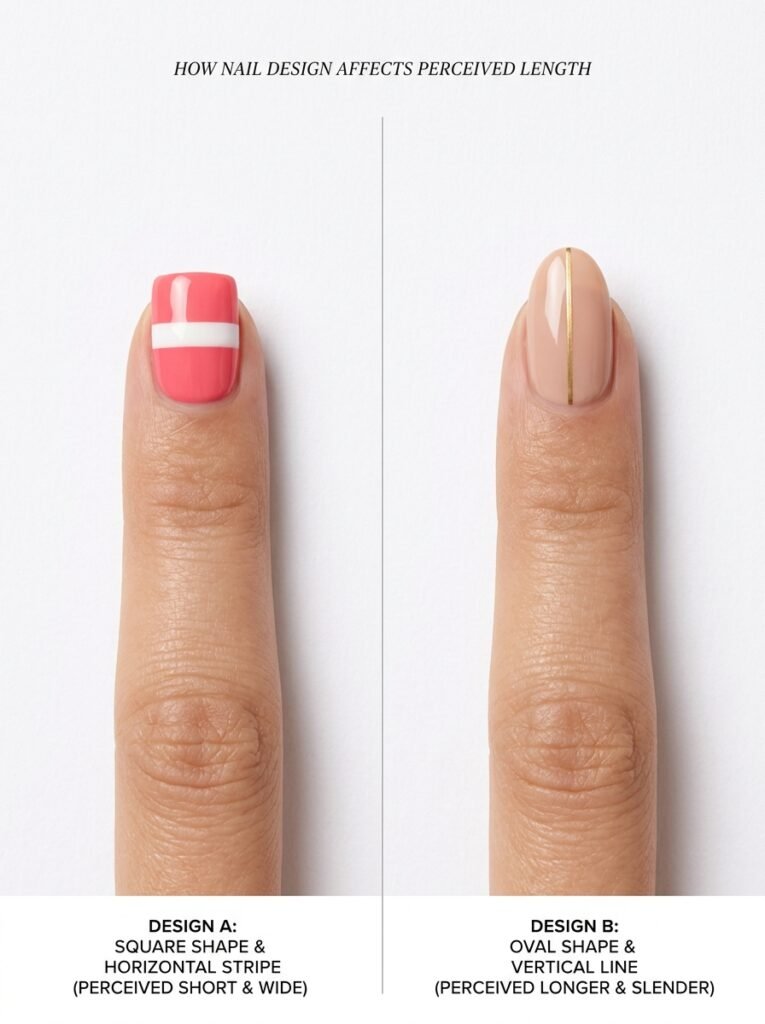
Before covering specific designs, it helps to understand why any of this works. The effect isn’t a marketing claim; it’s a documented feature of human vision known as the vertical-horizontal illusion. Vision researchers have shown that a vertical line is consistently perceived as longer than a horizontal line of identical length, a finding replicated in studies published in the journal Vision as recently as 2019. The same bias that makes a doorway look taller than it is also makes a vertical detail on a nail read as more elongated than a horizontal one.
The same logic explains why vertical stripes read as slimming in clothing while horizontal stripes read as widening. Applied to nails, the principle holds just as strongly. A nail painted solidly in a dark or bright color with a square tip looks compact and wide. That same nail, painted in a nude shade, filed into a slightly tapered shape, and marked with a single vertical line down the center, looks noticeably longer. The nail itself hasn’t changed size. Only the perception of it has.
Color contrast, design placement, and nail shape all feed into this effect, and the techniques below apply each principle with intention.
Nude and Skin-Tone Polish
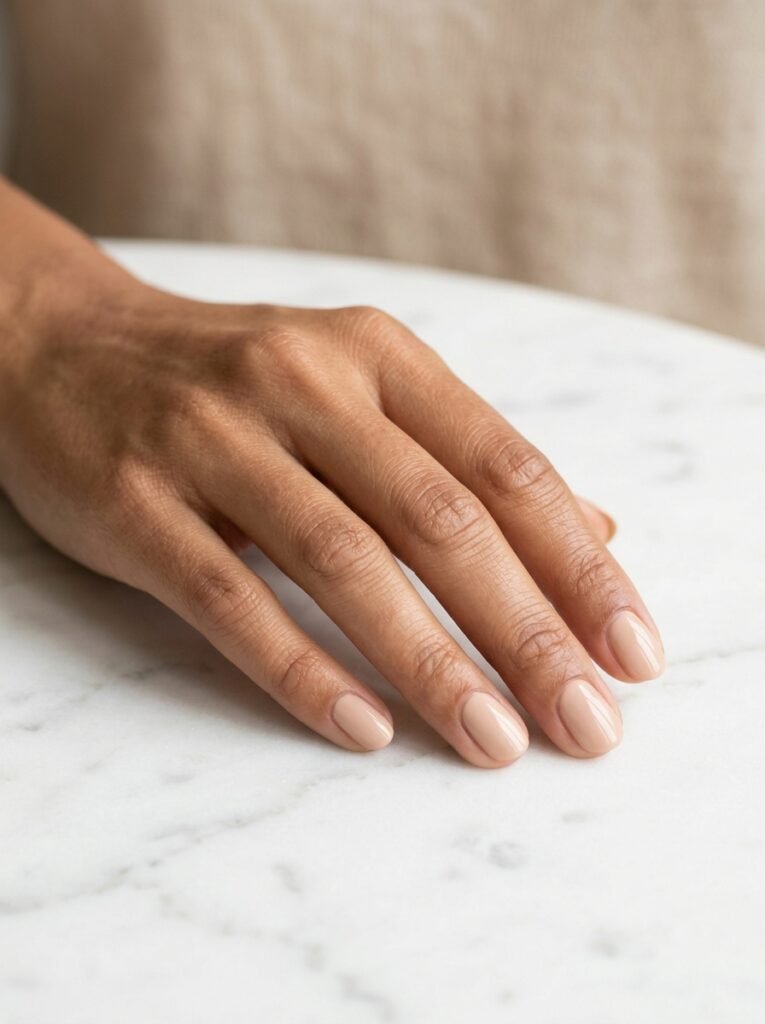
This single choice does more for short nails than any design, and it requires no artwork at all. A nude polish that closely matches the wearer’s skin tone creates an uninterrupted line from fingertip to nail, which makes the entire finger appear longer.
Matching the nude to skin undertone matters more than matching a generic shade name. Warm, olive, or golden skin tends to suit a peachy or caramel nude better than a cool pink. Cool or neutral undertones usually look most natural in a rosy or taupe nude. A closer breakdown of undertone matching appears in this skin-tone guide to nail color, which covers the same principle in more depth for anyone building out a full polish collection.
High contrast between nail color and skin draws the eye straight to the boundary where the finger ends and the nail begins, and that boundary reads as shorter. When the tones blend, the visual line disappears and perceived length increases.
Nude works as a standalone finish or as a base for the other techniques covered here. Either way, it does quiet, effective work for the overall look.
Vertical Stripe Designs
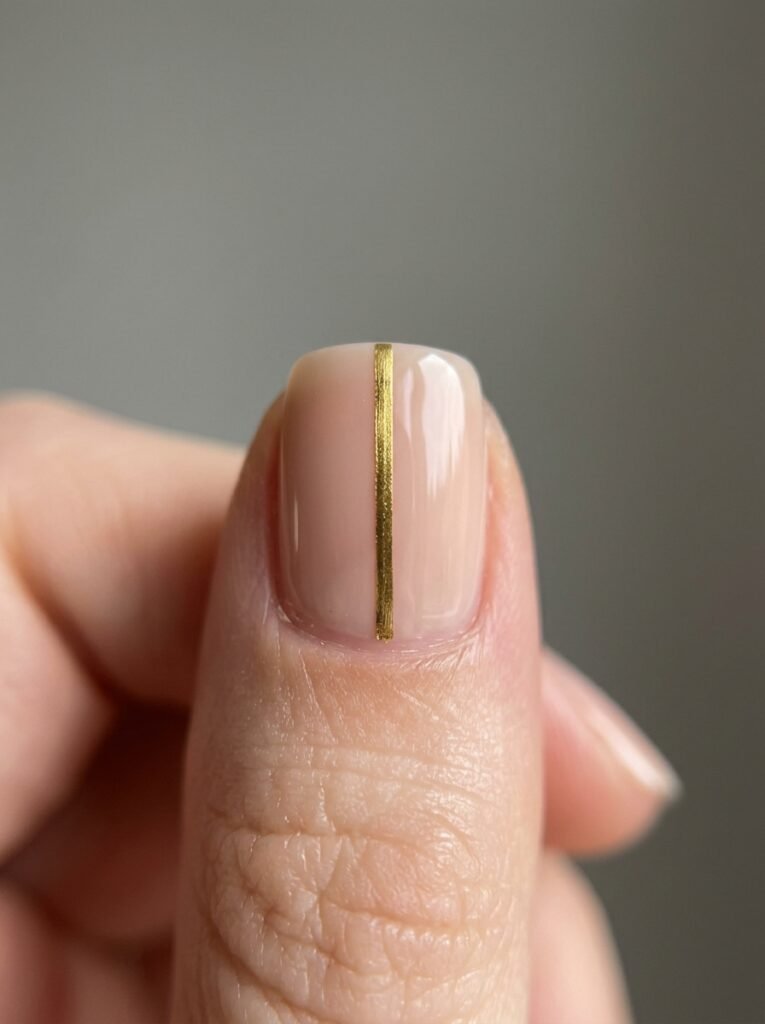
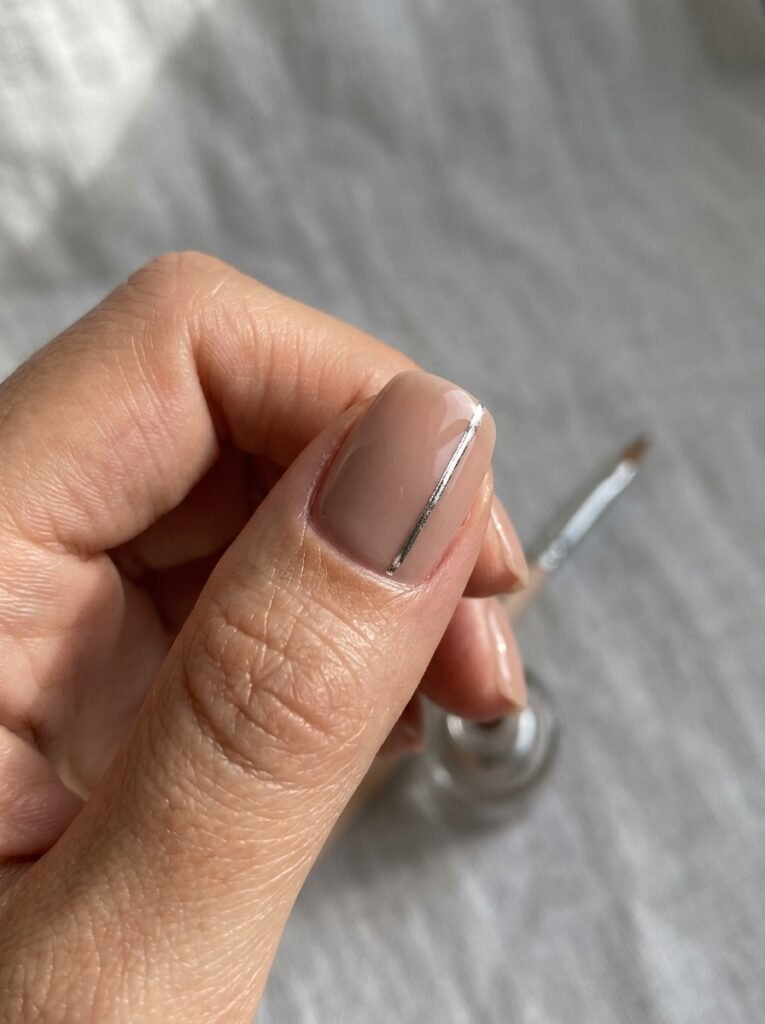
A thin vertical line running down the center of the nail is one of the oldest tricks for building the illusion of length, and it still works reliably. The eye tracks the line from cuticle to tip, and the nail reads as longer than its actual measurement.
This effect works with a single stripe in a contrasting color, a metallic line down the middle, or even a thin strip of nail tape pressed along the center. Fine-tipped nail art brushes make hand-painting these lines far easier than expected once the technique gets a little practice.
For more visual interest without losing the lengthening effect, two thin parallel lines flanking the center of the nail work especially well, particularly in gold or silver on a neutral base.
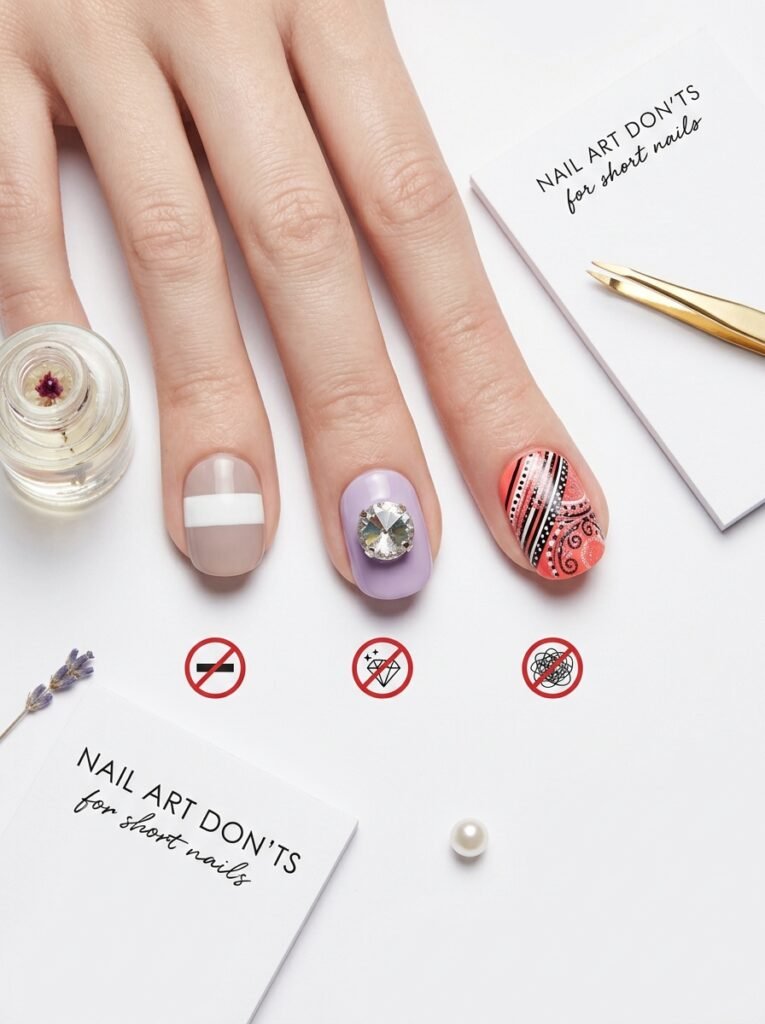
Horizontal stripes, wide bands across the middle of the nail, or any design that pulls the eye side to side rather than up and down should stay off the list entirely.
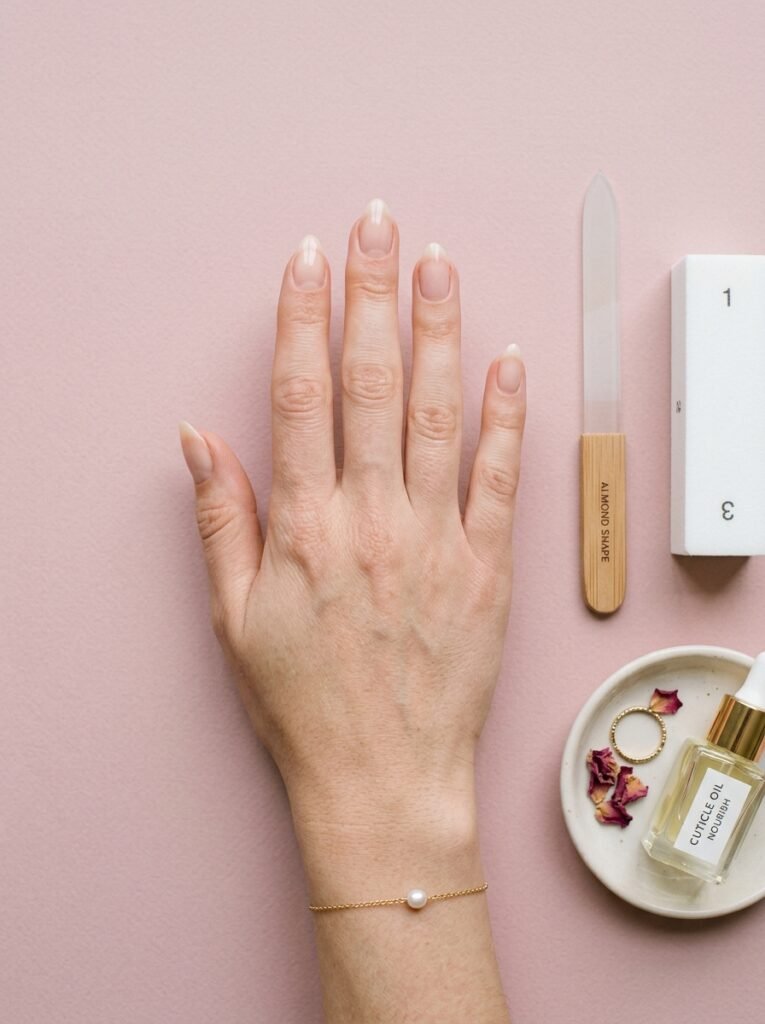
Almond and Oval Nail Shapes
This technique starts before any polish goes on. The shape a nail is filed into has a significant impact on how long it appears, and not every short nail shape performs equally.
Square nails emphasize width. Squoval shapes improve on that slightly but still lean horizontal. Almond and oval shapes pull the eye upward toward the tip, since the silhouette narrows as it rises. A very short nail filed into a soft oval or gentle almond shape looks longer than the identical nail filed square.
Length isn’t required to achieve an oval shape. Even a minimal free edge, the portion of the nail extending past the fingertip, can be shaped into a slightly rounded point, and the difference shows up immediately.
Growing the nails even a millimeter or two past the fingertip and filing into an almond or oval shape is the highest-impact change available before any design or color enters the picture.
French Tips With a Twist
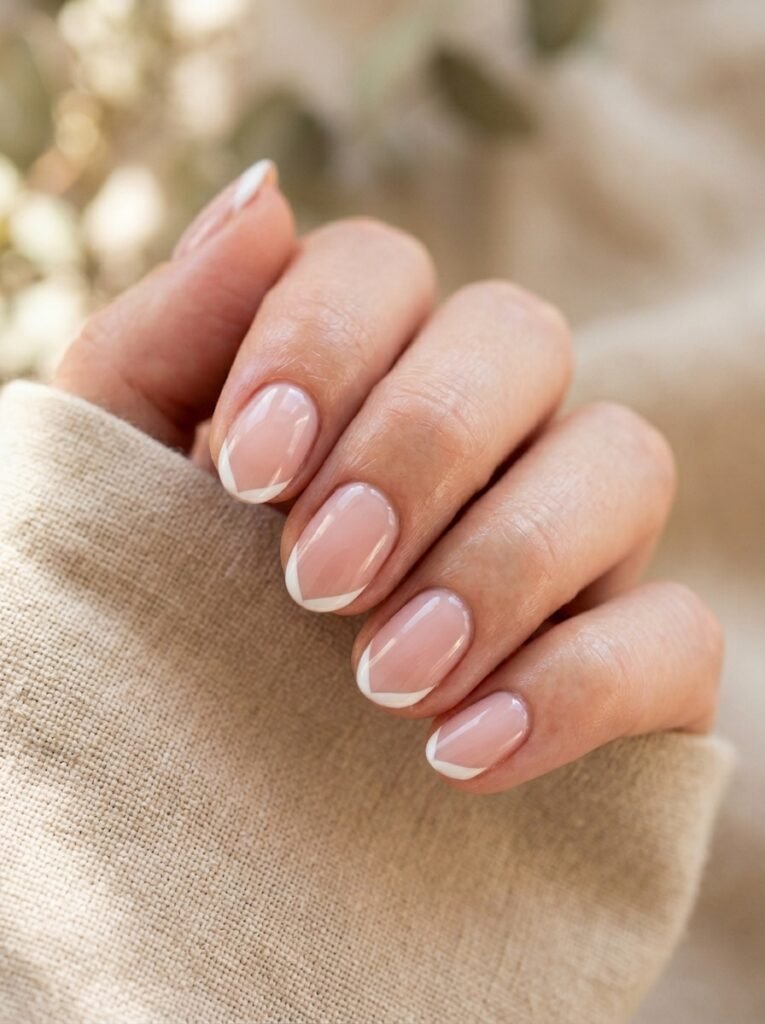
A classic French manicure already does something smart for short nails: it creates a visual separation between nail bed and tip that suggests extension. The trouble with a traditional French is that its wide, curved white smile line emphasizes width more than length.
An updated version works better on short nails, using a thin, more pointed smile line instead of a wide curve. Nail artists often call this a micro French or a slim French tip. The white portion narrows into a subtle V or shallow curve rather than a full arc, keeping the classic French effect without widening the nail visually.
A diagonal French tip offers another variation. Instead of a horizontal smile line, the tip sits at a slight diagonal angle. That asymmetry draws the eye toward the tip and creates the appearance of a longer nail bed.
A nude or sheer pink base, rather than bright white, keeps the whole design looking elongated instead of graphic.
Negative Space Designs
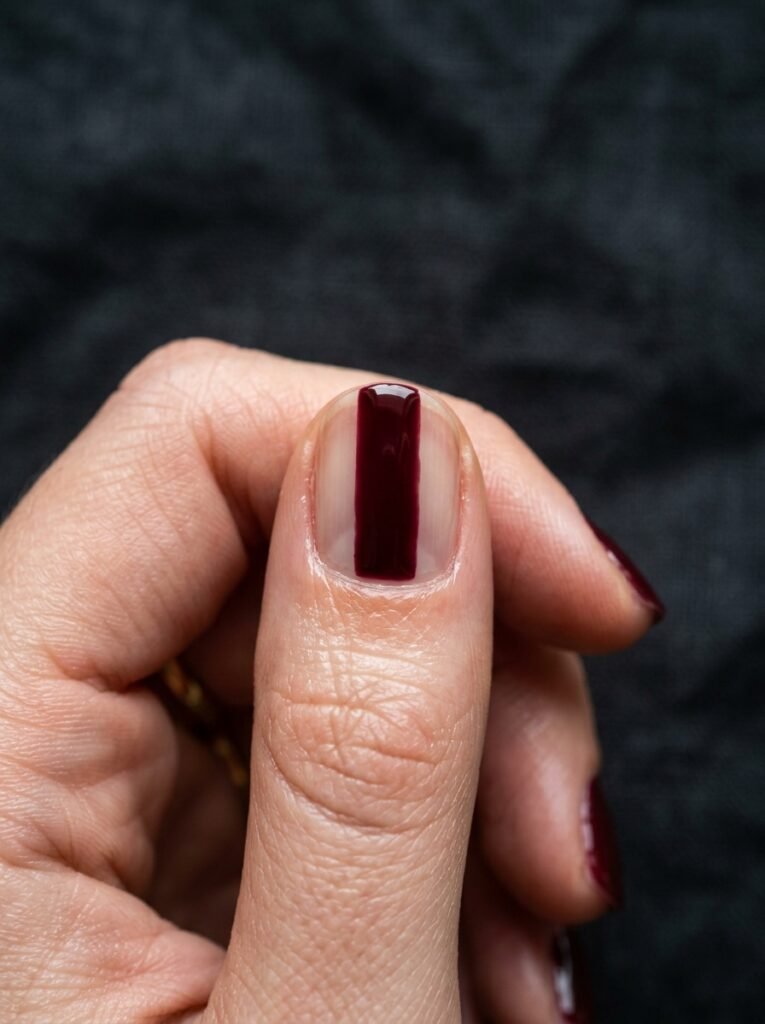
Negative space nail art has ranked among the biggest nail trends in recent years, and it genuinely flatters short nails when done well. The concept leaves parts of the nail unpainted, usually the sides or a strip down the center, creating the illusion that the nail is narrower and therefore longer.
A vertical strip of bare nail down the center of a colored nail makes it look slimmer and taller. Leaving the sides bare, sometimes called a floating design since polish only covers the center, produces a similar effect.
The most flattering approach for short nails leaves a thin bare strip down each side, with color reserved for the center. This works particularly well with darker or more saturated colors, since the contrast between bare sides and colored center reads more clearly.
Negative space designs are surprisingly easy to achieve with striping tape. Thin strips placed along each side, followed by polish and a peel while it’s still slightly wet, produce clean lines every time.
Ombre and Gradient Nails
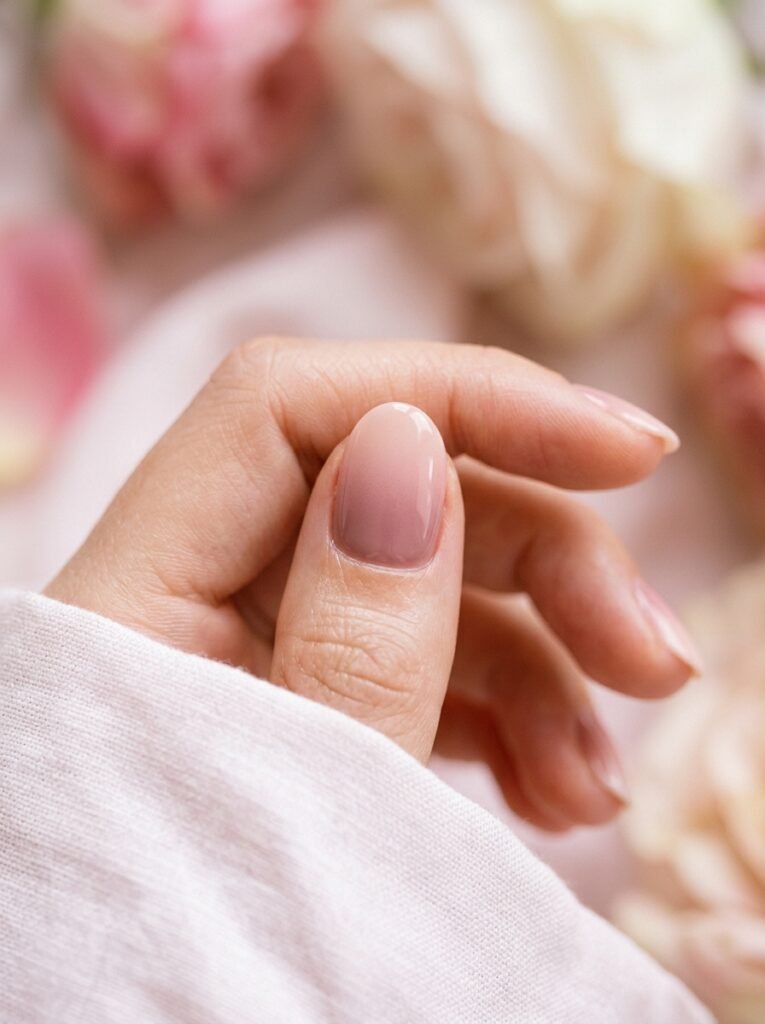
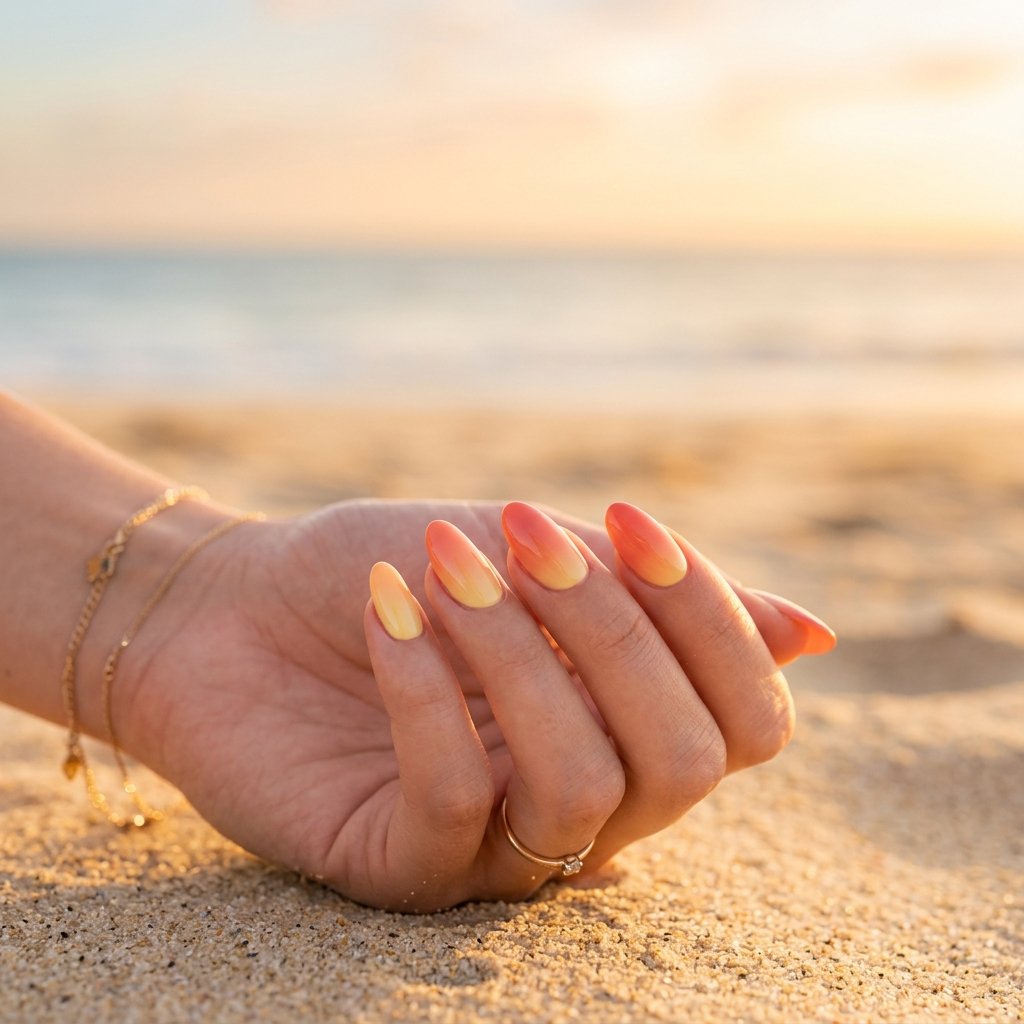
An ombre effect moving from a darker shade at the base to a lighter or nude shade at the tip ranks among the most flattering designs available for short nails. The gradual lightening toward the tip creates a sense of the nail fading into the fingertip, extending perceived length the same way nude polish does.
The reverse also works. A light or nude base that gradually picks up more color toward the center, then fades back at the tip, creates a shadow effect that adds dimension without breaking the vertical line.
Ombre nails come together easily at home with a small makeup sponge. Two colors applied side by side, dabbed gently onto the nail, and repeated until the gradient builds produce the effect. A glossy top coat blends the colors and smooths the finish.
Color combination matters here. Keeping the ombre within one color family delivers a more elongating result than pairing two very different hues. A nude-to-dusty-rose gradient reads as more elongating than a coral-to-teal contrast.
Thin Metallic Accents
A single thin line of gold, silver, or chrome near the base of the nail, or running along one side, creates an elegant, elongating effect that suits shorter nails particularly well. Nail artists sometimes call this a cuticle line design when the metallic detail runs along the base where nail meets skin.
The metallic line draws the eye toward the base of the nail, then naturally carries it upward to the tip, following the nail’s length rather than its width. The effect is subtle but consistently effective.
Chrome powder applied in a thin stripe, metallic nail art gel, or a fine-tipped metallic nail pen can each achieve this look. It works as a standalone design on a nude base or as an accent alongside other simple designs.
Gold suits warm and medium skin tones especially well. Silver and chrome look striking against cooler or very fair complexions. Rose gold flatters a wide range of skin tones and adds warmth without leaning fully into yellow-gold.
Solid Dark Polish (Yes, Really)
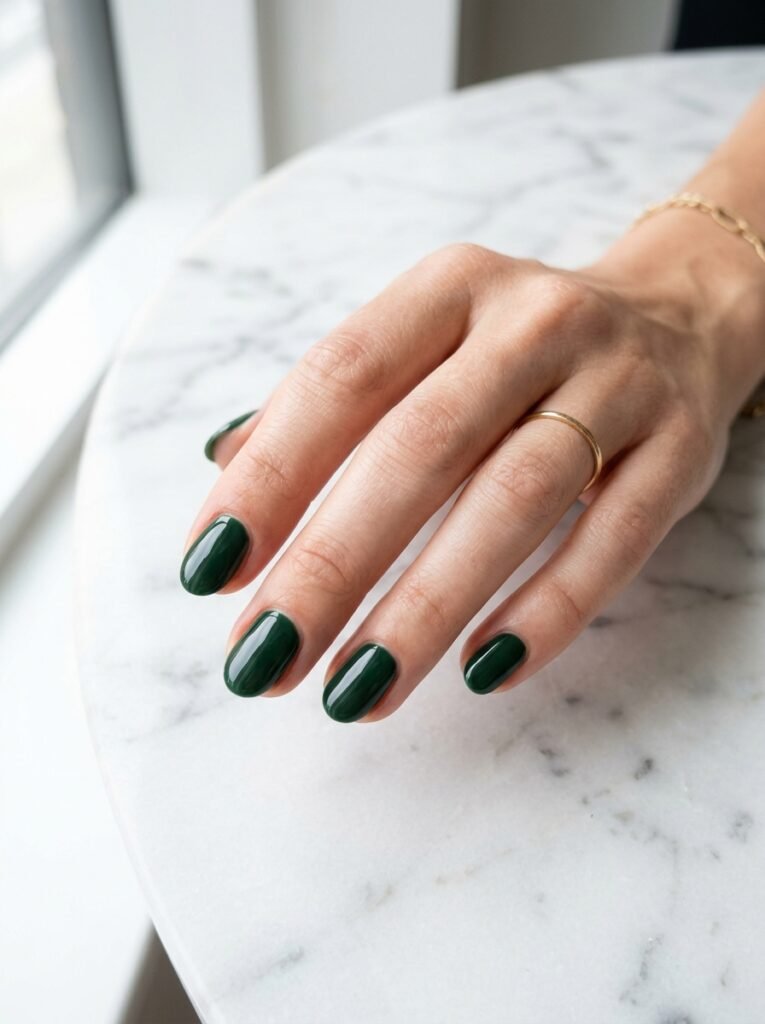
Light colors generally get credit as the more lengthening choice, which makes this one counterintuitive. A well-applied dark polish in a single shade can genuinely elongate short nails, especially paired with an oval or almond shape.
Dark, saturated colors such as navy, deep burgundy, forest green, or black create a sense of depth that makes the nail look more substantial and intentional. A high-contrast, cleanly polished dark nail draws the eye in a way that reads as deliberate rather than short and stubby.
Precise application is the catch. Dark polish on short nails looks striking when applied cleanly with neat edges and a shiny top coat, but any sloppiness at the sides or cuticles becomes far more visible against dark color. Working slowly, using a cleanup brush, and keeping a thin brush dipped in acetone nearby for corrections all help.
Shape still matters here. Dark polish on a square short nail reads as boxy. The same polish on a rounded or slightly tapered nail looks sophisticated and long.
Monochromatic Nail Art
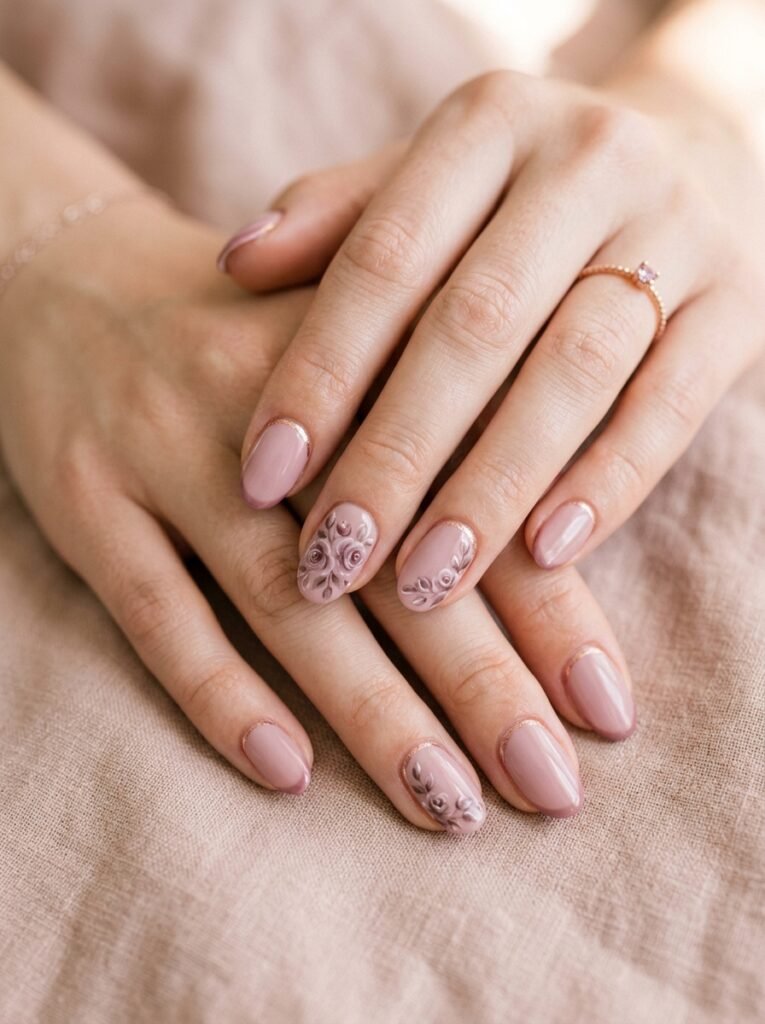
When nail art, base color, and accent details all sit within the same color family, the overall look becomes more cohesive and elongating than a high-contrast design. Monochromatic nail art relies on varying shades, finishes, and textures of one color instead of mixing several.
A dusty mauve base paired with a slightly deeper mauve floral detail and a rose gold accent stripe stays entirely within the pink-mauve family. The result reads as nuanced and dimensional without breaking up the nail with contrast, which keeps the visual line long and uninterrupted.
The approach works in any color palette. Navy, blue, and periwinkle combined with a matte-and-glossy finish variation reads as chic and elongating rather than graphic and wide. Anyone who wants a broader set of finished looks to pull from can browse this gallery of short nail designs, which applies many of these same principles across thirty different color and texture combinations.
Common Mistakes That Make Short Nails Look Shorter
Knowing what to avoid carries as much value as knowing what works. A handful of common choices consistently make short nails look shorter and wider than they actually are.
Thick glitter at the base of the nail adds width in exactly the wrong place. Chunky accent glitters, large rhinestones centered on the nail, and bold designs spread across the full width all pull the eye side to side instead of up and down.
Stamped or decal designs that fill the entire nail with a pattern can break up the vertical line and make nails look compact. Anyone drawn to stamped nail art fares better choosing designs with vertical or diagonal elements rather than large florals or geometric patterns that spread horizontally.
White or very light neon colors sometimes emphasize a short nail shape, since they create stark contrast with skin tone and make the nail border more obvious. This isn’t an absolute rule, and a well-applied nude white can still look great, but stark whites can work against the desired effect.
Nail Care Tips That Help With the Overall Effect
The best designs look better on well-maintained nails. A few basic habits make a real difference in how short nails look and how well polish applies.
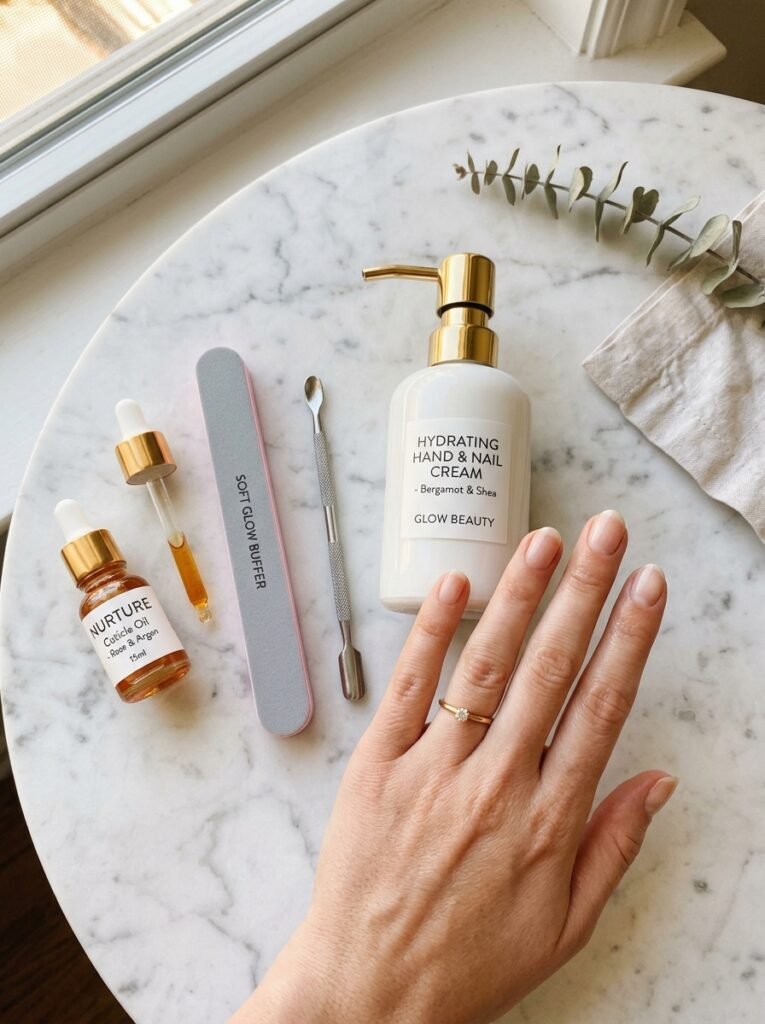
Keeping cuticles pushed back gently and moisturized extends the visible nail bed. When cuticles creep forward onto the nail, the visible nail plate looks smaller. Regular gentle pushback with a cuticle pusher after a warm shower keeps the nail bed looking as long as possible.
A nail strengthener or base coat applied before every manicure protects the nail and prevents breakage, allowing a little extra length to grow without snapping off. Even a fraction of a millimeter gives the lengthening designs more to work with.
Keeping the skin around the nails hydrated with hand cream or cuticle oil makes the overall look more polished and clean. Dry, flaky skin around the nail draws unwanted attention to the nail border.
Frequently Asked Questions
- What nail color makes short nails look longer? Nude shades closely matched to skin tone work best for creating length, since they blur the boundary between finger and nail. Soft pinks, peachy nudes, and taupe shades all work well depending on undertone, and monochromatic colors in the same family as the skin can also read as elongating.
- Does nail shape matter more than nail design for short nails? Both matter, but nail shape forms the foundation. An oval or almond shape creates the most elongating silhouette before any design or color is applied, making the file job the single most impactful change available.
- Can dark polish make short nails look longer? Yes, when applied neatly on a rounded nail shape. Clean application and the right shape make the difference. Dark polish on a square short nail looks boxy, while the same polish on an oval nail looks deliberate and chic.
- What nail designs should be avoided on short nails? Wide horizontal elements, large centered rhinestones, thick glitter at the cuticle, and busy patterns that fill the full width of the nail all draw the eye sideways and emphasize width rather than length.
- Do French tips help short nails look longer? A slim, tapered French tip does. The traditional wide, curved French tip can emphasize width instead, so a micro French or diagonal French tip with a narrow smile line works better for short nails.
The Bottom Line
Short nails aren’t a limitation so much as a starting point. With the right shape, the right base color, and designs built around vertical lines, negative space, and strategic contrast, short nails can look noticeably longer and more elegant than expected.
Nail shape and a nude base offer the strongest place to start. Those two elements alone create a solid foundation for every other technique covered here. From there, vertical stripes, metallic accents, slim French tips, or ombre gradients can layer in depending on the desired look.
These visual tricks are simple once the underlying logic clicks. Once the difference becomes visible on an actual manicure, it’s hard to go back to designs that ignore it.



[…] office settings — for more shape and design options built specifically around shorter lengths, this guide to nail designs for short nails covers proportion tricks worth trying. Rounded or squoval shapes keep the manicure feeling soft, […]